Home Blog Page 130

Hottest Cities for Millennial Renters

Hottest Cities for Millennial Renters

Most millennials are renters, and have been shifting away from the two-kid, white-picket-fence American dream. This means they’re also less likely to get tied down to a specific city. So where are the hottest cities for millennial renters?

RentCafe analyzed 13 million renter applications nationwide to identify the cities where millennials represent the highest share of those who applied for apartments.

“Specifically, we focused on large and mid-sized cities — where millennials represent 38.5 percent of applications — and ranked them based on each city’s share. Finally, we looked at the hottest cities for millennial renters in 2020 to get a snapshot of the emerging hubs where this trend-setting generation is heading next,” RentCafe said in the survey.

Here are the main findings about millennial renters:

  • Austin is set to dethrone Seattle to become the next No. 1 millennial city. This year, more than half of the renters who applied for an apartment in the Texas capital were millennials (50.5 percent).
  • Seattle, the capital of the millennial nation for five years, dropped to fourth place in 2020.
  • Oakland made an astounding entrance into the list of top 15 future millennial hotspots, shooting straight up to 3rd place with a 48.4 percent share of millennials applying for apartments there in 2020.
  • Philadelphia, San Jose, Virginia Beach, and Los Angeles are new additions to the top 15, replacing cities like Denver, Atlanta, or Portland, whose popularity among millennial renters might be dwindling.
  • Despite the looming tech exodus, San Francisco stays strong. With 48.6 percent of all rental applications coming from millennials, the city maintained its second spot in 2020 by attracting a significant share of New York’s millennial renters (8.2 percent) in the last five years.

Conclusion

Now that they’ve officially overtaken baby boomers as the largest U.S. generation to date – as well as making up the majority of the workforce – millennials have become the most instrumental group in shaping the future of America’s urban cores.

Residents Working from Home Require More Space in Apartments, Homes

Security Deposit vs. Move-In Fee: Which is Better?

Sign Up For Our Newsletter And Get Apartment News And Helpful, Useful Content Each Week.

* indicates required

Are You Making Any Of These 5 Rental Property Management Mistakes?

Are You Making Any Of These 5 Rental Property Management Mistakes?

Here are 5 rental property management mistakes that Keepe, the on-demand maintenance company, sometimes sees at rental properties.

Managing a rental property can be challenging even for the most experienced property managers. As a property manager, you need to ensure that your tenants, workers, contractors, and your properties are in good shape.

If you are a property manager managing 1 or 100 rental properties, here are five rental-property management mistakes from Keepe that you want to avoid.

No. 1: You Don’t Have A Screening Process in Place

 As a property manager you are most likely to deal with all kinds of tenants­.

When you rent your property to a destructive or troublesome tenant, you are sure to lose money and deal with problems every day. One sure way to save yourself of these issues is to have a detailed formal tenant-screening process that helps you select the right kind of tenants for your rental.

No. 2: You Don’t Have A Reliable Contractor When Issues Happen

 Your tenants want the best service and quick solutions to their maintenance problems.

Not having a dedicated and reliable handyperson you can call immediately will likely affect your tenant satisfaction and retention rates.

As a property manager, you should have a list of reliable contractors for specific types of property-maintenance issues.

No. 3: You Don’t Have A Maintenance Schedule

Most property managers wait until the appliances in their property develop faults or cause damage before doing maintenance.

Not only does this delay aggravate the repair issue, you may be face with constant crises. As a property manager seeking to offer your tenants the best service, you should have a dedicated monthly or quarterly maintenance schedule.

Do a monthly maintenance check of your property alarms, electrical fittings, and outdoor landscape. By being proactive in your property maintenance, you keep your tenants satisfied and your home safe from sudden equipment breakdown. Don’t make this common rental property management mistake.

No. 4: You Don’t Understand How To Attract New Tenants

 Just as with any other businesses, managing a rental property requires that you market your property aggressively to attract new renters.

You need to understand what potential renters are looking for and what attracts new renters.

An easy way to do this is to create a profile of the neighborhood where your rental property is located and make a list of the amenities, economic activities, recreational centers, and the type of schools. This will help you target the right potential renters during your marketing process.

No. 5: Your Management System is Still Paper-Based

 Shockingly, many property-management companies’ systems are purely paper-based, with little or no influence of technology.

Not only does it make the process unorganized, it also leaves room for failure. As a property manager, you should adopt more technology in the day-to-day running of your properties to save you and your tenants’ time.

And with the coronavirus pandemic, there has never been a better time to make the switch. Property managers are beginning to adopt online showings of their properties to potential renters.

Potential tenants can now pay rent online, tour houses, and electronically sign lease agreements without the need to physically visit the property.

Rental property management mistakes conclusion

As a property manager, it is important that you satisfy your tenants and keep your rental properties in great condition. By having a dedicated maintenance schedule, you save not only money but improve the safety of your rental.

Most importantly, having a reliable contractor on call to handle your rental repair issues will help in increasing your tenant satisfaction rate.

About Keepe:

Keepe is an on-demand maintenance solution for property managers and independent landlords. The company makes a network of hundreds of independent contractors and handymen available for maintenance projects at rental properties. Keepe is available in the Greater Seattle area, Greater Phoenix area, San Francisco Bay area, Portland, San Diego and is coming soon to an area near you. Learn more about Keepe at https://www.keepe.com

Become a Master Strategist: Today’s Key for Successful Landlords

Successful Landlords Know All Tenant Screening Companies Are Not The Same

Manage in the Past and Forget the Present

Sign Up For Our Newsletter And Get Apartment News And Helpful, Useful Content Each Week.

* indicates required

Renters Struggling to Make Housing Payments Less Likely to Vote

Renters Struggling to Make Housing Payments Less Likely to Vote

Americans who are not able to make housing payments today are significantly less likely to vote and those who are struggling most are least likely to make their voices heard at the ballot box, according to a new survey from Apartment List.

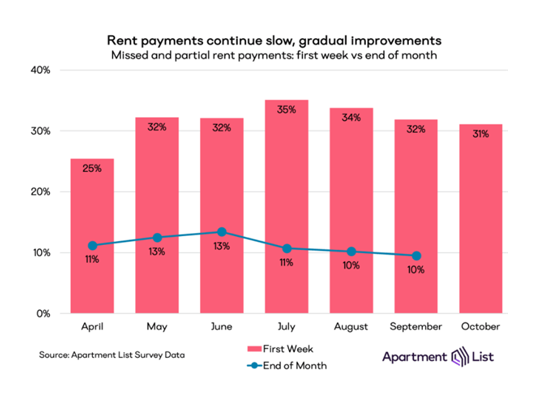
“In the first week of October, 31 percent of renters failed to make a complete on-time payment of their rent bill,” Apartment List writes in the survey. “This represents the third straight month that we’ve seen improvement in this figure and the best rate of on-time payment since April.

“The changes here have been extremely slow and gradual, but as talks for additional stimulus continue to stall out in Congress, any improvement whatsoever can be taken as a positive signal. That said, this improvement may also be driven by a composition effect if those renters who are struggling most have moved back in with family or friends and are simply no longer appearing in our renter sample.”

Although nearly one in three renters failed to pay their full rent in the first week of the month, “we continue to find that the majority of these missed payments are made up with late payments by the end of the month.”

Key findings from the report include:

  • 79 percent of those who began October fully caught up on their rent or mortgage say that they “definitely will vote,” compared to just 55 percent of those with unpaid housing bills from prior months.
  • 78 percent of homeowners say that they will definitely vote, compared to just 62 percent of renters, mirroring prior research on the disparities in political engagement between the two groups.
  • Overall, 31 percent of renters failed to make a complete rent payment in the first week of October, and 10 percent had not fully paid their September rent by the end of the month. These struggling renters with the most pressing needs are least likely to have their voices heard in the upcoming election.

Those struggling with rent and housing payments are less likely to vote

As the election rapidly approaches, “we asked this month’s survey respondents about their intent to vote on November 3. The results point to a concerning trend in the way that economic hardship interacts with political participation.

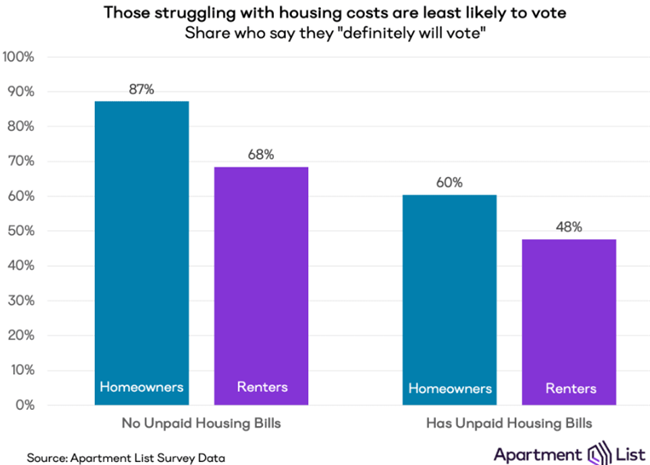
“We find that those who entered October with unpaid housing bills from prior months are significantly less likely to say that they ‘definitely will vote’ in the upcoming election. Among homeowners, 87 percent of those who started the month without any unpaid mortgage bills plan to vote, compared to just 60 percent of those who had unpaid bills.

“We observe a similarly large gap between renters who are fully caught up on their rent payments and those who have outstanding rent debt,” the survey said.

“This gap is not explained by political-party preference. We find that rent debt and missed housing payments are common across the political spectrum, and missed-payment rates were consistent across respondents in counties that Trump won and counties that Clinton won in 2016. Those with no unpaid housing bills report being more likely to vote regardless of whether they report leaning Democrat or Republican.

“In addition to finding that those who are struggling with housing costs are less likely to vote, we also observe a significant gap in expected voter turnout between renters and homeowners, a phenomenon which we’ve explored in detail in the past. Although the gap between renters and homeowners is partially driven by demographics, homeowners are also motivated by a significant financial interest in policies that could affect local property values.

Renters Struggling to Make Housing Payments Less Likely to Vote

“Among the four groups displayed in the chart (above), renters with unpaid rent bills are by far the least likely to say that they plan to vote. This finding implies that those Americans with the most pressing needs are least likely to have their voices heard in the political process. While we did not explicitly ask why respondents do or do not plan to vote, we have previously found that renters are more likely to be non-citizen immigrants, and therefore ineligible to vote.

“However, prior analysis of census data has also shown that renters have lower turnout than homeowners even when limiting to the voting-eligible population. This is likely at least partly driven by the difficulty of their circumstances. For example, these renters are more likely to work hourly wage jobs, and voting may require taking time off work that impacts their paychecks in a way that salaried workers need not worry about. Furthermore, low-income renters are more likely than homeowners to be members of minority groups that may be subject to voter-suppression tactics.”

Housing payments conclusion

“We found that those who are currently bearing the brunt of the economic pain are actually least likely to vote. While partially driven by demographics, this result also reflects the fact that voting often entails an extra burden for many low-income minority renters.” The payment survey is showing “the various ways that societal inequities play out in the housing market,” Apartment List said in the report.

Read the full report from Apartment List here.

The Looming Debt Trap Facing Renters

Governor Extends Oregon Foreclosure Moratorium to End Of The Year

Sign Up For Our Newsletter And Get Apartment News And Helpful, Useful Content Each Week.

* indicates required

Turn Yourself into Your Tenants’ Top Priority

David Pickron Turn Yourself into Your Tenants’ Top Priority

How to make yourself your tenants’ top priority in today’s challenging rental housing environment from veteran landlord David Pickron.

By David Pickron

Like most of you, when I was in college, funds were tight.  Even as an underexperienced money manager, I knew had to prioritize which bills were going to get paid and when.

A memory that clearly sticks with me is walking to my car only to discover I had an unplanned expense, a flat tire.  After arriving at the tire shop, I added up the cost of four new tires and realized that they were going to cost my entire monthly budget.  Decision time: I chose to replace only the tire that went flat.

Every  day after that I would inspect the three-remaining well-worn, quickly balding tires and skip over the new one.  This created a habit for the next four years, replacing only the tires that got my full attention…the flat ones.

Many of our renters are facing a similar choice in today’s tumultuous and unpredictable economic climate.

With layoffs, furloughs, and job uncertainty, there often is not enough money and too many bills or financial responsibilities.  Tenants are faced with the choice of paying the car payment or paying the rent.

With a new eviction moratorium in place, the choice got easier for many tenants; it allows them to see it  as a protection for their housing, and choose to pay other bills first.  It begs the question, “How do I make myself and receiving my rent my tenants’ top priority?” just like the flat tire that stopped my car cold back in the day.

Make yourself your tenants’ top priority

There is a reason that sayings like “the squeaky wheel gets the grease” and “out of sight, out of mind” are as relevant today as the day they were coined.

The fact is that human beings prioritize, so you need to be a little squeaky and stay in front of your tenant at least once a month, regardless of whether they are paying you rent.

One successful strategy I have incorporated are monthly inspections.  After serving the proper notice, I inspect the property on the 25th of the month, or five days before rent is due.

Here’s my reasoning:

  1. The 25th is about the date that most tenants start thinking about the rent that is due on the first.  They have either just been paid or have a paycheck coming.  I want them to see me and remember that they need to pay me, their landlord.  I explain to all my tenants, whether they are current or not, that I might have to sell the house if I don’t get rent.  I am inspecting so I know what needs to be fixed or updated in case I must sell.
  2. With more and more people being home from work and out of school, many people have made choices that might be a violation of the original lease agreement. Animal rescues doubled this year due to people being home more, and I have a no-pets policy.  People have been moving in with others to save money, and you might suspect you have an unauthorized resident.  It is not unusual to walk in and see a bong or other drug paraphernalia on the coffee table.  If I know what is going on in my house, I have a remedy for eviction for lease violations for which the CDC order does not offer protection.

I had one landlord attendee on a Zoom call this week ask if she had to do this?

That’s something for you to decide, but you must  consider, would you rather spend 20 minutes of your time to ensure you are a priority each month, or worry about not being able to pay your mortgage all month?

Yes 2020 has been a year where we all have had to work a little differently, oftentimes harder, to assure our continued success.  If you want your rent, let your tenant know there are still consequences to not paying rent.  Jump up and down and be seen; you are the priority.  If you go flat like my tire did, you might end up stranded.

I would love to hear your creative ideas on how you are dealing with today’s uncertain environment. David@rentperfect.com

About the author

David Pickron on how to Turn Yourself into Your Tenants’ Top Priority

David Pickron is President of Rent Perfect and a fellow landlord who manages several short- and long-term rentals.  He is a private investigator and teaches organizations across the country the importance of proper screening.  His platform, Rent Perfect, was built to help the small landlord find success.

Why the Cares Act Seems So Uncaring Towards Landlords

Successful Landlords Know All Tenant Screening Companies Are Not The Same

Manage in the Past and Forget the Present

Sign Up For Our Newsletter And Get Apartment News And Helpful, Useful Content Each Week.

* indicates required

Tenant Moved Out, Someone Else Finishing Lease; What Do I Do?

Tenant Moved Out, Someone Else Finishing Lease; What Do I Do?

If a tenant moved out and another one finishes the lease, then what should you do is the question for Ask Landlord Hank this week.

Dear Landlord Hank:

What should a landlord do and how should it be handled if you find out your tenant moved out and someone else moved in to finish the lease? The six-month lease is up Oct 31, 2020, and I’m unsure how to handle this. Any suggestions?  Lori

Dear Landlady Lori,

I would talk to the current tenant and ask them if they are planning to move out at the end of term or if they’d like to continue on (this assumes they’ve been a good tenant and you may want to keep them).

If they are moving, you have your answer. If they’d like to stay, I’d tell them they haven’t gone through the application process and they must proceed like a real tenant if they want to stay.

Then I would check the lease I’d had with the original tenant and see what it says about what happens if the tenant leaves early and what the consequences of subletting are. Then I’d call the original tenant and tell them the consequences.

Make sure you follow your state’s guidelines for handling security-deposit refunds and do so in a timely manner. It sounds like you have a good replacement tenant.

Good luck, Lori.

Sincerely,

Hank Rossi

Ask Landlord Hank - Tenant moves out and another finishes lease
Landlord Hank says, “I would check the lease I’d had with the original tenant and see what it says about what happens if the tenant leaves.”

Ask Landlord Hank Your Question

Ask veteran landlord and property manager Hank Rossi your questions from tenant screening to leases to pets and more! He provides answers each week to landlords.

  • This field is for validation purposes and should be left unchanged.

Do I Have to Paint and Replace Flooring for a Long-Term Tenant?

Sign Up For Our Newsletter And Get Apartment News And Helpful, Useful Content Each Week.

* indicates required

Should I Turn On The Utilities and Power For New Tenant Moving In?

My Tenant’s Moving Out Before Lease Ends, What Should I Do?


How Do I Stop Second-Hand Smoke Coming into My Apartment?

Former Factories, Office Buildings Becoming Apartment Conversions

Apartment conversions reached an all-time high in the 2010s from about 2,000 rental units in the ’50s to almost 97,000 units opened in converted structures last decade, according to a new study by RentCafe.

In total, there are now more than 240,000 apartments for rent in large converted buildings in the United States.

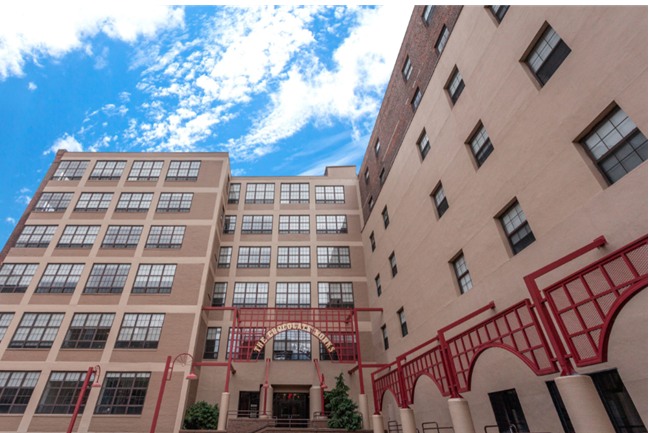
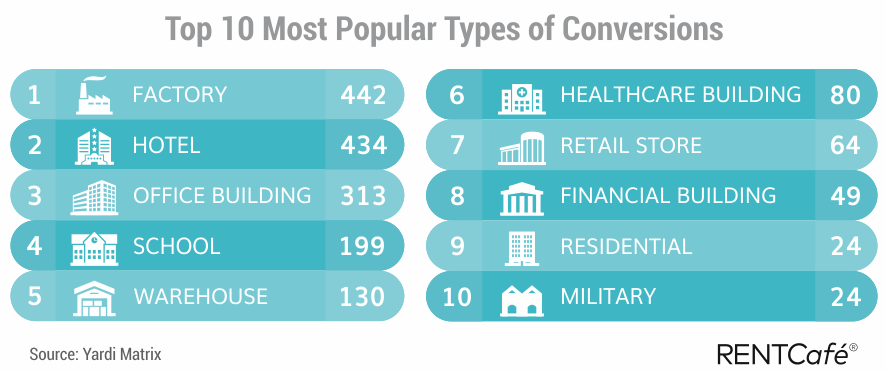
Along with changing economic needs and trends, the types of buildings turned into apartments have also changed over time. For instance, from the ’50s through the ’90s, hotels were the most common type of building to be converted into apartments. Then, in the 2000s, it was mostly factories that became apartments.

Finally, in the 2010s, offices were the most common structures to be turned into rentals.

Former Factories, Office Buildings Becoming Apartment Conversions
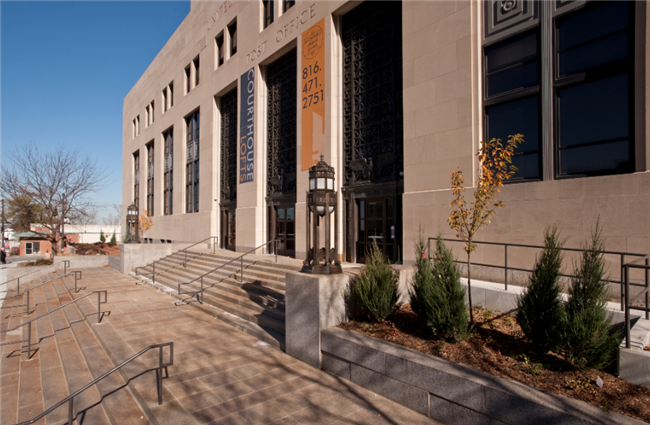
The federal courthouse in downtown Kansas City has long been an icon of the city. When it was converted, the apartment building took advantage of the huge space that the former courthouse had to offer. Today, its residents enjoy wide open floor plans and huge walk-in closets. And, yes, the three humongous front doors are still in place, ready to welcome you. Image courtesy of RentCafe.

Highlights of the apartment-conversions report:

  • In the last 70 years, almost 2,000 buildings were converted into apartments, including around 800 in the last decade alone — an all-time high.
  • Chicago tops the list with the most adaptive-reuse apartment buildings, while New York City leads with the most apartments.
  • Factories are the most popular building type to be converted into rentals, but office-to-apartment conversions were the most common in the 2010s

The federal courthouse in downtown Kansas City has long been an icon of the city. When it was converted, the apartment building took advantage of the huge space that the former courthouse had to offer. Today, its residents enjoy wide open floor plans and huge walk-in closets. And, yes, the three humongous front doors are still in place, ready to welcome you.

Apartment conversions a key to affordable housing

The report says 65 percent of converted buildings are aimed at middle- and lower-income renters.

Specifically, as many as 42 percent of conversions are oriented toward middle-income renters, while 23 percent are accessible to low-income residents.

In these last decades, all kinds of buildings have been transformed into affordable rentals — from offices and banks to churches and old warehouses.

Apartment conversions include a former asylum
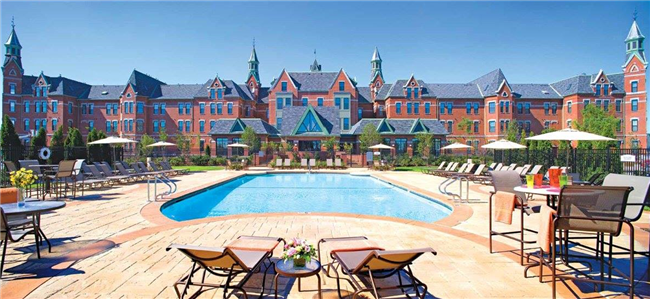
Former asylum built 1878: Bradlee Danvers by HGI in Danvers, MA. Photo courtesy of RentCafe.

But, out of every building type that has been adapted over the years, former hotels made up the largest share of affordable apartments (86 percent) and were even  with school buildings.

Similarly, of all the repurposed healthcare buildings — such as hospitals, clinics and dispensaries — 79 percent are affordable.

Read the full post here.

2020 Apartment Construction Down 12%, a 5-Year National Low

Lack of New Construction Underlying Cause of Oregon Housing Affordability Crisis

Sign Up For Our Newsletter And Get Apartment News And Helpful, Useful Content Each Week.

* indicates required

Landlord to Pay $177,000 to Settle Sexual Harassment Lawsuit

Landlord to Pay $177,000 to Settle Sexual Harassment Lawsuit

A landlord and his wife have agreed to pay $177,500 to settle a sexual harassment lawsuit charge that the landlord sexually harassed female tenants since at least 2013 at residential properties the couple owned in Cincinnati, Ohio.

The U.S. Department of Justice said in a release that  landlord John Klosterman and his wife, Susan Klosterman, will pay $177,500 to resolve the Fair Housing Act lawsuit.

Under the settlement, which still must be approved by the court, the Klostermans will pay $167,125 in damages to former tenants who were harmed by John Klosterman’s harassment, $7,875 to another plaintiff in the lawsuit, and a $2,500 civil penalty to the United States. The consent order also bars the defendants from participating in the rental or management of residential properties in the future, according to the Justice Department release.

“Sexual harassment of women in their homes is indecent, destructive, and illegal,” said Assistant Attorney General Eric Dreiband, for the Civil Rights Division, in the release.

“The Fair Housing Act protects the right of women and their families to live in peace and security and without the fear that deviant people will intimidate and bully them for sexual favors. This department will continue tirelessly to pursue landlords and others who abuse their authority by preying upon vulnerable women.”

“In this settlement, Klosterman acknowledges that the United States has evidence he sexually harassed tenants on multiple occasions,” said U.S. Attorney David M. DeVillers for the Southern District of Ohio, in the release. “He’s being held accountable under the Fair Housing Act and will pay more than $167,000 to victims of his heinous conduct.”

Sexual harassment lawsuit complaint

The complaint, filed in 2018, alleged that John Klosterman sexually harassed female tenants at the rental properties since at least 2013.

According to the complaint, he engaged in harassment that included, among other things, making unwelcome sexual advances and comments, sending unwanted sexual text messages and photos, engaging in unwanted sexual touching, offering to reduce rent and overlooking or excusing late or unpaid rent in exchange for sex, evicting or threatening to evict female tenants who objected to or refused sexual advances, and entering the homes of female tenants without their consent and otherwise monitoring their daily activities with cameras directed at their units.

The Justice Department’s Sexual Harassment in Housing Initiative is an effort to combat sexual harassment in housing led by the Civil Rights Division, in coordination with U.S. Attorney’s offices across the country. Since launching the initiative in October 2017, the Department of Justice has filed 18 lawsuits alleging sexual harassment in housing. Since January 2017, the Justice Department has filed or settled 23 cases alleging sexual harassment in housing and has recovered more than $2.9 million for victims of such harassment.

More information about the Civil Rights Division and the laws it enforces is available at http://www.justice.gov/crt . Individuals can report sexual harassment or other forms of housing discrimination by calling the Justice Department’s Housing Discrimination Tip Line at 1-800-896-7743, emailing the Justice Department at fairhousing@usdoj.gov, or submitting a report online. Individuals can also report such discrimination by contacting HUD at 1-800-669-9777 or filing a complaint online.

Justice Department Sues Owner, Manager of Rental Properties for Sexual Harassment of Female Tenant

California Apartment Owners, Manager to Pay $14,500 to Settle HUD Sexual Harassment Complaint

Sign Up For Our Newsletter And Get Apartment News And Helpful, Useful Content Each Week.

* indicates required


Portland Sees 7 Straight Months of Rent Decline

Portland rents decline for 7 straight months

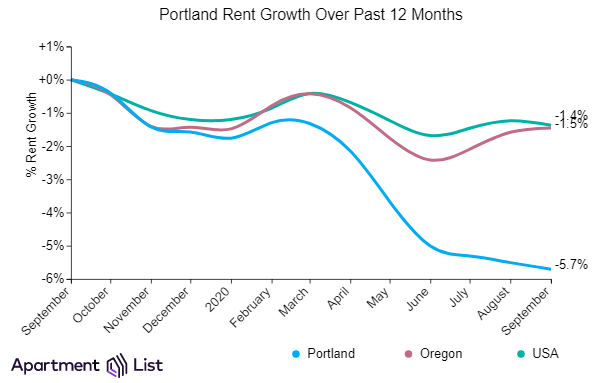
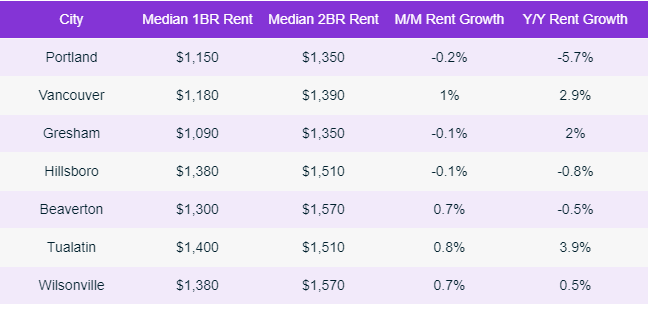
Portland rents continued to decline in September for the seventh straight month, dropping another 0.2 percent over the past month, according to Apartment List.

Rents are now down sharply by 5.7 percent in Portland year-over-year.

Rents in Portland are $1,155 for a one-bedroom apartment and $1,346 for a two-bedroom.

New methodology to track rents

“These rent statistics represent our latest effort to design methods that address the most common issues that arise in rent-growth estimation,” said Chris Salviati, Housing Economist for Apartment List.

“In particular, this update reflects a concerted effort to capture transacted rents, as opposed to list rents, and we’ve found the difference to be meaningful during the pandemic.

“Our new numbers continue to paint the picture of a protracted national slowdown and uneven recovery: the national rent index is down 1.4 percent year-over-year, but there is tremendous regional variation beneath the surface. San Francisco and New York City continue to lead the nation in pandemic rent drops, while smaller markets like Boise and Colorado Springs are heating up,” Salviati said.

Rents rising across cities in the Portland Metro

Portland metro rents rising

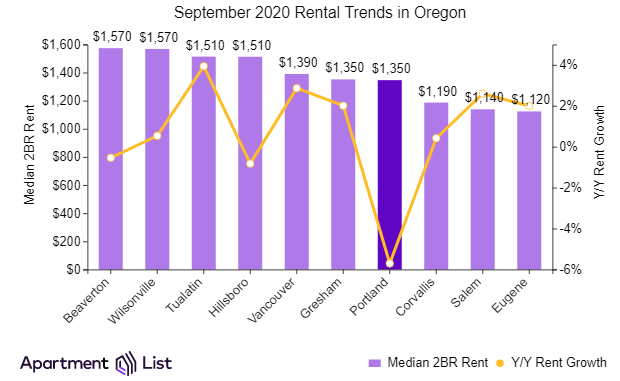
While rent decreases have been occurring in the city of Portland over the past year, cities in the rest of the metro are seeing the opposite trend.

Rents have risen in seven of the largest 10 cities in the Portland metro for which Apartment List has data.

Tualatin, Vancouver, and Salem have all experienced year-over-year growth above the state average (3.9 percent, 2.9 percent, and 2.6 percent, respectively).

Oregon as a whole logged rent growth of -1.5 percent over the past year.

Hillsboro and Beaverton see rent declines

Portland suburbs rent

Looking throughout the metro, Beaverton is the most expensive of all Portland metro’s major cities, with a median two-bedroom rent of $1,574.

Hillsboro and Beaverton, where two-bedrooms go for $1,513 and $1,574, are the two other major cities in the metro besides Portland to see rents fall year-over-year (-0.8 percent and -0.5 percent).

Eugene rents keep climbing

Eugene rents keep going up

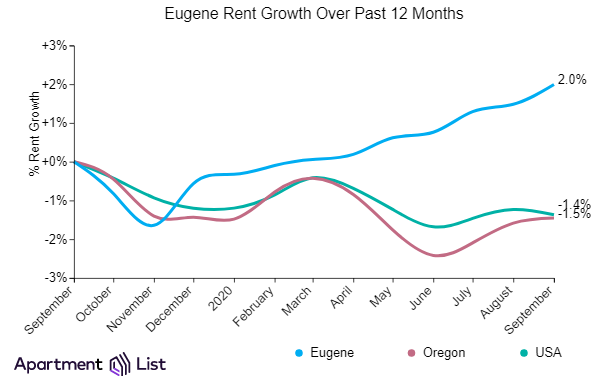
Eugene has seen a steady 10 straight months of rent increases.

September rents in Eugene have increased 0.5 percent over the past month, and have increased moderately by 2.0 percent in comparison to the same time last year.

Median rents in Eugene are $846 for a one-bedroom apartment and $1,124 for a two-bedroom.

Corvallis has also seen steady rent increases for the past four months. Corvallis rents were up 0.5 percent in September, but have been relatively flat at 0.4 percent in comparison to the same time last year.

Median rents in Corvallis are $1,008 for a one-bedroom apartment and $1,187 for a two-bedroom.

Portland Approves Measure to Make Landlords Who Raise Rent Pay to Move Tenants

Sign Up For Our Newsletter And Get Apartment News And Helpful, Useful Content Each Week.

* indicates required


The Looming Debt Trap Facing Renters

The Looming Debt Trap Facing Renters

The looming debt trap facing renters post comes from Growing Homes Together, a project of the National Multifamily Housing Council.

By Growing Homes Together

While the CDD and state and local governments are issuing eviction moratoriums these “do nothing to help renters pay their rent or deal with the financial distress households are facing,” Growing Homes Together writes in its most recent blog post.

“Eviction moratoriums of varying degrees have been implemented across the country in well-intentioned, but short-sighted attempts to shield renters from the economic fallout of the COVID-19 pandemic. While on the surface eviction moratoriums may seem like attractive policy tools to help renters facing prolonged unemployment or reduced income, they actually can cause more harm than good.”

Kicking the can down the road

The eviction moratoriums make it increasingly difficult for housing providers to meet their financial obligations and continue to provide shelter to those who need it most, Growing Homes Together writes.

“Renter households already owe unsustainable amounts of back rent and that figure can only be expected to grow by degrees of magnitude the longer the eviction moratorium drags on.”

Eviction moratoriums “merely kick the can down the road and make it increasingly difficult for housing providers to meet their financial obligations and continue to provide shelter to those who need it most.”

Most landlords and other housing providers in the U.S. are small businesses or individuals not equipped to absorb months of unpaid rent. “This financial downturn also runs the risk of bankrupting small housing providers. Without support, the units they maintain could be removed from the market – making the country’s housing shortage even more severe.

“Very soon, this health and economic crisis could become a housing and financial crisis,” Growing Homes Together writes.

“Saddled with months of back-rent and accumulating credit card debt, renters throughout the U.S. could be forced to turn to bankruptcy at a scale we have not seen in decades. The ensuing defaults would have rippling effects throughout our entire economy, and our financial system could be facing another 2008-like downturn.

Growing Homes together points out that the CARES Act helped renters stay current during the early days of the pandemic. But those funds have run out leaving a debt trap facing renters.

Washington needs to help with the debt trap facing renters

“While housing is local, the financial challenges facing renters and the apartment industry are of a national magnitude. Eviction policies are best left to state and local officials who better know the intricacies of their housing markets and can tailor protections to the varied and unique eviction laws and judicial processes across jurisdictions.

“The CDC’s blanket eviction moratorium fails to take this into consideration and threatens to make a bad situation worse by luring renters into a debt trap few will be able to climb out of unassisted. However, what is clear is that the federal government has a critical role to play by providing rental assistance to those who need it and prevent the eviction process from even beginning.

“The most effective way to avert a housing crisis is to keep renters current. To do so will require bipartisan agreement on a stimulus package that includes meaningful rental assistance.”

Read the full post here.

About the author:


Growing Homes Together (GHT), a project of the National Multifamily Housing Council (NMHC), is a resource center designed to spark discussions at the state and local levels about policy solutions to improve America’s housing crisis. NMHC is a national organization of more than 1,100 member firms involved in the multifamily housing industry.

NAA Sues CDC, Seeks Halt of Eviction Moratorium

Governor Extends Oregon Foreclosure Moratorium to End Of The Year

Sign Up For Our Newsletter And Get Apartment News And Helpful, Useful Content Each Week.

* indicates required

Salt Lake City Rents Increased Slightly Over The Past Month

Salt Lake City rents increased slightly over the past month

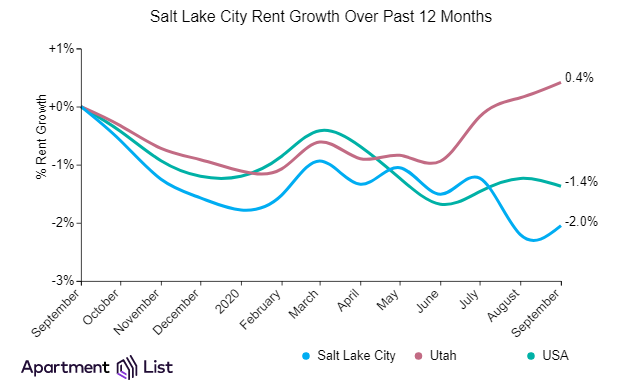
Salt Lake City rents have increased 0.2 percent over the past month, according to the latest September report from Apartment List.

Overall rents have increased in the city by 2.0 percent year-over-year.

Median rents in Salt Lake City are $918 for a one-bedroom apartment and $1,174 for a two-bedroom.

Salt Lake City’s year-over-year rent growth lags the state average of 0.4 percent, as well as the national average of -1.4 percent.

West Valley City rents declined over the past month

West Valley rents decline while Salt Lake City rents increased slightly over the past month

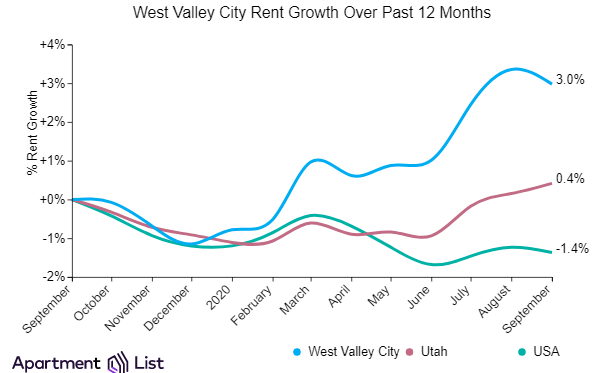
West Valley City rents have declined 0.4 percent over the past month

However, overall rents have increased moderately by 3.0 percent in comparison to the same time last year.

Median rents in West Valley City are $1,059 for a one-bedroom apartment and $1,248 for a two-bedroom.

West Valley City’s year-over-year rent growth leads the state average of 0.4 percent.

Portland Sees 7 Straight Months of Rent Decline

Portland Approves Measure to Make Landlords Who Raise Rent Pay to Move Tenants

Sign Up For Our Newsletter And Get Apartment News And Helpful, Useful Content Each Week.

* indicates required