Home Blog Page 77

Rent Inflation Hits Outer-Ring Suburbs The Hardest

Rent inflation has hit the outer-ring suburbs of major metros the hardest in the last two years, according to new research from Apartment List.

Rent inflation has hit the outer-ring suburbs of major metros the hardest in the last two years, according to new research from Apartment List.

The report says, “Over the past two and a half years, the rental market has been on a rollercoaster ride, as the pandemic has shaken up the ways that we live and work. As remote work has made proximity to the office less of a concern for housing choice, one result has been that the suburbs of large metros have been experiencing notably faster rent growth than the core cities that they surround,” Chris Salviati and Rob Warnock write in the report.

“We estimate that since March 2020, rents have increased by an average 19.8 percent in the core cities of large metros, while the suburbs of these metros have seen rents spike by 27.2 percent,” Salviati and Warnock write.
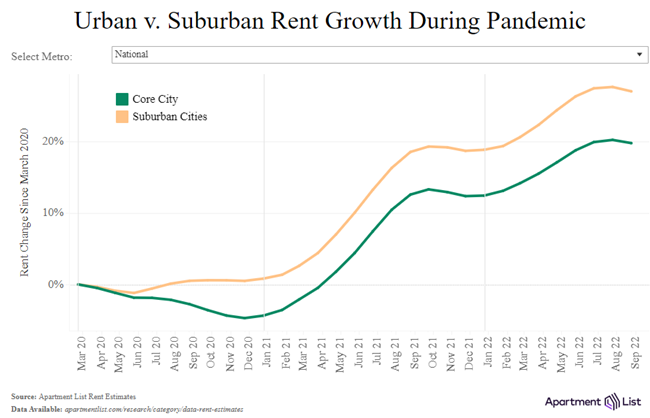
Rent inflation has hit the outer-ring suburbs of major metros the hardest in the last two years, according to new research from Apartment List.
Charts courtesy of Apartment List.

Remote work leads to fastest rent growth in far-flung outer-ring suburbs of major metros

The report says the impact of remote work on these changing preferences “would seem to be validated by an additional finding that emerges when we break down our suburban rent data into more granular categories.

“Namely, the fastest rent growth since March 2020 has been occurring in the suburbs that sit furthest from the urban core. For the purposes of this analysis, we have limited the data to 13 large metros where we have robust rent estimates for a wide swath of suburbs at varying distances from the core city.

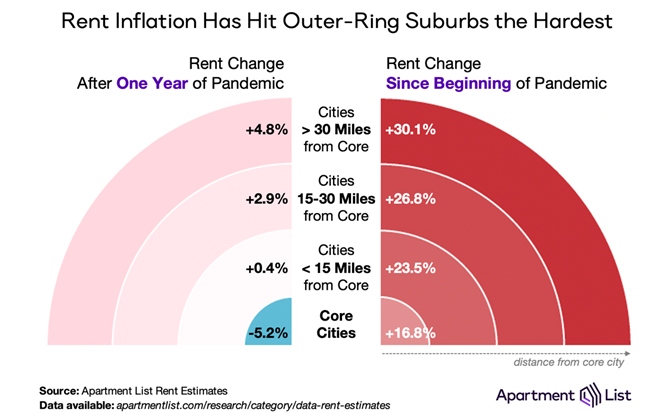
“Among these 13 metros, the first year of the pandemic brought an average rent decline of 5.2 percent in the core cities. Over that same year, the outer-ring suburbs that sit more than 30 miles from the core city saw the fastest rent growth, with an average increase of 4.8 percent, roughly proportional to the decline in the core cities. Looking over the full pandemic period, rents in the core cities have risen by an average of 16.8 percent since March 2020. Over the same period, the near suburbs that lie within 15 miles of the core cities saw rents increase by 23.5 percent.

“Meanwhile, the mid-distance suburbs (15 to 30 miles from the core city) experienced rent growth of 26.8 percent, and the farthest flung suburbs that are more than 30 miles from the urban core have seen the fastest rent growth at 30.1 percent.3 In other words, rent growth has been progressively hotter moving outward in concentric rings from the urban core.
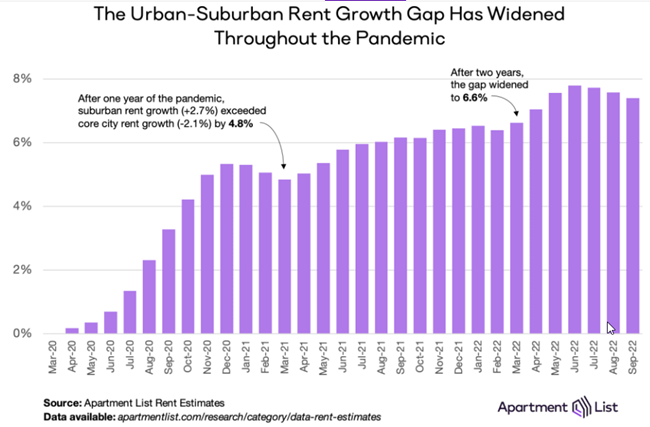
Rent inflation has hit the outer-ring suburbs of major metros the hardest in the last two years, according to new research from Apartment List.
Charts courtesy of Apartment List

Rent Inflation: Some highlights and examples:

    • Phoenix

Phoenix Urban-Suburban Rent Growth Since 2018
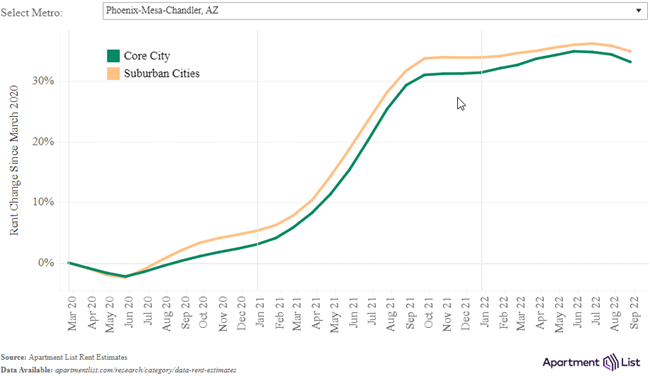
  • Phoenix inflation has hit the outer-ring suburbs of major metros the hardest in the last two years, according to research from Apartment List.
  • In the first year of the pandemic, rents in the city of Phoenix rose by 5.8 percent, compared to an increase of 7.8 percent in the metro’s surrounding suburbs.
  • From the start of the pandemic to present, Phoenix rents are up by 33.2 percent, while the metro’s suburbs have seen rents rise by 34.9 percent.
  • Among the 39 metros that we analyzed, 33 have seen rent inflation and growth in the outer-ring suburbs outpacing that of the core cities. On average, rent growth has been fastest in the suburbs that sit farthest from the urban core.
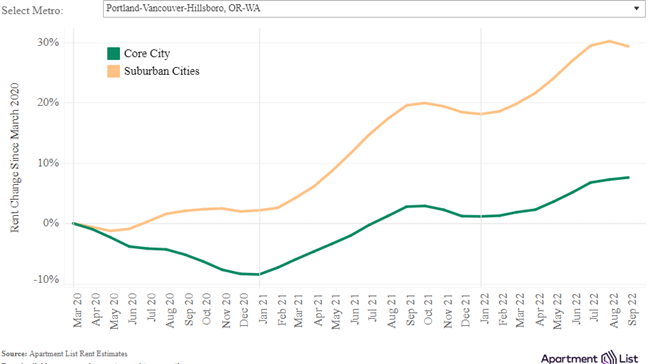
  • Portland
        • Portland ranks #2 for widest gap between core city and suburban rent growth
        • In the first year of the pandemic, rents in the city of Portland fell by 6 percent, compared to an increase of 4.2 percent in the metro’s surrounding suburbs.
        • From the start of the pandemic to present, Portland rents are up by 7.6 percent, while the metro’s suburbs have seen rents rise by 29.3 percent.
        • Among the 39 metros that we analyzed, 33 have seen rent growth in the suburbs outpacing that of the core cities. On average, rent growth has been fastest in the suburbs that sit farthest from the urban core.

      Portland Urban-Suburban Rent Growth Since 2018

      • Portland outer-ring suburbs
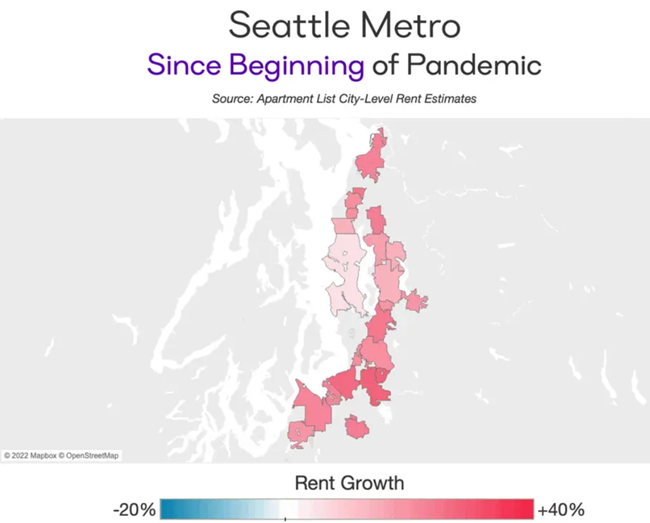
    Seattle
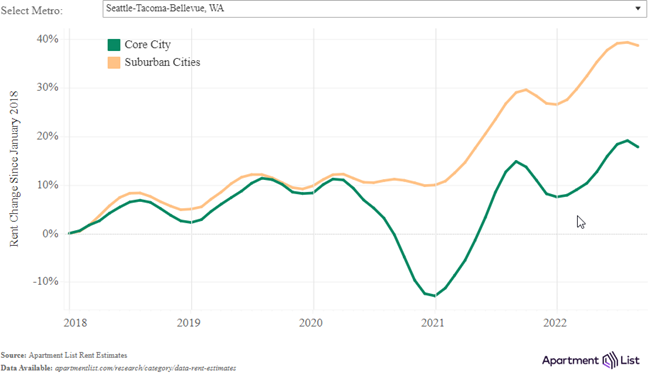
        • Seattle ranks #3 for widest gap between core city and suburban rent growth
        • In the first year of the pandemic, rents in the city of Seattle fell by 17.8 percent, compared to an increase of 0.4 percent in the metro’s surrounding suburbs.
        • From the start of the pandemic to present, Seattle rents are up by 6 percent, while the metro’s suburbs have seen rents rise by 23.8 percent.
        • Among the 39 metros that we analyzed, 33 have seen rent growth in the suburbs outpacing that of the core cities. On average, rent growth has been fastest in the suburbs that sit farthest from the urban core.

      Seattle Urban-Suburban Rent Growth Since 2018

      • Seattle  inflation has hit the outer-ring suburbs of major metros the hardest in the last two years, according to research from Apartment List.
    • Seattle suburbs

Conclusion

The past two and half years “have ushered in rapid changes to the ways that we live and work, driving significant shakeups to the housing market. One such disruption has been a spike in demand for suburban rentals. Even before the pandemic, increasingly unaffordable housing costs close to the urban core had been pushing more and more renters to the far peripheries of the nation’s large metro areas, resulting in a proliferation of “super commuters.” Spiking demand in the far suburbs appears to have more to do with affordability than with geographic preference – this trend should only emphasize the need for sustainable development with easy transit-oriented access to the urban core.”

Read the full report here.

About the authors:

Chris Salviati is a senior housing economist at Apartment List, where he conducts research on economic trends in the housing market.  Chris previously worked as a research assistant at the Federal Reserve and an economic consultant, and he has BA and MA degrees in economics from Boston University.

Rob Warnock is a senior research associate at Apartment List, where he examines trends in the housing and rental markets. Previously he worked in public health policy, and before that, graduated from UCLA with a degree in Globalization.
National Rents Decline for Second Month In September

National Multifamily Rent Growth Hits A Wall In August

Sign Up For Our Weekly Newsletter And Get Rental Property And Apartment News And Helpful, Useful Content Each Week.

* indicates required

National Rents Decline for Second Month In September

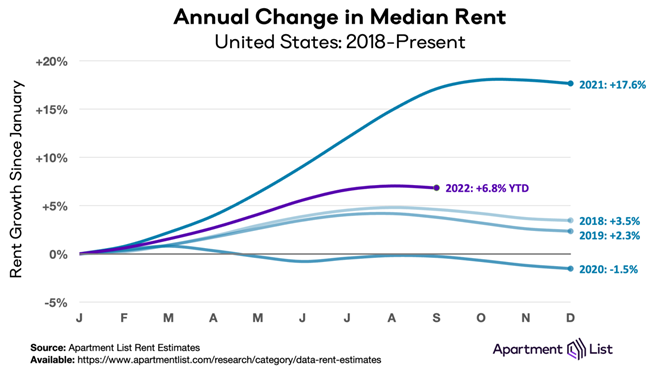
National rents declined by 0.2 percent in September, the first time this year that the national median rent has declined month-over-month

National rents declined by 0.2 percent over the course of September, marking the first time this year that the national median rent has declined month-over-month, according to the September report from Apartment List.

Rents fell in 69 of the 100 largest cities.

“The timing of this slight dip in rents is consistent with a seasonal trend that was typical in pre-pandemic years. Assuming that trend continues, it is likely that rents will continue falling in the coming months as we enter the winter slow season for the rental market,” the report says.

Normal seasonality at this point in the year

Apartment List points out that the recent rent declines are in line with the normal seasonal trends pre-pandemic.

“But given how atypical the market has been for the past two and a half years, this month’s return to pre-pandemic seasonality represents a notable shift.

“Last September, rents spiked by 1.9 percent month-over-month, as the market continued on an unprecedented stretch of record-setting rent growth which disrupted seasonal trends. In contrast, from 2017 to 2019, rents fell by an average of 0.3 percent in September, right in line with this month’s decline. Assuming that this year’s trajectory continues to follow normal seasonal trends, we can expect to see additional modest declines in the months ahead, as rental market activity slows during the winter months.”

Slowing Rent Growth and Rising Vacancy

National rents declined by 0.2 percent in September, the first time this year that the national median rent has declined month-over-month
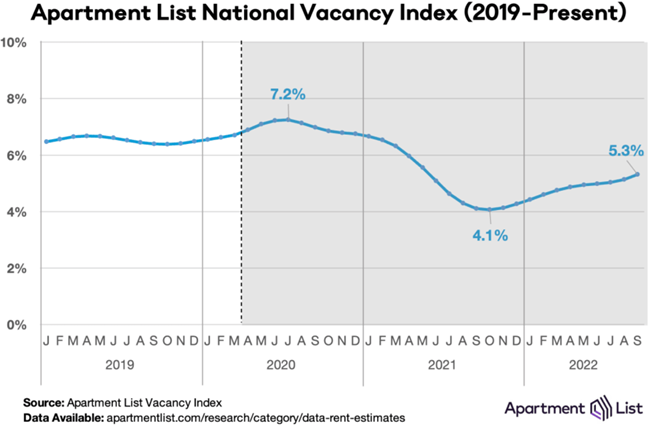
Chart courtesy of Apartment List

The slowing rent growth is being mirrored by continued easing on the supply side of the market, the report says.

“After bottoming out at 4.1 percent in October 2021, our national vacancy index has been on a trend of gradual easing. This month it rose to 5.3 percent and has shown nearly one full year of continued, albeit slow, improvements,” the report says.

“It’s worth noting, though, that rental vacancies are intertwined with housing availability in the for-sale market, and it’s possible that spiking mortgage rates are dampening the rebound in the rental-vacancy rate. High interest rates can sideline potential first-time homebuyers and keep them in the rental market longer. Two years of sustained rent inflation may also be incentivizing renters to stay put and renew existing leases rather than looking for new ones.”

National Multifamily Rent Growth Hits A Wall In August

Sign Up For Our Weekly Newsletter And Get Rental Property And Apartment News And Helpful, Useful Content Each Week.

* indicates required

How to Plan Your Delaware Statutory Trust to Remove the Stress of a 1031 Exchange

How to Plan Your Delaware Statutory Trust to Remove the Stress of a 1031 Exchange

By Matt McFarland
Senior Vice President
Kay Properties and Investments

 Any investor who is considering selling a piece of investment real estate will undoubtedly consider a 1031 Exchange.

A 1031 Exchange refers to the IRS code that allows significant tax advantages for investors.  How? When you sell an investment property and you have a profit, you normally are required to pay capital gains tax. A 1031 Exchange allows you to sell your investment real estate and reinvest the proceeds in a “like-kind” property, which defers any capital gains and other related taxes. This doesn’t mean you are eliminating any of these taxes, rather you are able to defer them until a later date.

However, any investor who has completed a 1031 exchange knows that one of the biggest hurdles to clear is the many time constraints and tight closing windows the IRS imposes when it comes to like-kind exchange investing. The entire 1031 Exchange process must be completed within 180 days. The clock starts ticking day one after your relinquished property is sold and the funds are escrowed with Qualified Intermediary (QI). On a side note, it is essential you never hold the proceeds from the sale outside of a QI. If you touch the funds at any time during the process, you eliminate your eligibility for a 1031 exchange and you have to pay all of the capital gains and other related taxes.

As an expert 1031 Exchange professional, I can tell you that it is the initial 45-day identification period that causes the most stress, as an investor is required to formally identify the property or properties, they intend to purchase within a matter of about 6 weeks. More specifically, in order to avoid any tax liability, you must identify a property or properties that are of equal or greater value than the relinquished property. You can identify up to 3 separate properties with no regard to their value (3 property rule), or you can identify an unlimited number of properties that do not exceed more than 200% of the value of the relinquished property (200% rule).

Here’s a quick summary of the 1031 Exchange rules investors should keep in mind when considering selling a piece of investment property:

  • Entire 1031 Exchange process must be completed within 180 days
    • Day 1 – Sell your property; proceeds are escrowed with a Qualified Intermediary (QI)
    • Day 45 – Identify a property(s); you must notify your QI of the identified property(s)
    • Day 180 – Close on new property; you must close within 180 days after the first sale
  • Maintain equal or greater amount of equity
  • Maintain equal or greater amount of debt

Plan Ahead to Reduce the 45-Day Identification Stress

One of the best ways to mitigate the stress of this short time window is to begin searching and selecting potential like-kind properties before you officially close on your relinquished property and the 45-day time clock starts ticking.

When it comes to Delaware Statutory Trust properties, the underlying real estate that is a part of a particular offering is acquired and owned by the trust before it is ever accessible to 1031 exchange investors to consider as an option.  This “pre-packaged” element of DSTs affords investors who are in the process of a 1031 Exchange the luxury of a quick and seamless close of their purchase of a DST property.

Another great benefit of DSTs for 1031 Exchange investors is that they can make a great back-up or contingency plan. Real estate deals fall apart all the time, and if your replacement property in a 1031 Exchange falls apart for any number of reasons, you could be in a tight spot. Using a DST as an “identified” property makes a great contingency plan if your initial deal does fall through.

However, it is important to remember that even though the Real Estate Sponsor Company has completed their due diligence and acquired a particular property for one of their DSTs does not mitigate the need for an investor to conduct their own due diligence on the various DSTs.

Make sure to look at current DST properties offered on the www.kpi1031.com marketplace.

All 1031 exchange investors, with the help of their Kay Properties’ Registered Representative, will assess the various opportunities to ascertain the best potential solution for their particular situation and/or circumstance.

When is the Best Time to Start the DST Selection Process?

In most cases, the most opportune time to begin the screening process is about 30 days before you are scheduled to close on your relinquished or downleg property.  The reason for this is simple – DST investments have a finite shelf life or a limited time in which they are ‘open’ for investment.  DST offerings are capped at a specific value and as soon as the last dollar is invested, that particular DST offering is no longer available for further investment.

In my experience, DST offerings are typically available for purchase for about 1-3 months.  In many cases, it would be an improper allocation of one’s time to begin the selection process 3-6 months out, as most of the opportunities considered will be sold out by the time they have the capital to invest as part of their 1031 exchange.  Within 30 days, many of the opportunities will likely be viable options for one to consider as reservation can be made for one’s allocation.  In a perfect scenario, an investor has decided exactly which DSTs they are purchasing before they close on their relinquished property.  This grants them the ability to quickly close on their DST investments as soon as the funds from the sale become available and successfully complete their 1031 exchange just a few days into their 45-day identification period.

Keeping these points in mind should not only greatly mitigate most of the stress associated with a 1031 exchange, they will also help you to potentially begin accruing cash flow immediately from their investments (a luxury afforded through the quick and seamless purchase of a DST relative to a traditional real estate transaction, which may stretch on for months).

Ask Bill Exeter

Ask Bill Exeter and his team your questions about 1031 exchanges and he and his team will get back to you.

Name

For more information on the 1031 exchange and DST selection process, please reach out to your Kay Properties Registered Representative or visit www.kpi1031.com for more resources.

About Kay Properties and www.kpi1031.com

Kay Properties is a national Delaware Statutory Trust (DST) investment firm. The www.kpi1031.com platform provides access to the marketplace of DSTs from over 25 different sponsor companies, custom DSTs only available to Kay clients, independent advice on DST sponsor companies, full due diligence and vetting on each DST (typically 20-40 DSTs) and a DST secondary market.  Kay Properties team members collectively have over 150 years of real estate experience, are licensed in all 50 states, and have participated in over $30 Billion of DST 1031 investments.

This material does not constitute an offer to sell nor a solicitation of an offer to buy any security. Such offers can be made only by the confidential Private Placement Memorandum (the “Memorandum”). Please read the entire Memorandum paying special attention to the risk section prior investing.  IRC Section 1031, IRC Section 1033 and IRC Section 721 are complex tax codes therefore you should consult your tax or legal professional for details regarding your situation.  There are material risks associated with investing in real estate securities including illiquidity, vacancies, general market conditions and competition, lack of operating history, interest rate risks, general risks of owning/operating commercial and multifamily properties, financing risks, potential adverse tax consequences, general economic risks, development risks and long hold periods. There is a risk of loss of the entire investment principal. Past performance is not a guarantee of future results. Potential cash flow, potential returns and potential appreciation are not guaranteed.

Nothing contained on this website constitutes tax, legal, insurance or investment advice, nor does it constitute a solicitation or an offer to buy or sell any security or other financial instrument. Securities offered through FNEX Capital , member FINRA, SIPC.

Why Real Estate Syndication Is Important for Delaware Statutory Trust 1031 Exchange Real Estate Investors

Six Ways to Ensure Your 1031 Exchange is Successfully Completed

Kay Properties & Investments Has Record Year With $610 Million In Equity Placed

The Importance of Human-Trafficking Knowledge for On-Site Teams

Training and knowledge of human trafficking for multifamily on-site staff teams is important and  remember to focus on situations and behaviors rather than appearances, since traffickers come from all walks of life.
Human Trafficking. Torn pieces of paper with the words Human Trafficking. Concept Image. Black and White. Closeup.

Training and knowledge of human trafficking for multifamily on-site staff teams is important and  remember to focus on situations and behaviors rather than appearances, since traffickers come from all walks of life.

By Lori Agudo

Human trafficking is a crime and a tragedy that affects people of all ages, genders, ethnicities and socioeconomic backgrounds, as well as all communities, including multifamily. If you can believe it, the United States is one of the worst areas in the world for human trafficking, with an estimated 199,000 incidents per year.

However, because of the difficulty in identifying human trafficking, less than 10 percent of incidents are reported each year. Only through continual education and training can the nation address this frightening abuse of humans and move toward reducing and removing it from society. With a lack of boundaries for where the victimization can occur, multifamily will have its share of trafficking – but there are ways for property managers and onsite associates to recognize it.

In 2021, the state of Florida mandated that apartment communities and other public lodging establishments provide annual training on human trafficking awareness to employees. At Royal American, it is now a requirement for all on-site staff, including outside the state. As stewards in our community, it’s imperative that we work towards the rights and safety of individuals, and the right training can save lives. All on-site staff in the service industry can benefit from this training. Keep in mind that having this training available in multiple languages is crucial for employees who feel more comfortable taking coursework in their first language.

Our teams have found this training to be invaluable. When the company began offering training for identifying trafficking, many employees expressed gratitude for the education. Many were unaware this type of crime was present in multifamily, and they were appreciative of the tools that provided increased awareness and the ability to identify possible trafficking situations during everyday interactions. Now, on-site teams work diligently to pay close attention to each interaction they have with residents and applicants. They are also looking for signs of human trafficking while conducting monthly unit inspections.

The Facts of Human Trafficking

 Human trafficking is often confused with migrant smuggling, but the two are very different. While human trafficking does involve movement across borders, that factor is not required. Trafficking goes far beyond that, focusing on the exploitation of adults and children for the purposes of financial gain.

In addition to the 199,000 estimated annual incidents in the United States, there are approximately 24 million people in the world being trafficked at any given moment. More than 70 percent of the victims are women and girls, and only around one percent of victims are ever rescued, making identification all the more critical.

In the United States, human trafficking has overtaken drug trafficking as the nation’s top-growing crime because victims can be used repeatedly. Traffickers will use their victims for an average of three to five years. In the United States alone, the money generated annually from trafficking is about $100 million.

Traffickers have no consistent profiles. As with their victims, perpetrators of trafficking cross all standard societal lines, and it’s not only strangers who prey on victims. Family and friends are frequently involved in this criminal activity. As a result, the identification of traffickers cannot be based on any stereotypes, and being aware of specific behavioral and social cues can often identify a human trafficking crime.

 The Three Main Types of Human Trafficking

There are three primary types of human trafficking. Human trafficking, while obviously illegal, is not always blatant. Workers in private homes, retail establishments and several industries may also be caught up in trafficking scenarios.

  • Child sex trafficking: The use of force, coercion or fraud to compel a person under the age of 18 to engage in commercial sexual activity. This can occur in homes, brothels, hotels or on the Internet.
  • Adult sex trafficking: In order to stamp out the use of the nonsensical term “child prostitute,” this was created as a separate term in trafficking. Force, fraud and coercion may not always be present in adult sex trafficking, and a degree of consent could be present. It is still exploitation of the victim by the trafficker, and it usually takes place in the same areas as child trafficking.
  • Labor trafficking: The use of fraud, force and coercion to push someone into providing work or services. This can include agriculture, domestic work, restaurants, cleaning services, and carnivals. Domestic servitude (work in a private residence) and forced child labor (use and transportation of children for work) are also forms of labor trafficking.

Indications of Human Trafficking

While this section will focus on the identification of human trafficking in a multifamily community, many of these behaviors can also present themselves in other places. It’s vital to remember to focus on situations and behaviors rather than appearances, since traffickers come from all walks of life. The following are a few things to on-site staff to observe:

  • Living situations: Apartments that are used for trafficking may have too many residents than the unit is designed for. Unusual or unsuitable living conditions may also be present, such as multiple mattresses on the floor, blacked-out windows, and locks designed to keep people in instead of out. Movement in and out of the apartment may appear odd, including frequent, short visits of 15 to 45 minutes by non-residents. Traffickers may not want to stay in one area too long, so a short-term lease coupled with these signs could be a red flag for on-site staff.
  • Actions and activity: Property managers should look for groups of people picked up and dropped off at the same time almost every day with none of them allowed to travel on their own. Traffickers will also inquire about the locations of cameras and other security features. Victims may not have access to their own documents and may refuse to answer questions, deferring to the person they are with. Another red flag for on-site teams is if the person they allow to answer questions is unfamiliar with the victim or is unclear with information regarding the person.
  • Behavior and demeanor: While some may refuse to answer questions, victims of trafficking may also respond with answers that sound scripted and rehearsed. They may also appear to be timid, fearful and submissive while declining to make eye contact when spoken to. The presence of law enforcement can cause discomfort or anxiety for both traffickers and their victims. Victims may exhibit physical or mental signs that indicate exploitation. They can appear to be hungry, thirsty or sleep-deprived, as well as display confusion, disorientation or a lack of knowledge of their whereabouts.

Steps to Take for Suspected Trafficking

If you spot the above signs in your community or at a specific unit, it is always best to take action. Unfortunately, law enforcement is not always the best course of action when it comes to trafficking situations, since they may not be able to immediately address the situation. Multifamily managers and associates can report suspected trafficking situations to the National Human Trafficking Hotline at 1-888-373-7888 (TTY: 711) or by sending an SMS text to 233733.

 About the author:

Training and knowledge of human trafficking for multifamily on-site teams is important and  remember to focus on situations and behaviors rather than appearances, since traffickers come from all walks of life.
Lori Agudo

Lori Agudo is a multifamily educator, philanthropist, and legislative advocate. She is the Director of Training and Talent Development at Royal American Management Inc. An expert in developing teams and curriculum, Lori is a facilitator of many workshops including the Facilitator Training Program, Hiring 101, and the Future Leaders program for the Apartment Association of Greater Orlando. Lori is also an </stro

Sign Up For Our Newsletter And Get Rental Property And Apartment News And Helpful, Useful Content Each Week.

* indicates required

ng>instructor for Certified Apartment Manager and Certified Apartment Leasing Professional credential programs.

Be Careful: Investors, Landlords Are Easy Targets for Fraud

Why I Like My Rental Properties’ Nosy Neighbors

Three Steps to Becoming a Successful, Lazy Landlord

What an Extra Bedroom (and Work Space) Costs Renters

The average American renter could make the switch to an apartment with an extra bedroom for $200 per month, according to a new study from RentCafé.

The average American renter could make the switch to an apartment with an extra bedroom for $200 per month, according to a new study from RentCafé.

More than half of the job holders in the United States have the opportunity to work from home at least one day a week, so the need for ample living spaces with work space has intensified even more.

The average American renter could make the switch to an apartment with an extra bedroom for $200 per month, according to RentCafé.

Overall, over the last 10 years, the size of new apartments has decreased, putting more pressure on extra space and extra bedrooms.

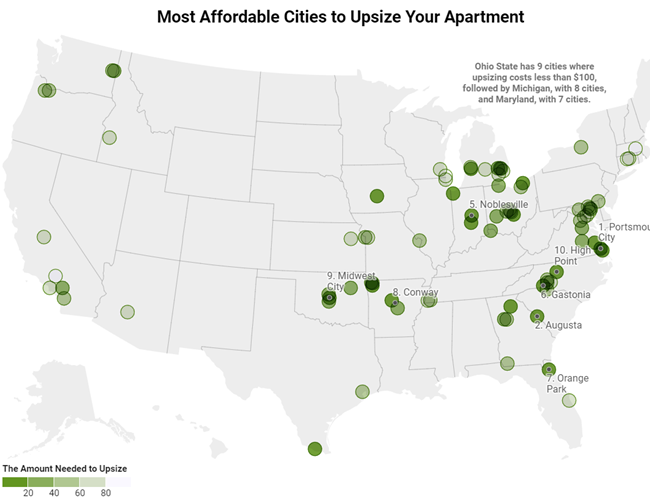
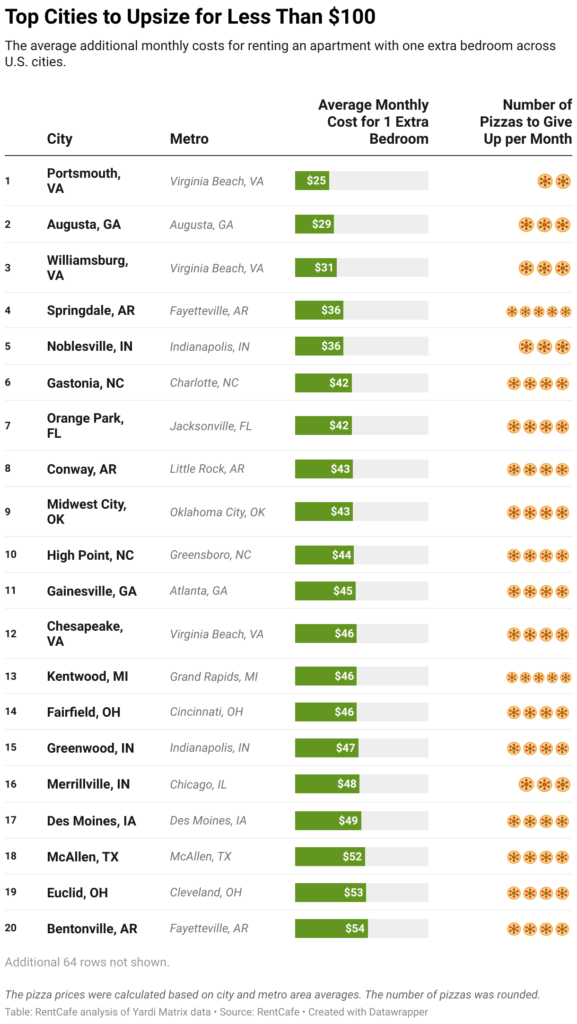
“For apartment-dwellers who want more space, one simple solution is to upsize on the cheap. That may not be an easy thing to accomplish in some cities — but do not worry, we found plenty of places where all you’d have to do is give up a couple of pizzas each month for an extra bedroom,” RentCafé says in the study.

“So, we looked at 728 U.S. cities and determined that, on average, it costs $199 extra per month to upgrade to an apartment with an additional bedroom. We then ranked the cities based on the lowest amount necessary to upgrade. Of these, in 83 locations — mostly suburbs — you could upsize for less than $100 per month.

The average American renter could make the switch to an apartment with an extra bedroom for $200 per month, according to RentCafé.
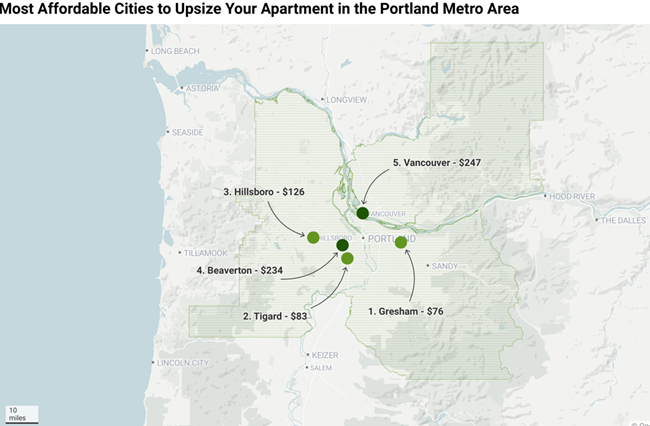
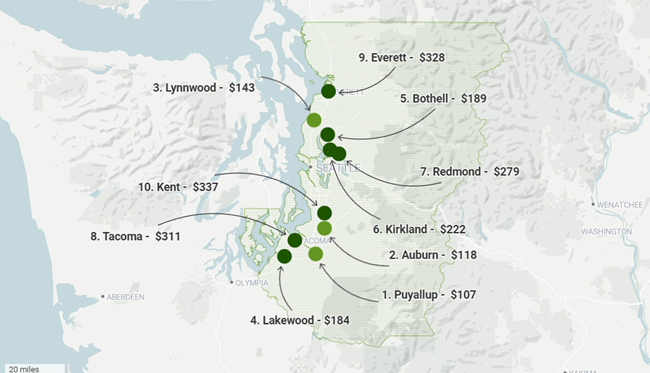
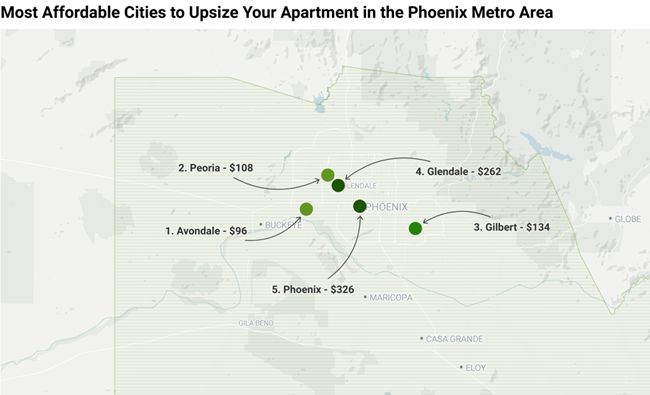
Charts courtesy of RentCafé shows Seattle area and cost of an additional bedroom in different parts of the metro.

“To be more specific, renters looking to upsize from a studio to a larger rental where the living room doesn’t double as a bedroom could do so just by paying an extra $71 per month.

“Furthermore, Americans living in one-bedroom apartments could make the move to a two-bedroom rental for an average extra cost of $236 per month. Meanwhile, those who already live in a two-bedroom apartment but need more space would need to take $294 per month, on average, out of their pockets,” the study says.

The average American renter could make the switch to an apartment with an extra bedroom for $200 per month, according to RentCafé.

The average American renter could make the switch to an apartment with an extra bedroom for $200 per month, according to a new study from RentCafé.
Chart courtesy of RentCafé

Apartment Construction to Reach 50-Year High

Sign Up For Our Weekly Newsletter And Get Rental Property And Apartment News And Helpful, Useful Content Each Week.

* indicates required

Apartments Are Getting Bigger As Builders Expand Unit Sizes

What Attracts Renters To Smaller Multifamily Properties?

Key Drivers of a Successful Multifamily Community Takeover

The key drivers of a successful multifamily community takeover require infusing your values into each interaction.

The key drivers of a successful multifamily community takeover require infusing your values into each interaction.

By Lino Frias

Starting off on the right foot is pivotal for a successful transition in community management. The takeover process must simultaneously maintain an organized approach, establish operational excellence, and create new relationships. By infusing your values into each interaction, you are on your way to becoming a trusted brand to your new residents.

Here are best practices for a multifamily community takeover at Mark-Taylor; follow these to execute the transition process to your highest standard.

Proactive organization and preparedness

Having a cohesive team is critical; be intentional about proactively preparing and aligning your team before day one of a takeover.

Equip your team by having the mindset of “They should know what I know.” Pour knowledge into the entire team that is going to be at the community. Use regular touchpoints to take the time to ensure every team member is well-connected and understands their responsibilities on day one.

Create a strong foundation with communication

Communication is imperative for resident and management success. The line of communication needs to be dialed in with your team, residents, and clients. Effective communication goes both ways. Create a solid foundation of communication with the following groups:

  •  Prior management team: It is important to have a professional partnership with the prior management team to collect operational/resident information and outstanding work orders. This information is vital to a seamless transition.
  • Local competitors: Create a relationship with your neighboring communities and submarket.
  • Residents: Do not just hear what your residents are saying. Take the time to listen, and understand where they are coming from.
  • Community team members: Set clear goals and expectations for your team.

Do your due diligence

Doing your due diligence means understanding the ins and outs of the newly acquired community. A thorough comprehension of your residents’ expectations begins with observing their mindsets and behaviors. Doing so builds lasting relationships and instills a sense of trust in your community.

The key to accurately assessing a new acquisition is to diligently review all aspects of the client and resident experience. Get to know neighboring communities, learn about the submarket, and create connections with other companies in the area. Set yourself apart by prioritizing the importance of setting and building community standards early.

Set a positive tone with residents

Set the tone for a healthy relationship with a positive attitude in every interaction. When you interact authentically, connection is fostered, and trust can be built.  First impressions matter; a successful business and resident experience will follow suit.

If previous issues from past management should arise, stay focused on positivity. Ensure you and your team avoid negative comments about past management, among each other and your residents. What is important is how you are committed to exceeding expectations moving forward.

Add a touch of TLC

From major management items such as amenity functionality to minor, thoughtful aspects like fresh coffee in the clubhouse, the daily care you put into your community speaks volumes. Identify opportunities to add value and highlight the community’s unique assets. Consider local factors that may affect the marketability of the community but also the safety and comfort of the residents.

Adding some tender loving care does not have to mean a complete overhaul. Small changes can make a big difference in how the community is preserved by residents and the community. Enriching the space  after you acquire a new community ensures that the community is always presentation-ready for future investment opportunities.

Simple ways to add value to a multifamily community: 

  • Increase standard of service through continuous and transparent communication with residents
  • Pay attention to detail – diligently picking up trash in community spaces, landscape upkeeping, cleanliness, etc.
  • Prioritize any outstanding work orders
  • Possess a positive attitude and willingness to go the extra mile
  • Freshen up community spaces, models, and amenities
  • Provide In-home tech upgrades
  • Install upgraded appliance packages
  • Incorporate finishing upgrades such as cabinetry handles and light fixtures

Many factors go into pulling off a successful multifamily community takeover, and preparing for it starts way before day one. Implementing these key aspects during your next takeover will set you, your residents, and your clients up for success.

About the author:

Key Drivers of a Successful Multifamily Community Takeover
Lino Frias

Lino Frias, transition manager at Mark-Taylor Residential, has been an integral part of our multifamily industry for 10 years. He started his career with the company in leasing, progressing to senior manager of community operations before his current position. 

 5 Keys To Attracting and Retaining Qualified Team Members

Sign Up For Our Newsletter And Get Apartment News And Helpful, Useful Content Each Week.

* indicates required


3 Best Practices for Communicating with Residents

5 Proven Methods to Enhance Your Apartment Community’s Digital Reputation

4 Ways to Balance the Needs of Pets and Residents in Multifamily Communities

Smart Home Technology a Wise Investment in Multifamily

smart home technology is a good investment for multifamily

Smart home technology is a wise investment in multifamily but there are several elements to consider and deciding which one is best for your community will likely be based on your demographic.

By Linda Coburn

 In 2022 “smart” is quickly becoming a prerequisite for long-term success and sustained competitive edge.

However, with more than 7.5 billion of the world’s population owning a smart phone, it’s surprising to realize the “smart” enhanced resident experience has only made its way to about 260 million homes. Smart home technology continues to drive the most discerning residents to multifamily communities offering the convenience and money-saving options at the touch of a button. Not only does a smart home technology package enhance the resident experience, it provides property managers and owners another layer of asset protection and operational excellence.

NexMetro Communities, a pioneer developer of single-family rental home neighborhoods, is focused on offering more viable technology options for our Avilla Homes residents nationwide. We’ve seen the demand and we are thrilled to further augment the smart tech elements that have long been standard in our homes.

Our process began by truly understanding the needs and wants of our residents. Tech is important, but we wanted to provide meaningful enhancements and not simply offer tech for tech’s sake. We conducted extensive research and sought out the best partners for the projects. That research included a comprehensive survey of our residents, dialing in what upgrades they were seeking and why those were important.

We have learned some fundamental aspects of these programs that speak to both the developer and the resident. While we are focused on these logistical and financial benefits, we want to provide the “wow factor” for our residents which is why we included smart switches which integrate with Alexa. A resident can log in to the app and see if they remembered to turn off their hot iron or other appliance. If they did forget, they can turn it off from their phone, creating peace of mind amidst a resident’s busy day.

The primary benefits for the residents include:

  • Maximum Convenience
  • Protection of Personal Belongings
  • Energy Efficiency and Money Savings

The primary benefits to the developer include:

  • Asset Preservation
  • Operational Efficiency
  • Vacancy Efficiency

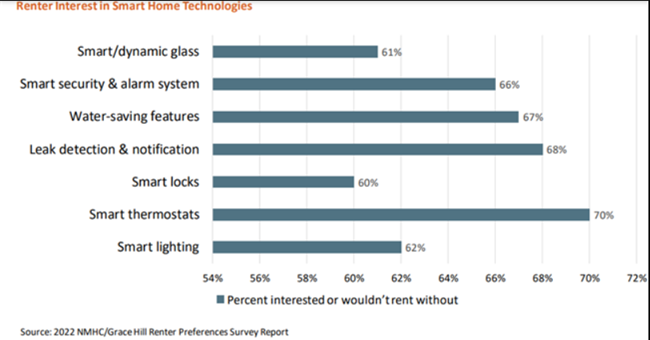
There are several elements to consider with a smart home technology package and deciding which one is best for your community will likely be based on your demographic. We chose a package that includes a keyless front door lock and a smart home thermostat. The thermostat also senses humidity levels which helps us detect if there ever is a leak in the unit. This not only helps us protect our assets but also helps the residents know if something is wrong. The system will send an alert to the resident as well as the maintenance team. In addition, the system has leak sensors for the hot water heater and the air conditioner.

Upon moveout temperatures will automatically default, resulting in sizable energy savings. We can track year to year vacant electric costs and expect to see as much as 50% reduction in electric bills year over year.

We made the decision in the latter part of 2021 to roll out this enhanced smart home tech to all our communities nationwide. Since our existing residents didn’t sign on for this package initially, we are retrofitting each unit at no additional cost until it’s time for their renewal. We are on schedule to have our entire network of Avilla communities outfitted with upgraded smart home technology by the end of 2022.

My biggest piece of advice for any management team looking to switch to smart home technology is to find a partner that fits your needs and make sure that partner, as well as your own company, has a team dedicated to the process. You’ll be best served with a partner that has a strong support center, 24-hour call center, and actual boots on the ground in each market. We’ve been thrilled with the partner we chose, I-Apartments.

The appeal to NexMetro’s luxury leased living option is unmistakable and our residents tell us they love their Avilla home and the living experience it offers. In looking at our previous tech offerings and now layering in additional resident packages, we offer a next level of ease for those consumers who are on the go and want the convenience of controlling their home from anywhere in the world.

About the author

Smart Home Technology a Wise Investment in Multifamily
Linda Coburn

Linda Coburn is vice president of asset management for NexMetro Communities, a national developer of luxury leased home neighborhoods  With more than 25 years of experience in the multifamily industry, she formerly led a diverse owned and operated $520 million portfolio for Mark-Taylor Residential; and held regional management positions with Equity Residential. Active in the multifamily industry, Linda has a long record of committee and industry service, notably as vice chairman of the Arizona Multifamily Association Executive Board and an NAA Delegate.

Renter Preferences Survey Report Shows The Future Is Remote Work

Sign Up For Our Newsletter And Get Rental Property And Apartment News And Helpful, Useful Content Each Week.

* indicates required

Why I Like My Rental Properties’ Nosy Neighbors

Three Steps to Becoming a Successful, Lazy Landlord

Staying Competitive and Sticking to the Basics in Multifamily

Staying competitive and sticking to the basics in multifamily communities means showing residents how much on-site and property management teams care.

Staying competitive and sticking to the basics in multifamily communities means showing residents how much on-site and property management teams care.

By Debbie Willis

In today’s market, we continue to see high demand in the multifamily rental industry, yet the basic priorities remain in place: leasing up properties, staying competitive, and providing quality housing.

New communities have the latest amenities to stay on-trend, but older communities that lack the latest interior and exterior updates can struggle to stay competitive. Rather than coming up with elaborate techniques to attract new prospects and retain current residents, property management teams can practice fundamentals like putting residents first, conducting market surveys, giving older properties a facelift and updating the roster of community perks.

Putting Residents First

One of the most basic but important tactics to staying competitive, especially for older communities, is showing residents how much on-site and property management teams care.

Despite the few who like to keep to themselves, many residents want to feel valued in the community where they live, and it’s simple to achieve this. One example is property management and on-site teams hosting a schedule of fun activities and incentives for a coordinated resident-appreciation week. Genuine gestures like these go a long way with residents and will likely result in an increase of their overall satisfaction with the property. In addition, maintenance continues to be a priority with all residents. Make sure those maintenance requests are handled promptly and thoroughly, and if follow-up is necessary, communicate clearly with the resident.

Conduct Consistent Market Surveys

Property management teams should conduct consistent market surveys to not only understand the  competition but also to know what the current consumer is looking for and what is being offered in their submarket.

Conducting these surveys can help multifamily property managers understand when changes need to be made. Additionally, the surveys yield results about the demographics of the people living in multifamily communities. The results of these surveys can help older communities make the changes necessary to keep their residents satisfied, as well as attract prospective residents.

Property managers can also gather valuable information by conducting competitive secret-shopper research. To do this, the onsite property management teams can call or email competing multifamily communities in the surrounding area to gain a better understanding of the amenities that they offer (both around the community and in the units), the onsite events that they host for residents, and more. By doing this, older communities can get fresh ideas that will help them stay competitive in an expanding market.

Give an Existing Property a Facelift

Staying up to date doesn’t have to include building a brand-new community.

Older multifamily communities can stay competitive by identifying desirable amenities and in-unit features that need a facelift. This can mean updating existing appliances and features such as the paint and finish of an apartment’s walls and cabinets. A fresh coat of paint or an accent wall can make older rooms feel brand new. Changing appliances to stainless steel or black can help units stay in line with modern consumer preferences. These updates can be made in bathrooms, bedrooms and living rooms. As technology becomes a more sought-after feature by prospective residents, units can also benefit from additions of such features as smart thermostats and smart locks.

Update Roster of Community Perks

Lastly, updating the roster of community perks to feature on-demand amenities will help older multifamily communities remain competitive.

One community perk that older communities can add is housekeeping and trash pick-up services. One growing real estate trend is known as “hotelification,” which includes using technology and services to treat residents like hotel guests. This can include offering concierge services, as well as other common hotel services such as cleaning, dog-walking and more. Adding these services will allow older communities to align with new industry standards.

Regardless of whether the community is brand new or 30 years old, don’t forget to stick to the basics, which is providing a nice community someone is proud to call home and where they feel there is value in the rent they pay.

About the author:

Staying Competitive and Sticking to the Basics in Multifamily

Debbie Willis is president and designated broker for P.B. Bell and is responsible for the company’s residential property management operations. Debbie has been in the property management field since 1979 and with P.B. Bell since 1983. Debbie has served as the Arizona Multihousing Association State Convention and Trade Show chairperson, Education Committee chairperson and Ethics Committee chairperson. She currently serves on the Arizona Multihousing Association Board of Directors.

Changing the Perception of Apartment Living

Sign Up For Our Weekly Newsletter And Get Rental Property And Apartment News And Helpful, Useful Content Each Week.

* indicates required

Keeping Your Communications Compliant with Fair Housing

5 Ways to Communicate Better with Challenging Tenants

What to Look for in Property Management Software

Minnesota City Rolls Back Rent Control Rules

The St. Paul City Council has rolled back key provisions of the city’s rent control ordinance, once described as the strictest in the nation.

The St. Paul, Minnesota City Council has rolled back some key provisions of the city’s rent control ordinance, once described as the strictest in the nation.

The changes are in response to a citizen-authored rent control ordinance that caps annual rent increases at three percent, which voters approved last fall.

With pressure from landlords and developers, the city voted 5-2 to change provisions to allow landlords to raise rents by eight percent plus inflation when a tenant moves out, according to reports.

The city’s changes also allow a rent control exemption for any building constructed in the past or next 20 years, according to Minnesota Public Radio.

Developers and landlords had advocated for changes to the three percent cap, saying the strict rent control ordinance will discourage owners from making repairs and hinder new construction.

Technically, the three percent cap on annual rent increases will not change, but the council voted to make inflation an explicit reason for landlords to be granted an exemption under their “right to a reasonable return” on investment.

The council also approved new rules requiring landlords to inform tenants if their apartment is covered by rent control, and for tenants to be notified when their landlords apply for exemptions in order to give them time to appeal the increase, according to reports.

The changes will take effect on Jan. 1, 2023.

“This ordinance adds additional protections and notifications for tenants, it keeps the three percent annual increase, it provides more flexibility for property owners to reinvest in their property,” said Chris Tolbert, the council member who proposed changes to the ordinance, to Minnesota Public Radio.

St. Paul Mayor Melvin Carter has said he’ll sign the changes to the ordinance.

The citizen-authored rent control ordinance passed with 53 percent of the vote, however without city input.

Council members and city staff frequently voiced their frustration with the policy that was drafted and approved without their input and over the objections of most council members, who have advocated for more construction and government subsidies over administratively burdensome price controls.

Sign Up For Our Weekly Newsletter And Get Rental Property And Apartment News And Helpful, Useful Content Each Week.

* indicates required

Under Rent Control Rules Oregon Landlords Can Raise Rent 14.6 Percent Next Year

14 Reasons Rent Control Hurts Housing, Respected Economist Says

Rent Controlled Markets Feel Reduction in Multifamily Investments

Raising the Bar on the Apartment Search with Visual, Personalized Experiences

Apartment operators are trying to catch up with warp-speed consumer needs by optimizing apartment search and apartment shopping experience

The apartment shopping experience is leaving apartment operators trying to catch up with warp-speed consumer needs by optimizing the apartment search and expediting the buying process.

By Morgan Dzak

 Modern consumers have a need for speed. Think Amazon: Customers shopping online can research, review, evaluate and make purchases within a matter of minutes.

The online shopping experience has set a new standard of customer expectation; shopping must be intuitive, efficient and personalized. With more renters searching online for their next apartment homes, that expectation remains the same for multifamily. Apartment operators are trying to catch up with warp-speed consumer needs by optimizing the apartment search and expediting the buying process.

Renters crave personalized content, flexibility with touring, consistent communication and transparency in the apartment search, which typically happens across multiple platforms. More and more operators have started offering self-service options while centralizing leasing to create a more streamlined approach to renting apartments. But there are still some pieces missing from the apartment search journey in order to meet modern consumers where they’re at.

Selecting a new home, whether it’s renting an apartment or buying a house, is an immensely personal decision and also a visual experience. Renters want the context of the overall community and the exact apartment they’d rent, which is provided online with photos, videos, virtual tours, maps and 3D floor plans. Without this context, renters will be reluctant to sign a lease.

“We strongly believe in the need to provide a rich, digital companion that complements our physical assets,” said Mike Gomes, chief experience officer at Cortland, which owns and manages more than 80,000 apartment homes. “Living in an apartment is a physical experience. The apartment search needs a more comprehensive digital representation that provides the necessary visual context around that physical experience that renters desire to make confident decisions.”

Apartment operators are trying to catch up with warp-speed consumer needs by optimizing apartment search and apartment shopping experience
Selecting a new home, whether it’s renting an apartment or buying a house, is an immensely personal decision and also a visual experience.

Here’s how apartment communities and Internet Listing Services (ILSs) are augmenting content delivery with visual context and providing modern renters what they want for increased conversions and customer satisfaction.

It’s all about context in apartment search

 It’s time to bid farewell to marketing “similar” apartments.

Renters don’t want similar – they want to select their own apartment and have the ability to choose it from any platform, whether it’s from the community website or an ILS. Location is an amenity, and renters want to choose where they will live. In order to do that, they need to understand community layout and where specific apartments are located within the community.

“When it comes to the apartment-shopping experience, renters need the ability to do their own research and understand the living experience, even without visiting the physical location,” Gomes said. “An interactive, digital overlay allows renters to get answers to their questions and best understand where available apartment homes reside within the context of the broader apartment community. Consumers want to do their own research, and that digital representation of the community streamlines not only the shopping process, but decision making.”

Apartment operators are trying to catch up with warp-speed consumer needs by optimizing apartment search and apartment shopping experience
“When it comes to the apartment-shopping experience, renters need the ability to do their own research and understand the living experience, even without visiting the physical location,” said Mike Gomes, chief experience officer at Cortland.

Engrain, makers of SightMap, the leading interactive map platform, works with more than 200 website partners to provide the visual context renters need to understand which apartments are available and where they are, relative to community amenities, parking, entrances, etc. These maps, often used on community websites, are also now available as a feature on the listing pages of Apartments.com, providing a more streamlined and seamless renting experience as users cross digital channels during their apartment search. When going from an ILS to a community website to a self-touring platform all using the same map, prospective renters have the capability to truly visualize a living experience, which is similar to shopping experiences in hospitality, entertainment and single-family homes.

A recent Apartments.com survey found that 82 percent of renters reported that seeing the location of their apartment on a property was extremely or very important to their search.

“There is an inherent shift in renter preferences and our clients have noticed that renters are spending more time engaging with maps than even some of the apartment images and videos,” said Brent Steiner, founder and CEO at Engrain. “The data indicates that renters really care about the apartment location, the actual views and features, plus proximity to parking or amenities within a community, which are all driving their decisions. It’s information they want even before stepping foot on the property.”

According to data from Apartments.com, user engagement on listings with maps is significantly higher than listings without maps. Incoming leads are also more specific and pertain to an individual apartment. ILS listings have always included apartment photos and floor plans, but that content doesn’t provide location, community context, nor imagery of the actual apartment.

“Renters want to narrow their search to a very specific selection of apartment homes that are tailored to their individual needs and desires,” said Jaclyn Hosking, senior marketing manager at Bozzuto, which manages more than 87,000 apartment homes. “Key visual content like photos, videos and interactive maps, integrated at the very beginning of the apartment search, delivers the hyper-personalized shopping experience that consumers expect.”

Bozzuto’s page-view data varies drastically from community to community, depending on factors such as website design, unit availability and emphasis on the floor-plan experience vs. defaulting to Engrain’s SightMap view. The data notably shows that SightMap consistently delivers more pageviews on mobile devices. Bozzuto also found its customers spend about 10 times more time on SightMap than the conventional floor plans. Renters are not only drawn to the maps, but they’re also spending a substantial amount of time looking at and engaging with them.

“Nearly 40 percent of our residents move to a Cortland community from outside the market they’re in,” Gomes said. “They’re making these big decisions using as many online resources as possible, and we need to supply the content, information, and visual tools necessary for them to make these decisions with confidence.”

Website content drives hyper-personalization

 Nearly every part of the online experience is defined by hyper-personalized content. Targeted ads, product recommendations and content algorithms make sure consumers are seeing the things they’re most interested in and likely to engage with.

According to a survey from customer data platform Twilio Segment, more than half of respondents said personalization improves the buying experience, and 60 percent said they would become repeat buyers after a personalized experience.

No matter the industry, marketing teams across the world have started developing larger budgets for personalized content. And personalization is crucial when it comes to communicating with renters about an apartment, one of the most personal decisions they’ll make.

Prospective residents’ online behavior, notably the content they’re spending the most time looking at, combined with CRM information ultimately drives the ability to provide hyper-personalized follow ups and offer a more enjoyable experience. Artificial intelligence (AI) and automation tools are tracking this information while seamlessly moving prospects through the funnel and sending information that is unique to each individual renter.

“Our Journey AI tracks every aspect of a lead and we start with behavior on the website and combine it with events and preferences from the CRM,” said Robert Lee, COO at Hyly.AI. “With this information, our AI can determine the right message based on where they are in the journey and identify the right time to send it based on past behavior.”

Community websites that display interactive maps not only provide a visually rich and enjoyable search experience for prospects but the maps also provide vital information when it comes to follow ups. Maps help AI and automation tools identify prospect preferences and eliminate the guessing game for leasing teams about which units to show.

“Multifamily has started shifting to providing more resident-centric experiences, and a large part of executing that is looking beyond all the ways customers engage with your brand,” Gomes said. “When we understand the myriad ways customers want to engage, we can begin to create more transparent, seamless, and memorable apartment-shopping experiences that help renters gain a more complete picture of life in a community.”

Tracking every digital interaction of the customer journey is essential in modern leasing. There is a direct correlation between residents who spend more time engaging with a website and lease conversion.

“We have visibility into the time and page depth of someone on a community website who leases, and found a higher lease-conversion rate for prospects who engaged longer on the website,” Lee said. “On average, properties with an interactive map get an immediate lift in time spent on the website. It is incredible how engaged prospects get when exploring the unit map.”

Renter preferences will continue to evolve, and multifamily must keep pace. Right now, renters expect visual, hyper-personalized experiences. These experiences meet customers where they’re at and fuel their buying decisions. By incorporating these elements into community websites and ILS listings, operators raise the bar on the apartment search, cast a wider net for prospective residents and increase long-term satisfaction.

About the author:

Morgan Dzak is an account manager for LinnellTaylor Marketing, which focuses exclusively on the multifamily industry and its technology space. She previously spent time as a digital content and marketing specialist for Cornerstone Apartment Services in Denver.

Sign Up For Our Weekly Newsletter And Get Rental Property And Apartment News And Helpful, Useful Content Each Week.

* indicates required