
Home Blog Page 71

Giving Back: How to Engage Your Team and Get Involved in Your Community

The multifamily industry touches many lives so here is how to engage your multifamily housing team and get involved in your community.

The multifamily industry touches many lives so here is how to engage your multifamily housing team and get involved in your community.

By Kristina Rauscher and Amy Campbell

Giving back and helping others makes us feel happy.

According to Jason March and Jill Suttie, “a 2006 study by Jorge Moll and colleagues at the National Institute of Health found that when people give to charities, it activates regions of the brain associated with pleasure, social connection, and trust, creating a ‘warm glow’ effect. Scientists also believe that altruistic behavior releases endorphins in the brain, producing the positive feeling known as the ‘helper’s high.’ ”

More and more, people want to support and work for organizations that have a culture of community involvement and support. The multifamily industry touches many lives and therefore, there are many opportunities to give back and get involved. Here are a few tips on how to accomplish good within your organization and at your multifamily communities:

Identify Ambassadors

A good first step to getting involved and organizing charitable efforts is to designate a community ambassador or a team of ambassadors.

At P.B. Bell, we have a committee called the Culture Club. In addition to their core responsibilities of communicating our company values, these individuals come together on a biweekly basis to organize social and charitable company events as well as recognize employees who go above and beyond and exemplify company values, including “Show You Care.”

Get Involved With Your Local Multifamily Association

The Arizona Multihousing Charitable Foundation (AMCF) is the philanthropic arm of the Arizona Multihousing Association (AMA).

The AMA believes in giving back to the community through charities that have an impact on their members and residents. We have an AMCF ambassador who communicates and organizes all AMCF efforts at our properties and at the corporate office. Since 2005, the AMCF Big Hearts Committee and dedicated members of the AMA have raised over $1.2 million to support local and statewide charities. Members of the AMCF Big Hearts Committee host annual fundraising events such as the Bowl-A-Thon, Car Raffle, Silent Auction, Dollar-A-Door campaign and more. They believe by working together as an industry, we can and will make a difference.

AMA also offers a 5-Star Program, designed to help reduce criminal activity and improve safety, as well as unite community organizations and individuals. Project S.A.F.E. (Safety Awareness Family Education) is an onsite event component that focuses on educating residents about important safety issues through community partnership. Guest speakers and partners might include the local fire department, YMCA, police department, pest control companies, animal shelters, swim schools, and city parks and recreation.

Support Local Community Efforts and Current Events

Stay on top of current events and identify opportunities to support immediate and seasonal needs, such as disaster relief, pandemic relief, back-to-school drives, homeless aid, food and clothing drives and toy drives.

Reach out and connect with nearby schools and non-profit organizations regarding needs and ask how you can get involved. Invite employees, residents, and vendors to participate and contribute to your cause. The opportunities to give back to the community are endless and can be catered to your company values.

Organize and Offer All Employees Volunteer Opportunities

From community manager and maintenance technician to corporate accountant and I.T. specialist, the various positions and numerous property locations within a multifamily organization can sometimes make it difficult to see or engage with fellow colleagues. At P.B. Bell, we’ve found organizing volunteer opportunities where all employees are invited to join during a workday have been very successful. These events not only bring people together for a good cause, but they also build team morale, familiarity, and connection.

While organizing and offering community, charity and volunteer events are major steps, be sure to request feedback and evaluate participation and impact along the way. Stay involved or continue efforts with high impact and consider trying other efforts if participation is low. Try new things, but don’t be afraid to establish traditions too. Survey employees and ask what their favorite charities are.  Encouraging participation throughout the process will further engage your team, build comradery, and yield greater success.

About the authors:

Kristina Rauscher


Kristina Rauscher is the marketing director responsible for overseeing corporate marketing initiatives and communications as well as strategic marketing planning for the P.B. Bell portfolio. Her skills and duties include branding, creative direction, digital marketing, advertising, public relations, outreach marketing and events, and she’s a member of the company’s Culture Club.



Amy Campbell

As director of learning and development, Amy Campbell is responsible for developing and managing P.B. Bell’s training and career development program, P.B. Bell University. This includes more than 800 courses offered online as well as in classroom and onsite training. She also is a member of the Culture Club.

5 Things Your Company Can Do To Retain Top Talent in Multifamily

Staying Competitive and Sticking to the Basics in Multifamily

Changing the Perception of Apartment Living

Sign Up For Our Weekly Newsletter And Get Rental Property And Apartment News And Helpful, Useful Content Each Week.

* indicates required

Keeping Your Communications Compliant with Fair Housing

5 Ways to Communicate Better with Challenging Tenants

What to Look for in Property Management Software

What If Tenant Moves Out Early And Cuts Off Utilities?

What should you do if a tenant moves out early and cuts off utilities to your rental property is the question for Hank

What should you do if a tenant moves out early and cuts off utilities to your rental property is the question this week for Ask Landlord Hank. Remember Hank is not an attorney and is not offering legal advice. If you have a question for him please fill out his form below.

Dear Landlord Hank:

If a tenant moves out of property before their 30 days is up and cuts their utilities off do I as the landlord have rights to go in that property that belongs to me and get lights cut back on to protect pipes on my property? It is winter time so heat needs to be on low. Tenant did not tell me they were leaving early and tenant has not turned in key.

-Gloria

Dear Gloria,

I hope you have a written rental agreement or lease with this tenant.

Most leases will have a clause related to utilities and say something like: The failure of the tenant to retain and pay for essential services upon notice and demand by the landlord shall constitute a material breach of the lease.

There should also be a clause relating to Right of Entry that landlord has the right of immediate entry to protect and preserve the premises.

Have you tried to contact the tenant?

I would email, text and call the tenant now and if no response post a notice on the tenants door that utilities must be turned on immediately or they will be in violation of the lease.

I would then turn on the electric to keep premises safe and change the locks. It may help to contact an attorney in your area that deals with landlord tenant law. You definitely want to protect your property.

Good luck!

Sincerely, Hank Rossi

Each week I answer questions from landlords and property managers across the country in my “Dear Landlord Hank” blog in the digital magazine Rental Housing Journal.  https://rentalhousingjournal.com/asklandlordhank/

What should you do if a tenant moves out early and cuts off utilities to your rental property is the question
Landlord Hank says, “Most leases will have a clause related to utilities and say something like: The failure of the tenant to retain and pay for essential services upon notice and demand by the landlord shall constitute a material breach of the lease. ” Contact an attorney for help.

Ask Landlord Hank Your Question

Ask veteran landlord and property manager Hank Rossi your questions from tenant screening to leases to pets and more! He provides answers each week to landlords.

  • This field is for validation purposes and should be left unchanged.

Do I Have to Paint and Replace Flooring for a Long-Term Tenant?

A Tenant Poured Grease Down Drain Who Is Responsible?

Sign Up For Our Newsletter And Get Rental Housing And Apartment News And Helpful, Useful Content Each Week.

* indicates required

Property Automation Allows For Refocus On Resident Retention

An Oregon Senate Bill would require landlords to offer tenants options to use a paper application, pay by check or other non-digital methods

Property automation that allows for a refocus on resident retention can help defend occupancy rates moving into 2023.

By Mike Branam
Head of Multifamily Sales
PointCentral

The last three years profoundly changed things, and we now live with certain realities.  While COVID changed many aspects of our lives, we have been looking forward to putting the pandemic in the rearview mirror, and while we are approaching that welcomed stage, news of a pending recession appears to be the next hurdle that we need to jump over.

Despite seeing layoffs, rising prices, raised interest rates, and inflation, the economic landscape — while not destabilizing — is uncertain.

This will become both a challenge and an opportunity for the multifamily sector next year.

It will be the first year that operators feel significant pressure on their bottom line since mass adoption of rental technology accelerated during the pandemic. They are going to have to take a serious look at how their staff are being deployed and the value they deliver for the business.

Lower rental rates and higher operating costs are going to create a sense of urgency around this and, together, these will be the big themes of 2023. However, there are things you can do to shore up your multifamily business and defend occupancy rates across the year.

 Focus on retention as rents are set to decline in 2023

The national rents index fell by 1 percent through November, marking the third straight month-over-month decline and, according to the Apartment List, this was the largest single-month dip since 2017. With declining rents, retaining revenue by ensuring residents renew their leases rather than moving elsewhere, will be the absolute priority for managers and operators.

According to a report from Zego, in 2021, the average cost of losing a resident was $3,850. Resident satisfaction is the only thing that will protect multifamily businesses this year. Renewal rates are the only show in town and intelligent tech solutions are the battleground operators will use to boost their renewal rates.

Occupants of multifamily units are now spending more time in their apartments than ever before. Property staff must place additional emphasis on keeping residents happy so that they choose to renew rather than look for a cheaper deal and a better experience elsewhere. According to research, residents with seven or more friends in their apartment community are 47 percent more likely to renew their lease.

With declining rents through 2023, a successful and profitable building will need to foster loyalty from its residents by meeting the increased expectation for a good resident experience.

One way to achieve this is to foster communal living through events and activities. Providing a connection with the community and other residents reduces the risk of churn as residents are less likely to make decisions solely for financial reasons.

This focus takes time and money – owners & operators who have adopted the most automation are well-positioned to refocus on resident experience. Property managers’ most important resource when it comes to resident satisfaction is the personal touch.

The entire connection with tenants is about to be reimagined towards relationship building, community and enjoyment. It’s no exaggeration to say that the job description of the property manager will change permanently while their old day-to-day role steps into the background with the help of technology.

Re-evaluating and repurposing staffing models to high-impact roles in 2023

Remote access solutions allow prospective residents the convenience of a self-guided tour, reducing the need for onsite leasing agents.

In addition, managers no longer need to be physically available to allow maintenance access. Technology has allowed these roles to be repurposed towards the softer skills required for community building and relationship fostering. Organizing social events and creating an engaged cohort of residents can be accomplished by picking and choosing technology that removes the need for automated tasks to be done manually.

In 2023, focusing on residents’ happiness will be a far more critical retention tool than arranging for a repair person to mend a water leak or fix a thermostat, especially if you can get tech to prevent the issue from occurring in the first place or alerting you to a problem as soon as it arises.

In-unit, smart tech solutions increase resident satisfaction

 Residents living in an increasingly tech-led world want and expect smart tech solutions and property automation.

If a resident leaves their apartment, forgetting to turn the heating off, they don’t want to worry about the utility bill. With a couple of taps on their smartphone, they can manage all heating, air conditioning, and water systems without fuss. If your resident forgets to lock their door or wants to let someone in to walk the dog, it’s all easily managed remotely, with no hassle and instant peace of mind.

Property automation and a seamless technology experience improves resident satisfaction with their multifamily community. Once a resident sees the benefits of smart tech, it’s hard to go back to an apartment without smart features.

For multifamily managers and owners, a relatively small investment in hardware and software tools for access, home monitoring and guest communication can significantly reduce resident churn costs.

For multifamily operators that haven’t yet invested in automation technology, the challenge will be how to redeploy resources towards community management and keep up with competitor buildings that are already moving towards these solutions to build stronger operations in 2023.

About the author:

Mike Branam is the Director of Multifamily Sales at PointCentral, a property automation platform for apartment owners & operators. PointCentral is a wholly owned subsidiary of Alarm.com, the leading platform for the intelligently connected property. Millions of consumers and businesses across 50+ countries depend on Alarm.com’s technology to manage and control their properties from anywhere in the world. www.pointcentral.com

Sign Up For Our Weekly Newsletter And Get Rental Property And Apartment News And Helpful, Useful Content Each Week.

* indicates required

18 Months of Outstanding Rent Growth Coming to An End

Multifamily Rent Growth Turned Negative In November

Multifamily rent growth turned negative in November as the economy softened, demand for apartment units slowed and the rising interest rates. Yardi Matrix reports

Multifamily rent growth finally took a turn downward in November due to the economy softening, demand for apartment units slowing and rising interest rates, Yardi Matrix says in their November National Multifamily Report.

“The average U.S. multifamily rent fell $9 to $1,719 in November, the largest one-month decline in rents in well over a decade,” Yardi Matrix writes in the report.

  • All of Yardi Matrix’s top 30 metros continue to display positive rent growth year-over-year, though more recent performance shows some weakness.
  • Almost two-thirds of the top 30 had negative growth over the last three months and more than 90 percent had negative growth over the last month.
  • The single-family rental market is following the same pattern. The average U.S. asking rent dropped $5 in November to $2,091, while the year-over-year increase fell by 80 basis points to 5.9 percent.

Deterioration in rents not unexpected

The rent decline is not necessarily a signal of a deep recession, the report says.

“Rent increases have far exceeded normal growth patterns for nearly two years. Average asking rents increased by 22 percent nationally between January 2021 and October 2022, a rate that would be unsustainable under optimal conditions.

“Now, however, the decades-high inflation rate has left household balance sheets in a weaker position than a year ago, while economic growth is slowing as the Federal Reserve raises interest rates,” Yardi Matrix says in the report.

Renewing leases is a focus now

“National renewal rents continue to show strength, increasing 11.1 percent year-over-year through September, up slightly from August, as property owners were still in the process of bringing rents of existing tenants closer to asking rates.

“However, as asking rates for new tenants have turned negative, the growth in renewal rents will certainly slow in coming months,” the report says.

Slowdown in transaction activity

“Property sales, a big source of originations, have come to a screeching halt as the bid-ask spread has widened,” the report says.

Another sign of the slowdown is that “government-sponsored enterprises Fannie Mae and Freddie Mac may not lend all the capital allocated to them by the federal government.” This also slows refinancing.

Read the full report here.

Yardi Matrix: Multifamily rent growth turned negative in November as the economy softened, demand for apartment units slowed and the rising interest rates.
November report from Yardi Matrix

18 Months of Outstanding Rent Growth Coming to An End

About Yardi Matrix

Yardi Matrix researches and reports on multifamily, office and self-storage properties across the United States, serving the needs of a variety of industry professionals. Yardi Matrix Multifamily provides accurate data on 18+ million units, covering more than 90 percent of the U.S. population. Contact the company at (480) 663-1149.

Sign Up For Our Weekly Newsletter And Get Rental Property And Apartment News And Helpful, Useful Content Each Week.

* indicates required

Multifamily Rents ‘Hit the Brakes’ in September

Rental Price Drops Around The Country

Five Steps for a Fair-Housing-Friendly 2023

Here are five steps on how to be fair-housing friendly in 2023 from the Fair Housing Institute and keep up with changes in 2023.

Here are five steps on how to be fair-housing friendly in 2023 from the Fair Housing Institute.

By The Fair Housing Institute

As we come to the end of another eventful year, it makes sense to take a moment and reflect  on what we have accomplished and begin to set goals for the future. Part of this should include an overview of your fair housing practices. This article will share five quick steps to help you get started toward having a fair-housing-friendly 2023.

Step1: Stay Up to Date on New or Changing Fair Housing Laws

As we all know, fair housing laws can and do change. It is essential that every property management professional is aware of how these changes may impact them. In addition, you also need to remember that there is more to fair housing than just federal laws or oversight. You also need to stay current on state and city/municipal levels.

Doing your own research is possible but can be time-consuming. Subscribing to your local fair housing organization is an efficient way to stay up to date, or you can consult an attorney that specializes in fair housing.

Step 2: Review Your Policies and Procedures

As stated above, fair housing laws are ever-evolving. As a result, an excellent and often necessary best practice is regularly reviewing your policies and procedures. Ask yourself: Are they up-to-date? Could they be considered too broad or restrictive? Do they follow the law?

Your policies and procedures do not need to be complicated or lengthy. But they do need to be clear and follow the laws that pertain to them. Again if you are unsure, consulting an attorney is always a good idea to ensure compliance.

Step 3: Update Your Documentation and Forms

When was the last time you reviewed your forms? Are they still one-size-fits-all or pretty generic? While these definitely can be used, they can leave you a little more exposed to mistakes or oversights.

As we know, not every request requires the same information. For example, a request for an assistance animal is going to require more information than a request for an accessible parking spot. Having forms that are specific to the many different requests we come across will help expedite the process and get you the right information you need while creating consistent documentation should a question or fair housing claim ever happen.

Step 4: Ensure Fair-Housing-Friendly Marketing and Advertising

Marketing and advertising continue to be a challenge for the property management industry. Why? While, of course, we want to attract that perfect resident to our property, we need to do it in a way that is fair, equitable, and inclusive.

Marketing and advertising can take on many different shapes and forms. From advertisements around the community and social media to the types of photos and decorations in our leasing offices, just to name a few. Whatever outlets we choose, caution is needed to establish a standard of being diverse and accessible to everyone to avoid even the smallest appearance of discrimination.

Step 5: Investing in Fair Housing Training and Education

Of course, we can’t forget about targeted fair housing education and training! Without this, you are just asking for trouble. Every individual in your organization should have access to education and training that at least covers the basics of fair housing.

Currently, there is a wide variety of training options available to help fit each individual’s learning style. From webinars and online self-directed learning, to—finally—the availability to rejoin in-person education sessions. All of these can aid in staff having a thorough understanding of fair housing laws and help avoid potential problems.

These five steps serve as a high-level overview to help you quickly identify any potential gaps. Naturally, there are more granular items that need to be addressed. Keeping that in mind, we encourage everyone to continue to stay current in our dynamic industry through ongoing training and education and wish everyone a fair-housing-friendly 2023!

About the author:
In 2005, The Fair Housing Institute was founded as a company with one goal: to provide educational and entertaining fair-housing compliance training at an affordable price at the click of a button.

Sign Up For Our Weekly Newsletter And Get Rental Property And Apartment News And Helpful, Useful Content Each Week.

* indicates required

How Can I Get A Tenant To Stop Smoking In My Non-Smoking Unit?

How Can I Get A Tenant To Stop Smoking In Non-Smoking Unit Landlord Hank?

A property manager asks this week how to stop tenant smoking in a non-smoking unit, is a question that comes up often. So  how to prove tenant smoking is the question for Ask Landlord Hank. Remember Hank is not an attorney and he is not offering legal advice. If you have a question for him please fill out the form below.

Dear Landlord Hank,

I am a property manager for two complexes, and we are having issues with tenant smoking. I saw your article in RHJ last year about tenants smoking and hope you can help me.

At one of my properties we have an elderly lady who has been said to be smoking in her unit. The complex has only four units per building, and from this building we haven’t had complaints before until this tenant moved in four months ago.

When my maintenance supervisor and my leasing agent performed our annual inspections one month ago, they did mention it smelled like cigarettes, but there were also a fair amount of plug-in citrus air fresheners.

This tenant doesn’t respond to my messages about not smoking in her unit. (She is not my biggest fan, because I enforce lease-agreement rules.)

What can I do to prove she is smoking in her unit and stop tenant smoking when she denies it Please help.

-Melissa

Dear Landlady Melissa,

Some folks just don’t want to abide by the rules even though they agreed, in writing, that they would. So you aren’t popular with this smoking tenant because you enforce the lease that forbids smoking!

And you’re looking for some proof that you could take to court to prove this tenant is smoking.

I wish we could bottle the air for the judge to smell, but that’s not possible right now. You will have to rely on witness testimony, and photographic proof. I would inspect the unit again with your maintenance supervisor and leasing agent, and have cameras ready and take photos of any evidence.

I’d look for ashtrays, as well as stains on walls, furniture, lamp shades, counters, curtains or blinds, and take photos. I’d also look for cigarette butts, burns in flooring, counters, tubs, etc., and any visible residue or color change in paint on walls.

The biggest clue is the smell. Someone may be able to take a photo of her smoking on her balcony and maintenance can check the hallway in the evening to see if any smoke smell is coming from her door.

I would put a three-day notice on her door that says she is in violation of the no-smoking terms of the lease. If she continues to smoke, then it’s time to file eviction.

She is damaging your property, in addition to violating the lease. If  you do nothing, other tenants may complain or move out due to the air pollution – or others may start to smoke in their units too. Don’t delay, get on this right away and stop tenant smoking.

Sincerely,

Hank Rossi

How Can I Stop Tenant Smoking In Non-Smoking Unit?
Landlord Hank says, “ISomeone may be able to take a photo of her smoking on her balcony and maintenance can check the hallway in the evening to see if any smoke smell is coming from her door.”

Ask Landlord Hank Your Question

Ask veteran landlord and property manager Hank Rossi your questions from tenant screening to leases to pets and more! He provides answers each week to landlords.

  • This field is for validation purposes and should be left unchanged.

Can I Monitor Tenant Smoking In My No-Smoking Rental?

Ask Landlord Hank: I Think My Tenants Have Been Smoking Inside; How Do I Prove it?

Do I Have to Paint and Replace Flooring for a Long-Term Tenant?

Sign Up For Our Newsletter And Get Rental Housing And Apartment News And Helpful, Useful Content Each Week.

* indicates required

As a child, Hank Rossi watched his father take care of the family rental-maintenance business, and sometimes became his assistant. In the mid-’90s he got into the rental business for himself. After he retired, Hank managed only his own investments for the next 10 years, but then started a real-estate brokerage business with his sister that focuses on property management and leasing. He continues to manage his portfolio in Florida and Atlanta. Visit Landlord Hank’s website: https://rentsrq.com.


Why Regular Furnace Filter Replacement is Crucial for Property Owners and Landlords

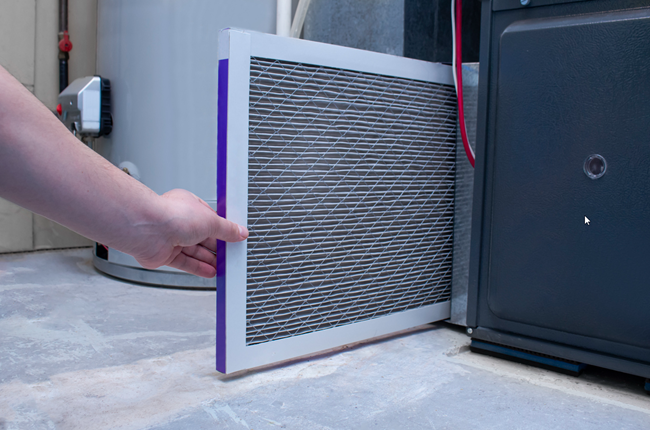
Regular furnace filter replacement for rental property owners and landlords as preventative maintenance it has the most impact.

Regular furnace filter replacement is crucial for rental property owners and landlords because of all the preventative maintenance services it has the most impact.

By Greg Wells

Landlords and property managers are tasked with continually ensuring the homes and units they rent out are safe, comfortable and suitable for tenants.

Of course, this includes taking care of everything that can go wrong with plumbing, heating and air conditioning, but it also includes preventative maintenance on these systems that can halt a problem before it even starts. In most cases, it is that preemptive work that costs less than a major issue down the line.

Of all the preventative maintenance services required for HVAC and plumbing equipment, furnace-filter replacement arguably has the most impact.

If a furnace filter is not replaced regularly, air quality can diminish, damage can be done to heating-system components or the entire system, and in the worst-case scenario, a system breakdown can occur. With that in mind, here are all the reasons to replace the furnace air filter in your properties, and advice on how and when to do it.

Regular furnace filter replacement for rental property owners and landlords as preventative maintenance it has the most impact.
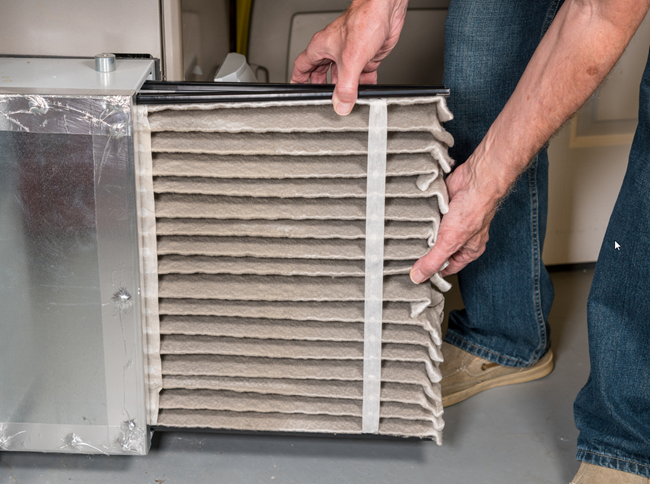
Dirty air filters can also cause severe problems, the worst of which is likely an overheated motor.

How Often Should a Furnace Filter be Replaced?

A furnace air filter should be replaced every three months, especially in summer and winter when the furnace or air conditioner is running most frequently. Replacing every three months is a good standard to keep up with, though circumstances may change that recommendation.

For example, if construction is happening within the property, or you allow pets in the property, more frequent replacement is advisable. Keep in mind that heating, ventilation, and air conditioning (HVAC) professionals will often change out the furnace air filter for you if the property is under an HVAC maintenance plan.

Why Should a Furnace Filter Be Replaced?

There are three primary reasons to replace a furnace filter: for the health of your tenants, for the health of the property’s systems, and to save money.

Regular furnace-filter replacement prolongs the life of an HVAC system. This is because the system has to work harder to produce heat if the air filter is dirty, causing a litany of potential problems. Dirty air filters can also cause severe problems, the worst of which is likely an overheated motor. If the motor overheats, and there are wiring issues in the system present, serious damage to the furnace or property can happen. This is both costly and obviously dangerous for tenants.

From the tenant standpoint, furnace-filter replacement can improve their quality of living. Regular replacement keeps the air in the property cleaner and helps eliminate foul odors. Additionally, regular filter replacement can reduce hazards, such as mold spores, soot, bacteria, and allergen buildup, both in the HVAC system and in the ductwork of the home.

Finally, regular furnace-filter replacement can provide cost savings. The filters are relatively inexpensive, and they can improve furnace efficiency, often resulting in a lower energy bill. Whether it’s the landlord or the tenant paying the utility bills, it is a meaningful benefit.

What is the Best Furnace Filter?

There are three things to focus on when purchasing furnace filters. These include:

  • MERV rating: In addition to having the right size, property managers and landlords will want to take note of the minimum efficiency reporting value (MERV) rating. According to the Environmental Protection Agency, you should select a filter with as high a MERV rating as your system fan and filter slot can accommodate (you may need to consult with a professional technician to determine this number).
  • Size: Believe Believe it or not, size does matter when shopping for furnaces. The best furnace filter is the one that best fits your system. Trying to jam in a filter that is too big or too small will negatively affect the effectiveness, and can cause additional problems. A good tip is to write down your filter size on the furnace door so you’ll always remember what size you need to purchase.
  • Price: The price of your property’s furnace filters will go along with your maintenance budgets, and thankfully many models are affordable. With high-quality filters, you’ll see the value for your money. Low-cost filters typically won’t hold up as long and will need to be replaced more frequently. Buy wisely.

When considering rental costs for 2023 and beyond, add furnace-filter replacements every three months for each property to the list. While it may seem like an added expense, it’s actually cost-saving over time and vital for the safety and quality of life for your tenants.

About the author:

Greg Wells is the president of MAX Service Group, which operates Williams Comfort Air and Mr. Plumber in central Indiana, Thomas & Galbraith Heating, Cooling & Plumbing in greater Cincinnati, Buckeye Heating, Cooling & Plumbing in greater Columbus, Ohio and Jarboe’s Heating, Cooling & Plumbing in greater Louisville, Kentucky.


Sign Up For Our Weekly Newsletter And Get Rental Property And Apartment News And Helpful, Useful Content Each Week.

* indicates required

Apartment EV Charging: A Progressive, Sustainable Management Strategy

Apartment hunting can be challenging for electric vehicle owners since they see apartment ev charging as a necessity, not a property amenity.

Apartment hunting can be challenging for electric vehicle owners since they see charging stations as a necessity, not an amenity, in the community. Electric vehicle charging stations, and other next-gen amenities, can be effective tools for marketing a property, but only if used effectively.

By Diane Batayeh
CEO, Village Green

The landscape of property management and ownership is expected to undergo many significant changes in the next few years.

Technology is progressing faster than ever and soon, prospective residents will be looking for more in an apartment than a great location and functional layout.

What once were ‘next-gen’ amenities are now becoming standard with a new wave of luxury options that have entered the multifamily industry in recent years such as co-working spaces, demonstration kitchens and pet spas. Apartment managers and owners will need to proactively address the wants and needs of current and future residents if they want to stay ahead of their competitors.

Next-gen amenities tend to embrace technology, encourage community and neighborhood engagement, and add intrinsic value for residents. While not every apartment community offers next-gen amenities, the times are changing, and soon enough, residents will expect certain amenities to be standard in any apartment they consider residing in.

A good example of a trending next-gen amenity is the inclusion and installation of electric vehicle charging stations. As EVs become more affordable and accessible nationwide, there are certain considerations to be made, particularly around charging stations.

One of the largest complaints from EV owners is that it can be inconvenient to own an electric vehicle while living in an apartment, or anything other than a single-family home, due to placement of charging stations.

Apartment hunting can be challenging for EV owners since they see charging stations as a necessity, not an amenity. Property managers and owners should take note of what their customers are looking for in their living experience and seriously consider the benefits of installing electric vehicle charging stations. Those include:

  • Appealing to a new audience of prospective residents
  • Increasing the quality of life for current residents
  • Becoming an ‘early adopter’ in EV charging technology

Charging stations installation require an organized and efficient plan of action. It’s imperative to commit to the entire process while gauging the individualized needs of your property and residents.

Do your research

Before committing to the process, first consider the property layout, electricity capacity and business potential. Depending on the location, a substantial amount of structural reconfiguration may be necessary. Additionally, consider that EV charging stations will not be needed in every market at the same time.

A property owner in southern California may have more incentive to install charging stations than an owner in rural Kansas due to the sheer number of electric vehicles on the road and the likely adoption by other apartment owners in that market.

However, a good strategy for the Kansas property owner is to become an ‘early adopter’ and provide a service to a small, but potentially underserved group of prospective renters. This could help the Kansas property owner differentiate themselves and believe it’s worth the investment.

Property managers and owners should also investigate what, if any, rebate programs are available for EV charging station installation. Many utility companies around the country offer certain programs to residential customers looking to install chargers and can help facilitate the installation process.

Additionally, grass roots research efforts can provide valuable information when considering EV charger installation. Asking current residents if they own an electric vehicle or if they plan to purchase one soon can provide excellent insight into current and future resident needs.

Trust the process

After assessing the logistics and needs of the residents, property owners may make the decision to install a charging station. If they decide to forge ahead, it will likely be up to the property manager to advise and guide them through the process. Doing  due diligence is vital for a property manager to provide insights including how many chargers to install, which types of chargers will be best suited for the property, and how to effectively communicate with residents about the installation and use process.

Arguably one of the most central aspects to installation is policy and resource cultivation.

To maintain organizational intelligence and awareness, develop procedures and rules surrounding charger usage before the launch. This includes things like ensuring credit card or other payment options are available, selecting an appropriate location and establishing a strategy to organize usage schedules and communicate with residents who are utilizing the technology. Additionally, there should be a well thought out plan for the possibility of adding more chargers as electric vehicles become the norm and the need is justified.

Plan in action

Electric vehicle charging stations, and other next-gen amenities, can be effective tools for marketing a property, but only if used effectively.

Develop a marketing plan that considers everything from physical signage, a resident letter, a strategy for social media, a FAQ document for residents and anything else that ensures the entire community is aware of the new amenity and how to access it.

Next-gen amenities like EV charging stations and smart and sustainable technologies are slowly but surely transitioning from luxury to necessity for many prospective residents.

While not every property  may be a good fit to implement next-gen amenities early on, recognizing early consumer demand signals, and having the ability to effectively assess the potential benefits to your property and residents by virtue of a thoughtful return on investment assessment is an important first step.

About the author

Apartment hunting can be challenging for electric vehicle owners since they see apartment ev charging as a necessity, not a property amenity.
“Property managers and owners should take note of what their customers are looking for in their living experience and seriously consider the benefits of installing electric vehicle charging stations.”

Diane Batayeh is CEO at Southfield, Mich.-based Village Green Holding, a more than 100-year old multifamily company that manages a portfolio valued in excess of $10 billion and 40,000+ units nationwide.

Sign Up For Our Weekly Newsletter And Get Rental Property And Apartment News And Helpful, Useful Content Each Week.

* indicates required

The Investment Outlook For Multifamily Properties In 2023

The investment outlook for multifamily properties in 2023 is good as steady occupancy and high rents gives landlords of multifamily properties a reason to look forward to 2023.

The investment outlook for multifamily properties in 2023 is good as steady occupancy and high rents gives landlords of multifamily properties a reason to look forward to 2023.

By Lazer Sternhell, CEO
Cignature Realty

Short-term cash flow, long-term appreciation, and tax benefits have made multifamily properties an appealing option to investors for decades. As we approach 2023, however, the opportunity for investors has never been better.

Apartment buildings, duplexes, and triplexes are being snapped up by investors and renters alike. Here, I help explain why investors are jumping on this rising trend.

The investment outlook for multifamily properties in 2023

Last year, real estate and rental rates skyrocketed. The annual 20% increase for single-family homes put dreams of home ownership out of reach for most of the population. As droves of would-be home buyers turned to renting, affordable multifamily properties were in short supply. Thanks to the rising demand, rent climbed at least 10% in 65 of 150 large cities.

What’s more, increasing rent did not slow the steady stream of renters. In fact, the National Apartment Association found that the US occupancy rate rose to 96.5%, surpassing 2000’s record high. In essence, people are paying higher rents and staying in their apartments longer.

What does all this mean for you as an investor in multifamily properties? For one, the expanding pool of renters means low vacancy rates. Renters pounce on affordable units as soon as they open, and a steady stream of renters leads to stable cash flow. In the past, multifamily investors learned to anticipate months of vacancy in their budgets, but in 2023, the risk for that hazard remains low.

However, if you invest in multifamily in 2023, there are a few things to watch. Rising inflation is partly responsible for the windfall in rents, but it can have a downside for investors, too. As it drives up your operational expenses and repairs, you may pocket less of the profit. On the other hand, the benefit of short-term leases allows you to adjust rents to compensate for higher costs in labor and materials.

Remember, the increasing interest rates are driving renters to your door, but as an investor, they impact you as well. If you purchased investment properties with variable mortgages, prepare to account for those rates in your annual budget. In addition, if you are looking for properties, those rising interest rates make bargains in the multifamily market far more difficult to find. Deals will still be out there in 2023, but you’ll either need to do some digging to find them or you’ll need to refinance.

Investing in multifamily properties in 2023

The fastest and easiest way to jump on 2023’s multifamily investing trend is through real estate syndications. These companies provide a path for you to contribute capital toward multifamily properties without requiring you to manage them. As an investor, you can reap the rewards while putting in far less time and money.

Managing multifamily properties can be a full-time job. You are responsible for maintenance and upkeep on all the units you rent. Either you will do the plumbing, electrical, and repair work yourself or know who to contract for this. Investing in multifamily properties through a real estate syndication company allows you to put those potential headaches into someone else’s hands.

Real estate syndication companies also allow you to join the action with less of an upfront investment. Multifamily properties are a good value over time, but pricey to acquire. Duplexes cost as much or more than a single-family home, and you’ll need a 20% down payment on hand.

If you have the capital and the experience you need, owning your own multifamily property can offer a higher return. The process for investing on your own is nearly as simple and straightforward as buying your first home.

The economy and real estate market have been notoriously tricky to predict, but all signs point to a good year for multifamily investments. While experts say home prices and rent will continue to rise, they predict a slower climb over the next 12 months. Mortgage interest rates probably won’t climb but will remain high, locking out first-time home buyers for another year. While rental prices aren’t expected to hit the peaks of 2022, they are still rising year over year.

The combination of steady occupancy and high rents gives landlords of multifamily properties a reason to look forward to 2023. In the short term, your investment has the potential to be a great source of passive income. In the long term, it will likely continue to appreciate as other investors scramble to get in on the trend.

About the author:

Lazer Sternhell was intrigued by the potential of real estate early on, having grown up in a family of commercial real estate owners. Working for his family’s business in the mid-1990s, he gained invaluable knowledge while cultivating his natural talent for sales. Lazer went on to establish and run several successful businesses in other industries. His own familiarity with commercial spaces for his companies ultimately inspired him to enter the world of real estate from the brokerage stand point, and use the seasoned skills he had amassed to benefit his clients. Honoring his accomplishments and contributions, Lazer was awarded CoStar Power Broker status. Lazer lives in Rockland County with his wife and five sons.

Sign Up For Our Weekly Newsletter And Get Rental Property And Apartment News And Helpful, Useful Content Each Week.

* indicates required

7 Rental Market Trends To Watch In 2023


Packages Piling Up Can Be A Headache For Apartment Property Managers

Packages piling up in the rental office from online orders by tenants can be a real headache this time of year for property managers.

As more and more people order online and more and more boxes are delivered by Amazon and others, the issue is growing for property managers who are sometimes dodging packages left for tenants in the property management office.

Package security is a concern for all and thus folks in apartments many times have only the property management office as a solution and place to have their packages sent.

“Package delivery continues to be on the rise and this trend isn’t going to let up anytime soon. It’s evident a solution is needed now more than ever to provide both apartment management and residents alike the most robust and convenient package management solutions,” Georgianna W. Oliver, general manager and founder of Package Concierge, said in a release.

“When residents can access their packages whenever is convenient for them. It’s win-win for the industry. Leasing teams will take back their time to focus on customer service instead of package management, and residents have ultimate freedom with shipping and receiving deliveries,” Oliver said.

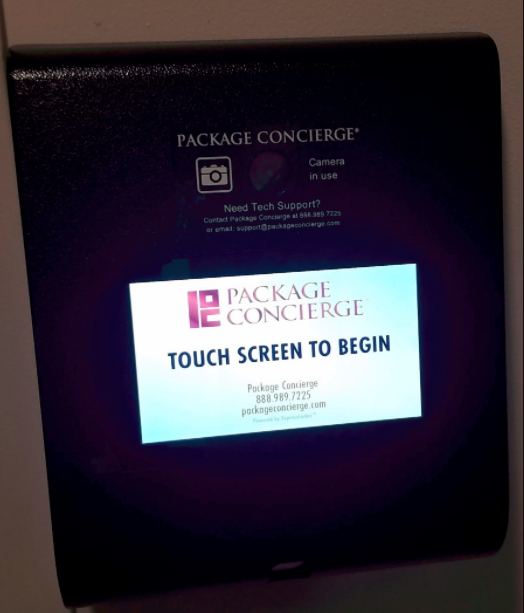
Her company sells a package concierge room which includes a surface-mounted kiosk that includes a 7-inch touch screen, barcode reader, still camera and effortless technology is used to control the package room. Automation with property management software creates efficiency for onsite staff and package carriers, allowing for easy drop-off or retrieval abilities. Residents have 24-hour access to retrieve and return packages with the ease of mobile app technology, according to the release.

Packages piling up for tenants

The Washington Post talked to three people in the property management industry about this problem.

    • “This is one of the biggest puzzles in the apartment industry,” Rick Haughey, a vice president at the National Multifamily Housing Council, a Washington nonprofit group, told the Washington Post. “How do you manage hundreds of packages every day?”
    • “People are buying everything online — even furniture, which means our offices end up looking like West Elm warehouses,” Luanne McNulty, vice president of ZRS Management, an Orlando-based property-management company told the Post.  “Sorting all of that out is easily a full-time job.”
    • “Some days I’m crawling over packages — they’ll be all around my desk, on the tables, on the shelves,” Greenwald, the manager of Gelmarc Towers, a 1950s building that has 166 units, told the newspaper. “It can feel like an obstacle course.”

A National Multifamily Housing Council (NMHC) resident survey ranked access to packages as the second most important amenity, right after fitness centers. The reasons for the high importance ranking are clear: consumers don’t want to miss deliveries because they’re not home; they want to know their packages are safe and secure; and they want to have access to their packages at convenient times.

Amazon hub for packages

Packages piling up in the rental office this time of year can be a headache for property managers

Earlier this year, Amazon launched a new locker product for apartment buildings to help with this problem called The Hub.

Amazon has launched a new delivery locker product, called “the Hub,” for apartment buildings so residents can securely receive bulky packages and pick them up at convenient times for the tenants, according to Amazon.

Amazon is pitching the lockers to apartment owners and property managers saying, ”Your residents will thank you.

“Accepting deliveries from all carriers, Hub by Amazon can free you and your staff from daily package management.  It’s convenient and easy to use, making the Hub an amenity your residents will love.

“Self-service delivery and trusted customer support come together to create a solution you can count on,” the company says.

Large property owners such as AvalonBay Communities Inc., Equity Residential, Greystar and Bozzuto Group are on board with Amazon’s plan to install wireless-connected locker units both inside and outside of high-traffic apartment buildings, according to reports.

Holiday Package Volume Means Hectic Season for Property Teams

Sign Up For Our Weekly Newsletter And Get Rental Property And Apartment News And Helpful, Useful Content Each Week.

* indicates required

Investigation Called For Over RealPage Rent-Setting Software