
Home Blog Page 121

4 Categories of Apartment Rent Forecasts for 2021

4 Categories of Apartment Rent Forecasts for 2021

Here are 4 categories of apartment rent forecasts for 2021 put together by John Burns Real Estate Consulting for 127 metro-area apartment markets in their latest newsletter.

“We maintain a bullish outlook for demand, with some key differences by market. With such a wide variation across the markets, good timing could lead to great opportunities,” write Jeff Kottmeier, Lesley Deutch, and Ken Perlman, partially in a weather forecast-style presentation.

“To help you ‘weather’ (pun intended) market shifts and assess market ‘forecasts,’ we segmented the trends into four categories

“We see a positive long-term future for apartments, just on varying timelines depending on their unique locations and attributes. But in a year where the for-sale market dominated the headlines, let’s not forget that one-third of the population resides in rental housing, and the long-term future for that is bright,” they write.

Here are what they write about apartment rent forecasts the four categories:
4 Categories of Apartment Rent Forecasts for 2021
Chart courtesy of John Burns Real Estate Consulting.
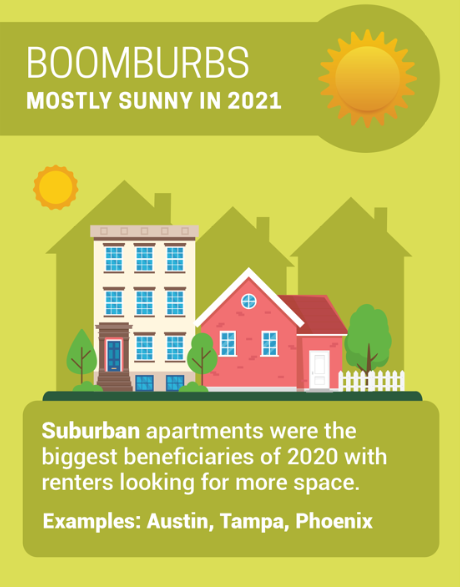
  1. Boomburbs (Suburban Growth):Suburban-growth markets benefited tremendously from migration out of the cities during the pandemic. Their low cost of living, good quality of life, and relative affordability drew residents from across the country seeking space. We expect some (not all) of these renters to return to apartments closer to their jobs after a COVID-19 “all clear.” We are forecasting a small decline in rents (in the one percent to two percent range) in 2021 for these markets due to some outmigration (assuming COVID-19 is all but over by the fall), but a return to rental growth in 2022. Suburban markets have captured most of the positive headlines in 2020, attracting investment and development capital. We are still very bullish on locations close to jobs, retail, and entertainment, and properties that provide an “affordable alternative” to urban apartments.
  • 2021/2022 outlook: Mostly sunny in 2021
  • 40 percent of markets fall into this category.
  • Examples: Austin, Tampa, Charleston, Indianapolis, Myrtle Beach, Nashville, Phoenix
4 Categories of Apartment Rent Forecasts for 2021
Chart courtesy John Burns Real Estate Consulting
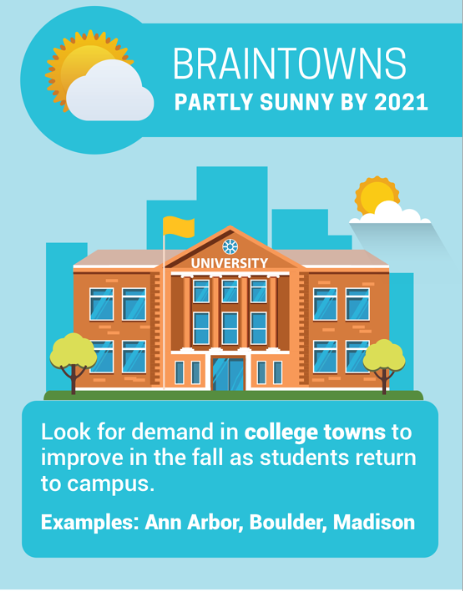
  1. Braintowns (College Towns):These markets depend on students and were heavily affected in 2020 (five percent to 10 percent rent declines). We see demand and rents continuing to soften in the first half of 2021 in the apartments rents forecast with an improvement this fall, as more students return to campus. Properties located close to campus will benefit. More students will likely desire to live off-campus, supporting demand for apartments.
  • 2021/2022 outlook: Partly sunny in 2021
  • Five percent of markets fall into this category.
  • Examples: Ann Arbor, Boulder, Charlottesville, VA, Madison.
4 Categories of Apartment Rent Forecasts for 2021
Chart courtesy of John Burns Real Estate Consulting
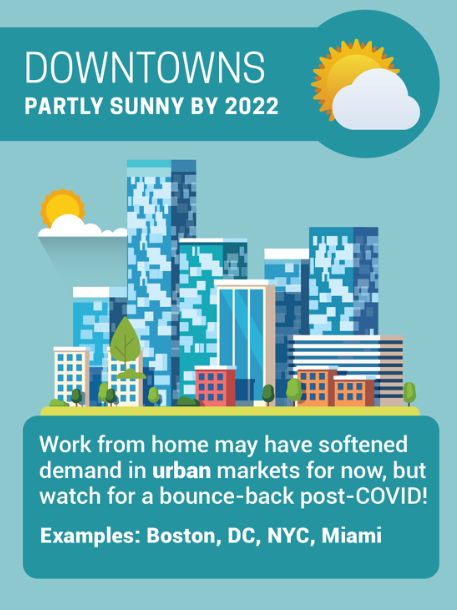
  1. Downtowns (Urban): The pandemic and the resulting ability to work from home softened demand in the urban markets. Most markets have already experienced sizable rent declines (five percent to 15 percent) in 2020. We expect more declines in 2021, but to a lesser degree, as tenants slowly move back to the cities and some people return to work in their offices. Rent growth will be slower to recover in metros and submarkets that have elevated levels of new apartment construction and/or are under prolonged COVID-19 restrictions. Urban markets are not dead. With investors and capital moving away from urban centers, some properties may be undervalued. This could be a great time to consider investing in properties and developing closer to the urban core.
  • 2021/2022 outlook: Partly sunny by 2022
  • Five percent of markets fall into this category.
  • Examples: Boston, DC, NYC, Miami, San Francisco

4 Categories of Apartment Rent Forecasts for 2021
Chart courtesy of John Burns Real Estate Consulting
  1. Dependables (Sizeable Unemployment):These are the markets to watch as eviction moratoriums expire. We expect declining rents in 2021 to early 2022 and potentially rising vacancy rates. Construction levels, however, are relatively low in many of these markets, mitigating some of our concerns. These are markets to consider for longer-term investment or development.
  • 2021/2022 outlook: Cloudy (with a chance of clearing)
  • 50 percent of markets fall into this category.
  • Examples: Minneapolis, Detroit, Kansas City, Philadelphia, Reno

———-

Article courtesy of John Burns Real Estate Consulting. Contact Ken PerlmanLesley Deutch, or other team members for more insight.

Lack of New Construction Underlying Cause of Oregon Housing Affordability Crisis
Sign Up For Our Newsletter And Get Apartment News And Helpful, Useful Content Each Week.

* indicates required


How the Pandemic Will Affect the Future of Apartments And What People Rent

Many Tenants Paying Rent, but More Support Needed For Renters

Many Tenants Paying Rent, but More Support Needed For Renters and rent payment tracker

While the national rent tracker shows 79.2 percent of apartment tenants paying all or some rent by February 6, which means more than 20 percent did not pay, more support is needed according to the National Multifamily Housing Council (NMHC).

“As we approach almost a full year of navigating the pandemic and the resulting financial distress, we remain encouraged by the COVID relief package passed at the end of 2020 that included critical support for apartment residents and the nation’s rental-housing industry, such as $25 billion in rental assistance, extended unemployment benefits and direct payments,” said Doug Bibby, NMHC president, in a release.

“However, as lawmakers consider further relief legislation, additional support for renters is clearly needed,” Bibby said.

Lost rents range from $27 billion to $60 billion

“Estimates of 2020 lost rent alone range from $27 billion to nearly $60 billion, despite the impact of previous federal COVID relief efforts,” Bibby said in the release.

“In the coming days and weeks, we urge members of Congress to pass legislation that directly meets renters’ basic financial hardships, protects the nation’s rental-housing industry and efficiently provides funds to those who need it most.”

Rent Payment Tracker surveyed 11.6 million units of professionally managed apartment units across the country and found that 79.2 percent of apartment households made a full or partial rent payment by February 6. That is a 1.9 percentage point, or 216,479-household, decrease from the share who paid rent through February 6, 2020, and compares to 76.6 percent that had paid by January 6, 2021.

These data encompass a wide variety of market-rate rental properties across the United States, which can vary by size, type and average rental price.

The NMHC Rent Payment Tracker metric provides insight into tenants paying rent and changes in resident rent-payment behavior over the course of each month, and, as the dataset ages, between months. While the tracker is intended to serve as an indicator of resident financial challenges, it is also intended to track the recovery as well, including the effectiveness of government stimulus and subsidies.

However, noteworthy technical issues may make historical comparisons imprecise. For example, factors such as varying days of the week on which data are collected; individual companies’ differing payment-collection policies; shelter-in-place orders’ effects on residents’ ability to deliver payments in person or by mail; the closure of leasing offices, which may delay operators’ payment processing; and other factors can affect how and when rent data is processed and recorded.

Some Bright Spots Begin To Emerge In Housing, But Long Road Ahead

Negative Rent Growth Year-Over-Year For First Time Since 2010

Sign Up For Our Newsletter And Get Apartment News And Helpful, Useful Content Each Week.

* indicates required

Exodus from Gateway Markets Drives Rent Declines

Some Bright Spots Begin To Emerge In Housing, But Long Road Ahead

Some Bright Spots Begin To Emerge In Housing, But Long Road Ahead

Some bright spots in the housing market and the economy are beginning to emerge, writes Yardi Matrix in its January multifamily report, but cautions there is a long road ahead.

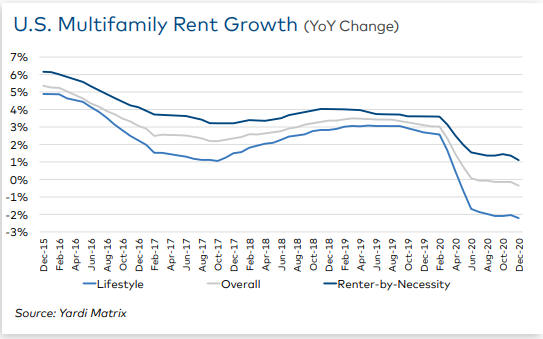
“Nationally, rents remained relatively flat in January, declining by 0.2 percent on a year-over-year basis. On the market level, some gateway markets appear to have hit bottom, while low-cost tertiary and secondary markets continue to see strong rent growth,” the report says.

  • Overall rents increased by $3 to $1,392. In January, Yardi Matrix “expanded its methodology to include all 130 matrix markets in our national average calculation.”
  • As our market penetration continues to grow and we collect more data, we feel it appropriate to add new markets to our national calculations.
  • Some gateway markets that have struggled for months have begun to show signs of bottoming out. San Jose (-13.0 percent) and Washington, D.C. (-4.5 percent) both saw month-over-month gains.

“The U.S. is continuing the effort to roll out COVID-19 vaccinations nationwide, the number of workers that filed for unemployment declined for the week ending Jan. 23, and consumer spending held up well in December,” the report says.

The multifamily report points out there may be more government stimulus on the way, though the size of the package is still to be determined.

However, “the big question for many gateway markets remains how permanent out-migration trends will be. Some industry sources are speculating that only about half of the moves out of the gateway markets that occurred during the pandemic are permanent,” the report says. The smaller housing markets continue to provide lower cost rents compared to their denser nearby urban cities.

Of the top 30 housing markets, more than half (16 out of 30) “are still experiencing declines in year-over-year rents. While there are some promising signs in San Jose and Washington, D.C., among other markets, many metros still have a long road ahead.”
About Yardi Matrix:

Yardi Matrix researches and reports on multifamily, office and self-storage properties across the United States, serving the needs of a variety of industry professionals. Yardi Matrix Multifamily provides accurate data on 18+ million units, covering more than 90 percent of the U.S. population. Contact the company at (480) 663-1149.

Affordable multifamily markets in high demand

Negative Rent Growth Year-Over-Year For First Time Since 2010

Sign Up For Our Newsletter And Get Apartment News And Helpful, Useful Content Each Week.

* indicates required

Exodus from Gateway Markets Drives Rent Declines

How Do I Get Tenants Out Who Have Damaged My Rental Property?

How Do I Get Tenants Out Who Have Damaged My Rental Property?

This week the question for Ask Landlord Hank is about how to get tenants out who have damaged rental property in the time of the pandemic and eviction moratoriums. Remember Landlord Hank is not an attorney and is not giving legal advice so check your local ordinances.

Dear Landlord Hank:

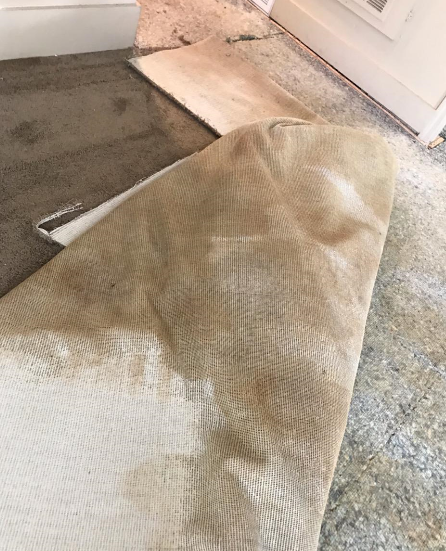
A rental home has been occupied by the same tenants on a month to month rental agreement for 13 years. They do not keep the home clean or taken care of. As a result it badly needs a renovation or demolition.

The home must be vacant to do this extent of work.

I would not rent to these people again as they are extremely destructive and have damaged my rental property. They are all living on disability including a handicapped child. Which probably carries different laws of protection for them?

Do I just allow them to keep living there in the filth or can I even evict them to make the home either habitable or tear it down?

They are paying the rent on time. I don’t want to be found as the one at fault for the home being unsafe to inhabit.

We are currently replacing a stove and found several dead mice and unspeakable unthinkable filthy conditions under the stove and counters. We have to wear hazmat protection to work in the home.

WHAT DO I DO!

-Yvonne

Dear Yvonne,

Sounds like you have a mess on your hands.

If the tenants are paying the rent as required, you may have difficulty with eviction, during a pandemic.

My advice is to wait until the pandemic and eviction moratorium is over and then tell the tenants you are going to renovate the rental property and they will need to move.

Since they have been there for many years, and have paid rent for many years, I would give them time to find a new place, but give them a definite time when they must be out.

Also, let them know, at that time, legally with notice, that the month to month lease is terminating.

I understand your distress at finding the property in poor condition, but if they stay for a few more months, after having been there for 13 years, I can’t see it getting much worse.

If you can wait, your odds for an easy tenant removal go way up.

I know it may be very difficult for you to bide your time right now but if you push to remove these tenants now, especially if they are disabled, in a pandemic, you may not win in court.

Sincerely,

Hank Rossi

How Do I Get Tenants Out Who Have Damaged My Rental Property?
Landlord Hank says, “My advice is to wait until the pandemic and eviction moratorium is over and then tell the tenants you are going to renovate the property and they will need to move.”

Ask Landlord Hank Your Question

Ask veteran landlord and property manager Hank Rossi your questions from tenant screening to leases to pets and more! He provides answers each week to landlords.

  • This field is for validation purposes and should be left unchanged.

Do I Have to Paint and Replace Flooring for a Long-Term Tenant?

Sign Up For Our Newsletter And Get Apartment News And Helpful, Useful Content Each Week.

* indicates required


Credit Scores for Lease Applicants Are Rising

Credit Scores for Lease Applicants Are Rising

Good credit is becoming increasingly crucial for renting an apartment and according to RentCafe’s latest report, the credit scores of renters and lease applicants has been going up one point each year since 2018.

“Specifically, according to our analysis of more than five million lease applicants nationwidethe average credit score of renters in the U.S. was 638 in 2020,” the report says.

credit scores for lease applicants in top cities

Some key findings:

  • Baby boomers have the highest scores (683), while the youngest renters, Gen Z, are at the other end with 586. Still, it’s worth noting that, of all age groups, Gen Z increased their scores the most in the last three years, by 55 points since 2018.
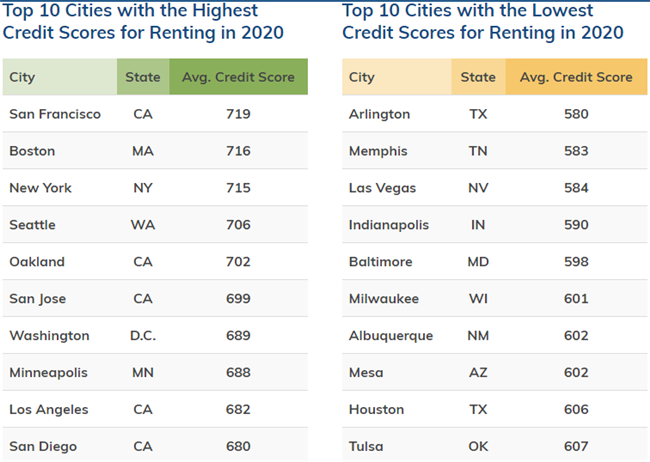
  • Renters in San Francisco boast the highest scores in the nation, 719, followed by those in Boston (716), New York (715), and Seattle (706).
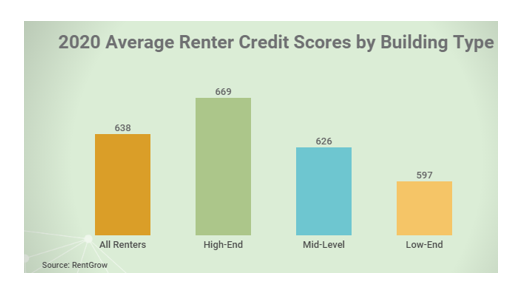
  • Nationwide, the average credit score of renters clocked in at 638 in 2020. Those living in high-end buildings are the only ones boasting above-average credit scores of 669.
  • Those with less-than-ideal scores can still find nice apartments in Arlington, TX, or Memphis, TN, cities where renters’ average scores hover around 580. Moreover, an extra 20 points would get them in a luxury building in places like Mesa, AZ, Las Vegas, or Houston. In these cities, the average credit scores for high-end buildings are the lowest in the country.

“Plus, credit scores can also vary widely in different types of buildings. For example, renters in high-end buildings had an average credit score of 669 last year – just 43 points separated them from renters living in mid-priced buildings, whose average score was 626. Meanwhile, the credit score of those living in low-end buildings was 597, exactly 29 points below that of renters in mid-range apartments,” RentCafe says in the study.

Baby boomers lead with the highest average credit scores

By generation, baby-boomer renters led all other generations in 2020 with an average credit score of 683.

Since they’ve had more time to build up their scores, they’re in better shape than Gen Xers (653), millennials (644) and the youngest renters, just starting to live on their own, Gen Z (586).

2020 Report: Rent Fell, Pandemic Kept Renters From Moving

RENTCafe.com is a nationwide apartment search website and a part of Yardi. Our original city-based research, insights, and in-depth analysis of the real estate market have been used in stories featured on major media publications across the U.S.

Renters Now a Majority in 23 Cities, Including Seattle

Sign Up For Our Newsletter And Get Apartment News And Helpful, Useful Content Each Week.

* indicates required

Rents in Hard-Hit Metros May Have Reached the Bottom

rents decline more slowly as impact of COVID-19 on the market is continuing to stabilize

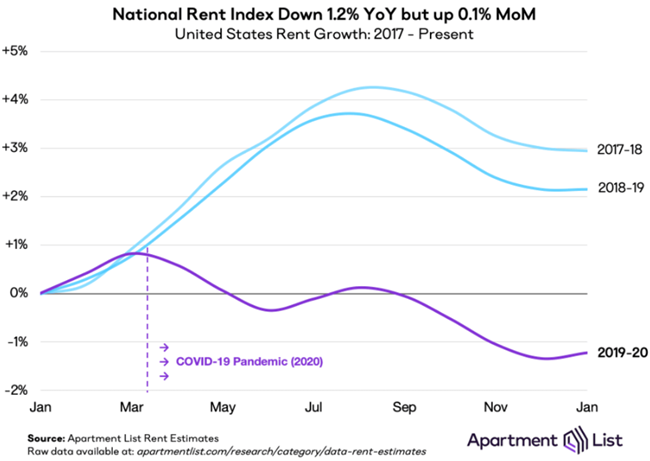
The impact of COVID-19 on the market is continuing to stabilize and “our national index ticked up by 0.1 percent from December to January, the first monthly increase that we’ve seen since last August,” according to the latest report from Apartment List.

“Although the data continue to show significant regional variation, the markets that have been most heavily impacted by the pandemic are beginning to enter calmer waters,” the report says.

Rents may have reached the bottom

rent declines impact of COVID-19 on the market is continuing to stabilize

In the pricey coastal metros where rents have been plummeting, this month’s data implies that “we may have reached the bottom.” At the other end of the spectrum, many of the mid-sized markets that have seen rents grow rapidly through the pandemic have seen just modest increases this month.

The national index has been masking significant regional variation below the surface, as some markets had been continuing to watch rents plummet, while others experienced a pandemic-related boost to demand.

This month, however, these local fluctuations also appear to be flattening out, Apartment List says in the report.

The San Francisco, Seattle and Portland Examples

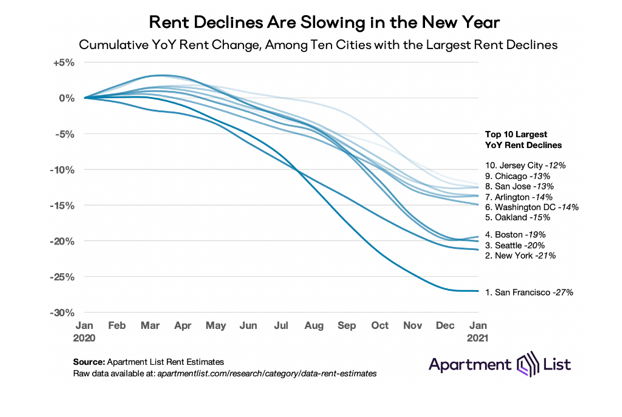
San Francisco has consistently made headlines throughout the pandemic for the staggering rent declines that have led the nation. Rents in San Francisco are down by 27 percent year-over-year, and while there are no signs of prices returning to pre-pandemic levels, it appears that the bottom of the city’s price correction may be at hand.

In January, rents in San Francisco fell by just 0.4 percent month-over-month, compared to an average monthly decline of 3.4 percent from April through December 2020. Although San Francisco rents have yet to increase since the start of the pandemic, the leveling off in this month’s data indicates that the city’s rental market may be on the cusp of turning that corner.

“Seattle is very much in the same conversation as San Francisco and New York,” said Rob Warnock, Research Associate at Apartment List.

Rents in Hard-Hit Metros May Have Reached the Bottom
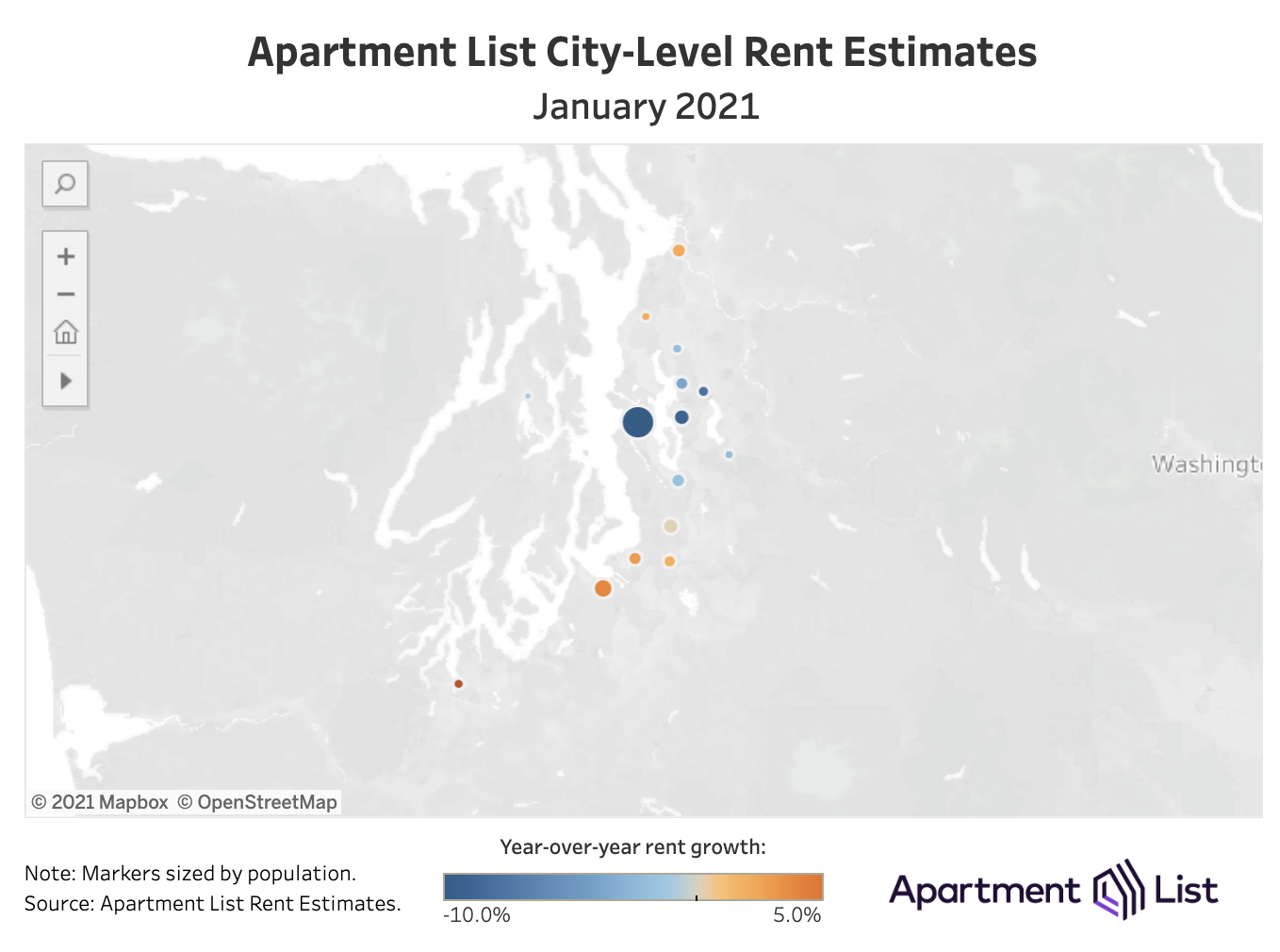
Seattle is one of the hard-hit metros where rents may have reached the bottom. The large dot represents rents lost in the primary city with less rent loss in secondary cities.

“In fact, Seattle has jostled back-and-forth with NYC for the No. 2 spot in the list of steepest annual rent drops. In Portland, the price reduction has been less dramatic (-7 percent year-over year), but I would still group it in the same broad category of expensive coastal cities with a high concentration of expensive apartments and remote work opportunities, i.e. the cities that have experienced an outsize share of pandemic-driven rent declines,” Warnock said.

He added that Seattle and Portland are also great examples of the “principal city versus secondary city” divide that “we explored recently. In short, core cities are experiencing big rent reductions while the markets in nearby, more-suburban areas are staying relatively strong.

“In Greater Seattle, rent drops are concentrated in Seattle and nearby Bellevue, Redmond, Kirkland. But as you move outward, rents in the Everett, Tacoma, Olympia areas are all getting more expensive.

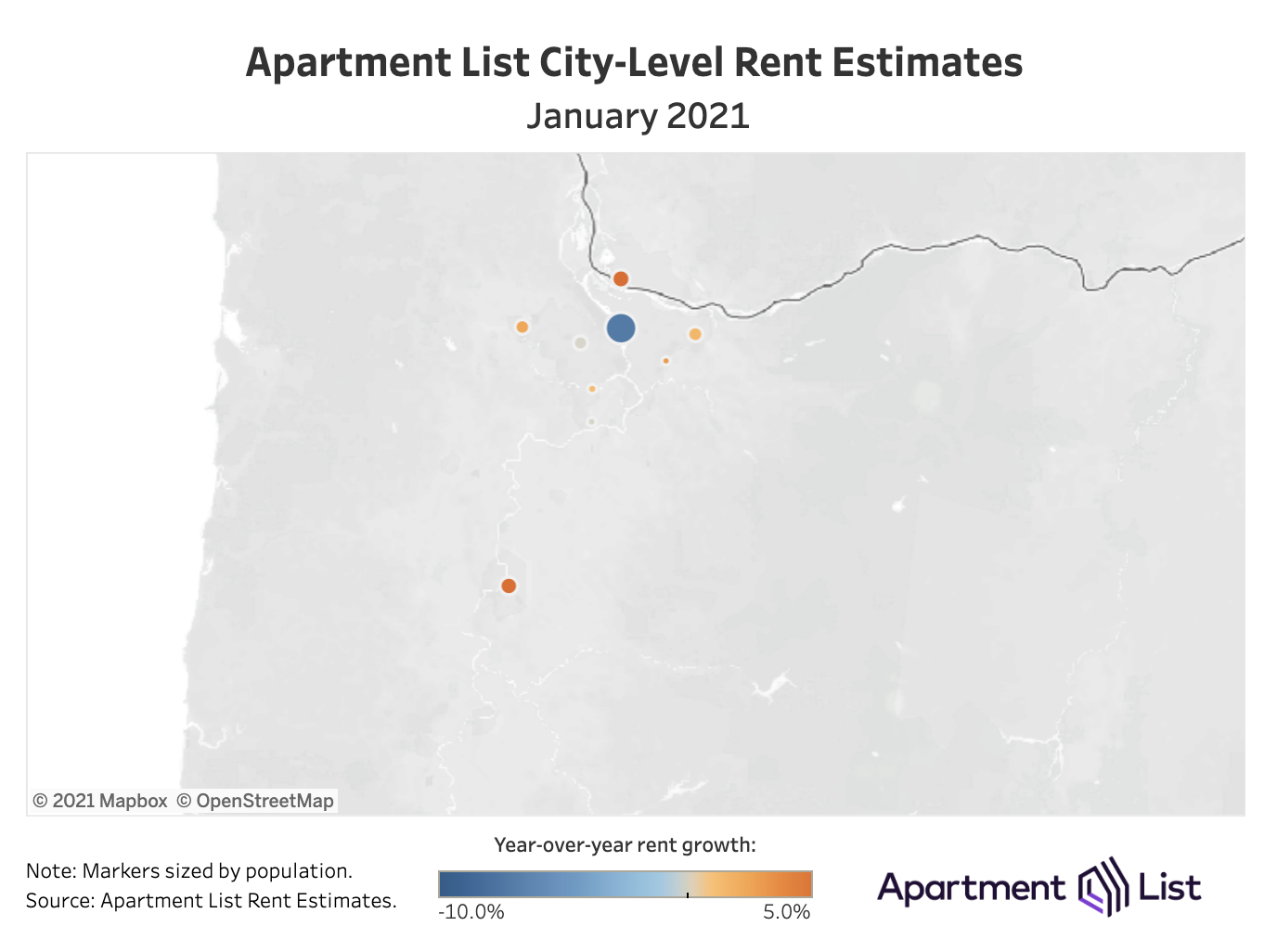
“Similar things (are) happening in Greater PortlandPortland itself has gotten cheaper while YoY rents are up in Vancouver, Hillsboro, Gresham, Happy Valley, and even more so as you move further out into Salem and Bend,” Warnock said.

Rents in Hard-Hit Metros May Have Reached the Bottom
Portland proper shows the largest rent drop while secondary cities show less

Negative Rent Growth Year-Over-Year For First Time Since 2010

Sign Up For Our Newsletter And Get Apartment News And Helpful, Useful Content Each Week.

* indicates required

Fewer Rent Concessions In Fourth Quarter Suggest Demand Is Returning

Fewer Rent Concessions In Fourth Quarter Suggest Demand Is Returning

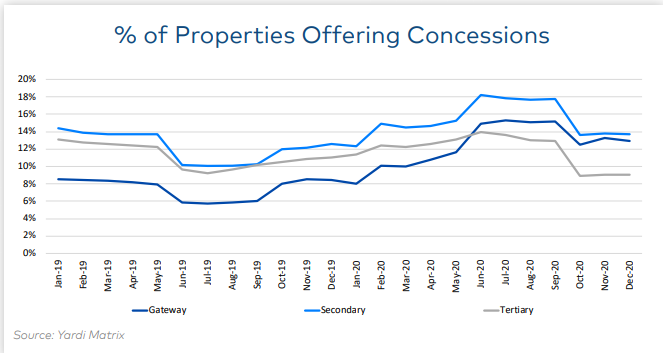
Fewer rent concessions in the fourth quarter suggest that demand is recovering or rents are being reset, according to the most recent report from Yardi Matrix.

“Multifamily concessions rose sharply in the spring and fall of 2020 as multifamily demand waned due to job losses and social distancing measures. The impact was felt most in high-cost gateway markets, while secondary and tertiary markets benefited from the shift in demand,” Yardi Matrix says in the report.

“Concessions declined in the fourth quarter, raising possibilities that demand is recovering or rents are being reset.”

  • Concessions increased the most in the upper tier of the market: gateway metros and Class A and high-rise properties. Gateway markets had the largest percentage increase in concessions and the highest value of concessions as a share of monthly rent.
  • Strategies employed by owners to optimize income—such as offering concessions or lowering asking rent—are affected by competitive pressures, which may differ by metro.
  • Metros with the highest percentage of properties offering concessions are those with a pandemic-driven drop in demand and those with copious amounts of supply coming online.
  • Concessions peaked in the middle of the year and then declined in the fourth quarter. This could be a sign that the market is stabilizing or that owners are shifting strategies to attract and retain tenants. The decline could signal that new asking-rent levels are being set that will be carried into the post-pandemic market.

fewer properties are offering rent concessions

 Is the market being reset?

“The data shows a pattern of apartment demand shifting from more expensive properties and metros to lower-cost properties and metros, which makes sense given the economic situation. More owners are choosing concessions to attract renters in the hope of returning to pre-COVID-19 levels of rent when the economy rebounds,” Yardi Matrix says.

“Concessions, however, are but one tactic for apartment owners trying to maximize revenue. Other options include lowering rent. Differences in metro-level data could mean that concession strategies depend in part on what competitors are doing,” the report says.

Yardi Matrix researchers say there are several reasons for the decline in the use of rent concessions.  One reason could be there is some optimism around the vaccines being available and the prospect of the jobs and economy beginning to return closer to normal conditions.

“Another factor is that the natural leasing cycle was delayed for several months. Concessions tend to rise and fall with the season, increasing during the winter, when demand is weak, and decreasing in the spring, when demand is at its highest,” Paul Fiorilla, Director of Research, and Maddie Harper, Senior Research Analyst for Yardi Matrix write in the report.

“The pandemic may not have eliminated the 2020 leasing cycle so much as pushed it back a few months. Although it is still too soon to draw firm conclusions, the recent decline in concessions might also indicate that in some metros the dominant trend is to reset rents at lower levels rather than using incentives.

“Moving forward, the big question facing multifamily is how much employment trends such as work-from-home and lifestyle preferences for city versus suburbs have changed the demand equation. The answer will determine the use of concessions and whether rents reset at new levels,” Fiorilla and Harper write.

Exodus from Gateway Markets Drives Rent Declines

About Yardi Matrix:

Yardi Matrix researches and reports on multifamily, office and self-storage properties across the United States, serving the needs of a variety of industry professionals. Yardi Matrix Multifamily provides accurate data on 18+ million units, covering more than 90 percent of the U.S. population. Contact the company at (480) 663-1149.

Affordable multifamily markets in high demand

Negative Rent Growth Year-Over-Year For First Time Since 2010

Sign Up For Our Newsletter And Get Apartment News And Helpful, Useful Content Each Week.

* indicates required

New Year, New Laws, Part Deux: How HB 4401 Affects 2021

How HB 4401 Affects 2021

Attorney Bradley Kraus says Oregon’s HB 4401 creates a confusing mix of timelines related to important time periods—the “emergency period” and the “grace period” – and continues the implicit punishment of landlords for a problem they did not create

By Bradley S. Kraus,
Attorney at Law, Warren Allen, LLP

When 2020 came to a close, many landlords waited to see what new laws would be handed down to them from the December special session. As these laws regulate their businesses—and often their livelihoods—landlords hoped for clarity, assistance, and understanding from our elected officials. What they received, instead, was House Bill 4401.

HB 4401 continues to complicate the dynamics of the landlord/tenant relationship and, with seeming intent, places further pitfalls for landlords.

Most landlords have been hoping for a simple answer to the question of when they can expect to see rental payments again, either from their tenants directly or from the state. On that point, HB 4401 fails the test, creating a confusing mix of timelines related to important time periods—the “emergency period” and the “grace period.”

The emergency period was defined previously in House Bill 4213, the legislature’s eviction moratorium law passed last summer. The emergency period was effectively the period of time wherein landlords could not demand payment from their tenants. HB 4213 also provided a grace period for tenants in the form of a six-month window—ending on March 31, 2021—in which tenants would need to pay back the balances that arose during the emergency period. Those time frames are now fluctuating, depending on whether certain events defined in HB 4401 have occurred.

Whether these events have occurred is important, due to the structure of HB 4401.

For starters, HB 4401 provided an avenue for landlords to serve non-payment notices again, at least for January rent only. As good as that sounds, a closer look reveals an empty offering. HB 4401 requires landlords to serve statutory declarations of hardship and a statutory notice of tenants’ rights along with every non-payment notice, every balance- due notice of any kind, and every summons for evictions of any kind. If the landlord fails to do so, the emergency period and grace period are automatically extended until June 30, 2021. The tenant is also provided a defense to any eviction based on non-payment, while the landlord could face exposure under HB 4401’s damages provision.

The automatic extensions of the emergency period and grace period are the unfortunate reality that landlords face, thanks to HB 4401.

The declaration of hardship form mentioned above can be returned to the landlord from the tenant at almost any time and is unchallengeable. If your tenant returns the form to you, the emergency period and grace period are automatically extended until June 30, 2021, meaning landlords cannot demand rent until at least July. Landlords cannot demand further documentation from their tenants, question the declaration, or require multiple declarations. Doing so violates HB 4401, and triggers the damages provision.

HB 4401 and financial assistance for landlords

Landlords expecting HB 4401 to lend financial assistance to them are also likely to be disappointed.

While HB 4401 did set up a landlord-compensation fund of sorts, as of this writing, no process to apply for said funding exists.

Additionally, and most important, landlords are required to forgive 20 percent of the tenants’ unpaid balance in exchange for funding from the state, along with other restrictions which exist during the “pendency of” their “distribution application.”

Forgiving 20 percent of unpaid rent likely wipes away the profit margin for any landlord, which is typically not large to begin with. Finally, the fund will likely benefit small mom-and-pops first, which, while immensely helpful to them, will likely leave landlords with medium to large portfolios out to dry through no fault of their own, other than the fact that they own more rental units.

While COVID-19 cannot be minimized in the problems it has caused, HB 4401 continues the failure to distinguish between tenants who actually need help (i.e., those who can prove that COVID-19 has caused financial hardship for them) and those who are simply gaming the system (i.e., not paying rent simply because they do not have to).

While I am confident our elected officials think that the latter does not exist, I encourage them to give me a call to discuss that very issue.

In short, HB 4401 continues the implicit punishment of landlords for a problem they did not create. Given the complexity of this new law, and the potential exposure it creates, landlords are encouraged to fully understand this law before taking actions that could trigger it.

HB 4401 continues the implicit punishment of landlords for a problem they did not create
Bradley Kraus, Portland attorney

Brad Kraus is a partner at Warren Allen LLP. His primary practice area is landlord/tenant law, but he also assists clients with various litigation matters, probate matters, real estate disputes, and family-law matters. A native of New Ulm, Minnesota, he continues to root for Minnesota sports teams in his free time. You can reach him via email [email protected] or 503-255-8795.

Fair Housing Matters – Landlord Liability for Tenant-on-Tenant Discrimination

Sign Up For Our Newsletter And Get Apartment News And Helpful, Useful Content Each Week.

* indicates required

Pandemic Will Inflict More Pain on Rental Housing Before Recovery Begins

Pandemic Will Inflict More Pain on Rental Housing Before Recovery Begins

The pandemic continues to burden multifamily rental housing as rents continue to fall and more pain is coming, Yardi Matrix says in their U.S. Multifamily Outlook for winter 2021.

‘After a year ravaged by a global pandemic and political division, nothing would be more satisfying in 2021 than a return to normal” … but “it will take some months to get most of the country vaccinated and get businesses operating as normal,” the report says.

“Despite the COVID-19 pandemic, national rent growth remained relatively flat on a year-over-year basis, ending the year at -0.8 percent. There was a large divergence in performance between markets, though. High-cost gateway markets struggled the most, while many tech hub and tertiary markets thrived,” the Yardi Matrix report says. Some highlights of the report:

  • “Job growth has been mostly positive since the summer, but the economy remains nearly 10 million jobs off its peak.
  • “Nationally, rent growth fell only slightly in 2020, but there was a huge variation among metros. Rents and occupancy levels fell sharply in high-cost gateway markets, as renters left crowded and expensive coastal centers. More affordable markets in the Sun Belt, Southwest, Midwest and Mid-Atlantic saw modest rent growth.
  • “The pandemic slowed construction. With more than 750,000 units under construction, new supply should stay in the 300,000 range for a few years.
  • “We expect 2021 to be better than 2020, particularly the second half, but the year won’t be without tumult. Gateway markets will continue to struggle, and the industry will have to deal with weak rent collections, eviction bans, forbearance requests, lobbying for renter aid and a new federal mortgage oversight regime,” Yardi Matrix says in the report.

Pandemic Will Inflict More Pain on Rental Housing Before Recovery Begins

Rent payment concerns for rental housing

Yardi Matrix said although rents held up better than expected in 2020, considering the circumstances, the market has issues to work through. One is the rate of collections. With the excessive job losses caused by COVID-19, many forecasted a decline in rent payments. For the most part, that hasn’t materialized, as tenants have prioritized their rent payments.

However, rent payments did decline slightly at year-end as federal aid wound down. According to the National Multifamily Housing Council’s Rent Payment Tracker, 93.8 percent of apartment households paid rent by the end of December—down 2.1 percentage points from December 2019.

“There is hope for a strong economic recovery as 2021 proceeds, but much of that hope will depend on the pace of vaccine adoption and the reopening of businesses nationwide. In the early stages, the vaccine rollout appears to be lagging initial expectations; however, a new presidential administration and an organized national effort for vaccine deployment may increase the speed of the recovery,” the report says.

Exodus from Gateway Markets Drives Rent Declines

About Yardi Matrix:

Yardi Matrix researches and reports on multifamily, office and self-storage properties across the United States, serving the needs of a variety of industry professionals. Yardi Matrix Multifamily provides accurate data on 18+ million units, covering more than 90 percent of the U.S. population. Contact the company at (480) 663-1149.

Affordable multifamily markets in high demand

Negative Rent Growth Year-Over-Year For First Time Since 2010

Sign Up For Our Newsletter And Get Apartment News And Helpful, Useful Content Each Week.

* indicates required

7 Ways to Get Smoking Under Control in Non-Smoking Apartments

7 Ways to Get Smoking Under Control in Non-Smoking Apartments

Landlords and building managers have to deal with several kinds of issues daily. Most of these are routine: a leaky faucet, a faulty smoke alarm, and so on. However, in view of the current pandemic, the issue of smoking (especially when you have non-smoking apartments) and secondhand smoke is more serious than ever.

Here’s what’s going on right now: A lot more people are at home every single day. The concept of remote working will become even more common in the future.

Plus, people are becoming more attuned to their health issues, especially when it comes to their respiratory system. Previously, it wasn’t exactly ethical when secondhand smoke from one tenant affected the apartment of their neighbors. Today, a landlord could get sued for the same.

Not sure how to get that smoking issue under control?

Here are a few ways to get you started.

1. Conducting Resident Surveys

You can start off by conducting resident surveys about the issues of secondhand smoke and how to combat it. This way, you can learn what your residents think about the smoking policy as it stands now.

You’ll also be able to receive feedback on any potential restrictions on smoking in the future. By collecting this information, it will be possible to learn about the concerns, potential points of conflict, and questions that your residents might have. When you do start implementing the changes, it will be easier to enforce them when you keep all concerns in mind.

2. Educating the Residents

It’s also a good idea to educate the people who will be affected by the non-smoking apartments policies. After all, having apartments for rent doesn’t mean that you just sit back and collect money. It also means that you have a responsibility to give people the information they need to work as a community.

Start by releasing educational messages that will affect the residents’ way of thinking and also prepare them mentally for the changes. Include information on how secondhand smoke affects the health of the whole family. Getting secondhand smoke under control might even help reduce asthma in children. Once you wake people up to their basic right to a clean, healthy, and safe living environment, it will signal a lot of ease for future rules.

7 Ways to Get Smoking and secondhand smoke Under Control in Non-Smoking Apartments
Many residents have been depressed during the pandemic so work on ways to provide education.

3. Clearing up Confusion About Non-Smoking Apartments

When you tell a smoker that they can’t enjoy their pipe or cigarette, it often triggers some feelings of rebellion. Make sure that the smoking residents in your apartment buildings don’t feel like they’re being controlled or that the new policies about non-smoking apartments are extreme.

Instead, clarify how smokers don’t have to give up that habit right away, nor do they have to find a new place to live. All the new policies mean is that they won’t be able to smoke in certain areas for the good of the community.

The policy should also be worded in such a way that the smoke is held up as the culprit, not the smokers.

4. Holding Meetings

It’s helpful if you host community meetings to give out the information we’ve mentioned above. This will also provide a platform where concerned residents can ask questions, discuss answers, and generally reach a mutual agreement about making the air cleaner if you want non-smoking apartments.

Hold these meetings when you’re considering a certain policy such as non-smoking apartments or when the new policy is being implemented. Seek out partners who are working on related projects within the housing community already. This way, you have trusted resources at your disposal. Some examples include asthma programs, health workers, etc.

Above all, these meetings will allow you to give residents information about cessation resources. You’ll be acknowledging their concerns and addressing them in the best way possible. People living in your apartments for rent will probably have a more closely knit community as a result. There will be more related advantages when this occurs, including the smoke-free aspect.

5. Sharing Stories

Whether it’s at these meetings or just when seeing them in general, encourage your residents to share whatever stories they have about secondhand smoke. Their homes and everyday lives are being changed by the new policies. So, they deserve to be empowered and acknowledged.

What’s more, getting to know everyone’s perspective will also gain more traction for finally adopting the new policies. This may result in more buy-in from the residents’ part as well to the idea of non-smoking apartments.

6. Having Appropriate Outreach

All the community meetings, information, surveys, and signage you use needs to be sensitive and culturally appropriate. This means having the text printed in different languages.

It also includes having bilingual and people of color invited to speak at the meetings. Neglecting this aspect of reaching out can alienate some residents and weaken the impact of your efforts.

7. Getting Into Collaborations

Think about how the existing programs can work with new efforts to go smoke-free. It’s important to get in touch with community leaders and stakeholders who agree with your views on providing smoke-free housing.

Having partnerships with such groups will also give you the benefit of their trust, goodwill, experience, and connections with both the residents as well as housing providers.

When you sit down with such groups, address the areas where you have common concerns and how all parties can collaborate to achieve their goals. At this point, it’s also essential to discuss how the parties can share their recourse, including time and expertise.

It’s also best to include all your staff in this kind of planning. Give them the training they need to properly implement, enforce, and uphold the new policies. Staff members should be aware of what the new smoke-free rules entail, when they start, and how they can help residents with their issues and queries.

Non-Smoking Apartments – The Takeaway

Secondhand smoke is harmful to both kids and adults. In condominiums and apartment buildings, this concern is even more pressing due to the pandemic. Ventilation systems, wall cracks, and even plumbing could take the smoke from one place to another.

The only solution here is to make the housing system smoke-free. You’ll be safe on the legal front, along with a reduction in fire risk and turnover costs. It’s a win-win all around. So, consider following these steps today. You’ll feel the difference soon.

Justin Becker is a property owner in the state of Michigan and has a passion for managing communities. He owns apartment complexes and mobile home communities, and has been writing his own blogs for his properties for several years.

The Benefits of Being Pet-Friendly For Rental Property Owners

Sign Up For Our Newsletter And Get Apartment News And Helpful, Useful Content Each Week.

* indicates required