
Home Blog Page 113

High-Earners Moved the Most During the Pandemic

The percentage of Americans who move each year had been declining for many years until the pandemic hit when high-earners moved because remote work allowed many to look for a new place to live, according to a new study.

A remote-work survey from Apartment List shows the majority of movers between April 2020 and April 2021 were either higher-wage workers or those who could easily adapt to remote jobs.

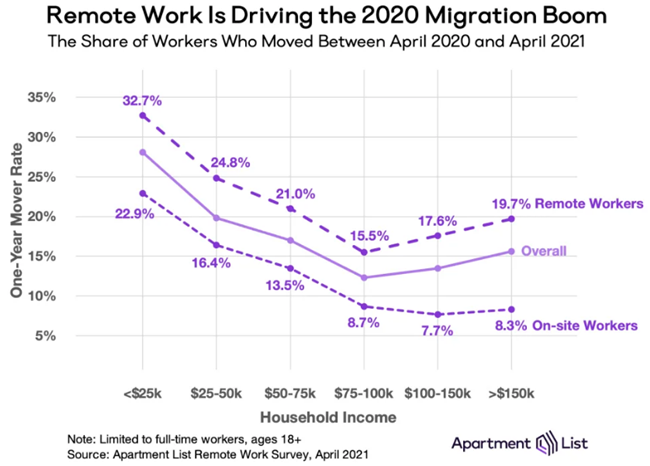
“We find that COVID and the expansion of remote work have encouraged 16 percent of American workers to move during the past 12 months, the first time that mover rate has increased in over a decade,” said Igor Popov, chief economist for Apartment List.

“Perhaps unsurprisingly, wealthy remote workers saw the biggest jump in mobility this year, as they took advantage of remote work to scan the country for their ideal living arrangement,” Popov said.

Households where income was $150,000 a year or more saw the largest jump in relocation, the first time this has happened in a decade. The 16 percent migration represents a 39 percent increase over the estimate by the Census Bureau in 2019.
High-Earners Moved the Most During the Pandemic because of remote work

High- Earners Moved – Highlights From the Study:

  • In 2019, the move rate among full-time workers in the United States was 14 percent and had been declining for decades.
  • High-earners are historically the least likely to move, but this year they were the largest jump in residential migration.
  • In 2020, wealthy movers moved further from job centers to purchase homes, enjoy more physical space, and live in places with a lower cost-of-living.

“No longer tied by work to any specific city, remote workers earn higher wages and can take those wages across the country in search of desirable housing,” Apartment List says in the study.

“Specifically among the remote workers in the highest income bracket, the one-year mover rate jumps to 20 percent, more than twice that of on-site workers earning similar wages.”

The report concludes by saying the kinds of individuals who are moving “have the potential to further redistribute wealth if high-paying jobs are no longer concentrated in the nation’s largest, most expensive cities.”


How Will Remote Work Affect Housing After the Pandemic?

Sign Up For Our Newsletter And Get Apartment News And Helpful, Useful Content Each Week.

* indicates required

Why Now is the Time to Invest in Real Estate – FREE Zoom Seminar

Why Now is the Time to Invest in Real Estate - FREE Zoom Seminar

Are you interested in earning passive double-digit returns in real estate investments that are secured by real property? Do you really want to get to know who you are investing with before you pull the trigger? Then let us introduce you to Trust Deed investments at Ignite Funding!

Join us next week for a FREE virtual event hosted by Colby Trah via Zoom video conferencing on Thursday, June 3rd at 10AM PST.

Put a face to the name while learning WHY NOW is the right time to invest in real estate with Ignite Funding. Learn how you can earn 10% to 12% annualized returns with Trust Deeds, what you are investing in, and how Ignite Funding is different from the competition.

Why Now is the Time to Invest in Real Estate - FREE Zoom Seminar- on real estate investments

The morning of the event we will send you a link that will take you directly to where the Zoom meeting will be hosted. Important Note: Please make sure you already have the Zoom app downloaded on your computer or to your smartphone so you don’t show up late and miss any important information.

Click the button below to RSVP now for this free virtual event:

CTA “RSVP HERE” Link to: https://info.ignitefunding.com/ctrah-landing-rsvp

Unable to attend the event on that date? CLICK HERE to schedule a one-on-one Zoom session at a time that works best for you.

Why Now is the Time to Invest in Real Estate - FREE Zoom Seminar

High Demand for Apartment Jobs in Portland

High Demand for Apartment Jobs in Portland

There is a high demand for apartment jobs in Portland, according to the latest report from the National Apartment Association (NAA).

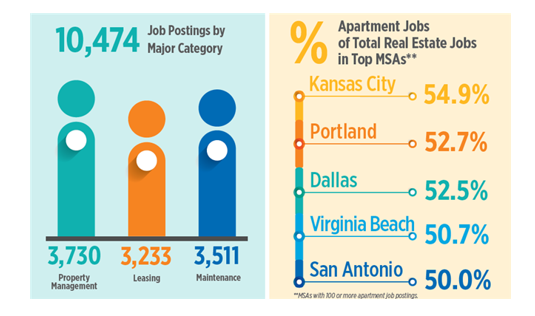
Apartment jobs are 52 percent of all the real-estate jobs in Portland in April 2021, says the National Apartment Association’s Education Institute (NAAEI). It takes an average of 48 days to fill these jobs in Portland.

Nationally, while multifamily operators are gearing up for another leasing season, more than 13,000 apartment jobs were available during April across the country, accounting for 37 percent of all real-estate jobs.

In addition to Portland’s jobs, more openings were driven in other secondary markets such as Kansas City, Dallas, Virginia Beach and San Antonio.

Property-Manager  Jobs in Demand

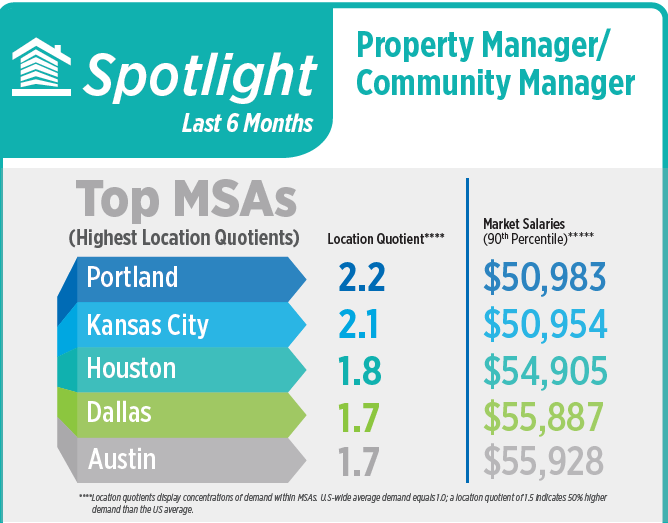
Property-manager and community-manager positions were also in high demand in Portland, with those jobs paying around $56,000 a year.

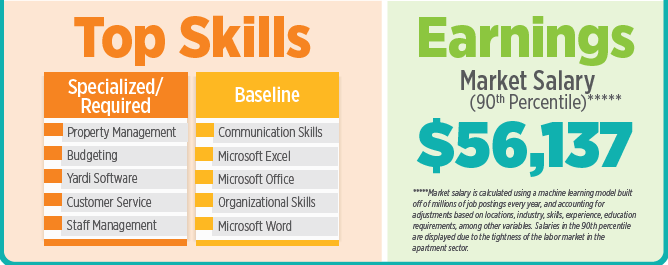
For those jobs, employers are seeking property-management experience, budgeting skills, staff-management skills, and experience with property-management software.

property managers
property managers top skills

The recent report said, “Multifamily talent was in high demand, likely due to increased leasing activity. According to RealPage, annual apartment absorption reached an outstanding 353,453 units during the first quarter of 2021.

“In gateway markets such as New York City, existing renters are signing new leases at historically high levels, although occupancy rates continue to weaken. This indicates that concessions and reduced rental rates are attracting existing renters instead of prospective renters,” the report says.

National apartment association jobs report background

“Our education institute is a credentialing body for the apartment industry. They hear often that one of the biggest problems keeping our industry leaders up at night is the difficulty in finding talent, attracting talent and retaining talent,” NAAEI’s Paula Munger said.

Assistant Property Manager Jobs In Demand

So NAA partnered with Burning Glass Technologies. “They have a labor-job posting database that is proprietary,” she said, and they can “layer on data from the Bureau of Labor Statistics (BLS). We looked at that and thought we could do something that is really going to help the industry and help benchmark job titles and trends as we go forward.”

The NAA says on their website, “The apartment industry offers a wealth of meaningful career opportunities that use a variety of skills and capabilities. Regardless of whether you are graduating from high school or college, leaving the military, or switching careers, the industry has a job that’s just right for you.”

Sign Up For Our Newsletter And Get Apartment News And Helpful, Useful Content Each Week.

* indicates required

Apartment Job Openings Strong in Seattle, Portland

Ask the Attorney About Tenant Notification in Oregon

Ask the Attorney About Tenant Notification in Oregon

Ask attorney Brad is a feature with attorney Bradley S. Kraus and this week the question is about tenant notification in Oregon. If you have a question for Brad, please feel out the form below.

Ask Attorney Brad:

I own a condo in Clackamas County, Oregon, which is currently renter-occupied. I would like to sell the property and am having a hard time determining what I am required to do regarding notifying the tenant and showing the property while the tenant is still living in the home. Help? Thank you, Lee

Hello Lee,

Thank you for your inquiry. In terms of entries and showing, your rights (along with the tenant’s) are governed and discussed in ORS 90.322.

In terms of tenant notification, that Oregon statute requires 24 hours’ actual notice prior to entry. Keep in mind that the tenant does have the right to deny entry, but cannot unreasonably withhold access. That is an amorphous standard, and when it comes to frequent entries, tenants can become frustrated by the multiple entries and notices.

When it comes to showings related to a sale, it may be best to work out an agreement with the tenant related to entry for showings that can be done without advanced notice. That process is also discussed in ORS 90.322, and states as follows:

(d) A landlord and tenant may agree that the landlord or the landlord’s agent may enter the dwelling unit and the premises without notice at reasonable times for the purpose of showing the premises to a prospective buyer, provided that the agreement:

  • Is executed at a time when the landlord is actively engaged in attempts to sell the premises;
  • Is reflected in a writing separate from the rental agreement and signed by both parties; and
  • Is supported by separate consideration recited in the agreement.

You can have those discussions with your tenant to see if they’d be amenable to entering into such an agreement.

You should speak with the attorney of your choice to assist you with the next steps, assuming your tenant is open to such an arrangement. If not, proper notice, complying with all the requirements in the ORLTA, will be important.

Ask Attorney Brad About Tenant Notification in Oregon
Bradley Kraus, Portland attorney

Brad Kraus is a partner at Warren Allen LLP. His primary practice area is landlord/tenant law, but he also assists clients with various litigation matters, probate matters, real estate disputes, and family-law matters. A native of New Ulm, Minnesota, he continues to root for Minnesota sports teams in his free time.  You can reach him via email kraus@warrenallen.com or 503-255-8795.

Ask Attorney Brad

Please enter your rental housing management question below for Ask Attorney Brad Kraus. Unfortunately he cannot answer questions from tenants.

  • This field is for validation purposes and should be left unchanged.

Sign Up For Our Newsletter And Get Rental Housing and Apartment News And Helpful, Useful Content Each Week.

* indicates required

Ask Attorney Brad: Why Can’t A Landlord Give a 30-Day Notice to Vacate?

HUD Charges Apartments Over Denial of Assistance Animal

HUD Charges Apartments Over Denial of Assistance Animal

A potential tenant who requested an accommodation, and provided a doctor’s letter confirming the necessity of the assistance animal, was denied the ability to rent an apartment leading to a charge of disability discrimination, according to a HUD release.

According to the complaint the potential tenant was told by an apartment employee that the apartments “did not allow pets, and when (the potential tenant) tried to explain that her cat was an emotional-support animal, the woman repeatedly interrupted her, stating, ‘We don’t allow pets.’ ”

The U.S. Department of Housing and Urban Development (HUD) is charging Bloomington, Indiana’s Burnham Rentals, LLC, Burnham Place Apartments, LLC, two of its employees and others, with violating the Fair Housing Act’s ban on disability discrimination.

HUD’s charge alleges that the housing providers refused to permit a rising Indiana University graduate student, who has depression and post-traumatic stress disorder, to keep an assistance animal in an apartment.

In addition, HUD’s charge alleges that the housing providers used the building’s no-pets policy as justification to deny the student’s request to live with her assistance animal, effectively denying her access to the housing.

HUD Charges Apartments Over Denial of Assistance Animal
“It’s not a housing provider’s role to determine who does or does not need an assistance animal,” said Jeanine Worden, HUD’s Acting Assistant Secretary for Fair Housing and Equal Opportunity.


The Fair Housing Act prohibits housing providers from denying or limiting housing to people with disabilities, or from refusing to make reasonable accommodations in policies or practices when necessary to provide persons with disabilities an equal opportunity to use or enjoy a dwelling.

This includes refusing to rent to people with disabilities who have assistance animals that perform work or tasks, or that provide disability-related emotional support.

“Not allowing someone with mental health disabilities to keep an assistance animal robs them of their independence as well as the opportunity to fully enjoy their home,” said Jeanine Worden, HUD’s acting assistant secretary for fair housing and equal opportunity, in the release. “HUD remains committed to ensuring that the owners of rental housing meet their obligations under the nation’s fair-housing laws.”

“Often people with mental health disabilities who request reasonable accommodations face discrimination because their disabilities are not visible, said Damon Smith, HUD’s principal deputy general counsel. “HUD works to ensure that the rights of individuals with ‘invisible’ disabilities are fully visible and enforced.”

HUD’s charge alleges that the graduate student used the assistance animal, a cat to help with her symptoms instead of medication that caused her side effects, https://neurofitnessfoundation.org/amoxil-treat-infections/. With her doctor’s support and monitoring, she found relief with the assistance animal. The housing providers, however, allegedly denied her request to keep the animal, resulting in the student being forced to rent another, more expensive, apartment farther from the university.

Landlord Settles with HUD Over Assistance Animal Discrimination Claim

Property Manager Charging Pet Fee for Assistance Animal Leads to HUD Discrimination Charge

Sign Up For Our Newsletter And Get Apartment News And Helpful, Useful Content Each Week.

* indicates required


Ask Landlord Hank: Should I Set Up A Legal Entity For My Rentals?

Ask Landlord Hank: Should I Set Up A Legal Entity For My Rentals?

A landlord asks this week about setting up a legal entity for his rentals, so that is the question for Ask Landlord Hank. Remember Hank is not an attorney and he is not offering legal advice.

Dear Landlord Hank:

I own five rental properties and plan to acquire more. Should I set-up a legal entity, i.e. a limited liability company (LLC), S-Corp for myself and these properties? Thank you in advance. –Richard

Hi, Landlord Richard:

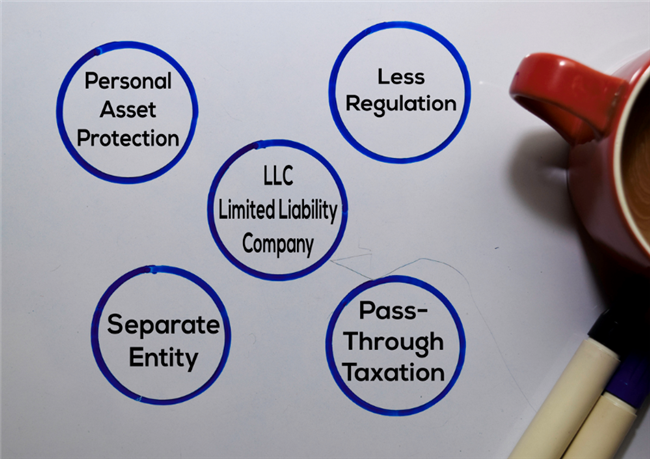
I like LLCs for a number of reasons, but the main reason is that they actually limit liability to the assets of the company, in this case one property – or however many you choose to put in the LLC.

Many folks will have an LLC for each separate property. If someone sues you at one of your rental properties, the most you could lose would be the value of your asset – in other words, that single property. Your personal assets or other properties can’t be used to satisfy a judgement against one LLC. Also, the LLC is not taxed itself;  the taxes flow through to you.

LLCs are easy and inexpensive to set up and run. You don’t have to have regular meetings, etc., but you do have to register every year, and you need an operating agreement.

In my opinion, LLCs are the way to go.  Good luck!

Sincerely,

Hank Rossi


Ask Landlord Hank:  Should I Set Up A Legal Entity For My Rentals?
Landlord Hank says, “I like LLCs for a number of reasons, but the main reason is that they actually limit liability to the assets of the company, in this case one property – or however many you choose to put in the LLC.”

Ask Landlord Hank Your Question

Ask veteran landlord and property manager Hank Rossi your questions from tenant screening to leases to pets and more! He provides answers each week to landlords.

  • This field is for validation purposes and should be left unchanged.

Do I Have to Paint and Replace Flooring for a Long-Term Tenant?

Sign Up For Our Newsletter And Get Rental Housing And Apartment News And Helpful, Useful Content Each Week.

* indicates required

Multifamily Markets Continue To Show Rent Growth

Multifamily Markets Continue To Show Rent Growth

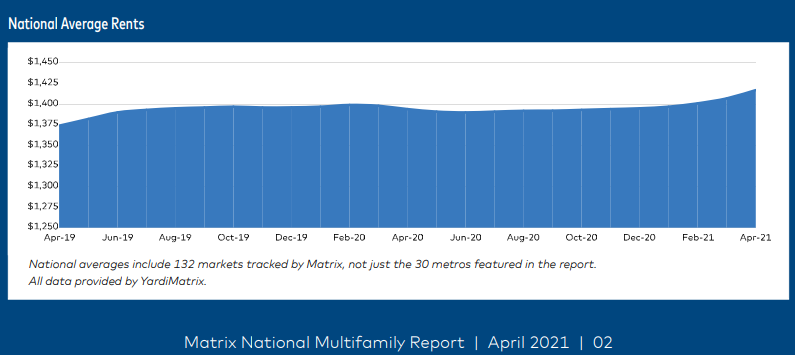
Multifamily markets showed record-breaking year-over-year rent growth nationally in April, according to the latest report from Yardi Matrix.

“All Top 30 markets had positive month-over-month rent growth last month, the first time that has occurred since March 2020,” the report says.

Rents increased the most on a year-over-year basis since March 2020 and on a dollar-amount basis since June 2015, Yardi Matrix said.

Highlights of the April Yardi Matrix multifamily market report

  • Multifamily rents increased by 1.6 percent on a year-over-year basis in April, “the largest increase that we have seen since the beginning of the pandemic.”
  • Overall rents increased by $10 in April to $1,417. The last time overall rents increased by that amount in a month was June 2015.
  • Out of our Top 30 markets, 24 had month-over-month rent growth greater than 0.5 percent.
  • Gateway markets continued their path to recovery this month, with all gateway markets showing positive month-over-month gains in April.
  • Only six markets out of our Top 30 had negative year-over-year rent growth this month. One of the six, Austin (-0.1 percent), is poised to turn positive next month, given the strong month-over-month gains. The other five markets, including Seattle and San Francisco, had solid gains as well, but are a little further behind in their rebounds.
  • Among the markets surveyed this month, 117 out of the 134, or 87 percent, had positive year-over-year rent growth in April.

Multifamily Markets Continue To Show Rent Growth

“The Inland Empire, Sacramento (8.4 percent) and Phoenix (8.1 percent) have been leading all markets for rent growth for the past few years, and the pandemic has only accelerated that trend.

“Over a five-year period, rents in the Inland Empire have increased by 31 percent. Rents in Sacramento and Phoenix have increased by 34 percent.

“To put that in perspective, national rents have increased by 12 percent over a five-year period. Five years ago, overall rents were extremely low in each of the three aforementioned markets, with plenty of room to run. But with such strong growth over the past five years, when will rents begin to taper off in these markets?

“The good news is that the distress seems to be extremely concentrated in select urban core submarkets, with the further potential distress discussed at the beginning of the pandemic not likely to come to fruition,” Yardi Matrix says in the report.

About Yardi Matrix:

Yardi Matrix researches and reports on multifamily, office and self-storage properties across the United States, serving the needs of a variety of industry professionals. Yardi Matrix Multifamily provides accurate data on 18+ million units, covering more than 90 percent of the U.S. population. Contact the company at (480) 663-1149.

Multifamily Market Growth Starts 2021 With a Strong First Quarter

Sign Up For Our Newsletter And Get Apartment News And Helpful, Useful Content Each Week.

* indicates required


10 Things To Check in a DIY Rental Property Inspection

10 Things To Check in a DIY Rental Property Inspection

Here are 10 things to check in a do-it-yourself rental property inspection from a veteran landlord and manager in the field.

By Phil Schaller

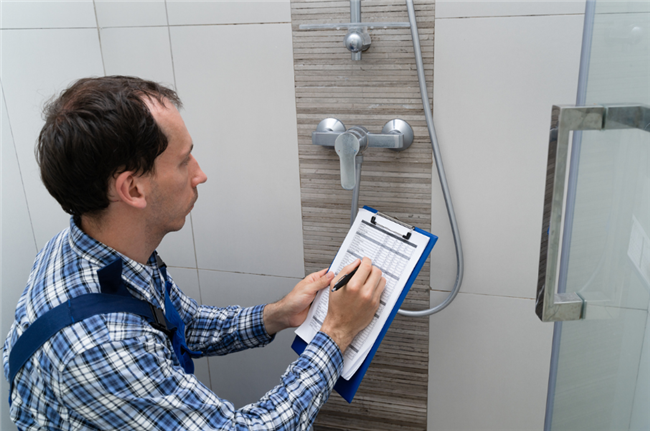
Conducting an informational inspection/walkthrough of your rental property is important periodically; we recommend at least once a year.

It allows you to understand how your tenants are treating the property, troubleshoot for larger issues, plan some preventative maintenance, and build trust with your tenants.

While there are hundreds of items you could inspect in a walkthrough, we’re going to focus on the low-hanging fruit and most important boxes to check.

Before we get into the list, here’s a few pointers:

  • Schedule this walkthrough far in advance with your tenants; they’ll keep it on the radar and (hopefully) focus on keeping the property in good shape. Washington State requires at least 48 hours written notice before anyone enters the dwelling.
  • Communicate to your tenants why you’re conducting this walkthrough. You want to know what’s going on with the property but you also want to make sure you’re providing a hospitable environment for your tenants.
  • We recommend conducting these walkthroughs with a general contractor or maintenance pro (RentalRiff can help) as an unbiased third party and someone who can easily diagnose/fix certain issues.

Without further ado, here we go on rental property inspection items

  1. Replace furnace filters: This is an easy one. You’ll need a filter on hand, but it’s easy and not expensive. Replacing a broken furnace, on the other hand, is very expensive.

10 Things To Check in a DIY Rental Property Inspection

2. Replace smoke and carbon-monoxide alarm batteries: Another easy one – aside from the liability you’ll have on your hands if these alarms don’t work during an emergency. Let’s keep everyone safe!

3. Clean out dryer vents: While cleaning out a dryer vent may require slightly more elbow grease than changing batteries, it’s another important safety precaution. Vacuum cleaners with a hose or dryer-vent kits work well. This can be a severe fire hazard.

4. Switch the GFIs: We can’t tell you how many calls we get for electrical work that can be solved with the push of a button. Get ahead of these issues by switching the GFI for your tenants.

5. Run water and check for leaks under the sinks: An easy way to do this is to turn on the water and throw a baking pan under the plumbing to see if any liquid is captured.

6. Turn on all appliances: Turn on all appliances for a quick check and listen for anything unusual. That weird sound your dishwasher is making may indicate a new one is in your future.

7. Run the garbage disposal: The No. 1 maintenance request landlords receive is for garbage disposals. We recommend giving them a tighten with an Allen wrench and/or a reset. Olive pits love giving landlords a headache.

8. Test the heating and air conditioning: You’re required as a landlord to provide a humane environment for your tenants – this means a livable temperature. We like to turn the AC on full blast to check, then switch to heat. It’s easy to inspect other items while checking these systems.

9. Inspect crawl spaces and attics: Pests love these areas. Look for poop, termite damage and small entryways – no one likes living with rats.

10. Check ceilings, walls, floors, doors and windows: OK, so we crammed a few into No. 10 here, but any sign of water damage (dark/wet spots, cracks in drywall, mold) is a big red flag and requires an immediate solution.

Many of our customers will schedule several walkthroughs throughout the year (based on the tenants and condition of the property). If you have any questions on how to conduct these informal walkthroughs yourself, we’re happy to chat or provide some more insight.

Phil Schaller is an experienced landlord and the founder/CEO of RentalRiff, an alternative service to traditional property management. RentalRiff’s licensed and insured property specialists provide oversight and upkeep of rental properties, while serving as the main point of contact for tenants. Maintenance and repair costs are included. Phil is a Pacific Northwest native, father of two, and fly-fishing addict. Contact him at www.rentalriff.com/contact-us.

7 Proactive Maintenance Tips That Keep Tenants Happy

Sign Up For Our Newsletter And Get Rental Property and Apartment News And Helpful, Useful Content Each Week.

* indicates required

The New American Dream Is A Dog-Friendly Home

The New American Dream Is A Dog-Friendly Home

Dogs have truly become a part of American families, so it follows that they factor heavily into moving decisions—and may even be a catalyst for them as the new American dream is a dog-friendly home.

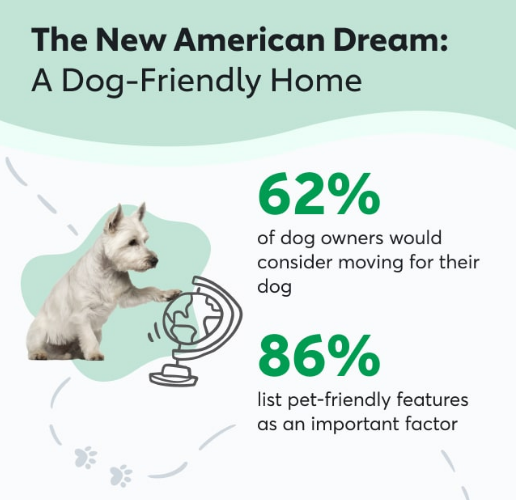
According to a new survey from Rover and Zillow, 24 percent of dog owners in the United States have moved into a new home since March 2020. The majority of dog owners surveyed (62 percent) say they would consider moving to a new house or rental for their dog, with 86 percent stating that pet-friendly features are important factors in moving decisions.

  • This includes amenities like having a dog door already installed, proximity to a dog park, and fenced-in yards.
  • In fact, 84 percent of dog owners say they would spend more for these pet-friendly features, and 86 percent say that having private outdoor space is important to them.

The New American Dream Is A Dog-Friendly Home

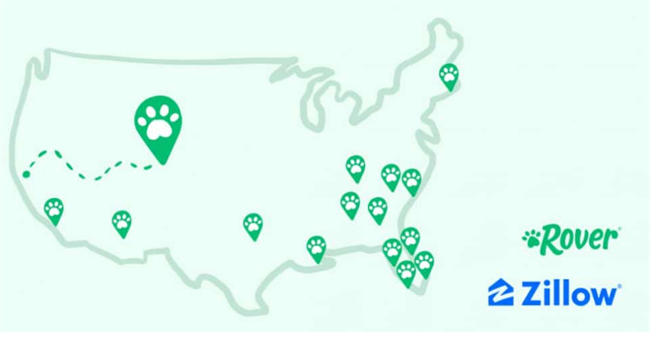
Rover and Zillow also teamed up to introduce a list of the Top Emerging Dog-Friendly Cities for 2021.

The New American Dream Is A Dog-Friendly Home

To create the list of Top Emerging Dog-Friendly Cities for 2021, Rover – a website where dog owners can find pet care – looked at new dog accounts on their platform, whether from dog owners new to the area or longtime residents with a newly adopted dog, and Zillow dug into cities where dog-friendly rentals – and listings mentioning home features that dog owners covet – are on the rise.

“This year, we spent an extraordinary amount of time with our pets, and many of us relied on their companionship more than ever. As a result, our emotional bonds with our pets also strengthened,” said Kate Jaffe, trends expert at Rover. “Pets are taking on an even greater role in our families, so it’s no surprise that our dogs’ needs are a top priority for pet parents considering a new home.”

Top 15 Emerging Dog-Friendly Cities, according to Zillow and new Rover accounts:

  1. Denver, Colo.
  2. Orlando, Fla.
  3. Anaheim, Calif.
  4. Charlotte, N.C.
  5. Birmingham, Ala.
  6. Atlanta, Ga.
  7. Boston, Mass.
  8. Glendale, Ariz.
  9. New Orleans, La.
  10. Tampa, Fla.
  11. Fayetteville, N.C.
  12. Fort Worth, Texas.
  13. Miami, Fla.
  14. Nashville, Tenn.
  15. Saint Petersburg, Fla.

Denver takes the top spot largely because of the number of new Rover accounts created, followed by Orlando and Anaheim. Orlando saw strong growth (4 percent) in the number of rentals listed as dog-friendly during the pandemic, and has one of the highest shares of for-sale listings mentioning dog parks. Anaheim has among the highest share of for-sale listings that feature a dog run.

Research Methodology
Top Emerging Dog-Friendly Cities
ranking is according to Rover’s April 21 report of new dog accounts in U.S. cities from its database of millions of pet profiles, and Zillow rentals and for-sale listings data. The final ranking put equal weight on both Rover and Zillow data; within Zillow data, equal weight was given to data on frequency of pet-friendly features mentioned in for-sale listings and the share of pet-friendly rentals. Only cities with a population of 200,000 or greater according to 2019 U.S. Census Bureau estimates were considered.

Property Managers, Take Note: Happy Pet Owners Mean Happy Long-Term Residents

Sign Up For Our Newsletter And Get Apartment News And Helpful, Useful Content Each Week.

* indicates required

How Will Remote Work Affect Housing After the Pandemic?

How Will Remote Work Affect Housing After the Pandemic?

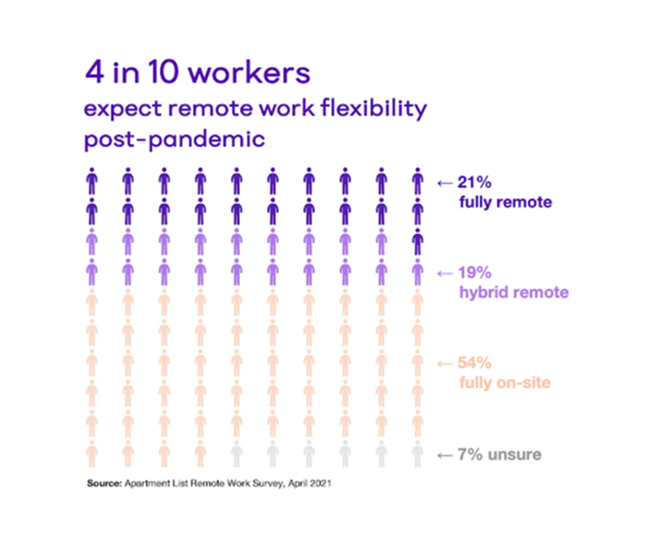
One in four American workers expect that they will continue to have either partial or complete remote-work flexibility after the pandemic, and a majority believe that remote work flexibility will have an impact on their housing preferences and location, according to a report from Apartment List.

“In a survey of 5,000 employed adults across the U.S., we found that four-in-10 workers expect to have some form of continued remote-work flexibility post-pandemic. Nineteen percent expect to have a hybrid arrangement that allows for remote work multiple days per week, while 21 percent expect that they’ll have the ability to work exclusively remotely,” Apartment List said in the report.

Apartment List Housing Economist Chris Salviati said, “I would say that this report provides a lot of valuable new data to confirm trends that we’ve been hypothesizing about for a while. Namely, a broad embrace of remote work will be an ongoing long-term trend that will outlast the pandemic, and this newfound geographic flexibility will have a direct impact on where these remote workers choose to live” and housing after the pandemic.

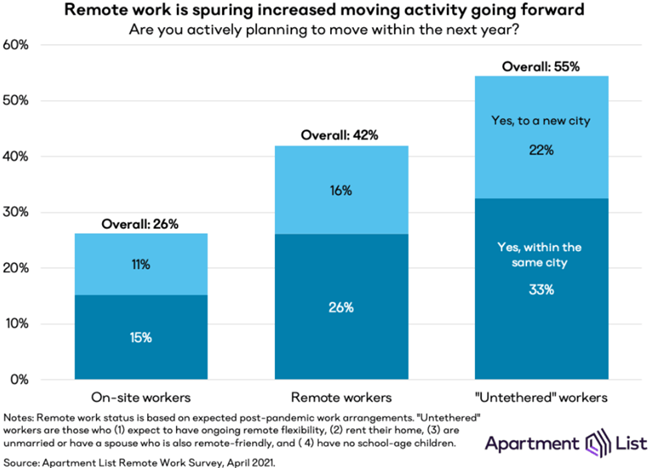
“Forty-two percent of remote workers tell us that they’re planning to move in the next 12 months, compared to just 26 percent of on-site workers,” Salviati said. “Among those likely movers, 35 percent of remote workers say that they plan to relocate to a more affordable market, more than double the rate for on-site workers. The prevalence of housing affordability as a motivating factor in upcoming moves planned by remote workers indicates that we are likely to see a continued outflow of remote workers from the nation’s most expensive markets (e.g. San Francisco, NYC, Boston, D.C., and Seattle).

How Will Remote Work Affect Housing After the Pandemic?

“As for where these folks will go, there are a wide range of preferences among remote workers. Many tell us that they value being close to family, and we observe a fairly even split between those who value urban amenities and those who value natural ones.

“In general, markets that offer a good mix of affordability and access to urban and/or natural amenities are good candidates to see an inflow of remote workers. Cities like Phoenix, Portland, Austin, and Nashville were quite hot even before the pandemic but still maintain an affordability advantage over the most expensive markets, and so likely still stand to gain. We are also likely to see other hubs emerge over time as this trend evolves,” Salviati said.

How Will Remote Work Affect Housing After the Pandemic?

A few highlights from the report on remote work and housing:

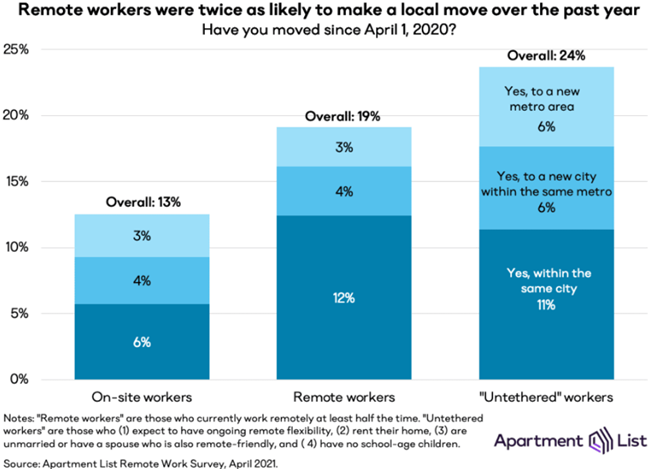
  • Remote work is already spurring increased moving activity; 19 percent of remote workers moved over the past 12 months, compared to 13 percent of workers whose jobs require them to be on-site. However, most of these additional moves were local — remote and on-site workers were equally likely to move to a new city or a new metro.
  • Looking forward, 42 percent of remote workers say that they’re planning to move over the next 12 months, compared to 26 percent of on-site workers. Remote workers are more likely to be planning local moves as well as moves to a new city.
  • Thirty-five percent of remote workers who are planning an upcoming move say that they plan to relocate to a more affordable market, more than double the rate for on-site workers, indicating that we may see an outflow of remote workers from the nation’s most expensive housing markets going forward. This finding also highlights the important equity implications of remote work — on-site jobs are lower paid, on average, but on-site workers have less flexibility to relocate in search of more affordable housing.
  • Overall, remote workers told us that the most important factors in their decision of where to live over the next several years are “access to a housing market where I can afford homeownership” and “access to natural amenities.”

The unprecedented change in how workplaces are organized is weakening the link between job choice and housing choice, and remote workers are already taking advantage of this newfound freedom to move at higher rates, Apartment List says in the report.

Understanding the geographic preferences of this group is now more important than ever, as their migration trends will have the potential to disrupt housing markets across the country.

“Our survey sheds new light on the factors that are motivating moves among remote workers and the attributes they value when choosing where to live. We find that the considerations of remote workers differ from those of on-site workers in important ways. These preferences will drive how remote work will impact the housing market over the next several years,” Apartment List says in the report.

5 Trends Shaping the Future of Rental Housing After the Pandemic

Sign Up For Our Newsletter And Get Apartment News And Helpful, Useful Content Each Week.

* indicates required


How the Pandemic Will Affect the Future of Apartments And What People Rent