
Home Blog Page 84

Denver Multifamily Rental Market Continues Flying High

The Denver multifamily rental market shows rent growth picking up again, a job market that leads the nation and transaction activity that remains hot, according to the June Denver Yardi Matrix multifamily report.

The Denver multifamily rental market shows rent growth picking up again, a job market that leads the nation and transaction activity that remains hot, according to the June Denver Yardi Matrix multifamily report.

“One of the strongest metros for tech development over the past decade, Denver has benefited from a strong multifamily market that improved in leaps and bounds, even weathering the pandemic better than larger markets,” Yardi Matrix says in the June Denver Multifamily Report.

“Coming on the heels of 2021—when average asking rates increased by 1.2 percent on a monthly basis—rent expansion softened in the winter. However, through spring, rates rose again to 0.7 percent on a trailing three-month basis as of April, to an overall average of $1,847. Occupancy rose 50 basis points in the 12 months ending in March, to 95.4 percent.”

Strong employment numbers lead the way

“Since January, the unemployment rate in Denver has improved by 40 basis points, to 3.6 percent as of March, on par with the national rate and leading the state by 10 basis points. The job market expanded 5.1 percent in the 12 months ending in February, topping the 4.7 percent U.S. rate,” the report says.

The report says Denver is getting a boost from some company expansions.  Amazon, which recently announced plans to hire another 2,700 employees for its delivery and processing stations in Denver, and United Airlines, which plans to add 3,000 jobs by 2026.
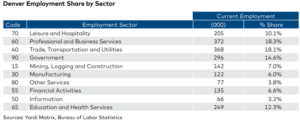
The Denver multifamily rental market shows rent growth picking up again, a job market that leads the nation and transaction activity that remains hot, according to the June Denver Yardi Matrix multifamily report.
Chart courtesy of Yardi Matrix.

However Yardi Matrix cautions in the report that Denver multifamily rent growth  “faces many of the same headwinds” impacting other markets such as supply chain issues, rising inflation, workforce shortages, insufficient affordable housing and the virus.

“These challenges maintain a high level of uncertainty that is dragging the recovery,” the report says.

Get the full report at Yardimatrix.com.

About Yardi Matrix

Yardi Matrix researches and reports on multifamily, office and self-storage properties across the United States, serving the needs of a variety of industry professionals. Yardi Matrix Multifamily provides accurate data on 18+ million units, covering more than 90 percent of the U.S. population. Contact the company at (480) 663-1149.

Portland’s Multifamily Sector Building a Comeback
 

Sign Up For Our Weekly Newsletter And Get Rental Property And Apartment News And Helpful, Useful Content Each Week.

* indicates required

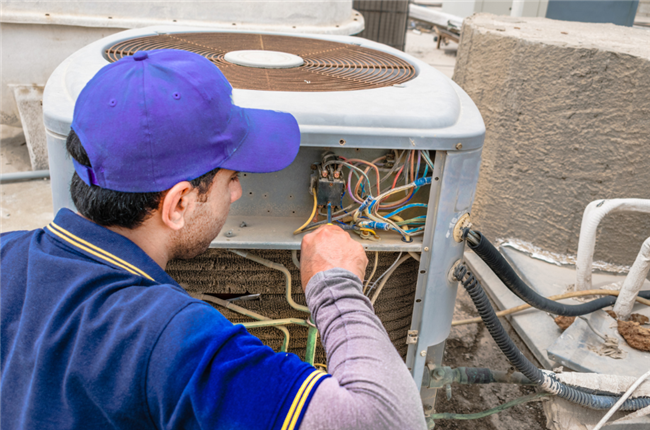
6 Signs Your Rental Air Conditioning May Not Be Ready For This Heat

6 signs your rental property air conditioner may not be ready for this heat so check up now because air conditioning repair is not a surprise you want when tenants call.

6 signs your rental property air conditioner may not be ready for this heat so check up now because air conditioning repair is not a surprise you want when tenants call. This week’s maintenance tip from Fischer is to watch for six signs you may need a repair now before you get a breakdown in cooling.

Are your rental property air conditioner and the systems in your rental properties ready for the heat? If the answer to that question is a cautious, “I don’t know,” then you might want to call your local air conditioner repair company for an inspection now.

How do you know when it’s time to call your local AC repair guy?

Here is a short list of six warning signs to watch for.

No. 1- Odd Noises

While humming and rushing air are usually not a concern, any knocking, growling, squealing or rattling could indicate serious trouble with the compressor or the condenser.

It is advisable that you get a professional air conditioner repair company to assess your system before your tenants start calling.

No. 2 – Unusual Odor or Smell

An air conditioner should never give off peculiar smells.

If yours does, it could be a sign of mold, damaged ductwork or malfunctioning components. All these issues require immediate repair if you do not want to end up replacing the unit.

No. 3 – Decreased Airflow

The primary sign of an air conditioning system that is working well is air flow.

Airflow can become restricted in several ways; there can be a problem with the duct work or fan, or a blockage or leak elsewhere in the system. Air ducts blocked by debris can pose a health risk, especially if the debris includes decomposing insects or the droppings of small animals.  Polluted air flow can cause the onset of respiratory disease or worsen an existing breathing problem.

 No. 4 – Excessive Cycling

Does your air conditioner turn on and off in short intervals?

If so, it may be short-cycling. If your unit seems to cycle on and off more than typical, it could mean that your thermostat is malfunctioning. It could also mean that cold air is escaping; check for leaks and add some weather stripping if needed.

No. 5 – Increase in Energy Bill

A power bill that suddenly shoots up, especially if the unit is not running that often, could be another strong indicator that your system is in need of repair or replacement.

There are multiple causes for this particular issue, including leaks in your AC’s ductwork, a broken thermostat switch, or the advanced age of the unit. Regardless of the source of the trouble, the AC will need to be repaired.

 No. 6 – Leaking Water

If you notice that your air conditioning system is leaking water, you need to contact your local air conditioning repair company sooner rather than later.

Not only is this a sign that the AC unit is malfunctioning, but it may also lead to damage to your rental unit. AC systems naturally create moisture and condensation, but in a properly functioning system this moisture should be flushed out through drain lines.

In Conclusion

These are just some of the common warning signs to look for when checking on the condition of your rental air conditioner in your rental properties. If you notice these or any other issues, contact a reputable HVAC repair company before the tenants start calling and the dog days of summer finally arrive.

Oops! We could not locate your form.


Sign Up For Our Weekly Newsletter And Get Rental Property And Apartment News And Helpful, Useful Content Each Week.

* indicates required

Can I Make New Rules After Tenants Move In?

A landlord wants to make new rules after tenants moved in because tenants refused landlord request to move an item in yard is the question this week for Ask Landlord Hank.

A landlord wants to make new rules after tenants moved in because tenants refused landlord request to move an item in yard is the question this week for Ask Landlord Hank. Remember Hank is not an attorney and he is not offering legal advice. If you have a question for him please fill out his form below.

Dear Landlord Hank:

This is my first time as a landlord, and my tenants asked to have a kiddie pool.  I said yes without giving any terms. They put the pool under a tree about which I had already warned them about the limbs falling frequently.

I asked them to move the pool to a safer location; they refused, and it is still under the tree. Can I now send them a notice that pools will no longer be allowed? I didn’t make any rules, but now I see I need to.
Thank you.

– Donna

Hi Landlady Donna,

You gave your tenants permission to have a kiddie pool, so you can withdraw permission. You’d be wise to do so in writing, so use a seven-day notice to cure, which means the tenant has seven days to fix this issue and remove the pool.

You’d be wise to check your lease to see if there is mention of any water-filled devices (pool) or athletic equipment that is prohibited, and also check with your homeowners insurance policy to make sure that a kiddie pool would be acceptable. The lease is the rule book that the landlord and tenant play by.

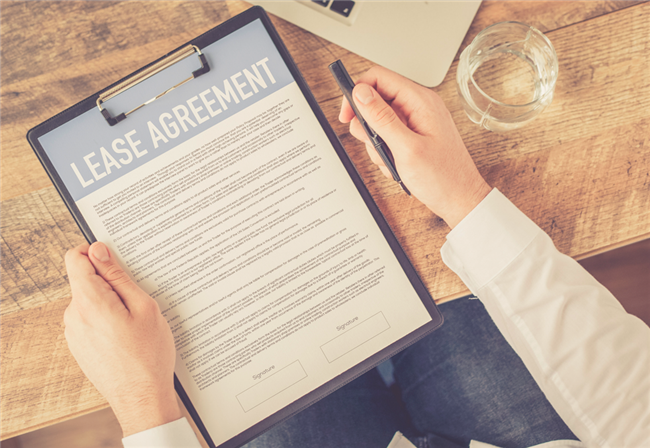
Your lease is a legally enforceable and binding contract outlining the terms under which you agree to rent your property to the tenant. It also guarantees the tenant the use of the property for regular payments of rent for a specified period of time, usually 12 months. After the lease is signed, you can make all the rules you want, but unless you have tenants agree and sign a lease addendum, then the rules are not enforceable. You really need a good, thorough lease to protect yourself and your property.

Sincerely,

Hank Rossi
www.rentsrq.com

Each week I answer questions from landlords and property managers across the country in my “Dear Landlord Hank” blog in the digital magazine Rental Housing Journal.  https://rentalhousingjournal.com/asklandlordhank/

A landlord wants to make new rules after tenants moved in because tenants refused landlord request to move an item in yard.

Landlord Hank says, “After the lease is signed, you can make all the rules you want, but unless you have tenants agree and sign a lease addendum, then the rules are not enforceable.”

Ask Landlord Hank Your Question

Ask veteran landlord and property manager Hank Rossi your questions from tenant screening to leases to pets and more! He provides answers each week to landlords.

  • This field is for validation purposes and should be left unchanged.

Do I Have to Paint and Replace Flooring for a Long-Term Tenant?

A Tenant Poured Grease Down Drain Who Is Responsible?

Sign Up For Our Newsletter And Get Rental Housing And Apartment News And Helpful, Useful Content Each Week.

* indicates required

Tough Times Ahead: Analyze More Than Just A Tenant Applicant’s Income

Three questions about employment involving potential applicants income for landlords and investors to check in today’s challenging market about tenants.

Three questions about employment involving potential applicants income for landlords and investors to check in today’s challenging market about tenants.

By Scot Aubrey

Everyone loves a good survivor story.  Whether it is a group of 12 boys rescued from a cave in Thailand or the indomitable spirit of a soldier who endured more than two and a half years as a POW during World War II, these stories strike a chord with all of us.

Naturally we put ourselves into the shoes of the survivors and wonder if we would have what it takes to make it through such an ordeal.  For the vast majority of us, we will never experience anything even close to the life-or-death battles that these people have undergone, but we do face challenges in an industry that is ever-changing and bringing new challenges on what feels like a monthly basis.

If I were to build a survivor’s guidebook for investors in today’s challenging market, near the top of the list would be these three questions about employment:

1. What type of employment does my applicant have? 

For most of your applicants, no job means that within a few months no rent will be paid.

So while it is critical that they are employed, it is also important to look at what type of employment they have.  I was reading recently about the types of employment that are most recession-resistant.  As expected, at the top of the list were medical professionals and those who have specialized skills in care, therapy and counselling.  No real surprise there, as the economy doesn’t care about our health, but it definitely can affect it both physically and mentally.

Next would be individuals employed in law enforcement and public utilities, both essential in our communities.  The top six were rounded out by those in financial services and education.  The bottom of the list is pretty diverse, with jobs in the construction industry, vehicle sales, and vacation travel.

When reviewing applicants for your property it is vital to analyze not only income, but also the likelihood that their income will survive and economic downturn.

2. How long have they been with their current employer? 

Employee turnover is at an all-time high and this can directly affect your tenant’s ability to pay rent.

Job statistics state that 31 percent of employees quit their jobs within the first six months of starting.  And even for the employees that make it past those first six months, employee-loyalty statistics show the average tenure of an employee is only 4.2 years.

Gone are the days of the past where someone worked for the same company their entire life.  When reviewing a tenant application, make sure to verify how long they have been with their current employer.  A conversation with the prospective tenant may shed even more light on this important area, where you can get a feel for how much they enjoy their current employment and if there are any plans to change while they are in your property.

 3. How does the rest of their employment history stack up? 

Let’s say an applicant would like to rent your property but they just started a new job or are waiting to start in the next few days.  What are your options?

You can ask for a more extensive employment history covering the last 12-24 months.  Is their new job in the same industry?  Were they with their former employer for a long period?  Are there any major gaps in their employment history, and if so, can they be explained?

If they don’t want to share this information or if they were employed in a less consistent paying job (sale- commission based, piecemeal work, self-employed service provider), you can always ask for the last 12 months’ worth of bank statements that show money coming into their account.  Seeing the past 12 months’ statements lets you average the applicants income and is valuable in determining if they might qualify for your property.

Tough times may lie ahead, and having the right tools and asking the right questions are just as important as food and shelter are for the triumphant survivor.  While most of us won’t qualify for the “Hollywood treatment” of our life stories, it doesn’t mean our survival story is less important.  After all, to those who depend on your success as a landlord and investor, the results will directly affect their lives.

Knowing that your tenant will be able to pay you every month is the key to you being the hero and survivor that you deserve to be.

About the author:

Scot Aubrey is vice-president of Rent Perfect, a private investigator, and fellow landlord who manages short-term rentals.  Subscribe to the weekly Rent Perfect Podcast (available on YouTube, Spotify, and Apple Podcasts) to stay up to date on the latest industry news and for expert tips on how to manage your properties.


3 Tips to Keep You Out of Landlord Rehab

Sign Up For Our Newsletter And Get Rental Property And Apartment News And Helpful, Useful Content Each Week.

* indicates required

Why I Like My Rental Properties’ Nosy Neighbors

Three Steps to Becoming a Successful, Lazy Landlord

Phoenix Maintains Strong Multifamily Fundamentals

Phoenix Maintains Strong Multifamily Fundamentals

Phoenix is showing strong multifamily fundamentals as investment activity remains elevated, year-over-year rent growth outpaces the U.S. rate, and the unemployment rate exceeds pre-pandemic levels, according to the June report from Yardi Matrix.

Phoenix had one of the strongest performances in 2021 of any multifamily market in rent growth. However, that growth moderated somewhat in the first quarter of 2022.

“Last year’s robust inventory additions slashed the occupancy rate in stabilized properties by 50 basis points in the 12 months ending in March, to 95.7 percent. This could also be a sign that in-migration is weakening. Renter-by-necessity occupancy decreased by 50 basis points to 95.5 percent, and lifestyle occupancy fell 40 basis points, to 95.9 percent,” Yardi Matrix said in the report.

The picture is still strong, though, with the metro’s $1,645 average rent right behind the $1,659 U.S. rate. “On a year-over-year basis, Phoenix rates rose 20.7 percent, outperforming the national rate by 640 basis points.”

Phoenix suburbs remain strong

All 38 submarkets tracked by Yardi Matrix posted double-digit increases in annual rent growth, with 24 submarkets registering above 20 percent, the report says.

The average asking rate rose above the $2,000 threshold in five submarkets, from none a year ago. Asking rents in five suburbs rose above $2,000. The most expensive were:

  • Downtown Phoenix up 23.6 percent to $2,217
  • North Scottsdale up 26.1 percent to $2,157.

Employment-growth outlook strong

Phoenix Maintains Strong Multifamily Fundamentals
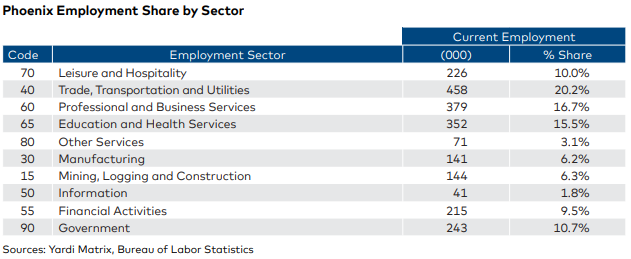
Chart courtesy of Yardi Matrix

The report says Phoenix has emerged as a go-to destination for web scale, cloud and enterprise companies—the metro is the fifth-largest data center market in the United States.

“With operational costs cheaper by one-third than in California, a wave of headquarter relocations surged, and the highly skilled workforce expanded significantly during the pandemic. In addition, Phoenix ranks first nationally in industrial construction volume, thanks to spillover effect from Southern California, where demand is higher than the region’s supply,” the report says.

However the report cautions that “Phoenix also must overcome rising inflation and interest rates, supply chain issues and the coronavirus.”

New housing supply strong

Phoenix growth in new housing supply has consistently outperformed the U.S. rate since 2018.

“Through April, developers delivered 2,772 units, or 0.8 percent of total stock, 30 basis points above the national rate,” the report says.  “The construction pipeline comprised 38,650 units under way and 64,500 in the planning and permitting stages. Of these, more than 25,500 units are slated for completion in 2022.”

There is caution, however, about the Federal Reserve’s response to inflation, supply-chain issues and rising construction costs causing possible delays in new housing coming on line.

Strong demand has kept developers focused on lifestyle projects and upscale properties.

Leading in construction activity were:

  • Downtown – 3,997 units under way
  • Gilbert – 3,646 units
  • North Tempe – 3,066

The largest project under way is the 761- unit Culdesac Tempe, slated for completion in the final quarter of 2023.

“The largest projects delivered through April were Liv Crossroads in Chandler and Roadrunner in McDowell in Scottsdale-South, each totaling 356 units. The latter was sold prior to completion,” Yardi Matrix says in the report.

Get the full report at Yardimatrix.com.

About Yardi Matrix

Yardi Matrix researches and reports on multifamily, office and self-storage properties across the United States, serving the needs of a variety of industry professionals. Yardi Matrix Multifamily provides accurate data on 18+ million units, covering more than 90 percent of the U.S. population. Contact the company at (480) 663-1149.

Portland’s Multifamily Sector Building a Comeback
 

Sign Up For Our Weekly Newsletter And Get Rental Property And Apartment News And Helpful, Useful Content Each Week.

* indicates required

Observations on Rental Assistance, Problems, and Pending Procedural Changes in Senate Bill 891

Observations on Rental Assistance, Problems, and Pending Procedural Changes in Senate Bill 891

Ask attorney Brad is a feature with attorney Bradley S. Kraus and this week the question is about rental assistance, Senate Bill 891, and a provision of the law that sunset on July 1 and what is still in place.  If you have a question for Brad, please feel out the form below.

By Bradley S. Kraus
Partner, Warren Allen LLP

As we drift further away from COVID-19 moratoriums and the laws associated with the same, normalcy continues to get closer and closer. Over the last year, landlords have grown accustomed to dealing with the deluge of laws related to pausing their rights under the Oregon Residential Landlord Tenant Act (ORLTA) and related unlawful detainer statutes. Phases like “Declaration of Hardship” under prior laws, and “documentation” of “pending rental assistance application” under the current legal framework, have worked their way into the lingo of landlord/tenant law.

As of July 1, the current legal framework shifts again. Senate Bill 891, the current eviction framework in place, allowed tenants to provide landlords with documentation that they applied for rental assistance, which caused an indefinite pause on a landlord’s termination rights or pursuit of the same. The pause existed until the application was no longer pending, or until October 1, whichever was earlier. However, as of July 1, that provision sunsets, taking the law back closer to its normal framework.

Tenants will still have the right to apply for rental assistance, and every opportunity should be made for them to do so. However, landlords will no longer be required to pause their termination rights or eviction cases simply because documentation of rental assistance is provided to them. While other technical requirements remain in place—i.e., the requirement that landlords provide the disclosures required under SB 891 with their notices—these requirements are less burdensome and place more importance on rental assistance providers to speed up their processing time, something that has been sorely lacking.

One of the fundamental issues with SB 891 was the lack of incentive or requirement for rental assistance providers to follow through with the process. More to the point, there was no requirement, incentive, or obligation to provide landlords with information about the status of the tenant’s rental assistance application. In other words, if certain workers within the Oregon Emergency Rental Assistance Program (OERAP) desired to stall landlords when they inquired about the status of their tenants’ rental assistance application—or even to confirm whether it existed—landlords had little ability to force a response. Often, the inability to procure information about what is happening is the most frustrating part, and OERAP’s unwillingness to answer simple questions exacerbates that issue frequently.

The above is but one problem with OERAP’s role in the rent assistance setup. Other issues remain unresolved—and in fact, do not cause OERAP any concern—related to payments being made directly to tenants. At some point, OERAP decided to transition from paying all landlords directly, to cutting checks directly to tenants. This is, was, and always will be, a recipe for disaster which results in tenants receiving a windfall if they choose to abscond with that money. Unfortunately, it happens with alarming frequency. Yet when alerted to that issue, what amounts to fraud appears to go unpunished.

For those landlords with eviction cases that have been paused due to SB 891, your pause remains in effect. However, landlords with active cases who are being stonewalled by OERAP do have some options. With an active case, attorneys know how to subpoena information, which cannot in most circumstances be ignored or quashed.

Senate Bill 891, the final COVID-19-era moratorium, is winding down. It is scheduled to sunset on October 1, 2022. Hopefully, we can all move back to normal again from there.

Ask Attorney Brad: How Do I Prove A Tenant Is Smoking Marijuana In Violation of Lease?
Bradley Kraus, Portland attorney

Brad Kraus is a partner at Warren Allen LLP. His primary practice area is landlord/tenant law, but he also assists clients with various litigation matters, probate matters, real estate disputes, and family-law matters. A native of New Ulm, Minnesota, he continues to root for Minnesota sports teams in his free time. You can reach him at kraus@warrenallen.com or at 503-255-8795.

Ask Attorney Brad

Please enter your rental housing management question below for Ask Attorney Brad Kraus. Unfortunately he cannot answer questions from tenants.

  • This field is for validation purposes and should be left unchanged.

Sign Up For Our Newsletter And Get Rental Housing and Apartment News And Helpful, Useful Content Each Week.

* indicates required

Portable Cooling Devices and the ORLTA: How SB 1536 Affects You

How Do I Prove A Tenant Is Smoking Marijuana In Violation of Lease?

Ask Attorney Brad: Tenants Want to Know Why There’s a Dog in No-Pet Building?

Rate Of Rent Growth Slows At Midyear But Multifamily Still Poised For Strong Year

Rate Of Rent Growth Slows At Midyear But Multifamily Still Poised For Strong Year

The rate of rent growth in multifamily has slowed slightly as year-over-year asking rents decelerated, from 16 percent in April to 14 percent in May, Yardi Matrix says in a special report called “Multifamily Rent Forecast Update.”

“So while we are seeing the usual seasonal increase leading into the summer months, 2022 does not look like a repeat of 2021 even though rent growth remains elevated,” Yardi Matrix writes in the report.

“Our forecast update for this month sees most markets receiving an increase to their end-of-year projections, and some markets have been revised upward substantially. The biggest increases were concentrated in secondary and tertiary markets that continue to outperform expectations, with Scranton-Wilkes-Barre, Wilmington, South Bend and Spokane all seeing a greater-than-5 percent increase for our end-of-2022 forecast.”

Less Than 50 Percent Chance of a Recession

While high inflation is forcing the Federal Reserve to raise interest rates the job market still remains strong.

“While the chance of a recession in the next 18 months has increased, we still see a less than 50 percent chance of that happening. Strong demographics and limited supply will keep apartment rent growth strong throughout the year,” Yardi Matrix says in the report.

However there is caution in the report about the Fed, interest rates and inflation plus the war in Ukraine all of which have the potential to cause disruption.

“While it will be prudent to keep an eye on these risks, we still believe that we will most likely make it through 2022 without a recession or major shock to multifamily markets.

“The fundamentals of supply and demand remain strong, and the job market is still hot. The rate of increase in asking rents might be beginning to slow down, but growth remains significantly elevated by historical standards. The industry will have to navigate some headwinds, but it is well positioned to do so,” writes Andrew Semmes, Senior Research Analyst for Yardi Matrix.

Get the full report here.


About Yardi Matrix

Yardi Matrix researches and reports on multifamily, office and self-storage properties across the United States, serving the needs of a variety of industry professionals. Yardi Matrix Multifamily provides accurate data on 18+ million units, covering more than 90 percent of the U.S. population. Contact the company at (480) 663-1149.


Sign Up For Our Weekly Newsletter And Get Rental Property And Apartment News And Helpful, Useful Content Each Week.

* indicates required

Portland City Council Settles With Landlords, Amends FAIR Ordinance

The Portland City Council has again delayed a vote and continued a months-long debate on how to spend unspent housing funds.

The Portland City Council has voted to amend the Fair Access In Renting Ordinance (FAIR) regarding some elements of applicant screening and security deposits, according to reports.

The council decided to roll back some of the more burdensome regulations in settling a lawsuit with landlords who had sued over the ordinance in the case Newcomb et al v. City of Portland. Landlords had argued portions of the ordinance violated state and federal laws.

That settlement includes making a variety of tweaks to the original ordinance to reflect state and federal law. The changes, according to reports, include removing the requirement to depreciate the value of items in the home that may become damaged during a tenant’s residency (called a “depreciation schedule”) and decreasing the amount of money landlords who violate the policy can be sued for—from double a tenant’s security deposit to $250.

“Council believes that the proposed code and rule amendments reflect a prudent compromise that ensures tenants will continue to benefit from the protections offered by PCC 30.01.086, PCC 30.01.087, and PHB’s administrative rules, and that the changes will provide further clarity to both tenants and landlords regarding screening criteria and security deposits,” the city council wrote in changing the ordinance.

City Commissioner Dan Ryan sent an email to community members who were involved in shaping the initial FAIR ordinance to alert them of the proposed adjustments.

“I am confident that these FAIR amendments will improve this landmark policy and prove to better apply fair housing law in accordance with renter’s needs and Oregon law,” wrote Ryan, who oversees the Portland Housing Bureau. Ryan noted that the changes have the support of the entire city council.

Multifamily NW has a more detailed explanation here of the changes in the ordinance.

The Portland Tenants United union had pushed the Fair Access In Renting ordinance, along with former City Council member Chloe Eudaly. “Eliminating the depreciation schedule undermines the main goals of the ordinance,” said Alli Sayre, an organizer with Portland Tenants United, to the Portland Mercury.

Sign Up For Our Newsletter And Get Rental Housing and Apartment News And Helpful, Useful Content Each Week.

* indicates required

Portable Cooling Devices and the ORLTA: How SB 1536 Affects You

How Do I Prove A Tenant Is Smoking Marijuana In Violation of Lease?

Ask Attorney Brad: Tenants Want to Know Why There’s a Dog in No-Pet Building?

With Traditional Multifamily Rent Drivers Disrupted What Is The Future?

Traditional multifamily rent drivers were upended during the pandemic so what does the future hold for multifamily rent growth?

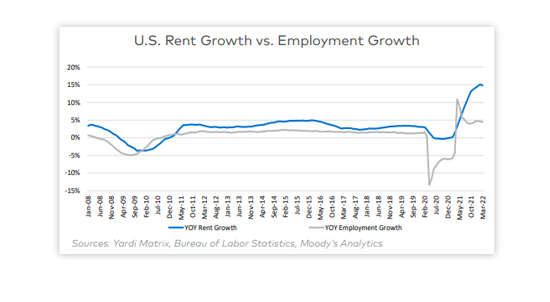
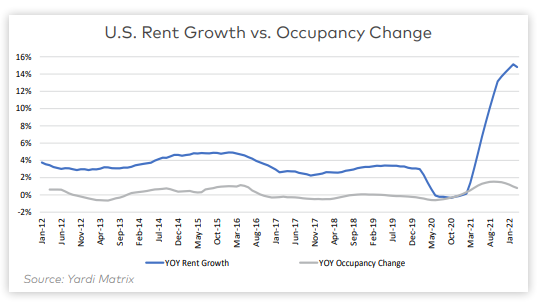
Traditional drivers of multifamily rent growth were upended during the pandemic, first as shelter-in-place policies led to massive job losses and migration, and then as the employment rebound and loosening of restrictions caused demand to skyrocket, Yardi Matrix writes in a June bulletin.

Paul Fiorilla, Director of Research, Yardi Matrix, and Casey Cobb, Senior Analyst in the bulletin examine the implications for multifamily rent and growth going forward and employment growth vs job growth.

The report points out that traditional rent drivers have been disrupted twice due to the pandemic. First was the massive jobs losses early, sheltering in home and a migration toward Sun Belt cities. Then came booming pent up demand and rent increases across the country.

“A question facing the industry is what this means going forward. The pandemic created circumstances that are unlikely to be repeated, especially since the 15 percent year-over-year growth in asking rents nationally (and upwards of 25 percent in some metros) cannot be sustained for very long,” Fiorilla and Cobb write.

Traditional multifamily rent drivers were upended during the pandemic so what does the future hold for multifamily rent growth?
Charts courtesy of Yardi Matrix

How will rent drivers evolve?

The report points out that with the pandemic impact, “We found a huge shift between the first year (April 2020 to March 2021) and second year (April 2021 to March 2022). Some of the difference can be attributed to the short-term dynamics of the pandemic—i.e. large gateway metros were locked down more tightly than metros in the Sun Belt, and economic activity suffered.”

However they point out that some of the changes of the last two years may have started out as pandemic-related “but are likely to remain as part of the landscape for years or even decades into the future. Migration is an example. The Sun Belt has been growing more rapidly than the Northeast or Midwest for decades, but the flow of households from coastal/urban downtowns to suburbs and smaller warm-weather markets was exacerbated by COVID-19 and the growing work-from-home paradigm.”

Driving factors of rent growth and regional demand

Among the many factors are:

  • Will office workers continue to have the flexibility to work from home?
  • What does it mean for employers to locate where employees want to be?
  • Will wage growth support rising rents?
  • Can municipalities fight NIMBYism to increase supply growth?
  • How many metros will fight back against record-high rent growth by implementing counterproductive rent control or other regulatory measures?

“Currently rents are growing about 10 percentage points faster than wages, which means that rent growth is all but certain to moderate. When and how much the moderation occurs, and how that plays out among metros, will be determined by the performance of the economy, migration and regulation,” Fiorilla and Cobb write.

Get the full report and more detail here under Research Bulletins.

About Yardi Matrix:

Yardi Matrix researches and reports on multifamily, office and self-storage properties across the United States, serving the needs of a variety of industry professionals. Yardi Matrix Multifamily provides accurate data on 18+ million units, covering more than 90 percent of the U.S. population. Contact the company at (480) 663-1149.

Multifamily Rents Defy Expectations And Keep Climbing

Sign Up For Our Weekly Newsletter And Get Rental Property And Apartment News And Helpful, Useful Content Each Week.

* indicates required

Portland’s Multifamily Sector Building a Comeback

Portland’s multifamily sector is building a comeback as construction activity stays elevated,  rent development is consistent and the employment market is recouping losses,

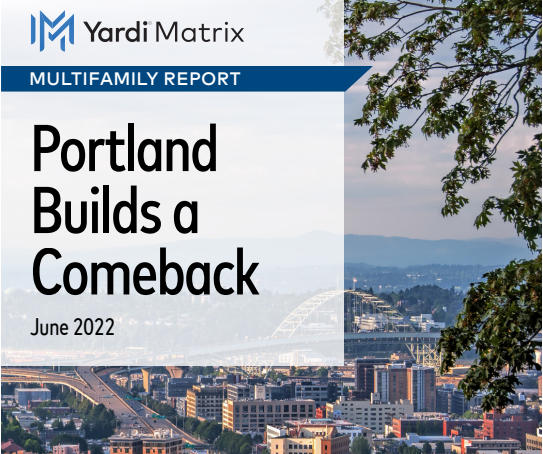
Portland’s multifamily sector is building a comeback as construction activity stays elevated,  rent development is consistent and the employment market is recouping losses, according to the Yardi Matrix June 2020 Portland report.

“Going into summer, Portland rentals are on a sound footing,” Yardi Matrix says in a release, with rents barely trailing the national average. “Improvement is driven by strong demand, keeping both occupancy and development activity high.”

Portland Rental Demand Continues Strong

“Rental demand continues to provide a boost to Portland’s construction sector, as continued inventory expansion has been absorbed consistently, keeping occupancy elevated,” Yardi Matrix says in the report.

The average rent in Portland was $1,690 per month in April, only $31 above the national average as Portland continues to have a lower cost of living than most West Coast metros such as Seattle and San Francisco.

However, Yardi Matrix warns there could be “some moderation” in Portland multifamily rent growth as inflation and other economic concerns play out.

The occupancy rate in Portland is strong.

“The average occupancy rate in stabilized assets stood at 96 percent as of March, as demand has pushed continued rent development, keeping occupancy elevated over the past 12 months.” The report points out that the “renter by necessity” category was even stronger where occupancy was 96.7 percent. “Upscale assets had a lower figure, but still recorded solid performance, at 95.4 percent as of March.”

No Portland submarkets recorded rent decreases in the 12 months ending in April, with most areas actually seeing growth in the double digits. On a year-over-year basis, rent expansion was highest in:

  • Rock Creek: 20.7 percent
  • Creswell Heights: 18.1 percent
  • Beaverton: 17.7 percent.
  • Hillsboro: 17.4 percent.

Employment Growth Continues To Be Solid

Portland added 68,000 jobs in the 12 months ending in February, for a 5.4 percent rate of improvement year over-year.

“The local economy is fighting back after a tough go during the pandemic, but however elevated job gains are now, there’s still work to do to make up for the losses in 2020 and 2021, when decreases were in the double digits.

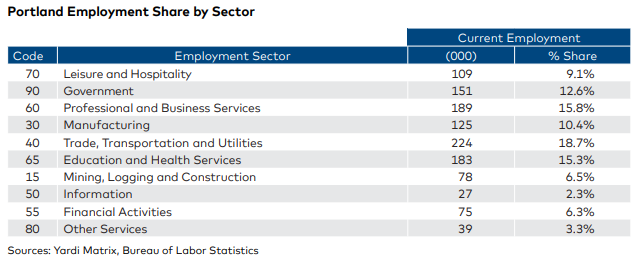
“On a high note, all employment sectors recorded gains through the interval, with the most severely affected, leisure and hospitality, benefiting from the bulk of improvement: The sector added 31,000 jobs, for a 39.9 percent jump. Improvement in the sector comes as a result of hospitality establishments reopening at full capacity across the metro,” the report says.

Portland’s multifamily sector is building a comeback as construction activity stays elevated,  rent development is consistent and the employment market is recouping losses,
Chart courtesy of Yardi Matrix

Portland Multifamily – The Housing Supply Growth

“Projects under way, such as the Ritz-Carlton anchored tower developed by BPM Real Estate Group in downtown Portland, indicate that confidence in the resurgence of the sector and the local economy is still reasonably high. Following a slowdown in 2020, sales activity saw a bounce-back in 2021, as more than $2.8 billion in assets traded since the beginning of last year. Development has been high in Portland in the past five years, and the 10,677 units under construction point to further expansion in 2022 and beyond.” Yardi Matrix expect rents to improve 7.6 percent by year-end.

About Yardi Matrix

Yardi Matrix researches and reports on multifamily, office and self-storage properties across the United States, serving the needs of a variety of industry professionals. Yardi Matrix Multifamily provides accurate data on 18+ million units, covering more than 90 percent of the U.S. population. Contact the company at (480) 663-1149.


Sign Up For Our Weekly Newsletter And Get Rental Property And Apartment News And Helpful, Useful Content Each Week.

* indicates required