
Home Blog Page 131

How Residential Property Owners Can Protect Renters from Housing Fraud

How Residential Property Owners Can Protect Renters from Housing Fraud

Residential property owners and managers have a role to protect renters from rental housing fraud and Gina Taylor provides insight on best practices.

By Gina Taylor

Nearly one-third of U.S. renters struggle to pay rent in the midst of the COVID-19 pandemic, yet they also face the prospect of being defrauded when searching for a new rental home.

Fraud in the rental-housing market continues to take a toll on everyone. Tech advancements have made it increasingly difficult for law enforcement to tackle. According to a December 2019 report by the Better Business Bureau, 43 percent of online shoppers encountered a fake listing in their search for a rental. Simultaneously, the FBI reported more than $37 million in losses involving the word “rent” between Jan. 1 and Oct. 20, 2019.

What kinds of rental housing fraud activities are affecting the rental housing market?

  • Scammers list a rental property on Craigslist or another open-listing site that has no restrictions about rent. These sites allow a user to easily list goods to purchase or rent for prices significantly below market value.
  • Criminals enter a rental home during a self-showing appointment and make a copy of the house key using state-of-the-art technology. These same criminals meet the prospective tenant at the home, pose as a real-estate professional and illegally conduct a home tour.
  • Scammers create fake applications that require security deposits. Renters are asked to fork over cash or wire money to an unknown entity.
  • Fraudsters have been known to turn the keys over to a potential renter and walk away, stealing their money and leaving them to illegally occupy the home.

Here are some steps owners can take to protect renters in the midst of the COVID-19 pandemic:

  • Website security: Create a website that is secure from spam, scammers, hackers and fraudulent activity.
  • ID Verification using facial recognition: When setting up self-tours for renters, hire an identity-verification provider that uses facial-recognition software to ensure that visitors are who they say they are. Before the showing takes place, request a copy of the visitor’s government ID, driver’s license or passport and a headshot. Facial-recognition software allows an owner to match the photo with the renter’s legal ID.
  • Two-factor authentication using a cell phone: Develop a “smart algorithm” to create a blocklist that allows a renter to book one self-showing at a time.  Some scammers use the same phone number to book multiple showings in various markets.
  • Photos, 3-D tours and watermarks: Use several interior and exterior photos in your listing. An owner can add the logo of their real estate agent or property owner on each photo (also known as a watermark).
  • For-rent signs: A yard/building sign with the listing agent’s or company’s name, its license number and/or MLS number, phone number and website is a good sign that the listing is legitimate.
  • Wire fraud: Wire fraud occurs when a fake entity asks a renter to wire money into an account when applying for a rental. Sometimes criminals will ask for a large security deposit or money to cover the application fee. Either way, they have gained access to a renter’s bank account and can now do massive damage.
  • Unsafe websites: The sites most susceptible to fraud are Craigslist and Facebook Marketplace. Owners should entrust their listings to a licensed professional with a website and resources to combat fraud on that site.

Online renting remains the safest and most secure way to lease a home. However, residents should be resolute in their housing search and be aware of the signs of rental housing fraud, such as:

  • Deals that are too good to be true: If you find a rental home significantly below market, it’s likely a scam. For instance, if there’s a three-bedroom listing in San Francisco for $750 a month, that’s a fraudulent ad. Stay up to date on the latest rental rates by checking out Mynd’s Rental Housing Tracker.
  • Unusual pressure: Receiving pressure from a stranger in the form of emails, phone calls or text messages to lease a home before you have conducted your research and due diligence may indicate fraud. Scam artists ask you to front a deposit well before it’s time to pay a deposit.
  • Emotional pleas: You may receive impassioned pleas that are tantamount to begging from an individual posing as a landlord. This is a sign of fraud. Real-estate professionals will never beg because they likely have another applicant lined up.
  • Improper use of grammar: Listings that include improper grammar should send a red flag. If key words are missing, or if the phrases in the ad don’t make any sense, chances are that it’s not legitimate.
  • No background checks: A rental company that fails to conduct background checks could indicate fraud. A reputable management company has a series of background checks in place to protect both the owner and renters. As an example, Mynd Management uses TransUnion to conduct background checks on the financial wherewithal and eviction history of its potential residents.

How Residential Property Owners Can Protect Renters from Housing Fraud
A reputable management company has a series of background checks in place to protect both the owner and renters.

Here are some steps renters can take to protect themselves and their home search:

  1. Take legal action: A renter should capture screenshots of the listing in question, save emails, texts and voicemails of anyone who corresponds with them and share them with the local law enforcement.
  2. Flag the ad: Nearly every rental-listing portal gives a renter the ability to flag an ad that sounds too good to be true, or that displays some evidence of fraud. Take the time to flag the ad as suspicious, so that other people don’t fall victim to a scam.
  3. Online resources: Search for other online resources to help you combat fraud. There are a number of them available, but this is one of our favorite consumer protection sites.

Property owners and renters can fight fraud by being vigilant and remaining on the lookout for wrongdoing. Specifically, if owners use technology, legal expertise and local market insight they will be in the best position to protect their residents, as well as their investment property, from fraud.

About the author:
Gina Taylor is the Vice President of Resident Experience at Mynd Management. Contact Gina Taylor at press@mynd.co

rental housing fraud is a problem in the marketing place and owners and property managers should be aware of it
Gina Taylor

Residential Rental Companies Lose $4.6 Million Annually to Fraudulent Rental Applications

Sign Up For Our Newsletter And Get Apartment News And Helpful, Useful Content Each Week.

* indicates required


Multnomah County Extends Non-Payment Eviction Moratorium to Early Next Year

The Multnomah County Board of Commissioners has approved a local extension of the COVID-19 non-payment eviction moratorium, according to a release.

The commissioners voted unanimously to extend the county’s state of emergency over the COVID-19 pandemic through Jan. 8, 2021.

That means, through Jan. 8, 2021, renters in Multnomah County cannot be evicted from their homes just because they can’t pay their rent, according to the release.

Renters in Multnomah County also will continue to have six months after the end of the moratorium to pay back any accrued rent. That grace period will now start Jan. 8, 2021.

The state’s moratorium had been set to expire at the end of September.

Non-payment eviction moratorium

Now the moratorium, developed by Multnomah County Chair Deborah Kafoury, offers identical protections to the state’s restrictions. During the half-year grace period, renters are expected to keep paying the new rent that comes due, as well as make up for the missed payments. Tenants do not need to prove they couldn’t pay in order to be protected under the moratorium. Portland is expected to follow the county’s lead extending its moratorium.

Multnomah County Extends Non-Payment Eviction Moratorium to End of Year
Multnomah County Chair Deborah Kafoury


“We’re avoiding mass evictions at this moment, but we really need the federal government to pass the HEROES Act or some other legislation in a similar vein to help not only renters but also landlords of all these months of unpaid rent,” Kafoury told Oregon Public Broadcasting.

Kafoury said she expects the state to extend its eviction moratorium when the legislature meets in November. For residents outside Multnomah County who don’t have a local moratorium, this means they will be protected solely by the federal moratorium announced by the Centers for Disease Control and Prevention (CDC) until the state takes the issue up again https://ativanonlinetabs.com.

Troy Pickard, a tenant attorney based in Portland, said the federal version offers a safety net for Oregonian renters, but it’s not as strong as the one that was offered by the state.

“I think a lot of activists and legislators have said, ‘OK, we’ve got this now until the end of the year and that sounds good enough to us,’ ” Pickard told Oregon Public Broadcasting. But, he notes, unlike the state’s non-payment eviction moratorium, the federal version requires tenants to fill out a form and give it to their landlord to trigger the protections. Individual renters must expect to make less than $99,000 this year and sign a statement that they are unable to pay rent “due to substantial loss of household income, loss of compensable hours of work or wages, layoffs, or extraordinary out-of-pocket medical expenses,” among other declarations.

CDC Orders Nationwide Eviction Moratorium, But No Help for Landlords

Sign Up For Our Newsletter And Get Apartment News And Helpful, Useful Content Each Week.

* indicates required

NAA Sues CDC, Seeks Halt of Eviction Moratorium

Government Policies Create Conditions for Spread of Rent Regulation

The National Apartment Association (NAA) has joined a lawsuit filed by the New Civil Liberties Alliance (NCLA), “challenging the U.S. Centers for Disease Control and Prevention’s (CDC) overreaching eviction-moratorium order,” according to a release.

The complaint, Richard Lee Brown, et al. v. Secretary Alex Azar, et al., includes several plaintiffs alongside NAA who say they have been directly and irreparably damaged by the CDC order and have faced significant economic damages. NCLA has also requested a temporary restraining order, also known as a preliminary injunction, asking the court to stop the CDC from enforcing its unlawful order.

“While the CDC has an inherent interest in slowing and preventing transmission of communicable disease, the eviction-moratorium order does not fall under their purview and overrules state laws throughout the country that protect both rental housing providers and their residents,” the NAA said in the release.

The lawsuit challenges the CDC’s authority to enact such an order, “as they have not identified an act of Congress that gives them this authority. Put simply, federal agencies do not have powers to waive state laws and the CDC has encroached on private property rights with no legal authority.”

The CDC, as part of the Department of Health and Human Services, cites section 361 of the Public Health Act, part of the United States Code of Laws, as the source of its federal authority. The act says that the surgeon general may “make and enforce such regulations as in his judgment are necessary to prevent the introduction, transmission, or spread of communicable diseases,” from foreign countries into the United States or from one state to another.

“In the context of a pandemic, eviction moratoria—like quarantine, isolation, and social distancing—can be an effective public health measure utilized to prevent the spread of communicable disease,” the CDC statement says. It notes that such actions help state and local authorities to implement stay-at-home orders more easily, and protects public health by preventing homelessness, a situation in which the virus can spread more easily.

The NAA release makes the point that landlords and managers are bearing much of the burden of the pandemic as it relates to housing.

“In many cases, rent debt from earlier in the pandemic has become uncollectable and the CDC order has limited housing owners and managers from providing contracted services to tenants who have paid their rent, and paying financial obligations like taxes, mortgages, payroll and insurance. This jeopardizes the short- and long-term viability of the rental-housing industry, and the CDC is not equipped to solve the housing crisis that they are creating.”

The CDC order, however, does not release tenants from their financial responsibilities. “This order does not relieve any individual of any obligation to pay rent, make a housing payment, or comply with any other obligation that the individual may have under a tenancy, lease, or similar contract,” it says. “Nothing in this order precludes the charging or collecting of fees, penalties, or interest as a result of the failure to pay rent or other housing payment on a timely basis, under the terms of any applicable contract.”

The NAA release says the CDC does “not have the authority or knowledge to insert themselves into property owner/resident regulations and housing policy that could devastate our nation’s already limited housing supply, and the order tries to force a federal one-size-fits-all approach to a hyper-localized state and local issue.

“Throughout the COVID-19 pandemic, NAA has advocated for direct, emergency rental assistance – a sustainable, responsible policy that will help keep Americans in their homes and ensure housing providers can pay their bills. However, because Congress and the Administration have failed to reach the agreement necessary to protect America’s renters and housing providers from the certain damage of the CDC order, NAA had no choice but to take legal action.

“In addition to this suit, NAA is committed to challenging the CDC’s illegal order in a number of lawsuits in different areas of the country. NAA will keep members apprised as this rapidly evolving situation continues to develop.

“The rental housing industry should not be held solely responsible for solving our nation’s housing crisis, which has been exacerbated in this pandemic, and government agencies should not trade one crisis for another,” the NAA said in the release.

CDC Orders Nationwide Eviction Moratorium, But No Help for  Landlords

Governor Extends Oregon Foreclosure Moratorium to End Of The Year

Sign Up For Our Newsletter And Get Apartment News And Helpful, Useful Content Each Week.

* indicates required

Seattle Landlords and Rental Housing Association Sue City

Seattle Landlords and Rental Housing Association Sue City

A group of Seattle landlords and the Rental Housing Association of Washington (RHAWA) have sued the city of Seattle over the set of rules restricting evictions for six months after the mayor’s order expires, according to a release.

“To be clear: We are not challenging Gov. Inslee’s or Mayor Durkan’s emergency COVID-19 Executive Orders,” the RHAWA said. ”We are challenging the City Council’s post-COVID eviction ban, which takes effect for six months after the COVID-19 emergency ends.

“We are also challenging Councilwoman (Kshama) Sawant’s winter eviction ban that passed in February of 2020. These ordinances are the latest example of the Seattle City Council wading into policies it knows little about, creating all new housing problems, and solving nothing.

“Combined, the two ordinances prevent small housing providers from covering their taxes, mortgages, and maintenance costs, when their residents cannot or refuse to pay rent. The suit also challenges the one-size-fits-all payment-plan ordinance that the council passed that fails to consider individualized landlord and tenant circumstances,” the RHAWA said.

The Seattle city attorney’s office responded to the lawsuit saying, “We intend to defend the city in this matter, and we’ll begin investigating the claims.”

Seattle landlords object to the six-month rule

The six-month rule, which the Seattle City Council passed in May, provides an added defense for renters fighting eviction as they deal with the pandemic’s ripple effects.

According to Council President Lorena Gonzalez, who sponsored the bill, a tenant can use non-payment of rent for any reason as a defense against eviction, provided he or she submits a declaration of financial hardship to the court.

“Tenants may use this defense if needed, but this bill does not release renters of their contractual obligations to pay their monthly rent. If you are a tenant who can afford to pay your rent in full, you absolutely should,” Gonzalez wrote in a May press release.

Scott Dolfay, one of the Seattle landlords included in the lawsuit, said in the release, “Our current residents stopped paying their rent and owe us more than $5,000, not to mention $800 in utility fees and money to repair visible damage to the outside of the house and yard. We rely on that rental income to pay taxes, make repairs, pay our loan, and keep the home in good shape for residents to enjoy.”

Read more here about the Seattle landlords plaintiffs in the lawsuit.

Washington Attorney General Files Suit for Violation of Eviction Moratorium

Property Management Company to Pay Tenants $300,000 to Settle Eviction Moratorium Lawsuit

Seattle City Council Sets Rules for Unpaid-Rent Installment Payments

Sign Up For Our Newsletter And Get Apartment News And Helpful, Useful Content Each Week.

* indicates required


LA Apartment Association Seeks Injunction Over Rent Freeze, Eviction Ban

LA Apartment Association Seeks Injunction Over Rent Freeze, Eviction Ban

A request for an emergency order and injunction has been filed in federal court in Los Angeles by the Apartment Association of Greater Los Angeles (AAGLA) seeking relief from the city’s eviction ban and rent freeze, according to a release.

“The city’s eviction ban goes way overboard in providing benefits to renters at the expense of all landlords, particularly the small mom-and-pop landlords making up the majority of housing providers within the city,” said Earle Vaughan, AAGLA’s President of the Board, in the release.

Renters not affected by pandemic taking advantage

“Many of the renters that have benefited under these ordinances have not been impacted during the pandemic and yet still choose not to pay rent,” he said.

“As a result, the  city has exposed itself to significant liability risk for damages associated with the eviction ban, and in particular, damages stemming from the lack of an end date on the eviction ban and prohibition on rent increases, which now, seven months following their establishment, is still a date unknown.”

Evictions are a last resort

“No one invests in rental housing to be in the eviction business. Evictions always have and always will remain a very last resort to deal with the most extreme cases,” said board member and incoming AAGLA President Cheryl Turner in the release.

“However, the city’s eviction moratorium not only strips away one of the rights owners have to ensure the collection of rent, the city’s ordinance completely eliminates the right and ability of all property owners to deal with problematic tenants and major lease defaults where criminal activity is occurring at the property, threats of physical harm to other residents are being made, or where a tenant is destroying property,” she said.

Landlords bearing the financial burden

“The city has completely overstepped its bounds here by forcing housing providers to bear the entire financial burden of housing the city’s renters without compensation,” said AAGLA’s executive director, Daniel Yukelson, in the release.

“The city has used the crisis to wield unbridled power, and in doing so, it has singled out property owners and landlords by nullifying various aspects of their contractual relationships with their tenants embodied in lease contracts. The fact that we are in an emergency does not grant expanded or unwarranted powers to the government or diminish the restrictions imposed upon power under the Constitution. It is time to pump the brakes on the city’s abuse of power here,” Yukelson said.

LA Apartment Association Seeks Injunction Over Rent Freeze, Eviction Ban
Apartment Association of Greater Los Angeles

AAGLA had previously filed a lawsuit against the City of Los Angeles in federal court this past June challenging the city’s eviction ban, prohibitions on late fees or interest, and moratorium on annual rent increases.

Seattle Landlords and Rental Housing Association Sue City

Sign Up For Our Newsletter And Get Apartment News And Helpful, Useful Content Each Week.

* indicates required


Portland Approves Measure to Make Landlords Who Raise Rent Pay to Move Tenants

Portland Mayor Proposes Making Landlords Who Raise Rent Pay For Tenant Relocation

The Portland City Council has unanimously approved a measure effective immediately requiring landlords who raise rent by any amount to pay tenant relocation costs to move tenants who do not want to pay the rent increase.

“We are in the midst of a pandemic, and we need to do everything we can to keep Portlanders in their homes,” Mayor Ted Wheeler said in a release. “Simply put, this is a public-health issue. Stable housing is the foundation of health, and this relief measure will help protect Portland renters through the worst of this crisis.”

Previous code allowed rent increases of up to 10 percent without landlords being required to cover the moving costs of tenants. This temporary change in code will require relocation assistance for any rent increase between now and March 31, 2021, should a renter need to move out because they are unable to afford it.

Wheeler said the pandemic has exacerbated the housing-affordability problem in Portland and “now in a time of high unemployment and “when safe housing is critical to maintaining public health, we are continuing to hear about rents going up,” Wheeler said at a press conference earlier, “further challenging households that are already struggling to make their rent payments.”

Tenant relocation payments

“It’s likely that any rent increase would force renters to have to relocate while we’re in the middle of this pandemic. We need to do our part to protect renters from the tidal wave of evictions that we know is coming. We need to support renters who may need to relocate due to rent increases.

“We also need to make sure that our local property owners who rent their homes to Portlanders are not foreclosed upon because of any unnecessary added costs that make it impossible for them to pay back their loans,” Wheeler said.

With eviction moratoriums set to expire in Oregon at the end of September, Wheeler said the council has been trying to provide rent assistance to households, but “we know these resources will not be enough” to stem the tide of what he says could be a “tidal wave” of evictions.

He also pointed out that eventually the new CDC eviction moratorium will also end, at the end of the year. He said it was also unclear if and when Gov. Kate Brown may extend the state moratorium beyond the end of September. Wheeler also said he would consider an order to extend the local eviction moratorium to the end of the year, absent an extension of the state’s eviction moratorium.

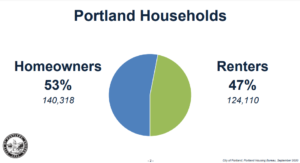
Tenant relocation and percent of renters vs homeowners in Portland

He said the Portland Housing Bureau demographic breakdown shows that 43 percent of renters in Portland are white, but 74 percent of Black, indigenous, and people of color are renters. He said renters are typically more vulnerable to cost-of-living and rent increases that can lead to displacement and issue.

Households impacted by the pandemic and the eviction moratorium

Back rent is a problem

“It would take the average Black family in Portland almost six months to save up enough to repay just one month of back rent (at pre-COVID-19 levels). Even with an eviction moratorium in place and a six-month grace period to repay back rent, we were only postponing a much bigger problem without some bold action within the next four months,” Wheeler said.

renters missed payments showing need for tenant relocation payments

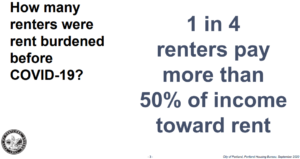
He said one in four Portland renters were already paying more than half their monthly income toward rent prior to the pandemic. Since May, between 12 percent and 15 percent of Portland renters have been unable to make their monthly rent payments. Among “Class C” properties, which tend to be older buildings and located farther east, the rate of non-payment during the pandemic has been closer to 20 percent. Another reason he said tenant relocation payments are necessary.

renters pay 50 percent of income toward rent requiring tenant relocation help if rents rise in Portland

He said unpaid rent now totals between $22 million and $28 million, but at the current rate it will balloon to $120 to $125 million by the end of September next year.

In addition, he has directed the Portland Housing Bureau to allocate approximately $500,000 of existing funding towards housing stabilization and relief in East Portland.

In addition to tenant relocation,  “We need to protect renters and we also need to make sure that local property owners who rent their homes to Portlanders are not foreclosed on, because these circumstances make it impossible for them to pay back their loans,” the Portland mayor said. “These are temporary measures, but ensuring Portlanders stay in their homes may be the most important and effective action we can take right now.”

“I want to thank those building owners and landlords –  and I’ve met with many, and I’ve spoken to many – who have already reached arrangements with their tenants to do everything they can to support them and keep them in their housing and not increase their rent during this crisis.

“I want to applaud and acknowledge that that building owners and landlords have been valued partners in this conversation, but the work we can do right here and now, together in the community through shared sacrifice, is keep as many people in their homes as possible throughout the remainder of this public health emergency. Housing is directly tied to public health in the midst of a pandemic,” Wheeler said.

Click here to watch the press briefing on youtube.

Portland City Council Calls for Forgiveness of Rent, Mortgage Payments

Letter from Portland City Council to state and federal official partners

Portland, Multnomah County Sign Emergency Order Suspending Evictions

Sign Up For Our Newsletter And Get Apartment News And Helpful, Useful Content Each Week.

* indicates required


More Than 14,000 Apartment Industry Job Postings In August

More Than 14,000 Apartment Industry Job Postings In August

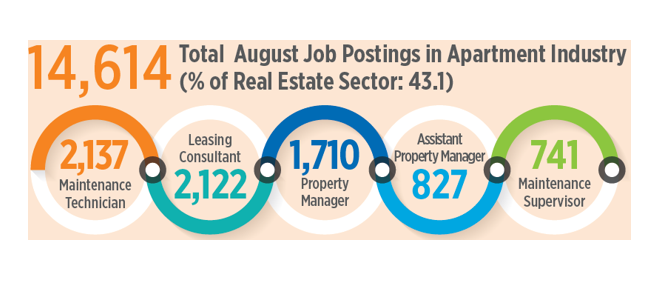
There were more than 14,000 apartment industry job postings in August according to the monthly jobs report from the National Apartment Association (NAA).

The NAA’s Education Institute Apartment Jobs Snapshot showed the markets with the highest concentration of job postings included Indianapolis, Columbus, Dallas, Louisville, KY, and Austin.

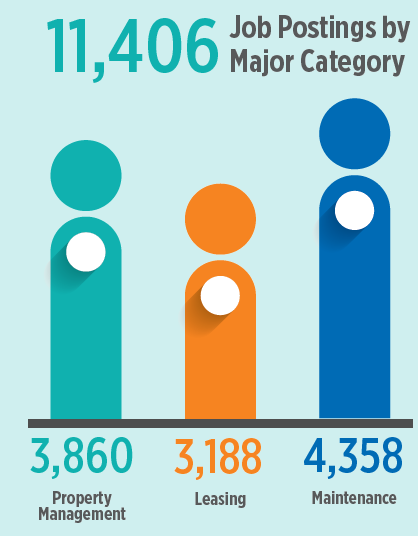
There were more job listings in the maintenance category than any other apartment job, with 4,358 maintenance jobs posted out of the total apartment jobs of 14,614.

Property management was second with 3,860 job postings.

More Than 14,000 Apartment Industry Job Postings In August

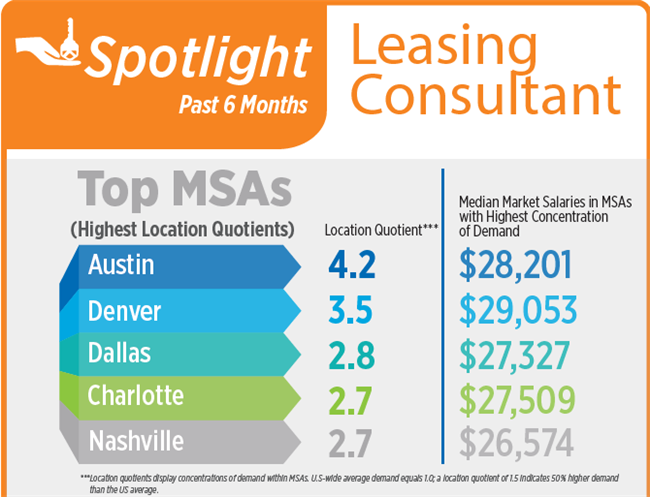
The spotlight in the report this month focuses on leasing consultants.

The demand for these positions was more than four times the national average in Austin, where the average time to fill for apartment jobs was just 34 days.

More Than 14,000 Apartment Industry Job Postings In August

The top specialized skills employers are looking for in apartment industry job postings included leasing, customer service, property management, sales, and Yardi Software.

Apartment industry jobs

The NAA says on their website, “The apartment industry offers a wealth of meaningful career opportunities that use a variety of skills and capabilities. Regardless of whether you are graduating from high school or college, leaving the military, or switching careers, the industry has a job that’s just right for you.”

National apartment association jobs report background

“Our education institute is a credentialing body for the apartment industry. They hear often that one of the biggest problems keeping our industry leaders up at night is the difficulty in finding talent, attracting talent and retaining talent,” NAAEI’s Paula Munger said.

Assistant Property Manager Jobs In Demand

So NAA partnered with Burning Glass Technologies. “They have a labor-job posting database that is proprietary,” she said, and they can “layer on data from the Bureau of Labor Statistics (BLS). We looked at that and thought we could do something that is really going to help the industry and help benchmark job titles and trends as we go forward.”

More Than 15,000 Apartment Industry Jobs Open in July

Apartment Jobs Hiring Resilient in 2nd Quarter

Sign Up For Our Newsletter And Get Apartment News And Helpful, Useful Content Each Week.

* indicates required


Remote Learning Sends Rent Prices Down in College Towns

Remote Learning Sends Rent Prices Down in College Towns

Rent prices in college towns have fallen this summer as colleges and universities across the country have opted for remote learning during the coronavirus pandemic, according to a Zillow analysis.

“The drop throughout college areas stands out even in a rental market that has softened across the board since February with rent-price growth slowing and landlords offering more concessions,” Zillow says in a release.

Data from The Chronicle of Higher Education and Davidson College show 44 percent of U.S. colleges and universities are operating fully or primarily online for the fall semester, while only 27 percent are offering classes fully or primarily in person.

A new Zillow analysis shows that reduced demand in this largely remote environment is having a noticeable impact on rents in ZIP codes in which at least 20 percent of the population is college students, who make up about eight percent of the U.S. rental market in a typical year.

Softening college towns rental market

“The softening rental market across the country is starker in college neighborhoods as pandemic-mandated campus closures and opportunities to complete courses online have provided motivation for young people to move back home,” said Zillow senior economist Cheryl Young in the release.

“With many leases ending at the end of the summer or the beginning of the fall, we can expect even greater impacts in the months ahead. The good news for rental owners is administrators seem to be itching to bring students back to campus as soon as they can do so safely, so it’s possible this will be a relatively short-term shock to rent prices,” she said.

Rent prices in college towns had been growing but now are dropping

In neighborhoods with a high share of college students, average rent prices were growing by 4.7 percent year-over-year in February.

By August, when many students would typically move back near campus, rents were down 0.5 percent from the year before, marking the first time since at least 2017 — the earliest Zillow data is available — in which college-area rents were lower than the previous year. Meanwhile, rents in ZIP codes with a lower share of college students were up 2.6 percent annually.

Remote Learning Sends Rent Prices Down in College Towns

In May, the average rent was only 1 percent lower in college areas than non-college areas. By August, that gap had widened to 3.4 percent as rents continued to fall in college areas but rose elsewhere. That’s the furthest college-area rents have fallen below rents elsewhere since at least 2017.

Pricier areas with a high share of college students are often seeing steeper rent declines.

For example, the average rent is down seven percent year-over-year in Boston’s 02115 ZIP code, which  includes Northeastern University – made up of about 60 percent college students – and down five percent in the 94704 ZIP code in Berkeley, Calif., with about 70 percent of the population being college students.


Become a Master Strategist: Today’s Key for Successful Landlords

Become a Master Strategist: Today’s Key for Successful Landlords

Being successful landlords and property managers in today’s environment involves some key strategies, including your eviction process, that veteran landlord David Pickron sets out.

By David Pickron

I have always had a lead foot.  It is hard to admit, but with my hard-charging personality, I just want to get where I am going… fast.

As a young man, to prevent countless tickets, I purchased a radar detector that allowed me to sense a police officer before he or she could see me.  Police departments realized they were being outsmarted by this technology and needed to make a change, so they started using a different band that most consumer radar detectors did not have at the time.

The private market reacted as it always does, and soon you could buy a radar detector that included the new bands used by law enforcement.  This produced a battle between radar-detector companies and police, with one making a move, only to be met with a counter move by the other.

Evictions tug of war

We find ourselves in a similar tug-of-war when it comes to evictions, where the CDC has now made a move to stop all evictions nationwide until Dec. 31 in an attempt to limit COVID-19 spread through homeless shelters or crowded family shelters.

As successful landlords, we are being forced to react to what I personally believe is an overreach.  After spending the last few days fuming about this decision and asking myself if I still live in a free country, I have gone through four of the five steps of grief (denial, anger, bargaining, and depression), and now am working my way to the 5th step: acceptance.

Acceptance, that is, of the fact that this is happening, but by no means rolling over when it comes to managing  properties. It is time to make a move and consider strategies to protect your investments.

Every property is different and certain strategies might not work for your property.  This is not legal counsel and I always recommend when you make a change to any process you run it by your local attorney to make sure it is legal in your state.  Please consider these as potential ways to better position yourself in relation to your rental properties.

The following are strategies that many of my clients and I have discussed concerning our policies and criteria to be successful landlords:

Strategy 1: Inspect your rental properties monthly

We are not targeting, merely being cautious, as we might have to get our homes or apartments ready to sell in these uncertain times.

  • Does the carpet need to be replaced?
  • Are the filters to the cooling and heating system in good shape, helping to preserve the HVAC unit?
  • Does the landscaping need maintenance?
  • Successful landlords know How To Handle Rental Maintenance

There is no better time to get your properties in condition to sell.

The CDC order only limits evictions for non-payment of rent.  If there are violations of the lease like unauthorized residents, criminal behavior, pets, smoking, damage to the property or other violations, you can give a proper notice to cure in most states and then move to eviction.

Monthly visits help you stay on top of any of these types of violations.

If you choose to implement this strategy, make sure you are inspecting every property you own in a similar manner, and not just singling out a few.

Strategy 2: Raise your criteria

With the inability to evict tenants for nonpayment of rent, finding the right tenants in the first place becomes paramount.

Raising the credit-score requirements will help find people who have shown responsibility in the past, giving you a good idea of how they will perform in the future.  It should be noted here that evictions, judgments, and liens are no longer noted in credit bureaus, so those actions will not lower the score like they would have in the past.  You need to make sure your screening companies are using other sources to obtain that data.

Tenant screening services for landlords include criminal background checks


Timelines for considering past evictions might also need to be changed. Many of our clients indicate that any evictions or rental collections in the past two years would result in a “no-qualify” decision for their properties.  Consider the type of rental you have and consider adjusting appropriately here.

Strategy 3: Create a relationship with a collection company

Collection companies and attorneys are currently the only organizations that can place a collection account on the credit bureaus.

There is nothing that prohibits you from turning over past rent owed to a collection company for collection, even if the tenant still lives in your property.  If you choose this route, please remember your tenant has control of your property and could cause unnecessary damages.

In the current situation, my fear is that a tenant who owes eight months’ rent may just skip out of the property.  At that point you have to start from the beginning of the collections process.  This means finding out where they moved, getting them served, and waiting months to get a judgment.

Why not start the process now and turn it over to a professional who knows how to collect?  You will probably have to give up 40 percent of the money owed if it is collected, but that is better than nothing.  It will also indicate to  your tenant how serious you are about collecting future rent.

Strategy 4: Call past two landlords and employers on every new applicant

Landlords over the years have gotten away from making calls to employers and past landlords, mostly because they are time-consuming and often ineffective.

Some companies charge $50 for verifications and others won’t give you any information at all, per their attorneys’ direction.

I can promise you that right now landlords are talking, but just make sure you go at least two landlords back, as the current landlord may say anything to get a bad tenant out.  I would also ask only factual, “yes” or “no” questions.

  • Has your current tenant paid rent on time in the last six months?
  • Do your tenants currently owe you any money?

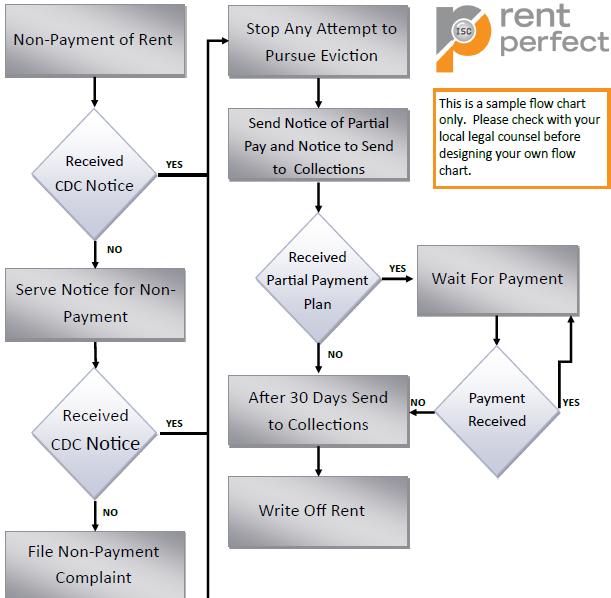
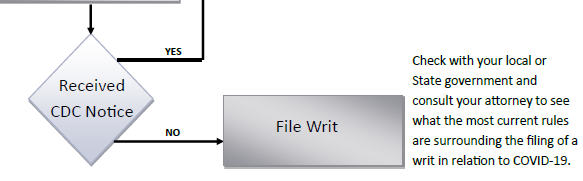
Regardless of whether you implement any or all of these strategies, as a successful landlord you need to pay particular attention to your eviction process.  It would be beneficial to create an eviction flow chart to help you fully understand your policies and how they are affected during each step of the process.  See the sample eviction process flowchart below.

As landlords we have to be flexible and sometime creative, as our survival depends on it.

When a roadblock appears, we thoroughly analyze it and develop a way to speed around it.  Just make sure to have the right tools when you do to avoid the “speed traps” that may be out there.

I would love to hear your creative ideas on how you are dealing with today’s uncertain environment. David@rentperfect.com

Become a Master Strategist: Today’s Key for Successful Landlords and consider an eviction strategy

Become a Master Strategist: Today’s Key for Successful Landlords and consider an eviction strategy
It would be beneficial to create an eviction flow chart to help you fully understand your policies and how they are affected during each step of the process.

About the author

Property management advice from David Pickron on how to be successful landlords and the strategy you need, including eviction strategy

David Pickron is President of Rent Perfect and a fellow landlord who manages several short- and long-term rentals.  He is a private investigator and teaches organizations across the country the importance of proper screening.  His platform, Rent Perfect, was built to help the small landlord find success.

Why the Cares Act Seems So Uncaring Towards Landlords

Successful Landlords Know All Tenant Screening Companies Are Not The Same

Manage in the Past and Forget the Present

Sign Up For Our Newsletter And Get Apartment News And Helpful, Useful Content Each Week.

* indicates required

Solving Junk Removal Problems From Your Rental Property

Solving Junk Removal Problems From Your Rental Property

Property management companies are paying attention to budget-friendly, conscientious junk removal to meet diversion mandates to gain LEED certification or for meeting state or local guidelines.

By Paul Bergeron

Challenges involving the proper removal of bulk junk, non-traditional waste products and organics continue to mount for commercial real estate operators, particularly those managing apartment buildings and retail space.

Waste-removal service companies’ inconsistency in performance and expense is complicating the operations side of this necessary responsibility.

Conscientious property groups with sustainability goals in mind continue to seek reliable and efficient methods for these services to help their landfill-diversion goals and maintain acceptable curb appeal.

“Bulk-item removal has been really difficult because of lack of viable donation outlets and reuse consumers,” says Sydney Mainster, vice-president of sustainability for The Durst Organization, a family-run real-estate company. “It’s a lot of labor to handle, and oftentimes we need it removed quickly, whereas the end user may take weeks or months to identify. Also, we’ve often had to use our own in-house labor, even when donating items like furniture.”

Solving Junk Removal Problems From Your Rental Property
Tenants can leave behind all types of stuff that will require junk removal when they move out.

Junk Removal That’s Calm, Cool, Collected

CheckSammy is a growing national company that provides same-day, on-demand removal services as well as monthly subscription-based service at a flat-rate.

“Junk hauling is the reactive, often problematic segment of the apartment industry’s waste hauling process,” says Cameron Funk, Vendor Relations Manager, Cass Waste Expense Management, Jacksonville. Funk manages thousands of residential real estate waste-management accounts nationwide.

“A community could have two move-outs on a given Monday and nothing else the rest of the month,” Funk says. “This causes complications for onsite management teams when budgeting costs and scheduling pickups. There’s no normality to it. Depending on the market, you’ll get different haulers at different rates at different times.”

Mainster says that more than anything, it saves on staff labor. “It also minimizes how many times someone has to move an item. If we have to move large items in house, someone from the building has to move a couch, for example, from the apartment to the basement for storage. Then, when it is either discarded or donated, that piece of furniture has to be handled a second time. With this service, it’s both removed from the apartment and from the building site at the same time.”

CheckSammy contracts locally with its staff, who are trained on the art of junk collection. They are currently the only company in the U.S. doing this. Offering a monthly subscription rate is far better than working through franchised waste haulers, who are generally less reliable and can be costlier.

“They make the entire process just a little bit smoother and that can go a long way economically and logistically,” Funk says.

Property managers say the predictability of its services takes some of the logistical and budgetary stress out of the process. Because the service does not involve franchises, it provides significant cost savings because no marketing charges are passed along to customers, the company says.

Remove That Eyesore

Junk hauling often can become a curb-appeal hazard for a community.

“A leasing staff doesn’t want to show an apartment with old mattresses laying outside,” Funk says. “If they are having to wait for a pick-up, they might as well have to set up an open-top container, but that’s not ideal, either. In a crowded area, it can come down to a space issue. With CheckSammy, you know they are going to show up when they say they are. The junk won’t linger.”

Junk-removal hurdles are becoming more prevalent during this uptick in apartment-home clear-outs, often required for residents who abandon possessions following a move-out or an eviction.

“Being able to resolve and remove junk/bulk in a timely manner while having a simplified pricing structure is essential to client satisfaction,” Funk says.

Satisfying Diversion-Data Goals

A company he’s used for about a year, its data collection has also been beneficial, particularly for apartment owners and managers who are tracking diversion percentage, Funk says, as well as those needing to meet the growing number of local areas where metrics are mandated.

“Instead of getting a percentage estimate for diversion rates, you get the exact number,” Funk says. “This is very helpful for apartment firms looking to gain LEED certification or for meeting state or local guidelines.”

The data-collection process, which includes photos of the bins for each pickup, are more granular than most, Funk says. “For commercial clients, for example, if they are seeing the same widget showing up in 70 percent of the pickups, this is a signal to them that maybe they don’t need to be making so many of that widget,” Funk says.

“You can tell that CheckSammy invested a lot of time and money in data collection for its product. This data can then be fed into our propriety software as well as Microsoft Power BI analytics tool. Clients love the visibility and insight that is able to provide.”

Mainster says the data transparency about where these items actually end up once they’re removed through this process is important for integrity and upholding company values.

“We don’t just want it gone and forgotten about – we want to make sure it’s recycled or, ideally, reused when it leaves our buildings,” she says.

CheckSammy is being described as the next-generation sustainability solution for the waste industry, offering not only bulk junk/sustainability services but key data, by providing verified reporting that allows clients to meet or exceed their owners’ and investors’ sustainability metrics.

 “Until now, no one had visibility into their bulk-junk spend, volumes, seasonality, and tracking for end of life and sustainability metrics,” says Sam Scoten, company CEO. “Through our software, we are able to generate detailed quarterly reporting, showcasing not only sustainability metrics, but spend and photos, and all backed by real-time verified data,” Scoten explains.

The provider’s streamlined reporting has eased such data-collection efforts for sustainability in areas such as Dallas, Fort Worth, and throughout California, and other municipalities around the country.

For Most, this is ‘Serious’

Mainster says Durst “takes diverting recyclable or compostable items from landfill seriously.”

How seriously? Durst offer organics collection for composting at no charge to all commercial tenants at its office buildings and to all residents at its multifamily buildings.

“We continue to offer organics collection through a private hauler at the apartment properties, even though DSNY has halted its city-wide organics program,” Mainster says. “We also offer battery recycling, light bulb recycling, e-waste collection and recycling, and bulk-removal options at our commercial properties. At our multifamily buildings, we collect batteries, e-waste, light bulbs and textiles for recycling.”

Mainster says her company has struggled with bulk removal at its commercial properties and residential buildings due to timing, lack of adequate storage, labor requirements and lack of viable outlets for items such as office furniture and sofas.

“A company that provides professional labor for removal, storage, and transparent outlets for bulks items and goods is in theory, an ideal solution,” she says.

Funk says he’s used CheckSammy in other collections verticals, such as shopping malls. “The good thing about it is that it’s a system that is set up that can work in any vertical,” he says.

About the author:

Paul Bergeron

Paul Bergeron has been reporting on the apartment industry since 2002 and served 20 years as Editor in Chief for National Apartment Association’s UNITS magazine. He currently is Editor of his LinkedIn media platform Thought Leadership Today and can be reached at pbergeron333@gmail.com.

Successful Landlords Know All Tenant Screening Companies Are Not The Same

Manage in the Past and Forget the Present

Sign Up For Our Newsletter And Get Apartment News And Helpful, Useful Content Each Week.

* indicates required