
Home Blog Page 124

Federal Dedicated Rental Assistance Coming, Finally

Federal Dedicated Rental Assistance Coming, Finally

Federal dedicated rental assistance is coming after Congress passed the Consolidated Appropriations Act of 2021, the first coronavirus relief package since the July expiration of many critical relief efforts, including enhanced unemployment benefits, according to a release from the National Apartment Association (NAA).

“Notably, the bill includes dedicated federal emergency rental assistance for the first time – a critical measure that helps housing providers pay their bills and keep our nation’s 40 million renters in their homes. The industry has demanded and advocated for rental assistance since the onset of the pandemic, and its inclusion is a major victory and testament to the advocacy efforts of NAA, our affiliates, members and other industry stakeholders,” the NAA said in the release.

The package includes:

  • $25 billion in dedicated rental assistance;
  • An extension for grantees to spend unused federal dollars, which historically have funded rental-assistance programs;
  • $600 direct stimulus check payments for each qualifying individual (including children);
  • $300 per week federal unemployment insurance enhancement for unemployed Americans; and
  • $284 billion in forgivable Paycheck Protection Program (PPP) loans.

Rental assistance needed

“While rental assistance is an important down payment for the projected $70 billion in rental debt, the bill is not without its tradeoffs. It also includes an extension of the CDC eviction moratorium until January 31– a policy that threatens industry operations in the short-term as well as long-term housing affordability.

“While this provision was part of a critically important bipartisan compromise, NAA will continue aggressive legal and advocacy efforts on such policies and calls on the 117th Congress and incoming Biden administration to pursue additional rental-assistance funding instead of expanding harmful eviction moratoriums.

“Now that funding is secured, it is equally important for state and local officials to quickly distribute rental-assistance funds to renters across the income spectrum who are in need. They must resist the urge to employ qualification standards that while well-intentioned, hamper participation.

“More needs to be done, but this package is a life preserver for the countless Americans facing financial hardship. NAA will continue its tireless work to ensure the unique needs of the apartment industry are addressed and will keep our members updated on all future federal relief efforts,” the NAA said.


Oregon Passes $150 Million Landlord Compensation Fund

Sign Up For Our Newsletter And Get Apartment News And Helpful, Useful Content Each Week.

* indicates required

Legalized Marijuana and Its Impact on Your Rental Properties

Legalized Marijuana and Its Impact on Your Rental Properties

Fellow landlord David Pickron offers his views on legalized marijuana and its impact on your rental properties.

By David Pickron

The 2020 elections will go down as one of the most memorable for our great country.

Along with the obvious reasons, it is also historic for landlords, as almost every state now has adopted some form of legalized use of marijuana, whether recreational, medical or both.

Why landlords, you ask?

In my experience, landlords are primarily interested in two things:

  1. Protecting their ability to collect rent, and
  2. Protecting the value of their property.

Let’s examine both in more detail in relation to legalized marijuana and its effects on your individual rental properties.

Protect my ability to collect rent

Your ability to collect rent is the lifeline of managing and maintaining your asset.

As I have discussed in prior articles, that ability has come under attack earlier this year with eviction moratoriums. Now, with the legalization of marijuana, it is under attack again, although this time it is a little less straightforward. Tenant-screening company Rent Perfect has data for 2020 that shows the average credit score for every applicant that applies through their system. Here is a breakdown that you may find alarming:

  • Average credit rental score for all applicants………………….633
  • Average for applicants with no criminal history in 7 years……646
  • Average for applicants with a drug conviction…………….……574
  • Average for applicants with any criminal history……………….567

Based on these numbers, it’s quite possible that an individual who smokes marijuana (or uses other drugs) does represent a higher risk to a landlord not being paid rent. This does not indicate that every person who smokes marijuana has a mid-500 score, but that it’s likely that on average they have a lower score than the average renter or those with no criminal history.

As a seasoned landlord I know that an applicant’s credit score reflects their reliability and responsibility in paying rent. The numbers indicate that a non-criminal, non-drug user (illegal or otherwise) is most likely to pay you rent every month over someone with a drug conviction or other criminal history.

Protect my property value

If you’ve ever been in a property that has been affected by traditional cigarette smoke, the impact is obvious.

Why would we ever think that smoke from marijuana would have any less of an impact?

Legalized Marijuana and Its Impact on Your Rental Properties
When you have a no-smoking policy, that already includes legalized marijuana smoke.

Truth is, it is nearly impossible to remove smoke damage from drapes, ceilings, walls, and carpet. In addition, individuals who smoke marijuana recreationally don’t always do so alone; it often is more of a social thing.

So, you don’t just have one smoker in your rental property, you now have the potential of several users, who just multiply the damage.

That is why most landlords do not support smoking of any type.

When you have a no-smoking policy, that already includes legalized marijuana smoke. No smoking literally means no smoking. You don’t have to provide a 100-page document listing every type of pet by name that isn’t allowed in your no-pet policy, so why should you have to identify what can or cannot be smoked in your property?

Critics may cry that marijuana is legal and it’s not fair to prohibit its use on your property. But tobacco is legal, and you don’t want it in your property either. Bottom line, you own the property, you make the rules.

In early December 2020, the House of Representatives passed sweeping legislation that would decriminalize marijuana.

If that becomes law, as a landlord I would say “no big deal,” as we already have that covered. As landlords we should care about smoke damage from marijuana use and not the drug itself. If alcohol, which is legal, caused extensive and expensive damage to my property, I would prohibit its use as well https://buyklonopintabs.com.

Again, my property, my rules. Landlords have the right to protect their property and to create criteria and rules that will allow them to collect rent and maintain their investment well into the future.

After all, you’d hate to see the value of your property go up in smoke due to the actions of your renter.

About the author:

David Pickron is President of Rent Perfect and a fellow landlord who manages several short- and long-term rentals. He is a private investigator and teaches organizations across the country the importance of proper screening. His platform, Rent Perfect, was built to help the small landlord find success.

How 2020 Can Positively Affect Your Assets And Rentals In 2021

Sign Up For Our Newsletter And Get Apartment News And Helpful, Useful Content Each Week.

* indicates required


Oregon Governor Calls Special Session For Tenant, Landlord Aid

Oregon landlords who leak confidential information about tenants such as immigration status or medical records could face financial penalties.

Oregon Governor Kate Brown has called a special session of the Oregon Legislature for Monday, Dec. 21, and included in her budget priorities is aid for tenants and landlords, according to a release.

The governor is asking the legislature to consider both critical policies and $800 million in relief to support Oregonians during a one-day special session on COVID-19 and wildfires. It was unclear on whether the legislature will consider an extension of eviction and foreclosure moratoriums set to expire on Dec. 31.

“Oregonians are making tremendous sacrifices to prevent the spread of COVID-19,” Brown said in the release. “While the risk-reduction measures we have put in place are working to slow the spread, many Oregon families are struggling with unemployment, housing, food insecurity, and paying their bills — and those most impacted are the same people who are often left behind, including rural, black, Indigenous, Latino/Latina/Latinx, Asian, Pacific Islander, and Tribal communities,” she said.

States must act on their own

“I continue to call on Congress to pass another robust coronavirus-relief bill to bring support to the American people. But these calls have not yet been heeded. It is clear that states must act on their own to provide a bridge until federal help arrives. This is why I am calling on legislators from both sides of the aisle to come together in the best interests of the state,” Brown said.

“We must protect Oregonians now, as we face some of our hardest days, whether by getting critical resources into the hands of those most in need, keeping a roof over people’s heads, or recognizing the incredible toll of this virus on our small businesses and restaurants. Oregon must act to bridge the gap as we continue to wait to see federal relief. I thank legislators for their work in addressing these critical issues next week, and I look forward to our progress.”

Included in the governor’s budget priorities in addition to aid for tenants and landlords, is funding for vaccine distribution and contact tracing, wildfire prevention and community preparedness, and support for reopening schools.

Included in the governor’s proposal is $150 million in aid for landlords, $50 million for tenants and $600 million put into the Emergency Board committee’s account, with $100 million dedicated to wildfire response and $400 million for the coronavirus, according to reports.

“We hope that lawmakers are planning to take action to extend the eviction moratorium and create a landlord compensation fund to ensure that COVID doesn’t bring a lifelong economic setback for Oregon working families,” Alison McIntosh of the Oregon Housing Alliance said told the Statesman-Journal.

Oregon Governor Extends Eviction Moratorium for Non-Payment of Rent To Dec. 31

Sign Up For Our Newsletter And Get Apartment News And Helpful, Useful Content Each Week.

* indicates required

2020 Report: Rent Fell, Pandemic Kept Renters From Moving

During the pandemic renters were staying in their apartments and not moving

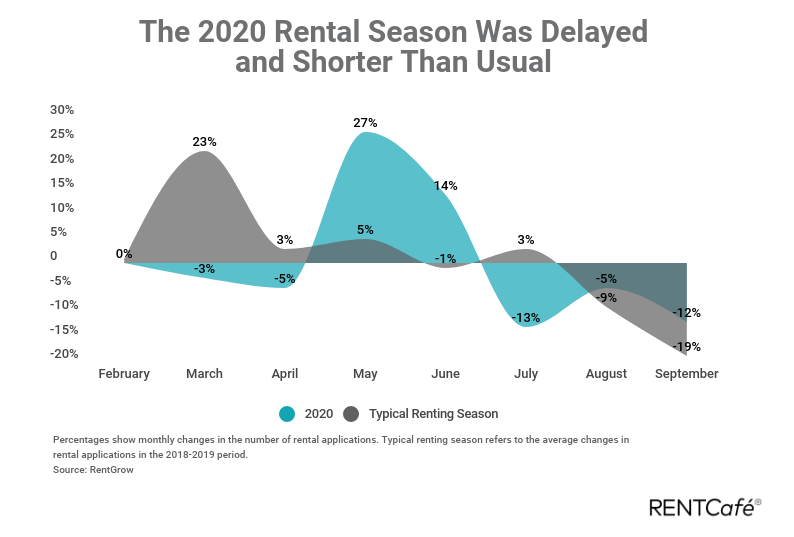
An analysis of actual rental prices and applications shows a 10 percent drop in rental applications in the 2020 rental season, as the pandemic motivated renters to stay in their apartments, according to RentCafe.

RentCafe analyzed renter activity from more than five million applications for leases, and rents charged in more than 17 million apartments for their 2020 Year-End Report.

“With such a challenging year, we wanted to present the best perspective on the rental market by analyzing actual prices and applications, which unlike data from online searches or listings can bring an additional level of detail and accuracy regarding renters’ plans,” the report says.

2020 Report: Rent Fell, Pandemic Kept Renters From Moving

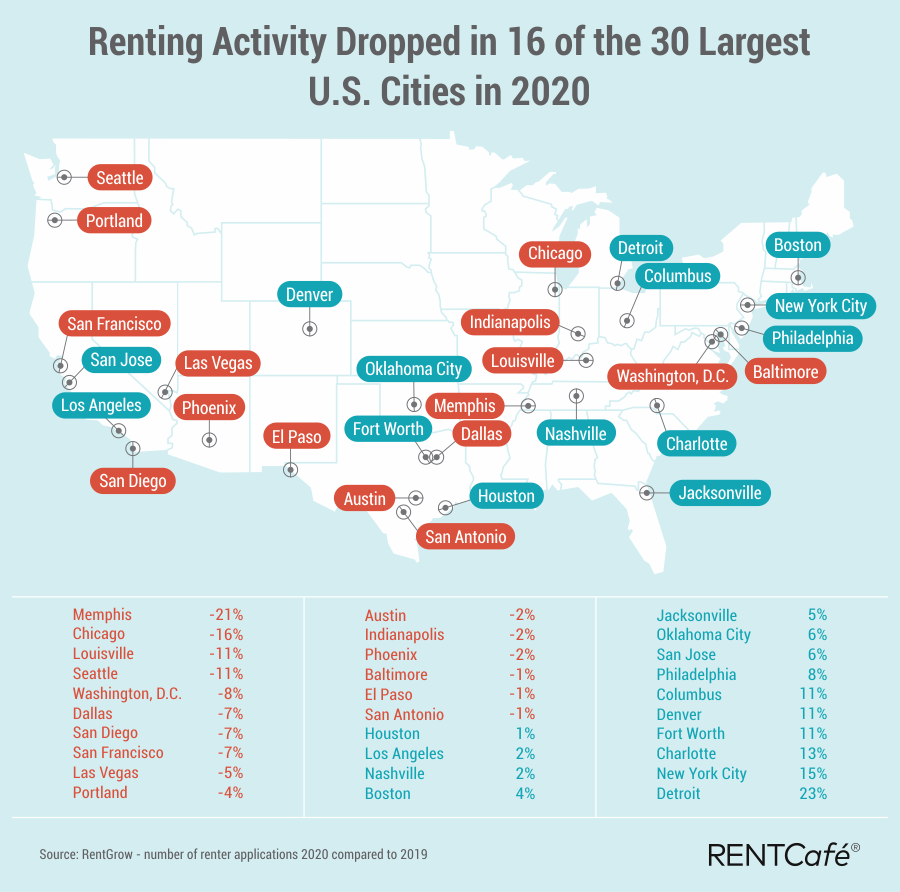
The pandemic hindered moving plans in 16 of the nation’s 30 largest cities, as the number of applications for apartments in these hubs went down compared to the previous years.

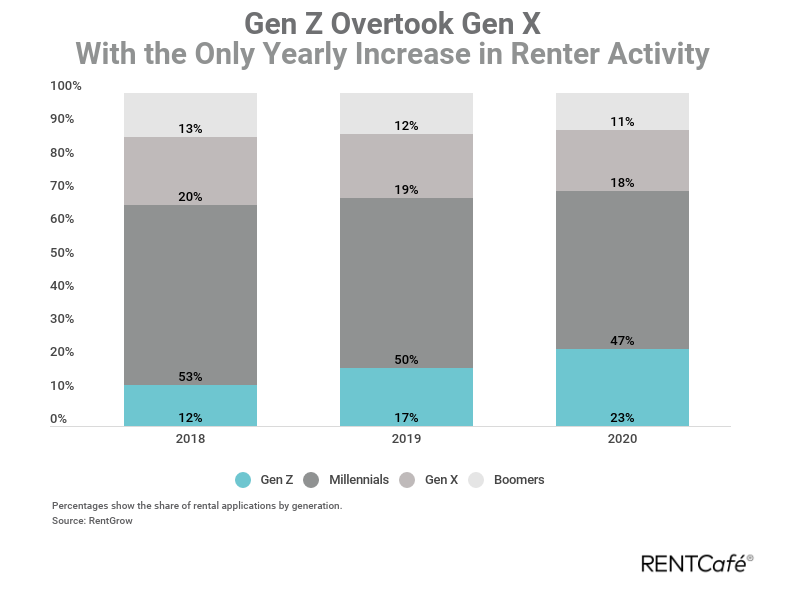
“We are also witnessing important changes in the fabric of the rental market. A new cohort of renters, Generation Z, is now the second most active group of renters, overtaking Gen X-ers, while the front-runner generation of Millennial renters is shrinking. In terms of moving, there was an increase in renters who decided to move out of some large cities in 2020, including Detroit, New York and Seattle,” the report says.

2020 Report: Rent Fell, Pandemic Kept Renters From Moving

Also, with the pandemic raging, the national average rent stagnated this year at $1,465 as of November. Rents decreased or stagnated in 18 of the 30 largest U.S. cities, and increased in 13. For example, Seattle saw prices drop the third fastest, by 8.5 percent, while Phoenix’s average rent is still going strong, registering the most significant yearly surge among the nation’s 30 largest cities.


Some highlights of the report on renters

  • Gen Z officially became the second most active renter generation after millennials and was the only cohort to see an upward trend in movement this year. Twenty-three percent of this year’s applications came from Gen Z renters, surpassing Gen Xers.
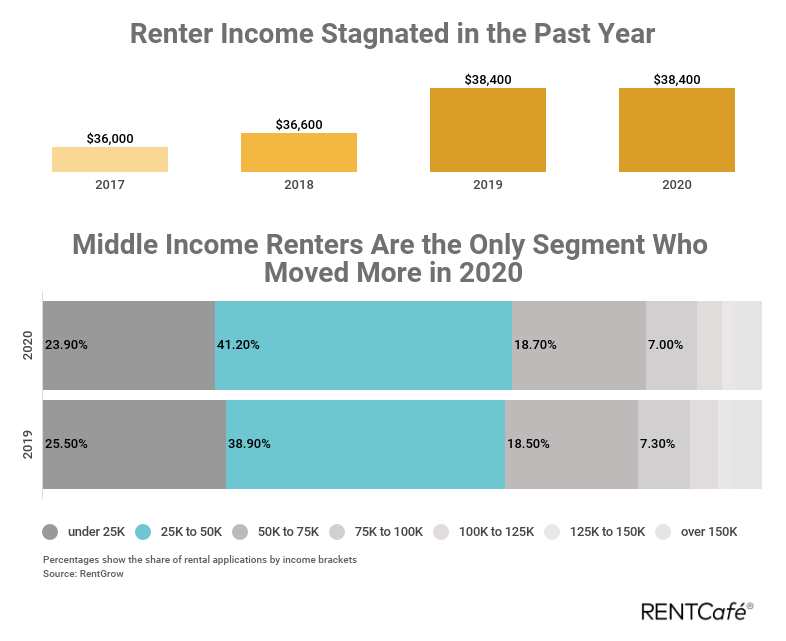
  • Renter income stagnated for the first time in three years, hovering around $38,400, the same as in 2019. Middle-income renters (25K – 50K) were the only ones who moved more in 2020 than in 2019.
  • Renter activity slowed down in 16 of the nation’s 30 largest cities. Memphis saw the most significant decrease in the number of applications, -21 percent, followed by Chicago with -16 percent. At the other end, there is Detroit and New York City with 23-percent and 15-percent increases in rental applications, which isn’t always a good thing for a city, see why below).
  • Eighteen of the 30 largest cities saw more renters leaving compared to 2019. Detroit (36 percent), Oklahoma City (34 percent), and New York (25 percent) saw the highest increases in the number of renters moving out of the city.
  • The priciest cities for renters saw the sharpest drops in rent. San Francisco apartment prices plummeted to $3,055 after a 17.3 percent decrease year-over-year. Manhattan ($3,761) came in second with a 10.8 percent drop.

income stagnated for many during 2020

18 of the 30 Largest U.S. Cities Saw More Renters Leave This Year

“We looked at renter activity from three angles: renters moving out of a particular city, renters moving within a city, and renters moving into a city,” RentCafe said in the report.

“There has been much speculation around the topic (of) whether people are leaving dense large cities for more space elsewhere in the context of the pandemic. As far as renters are concerned, this trend confirms for a handful of the nation’s largest cities.

This year, 18 of the 30 largest U.S. cities saw more renters leaving compared to 2019. Furthermore, half of the largest cities registered more pronounced activity in terms of renters moving out of the city rather than renters moving in.”

rental activity dropped in many large cities

Rental application and apartment data were sourced from RentGrow and Yardi Matrix. You can read the full report here: https://www.rentcafe.com/blog/rental-market/market-snapshots/year-end-report-2020

RENTCafe.com is a nationwide apartment search website and a part of Yardi. Our original city-based research, insights, and in-depth analysis of the real estate market have been used in stories featured on major media publications across the U.S.

Renters Now a Majority in 23 Cities, Including Seattle

Sign Up For Our Newsletter And Get Apartment News And Helpful, Useful Content Each Week.

* indicates required

Portland, Seattle Among Cities With Most Apartment Jobs Openings

Portland, Seattle Among Cities With Most Apartment Jobs Openings

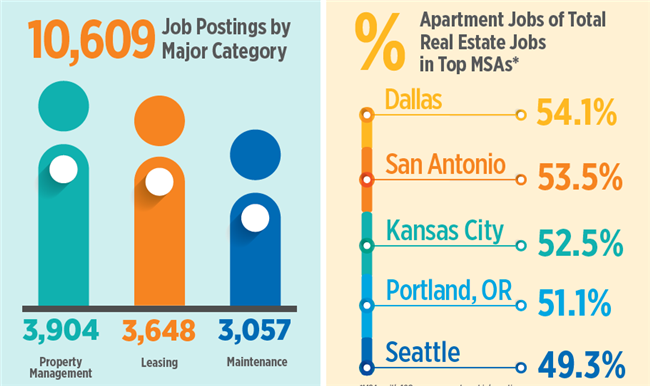
More than 13,300 apartment jobs openings were available in October’s edition of the National Apartment Association’s Education Institute Jobs Snapshot, accounting for 40.4 percent of the broader real estate sector.

Portland and Seattle, along with Dallas, San Antonio, and Kansas City, had the highest share of apartment-job openings.

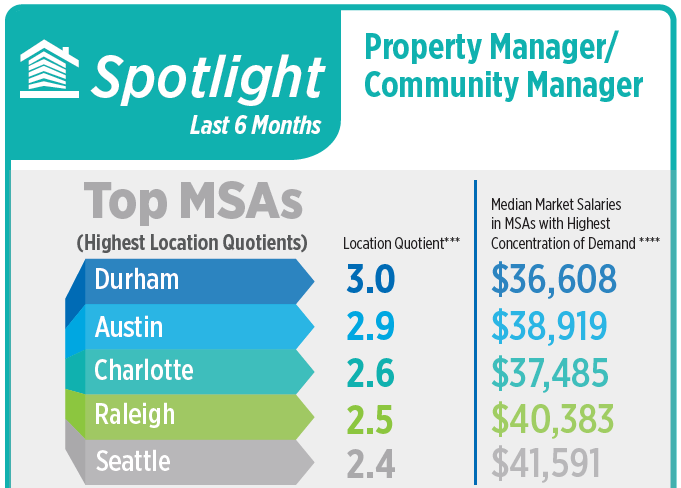
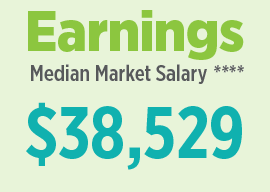
This month’s edition is a spotlight on property managers/community managers, with median market salaries reaching $38,529.

spotlight on property managers

The demand for experienced property managers was highest in Durham, Austin, Charlotte, Raleigh, and Seattle.

Portland, Seattle Among Cities With Most Apartment Jobs Openings
****Market salary is calculated using a machine learning model is built off of millions of job postings every year, and accounting for adjustments based on locations, industry, skills, experience, education requirements, among other variables.

In addition to requiring typical property management skills, employers are seeking talent with budgeting, Yardi Software, communication, Microsoft Office, and organizational skills.

top skills needs for property managers in apartment jobs openings

Apartment industry jobs

The NAA says on their website, “The apartment industry offers a wealth of meaningful career opportunities that use a variety of skills and capabilities. Regardless of whether you are graduating from high school or college, leaving the military, or switching careers, the industry has a job that’s just right for you.”

National apartment association jobs report background

“Our education institute is a credentialing body for the apartment industry. They hear often that one of the biggest problems keeping our industry leaders up at night is the difficulty in finding talent, attracting talent and retaining talent,” NAAEI’s Paula Munger said.

Assistant Property Manager Jobs In Demand

So NAA partnered with Burning Glass Technologies. “They have a labor-job posting database that is proprietary,” she said, and they can “layer on data from the Bureau of Labor Statistics (BLS). We looked at that and thought we could do something that is really going to help the industry and help benchmark job titles and trends as we go forward.”

Strong Leasing Leads To Increased Apartment Jobs Demand

Sign Up For Our Newsletter And Get Apartment News And Helpful, Useful Content Each Week.

* indicates required


Tenant Smelling Marijuana in Apartment Hallway; What Can We Do?

Tenant Smelling Marijuana in Apartment Hallway What Can We Do Landlord Hank

This week we have another marijuana question for Ask Landlord Hank this time about the smell of marijuana in an apartment hallway reported by a tenant. Remember Landlord Hank is not an attorney and is not giving legal advice.

Dear Landlord Hank,

My tenant reported a faint smell of marijuana in the hallway, but does not know which apartment. What are the procedures to be taken, if any? -Tessa

Dear Landlord Tessa,

I don’t know what state you are in, but marijuana usage is legal in some places, and in other states, medical usage of marijuana is allowed.

I would contact all tenants and let them know, in general, that illegal drug usage will not be tolerated and is in direct violation of your lease.

I would then ask the tenant that made the report to see if, in the future, he or she can tell which apartment the problem is coming from.

This way you can speak directly to that tenant, without letting the tenant smoking marijuana know where you got the information. Good luck and hope this works.

Sincerely,

Hank Rossi

This week we have another marijuana question for Ask Landlord Hank this time about the smell of marijuana in an apartment hallway reported by a tenant
Landlord Hank says, “I would contact all tenants and let them know, in general, that illegal drug usage will not be tolerated and is in direct violation of your lease.”

Ask Landlord Hank Your Question

Ask veteran landlord and property manager Hank Rossi your questions from tenant screening to leases to pets and more! He provides answers each week to landlords.

  • This field is for validation purposes and should be left unchanged.

Do I Have to Paint and Replace Flooring for a Long-Term Tenant?

Sign Up For Our Newsletter And Get Apartment News And Helpful, Useful Content Each Week.

* indicates required

Smaller Rental Property Owners Are Suffering, Government Needs to Act

Smaller rental property owners facing hardship need government help

Smaller rental property owners are suffering and many are facing 20 percent to 30 percent delinquency rates from their tenants.

By Charles Tassell
COO National REIA

The National Real Estate Investors Association says individual property owners, most of whom own less than 50 rentals and live in close proximity to their properties, are bearing the brunt of eviction moratoria put in place by various government entities across the nation.

More than 30 percent of these smaller rental property owners,  “mom & pop” owners (owners of duplex/fourplex and single-family homes), expect to be bankrupt in the next six months.

When you consider that individual rental property owners constitute over 40 percent of U.S. rental property, this seriousness cannot be understated.  That is why National REIA is calling on Congress and federal and state governments to renew and expand funding for rental assistance to head-off this impending calamity that will wreak havoc on our nation’s economy.

While federal and local eviction moratoria are delaying the impact for renters, property owners and managers are being impacted severely.

Smaller rental property owners suffering

Rent pays the mortgage, insurance, taxes, utilities, maintenance & staff.  With many property owners reaching into savings as far back as April, many individuals’ savings are being depleted with future prospects being grim for a third of these smaller rental property owners.

“Even if there were a broadly distributed vaccine next week, the damage already done would still require federal & state assistance.  Small property owners cannot continue and the impact to the country of over 30% of small rental property owners going bankrupt would be devastating.  CARES Act funds for rental assistance have mitigated the impact but need to be renewed and expanded.”

“Understanding delinquencies are key:  Most residents living in smaller properties are not behind a single month or even two.  However, those who are delinquent are typically four to six months behind, even if they are making payments, which most of them are not.  Something needs to be done now, not later, to forestall this impending crisis.”

About the author:

Charles Tassell is the Chief Operating Officer of National Real Estate Investors Association.

7 Insights for Landlords on the New Federal Eviction Moratorium

Sign Up For Our Newsletter And Get Apartment News And Helpful, Useful Content Each Week.

* indicates required

Tenant Screening Company to Pay $4.2 Million Settlement Over Inaccurate Background Reports

A tenant screening company has agreed to pay a $4.2 million settlement over the accuracy of tenant screening reports given to property management companies, according to a release from the Federal Trade Commission (FTC).

The FTC said the allegations involved facts that the firm failed to follow reasonable procedures to ensure the accuracy of its background screening reports about potential tenants given to property management.

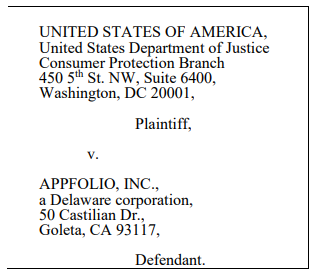
In the complaint, filed by the Department of Justice on behalf of the Commission, the FTC alleges that AppFolio, Inc. violated the Fair Credit Reporting Act (FCRA) by failing until at least April 2019 to implement reasonable procedures to ensure that criminal and eviction records it received from a third-party vendor were accurate before including such information in its tenant-screening reports.

In addition, the FTC alleges AppFolio also violated the FCRA by including eviction or non-conviction criminal records more than 7 years old in its reports.

The complaint says the company:

  • Failed to follow reasonable procedures to assess whether the identifiers in criminal records and eviction records reasonably matched the applicant’s before including the records in tenant-screening reports.
  • Failed to follow reasonable procedures to assess whether there were internal inconsistencies in the identifiers or results that clearly included information on multiple individuals before including criminal records and eviction records in tenant-screening reports.
  • Failed to follow reasonable procedures to assure that the eviction and criminal record information contained in consumer reports it furnished accurately reflected the disposition, offense name, and offense type.
  • Failed to follow reasonable procedures to prevent the inclusion of multiple entries for the same criminal or eviction action in the same report.

Tenant Screening Company to Pay $4.2 Million Settlement Over Inaccurate Background Reports

“Consumers face enough hurdles in obtaining housing without the additional burden of inaccurate background checks,” said Andrew Smith, Director of the FTC’s Bureau of Consumer Protection, in the release. “AppFolio and all background-screening agencies must follow reasonable procedures to ensure that the background reports that they provide to their customers are as accurate as possible.”

The complaint says AppFolio (defendant) “obtained criminal records and eviction records for inclusion in tenant-screening reports from a third-party vendor, CoreLogic National Background Data, LLC or Core Logic Screening Services, LLC (‘CoreLogic’). Defendant implemented insufficient procedures to assess the accuracy of the information it obtained from CoreLogic before including the information in tenant-screening reports. Rather, defendant generally relied on CoreLogic’s procedures for matching the information from a consumer’s housing application to criminal-record and eviction-record information in public records, retrieving those criminal records and eviction records from public records, and accurately returning those records to defendant. However, defendant had limited knowledge of the procedures CoreLogic used to match, retrieve, and return criminal records and eviction records to defendant.

“CoreLogic’s contract with defendant disclaimed any guarantee as to the accuracy of the data it provided. For example, one contract provision stated, ‘[Defendant] acknowledges that [CoreLogic] cannot guarantee the accuracy and/or completeness of the consumer information furnished’,” the complaint states.

Property managers use AppFolio’s reports for tenant screening. Under the FCRA, companies that provide tenant screening background reports on consumers are required to follow reasonable procedures to ensure the “maximum possible accuracy” of those reports, and are prohibited from reporting certain obsolete information.

The FTC alleges that AppFolio failed to implement procedures to adequately review the accuracy of the information it received from its vendor before including the information in background reports.

Inaccurate information caused some tenants to be denied housing

As a result, AppFolio provided inaccurate information about some applicants, such as records for individuals with a different name or birthdate; records with a missing or inaccurate offense name, type, or date; records with a missing or inaccurate disposition; and multiple entries for the same criminal or eviction action.

The FTC alleges that some applicants may have been denied housing or other opportunities because of the inaccurate information included in background reports provided by AppFolio.

Despite receiving numerous complaints from consumers, the tenant screening company AppFolio did not make changes to its procedures that addressed the problems with the reports, the FTC alleges.

In addition to the $4.25 million monetary penalty, the proposed settlement prohibits AppFolio from providing non-conviction criminal or eviction records older than seven years and requires the company to maintain reasonable procedures to ensure the maximum possible accuracy of information included in its background reports.

Successful Landlords Know All Tenant Screening Companies Are Not The Same

Sign Up For Our Newsletter And Get Apartment News And Helpful, Useful Content Each Week.

* indicates required

Knowing the Difference between Routine and Emergency Maintenance Requests

Knowing the Difference between Routine and Emergency Maintenance Requests

Being a responsible property manager means responding to your tenant’s emergency maintenance and repair requests promptly, so here are some tips from Keepe, the on-demand maintenance and repair company.

Every property manager’s priority is to keep the property in its best condition to make sure the tenants are happy and satisfied. This will add value to their stay and motivate them to stay longer.

But when they make these requests, how would you classify which are emergency  maintenance and which are simple repair maintenance requests? Knowing how to respond to each type of maintenance request will both save you money and improve your tenants’ satisfaction rate.

What’s the Difference between Emergency Maintenance and Repair Maintenance?

Tenants should also be aware of what type of request they send to you. Some tenants think that all requests they make are emergencies. Both of you should have a clear understanding of what is an emergency repair and what is a maintenance request. That way, issues like a broken doorknob or a toilet that won’t flush are categorized properly and necessary actions are done. This will also save you time, as you know what is a priority issue and a when there is a need for a contractor to be dispatched.

Routine/Non-Urgent Maintenance Requests

Routine maintenance requests are issues that are non-urgent and can be handled during normal business hours. Routine maintenance issues can include:

  • Slow-draining tub or sink
  • Running toilet
  • Backed-up shower diverter
  • Blinds won’t open/close properly
  • Burner on the stove isn’t working

Because these issues don’t threaten the health or safety of your tenants, there’s no need to treat them like an emergency. You’ll want to get them taken care of quickly, but there’s no need to deal with them immediately or outside of your normal business hours (so if a tenant calls at 11 p.m. and wants someone to fix their blinds, don’t worry — it can wait until the morning).

Emergency Maintenance Requests

Emergency maintenance requests are the maintenance issues that can place your tenants in harm’s way — and they need to be dealt with immediately, whether they happen at 2 p.m. on a Tuesday or 2 a.m. on a Saturday. Emergency maintenance issues can include:

  • Flooding
  • Fire
  • Inoperable windows (which could prevent the tenant from escaping in an emergency)
  • Broken or inoperable door locks
  • Gas leaks
  • Electrical issues

If your tenant makes you aware of any of these issues, it’s imperative for you to deal with them immediately and ensure your tenants are safe.

Final Thoughts

There are more items that could be added to these lists. As a responsible property manager, you have to make sure that your rental property is habitable – and you should check your local requirements of what that means. You should prioritize emergency maintenance requests that can cause any health and safety concerns, as well as damage to your property.

Routine maintenance inspection of the property at least every six months can help lessen the unexpected tenant calls. Be mindful of the changing season, too. For example, in the winter seasons, inspect door and window seals properly and make sure your property sidewalks are safe.

About Keepe:

Keepe is an on-demand maintenance solution for property managers and independent landlords. The company makes a network of hundreds of independent contractors and handymen available for maintenance projects at rental properties. Keepe is available in the Greater Seattle area, Greater Phoenix area, San Francisco Bay area, Portland, San Diego and is coming soon to an area near you. Learn more about Keepe at https://www.keepe.com

What to Do During Plumbing Emergencies In Rental Property

Sign Up For Our Newsletter And Get Apartment News And Helpful, Useful Content Each Week.

* indicates required

Tenant Just Moved Out of No-Smoking Rental and It Reeks of Marijuana

Tenant Just Moved Out of No-Smoking Rental and It Reeks of Marijuana

This week the question for Ask Landlord Hank is about how to deal with a tenant who moved out of a no-smoking rental that now reeks of marijuana. Remember Landlord Hank is not an attorney and is not giving legal advice.

Dear Landlord Hank,

I rent out a small condo whenever I’m not using it and I have a strict no smoking/no drugs rule in the lease.

My latest tenant just moved out and not 30 minutes later, I let a prospective new tenant see the property. I was on the phone with her when she walked in and the first words out of her mouth were that the place reeks of marijuana.

My neighbor also went into the condo with her and texted me the same thing. My question is, what do I do now? I still have his security deposit. Am I entitled to keep any portion of it as a penalty?

Thanks,

Angela

Dear Landlady Angela,

Smoke damage to a property is very real and you have witnesses who can verify that the property was smoked in.

If the furniture and walls are holding that smell, you can certainly use a tenant’s damage deposit to take care of it. You can try cleaning everything with vinegar/or ammonia and water, and airing out the unit. There are some companies (in my area they are carpet-cleaning companies) that have ozone machines that are turned on in a closed-off unit with the HVAC fan ON, closet and cabinet doors open for a day or two. The cost is reasonable and the smoke smell is gone.

You can’t keep the deposit as a penalty, only for actual expenses to make your property whole.

Do an extensive walk-thru inspection, because if your tenant was smoking in a no-smoking rental unit there is no telling what else may not be right.

Sincerely,

Hank Rossi

Ask Landlord Hank: Tenant just moved out of a no-smoking rental and it now reeks of marijuana what do we do? a rental property.
Landlord Hank says, “If the furniture and walls are holding that smell, you can certainly use a tenant’s damage deposit to take care of it.”

Ask Landlord Hank Your Question

Ask veteran landlord and property manager Hank Rossi your questions from tenant screening to leases to pets and more! He provides answers each week to landlords.

  • This field is for validation purposes and should be left unchanged.

Do I Have to Paint and Replace Flooring for a Long-Term Tenant?

Sign Up For Our Newsletter And Get Apartment News And Helpful, Useful Content Each Week.

* indicates required

Should I Turn On The Utilities and Power For New Tenant Moving In?

Ask Landlord Hank: Can I Evict Tenants Due To Damage To The Home?

If Tenants Don’t Keep Bathroom Heat On, Can it Cause Mold?

Ask Landlord Hank: Do We Have Any Recourse With Property Management Company Over Tenant Damages?