
Home Blog Page 91

Key Components of Effective Communication with Residents

Key Components of Effective Communication with Residents

Here are some of the key components of effective communication with residents when there is such a wide variety of multifamily communication channels.

By Kristina Rauscher

Having an effective communication plan for on-site property teams to implement when it comes to communicating with residents is paramount.

Yet, with such a wide variety of communication channels – as well as individuals’ preferred styles of communication – it can be difficult to implement a plan that will reach the highest level of engagement. The key to effective resident communication lies in having a well-balanced blend of digital, in-person and traditional grassroots communication.

By mixing these communication styles, multifamily property managers can communicate effectively with their residents. Communication styles can include e-blasts, social media posts, paper flyers and text messages.

Email Blasts

 Email blasts can be sent by using features of your CRM system (as Yardi RentCafé offers), or by using a third-party software (such as Mailchimp), giving companies the ability to send a single email message to multiple recipients at the same time.

Sending an e-blast is an effective way to send a large sum of information to a large group of people in a timely manner. While e-blasts lack customizable features specific to each recipient, they can be an effective way to communicate when rent is due, to communicate about issues and updates regarding parking and maintenance, community events and even host potential giveaways.

It is important to ensure residents add the sender of emails to their contacts, as e-blasts can often be marked as spam. E-blast software systems offer tools to create templates that property managers can adjust and edit with ease, depending on when the announcement is going out.

Social Media Posts

 Social media posts are an effective way to communicate with current and prospective residents, as they can be used to share a vast amount of information – including leasing updates, community events, and resident profiles – and the leasing office’s hours, announce giveaways and contests, and much more.

It’s recommended that multifamily accounts pose questions and calls-to-action to boost engagement with its targeted audience. For example, you may ask a question within a caption to prompt residents to “comment below.” Or on apps like Instagram, you can use its features such as stories and reels to engage with your target audience outside of the standard post.

One of Instagram’s newest features is guides, which communities could leverage to showcase amenities, features within the various floorplans, places to eat and things to do around the community, standard move-in checklists and more.

Paper Flyers

 Paper flyers can be an effective way to communicate with residents who may not be active online.

Flyers can easily be placed outside of residents’ doors, under their doors, on community boards or in their mailboxes. By distributing flyers in every mailbox or room, managers can ensure the information is being seen by everyone.

They can also be helpful for residents who hang them on their fridges to remind them of upcoming due dates for rent, amenity closures, community cleanings or reminders to renew. You can kick it up a notch by offering a goodie bag or treat along with the flyer. Whether it’s thanking them for being a resident or getting their attention for an upcoming event, adding this personalized touch to multifamily communication has been proven to be effective and well-received.

Text Messages

 SMS blast reminders can be another effective way to communicate with residents, as they reach the residents’ phones.

P.B. Bell uses its CRM software, Yardi RentCafé to effectively implement this strategy, but there are other third-party services that offer this feature if your CRM doesn’t have these capabilities.

SMS blasts can be great for communicating last-minute announcements. However, if messages are sent too often or are too long, residents can block the number they are coming from, so use this tactic wisely. With that being said, it’s important to provide residents the ability to opt into and out of texts. Keep your messages short and sweet, including only the most important information.

There are multiple communication channels to use with multifamily residents, but the most effective approach is to use all of them for different means in order to communicate with residents at the right time. Effective communication with residents is crucial because it allows residents to know what is going on in their community and can encourage people to re-sign, or sign in the future.

About the author

Key Components of Effective Communication with Residents
Kristina Rauscher

Kristina Rauscher is marketing director at P.B. Bell, where she leads corporate marketing initiatives and communications while strategically planning marketing efforts for the P.B. Bell portfolio. Her skills and duties include branding, creative direction, digital marketing, advertising, public relations, outreach marketing, and events.


Keeping Your Communications Compliant with Fair Housing

5 Ways to Communicate Better with Challenging Tenants

What to Look for in Property Management Software

Sign Up For Our Weekly Newsletter And Get Rental Property And Apartment News And Helpful, Useful Content Each Week.

* indicates required

Watch Out, Investors! California is At It Again

The California Housing Speculation Act, AB 1771, would create a sliding scale of capital gains tax levies on anyone selling a home over a 7-year period

By Kim Lisa Taylor

We’re watching with interest and concern as Assembly Bill 1771 works its way through the California Legislature. Dubbed “The California Housing Speculation Act,” the bill would create a sliding scale of capital gains tax levies on anyone selling a home over a seven-year period, starting with a 25 percent tax from a home sale within 3 years of its purchase, decreasing by 5% annually thereafter until the tax is zero after the property has been held > 7 years.

A recent story in the Los Angeles Times says the aim of AB 1771 is to discourage real estate speculation that bill sponsor Assemblymember Chris Ward (D-San Diego) blames for driving up home prices as equity investors outbid individual home buyers. But opponents of the bill say it could hurt consumer home buyers as well and deprive them of income many might need when an unexpected circumstance such as divorce or a family death forces them to sell during the 7-year taxable period.

Investor advocacy groups such as the American Association of Private Lenders (AAPL) point out there is no carve-out or exemption for fix-and-flippers “who perform valuable services by rehabilitating sub-standard housing stock.”

Others predict the bill would have the unintended impact of worsening an already dramatic housing shortage by causing move-up buyers to remain in their homes longer.

All investors would be subject to the Act, according to AAPL, which has a fact sheet you can read by clicking here.

As of this writing the proposed legislation has been re-referred to the Committee on Revenue and Tax. Bill sponsor Ward says he is open to suggestions on how to reframe the legislation to keep the focus on closing “loopholes for large corporations to continue speculation activity” but not penalizing traditional homeowners.

You can read the bill text by clicking here.

About the Author:

The California Housing Speculation Act would create a sliding scale of capital gains tax levies on anyone selling a home over a 7-year period
Kim Lisa Taylor

Kim Lisa Taylor is the founding attorney of Syndication Attorneys, PLLC, a boutique corporate securities law firm that helps clients nationwide with their federal real estate securities offerings. She has been licensed in California since 2002 and in Florida since 2012 and has made securities transactional law the focus of her practice since 2008. The firm employs additional of-counsel attorneys as well as other support staff. You can schedule an appointment at our website, www.syndicationattorneys.com.

Sign Up For Our Newsletter And Get Apartment And Rental Housing News And Helpful, Useful Content Each Week.

* indicates required

What is Real Estate Syndication?

Strong Occupancy Growth Continues To Boost Multifamily

National Rent Growth Back On Upward Trajectory

Six Ways to Ensure Your 1031 Exchange is Successfully Completed

How Much Apartment Space Can a Tenant Get for $1,500 a Month?

How Much Apartment Space Can a Tenant Get for $1,500 a Month?

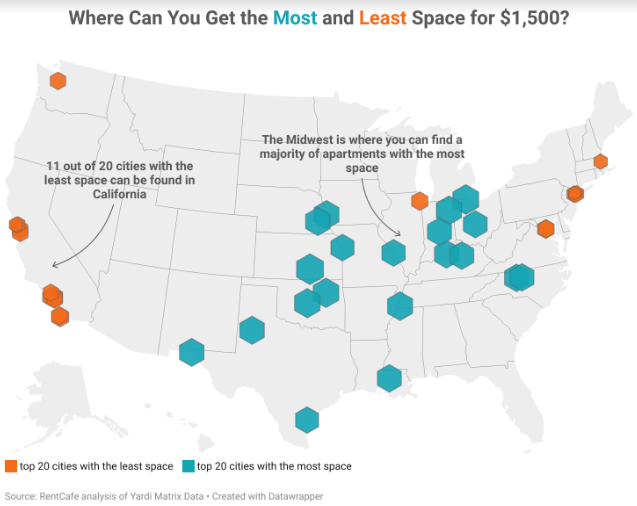
Cities in the South and Midwest offer tenants the most apartment space for the money, with Wichita, Kansas leading the list of cities where you can rent the largest apartments on a budget of $1,500, RentCafe says in a new study.

“We analyzed apartment rent prices and apartment sizes from sister company Yardi Matrix in the 100 largest U.S. cities,” RentCafe says in the report.

Urban areas on the coasts typically offer much smaller space for higher rent amounts.

Here is what $1,500 will get for a tenant in some areas:

  • Wichita leads the list of the largest apartments for the given amount. Renters there can get 1,597 square feet, which is the equivalent of a four-bedroom apartment.
  • At the other end of the spectrum are the coastal cities, where 11 California cities made it in the Top 20 with the least apartment space on this budget. In San Francisco, $1,500 can get 345 sq. ft. while in Manhattan, this amount is not even enough for 300 sq. ft.
  • At the very middle of the Top 100 is Dallas, at No. 50 with an average apartment size of 881 sq. ft. for $1,500. “That’s slightly larger than the average one-bedroom apartment, and we’ve even seen two-bedroom ones at this size,” the report says.
  • Suburbs surrounding large metro areas offer the most space for the given budget.
  • Certain states count several cities in the top 20 with the largest apartment sizes for $1,500. Texas is represented by Lubbock, El Paso, and Corpus Christi. Meanwhile, Oklahoma’s Tulsa and Oklahoma City rank 3rd and 4th, respectively. Ohio has Toledo and Columbus.

Cities in the South and Midwest offer tenants the most apartment space for the money, with Wichita, Kansas leading the list of cities

Methodology

RentCafé is a nationwide apartment search website that enables renters to easily find apartments and houses for rent throughout the United States. The apartment space you can rent for a monthly budget of $1,500 was calculated using price per square foot derived from the average rents and average size of apartments by city, in multifamily properties of 50 or more units, using Yardi Matrix data.

Higher-Income Millennials Renting Instead Of Buying Homes

Apartments Are Getting Bigger As Builders Expand Unit Sizes

Renters’ Priorities Shift from Lower Cost to More Space

Sign Up For Our Weekly Newsletter And Get Rental Property And Apartment News And Helpful, Useful Content Each Week.

* indicates required

What Is Best Approach for Operating and Managing a Rental Property?

A landlord asking what is the best approach for operating and managing a rental property is the question this week for Ask Landlord Hank.

A landlord asking what is the best approach for operating and managing a rental property is the question this week for Ask Landlord Hank. Remember Hank is not an attorney and he is not offering legal advice. If you have a question for him please fill out the form below.

Hi Hank:

I purchased a two-family home in Massachusetts with my sister in 2018. She lives upstairs on the second floor, I lived on the first. My wife and I moved out in 2021 and have been renting out the first floor of the two-family home. My sister has intentions to move out soon too, and eventually the home will be fully rented out and no longer be owner-occupied, along with generating additional income for both of us.

My question is, what is the best approach as to operating/managing the property? Currently the title/mortgage is in both our names. We have an agreement on roles we each have and responsibilities that get divided between the two of us. However, should we start an LLC? I’ve also heard of doing a family trust? Are there any tax benefits or perhaps an easier/more organized way of doing business? What we’re doing now works (we think)…

Thank you

-Kevin

 Hi Landlord Kevin,

Family business, just like any partnership, has strengths and drawbacks.

There is strength in numbers – being able to divide the workload, being available for management, maintenance and emergencies.

The drawback is that since there are two “bosses,” then you both have to be on the same page as far as business philosophy, and keep the dialogue with the tenants straight. If you were each going to manage your own units that may be the easiest, but if one of you likes to do management and the other maintenance or some other division of labor, that could work well too.

The nice thing is that right now all should be relatively simple since you have two units at the same address and you are intimately familiar with them. As far as LLC or S-corp, it’s nice to put your property there for limiting personal liability. These entities are easy to set up too. I would talk to a tax professional to see if one form is more advantageous to your unique situation. Good luck!

Sincerely,

Hank Rossi

www.rentsrq.com
Each week I answer questions from landlords and property managers across the country in my “Dear Landlord Hank” blog in the digital magazine Rental Housing Journal.    https://rentalhousingjournal.com/asklandlordhank/

Ask Landlord Hank - What Is Best Approach for Operating and Managing a Rental Property?
Landlord Hank says, “If you were each going to manage your own units that may be the easiest, but if one of you likes to do management and the other maintenance or some other division of labor, that could work well too.”

Ask Landlord Hank Your Question

Ask veteran landlord and property manager Hank Rossi your questions from tenant screening to leases to pets and more! He provides answers each week to landlords.

  • This field is for validation purposes and should be left unchanged.

Do I Have to Paint and Replace Flooring for a Long-Term Tenant?

Sign Up For Our Newsletter And Get Rental Housing And Apartment News And Helpful, Useful Content Each Week.

* indicates required

ADA, HUD, the Fair Housing Act: Which One Applies to Housing and Support Animals?

ADA, HUD, the Fair Housing Act: Which One Applies to Housing and Support Animals and service animal

With many different laws governing service animals, it can be confusing as to which ones apply to housing providers and what questions they are allowed to ask. This article will review the different laws that come into play, highlight which ones directly affect housing providers, and share tips to help you navigate this sometimes confusing process.

By The Fair Housing Institute

Does the ADA Law Apply to Housing?

Even though the Americans with Disabilities Act is very important, it doesn’t apply to housing except for maybe the leasing office, as it is a public place. Generally, ADA laws apply to operators of public places, such as Target. The ADA also limits the types of animals providing support to dogs or, in rare cases, miniature horses, which we are not allowed to do as housing providers.

This is where some confusion can take place. The ADA limits what business owners can ask regarding the animal to: “Is that a trained service dog?” and “What work is the animal trained to do?” They are not allowed to ask for written verification.

So when housing providers ask for verification of need, often they are met with the resident referencing this law and stating that they do not need to provide proof of need. This leaves us with the task of informing them that this applies under the American Disabilities Act, but the ADA does not pertain to housing and that the Fair Housing Act permits verification when the disability and the need for the animal are not observable.

For example, if you can see that the animal is a guide dog, then you shouldn’t be asking for verification. But if it’s a dog that is a service animal for disabilities such as hearing problems or to alert someone that they’re about to have a seizure, you can’t see that when you talk to the resident. In that case, you can ask for verification. And if they say to you that’s not permitted, then you have to clarify: “I’m asking you this not under the Americans with Disabilities Act, but under the Fair Housing Act.”

HUD and Support Animals

HUD defines support animals that do work, perform tasks, provide assistance, or provide therapeutic emotional support for individuals with disabilities.

HUD also clarifies the difference between domesticated animals kept in the home (traditional) and non-traditional unique animals such as goats, pigs, chickens, snakes, etc. HUD states that the resident has a substantial burden to be able to show that they need a unique animal as an assistance animal. Now, it is not impossible to justify a unique animal. Still, a resident is going to have to explain in more detail than with a usual animal why they need their snake as an emotional support animal.

HUD also addresses multiple animal requests, again placing the burden of proof on the verifier as to why one animal isn’t enough. HUD has also made it very clear that going online and getting your pet registered or certified on some website by paying money is irrelevant to the question of whether this is an assistance animal that should be approved to live in housing as a reasonable accommodation. If someone hands you one of those registrations or online certifications, you can hand it back to the resident and let them know that it is not adequate to verify their need for an assistance animal.

HUD has made it very clear it considers those websites as taking advantage of people— wasting their money—because those registrations are irrelevant to the question of whether you approve their reasonable accommodation or not.

The Fair Housing Act and Reasonable Accommodations

We have discussed how the ADA—while important—does not apply to housing, and we reviewed HUD guidelines that create the framework for how housing providers should view assistance animals and the questions they are allowed to ask. But how does that come together with the Fair Housing Act?

When we look at the Fair Housing Act and Section 504, we don’t care whether an animal is a service animal or an emotional support animal. It doesn’t matter; we don’t need to ask different questions. We only want to know if the resident is disabled, meets the definition of disability, and if that animal is necessary to assist them because of their disability. That’s all you need to be concerned with when you’re verifying a request for a reasonable accommodation.

When your property is looking at a request for an assistance animal, you need to have a very detailed procedure that all staff members follow. First of all, the process should be done in writing, complete with a section for the verifier. To be a reliable verifier, the verifier has to have personal knowledge about the resident and should be providing the resident with medical or mental health services, and not merely providing a verification letter or filling out a form.

Suppose you find yourself in the situation of turning someone down because you don’t think their verification is reliable. In that case, you need to conduct a meeting explaining why you are not going to accept or grant their request and attempt to resolve their request; of course, documenting everything along the way.

Fair Housing and Assistance Animals Final Takeaway

As we have discussed, there can be a few pitfalls to understanding the different laws that come into play regarding assistance animals and housing. Regular training is essential to help everyone know which laws apply and how to follow them to ensure fair housing compliance.

About the author:

In 2005, The Fair Housing Institute was founded as a company with one goal: to provide educational and entertaining fair-housing compliance training at an affordable price at the click of a button.

HUD Settles with Landlord, Property Manager Over Assistance Animal

Emotional Support Animals and the Fair Housing Act

Everything Landlords Should Know About Emotional Support Animals

Sign Up For Our Weekly Newsletter And Get Rental Property And Apartment News And Helpful, Useful Content Each Week.

* indicates required

Landlord Charged With Sexually Harassing Female Tenant

Landlord Charged With Sexually Harassing Female Tenant

The U.S. Department of Housing and Urban Development (HUD) has charged Nedzad Ukejnovic, the owner of multiple single-family residences in the St. Louis area of Missouri, with discrimination for allegedly subjecting a female tenant to sexual harassment, according to a release.

The HUD charge alleges the landlord made requests of the female tenant, “including requests for sexual favors in exchange for reduced rent, and discriminatory statements based on sex.”

This case’s ‘single mom falls behind on rent’ story is real common with our sexual harassment cases,” said Glenn Burleigh, spokesman for the Metropolitan St. Louis Equal Housing and Opportunity Council, or EHOC, by text message to the St. Louis Post-Dispatch.

The Fair Housing Act prohibits sexual harassment of tenants and other forms of housing discrimination based on race, sex, color, national origin, disability, religion and familial status.

“No one should have to submit to unwelcome sexual advances or tolerate sexual harassment to keep their home, a place where a person should feel safest,” said Demetria L. McCain, HUD’s principal deputy assistant secretary for fair housing and equal opportunity, in the release. The “charge sends a clear message to all landlords that HUD is committed to taking action against landlords whose behavior violates the Fair Housing Act.”

“The intolerable and deplorable conduct alleged in this case constitutes sexual harassment that violates the Fair Housing Act,” said Damon Smith, HUD’s General Counsel, in the release. “HUD is steadfastly committed to protecting the rights of tenants to be free from such harassment by their landlords.”

HUD’s charge, issued on behalf of the tenant, alleges that Ukejnovic “made repeated unwelcome sexual advances toward the tenant and pressured her to provide sexual favors and explicit photos of herself when she fell behind on rent payments.”

The charge further alleges “Ukejnovic’s actions included grabbing the tenant’s body without permission, pressing his body against hers, offering to accept sexual favors in lieu of rent, making unwanted sexual comments, and sending lewd and inappropriate texts to her. The tenant and her children moved out after enduring months of sexual harassment from Ukejnovic.”

HUD is asking for unspecified monetary damages for the tenant, as well as assessment of a civil penalty against Ukejnovic for each of four violations of the Fair Housing Act.

Sign Up For Our Weekly Newsletter And Get Rental Property And Apartment News And Helpful, Useful Content Each Week.

* indicates required

Multiple Tenants On Lease: Can One Bad Applicant Spoil the Whole Bunch?

Multiple Tenants On Lease: Can One Bad Applicant Spoil the Whole Bunch?

As rents increase more rental properties are being shared by more than one tenant, so here are three questions to answer before you sign with multiple tenants on the lease.

By David Pickron

It might seem like an antiquated phrase since most of us no longer buy apples in bulk, but the concerns about one bad apple spoiling the whole bunch are real.

As it applies to our industry, this is becoming a critical issue.  Here’s why: With the rapid increase in rents over the past few years, more and more of our properties are being shared by more than one tenant in an effort to be able to just afford the rent.

In most cases as we backtrack, having more than one tenant would equate to having more than one applicant for the lease.  And when you have more than one tenant potentially on the lease, there are three major questions you need to answer before signing that lease.

Question 1: Will I Get my Rent?    

Logically, it is easy to assume that having more tenants in the property would up the odds that you are going to get paid in full and on-time.

More people and more income should add up in the landlord’s favor, but that isn’t always true.  Proper screening, including criminal, civil and credit checks, is critical if you want to protect your investment.  Let’s consider that you have three individuals who are friends apply to rent your property.  They each complete an application and upon review, you find that one of them has a history of evictions, has credit below the standard you normally require for this property, and is currently unemployed.  What do you do?

You have a few options and things to consider.  How is the credit and eviction history of the other applicants?  How long ago was the eviction for the affected applicant?  Was it affected by COVID or other outside circumstances?  What kind of history does the applicant have with the other applicants who have good credit?  In essence, you have to rely on your criteria and your calculated trust in the other applicants on the lease to pull through with payments, even when or if the poorly qualified tenant can’t fulfill his portion of the lease payment.  This by far is the easiest of the three questions to answer because the additional tenants can always help carry the payments if needed.  The next question is much more difficult as it deals with the complexities of personality and behavior.

Question 2: Will My Property be Taken Care Of?

This question is where a careful review and analysis of each applicant’s criminal history is critical in ensuring the value of your property.

It’s been said that we become the sum of the five people we spend the most time with.  If one or more of your applicants has a criminal history, the likelihood of them having friends and associates with similar history grows exponentially.

Let’s say you have an applicant with a history of drug-related arrests. While it’s not a guarantee, the odds of that applicant having friends with similar histories are high.  Any seasoned landlord will testify that the criminal crowd has a history of destroying property, either through their own negligence or the negligence of the people they invite over.  So while you may have two tenants who are law-abiding and take great care of your property, you have to be on the lookout for the one that can bring destruction.  Again, having and applying a strict criteria on each applicant can help save you and your property.

Question 3: Is My (and the Neighbors’) Safety Compromised?

This may seem like an outrageous question, but my experience says that it’s much less far-fetched than you might believe.

The last thing a landlord wants is to compromise their safety and the safety of the surrounding neighbors.  We’ve all heard the news stories where the neighbor can’t believe that their neighbor was involved in (fill in the blank) and that they seemed like such “nice guy.”  It’s only when the reporter unveils the laundry list of criminal offenses and past disturbances that the neighbors and the general public see what the offender was really like.  Having a criteria and using the background check results to measure against it for each and every applicant is paramount in keeping all involved in a safer situation.  If I have to go to the home to collect unpaid rent, I’d rather go in knowing my safety wasn’t in question when I knock on the door

Let me reiterate, you need to look at each applicant individually.  Then take that individual analysis, add it all together, and make your rental decision.  I always invite you to reach out with questions you have regarding applicants.  While we don’t offer legal advice, we can provide you with practical solutions that we have discovered over the last 30 years in managing properties and performing applicant background checks.  Our goal is to help ensure you get paid and that your property is taken care of, all while keeping you safe.

About the author:

Multiple Tenants On Lease: Can One Bad Applicant Spoil the Whole Bunch?
David Pickron

David Pickron is president of Rent Perfect and a fellow landlord who manages several short- and long-term rentals.  He is a private investigator and teaches organizations across the country the importance of proper screening.  His platform, Rent Perfect, was built to help the small landlord find success.  You can reach David at [email protected].


Sign Up For Our Weekly Newsletter And Get Rental Property And Apartment News And Helpful, Useful Content Each Week.

* indicates required

What is Real Estate Syndication?

What is real estate syndication - a way to invest in real estate as a passive investor.

What is real estate syndication – a way to invest in real estate as a passive investor.

By Kim Lisa Taylor, Esq.

If you have a self-directed IRA or substantial investment funds, you probably have considered investing in real estate. But perhaps you have concluded that you lack the funds to invest on your own. Or maybe you simply don’t want to deal with the hassles of property management.

Good news! There IS another way. You can invest in real estate syndication as a passive investor.

So, what exactly does that mean?

Very simply, syndication is a group of individuals or entities pooling their money together to invest in real estate.

Here’s how real estate syndication works:

A sponsor or syndicator (which may be an individual or an entity) first will typically identify a real estate asset. It could be:

  • An existing commercial or multifamily property.
  • Vacant land for development.
  • A single-family fix-and-flip.

The idea is that it will yield a sufficient return to pay the sponsor and investors from cash flow during operations and/or equity on resale.

The sponsor might obtain institutional financing for a portion of the purchase price and then pool funds from private investors to finance the down payment and closing costs. Or the sponsor may raise all of the purchase money from private investors.

The sponsor’s job

The sponsor’s job is to find a suitable property, put the group of investors together and manage the asset on their behalf. As compensation, the sponsor receives fees and/or a percentage of the distributable cash (or profits) left after all expenses and loan obligations have been paid.

Typical investor returns can range from 6 percent to 20 percent (or more) annualized, calculated against the amount of money invested. The range varies based on the type of investment and the level of risk to which an investor may be exposed. The higher the return offered, the greater the risk.

Returns vary, according to risk

For example, an investor or self-directed IRA might take a position as a debt partner or private lender. In that case the returns may be calculated as interest on the amount invested. Such returns may be lower than an equity investment, but the debt position may be “preferred” or secured by a lien against the real estate. That is a lower-risk position.

Another option for investors is an equity investment. That is where the distributable cash is split proportionately between the group of investors and the sponsor. The sponsor’s compensation can range from 25 percent to 50 percent of the distributable cash. In this case, the investor returns may be greater. But they will depend on the performance of the property and the sponsor’s ability to maximize returns by increasing income and minimizing expenses.

Sponsor provides offering documents

U.S. securities laws require the sponsor to provide a set of offering documents prior to accepting any investor funds. The offering documents explain the terms and disclose the risks of the offering to prospective investors. In addition, the sponsor may have to file some regulatory documents with the SEC or state securities agencies.

Throughout the process, sponsors typically communicate with and answer to investors in a variety of ways. These may include:

  • Periodic newsletters.
  • Financial reports.
  • Teleconferences.

Unlike with a stock investment, investors may also have some limited voting rights regarding major decisions affecting the company or their investment.

If you are an investor seeking an investment in a syndication, above all, seek the advice of your attorney, financial adviser or accountant. Your advisers can discuss the investment and whether it is right for you. If you are a prospective sponsor who wants to syndicate a project, find an experienced securities attorney to help you confidently navigate securities laws.

Dangers of disregarding the law

A sponsor that disregards the applicable laws (or drafts its own documents) may expose itself and the entire investment to unnecessary civil or criminal liability. Or it may be unaware of its fiduciary obligations to its investors. That could expose you or the sponsor to unnecessary tax liability.

Your CPA or financial adviser should evaluate the financial merits of the investment based on:

  • Past financial statements for the property and pro forma projections provided by the sponsor/
  • Its suitability for your investment portfolio.

Our firm, Syndication Attorneys PLLC, has vast experience in this area. We are happy to answer your questions in a free 30-minute consultation. To schedule a free consultation, click here.

About the Author:

invest in real estate syndication as a passive investor
Kim Lisa Taylor

Kim Lisa Taylor is the founding attorney of Syndication Attorneys, PLLC, a boutique corporate securities law firm that helps clients nationwide with their federal real estate securities offerings. She has been licensed in California since 2002 and in Florida since 2012 and has made securities transactional law the focus of her practice since 2008. The firm employs additional of-counsel attorneys as well as other support staff. You can schedule an appointment at our website, www.syndicationattorneys.com.

Sign Up For Our Newsletter And Get Apartment And Rental Housing News And Helpful, Useful Content Each Week.

* indicates required

Strong Occupancy Growth Continues To Boost Multifamily

National Rent Growth Back On Upward Trajectory

Six Ways to Ensure Your 1031 Exchange is Successfully Completed

Strong Occupancy Growth Continues To Boost Multifamily

Strong Occupancy Growth Continues To Boost Multifamily

Strong occupancy growth continued to boost multifamily in February as the market defied expectations, according to the latest report from Yardi Matrix.

“Multifamily demand remained strong in February, as the industry prepares to enter the spring leasing season. Occupancy rates are extremely high in markets across the country, with housing demand outstripping supply,” Yardi Matrix writes in the latest report.

The report also shows rent growth once again rose to record levels, although it cautions “the pace is likely to decelerate in coming months.”

Some highlights from the report:

  • Multifamily rent growth continues to exceed normal seasonal patterns, as average U.S. asking rents rose $10 in February to yet another record of $1,628. Year-over-year growth increased to 15.4 percent, a new peak and up a full percentage point from January.
  • The solid demand that created last year’s explosive rent growth seemingly has not been satiated. Nationally, occupancy rates are up 120 basis points year-over-year. Occupancy growth is strong in Texas and Florida metros, but also in gateway markets that lost residents during the pandemic.
  • Multifamily’s exceptional rent performance is matched by single-family rentals. SFR rents increased by 14.9 percent year-over-year through February, while the national occupancy rate remained the same.

The continued strong performance of multifamily and occupancy growth highlights the continued problem of the long-term shortage of housing in the U.S.

“In January 2021, occupancy rates were 95.0 percent or higher in just 13 of the top 30 markets, but a year later only two of the top 30 are below that level,” the report says.

The report points out that some of the occupancy growth has been the markets that suffered the most during the pandemic, such as New York and San Jose.

However the report cautions on rent growth.

“Rent growth is likely to start decelerating soon relative to the big increases that began in March 2021, but demand shows little sign of slowing,” the report says.

Get the full report here.

About Yardi Matrix:

Yardi Matrix researches and reports on multifamily, office and self-storage properties across the United States, serving the needs of a variety of industry professionals. Yardi Matrix Multifamily provides accurate data on 18+ million units, covering more than 90 percent of the U.S. population. Contact the company at (480) 663-1149.

Sign Up For Our Weekly Newsletter And Get Rental Property And Apartment News And Helpful, Useful Content Each Week.

* indicates required

10 Ways to Combat Common Tenant Complaints

Common tenant complaints can be solved with more natural light

When you’re a landlord, complaints from tenants are a fact of life, so here are 10 ways to combat common tenant complaints.

By Jen Baker

Being a landlord is hard work, especially if you want to be a great one who keeps your tenants happy and your units occupied. The best landlords are masters of business and people skills, able to manage their books and their properties while also handling tenant issues and managing employees. But even they get complaints from their tenants from time to time. Here are some ways to manage the most common tenant complaints.

Common Tenant Complaint #1: Insufficient Natural Light

As people continue to spend more time in their homes due to remote working during the pandemic, natural light can have a considerable influence on how a tenant feels in a space. Adding windows is a costly renovation, but you can make a rental that’s low on natural light look more inviting with a few simple changes:

  • Furnish the apartment with lamps where overhead lighting isn’t sufficient, especially in corners.
  • Repaint using light glossy paint to reflect light around the room.

Complaint #2: Bugs

Wherever people gather, there are bound to also be ants, spiders, and other unwanted pests. As a landlord, you should do your part in the fight against bugs with a pest control routine to keep them from entering the rental.

However, pests can often invade a rental if the tenant doesn’t keep it clean enough. In that case, you can suggest the following solutions or do the treatments yourself:

  • Sprinkle diatomaceous earth (DE) near baseboards and window sills to kill bed bugs. If the rental is furnished, consider sprinkling it in drawers as well.
  • Spray peppermint oil, water, and witch hazel near doors and windows.
  • Spray a solution of water and dish soap on cockroaches.

Complaint #3: Temperature Issues

Whether your unit is old or new, drafts have a way of making their presence known. Unfortunately, in extreme climates, drafts have the potential to make your tenant uncomfortable.

If the temperature issues are extreme, it may be time to explore some renovations to upgrade windows or add more insulation, but in most cases, a few simple DIY solutions can help:

  • Place a door snake on the bottom of the door or window to prevent drafts from sneaking in.
  • Add weatherstripping to doors and windows.
  • Replace door sweeps.

Complaint #4: Lack of Sufficient Storage

Whether your rental is furnished or not, your tenant may complain about not having enough space for all their belongings. In that case, consider the following options:

  • Hang floating shelves on the wall to free up floor space, which will make the room feel less cluttered.
  • Provide furniture that does double-duty: storage ottomans or bookcase headboards can make a difference!
  • Decorate with storage baskets that fit under beds, benches, or tables to tuck things out of sight in unused space.

Complaint #5: Tight Spaces

Unfortunately, you can’t manufacture space where there isn’t any. You can, however, make sure your rental is painted in light and cohesive colors to make the rental feel bigger.

If the rental is furnished, hang mirrors on the wall and invest in dual-purpose decor.

Complaint #6: Unpleasant Odors

Some odors can’t be helped, like when a neighbor decides to cook spicy food. But if your tenant is complaining of a musty or stale smell in their rental, there are a few deodorant tricks to try:

  • Clean the washing machine with white vinegar, baking soda, and essential oil. Run it on the hottest cycle.
  • Deodorize the fridge with essential oils and a box of baking soda.
  • Sprinkle baking soda on the carpet, let it sit, and vacuum after an hour.

Complaint #7: Privacy Concerns

Everyone wants to feel safe in their home, so it’s understandable why some common tenant complaints are about privacy. To help your tenant feel safer, it’s best to invest in the following:

  • Privacy screens in a studio apartment
  • Window shades or blinds to keep people from looking in
  • New locks for every new tenant

Complaint #8: Unsightly Fluorescent Lighting

Tenants want their homes to be cozy, but fluorescent lighting often screams industrial or commercial spaces. Replace fluorescent fixtures with traditional ones and put in warm LED light bulbs. For lights with shades, don’t replace the entire fixture; instead, swap out the shade for a more modern look.

Complaint #9: Noisy Neighbors

When you’re a landlord, complaints from tenants are a fact of life, so here are 10 ways to combat common tenant complaints including noisy neigbors

Some problems are beyond your control, like a neighbor who has people over and cheers a little too enthusiastically during the big game. If it’s in the afternoon, there’s no recourse other than politely asking the sports fan to tone it down a little bit.

But an excellent landlord can also suggest a few DIY solutions for their tenants:

  • Move big items of furniture like bookcases against a shared wall.
  • Hang fabric panels on the wall.

As the landlord, you can also make sure all cracks in drywall are sealed to minimize sound.

Complaint #10: Outdated Finishes

Long-term tenants may complain that their rental is starting to look a little outdated. While a full-scale renovation may be out of the budget, there are a few relatively low-cost changes you can make:

  • Replace old hardware on bathroom and kitchen cabinets with updated models.
  • Repaint the walls or cabinets.

When you’re a landlord, complaints from tenants are a fact of life, but it doesn’t have to be the end of the world. Stay calm, communicate, and be proactive, and your tenants will stick around for the long haul.

About the author:

After teaching English for 13 years, Jen Baker pivoted to content marketing as a way to indulge her passion for writing. She enjoys developing content for her clients and learning everything she can about real estate. When not writing, she’s hard at work on her novel or avoiding the real world with an epic fantasy novel.

Infographic that explains 10 common apartment complaints and how to address them
7 Ways To Handle Noise Complaints In Rental Housing The Right Way

Sign Up For Our Weekly Newsletter And Get Rental Property And Apartment News And Helpful, Useful Content Each Week.

* indicates required