
Home Blog Page 85

Tough Times Ahead: Analyze More Than Just A Tenant Applicant’s Income

Three questions about employment involving potential applicants income for landlords and investors to check in today’s challenging market about tenants.

Three questions about employment involving potential applicants income for landlords and investors to check in today’s challenging market about tenants.

By Scot Aubrey

Everyone loves a good survivor story.  Whether it is a group of 12 boys rescued from a cave in Thailand or the indomitable spirit of a soldier who endured more than two and a half years as a POW during World War II, these stories strike a chord with all of us.

Naturally we put ourselves into the shoes of the survivors and wonder if we would have what it takes to make it through such an ordeal.  For the vast majority of us, we will never experience anything even close to the life-or-death battles that these people have undergone, but we do face challenges in an industry that is ever-changing and bringing new challenges on what feels like a monthly basis.

If I were to build a survivor’s guidebook for investors in today’s challenging market, near the top of the list would be these three questions about employment:

1. What type of employment does my applicant have? 

For most of your applicants, no job means that within a few months no rent will be paid.

So while it is critical that they are employed, it is also important to look at what type of employment they have.  I was reading recently about the types of employment that are most recession-resistant.  As expected, at the top of the list were medical professionals and those who have specialized skills in care, therapy and counselling.  No real surprise there, as the economy doesn’t care about our health, but it definitely can affect it both physically and mentally.

Next would be individuals employed in law enforcement and public utilities, both essential in our communities.  The top six were rounded out by those in financial services and education.  The bottom of the list is pretty diverse, with jobs in the construction industry, vehicle sales, and vacation travel.

When reviewing applicants for your property it is vital to analyze not only income, but also the likelihood that their income will survive and economic downturn.

2. How long have they been with their current employer? 

Employee turnover is at an all-time high and this can directly affect your tenant’s ability to pay rent.

Job statistics state that 31 percent of employees quit their jobs within the first six months of starting.  And even for the employees that make it past those first six months, employee-loyalty statistics show the average tenure of an employee is only 4.2 years.

Gone are the days of the past where someone worked for the same company their entire life.  When reviewing a tenant application, make sure to verify how long they have been with their current employer.  A conversation with the prospective tenant may shed even more light on this important area, where you can get a feel for how much they enjoy their current employment and if there are any plans to change while they are in your property.

 3. How does the rest of their employment history stack up? 

Let’s say an applicant would like to rent your property but they just started a new job or are waiting to start in the next few days.  What are your options?

You can ask for a more extensive employment history covering the last 12-24 months.  Is their new job in the same industry?  Were they with their former employer for a long period?  Are there any major gaps in their employment history, and if so, can they be explained?

If they don’t want to share this information or if they were employed in a less consistent paying job (sale- commission based, piecemeal work, self-employed service provider), you can always ask for the last 12 months’ worth of bank statements that show money coming into their account.  Seeing the past 12 months’ statements lets you average the applicants income and is valuable in determining if they might qualify for your property.

Tough times may lie ahead, and having the right tools and asking the right questions are just as important as food and shelter are for the triumphant survivor.  While most of us won’t qualify for the “Hollywood treatment” of our life stories, it doesn’t mean our survival story is less important.  After all, to those who depend on your success as a landlord and investor, the results will directly affect their lives.

Knowing that your tenant will be able to pay you every month is the key to you being the hero and survivor that you deserve to be.

About the author:

Scot Aubrey is vice-president of Rent Perfect, a private investigator, and fellow landlord who manages short-term rentals.  Subscribe to the weekly Rent Perfect Podcast (available on YouTube, Spotify, and Apple Podcasts) to stay up to date on the latest industry news and for expert tips on how to manage your properties.
 

3 Tips to Keep You Out of Landlord Rehab

Sign Up For Our Newsletter And Get Rental Property And Apartment News And Helpful, Useful Content Each Week.

* indicates required

Why I Like My Rental Properties’ Nosy Neighbors

Three Steps to Becoming a Successful, Lazy Landlord

Phoenix Maintains Strong Multifamily Fundamentals

Phoenix Maintains Strong Multifamily Fundamentals

Phoenix is showing strong multifamily fundamentals as investment activity remains elevated, year-over-year rent growth outpaces the U.S. rate, and the unemployment rate exceeds pre-pandemic levels, according to the June report from Yardi Matrix.

Phoenix had one of the strongest performances in 2021 of any multifamily market in rent growth. However, that growth moderated somewhat in the first quarter of 2022.

“Last year’s robust inventory additions slashed the occupancy rate in stabilized properties by 50 basis points in the 12 months ending in March, to 95.7 percent. This could also be a sign that in-migration is weakening. Renter-by-necessity occupancy decreased by 50 basis points to 95.5 percent, and lifestyle occupancy fell 40 basis points, to 95.9 percent,” Yardi Matrix said in the report.

The picture is still strong, though, with the metro’s $1,645 average rent right behind the $1,659 U.S. rate. “On a year-over-year basis, Phoenix rates rose 20.7 percent, outperforming the national rate by 640 basis points.”

Phoenix suburbs remain strong

All 38 submarkets tracked by Yardi Matrix posted double-digit increases in annual rent growth, with 24 submarkets registering above 20 percent, the report says.

The average asking rate rose above the $2,000 threshold in five submarkets, from none a year ago. Asking rents in five suburbs rose above $2,000. The most expensive were:

  • Downtown Phoenix up 23.6 percent to $2,217
  • North Scottsdale up 26.1 percent to $2,157.

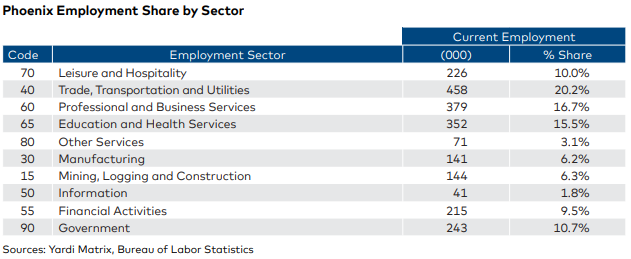
Employment-growth outlook strong

Phoenix Maintains Strong Multifamily Fundamentals
Chart courtesy of Yardi Matrix

The report says Phoenix has emerged as a go-to destination for web scale, cloud and enterprise companies—the metro is the fifth-largest data center market in the United States.

“With operational costs cheaper by one-third than in California, a wave of headquarter relocations surged, and the highly skilled workforce expanded significantly during the pandemic. In addition, Phoenix ranks first nationally in industrial construction volume, thanks to spillover effect from Southern California, where demand is higher than the region’s supply,” the report says.

However the report cautions that “Phoenix also must overcome rising inflation and interest rates, supply chain issues and the coronavirus.”

New housing supply strong

Phoenix growth in new housing supply has consistently outperformed the U.S. rate since 2018.

“Through April, developers delivered 2,772 units, or 0.8 percent of total stock, 30 basis points above the national rate,” the report says.  “The construction pipeline comprised 38,650 units under way and 64,500 in the planning and permitting stages. Of these, more than 25,500 units are slated for completion in 2022.”

There is caution, however, about the Federal Reserve’s response to inflation, supply-chain issues and rising construction costs causing possible delays in new housing coming on line.

Strong demand has kept developers focused on lifestyle projects and upscale properties.

Leading in construction activity were:

  • Downtown – 3,997 units under way
  • Gilbert – 3,646 units
  • North Tempe – 3,066

The largest project under way is the 761- unit Culdesac Tempe, slated for completion in the final quarter of 2023.

“The largest projects delivered through April were Liv Crossroads in Chandler and Roadrunner in McDowell in Scottsdale-South, each totaling 356 units. The latter was sold prior to completion,” Yardi Matrix says in the report.

Get the full report at Yardimatrix.com.

About Yardi Matrix

Yardi Matrix researches and reports on multifamily, office and self-storage properties across the United States, serving the needs of a variety of industry professionals. Yardi Matrix Multifamily provides accurate data on 18+ million units, covering more than 90 percent of the U.S. population. Contact the company at (480) 663-1149.

Portland’s Multifamily Sector Building a Comeback


Sign Up For Our Weekly Newsletter And Get Rental Property And Apartment News And Helpful, Useful Content Each Week.

* indicates required

Observations on Rental Assistance, Problems, and Pending Procedural Changes in Senate Bill 891

Observations on Rental Assistance, Problems, and Pending Procedural Changes in Senate Bill 891

Ask attorney Brad is a feature with attorney Bradley S. Kraus and this week the question is about rental assistance, Senate Bill 891, and a provision of the law that sunset on July 1 and what is still in place.  If you have a question for Brad, please feel out the form below.

By Bradley S. Kraus
Partner, Warren Allen LLP

As we drift further away from COVID-19 moratoriums and the laws associated with the same, normalcy continues to get closer and closer. Over the last year, landlords have grown accustomed to dealing with the deluge of laws related to pausing their rights under the Oregon Residential Landlord Tenant Act (ORLTA) and related unlawful detainer statutes. Phases like “Declaration of Hardship” under prior laws, and “documentation” of “pending rental assistance application” under the current legal framework, have worked their way into the lingo of landlord/tenant law.

As of July 1, the current legal framework shifts again. Senate Bill 891, the current eviction framework in place, allowed tenants to provide landlords with documentation that they applied for rental assistance, which caused an indefinite pause on a landlord’s termination rights or pursuit of the same. The pause existed until the application was no longer pending, or until October 1, whichever was earlier. However, as of July 1, that provision sunsets, taking the law back closer to its normal framework.

Tenants will still have the right to apply for rental assistance, and every opportunity should be made for them to do so. However, landlords will no longer be required to pause their termination rights or eviction cases simply because documentation of rental assistance is provided to them. While other technical requirements remain in place—i.e., the requirement that landlords provide the disclosures required under SB 891 with their notices—these requirements are less burdensome and place more importance on rental assistance providers to speed up their processing time, something that has been sorely lacking.

One of the fundamental issues with SB 891 was the lack of incentive or requirement for rental assistance providers to follow through with the process. More to the point, there was no requirement, incentive, or obligation to provide landlords with information about the status of the tenant’s rental assistance application. In other words, if certain workers within the Oregon Emergency Rental Assistance Program (OERAP) desired to stall landlords when they inquired about the status of their tenants’ rental assistance application—or even to confirm whether it existed—landlords had little ability to force a response. Often, the inability to procure information about what is happening is the most frustrating part, and OERAP’s unwillingness to answer simple questions exacerbates that issue frequently.

The above is but one problem with OERAP’s role in the rent assistance setup. Other issues remain unresolved—and in fact, do not cause OERAP any concern—related to payments being made directly to tenants. At some point, OERAP decided to transition from paying all landlords directly, to cutting checks directly to tenants. This is, was, and always will be, a recipe for disaster which results in tenants receiving a windfall if they choose to abscond with that money. Unfortunately, it happens with alarming frequency. Yet when alerted to that issue, what amounts to fraud appears to go unpunished.

For those landlords with eviction cases that have been paused due to SB 891, your pause remains in effect. However, landlords with active cases who are being stonewalled by OERAP do have some options. With an active case, attorneys know how to subpoena information, which cannot in most circumstances be ignored or quashed.

Senate Bill 891, the final COVID-19-era moratorium, is winding down. It is scheduled to sunset on October 1, 2022. Hopefully, we can all move back to normal again from there.

Ask Attorney Brad: How Do I Prove A Tenant Is Smoking Marijuana In Violation of Lease?
Bradley Kraus, Portland attorney

Brad Kraus is a partner at Warren Allen LLP. His primary practice area is landlord/tenant law, but he also assists clients with various litigation matters, probate matters, real estate disputes, and family-law matters. A native of New Ulm, Minnesota, he continues to root for Minnesota sports teams in his free time. You can reach him at [email protected] or at 503-255-8795.

Ask Attorney Brad

Please enter your rental housing management question below for Ask Attorney Brad Kraus. Unfortunately he cannot answer questions from tenants.

  • This field is for validation purposes and should be left unchanged.

Sign Up For Our Newsletter And Get Rental Housing and Apartment News And Helpful, Useful Content Each Week.

* indicates required

Portable Cooling Devices and the ORLTA: How SB 1536 Affects You

How Do I Prove A Tenant Is Smoking Marijuana In Violation of Lease?

Ask Attorney Brad: Tenants Want to Know Why There’s a Dog in No-Pet Building?

Rate Of Rent Growth Slows At Midyear But Multifamily Still Poised For Strong Year

Rate Of Rent Growth Slows At Midyear But Multifamily Still Poised For Strong Year

The rate of rent growth in multifamily has slowed slightly as year-over-year asking rents decelerated, from 16 percent in April to 14 percent in May, Yardi Matrix says in a special report called “Multifamily Rent Forecast Update.”

“So while we are seeing the usual seasonal increase leading into the summer months, 2022 does not look like a repeat of 2021 even though rent growth remains elevated,” Yardi Matrix writes in the report.

“Our forecast update for this month sees most markets receiving an increase to their end-of-year projections, and some markets have been revised upward substantially. The biggest increases were concentrated in secondary and tertiary markets that continue to outperform expectations, with Scranton-Wilkes-Barre, Wilmington, South Bend and Spokane all seeing a greater-than-5 percent increase for our end-of-2022 forecast.”

Less Than 50 Percent Chance of a Recession

While high inflation is forcing the Federal Reserve to raise interest rates the job market still remains strong.

“While the chance of a recession in the next 18 months has increased, we still see a less than 50 percent chance of that happening. Strong demographics and limited supply will keep apartment rent growth strong throughout the year,” Yardi Matrix says in the report.

However there is caution in the report about the Fed, interest rates and inflation plus the war in Ukraine all of which have the potential to cause disruption.

“While it will be prudent to keep an eye on these risks, we still believe that we will most likely make it through 2022 without a recession or major shock to multifamily markets.

“The fundamentals of supply and demand remain strong, and the job market is still hot. The rate of increase in asking rents might be beginning to slow down, but growth remains significantly elevated by historical standards. The industry will have to navigate some headwinds, but it is well positioned to do so,” writes Andrew Semmes, Senior Research Analyst for Yardi Matrix.

Get the full report here.


About Yardi Matrix

Yardi Matrix researches and reports on multifamily, office and self-storage properties across the United States, serving the needs of a variety of industry professionals. Yardi Matrix Multifamily provides accurate data on 18+ million units, covering more than 90 percent of the U.S. population. Contact the company at (480) 663-1149.


Sign Up For Our Weekly Newsletter And Get Rental Property And Apartment News And Helpful, Useful Content Each Week.

* indicates required

Portland City Council Settles With Landlords, Amends FAIR Ordinance

Portland Oregon city officials say they plan to consider a proposal to spend millions of dollars to bail out landlords and pay off mortgages

The Portland City Council has voted to amend the Fair Access In Renting Ordinance (FAIR) regarding some elements of applicant screening and security deposits, according to reports.

The council decided to roll back some of the more burdensome regulations in settling a lawsuit with landlords who had sued over the ordinance in the case Newcomb et al v. City of Portland. Landlords had argued portions of the ordinance violated state and federal laws.

That settlement includes making a variety of tweaks to the original ordinance to reflect state and federal law. The changes, according to reports, include removing the requirement to depreciate the value of items in the home that may become damaged during a tenant’s residency (called a “depreciation schedule”) and decreasing the amount of money landlords who violate the policy can be sued for—from double a tenant’s security deposit to $250.

“Council believes that the proposed code and rule amendments reflect a prudent compromise that ensures tenants will continue to benefit from the protections offered by PCC 30.01.086, PCC 30.01.087, and PHB’s administrative rules, and that the changes will provide further clarity to both tenants and landlords regarding screening criteria and security deposits,” the city council wrote in changing the ordinance.

City Commissioner Dan Ryan sent an email to community members who were involved in shaping the initial FAIR ordinance to alert them of the proposed adjustments.

“I am confident that these FAIR amendments will improve this landmark policy and prove to better apply fair housing law in accordance with renter’s needs and Oregon law,” wrote Ryan, who oversees the Portland Housing Bureau. Ryan noted that the changes have the support of the entire city council.

Multifamily NW has a more detailed explanation here of the changes in the ordinance.

The Portland Tenants United union had pushed the Fair Access In Renting ordinance, along with former City Council member Chloe Eudaly. “Eliminating the depreciation schedule undermines the main goals of the ordinance,” said Alli Sayre, an organizer with Portland Tenants United, to the Portland Mercury.

Sign Up For Our Newsletter And Get Rental Housing and Apartment News And Helpful, Useful Content Each Week.

* indicates required

Portable Cooling Devices and the ORLTA: How SB 1536 Affects You

How Do I Prove A Tenant Is Smoking Marijuana In Violation of Lease?

Ask Attorney Brad: Tenants Want to Know Why There’s a Dog in No-Pet Building?

With Traditional Multifamily Rent Drivers Disrupted What Is The Future?

Traditional multifamily rent drivers were upended during the pandemic so what does the future hold for multifamily rent growth?

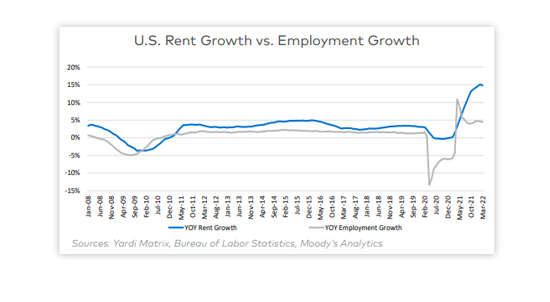
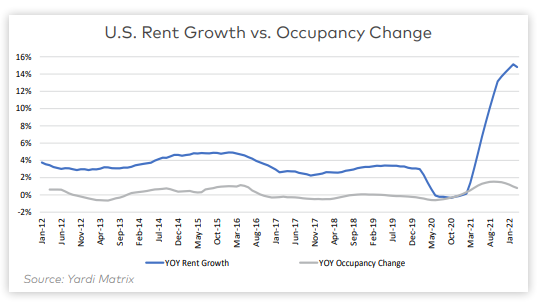
Traditional drivers of multifamily rent growth were upended during the pandemic, first as shelter-in-place policies led to massive job losses and migration, and then as the employment rebound and loosening of restrictions caused demand to skyrocket, Yardi Matrix writes in a June bulletin.

Paul Fiorilla, Director of Research, Yardi Matrix, and Casey Cobb, Senior Analyst in the bulletin examine the implications for multifamily rent and growth going forward and employment growth vs job growth.

The report points out that traditional rent drivers have been disrupted twice due to the pandemic. First was the massive jobs losses early, sheltering in home and a migration toward Sun Belt cities. Then came booming pent up demand and rent increases across the country.

“A question facing the industry is what this means going forward. The pandemic created circumstances that are unlikely to be repeated, especially since the 15 percent year-over-year growth in asking rents nationally (and upwards of 25 percent in some metros) cannot be sustained for very long,” Fiorilla and Cobb write.

Traditional multifamily rent drivers were upended during the pandemic so what does the future hold for multifamily rent growth?
Charts courtesy of Yardi Matrix

How will rent drivers evolve?

The report points out that with the pandemic impact, “We found a huge shift between the first year (April 2020 to March 2021) and second year (April 2021 to March 2022). Some of the difference can be attributed to the short-term dynamics of the pandemic—i.e. large gateway metros were locked down more tightly than metros in the Sun Belt, and economic activity suffered.”

However they point out that some of the changes of the last two years may have started out as pandemic-related “but are likely to remain as part of the landscape for years or even decades into the future. Migration is an example. The Sun Belt has been growing more rapidly than the Northeast or Midwest for decades, but the flow of households from coastal/urban downtowns to suburbs and smaller warm-weather markets was exacerbated by COVID-19 and the growing work-from-home paradigm.”

Driving factors of rent growth and regional demand

Among the many factors are:

  • Will office workers continue to have the flexibility to work from home?
  • What does it mean for employers to locate where employees want to be?
  • Will wage growth support rising rents?
  • Can municipalities fight NIMBYism to increase supply growth?
  • How many metros will fight back against record-high rent growth by implementing counterproductive rent control or other regulatory measures?

“Currently rents are growing about 10 percentage points faster than wages, which means that rent growth is all but certain to moderate. When and how much the moderation occurs, and how that plays out among metros, will be determined by the performance of the economy, migration and regulation,” Fiorilla and Cobb write.

Get the full report and more detail here under Research Bulletins.

About Yardi Matrix:

Yardi Matrix researches and reports on multifamily, office and self-storage properties across the United States, serving the needs of a variety of industry professionals. Yardi Matrix Multifamily provides accurate data on 18+ million units, covering more than 90 percent of the U.S. population. Contact the company at (480) 663-1149.

Multifamily Rents Defy Expectations And Keep Climbing

Sign Up For Our Weekly Newsletter And Get Rental Property And Apartment News And Helpful, Useful Content Each Week.

* indicates required

Portland’s Multifamily Sector Building a Comeback

Portland’s multifamily sector is building a comeback as construction activity stays elevated,  rent development is consistent and the employment market is recouping losses,

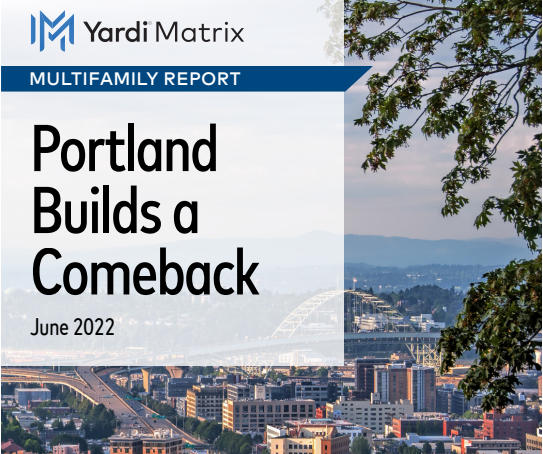
Portland’s multifamily sector is building a comeback as construction activity stays elevated,  rent development is consistent and the employment market is recouping losses, according to the Yardi Matrix June 2020 Portland report.

“Going into summer, Portland rentals are on a sound footing,” Yardi Matrix says in a release, with rents barely trailing the national average. “Improvement is driven by strong demand, keeping both occupancy and development activity high.”

Portland Rental Demand Continues Strong

“Rental demand continues to provide a boost to Portland’s construction sector, as continued inventory expansion has been absorbed consistently, keeping occupancy elevated,” Yardi Matrix says in the report.

The average rent in Portland was $1,690 per month in April, only $31 above the national average as Portland continues to have a lower cost of living than most West Coast metros such as Seattle and San Francisco.

However, Yardi Matrix warns there could be “some moderation” in Portland multifamily rent growth as inflation and other economic concerns play out.

The occupancy rate in Portland is strong.

“The average occupancy rate in stabilized assets stood at 96 percent as of March, as demand has pushed continued rent development, keeping occupancy elevated over the past 12 months.” The report points out that the “renter by necessity” category was even stronger where occupancy was 96.7 percent. “Upscale assets had a lower figure, but still recorded solid performance, at 95.4 percent as of March.”

No Portland submarkets recorded rent decreases in the 12 months ending in April, with most areas actually seeing growth in the double digits. On a year-over-year basis, rent expansion was highest in:

  • Rock Creek: 20.7 percent
  • Creswell Heights: 18.1 percent
  • Beaverton: 17.7 percent.
  • Hillsboro: 17.4 percent.

Employment Growth Continues To Be Solid

Portland added 68,000 jobs in the 12 months ending in February, for a 5.4 percent rate of improvement year over-year.

“The local economy is fighting back after a tough go during the pandemic, but however elevated job gains are now, there’s still work to do to make up for the losses in 2020 and 2021, when decreases were in the double digits.

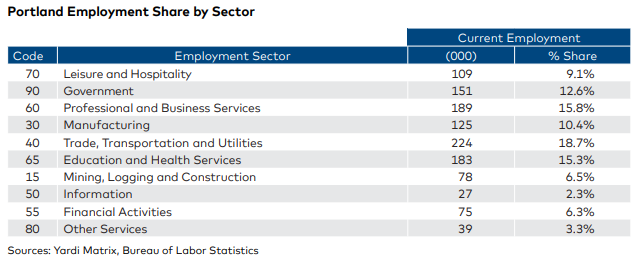
“On a high note, all employment sectors recorded gains through the interval, with the most severely affected, leisure and hospitality, benefiting from the bulk of improvement: The sector added 31,000 jobs, for a 39.9 percent jump. Improvement in the sector comes as a result of hospitality establishments reopening at full capacity across the metro,” the report says.

Portland’s multifamily sector is building a comeback as construction activity stays elevated,  rent development is consistent and the employment market is recouping losses,
Chart courtesy of Yardi Matrix

Portland Multifamily – The Housing Supply Growth

“Projects under way, such as the Ritz-Carlton anchored tower developed by BPM Real Estate Group in downtown Portland, indicate that confidence in the resurgence of the sector and the local economy is still reasonably high. Following a slowdown in 2020, sales activity saw a bounce-back in 2021, as more than $2.8 billion in assets traded since the beginning of last year. Development has been high in Portland in the past five years, and the 10,677 units under construction point to further expansion in 2022 and beyond.” Yardi Matrix expect rents to improve 7.6 percent by year-end.

About Yardi Matrix

Yardi Matrix researches and reports on multifamily, office and self-storage properties across the United States, serving the needs of a variety of industry professionals. Yardi Matrix Multifamily provides accurate data on 18+ million units, covering more than 90 percent of the U.S. population. Contact the company at (480) 663-1149.


Sign Up For Our Weekly Newsletter And Get Rental Property And Apartment News And Helpful, Useful Content Each Week.

* indicates required

Where Are The Most Competitive Rental Markets?

A look at the 100 largest markets in the U.S. shows where the most competitive rental markets are and what is driving the competition

A look at the 100 largest markets in the U.S. shows where the most competitive rental markets are and what is driving the competition, according to research from RentCafé.

Using Yardi proprietary data, RentCafe looked at how many days rentals were vacant in the first part of 2022, occupancy rates, the number of renters competing for an apartment, share of renters who renewed their leases and how much the apartment inventory increased.

Here’s what RentCafé found:

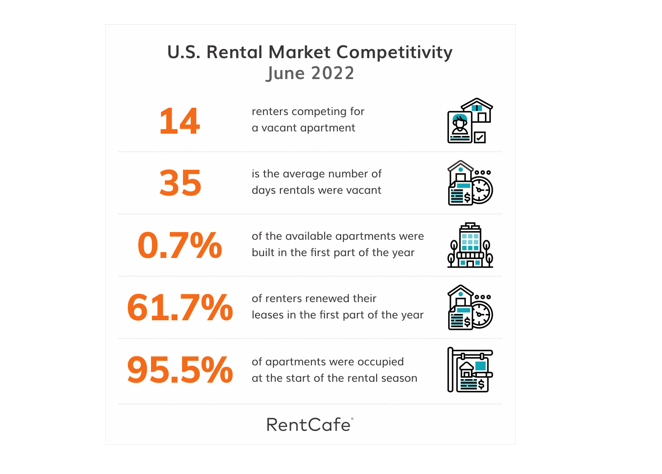
  • Competition intensifies as more renters opt to stay put. Nationwide, almost two-thirds of renters renewed their leases. Amid a soaring 95.5 percent occupancy and a modest 0.7 percent increase in inventory, a vacant apartment was filled within 35 days on average, with 14 renters competing for it.
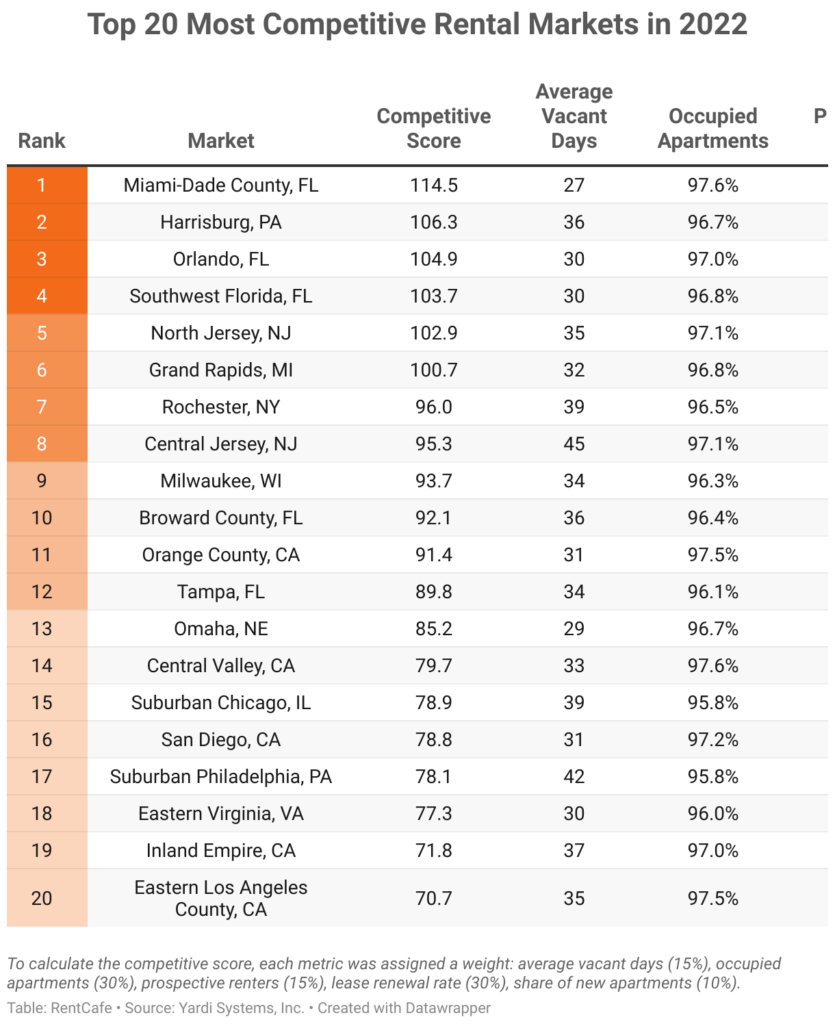
  • Whole regions across Florida are red hot with competition. In Miami-Dade County, three quarters of all leases got renewed, and 31 renters competed for the same apartment, in a market that is 97.6 percent occupied. While the apartment supply grew by almost 2 percent, this was not enough to stem the tide of renters moving here. What’s more, Orlando and Southwest Florida are facing the same situation.
  • In the Northeast Harrisburg, PA ranks 2nd nationally, as no new apartments were built in the first half of the year. Other highly competitive locations in the area are Rochester, NY, and some of the best alternatives to renting in NYC: North and Central Jersey.
  • Certain locations in the Midwest are in the top 20. The hottest markets here include Grand Rapids, MI; Milwaukee, WI; Omaha, NE; and suburban Chicago. Securing an apartment in the fast-growing Grand Rapids will require some effort. With only a few units built in the first part of 2022, almost all rentals are occupied. The average vacant unit got filled in 32 days, and 18 prospective renters competed for an apartment here.
  • Orange County became California’s most sought-after market as LA renters on tight budgets went searching for better options. The area boasts a more relaxed lifestyle, cheaper entertainment, and a thriving economy with better job opportunities, as O.C. is home to many Fortune 500 & 1000 companies that are on the lookout for skilled professionals. No less than 20 renters compete here for one apartment, while the occupancy rate is a sky-high 97.5 percent.

most competitive rental markets in the U.S.

Why Competitive Rental Markets?

The wave of migration to Florida during and after the pandemic is one reason for the big jump in Florida lease competition.  Good weather, low taxes and good employment opportunities also are a reason.

Also in some markets the lack to any new apartment availability has led to the competition.

For example in Harrisburg no new apartments were opened between January and April prompting about 75 percent of renters to stay in their existing apartments, creating a highly competitive environment for anyone seeking to find rent. As a consequence, the average rental unit was filled in just 36 days, and as many as 19 renters competed for an apartment here.

“More and more house hunters are starting to feel the strain of surging inflation and mortgage rates. As a result, they are delaying or completely giving up on their dream to become homeowners, which puts even more pressure on the apartment market,” RentCafé writes in the report.

Read the full report here.

With Traditional Multifamily Rent Drivers Disrupted What Is The Future?

Multifamily Rents Defy Expectations And Keep Climbing

Sign Up For Our Weekly Newsletter And Get Rental Property And Apartment News And Helpful, Useful Content Each Week.

* indicates required

Court Upholds Law Requiring Landlords Pay Rent To Evicted Tenants

A federal appeals court in California has upheld a law requiring landlords to pay one month of rent to evicted tenants, according to reports.

A federal appeals court in California has upheld a law requiring landlords to pay one month of rent to evicted tenants, according to reports.

The San Francisco Chronicle reported that the  court has upheld a California law requiring a property owner who legally evicts a tenant to pay one month of the tenant’s rent in order to reduce the costs of relocation.

The law, sponsored by then-Assembly Member David Chiu, D-San Francisco, took effect in 2020. In addition to limiting rent increases to 10 percent a year in areas without local rent control, the law provided some financial assistance to renters who were evicted because the owner was moving into the property, converting it to a condominium or demolishing it. The owner must either repay a month’s rent to the tenant or cancel the final month’s payment, the newspaper reported.

A lawsuit by the owners’ group Better Housing for Long Beach accused the state of unconstitutionally confiscating their property by requiring the payments. But while the suit was pending, the Ninth U.S. Circuit Court of Appeals upheld an Oakland ordinance, similar to laws in San Francisco, San Jose and Los Angeles, requiring property owners to pay all of a legally evicted tenant’s relocation expenses.

Better Housing for Long Beach, a grassroots group that has consistently opposed efforts to enact rent control or measures similar to it in Long Beach, filed the federal court lawsuit challenging the Long Beach City Council majority-enacted “Tenant Relocation Ordinance” and California’s “Rent Cap/Just Cause Eviction” law (AB 1482) signed into law by Gov. Gavin Newsom.

Paul Beard, a lawyer for the Long Beach property owners, had argued that the law was a “forced transfer of hard-earned funds” and that the state “cannot force owners to bear public burdens” that should be paid by the general public, such as the relocation costs of legally evicted tenants, the San Francisco Chronicle reported.

Sign Up For Our Newsletter And Get Rental Housing and Apartment News And Helpful, Useful Content Each Week.

* indicates required

Ask Attorney Brad: Why Can’t A Landlord Give a 30-Day Notice to Vacate?

Understanding a Landlord’s Rights, Obligations in Domestic Violence Situations

Ask Attorney Brad: Tenants Want to Know Why There’s a Dog in No-Pet Building?

Solving The Multifamily Labor Shortage With Technology

Here are some of the impacts of the multifamily labor shortage and how technology and automation are alleviating the burden.

Here are some of the impacts of the multifamily labor shortage and how technology and automation are alleviating the burden.

By Morgan Dzak

The multifamily industry has been hesitant to discuss automation in previous years, fearing backlash from onsite teams. Automation was viewed as a replacement to human associates, and not necessarily as a supplement. But in the wake of the pandemic, the industry has become faced with new challenges – notably The Great Resignation.

The Great Resignation refers to the post-pandemic era in which millions of American workers either left their jobs or switched careers. According to data from the Society for Human Resource Management, 47.8 million workers quit their jobs last year – an average of nearly 4 million each month – for the highest average on record. It created a massive labor shortage for multifamily, as most of the workers who left jobs were in onsite roles.

“When the shutdown occurred in 2020, many individuals were forced into different careers, having to learn different trades and skill sets,” said Lindsay Duffy, director of marketing and training at Western Wealth Communities. “Many employees became conditioned to the flexibility of remote positions, making it harder to retain workers when businesses opened and needed them to come back to work. This gave job searchers a competitive advantage on salary and work-life balance negotiations when accepting an offer.”

As the labor shortage from The Great Resignation persists, the use of automation has become more prevalent and operators are not only implementing new technologies, but also centralizing functions that used to stay solely onsite. Automation and other technologies are reducing pain points for thinner onsite teams, increasing efficiencies and maximizing lease-conversion ratios, all while improving prospect, resident and associate experiences.

Here are some of the impacts of the labor shortage on multifamily and how automation technologies are alleviating the burden by creating a new caliber of modern apartment leasing and living:

Automation: Doing More with Less

 Multifamily is most feeling the effects of the labor shortage in maintenance and leasing roles. Both of these roles have historically high turnover, and The Great Resignation has further fueled the turnover trend.

The wave of new technologies that rapidly entered multifamily since the pandemic have not only taken on some of the more tedious onsite tasks, like fielding an influx of online leads and following up with prospective residents, but they’ve also created efficiencies for existing teams that aren’t as robust as in the past. New technologies have allowed onsite teams to do their jobs more effectively while modernizing and refining several processes, for the benefit of associates and customers alike.

One of the most helpful technologies during the labor shortage has been automation. Automating tasks like aggregating guest cards, following up with prospects and residents, and scheduling tours have had big impacts on onsite team workload. It has also created better customer experiences for both prospects and residents, and allows onsite teams to do more with less.

“Using AI tools and CRM systems has allowed our onsite teams to capitalize on every lead that is generated to be more efficient and service-oriented,” Duffy said. “It’s alleviating a lot of the mundane onsite work so the people we do have onsite can focus more on providing amazing customer service, taking care of residents and building rapport with prospects that come in.”

According to internal data from Nurture Boss, a lease- and renewal-conversion automation provider, 45 percent of prospects who reach out to a community say they never hear back. With a lease-conversion automation tool, it takes an hour on average to respond to all leads – which is particularly helpful considering that renters almost always sign a lease with the first community that gets back to them.

In a digital leasing environment, following up with prospects has become critical to community success and increasing lease conversions. Apartment operators are finding that consistent, timely and personalized follow-ups with prospects are not only increasing tour conversions and applications, but also boosting overall lead-to-lease conversions.

“When reviewing reports, we learned that many leads were not being followed up on and calls were being missed due to limited staff,” Duffy said. “Like most companies at this time, we run with lean teams where individuals wear multiple hats and need to multitask throughout the day. We saw a huge gap in customer satisfaction and poor communication, and knew we needed a partner that would provide a better prospect experience and allow teams to focus on resident satisfaction. In leveraging technology and partnerships with supplier partners, we have increased lead-to-lease conversion rates while improving overall prospect and resident satisfaction and increasing employee morale.”

Based on Nurture Boss’ clients’ CRMs, the overall lead-to-lease conversion rate without automation is 19 percent, but with it, the conversion rate is 30 percent.

“Prospective residents are all looking for something different, and some may need to move in 30 days while others are looking to move months down the road,” said Jacob Carter, CEO of Nurture Boss. “Nurturing all types of leads can be extremely taxing on onsite teams, especially when the onsite teams of today are working with more leads than ever before from multiple platforms, and there aren’t as many people onsite to handle that type of volume.”

Operators have started automating the entire resident lifecycle, from the initial apartment search all the way to becoming a resident, and even when it’s time for a renewal. Whether it’s automating communication and tour scheduling by utilizing an AI chatbot on the frontline of leasing or integrating lease-conversion automation within a CRM, operators have noticed a significant difference in both the caliber of customer service from onsite teams and overall resident satisfaction. And they’re accomplishing this with smaller teams.

“We know that the leasing journey does not stop when residents move in,” Duffy said. “The resident relationship needs nurturing and constant communication for our customer journey to be a positive one, and for them to be an advocate of your community and company brand.”

Beyond Automation: Other Technologies Solving the Labor Shortage

Aside from automation, some other technologies have proven to be invaluable for operators during the labor shortage. Ubiquitous WiFi, for example, has completely transformed modern maintenance workflows and paved the way for more streamlined self-guided tour methods.

“Community-wide WiFi allows maintenance technicians to respond to and fulfill work orders faster,” said Shawn Mahoney, senior advisor at RET Ventures. “If the entire community is connected, it eliminates the onsite team from playing middleman when it comes to work orders. Maintenance technicians can directly receive the work order and have a credential dynamically assigned to them that allows access to the apartment for a certain period of time, and the resident can also be notified every step of the way.”

Connected communities also set the foundation for self-service options, which the industry unanimously agrees are here to stay. Prospective residents can enter and tour a community without a dropped connection, and they can also tour communities beyond standard office hours.

“This benefits apartment operators because the onsite teams can process more tours with less people while providing the self-service options that many modern residents want,” Mahoney said. “If you can lower costs with technology, it’s going to increase your NOI. Operators already have less staff because of the labor shortage, but existing teams are able to do more and they can also extend their hours of operation with self-guided touring.”

The entire world is now connected by technology and online access. Businesses rely on connectivity, and without it, day-to-day operations are severely hindered within any industry.

“With all the new PropTech and tech amenities multifamily has implemented over the last few years, a WiFi connection is really the foundation of all those new tools to operate seamlessly,” said Andrew Kusminsky, CEO of GiGstreem, a WiFi provider. “Multifamily has really become a tech-focused industry, and operators need that reliable connectivity not only for leasing and operations, but also for the residents who have now come to expect WiFi as a standard amenity offering.”

Even with fewer people working onsite, multifamily has discovered new technologies, like automation, to alleviate the burden of the labor shortage by allowing thinner onsite teams to execute their jobs more effectively, creating efficiencies and streamlining workflows. The multifamily tech of today isn’t just solving the labor shortage – it’s boosting NOI and increasing asset value for operators while creating better experiences for associates and residents alike.

About the author:

Morgan Dzak is an account manager for LinnellTaylor Marketing, which focuses exclusively on the multifamily industry and its technology space. She previously spent time as a digital content and marketing specialist for Cornerstone Apartment Services in Denver.

Sign Up For Our Weekly Newsletter And Get Rental Property And Apartment News And Helpful, Useful Content Each Week.

* indicates required