Home Blog Page 80

August National Rent Growth Half of July Total

August national rent growth was 0.5 percent, half the rate of growth compared to last month, according to the September report from Apartment List.

August national rent growth was 0.5 percent, half the rate of growth compared to last month, according to the September report from Apartment List.

The slowing of rents in August fits more of the traditional rent growth patterns that existed before the pandemic.

“Rents increased in 79 of the nation’s 100 largest cities in August. But in 68 of those 79 cities, rent growth was slower this month than last month. Annual rent growth remains elevated (15+ percent) in Florida, as well as a handful of major metropolitan areas including San Diego and New York City,” the report says.

Slowing Rent Growth May Help Slow Inflation

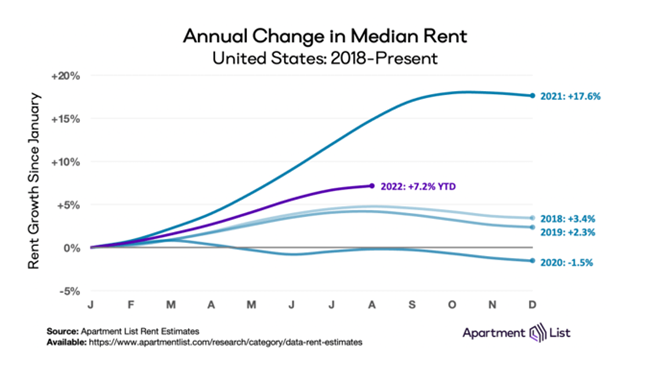
So far in 2022 rents are up 7.2 percent, compared to 14.8 percent at this point in 2021. Year-over-year growth has slowed to 10 percent, down from a peak of nearly 18 percent at the beginning of the year, the Apartment List report says.

The 17.6 percent rise in rents over the course of 2021 has contributed to inflation in housing costs.

“With inflation top-of-mind for policymakers and everyday Americans alike, our rent index is particularly relevant, since movements in market rents lead movements in average rents paid. As a result, our index can signal what is likely ahead for the housing component of the official inflation estimates produced by the Bureau of Labor Statistics. Thankfully for the country’s renters, our index shows that rent growth in 2022 has cooled from last summer’s peaks. At the same time, however, rents are continuing to rise faster than they did in pre-pandemic years.”

Slight Uptick in Vacancy Rate

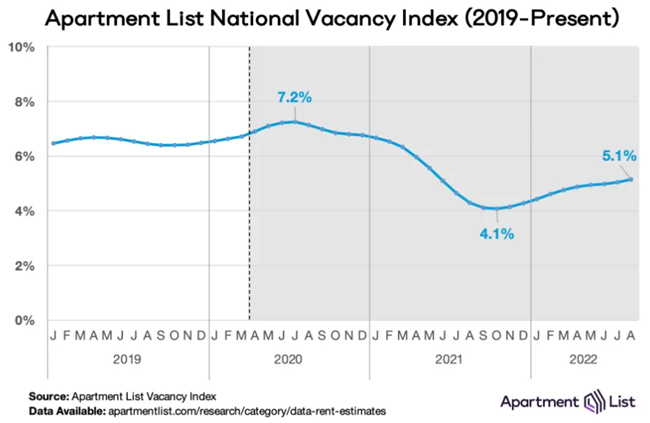
On the supply side, a deceleration in rent growth was matched with a slight uptick in apartment vacancies.

“Our vacancy index stands at 5.1 percent today and has gradually eased from a low of 4.1 percent last fall. That said, today’s vacancy rate remains below the pre-pandemic norm, which may be attributable to spiking mortgage rates that continue sidelining first-time homebuyers and keeping more households renting for longer,” the report says.

August national rent growth was 0.5 percent, half the rate of growth compared to last month, according to the September report from Apartment List.
Charts courtesy of Apartment List

Conclusion

“With a 0.5 percent increase in August, rent growth is continuing to pace ahead of pre-pandemic trends, even as it decelerates and falls in-line with expected seasonality. As we enter the fall and winter months, we expect rental activity will continue to slow and we will likely see modest price decreases in the coming months,” the report says.

Get the full report here.

Multifamily Rent Growth Slows But Still Strong

With Traditional Multifamily Rent Drivers Disrupted What Is The Future?

Another Bullish Year For Multifamily In 2022?

Sign Up For Our Weekly Newsletter And Get Rental Property And Apartment News And Helpful, Useful Content Each Week.

* indicates required

Can I 1031 Exchange Out of a Delaware Statutory Trust?

Can I 1031 Exchange Out of a Delaware Statutory Trust?

By Dwight Kay

CEO and Founder of Kay Properties and Investments, LLC

Key Takeaways:

  • Investors can 1031 exchange out of their DST Investments
  • What does it mean to have a DST 1031 exchange go Full-Cycle?
  • Investors must conform to all of the 1031 rules when a DST goes Full-Cycle
  • What is the Kay Properties DST Secondary Market?

Many investors that have participated in or are considering a DST 1031 exchange with Kay Properties will oftentimes ask us, Is it possible to 1031 exchange out of a Delaware Statutory Trust?  If you’re looking for a clear and concise answer to this question, here it is: Yes, you can 1031 exchange out of a DST.

But let’s dig a little deeper into this subject.

First Things First: What is a DST?

Let’s first look at exactly what is a Delaware Statutory Trust (DST)? DSTs are vehicles for passive real estate ownership that allow investors to remove themselves from day-to-day headaches of property management as well as the opportunity to diversify* their equity in an effort to potentially reduce risk. Each individual investor possesses his or her own share – sometimes referred to as a “beneficial interest”, including potential income, tax benefits, and appreciation of the DST property. A longer and more detailed article of exactly what a Delaware Statutory Trust is and why so many real estate investors are attracted to them can be found here.

Exchanging Out of a DST Following Full-Cycle Investment

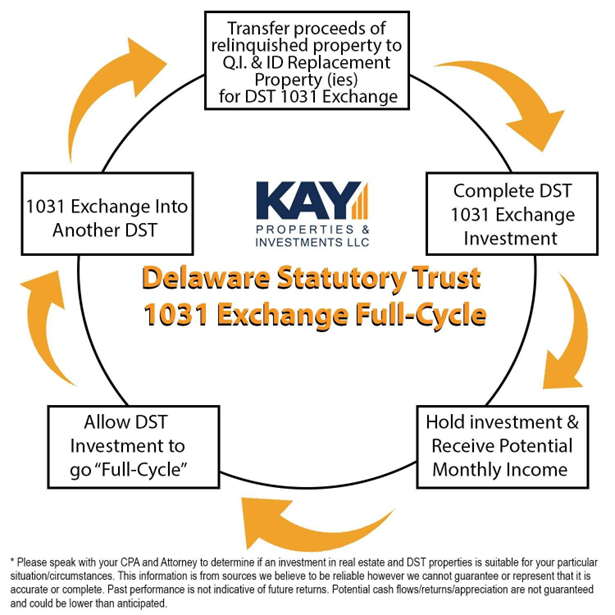
Now the question of “Can I 1031 exchange out of a DST?” can be addressed from two different perspectives. The first perspective involves when a DST property itself goes “full cycle”. The term “Full-Cycle” is used to describe a Delaware Statutory Trust asset that has been purchased and then sold on behalf of a group of accredited investors after a period of time. Once the DST sponsor has sold the asset per the DST’s business plan each individual investor then has the same options as they had when they first exchanged into the DST: They must use a Qualified Intermediary, identify the up leg within 45 days of the closing of the relinquished property and close on the up leg within 180 days of the closing of the relinquished property. If they choose to “cash out” following the full-cycle investment, they are required to pay their taxes.

A good example of a Kay Properties DST investment that went full-cycle is the Alexander Pointe Multifamily DST in Orange Park, FL.

Exchanging out of a DST Prior to the Investment Goes Full-Cycle

Exchanging out of a DST before the investment goes full-cycle is a bit more detailed. Because DSTs are real estate-based investments, they are considered illiquid. There is no stock market exchange that allows you to log online and sell your DST investment quickly. Therefore, investors should only purchase a DST via a 1031 exchange if they are willing to hold for the full life of the investment which could be 5-10 plus years.

However, it may be possible to sell your share of a DST and either cash out or pursue another 1031 exchange. While DST interests can be sold and transferred to an accredited investor, the most obvious purchasers of DST interests are other investors either in the same DST or outside investors who wish to acquire interest in the particular DST.

Please note that exchanging out of a DST prior to the investment going full cycle means that the investor must follow all the same rules as any traditional 1031 exchange. That is, investors must use a Qualified Intermediary, they must identify their up leg within 45 days of the closing of their relinquished property and they must close on their up leg within 180 days of the closing of your relinquished property.

Kay Properties Secondary Market

Because Kay Properties understands investors might need to exit a DST prematurely, they created a DST Secondary Market where investors who want to sell early have a potential market available to buy their interest in the DST investment. The Kay DST Secondary Market is made possible due to the fact that Kay Properties works with many DST buyers on a daily basis. Kay Properties helped clients purchase approximately $30 billion of DST investments since its founding. This volume allows us to be a resource for those wanting to sell a DST investment early as we are working with many, many DST buyers nationwide. Again, there is no guarantee that you will be able to sell your DST investment on the Kay DST Secondary Market however it may bea potential option.

For a list of 1031 DST properties please visit www.kpi1031.com as well as your will find more helpful articles and resources as you are considering 1031 exchange DST properties.

Ask Bill Exeter

Ask Bill Exeter and his team your questions about 1031 exchanges and he and his team will get back to you.

Name

About Kay Properties and www.kpi1031.com

Kay Properties is a national Delaware Statutory Trust (DST) investment firm. The www.kpi1031.com platform provides access to the marketplace of DSTs from over 25 different sponsor companies, custom DSTs only available to Kay clients, independent advice on DST sponsor companies, full due diligence and vetting on each DST (typically 20-40 DSTs) and a DST secondary market.  Kay Properties team members collectively have over 150 years of real estate experience, are licensed in all 50 states, and have participated in over $30 Billion of DST 1031 investments.

This material does not constitute an offer to sell nor a solicitation of an offer to buy any security. Such offers can be made only by the confidential Private Placement Memorandum (the “Memorandum”). Please read the entire Memorandum paying special attention to the risk section prior investing.  IRC Section 1031, IRC Section 1033 and IRC Section 721 are complex tax codes therefore you should consult your tax or legal professional for details regarding your situation.  There are material risks associated with investing in real estate securities including illiquidity, vacancies, general market conditions and competition, lack of operating history, interest rate risks, general risks of owning/operating commercial and multifamily properties, financing risks, potential adverse tax consequences, general economic risks, development risks and long hold periods. There is a risk of loss of the entire investment principal. Past performance is not a guarantee of future results. Potential cash flow, potential returns and potential appreciation are not guaranteed.

Nothing contained on this website constitutes tax, legal, insurance or investment advice, nor does it constitute a solicitation or an offer to buy or sell any security or other financial instrument. Securities offered through FNEX Capital , member FINRA, SIPC.

.

How this investor closed 15 DST 1031 Exchanges in 30 Days… without a hitch!

Six Ways to Ensure Your 1031 Exchange is Successfully Completed

Kay Properties & Investments Has Record Year With $610 Million In Equity Placed

Seattle rents increase sharply over the past month

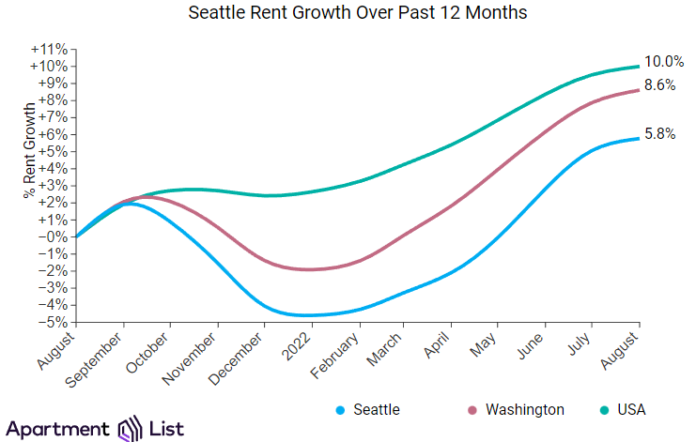
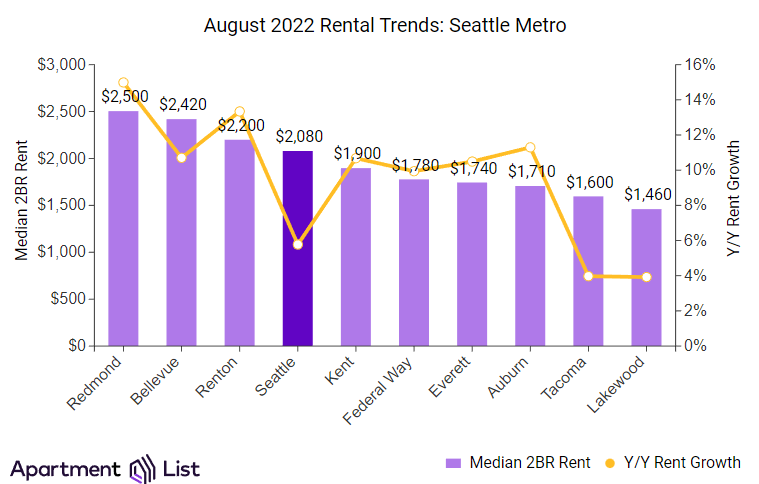
Seattle rents have increased 0.7 percent over the past month in August, and have increased significantly by 5.8 percent year-over-year

Seattle rents have increased 0.7 percent over the past month in August, and have increased significantly by 5.8 percent in comparison to the same time last year, according to the September report from Apartment List.

Now median rents in Seattle are $1,720 for a one-bedroom apartment and $2,079 for a two-bedroom.

This is the seventh straight month that the city has seen rent increases after a decline in January. Seattle’s year-over-year rent growth lags the state average of 8.6 percent, as well as the national average of 10.0 percent.

Rents rising across the Seattle Metro

Seattle rents have increased 0.7 percent over the past month in August, and have increased significantly by 5.8 percent year-over-year

Throughout the past year, rent increases have been occurring not just in the city of Seattle, but across the entire metro.

Of the largest 10 cities that Apartment List has data for in the Seattle metro, all of them have seen prices rise.

Here’s a look at how rents compare across some of the largest cities in the metro.

  • Redmond has the most expensive rents in the Seattle metro, with a two-bedroom median of $2,505; the city has also seen rent growth of 15.0 percent over the past year, the fastest in the metro.
  • Over the past month, Bellevue has seen the biggest rent drop in the metro, with a decline of 1.1 percent. Median two-bedrooms there cost $2,420, while one-bedrooms go for $2,168.
  • Lakewood has the least expensive rents in the Seattle metro, with a two-bedroom median of $1,459; rents increased 0.6 percent over the past month and 3.9 percent over the past year.


Multifamily Rent Growth Slows But Still Strong

With Traditional Multifamily Rent Drivers Disrupted What Is The Future?

Another Bullish Year For Multifamily In 2022?

Sign Up For Our Weekly Newsletter And Get Rental Property And Apartment News And Helpful, Useful Content Each Week.

* indicates required

Tenant Kills Property Manager, Constable During Eviction

Tenant Kills Property Manager, Constable During Eviction

A tenant shot and killed the new property manager of an apartment complex, a constable and another tenant before turning the gun on himself during an eviction in Tucson, Ariz., according to reports.

The tenant had been threatening others with a gun in the apartment complex for months, according to KGUN9.com, and the apartment complex was attempting to evict him for that reason, according to court documents filed in the eviction case.

Gavin Lee Stansell, 24, killed Angela Fox-Heath, 28, who was a new property manager at the Lind Commons Apartments; Pima County Constable Deborah Martinez-Garibay, 43, who was a 16-year Army veteran who served in Afghanistan before becoming a constable; and Elijah Miranda, 25, a tenant who lived next door. The shooting happened about 11 a.m. on August 25.

A SWAT team went into Stansell’s apartment and found the wounded Martinez-Garibay, police said. She died at the scene.

Investigators don’t yet know why the constable entered the apartment or whether Stansell had tried to reject the eviction notice.

They found Stansell, 24, dead from a self-inflicted gunshot wound. Tucson police said a search of the apartment also found Stansell had entered or broken into the apartment next door and fatally shot Miranda.

The Associated Press reported an eviction complaint filed on Aug. 15 by a landlord in Pima County Consolidated Justice Court indicated that Stansell had previously threatened violence.

The complaint said he or his guest had threatened and intimidated neighbors with a gun on July 27.

Stansell failed to appear at a hearing in the eviction case, court records said.

According to the records, a judge ruled that Stansell had breached his lease agreement, writing: “The evidence shows that defendant threatened another resident with a firearm and has otherwise disturbed the peace.”

Arizona Governor Doug Ducey ordered flags at half-staff at state office buildings due to the lives lost in the Tucson shooting.

“The loss of Constable Deborah Martinez is felt across our state,” Ducey said in a press release. “Whether it was serving in the U.S. Army or carrying out her duties as a constable for Pima County, she dedicated her life to helping others and her community.”

The Pima County Constables Office said staff were devastated by the killing of Martinez-Garibay. She gave her life in service to the people of Arizona, the office said.

“We all know that the job of an Arizona constable comes with risk, but we go about our business with caution and professionalism and treat all with whom we come in contact with respect and dignity,” the office said in a statement.

Maricopa County constable Mike Branham told KJZZ that  people in his position often respond to emotional situations.

“Someone is losing a house, someone else is having to evict somebody, certainly one of the biggest caseload increases in the last year or so has been orders of protection, which are also very dangerous,” Branham said.

He said constables can complete additional training to carry guns, but not all of them choose to do so.

Tenant Kills Property Manager, Constable During Eviction

No Guns In My Apartments: Can A Landlord Say That And Put It In A Lease?

The Blame Game is a No-Win for Landlords As Guns Have Become A Heated Issue

How The Heller Case Shaped Second Amendment Law

Sign Up For Our Weekly Newsletter And Get Rental Property And Apartment News And Helpful, Useful Content Each Week.

* indicates required

FTC Sues Roomster Over Fake Reviews and Phony Listings

FTC Sues Roomster Over Fake Reviews and Phony Listings

The Federal Trade Commission (FTC) and six states filed a lawsuit against rental-listing platform Roomster Corp. and its owners John Shriber and Roman Zaks for allegedly duping consumers seeking affordable housing by paying for fake reviews and then charging for access to phony listings, according to a release.

The complaint alleges that Roomster and its owners have taken tens of millions of dollars from largely low-income and student prospective renters who need reliable housing the most and can least afford to lose money.

Separately, the FTC and the states filed a proposed order against Jonathan Martinez—who allegedly sold Roomster tens of thousands of fake reviews—requiring him to pay $100,000 and cooperate in the FTC’s case against Roomster.

“Roomster polluted the online marketplace with fake reviews and phony listings, making it even harder for people to find affordable rental housing,” Samuel Levine, Director of the FTC’s Bureau of Consumer Protection, said in the release. “Along with our state partners, we aim to hold Roomster and its top executives accountable and return money to hardworking renters.”

“There is a term for lying and deceiving your customers to grow your business: Fraud. Roomster used illegal and unacceptable practices to grow its business at the expense of low-income renters and students,” said New York Attorney General Letitia James in the release. “Unlike Roomster’s unverified listings and fake reviews, their deceptive business practices will not go unchecked. I am proud to lead this effort with the FTC to protect low-income renters and students defrauded by Roomster.”

Rental listings company New York-based Roomster operates a website and mobile apps where users can pay a fee to access living arrangement listings, including rental properties, room rentals, sublets, and roommate requests. The company claims to offer “authentic” and “verified” listings. However, in a complaint filed in federal court along with the attorneys general of New York, California, Colorado, Florida, Illinois, and Massachusetts, the FTC and its state partners allege that Roomster, along with Shriber and Zaks, used fake reviews and other misrepresentations to lure consumers to its platform and pay for access to listings that often turned out to be fake. The complaint also alleges that Martinez, doing business as AppWinn, deceptively promoted the Roomster platform by providing tens of thousands of fake four- and five-star reviews.

The complaint alleges that the deceptive tactics of Roomster, Shriber, Zaks, and Martinez violated the FTC Act and state laws. Many consumers rely on reviews when deciding whether to purchase a product or service. Fake reviews distort the marketplace and make it difficult for consumers to make informed decisions. The deceptive tactics alleged in the complaint include:

  • Posting fake positive reviews: Roomster’s operators, with the help of Martinez, have saturated the internet with tens of thousands of four- and five-star fake reviews, which dilute negative reviews posted by real consumers, some of whom warn that many of Roomster’s listings are fake. The complaint alleges that Roomster’s operators told Martinez to take steps to make the reviews look real. For example, Shriber urged Martinez to spread out the reviews so they were “constant and random.”
  • Claiming to offer verified and authentic listings: Roomster misrepresents that it offers millions of “verified listings” when in fact the company does not verify listings or ensure they are legitimate and authentic. For example, the FTC’s investigation found that the company immediately accepted and published a fake listing for a fictional apartment at the same address as a U.S. Post Office commercial facility.
  • Using phony listings to attract paid users: Roomster has advertised on internet sites like Craigslist using phony listings that drive consumers to Roomster’s platform. Once on the site, consumers paid fees to obtain information necessary to secure the listings, only to discover that the listings didn’t even exist. In addition, after signing up for Roomster’s service, consumers complain they are often bombarded by fraudsters with more fake listings.

This action is part of the FTC’s efforts to crack down on fake and deceptive reviews. Earlier this year, online retailer Fashion Nova paid $4.2 million to settle allegations that the company blocked negative reviews of its products from being posted to its website. In 2021, the FTC put hundreds of firms on notice that they could face significant financial penalties if they use fake reviews or other deceptive endorsements to promote their products or services.

According to the complaint, Roomster and its owners were assisted by Martinez in their efforts to deceive consumers by posting fake reviews to the app stores. In addition to cooperating with the FTC in its ongoing case against Roomster, Martinez, as part of the proposed stipulated final order with the FTC and the states, is also required to:

  • Notify the app stores: He must notify the Apple and Google app stores that Roomster paid him for posting reviews on each platform and must identify the fake reviews and approximate times they were posted;
  • Stop selling reviews: Martinez will be permanently banned from selling or misrepresenting consumer reviews or endorsements;
  • Pay $100,000: Martinez must pay a total of $100,000 to the FTC’s six state partners: New York, California, Colorado, Florida, Illinois, and Massachusetts.

Sign Up For Our Weekly Newsletter And Get Rental Property And Apartment News And Helpful, Useful Content Each Week.

* indicates required

FTC Charges Online Home Buyer with Deceptive Practices

California Court Orders Operators of Deceptive Rental Listing Websites to Pay $6 Million

CFPB Warns Tenant Screening Companies Over Name-Only Matching

What If Tenant Refuses Entry to Your Rental After Proper Notice?

What If Tenant Refuses Entry to Your Rental After Proper Notice?

This week’s question follows up last week’s How Can I Give Notice of Entry to Non-Responding Tenant? when the tenant will not respond to the notice. Now what if the tenant refuses entry and is inside and tells you to leave is the question for Ask Landlord Hank. Remember Hank is not an attorney and is not offering legal advice. If you have a question for him please fill out his form below.

Dear Landlord Hank:

In regards to your answer to enter property even if the tenant does not respond: What do you do if the tenant is in the house when you want to enter and they tell you to get out?

– Patti

Dear Patti,

If you have given proper notice to the tenant that you will be entering the property (at least 12 hours’ notice, in Florida), the tenant cannot deny the landlord the legal right to enter the property.

Again, in Florida, you’d need to enter during normal hours – 7:30 a.m. to 8:00 p.m. – unless there is an emergency; then you can enter at any time.

Don’t argue with your tenant, but let them know you have the legal right to enter and if the tenant refuses entry, tell them they are in violation of the lease and put a seven-day notice to cure on their door.

Then they have seven days to “fix” the problem. If they still won’t allow access, I’d move on to eviction.

It’s amazing what a legal notice will do to change an unreasonable tenant’s mind (sometimes).

Sincerely,

Hank Rossi
www.rentsrq.com

Each week I answer questions from landlords and property managers across the country in my “Dear Landlord Hank” blog in the digital magazine Rental Housing Journal.  https://rentalhousingjournal.com/asklandlordhank/

If a landlord gives notice of entry, what if the tenant refuses entry and is inside and tells you to leave is the question for Landlord Hank.
Landlord Hank says, “If you have given proper notice to the tenant that you will be entering the property the tenant cannot deny the landlord the legal right to enter the property.”

Ask Landlord Hank Your Question

Ask veteran landlord and property manager Hank Rossi your questions from tenant screening to leases to pets and more! He provides answers each week to landlords.

  • This field is for validation purposes and should be left unchanged.

Should I Give Separate Leases to Roommate Tenants?

A Tenant Poured Grease Down Drain Who Is Responsible?

Sign Up For Our Newsletter And Get Rental Housing And Apartment News And Helpful, Useful Content Each Week.

* indicates required

Survey: Property Managers Affect Whether Renters Stay or Go

Property managers have more influence than they may think on whether single-family renters stay in the current property or decide to move on

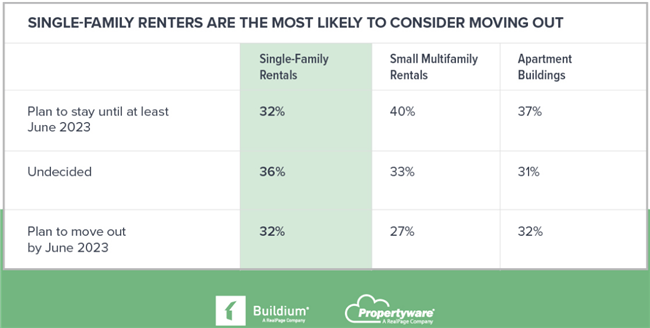
A new survey shows that single-family renters may be more likely to move in the next year than apartment renters, and there are some key reasons why.

Property managers have more influence than they may think on whether renters stay in their current property or decide to move on, according to a new Buildium survey.

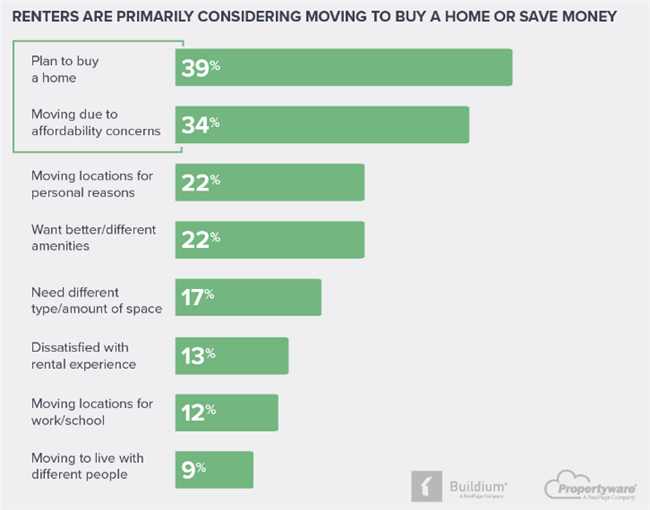
The overall survey looked at why renters like single-family homes, but also why two-thirds of single-family renters are considering moving out in 2022 or 2023. It focused on the role of the property manager in the stay-or-move decision.

“The overarching consideration behind renters’ decision to renew their lease is their sense of value within their current property,” the survey said.

There are three main areas where property managers can make a difference in retaining tenants, according to the report.

  • The quality of service they receive from their property manager or landlord;
  • The condition of the property and attention paid to maintenance issues;
  • The amenities and services that are available to them.

Property managers’ influence tied to several factors

Buildium says in the report, “We found property managers may have more influence on renters’ decision to stay or go than they might think: Among renters who expressed a desire to become homeowners in the near future, we found that those who are more satisfied with their current property are less likely to plan to buy a home right away, even if it’s still their goal in the long term.

“And among renters for whom price is a leading consideration in their decision to move, it’s not necessarily a simple matter of their income versus the price of rent, though this is certainly a primary concern in today’s market. It’s their perception of value—the question of whether their rental experience is worth the price that they’re paying to live there—that can push them to stay or go, particularly when their household’s finances are stretched thin by high prices for housing, utilities, groceries, gas, and other necessities.”

Property managers have more influence than they may think on whether single-family renters stay in the current property or decide to move on
Charts courtesy of Buildium

What can property managers do?

Here are some key comments from the report:

  • “Be proactive. Come to the residence once a year to see what may need fixing or updating that the renter hasn’t brought up.” (Age 50)
  • “Fix problems as they arise, do not wait until something completely breaks down. Have planned services like HVAC exams before summer, provide extermination services on a planned schedule, and [include] yard services in [the] rent.” (Age 59)
  • “Be more open-minded about using technology for processes if you haven’t already started using it. It makes things easier for your tenants and yourself.” (Age 26)

Get the full report on single-family renters here.

Sign Up For Our Weekly Newsletter And Get Rental Property And Apartment News And Helpful, Useful Content Each Week.

* indicates required

Disabled Veteran with Assistance Animal Denied Apartment, HUD Says

Disabled Veteran with Assistance Animal Denied Apartment, HUD Says

The U.S. Department of Housing and Urban Development (HUD) has charged a Kansas apartment owner and property managers with discriminating against a disabled veteran with an assistance animal, his dog, according to a release.

HUD charged the Fox Run Apartments, LLC, the owner of an apartment complex in Shawnee, Kansas, and property manager Peterson Properties, Inc. with violating the Fair Housing Act by refusing to allow a veteran with a mental health disability to live with his assistance animal despite a letter from the Veterans Administration stating the need for the dog.

The veteran applied for a one-bedroom apartment in 2020 for himself, his 16-year-old son, and an 18-month-old Doberman that weighed more than 70 pounds.

HUD’s charge alleges that the property management company denied both the applicant’s reasonable accommodation request to live with his assistance animal and his application for housing for his family.

According to the charge, the disabled veteran with assistance animal had provided the necessary information to support his reasonable accommodation request through a letter from his psychiatrist at the Veterans Administration.

Nevertheless, the management company denied the request and application after insisting, just before the veteran’s move-in date, that the veteran’s psychiatrist complete an additional, unrequired form. However, the psychiatrist was on vacation at that time. The disabled veteran with assistance animal was then forced to seek housing elsewhere.

The regional management official for the apartments determined the letter received from the VA doctor prescribing the dog “was insufficient” and ultimately denied the veteran’s request for reasonable accommodation. The apartment “cancelled his lease stating his dog exceeded occupancy limits, and the request to be classified as an assistance animal was not met,” according to the complaint.

“The Fair Housing Act requires housing providers to make reasonable accommodations, including allowing individuals with disabilities to live with needed assistance animals,” said Damon Smith, HUD general counsel, in the release. “As this charge shows, housing providers may not claim to comply with this requirement but then make it unnecessarily difficult for individuals with disabilities to actually get the necessary accommodation.”

The Fair Housing Act prohibits discrimination because of disability. The act makes it unlawful to refuse to grant reasonable accommodations for persons with disabilities, including failing to waive pet restrictions so that persons with disabilities can live with their assistance animals.

“Assistance animals provide people with disabilities, including our country’s veterans, the support they need to enjoy the benefits of housing,” said Demetria L. McCain, HUD principal assistant deputy secretary for Fair Housing and Equal Opportunity. “HUD is committed to taking appropriate action when housing providers fail to comply with the Fair Housing Act.”

A United States Administrative Law Judge will hear HUD’s charge unless any party to the charge elects to have the case heard in federal district court.
Can A Resident assistance animals? - more than one?

Capt. Robert Baldwin and 1st Lt. Gregory Caliwag, 88th Medical Center clinical nurses pet Bailey, a pet therapy dog from the Miami Valley Pet Therapy Association on July 21, 2017. Pet therapy dogs visit the medical center seven days a week to provide comfort to patients and staff members. (U.S. Air Force photo/Stacey Geiger) via creative commons.

Everything Landlords Should Know About Emotional Support Animals

 disabled veteran with assistance animal and Everything Landlords Should Know About Emotional Support Animals
Photo credit OlenaKlymenok via istockphoto.com

Sign Up For Our Newsletter And Get Apartment News And Helpful, Useful Content Each Week.

* indicates required


Welcoming More Pets Can Lead To Better Retention, More Revenue

Emotional Support Animals and the Fair Housing Act

What a Pet-Friendly Apartment Community Truly Looks Like

Apartment Construction to Reach 50-Year High

Apartment Construction to Reach 50-Year High

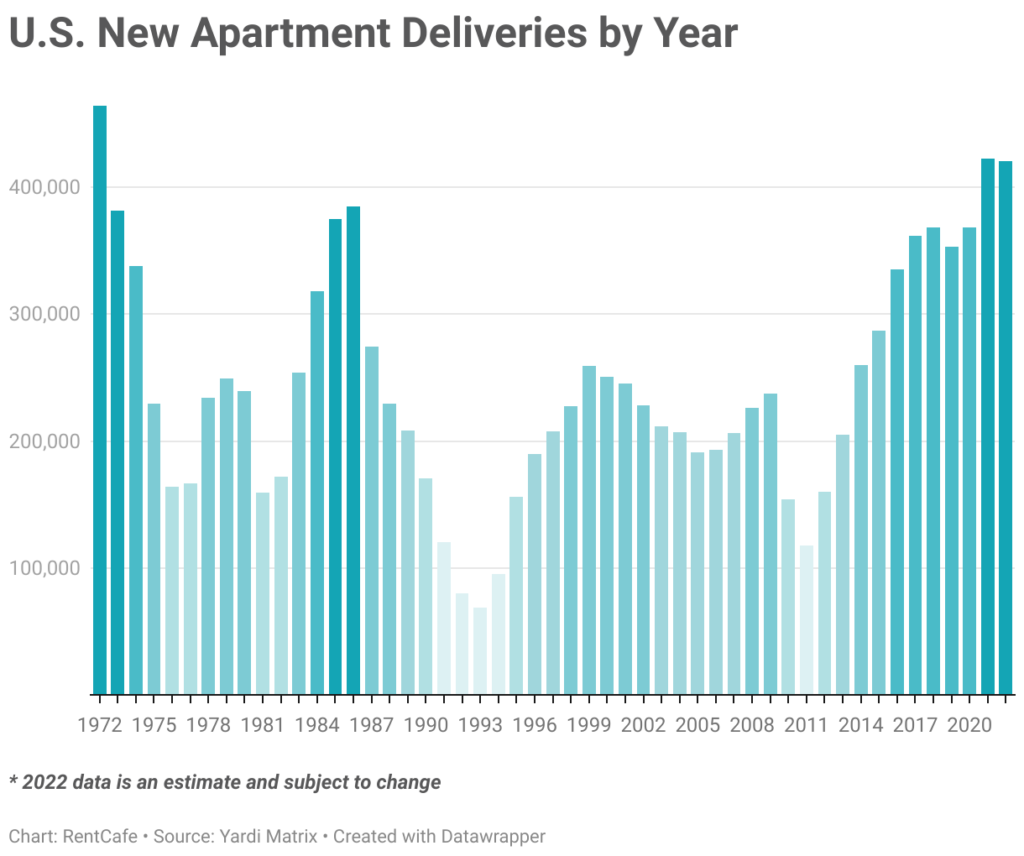
An estimated 420,000 new apartment rental units are projected to be completed this year, pushing apartment construction to an historic 50-year peak, according to a report from RentCafé.

This construction boom is driven by pent-up demand for apartments nationwide.

“By and large, apartment developers have picked up the pace in both 2021 and 2022, almost unexpectedly exceeding even the most optimistic projections for the post-pandemic multifamily landscape,” the report says.

“The construction industry is finally returning to pre-pandemic levels of activity but is still being hampered by three familiar challenges: labor shortages; material costs and availability; and supply-chain issues,” said Doug Ressler, manager of business intelligence at Yardi Matrix.

One big reason why so many metros are set to break their records from the last five years: As Ressler explained, “People who lived with family or friends during the pandemic have formed independent households as employment and savings surged.”

Apartment Construction Highlights:

  • This year, 420,000 new apartments are expected nationwide. Multifamily construction in the last two years is at a 50-year high: Apartment completions last surpassed the 400,000 unit mark set in 1972.
  • New York is poised to surpass the Dallas-Fort Worth metro area in apartment construction, claiming the top spot for the first time since 2018.
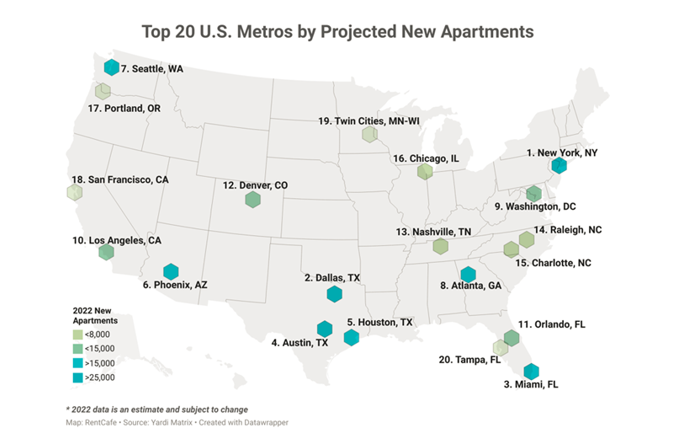
  • Half of the top 20 metro areas are estimated to hit their five-year peaks in apartment deliveries this year, including newcomers Nashville, TN, and Portland, OR.
  • The Miami metro, the nation’s most competitive rental market, made an impressive climb back to the top, surpassing super builders like Houston and Austin, TX.
About 420,000 new apartment rental units are projected to be completed this year, pushing apartment construction to an historic 50-year peak
Charts courtesy of RentCafe

Seattle Ranks No. 3 In Apartment Construction

While New York and Miami top the list of new apartment units under construction, the number of Seattle apartments increased by 3,232 between January and June this year to reach the third spot on the list. Portland also ranks high and comes in at No. 17 with Phoenix at No. 6.

However, supply is struggling to keep up with demand — Seattle, like other major coastal cities, has been facing an extreme lack of housing for several years now. And, this pace of construction isn’t likely to slow down anytime soon: Seattle’s population is projected to hit 1 million by 2044 and city officials are already working on updating the One Seattle Plan that also tackles new strategies to add more housing.

The rest of the top 20 cities with most new apartments completed in the first half of the year were: Washington, DCPhoenixLos AngelesQueens, NYCharlotte, NCChicagoManhattan, NYAlexandria, VAPortland, ORNashville, TN; San Diego, CA; and Atlanta.

About the study:

RentCafe.com is a nationwide apartment search website that enables renters to easily find apartments and houses for rent throughout the U.S.

To compile this report, RentCafe’s research team analyzed new apartment construction data across 125 U.S. metropolitan statistical areas. The study is exclusively based on apartment data related to buildings containing 50 or more units. Metros with less than 300 units or less than two properties/buildings were not included.

Rate Of Rent Growth Slows At Midyear But Multifamily Still Poised For Strong Year

With Traditional Multifamily Rent Drivers Disrupted What Is The Future?

Another Bullish Year For Multifamily In 2022?

Sign Up For Our Weekly Newsletter And Get Rental Property And Apartment News And Helpful, Useful Content Each Week.

* indicates required

How Can I Give Notice of Entry to Non-Responding Tenant?

How should a landlord give a notice of entry to inspect the rental property when the tenant will not respond to the notice is the question this week

How should a landlord give a notice of entry to inspect the rental property when the tenant will not respond to the notice is the question this week for Ask Landlord Hank. Remember Hank is not an attorney and is not offering legal advice. If you have a question for him please fill out his form below.

Dear Landlord Hank:

What is the proper way to give notice to inspect property about smoking smells that neighbors have complained about?

I have emailed and texted the tenant giving 24 hours’ notice for inspection after receiving complaints, but the tenant refuses to receive email and text. She wants postal mail notice, but that takes time.

What is the best way?

-Soo Choi

Dear Landlady Soo Choi,

Most leases have a clause for RIGHT OF ENTRY, saying that you, the landlord, upon reasonable notice by telephone, hand-delivery or posting to the tenant, have the right of entry for repairs, inspections or any other reason.

Your tenant doesn’t get to choose the notice she will look at or read.

Since she is being difficult, I would post a notice on her door that you will be inspecting the next day (after 24 hours have passed) and take a photo of the notice on her door, for your records – and keep a copy, too.

Sincerely,

Hank Rossi

Each week I answer questions from landlords and property managers across the country in my “Dear Landlord Hank” blog in the digital magazine Rental Housing Journal.    https://rentalhousingjournal.com/asklandlordhank/

With a non-responding tenant how should a landlord give a notice of entry to inspect the rental property when the tenant will not respond to the notice is the question this week
Landlord Hank says, “Take a photo of the notice on her door, for your records – and keep a copy, too.”

Ask Landlord Hank Your Question

Ask veteran landlord and property manager Hank Rossi your questions from tenant screening to leases to pets and more! He provides answers each week to landlords.

  • This field is for validation purposes and should be left unchanged.

Should I Give Separate Leases to Roommate Tenants?

A Tenant Poured Grease Down Drain Who Is Responsible?

Sign Up For Our Newsletter And Get Rental Housing And Apartment News And Helpful, Useful Content Each Week.

* indicates required