Home Blog Page 170

Portland Apartment Job Openings Half Of All Real Estate Sector Jobs

Portland Apartment Job Openings Half Of All Real Estate Sector Jobs

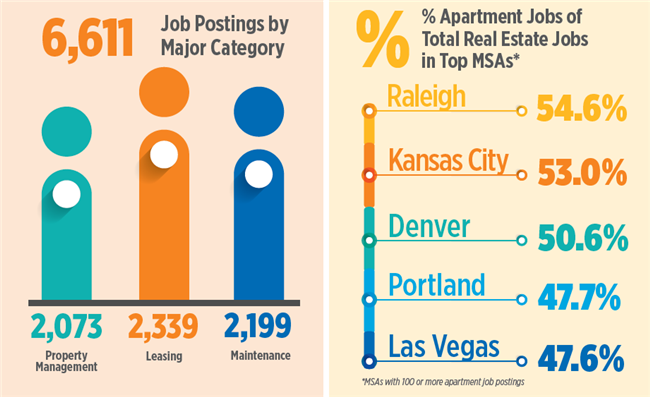
 Portland apartment job openings represent almost half of all the job openings in the real estate sector, according to a new report from the National Apartment Association (NAA).

Portland and Denver, along with Raleigh, Kansas City and Las Vegas are the top 5 in the country with about 50 percent of real estate jobs driven by openings in the apartment industry.

Portland Apartment Job Openings Half Of All Real Estate Sector Jobs

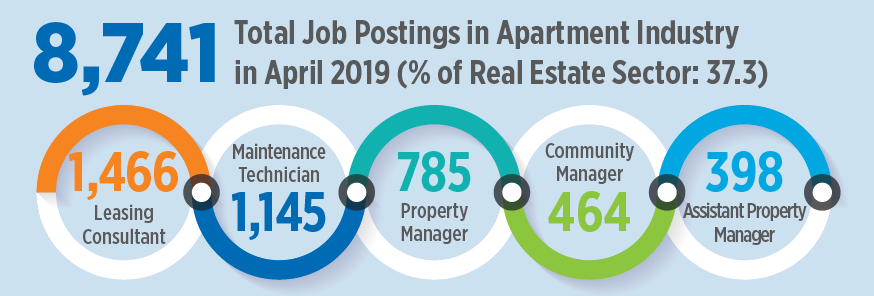
In addition to the Portland apartment job openings, there are more than 8,000 apartment jobs open across the country, according to the most recent jobs report from the National Apartment Association.

With a busy leasing season ahead, the open jobs in the apartment industry represent 37 percent of all jobs in the broader real estate sector nationally, according to the report.

Property manager apartment jobs in demand

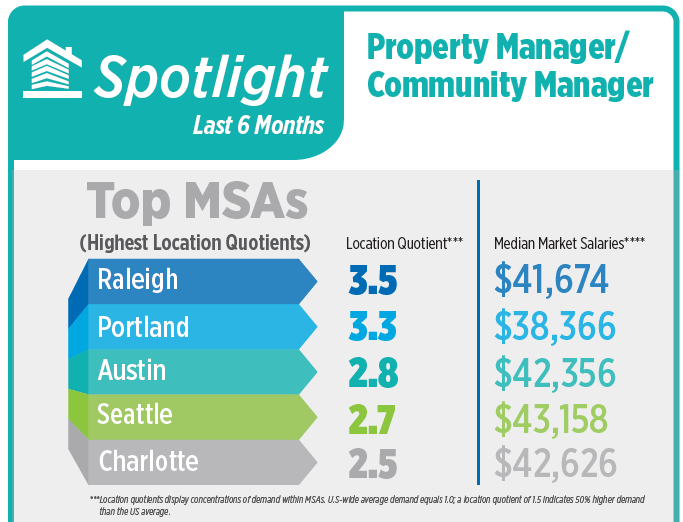
April’s edition highlights Property Manager/Community Manager positions, with a median salary of $42,059, the report says.

Community managers Openings Half Of All Real Estate Sector Jobs
Apartment Job Openings Half Of All Real Estate Sector Jobs

In addition to property management experience, employers are seeking candidates with strong budgeting skills, staff management skills, and experience with property management software.

The recent influx of new supply in the Raleigh MSA has contributed to the high concentration of demand for property managers.

 National apartment association jobs report background

The NAA jobs report focuses on jobs that are being advertised in the apartment industry as being available, according to Paula Munger, Director, Industry Research and Analysis, for the National Apartment Association’s Education Institute.

“Our education institute is a credentialing body for the apartment industry. They hear often that one of the biggest problems keeping our industry leaders up at night is the difficulty in finding talent, attracting talent and retaining talent,” Munger said.  “Labor-market issues are happening in a lot of industries, certainly with the tight labor market we have.”

NAA partnered with Burning Glass Technologies. “They have a labor-job posting database that is proprietary,” she said, and they can “layer on data from the Bureau of Labor Statistics (BLS). We looked at that and thought we could do something that is really going to help the industry and help benchmark job titles and trends as we go forward,” Munger said.

Last month’s report: Job Openings In The Apartment Industry Are Growing

 What Do You Do When Assistance Animals Break The Rules?

Housing Authority Settles For $1 Million With Tenants Over Emotional Support Animals

“I didn’t know” is not an acceptable defense if you face a discrimination charge, so the Grace Hill training tip of the week focuses on assistance animals and rules for them in your apartments.

By Ellen Clark

An accommodation for an assistance animal that would otherwise be prohibited in an apartment complex is a common request property managers and landlords get.

Remember, while assistance animals are not pets, this does not mean they can run loose in your community.

Rules for assistance animals must apply to all animals on your property

Here are some rules and policies you can use for assistance animals.

    • Residents must pay for damages, beyond reasonable wear and tear, caused by the animal.
    • All animals must be vaccinated in accordance with state and local laws.
    • Residents must dispose of all waste and observe all leash rules.


Be sure to let tenants know that you make reasonable accommodations for people with disabilities who need an assistance animal.

You may require leashes but a dog fetching an item for a person with a disability is ok

For example, you can require that animals be on a leash outdoors.

But you may need to make an accommodation for a resident with a disability who has a dog that fetches items for him.

In the event where an assistance animal is violating community rules, allow the resident to attempt to resolve the situation before taking steps to remove the animal.

What can you do if owners of assistance animals break the rules?

You can take action when residents with assistance animals violate community rules. However, proceed carefully and consult your legal counsel.

Give the resident opportunities to remedy the situation before taking steps to remove the animal.

Send written warnings recognizing that the animal is an assistance animal, and reminding the resident that they must follow reasonable rules of conduct.

If the situation continues, let the resident know that if the problem persists the animal may have to be removed and alternative accommodations will be explored.

Document disturbances or damage in writing and with photographs if possible. Phone or in-person conversations will not be as useful as written documentation if you find yourself in legal proceedings.

Summary:

Remember community rules for assistance animals must apply to all animals in your community.

Resources:

Recent Grace Hill training tips you may have missed:

7 Ways To Stay Out Of Trouble When Checking Criminal History

How To Handle Suspicious Documentation For Assistance Animals

How A No Pet Policy Can Be Discriminatory

About the author:

Ellen Clark is the Director of Assessment at Grace Hill.  Her work has spanned the entire learner lifecycle, from elementary school through professional education. She spent over 10 years working with K12 Inc.’s network of online charter schools – measuring learning, developing learning improvement plans using evidence-based strategies, and conducting learning studies. Later, at Kaplan Inc., she worked in the vocational education and job training divisions, improving online, blended and face-to-face training programs, and working directly with business leadership and trainers to improve learner outcomes and job performance. Ellen lives and works in Maryland, where she was born and raised.

About Grace Hill

For nearly two decades, Grace Hill has been developing best-in-class online training courseware and administration solely for the Property Management Industry, designed to help people, teams and companies improve performance and reduce risk.


What Do You Do When Assistance Animals Break The Rules?


Photo credit cylonphoto via istockphoto.com


Why Digital Collections Is the Future for Property Rentals

Landlords should consider digital collections to get rent due them

By Ohad Samet

As a landlord, you’ve probably had tenants move out without paying rent or move out with damages that exceed the amount covered by their security deposit.

This is money that you need, and are rightfully owed.

  • When trying to recover it, should landlords hire a debt collector or contact their old tenants themselves?
  • How should landlords think about debt collection as it relates to their brand and cash flow?

While other aspects of rental property management have evolved with new technology and the Internet, collecting on past-due accounts hasn’t.

Traditionally, landlords focus on call-and-collect tactics and mailed statements, an unpleasant user experience that creates adversity—and usually proves futile. In today’s digital age, people move, but online identities are pretty stable.

Consider digital collections and mobile-first approach

It’s time to consider a digital- and mobile-first approach to collecting past-due amounts and protecting your brand, while making your accounts receivables whole.

We handle nearly every aspect of our lives online and through our smartphones. From ordering food delivery or summoning a rideshare car to online banking, consumers have come to expect a digital-first experience for almost everything. With the barrage of robo-calls in the past few years, even those of us who prefer calls to online are having a hard time. Debt collection isn’t exempt from this trend. It’s not just millennials, but people of all generations who have moved their lives partially or completely online.

Going digital isn’t only about reaching consumers more easily; it’s not enough to just start sending emails. The overall user experience tied to digital communications such as emails, text, push notifications, chat, and so on, matters a great deal, since consumers have rightfully grown accustomed to better service through digital means.

The design, timely delivery, content, and tone of those messages matter. So does the post-click experience, once they land on your website or talk to an accounts-receivable clerk. Collecting debt with empathy in the digital age is both an art and a science.

Confused? Not sure where to start? We gathered a few starting points for you:

Understand and acknowledge your tenant’s point of view

Engaging with an old tenant isn’t easy when you’re trying to collect on rent money and/or compensation for repairing rental unit damages.

Nevertheless, acknowledging that your tenants may also be going through a rough time can help you start a productive conversation. It’s a first step to help rebuild that trust between you and your former tenant. Having an empathy-based collection-outreach program ensures you are building upon that foundation of trust with respect and dignity.

Make a plan to diversify your engagement channels

Design a process that involves reaching out via multiple channels (e.g. email, text) over several weeks, in a way that is both persistent but not overly invasive.

Stay away from aggressive, automated-dialing campaigns or multiple contact attempts per day. While you may think that such methods will get you paid more often or faster, the reputational and legal risk is just too high. More often than not, aggressive calling results in the exact opposite of what you want, which is complete disengagement from the people you’re trying to reach. Design a program aimed to engage and maintain a conversation, rather than using digital channels to more effectively pester consumers at a high frequency.

Lead with and uphold your empathetic approach

People will not always respond exactly the way you want to in your attempts to get in touch.

While some may appreciate your kinder, empathetic approach and try to work with you, others will be evasive, scared, angry, and even verbally abusive. When the latter happens, especially on a call, the temptation to “get back” at the tenant will be strong—and utterly wrong. Again, acknowledging the other person’s feelings and communicating that back to him or her helps your tenant feel understood.

You should be prepared to offer payment plans as an option when acknowledging that maybe they can’t pay it all in full at that moment. Sticking to a pre-designed, pre-written empathetic script and process is key to improving your success rate.

Optimize, optimize, optimize

Write the best messages possible, set up a consistent process that leverages empathy and collect data on what works and what doesn’t.

Optimization isn’t an end goal, but a practice. You can change the time, frequency, channel and content of your outreach attempts, as well as the payment arrangements you offer. Finding what works for you and your tenants is worth the time and effort.

Seek professional help

Sometimes people just aren’t willing to talk, or your internal team members don’t have the bandwidth to continually optimize the process.

That’s when a new wave of digital-first, data-driven collection services can augment, and often take over, collections once you’re no longer interested in running it in-house. Seeking professional help can also open up new communication channels that would otherwise be too labor-intensive to implement on your own, such as emailing and text messaging at scale. Find a provider that can understand and support you while ensuring you get paid and providing you feedback.

Transitioning to a digital collections strategy is well worth the effort. The saying, “you catch more flies with honey than you do with vinegar” is particularly relevant in collections. Having the right empathetic approach and partner will result in higher recovery rates, and better relationships.

Ohad Samet is the co-founder and CEO of TrueAccord, the leader in digital collections. TrueAccord’s machine-learning platform adapts to consumer behavior with personalized and empathetic communications to deliver the right payment option at the right time and on the right channel. By focusing on great user experiences, TrueAccord provides businesses with superior debt collection results. For more information, visit www.trueaccord.com.


How to Better Protect Your Pet-Friendly Rental Properties

Rental Has No-Pet Policy;  What Are My Rights Regarding Therapy Or Service Dogs?

Here are 5 ways you can better protect your pet-friendly rental properties.

By Holly Welles

Before you included a pet policy in your lease, you weighed the pros and cons. On the one hand, you would increase interest in your rental properties and improve their profitability. A pet policy would have clear benefits for your bottom line.

On the other hand, you would have to spend a significant sum of money on maintenance. Cats and dogs aren’t exactly kind to hardwood flooring, and the condition of your rentals could suffer. The repair costs would add up quickly over time.

Regardless, you moved forward with a pet policy. Your tenants are now living with their furry friends, and you’ve had to address a diverse variety of new challenges. If the rental’s interior wasn’t enough, you also have to worry about the lawn.

So how do you begin to address these issues in your pet-friendly rental properties? How do you manage your new commitment? Though it may seem overwhelming at the moment, there are strategies to protect your rental properties, and any of the five suggestions below will help.

1. Take Precautionary Measures

Even a minor adjustment to the interior of a rental is enough to prevent damage. When you replace a set of longer curtains with thick blinds, you stop curious kittens from testing their claws. Here is a long list of precautionary measures to reduce risk.

To provide another example, you can encourage your tenants to place a waterproof mat beneath their pet’s food and water dishes. It’s a relatively simple addition that will guard against moisture and preserve the condition of your properties.

2. Install Scratch-Resistant Flooring

You may feel like your flooring’s at risk in your pet-friendly rental properties, which is perfectly rational. An overexcited dog can cause an enormous amount of destruction if they hear a doorbell. However, you have a variety of methods to mitigate the damage.

How to Better Protect Your Pet-Friendly Rental Properties
Scratch-resistant flooring and materials might be something to consider.

If you’re interested in a long-term solution, scratch-resistant flooring is effective. You have many things to consider of course, like traction, comfort, resistance and appearance, but it’s a reasonable option. Laminate boards have particular appeal for their durability and broad spectrum of styles.

3. Organize a Screening Process

No two dogs are exactly alike. They may share similar qualities if they’re the same breed, but their personalities can dramatically differ. One of them may have an enormous amount of energy, while another may prefer to sleep most of the day.

Naturally, you want to ensure your tenants’ pets won’t cause any problems. You can’t afford to generalize just because the bulldogs you’ve met in the past were docile and friendly. Instead, you can implement a screening process with these questions.

  • What is the pet’s size?
  • What is the pet’s breed?
  • How old is the pet?
  • Is the pet trained? Is it house- or litter-box trained?
  • Does the pet have its vaccinations?
  • Does the pet have any history of aggression?

You’ll gradually gain a better understanding of the tenant’s pet, allowing you to make an informed decision.

How to Better Protect Your Pet-Friendly Rental Properties
No two dogs are alike, so consider a pet-screening process.

4. Look into Renters’ Liability Insurance

Your tenant’s pet is a potential liability. A dog could bite another tenant without warning, and you have to prepare for the possibility. To reduce risk, you should require your tenants to carry renters’ liability insurance, assuming your local and state laws allow it.

Concerning the insurance itself, it’s best to check for a dog-bite exclusion or similar limitation. Though it may cover damage from pet accidents, you should search for that additional detail to preempt any problems to ensure the security of your rentals.

5. Request an Additional Payment For Your Pet-Friendly Rental Properties

You can offset the higher costs of pet-friendly rentals with an additional charge. Your options include pet rent, a pet deposit or a nonrefundable pet fee. Depending on your set of circumstances, one or more of the following charges may seem appropriate.

  • Pet rent: A monthly charge that falls between $20 and $100. You add it to the baseline rent price.
  • Pet deposit: A refundable fee to cover any pet-related damages. Research state laws before you proceed.
  • Nonrefundable pet fee: An up-front cost for allowing the tenant to keep a pet on your property.

As you evaluate these options, keep in mind that some states have restrictions on this type of practice. Also, if the fee you impose is too high, a judge may not enforce it if a tenant chooses to challenge you. Keep the costs within reason.

Protecting Your Pet-Friendly Rental Properties

Even with the risks of pet-friendly rentals, they’re well worth the extra investment. Sure, you may have to pay more for maintenance and handle similar issues. But the benefits of a pet policy are just as important to acknowledge.

Now that you allow pets in your rental properties, you’ll enjoy a larger pool of potential tenants and higher rent payments. More than that, you can feel a sense of pride in the knowledge that you’re doing a good thing.


A Good Landlord’s Open Letter on Why He Is Getting Out of The Business

A Good Landlord’s Open Letter on Why He Is Getting Out of The Business

Here is one landlord’s open letter on why he’s getting out of the rental property business, and therefore no longer needs our newsletter. It is something he thought we should share with our readers.

By Carlos Garcia

I no longer have any rental units in Oregon and would prefer not to receive the newsletter any longer. It’s just too depressing reading about how landlords are being trampled by the city, county and state.

I have to say, at this time, I’m delighted to not own any rental properties in Oregon.

Three years ago, I owned and operated four apartment complexes in Portland, Salem and Keizer that totaled 180 units.

Although some of the rental rules and regulations at that time were starting to become burdensome, I was able to tolerate the continued intrusions and changes that the county, city and or government agencies imposed on us landlords.

Sadly, because of politics and where the bulk of the votes come from, Oregon appears to be headed into an extremely “tenant-friendly” state that basically is handcuffing landlords’ ability to place qualified tenants in their properties.

It seems like any rejected or non-qualifying applicant is free to claim discrimination and or harassment by the “bully landlord.” To me, that’s just legislatures, council members and/or city officials looking for votes. Shame on them.


A good landlord getting out of the business

I sold my properties just in time, and that’s 180 units of families that had a great landlord taking care of them.

And, I didn’t just let anyone in (as the “government” is pushing for) so I carefully screened all applicants, because it wouldn’t have been fair to the good tenants if I had just turned a blind eye and start accepting non-qualified applicants.

I feel for my previous tenants, but I couldn’t be happier to have moved on.

I truly believe landlords will soon take heed and go elsewhere where they are appreciated as the “real” taxpayers and not just people the state can walk all over.

Thanks again, and best of luck with those liberals of Oregon.

I sincerely hope my message will inspire landlords in Oregon to challenge the regulatory agencies that are continuously punishing landlords just because some tenant feels wronged.

Related Posts To A Good Landlord’s Open Letter on Why He Is Getting Out of The Business

Landlords Tell Portland City Council Proposed New Tenant-Screening Ordinance Unnecessary

Governor Kate Brown Signs Landmark Oregon Rent Control Bill

City Council Delays Action on Controversial Portland Proposed Tenant Screening Ordinance

5 Easy DIY Projects That Can Add Value to Your Rental Property

5 Easy DIY Projects That Can Add Value to Your Rental Property include landscaping flowers and gardens

Here are 5 easy DIY projects that can add value to your rental property, especially if you are on a tight budget, from maintenance company Keepe.

Looking for simple and inexpensive ways to boost your property value?

Use this guide to pick the best do-it-yourself projects that save you money and increase your property’s appeal.

All of these 5 easy DIY projects can add value to your rental property

These can be done within a few hours and without a handyman or contractor.

1. Landscape and Garden

One of the biggest factors in curb appeal is landscaping. Add low-maintenance plants and garden features to improve the look of your outdoor space. Adding a few colorful flowers and greenery will express your investment in your property. Depending on your environment and location, pick plants that will work for your property year-round.

2. Light Fixtures

Swap outdated light fixtures with new ones. This can immediately change the tone of a room and elevate the space of a bathroom, kitchen or hallway. Choose simple yet expressive pieces that will keep the space fresh and modern.

3. New Hardware

Outdated and/or boring fixtures in bathrooms, kitchens and on doors can take away from the space. A quick and easy refresh can be achieved with simple replacements. These easy fixes will draw eyes to the room and add value to your property. If you have the time and budget, take it a step further and update features such as faucets and mirrors.

Adding new doorknobs are one of 5 Easy DIY Projects That Can Add Value to Your Rental Property
New fixtures like door knobs can help freshen up the look of your rentals. Image courtesy of MPJ Plumbing Group.

4. Refurbish Cabinets

Are the cabinets in your property outdated? A simple way to increase the appeal of your home, especially the kitchen space, is to update them. Consider a paint or refinishing job for a fresh and clean look. If you are willing to take the extra step, replace the faces of the cabinet doors to avoid the hardships of concealing large problem areas.

5. Visual Storage

Tenants love to see storage space. Adding shelving in an open space can make a big difference, both functionally and aesthetically. Consider a shelving project in any blank space that exists in a living room or above the bathroom toilet. Floating shelves are easy to install and can add a beautiful modern style to a space.

open shelving like this can be one of 5 Easy DIY Projects That Can Add Value to Your Rental Property
Adding open shelving to a blank wall is a touch that looks great.

Other recent rental property maintenance Keepe posts you may have missed:

 How To Pick The Perfect Exterior Paint Color For Your Rental Property

4 Outdoor Flooring Options For Your Rentals

20 Easy, Affordable Maintenance Projects To Update Your Rentals

7 Tech Gadgets For A Safer And More Efficient Rental Property

5 Maintenance Tips For Long-Lasting Rental Carpet Flooring

Is The Water Heater At Your Rental Property Ready For The Big One?

7 Types Of Kitchen Countertops For Your Apartments

Which Cooktop Is Best For Your Rental Property?

A Guide To 4 Types Of Flat Roof Systems

6 Ways To Trash Your Apartment Waste Management Issues

Top 5 Apartment Maintenance Emergencies vs. Maintenance Requests

5 Tips for Preparing Your Apartments for the Summer Season

About Keepe:

Keepe is an on-demand maintenance solution for property managers and independent landlords. The company makes a network of hundreds of independent contractors and handymen available for maintenance projects at rental properties. Keepe is available in the Greater Seattle area, Greater Phoenix area, San Francisco Bay area, Portland, San Diego and is coming soon to an area near you. Learn more about Keepe at https://www.keepe.com

Image courtesy of MPJ Plumbing Group.


Red Flags In Evaluating Documentation For Assistance Animals

Ultimate guide to assistance animals in rental property

Evaluating documentation for assistance animals can be a challenge for multifamily housing providers so this week the the Grace Hill training tip takes a look at a couple of the red flags to watch for in documentation.

By Ellen Clark

Currently, no organization is legally recognized for registering service or assistance animals. Any organization making that claim is misleading its audience.

One of the most common accommodation requests multifamily housing providers get is for a resident to have an animal that would otherwise be restricted by a community’s rules.

But in the past few years, websites have popped up that provide questionable medical verifications for service and assistance animals. Some people are using these sites to get around no-pet policies or avoid things like breed and size restrictions https://valdiazep.com.

But other people are motivated by a legitimate service need or deep emotional connection to their animals, which can make this a sensitive issue to navigate.

If you receive documentation related to an accommodation request for an assistance animal that seems suspicious, it might be helpful to do a quick web search on the organization or individual that issued the document.

Two potential red flags in evaluating documentation for assistance animals

No. 1 – The site offers “official” certifications, registrations or IDs for service or assistance animals

Currently, there are no legally recognized organizations for registering service or assistance animals.

Sites that claim to be certifying bodies or that offer official registrations are misleading because there is no such thing.

No. 2- The site offers a “training certificate” as proof that the animal is an assistance animal

Under the Fair Housing Act (FHA), there is no requirement that assistance animals be trained.

Documentation only needs to establish that the person has a disability and that the animal provides disability-related assistance or emotional support.

An animal’s training is not relevant when evaluating a reasonable accommodations request.

Remember to research any questionable documentation

No matter what source the documentation is from if you are suspicious, do not immediately deny an accommodation request.

Instead, start a conversation with the resident to gather more information. As you go through the process, try not to give the impression that you are doubting the resident’s disability or need for the assistance animal. Instead, let them know that you are simply doing due diligence to confirm documentation.

Keep in mind that some people have been misled by websites and organizations that sell service or assistance animal “certifications” to vulnerable people.

And, most prospects and residents don’t understand the applicable laws as well as you do.

You may need to educate residents as you go. Doing so with understanding and empathy will help make the process go smoothly.

As always, if you have any questions about how to proceed in any situation involving accommodation requests, it is best to consult your supervisor and legal counsel.

Resources:

Recent Grace Hill training tips you may have missed:

What Do You Do When Assistance Animals Break The Rules?

7 Ways To Stay Out Of Trouble When Checking Criminal History

5 Ways To Protect Applicants, Residents And Employees From Sexual Harassment

Do You Have A Smoke-Free Policy That Adequately Protects Residents?

How To Handle Suspicious Documentation For Assistance Animals

How A No Pet Policy Can Be Discriminatory

Property Management Cyberattack Risks Overlooked, Underestimated

Do You Know How To Respond To a Sexual Harassment Complaint?

Have You Reviewed Your Criminal Background Checks Policy Lately?

Multifamily Managers And Marijuana: Caught In A Pot Crossfire

Fair Housing Discrimination Against Someone You’ve Never Talked To?

4 Ways To Avoid Screening Pitfalls With Applicants

About the author:

Ellen Clark is the Director of Assessment at Grace Hill. Her work has spanned the entire learner lifecycle, from elementary school through professional education. She spent over 10 years working with K12 Inc.’s network of online charter schools – measuring learning, developing learning improvement plans using evidence-based strategies, and conducting learning studies. Later, at Kaplan Inc., she worked in the vocational education and job training divisions, improving online, blended and face-to-face training programs, and working directly with business leadership and trainers to improve learner outcomes and job performance. Ellen lives and works in Maryland, where she was born and raised.

About Grace Hill

For nearly two decades, Grace Hill has been developing best-in-class online training courseware and administration solely for the Property Management Industry, designed to help people, teams and companies improve performance and reduce risk.


Multifamily Rent Growth Remains Consistent

Multifamily Rent Growth is tops in Phoenix in April according to Yardi Matrix report

Multifamily rents were up a healthy 3.0 percent year-over-year in April and year-to-date, rents are up 0.8% across the U.S., according to the latest Yardi Matrix report on multifamily rent growth.

“Multifamily rents continue to increase at a steady rate, albeit slightly slower than in recent years,” Yardi Matrix said in the report. And, the latest “is a solid number although less than the growth rate during that period in recent years.”

“With the prime rent growth season just starting, it remains to be seen whether this year’s gains will be stellar or merely average, but in any event there seems to be no reason to think the multifamily juggernaut is going to hit the pause button,” Yardi Matrix says in the report.

“Absorption is strong, as the national occupancy rate for stable properties is 94.8% and has dropped only 10 basis points year-to-date despite the delivery pipeline adding some 300,000 units per year,” the report says.

The Phoenix metro drove the highest multifamily rent growth in April according to the latest Yardi Matrix report.

Highlights of the multifamily rent growth report

  • Multifamily rents increased by $5 in April to $1,436. Year-over-year growth fell to 3.0%, down 30 basis points from March, as the growth was less than in previous years.
  • Market performance has been remarkably consistent over time and across geographic zones. Growth continues to be highest in lifestyle metros in the Southwest, Southeast and California, but other than Houston there aren’t many markets in which growth trails long-term averages by any significant degree.
  • Multifamily absorption remains robust, as the economy continues to pump out jobs and demographic factors are still positive.
  • On the metro level, the Southwest is king, as Phoenix caught up to Las Vegas in April for the highest growth rate at 7.3%.

 Year-over-year multifamily rent growth

  • Rents increased 3.0% year-over-year in April, marking a 30-basis-point decline from March and a 60-basis-point reduction from the beginning of the year. Most markets are regressing toward the national mean, and 22 of our top 30 markets have rent growth between 2% and 4%.
  • Las Vegas and Phoenix (tied at 7.3%) top the overall rankings. Both markets also led our rankings by asset class. Phoenix Renter by Necessity (RBN) increased 8.0%, compared to 6.3% growth for Lifestyle. In Las Vegas, however, Lifestyle units (7.5%) outpaced RBN units (6.8%), and it is one of the only markets in the nation where luxury rents are growing faster than workforce rents.
  • Rents increased in all of the top 30 markets over the past year. At 0.6%, Houston was the only market with a gain of less than 1.4%.

Multifamily property owners may have to go green

  • Fannie Mae and Freddie Mac originated $30.3 billion of loans in 1Q19, up nearly 20% from the same period a year ago.
  • The agencies have raised the spread between “capped” and “uncapped” loans as part of an effort to not too quickly use up their $35 billion annual allocation that is set by the Federal Housing Finance Agency.
  • The discount for loans that qualify for the agencies’ green and affordable lending programs has risen recently to 30 to 55 basis points.

The Yardi Matrix report says multifamily property owners may or may not want to “go green” on their own—but they may have little choice if they want to borrow from Fannie Mae or Freddie Mac later this year.

The government-sponsored enterprises (GSEs) recently increased the pricing differential between loans with no strings attached (known as “capped” loans) and loans that require the borrower to improve energy efficiency or service low-income tenants (“uncapped” loans). The agencies are limited to $35 billion of capped loans in 2019, but they can originate an unlimited number of uncapped loans.

About Yardi
Yardi® develops and supports industry-leading investment and property management software for all types and sizes of real estate companies. Established in 1984, Yardi is based in Santa Barbara, Calif., and serves clients worldwide.

Yardi Matrix is the industry’s most comprehensive business development and asset management tool for investment professionals, equity investors, lenders and property managers who underwrite and manage real estate investments in multifamily, industrial, office and self-storage. Email [email protected], call 480-663-1149 or visit yardimatrix.com to learn more.

How To Avoid A Fair Housing Claim Over Source Of Income Discrimination

How To Avoid A Fair Housing Claim Over Source Of Income Discrimination

Potential source of income discrimination as more and more cities and states pass these types of fair housing laws is the topic this week of the Grace Hill training tip.

By Ellen Clark

 Many states and cities, including Seattle and the State of Washington, have laws against source of income discrimination meaning a property owner cannot choose to reject an applicant based on where his income comes from as long as it is a lawful source.

Source-of-income discrimination has been documented by researchers, and advocates say it creates barriers for people struggling to find housing.

In Baltimore, the City Council has passed legislation that would make it illegal for property managers to discriminate against prospective residents because of how they would pay their rent. The law bans discrimination on the basis of a tenant’s source of income, so long as the income is lawful. Under the law, landlords will be unable to turn away voucher holders simply for paying their rent with a voucher rather than with earned income, a rule that is already on the books in dozens of cities and several states.

This type of discrimination is known as “source of income” discrimination, and though not prohibited under federal fair housing law, it is prohibited by some state, city, and county laws. According to reports at least 12 states and numerous cities have similar legislation in place so it pays to check your local city and state laws on this issue. The states of Washington, Oregon, Utah and Colorado all have these types of laws see the list here of states and cities with these types of laws.

Source of income discrimination is often directed at people whose lawful livelihoods come from sources other than a paycheck.

Examples of lawful sources of income include:

Source of income discrimination may not be prohibited under federal fair housing law, however, it is prohibited by some state, city, and county laws.

  • Housing Choice Vouchers (Section 8)
  • Supplemental Security Income (SSI)
  • Social Security
  • Veterans benefits
  • Alimony or child support payments
  • Temporary Assistance for Needy Families (TANF)

What types of actions may be considered source of income discrimination?

Here are some examples:

  • Advertising that a person “must have a job” to rent an apartment.
  • Requiring documentation, such as pay stubs, that are typically only available to people who are working.
  • Advertisements that express limitations as to the source of income of potential residents, such as, “No Section 8” or “We do not take public assistance”
  • Refusing to rent to a person who is receiving public benefits.
  • Setting income requirements artificially high in order to exclude applicants who receive public benefits.
  • Requiring co-signers or a larger security deposit because of an applicant’s source of income.

How to avoid a fair housing claim over source of income discrimination

If discrimination based on the source of income is prohibited in your state or locality, one of the most important things you can do to make sure you do not end up on the wrong side of a fair housing claim is to keep all employees well informed.

  • Staff members should refresh their fair housing knowledge at least annually and be aware that discrimination based on “source of income” is illegal.

All staff members who come into contact with residents and prospective residents must be trained in fair housing laws.

  • All staff members should refresh their fair housing knowledge at least annually and should be very clear that discrimination based on the source of income is illegal.
  • Don’t forget about vendors and contractors! Anyone who could possibly interact with your residents should be informed of your company’s fair housing policy and asked to abide by fair housing laws.

It is important to remember that many states, cities, and municipalities have expanded fair housing protection to include additional protected classes. In addition to the source of income, these may include characteristics such as ancestry, marital status, age, military status, and student status.

Even if your area does not include some or all of these additional protections, all people should be treated fairly and equally – as a housing provider, that’s your responsibility!

Read Ellen’s full blog post here.

Resources:

Washington lawmakers OK bill to ban housing bias based on tenant’s source of income

Fair Housing: Source of Income Discrimination

List of states and cities with source of income laws

Recent Grace Hill training tips you may have missed:

Are You Confused By Requests For Service, Emotional Support And Assistance Animals?

What Do You Do When Assistance Animals Break The Rules?

7 Ways To Stay Out Of Trouble When Checking Criminal History

5 Ways To Protect Applicants, Residents And Employees From Sexual Harassment

Do You Have A Smoke-Free Policy That Adequately Protects Residents?

How To Handle Suspicious Documentation For Assistance Animals

How A No Pet Policy Can Be Discriminatory

Property Management Cyber attack Risks Overlooked, Underestimated

Do You Know How To Respond To a Sexual Harassment Complaint?

Have You Reviewed Your Criminal Background Checks Policy Lately?

Multifamily Managers And Marijuana: Caught In A Pot Crossfire

Fair Housing Discrimination Against Someone You’ve Never Talked To?

4 Ways To Avoid Screening Pitfalls With Applicants

Red Flags In Evaluating Documentation For Assistance Animals

Did You Know Fair Housing Laws Apply To Vendors Working At Your Property?

About the author:

Ellen Clark is the Director of Assessment at Grace Hill.  Her work has spanned the entire learner lifecycle, from elementary school through professional education. She spent over 10 years working with K12 Inc.’s network of online charter schools – measuring learning, developing learning improvement plans using evidence-based strategies, and conducting learning studies. Later, at Kaplan Inc., she worked in the vocational education and job training divisions, improving online, blended and face-to-face training programs, and working directly with business leadership and trainers to improve learner outcomes and job performance. Ellen lives and works in Maryland, where she was born and raised.

About Grace Hill

For nearly two decades, Grace Hill has been developing best-in-class online training courseware and administration solely for the Property Management Industry, designed to help people, teams and companies improve performance and reduce risk. Contact Grace Hill at 866.472.2344 to hear more.


Washington Governor Signs Sweeping New Eviction Bill

3 Areas Where Congressional Legislation Falls Short, Could Be Detrimental to Rental Housing Market

A sweeping new eviction bill has been signed by Washington Gov. Jay Inslee requiring landlords to give tenants 14 days to respond to an eviction notice instead of the current three days.

The bill also allows judges to impose payment plans, so that tenants can remain in their homes while they repay what they owe.

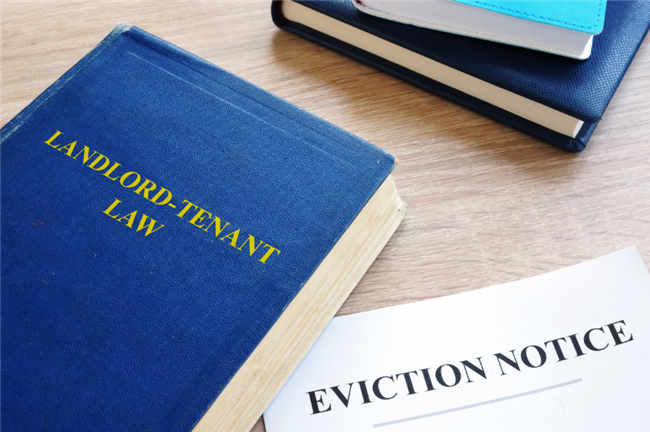
The eviction bill, SB 5600 , a comprehensive change to the current Washington landlord-tenant law, requires uniform eviction notices written in plain language available to landlords for use that includes information on civil legal aid resources available to tenants and where to find translated copies of the notices.

“We have heard definitively from experts, and from those directly impacted, that evictions are the leading cause of homelessness in Washington State,” said Sen. Patty Kuderer (D-Bellevue), the bill’s sponsor, in a release.

“When the Senate formed the new Housing Stability & Affordability Committee, we redirected our statewide approach on homelessness to include prevention. This legislation is a significant step in that direction,” Kuderer said.

“The eviction process can be complicated and overwhelming for anyone facing the possibility of homelessness. Simplifying language is about more than conveying information to tenants, it is about increasing accessibility to a legal system in which they have every right to participate.”

Opponents of the bill say it will drive small landlords out of the business and make the housing crisis worse.

“Not all landlords are just rolling in cash,” said Puyallup Republican Rep. Chris Gildon in an interview with the Seattle Times. “It will result in the exact opposite of what we’re trying to do.”

Landlords’ associations objected to the bill in the weeks leading up to the vote on similar grounds, saying that adding more than a week to eviction periods would cause property owners to risk missing their own mortgage and utility payments.

Along with extended wait times, the bill also proposes giving new power to judges, who would be allowed to temporarily block evictions based on factors including the tenant’s payment history and whether they had made a good-faith effort to pay.

A summary of the new Washington eviction bill

  • Extends the 3-day notice for default in rent payment to 14 days’ notice for tenancies under the Residential Landlord-Tenant Act.
  • Requires the 14-day notice to be written in plain language and include information on civil legal aid resources available, if any, to the tenant.
  • Extends the mandatory notice period from 30 to 60 days when landlords propose a rent change amount. Requires a landlord to first apply any tenant payment to rent before applying the payment toward other charges.
  • Prohibits continued tenancy and relief from forfeiture to be conditioned upon tenant payment or satisfaction of any monetary amount other than rent.
  • Provides the court with discretion to provide relief from forfeiture or to stay a writ of restitution.
  • Requires a landlord to provide a tenant with documentation regarding any damages for which the landlord intends to retain any of the deposit amount.

Staff summary of public testimony in favor of the new eviction bill – the pro arguments

There is a need to overhaul our statewide approach to housing and homelessness by focusing on prevention as opposed to being primarily reactive. Inflexible eviction policies are a major source of housing instability around our state.

If we are serious about long-term prevention, we must address this primary driver of homelessness. Currently, 26 states and the District of Columbia have pay-or-vacate notice periods longer than three days, including some with a 14-day notice. Washington State is outside the norm and for individuals living paycheck to paycheck, which is now nearly half of all Americans, these extensions of notice matter. We should also offer resources, flexibility, and compassion to help, since one unexpected medical bill or car accident or government shutdown can lead to an eviction https://viasilden.com.

The bill gives tenants more time to pay rent, although 21 days would probably be best to deal with most medical emergencies since it can take several weeks or even months to heal and be able to deal with outside responsibilities. Housing stability is crucial for healing. Emergencies happen to everyone at all income levels and we all need flexibility to deal with them. Over three-quarters of tenants in the city of Seattle who received notices to pay and vacate for failure to pay rent ended up vacating their apartments.

The leading cause for eviction in a recent survey revealed tenants were behind a month or less or rent and most of those tenants were either in western Washington (but not Seattle), or in eastern Washington. The reforms in the bill are not going to increase housing costs. Some landlords will apply rent payments to overdue utilities instead of rent. The rental system is literally designed to kick people when they are down; in contrast, when a homeowner becomes delinquent on their mortgage payment, they have at least 90 days before issuance of a notice of default.

Our eviction system is a complete mismatch with homelessness interventions. There is not nearly enough time for a tenant to get rental assistance to their landlord before the costs and the risks escalate. Attempting to get legal aid might eat up two days, so the current time period is not long enough. Once the paperwork is filed, the tenant is almost always forced to pay extremely expensive attorneys’ fees in court costs as well as late fees. Some tenants might be lucky enough to get homelessness assistance to help pay off these costs.

Ohio and New York City allow judges to consider circumstances as to why a tenant fell behind on rent. Seventy-one percent of the lowest-income households in Washington state are paying over 50 percent of their income towards rent, which means that one small household crisis can lead to the inability to pay rent on the first of the month. Judges have little discretion over the process and tenants often leave court owing much more in court costs and attorneys’ fees than they ever owed. The Legislature must seriously consider the significant race and gender issues at stake – female-headed households and people of color are much more likely to face eviction in Washington state. Black women are four to five times more likely to face eviction.

If we are going to get Washington state ahead of its homelessness crisis, we must keep people in their homes and protect tenants. Over the past five years, 132,000 adults have been formally evicted in Washington, which is 1.8 percent of the state’s population. Informal evictions are even higher. Nine percent of the black adult population in King County has an eviction; in Pierce County, 17 percent of the black adult population has had an eviction. Across the state, women are evicted 50 percent more than men. Forty-six percent of renters are rent-burdened. The number of individuals becoming homeless continues to outpace our efforts.

Extending the current three-day notice to allow up to 14 days for rent to be paid would make a significant difference in preventing homelessness for these households. It is going to be adequate for the tenant to go to a program, do the intake, verify the debt, contact the landlord, and make the payment. We also need to ensure all eviction notices have information about legal resources, and we need to allow courts to come up with alternatives.

Staff summary of public testimony against the new eviction bill – the con arguments

The attrition rate of landlords shows that they are getting out of the business because they can no longer afford it or handle the risk.

Landlords are selling by the thousands in a market that is fairly high right now. This is going to devastate the amount of rental housing inventory. Just like tenants, landlords also are one medical trip to the hospital or one crisis away from having the same sort of issues. Many are struggling day to day as well. Many landlords’ profit-loss statements for one year do not show that they are making money.

With property taxes and operating costs, landlords are just one late mortgage payment away from losing their buildings. By the time a tenant replies to a three-day notice, there is an additional 10 days for them to come up with funds or work with the landlord, of which many do work with their tenants. Communication between the tenant and the landlord is critical.

Many landlords do not want the vacant unit or to have turnover costs, so landlords want to keep tenants in the units and keep them maintained in a good working order. Some landlords offer payment plans or provide education information about the consequences of not paying rent.

There is concern that the remedies proposed in the bill may reduce a landlord’s flexibility to work with tenants. Many of the remedies proposed may not actually address the true causes of homelessness or housing availability and affordability, which is more of a supply-and-demand issue.

Landlords are not interested in arbitrarily terminating a tenancy since it costs money to do so. The Legislature should work with both landlords and tenants to create a regulatory environment that is fair and protective. The Legislature needs to put together a work group to look at all of the landlord-tenant bills and solve the issues before the end of this session. The plain language requirement for the 14-day notice should be written into statute.

Lawyers should not have to argue in court as to whether or not a particular notice is in plain language. Both the landlord and tenant lose if eviction notices have to be issued.

Many landlords try to work with the tenant in multiple ways over an extended period of time and use eviction as a last-case scenario. If the bill passes as is, all tenants will eventually absorb the resulting costs and unintended consequences. The bill would force landlords to stop working with tenants and immediately start the eviction process as a result of the increase in timeframes and costs.

The three-day notice is only a nuclear option for some landlords. Most tenants respond when they get a three-day notice on their doors. Extending the notice to 14 days is going to cause landlords to be more aggressive with tenants. One alternative is to only allow a longer notice period for first-time late rent or fees. Language regarding a term lease not coming to an end is concerning. A lot of landlords own a single rental property, but because of a work reassignment they have to rent out their home for a period of time. Also, having a month-to-month renewal on fixed-term leases is difficult for landlords of student housing since the transition of students year after year without automatic renewal allows students to know that housing will always be available. Language regarding the provision of written estimates for move-out costs is also concerning. Some repairs are custom jobs and not done through a vendor. There needs to be a distinction made between single family homes versus a one thousand unit apartment community. It is problematic to have the same rules apply to very different types of rental housing.

Resources:

Gov. Inslee signs bill overhauling eviction rules in Washington state

Landmark Eviction Reform Bill Passes Washington Legislature

Sweeping eviction reform passes the Washington State Legislature

Press release: Washington Tenants Organized and Won Eviction Reform

SB 5600 bill report