
Home Blog Page 147

Swimming Pool For Rental Property? 10 Things To Consider

Property managers and renters may view a swimming pool for your rental property as an appealing feature that can de help attract new tenants and keep current tenants happy. But pools also come with a maintenance price tag and that is the maintenance checkup from Keepe this week.

Building a swimming pool on-site may not always be a good option so there are some issues to consider.

Here are 10 things to consider before building a pool for your rental property.

1. A pool for your rental can be dangerous

Pools can represent a serious and potentially deadly danger for those who do not know how to swim, especially children. Making a pool available to residents will require implementing effective safety measures to eliminate the danger of accidental falls or easy access for unsupervised children.

2. Safety is necessary but expensive

A property owner and/or manager can be held liable for injuries caused by negligence. Implementing safety measures will be necessary, and those measures will come with a price tag. From building fencing and a locked-gate system to hiring a seasonal lifeguard, expenses should be expected.

3. Return on investment is not ideal

In most cases, building a pool for your rental property is an expensive project. While it can raise an estimated five percent to a property’s value, you are not likely to get that back when the property is sold. The market demands in a certain area will dictate the value of a property and of the addition of the pool, not the exact amount that was invested into building it.

4. Expect higher utilities

Operating the pool and additional elements – such as lighting around the pool or the filtering system – will require higher usages of water and electricity, which translates into a more expensive utilities bill. If you plan to heat the pool which is needed in some parts of the country, it costs even more.

5. Routine maintenance is a must

Regularly scheduled pool maintenance is a must to guarantee it is clean and safe. Outdoor pools are exposed to dirt, debris and even insects, which can all easily contaminate the water. A professional pool maintenance service should be contacted and hired to actively maintain the pool, especially during the warmer seasons.

10 Things To Consider Before Investing In A swimming Pool For Your Rental property
Consider come of the downsides to having a swimming pool as part of your rental property even though it may be appealing to tenants.

6. Careful with chemicals

Pool maintenance includes the use of chemicals to condition the water, keep Ph levels safe, and bacteria and algae out.  Improper maintenance of chemicals can cause tenants to get sick and/or experience reactions to the chemicals. Managing and adding chemicals to the pool should only be left to a qualified, trained professional.

7. Mosquitoes love pools too!

Some areas vulnerable to mosquito infestations can be even more vulnerable with a pool. Building a pool in those areas will require extensive and regular maintenance and treatments by a pest control specialist.

8. Trespassing and unwanted guests

Tenants won’t be the only ones wanting to enjoy their new pool. Sometimes, unwanted guests might begin accessing the property’s pool, which is not only a nuisance but also a safety concern. For this reason, building secure fencing or some kind of monitoring system might be needed.

9. Plan on routine updates

Over time, pools will need updating. Every five years or so, it is appropriate to check and update the pool with new materials, such as tiles, panels, lighting or draining systems. This kind of preventative maintenance will help avoiding unexpected, substantial damages and will keep the pool looking appealing.

10. Construction can annoy neighbors and residents

From a construction standpoint, building a pool requires extensive work. Tenants and neighbors will experience construction site noise and traffic. Generally, it’s always best to notify tenants and neighbors about the project ahead of time and offer support throughout the process.

Summary on building a pool for your rental property:

For most of us, outdoor pools are the synonym of fun, relaxation and good times in the sun. It can be easy to get excited about having access to a pool as part of one’s own amenities: both property managers and renters alike tend to view it as a unique asset to the property. Especially in warmer geographies, pools are generally quite an appealing feature that can definitely help with attracting new tenants and keeping current tenants happy.

About Keepe:

Keepe is an on-demand maintenance solution for property managers and independent landlords. The company makes hundreds of independent contractors and handymen available for maintenance projects at rental properties.

Sign Up For Our Newsletter And Get Rental Property And Apartment News And Helpful, Useful Content Each Week.

* indicates required


A Rental Property Pool Safety Guide

 

Portland, Multnomah County Sign Emergency Order Suspending Evictions

Portland, Multnomah County Sign Emergency Order Suspending Evictions

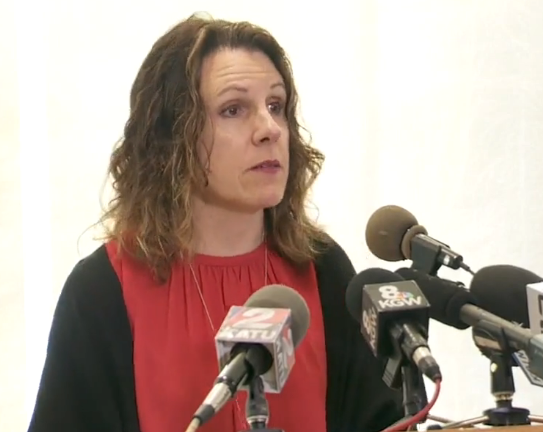
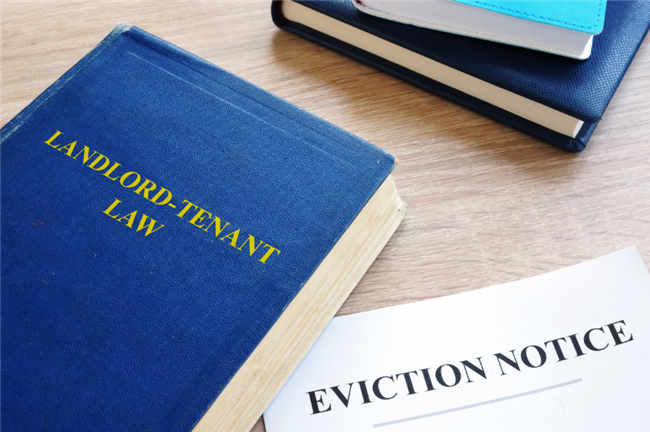
Portland Mayor Ted Wheeler and Multnomah County Chair Deborah Kafoury have signed emergency orders suspending evictions for tenants who cannot pay rent due to coronavirus-related challenges.

Residential tenants cannot be evicted for not paying rent during the entire time the county and city are under a state of emergency, the two officials announced in a press conference.

Both moratoriums on suspending evictions say that rent owed to a landlord will continue to accrue during the state of emergency. There will be a six-month repayment grace period, which will begin as soon as the state of emergency ends.

Kafoury said in a press conference she was ordering the eviction moratorium because, while many can self-quarantine, “When someone loses their home, self-quarantine and other measures become impossible” and that puts “them and our community at greater risk.”

“Yes, everyone should pay their rent on time. But for people who are losing their wages due to COVID-19 and find themselves unable to pay rent, we want you to be able to stay in your home.”

She said the county is partnering with the sheriff’s office and state courts to keep people housed during the emergency. “When this emergency ends, people will have six months to pay back what they owe,” Kafoury said.

Suspending evictions in Portland

Portland Mayor Ted Wheeler said he was appearing at the press conference representing the entire city council.

“Effective immediately, we, in alignment with the county, are implementing a moratorium on evictions in the city of Portland. Keep in mind rent to any landlord will continue to accrue. This is not a forgiveness of rent.”

Portland, Multnomah County Sign Emergency Order Suspending Evictions
Mayor Ted Wheeler, “We are implementing a moratorium on evictions in the city of Portland.”

Wheeler said there will be a repayment grace period of six months following the end of the emergency declaration.

Wheeler said he is also asking the state legislature to increase rent assistance “for all Oregonians.”

The crisis is having an impact on employers as well. He also said he has created a task force to work with large and small employers and their employees struggling with the impact of the COVID-19 virus.

He said the task force and Prosper Portland will work with commercial partners and ask for help from the private sector to deal with commercial eviction-prevention strategy.

Wheeler said community leaders as well as many landlords have already voluntarily stepped forward to help and let tenants know they can forgive or forgo payments.

Seattle Mayor Signs Emergency Order Placing Moratorium on Evictions

Sign Up For Our Newsletter And Get Apartment News And Helpful, Useful Content Each Week.

* indicates required


California Apartment Owners, Manager to Pay $14,500 to Settle HUD Sexual Harassment Complaint

California Apartment Owners, Manager to Pay $14,500 to Settle HUD Sexual Harassment Complaint

The owners and manager of a Bakersfield, California, apartment complex have agreed to pay $14,500 to several female residents to settle allegations of sexual harassment, according to a release from the U.S. Department of Housing and Urban Development (HUD).

Under the terms of the agreement, the owners will pay the women who filed the complaint $10,000 in six installments and attend mandatory fair-housing training. The owners will also pay $4,500 to two other aggrieved female residents.

In addition, Mario Prudencio, who was the property manager, will be permanently prohibited from directly or indirectly engaging in or conducting any property management responsibilities. Prudencio is no longer employed and does not serve as property manager of the subject property.

Two women filed the initial complaint and the agreement states that the owners and property manager subjected the women to differential treatment based on sex and subjected them to sexual harassment.

“Throughout the course of the investigation two additional female tenants… also alleged that Respondent Mario Prudencio subjected them to unwelcome sexual comments and unwelcome sexual advances,” the settlement states.

The Fair Housing Act makes it unlawful for housing providers to sexually harass tenants. This includes creating a severe or pervasive hostile housing environment, or conditioning housing or housing-related services on the tenant’s acquiescence to sexual demands, HUD said in the release.

“A home should be a place of peace and security, https://holisticdental.org/klonopin-for-anxiety/ not fear and anxiety because of sexual harassment,” said Anna María Farías, HUD’s Assistant Secretary for Fair Housing and Equal Opportunity, in the release.

The “settlement agreement sends a clear message to all property owners and landlords that HUD is committed to taking appropriate action when offenders engage in behavior that violates the Fair Housing Act,” she said.

In April 2018, HUD and the Justice Department launched a nationwide joint initiative aimed at combating sexual harassment in housing, enhancing public education about the issue, and encouraging those faced with sexual harassment to report their cases.

Read the agreement here

Property Manager Ordered By Court To Pay $160,000 In Sexual Harassment Settlement

Sign Up For Our Newsletter And Get Apartment News And Helpful, Useful Content Each Week.

* indicates required


Multifamily will Feel COVID-19 Effect, but Industry Strength Can Weather Modest Slowdown

multifamily coronavirus outlook Yardi Matrix

The multifamily industry may feel the impact of the domestic spread of COVID-19, however the majority of the industry remains well-capitalized and strong enough to weather a modest slowdown, says Yardi Matrix in its latest report.

“Owners and operators may face short-term rent-collection issues if there is a tightening in the employment market, and value-add projects will likely slow,” the report says. Landlords and property managers “may face rent-collection issues from tenants who have either fallen ill or lost their jobs, and some flexibility with (affected) tenants may be required.

“However, most real-estate investors are poised to sustain their operations, and may see an investment opportunity as the market shocks continue,” the report says.

Seattle and Western markets led the way in February

Rents increased 3.2 percent in February on a year-over-year basis, matching January’s growth rate, as demand for multifamily has yet to feel any major impact from the coronavirus outbreak.

  • Phoenix (7.6 percent) led all major markets, followed by Seattle (5.5 percent) and the Inland Empire (5.0 percent).
  • Seattle has maintained incredible demand for housing, as its tech economy continues to thrive. De­spite adding nearly 35,000 units in the past three years, Seattle has once again emerged as one of the fastest-growing rental markets in the country.
  • All primary markets, with the exception of Washington, D.C. (3.4 percent), fell below the national average for rent growth in February. While secondary markets in the West continue to grow strongly, San Francisco (1.7 percent) and Los Angeles (2.4 percent) are among the slowest-growing markets, as affordability issues and the emergence of rent control continue to curb growth.

Coronavirus likely to cause technical recession

The Yardi Matrix report says it “seems inevitable that the U.S. economy will experience a technical recession.”

The latest data available is still from February, where rents held strong, “but the coming weeks and months are likely to show employment cuts and a slowdown in trade,” the report says.

Multifamily coronavirus outlook

“We expect the impacts of coronavirus to last roughly three to six months. However, certain industries will be impacted more than others, and hard-hit sectors like leisure and hospitality and trade may take much longer to recover.

“Most economic data has yet to reflect the impacts from the coronavirus, but given the fundamental strength of the economy prior to the outbreak, most industries should be able to recover from the oncoming technical recession.

“Overall, however, the multifamily mar­ket and the real estate industry as a whole, are positioned favorably compared to other industries during this time of rising uncertainty,” Yardi Matrix said.

Multifamily coronavirus outlook

Winter Multifamily Outlook Shows No Letup in Demand

multifamily coronavirus outlook Yardi Matrix
Photo credit Powerofflowers via istockphoto.com

Sign Up For Our Newsletter And Get Apartment News And Helpful, Useful Content Each Week.

* indicates required


Seattle Mayor Signs Emergency Order Placing Moratorium on Evictions

Seattle Mayor Signs Emergency Order Placing Moratorium on Evictions

Seattle Mayor Jenny Durkin has signed an emergency order putting in place immediately a temporary moratorium for any residential eviction action related to the non-payment of rent, according to a release.

Tenants are required to continue paying their rent if they are able and should work with their landlords on payment plans if they are experiencing financial hardship.

“We have entered an unprecedented era for our city,” Durkin said in a release. “Too many families are already struggling, and COVID-19 virus has disproportionately affected the communities who can least afford it.

“As we take steps to slow the spread of the virus across Seattle’s communities, a part of that response is to ensure that families are not displaced and forced into homelessness. While the city will need significant state and federal resources to handle the long-term impacts of the crisis, we are charting the course for the rest of the country, and Seattle must set the example by reducing the financial hardship for workers impacted by this pandemic.”

Other cities and states are also exploring placing a moratorium on evictions.

Durkin also announced that the City of Seattle will provide $5 million in grocery vouchers to help families impacted by the COVID-19 pandemic. The new grocery voucher program will provide 6,250 families $800 in vouchers to purchase food, cleaning supplies, and other household goods at any Safeway store in Washington state.

Earlier, two major landlord groups in Washington proposed a 30-day halt to the enforcement of evictions because of the COVID-19 virus.

The Rental Housing Association of Washington (RHAWA) and the Washington Multi-Family Association (WMFHA) had called for the pause.

“We are actively working with the city of Seattle, King County, and the legislature to implement emergency rental-housing measures that will open the door for services and rent relief, with minimal administrative delay. In addition, we anticipate over one million dollars of state budget money will be appropriated by the end of the week to fund rental-support services at the Department of Commerce,” the RHAWA said in its statement.

“King County is experiencing the highest rate of COVID-19 illness in the country and the disease is impacting many elements of daily life. Decisions to cancel or postpone public events or institute building closures are done in the interest of public health, but can lead to tangible impacts on people’s income and employment – particularly those who cannot go to work as a result. Housing providers are committed to supporting residents who are impacted by COVID-19 and need assistance with their housing costs.

“The rental-housing industry is recommending a 30-day hold on writs of restitution for King County residents. This hold would prevent physical evictions during the emergency period. Importantly, it would still allow unlawful detainer proceedings to continue but prevent the physical eviction and keep people in their homes. New laws in Washington state make rental-assistance funds available to residents only after a court proceeding is initiated. The industry supported these funds and welcomes their use.

“A hold on physical evictions that allows court proceedings to continue has the dual benefit of keeping residents in their homes while opening paths to emergency rental-assistance funds at the state and local level,” the RHAWA said in the release.

moratorium on evictions

 Further recommendations and reminders for housing providers

The association also said in the release, “In addition to working with local leaders, we are encouraging our members and all housing providers to engage in early and regular outreach to their residents. Communication is key to addressing financial, health, and other hardships that can make it difficult to cover expenses like housing costs. As such, we are sharing the following reminders and recommendations for housing providers:

  • Work with your residents on payment plans and agreements, and be sure to put them in writing.
  • Waive late fees and other administrative costs over the next 30-day period.
  • Share the latest COVID-19 recommendations and updates provided by King County Public Health.
  • Contact your mortgage lender about temporary mortgage relief and federal mortgage assistance to protect your credit, prevent foreclosure, and ensure your rental property remains available and on the market.
  • Contact the Washington State Department of Commerce Landlord Fund Programs to access reimbursements for unpaid rent.

“We are committed to solutions that provide immediate relief to residents impacted by COVID-19 that ensure the ongoing availability of rental housing to everyone who needs a home,” the association said in the statement.

Mayor Durkan Signs Emergency Order To Halt Residential Evictions

Resources Available

The association said there are multiple financial resources available in the industry. For a non-exclusive list of resources, follow this link.  The association said it will continue to work with policymakers to identify additional financial resources dedicated to preventing physical evictions during this critical time.

Rental assistance programs in King County

As coronavirus slows Seattle’s economy, tenants, advocates and landlords raise concerns about evictions

Supporting Renters Impacted by COVID-19

Sign Up For Our Newsletter And Get Apartment News And Helpful, Useful Content Each Week.

* indicates required


Portland Rents Remain Steady Over The Past Month While Suburbs Climb

Portland Rents Remain Steady Over The Past Month While Suburbs Climb

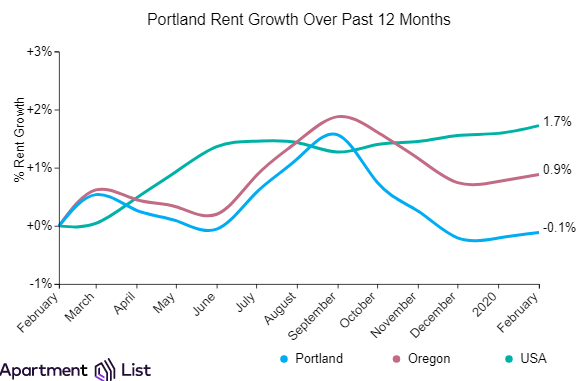
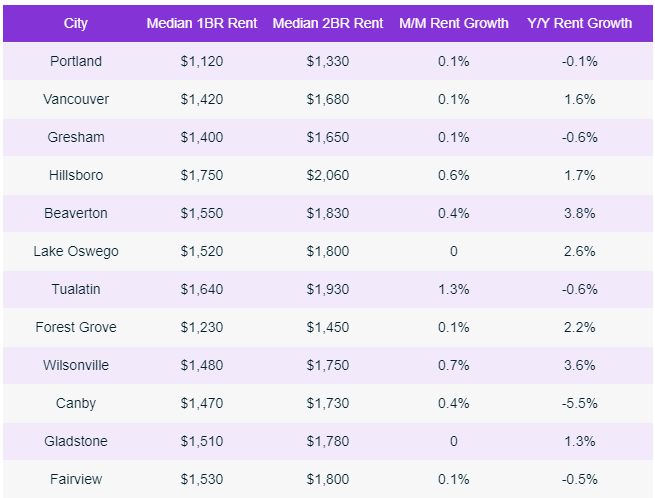
Portland rents have remained steady over the past month, but are down slightly by 0.1 percent year-over-year, according to the latest report from Apartment List.

Median rents in Portland are $1,123 for a one-bedroom apartment and $1,325 for a two-bedroom.

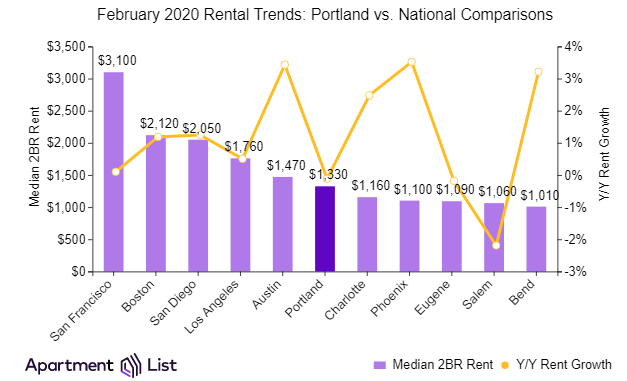
Portland’s year-over-year rent growth lags the state average of 0.9 percent, as well as the national average of 1.7 percent. This was the second month in a row Portland’s rental rates have held steady after a three-month decline late last year.

Portland Rents Remain Steady Over The Past Month While Suburbs Climb

Surrounding cities in Portland metro see rent gains

While rent prices have decreased in Portland over the past year, the rest of the metro is seeing the opposite trend.

Rents have risen in six of the largest 10 cities in the Portland metro for which Apartment List has data.

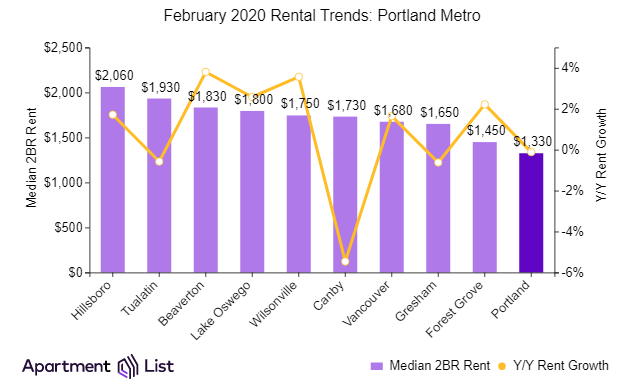
Here’s a look at how rents compare across some of the largest cities in the metro.

  • Beaverton has seen the fastest rent growth in the metro, with a year-over-year increase of 3.8 percent. The median two-bedroom there costs $1,833, while one-bedrooms go for $1,554.
  • Hillsboro has the most expensive rents of the largest cities in the Portland metro, with a two-bedroom median of $2,061. Rents there grew 0.6 percent over the past month and 1.7 percent over the past year.
  • Canby has seen the biggest rent drop in the metro, with a decline of 5.5 percent. Median two-bedrooms there cost $1,732, while one-bedrooms go for $1,468.

Portland Rents Remain Steady Over The Past Month While Suburbs Climb

Portland rents more affordable than many large cities nationwide

While rents have fallen slightly in Portland, many similar cities nationwide have seen prices increase, in some cases substantially.

Portland is also more affordable than most comparable cities across the country, according to the Apartment List report.

While Oregon as a whole logged rent growth of 0.9 percent over the past year, other cities across the state have seen rents decline moderately. For example, rents have fallen by 0.2 percent in Eugene and 2.2 percent in Salem.

Portland v national rents

Portland Rents Hold Steady In January Stopping Slide Over Last 3 Months

How to Rent a Pest-Free Home to Your Tenants

How To Deal With The Most Common Pests In Rental Housing

By Raymond Web

All landlords are expected to provide habitable and sound homes to their tenants, including providing a pest-free home.

You should do a pest and termite inspection before renting out any property you own.

Let’s look at some things you should know about pest control.

  • Hire Professional Pest Control Experts: First and foremost, hire a pest-control company to make certain there are no pests on the property. The pest-control company will inspect the property and take the necessary measures to exterminate any pests. Doing this will guarantee that you are renting out a pest-free house to the tenants.
  • Seal Entry Points: Cracks and crevices are favorite entry spots for pests. Therefore, seal all visible cracks and entry points around the exterior and interior of the property. This includes checking the building’s foundation and looking for gaps in the doors, windows, vents, and pipes. Seal up entry points in common areas, crawl spaces, and attics. Do a termite home inspection to ensure there are no termites.

It might take time to seal up everything, but it will save you a lot of money and trouble in the future and have a pest-free home for your tenants.

How to Rent a Pest-Free Home to Your Tenants

  • Keep Common Areas Clean: Pests usually stick around where food waste is present. They are also attracted to trash and debris as their hiding places. Make sure your tenants know this, and require that common areas be kept clean and free from trash. Sweeping and vacuuming regularly is a must inside all residences.
  • Keep Trash Bins: Trash bins help residents dispose of trash safely and properly. Make sure your bins are sturdy and have the lids on. There shouldn’t be any holes through which pests can enter. You need enough bins for all the tenants you serve; and they should be placed away from actual residences, because the small of garbage can attract pests.
  • Contact Tenants if You Notice a Problem: Visit your property regularly to inspect it for pest infestation. If you find any signs that could potentially lead to a pest infestation, contact your tenants immediately. For instance, if you see garbage accumulating, get in touch with the tenants. Inform them of proper disposal techniques and remind them that keeping the property clean will keep the pests away.

3 Ways to Educate Your Tenants About Pest Infestations 

1. Communicate. If you know which pests commonly attack the property, educate the tenants about the same. For example, if bed bugs and rodents frequently attack the property, inform residents as to how they can handle such infestations, and when to call the pest-control company.

2. Give Property Maintenance Tips. Inform the tenants of the following maintenance tips:

  • Sweep hardwood floors once a week. Termites may attack the wood flooring if it is not maintained properly.
  • Clean air-conditioning filters and window units to keep them free of dust.
  • Keep the plumbing throughout the house in good order.
  • Remove the trash and debris from the premises regularly.
  • Ask residents to pay extra attention during the winter. Pests might enter the house to stay warm and end up damaging your property. The tenants must take winter pest control

3. Encourage Residents to Inform You Quickly About a Pest Infestation

If you receive a complaint of pests, address it as quickly as possible. It won’t just keep the tenants happy, it also will keep the property protected from damage or further infestations. Quick action will prove cheaper in the long run.

Make sure that you give a pest-free home to the tenants and help them maintain the property. Call a residential pest control whenever required to exterminate pests.

About the author:

Raymond Web educates people on pest prevention and control strategies, helping them keep their surroundings healthy, safe and pest-free. As the digital marketing manager for Take Care Termite and Pest Control, in Tracy, CA, he has an in-depth understanding of the issues.

7 Pest Preventative Maintenance Steps For Rental Housing

Sign Up For Our Newsletter And Get Apartment News And Helpful, Useful Content Each Week.

* indicates required


Demand for Apartment Jobs Reached Record Levels In 2019

Demand for Apartment Jobs Reached Record Levels In 2019

Demand for apartment jobs reached record levels in 2019 and the apartment labor market delivered a strong performance by the end of the year, according to the annual report from the National Apartment Association.

Demand for apartments reached record levels during the year, in turn creating a competitive labor market as owners sought talent to manage, lease, and maintain their communities, the report from the National Apartment Association’s Education Institute says.

Monthly job postings, not all of which actually get filled, averaged 10,979.

In August, total job postings in the apartment industry as a percent of the real-estate sector soared to 43.3 percent. A hectic leasing season yielded record-level occupancy rates. According to Real Page, U.S. occupancy rates averaged 96.3 percent in August, the highest rate since 2000.

Top cities showing demand for apartment jobs

Secondary markets Denver, Austin, San Antonio, and Raleigh took the lead for markets with the highest demand for apartment industry professionals.

Apartment-job demand for these areas coincided with their strong apartment-market fundamentals during the year, most notably with new deliveries.

Denver supplied 4,315 apartment job openings. Bell Partners accounted for 11.1 percent of all apartment job postings in Denver.

Availabilities in Austin totaled 2,954, and 9.8 percent of all apartment job openings in Austin were provided by Alliance Residential Company. Another large Texas market, San Antonio, posted 1,769 job openings. Lincoln Property Company was the top employer in San Antonio, responsible for 6.5 percent of all apartment job openings.

Raleigh listed 1,413 job openings. Identical to Denver, Bell Partners represented 11.1 percent of all apartment job postings.

Apartment jobs salaries

Demand for Apartment Jobs Reached Record Levels In 2019

In a tight labor market, industry employers are faced with the challenge to attract and retain talent, while still managing the bottom-line.

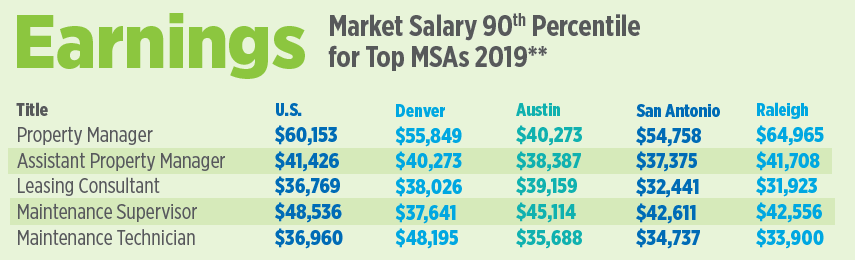
Salary ranges can be wide depending on location, education, certifications, skills, and years of experience. In Raleigh, salaries for property managers and assistant property managers were above the U.S. average. Leasing-consultant salaries were particularly competitive in Austin and Denver.

Maintenance technicians were also in high demand in Denver during 2019, which produced salaries well above the national average.

Seattle has high concentration of apartment jobs

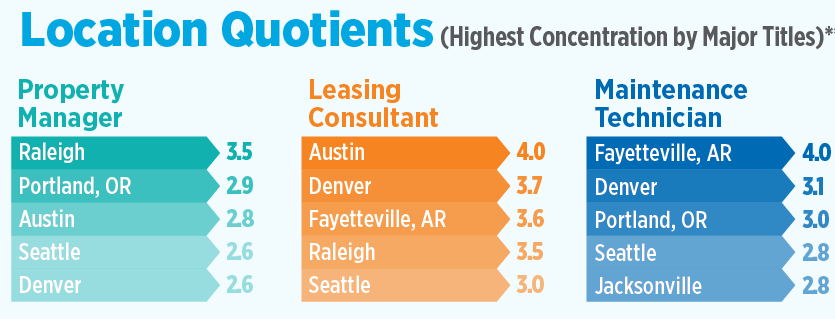
Denver and Seattle had the highest concentration of major apartment-job titles, with demand for talent averaging 3.1 and 2.8 times the national average, respectively.

Apartment construction has boomed in Denver as large companies such as Amazon have expanded their offices. The tech titan created 400 jobs, generating demand for more housing.

Competition for talent in Seattle was also highly competitive, most notably for leasing consultants and maintenance technicians, location quotients for these positions were about three times the U.S. average.

Competition for rental-housing labor fared particularly high in both Raleigh and Fayetteville, Ark., which experienced job growth well above the U.S. average in 2019.

Skills that are required

Employers are constantly competing for talent in a shrinking pool of qualified candidates.

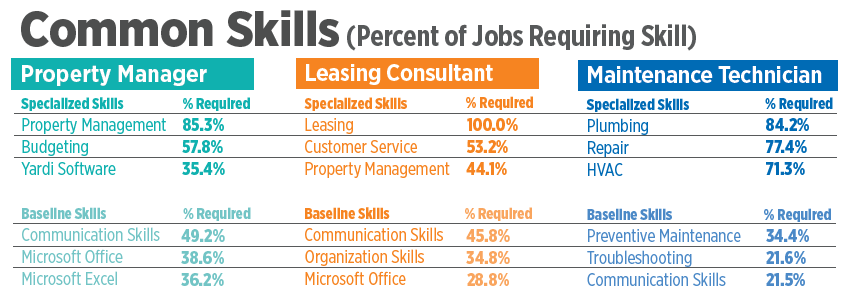
Strong communication skills are critical across property managers, leasing consultants, and maintenance technicians. Employers agree that effective communication with residents, contractors, and other members of the property-management team plays an important role in the property’s performance.

Microsoft Word and multi-tasking skills had the greatest rise in demand among the many baseline skills required in the apartment industry, increasing by 1.6 and 1.4 percentage points annually.

Experience with sales, customer service, and Yardi Software also saw a significant increase in the percentage of jobs requiring these skills since 2018.

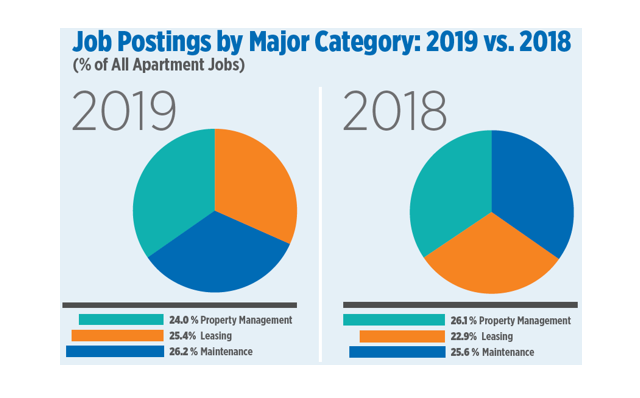
Maintenance positions were the most sought-after jobs in 2019

Maintenance positions were the most sought-after and in demand for apartment jobs  during 2019.

As reported by the Bureau of Labor Statistics, general maintenance and repair occupations are projected to experience an average growth rate of six percent through 2028, which is above the average of five  percent for all jobs.

A high school diploma or vocational training represented 98.8 percent of all minimum education required for maintenance technicians and supervisors. Outside of standard requirements like drivers licenses, certifications in greatest demand for these positions included EPA certification, pool-operator certification, and boiler-operator license.

Demand for Apartment Jobs Reached Record Levels In 2019

Employee turnover rate falling

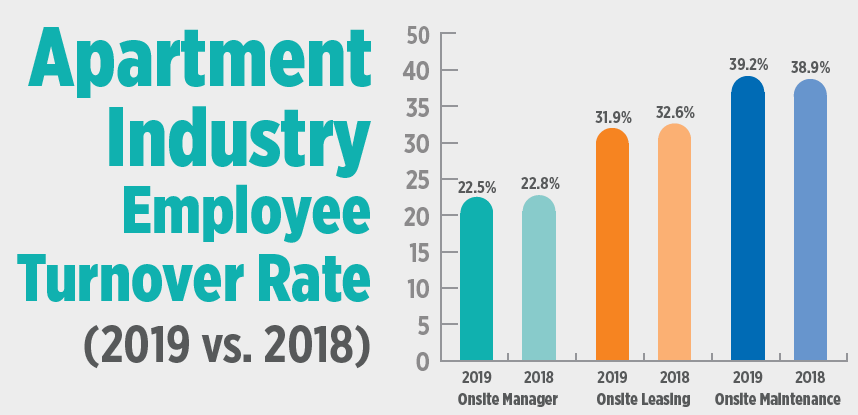
The overall turnover rate fell for the first time since 2016, driven mainly by the 0.7 percentage point decline in leasing positions.

Maintenance technicians continued to be the most challenging to retain, with a decade-high turnover rate of 39.2 percent. According to Grace Hill, on-boarding, employee recognition, and career paths are the most effective methods for decreasing turnover.

Turnover and Demand for Apartment Jobs

Sources: NAA Research; Burning Glass Technologies; CEL & Associates; Real Page, Grace Hill; Bureau of Labor Statistics Data as of December 31, 2019; Not Seasonally Adjusted.

Apartment Jobs Almost 40 Percent Of Real Estate Jobs In January, NAA Says

Sign Up For Our Newsletter And Get Apartment News And Helpful, Useful Content Each Week.

* indicates required


3 Ways to Effectively Handle Tenants’ Property Maintenance Requests

3 Ways to Effectively Handle Tenants’ Property Maintenance Requests

How to effectively handle tenant’s property maintenance requests and keep them happy is this week’s maintenance tip from Keepe.

As a property manager, the job comes with its fair share of maintenance troubles.

From sudden gas leaks to bad locks to a leaking roof, the maintenance issues faced in a rental property can be overwhelming.

One thing every seasoned property manager understands is that tenants’ satisfaction is the key to excellent tenant-retention rates. A unique way to improve your tenant satisfaction is by proactively handling tenant requests when they come in.

Below are three ways to manage your tenant’s property maintenance requests as a property manager.

No. 1 – Act Fast On Property Maintenance Requests

Aside from the fact that tenants’ satisfaction is dependent on your response to their increased maintenance requests, responding on time helps you save money and your property from further depreciation.

Have a list of reliable vendors (maintenance people and contractors) whom you can contact in the quickest time possible. Companies such as Keepe can connect you with a reliable worker for your rental-property maintenance issues if you need help.

Also, keep in mind that many tenants these days like to text you their maintenance requests and expect immediate response to their texts.

No. 2 – Communicate

As soon as you receive a maintenance request, communicate not just with the vendor but with the tenant about the work progress.

You can find out more details about the history of the problem and the progress made by the vendor.

Reach out to the tenants via phone, email, or text to inform them about the moves you are making and what is required of them, or even to address their complaints in an orderly manner if there is a delay from the worker’s end. You can ask questions such as:

  • When did the issue start?
  • Has it happened before?
  • How is the maintenance issue affecting your day-to-day activities within your apartment?

You can go as far as sending the tenant the vendor information to help the two speak directly, or share relevant information to help solve the issue promptly.

In today’s world, property managers are digitalizing how they handle tenants’ property-maintenance requests. This helps to keep all parties involved in the loop about the progress made and any changes to the request.

No. 3 – Follow-Up

As a property manager, handling maintenance requests goes beyond finding a reputable vendor or communicating during the repair period.

It involves reaching out to the tenant after the repairs have been completed. Find out from your tenants about their post-maintenance repair experience and how you can be of help next time.

You can send out a brief online feedback experience form or schedule a quick phone call if you like to keep a personal touch with your tenants.

A great set of follow-up questions to ask after a maintenance episode with tenants:

  • What is the present state of the issue?
  • Are you satisfied with the completed changes or repairs?
  • Are there any extra costs you may want to relay back to us that you may have spent?

By doing the above, you’re not only improving your relationships with your tenants but also gathering further information for future occurrences.

Property maintenance requests conclusion

Managing a rental property requires you to be proactive, predictive, and an excellent communicator. Tenants are impatient and want quality services that match the rent they pay. If you are looking to increase tenant retention and satisfaction rates, you will need to improve on how you handle tenants’ maintenance requests.

5 Fire Safety Tips for Property Managers in 2020

The Best Appliances In Rental Property

About Keepe:

Keepe is an on-demand maintenance solution for property managers and independent landlords. The company makes a network of hundreds of independent contractors and handymen available for maintenance projects at rental properties. Keepe is available in the Greater Seattle area, Greater Phoenix area, San Francisco Bay area, Portland, San Diego and is coming soon to an area near you. Learn more about Keepe at https://www.keepe.com.

Sign Up For Our Newsletter And Get Apartment News And Helpful, Useful Content Each Week.

* indicates required


Seattle Mayor Won’t Sign Winter Evictions Ban Passed by City Council

3 Areas Where Congressional Legislation Falls Short, Could Be Detrimental to Rental Housing Market

Seattle Mayor Jenny Durkan will not sign a ban on winter evictions passed by the Seattle City Council,  and announced a new partnership and legislation that will provide assistance for individuals who are facing winter eviction, according to a release.

“Being progressive means more than slogans. If city council wants to accomplish our shared goals to prevent winter evictions, then they should pass a bill to actually help people facing winter evictions,” Durkan said in the statement.

“As council knows, their bill will not prevent evictions – it places the full burden on the tenant and opens up the city to significant legal costs. As a city, we should be spending taxpayer dollars to help people – not hundreds of thousands of dollars on lawyers to defend this bill. A real solution is to help households avoid the eviction process altogether,” she said.

The bill will now go back to the council for consideration, and council members could still make it law with a two-thirds vote, according to reports.

The Seattle City Council voted in February to ban winter evictions during the months of December through February, shortening the original proposal from five months to three.

Council Bill 119727, which council members unanimously passed Feb. 10, bans evictions between December and February with exceptions for landlords who own four units or fewer and evictions caused by behavior that has an impact on the health and safety of others.

Durkan’s statement continued: “After conversations with United Way of King County, an investment to build off the Seattle Human Services Department’s current prevention programs could allow the city to provide resources to individuals potentially facing evictions this upcoming winter.”

The release said as currently written, Council Bill 119727 “does not protect most vulnerable households at risk of evictions, and the city could incur potential litigation. In addition to spurring more evictions in the spring, council’s legislation did not ban winter evictions. Instead, it created a legal defense during eviction proceedings. It would require tenants to appear in court to use winter eviction as a defense. A recent study concluded nearly half of households failed to contest an eviction or appear in court.

“As a young lawyer, I saw firsthand how devastating evictions can be in one’s life. I first met Lola at a women’s shelter after she had been forced out of her home and onto the street. After months in court, I was able to prove she was wrongfully evicted and connect her with a new home, but she had spent months without a home because of lengthy legal proceedings. Providing the resources to help prevent eviction in the first place is the right thing to do,” Durkan said in the release.

To successfully help people at risk of eviction stay in their homes, Durkan will transmit a bill to the city  council to increase funding assistance to tenants facing homelessness due to eviction between December 1 and March 1, building off of the Seattle Human Services Department’s existing program, which served 974 unique households at risk of homelessness last year. In addition, her bill would require the development of a disclosure provision that will require landlords to make sure tenants are aware of the availability of winter-eviction support and prevention resources, according to the release.

Seattle City Council Bans Winter Evictions

Sign Up For Our Newsletter And Get Apartment News And Helpful, Useful Content Each Week.

* indicates required