Home Blog Page 106

Removing Friction from Leasing Process Has Operation Margins Soaring

Removing Friction from Leasing Process Has Operation Margins Soaring

Making the apartment leasing process easier with ‘next-gen’ technology brings it closer to fully autonomous leasing, led by chatbots, self-guided touring, QR codes.

By Paul Bergeron

There was a time when the apartment-investment company UDR employed a full team of leasing professionals on a busy Saturday afternoon to handle a few dozen renter prospect tours for a single multifamily community.

But by adding new technology, the diversified multifamily real estate investment trust (REIT) – which owns approximately 54,600 apartment homes – has been able to increase its tour volume, conducting upwards of 40 self-guided tours per day while employing only a fraction of multi-functional office personnel at a given community. These findings have validated the belief that most prospective residents do not want to be “sold” to, but instead prefer to self-serve on their own schedules.

Today, 97 percent of the company’s tours are self-guided.

Scott Wesson, UDR’s chief digital officer, says that removing artificially imposed obstacles (such as how many leasing agents can simultaneously conduct tours) from the leasing process is a top priority. The  steps the company has taken in recent years to do this have boosted its operating efficiencies and margins.

The apartment business is a customer-driven industry, and UDR’s strategy “centers on first listening to our current and potential residents, and then figuring out what works and does not work for them,” Wesson says. “We might think we know what the residents want, but we’re not always right. Observation and consistent interaction are key.”

“When it comes to shopping for apartments – or shopping for anything – we observed that prospective residents prefer privacy so they can either self-compare to other apartments they have previously toured or freely converse with a significant other on pros and cons. This is more challenging when a salesperson is present throughout a tour. The feedback we have received from prospects indicates they like this sort of lower-stress experience.”

UDR has experimented with a wide range of technologies in its pursuit of greater automation and virtual leasing techniques. These endeavors have ranged from using Amazon Echo, mapping technology, and augmented reality, among others. Not all have stuck, but trial-and-error is an important part of the process. UDR believes that building a culture that embraces innovation, whether initially successful or not, has contributed to its success and helps to enable a superior customer experience.

As COVID lockdowns eased, the company reported strong leasing demand, which led to higher physical occupancy. In June 2021, UDR enjoyed a nearly 50 percent increase in leasing traffic year-over-year.

Information ‘Addiction’

Wesson said that many consumers trying to contact a company just want quick answers to their often-straightforward questions, and most businesses are making it overly difficult to get those answers. As a result, they have moved online to efficiently satisfy their informational needs. UDR says using chatbots for “their ability to quickly and accurately serve up information that customers need to make a decision is second to none.”

Removing Friction from the apartment Leasing Process Has Operation Margins Soaring using chatbots and other technology
“When it comes to shopping for apartments – or shopping for anything – we observed that prospective residents prefer privacy so they can either self-compare to other apartments,” said Scott Wesson, UDR’s chief digital officer.

In recent years, UDR has listened to and analyzed thousands of calls from its call center. Wesson says that 85 percent of the questions were factual, where prospects asked about pricing, availability, and applications. The other 15 percent were such questions as “Is the community safe?” or “How’s the neighborhood?”

The latter are questions that can be a challenge for even humans to answer, Wesson said, because their answers are often subjective.

To answer the other 85 percent of questions, UDR evaluated four chatbots during its selection process. Some of the criteria included were how quickly a chatbot could “learn,” which questions it can’t answer, whether it “remembers” prospects that visit more than once, and whether it can communicate via text, webchat, and email.

The chatbots are not perfect, but they do learn quickly given enough data.  For example, colloquialisms within questions such as “How much do these apartments run?” can trip them up. We had to teach the bot that this is the same thing as asking, “How much is the rent of this apartment?”

UDR chose LeaseHawk’s virtual leasing assistant, ACE, because it “proved best at being able to answer the greatest number of questions quickly,” Wesson said. “If it cannot answer efficiently, prospects could leave your website, frustrated, and not come back. ACE functions so that it prompts its users to ask more questions, which improves interaction and the prospect’s experience.”

Convincing C-Suite About AI’s Value

”Some who work in the multifamily industry still need convincing that artificial intelligence is not coming for their jobs,” said LeaseHawk CEO Mike Mueller.

Mueller indicated that this stems from misunderstanding AI semantics.

“These leaders need to understand AI is about increasing productivity,” he said. “Their customers already understand AI-powered assistants, as they interact with them in other facets of their lives. Therefore, customers are comfortable with them. For executives, their response can be “AI lacks the ‘human’ touch. And Siri can be so frustrating.” They identify AI as something synonymous with “Hal,” the computer in “2001: A Space Odyssey.”

Additionally, some potential AI adopters have a false mindset that training a bot is an onerous task.

“There’s not that much required to train a bot on in apartment leasing,” he said. “Like with UDR, prospects typically ask very similar questions.”

Removing Friction from the apartment Leasing Process Has Operation Margins Soaring using chatbots and other technology
”Some who work in the multifamily industry still need convincing that artificial intelligence is not coming for their jobs,” said LeaseHawk CEO Mike Mueller.

Leasing Transparency Wins Them Over

One intriguing aspect of chatbot communication is the ability to provide pricing information to prospective residents. Wesson said that consumers today expect websites to list current prices.

“Some sites in our industry still state ‘call us for pricing’ or give a price range or list ‘rents starting at $x,xxx’ that is not in line with customer’s other e-commerce experiences,” he said.

“We want to be as transparent as possible and decided long ago that there’s no valid reason to shield current pricing from a prospective resident. Because of fluctuating demand, prices can go up and down, but we want to give them all the facts we have about the current price and the availability of the product, and LeaseHawk’s chatbot allows us to do that quickly and efficiently.”

Price in hand, UDR customers then turn to touring.

“We’ve been doing self-guided tours (SGT) for three years. We’re a petri dish when it comes to tech…we like to experiment with the process first, then learn from the customer feedback, vs. trying to figure it out in a board room and investing in technology that will ultimately be scrapped.

“For tech like SGT, we try it out, see how the process goes, learn from it, and then key in on the exact technologies we need to make it successful. For all our technology initiatives, our finished vision is quite different from what we thought it would be when we started out. Currently, 97 percent of our tours are self-guided, so we think we are on the right track.”

Given social-distancing norms during the pandemic, many apartment companies were scrambling to get virtual self-guided touring up and running during mid-2020. “Thankfully, we were already pretty mature with our process prior to COVID,” Wesson indicated. “We were on Version 3.0 by then for a lot of technology-, virtual- and automation-based experiences.”

Likewise with smart-home technology, which includes keyless locks, Internet-accessible thermostats, and online water-leak sensors, among others. UDR has installed these packages in more than 44,000 of its apartment homes.

Wesson said UDR’s data show that less than one percent of its residents don’t want smart-home tech.

“We provided smart-home tech in our communities for a variety of reasons. First, our residents tell us they like the conveniences they provide; second, we can charge a nominal fee for it; and third, it helps us save time and money on maintenance tasks, such as rekeying locks or dealing with lockouts,” he said. UDR is getting a healthy double-digit return from the smart-home packages.

Improving Operating Margins

For REITs (such as UDR) and their shareholders, operating margin is key.

“The technology we use, including LeaseHawk’s chatbot, has made us more cost-efficient and optimized our workforce,” Wesson says. “This improves our operating margin, but it also provides UDR associates with better compensation and career-advancement opportunities, and allows them to focus more thoroughly on customer service.”

Wesson says that one technology trend that has surprised him in the past few years is how quickly today’s consumer, especially younger individuals, have transferred their communications to text from email. It’s a shift that started several years ago, he said, and was identified early on through UDR’s direct communication with prospects.

“Therefore, it was vital that the chatbot we selected could engage in texting and webchat,” he said.

Another key chatbot feature is its ability to schedule tour appointments. He finds that people today are more likely to make appointments, and not just drop-in (though UDR does still get a few of those). By planning the day based on set appointments, it’s easier for UDR’s team to conduct more property tours each day.

In the past, a prospect on an accompanied tour “would get the grand tour and would see everything whether they liked it or not,” Wesson explained. “Tours would take about an hour, on average, some even more than an hour. Our self-guided tours are taking about 23 minutes, on average, with our office associate only spending about five minutes of their time on each. Prospects who go on self-guided tours get to see what they want to see at the pace they are comfortable with.”

UDR found that the decision to lease or not was often not based on the length of the tour. It appears that most prospects tour a community to validate information they’ve already seen online, Wesson said.

QR Codes: The Public ‘Gets’ It

UDR indicated that one interesting SGT finding thus far is that it could dial down the technology needed, such as eliminating some digital maps.

“We’ve found that our communities really aren’t that hard for the prospects to navigate,” he said. The UDR team looked at augmented reality a while back but found it “just didn’t add much of anything to the experience that the customer needed to make their choice.”

In 2016, UDR tried placing an Amazon Echo in several apartment units to help answer questions. These days, the company has placed signage in an apartment that displays QR codes to answer popular questions. Prospects scan them to check pricing, appliance descriptions, smart-home tech, etc.

Unlike pre-COVID, many people now understand how QR codes work and use them because they became more popular during the pandemic. Restaurants used them to let diners peruse the menu, for instance.

Centralized Leasing Offices

Using virtual leasing assistants such as ACE is a first step toward centralized leasing offices. It’s also a component of “autonomous leasing.” Bots can handle so many of the questions common throughout a resident’s life cycle at a community.

If a prospect schedules a tour through a bot, the bot can ask, “How would you rate your tour?” If it’s a 4 or higher on a 5-point scale, the bot can ask, “Would you like me to send you an application?” Or “Can we do a credit check with you?” This is on top of the bot already confirming and reminding office associates about impending appointments.

Winners in the chatbot space are those who are first to market, like LeaseHawk. The “first mover” advantage is critical.

About the author

Removing Friction from the apartment Leasing Process Has Operation Margins Soaring using chatbots and other tehcnology

Paul Bergeron has been reporting on the apartment industry since 2002 and served 20 years as editor-in-chief for the National Apartment Association’s UNITS magazine. He currently is editor of his LinkedIn media platform, Thought Leadership Today, and can be reached at [email protected].
Sign Up For Our Newsletter And Get Apartment News And Helpful, Useful Content Each Week.

* indicates required

Solving Junk Removal Problems From Your Rental Property

A Secret Weapon To Winning Renters Through Digital Marketing?

What Is A More Affordable Apartment Smart-Home Technology?

Camera Technology Helps Apartments Document Waste Diversion

Apartment Construction Stays Steady, Despite Obstacles

Apartment Construction Stays Steady, Despite Obstacles

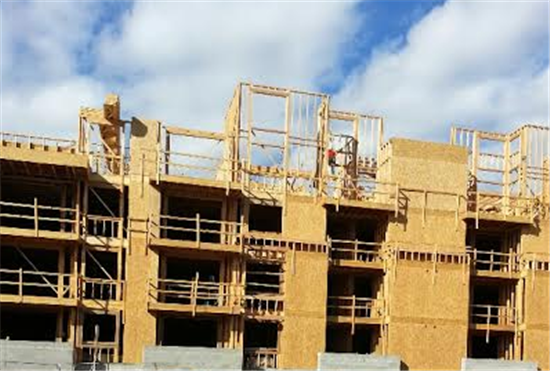
The pandemic, a shortage of workers and soaring materials costs have not deterred the apartment construction market, which has maintained a steady pace despite these challenges, according to a study from RentCafe.

“The pandemic shifts and resurgence of the residential-rental market brings new residential supply into focus,” said Doug Ressler, manager of business intelligence at Yardi Matrix, in the report.

“Lack of entry-level housing supply and rising home prices will show the multifamily rental market demand increasing as new renters enter the market and millennials extend their rental commitments,” Ressler said.

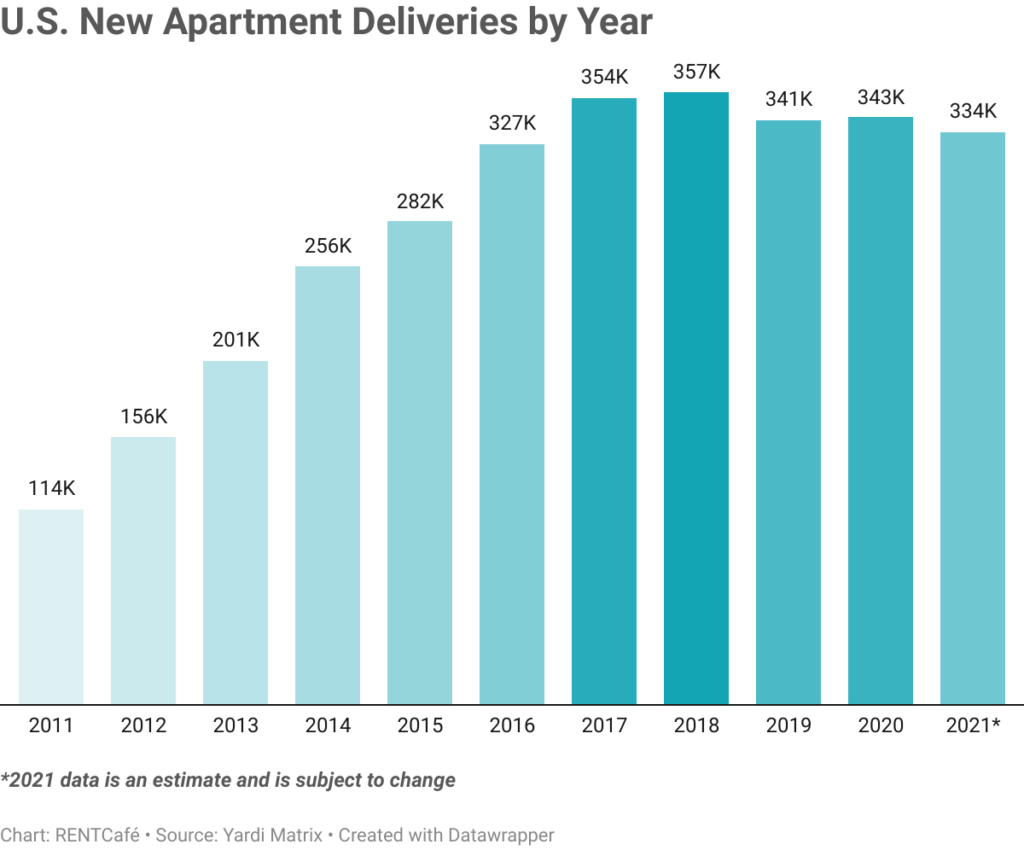
“More precisely, 334,000 units are projected to be opened in the U.S. by the end of this year, according to Yardi Matrix estimates. These figures reflect the striking difference between the aftermath of the pandemic crisis and that of the housing crisis of 2008.

“In 2021, there were nearly three times more apartments under construction than there were in 2011,” the report says.

Apartment Construction Stays Steady, Despite Obstacles

Here are the main drivers of apartment construction this year:

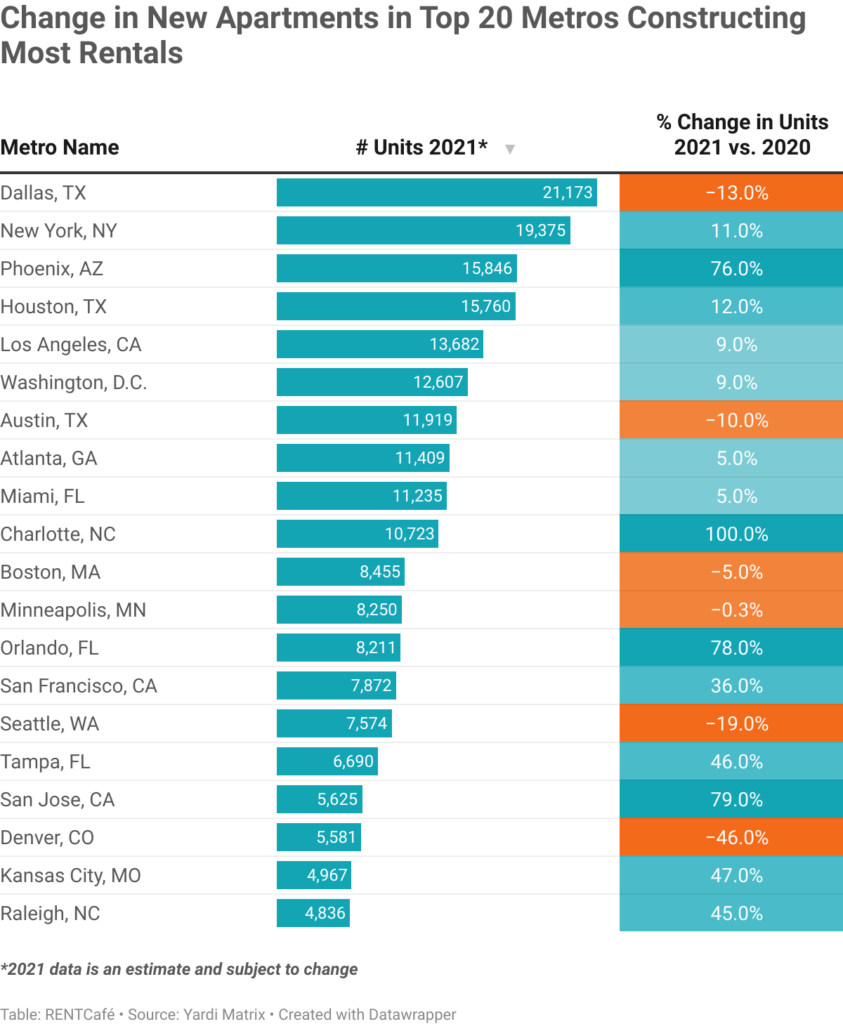
  • Eight metro areas out of the top 20 are expected to hit a five-year high in apartment construction. Among these are two newcomers to the top builders’ club – the metro areas of Kansas City, Mo., (4,967 units), and Raleigh, NC (4,836 units).
  • There’s a trend shift compared to last year. In 2020, 13 metros out of the top 20 experienced decreases in apartment construction. This year, only six out of 20 metros are seeing drops.
  • The Dallas-Fort Worth metro area is the torchbearer of apartment construction for the fourth year in a row. Renters can rejoice knowing there are 21,173 new units in the pipeline, to be available on the market by year end.
  • A welcoming sight: New York metro returns to pre-pandemic levels, with 19,375 projected units. The area is expected to see an 11 percent increase in apartment construction compared to last year.
  • Phoenix is one of the surprising markets this year, claiming the No. 3 spot nationally. A much-needed supply of 15,846 units is planned here, creating 76 percent growth compared to 2020.
  • Charlotte, NC is witnessing a boom, with a 100 percent increase in apartment construction. The projections show 10,723 apartments to be delivered this year. Orlando, FL is another promising market, with 78 percent growth, projections at 8,211 units.

5-Year High in Phoenix and 7 Other Metros

Of all the metros analyzed, eight are set to hit their peaks in apartment construction this year compared to their totals from the last five years.

First up is Phoenix, the most notable metro, which is projected to build 15,846 new units this year — considerably more than its deliveries in past years. Currently witnessing a housing boom and a population increase of 2.1 percent, the metro is set to meet the demand for new apartments in the area.

“The strong demand fueled by robust inbound migration and employment growth” is the reason we’re seeing such high levels of construction in these markets, according to Ressler. “The Southwest market which meets both these conditions is Phoenix. In addition, Phoenix zoning and availability of land is adding to the attraction.”

Apartment construction moving along steadily in top 20 markets

Sign Up For Our Newsletter And Get Rental Housing And Apartment News And Helpful, Useful Content Each Week.

* indicates required


Will You Be Ready When the Eviction Moratorium Ends?

Everything Landlords Should Know About Emotional Support Animals

What To Do About Unauthorized Tenants in My Rental?

What To Do About Unauthorized Tenants in My Rental Landlord Hank?

The challenge of how to deal with unauthorized tenants who are not on the lease for your rental property is the question for Ask Landlord Hank. Remember Hank is not an attorney and he is not offering legal advice. If you have a question for him please fill out the form below.

Dear Landlord Hank:

Do you have any recommendations for detecting whether a tenant is allowing someone to live in the unit with them?

It is stated clearly in the lease that unauthorized tenants are not allowed, but….

-Valerie

Dear Landlady Valerie,

Most leases include a clause concerning Right of Entry.

This clause basically says that you can inspect whenever you wish (within reason) with reasonable notice to the tenant via telephone, note on the door, etc. that you will be coming to inspect the property.

I would put such a note on the door or call the tenant and let them know that you are coming tomorrow morning to inspect.

Then you can check closets to see if there are another person’s clothing there or multiple tooth brushes, etc. You can find out fast and easy.

I’d take photos, just in case your tenant denies someone extra is living there – the more the better, so you have evidence if you have to go to court.

If you would feel more secure you could have a “burly” co-inspector with you. Good luck.

Sincerely,

Hank Rossi


What To Do About Unauthorized Tenants in My Rental?
Landlord Hank says, “you can check closets to see if there are another person’s clothing there or multiple tooth brushes, etc. You can find out fast and easy.”

Ask Landlord Hank Your Question

Ask veteran landlord and property manager Hank Rossi your questions from tenant screening to leases to pets and more! He provides answers each week to landlords.

  • This field is for validation purposes and should be left unchanged.

Do I Have to Paint and Replace Flooring for a Long-Term Tenant?

Sign Up For Our Newsletter And Get Rental Housing And Apartment News And Helpful, Useful Content Each Week.

* indicates required

How Can I Get A Tenant To Stop Smoking In My Non-Smoking Unit?

As a child, Hank Rossi watched his father take care of the family rental-maintenance business, and sometimes became his assistant. In the mid-’90s he got into the rental business for himself. After he retired, Hank managed only his own investments for the next 10 years, but then started a real-estate brokerage business with his sister that focuses on property management and leasing. He continues to manage his portfolio in Florida and Atlanta. Visit Landlord Hank’s website: https://rentsrq.com.


Oregon Governor Extends Mortgage Foreclosure Moratorium

Oregon Governor Extends Mortgage Foreclosure Moratorium

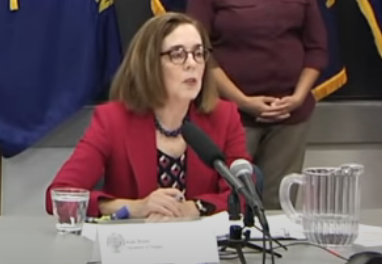
Oregon Gov. Kate Brown has extended the state’s mortgage foreclosure moratorium to December 31, according to a release.

The mortgage-foreclosure moratorium had been set to expire on September 30.

House Bill 2009 authorized the governor to extend the mortgage-foreclosure moratorium period for two successive three-month periods beyond June 30. The governor previously extended the moratorium until September 30, 2021. The extension until December 31 is the last extension allowed under House Bill 2009.

The governor said in the statement that the moratorium prevents Oregonians who own their homes from losing their homes to foreclosure if they have lost income and been unable to pay their mortgage during the COVID-19 pandemic.

“As we continue to see record high numbers of COVID-19 hospitalizations driven by the Delta surge, I am committed to ensuring that Oregonians have a warm, dry, safe place to live during this pandemic,” Brown said in the release.

Oregon Governor Extends Mortgage Foreclosure Moratorium
“These protections are necessary as Oregon continues to deploy federal financial relief,” Oregon Governor Kate Brown said in a release.

“Extending the temporary residential foreclosure moratorium another three months will prevent removal of Oregonians from their homes by foreclosure, which would result in serious health, safety, welfare, and financial consequences, and which would undermine key efforts to prevent spread of COVID-19.”

Additionally, extension of House Bill 2009’s foreclosure moratorium “will provide necessary relief to mortgagors that are leasing property to residential tenants, allowing them needed flexibility to continue to work with tenants who are struggling. These protections are necessary as Oregon continues to deploy federal financial relief, including the Emergency Rental Assistance program and the Homeownership Assistance Fund, both of which are in the initial stages of deployment.”

Renters continue to receive protection

Similar protections are also in place for Oregonians who rent their homes. In addition to resources for landlords and homeowners, rental assistance continues to be available for tenants at OregonRentalAssistance.org. On June 25, 2021, Gov. Brown signed Senate Bill 278, which provides tenants a 60-day safe-harbor period from eviction for nonpayment of rent. In Multnomah County, the safe-harbor period is 90 days. The 60-day safe-harbor period for each tenant begins when they provide their landlords with proof that they have applied for rental assistance. Oregon’s Emergency Rental Assistance Program is still accepting applications at OregonRentalAssistance.org. Tenants who are behind on their rent or utilities or who may need help paying the current or future month’s rent should apply today.

Sign Up For Our Newsletter And Get Apartment News And Helpful, Useful Content Each Week.

* indicates required


Will You Be Ready When the Eviction Moratorium Ends?

Everything Landlords Should Know About Emotional Support Animals

2021: A Rental Season Like No Other

2021: A Rental Season Like No Other

Renters are starting to return to big-city apartments, as high-income earners were most active and among the most likely to switch apartments in 2021, according to a study from RentCafe.

The report says the peak rental season started out twice as strong as usual, with 45 percent more renters applying for apartments in March than in February. By comparison, during the same time period in 2018 and 2019, applications rose by an average of just 23 percent.

RentCafé surveys show the main reason for the move to new rentals was the opportunity to get good deals after the pandemic as well as the need for more space for working from home.

High-income renters most likely to move

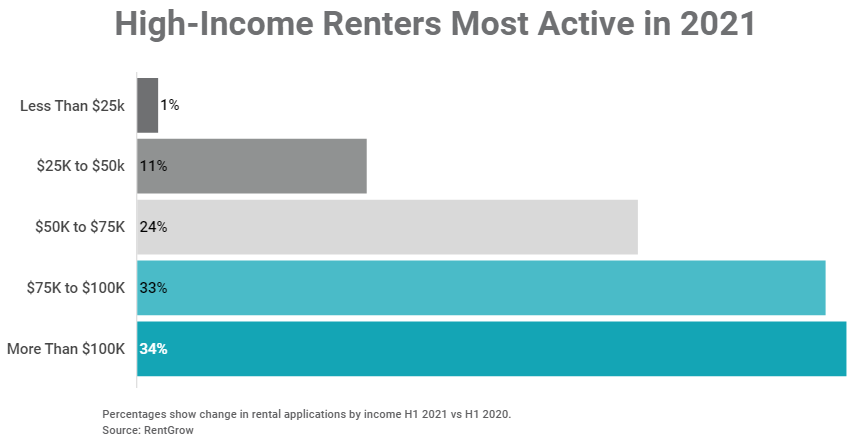
Renters earning upwards of $100,000 were the most active this rental season – 34 percent more than last year.

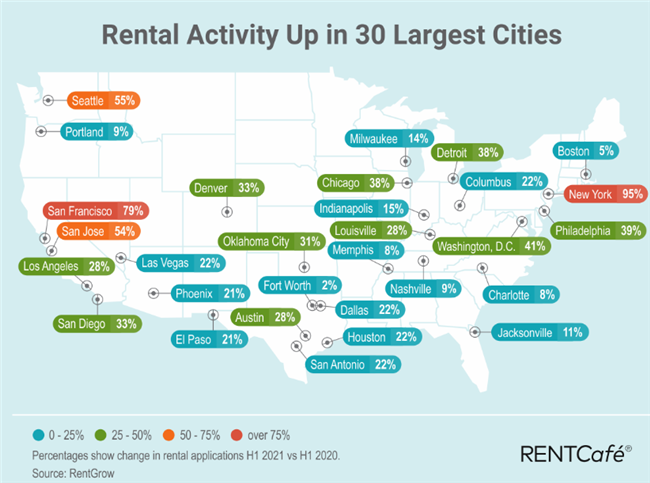
Meanwhile, interest in big-city apartments is surging, and rental applications rose in all of the nation’s 30 largest cities.

“New York City saw the most spectacular comeback, leading the trend, with double its rental activity compared to last year, while San Francisco had the second-highest increase in renters moving in,” the study said.

The study showed that earners in the top two income brackets proved to be the most eager to switch apartments, taking advantage of deals on luxury apartments.  So those most likely to move were renters who earn between $75,000 and $100,000, as well as renters who earn over $100,000. Those were the top groups, which were 30 percent more likely to move this year compared to last.

2021: A Rental Season Like No Other

Apartments Filling Up Again in Nation’s Largest Cities

Although last year’s reports “lamented about people ‘fleeing’ the nation’s largest cities, this year’s rental stats put those worries to rest,” RentCafé said in the study.

Renting activity in all of the 30 largest U.S. cities was above that seen during the same rental season period last year and was especially hot in the most popular renter hubs on the coasts.

New York apartments led this astounding rebound, as the number of renters moving in the Big Apple doubled in the first half of 2021 compared to 2020. Across the country, the Bay Area was in a similar situation, with 79 percent more people applying for rentals in San Francisco. Similarly, apartments in Seattle and San Jose also saw a lot of interest from apartment hunters.”

Sign Up For Our Newsletter And Get Rental Property And Apartment News And Helpful, Useful Content Each Week.

* indicates required


Average National Monthly Rent Tops $1,500 For 1st Time

Will You Be Ready When the Eviction Moratorium Ends?

Everything Landlords Should Know About Emotional Support Animals

Multifamily Buildings vs. Smaller Properties: Choosing the Best ROI

Multifamily Buildings vs. Smaller Properties: Choosing the Best ROI

What types of real estate investments bring the best ROI is it the multifamily buildings or the smaller properties and how do you choose?

By Scott Russell
Freestone Properties

 Investors in rental real estate have a lot of options when it comes to the type of properties they buy. From single-family homes to apartment buildings, rental properties vary widely in quality and the number of units in the building. We’ll discuss the differences between various types of rental properties, as well as the features of these properties that affect return on investment (ROI).

Types of Properties

Single-family homes

 The most common type of rental property is a single-family home. Single-family homes are great for new investors. Many real estate investors start with single-family rental houses because they live in the house for a few years, then keep the house as a rental when they move into another home. Single-family rentals are easy to finance, and they are very desirable for tenants. Many tenants prefer single-family homes over apartments because they offer more privacy and often have additional features like fenced yards for pets and kids.

From an ROI standpoint, single-family homes have some pros and cons. On the plus side, rent rates are usually higher than they are for a similar-sized unit in a multifamily building. They may have garages or basements that provide additional storage, which is another great selling point when the rental is being advertised to prospective tenants. Re-sale is also typically easy for single-family homes, as the prospective buyer pool consists of other investors as well as buyers who want to live in the home.

One downside to single-family homes is that they don’t benefit from the ability to spread expenses over multiple units, as we’ll discuss a bit later. Many investors refer to this as “economies of scale.” Another disadvantage is that there may be some expenses, such as HOA fees or private road maintenance agreements, that aren’t as common with multi-family properties.

Short-Term Rentals vs. Long-Term Rentals

It’s worth noting that single-family homes can sometimes generate higher ROI as a short-term vacation rental real estate investments. However, this arrangement will certainly result in higher expenses, such as additional cleanings between rentals, utilities being paid by the owner, furnishing costs, higher property management fees, and more advertising costs. The rental rate will almost certainly be higher, but there may also be a higher vacancy rate.

Small Multifamily

For the purposes of this discussion, small multifamily properties consist of two to four units. This is an important distinction, because multifamily properties with four or fewer units are easier to finance conventionally.

Multifamily properties consist of duplexes, triplexes, and quadplexes, as well as single-family homes with an ADU (additional dwelling unit) such as a detached garage apartment or a studio basement apartment. You can find multifamily homes for sale from many real estate websites with MLS listings, and many are localized (like this Asheville multifamily homes page).

One of the big advantages of having an ADU is that the owner often lives on-site, making management of the ADU easy. The ADU may be a long-term rental or short-term vacation rental.

For more traditional duplexes (2 identical units under one roof), triplexes, and quadplexes, economies of scale come into play and create cost savings for landlords. For example, when it comes time to replace a roof, the cost can be spread over multiple units. The same goes for other capital expenditures, such as re-paving a parking lot. Even routine maintenance like mowing the grass and cleaning the gutters is typically less expensive per unit.

Multifamily Buildings vs. Smaller Properties: Choosing the Best ROI for real estate investing
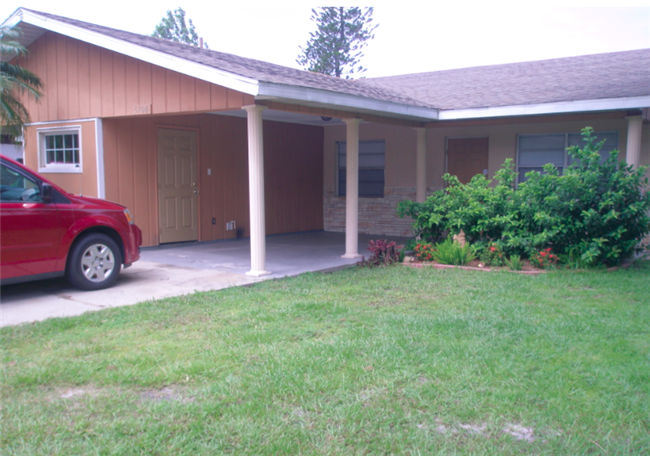
Small multifamily properties like this traditional duplex can bring good ROI in real estate investments.

Property management firms sometimes offer a reduced management fee if the rental owner has enough units under management. And the owner’s fire insurance policy can be less per unit when the property has multiple units under one roof.

Keep in mind that there are some potential added expenses for multi-family units, especially if they are under construction or otherwise required to be brought up to code. Newer multi-family building codes may require an interior sprinkler system or fire walls between individual units. It’s always worthwhile to check with your local building department to see what safety and code upgrades might be required.

Large Multifamily

For more experienced real estate investors and corporate real estate investors, larger multifamily properties (five or more units) have a lot of appeal. These properties are typically apartment buildings, but we should include mobile home parks as well.

Experienced “mom-and-pop” real estate investors can buy large multifamily properties, and may even live on the property. For buildings with five or more units, self-management is still feasible, but it also takes a lot of time. It’s certainly worth considering a property manager at this point.

If the property is large enough, there will be an on-site manager. This may be a tenant in an apartment who receives discounted rent proportionate to the number of hours worked for the landlord, or a mobile-home tenant who maintains the grounds at a mobile home park in return for lower lot rent or assistance with a mobile home payment.

Larger apartment buildings (typically 20 units and up) are usually corporately owned. These properties may be owned by real estate investment trusts (REITs), hedge funds, or other entities. Economies of scale are most effective in these types of properties. Usually, the majority of the owners never even see the properties. They are more likely silent equity partners.

About the Author

Scott Russell is the owner of Freestone Properties, an Asheville real estate brokerage. He has been a realtor since 2005, has produced well over $100 million in career volume, and has extensive experience in evaluating the condition and ROI potential of investment properties.

Sign Up For Our Newsletter And Get Apartment News And Helpful, Useful Content Each Week.

* indicates required


Will You Be Ready When the Eviction Moratorium Ends?

Everything Landlords Should Know About Emotional Support Animals

A Secret Weapon To Winning Renters Through Digital Marketing?

A Secret Weapon To Winning Renters Through Digital Marketing?

Winning renters through digital marketing is the goal with some new tools that can help management’s pandemic frantic periods and show some new marketing channels such as geotargeting.

By Paul Bergeron

Apartment marketers always appreciate a “secret weapon” when it comes to winning renters over through digital marketing. It’s critical today, as more prospects with busy lives rely on those channels while looking in exceedingly competitive markets.

Improving the way to use a portfolio’s most popular channels and discovering surprisingly effective new marketing strategies can bring the traffic that is needed to maintain occupancy goals – “a marketer just needs to figure out how,” says Shane Gillman, vice president of marketing for Gates Hudson.

Founded in 1980 and currently operating with over 700 employees, Gates Hudson has a diverse, local portfolio that includes more than 17,000 multifamily apartment homes, 2.6 million square feet of office and retail space, and more than 34,000 condominium and community association units in Virginia, Maryland, Washington, D.C and West Virginia.

Given the nature of third-party management, Gillman at times has taken over properties with marketing services firms in place. He’s not always stayed with them, opting instead to rely on a proven partner he’s used for 10 years.

Gillman says his secret weapons is Dyverse, a lesser-known company that lately has guided him through the pandemic’s frantic periods and steered him through new marketing channels such as geotargeting through the Waze traffic app, Google My Business listings, and forays in experimenting with emerging platforms such as TikTok.

Don’t Settle for Branded Clicks

Equally important, Gillman also has learned to avoid some common strategies that simply did not bear out, such as branded clicks.

“The previous digital partner for one property was simply buying ‘branded clicks,’” Gillman says. “That’s fine, but it doesn’t work very well unless prospects are searching by your specific community’s name, which they do only if they already know about you.

“We have found that we mostly should be spending money on clicks from people who haven’t found their new apartment community yet. With a paid-search campaign that uses most of its budget on branded keyword terms, you are missing out on those undecided searchers who are actively looking for an apartment in your community’s area. At the end of the day, with branded clicks, we were not driving enough qualified traffic to our website and as a result, we were wasting valuable time, money and resources.”

Once the property moved away from relying so heavily on branded clicks, it saw applications increase by 2.5 times – and more impressively, this was achieved during the end of the traditional leasing season.

In addition to paid search, Gillman also was using strategic rem-arketing, geotargeting display and social media advertising solutions. Gillman was also pleased with his geotargeting campaigns aimed at winning renters.

“We even experimented using the [GPS-based] Waze app and ran campaigns for this converted office building, once occupied by the Internal Revenue Service,” he says. “This was and is the first office conversion in the area and we knew that a solid digital strategy was needed to fill the building.”

Winning Renters By Trying TikTok, Instagram and Google My Business

Gillman says his preferred marketing partner, Dyverse, also played a pivotal role when Gates Hudson was adjusting during the pandemic.

“When the pandemic first hit in March 2020, our teams were scrambling to pivot to address so many changes in how we operated, such as health and safety and signage issues,” he says. “We didn’t have the bandwidth to fully study the marketing trends that were beginning to take shape. They did, pointing out that we needed to temporarily shift more of our advertising budget to display and video campaigns, while search interest for apartments recovered.”

Additionally, Gates Hudson used a broader geographic radius for display and video campaigns in an effort to reach winning renters who were fleeing urban markets. Gillman says the company then filled some of its suburban communities in record time.

Gillman recently hired Dyverse to handle his Google My Business account(s) and is discussing ways to implement newer advertising networks such as TikTok and Snapchat across his portfolio.

“That’s been exciting,” Gillman says. “These social media apps will grow as viable channels because its users can shop for brands within the platform. Our goal is to find a way for users to easily view community availability by unit level. It’s a great channel for the customer base we’re looking to attract (Gen Z and Millennials), who make up about 40 percent of our renter base.”

Budget Optimization Bonus

Gillman’s other secret is strategic budget optimization. He’s using planning and optimization tools that help his account managers automate the process of providing media mix and budget suggestions based on data such as occupancy levels.

“This results in potentially huge savings on monthly advertising costs during times when the community does not need as much lead volume,” Gillman says. “It can also help to recommend an increase in spend(ing) when more lease velocity is needed soon. At any time, we can produce a budget vs. actual report to make sure the advertising budget is used as efficiently as possible.”

These reports also come in handy when speaking to investors, he says.

“The reporting platform provides all of the data marketers need, and organizes it, so it’s easier to digest,” Gillman says. “It can produce reports based on a community, region or portfolio. Reports can be generated or scheduled on a daily, weekly, monthly and quarterly basis. This information makes it much easier for us to create presentations for our owners because you can give them just the information they are interested in; not all owners want to see all of the information.”

About the author

Paul Bergeron has been reporting on the apartment industry since 2002 and served 20 years as editor-in-chief for the National Apartment Association’s UNITS magazine. He currently is editor of his LinkedIn media platform, Thought Leadership Today, and can be reached at [email protected].
What Is A More Affordable Apartment Smart-Home Technology?

Sign Up For Our Newsletter And Get Rental Property And Apartment News And Helpful, Useful Content Each Week.

* indicates required


Will You Be Ready When the Eviction Moratorium Ends?

Everything Landlords Should Know About Emotional Support Animals

No Guns In My Apartments: Can A Landlord Say That And Put It In A Lease?

Can I Say “No Pot In My Apartments” When It’s Legal In My State?

Rental Maintenance Jobs In High Demand In Portland, Seattle

maintenance jobs and apartment jobs skills needed

Rental housing maintenance jobs are in high demand in Portland and Seattle, according to the latest jobs report from the National Apartment Association.

So far this year’s record-breaking apartment rent growth and occupancy has driven the demand for apartment jobs in the rental housing industry, especially in the multifamily area.

According to the report, nearly 38 percent of positions available in the real estate industry were in the apartment jobs sector.

Rental Maintenance Jobs In High Demand In Portland, Seattle

Portland, Nashville, Denver, Raleigh and Virginia Beach led the nation with the highest concentration of job postings.

Rental maintenance jobs in high demand

The July report from the National Apartment Association’s Education Institute (NAAEI) focused on the maintenance area.

The jobs spotlight highlights maintenance technician job openings.

Demand for maintenance technicians was approximately twice the U.S average in Columbus, Portland, Seattle, Nashville and Virginia Beach

The top specialized skills employers are seeking include plumbing, repair, HVAC, carpentry skills, and painting.

Rental Maintenance Apartment Jobs In High Demand In Portland, Seattle

National apartment association jobs report background

“Our education institute is a credentialing body for the apartment industry. They hear often that one of the biggest problems keeping our industry leaders up at night is the difficulty in finding talent, attracting talent and retaining talent,” NAAEI’s Paula Munger said.

Assistant Property Manager Jobs In Demand

So NAA partnered with Burning Glass Technologies. “They have a labor-job posting database that is proprietary,” she said, and they can “layer on data from the Bureau of Labor Statistics (BLS). We looked at that and thought we could do something that is really going to help the industry and help benchmark job titles and trends as we go forward.”

The NAA says on their website, “The apartment industry offers a wealth of meaningful career opportunities that use a variety of skills and capabilities. Regardless of whether you are graduating from high school or college, leaving the military, or switching careers, the industry has a job that’s just right for you.”

Sign Up For Our Newsletter And Get Apartment News And Helpful, Useful Content Each Week.

* indicates required


Will You Be Ready When the Eviction Moratorium Ends?

Everything Landlords Should Know About Emotional Support Animals

4 Steps to Make Your Rental Home Carpet Last Longer

4 Steps to Make Carpet Last Longer in Rental Homes

Flooring experts believe carpets should be changed every seven years, but not many carpets make it to that timeline, especially in a rental home, so here are some suggestions from Keepe on how to make carpet last longer in your rentals.

From all manner of trampling, dust, children and pet accidents, carpet is arguably the most heavily used item in the home and requires frequent replacing.

If you hope to keep your rental-home carpeting for more than a few years, here are some steps that will make rental home carpet last longer and help keep your expensive carpeting looking new.

Common Causes of Rental Home Carpet Deterioration

  While carpet is not built to last forever, you can extend its lifespan by a couple of years by understanding the common causes of carpet destruction.

  • Lack of consistent cleaning: In most cases, carpet depreciation is usually a result of a lack of consistent vacuuming, or allowing liquid stains to soak in. Poor cleaning habits can turn your rental-home carpet to ruins.
  • Pet-related issues: Pets can be a disaster for rental-home carpets if not properly monitored. They can easily urinate, defecate, spread mud, or chew the carpet. It is important that you have a strict pet policy in place. *
  • Lack of house rules: The lack of dedicated house rules can lead to rental-home carpet deterioration. Tenants who don’t leave their shoes at the door or clean regularly can cause premature destruction of your rental-property carpet.

4 Steps to Make Rental Home Carpet Last Longer

4 Ways to Extend Your Carpet’s Life

 No. 1: Regular Vacuuming

 Vacuuming is important because there is a lot of dry soil and stains that your carpet can hold even though it  isn’t obvious. When this happens, the dirt breaks up the carpet fiber, destroying your carpet in no time.

Vacuuming once or twice a week will help you extend your carpet lifespan Today, many property managers provide renters with a low-budget vacuum cleaner to help with this.

No. 2: Do A Yearly Deep Carpet Cleaning

 Since stored dirt can destroy your carpet (or distort its color), getting your rental-property carpets deep-cleaned regularly is important. Annual or bi-annual cleanings will keep the carpet in good shape.

No. 3: Set a strict pet policy

The importance of having a pet policy cannot be stressed nearly enough. While you may allow pets, you need to have a firm stance on what kind of pets they are, whether they’re allowed indoors, and who is responsible for accidents or cleanings.

No. 4: Do Spot Cleaning

 The earlier you get to the spill the better!

Even if your rental-home carpet comes with a stain blocker, that doesn’t mean it will block the spill. It only helps you prevent the stain from getting set in and makes it easier to clean. Always blot to clean, never rub or scrub, and don’t over wet the carpet.

In conclusion

By adhering to the above tips, you’re sure to prolong the lifespan of your rental-home carpets, save money on regular carpet replacement, and give your carpet an appealing look.

About Keepe:

Keepe is an on-demand maintenance solution for property managers and independent landlords. The company makes a network of hundreds of independent contractors and handymen available for maintenance projects at rental properties.

Keepe is available in the Greater Seattle area, Greater Phoenix area, San Francisco Bay area, Portland, San Diego and is coming soon to an area near you. Learn more about Keepe at https://www.keepe.com.

Kitchen Range Hood Options for Your Rentals

Sign Up For Our Newsletter And Get Apartment News And Helpful, Useful Content Each Week.

* indicates required

Rent Recovery No Longer Limited to Southwest, Southeast

Rent recovery following the pandemic is no longer limited to certain geographic areas; other markets are now making a rent comeback, according to the July Multifamily Market Report from Yardi Matrix.

The report says the increasing demand for apartments has produced a strong rent recovery across the country. Yardi Matrix said lower cost metros that fared well during the pandemic continue to outperform, but gateway metros are also roaring back.

July a strong month for rent recovery

“The multifamily industry had another record-setting month with rents increasing by 8.3 percent year-over-year. The recovery is no longer limited to the Southeast and Southwest metros that fared well during the pandemic; gateway markets are also making a major comeback,” the report said.

“Rents for single-family rentals in build-to-rent communities continue to grow at an even faster pace than multifamily, with national rents up 12.8 percent year-over-year.”

Highlights of the report

Of the 140 metros that Yardi Matrix covers, 50 had double-digit year-over-year rent growth in July. Almost all, 129 out of 140, had positive year-over-year growth.

  • Multifamily asking rents increased by 8.3 percent year-over-year in July, another record.
  • Since the beginning of the year, rents have jumped 8.0 percent. Overall, average national rents grew $26 in July to $1,510.
  • Gateway metros are recovering quickly, with substantial month-over-month rent gains.
  • San Jose (3.6 percent) leads, followed by Boston (3.2 percent, New York (3.0 percent), Miami (2.7 percent), San Francisco (1.8 percent), Chicago, Washington, D.C. (both 1.5 percent), and Los Angeles (1.2 percent).

Summary

“Multifamily, and real estate in general, has always served as a hedge against inflation,” Yardi Matrix says. “Asking rents for multifamily are rising at their fastest rate in decades, while the single-family rental market is experiencing the same rapid price appreciation.

“The surge in rents does not seem likely to fade any time soon as there is a significant undersupply of multifamily housing in most metros, creating robust demand.”

What the Federal Reserve will do with monetary policy as it considers potential inflation remains to be seen.


11 Questions to Ask When Hiring a Property Manager or Company

Sign Up For Our Newsletter And Get Apartment News And Helpful, Useful Content Each Week.

* indicates required