Fair Housing Advertising is essential to business but here is how to avoid common mistakes that can lead to violations for your rental housing business.
Advertising is an essential part of day-to-day business for the housing industry. But is your advertising fair-housing compliant? How can you avoid common mistakes that lead to violations? In this article, we will discuss the do’s and don’ts when it comes to fair housing and advertising.
Different Types of Media
There are many forms of advertising media available today. The law says you can’t “make, print, or publish. . . any notice, statement, or advertisement . . . that indicates any preference, limitation, or discrimination based on a person’s race, color, religion, sex, handicap, familial status, or national origin.” So as you can see, the law is very broad and covers a range of media like flyers, brochures, deeds, signs, banners, posters, billboards, and even pictures in your office.
The law also covers what we say about a property, whether over the phone or in person. Expressing an illegal preference or limitation to one of your fellow agents, brokers, employees, prospective sellers, renters, or any other person in connection with the sale or rental of your property is illegal.
Photos and Decorations
Our rental offices are usually the first thing a prospect sees. We all like to showcase different amenities with eye-catching photos of residents enjoying them. But do your pictures show only people of the same race or perhaps the same age group? This can give the impression that your property only leases to people of a certain age and race, which is considered illegal advertising and is a violation of the Fair Housing Act.
Instead, you should use a variety of both resident images and images that include models so that a variety of both sexes, people who have disabilities, and, when appropriate, children of all ages are represented.
Written Content
The law says you can’t use “words, phrases, symbols or forms of any kind” that would tend to give the impression that your property is available (or not available) to certain types of people.
For example, when advertising a unit for rent, it’s common to see “No Pets” in the ad, which is fine. However, adding statements like “Christian Roommate,” “No Children,” or “No Wheelchairs” is illegal.
Using phrases such as “great view,” “walk-in closets” or “walk to bus stop” is acceptable. However, there are certain buzz words you should still avoid. These are words or phrases that have been associated with discriminatory practices in the past. They include such words as “restricted,” “exclusive,” “limited,” and so forth.
Also, while religious discrimination is illegal, using words like “kosher meals served on the premises,” or including phrases such as “Merry Christmas” or “Happy Easter” in an ad is not considered discriminatory.
A great tip to remember is that HUD will consider your use of certain kinds of advertising words and slogans to be evidence of your compliance with the Fair Housing Act. For example, using HUD’s “Equal Housing Opportunity” or fair housing logo in your ads will be viewed with approval.
Fair Housing Advertising – Final Takeaway
Every company should have a clear understanding of the laws and guidelines that HUD and The Fair Housing Act provide. Along with that, every employee should have access to targeted training to ensure that when it comes to advertising, they are fair-housing compliant.
About the author:
In 2005, The Fair Housing Institute was founded as a company with one goal: to provide educational and entertaining fair-housing compliance training at an affordable price at the click of a button.
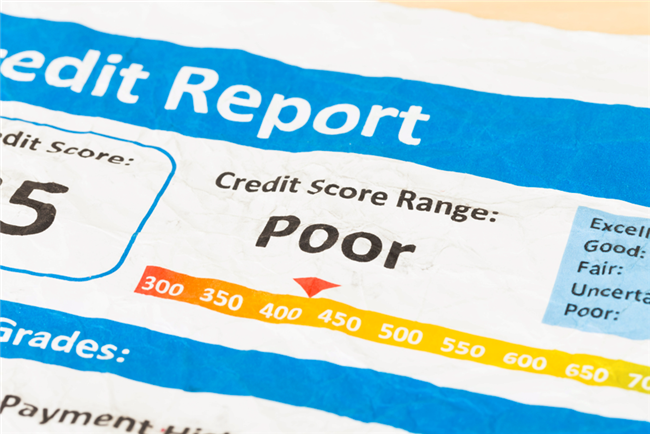
Rental housing owners can help improve the financial well-being of residents by reporting residents’ positive rental payments to the major credit bureaus which provides renters with a potent incentive to pay their rent on time and in full.
There can be no downplaying the tremendous responsibility placed upon apartment operators.
In exchange for what is usually a renter’s largest monthly financial obligation, operators are charged with providing quality homes and outstanding customer service. The importance of these tasks is clear.
But today’s property managers have the opportunity to play an even more important role in their renters’ lives. They can be true partners in helping their residents improve their financial well-being. And as you will see, they can do this in multiple ways.
Reporting Positive Rent Payments
A strong, positive credit history is essential to securing car loans, credit cards and mortgages – and to doing so at favorable interest rates.
For many households, rent is the single largest monthly expense. yet despite responsible money habits, apartment residents, unlike homeowners, traditionally have not gotten credit on their credit reports for making their housing payments on time and in full.
Every person deserves the opportunity to reach their full financial potential, and apartment operators can empower their residents to improve their financial wellbeing.
Take for consideration, emerging consumers. More than a third of renters (34 percent) are under the age of 35. This is a pivotal time to start building credit and establishing a strong financial future. But for too many consumers, simple access to fair and affordable credit has long been out of reach.
According to the Credit Builders Alliance (CBA), renters are seven times more likely to be “credit invisible” – meaning they lack enough credit history to generate a credit score – when compared to homeowners. The fact that rent payments typically don’t help build credit history also is particularly harmful to lower-income households and underserved communities.
Renters make up approximately 60 percent of the U.S. households that make less than $25,000 a year, while Black and Hispanic households are twice as likely as white households to rent, CBA says.
Apartment operators can help remedy this situation – and lend their residents a powerful helping hand – by reporting residents’ positive rental payments to the major credit bureaus. Doing this also provides renters with a potent incentive to pay their rent on time and in full. This step becomes a win for everyone.
In CBA’s Power of Rent Reporting pilot, 100 percent of renters who started off with no credit score became scorable at the near prime or prime level. In addition, residents with subprime scores saw their score increase by an average of 32 points.
Due to results like these, the effort to make sure renters’ credit histories benefit when they make their rent payments on time and in full continues to gather momentum. In California, lawmakers passed Senate Bill 1157, which became law on July 1, 2021, and requires affordable housing providers of a certain size to implement rent reporting for their residents. Last November, Freddie Mac announced an initiative to encourage multifamily operators to report on-time rental payments to the three major credit bureaus.
Experian is committed to working alongside consumers, partners and industry organizations including the Consumer Data Industry Association (CDIA) to drive financial inclusion through rent payments.
Flexible Payments
Reporting positive rent payments to credit bureaus isn’t the only way rental-housing operators can help their residents financially.
Some forward-thinking apartment owners and managers also are offering flexible rent-payment schedules to their residents. Rather than requiring residents to make one large payment at the beginning of the month, they’re working with renters to set up payment schedules that are based on the residents’ pay cycles and that allow for multiple, smaller payments over the course of a month. Arrangements like these can help residents avoid expensive late fees and evictions.
Asia Capital Real Estate (ACRE) is an example of an operator that offers flexible rent payments. Last year, the company partnered with Till to offer flexible rent-payment options to residents in nearly 35 apartment communities in the Southeast and Midwest.
Looking ahead, as apartment owners and operators consider the ways they can better serve their residents, they should look for ways to help them improve their financial well-being. Reporting positive rental payment histories and offering other financial amenities can create a competitive advantage over other properties, drive better business results and is simply the right thing to do.
When operators extend a helping hand in this way, everybody wins.
About the Author
Alpa Lally is the vice president of data business for Experian’s core business in North America. She is responsible for product management related to Experian’s core and alternative data assets. Experian incorporates on-time rental payment data reported to Experian RentBureau into Experian credit reports.
Here is a Seattle perspective from a property management expert on what is going on in Seattle and the Pacific Northwest with leasing and who is moving and why.
By Cory Brewer
Our brokerage (Windermere Property Management / Lori Gill & Associates) has about 1,700 homes under management, primarily single-family houses, throughout King & Snohomish Counties. We have a team of five leasing agents that account for about 80 percent of the leases at these properties in any given year, just to set the table for the number of prospective renters that we are engaging with on a regular basis. Factor in the multiple calls, showings, and applications that come in on any given property and that’s a LOT of engagement with the prospective renting public.
So, why are people moving?
What prompts someone to call us about a house that’s for rent in Medina, Magnolia, or Mercer Island? In reviewing the bi-weekly leasing reports that our team has sent in over the past several months, here are some recent trends.
Tech workers coming to the Seattle area is nothing new, but it seems we are on the cusp of an absolute tidal wave of new techie hires flooding our market with housing demand. By the end of 2021, Meta (formerly Facebook) had leased five new buildings in the developing Spring District in Bellevue for a total of over 1.4 million square feet. Not to be outdone, Amazon is reported to eventually host 25,000 jobs in Bellevue. Let’s not forget about Microsoft, Google (more Kirkland campus construction under way as we speak), and any number of other tech companies that call the Seattle area home. The new development and job movement will be coupled with bringing workers back to the office in the wake of COVID-19. I’ve heard anecdotally about the thousands upon thousands of people that have already been hired by these companies who are currently working from home in other parts of the country (or the globe, really) and have not moved here yet. When they do, they’re going to need a place to live. Many of them are very intentional about their decision to rent for their first year in a new city, in order to learn the area before committing to a home purchase. Get ready.
To piggy-back on that thought, we’re also seeing people make a relatively short move from Seattle over to the Eastside in anticipation of their job moving across the lake.
Additionally, a fair number of homeowners are looking for a temporary rental while they remodel their primary residences. New construction is difficult due to the scarcity and price of buildable lots. Housing values have increased significantly over the past few years, allowing homeowners to take advantage of their equity and put it into remodels & renovations. Many of these were planned before the COVID-19 outbreak, which shut down construction businesses to varying degrees, and there is a backlog of projects to get on the schedule. That’s a lot of people looking for a rental before they can send in their contractor.
If you can believe it, we’ve actually got people relocating to the Greater Seattle area in search of more affordable housing! We do have a fairly high cost of housing when compared to most other parts of the county, but California transplants in particular are heading to the Pacific Northwest to take advantage of the relative value.
And finally, a significantly growing trend – particularly in Seattle – has been the number of people looking to find a new rental because the owner of their current rental is selling. I’ve written about this quite a bit over the past couple of years in various publications, and we continue to hear about it from our leasing team every week. It is no doubt a hot seller’s market, but we also know that many rental home owners are selling their Seattle properties due to the evolving legislative environment. It’s an unfortunate situation, and to any household struggling to find another available rental home because the previous one is being sold I say this: You can thank your city council.
With the exception of dense multi-family housing in the downtown Seattle core, all other markets in the Greater Seattle area (according to my NWMLS research) have performed very well these past couple of years – particularly single-family houses, and in just about any neighborhood. As we distance ourselves from the pandemic, all the things that draw people to downtown Seattle will come back as well (jobs, dining, arts, sporting events, etc.). The demand is ever-growing throughout our region, and housing providers continue to offer something that meets a crucial need in our communities. As an industry advocate, RHA continues to support housing providers and showcase them as the assets that they are.
About the author:
Cory Brewer
Cory Brewer is vice president of residential operations for Lori Gill & Associates and Windermere Property Management in Bellevue, WA. He oversees a team of property managers in the greater Seattle area who manage approximately 1,500 rental properties. Brewer can be reached via www.wpmnorthwest.com or coryb@windermere.com and 425-623-1330
Rent growth hit a record high for the first quarter, according to Yardi Matrix, as multifamily rents surged again in March.
However, concerns about the economy going forward show the potential for headwinds to rent growth and inevitable decline in some markets.
“Demand is expected to remain healthy, but rent growth is likely to decelerate as concerns grow about the economy. Inflation is moderating slowly, and rising rents and energy prices may keep it elevated longer than expected,” the report says.
Here are highlights from the report:
Multifamily performance was strong once again in March, though rent growth has decelerated slightly from 2021 levels. The average U.S. asking rent rose $14 in March to an all-time high of $1,642, with year-over-year growth dropping 50 basis points to 14.8 percent.
Asking rents increased by $34 nationally, up 2.1 percent, in the first three months of 2022, which is record growth for a first quarter. However, rent growth is unlikely to keep pace with 2021, as last year’s explosive movement started in the second quarter. Plus, economic growth is set to slow as inflation takes hold and the war in Ukraine pushes energy prices up and creates an element of uncertainty.
Rents for single-family rentals continue to rise, though the rate of growth is decelerating. The average U.S. rent rose $14 to $1,999 in March, while year-over-year growth dropped 90 basis points to 14.1 percent.
“The big picture that emerges from March multifamily data is that the market remains healthy, though signs point to the inevitable deceleration in some markets. Meanwhile, economic conditions and global events contain headwinds that justify the expectations of moderation and caution,” Yardi Matrix writes in the report.
Rent Growth Continues Strong in the Southwest and Southeast
Rent growth continues to be a national phenomenon, led by the migration to the Southeast and Southwest. The top five metros—Miami, Orlando, Tampa, Las Vegas and Phoenix—all showed asking-rent increases of 23 percent or more.
“Demand for housing continues to be robust, led by young workers whose rapidly rising wages provide the wherewithal to form independent households apart from parents and roommates.
“Household growth and absorption are likely to slow to more normal levels in 2022, to about half of last year. That would presage healthy—albeit more moderate—gains in multifamily fundamentals,” the report says.
Yardi Matrix researches and reports on multifamily, office and self-storage properties across the United States, serving the needs of a variety of industry professionals. Yardi Matrix Multifamily provides accurate data on 18+ million units, covering more than 90 percent of the U.S. population. Contact the company at (480) 663-1149.
A landlord wants to know what to do if tenants lie about having pets in her rental property is the question this week for Ask Landlord Hank. Remember Hank is not an attorney and he is not offering legal advice. If you have a question for him please fill out the form below.
Dear Hank:
What can I do when tenants lie about having pets?
-Rachelle
Dear Landlady Rachelle,
This issue goes back to your lease.
Many leases have a clause that deals with pets along these lines: Tenants shall not keep any animal or pet in or around the rental property without LANDLORD’S prior written approval and a pet addendum attached and made part of this lease.
As you know, pets can be destructive to your property and I’m sure that is why you don’t allow a pet. I would get photographic proof that the tenant has a pet and then put a 7-day notice on the door. That is a legal notice that lets the tenant know they are in serious violation of the lease and has 7 days to “cure” or fix the violation by getting rid of her pet or pets – or you will file an eviction.
Don’t be soft here, or accommodating, as this could be the tip of the iceberg as far as violations of the lease is concerned. Best of luck!
Sincerely,
Hank Rossi
Each week I answer questions from landlords and property managers across the country in my “Dear Landlord Hank” blog in the digital magazine Rental Housing Journal. https://rentalhousingjournal.com/asklandlordhank/
Landlord Hank says, “I would get photographic proof that the tenant has a pet and then put a 7-day notice on the door.”
Ask Landlord Hank Your Question
Ask veteran landlord and property manager Hank Rossi your questions from tenant screening to leases to pets and more! He provides answers each week to landlords.
Choosing the right flooring for your rental property gives you several important options to consider so here are six things to look at for your property flooring.
By Lillian Connors
Choosing the best flooring for your rental property differs greatly from going with your personal preferences. It’s very different from furnishing your own home.
Rental spaces face a lot more wear and tear. Many tenants don’t take care of the flooring as the owner would. In addition, you’ve invested in the rental to make money. The choice of the floor should follow the line. In short, an ideal rental flooring needs to be affordable, durable, and low-maintenance. Too it must be easy to install and aesthetically pleasing. Let’s review the options.
No. 1 – Affordability
The cost of a new floor depends on three factors. These are the cost of material, the cost of installation, and cost of maintenance. Just like with every kind of product, there are high-end and low-end versions of each type. For the greatest part, the floors that lean toward the affordability end of the scale include tile, cork, wood tile, vinyl sheets, vinyl tile, laminate and linoleum.
No. 2 – Ease of maintenance
A floor that is easy to keep clean and good-looking is the one that doesn’t need regular maintenance, such as waxing, oiling, or buffing. This is an important consideration for a rental property. There are tenants who completely forgo regular maintenance. In addition, maintenance often requires that all furniture is removed from the room, which means the best time to do it is between tenants. This increases your workload at tenant turnovers. As the ease of maintenance is concerned, the list goes like this: engineered hardwood, cork, vinyl sheets, vinyl tile, laminate and linoleum.
No. 3 – Aesthetics
Naturally, your primary goal is to rent your unit easily. So the aesthetic aspect of your floor needs to go hand in hand with the affordability and ease of maintenance. For a more cohesive, upscale look, it’s always recommended to go with the same flooring throughout the unit, except the bathroom and the kitchen. Bathrooms and kitchens require water-resistant flooring. In addition, having the same flooring in the entire apartment helps it look bigger and more up-to-date. On the aesthetics side, the winners are vinyl tile, laminate and linoleum. Let’s look into each option separately.
Three types of flooring for your rental property
Linoleum hues and patterns extend down through the wear layer, so there is no risk of fading or discoloring.
No.1 – Vinyl flooring
For many landlords, vinyl is an absolute favorite, not only because it comes in tile, planks or sheets, but also due to the fact that it resembles raw materials. Also, vinyl floors are highly water-resistant, which makes them suitable for kitchens as well. Another bonus is the fact that it doesn’t require prepared subflooring, which makes the installation easier. If you decide to go with contemporary vinyl planks, you’ll be surprised by the amazing range of natural looks of wood, stone and ceramics, now made possible with 3D printing techniques.
No. 2 – Wood laminate flooring
Another affordable option, wood laminate is easy and quick to install. Unlike vinyl, however, it’s best that you apply a tough finish layer to protect the floor from fading, staining or premature wear from traffic. As a cost-effective hardwood alternative, laminate floors are an ideal option for landlords on a budget who believe in the undisputable charm of wood floors.
No. 3 – Linoleum
From its invention in the mid-1800s to the early 1950s, linoleum was among the most popular flooring materials in the world. This naturally sourced material has anti-static properties that prevent dust particles from sticking to its surface, while its anti-microbial properties make it a popular choice for kitchens and kids’ rooms. Although early forms used to be much more brittle, manufacturing processes (along with watertight installation) have made this durable material popular again. On the aesthetic side, its hues and patterns extend down through the wear layer, so there is no risk of fading or discoloring.
The maintenance checkup this week, provided by Keepe, looks at 7 types of kitchen countertops for your rental properties and apartments and which works best for you.
Appliances aren’t the only thing that can make or break an apartment property’s kitchen: countertops take up the majority of the kitchen space, affecting the look and feel of the room but also its functionality.
In most cases, property managers and landlords tend to opt for countertop materials that either look appealing or that are most affordable or easy to repair. While this is understandable, it is important to keep in mind that the best kind of home design – from furnishing and decor to basic construction – should aim to thoughtfully combine aesthetics, practicality and affordability. The following guide reviews the qualities of common countertop materials and their pros and cons to help you choose the best material for your kitchen countertops.
7 Types Of Kitchen Countertops For Your Apartments And Rental Properties
Quartz (or Engineered Stone)
According to the National Kitchen and Bath Association, man made quartz (not to be confused with natural Quartzite) is now the top selling material for kitchen surfaces.
This is likely due to the fact that it is more stain and scratch-resistant than granite, the second most commonly utilized material. Quartz is made by combining mineral fragments with heavy-duty resins. It is durable and chip resistant, and it’s fairly priced at slightly above granite but still below marble. It’s also considered to be environmentally-friendly as it is created by combining waste stones and not mined. Overall, quartz is functional, affordable and practical. The only downside to note is that some people find the look of quartz to be too uniform, which can miss the mark for those who like the natural irregularity of marble; this being said, new improvements in manufacturing technologies have actually allowed quartz production to become more advanced and create more sophisticated patterns.
Granite
Granite is a natural stone, which is appealing for those preferring its naturally occurring, more variegated look.
Granite is not as durable as quartz, but it is still scratch, stain and chip resistant. Manufacturers explain that darker-colored granite is denser, which increases its durability due to the fact that it is less permeable. For this reason, lighter-colored varieties might require sealing procedures, which also means that those varieties are going to be more demanding when it comes to upkeep over the years.
Marble
Marble is a timeless favorite when it comes to kitchen countertops because of the way it adds a unique touch of elegance.
Marble is also fairly affordable – often being considerably cheaper than quartz and granite – and is widely available, which makes repairs and maintenance easy. Additionally, those who are passionate about cooking, baking and particularly pastry-making are drawn to marble’s naturally cool temperature. Unfortunately, marble is quite porous, which makes it vulnerable to scratches and permanent staining. Opting for marble countertops means having to be very careful and mindful of which foods and condiments one might want to avoid exposing marble to, and always ensuring that surfaces are thoroughly cleaned.
Solid Surface
Solid surface is specifically made to resemble natural stone while being actually composed of artificial polymers and resins that are mixed with mineral dusts.
This makes solid surface affordable and easy to maintain, requiring no sealing procedures and with most technicians having access to readily available materials for replacements and patch-repairs. Unfortunately, solid surface countertops are vulnerable to high heat and scratches: manufacturers encourage paying close attention to what the countertops are exposed to, especially when it comes to sharp tools or hot cookware. Generally, scratches and surface damages can be repaired by buffing the surface, but this implies having to hire a technician on quite the regular basis.
Tile
Ceramic tiles are easy to replace when broken or damaged, and allow for plenty of customization.
One of the main downsides to ceramic tiles is the grout in between them, which tends to easily collects dirt and stains that are often hard to successfully clean off. While they’re easy to replace, it can be easy for tiles to exhibit chipping and cracking over time as a result of accidental impacts. Tiles are generally covered with a glossy protective enamel that can rub, chip or fade off over time, which is why it’s best to avoid aggressively scrubbing the tiles.
Laminate
Laminate became quite popular during the 1960’s and 70’s, when the idea of “plastic everything” started taking over.
Laminate is created by layering sheets of paper and resins, with pressed Kraft paper layers (the same paper material as grocery bags) being the most common: it is inexpensive and extremely easy to replace on a tight budget. However, the advantages of low costs come with a series of disadvantages: laminate melts and scratches easily, and overall, opting for laminate countertops does not add value to the property. Laminate cannot be recycled and its production features the use of numerous chemicals, making laminate not very “green”.
Butcher Block
Butcher block countertops bring the warm and rustic look of natural wood to the kitchen.
To make butcher block countertops, thick slabs of wood – generally maple, bamboo, cherry or red oak – are assembled with heavy-duty glue, and their different arrangements create different surface patterns. Butcher block is very difficult to care for as experts recommend avoiding covering the wood with sealant, to both maintain the natural look of the wood but also to avoid exposing food to the chemicals used for sealing.
The issue with having unsealed wood is that discoloration and even rotting can be very likely to happen due to water and moisture exposure. To best protect the wood, butcher block surfaces need to be oiled every six months: manufacturers warn against taking the “DIY” route as many have damaged their countertops by opting for cooking oils, instead encouraging the scheduling of regular oiling procedures by professional technicians. Even when oiled, wooden countertops are not scratch or heat proof: very minor damages can be fixed by sanding the wood and re-oiling the area – again, a procedure that is best left to professionals. Over time, they will develop a natural patina: some really enjoy the look of “aged” wood while others do not, so it’s important to keep this aspect in mind.
Other recent maintenance Keepe posts you may have missed:
Keepe is an on-demand maintenance solution for property managers and independent landlords. The company makes hundreds of independent contractors and handymen available for maintenance projects at rental properties. Keepe is available in the Greater Seattle area,
Here are three steps to becoming a successful “lazy” landlord that you can implement starting today to begin the process of transforming your management style.
On my first trip to the doctor’s office this year I went through that painful experience that we all must endure… updating my personal and health information. My brain immediately goes into shut down mode as I am trying to conserve the calories that my mind is going to consume filling out paperwork. I profess to the receptionist that nothing has changed but she insists they need t for “their files.”
Reluctantly, I sit down with the plastic clipboard and begin to slog through the same questions I filled out last year. Name, Date of Birth, Insurance Info (didn’t you just take a copy of my insurance card?) and a complete health history later, I flip the paper over and realize they want all this information again on the next page. My pace quickens and my handwriting worsens as I go into the “power through it” mode.
Finally, with the completed packet in hand I return the information to the front desk and sit down waiting for my name to be called. It’s enough to make me forget why I am even there in the first place. It reinforces this truth; when you don’t Like to do something, you don’t do it right.
Then my mind starts thinking, there must be a better system, a better way, to make this process less painful and feed my need to thrive and not just survive. Let’s face it, most of us want to take the easy or lazy way when it comes to moments like this. Then when I step back and look at how we as landlords handle our own paperwork and process, I see some of the same stumbling blocks in the way we do things. The big difference is, I know there is a better way because I use Rent Perfect every day.
There are three major tools that every landlord can implement starting today to begin the process of transforming their management style to that of the “successful lazy landlord.”
Tool #1- Check your checks
At a bare minimum, every application you receive for a potential tenant should include a thorough check of each applicant’s identity, credit, criminal, and eviction history. Just like your favorite weatherman, we forecast the future by examining the past.
Identity- How sure are you of the identity of the person applying for your property? It’s easier than ever to fabricate your identity, create fake social security cards and identification documents. If you don’t really know who is applying, how could you possibly trust the results of any future behavior?
Credit- The financial past of your applicant is usually indicative of their future behavior. Few things impact a person’s decisions more than their financial strains, so knowing how your applicant has behaved in the past is a great indicator of how they will honor their commitments to you moving forward.
Criminal- While the courts across the country continue to soften their stance on criminal behavior, does that mean you should do the same for your applicants? Statistics show that over 90 percent of offenders have repeatable criminal habits that don’t go away. And guess what, criminals tend to hang out with others who are involved in criminal behavior. Actively protecting your investment property should always include a criminal background check of EVERY applicant on the lease.
Eviction- Although the courts have tried to make this more difficult, there are still ways to see if your applicant has a history of leaving their landlord high and dry. An applicant with more than one eviction should be a red flag to you to exercise great caution when considering them as a tenant.
The more you can know about the past, the better decision you can make to find success in the future.
Tool #2- Throw away the manila folder!
And while you’re at it, toss that big metal filing cabinet too. Gone are the days of processing paper applications and leases. It’s time to embrace the digital world in regard to being a “successful, lazy landlord” as you can now manage everything right from your favorite device.
Online applications- In the past, I would collect a paper application from an applicant and then go to my office and spend hours taking their written information and re-entering it into a word processing program. I was operating more like a data entry employee than a landlord. Programs today allow the applicant to login, supply the required information, and complete the application process all on their own. All I have to do is go and review their supplied info.
Lease- After you have collected all their information digitally, it is simple to take that information and add it to your leasing documents, with many programs being able to automatically generate a lease at the click of a button. Again, not having to re-enter all of this information is a huge time and energy saver.
Move-In Inspection Process/Pictures- With a digital move-in inspection process, your tenant can document the condition of the property exactly as it was at time of possession. No more guessing or relying on memories at the end of a lease; you have it fully documented and stored for easy access and comparison.
The days of gathering and keeping track of paper throughout the entire rental process are over. Toss that manilla folder and embrace technology in your quest of becoming a “successful, lazy landlord.”
Tool #3- Make Collecting Rent Easy
There’s nothing a landlord loves more than seeing the rent paid in-full and on-time every month. Technology has made it easier than ever to make this process seamless for the landlord. Find the right technology partner that can help you in the following ways:
Send upcoming rent notices- Your rental collection program must be able to begin notifying your tenant of rent due at least five days in advance. Ideally, they should receive a reminder that your rent is due in five days… your rent is due in four days…etc. Take away the excuse from your tenant that they “didn’t know” ever again.
Receive rent right into your bank account- Rid yourself of running to the mailbox in hopes of finding that rent check. Have the funds directly deposited into your account.
Automatically track late fees and payments- No one wants to be the nag when it comes to getting paid. The right program will track late fees, send “late rent’ notices automatically, which frees you up to do other things. Collect and track payments to ensure you are getting the rent and late fees paid in full.
This step in becoming a “successful, lazy landlord” might be the most critical as you collect rent 12, 24, 36 or more times every month for the term of the lease.
I invite you to step back and look at your current practices from both the landlord and tenant perspective. Are there tweaks you can make that will benefit both you and your tenants in terms of making the process a little less painful for both of you. Nobody wants to just survive as a landlord and by putting some of these tools into practice, you’ll see your business (and you personally) thriving in no time.
About the author:
Scot Aubrey is Vice-President of Rent Perfect, a private investigator, and fellow landlord who manages short-term rentals. Subscribe to the weekly Rent Perfect Podcast (available on YouTube, Spotify, and Apple Podcasts) to stay up to date on the latest industry news and for expert tips on how to manage your properties.
Property management software is changing the way that landlords, property managers, and real estate investors do business–and it’s all for the better. With powerful software solutions at their fingertips, real estate stakeholders streamline their operations, get more done in less time, and grow their businesses by working smarter, not harder.
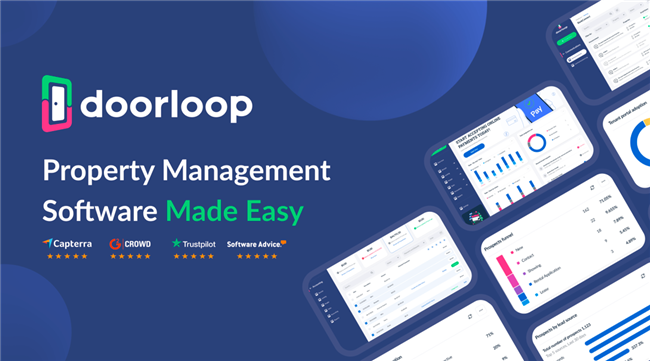
David Bitton is the co-founder and CMO of DoorLoop, the highest-rated property management software online. We got together with him to explore the many ways in which property management software solutions are working wonders for real estate businesses.
David Bitton, DoorLoop CMO and Co-Founder.
We talked about how software addresses the most important obstacles faced by property managers, which features are the most useful and why, and the qualities every real estate business should look for in order to choose the right software. Take a look at David’s (often surprising) insights below.
What are some of the most important issues that property managers and landlords experience today?
Managing any number of properties means having to stay on top of dozens (or even hundreds) of tasks, requests, and deadlines all at once. Without some way to streamline and complete all of these tasks in a timely manner, it becomes extremely difficult to achieve scalable, sustainable growth.
Managing leases and tenants is difficult on a good day, and it becomes even more so when issues arise. Some of the most common issues we’ve seen landlords and property managers experience with their tenants include:
Not being paid rent on time (or in full)
A lack of adherence to community rules
Submitting insufficient information on maintenance requests
Broken lease terms, especially when it comes to ending a lease or vacating the unit.
How can a rental property management software solve these issues?
Most property management companies and landlords use a bunch of different systems to run their businesses: QuickBooks for accounting, DropBox for file sharing, Excel for tenant rosters and deadline management, and maybe Asana or Trello for task management.
The most useful thing about a comprehensive property management software is that it has all of those functionalities–and more–in one place. Instead of shuffling between browser tabs or desktop apps to get daily tasks done, users can complete their tasks in seconds and store all of their data in one place.
Here are some easy but massive benefits of property management software that solve most business’ biggest issues:
Automated payments – You can get paid automatically and on time every month when you offer your tenants the option to pay their rent and recurring fees online via credit card or ACH payment. If someone happens not to pay in full, you can add automated late fees at intervals of your choosing. You can also track upcoming, due, and overdue payments right from your software dashboard.
Streamline maintenance requests – Streamlining maintenance requests (and addressing them in a timely manner) is a major pain point for thousands of property managers. With software, you can automatically accept maintenance requests from your tenant portal. Then, you can create work orders, assign them to vendors, and track every step of their process to make sure everything is done on time.
Lease alerts – You don’t have to count on your tenants to notify you about lease renewals or unit vacancies. Instead, you can set up automatic alerts for yourself and your tenant about upcoming lease expirations and renewals. This will help you make sure you always know who is occupying your units and when.
There’s an undeniable pattern when it comes to the biggest issues rental property managers experience: miscommunication. When you use a bunch of different platforms to manage your properties, important tasks or details are bound to fall between the cracks. This leads to disappointed tenants, inconsistent occupancy rates, and poor reviews.
Miscommunication is a serious issue for landlords and property managers, but it’s also one that can be resolved easily with the right systems and software.
What portfolios are supported?
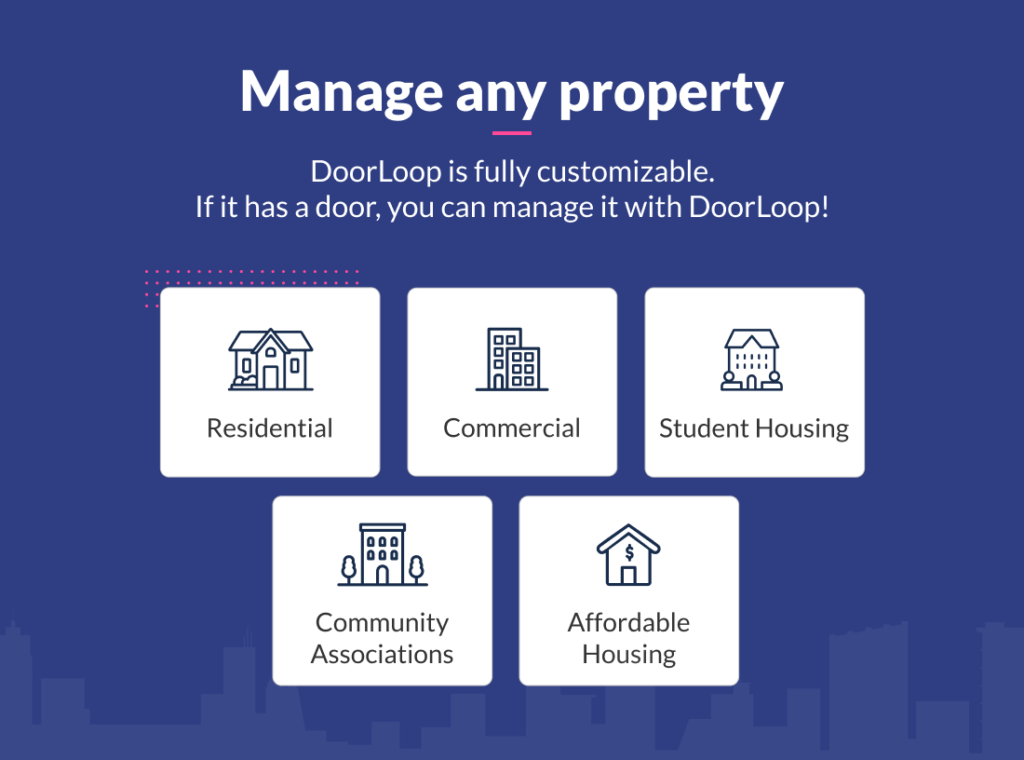
Every software is different, but the majority (and, in my opinion, the best ones) support any type of portfolio–including mixed-use portfolios. This includes:
Residential properties (single-family homes, condos, apartments, senior living facilities, and other options)
Commercial properties (office spaces, retail storefronts, medical spaces, etc.)
Student housing (dorms, student apartments, and more)
Manufactured homes (also known as mobile homes)
Affordable/Section 8 housing
Self-storage facilities
Community associations and HOAs
Who can (or should) use property management software?
It doesn’t matter if you manage 1 unit or 1,000; property management software is an incredibly useful tool to help you get more organized, spend less time on administrative tasks, eliminate double data entry, and grow.
With that said, I’d say the professionals who benefit most from property managers are landlords (or investors who manage their own properties), property managers who manage properties for other owners, and property management companies with several clients.
What does the future of property management look like?
That’s the big question! I wish I could glimpse into the future and provide a surefire answer, but the truth is that nobody knows for sure. What we do know is what data tells us–especially when it comes to the huge amount of money that private equity investors and venture capitalists are dedicating to property management software. That alone bodes extremely well for the future of property management software.
Over the past decade or so, there’s no denying that we have collectively sought out automation tools at higher and higher levels. From simple every-day tools like the “Reminders” app on our iPhones to powerful tools that save major companies millions of dollars every year, getting things done in less time is the bread and butter of technological innovation.
When it comes to property management software, automation can help you dramatically cut down on time spent on administrative tasks. Some of those automation possibilities include:
Maintenance requests. Automatically receive requests from tenants. Create workflows for each type of maintenance request that you can easily apply to specific work orders. These workflows will include all of the tasks associated with the project, the vendor responsible for the project, and the urgency level. From there, the software will automatically track each step of the process until the job is done.
The entire rental process. You can list your properties on a custom website, receive applications from tenants, run background checks in one click, select the tenant of your choice, send them a lease, collect eSignatures, and set recurring payment deadlines–all in one place.
Another crucial piece of the puzzle that goes hand-in-hand with automation is artificial intelligence. It seems like you can’t throw a metaphorical rock on the Internet without hitting a think piece about how AI is shaping our future–and that’s for good reason.
When it comes to property management software, AI is an incredibly powerful tool. With AI, computers use data to run all kinds of projections and predictions. The more data you have in one place, the more accurate these predictions will be. AI in property management software, for example, can help you determine critical elements of your business, including:
How much to charge for rent based on your location, property size, and market demand
Which applicants will make the most reliable tenants for your property
Which tenants are likely not to renew their leases or even cancel early
Property management software is perhaps the most powerful tool available to real estate property managers and landlords right now. If I had to guess, I’d say that its usefulness will only continue to grow in the future.
What is DoorLoop, and how does it help property managers and landlords?
DoorLoop is the easiest-to-us property management software (and I may sound biased when I say that, but our five-star reviews don’t lie).
We believe that property management software should be stacked with a full suite of powerful features–but, at the same time, that those features are useless if they’re difficult to access and implement. That’s why we’ve spent so much time making the software as user-friendly as possible.
Though we work hard to make sure you don’t really need it, we also have a responsive, world-class Support team to help our users every step of the way.
Everything I talked about in this article is featured on DoorLoop, and the best way to see them at work is to set up a demo with us. You’re also welcome to reach out to us if you have any questions before taking that step.
Our team of Loopers is pretty amazing (again, I may sound biased, but I stand by that statement). If you let them know you came from Rental Housing Journal, we’ll get you set up with a special deal.
If you couldn’t already tell, I’m super passionate about helping real estate businesses become more efficient, effective, and successful. If you have any questions about the tools I mentioned above or simply want to talk about automation strategies, please don’t hesitate to contact us!
Landlords need to carefully consider all the options for protecting their rental property and thus their income – which will most likely require a different kind of insurance than a typical homeowners policy. Also called rental property insurance, landlord insurance is a very sensible investment for property owners, whether they’re only looking at a series of short-term rentals for a single-family unit or long-term rentals for a large apartment building.
A landlord’s insurance policy covers a variety of situations, including paying for the replacement cost of the building in the event of a fire as well as legal fees if a tenant sues for damages. Provided that it is considered a covered loss, an insurer will provide funds according to the amount of coverage a landlord selected.
Determining if you should get a landlord insurance policy is something that most first-time rental property owners will debate. Lenders will often require this type of insurance before lending the money necessary for purchasing a rental property.
If the property is your primary residence, you’ll need a homeowners insurance policy. If you’re renting it out, you’ll need to buy landlord insurance.
Homeowners Insurance
This insurance is only for your primary residence and covers the building and covers personal property damage, liability, and a few other things. See also Incidental Occupany.
Landlord Insurance
Specifically, for property owners who plan on renting out a family home, apartment, or condo for an extended period and covers damages for events such as fires, burst pipes, or some natural disasters. Landlord insurance will also provide liability protection if a tenant or guest sues, and the property owner needs to pay for legal fees or medical expenses.
Generally, a landlord insurance policy costs about 25% more than a homeowners insurance policy for the same property. This might sound like a large price increase when compared to homeowner insurance. But insurance providers can deny you a claim if you are renting out your property and do not have the appropriate insurance coverages provided by landlord insurance. The upside is that you are permitted to make a tax deduction for the entire landlord insurance premium for your rental property. The IRS considers this a normal business expense when renting out real estate.
Some people own real estate in their own name and manage it personally, then claim the expense on their personal tax returns. Others choose to hold property in an LLC as a business entity. Either way, all insurance premiums associated with the rental property are tax-deductible.
Landlord Insurance providers like Steadily offer online landlord insurance in minutes, making the process simple, easy, and affordable. You can get a quote with coverage as early as the next business day. With national coverage and service for all types of properties – single family homes, condos, apartment buildings, vacation rentals, Airbnbs, and more. With landlord insurance, you can focus less on claims, and more on what matters: growing your rental property business.
About the author:
Datha Santomieri is the co-founder and vice president of Steadily, a national insurance agency focused on providing a tech-forward experience for landlords to secure a quote for their properties within minutes. Before founding Steadily, Datha spent ten years at Brown & Brown in the National Programs Division leading operations and implementing key programs and acquisitions. Her early career was spent in GEICO’s management training program in Lakeland, FL. Datha studied at Richmond American International University in London and American University in Cairo before graduating from the University of Tampa. She is a CPCU and a CIC, so she loves to talk insurance.