Home Blog Page 139

Lawmakers Extend Oregon Eviction Moratorium Through End of September

Lawmakers Extend Oregon Eviction Moratorium Through End of September

Lawmakers have voted to extend the Oregon eviction moratorium for both residential and commercial properties through the end of September and give renters until March 31, 2021 to pay back rent.

The legislature passed HB 4213 which extends the renter protections originally issued by Governor Kate Brown’s Executive Order preventing evictions for nonpayment of rent.

After the Oregon eviction moratorium ends Sept. 30, the bill sets a grace period through March 31, 2021, for tenants to pay any rent owed. If they make partial payments, the money is applied to current rent first.

Tenants must inform landlords within two weeks whether they intend to use the grace period, either by mid-October or another date set by the landlords. If they do not, tenants can be charged a penalty equal to a half-month’s rent. Landlords can send notices to tenants about the deadlines, but they cannot send tenants eviction notices until 90 days after nonpayment on Dec. 31, according to reports.

Oregon eviction moratorium

House Bill 4204 gives homeowners and property owners protections from foreclosures as Oregon’s economy recovers from the COVID-caused recession, according to a release.

“Home and property owners are struggling to pay their bills and prevent foreclosure as a result of this pandemic. This bill will help protect those who live in their own homes, as well as those who maintain rental housing, or who rent spaces to small businesses,” Senator Kathleen Taylor (D-Portland) who chairs the Senate Committee on Labor and Business, said in the release.

“By passing House Bill 4204 and extending foreclosure protections, we help home and property owners and all who depend on that property for housing or income,” Taylor said.

“This is about protecting individual homeowners and small business owners who are struggling during this crisis,” said Rep. Paul Holvey (D-Eugene), who carried the bill on the floor, said in a release.

“This critical legislation will help individuals keep a roof over their head and keep our state’s small businesses open. This is one piece in helping stabilize our state’s economy as we work our way through this crisis.

“We know for too many renters across Oregon, the fear of losing their home is very real – especially as unemployment claims continue to be delayed,” Rep. Julie Fahey (D-West Eugene and Junction City), said in a release.

“This legislation will provide a small amount of certainty for all of the individuals and small businesses that are struggling to get by right now. We will continue to fight for working families and ensure they have the protections they need to weather this crisis.”

Oregon Senate Republicans said in a statement, “…the Senate passed HB 4213, a bill that will force landlords and property owners to shoulder more debt during the Governor’s continued COVID-19 economic shutdown.”

Senate Republican Leader Fred Girod (R-Stayton) issued the following statement: “Instead of addressing the utter failure of the Oregon Employment Department to distribute unemployment checks to thousands of suffering Oregonians, Democrats are stacking debt on people who cannot afford it and the burden falls on renters and landlords. The Governor’s abuse of power and economic policy is a disaster for this state.”


Oregon Governor Orders Stop to Residential Evictions for Nonpayment of Rent During Crisis

Property Management Company to Pay Tenants $300,000 to Settle Eviction Moratorium Lawsuit

Sign Up For Our Newsletter And Get Apartment News And Helpful, Useful Content Each Week.

* indicates required

Justice Department Sues Owner, Manager of Rental Properties for Sexual Harassment of Female Tenant

sexual harassment of female tenant

The Justice Department has filed a lawsuit alleging that the owner and manager of rental properties in Davenport, Iowa violated the Fair Housing Act by subjecting a female tenant to sexual harassment and retaliation, according to a release.

The lawsuit, filed in the U.S. District Court for the Southern District of Iowa, alleges that Juan Goitia, the manager of multiple residential rental units in Davenport, sexually harassed a female tenant from March 2018 until August 2018.

According to the complaint, Goitia made repeated and unwelcome sexual comments, touched the tenant’s body without her consent on multiple occasions, and retaliated against the tenant for filing a fair-housing complaint. The United States also named 908 Bridge Cooperative, the corporate owner of the rental property where the harassment occurred, as a defendant in the lawsuit, according to the release.

“No woman should have to endure sexual harassment to keep her home,” said Assistant Attorney General Eric Dreiband of the Civil Rights Division. “The Fair Housing Act protects tenants from sexual harassment and retaliation by their landlords, and the Justice Department will vigorously pursue those who engage in such reprehensible and illegal conduct.”

“Women have a hard enough time finding a decent affordable place to live without having to be subjected to unwanted sexual advances,” said Assistant Secretary Anna Maria Farias of the U.S. Department of Housing and Urban Development’s (HUD) Fair Housing and Equal Opportunity Office. “HUD applauds the action the Justice Department is taking in this matter and remains committed to working together to protect the housing rights of women when those rights are violated.”

Sexual harassment of female tenant

The lawsuit arose from a complaint about Goitia’s conduct that the former tenant filed with the Davenport Commission on Civil Rights (DCRC) and HUD. After DCRC and HUD investigated the complaints, HUD issued a charge of discrimination and the matter was referred to the Department of Justice.

The lawsuit seeks monetary damages to compensate the victim and a court order barring future discrimination. The complaint contains allegations of unlawful conduct; the allegations must be proven in court.

Justice Department Sues Owner, Manager of Rental Properties for Sexual Harassment of Female Tenant

The Justice Department’s Sexual Harassment in Housing Initiative is an effort to combat sexual harassment in housing led by the Civil Rights Division, in coordination with U.S. Attorney’s Offices across the country. The attorney general recently reaffirmed this commitment by directing the Department of Justice to deploy all available enforcement tools against anyone who tries to capitalize on the COVID-19 crisis by sexually harassing people in need of housing. The goal of the initiative is to address sexual harassment by landlords, property managers, maintenance workers, loan officers, or other people who have control over housing. As part of the initiative, the Justice Department developed a public service announcement and formed a joint task force with HUD to combat sexual harassment in housing. Since launching the Initiative in October 2017, the Department of Justice has filed 16 lawsuits alleging sexual harassment in housing.

California Apartment Owners, Manager to Pay $14,500 to Settle HUD Sexual Harassment Complaint

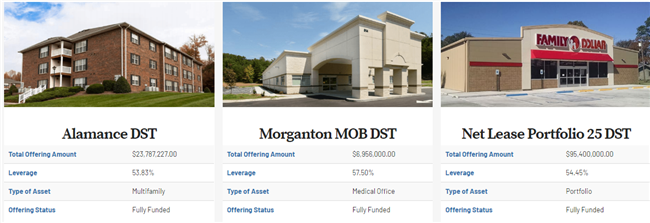
Looking for DST Properties for Sale? See Our 1031 DST Marketplace

Looking for DST Properties for Sale? See Our 1031 DST Marketplace

If you are looking for DST properties for sale, here is why a comprehensive 1031 DST marketplace is imperative for 1031 exchange investors.

By Orrin Barrow
Vice President, Kay Properties and Investments, LLC

Many investors that are looking for DST properties for sale for their 1031 exchanges find the comprehensive Kay Properties marketplace platform at www.kpi1031.com very helpful.

The Kay marketplace typically features 20 to 40 DST offerings and 25+ DST sponsor companies for investors to choose from.

Along with the www.kpi1031.com platform providing access to the marketplace of DST 1031 properties for sale it also features custom DSTs only available to Kay clients, leveraged DST properties for sale for those needing debt replacement in a 1031 as well as the largest amount of debt free DST properties for sale.  DST Investors accessing the www.kpi1031.com marketplace also receive independent advice on DST sponsor companies, full analysis, due diligence and vetting on each DST that is currently for sale as well as a DST secondary market for those wanting to exit there DST investment early.  These features are potentially an added benefit for investors that are searching for DST properties for sale and can potentially make the 1031 exchange process much more streamlined for them.

If you are looking for DST properties for sale for a 1031 exchange we encourage you to visit our marketplace at www.kpi1031.com to register for an account.

Looking for DST Properties for Sale? See Our 1031 DST Marketplace

About Kay Properties and www.kpi1031.com

 Kay Properties is a national Delaware Statutory Trust (DST) investment firm.  The www.kpi1031.com platform provides access to the marketplace of DSTs from over 25 different sponsor companies, custom DSTs only available to Kay clients, independent advice on DST sponsor companies, full due diligence and vetting on each DST (typically 20-40 DSTs) and a DST secondary market.  Kay Properties team members collectively have over 115 years of real estate experience, are licensed in all 50 states, and have participated in over 15 Billion of DST 1031 investments.

This material does not constitute an offer to sell nor a solicitation of an offer to buy any security. Such offers can be made only by the confidential Private Placement Memorandum (the “Memorandum”). Please read the entire Memorandum paying special attention to the risk section prior investing.  IRC Section 1031, IRC Section 1033 and IRC Section 721 are complex tax codes therefore you should consult your tax or legal professional for details regarding your situation.  There are material risks associated with investing in real estate securities including illiquidity, vacancies, general market conditions and competition, lack of operating history, interest rate risks, general risks of owning/operating commercial and multifamily properties, financing risks, potential adverse tax consequences, general economic risks, development risks and long hold periods. There is a risk of loss of the entire investment principal. Past performance is not a guarantee of future results. Potential cash flow, potential returns and potential appreciation are not guaranteed.

Securities offered through WealthForge Securities, LLC. Member FINRA/SIPC. Kay Properties and Investments, LLC and WealthForge Securities, LLC are separate entities.

Kay Properties Online Real Estate Marketplace Platform

Kay Properties Being Defensive Pays Off: Avoiding Hospitality and Senior Care

In a 1031 Exchange? Why waiting until after COVID-19 to complete your exchange could potentially be a bad idea

Property Management Companies, Others Sue Seattle Over Capitol Hill Autonomous Zone

Property Management Companies, Others Sue Seattle Over Capitol Hill Autonomous Zone

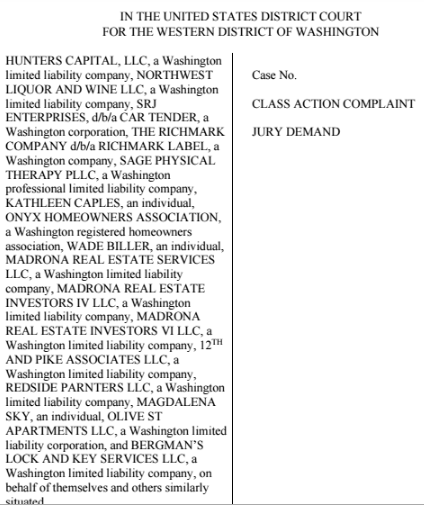
Property management companies in Seattle and other businesses have filed a class-action suit in federal court against the City of Seattle over the Capitol Hill Autonomous Zone (CHAZ), claiming the city “enabled the widespread destruction and vandalism of private property.”

The lawsuit says businesses, employees and residents have been overrun by “the city of Seattle’s unprecedented decision to abandon and close off an entire city neighborhood, leaving it unchecked by the police, unserved by fire and emergency health services, and inaccessible to the public at large.

“The city’s decision has subjected businesses, employees, and residents of that neighborhood to extensive property damage, public-safety dangers, and an inability to use and access their properties,” the lawsuit says.

Support of the protests

The lawsuit says it does not seek to dilute the participants’ right to free speech or their message.

Those filing the lawsuit say, “Plaintiffs support the free-speech rights of many of those who have gathered on Capitol Hill,” and “Black Lives Matter who, by exercising such rights, are bringing issues such as systemic racism and unfair violence against African Americans by police to the forefront of the national consciousness.

“This lawsuit does not seek to undermine CHOP (Capitol Hill Organized Protest) participants’ message or present a counter-message. Rather, this lawsuit is about the constitutional and other legal rights of plaintiffs—businesses, employees, and residents.”

the lawsuit says property management companies support the protest but not the vandalism and damage
The suit says the plaintiffs support the protests’ cause, but not the nuisance caused in the nearby park.

The suit says property management companies, owners and their tenants have not been able to fully use their properties.

“Property owners and tenants have, for instance, had to lock and barricade their garages and loading areas at risk of having participants entering and vandalizing them.

“Property owners have been told by CHOP participants that if they dare to paint over graffiti, their buildings will be more severely vandalized or even burned to the ground.

“The city has done nothing to prevent this conduct, but, instead, has actively endorsed and supported the ongoing occupation of the CHOP area and the destruction of property.”

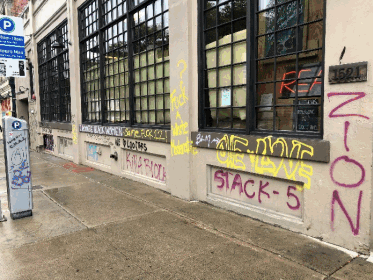
Property owners say vandalism and graffiti are a problem.
“Property owners have been told by CHOP participants that if they dare to paint over graffiti, their buildings will be more severely vandalized or even burned to the ground,” the lawsuit says. Photo credit: Photos provided by plaintiffs and included in the lawsuit.

Property Management Companies, Others Sue Seattle Over Capitol Hill Autonomous Zone

Property management companies filing the lawsuit

The businesses and individuals filing suit say the “city has not listened” to their complaints about destruction of property so they had no alternative but to file a lawsuit. In addition to small businesses and individuals filing the lawsuit, there are many property management companies.

  • Hunters Capital, LLC is one of the plaintiffs; it manages multifamily residential and other mixed-use properties in the Capitol Hill neighborhood. “Hunters Capital has suffered, and continues to suffer, economic loss …its property has been damaged and its tenants and employees have been harassed,” the suit says. A maintenance person at Hunters Capital was attempting to clean up graffiti on the building “when accosted by a group of CHOP participants” and told to stop the cleanup “and threatened to burn down the building” if the maintenance person did not comply. The company said tenants have been unable to sleep because of the constant noise. “Female tenants in particular have reported concerns about their personal safety in light of the numerous reported instances of sexual assault in CHOP. Some residents have threatened to break leases” with the company “because of extensive problems caused by CHOP.” Also the suit says, “tenants have already started to leave because of CHOP, and others cannot pay rent. Every day that passes. more of the company’s tenants leave.”
  • Madrona Real Estate Services, LLC said in the suit that they also have suffered, and continue to suffer, economic loss and other injuries, that their tenants have been harmed and harassed. Madrona also reported that CHOP participants had entered one building, pulled out pipes and set off the fire alarm and set off the sprinkler system, causing evacuation of 100 residents and flooding the parking garage, and “left human feces on multiple premises.” Madrona has been unable to lease more than 40 new units in the area “because nobody is interested in moving to CHOP.” Also, many of their small commercial tenants are facing bankruptcy.
  • The Onyx Homeowners Association has 65 condominiums in the area, and its building has suffered property damage and theft and owners have been harassed and threatened. The president of the association, Wade Biller, “has been physically assaulted by a CHOP participant while attempting to negotiate with CHOP participants in his role as president” of the association. The suit says the building has been subject to graffiti and vandalism and residents calls to 9-1-1 received no response from the city.
  • Redside Partners LLC also manages numerous properties in the Capitol Hill area and “has suffered, and continues to suffer, economic loss from CHOP among other injuries.”
  • Olive Street Apartments LLC owns two apartment complexes in the CHOP area and also “has suffered, and continues to suffer, economic loss from CHOP, among other injuries.” The owner tried to move a dumpster outside the zone so the garbage would get picked up but was “videotaped and harassed” while trying. At the apartments CHOP participants tried to break into the buildings and into mailboxes and the apartments called police “but the police told Olive Street Apartments’ security guard that they would not send anyone to the area.”

The suit asks an injunction requiring the city to remove barriers and the nuisance created by CHOP and for actual damages to be determined by a jury at trial.

Read the full lawsuit here https://www.documentcloud.org/documents/6956626-CHOPComplaint.html

Resources:

Capitol Hill businesses sue Seattle over handling of CHOP zone

BUSINESSES SUE SEATTLE OVER ‘OCCUPIED’ PROTEST ZONE

Related:

Seattle City Council Sets Rules for Unpaid-Rent Installment Payments

Sign Up For Our Newsletter And Get Apartment News And Helpful, Useful Content Each Week.

* indicates required

Potential Tenants Like Self-Guided Rental Housing Tours Without The Agent

Potential Tenants Like Self-Guided Rental Housing Tours Without The Agent

Self-guided rental housing tours in person, without the agent, are growing in popularity – not virtual tours which are everywhere – but actual in-person tours of the property just without the agent tagging along, according to a new survey.

RentCafe’s survey of 3,500 Americans shows 83% would use self-guided rental housing tours, despite having an array of options to tour virtually.

“As social distancing becomes the new norm, the pandemic is fundamentally changing apartment hunting,” RentCafe says in a release. “While “virtual tours” are still on everyone’s lips, there’s another feature becoming increasingly popular: agentless self-guided tours.”

“Unlike virtual tours, self-guided tours allow for an in-person experience, meaning you can tour the actual apartment all by yourself (without an agent), and see how spacious it truly is, how it feels,” said Adrian Rosenberg of RentCafe.

“You pick a date and time from a calendar, go through ID verification, and receive an address and access code for the smart lock. All units supporting self-guided tours have smart locks and thermostats, which are controlled remotely,” he said.

Potential Tenants Like Self-Guided Rental Housing Tours Without The Agent
Chart courtesy of RentCafe.

Why self-guided rental housing tours are popular

  • Zero face-to-face interaction: 63 percent of the renters who responded to the survey would take a self-guided tour because they can view apartments at their own pace, while 59 percent picked “social distancing” as a reason for using this technology.
  • What do renters expect from an agentless tour? Flexible tour durations (62 percent), online scheduling (61 percent), and digital access system (29 percent) are among the top features.
  • Coupled with digital resident services such as rent payments with Alexa and in-app maintenance requests, self-guided tours fully digitalize the renting experience.

How does it work?

Self-guided tours mean visiting apartments with zero face-to-face interaction. The prospective renters can open and close the apartment door by themselves through a smart lock.

The potential resident picks a date and time from an online calendar, selects a guided or self-guided tour and confirms the appointment.

Then they go through an ID verification process and receive an address and access code to tour an apartment.

“Living in the time of a pandemic has pushed us into the digital realm faster than ever before, leading to an unprecedented boost in new tech solutions that allow us to continue to work and live while respecting social distancing norms and minimizing health risks,” RentCafe said in the release about the survey. “The need for social distancing is turning self-guided tours into mainstream apartment leasing technology overnight.”

Rent Increases Slowed in March as COVID-19 Impact Appears

Sign Up For Our Newsletter And Get Apartment News And Helpful, Useful Content Each Week.

* indicates required

Rent Payment Tracker: 92.2 Percent of Apartment Households Paid Rent as of June 20

Rent Payment Tracker: 92.2 Percent of Apartment Households Paid Rent as of June 20

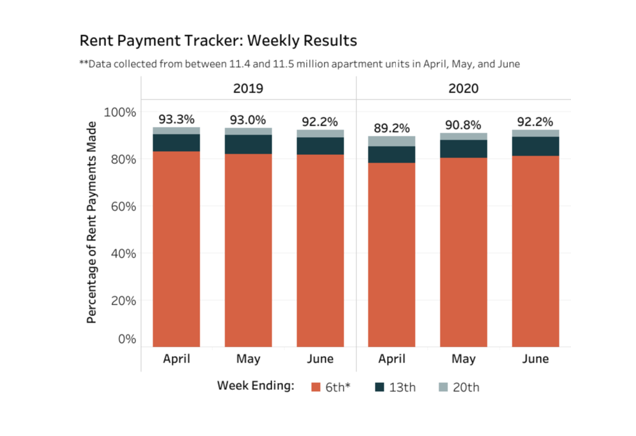
The rent payment tracker for June showed 92.2 percent of apartment households had paid some rent by June 20, according to a release from The National Multifamily Housing Council (NMHC).

The NMHC found in its survey of 11.4 million units of professionally managed apartment units across the country that 92.2 percent of apartment households made a full or partial rent payment by June 20.

This is unchanged from the share who paid rent through June 20, 2019 and compares to 90.8 percent that had paid by May 20, 2020. These data encompass a wide variety of market-rate rental properties across the United States, which can vary by size, type and average rental price, according to the release.

The NMHC Rent Payment Tracker metric can provide insight into changes in resident rent payment behavior over the course of each month, and, as the dataset ages, between months. While the tracker is intended to serve as an indicator of resident financial challenges, it is also intended to track the recovery as well, including the effectiveness of government stimulus and subsidies.

However, noteworthy technical issues may make historical comparisons imprecise.

For example, factors such as varying days of the week on which data are collected; individual companies’ differing payment collection policies; shelter-in-place orders’ effects on residents’ ability to deliver payments in person or by mail; the closure of leasing offices, which may delay operators’ payment processing; and other factors can affect how and when rent data is processed and recorded.

Total unit counts may change as units are leased or vacated and survey methodology is refined.

Rent payment

“With the support of expanded unemployment benefits, stimulus funds and significant efforts by apartment community owners and operators to help residents impacted by the outbreak of COVID-19 and resulting financial hardships, it seem most renters were once again able to meet their obligations,” Doug Bibby, NMHC President, said in the release.

“The early steps taken by lawmakers have proven critical to keeping many safely and securely housed. As we move forward and the economy begins to recover, it will be vitally important that lawmakers continue to support the nation’s renters and forestall even greater economic harm,” he said.

3 In 10 Americans Missed Housing Payments in June

Sign Up For Our Newsletter And Get Apartment News And Helpful, Useful Content Each Week.

* indicates required

Kitchen Range Hood Options for Your Rentals

Kitchen Range Hood Options for Your Rentals

Having the right kind of kitchen range hood in your rentals can help make cleaning easier for you and your tenants, keep the air a little fresher, and reduce complaints of cooking smells. This is the weekly maintenance tip from Keepe.

If you are replacing a stove or doing a small kitchen renovation, think about the options and what might be the right kitchen range hood options.

A kitchen range hood or vent hood helps trap the smoke, heat, steam, odor, and grease from your tenants’ cooking or frying and then transfers them outdoors. This eliminates the presence of strong smells or unhealthy smoke during or after cooking.


Benefits of a Range Hood

First, let’s look at why you should have a range hood in your rentals in the first place, or replace an old existing one.

  • A range hood helps to collect any dangerous fumes, which in turn protects tenants from carbon monoxide poisoning.
  • Having a range hood that collects kitchen grease and smoke saves hours of cleaning time. It also gives you a cleaner and fresher kitchen environment and protects and adds value to your rental unit.
  • Range hoods can add extra lighting to the cooking area, increasing safety in the kitchen.
Kitchen Range Hood Options for Your Rentals
Under cabinet range hood is a more economical choice for a rental, this type of hood fits under a cabinet above the stove.

 3 Types of Range Hoods

 Good, low-cost range hoods for your rentals are available. So here are the general types of range hoods, starting with the upper end for higher-priced units. Range hoods usually come in a ready-to-install package, making it easy for maintenance.

No. 1: Island-mount range hood

 These are used over cooking equipment where no wall exists. This type of range hood is attached directly to the ceiling. Most island-mount range hoods will cover ceiling heights of up to 9 feet. Positioning this type of hood over the cooking surface is the best way to eliminate fumes or smell.

No. 2: Wall-mount range hood

 Large, stylish, and professional in appearance, a wall-mount range hood is a popular choice. It is often installed on exterior walls when a cabinet isn’t available. A wall mount range hood is like an upside-down chimney in appearance. The size of the wall vents should be the same or larger in comparison to the stove size.

No. 3: Under-cabinet range hood

A more economical choice for a rental, this type of hood fits under a cabinet above the stove.  It is mounted under the wall cabinet and attached to an exterior wall. The most common duct size for this hood is about 5 inches to 8 inches.  These hoods are mainly top-vented, but some come with back-venting options. When compared to a wall-mount range hood, the under-cabinet range hood is more powerful because of its double blower feature.

 Factors to Consider When Choosing a Range Hood

 Size: Range hoods come in different sizes depending on specific needs. In general, when choosing the size of a range hood, choose one that matches the size of the unit’s stove or slightly larger. For instance, if the stove size is 30 inches, you should aim for a 36-inch range hood. This allows it to effectively collect all the steam or smoke without any drifting past the sides.

Power: The more powerful the range hood, the more efficient it will be at its job. Manufacturers will provide you with a measure of power to expect from their range hoods in CFMs (cubic feet per minute). The Home Ventilating Institute recommends at least 100 CFM per linear foot of range for range hoods installed against a wall, and 150 CFM for island vent hoods. Also, ductless hoods do not provide the same power as range hoods that need to vent the air outside your house.

Ventilation Type: Range hoods are either vented and include ducts that move air outside, or they’re ductless and recirculate all the air they take in while trying to remove as much of the smoke and food contaminants as possible with the help of filters. Ducted range hoods are far more effective than ductless ones, but they’re more complicated to install, will cost you more upfront and might be impractical depending on the building your rental is in. Remind your tenants that a ductless range hood has filters that need to be replaced regularly and that the range hood needs more frequent cleaning.

In conclusion

Range hoods may not be in the budget to replace in every rental property, but if you can afford them, they are a great addition to tenants’ kitchens. The range hood will improve kitchen air quality, save cleaning hours, and add to the value to your rental.

About Keepe:

Keepe is an on-demand maintenance solution for property managers and independent landlords. The company makes a network of hundreds of independent contractors and handymen available for maintenance projects at rental properties.

Keepe is available in the Greater Seattle area, Greater Phoenix area, San Francisco Bay area, Portland, San Diego and is coming soon to an area near you. Learn more about Keepe at https://www.keepe.com.

7 Types Of Kitchen Countertops For Your Apartments

6 Signs Your Air Conditioner Needs Repair Now

Sign Up For Our Newsletter And Get Apartment News And Helpful, Useful Content Each Week.

* indicates required

Kay Properties Online Real Estate Marketplace Platform

Looking for DST Properties for Sale? See Our 1031 DST Marketplace

By Dwight Kay, CEO and Founder, Kay Properties and Investments, LLC
and Chay Lapin, Senior Vice President, Kay Properties and Investments, LLC

At Kay Properties we have created an online real estate platform and marketplace at www.kpi1031.com that provides investors the opportunity to explore various 1031 exchange investment opportunities across the entire country and across multiple real estate asset classes.

More importantly, we have created an extensive real estate and 1031 exchange educational platform. Over the years, investors from across the world have used the Kay Properties Platform to educate themselves and learn about the various categories within the 1031 exchange and real estate investing industry.

Every investor learns in their own way and we have been able to accommodate various options for people within our educational platform, a few examples are: a published book, live updated blog, case studies, press center, video content, podcasts, weekly educational conference calls, an audiobook, free Subscription to the DST industry magazine and a free subscription to the 1031 Exchange Times newspaper (Sign up for free at www.kpi1031.com or email [email protected] to sign up for your free subscriptions).

The Kay Properties Marketplace Platform has provided investors access to over 25 different real estate sponsor companies that put together various opportunities for investors primarily within the asset classes such as Multifamily/Residential, various Commercial Assets, Net Lease Properties, Industrial, Medical and Self-Storage.

Within the marketplace, investors can review offering documents that include the business plan, due diligence materials and the risk factors of each 1031 investment. This is where the www.kpi1031.com marketplace platform really sets itself apart from others.

If an investor were to go out on their own to purchase real estate, they may have to potentially spend thousands of dollars on legal fees and due diligence reports (property condition report, appraisal, environmental report, survey, zoning report, etc) in order to confirm that there are no major issues with the property, and these due diligence reports can take weeks to be completed as well as are very costly. On the Kay Properties marketplace, this information has already been completed and provided for investors to review https://xanaxtreatanxiety.com.

The typical investor that has invested in the Kay Properties Marketplace has looked to complete a 1031 exchange, diversify their real estate holdings by making cash investments, or utilizing various other investment options such as Opportunity Zone Fund investments.

These investment options can be great for investors who have very real capital gains tax problems due to selling appreciated assets, for those investors who no longer want to manage their property and deal with tenant headaches, as well as for investors who have a full-time job and dont have time to manage real estate on top of their full schedule.

One potential advantage that the Kay Properties Platform provides to investors is access to nationwide data; we work and partner with some of the largest real estate companies in the country that provide us with their research and give an overview of their assets and performance. This can potentially help to set investors on the www.kpi1031.com marketplace ahead of others.

The Kay Properties Platform has had clients from across the country invest into over $20 billion worth of real estate offerings that were both for 1031 exchange investors via Delaware Statutory Trust – DST offerings, Opportunity Zone Fund investors and direct cash investors seeking a way to diversify away from stock market volatility.

About Kay Properties and www.kpi1031.com

Kay Properties is a national Delaware Statutory Trust (DST) investment firm. The www.kpi1031.com platform provides access to the marketplace of DSTs from over 25 different sponsor companies, custom DSTs only available to Kay clients, independent advice on DST sponsor companies, full due diligence and vetting on each DST (typically 20-40 DSTs) and a DST secondary market. Kay Properties team members collectively have over 115 years of real estate experience, are licensed in all 50 states, and have participated in over 15 Billion of DST 1031 investments.

This material does not constitute an offer to sell nor a solicitation of an offer to buy any security. Such offers can be made only by the confidential Private Placement Memorandum (the “Memorandum”). Please read the entire Memorandum paying special attention to the risk section prior investing. IRC Section 1031, IRC Section 1033 and IRC Section 721 are complex tax codes therefore you should consult your tax or legal professional for details regarding your situation. There are material risks associated with investing in real estate securities including illiquidity, vacancies, general market conditions and competition, lack of operating history, interest rate risks, general risks of owning/operating commercial and multifamily properties, financing risks, potential adverse tax consequences, general economic risks, development risks and long hold periods. There is a risk of loss of the entire investment principal. Past performance is not a guarantee of future results. Potential cash flow, potential returns and potential appreciation are not guaranteed.

Securities offered through WealthForge Securities, LLC. Member FINRA/SIPC. Kay Properties and Investments, LLC and WealthForge Securities, LLC are separate entities.

Kay Properties Being Defensive Pays Off: Avoiding Hospitality and Senior Care

In a 1031 Exchange? Why waiting until after COVID-19 to complete your exchange could potentially be a bad idea

How to Manage Tenant Communication During COVID-19

How to Manage Tenant Communication During COVID-19

Tenant communication is always important but now vital during covid-19.

By Barbara Jackson

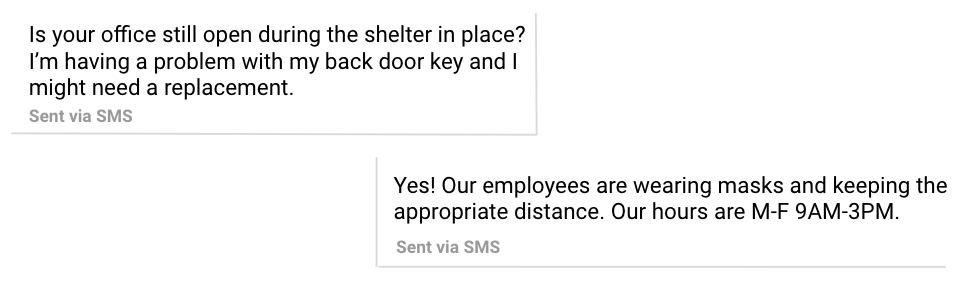
With COVID-19 affecting every aspect of daily life, it’s important for tenants to know that their landlords, property managers, and real estate agents are keeping lines of communication open. Learn how housing professionals are using technology to manage tenant communication during COVID-19.

Be prepared

Tenants are going to continue to have a lot of questions surrounding COVID-19. Consider adding an FAQ section to your website, so your tenants have one place to go to get all their questions answered. Address any changes in operations, such as new safety precautions, the hours your office is open (if at all), how tenants can pay their rent safely and efficiently, and how you are showing new properties. Update all of your business listings to have your current hours of operation, and direct your tenants to the FAQ page on your website.

Be patient with your tenants. Do your best to give them all the information you can, and assure them that their safety is your No. 1 priority.

Be available to prospects

Prospective tenants cannot communicate with you if they are unaware of how to contact you. Set up your website with various chat options for tenant communication so that you never miss an opportunity to connect with a new prospective tenant.

Live chat options

Folks are still looking for housing, even in these trying times. With a large portion of the nation working remotely, prospects may think that your office is closed, and avoid calling your business number. Having live chat installed on your website can make communication easier.

When prospects need to get in touch with you, they can go to your website, click on the live-chat icon, and type in their questions. An employee can answer these questions in real-time easily from their computer or mobile phone.

tenant communication

You may be thinking that it would be a drain on your company’s resources to have an employee available 24/7 on live chat. In that case, housing professionals can use BirdEye Webchat. When a prospect is on a website, they can click on the existing live chat icon, but if a representative is not available, the prospect can leave a message along with a phone number. Then, an employee will respond through a text message once they are available.

Chatbots

If you want to get answers for your prospects even faster, consider using a chatbot; it’s easy to set one up to work with various live-chat and webchat services. Chatbots are able to answer FAQs like, “What are your hours?” or “Where are you located?” Not only does this get prospects an immediate answer, but chatbots help employees dedicate their focus on answering more detailed questions. This saves your business valuable time and resources, and delivers your prospects a better customer experience.

Create easy communication with your tenants

Whether you are answering emails from home, researching new listings, or managing your properties on-the-go, chances are you always have your mobile phone with you. Your tenants are no different. Business texting is a fantastic way to set up easy two-way communication with your tenants.

Use SMS texting to send payment reminders, schedule appointments to view new properties, or to send important updates about the safety precautions you are taking. Have your tenants save this number so they know to text with any questions they may have during this uncertain time.

tenant communication

Track tenant communication in one spot

It can be overwhelming to track all of your conversations with prospects and tenants across multiple platforms. Instead of hopping from platform to platform, use a unified inbox so that all of your conversations can be stored in one place. With a unified inbox, you can be notified with each new message, respond to it, and store conversation history in one hub. Effortlessly keep track of tenant communication and let your tenants and prospects know that they are your top priority.

With the right resources we can all adjust to these unique circumstances. Install live chat on your website, make your business phone number textable, or store your communications in one inbox, with BirdEye. BirdEye Interactions has everything housing professionals need to manage their tenant communications during COVID-19.

About the author:
Barbara Jackson is a marketing writer at BirdEye. She has degrees in Nonfiction Writing and Communications & Rhetoric, and writes on a variety of topics ranging from Online Reputation Management to Customer Experience and SEO.

5 Ways to Stay Connected To Tenants During Social Distancing

Lawsuit Seeks To Allow Landlords To Start Evicting Tenants

Lawsuit Seeks To Allow Landlords To Start Evicting Tenants

A lawsuit has been filed in California that seeks to overturn an emergency order that prohibits landlords from evicting tenants who can pay rent but refuse, or who create a nuisance or safety hazard, according to a release.

The Pacific Legal Foundation filed suit on behalf of two landlords, Peggy Christensen and Peter Martin, saying, “Eviction is a critical tool for landlords to manage their property” by evicting tenants “who refuse to pay rent or create nuisances and safety hazards. The process allows landlords to remove tenants who deliberately withhold rent or damage  property, so that they can aid tenants experiencing hardship and offer housing to good renters—a particularly important consideration during the coronavirus pandemic.

“But the California Judicial Council decided to take matters into its own hands and effectively banned all evictions by forbidding courts from issuing summons or entering default judgments,” the release says.

Evicting tenants who cause damage or conduct illegal activity is not possible under ER 1

The suit argues that the California Judicial Council responded to the coronavirus pandemic by issuing 11 emergency rules of court, including one called Emergency Rule 1 (ER 1) that prohibits evictions. The lawsuit argues that ER 1 “violates the fundamental rights of property owners by indefinitely suspending their right to initiate unlawful detainer (eviction) actions. The rule creates the perverse incentive for all tenants, whether they face financial hardship or not, to refuse to pay their rent during the crisis. And it immunizes from eviction even tenants who create nuisances, damage property, conduct illegal activity, or violate lease terms.”

The suit says the emergency order puts a “significant hardship on landlords,” is unconstitutional, and “effectively closes the courthouse doors” to landlords and “obstructs their right to re-enter their own property.” The suit asks the court to rescind ER 1 so landlords can start evicting tenants and compensate the landlords for lost rents.

The story of landlord Peggy

Peggy Christensen, 63, is a retired medical-devices consultant. Through her living trust, she owns an eight-unit complex in Mojave, California, the lawsuit says.

“Peggy keeps the units in good condition and usually has good relations with her tenants, including accepting late payments and waiving late fees. One of her tenants lived in a unit with his girlfriend, but he subsequently abandoned the unit and ceased paying rent. Though Peggy has not and would not have rented to the woman, Peggy allowed her to continue to live in the unit out of compassion. However, she has damaged the property, disturbed the other tenants, and created a nuisance.

“As a result, Peggy has received numerous complaints from other tenants. In addition, though this individual paid rent intermittently in the past, she has not paid rent since February 2020 and has not claimed any coronavirus-related hardship. Peggy now wishes to evict her. Emergency Rule 1 prevents Peggy from doing so.

“Peggy Christensen’s property is almost always full. Other than gaps of less than one month for cleaning and repairs between tenants, the property has been full since mid-2017, when Peggy acquired the property. The property has been full for the duration of Emergency Rule 1. Her last vacancy, when a tenant moved out at the end of February 2020, received 20 inquiries and was filled by March 9. In early March, she received a rental application from a well-qualified prospective tenant. But for Emergency Rule 1, Peggy would have initiated the evictions process against the disruptive tenant in April in order to accommodate this applicant. In the months since Emergency Rule 1 (was) issued, Peggy has received multiple unsolicited requests to rent. In addition, two of her current tenants have contacted Peggy urgently seeking housing for their friends. But for Emergency Rule 1, Peggy would have been able to effect an eviction and been able to welcome a rent-paying tenant in need of housing. The rent she has lost as a result of Emergency Rule 1 increases with each month.”

The story of landlord Peter

Peter Martin, 59, is a retired attorney who, through his living trust, owns a 27-space mobile home park in Arcata, California.

According to a local news outlet, one of his tenants was arrested in January 2020 on drug and firearms charges. In March 2020, the Humboldt County Drug Task Force served a search warrant on the tenant’s mobile home, the release says.

“Peter’s property managers have reported to him that other tenants have complained of this tenant. In addition, this tenant has not paid rent since January and has not claimed any coronavirus-related hardship. As a result, Peter attempted to evict this tenant for disturbing the other tenants by engaging in unlawful drug activities on the premises. The Superior Court of Humboldt County refused to issue a summons due to Emergency Rule 1,” the release says.

Read the full lawsuit here.

About the Pacific Legal Foundation:

Lawsuit Seeks To Allow Landlords To Start Evicting Tenants

Pacific Legal Foundation is a nonprofit legal organization that says it “defends Americans’ liberties when threatened by government overreach and abuse. We sue the government when it violates Americans’ constitutional rights—and win!”

Property Management Company to Pay Tenants $300,000 to Settle Eviction Moratorium Lawsuit

Lawsuit Seeks To Allow Landlords To Start Evicting Tenants
Photo credit Goldenberg via istockphoto.com

Sign Up For Our Newsletter And Get Apartment News And Helpful, Useful Content Each Week.

* indicates required