Home Blog Page 117

Portland’s FAIR Ordinance: Lost in the Hoopla of COVID-19

Portland’s FAIR Ordinance: Lost in the Hoopla of COVID-19

The Portland Fair Ordinance may have gotten a little lost during the Covid-19 issues, but it is still out there and attorney Brad Kraus reviews some of its issues for landlords and property managers.

By Bradley S. Kraus,
Attorney at Law, Warren Allen, LLP

Throughout most of 2020, the world dealt with the COVID-19 pandemic. This massive upheaval of our lives and the legislative actions that followed shifted the focus away from one of the largest changes in the law since Senate Bill 608.

Effective on March 1, 2020, Portland’s FAIR Ordinance dramatically changed how landlords in Portland deal with applications, screening, and security deposits. While the FAIR Ordinance is too convoluted to cover in this short article, as we near the end of the COVID-19 pandemic, it may be prudent to revisit these changes for your Portland properties.

One of the largest changes to the law after the implementation of FAIR is how landlords may screen their prospective tenants. The Portland FAIR Ordinance provides for two screening methods: low-barrier and landlord-choice. The low-barrier model sets specific standards for items such as criminal history, credit history, and rental history. If a tenant fails to meet these low standards, a landlord can usually deny the applicant consistent with the ordinance. However, it is important to note that a landlord, when using the low-barrier model, is required to perform an individualized assessment for any criminal basis for which he or she intends to deny an applicant.

The very concept of an individualized assessment does not lend itself to a checkbox approach and is difficult to describe within the space this article provides. However, it involves weighing the supporting/mitigating evidence provided by the applicant as it relates to the criminal history, against a variety of factors—including an analysis of the crimes themselves, length of time since criminal activity occurred, evidence of rehabilitation, and other relevant mitigating documentation. This analysis, and an evaluation of risk assessment with your attorney, results in a decision to either overturn the denial and accept the applicant or keep the denial in place. While this process is described within FAIR, savvy landlords should also be familiar with this process, as it is a Fair Housing Act requirement.

If landlords choose to utilize the landlord-choice model, they may set their own screening criteria as they would have pre-FAIR. The difference, however, is that if a landlord uses this method, he or she are required to perform an individualized assessment for any basis upon which the landlord intends to deny the applicant. That means if the applicant is being denied based upon credit history, the landlord is required to consider any mitigating evidence provided by the applicant as to this issue. The failure to do so is a violation of FAIR.

The Portland FAIR ordinance also dramatically alters both the amount of the security deposit landlords can collect and the process by which landlords are able to withhold monies from the security deposit. As to the former, the ordinance now puts an upper limit on the amount of the security deposit based on whether the landlord also collects a last-month’s-rent deposit. As to the latter, the FAIR ordinance now requires significant documentation as to the age, diminished value, and condition of any items for which the landlord wants the security deposit to cover. Finally, the ordinance also requires the inclusion of a Notice of Tenants’ Security Deposit Rights with the accounting required under ORS 90.300, along with other documentation in support of any damages the landlord may claim.

While many landlords may not be accustomed to these requirements as they do not exist under state law, the failure to follow them can prove costly. A landlord’s failure to comply with FAIR’s requirements  for the security deposit not only potentially prevents the landlord from withholding the deposit, it also potentially creates exposure under FAIR’s draconian damages provision—twice the amount of the deposit and exposure to attorney fees. While there are some exemptions to the FAIR ordinance, most landlords will be required to comply with the same. Accordingly, connecting with the attorney of your choice to evaluate your processes and procedures is critical to avoid the minefield that is Portland law.

The Portland Fair Ordinance may have gotten a little lost during the Covid-19 issues, but it is still out there and attorney Brad Kraus reviews some of its issues for landlords and property managers.
Bradley Kraus, Portland attorney

Brad Kraus is a partner at Warren Allen LLP. His primary practice area is landlord/tenant law, but he also assists clients with various litigation matters, probate matters, real estate disputes, and family-law matters. A native of New Ulm, Minnesota, he continues to root for Minnesota sports teams in his free time. You can reach him via email [email protected] or 503-255-8795.

Fair Housing Matters – Landlord Liability for Tenant-on-Tenant Discrimination

Sign Up For Our Newsletter And Get Apartment News And Helpful, Useful Content Each Week.

* indicates required


How Do I Stop Second-Hand Smoke Coming Into My Apartment?

Ask Landlord Hank How Do I Stop Second-Hand Smoke Coming into My Apartment?

We have been getting a lot of questions about second-hand smoke during the pandemic so if a tenant has a problem with second-hand smoke coming into their apartment, what should you do is the question for Ask Landlord Hank . Remember Hank is not an attorney and is not offering legal advice.

Dear Landlord Hank:

How do I get property management to do something about the second-hand smoke coming into my apartment?

-Sandra

Dear Sandra:

Exposure to second-hand smoke in multifamily buildings is a common and unhealthy issue that could lead to serious health issues, especially for children.

The smoke can come through vents, or cracks in floors, or walls.

The first place to check is your lease. Does the lease allow smoking in the units or is this supposed to be a smoke-free environment?

In most leases that prohibit smoking, this would be a serious violation and could be grounds for eviction.

You can also check to see if there are any laws in your community that address second-hand smoke in multifamily housing.

If you have a decent relationship with the offending neighbors you can talk to them NICELY about the smoking, and maybe they’d be willing to smoke outside.

You should definitely talk to your property-management company about the second-hand smoke issue in the apartment and the negative impact it is having on your family.

If there is an impact on your health, you may be able to have your doctor note that second-hand smoke is harming your health and you can show this to the property management company.

Sincerely,

Hank Rossi

Ask Landlord Hank - How Do I Stop Second-Hand Smoking Coming into My Apartment?
Landlord Hank says If you have a decent relationship with the offending neighbors second-hand smoke you can talk to them NICELY about the smoking.

Ask Landlord Hank Your Question

Ask veteran landlord and property manager Hank Rossi your questions from tenant screening to leases to pets and more! He provides answers each week to landlords.

  • This field is for validation purposes and should be left unchanged.

Do I Have to Paint and Replace Flooring for a Long-Term Tenant?

Sign Up For Our Newsletter And Get Apartment News And Helpful, Useful Content Each Week.

* indicates required

Should I Turn On The Utilities and Power For New Tenant Moving In?

My Tenant’s Moving Out Before Lease Ends, What Should I Do?

CDC Extends Temporary Halt in Residential Evictions to June 30

CDC Extends Temporary Halt in Residential Evictions to June 30

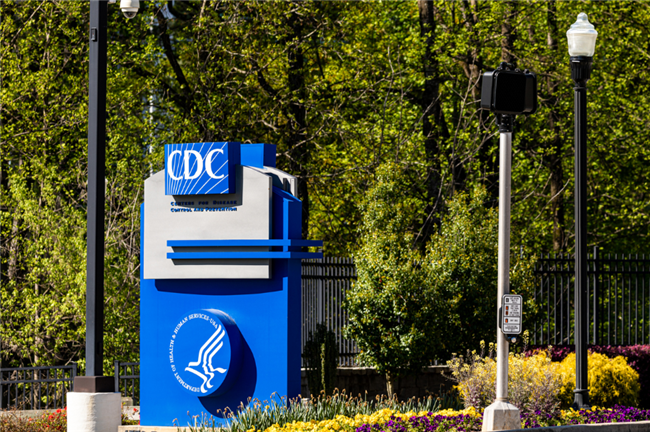
CDC Director Dr. Rochelle Walensky has signed an extension to the residential evictions moratorium further preventing the eviction of tenants who are unable to make rental payment and extending the moratorium through June 30, 2021, according to a release.

“The COVID-19 pandemic has presented a historic threat to the nation’s public health. Keeping people in their homes and out of crowded or congregate settings — like homeless shelters — by preventing evictions is a key step in helping to stop the spread of COVID-19,” she said in the release.

The original moratorium was set to expire on March 31.

The order says, “a landlord or owner of a residential property or other person with legal right to pursue eviction or possessory action, shall not evict any covered person from any residential property in any jurisdiction in which this order applies during the effective period of the order.”

The CDC said “evictions threaten to increase the spread of covid-19 as they force people to move often into close quarters in new shared housing with friends or family, or congregate settings such as homeless shelters. The ability of these settings to adhere to best practices such as social distancing and other infectious disease control measures decreases as populations increase.”

The order does not prohibit evictions for criminal activity on the leased premises.

Residential evictions: Declaration forms still required from tenants

The declaration forms are still required and the CDC added “a tenant, lessee or resident of a rental property must provide a completed and signed copy of a declaration with the elements listed in the definition” of who is a covered person under to the order “to their landlord, owner of the residential property where they live or other person who has a right to have them evicted or removed.”

Federal Judge Rules Landlords Do Not Have To Provide Free Housing

Sign Up For Our Newsletter And Get Apartment News And Helpful, Useful Content Each Week.

* indicates required

Will Some Landlords Overlook Tenant Bad Credit History?

Will Some Landlords Overlook Tenant Bad Credit History?

This week the question for Ask Landlord Hank is about how landlords and property managers look at bad credit history from a potential tenant.

Dear Landlord Hank:

Will some landlords overlook bad credit history if it was mainly caused by a husband passing away from cancer, and then COVID-19 affecting us all?

Especially if my monthly funds well cover my bills and I’m now in consolidation?

-Arden

Dear Arden,

I’m so sorry for your loss.

When a landlord evaluates a possible tenant, the landlord wants to make sure the tenant is going to be able to afford to pay the rent, and will pay the rent when it is due without drama, will take care of the property, and will not annoy the neighbors.

A person’s credit history is a great indicator of willingness to pay money owed when it is due, and an owner can see your history of being responsible for your obligations.

That is a big part of what a landlord is looking for, but there are so many more factors that a landlord considers before making the decision to accept a tenant:

  • Does the client have a good rental history?
  • Do they make at least three times the rent and have a stable income?
  • Has there been any criminal history? What about sexual predators or offenders?

Many property owners will look at credit history as being black or white, but some are willing to dig deeper. You have a legitimate reason for having monetary difficulties and some owners may take that into consideration if your history was good before the devastating events and has improved significantly lately.

If all the other factors are good, and you tell a prospective landlord what to expect up front, you may find someone willing to give you a chance. Best of luck.

Sincerely,

Hank Rossi

This week the question for Ask Landlord Hank is about how landlords and property managers look at bad credit history from a potential tenant.
Landlord Hank says, “Many property owners will look at credit history as being black or white, but some are willing to dig deeper.”

Ask Landlord Hank Your Question

Ask veteran landlord and property manager Hank Rossi your questions from tenant screening to leases to pets and more! He provides answers each week to landlords.

  • This field is for validation purposes and should be left unchanged.

Do I Have to Paint and Replace Flooring for a Long-Term Tenant?

Sign Up For Our Newsletter And Get Rental Housing and Apartment News And Helpful, Useful Content Each Week.

* indicates required

How $1 of Rent Adds Up to Billions Going Back into Local Communities

How $1 of Rent Adds Up to Billions Going Back into Local Communities

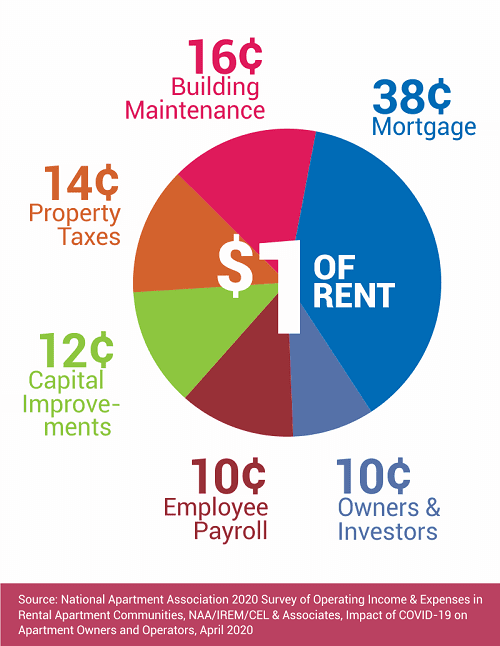
Up to 90 cents of each dollar paid for rent go towards taxes, wages, mortgage payments, and maintenance and improvements, while only 10 cents belong to owners and investors, according to the Yardi Matrix Covid-19 Rental Housing Support Initiative.

In their blog, RentCafé says the American Rescue Plan signed by President Biden on March 11 “brings much-anticipated relief to millions of American families, both renters and housing providers.”

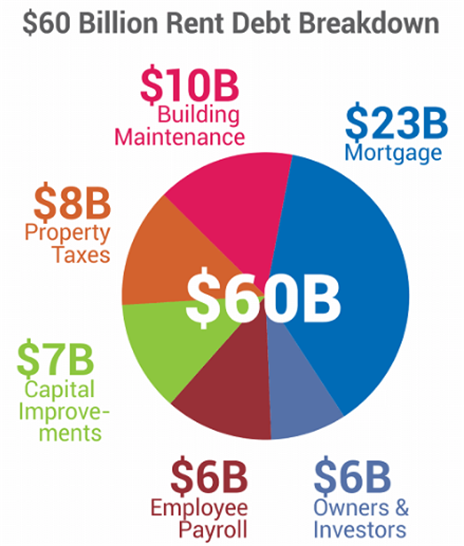
Rent debt estimated at almost $60 billion has built up since the start of the pandemic and RentCafé says the new stimulus package “may trigger a butterfly effect across local communities. Since many housing providers operate on thin margins, the recently approved stimulus package will help fill the gap in cash flow and keep afloat an industry that provides housing for 40 million Americans.”

According to the Urban Institute and Moody’s Analytics estimations, the average resident who’s behind on rent already owes $6,000. With approximately 10.25 million renters in debt as of January 2021, the back rent reached an estimated $57.3 billion.

Rent checks go back into the local economy  

The report from RentCafé includes a chart showing the largest part of every dollar of rent is used to keep rental housing operational, as 90 cents of it go towards state and local taxes, which support essential services in the community, employee wages, maintenance and improvements, and mortgage payments. Just 10 cents go to property owners and investors.

How $1 of Rent Adds Up to Billions Going Back into Local Communities and rent debt builds up
Up to 90 cents of each dollar paid for rent go towards taxes, wages, mortgage payments, and maintenance and improvements, while only 10 cents belong to owners and investors.

“This means that each dollar paid as rent, besides keeping renters safely housed, is also a contribution to the local economy. Rent checks are reinvested in the community in the form of taxes, worker salaries and maintenance for buildings,” the report says.

Mortgage payments take up the largest chunk of rent, 38 cents.

“The majority of small owners depend on this money, according to data from the COVID-19 Rental Housing Initiative, as 59 percent of them carry a mortgage, and many of them operate on thin margins,” the report says. “Rents in properties owned by mom-and-pop landlords are typically lower than in larger, amenity-rich communities. So, by helping families pay the rent, the federal assistance fund would in fact support these owners, who otherwise might default on loans.”

Due to the potential economic impact of the outstanding rent debt, rental industry associations “believe that more needs to be done to avoid turning the public health crisis into a housing crisis, especially now, with so much uncertainty around the economic recovery.

rent debt breakdown Rent debt estimated at almost $60 billion has built up since the start of the pandemic

rent debt

“A robust rental-assistance program will keep people safely housed and ensure that apartment communities remain operational long into the future,” the report says. “Renters and landlords alike depend on the health of the rental housing sector. This is why Yardi committed $1 million to the COVID-19 Rental Housing Support initiative, a newly launched platform backed by four major associations serving the rental housing industry: Institute of Real Estate Management (REM), National Apartment Association (NAA), National Multifamily Housing Council (NMHC) and National Association of Residential Property Managers (NARPM).”

Find out more about the support initiative here.

Growing Rent Debt a Threat to Rental Housing Security

The Looming Debt Trap Facing Renters

Sign Up For Our Newsletter And Get Apartment News And Helpful, Useful Content Each Week.

* indicates required

Landlord Settles with HUD Over Assistance Animal Discrimination Claim

Landlord Settles with HUD Over Assistance Animal Discrimination Claim

A California property owner and manager has agreed to pay $10,000 in a conciliation agreement resolving an assistance animal discrimination claim that the landlord denied a resident’s reasonable-accommodation request to keep an assistance animal, according to a release.

The U.S. Department of Housing and Urban Development (HUD) said in the release it has approved a conciliation agreement between Monterey, California-based rental property owners and managers G Davi Properties and Guido A. Davi II and a resident of one of their properties.

“An assistance animal can be a lifeline for persons with disabilities,” said Jeanine Worden, HUD’s Acting Assistant Secretary for Fair Housing and Equal Opportunity, in the release. “HUD is committed to enforcing the Fair Housing Act to ensure that housing providers recognize their obligation” to make accommodations when needed to comply with the nation’s fair housing laws.

The complaint came to HUD’s attention when the resident who has disabilities filed a complaint alleging that G Davi Properties and Guido A. Davi II discriminated against him by failing to grant his request to keep an assistance animal, according to the release.

“After denying his request, the owners allegedly cancelled the lease, changed the locks on the unit, and threatened to call the police in the event that he attempted to move in. The owners also allegedly claimed that the man never disclosed his need for an assistance animal, even though he provided a letter from his physician verifying his disability and need for the assistance animal,” the release says.

“The owners/managers deny that they discriminated against the complainant and denied any violation of law, but voluntarily agreed to settle the complaint. Under the conciliation agreement, they will pay $10,000 to the resident, provide fair-housing training for their employees, create and implement a written reasonable accommodation policy, and modify any rental forms or materials to be consistent with the Fair Housing Act.

Assistance Animal Or Service Animal Discrimination

“The Fair Housing Act prohibits housing providers from discriminating against people with disabilities, including refusing to make reasonable accommodations in policies or practices when such accommodations may be necessary to provide persons with disabilities an equal opportunity to use or enjoy a dwelling.

“This includes permitting persons with disabilities to have service animals or assistance animals. Housing providers, unlike public accommodations, may not prohibit people with disabilities from having assistance animals that perform work or tasks, or that provide disability-related emotional support,” HUD said in the release.

A landlord should not determine who needs an assistance animal, HUD says.

“It’s not a housing provider’s role to determine who does or does not need an assistance animal,” said Jeanine Worden, HUD’s Acting Assistant Secretary for Fair Housing and Equal Opportunity.

Landlord Settles with HUD Over Assistance Animal Discrimination Claim
“It’s not a housing provider’s role to determine who does or does not need an assistance animal,” said Jeanine Worden, HUD’s Acting Assistant Secretary for Fair Housing and Equal Opportunity.

What a reasonable-accommodation policy for an assistance animal should say

HUD says the landlord policy “must explicitly acknowledge and advise employees, tenants and prospective tenants that an assistance animal may qualify as a reasonable accommodation under the act. The policy shall acknowledge that medical verification may be necessary only if the disability and/or need for the accommodation or modification is not obvious and apparent. The policy shall further acknowledge that such verification may come from a doctor or other medical professional, such as a therapist, physician’s assistant, nurse, counselor, social worker, a non-medical service agency, or a reliable third party who is in a position to know about the individual’s disability.

“The policy shall also specify that (landlords and property managers) will provide timely responses in writing to all requests for reasonable accommodation.

“The policy shall require the tracking of each reasonable-accommodation request, including, but not limited to, the date of receipt, the name and address of the requester, whether verification of disability and need were requested, whether the request was approved or denied, and when the accommodation was fully implemented,” HUD said in the agreement.

Property Manager Charging Pet Fee for Assistance Animal Leads to HUD Discrimination Charge

Sign Up For Our Newsletter And Get Apartment News And Helpful, Useful Content Each Week.

* indicates required


Signs of Rent Recovery Nationally Now On The Horizon

Signs of Rent Recovery Nationally Now On The Horizon

While national rent growth was negative in February, hard-hit markets have shifted closer to positive rent recovery and growth and February may be the last month of national declines, according to Yardi Matrix’s February report.

“Many markets experienced strong year-over-year rent growth in February, while others have begun to recover following rent declines in the summer and fall. However, urban cores continue to see rent declines,” the report said.

Highlights of the report:

  • Multifamily rents declined by 0.1 percent on a year-over-year basis in February. But while national rent growth was negative this month, year-over-year rents have steadily shifted closer to positive rent recovery since October. If this trend continues, February could be the last month with a national decline.
  • Overall rents increased by $3.00 in February, to $1,399. This is the ninth consecutive month where overall rents have increased or remained flat, pointing to signs of recovery.
  • Outside of the gateway and top 30 markets, there was a large pop in month-over-month rents in many secondary and tertiary markets. Out of 133 markets surveyed this month, 111 had positive month-over-month rent growth.

“A major factor in their ability to bounce back is the percentage of the workforce that remains remote once the pandemic subsides,” the report says.

“The trends that we have been discussing since the beginning of the pandemic continued into February. Lower-cost markets are outperforming, while expensive gateway markets that were the most locked down due to COVID-19 restrictions continue to struggle—although not at the rate we initially saw,” Yardi Matrix said.

Positive rents growth by end of 2021

“We are forecasting most markets to have positive rent growth by the end of 2021, except for select gateway markets that will take longer to recover,” the report says.

“Many young people that would typically occupy urban cores moved in with their parents when the pandemic began. We are starting to see this trend unwind, with young people moving out again.

“But a hindrance to the recovery in urban cores will be the percentage of the workforce that makes a permanent shift to remote work.”

Before the pandemic statistics showed about 10 percent of people worked from home.

“Once the pandemic is behind us, it is estimated that as much as 25 percent could do so permanently. This shift will undoubtedly have an impact on the recovery of urban cores,” Yardi Matrix said.

About Yardi Matrix:

Yardi Matrix researches and reports on multifamily, office and self-storage properties across the United States, serving the needs of a variety of industry professionals. Yardi Matrix Multifamily provides accurate data on 18+ million units, covering more than 90 percent of the U.S. population. Contact the company at (480) 663-1149.

Some Bright Spots Begin To Emerge In Housing, But Long Road Ahead

!– Begin Mailchimp Signup Form –>

Sign Up For Our Newsletter And Get Apartment News And Helpful, Useful Content Each Week.

* indicates required

Exodus from Gateway Markets Drives Rent Declines

My Tenant’s Moving Out Before Lease Ends, What Should I Do?

Ask Landlord Hank - My Tenant’s Moving Out Before Lease Ends, What Should I Do?

If the tenant tells you they are moving out before lease ends, what should you do is the question for Ask Landlord Hank this week.

Dear Landlord Hank,

My tenant signed a six-month lease and is planning on moving out after five months has told/emailed me of his intent, but sent no 30-day notice to me or acknowledged my email back to him.

What should I do from here? I did send a certified letter stating their responsibilities.

–Lori

Dear Landlady Lori,

What does your lease say about early termination?

Do you have last month’s rent, or is that still owed to you?

Do you have a security deposit?

It’s good that you sent a certified letter stating tenant responsibilities. Everything is different now with the pandemic.

I would talk to the tenant, in person, if that makes sense, and find out why they are leaving (did they lose their employment, etc.) and let them know that you will try to rent the property for their last month, to remove that responsibility from them.

I would also try to determine a firm date for when the tenants will vacate. Then you can have their assurance that you can freely show the property to potential tenants and hopefully rent the unit.

Your lease will ultimately control tenant responsibility. Try to maintain a good relationship through this bump in the road.

Sincerely,

Hank Rossi

Ask Landlord Hank - My Tenant’s Moving Out Before Lease Ends, What Should I Do?
Landlord Hank says try and maintain a good relationship with this tenant through this bump in the road if you can and be sure your lease says what it needs to say.

Landlord Hank Rossi says tenant utilities should be connected by the tenant before move in day.

Ask Landlord Hank Your Question

Ask veteran landlord and property manager Hank Rossi your questions from tenant screening to leases to pets and more! He provides answers each week to landlords.

  • This field is for validation purposes and should be left unchanged.

Do I Have to Paint and Replace Flooring for a Long-Term Tenant?

Sign Up For Our Newsletter And Get Apartment News And Helpful, Useful Content Each Week.

* indicates required

Should I Turn On The Utilities and Power For New Tenant Moving In?

Can a Landlord Charge a Non-Refundable Pet Deposit for Support Animal?

Can a Landlord Charge a Non-Refundable Pet Deposit for Support Animal?

This week the question for Ask Landlord Hank is about a non-refundable pet deposit and support animal. Remember Hank is not an attorney and is not giving legal advice so check your local ordinances.

Dear Landlord Hank: Can a landlord charge a non-refundable pet deposit if the animal in question is not classified as a pet, but as a support animal?

-Frank

Hi Frank:

In Florida, no-pet rules don’t matter for legitimate emotional-support animals.

A tenant or applicant must have real documentation stating that applicant is disabled, that the disability affects a major life function (and what that function is), and how the animal reduces the effects of the disability.

If an applicant or tenant provides fraudulent information or documentation, he or she is committing a 2nd degree misdemeanor with consequences.

Also, even if the animal has been classified as a support animal, the animal must be required by the tenant.

Lastly, the provider producing the documentation for you must have personal knowledge of the tenant (this means an online certificate won’t work) and be knowledgeable in the area of the tenant’s disability.

In other words, a podiatrist can’t say you need an emotional support animal for psychological issues.

Sincerely,

Hank Rossi

Can a Landlord Charge a Non-Refundable Pet Deposit for a Support Animal?
Landlord Hank says, “A tenant or applicant must have real documentation stating that applicant is disabled, that the disability affects a major life function (and what that function is), and how the animal reduces the effects of the disability.”

Ask Landlord Hank Your Question

Ask veteran landlord and property manager Hank Rossi your questions from tenant screening to leases to pets and more! He provides answers each week to landlords.

  • This field is for validation purposes and should be left unchanged.

Do I Have to Paint and Replace Flooring for a Long-Term Tenant?

Sign Up For Our Newsletter And Get Apartment News And Helpful, Useful Content Each Week.

* indicates required


Ask Attorney Brad: Why Can’t A Landlord Give a 30-Day Notice to Vacate?

Ask Attorney Brad: Why Can’t A Landlord Give a 30-Day Notice to Vacate?

Ask the attorney is a new feature we are starting with attorney Bradley S. Kraus and this week the question is about notice to vacate rules. If you have a question for him, please feel out the form below.

Ask Attorney Brad:

Brad, why can’t Yvonne in the previous example about the unauthorized chickens just refuse to renew her tenants’ month-to-month and just say she is not going to renew the lease, and give them a 30-day notice to vacate?

-Don

Dear Don,

The first line of Yvonne’s question stated that she has month-to-month tenants who have been living in the property for two years.

That (likely) means their tenancy is after the “first year of occupancy,” requiring either (a) cause or (b) a qualifying landlord exemption under ORS 90.427 to terminate the tenancy.

Prior to Senate Bill 608, a landlord could serve 60-day no-cause notices.  The passage of that law dramatically curtailed the no-cause rights of Oregon landlords.

It’s important to note a couple things as well: (a) current eviction moratoria must be analyzed, so these answers are not to be taken in a vacuum, and (b) local jurisdictional rules may apply to your particular situation.

Sincerely,

Brad Kraus

Ask Attorney Brad: Why Can’t A Landlord Give a 30-Day Notice to Vacate?
Bradley Kraus, Portland attorney

Brad Kraus is a partner at Warren Allen LLP. His primary practice area is landlord/tenant law, but he also assists clients with various litigation matters, probate matters, real estate disputes, and family-law matters. A native of New Ulm, Minnesota, he continues to root for Minnesota sports teams in his free time.

Ask Attorney Brad

Please enter your rental housing management question below for Ask Attorney Brad Kraus. Unfortunately he cannot answer questions from tenants.

  • This field is for validation purposes and should be left unchanged.

HB 4401 and the Landlord Compensation Fund: How to Manage Your Right to Funding

Sign Up For Our Newsletter And Get Apartment News And Helpful, Useful Content Each Week.

* indicates required