
Home Blog Page 98

Collect Rent Online Without a Merchant Account

collect rent online instead of collecting checks

By SimplifyEM

Are you still collecting paper checks?

You’re probably spending your valuable time collecting checks one by one and making multiple trips to the bank.  This manual process is slow and you’re probably wondering if there is a better way.   Well there is and it’s a lot faster.  The easier way to collect rent is online.

Online payments are very popular.  They’re convenient for everyone and they give the tenant a professional experience.   Tenants pay online anywhere and the rent gets deposited in your bank account.  This means no more dealing with paper checks and it eliminates trips to the bank.

Collecting rent online usually requires signing up for a merchant account.  A merchant account requires a background check of your business and a monthly fee.  For these reasons, it’s common for property owners to not sign up for online payments as it’s tedious and it can get expensive.

One company that provides online payments without requiring a merchant account is SimplifyEm Property Management Software.  SimplifyEm is a safe and secure website that you can trust to collect your rent on time.  Real estate investors and property managers  collect rent online by just entering in their bank account information.  There is no bank setup fee.  Once your bank account is added, then tenants can be invited to sign up for online payments.  Tenants can add their bank account information too or pay using a credit or debit card.  SimplifyEm can keep track of the tenants’ leases and auto withdraw the monthly rent on the due date every month.  This means that the tenant doesn’t need to lift a finger to pay rent, it can be automatically withdrawn every month. It’s very common to have tenants only on the auto withdrawal to guarantee the rent is collected on time.  However, in SimplifyEm, you can control the manual payment option for tenants. You can turn on or off the manual payment option for any tenant any time.  Also, if you have more than one bank account, then you can add more.  There is no limit to the number of bank accounts you can have with SimplifyEm.

If a tenant needs help adding their bank account information or making a payment online, then SimplifyEm’s customer support team can help for free.  You can feel confident knowing that your tenants will be taken care of and you don’t have to spend any time handling technical support.   The tenants can also view a detailed online payment history in their online payment account so you don’t have to worry about tenants asking for reports or receipts.

SimplifyEm not only lets you collect rent online without a merchant account, but you can also send notices to tenants via email or text message, track expenses, manage vendors, track maintenance requests, generate Schedule E and 1099s and so much more.  With Simplifyem, you’ll get free customized training, free live phone and email support, and free support for tenants and vendors.  Get 50% off SimplifyEm today and start collecting rent online.

5 Ways To Distinguish Yourself From Fellow Landlords This Season

5 Ways To Distinguish Yourself From Fellow Landlords This Season

If you want to distinguish yourself from your fellow landlords, this is the “separation season” you must utilize to create distance from them and from your past habits.

By Scot Aubrey

Let’s face it, it’s easy during this time of year to want to just shut things down and enjoy family, friends, food, and football.  For many of us, the holiDAYs turn into holiMONTHs, starting with a mid-November shutdown that extends well into the New Year.

Most people figure that this time of year is the perfect time to sit back, relax and slow everything down; after all, they’ve earned it.  In the ultra-competitive landscape in which we operate, if you want to distinguish yourself from your fellow landlords, this is the “separation season” you must utilize to create distance from them and from your past habits.  Let everyone else get lazy while you get to work improving your business and yourself by looking at these five qualities in your work and your life.

1. TIME

For most of us, there just isn’t enough of this precious commodity.  We mistakenly wear the badge of honor that we are “too busy” to add in new things or invest time in changing or mending broken things.  When was the last time you spent an hour (or even 10 minutes) analyzing how you use your time as a landlord?  This has proven to be a great exercise we advise our clients on repeatedly.  Set aside at least an hour to study the following:

  • Where do you spend most of your time as a landlord? Calls, service, collecting payments, evictions, etc.…
  • What processes and procedures can you modify to make those time-consuming tasks easier?
  • Are there existing programs that have a minimal cost but a maximum payoff in regard to time that you could incorporate into your business?

A one-hour investment dedicated to better understanding your business and life will pay major dividends moving forward.

2. FITNESS

You can make the obvious connection to fitness and our lack of it during the holidays, along with our renewed commitment to it in the New Year.  But I’m not talking about your fitness, I’m talking about the fitness of your properties.  In a competitive marketplace, how does your property stack up against others?  A great landlord will walk other properties in the neighboring areas to see how their products compare to others.  Maybe it’s time for a deep clean.  Or maybe replacing paint, carpet, fixtures, and finishes are what will be the ticket to making your property shine.  Just as in life, the fittest-looking property will attract more attention – and that is what every landlord and investor want.  While everyone else is taking time off, put on those running shoes and give your portfolio a complete workout.

3. FOCUS

It’s easy to lose focus during the holidays because there are a million distractions clamoring for your attention.  But to separate yourself from every other landlord, focus during these weeks is critical and can be a game changer.  Instead of continuing to put off those things you have been putting off for months, buckle down and pay attention.  Here are a few areas I like to focus on during this “separation season:”

  • Rental Fee Analysis: Should I or can I be charging more than I currently am? What will the market support?
  • Conversion: Is it time to turn my long-term rental properties into short-term rentals? Or vice-versa?  Is it time to sell one or more of my properties?
  • What are my goals for the next year, and what areas can I improve in as a landlord to accomplish those goals?

What I find helpful in my “focus” sessions is to put all my devices away, find a quiet place to think, and write things down with pen and paper.  Something about tapping into the old-school methods of note-taking provides an inspirational spark.

4. EDUCATION

While it is easy to fall back on your experience, there is a whole world of educational opportunities available to you during “’separation season” – and most of them won’t cost you a dime.  Instead of listening to holiday music over and over again, find a great landlord/investor podcast and look for episodes that address some of your current challenges.  Link up with a local real estate investment association and see if it is having any events during December and January that can kickstart your year.  Research online rental-payment platforms and experience the joy of direct deposit for your payments.  Examine what is happening in your state and local area political scene to see if there are legislative changes coming that may affect your business.  Make the commitment to work smarter and not harder in the next year, and that starts with bumping up your personal education.

5. FUN

Being a landlord and having fun shouldn’t be mutually exclusive.  After all, this is the greatest business in the world and allows us the freedom to have fun.  But can we make our business fun at the same time?  I believe you can by adding some of the following to your processes:

  • Connect with other local investors who don’t do exactly what you do. If you’re the long-term hold type, find a “fix-and-flip” investor to see what their business is all about.
  • Create an incentive program for your tenants that rewards them periodically and creates a long-lasting landlord/tenant relationship. Be creative!
  • Host a party for your team or invite the contractors and other service providers who help keep your properties functioning and fully occupied.

Implementing some fun into your business can help kill the monotony and frustration that can creep into your day-to-day processes.

In a time where we all celebrate connections to the things we love, make sure to carve out some time to find ways to separate yourself from old habits, costly processes, and time-consuming tasks.  I’m not suggesting you don’t enjoy the holiday season, but by keeping your foot on the gas while everyone else is coasting, you will set yourself up for your most successful, rewarding, and joyful year yet, with more time available to enjoy the things you love all year long.

About the author:

Scot Aubrey is vice-president of Rent Perfect, a private investigator, and a fellow landlord who manages short-term rentals.  Subscribe to the weekly Rent Perfect podcast (available on YouTube, Spotify, and Apple) to stay up to date on the latest industry news and for expert tips on how to manage your properties.

Sign Up For Our Newsletter And Get Apartment News And Helpful, Useful Content Each Week.

* indicates required

Don’t Let Rental Criteria Be Your Kryptonite

Successful Landlords Know All Tenant Screening Companies Are Not The Same

6 Trigger Words And Questions Every Landlord Should Listen For

6 Community Maintenance Tips For Exceptional Tenant Experience

6 Community Maintenance Tips For Exceptional Tenant Experience

6 community maintenance tips for exceptional tenant experience to go above and beyond.

By Kris Servidio
Senior Associate Director of Facilities and Support
Mark-Taylor Residential

The dedicated everyday work of maintenance and service teams at a multifamily community has an incredible impact on the overall living experience. Creating an inviting home-like environment would not be possible without expert community maintenance practices.

Here are six community-maintenance tips from us here at Mark-Taylor:

1. Your work, their home

While it may sound simple, remembering that you are working on someone’s home is critically important to creating an exceptional experience. This is where your residents live, relax, enjoy time with their loved ones, and make memories. When something needs to be fixed in their unit or in the building, it is happening to their home – the place where they should feel most at peace. They may feel unsettled or frustrated until the situation is fixed or resolved.

Our service teams deliver service that goes above and beyond because we share an understanding that our goal is to provide incredible places to call home. It reinforces that there is a real effect on a person’s life even when a small inconvenience occurs, so we fix it quickly and efficiently, with compassionate for the resident.


2.  Be proactive today, save time tomorrow

Being proactive is a helpful hack in all areas of our work, but particularly with community maintenance. By consistently keeping areas clean and maintained and checking up on our building appliances before issues arise, our teams save an incredible amount of time (and money) in the long run. Cutting corners will always come back to bite you. By holding ourselves to proactive community maintenance practices, we have less serious issues. When needed, we can make fixes before they become a disturbance to our residents.

3.  The difference is in the details

One of our long-standing points of pride is our detail-oriented approach. A resident may not specifically notice how thoroughly their kitchen was cleaned when they moved in, or how polished the fresh coat of paint looks in their bedroom, but all of those details will contribute to a positive and excited feeling when they get settled into their new home. When a five-star level of maintenance is always used, it truly sets the living experience apart as exceptional. Details cannot be underestimated.

4. Attitude sets the tone

Our service professionals embody one of our company principles in particular, “choose the right attitude.” Because service team members have frequent interaction and face time with residents, they are an incredibly important representation of who we are as a company, and they have a significant impact on the resident living experience.

The positive, welcoming and customer-centric attitude of our service team members can make the difference in a resident’s everyday elevator ride, maintenance repair or pool visit. These little interactions can brighten someone’s day, and choosing the right attitude is contagious.

5. Consistency adds up

One well-completed maintenance request followed by a mediocre one does not balance out to create a good experience. However, consistent quality completion of maintenance requests over time creates trust, and trust leads to brand loyalty.

Upholding the consistency of your service standards is a key part of being successful. Rare mistakes happen, but if the rest of your service has been consistently exceptional, residents will trust your service and be understanding.

 6. Collect your kudos

Picture this: You have just completed a maintenance request quickly and efficiently, and the resident is grateful for your help. This is a great opportunity to politely suggest that the resident could share their feedback in an online review.

Review reputation is critical for multifamily communities, but when residents are satisfied, they may not go out of their way to post a review online. However, following a positive tenant experience, it is an appropriate and opportune time to capture their genuine kudos.

 About the Author:

Kris Servidio is the senior associate director of facilities and support for Mark-Taylor Residential. He provides strategic oversight for Mark-Taylor’s service and facilities teams, who support more than 20,000 units with residents across Arizona and Nevada.

Sign Up For Our Newsletter And Get Rental Housing and Apartment News And Helpful, Useful Content Each Week.

* indicates required

3 Best Practices for Communicating with Residents

Rent Growth Continues To Cool Across Many Markets

Rent Growth Continues To Cool Across Many Markets

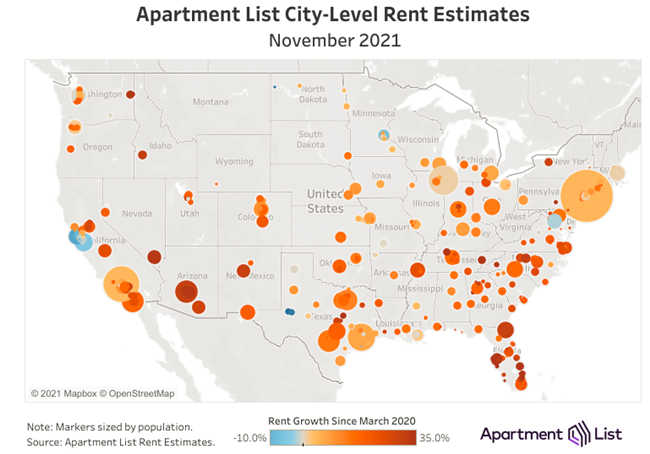
Rent growth is continuing to cool rapidly across many markets, according to the November report from Apartment List.

“While our national index was essentially flat, 53 of the nation’s 100 largest cities saw rents fall this month, indicating a widespread rental-market cooldown,” wrote housing economists Chris Salviati and Igor Popov in the report.

The pace of rent growth has been slowing for several months, but yearly total growth is still up and outpacing the pre-pandemic levels of rent.

Rents normally drop this time of year due to seasonality.

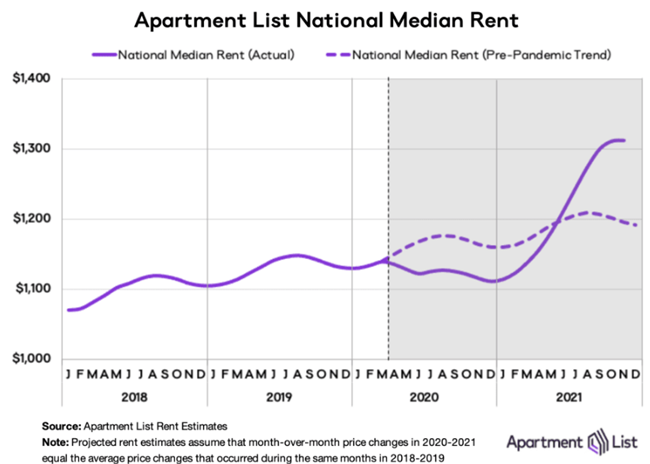
“Since January of this year, the national median rent has increased by a staggering 17.8 percent. To put that in context, rent growth from January to November averaged just 2.6 percent in the pre-pandemic years from 2017-2019,” the report says.

November national median rent

“The national median rent is $1,312 this month, which is $117 greater than where we project it would be if rent growth over the past year and a half had been in line with the growth rates we saw in 2018 and 2019,” the report says.

Rent Growth Continues To Cool Across Many Markets

Rents grew by 0.1 percent in November, the fourth straight month that growth has slowed after peaking at 2.7 percent in July.

“This represents the smallest month-over-month growth rate that we’ve recorded in 2021,” the report says.

A slowdown in rent growth during the fall and winter is typical, but this year “the seasonal slowdown is capping a year that has been characterized by unprecedented price increases.”

Rents fell In November in 53 of 100 largest cities

While cities saw strong rent growth from March through September this year, 53 of these cities actually saw rents fall in November, the most since the previous November, when rents fell in 62 of the 100 largest cities.

The Apartment List report says among the cities where prices have started their winter cooldown, many are expensive coastal markets that saw steep rent drops in 2020 and fast rent rebounds in 2021. In particular, rents fell by 2.7 percent this month in San Francisco, the city’s second straight monthly decline and the fourth largest decline in the nation.

Vacancy rate continues slight climb

After bottoming out at 3.8 percent in August, “Our vacancy index has ticked up slightly for three consecutive months and now stands at 4.2 percent.

“Although the recent increase has been modest and gradual, it represents an important inflection point, signaling that tightness in the rental market is finally beginning to ease.

“If our vacancy rate continues to increase in the coming months, it’s likely that rent growth will also continue to cool,” the report says.

Sign Up For Our Newsletter And Get Rental Housing and Apartment News And Helpful, Useful Content Each Week.

* indicates required

Portland Multifamily Rent Growth Cools

How To Winterize Your Pacific Northwest Rental Property

How To Winterize Your Pacific Northwest Rental Property

How to winterize your pacific northwest rental property using this checklist heading into winter.

By Phil Schaller

It’s that time of the year again. Winters aren’t too harsh here in the Pacific Northwest, but it’s still important to winterize your rental. Just one cold spell can wreak havoc on your pipes, gutters, roof, and more, unfortunately. But we are here to help! The checklist below is a must-do heading into winter.

While the items listed below will set your property up well for the cold months ahead, it is not exhaustive. Your koi pond in the front yard will require some attention, although we don’t have it listed below (maybe a future post!).

  • Blow the irrigation system. This will require a landscaping company to come out to clear your systems, but it’s quick and not very expensive.
  • Detach your hose(s) and cover the spigots. Water left in the hose/spout can cause pipes to crack and the spouts to malfunction (not to mention the hose as well).
  • Caulk any cracks or holes around your windows. Exterior silicone caulk is the way to go here. It’s water-resistant and very durable.
  • Clear the gutters. With more precipitation in the winter months, your gutters need to function as well as possible. All those needles, leaves, pine cones, etc. can clog things up.
  • Clean up the roof and siding. If you notice any moss build-up (common in the PNW), it’s best to scrape it to prevent further build-up. We don’t recommend hopping on the roof yourself; hire someone who has the proper equipment.
  • Bring in outdoor furniture and grills. If your furniture sits outside all winter in the elements, you’ll be buying new furniture before you know it.
  • Insulate water-supply pipes. Focus on pipes that aren’t kept warm by insulation or heating – those in the attic, crawl spaces, garage, and so on. Foam pipe covers work well and are easy to install.
  • Install draft guards and weather stripping to necessary doors. Draft guards are inexpensive and slide onto the bottom of a door.
  • Replace the furnace filters. This is important to do regularly, but especially important heading into winter. You and your tenants will want the furnace working as well as possible.
  • Adjust the thermostat. If you’re turning over a unit or a single family home, make sure you don’t let the thermostat dip below 50 degrees. Damage to unprotected pipes can ensue if it gets too cold.

While this is a decent-sized to-do list, winterizing your rental property (or any property for that matter) will pay dividends in the long run. On top of that, these tasks aren’t very time-consuming or expensive.

Any questions for us, please feel free to reach out anytime. Happy winterizing!

About the author:

if you are interested in learning more about RentalRiff’s rental property maintenance service, give us a call at 541-600-3200. Phil Schaller is an experienced landlord and the founder/CEO of RentalRiff – an alternative service to traditional property management that provides ongoing oversight and upkeep of rental properties, while serving as the main point of contact for tenants. Maintenance and repair costs are included and property specialists are licensed/insured. Phil is a Pacific Northwest native, father of two, and fly-fishing addict.

Sign Up For Our Newsletter And Get Rental Property And Apartment News And Helpful, Useful Content Each Week.

* indicates required


Rental property maintenance: How to troubleshoot a broken garbage disposal

7 Pest Preventative Maintenance Steps For Rental Housing

How to Rent a Pest-Free Home to Your Tenants

The maintenance check up this week, provided by Keepe, asks whether you are taking the pest preventative maintenance you need in your rental housing to protect your investment and your tenants.

From mice to ants and cockroaches, pest infestations can cause serious property damage and traumatize tenants, significantly worsening their perception of their living conditions.

Property managers need to be aware of what draws pests to rental homes and adopt simple pest preventive maintenance steps that can protect properties and tenants.

7 Types of Pest Preventative Maintenance Steps

No. 1 – To avoid any and all infestations, it is fundamental to regularly inspect properties for cracks, crevices and any kind of openings that would allow unwanted critters to access indoor spaces. This includes checking open vents and drainage pipes.

No. 2 – Pests need a source of moisture to survive, so it is adequate to minimize the presence of standing water by regularly checking whether pipes, AC units, gutters or downspouts leak or allow water to accumulate; scheduling seasonal maintenance and timely repairs for those systems is ideal.

No. 3 – Clogged and debris-filled gutters can make for a cozy hiding spot: making sure that gutters are regularly cleaned avoids this issue.

No. 4 – Regular trimming of trees and plants located next to windows and entryways can prevent branches from allowing pests to gain access to them.

No. 5 – All pests are naturally drawn to food, both inside of homes and as found outside in trash cans and disposal areas. Investing in trash cans and bins made of heavy, tough materials that have tight, sealable lids works best for keeping pests from identifying a property as an attractive, food-secure nesting place. Heavy-duty containers also make it difficult for raccoons and possums to force their way into garbage storage areas.

7 Pest Preventative Maintenance Steps For Rental Housing

No. 6 – Some pests can utilize chimneys as access points and nest in attics and roofs. Having a professional install wiring or screens on chimney gaps can block access.

No. 7 – It is fundamental to encourage rental property tenants to be mindful about safe food storage and disposal of organic material. Inside the home, food should be properly stored inside tight containers and fridges. Garbage should be disposed of in a timely manner.

The lineup of unwanted potential pests

Ants

Ants are drawn to foods that most humans tend to consume fairly regularly: meat, starches and sweets. While most types of ants nest and live outside, they can easily detect nearby food sources and once found, they return regularly. In fact, ants release a chemical designed to guide them back to the newly found food source, which also indicates this to other ants in the colony. Infestations can easily get out of hand once the thousands of specimens from a certain colony learn where to go for food, which also increases the likelihood of indoor nesting.

Cockroaches

Cockroaches are nocturnal creatures, which makes them much more difficult to spot. Experts warn that in most instances, spotting a first cockroach is likely an indication of an entire colony having nested within the property. Aside from their unpleasant appearance, cockroach activity can severely affect the health of tenants as their droppings and cast-off skins are known to aggravate asthma, allergies and other breathing conditions. This is a pest preventative maintenance step you should take seriously.

Mice/Rodents

Just as for ants and cockroaches, food is the main culprit for attracting mice to human homes. Mice represent a serious threat for the safety of tenants as they can carry fleas and diseases that can be severely harmful to humans, such as meningitis. Tenants can be easily exposed to these harms as mice contaminate spaces with their fur and droppings.

Mice can take over rental properties quickly because of their year-round, rapid breeding. Their presence can be quite destructive due to their chewing abilities, which can damage furniture, wiring, and even walls.

7 Pest Preventative Maintenance Steps For Rental Housing

Raccoons and Possums

Due to their considerably larger size, those pests are better able to defend themselves once they encounter humans and they feel trapped and threatened. For this same reason, they can can endanger pets, especially cats and smaller dogs.

Raccoons and possums can also carry rabies, which makes them that much more pressing to invest in proper pest preventative maintenance measures.

Summary:

These simple 7 pest preventative maintenance steps can save you a lot of headaches and keep your tenants happy and avoid over-reacting over pests in their rental housing.,

About Keepe:

Keepe is an on-demand maintenance solution for property managers and independent landlords. Keepe makes hundreds of independent contractors and handymen available for maintenance projects at rental properties. Keepe is available in the Greater Seattle area, Greater Phoenix area, San Francisco Bay area, Portland and is coming soon to an area near you. Learn more about Keepe at https://www.keepe.com

7 Mold Preventative Maintenance Steps For Kitchens And Bathrooms

Sign Up For Our Newsletter And Get Apartment News And Helpful, Useful Content Each Week.

* indicates required


Higher-Income Millennials Renting Instead Of Buying Homes

Higher-Income Millennials Renting Instead Of Buying Homes

Higher-income millennials are renting homes instead of buying as they are being priced out of the overly competitive real estate market as prices continue upward.

Thus, the higher-income millennials lead the ranks of “lifestyle renters,” according to a new study from RentCafe.

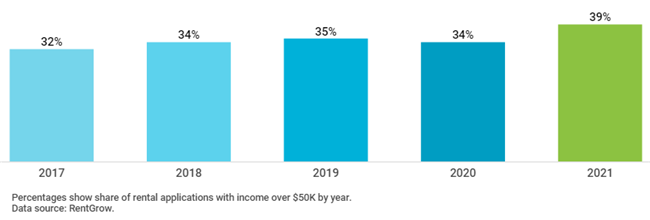
“The share of applications for apartments from renters who earn more than $50,000 is at its highest level in five years, 39 percent, as many would-be homebuyers were priced out of an overly competitive real estate market in 2021,” RentCafe says in the report.

Rapidly rising housing prices and bidding wars have pushed up the number of people who have decided to rent despite having the income to buy a home.

“This year’s rental applicants are making on average 10 percent more than those who moved last year, the equivalent of $4,300 more in annual wages. Of all renter groups of typical home-buying age, the share of millennials with incomes greater than $50,000 saw the fastest increase in 2021 — a significant 20 percent more than in the previous year,” the report says.

Higher-Income Millennials Renting Instead Of Buying Homes

Higher-income millennials becoming lifestyle renters

The growing percentage of lifestyle renters is due, in part, to many millennials realizing that the benefits of homeownership don’t outweigh the difficult path to get there, says Noah Echols, vice president of marketing at Carroll, a national real estate investment company.

Housing prices have been rising for years, making it more difficult for renters to transition into homeownership,” Echols said. “Student loan debt has also increased, making it difficult for young people to save for a down payment.

“Previous generations put an emphasis on homeownership as a marker of achievement for an adult. Lifestyle renting has been normalized by millennials, removing the pressure to purchase a home in order to feel successful,” Echols said.

Large cities with highest increase of high-income millennial renters

Higher-Income Millennials Renting Instead Of Buying Homes

Compared to 2020, there are now 51 percent more millennials in the $50,000 or more income bracket who applied for rent in Indianapolis, IN., where the individual median income grew by 11 percent  since last year, further solidifying Indy’s status as an emerging job hub and increasingly attractive spot to call home.

Across the country, surging home prices make lifestyle renting in Las Vegas a viable option for many. The share of rental applications among upper-income millennials went up 43 percent year-over-year. Notably, a large portion of these renters were recent transplants, particularly from neighboring California, for whom Vegas offers more space at a more affordable price while working remotely and waiting out the pandemic.

Phoenix also continues to be an attractive relocation destination, especially for millennials. This year, Phoenix had 39 percent more rental applications from millennials who earn more than $50,000. As home prices encourage members of this generation to embrace renting, Phoenix is ready to meet the demand, thanks to a surge in new apartments delivered in 2021 alone.

Sign Up For Our Newsletter And Get Rental Housing and Apartment News And Helpful, Useful Content Each Week.

* indicates required

25 Percent of Renters Say They Will Never Buy A Home

New Year, New Laws: Changes to Tenant Screening in Senate Bill 291

New Year, New Laws: Changes to Tenant Screening in Senate Bill 291 for Oregon Landlords

With the new year fast approaching, Oregon landlords must once again turn their attention to a new law affecting their business practices and tenant screening in Senate Bill 291.

By Bradley S. Kraus
Attorney at Law
Warren Allen, LLP

As this article goes online, we will have entered December, the final month of 2021. While not as tumultuous as 2020, this year proved to be one of highs and lows as the industry dealt with changing rights related to non-payment, slow rental-assistance distribution, and a struggling return to some form of normalcy. With the new year fast approaching, landlords must once again turn their attention to a new law affecting their business practices in Senate Bill 291.

Senate Bill 291, which takes effect on January 1, 2022, changes the screening rules found in the Oregon Residential Landlord and Tenant Act. Many landlords who own property in Portland may be used to some of these changes, as they mirror some of those which Portland put into effect with the FAIR Ordinance. Those changes are now codified at the state level for all of Oregon to follow by SB 291.

Of note, Senate Bill 291 will require additional disclosures from the landlord in order to charge for applicant screening. SB 291 prohibits the landlord from charging a screening charge unless the landlord includes written notice to the applicant of the following:

  • A right to appeal a negative determination, if any right to appeal exists;
  • Any nondiscrimination policy as required by federal, state or local law plus any non-discrimination policy of the landlord, including that a landlord may not discriminate against an applicant because of the race, color, religion, sex, sexual orientation, national origin, marital status, familial status or source of income of the applicant;
  • The amount of rent the landlord will charge and the deposits the landlord will require, subject to change in the rent or deposits by agreement of the landlord and the tenant before entering into a rental agreement; and
  • Whether the landlord requires tenants to obtain and maintain renter’s liability insurance and, if so, the amount of insurance required.

The following will require landlords to review their screening criteria and application documents. To the extent necessary, I would encourage landlords to procure new forms in order to stay compliant with these new changes.

Another huge change found within SB 291 is the requirement of individualized assessments related to criminal denials. Landlords must now provide an opportunity for the applicant to submit supplemental evidence to explain, justify or negate the relevance of potentially negative information that may result in a criminal denial. Further, landlords must also conduct an individualized assessment of the applicant, including reviewing any supplemental evidence, before denying an applicant based upon their criminal-screening results. That individualized assessment must consider a number of factors, including:

  • The nature and severity of the incidents that would lead to a denial;
  • The number and type of incidents;
  • The time that has elapsed since the date the incidents occurred; and
  • The age of the individual at the time the incidents occurred.

Many Oregon landlords will likely search for guidance on how to properly conduct such an evaluation. Individualized assessments are, by their very nature, individualized to the applicant, and cannot be reduced to a check-box approach or summarized in one article. However, landlords are encouraged to work with their attorneys with respect to criminal denials in order to ensure compliance with laws related to fair housing. Under SB 291, landlords must now provide a written statement of denial within 14 days of the denial, so it is imperative that landlords promptly seek guidance when needed.

Bradley S. Kraus is an attorney at Warren Allen LLP. His primary practice area is landlord/tenant law, but he also assists clients with various litigation matters, probate matters, real estate disputes, and family law matters. You can reach him at kraus@warrenallen.com or at 503-255-8795.

New Year, New Laws: Changes to Tenant Screening in Senate Bill 291 for Oregon Landlords
Bradley Kraus, Portland attorney

Senate Bill 282 – Oregon’s Newest COVID-19 Landlord/Tenant Changes

Sign Up For Our Newsletter And Get Apartment News And Helpful, Useful Content Each Week.

* indicates required

Financing The Niche with RE Preferred Equity

Financing The Niche with RE Preferred Equity

Financing the niche with re preferred equity and multifamily financial pivot,  stabilization and new acquisitions in commercial real estate

By Gary Williams
Rothchild Capital Solutions of Illinois

“The Age of Disruption” and the title alone suggests  the insurmountable obstacles within the commercial real estate development and new acquisition. This article will serve two purposes. One, it will highlight how the distinguishing factors impact the way that developers, sponsors, and lenders approach the negotiation table to discuss key elements of commercial real estate projects along with financing and will discuss obstacles facing developers and sponsors in need of equity and or investment capital and the lack of capital available during covid-19.

“A MEASUREMENT OF RISK AND FINANCING”

It’s true the possibilities are great as real estate owner and or investor however before you take the plunge ahead, you should realize and understand that project leveraged to high followed by sponsor low balance sheet is recipe for disaster.

Now depending on your level of optimism and the appetite you bring to the of hotel development and or acquisition table this transaction will either represent an opportunity to obtain a higher rate of return on your investment, or this may signal you to lower your risk tolerance. As a young man in the very early days of my career “A Wise Man” once told me that Risk comes from three places in the life of any business transaction (a). not knowing and or understanding what you are doing, (b) failing to plan for the unseen, (c) without strategies to mitigate and or exit.

RCS looks at three of the main factors that differentiate a hotel business operation from other commercial real estate business operations and or investments. (a) absence the benefit of long-term cash flow (tenant lease), (b) projects that are leveraged to high with the wrong type of financing and (c) short terms tenants known as Hotel Guest only pay market daily rates that are influenced by several factors out of your control.

RCS PREFERRED EQUITY EUCLID ALGORITHMS

Our first approach to the RE EQUITY fund was to lower the term cost of financing which we accomplished developing a term that allowed stabilization to mature. Secondly, we developed CMT rate structure that lower the cost of financing over the term significantly which is a key element using a preferred equity approach.

RCS PREFERRED EQUITY EUCLID ALGORITHMS

MEZZANINE VS. RE PREFERRED EQUITY

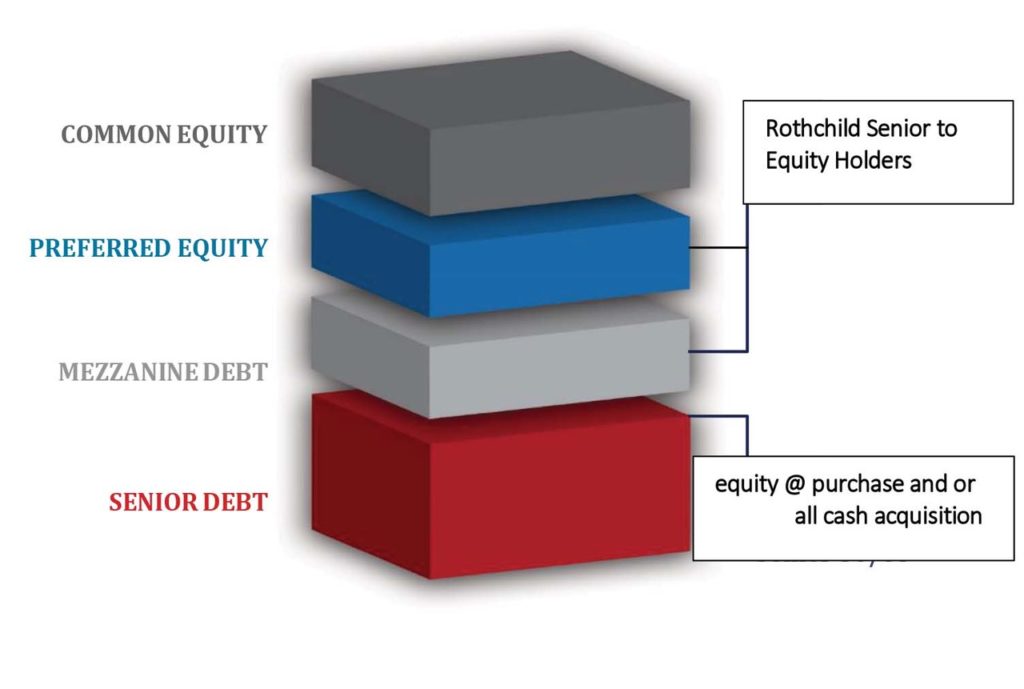
Mezzanine loans and preferred equity investments are used to achieve very high leverage on large commercial projects. Normally conduits, banks, and life companies will not exceed 80% loan-to-value when making commercial mortgage loans. Mezzanine loans and preferred equity investments are stacked on top of big construction loans or big permanent loans to achieve loan-to-cost ratios as high as 95% in most cases. A preferred equity investment is quite different from a mezzanine loan, but it accomplishes almost the exact same thing. The lender makes an investment of equity with a preferred return in the LLC that owns the big commercial project. If the management of the LLC fails to pay the preferred member the promised return, the old management is ousted and the common members of the LLC (the former owners) lose their voting rights, dividends, and right to the distribution of any profit.

Financing The Niche with RE Preferred Equity

THE NORM RE PREFERRED EQUITY

Preferred equity investment in real estate come in various forms and, unlike subordinate or mezzanine loans they are typically documented in the borrower’s organizational (entity) documents. Generally, the deals are structured as an investment from a third party in the real estate owner’s legal entity and or affiliates entities. The exchange on the norm is interest in the real estate direct cash flow and or indirect under a preferred priority return. Such have provision where (i) interest on the investment money paid monthly regardless, (ii) total investment amount paid upon maturity date, (iii) default rate with interest and other penalties assessed against the borrower followed by loss of management and or ownership. This is considered a very HARD approach and structure.

THE NEW WOLF OF WALL STREET REAL ESTATE “ROTHSCHILD RE PREFERRED EQUITY INVESTMENT MODEL

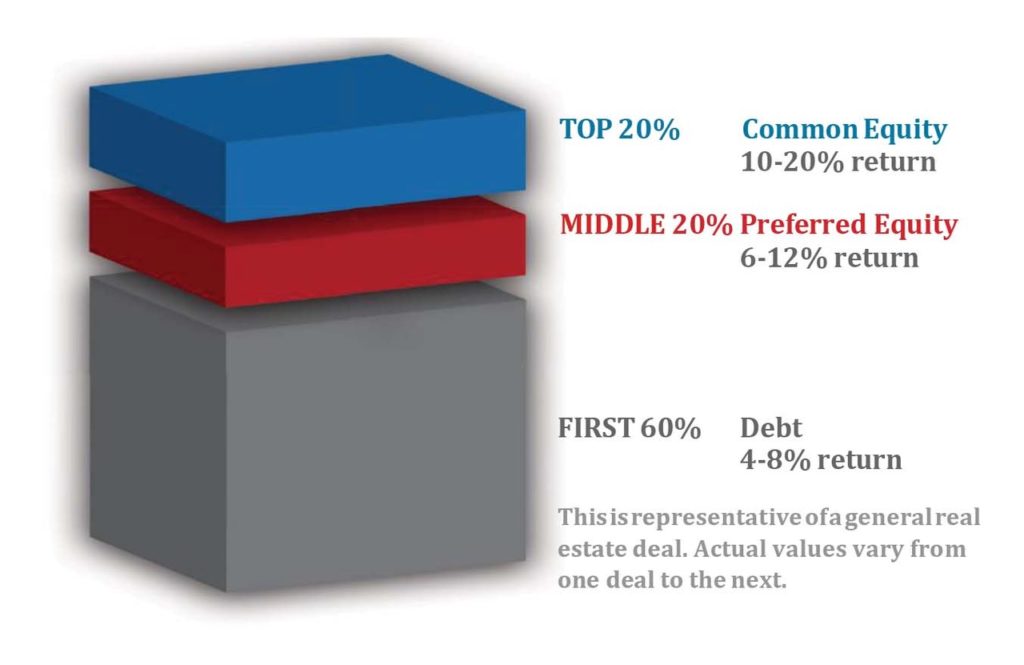
Preferred equity Rothchild Capital a real equity investment into the real property borrowing entity, junior to the development debt lender but senior to the borrowers’ equity, secured and packaged under a new formula into a single asset instrument EJV with far less provisions eliminating all threats of violating the senior lenders loan agreement. Where the legalese will have some standards of DEFAULT NON-COMPLIANCE and CARVEOUTS over all this new and innovative approach is unlike the more traditional model image above use in most real estate preferred equity transactions today. Accordingly, these investment transactions raise many issues and have many concerns and pitfalls for both the senior lender and equity provider which includes transfer of management and controlling interests. The legal term at LaSalle has developed a workable solution in the event of such. Controlling interest can be shared and or third party out and management can be yield by agreement. The transfer of controlling interest will always remain a concern and never go away, in addition there is no “one-size-fits-all” solution. A wise man once told me “Only the Hands of the Diligence will be made rich”. Preferred equity investment is here to stay and will play an important role in filling the gap left by traditional financing. Our current financial and lending environment with the introduction of BASEL III and recent adjustments to HVCRE will required financial practitioners to be much more solution oriented with a high-level efficiency than ever before.

Financing The Niche with RE Preferred Equity

THE RE PREFERRED EQUITY INVESTMENT: THE RCS MODEL

Rothchild Capital Solutions managing partner Shelton has developed a new financial formula for RE Preferred Equity transactions achieving much higher leverage ratios on the capital stack then the traditional model shown above. RE Preferred Equity Group at RCS (the PEI model) Shelton has coined a unique blended structure with elements of Private Equity, Mezz Debt, and Investment Finance.

Financing The Niche with RE Preferred Equity

Rothchild Capital Solutions
Private Niche Lender
Rothchild Capital Solutions of Illinois-708-540-1711
Gary Williams Partner Midwest & Southeast | g@rothchildcapital.com


Kay Properties & Investments Has One of the Most (if not the most) Robust 1031 Delaware Statutory Trust Educational Platform in the Nation

Kay Properties & Investments Has One of the Most (if not the most) Robust 1031 Delaware Statutory Trust Educational Platform in the Nation

Kay Properties & Investments believes firmly in education. In fact, many have said that no one in the country does more to educate accredited investors, and anyone interested in DST Investments for their 1031 exchange than Kay Properties does. With a comprehensive platform of educational options, Kay Properties is considered by many nationwide to be the preeminent authority and expert in DST 1031 exchanges and investment strategies.

Interested in learning more about DST 1031 exchanges? Each week, Kay Properties founder and CEO, Dwight Kay and the Kay Properties team of DST experts, regularly host educational webinars and special events to help investors understand the 1031 exchange process and the many nuances of Delaware Statutory Trust properties.

 Webinars and Events topics include:

  • Delaware Statutory Trust (DST) 1031 Exchange Replacement Properties – What are they and how do they work?
  • Triple Net (NNN) Leased Properties
  • Section 1031 Exchange Property Options
  • Section 1033 Exchange – DST Properties for 1033 Exchanges
  • Reasons to Consider All-Cash/Debt-Free DSTs for your 1031 Exchange
  • The Section 721 Exchange “UPREIT”
  • Real Estate Demographics
  • Real Estate Asset Classes
  • DST Sponsor Companies
  • DST Properties as a Direct Cash Investment
  • Why Investors Choose DST Properties Over NNN Properties
  • Diversification using DST 1031 Exchange Properties
  • DST Vs TIC – What are the differences?

 Register for one of our exclusive DST 1031 events today by calling 1-855-899-4597 or by visiting www.kpi1031.com

 DST 1031 Conference Calls

In addition to our regularly scheduled webinars, each Friday at 11 a.m. PST/2 p.m. EST Kay Properties also hosts an interactive live conference call where one of our DST 1031 exchange experts will be going over pertinent topics related to DST 1031 properties.

Some of the topics we will be discussing include:

  • The 1031 Exchange process
  • Reasons why investors choose DST properties as their 1031 replacement property
  • Delaware Statutory Trust Sponsor Companies – In depth analysis and review of the many different DST sponsor companies in the 1031 DST industry that Kay Properties has raised capital for over the years.
  • The potential pros and cons of real estate, 1031 exchanges and DST properties
  • What to look for when considering a DST
  • Which DST properties and asset classes to completely avoid due to out of control risk factors and lack of prior performance
  • What kind of leverage is available in today’s DST marketplace
  • All cash/Debt Free DST properties – Available for 1031 exchange and direct cash investments for those investors not wanting the risk of lender foreclosure

Kay Properties & Investments Has One of the Most (if not the most) Robust 1031 Delaware Statutory Trust Educational Platform in the Nation

1031 Exchange Delaware Statutory Trust Seminars and Workshops!

 Each month, Kay Properties & Investments holds dinner events where accredited investors can learn more about the DST 1031 marketplace. These events have allowed accredited investors to meet some of the most knowledgeable DST 1031 exchange experts in the entire country as they discuss important subjects like:

  • Delaware Statutory Trust Sponsor Companies and Offerings – How the investments work and what to be aware of when considering a 1031 DST exchange
  • The potential pros and cons of 1031 exchanges and DST investment offerings
  • What to look for when considering a 1031 exchange or DST investment.
  • Which DST properties, tenants and asset classes to avoid at all cost

And more…

Seminar locations include:

  • Pasadena, CA
  • Los Angeles, CA
  • San Diego, CA
  • Phoenix, AZ
  • Las Vegas, NV
  • New York, NY
  • Paramus, NJ
  • Long Island, NY
  • Philadelphia, PA
  • Chicago, IL
  • San Francisco, CA
  • Seattle, WA
  • Portland, OR
  • Baltimore, MD
  • Washington, DC
  • Fairfax, VA
  • Raleigh, NC
  • Atlanta, GA
  • Dallas, TX
  • Austin, TX
  • Denver, CO
  • Miami, FL
  • W. Palm Beach, FL
  • Tampa, FL

Visit Our Blog – A Great Resource for Learning More About DST Trends, Recent DST 1031 Transactions, and Insights from DST 1031 Exchange Experts

 Kay Properties has a complete library of relevant articles that are both searchable and chock-full of exclusive, valuable information. Visit www.kpi1031.com/blog to learn more about the very latest trends in the Delaware Statutory Trust 1031 exchange industry. Some of the topics you may want to explore include:

  • How Real Estate Investors Can Use Delaware Statutory Trust (DST) Properties to Replace Debt in a 1031 Exchange
  • Real Estate DSTs — A Haven in a 1031 Tax-Change Storm?
  • Thoughts on the Senior Care DST asset classes – Caveat Emptor – Buyers Beware of Senior Care DSTs
  • How Biden’s Tax Plan Could Affect Your Real Estate Investments and 1031 exchanges
  • Custom Kay Properties Delaware Statutory Trust Offering Goes Full Cycle
  • Retirement Planning? Don’t Forget About Investment Real Estate
  • Why Real Estate Income Funds Have Distinct Potential Benefits for Investors

Visit www.kpi1031.com/blog or call 1-855-899-4597 for more information.

Listen to Our Expanding Library of Podcast Episodes

Kay Properties has created an ever-growing library of informative Podcast Episodes that can be streamed directly from your computer or smartphone with just a click of a button here: www.kpi1031.com/dst-1031-essentials. These podcasts are unique in that they allow anyone to listen to an in-depth conversation of the many recurring themes and nuances of the DST investment process. This page also allows you to share, download, fast forward, and pause the recording for easy listening convenience. Current topics include:

  • A Look at the Overall DST 1031 Market and Why It’s Growing in Popularity
  • What are Some of the Risks Associated with DST 1031 Exchanges?
  • Just What is the 200% Identification Rule for 1031 exchanges?
  • An Exclusive Interview with various DST Sponsor Companies

One-on-One Advisory Session with DST 1031 Experts

Finally, in addition to a full educational Delaware Statutory Trust platform for potential investors to review, Kay Properties also provides clients the opportunity to participate in a one-on-one advisory consultation with one of our DST 1031 experts. This session allows our experts to review most people’s specific 1031 scenarios based on their particular parameters.  Investors have found this incredibly beneficial when trying to ascertain if a DST 1031 investment makes sense for their particular situation as the Kay Properties team has been involved in over $21 Billion dollars of DST investments and has worked with thousands of investors nationwide. To schedule a one-on-one consultation, visit www.kpi1031.com/appointment

About Kay Properties and www.kpi1031.com

Kay Properties & Investments is a national Delaware Statutory Trust (DST) investment firm. The www.kpi1031.com platform provides access to the marketplace of DSTs from over 25 different sponsor companies, custom DSTs only available to Kay clients, independent advice on DST sponsor companies, full due diligence and vetting on each DST (typically 20-40 DSTs) and a DST secondary market. Kay Properties team members collectively have over 115 years of real estate experience, are licensed in all 50 states, and have participated in over $21 Billion of DST 1031 investments.

* Past performance does not guarantee or indicate the likelihood of future results. Diversification does not guarantee profits or protect against losses. All real estate investments provide no guarantees for cash flow, distributions or appreciation as well as could result in a full loss of invested principal.

Diversification does not guarantee profits or protect against losses. All real estate investments provide no guarantees for cash flow, distributions or appreciation as well as could result in a full loss of invested principal. Please read the entire Private Placement Memorandum (PPM) prior to making an investment. This case study may not be representative of the outcome of past or future offerings. Please speak with your attorney and CPA before considering an investment.

There are material risks associated with investing in real estate, Delaware Statutory Trust (DST) properties and real estate securities including illiquidity, tenant vacancies, general market conditions and competition, lack of operating history, interest rate risks, the risk of new supply coming to market and softening rental rates, general risks of owning/operating commercial and multifamily properties, short term leases associated with multifamily properties, financing risks, potential adverse tax consequences, general economic risks, development risks and long hold periods. All offerings discussed are Regulation D, Rule 506c offerings. There is a risk of loss of the entire investment principal. Past performance is not a guarantee of future results. Potential distributions, potential returns and potential appreciation are not guaranteed. For an investor to qualify for any type of investment, there are both financial requirements and suitability requirements that must match specific objectives, goals, and risk tolerances. Securities offered through Growth Capital Services, member FINRA, SIPC Office of Supervisory Jurisdiction located at 2093 Philadelphia Pike Suite 4196 Claymont, DE 19703.