Home Blog Page 77

Report: Apartment Rents Won’t Grow to the Sky

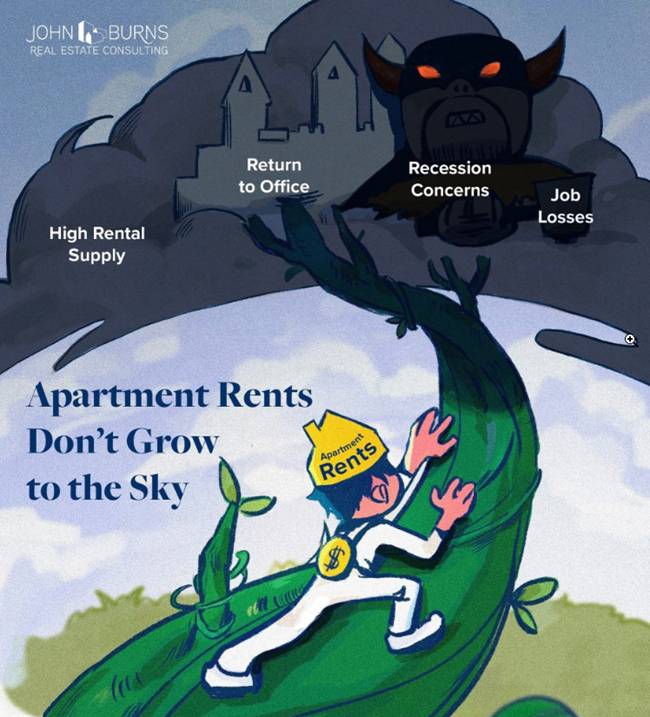
The combination of recession concerns, requests to return to the office, rents that are just too high, and a multi-decade high of new rental supply are all combining to cause apartment rents to soften and potentially decline, writes John Burns Real Estate Consulting.

In a report by Alex Thomas and Jesse McConnico called “Apartment Rents Don’t Grow to the Sky” they write, “Rents are set to fall in many areas around the country, which is exactly what the Fed needs to help get inflation under control. This short-term pain for rental investors should be offset by the long-term gain of a stable economy and lower borrowing rates.

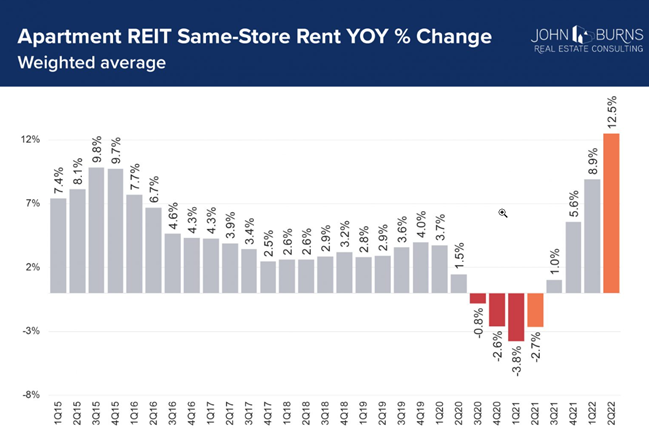
“Every quarter, we summarize the earnings calls of six publicly traded apartment REITs (Real Estate Investment Trusts) for our research clients, and our consultants have been busier than ever helping apartment and build-to-rent developers understand local market dynamics as they build and lease new communities,” they write in the report and in a recent email newsletter.

Why Rents Soared

Rents soared for a couple of reasons, the report says.

It was the combination of record demand due to working from home and relocations, plus capital flowing into apartment construction resulting in a 36-year high of multifamily starts and a 34-year high of multifamily completions.

Even with the level of construction it was still not enough to meet demand.

Recession concerns, requests to return to the office and apartment rents that are just too high are combining to cause rents to soften.
Charts courtesy of John Burns Real Estate Consulting

What Some REITs Told John Burns Real Estate Consulting

  • AvalonBay Communities: “We’ve assumed that [rents] will decline, just at a more modest pace than pre-COVID periods would typically dictate.”
  • Essex Property Trust: “What we are expecting is normal seasonality. We do have headwinds from tougher year-over-year comps. Last year, in the first half, our blended lease rate was -4 percent. But in the second half, it surged to about +13.25 percent. That’s the tough year-over-year comp.”
  • Equity Residential: “We assume we’re going to have rents peak somewhere in this first or second week of August and then have a normal kind of trail off in rents until you get to that January period.”

See what the other REITs had to say here.

Conclusion: Watch Apartment Market for Signs of Job Losses

“Watch the apartment market carefully for early signs of job losses, which is something that the Fed wants and is even forecasting,” the report says.

“The increase in rental demand due to homeownership becoming less attainable doesn’t mean rents can rise to the sky, and the rental market demand/supply balance can quickly turn upside down when job losses coincide with a lot of apartment completions.”

Read the full report here.

About John Burns Real Estate Consulting:

For more information on the apartment market and a comprehensive view on housing demand and supply, or help understanding your local market dynamics, see https://www.realestateconsulting.com or contact us here.

Multifamily Rents ‘Hit the Brakes’ in September

The long run of multifamily rent growth “hit the brakes” in September as the economy continued to cool, Yardi Matrix says

The long run of multifamily rent growth “hit the brakes” in September as the economy continued to cool, Yardi Matrix says in their monthly report.

Yardi Matrix says multifamily rents remained unchanged in September, while Apartment List reported rent declines in a number of metro markets, indicating the accelerated rent growth fueled by the pandemic has officially ended.

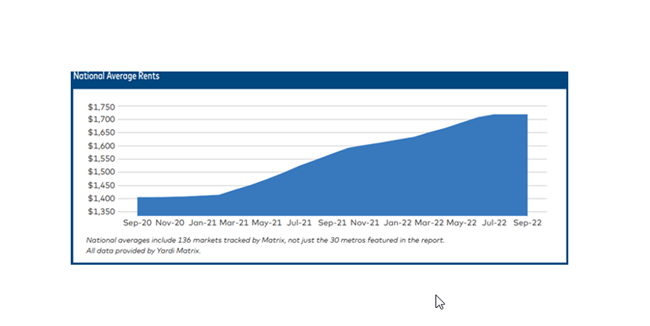
“After a year-and-a-half of record-setting growth, multifamily rents have hit the brakes. Asking rents have flattened this summer at $1,718 for three months in a row. That comes after rents rose more than 20 percent since January 2021,” Yardi Matrix says in the report.

Multifamily Rents September Report highlights:

  • Multifamily rents were flat in September, as the market continues to decelerate along with the rest of the economy. The average national asking rent was $1,718, the same rate as August. Year-over-year growth decelerated 150 basis points to 9.4 percent. National occupancy rates remained steady at 95.9 percent.
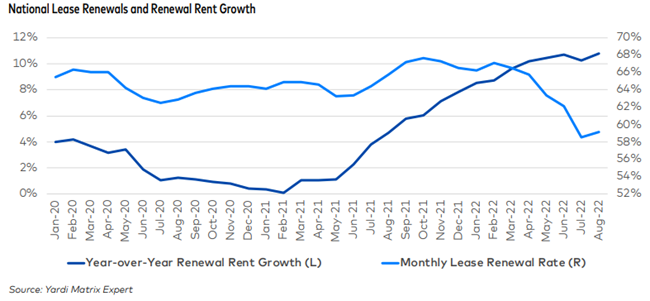
  • After five months of declining lease renewals, the lease renewal rate increased 60 basis points in August to 59.1 percent. Year-over-year renewal rent growth also increased 50 basis points, to 10.8 percent. In addition, rent-to-income ratios rose nine basis points nationally for all units in August.
  • Rents decreased in the single-family sector for the second month in a row in September. The average single-family asking rent decreased by $7 to $2,081, while year-over-year growth dropped by 170 basis points to 7.8 percent. Overall occupancy also decreased 10 basis points, to 1.1 percent.

“The cooling economy is beginning to show its effect on multifamily. However, key fundamentals remain strong,” Yardi Matrix says in the report.

“Rent decreases continue to be concentrated in high-end lifestyle units, which dropped 0.3 percent nationally in September. Rents increased 0.2 percent for renter-by-necessity units and stabilized nationally for all units.

“Despite the flattening rent growth, much about the market remains positive. National asking rents are still at record highs, and national occupancy rates have been hanging around 96 percent since June of 2021.”

Yardi Matrix has two new additions to their monthly report, lease-renewal percentages and rent-to-income ratios in top metros.

  • Monthly lease renewals increased in August after falling each month since February of this year. With the Fed hiking up interest rates, buying a home has grown out of reach for many, and renewal rent growth, while high, is typically lower than rent growth for a new lease.
  • lease renewals The long run of multifamily rent growth “hit the brakes” in September as the economy continued to cool, Yardi Matrix says
    Charts courtesy of Yardi Matrix
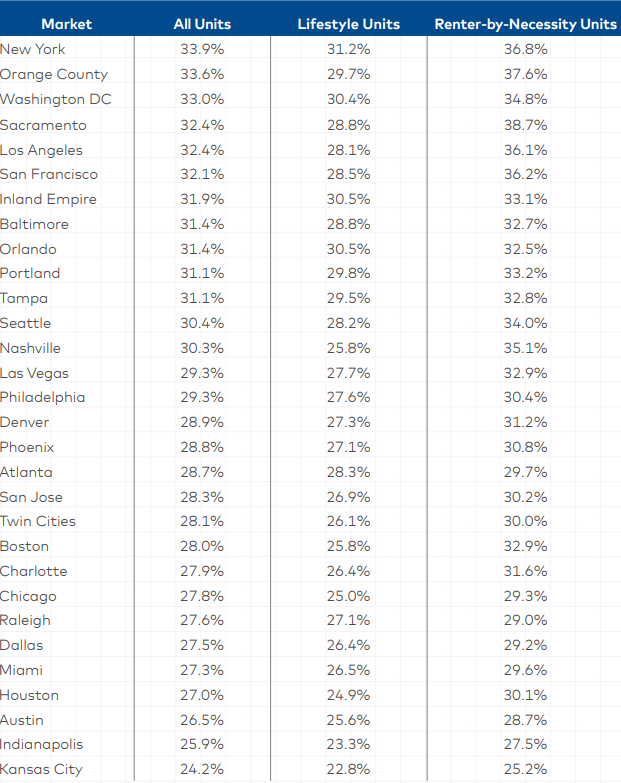
  • National rent-to-income ratios for all units were 29.0 percent in August, 9 basis points higher than July.

Multifamily Rent-to-Income Ratios as of August 2022

rent to income ratios as the long run of multifamily rent growth “hit the brakes” in September as the economy continued to cool, Yardi Matrix says
Charts courtesy of Yardi Matrix

Conclusion:

“The outlook for multifamily remains strong, although the market may be coming to an end of its extraordinary run of rent growth. Demand is slowing as migration and household formation drop to normal levels,” Yardi Matrix says.

Get the full report here.
About Yardi Matrix

Yardi Matrix researches and reports on multifamily, office and self-storage properties across the United States, serving the needs of a variety of industry professionals. Yardi Matrix Multifamily provides accurate data on 18+ million units, covering more than 90 percent of the U.S. population. Contact the company at (480) 663-1149.


Rate Of Rent Growth Slows At Midyear But Multifamily Still Poised For Strong Year

With Traditional Multifamily Rent Drivers Disrupted What Is The Future?

Another Bullish Year For Multifamily In 2022?

Sign Up For Our Weekly Newsletter And Get Rental Property And Apartment News And Helpful, Useful Content Each Week.

* indicates required

Fair Housing Matters: Landlord Liability for Tenant-on-Tenant Discrimination

Dealing with tenant-on-tenant discrimination complaints or disputes between tenants, and how landlord liability figures in.

Dealing with tenant-on-tenant discrimination complaints, or disputes that arise between tenants, takes proper investigative measures to determine what actually happened and where landlord liability figures in.

Bradley S. Kraus
Partner, Warren Allen LLP

As the calendar turns, 2022 rages on towards its eventual—and merciful—end. Winter is almost upon us, which means many people are indoors more often than not. Unfortunately, that increased indoor time can mean more tenant-on-tenant disputes. While seasoned landlords are no strangers to handling such situations, one particular situation, tenant-on-tenant discrimination, requires additional discussion—and immediate action.

Buried within the Oregon Administrative Rules is OAR 839-005-0206, which details specific theories of discrimination involving housing in Oregon. One particular section involves landlords:

(5) Tenant-on-tenant harassment: A housing provider is liable for a resident’s harassment of another resident when the housing provider knew or should have known of the conduct, unless the housing provider took immediate and appropriate corrective action.

What this administrative rule reads as is a theory of liability for tenants against their landlord if they are harassed by other tenants based on a protected status if the landlord did not take “immediate and appropriate corrective action.” Such exposure may seem strange, but some courts have already previously determined that the Fair Housing Act contains the same protections for tenants. If the landlord knew, or should have known, of tenant-on-tenant discrimination, and failed to take action, the victim tenant may sue the landlord based on this discrimination.

What does this mean for landlords? First, a landlord should do as they always do with tenant disputes. If complaints or disputes between tenants arise, take proper investigative measures to determine what actually happened. This would involve interviewing the parties, witnesses, and reviewing any other written statements or documents provided. Second, creating a log book and/or incident report can assist down the row in recreating what, if anything, happened. Landlords should use/create such items anyway as a best practice, as they are infinitely helpful in the event of litigation.

If it appears or is discovered that discriminatory language and/or conduct occurred, a landlord should take immediate action. This would include the proper termination notices under Oregon law. In the event of a he-said/she-said situation, it may behoove the landlord to defer on the side of aggressive action, as opposed to inaction. Fair Housing lawsuits are no laughing matter, often involving substantial attorney fees, costs, and stressful discovery processes, all of which could potentially be avoided through affirmative action.

As a landlords’ attorney, I have learned that not all tenant disputes are created equal. Some are petty, and/or involve people that cannot be placated or made happy unless they live entirely away from each other. Some involve racism, discrimination, and/or bigotry, which should have no place in our world. While these are two extremes which do not encompass the entirety of tenant-on-tenant disputes, if a landlord finds themselves facing the latter of these two scenarios, working with your attorney on an aggressive response can be the difference between resolution and litigation.

About the author:

Fair Housing Matters: Landlord Liability for Tenant-on-Tenant Discrimination
Brad Kraus

Bradley S. Kraus is an attorney at Warren Allen LLP. His primary practice area is landlord/tenant law, but he also assists clients with various litigation matters, probate matters, real estate disputes, and family law matters. You can reach him at [email protected] or at 503-255-8795.

Sign Up For Our Weekly Newsletter And Get Apartment News And Helpful, Useful Content Each Week.

* indicates required

Portland Update: Changes to FAIR Ordinance Bring (Some) Necessary Changes

Dealing with Habitability issues and Substitute Housing

Renting Is At Highest Level In 55 Years

Renters surpass homeowners in 41 percent of the zip codes in the 50 largest cities as more households are renting than in last 55 years

Renters now surpass homeowners in 41 percent of the zip codes in the 50 largest cities in the U.S., according to a new RentCafé report and more households are renting than at any point in the last 55 years.

“Although renting was previously considered an alternative brought on solely by circumstances, one-third of this decade’s renters now say that it’s a matter of choice.”

Some highlights:

  • Renting is at the highest level in half a century, with 43.7 million households currently living in rentals.
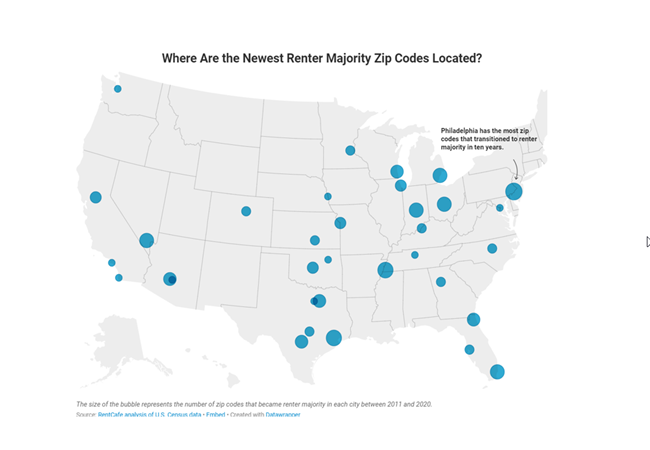
  • As many as 101 zip codes switched to renter majority in the past decade.
  • Renters surpass homeowners in 41% of zip codes in the 50 largest US cities.
  • Downtown areas became more popular for renters in 2020 compared to 10 years prior.
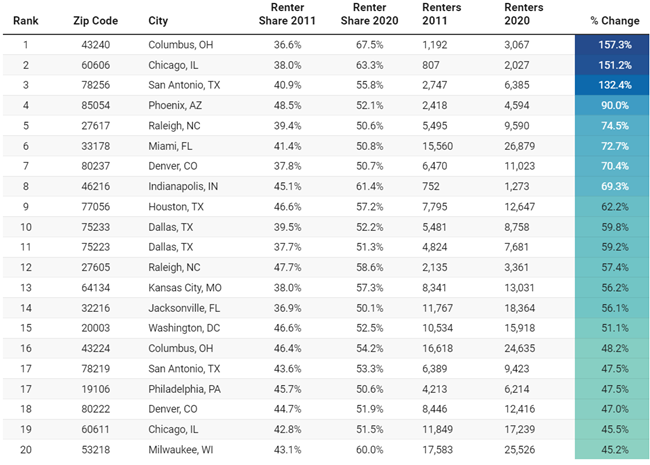
  • Of the new renter majority zip codes, 43240 in Columbus, OH saw the fastest increase in the number of renters.
  • San Antonio’s 78215 is the top trending zip code for renters in the nation, tripling its renter population in ten years.

What Zip Codes Do Renters Prefer?

The number of renters in the U.S. rose by 12 percent between 2011 and 2020 — three times faster than the 4 percent increase in homeowners, according to the most recent U.S. Census estimates

“We found that 101 zip codes switched to renter-majority in the last 10 years. With the addition of these communities, renters represent the majority population in 41 percent or 632 of the 1,553 zip codes analyzed in the 50 largest U.S. cities.”

Zip Codes Where Renters Became The Majority

Renters surpass homeowners in 41 percent of the zip codes in the 50 largest cities as more households are renting than in last 55 years
Zip codes where renters outnumbered owners ranked by renter population change between 2011 and 2020. Source: RentCafé analysis of U.S. Census data Embed Created with Datawrapper

Zip Codes With the Fastest Growing Renter Populations

Downtowns are trendy for renters.

Many of the zip codes with the fastest-growing renter populations are located in city cores.

Specifically, eight of the 20 neighborhoods that grew their renter populations by more than 80 percent in the past decade are in or near downtowns.

“Similarly, our latest report on the top neighborhoods for apartment construction showed a historic boom in centrally located areas in the last five years — a timely response to the increased demand for rentals in these locations,” the report says.

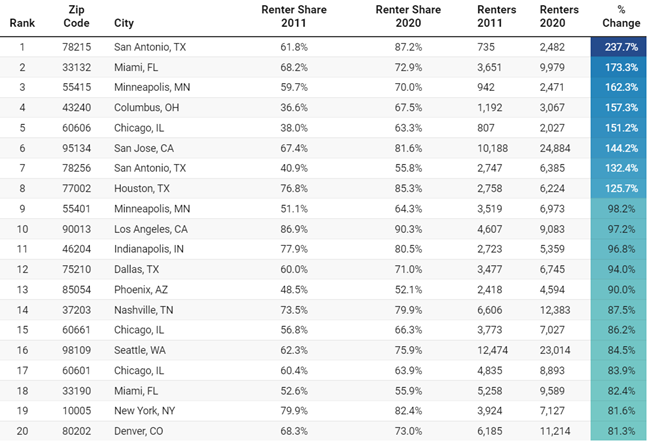
“In this respect, San Antonio, TX is home to the top-trending neighborhood for renters nationwide: zip code 78215 in downtown San Antonio boasting an incredible growth rate of 238% in renter population. Here, the proportion of renters more than tripled, going from a mere 735 in 2011 to 2,482 in 2020.”

Fastest-Growing Renter Zip Codes

Renters surpass homeowners in 41 percent of the zip codes in the 50 largest cities as more households are renting than in last 55 years
Trending renter zip codes where the renter population grew faster than that of owners from 2011 to 2020, ranked by the 10-year increase in renter population. Source: RentCafé analysis of U.S. Census data Embed Created with Datawrapper

About the study:

RentCafé is a nationwide apartment search website that enables renters to easily find apartments and houses for rent throughout the United States. For this study, RentCafé  looked at the number of renters and owners in 1,553 zip codes with a minimum population of 1,000 in 2011 and 2020 across the 50 largest U.S cities. To identify the zip codes that switched to renter-majority, they took into consideration those zip codes where the renter share surpassed 50 percent in 2020, compared to 10 years prior and then ranked them based on the increase in renter population in 2020 compared to 2011.


Should Tenants Leave Power On When They Move Out?

Should Tenants Leave Power On When They Move Out?

This week a landlord asks should tenants leave power on when they move out is the question for Ask Landlord Hank. Remember Hank is not an attorney and is not offering legal advice. If you have a question for him please fill out his form below.

Dear Landlord Hank:

Is a tenant who has moved out on good terms by not re-signing the lease required to leave the power connected in their name until a new tenant moves in?

– Jason

Dear Landlord Jason,

Your good tenant’s obligations to the lease and to you end on the last day of the lease.

Normally the landlord will contact the power and water company to have those utilities on for showings, cleaning, etc. until the next tenant moves in.

The new tenant would then normally have those utilities put into their names at the start of the next lease, for that term.

Sincerely,

Hank Rossi

Each week I answer questions from landlords and property managers across the country in my “Dear Landlord Hank” blog in the digital magazine Rental Housing Journal.  https://rentalhousingjournal.com/asklandlordhank/

should the tenants leave the power on when they move out?
Landlord Hank says, “Normally the landlord will contact the power and water company to have those utilities on for showings, cleaning, etc. until the next tenant moves in.”

Ask Landlord Hank Your Question

Ask veteran landlord and property manager Hank Rossi your questions from tenant screening to leases to pets and more! He provides answers each week to landlords.

  • This field is for validation purposes and should be left unchanged.

Did you miss last week’s question? It was very popular

Can I Enter My Rental If It Is Vacated And Eviction Pending?

Last week a landlord asked “can I enter my rental property” if the tenant has vacated and the eviction is still pending was the question. Remember Hank is not an attorney and is not offering legal advice.

Do I Have to Paint and Replace Flooring for a Long-Term Tenant?

A Tenant Poured Grease Down Drain Who Is Responsible?

Sign Up For Our Newsletter And Get Rental Housing And Apartment News And Helpful, Useful Content Each Week.

* indicates required

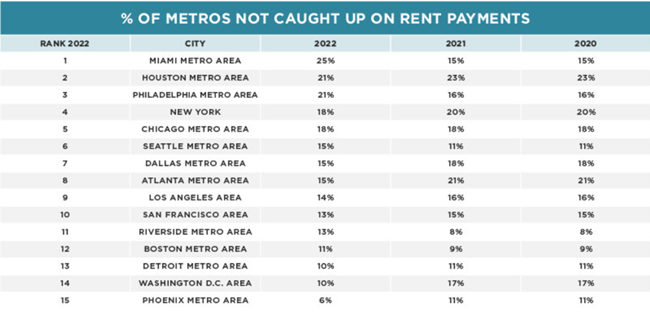
States Where Tenants are Most Behind on Rent Payments

Tenants are behind on rent payments in a number of states with about 15 percent of renters, or about six million total, according to a report from myelisting.com.

“Our team of analysts at MyEListing.com found that about 15 percent of Americans are not currently caught up on rent. Estimates from the most recent federal data available show this equates to around six million American households.

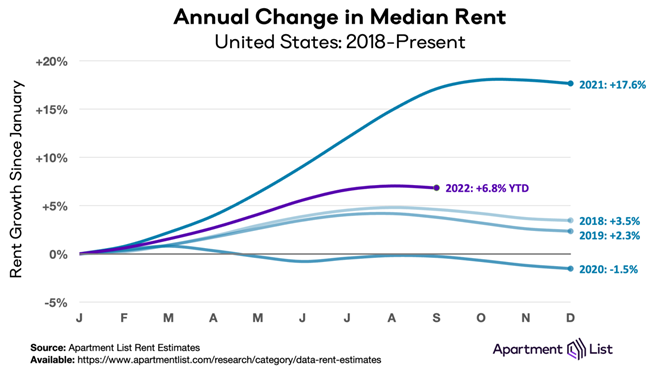
“Nationally, the cost to rent an apartment rose 17.6 percent in 2021, according to apartmentlist.com. The ever-increasing cost of rent is causing financial hardship for a relatively large percentage of the population in each state,” the report says.

Key findings in the report:

  • Renters in South Dakota, Alabama, and New Jersey have the most trouble making their monthly payments.
  • Renters in Miami, Houston, and Philadelphia are furthest behind on their rent.
  • Data shows 15 percent, or around six million American households, are behind on their rent payments this fall. This has remained consistent over the last 3 years (2020, 2021, 2022).
  • Americans aged 40 to 54 had the most difficulty keeping up with rent.

Top 10 states where renters are the most behind on payments

The percentages vary from state to state: In South Dakota, 22 percent of renters are behind on rent, while in Idaho, only 3 percent are behind on their rent. Additionally, Minnesota, Wisconsin, and South Dakota had the largest increase of tenants unable to keep up on rent in 2022 compared to 2021.

  1. South Dakota
  2. Alabama
  3. New Jersey
  4. South Carolina
  5. Connecticut
  6. Delaware
  7. Arkansas
  8. Kentucky
  9. Louisiana
  10. New York

Conclusion

“A troubling aspect of these findings is that rent costs keep increasing. While the percentage of Americans unable to keep up on rent has remained consistent over the last three years, it has remained consistently high at 15 percent. The question remains: Will Americans be able to keep up on their rent payments as costs continue to rise?” the report says.

Fannie Mae to Include Rent Payments in Mortgage Approval Process

Sign Up For Our Newsletter And Get Rental Property And Apartment News And Helpful, Useful Content Each Week.

* indicates required

Why I Like My Rental Properties’ Nosy Neighbors

Three Steps to Becoming a Successful, Lazy Landlord

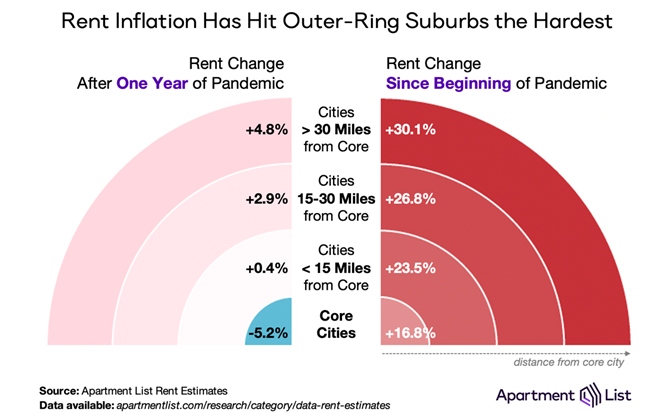
Rent Inflation Hits Outer-Ring Suburbs The Hardest

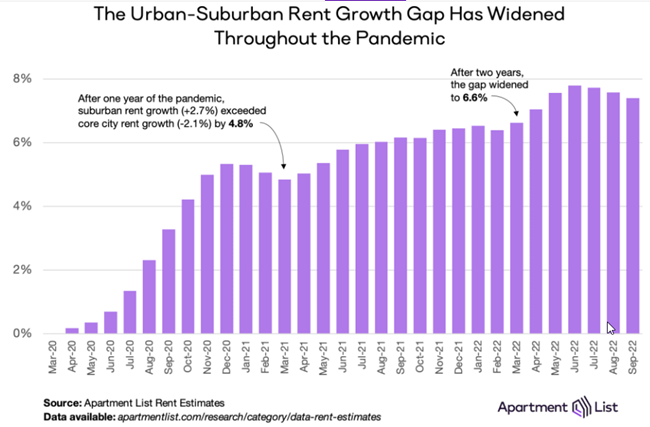
Rent inflation has hit the outer-ring suburbs of major metros the hardest in the last two years, according to new research from Apartment List.

Rent inflation has hit the outer-ring suburbs of major metros the hardest in the last two years, according to new research from Apartment List.

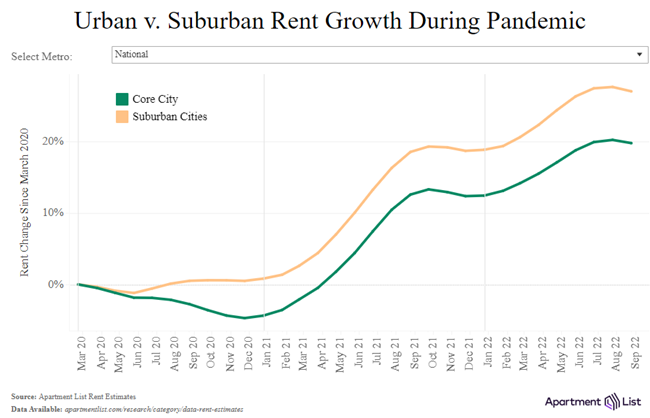
The report says, “Over the past two and a half years, the rental market has been on a rollercoaster ride, as the pandemic has shaken up the ways that we live and work. As remote work has made proximity to the office less of a concern for housing choice, one result has been that the suburbs of large metros have been experiencing notably faster rent growth than the core cities that they surround,” Chris Salviati and Rob Warnock write in the report.

“We estimate that since March 2020, rents have increased by an average 19.8 percent in the core cities of large metros, while the suburbs of these metros have seen rents spike by 27.2 percent,” Salviati and Warnock write.

Rent inflation has hit the outer-ring suburbs of major metros the hardest in the last two years, according to new research from Apartment List.
Charts courtesy of Apartment List.

Remote work leads to fastest rent growth in far-flung outer-ring suburbs of major metros

The report says the impact of remote work on these changing preferences “would seem to be validated by an additional finding that emerges when we break down our suburban rent data into more granular categories.

“Namely, the fastest rent growth since March 2020 has been occurring in the suburbs that sit furthest from the urban core. For the purposes of this analysis, we have limited the data to 13 large metros where we have robust rent estimates for a wide swath of suburbs at varying distances from the core city.

“Among these 13 metros, the first year of the pandemic brought an average rent decline of 5.2 percent in the core cities. Over that same year, the outer-ring suburbs that sit more than 30 miles from the core city saw the fastest rent growth, with an average increase of 4.8 percent, roughly proportional to the decline in the core cities. Looking over the full pandemic period, rents in the core cities have risen by an average of 16.8 percent since March 2020. Over the same period, the near suburbs that lie within 15 miles of the core cities saw rents increase by 23.5 percent.

“Meanwhile, the mid-distance suburbs (15 to 30 miles from the core city) experienced rent growth of 26.8 percent, and the farthest flung suburbs that are more than 30 miles from the urban core have seen the fastest rent growth at 30.1 percent.3 In other words, rent growth has been progressively hotter moving outward in concentric rings from the urban core.

Rent inflation has hit the outer-ring suburbs of major metros the hardest in the last two years, according to new research from Apartment List.
Charts courtesy of Apartment List

Rent Inflation: Some highlights and examples:

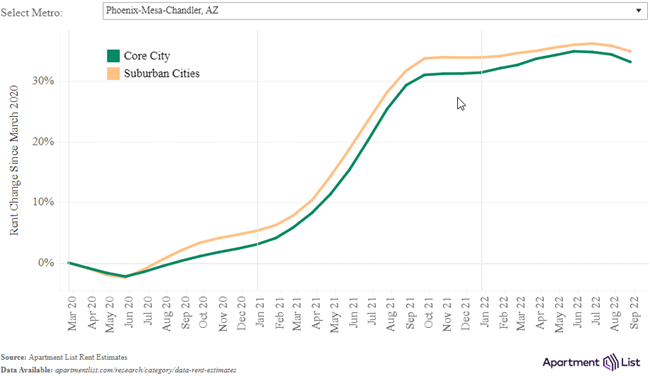
    • Phoenix

Phoenix Urban-Suburban Rent Growth Since 2018

  • Phoenix inflation has hit the outer-ring suburbs of major metros the hardest in the last two years, according to research from Apartment List.
  • In the first year of the pandemic, rents in the city of Phoenix rose by 5.8 percent, compared to an increase of 7.8 percent in the metro’s surrounding suburbs.
  • From the start of the pandemic to present, Phoenix rents are up by 33.2 percent, while the metro’s suburbs have seen rents rise by 34.9 percent.
  • Among the 39 metros that we analyzed, 33 have seen rent inflation and growth in the outer-ring suburbs outpacing that of the core cities. On average, rent growth has been fastest in the suburbs that sit farthest from the urban core.
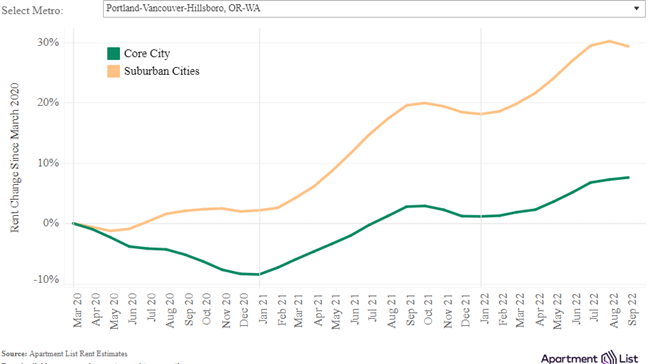
  • Portland
        • Portland ranks #2 for widest gap between core city and suburban rent growth
        • In the first year of the pandemic, rents in the city of Portland fell by 6 percent, compared to an increase of 4.2 percent in the metro’s surrounding suburbs.
        • From the start of the pandemic to present, Portland rents are up by 7.6 percent, while the metro’s suburbs have seen rents rise by 29.3 percent.
        • Among the 39 metros that we analyzed, 33 have seen rent growth in the suburbs outpacing that of the core cities. On average, rent growth has been fastest in the suburbs that sit farthest from the urban core.

      Portland Urban-Suburban Rent Growth Since 2018

      • Portland outer-ring suburbs
    Seattle
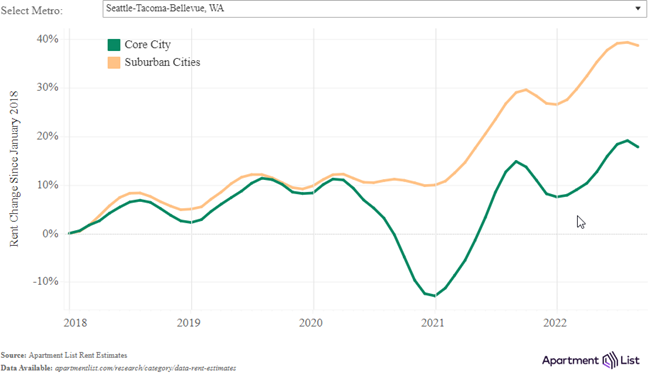
        • Seattle ranks #3 for widest gap between core city and suburban rent growth
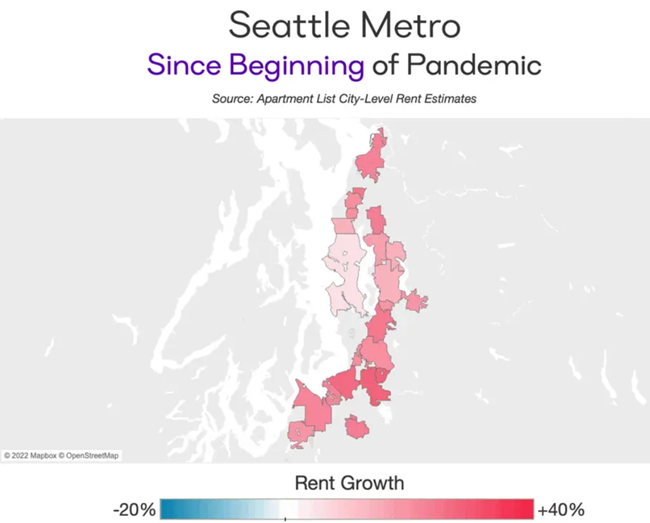
        • In the first year of the pandemic, rents in the city of Seattle fell by 17.8 percent, compared to an increase of 0.4 percent in the metro’s surrounding suburbs.
        • From the start of the pandemic to present, Seattle rents are up by 6 percent, while the metro’s suburbs have seen rents rise by 23.8 percent.
        • Among the 39 metros that we analyzed, 33 have seen rent growth in the suburbs outpacing that of the core cities. On average, rent growth has been fastest in the suburbs that sit farthest from the urban core.

      Seattle Urban-Suburban Rent Growth Since 2018

      • Seattle  inflation has hit the outer-ring suburbs of major metros the hardest in the last two years, according to research from Apartment List.
    • Seattle suburbs

Conclusion

The past two and half years “have ushered in rapid changes to the ways that we live and work, driving significant shakeups to the housing market. One such disruption has been a spike in demand for suburban rentals. Even before the pandemic, increasingly unaffordable housing costs close to the urban core had been pushing more and more renters to the far peripheries of the nation’s large metro areas, resulting in a proliferation of “super commuters.” Spiking demand in the far suburbs appears to have more to do with affordability than with geographic preference – this trend should only emphasize the need for sustainable development with easy transit-oriented access to the urban core.”

Read the full report here.

About the authors:

Chris Salviati is a senior housing economist at Apartment List, where he conducts research on economic trends in the housing market.  Chris previously worked as a research assistant at the Federal Reserve and an economic consultant, and he has BA and MA degrees in economics from Boston University.

Rob Warnock is a senior research associate at Apartment List, where he examines trends in the housing and rental markets. Previously he worked in public health policy, and before that, graduated from UCLA with a degree in Globalization.

National Rents Decline for Second Month In September

National Multifamily Rent Growth Hits A Wall In August

Sign Up For Our Weekly Newsletter And Get Rental Property And Apartment News And Helpful, Useful Content Each Week.

* indicates required

National Rents Decline for Second Month In September

National rents declined by 0.2 percent in September, the first time this year that the national median rent has declined month-over-month

National rents declined by 0.2 percent over the course of September, marking the first time this year that the national median rent has declined month-over-month, according to the September report from Apartment List.

Rents fell in 69 of the 100 largest cities.

“The timing of this slight dip in rents is consistent with a seasonal trend that was typical in pre-pandemic years. Assuming that trend continues, it is likely that rents will continue falling in the coming months as we enter the winter slow season for the rental market,” the report says.

Normal seasonality at this point in the year

Apartment List points out that the recent rent declines are in line with the normal seasonal trends pre-pandemic.

“But given how atypical the market has been for the past two and a half years, this month’s return to pre-pandemic seasonality represents a notable shift.

“Last September, rents spiked by 1.9 percent month-over-month, as the market continued on an unprecedented stretch of record-setting rent growth which disrupted seasonal trends. In contrast, from 2017 to 2019, rents fell by an average of 0.3 percent in September, right in line with this month’s decline. Assuming that this year’s trajectory continues to follow normal seasonal trends, we can expect to see additional modest declines in the months ahead, as rental market activity slows during the winter months.”

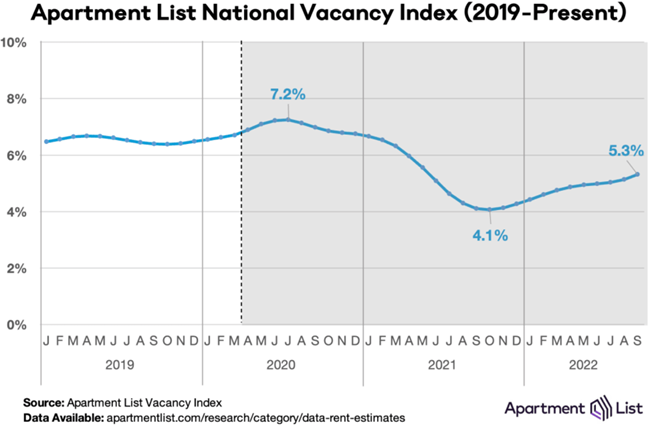
Slowing Rent Growth and Rising Vacancy

National rents declined by 0.2 percent in September, the first time this year that the national median rent has declined month-over-month
Chart courtesy of Apartment List

The slowing rent growth is being mirrored by continued easing on the supply side of the market, the report says.

“After bottoming out at 4.1 percent in October 2021, our national vacancy index has been on a trend of gradual easing. This month it rose to 5.3 percent and has shown nearly one full year of continued, albeit slow, improvements,” the report says.

“It’s worth noting, though, that rental vacancies are intertwined with housing availability in the for-sale market, and it’s possible that spiking mortgage rates are dampening the rebound in the rental-vacancy rate. High interest rates can sideline potential first-time homebuyers and keep them in the rental market longer. Two years of sustained rent inflation may also be incentivizing renters to stay put and renew existing leases rather than looking for new ones.”

National Multifamily Rent Growth Hits A Wall In August

Sign Up For Our Weekly Newsletter And Get Rental Property And Apartment News And Helpful, Useful Content Each Week.

* indicates required

How to Plan Your Delaware Statutory Trust to Remove the Stress of a 1031 Exchange

How to Plan Your Delaware Statutory Trust to Remove the Stress of a 1031 Exchange

By Matt McFarland
Senior Vice President
Kay Properties and Investments

 Any investor who is considering selling a piece of investment real estate will undoubtedly consider a 1031 Exchange.

A 1031 Exchange refers to the IRS code that allows significant tax advantages for investors.  How? When you sell an investment property and you have a profit, you normally are required to pay capital gains tax. A 1031 Exchange allows you to sell your investment real estate and reinvest the proceeds in a “like-kind” property, which defers any capital gains and other related taxes. This doesn’t mean you are eliminating any of these taxes, rather you are able to defer them until a later date.

However, any investor who has completed a 1031 exchange knows that one of the biggest hurdles to clear is the many time constraints and tight closing windows the IRS imposes when it comes to like-kind exchange investing. The entire 1031 Exchange process must be completed within 180 days. The clock starts ticking day one after your relinquished property is sold and the funds are escrowed with Qualified Intermediary (QI). On a side note, it is essential you never hold the proceeds from the sale outside of a QI. If you touch the funds at any time during the process, you eliminate your eligibility for a 1031 exchange and you have to pay all of the capital gains and other related taxes.

As an expert 1031 Exchange professional, I can tell you that it is the initial 45-day identification period that causes the most stress, as an investor is required to formally identify the property or properties, they intend to purchase within a matter of about 6 weeks. More specifically, in order to avoid any tax liability, you must identify a property or properties that are of equal or greater value than the relinquished property. You can identify up to 3 separate properties with no regard to their value (3 property rule), or you can identify an unlimited number of properties that do not exceed more than 200% of the value of the relinquished property (200% rule).

Here’s a quick summary of the 1031 Exchange rules investors should keep in mind when considering selling a piece of investment property:

  • Entire 1031 Exchange process must be completed within 180 days
    • Day 1 – Sell your property; proceeds are escrowed with a Qualified Intermediary (QI)
    • Day 45 – Identify a property(s); you must notify your QI of the identified property(s)
    • Day 180 – Close on new property; you must close within 180 days after the first sale
  • Maintain equal or greater amount of equity
  • Maintain equal or greater amount of debt

Plan Ahead to Reduce the 45-Day Identification Stress

One of the best ways to mitigate the stress of this short time window is to begin searching and selecting potential like-kind properties before you officially close on your relinquished property and the 45-day time clock starts ticking.

When it comes to Delaware Statutory Trust properties, the underlying real estate that is a part of a particular offering is acquired and owned by the trust before it is ever accessible to 1031 exchange investors to consider as an option.  This “pre-packaged” element of DSTs affords investors who are in the process of a 1031 Exchange the luxury of a quick and seamless close of their purchase of a DST property.

Another great benefit of DSTs for 1031 Exchange investors is that they can make a great back-up or contingency plan. Real estate deals fall apart all the time, and if your replacement property in a 1031 Exchange falls apart for any number of reasons, you could be in a tight spot. Using a DST as an “identified” property makes a great contingency plan if your initial deal does fall through.

However, it is important to remember that even though the Real Estate Sponsor Company has completed their due diligence and acquired a particular property for one of their DSTs does not mitigate the need for an investor to conduct their own due diligence on the various DSTs.

Make sure to look at current DST properties offered on the www.kpi1031.com marketplace.

All 1031 exchange investors, with the help of their Kay Properties’ Registered Representative, will assess the various opportunities to ascertain the best potential solution for their particular situation and/or circumstance.

When is the Best Time to Start the DST Selection Process?

In most cases, the most opportune time to begin the screening process is about 30 days before you are scheduled to close on your relinquished or downleg property.  The reason for this is simple – DST investments have a finite shelf life or a limited time in which they are ‘open’ for investment.  DST offerings are capped at a specific value and as soon as the last dollar is invested, that particular DST offering is no longer available for further investment.

In my experience, DST offerings are typically available for purchase for about 1-3 months.  In many cases, it would be an improper allocation of one’s time to begin the selection process 3-6 months out, as most of the opportunities considered will be sold out by the time they have the capital to invest as part of their 1031 exchange.  Within 30 days, many of the opportunities will likely be viable options for one to consider as reservation can be made for one’s allocation.  In a perfect scenario, an investor has decided exactly which DSTs they are purchasing before they close on their relinquished property.  This grants them the ability to quickly close on their DST investments as soon as the funds from the sale become available and successfully complete their 1031 exchange just a few days into their 45-day identification period.

Keeping these points in mind should not only greatly mitigate most of the stress associated with a 1031 exchange, they will also help you to potentially begin accruing cash flow immediately from their investments (a luxury afforded through the quick and seamless purchase of a DST relative to a traditional real estate transaction, which may stretch on for months).

Ask Bill Exeter

Ask Bill Exeter and his team your questions about 1031 exchanges and he and his team will get back to you.

Name

For more information on the 1031 exchange and DST selection process, please reach out to your Kay Properties Registered Representative or visit www.kpi1031.com for more resources.

About Kay Properties and www.kpi1031.com

Kay Properties is a national Delaware Statutory Trust (DST) investment firm. The www.kpi1031.com platform provides access to the marketplace of DSTs from over 25 different sponsor companies, custom DSTs only available to Kay clients, independent advice on DST sponsor companies, full due diligence and vetting on each DST (typically 20-40 DSTs) and a DST secondary market.  Kay Properties team members collectively have over 150 years of real estate experience, are licensed in all 50 states, and have participated in over $30 Billion of DST 1031 investments.

This material does not constitute an offer to sell nor a solicitation of an offer to buy any security. Such offers can be made only by the confidential Private Placement Memorandum (the “Memorandum”). Please read the entire Memorandum paying special attention to the risk section prior investing.  IRC Section 1031, IRC Section 1033 and IRC Section 721 are complex tax codes therefore you should consult your tax or legal professional for details regarding your situation.  There are material risks associated with investing in real estate securities including illiquidity, vacancies, general market conditions and competition, lack of operating history, interest rate risks, general risks of owning/operating commercial and multifamily properties, financing risks, potential adverse tax consequences, general economic risks, development risks and long hold periods. There is a risk of loss of the entire investment principal. Past performance is not a guarantee of future results. Potential cash flow, potential returns and potential appreciation are not guaranteed.

Nothing contained on this website constitutes tax, legal, insurance or investment advice, nor does it constitute a solicitation or an offer to buy or sell any security or other financial instrument. Securities offered through FNEX Capital , member FINRA, SIPC.

Why Real Estate Syndication Is Important for Delaware Statutory Trust 1031 Exchange Real Estate Investors

Six Ways to Ensure Your 1031 Exchange is Successfully Completed

Kay Properties & Investments Has Record Year With $610 Million In Equity Placed

The Importance of Human-Trafficking Knowledge for On-Site Teams

Training and knowledge of human trafficking for multifamily on-site staff teams is important and  remember to focus on situations and behaviors rather than appearances, since traffickers come from all walks of life.
Human Trafficking. Torn pieces of paper with the words Human Trafficking. Concept Image. Black and White. Closeup.

Training and knowledge of human trafficking for multifamily on-site staff teams is important and  remember to focus on situations and behaviors rather than appearances, since traffickers come from all walks of life.

By Lori Agudo

Human trafficking is a crime and a tragedy that affects people of all ages, genders, ethnicities and socioeconomic backgrounds, as well as all communities, including multifamily. If you can believe it, the United States is one of the worst areas in the world for human trafficking, with an estimated 199,000 incidents per year.

However, because of the difficulty in identifying human trafficking, less than 10 percent of incidents are reported each year. Only through continual education and training can the nation address this frightening abuse of humans and move toward reducing and removing it from society. With a lack of boundaries for where the victimization can occur, multifamily will have its share of trafficking – but there are ways for property managers and onsite associates to recognize it.

In 2021, the state of Florida mandated that apartment communities and other public lodging establishments provide annual training on human trafficking awareness to employees. At Royal American, it is now a requirement for all on-site staff, including outside the state. As stewards in our community, it’s imperative that we work towards the rights and safety of individuals, and the right training can save lives. All on-site staff in the service industry can benefit from this training. Keep in mind that having this training available in multiple languages is crucial for employees who feel more comfortable taking coursework in their first language.

Our teams have found this training to be invaluable. When the company began offering training for identifying trafficking, many employees expressed gratitude for the education. Many were unaware this type of crime was present in multifamily, and they were appreciative of the tools that provided increased awareness and the ability to identify possible trafficking situations during everyday interactions. Now, on-site teams work diligently to pay close attention to each interaction they have with residents and applicants. They are also looking for signs of human trafficking while conducting monthly unit inspections.

The Facts of Human Trafficking

 Human trafficking is often confused with migrant smuggling, but the two are very different. While human trafficking does involve movement across borders, that factor is not required. Trafficking goes far beyond that, focusing on the exploitation of adults and children for the purposes of financial gain.

In addition to the 199,000 estimated annual incidents in the United States, there are approximately 24 million people in the world being trafficked at any given moment. More than 70 percent of the victims are women and girls, and only around one percent of victims are ever rescued, making identification all the more critical.

In the United States, human trafficking has overtaken drug trafficking as the nation’s top-growing crime because victims can be used repeatedly. Traffickers will use their victims for an average of three to five years. In the United States alone, the money generated annually from trafficking is about $100 million.

Traffickers have no consistent profiles. As with their victims, perpetrators of trafficking cross all standard societal lines, and it’s not only strangers who prey on victims. Family and friends are frequently involved in this criminal activity. As a result, the identification of traffickers cannot be based on any stereotypes, and being aware of specific behavioral and social cues can often identify a human trafficking crime.

 The Three Main Types of Human Trafficking

There are three primary types of human trafficking. Human trafficking, while obviously illegal, is not always blatant. Workers in private homes, retail establishments and several industries may also be caught up in trafficking scenarios.

  • Child sex trafficking: The use of force, coercion or fraud to compel a person under the age of 18 to engage in commercial sexual activity. This can occur in homes, brothels, hotels or on the Internet.
  • Adult sex trafficking: In order to stamp out the use of the nonsensical term “child prostitute,” this was created as a separate term in trafficking. Force, fraud and coercion may not always be present in adult sex trafficking, and a degree of consent could be present. It is still exploitation of the victim by the trafficker, and it usually takes place in the same areas as child trafficking.
  • Labor trafficking: The use of fraud, force and coercion to push someone into providing work or services. This can include agriculture, domestic work, restaurants, cleaning services, and carnivals. Domestic servitude (work in a private residence) and forced child labor (use and transportation of children for work) are also forms of labor trafficking.

Indications of Human Trafficking

While this section will focus on the identification of human trafficking in a multifamily community, many of these behaviors can also present themselves in other places. It’s vital to remember to focus on situations and behaviors rather than appearances, since traffickers come from all walks of life. The following are a few things to on-site staff to observe:

  • Living situations: Apartments that are used for trafficking may have too many residents than the unit is designed for. Unusual or unsuitable living conditions may also be present, such as multiple mattresses on the floor, blacked-out windows, and locks designed to keep people in instead of out. Movement in and out of the apartment may appear odd, including frequent, short visits of 15 to 45 minutes by non-residents. Traffickers may not want to stay in one area too long, so a short-term lease coupled with these signs could be a red flag for on-site staff.
  • Actions and activity: Property managers should look for groups of people picked up and dropped off at the same time almost every day with none of them allowed to travel on their own. Traffickers will also inquire about the locations of cameras and other security features. Victims may not have access to their own documents and may refuse to answer questions, deferring to the person they are with. Another red flag for on-site teams is if the person they allow to answer questions is unfamiliar with the victim or is unclear with information regarding the person.
  • Behavior and demeanor: While some may refuse to answer questions, victims of trafficking may also respond with answers that sound scripted and rehearsed. They may also appear to be timid, fearful and submissive while declining to make eye contact when spoken to. The presence of law enforcement can cause discomfort or anxiety for both traffickers and their victims. Victims may exhibit physical or mental signs that indicate exploitation. They can appear to be hungry, thirsty or sleep-deprived, as well as display confusion, disorientation or a lack of knowledge of their whereabouts.

Steps to Take for Suspected Trafficking

If you spot the above signs in your community or at a specific unit, it is always best to take action. Unfortunately, law enforcement is not always the best course of action when it comes to trafficking situations, since they may not be able to immediately address the situation. Multifamily managers and associates can report suspected trafficking situations to the National Human Trafficking Hotline at 1-888-373-7888 (TTY: 711) or by sending an SMS text to 233733.

 About the author:

Training and knowledge of human trafficking for multifamily on-site teams is important and  remember to focus on situations and behaviors rather than appearances, since traffickers come from all walks of life.
Lori Agudo

Lori Agudo is a multifamily educator, philanthropist, and legislative advocate. She is the Director of Training and Talent Development at Royal American Management Inc. An expert in developing teams and curriculum, Lori is a facilitator of many workshops including the Facilitator Training Program, Hiring 101, and the Future Leaders program for the Apartment Association of Greater Orlando. Lori is also an </stro

Sign Up For Our Newsletter And Get Rental Property And Apartment News And Helpful, Useful Content Each Week.

* indicates required

ng>instructor for Certified Apartment Manager and Certified Apartment Leasing Professional credential programs.

Be Careful: Investors, Landlords Are Easy Targets for Fraud

Why I Like My Rental Properties’ Nosy Neighbors

Three Steps to Becoming a Successful, Lazy Landlord