Home Blog Page 60

How to Analyze Real Estate Investment Properties

Investing in multifamily real estate can present a challenging situation for those new to the real estate market so here are some key factors to analyze.

Investing in multifamily real estate can present a challenging situation for those new to the real estate market so here are some key factors to analyze.

By Catherine Schwartz

The real estate sector continues to be a personal favorite for many investors due to its potential to be very lucrative. Multifamily real estate, in particular, has become increasingly popular amongst many estate investors due to its high demand and long-term appreciation potential.

According to a report by the Statistica Research Department, the number of multifamily homes in the United States is projected to reach 155.25 million by 2023.

But even with so many great reasons to invest in multifamily real estate, it can present a challenging situation, notably for those new to the real estate market. Before investing your hard-earned funds into any property, it is vital to conduct a comprehensive assessment to guarantee long-term profitability.

Therefore, investors must grasp all the key factors and metrics when analyzing multifamily properties.

This piece will explore how to thoroughly analyze real estate investment properties, specifically in the multifamily sector.

Market Analysis

It is one of the most vital components of any solid real estate investment strategy. There’s a necessity first to understand the market circumstances and tendencies, as it can support you in recognizing the possible risks and opportunities that arrive with investing in a particular property.

Anthony Martin, Founder and CEO of Choice Mutual, adds, “When it comes to multifamily assets, the market analysis comprises assessing critical factors such as population growth, rental rates, and competition in the local market, as these aspects play a very crucial function in deciding the demand for rental assets, the possible rental fees, and the potential return on investment.”

  • Population growth: As the number of individuals in a specific locality escalates, there is an expectation of an increase in demand for rent, which can result in higher occupancy rates and rental rates.
  • Rental rates: You should initially compare the rental charges of similar properties in the same region to aid in determining the potential rental income of a property. Moreover, understanding the rental trends in the local market can assist you in recognizing opportunities to Increase rental fees and optimize your returns.
  • Competition in the local market: It is another critical factor to consider when analyzing multifamily properties. Taking time to study the number and quality of similar properties in the same area can help you identify the competition level and potential risks of investing in a particular property.

When these factors are appropriately evaluated, you will be better positioned to identify potential risks and opportunities and make better-informed investment decisions.

Property Analysis

In property analysis, you must thoroughly evaluate a property’s financial, physical, and market-related aspects to determine whether it’s worth your time and money.

When it comes to analyzing multifamily properties, there are various factors you need to consider, such as location and financing options.

  • Location: The location of a multifamily property is fundamental in determining its potential profitability and sustainability.

Andrew Pierce, Founder of Real Estate Holding Company, states, “Multifamily properties in high-demand areas with good access to public transportation, schools, hospitals, and shopping centers tend to have higher rental income and lower vacancy rates. Conversely, those in areas with poor access to basic amenities may have lower demand, higher vacancy rates, lower rental income, and slower appreciation.”

  • Financing options: As an investor, it’s crucial to assess the financial choices at your disposal, such as traditional bank loans, private lenders, and government-supported loans, to identify the most suitable option that meets your investment objectives while lessening your financial stress.

Financial Analysis

According to Jim Pendergast, Senior Vice President at altLINE Sobanco “Evaluating a property’s financial performance closely is the essence of financial analysis to ascertain if it is worth investing in. When investing in real estate, understanding the vital financial metrics and calculations for assessing multifamily properties is imperative.”

Some of the significant financial metrics that are essential to know include:

  • Net operating income (NOI): This includes the earnings produced by a property following the subtraction of all operating costs. It is a crucial metric that offers a reasonable perception of a property’s profitability and cash flow capacity.
  • Capitalization rate (cap rate): The cap rate is the proportion of a real estate asset’s net operating income (NOI) to its market value. The cap rate assists in approximating the possible return on property investment and is useful in comparing various investment opportunities. As a rule, a greater cap rate implies a more significant potential ROI.
  • Cash-on-cash return: This metric examines the return on cash invested in the property while considering the expenses associated with financing and the revenue produced by the asset. To derive the cash-on-cash yield, one must divide the annual cash flow by the total amount of money invested.
  • Debt service coverage ratio (DSCR): This metric ascertains if the property can produce adequate revenue to meet its outstanding debt obligations. A debt service coverage ratio (DSCR) of 1.2 or greater is commonly deemed satisfactory.

Risks and Opportunities

Investing in real estate properties has risks and opportunities to consider, and multifamily properties are no exception. Hence, it is crucial that you fully understand the potential risks and opportunities associated with a property before making your investment decision.

One of the most significant risks associated with multifamily properties is tenant turnover. When the turnover rate is high, and units remain vacant for an extended period, it can lead to substantial income losses for the investor.

Mark Pierce, CEO of Colorado LLC Attorney, adds, “From a legal perspective, high tenant turnover in multifamily properties can also expose investors to potential legal issues. Vacant units can attract trespassers or unauthorized individuals, increasing the risk of property damage or liability claims. It is crucial for property owners to ensure that proper security measures are in place to protect both the property and any remaining tenants.”

Another risk you should consider is the property’s location. Attracting tenants to multifamily properties in less desirable areas may be challenging, resulting in lower occupancy rates and rents. On the other hand, properties in high-demand areas may command a higher purchase price but may also offer higher rents and appreciation potential over time.

Regarding opportunities, one of the main advantages of multifamily properties is their ability to generate a stable cash flow. Unlike single-family properties, multifamily properties have multiple tenants, meaning there’s more income available, and the impact of vacancies is reduced.

In addition, multifamily properties offer economies of scale regarding expenses such as maintenance and repairs.

Another opportunity multifamily properties present is their massive potential for appreciation. Multifamily properties located in developing areas have the potential to increase in value over time, which can have you smiling to the bank if you sell the property at the right time.

Conclusion

Analyzing real estate investments is a necessary ability for any real estate investor. Given the escalating appeal for multifamily properties, it can be an incredibly lucrative field, but it requires thorough evaluation and due diligence.

You can discover potentially profitable investment opportunities and execute more knowledgeable decisions through adequate research. However, it’s vital to recall that real estate investment involves risks, and no investment can guarantee profitability. Nevertheless, with a proper strategy, you’ll be on the right track to accomplishing your objectives!

About the author:

Investing in multifamily real estate can present a challenging situation for those new to the real estate market so here are some key factors to analyze.

Catherine Schwartz is the finance editor at Crediful and is a personal finance writer covering a wide range of investment topics with the aim to help people achieve financial freedom. Passionate about financial literacy and considers it one of the most important life skills.


Sign Up For Our Weekly Newsletter And Get Rental Property And Apartment News And Helpful, Useful Content Each Week.

* indicates required

Fair Housing and Hoarding – What You Need To Know

While hoarding disorder is a recognized mental health condition, property managers must navigate legal obligations under the Fair Housing Act

While hoarding disorder is a recognized mental health condition, property managers must navigate legal obligations under the Fair Housing Act.

By The Fair Housing Institute

Hoarding disorder is a complex mental health condition that can have significant implications for both the individual and the surrounding community. By understanding the unique challenges faced by hoarders and implementing appropriate strategies, property managers can create safe and habitable living environments while upholding the principles of fair housing.

Understanding Hoarding Disorder:

According to the International OCD Foundation, it is estimated that 2-6 percent of the U.S. population, or approximately 6 to 18 million people, struggle with hoarding disorder. Hoarding disorder is characterized by persistent difficulty discarding or parting with possessions, regardless of their value, resulting in the accumulation of excessive clutter.

It affects people from all walks of life, irrespective of age, gender, or socioeconomic status. Hoarders often experience intense emotional attachments to their belongings, leading to extreme anxiety or distress when faced with the prospect of disposal. This psychological condition can pose serious health and safety risks, such as fire hazards, structural damage, pest infestations, and unsanitary living conditions.

Identifying Hoarding Behavior:

Cluttered Living Spaces: Hoarders typically exhibit excessively cluttered living spaces, making it difficult to navigate through rooms or access basic amenities.

Restricted Living Areas: Hoarders may confine themselves to certain areas of their dwelling due to the overwhelming clutter in other parts of the property.

Neglected Maintenance: Hoarded properties often suffer from neglected maintenance, such as broken appliances, faulty wiring, plumbing issues, and blocked ventilation.

Unusual Odors: Accumulated clutter can emit unpleasant odors, resulting from the presence of rotting food, mold, mildew, or animal waste.

Distressed Social Relationships: Hoarding can strain relationships with neighbors due to increased noise, pests, or odors, potentially leading to complaints and disputes.

Legal Considerations and Fair Housing:

While hoarding disorder is a recognized mental health condition, property managers must navigate legal obligations under the Fair Housing Act (FHA). The FHA prohibits discrimination against individuals with disabilities, including mental health conditions. Hoarding disorder may qualify as a disability under the FHA, thus requiring reasonable accommodations to be provided to affected residents.

Best Practices for Managing Hoarding Situations:

Early Intervention: Act promptly upon identifying hoarding behavior by engaging in open and non-confrontational communication with the resident. Express concerns about safety and property damage while maintaining empathy and respect.

 Reasonable Accommodations: Consult with legal counsel to determine appropriate and reasonable accommodations that can help hoarders maintain a safe living environment without disrupting other residents or violating local health and safety regulations.

 Referrals and Support: Connect residents with hoarding disorder to appropriate mental health professionals, support groups, or local social services agencies that specialize in hoarding disorder treatment.

 Regular Inspections: Conduct periodic inspections of the property to ensure compliance with health and safety standards. Collaborate with the resident to develop an agreed-upon inspection schedule that respects their privacy while addressing potential risks.

Documentation: Maintain comprehensive records of communication, inspections, and any actions taken to address hoarding-related issues. This documentation is crucial for demonstrating good faith efforts and compliance with fair housing regulations.

Hoarding – Final Takeaway

The economic impact of hoarding extends beyond individual households. According to a study published in the Journal of Clinical Psychology, hoarding-related costs in the United States were estimated at $50 billion annually, encompassing expenses related to health care, social services, and property damage.

Property managers play a crucial role in identifying and managing tenants with hoarding disorder while upholding fair housing laws and principles. Collaboration and training with all team members is also an essential component.

Fair housing training ensures that all staff can recognize the signs of hoarding behavior, understand the legal obligations, and implement best practices. Following these steps, property managers can create safe and inclusive living environments for all residents.

About the author:

In 2005, The Fair Housing Institute was founded as a company with one goal: to provide educational and entertaining fair-housing compliance training at an affordable price at the click of a button.

Redemption Rights Under HB 2001: An Unequitable Pill

HB 2001 leaves much to be desired from an equitable standpoint when evaluated comparatively with other Oregon redemption rights

HB 2001 and redemption rights leave much to be desired from an equitable standpoint when evaluated comparatively with other Oregon redemption rights.

By Bradley S. Kraus
Attorney at Law
Partner, Warren Allen, LLP

The calendar has turned to June. The year is nearly half over, and both landlords and tenants are grappling with the new rights and ramifications within House Bill 2001. Rental assistance, one of the larger items and rights in HB 2001 as it relates to curing notices and redeeming tenancies, can be a popular item among both landlords and tenants. But this popularity only exists when it is not forced. And, when it is forced, the proposed remedy should be equitable—i.e., it should make the wronged party whole. House Bill 2001 fails on both fronts and, when evaluated comparatively with other redemption rights, leaves much to be desired from an equitable standpoint.

As noted above, rental assistance is a popular item among both landlord and tenant advocates. However, HB 2001 removes what had long been a landlord right under Oregon law. If the Notice went uncured, the landlord was no longer under any obligation to continue the tenancy, regardless of if the tenant or rental assistance could provide the money at some later date. This tracks with common law notions of property rights; it should be the property owner who controls those rights (or, in legalese, their “bundle of sticks”). House Bill 2001 eliminates any notion of what a “cure” period is in a notice, replacing it with additional redemption rights that can be invoked at any time.

Those redemption rights, however, fail when analyzed in relation to others. Under HB 2001, tenants must only pay the amount listed in the notice to cure. With the extension of filing timelines, first appearance dates, and trial timelines, by the time the first appearance date or trial comes, an additional month of rent (sometimes two) will now have accrued. Under HB 2001, the tenant does not need to pay those amounts in order to “redeem” the tenancy, creating an almost endless loop of delinquency, attorney fees, and costs that landlords need to absorb without remedy.

HB 2001 Redemption Rights Extremely Inequitable

House Bill 2001’s redemption rights in that regard are extremely inequitable. For a better example, a review of redemption rights under judicial foreclosures is helpful. A person may utilize redemption rights in the property if they pay the “purchaser at sale” (a) the amount they paid at sale, (b) interest, and (c) amounts expended to protect the property. In essence, the new “purchaser” is made whole, recovering the monies expanded. Had House Bill 2001 created a requirement to pay all amounts due and owing, including attorney fees and costs incurred, a more equitable statutory scheme would exist.

For such a statutory scheme, Oregon should look no further than our neighbors to the north in Washington. Redemption rights and forced repayment plans which the landlord must usually accept within the eviction setting exist under RCW 59.18.410. Under those statutory rights, the tenant must pay all amounts due and owing, costs incurred by the landlord to file the unlawful detainer and a statutorily defined late fee. If a forced repayment plan is invoked, the tenant is required to also pay the landlord’s reasonable attorney fees as awarded by the court. This creates a fairer scheme of redemption rights, allowing the tenant one last chance, while at the same time providing the ability for the landlord to be made whole.

As an attorney who practices in both Oregon and Washington, there is a large distinction between redemption rights in the jurisdictions. While landlords in Washington may be unhappy with the redemption rights when invoked, they can at least find comfort in the fact that they will be made whole. And, if the tenant fails to do so, they can take the final steps in the process of recovering possession. Oregon’s scheme leaves much to be desired and, much like many of the laws passed during COVID and subsequent thereto, leaves housing providers holding the bag.

About the author:

Oregon HB 2001 leaves much to be desired from an equitable standpoint when evaluated comparatively with other redemption rights
Brad Kraus

Bradley S. Kraus is an attorney at Warren Allen LLP. His primary practice area is landlord/tenant law, but he also assists clients with various litigation matters, probate matters, real estate disputes, and family law matters. You can reach him at kraus@warrenallen.com or at 503-255-8795.

Portland Update: Changes to FAIR Ordinance Bring (Some) Necessary Changes

Dealing with Habitability issues and Substitute Housing


Renters Survey Shows Many Residents Plan To Move

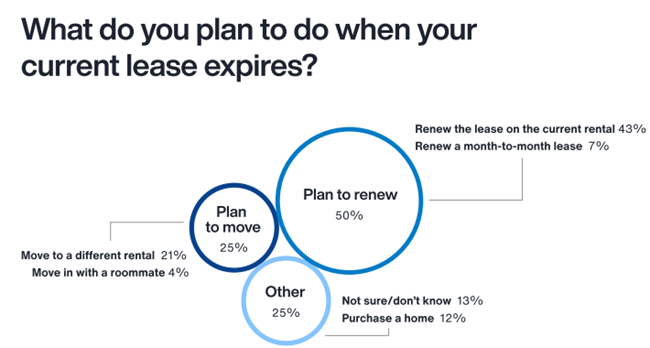
Renters surveyed said they are happy with their property manager, but only 50 percent plan to renew their expiring lease this year

Renters surveyed said they are happy with their property manager, but only 50 percent plan to renew their expiring lease this year, according to AppFolio.

The top three reasons that unsatisfied renters are considering moving are for a better apartment/house (63 percent), lower rent (49 percent) and a better property manager (45 percent). Millennials say the may reason they are moving is to pay less.

In the survey of 1,000 renters for the 2023 Property Manager Renter Preferences report, AppFolio found that 66 percent of renters reported that they are satisfied with their property manager – up from 55 percent from last year’s study, but many still plan to move.

“This reveals a need for property managers to better understand renter expectation,” the report says.

“With the rental industry evolving, property managers need to take a critical look at their offerings to ensure they are competitive and keep pace with resident expectations,” Stacy Holden, Senior Director, Industry Principal at AppFolio, said in a release.

“Today’s renter preferences will help shape the housing of tomorrow, so it’s important for property managers to up level their service now through tech and other thoughtful offerings. This will help rental teams retain current residents and entice others.”

Renters surveyed said they are happy with their property manager, but only 50 percent plan to renew their expiring lease this year
Chart from App Folio

Key takeaways from the 2023 Property Manager Renters Preferences Report include:

  • Property managers will be in fierce competition to retain and attract residents and play a key role in tenant satisfaction.
    • A great property manager is a key factor in retaining current residents. Of satisfied renters, 57 percent say their property manager is a main reason they are considering renewing their lease.
    • Outside of property attributes, a property manager’s reputation is key for attracting new residents. 68 percent of renters say a property manager’s reputation on review sites is important when evaluating a new rental.
  • Renters demand online payment options from their property manager.
    • Paying rent online is a primary factor when finding a new rental property. More than half (60 percent) of renters say online rent payments are important or very important when evaluating a new rental.
    • Of those renters without the option to pay online, 58 percent would like their property manager to offer the option according to the renters survey.
    • Younger demographics are more likely to embrace online payments. Gen Z (65 percent) and Millennials (61 percent) are most likely to pay their rent online (compared to 40 percent of Gen X and 46 percent of Boomers).
  • Younger residents expect much more from their property manager.
    • Renting to Gen Z? Property managers need to do more to satisfy them. Only 56 percent of Gen Z renters are satisfied with their property manager (compared to 64 percent of Millennials, 66 percent of Gen X and 75 percent of Boomers).
    • There’s room for growth when it comes to retaining younger residents. Only one-third (35 percent) of Gen Z renters are likely to renew their lease (compared to 44 percent of Millennials, 53 percent of Gen X and 67 percent of Boomers).
    • Why are Millennials leaving? They want to pay less. Millennials are the most price sensitive, with 51 percent citing lower rent as their reason for moving (compared to 38 percent of Gen Z and Gen X).

See the whole survey here.

Sign Up For Our Weekly Newsletter And Get Rental Property And Apartment News And Helpful, Useful Content Each Week.

* indicates required

Where Are The Most Popular Cities And Regions For Renters?

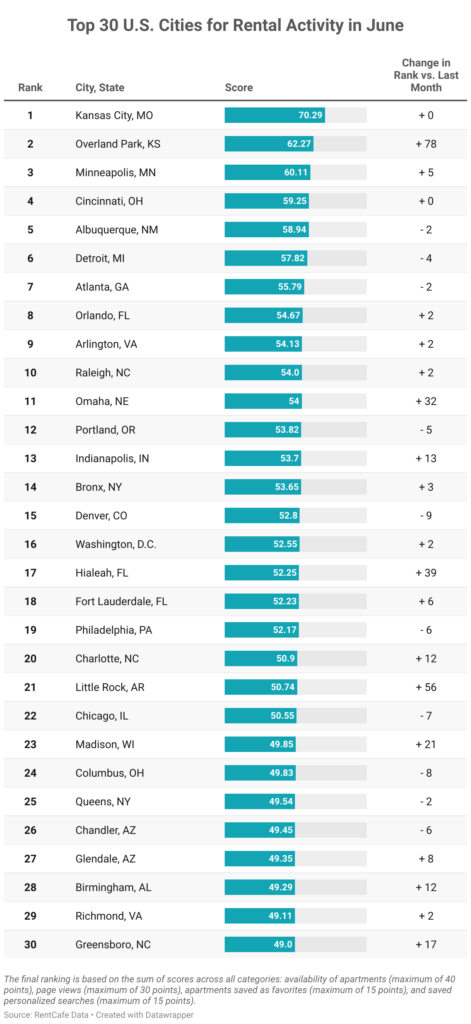
The most popular cities and regions for renters in June 2023 are in the Midwest and the South according to the latest report from RentCafe

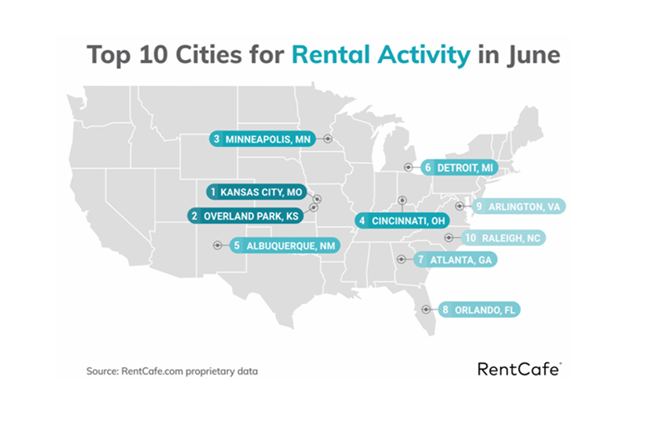
This month, the Midwest is the most popular region for renters, followed by the South, according to RentCafe’s monthly June ranking based on searches on their site.

“Overall, the South claims 12 entries in our June ranking — the most out of all regions. The Midwest follows with 10 spots, including the top four. Atlanta (#7) goes on as the highest-ranking city in the South for the third consecutive month.

Most Popular Cities for Renters?

Kansas City, MO, is June’s most desired city by renters, maintaining its top spot from last month. Neighboring Overland Park, KS, comes next, followed by Minneapolis in third place. Overland Park – climbs an impressive 78 positions to the 2nd spot thanks to a ninefold year-over-year increase in apartments marked as favorites. This is a clear sign that renters are very close to signing a new lease.

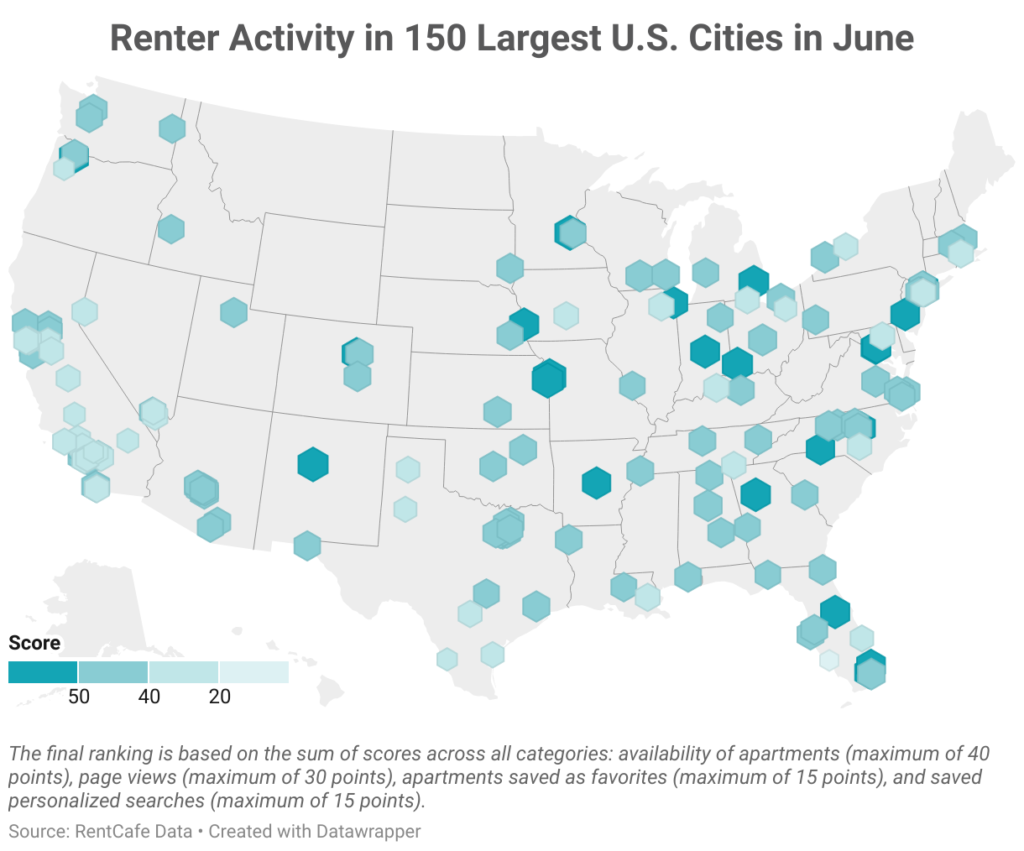
“Apartment listings in these cities saw the most engagement on RentCafe.com this month due to high rates of rental properties saved to favorites, personalized searches, scarce unit availability and overall high listing views,” according to the report.

Prominent rental hubs like Manhattan and San Diego have been outperformed by smaller Midwestern and Southern cities showing more robust rental activity compared to one year ago.

activity in the 150 largest cities popular with renters

Popular Cities For Renters

Here’s the Rent Café’s snapshot to help renters stay ahead of the game this peak rental season:

  • In light of recent policies aimed at renters, Minneapolis is seeing more interest from apartment hunters and lands on the 3rd spot in June. This comes after the number of personalized searches saved by renters doubled compared to one year ago.
  • Overall, the South claims 12 entries in our June ranking — the most out of all regions. Atlanta (#7) goes on as the highest-ranking city in the South for the third consecutive month. Here, the number of apartments favorited by renters doubled year-over-year.
  • Most of this month’s new entries are Southern cities: Hialeah (#17) joins the other Florida cities (Orlando #8 and Fort Lauderdale #18) in our ranking. North Carolina tech hub Charlotte (#20) and college town Greensboro (#30) are also part of our top 30 most in-demand cities for renters for the first time.
  • Meanwhile, the Bronx is the Northeast’s highest-ranking location at #14 after climbing three spots since last month. The borough saw an impressive 46% year-over-year decline in the number of apartments available for rent, reflecting high demand from renters.
  • However, Queens (the other NYC borough in our top 30) fell to #25. Similarly, Philadelphia (the third Northeastern urban hub on our list) dropped six spots to #19. Manhattan exits our top 30 after securing the last spot in May’s ranking.

the top 30 most popular cities for renters

Read the full report here.

As Apartment Size Shrinks, Storage-Unit Demand Grows

Fake Landlords Indicted In Rental Assistance Fraud In Seattle

Six people indicted on federal charges of rental assistance fraud using fake documents, posing as landlords, to get rental assistance money

Six people have been indicted on federal charges of rental assistance fraud by using fake documents and posing as landlords using fake tenant applications to claim emergency rental assistance money meant to help avoid evictions, according to a release from the U.S. Department of Justice.

The rental assistance fraud occurred in Seattle where the group is charged with stealing over $2.7 million from the King County rental assistance program designed to give emergency help to renters facing eviction. In addition to the rental assistance fraud, members of the group defrauded or attempted to defraud the unemployment systems in Washington, California, South Carolina, and Nevada.

The U.S. Attorney for the Western District of Washington, Nick Brown, said the 26-count indictment was “a wide-ranging fraud scheme, led by 29-year-old Paradise Williams, of Phoenix.” Two defendants were arrested in Phoenix, a third was arrested in Houston, and three defendants were arrested in Washington State.

Six people indicted on federal charges of rental assistance fraud using fake documents, posing as landlords, to get rental assistance money
U.S. Attorney for the Western District of Washington, Nick Brown.

“The participants in this fraud were relentless in exploiting pandemic relief programs that were intended to assist small businesses and people who were vulnerable to eviction,” Brown said in the release. “The need for the emergency rental assistance greatly outweighed the funds available, and we know that fraud schemes such as this one stole money that should have gone to those desperately needing help.”

According to the indictment, Williams was the hub in a wheel of rental assistance fraud. She created fake documents and told her accomplices how to pose as landlords and tenants claiming to need rental assistance. Because the program would pay for back rent and future payments, the person posing as the fraudulent landlord got payments of tens of thousands of dollars for each fake tenant application.

Williams received kickback payments from those who used the scheme for fraud. Williams herself received more than $740,000 in emergency funds by posing as the landlord on at least 21 different applications for rental aid. In fact, neither Williams nor her accomplices owned any rental properties and were not the tenants they impersonated.

In addition to Williams the grand jury indicted:

Rayvon Darnell Peterson, 32, of Seattle, Washington

Tia Janee Robinson, 28, of Fife, Washington

Jahari Asad Cunningham, 45, of Houston, Texas

D’arius Akim Jackson, 37, Bonney Lake, Washington

David Jesus Martinez, 32, Pacific, Washington

The indictment says that, between June 2020 and August 2021, Williams and others submitted at least 35 fraudulent applications for Economic Injury Disaster Loans (EIDL) seeking more than $3.7 million from the Small Business Administration (SBA). Two of the loans were funded for a loss of $300,000. Williams assisted her accomplices with forging documents and fake tax statements to defraud the SBA. Williams used multiple common email addresses and a common naming convention for business names as she attempted the fraud.

Williams and others also sought to defraud a different SBA program, the Paycheck Protection Program (PPP). In April and May 2021, Williams, Jackson, and others submitted at least 13 fraudulent applications to the SBA PPP program seeking approximately $253,000. Nearly $212,000 was paid out.

According to the indictment the money was used for luxury cars, lavish trips, designer clothes, jewelry, and even plastic surgery.

Wire fraud in connection with a presidentially declared major disaster or emergency is punishable by up to 30 years in prison and a $1 million fine. Money laundering is punishable by up to 20 years in prison.

The case was investigated by the FBI with assistance from SBA-OIG. The case is being prosecuted by Assistant United States Attorney Cindy Chang.

Sign Up For Our Weekly Newsletter And Get Rental Property And Apartment News And Helpful, Useful Content Each Week.

* indicates required

As Apartment Size Shrinks, Storage-Unit Demand Grows

Sluggish Demand And Increasing Supply Slowing Rent Growth

Rent prices nationally were up slightly in May at 0.5 percent but sluggish demand and increasing supply of new units is slowing rent growth

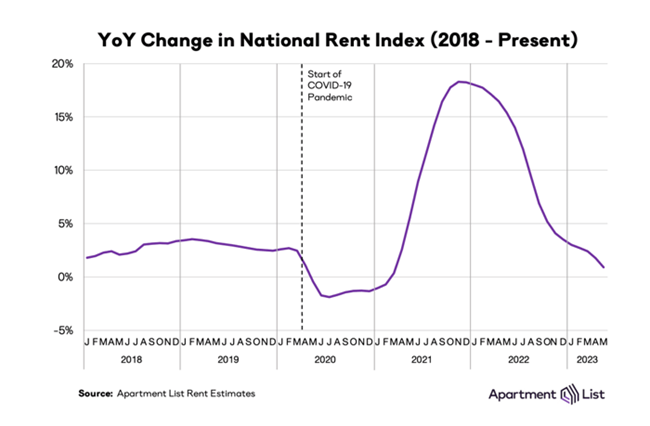
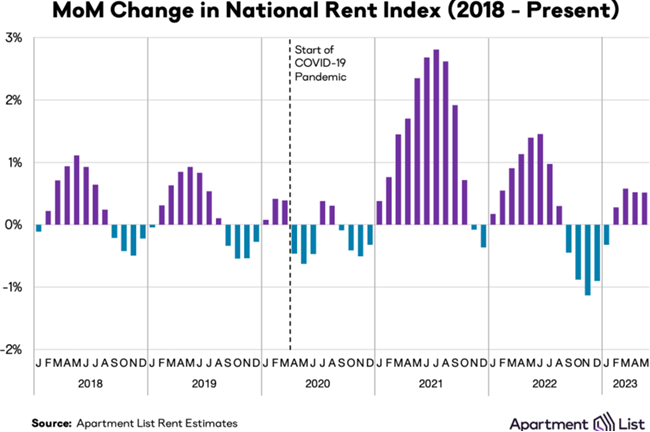
Rent prices nationally were up slightly in May at 0.5 percent but sluggish demand and increasing supply of new units is slowing rent growth, Apartment List says in the June report.

“This is the fourth straight monthly increase in rent prices, but rent growth is flattening out at a time of year when it’s normally picking up steam,” Apartment List economists write in the report.

While rent prices may be trending up again, rent growth is still slower for this time of year.

“Year-over-year rent growth is continuing to decelerate, and now stands at just 0.9 percent, its lowest level since March 2021. Year-over-year growth is now solidly below the average rate from 2018 to 2019 (2.8 percent), and could possibly even dip into slightly negative territory in the months ahead,” the repot says.

Rent prices nationally were up slightly in May at 0.5 percent but sluggish demand and increasing supply of new units is slowing rent growth

Some cities showing negative year-over-year rent growth

Rents increased in May in 76 of the nation’s 100 largest cities, but at the same time, 48 of the top 100 cities are currently logging negative year-over-year growth up from 40 cities last month.

Scottsdale, AZ saw the nation’s sharpest month-over-month rent declining in May (-0.9%), continuing a broader slowdown in the Phoenix metro.

“We are in peak season for the rental market, when rent growth usually ramps up. However, this month’s data shows rent growth stalling, not accelerating. Prices have been rising for four straight months, but rent growth in April and May (+0.5 percent) came in slightly slower than what we saw in March (+0.6 percent).

“The stagnant rent growth that we’ve seen over the past couple of months indicates that the market cooldown that started in the second half of 2022 is continuing, even if prices are now trending up.

“This month’s 0.5 percent increase was the second slowest May rent growth of any year in the history of our rent estimates (going back to 2017), ahead of only 2020, when prices fell in May amid the turmoil of the early pandemic. From 2017 to 2019, rents increased by an average of 1.1 percent in May, more than double this month’s increase.

On the supply side

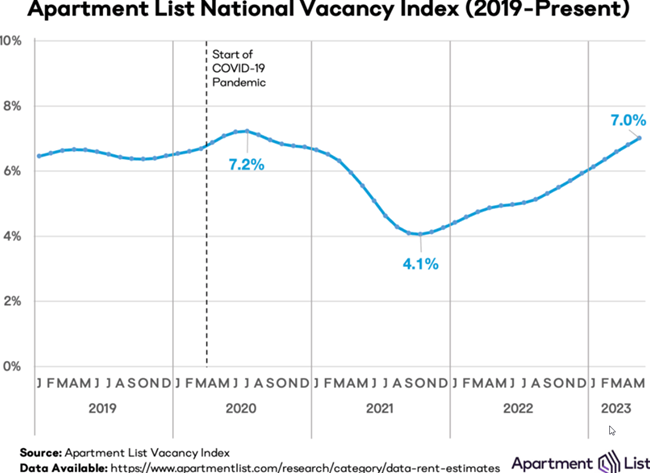
“Our vacancy index currently stands at 7 percent, surpassing the average pre-pandemic rate and continuing to trend upward.

With a record number of multifamily apartment units currently under construction, some property owners may start struggling to fill vacancies for the first time since the early stages of the pandemic.

There are now more apartment units under construction than at any time since 1970.

“As this new inventory continues to hit the market over the course of the year, we are now entering a phase in which property owners are beginning to compete for renters to fill their units, a marked change from the prevailing conditions of the past two years, in which renters have been competing for a limited supply of available inventory.”

Rent prices nationally were up slightly in May at 0.5 percent but sluggish demand and increasing supply of new units is slowing rent growth

Conclusion

The economists conclude that, “Year-over-year growth could even dip into negative territory within the next couple of months.

“And even if demand rebounds over the summer, a strong construction pipeline should temper rent growth for the remainder of the year.”

Read the full report from Apartment List here.

Sign Up For Our Weekly Newsletter And Get Rental Property And Apartment News And Helpful, Useful Content Each Week.

* indicates required

5 Ways To Mitigate Risks to Multifamily Revenue

There are risks to multifamily revenue in the current economy so here is a look at those issues and 5 ways mitigate those risks.

There are risks to multifamily revenue in the current economy so here is a look at those issues and 5 ways mitigate those risks.

By Mark Peters

It’s critical for owners and operators to prepare and protect themselves ahead of a potential economic downturn. This process begins with identifying the top five risks to multifamily revenue and determining the best approaches to mitigating these risks:

Risk 1: NSF Returns, payment errors and chargebacks

Transaction errors and fraud pose a notable risk during rent collection cycles, particularly during recessions. According to the NAA, property managers lose around $17,000 annually per property to collections.

Payment technology tools offer one remedy to identify and prevent fraud. These tools ensure sufficient funds are available to cover payments, by instantly verifying bank account information. Additionally, chargeback defense teams offer further protection by helping to recover lost revenue.

Risk 2: Delinquent rent

Late or missing rent payments reduce cash flow and interrupt productivity by diverting resources to collections and evictions.

Fraud detection providers can offer respite by verifying renters’ identification in real time, eliminating the risk of fraud and delinquencies before a lease is signed. Operators can also reduce delinquencies by offering residents payment flexibility, which is a major upside as high rents continue to burden many people. This solution allows operators to get paid in full and on time, while allowing residents to pay in installments that work within their budget.

Risk 3: Paper-based payment processing

Manually processing paper rent payments is inefficient and error-prone. Yet, 42 percent of rent payments are still made with a check and 16 percent with money orders. This is due to the portion of renters that remain unbanked, are unwilling to change their check writing habits or want to avoid digital processing fees.

As an alternative, forward-thinking operators are offering digital payment portals, modern lockbox solutions and digital cash payment solutions. Not only are these systems more secure than checks or money orders, they can also improve cash flow and negate fraud by reducing the time money is tied up in accounts receivable, thanks to immediate deposits.

Risk 4: Paying utility invoices without auditing them

Utilities are a major expense for apartment communities. While operators don’t have a hand in bringing utility costs down, there is an opportunity to save significant sums of money by catching errors in utility invoices.

At least 17 percent of utility invoices contain errors, which can amount to hundreds of thousands of dollars on operator’s books. Establishing a consistent and standardized process for monthly utility invoice audits can help operators avoid this.

Outsourcing this task to a provider can also prove beneficial for smaller teams that may lack adequate resources to take on another task. Enlisting the help of a third party frees up time for property teams to focus on more important, mission-critical tasks.

Risk 5: Suboptimal utility cost recoupment 

While there are a variety of present day factors driving energy costs at any given time, one aspect of navigating the utility market as a property manager remains true –  including utilities in rent or charging a flat fee leaves cash flow vulnerable to rate fluctuations.

Billing residents for their actual usage mitigates the risks associated with utilities-included or flat-fee approaches and also creates a new revenue stream through recuperated costs. This added revenue increases NOI and, after factoring in cap rates, can also lead to a spike in property value.

While there isn’t a magic path that would allow operators to completely avoid the impacts of a less-than-ideal economy on business, years of property management data and analysis have brought incredibly helpful solutions to the marketplace.

By leveraging solutions specifically designed to address risks to multifamily revenue, operators can position themselves in the best possible way for weathering an economic challenge.

About the author:

Mark Peters is president of Zego a property management automation company.

Sign Up For Our Weekly Newsletter And Get Rental Property And Apartment News And Helpful, Useful Content Each Week.

* indicates required


Quartz: The Future of Countertops in Rental Housing

The future of countertops in rental housing is the modern, fresh look of white and gray quartz countertops, sought-after by tenants.

The future of countertops in rental housing is the modern and fresh look of white and gray quartz countertops, a sought-after feature for tenants.

By Precision Countertops

In the world of rental housing, maintaining an attractive and functional living space is vital for property owners, managers, and maintenance professionals.

One area that often requires attention is the countertops. Many older apartments suffer from damaged or stained laminate countertops that can diminish the overall appeal of the property.

Changing Industry

There was a time that laminate countertops reigned supreme in the rental housing community. More and more, however, quartz has become the popular choice due to its durability, longevity, and aesthetic versatility. This modern and fresh look of white and gray quartz countertops has become a sought-after feature for tenants.

Looks That Last

The benefits of quartz countertops extend beyond their visual appeal. Unlike laminate, quartz is known for its exceptional durability and is highly resistant to damage and staining, often outlasting laminate by more than double the lifespan. This longevity translates to long-term savings for property owners, as they minimize future replacement costs. Moreover, quartz countertops are easy to maintain, reducing the workload for maintenance managers and improving overall efficiency.

Upgrade Quality, Not Cost

In terms of cost, quartz countertop replacements are surprisingly affordable, with an average cost ranging between $2,000 and $2,500 per unit. With the price of laminate on the rise, it makes sense to increase the appeal of properties by switching to quartz. This investment pays off in the form of higher rents and increased tenant demand, maximizing the return on investment for property owners.

Let’s Recap

Making the switch from laminate to quartz is a simple, surefire way for property owners, managers, and maintenance professionals to enhance the value and appeal of their properties.

By replacing outdated and damaged laminate countertops with durable, attractive, and cost-effective quartz countertops, apartments can attract higher-quality tenants, drive increased rental rates, and benefit from long-term savings. Elevate your property’s appeal and enjoy the rewards of quartz countertops!

About the Author:

Precision Countertops is the leader in rental housing countertop replacement. With a track record of over 10,000 successful apartment countertop upgrades in the Portland metro area, Precision Countertops specializes in transforming apartments with durable and visually appealing quartz countertop.

Amenities That Will Turn the Heads of Prospective Residents

6 Tips for Keeping Maintenance and Onsite Teams Safe in the Summer Heat

Hot summer months can put a strain on rental property maintenance personnel onsite so here are some tips to keep your team safe.

Summer heat can put a strain on rental property maintenance personnel onsite so here are some tips to keep your team safe.

By Casey Hale

Something that isn’t talked about nearly enough in our industry is taking care of our team members working outside in the heat.

Temperatures on a roof or inside an attic can range from 20-30 degrees higher than the outdoor temperature. From extreme heat to urgent needs such as air conditioning repair, our maintenance and onsite teams are faced with extreme working conditions during our busiest time of year.

Here are a few tips to keep people safe and healthy throughout the hot summer months.

 Provide and Promote Proper Hydration & Sun Protection

Avoid caffeinated beverages and drink more water, juice, and sports drinks prior to and throughout the workday. Sweating removes needed salt and minerals from the body which need to be replenished. Have electrolyte beverages on hand for your team. When working outside, wear a hat and sunscreen and utilize cooling towels and shirts with cooling sleeves to keep cool.

 Offer Flex Summer Hours & Show You Care

Show your team you care by saying thank you, offering refreshing treats and providing flexible hours. Scheduling outdoor maintenance as early as possible is key to avoiding heat and sun exposure throughout the midday. Offering flexible summer hours will allow people to start and end their day earlier and avoid working during the hottest time of the day.

 Ensure Team Members Have a Place to Cooldown & Encourage Breaks

For every hour spent in the heat, another hour should be taken to cool down. Be sure team members have an air-conditioned indoor space or shaded environment with air movement for cooling down. The time spent in the heat should be balanced with the amount of time in a cool down space.

 Stay in Contact and Know Your Team’s Whereabouts

Know the location of your team members and vendors working onsite at all times and be sure to check in on them frequently.

 Know the Warning Signs for Heat Exhaustion and Heat Stroke

Faint or dizziness, excessive sweating, cool, pale, clammy skin, nausea or vomiting, rapid, weak pulse, and muscle cramps are all signs of heat exhaustion. Throbbing headache, no sweating, body temperature above 103 degrees, red, hot, dry skin, nausea or vomiting, rapid, strong pulse, and loss of consciousness are all signs of heat stroke.

 What To Do if Someone is Suffering from Heat Exhaustion or Heat Stroke

If someone is experiencing any symptoms of heat exhaustion, get them to a cooler, air-conditioned place immediately. Provide water and cold compresses to cool down. If someone is experiencing any symptoms of heat stroke, call 911 and take immediate action to cool the person until help arrives. In either case, stay with the person and do not leave them alone.

Hot summer months can put a strain on rental property maintenance personnel onsite so here are some tips to keep your team safe.

About the author:

Casey Hale is the Maintenance Director for P.B Bell and is responsible for the training and mentoring of the maintenance staff.

Sign Up For Our Weekly Newsletter And Get Rental Property And Apartment News And Helpful, Useful Content Each Week.

* indicates required

Keeping Your Communications Compliant with Fair Housing

5 Ways to Communicate Better with Challenging Tenants

What to Look for in Property Management Software

5 Things Your Company Can Do To Retain Top Talent in Multifamily