Home Blog Page 175

Legislation Changing in Many States to Make Them Less Landlord-Friendly

Legislation Changing in Many States to Make Them Less Landlord-Friendly

Legislation recently passed or pending in many states is making them more tenant-friendly and less landlord-friendly, according to some new research by RentCafe.

With Oregon passing a first-in-the nation rent-control bill, and Washington State considering extending the amount of time before a landlord can evict a tenant, it is clear landlord-tenant laws are evolving in many places in the United States.

In a recent study, RentCafe compared and contrasted landlord-tenant laws in 50 states and the District of Columbia. The study focused on 10 common aspects of the landlord-tenant relationship, which includes security deposits, rent increases, the warranty of habitability and eviction notices.  It also created a ranking system based on the best and worst scenarios for renters and landlords.

Most tenant-friendly states

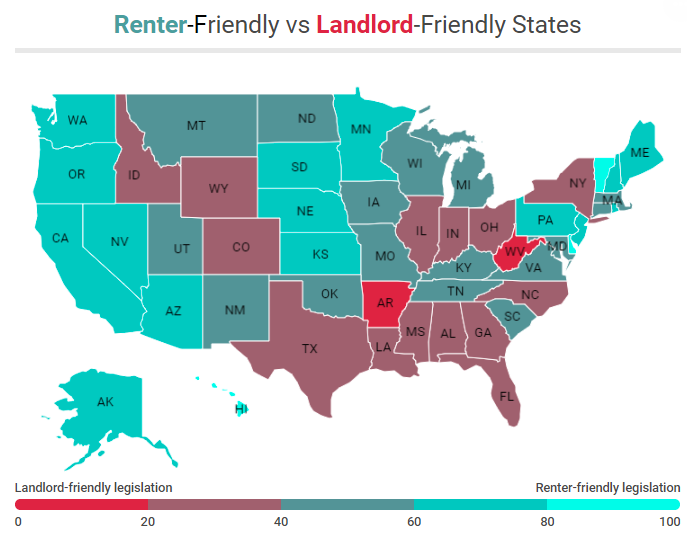
Vermont ranked first among the renter-friendly states, followed closely by Delaware and Hawaii. Rhode Island, Arizona, D.C., Maine and Alaska statutes also seem to favor tenants over landlords, according to the analysis.

More landlord-friendly states

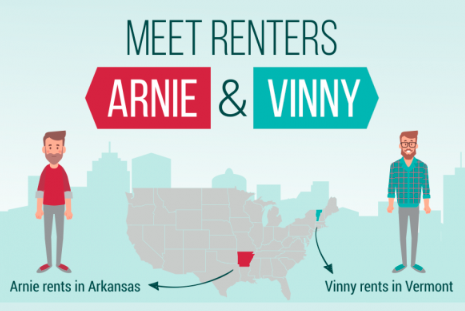
On the other end of the spectrum, the laws in Arkansas and West Virginia were the least friendly to their renters, with Louisiana, Georgia, Wyoming, North  Carolina, Idaho, Ohio, Mississippi and Colorado following. Arkansas and West Virginia registered the same score on the scale, but since Arkansas is the only state where tenants can face criminal charges for failure to vacate, it earned the last place on the renter-friendly scale.

How rental laws were shaped by regional culture

The United States is in some ways a nation of nations, with each state having the right to create its own constitution and government. Over time, this facilitated the creation of very different laws and regulations,  with local culture and sensibilities playing a huge role in shaping the state’s legislation.

  • Southern states,which relied mostly on agriculture during the first days of our nation, valued land ownership above all else and subsequently shaped their laws to protect landlords and their properties.
  • Northern states, on the other hand, focused more on manufacturing and trade, encouraging constant immigration from Europe.  Since most of the population worked in factories and lived in crowded cities, it only makes sense that eventually they developed more and more laws that regulated renting.
  • Mountain states also seem to mostly favor landlords, but probably because renting was less common and there wasn’t much opposition from renters. Conversely, in areas where renters outnumber owners, the laws lean toward protecting renters.
Legislation Changing in Many States to Make Them Less Landlord-Friendly

Legislation Changing in Many States to Make Them Less Landlord-Friendly

The best states for common renting issues

The relationship between landlords and tenants may sometimes prove tricky to manage, and problems emerge when either side doesn’t hold up their end of the agreement. That’s why it is important for states to have concise and unbiased legislation in place so as to avoid any misunderstandings.

The security deposit is an issue that every renter faces at the beginning of a new lease. There are 10 states that limit the security deposit amount to the equivalent of one month’s rent (for unfurnished apartments on a one-year lease). Among them are Hawaii, District of Columbia, Rhode Island, Massachusets, and Kansas.

Not having to wait forever to get your security deposit back (after any applicable deductions) at the end of your lease can also be a blessing, especially when you need that money to put down a deposit on your next apartment. Renters in Montana are the luckiest in that regard, as they’ll get theirs back in no more than 10 days. In Hawaii, South Dakota, Nebraska, Arizona, and Vermont, landlords are required to return security deposits within 14 days.

Length of time for termination for nonpayment of rent and rent increases

If you live in the District of Columbia, you get the longest termination notice for nonpayment of rent: 30 days.

In the following 5 states, renters receive a 14-day notice: Vermont, Wisconsin,  Minnesota, Massachusetts, and Tennessee.

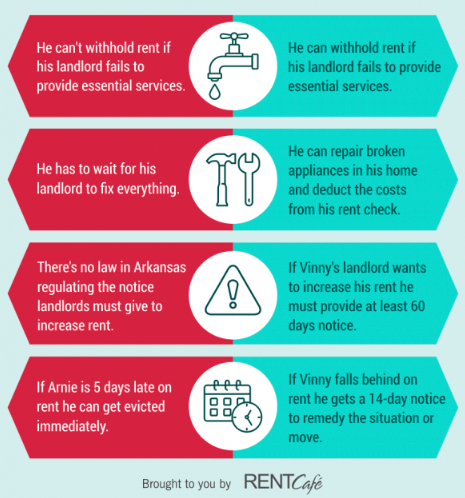
Renters in Georgia, Vermont, and Delaware receive a generous 60-day notice of rent increase for month-to-month contracts, while those in Maine, Hawaii, and Nevada receive 30 days.

The worst states for common renting issues

Vermont might have the best laws for renters, but it’s also one of 24 states that don’t set a limit for security deposits. Other examples are Georgia, Washington, Texas, Illinois, and New York.

Being able to withhold rent for failure to provide essential services (heat, hot water, and electricity) is another law that many would consider common sense, yet there are 11 states which don’t specifically allow this.

Furthermore, 14 states empower landlords to use harsh measures like serving an Unconditional Quit Notice against renters who violate their leases. Arizona, Hawaii, Virginia, Rhode Island, and South Carolina are some of them. To be fair, the situations in which this practice is allowed usually relate to serious breaches of the rental agreement, such as illegal drug possession, prostitution or other criminal activities. But there are also states where this type of notice can be used for simply being late on rent (Georgia, South Carolina, and West Virginia).

Also, in 8 states, including Maryland, Georgia, New Jersey, South Dakota, and Missouri, landlords have the option to immediately terminate a lease and file for eviction when the tenant is just a few days late on rent.

Methodology

This analysis was performed by RENTCafé’s research team, which analyzed Landlord – Tenant laws across the 50 states and the District of Columbia. This analysis does not discuss rent prices and does not include legislation that specifically regulates rent prices.

In order to rank the states, the following 10 common aspects of the landlord-tenant relationship were used.

  • Security-deposit maximums
  • Deadlines for returning security deposits
  • Rent-increase notices
  • Repair-and-deduct policies
  • Withholding-rent policies
  • Landlord’s access to the property
  • Termination notices for nonpayment
  • Regular termination notices for tenancies at will
  • Termination notices for lease violations
  • Abandoned tenant property
 

Wet, Cold Weather Means It’s Time To Check Your Seasonal Basement Maintenance

Wet, Cold Weather Means It’s Time To Check Your Seasonal Basement Maintenance

Wet, cold weather is a signal, in this week’s maintenance checkup, to look into your seasonal basement maintenance says Keepe .

Wet, cold weather can often lead to basement problems, so check your seasonal basement maintenance to avoid a wet basement.

  • Does your finished basement need foundation repair?
  • Have you noticed persistent leaks, dampness or cracks in the basement?

As a property manager, managing the waterproofing, plumbing, electrical and insulation work can take some extra maintenance planning on your part. Make basement maintenance a priority for your property by addressing the most common issues early on.

Foundation cracking can occur any time of the year, but often occurs during the cold and rainy months, when heavy rains and floods occur. If you are considering finishing your basement or are currently managing a finished basement, consider the following solutions to ensure your basement remains safe and functional:

Seasonal basement maintenance check list

Wet, Cold Weather Means It’s Time To Check Your Seasonal Basement Maintenance

  1. Replace Defective Gutters: Make sure the property’s drainage systems including gutters and spouts are working effectively and diverting water away from the property. Gutters must be sized large enough for the amount of rainfall your property gets. Compromised drainage systems are often easy to identify; if your property needs a drainage system cleaning, it can significantly improve your property’s safety.
  2. Fix Ineffective Grading: The mulch beds and soil around the foundation of your property should slope away from the exterior walls, redirecting any water flow. Similarly, ensure that other material surrounding the property, such as driveways and sidewalks, are installed at a slope that goes away from the basement.
  3. Repair Interior Water Leaks: Basement windows should be installed above ground level with waterproof seals. Inadequate seals can easily put your property at risk of being damaged by water. Prevent damage by waterproofing windows and features across the interior walls to ensure leaking doesn’t occur.
  4. Combat Condensation: When warm, moist air interacts with the cool basement walls and floors, condensation can occur. To combat this issue, you want to reduce the humidity in the air; make sure the the exhaust of your dryer is sealed so that moist air does not enter the basement, and make sure the central air conditioner drains properly. Next, make sure problem areas such as walls, pipes and ducts are covered with insulation. For further protection, install an exhaust fan, a dehumidifier, or an air conditioner to promote increased air circulation.

Wet, Cold Weather Means It’s Time To Check Your Seasonal Basement Maintenance

Maintaining regular maintenance across these four areas is vital to protecting your property from a compromised basement.

Cleanup costs for basement-related issues tend to be higher than preventative expenses, due to extended damage to furniture, utility equipment and interior room walls. Schedule regular preventative maintenance to make cost-effective improvements to your property every season.

Other recent rental property maintenance Keepe posts you may have missed:

4 Outdoor Flooring Options For Your Rentals

20 Easy, Affordable Maintenance Projects To Update Your Rentals

7 Tech Gadgets For A Safer And More Efficient Rental Property

5 Maintenance Tips For Long-Lasting Rental Carpet Flooring

Is The Water Heater At Your Rental Property Ready For The Big One?

7 Types Of Kitchen Countertops For Your Apartments

Which Cooktop Is Best For Your Rental Property?

A Guide To 4 Types Of Flat Roof Systems

6 Ways To Trash Your Apartment Waste Management Issues

About Keepe:

Keepe is an on-demand maintenance solution for property managers and independent landlords. The company makes a network of hundreds of independent contractors and handymen available for maintenance projects at rental properties. Keepe is available in the Greater Seattle area, Greater Phoenix area, San Francisco Bay area, Portland, San Diego and is coming soon to an area near you. Learn more about Keepe at https://www.keepe.com

7 Ways To Build A Sense of Community In Your Apartment Building

7 Ways To Build A Sense of Community In Your Apartment Building

How to build a sense of community in your apartment building has become a more important job for many property managers in the multifamily industry. Here are 7 ways to potentially build a sense or community.

By Holly Welles

Running an apartment complex is a gift and a challenge all wrapped in one box. On one hand, you get to interact with different people every day. You provide them with a sense of home and safety in what may be an entirely new city. Tenants trust you and your skills to make your community the best in your area. It’s a big responsibility, and one every property manager should feel honored to provide.

On the other hand, property managers are responsible for the feeling of community in their apartment complex. People may live side by side, but that doesn’t mean they get the chance to know each other outside of regular work or school hours. It’s difficult for people to break their routine when they’re busy, which is where the property manager can step in.

Read on to learn some easy ways you can build a sense of community in your apartment building. Tenants will appreciate getting to know their neighbors while also being cared for by the management team. You can go all out or start with baby steps, depending on your budget, but there’s always something you can do to encourage a sense of community.

1. Designate an Outdoor Space

If your complex doesn’t have one already, find a way to designate an outdoor space for your tenants to use as a community center. This could look like a pool, a garden or even a plot of grass with some picnic tables. Many apartment communities are also building dog parks, if they have the infrastructure.

Consider the average life experiences of your tenants to determine what outdoor space they would enjoy best. You don’t want to spend your money on an amenity that tenants will likely ignore. It’s more important to build the right outdoor space than to jump to provide anything at all.

2. Set Up Regular Events

A great way to get tenants to interact with each other is to set up regular events that will make them want to step out of their possible comfort zones and meet new people. Events can be centered around fun holidays, like the Fourth of July or Halloween, so everyone can participate. Encourage tenants to come out and have fun at a cookout or networking event, for example.

This is a great way to encourage residents to establish neighborly ties. If you manage a city rental, post local activities every week or so to see if your tenants want to form a get-together
. Encourage tenants to come out and have fun at a cookout or networking event, for example.
When your tenants get to know each other, your business benefits.

When your tenants get to know each other, your business benefits. Not only will familiarity make them more considerate of each other’s space and quality of life, but you’re likely to reduce tenant turnover in the long run. Creating community events doesn’t have to be resource-intensive, and it results in connections that will help you and your tenants enjoy the rental experience more.

3. Host Contests

If you have the budget, you may want to try engaging with tenants through fun contests. Contests can range from food-drive competitions to costume contests to even who can get the most likes on a pet picture on social media.

Think about what your tenants might like and pitch ideas with the management team to come up with ideas. Your community will love the interactive side of contests without necessarily having to carve out time from their schedule to participate.

4. Create a Social-Network Page

7 Ways To Build A Sense of Community In Your Apartment Building
This is a great way to encourage residents to establish neighborly ties. If you manage a city rental, post local activities every week or so to see if your tenants want to form a get-together.

Most businesses automatically get social-network profiles to represent themselves online. After all, people want the online experience of seeing 3D models, floor plans and pictures. In addition to your main profiles, create a unique community page where only residents are allowed into the group.

This is a great way to encourage residents to establish neighborly ties. If you manage a city rental, post local activities every week or so to see if your tenants want to form a get-together. For more suburban regions, where commutes are often 30 minutes or more, set up carpooling threads to help tenants save on driving costs. Social media is a powerful tool for helping residents feel like they have a community they can rely on.

5. Remember to Say Thanks

People need a place to live, so tenants may feel like they’re taken for granted by property managers. One way to get around this feeling and continue building a sense of community is to always remember to say thanks. Put notes on doors or in mailboxes that remind residents you care. Celebrate their six-month or one-year move-in anniversaries to show that you pay attention and value their choice to stay with you. Tenants will be pleasantly surprised to have an interactive and caring management team, leading to feelings of community and worth.

6. Communicate With Maintenance Workers

People will only admit so much to management staff. You may send out emails with surveys, asking for people to give their honest opinions about what they like and what they think should change. That doesn’t mean tenants will feel comfortable enough to be totally honest. That’s where the maintenance team comes in.

The maintenance crew has the advantage of getting one-on-one interactions with tenants. They get to hear what people like and don’t like about their apartment in very honest conversations. They’ll be able to feel out the mood of tenants regarding community upgrades or apartment changes more than office staff could. Meet with your maintenance workers and keep the line of communication open with them. They’ll provide valuable feedback you can use to keep your community tight-knit and happy.

7. Encourage Community Feedback

Whatever kind of community outreach you decide to do, make sure to encourage feedback from those who participate. A contest or event might seem like a fantastic idea to you, but would it really enjoyable for the tenants it was created for? The only way to know that is to be open to feedback.

At physical events, provide slips of paper that residents can fill out anonymously and drop in a locked box. Online events or emails can include a survey link that people can take online in just minutes. The key is to make these surveys quick and anonymous. You can always include a note that people are welcome to visit the management office during regular business hours to speak about an issue or concern more in-depth, too.

Summary: Build A Sense Of Community in Your Apartment Building

Never forget that the community is why you’re looking to do these things. Whatever event you put together, your tenants should be just as excited about it as you are. A younger generation won’t enjoy a potato-salad cookout as much as an older generation would, much like older tenants may not participate in social-media outreaches.

Consider your tenants, think about their needs and get feedback. Feedback may come from the tenants themselves or people like the maintenance crew, but it will all be valuable. You’ll quickly be able to find what your community enjoys and continue to build that sense of family between everyone in the future.

About the author:

Holly Welles writes about real estate market trends from a millennial perspective. She is the editor behind The Estate Update, a residential real estate blog, and keeps up with the industry over on Twitter @HollyAWelles


Eviction Bills Moving Forward In Washington Legislature

3 Areas Where Congressional Legislation Falls Short, Could Be Detrimental to Rental Housing Market

Bills that would extend the time a landlord must wait before filing an eviction due to non-payment of rent in Washington State are continuing to move through the legislature.

HB 1453, which extends the number of days a tenant has to pay or vacate after failing to pay rent from the current three days to 14 days, has passed the house. Senate Bill 5600 has also passed. Here is a summary of SB 5600:

  • Extends the 3-day notice for default in rent payment to 14 days’ notice for tenancies under the Residential Landlord-Tenant Act.
  • Requires the 14-day notice be written in plain language and include information on civil legal aid resources available, if any, to the tenant.
  • Extends the mandatory-notice period from 30 to 60 days when landlords propose a rent-change amount. Requires a landlord to first apply any tenant payment to rent before applying the payment toward other charges.
  • Prohibits continued tenancy and relief from forfeiture to be conditioned upon tenant payment or satisfaction of any monetary amount other than rent.
  • Provides the court with discretion to provide relief from forfeiture or to stay a writ of restitution.
  • Requires a landlord to provide a tenant with documentation regarding any damages for which the landlord intends to retain any of the deposit amount.

Seattle Democratic Representative Nicole Macri says the state is facing a true eviction crisis

“I can think of no other instance where somebody can lose their home so quickly,” Macri said on the House floor ahead of a vote on her bill, HB 1453. “It’s important to note that nine out of 10 evictions in our state are related to non-payment of rent. In a recent study in Washington State we found that when folks have been evicted, only close to 10 percent of them have been able to find another home. Meaning that eviction is directly related to the crisis of homelessness that we’re experiencing.”

Summary of support for the bill

“Until recent work by Mathew Desmond of Princeton and Timothy Thomas of the University of Washington, the enormous impact of evictions was not understood. Rents have soared in the last decade. More than 70 percent of low-income residents pay more than half of their income towards rent in our state. Average rents have increased from $1,034 in 2010 to $1,725 in the central Puget Sound region today; this equates to $8,300 in extra cost per year. The crisis is reaching all corners of our state. It was once thought that eviction was an outcome of poverty, but it is now known that eviction can be a cause of poverty. When people are evicted, they have to leave their neighborhoods and children must leave their schools. The impact is severe,” the bill summary says.

Summary in opposition to the bill

“Affording 21 days to pay or vacate is too long, but the discussions should continue. Other issues in the bill are problematic, such as a definition of rent that does not include utilities. In one situation, it was only after the unlawful detainer action was filed that the tenant paid their $6,000 utility bill. Many landlords will leave the business with these changes. One national entity reports the loss of 30 percent of its portfolio of housing in the last several years. That is a huge loss. People need to be encouraged, not discouraged, from being landlords. Only four states afford more than 10 days. The focus should be upon education and also upon the provision of sources of money to pay. There needs to be common sense brought to this issue. Most landlords try to work with tenants. The loss of rental housing will only lead to a bigger problem. A landlord in Tacoma with over 34 years’ experience as a residential landlord reports over 550 rental contracts and zero evictions. The five-day notice to pay or vacate that is found in House Bill 1463 is what is needed. The problem is affordability of land and the cost of building permits,” the bill summary says.

Among those testifying in opposition to the bill were Kathryn Hedrick, Washington Multifamily Housing Association; Kyle Woodring, Rental Housing Association; and Lyle Crews, National Association of Rental Property Managers.

Resources:

Concerns linger as eviction reform bills advance in Olympia

Washington State Senate Passes Eviction Reform with (gasp!) Bipartisan Support

Lawmakers in Olympia look to eviction reform to tackle homelessness

African-American legislators called white supremacists over eviction reform

Photo credit designer491 via istockphoto.com

20 Easy, Affordable Maintenance Projects To Update Your Rental Property

easy affordable maintenance projects to update your rental property

Easy affordable maintenance projects that improve the look and feel of a rental property can make it feel welcoming and really help when it comes to landing that next tenant, the maintenance checkup from Keepe this week.

This week’s post will list easy affordable maintenance projects to update every room. These small improvements and investments really go a long way.

Easy affordable maintenance projects to improve the front and outdoor

1. Repainting the front door – a fresh and crisp coat of paint does wonders for a property’s exteriors, especially when opting for bright or bold colors. Due to its exposure, the front door can be prone to discoloration and chipping, and a new coat of paint can completely transform it into a cheerful and appealing detail.

2. Replacing the property’s numbers – Over time, those number sets can rust and look worn. Replacing the existing set with a new one is inexpensive and makes the exteriors look neat.

3. Sanding and refinishing railings – Harsh weather and temperatures can take a toll on metal fences and railings. Rust, oxidation and discoloration are unappealing, but can be easily taken care of by sanding, repainting and sealing.

4. Resealing and treating wooden fences – Wood fences and gates are prone to rotting, discoloration and moss growth. Regularly sealing and treating the wood not only prolongs its life by protecting it from moisture and the elements, but also restores the beauty of a uniform and natural-looking finish.

5. Repainting or replacing mailboxes – Tenants will notice and appreciate the look of their updated mailbox, and will be even more excited about having newer models installed, as those offer include safe features for protecting your tenants mail.

5 easy affordable maintenance projects for the kitchen

1. Installing a fun and modern backsplash – a tiled backsplash protects the exposed walls from moisture and staining from food spills and splashes, while also making the space look more appealing. Most hardware and home improvement stores offer a great variety of tiling combinations for backsplashes, which are generally rather inexpensive while also being highly customizable and adaptable to the existing color schemes and features of a kitchen.

2. Updating cabinet and drawer handles – Swapping handles with newer and slightly more elaborate ones is a very easy and inexpensive hack that makes the space look more appealing and curated.

3. Turning recessed lighting into accent lighting – A maintenance professional can modify existing recessed lighting into hanging lighting, which can completely transform the space by adding a distinguishing accent with a touch of color.

4. Sleek-ifying and modernizing appliances with a coat of liquid stainless-steel – Having a painting expert recoat your appliances with a kitchen-safe liquid stainless steel paint makes outdated or discolored appliances look modern and sleek.

5. Adding molding on top of cabinets – Molding makes the space look polished by giving cabinets a custom, built-in look. Different styles of molding exist to match different decors.

20 Easy, Affordable Maintenance Projects To Update Your Rentals


5 bathroom maintenance projects

20 Easy, Affordable Maintenance Projects To Update Your Rentals

1. Restoring grouts – Over time, tiling can look worn and dirty as the grout becomes stained and collects dirt over time. A tiling professional can easily scrape off old grout and regrout the space, which makes it look clean and neat.

2. Restoring caulking – Just like grout, caulking in sinks, tubs and showers can stain and start looking worn or even moldy over time. Recaulking resolves this issue while updating the overall look of the bathroom.

3.  Sealing cracks – Cracks are not a pleasant sight on tiling and fixtures, making them look worn and damaged. They can be concealed by being filled in with sealant.

4. Upgrading showerheads and faucets – Installing a new showerhead and faucet set modernizes and updates the space while also treating your tenants to the enjoyable features of newer showerheads models, such as improved water pressure settings and even integrated lighting.

5. Covering exposed bulbs – Exposed light bulbs aren’t particularly appealing, actually making space look rather unpolished. Plenty of inexpensive lighting fixtures are available for purchase, and can be installed over exposed bulbs to improve the look of the space.

5 ideas for living rooms, bedrooms and home offices

20 Easy, Affordable Maintenance Projects To Update Your Rentals

1. Upgrading or replacing baseboards – Like molding for cabinets, baseboards polish and add a finishing touch to the interior of your rental property. They can be a helpful addition as they protect walls in high-traffic areas from abrasions and contact, but can easily start looking worn if left unmaintained for long periods of time. Repainting, repairing or replacing older baseboards completely uplifts the spaces where they are installed.

2. Repainting the interior walls – Spring and Summer are the ideal time for scheduling major painting projects, as the weather and temperatures are typically paint-friendly. Refreshing the walls with a new coat of paint or opting for a new color is one of the most immediate ways to update the look and feel of the unit, especially considering that some walls can be prone to staining and discoloration over time.

3. Deep-cleaning carpet and sealing hardwood – Both procedures will restore flooring to a like-new condition, which will make the unit feel and look clean and cared-for.

4. Replacing outlets – Swapping older outlets with newer, multi-outlet and usb-friendly models modernizes the unit and lets your tenants to enjoy their practicality and efficiency.

5. Considering smart gadgets – Smart home systems with integrated high-tech gadgets offer a variety of innovative ways to make units more efficient and comfortable. Some of the more popular systems include voice-controlled task assistants, user-friendly energy-use monitors, intelligent thermostats and interactive lighting.

Easy affordable maintenance projects summary:

Prioritizing functional maintenance jobs such as gutter cleanings, plumbing and HVAC checkups, emergency repairs, preventative inspections is fundamental maintenance. However, minor maintenance projects for the improvement of its aesthetic qualities should not be underestimated or forgotten.

Often times, investing in easy affordable maintenance projects that tackle the aesthetics of a rental property seems superfluous because they are not repairing or improving the actual amenities, which are the distinguishing factor attributing value to a property. While it’s definitely smart to prioritize functional maintenance jobs, home improvement projects can also add some serious value to a property.

Improving the look and feel of rental property space not only makes the overall unit look more appealing, but it can help with making up for those elements that might be lacking or slightly outdated. Aesthetic improvements showcase attention to detail and make tenants feel good about living in a place that looks well-kept and welcoming.

About Keepe:

Keepe is an on-demand maintenance solution for property managers and independent landlords. The company makes a network of hundreds of independent contractors and handymen available for maintenance projects at rental properties.

Keepe is available in the Greater Seattle area, Greater Phoenix area, San Francisco Bay area, Portland, San Diego and is coming soon to an area near you. Learn more about Keepe at https://www.keepe.com.

5 Maintenance Tips For Long-Lasting Carpet In Your Rentals

Kitchen Range Hood Options for Your Rentals

Sign Up For Our Newsletter And Get Apartment News And Helpful, Useful Content Each Week.

* indicates required

Seattle Rents Increase Moderately Over The Past Month

Seattle Rents Increase Moderately Over The Past Month

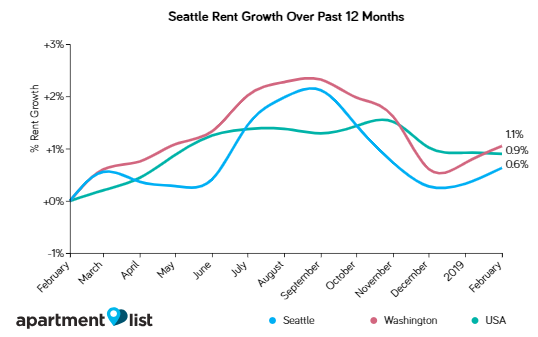
Seattle rents have increased 0.3% over the past month, and have increased marginally by 0.6% in comparison to the same time last year, according to a new report from Apartment List.

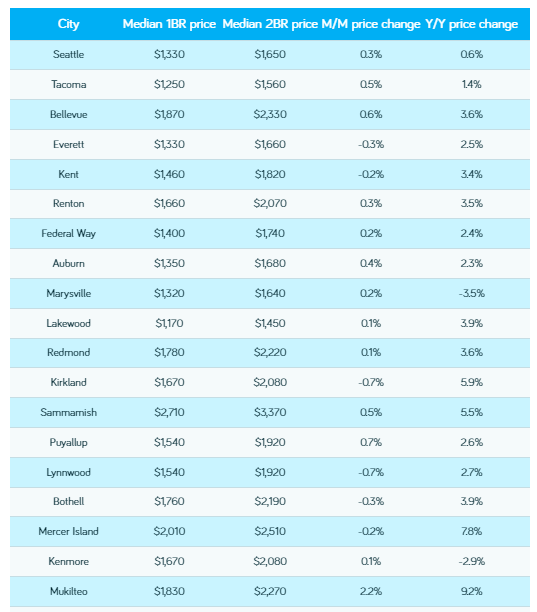
Currently, median rents in Seattle stand at $1,330 for a one-bedroom apartment and $1,650 for a two-bedroom.

This is the second straight month that the city has seen rent increases after a decline in December of last year. Seattle’s year-over-year rent growth lags the state average of 1.1%, as well as the national average of 0.9%.

Seattle Rents Increase Moderately Over The Past Month

Rents rising across the Seattle Metro

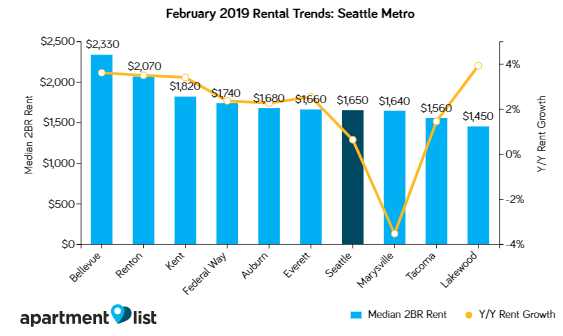
Throughout the past year, rent increases have been occurring not just in the city of Seattle, but across the entire metro. Of the largest 10 cities that we have data for in the Seattle metro, 9 of them have seen prices rise. Here’s a look at how rents compare across some of the largest cities in the metro.

  • Lakewood has the least expensive rents in the Seattle metro, with a two-bedroom median of $1,450; the city has also experienced the fastest rent growth in the metro, with a year-over-year increase of 3.9%.
  • Over the past year, Marysville is the only city in the metro that has seen rents fall, with a decline of 3.5%. Median two-bedrooms there cost $1,640, while one-bedrooms go for $1,320.

Seattle Rents Increase Moderately Over The Past Month

Other large cities nationwide show more affordable rents compared to Seattle

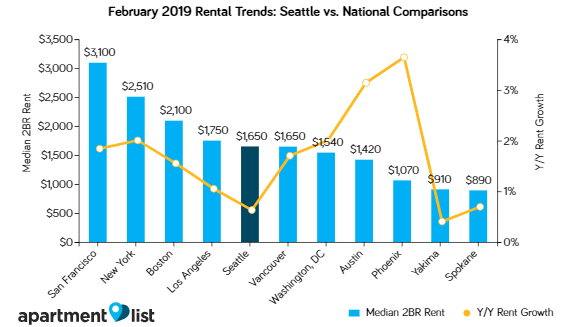
As rents have increased marginally in Seattle, a few similar cities nationwide have also seen rents grow modestly. Compared to most other large cities across the country, Seattle is less affordable for renters.

  • Rents increased slightly in other cities across the state, with Washington as a whole logging rent growth of 1.1% over the past year. For example, rents have grown by 1.7% in Vancouver and 0.7% in Spokane.
  • Seattle’s median two-bedroom rent of $1,650 is above the national average of $1,170. Nationwide, rents have grown by 0.9% over the past year compared to the 0.6% increase in Seattle.
  • While Seattle’s rents rose marginally over the past year, many cities nationwide also saw increases, including Phoenix (+3.6%), Austin (+3.1%), and Denver (+2.4%).
  • Renters will generally find more expensive prices in Seattle than most similar cities. For example, Spokane has a median 2BR rent of $890, where Seattle is more than one-and-a-half times that price.

Seattle Rents Increase Moderately Over The Past Month

Leasing Consultants In Demand In Latest Apartment Jobs Report

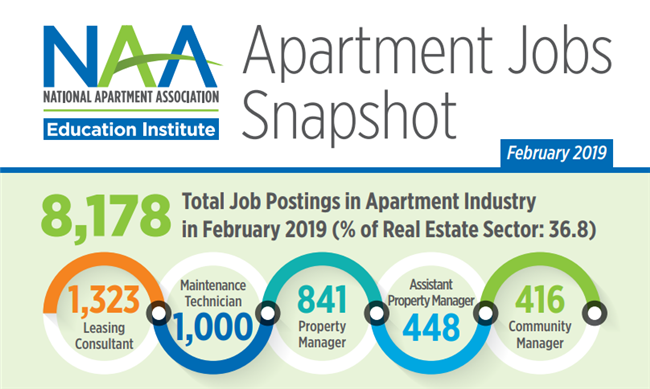
More than 8,000 jobs were available across the country during February, according to the latest apartment jobs report from the National Apartment Association

More than 8,000 jobs were available across the country during February, according to the latest apartment jobs report from the National Apartment Association (NAA).

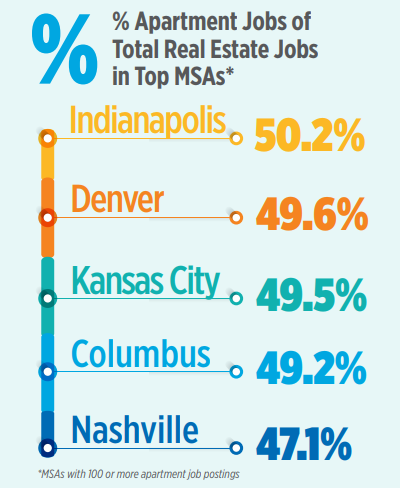
Apartment jobs represented 36.8 percent of all the real estate sector jobs, just under last month’s figure, according to the NAA report from the NAA Education Institute.

Denver placed in the top 5 markets for the third month in a row, slightly edged out by Indianapolis.

Leasing consultant apartment  jobs in high demand

Leasing consultant apartment  jobs in high demand

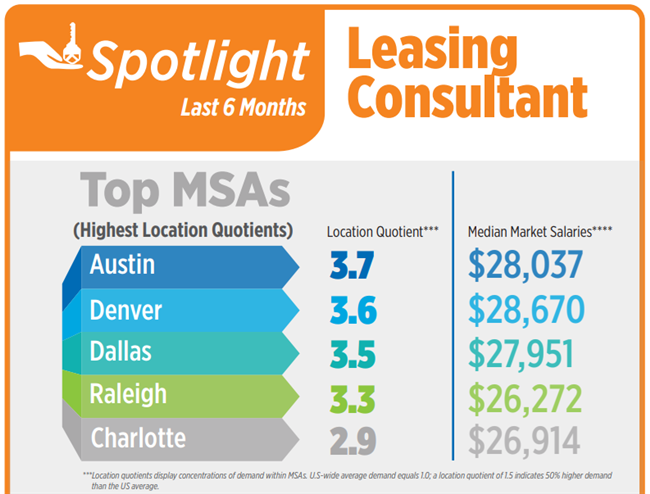
Leasing consultants were in high demand in the latest report. And the greatest concentration of demand for leasing consultants was in Austin.

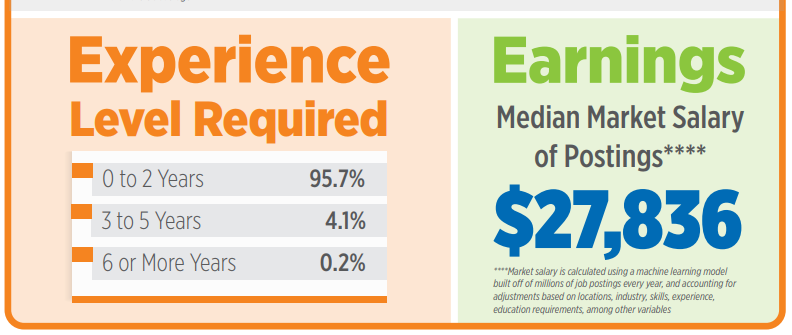
For leasing consultants, median market salaries were below $28,000 per year, but most employers would consider candidates with less than two years of experience, yet another sign of a tight labor market.

Maintenance-tech skill set still highly sought as titles change

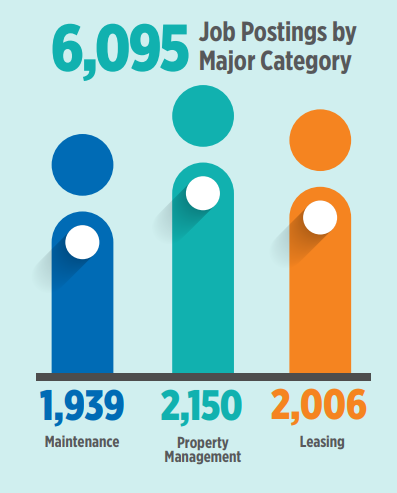
The change in the proportion of job titles over the past five years is not only reflective of demand, i.e. the highly sought-after maintenance tech, but of recruiters providing more focused and appealing titles, the NAA Education Institute report says.

The generic “apartment manager” has given way to “community manager,” while the surge of assistant property managers and maintenance supervisors reveals a clear career path within those sectors.

The greatest increases in skills desired for all types of positions included both specialized skills such as Yardi Matrix software, and soft skills, particularly writing and collaboration.

apartment jobs

apartment jobs

National apartment association jobs report background

The jobs report focuses on jobs that are being advertised in the apartment industry as being available, according to Paula Munger, Director, Industry Research and Analysis, for the National Apartment Association’s Education Institute.

“Our education institute is a credentialing body for the apartment industry. They hear often that one of the biggest problems keeping our industry leaders up at night is the difficulty in finding talent, attracting talent and retaining talent,” Munger said.  “Labor-market issues are happening in a lot of industries, certainly with the tight labor market we have.”

NAA partnered with Burning Glass Technologies. “They have a labor-job posting database that is proprietary,” she said, and they can “layer on data from the Bureau of Labor Statistics (BLS). We looked at that and thought we could do something that is really going to help the industry and help benchmark job titles and trends as we go forward,” Munger said.

apartment jobs

Last month’s apartment jobs report

Apartment Maintenance Technician Jobs In High Demand In Portland And Seattle

Portland Rents Increased Significantly Over the Past Month

Portland Rents Increased Significantly Over the Past Month

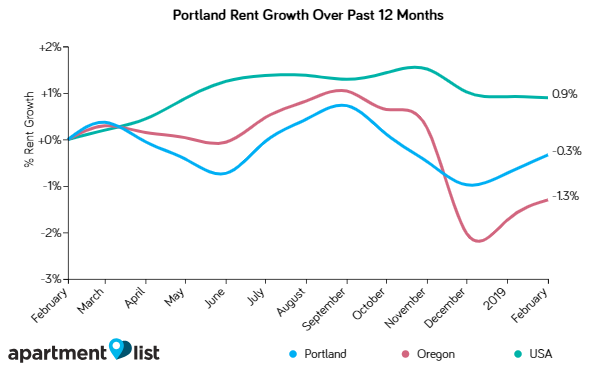
Portland rents have increased 0.4% over the past month, but are down slightly by 0.3% in comparison to the same time last year, according to a new report from Apartment List.

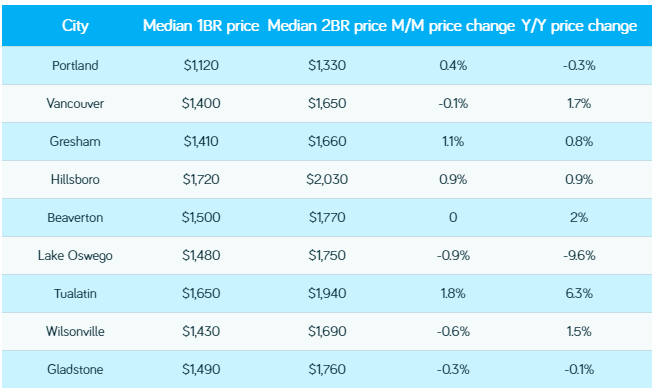
Currently, median rents in Portland stand at $1,120 for a one-bedroom apartment and $1,330 for a two-bedroom.

Second straight month of increases in Portland rents

This is the second straight month that the city has seen rent increases after a decline in December of last year. Portland’s year-over-year rent growth leads the state average of -1.3%, but trails the national average of 0.9%.

Rents rising across cities in the Portland Metro

Portland Rents Increased Significantly Over the Past Month

While rent decreases have been occurring in the city of Portland over the past year, cities in the rest of the metro are seeing the opposite trend.

Rents have risen in 9 of the largest 10 cities in the Portland metro for which Apartment List has data. Oregon as a whole logged rent growth of -1.3% over the past year.

Here’s a look at how rents compare across some of the largest cities in the metro.

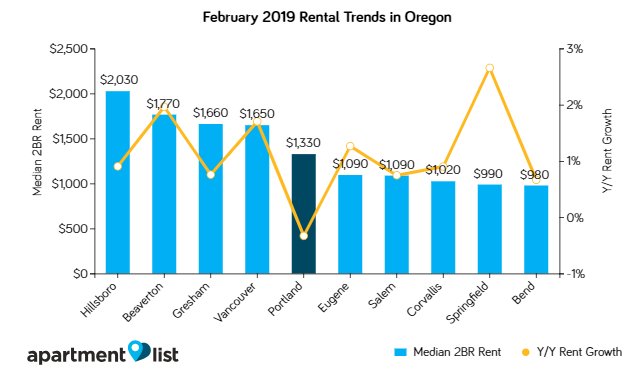
  • Hillsboro is the most expensive of all Portland metro’s major cities, with a median two-bedroom rent of $2,030; of the 10 largest Oregon metro cities that the company has data for, 9 have seen rents rise year-over-year, with Springfield experiencing the fastest growth (+2.7%).
  • Beaverton, Vancouver, and Eugene have all experienced year-over-year growth above the state average (2.0%, 1.7%, and 1.3%, respectively).

Portland Rents Increased Significantly Over the Past Month

Portland rents more affordable than many similar cities nationwide

As rents have fallen slightly in Portland, many comparable cities nationwide have seen prices increase, in some cases substantially. Portland is also more affordable than most other large cities across the country.

Portland’s median two-bedroom rent of $1,330 is above the national average of $1,170. Nationwide, rents have grown by 0.9% over the past year compared to the 0.3% decline in Portland.

While rents in Portland fell slightly over the past year, many cities nationwide saw increases, including Phoenix (+3.6%), Austin (+3.1%), and Las Vegas (+3.1%).

Renters will find more reasonable prices in Portland than most similar cities. For example, San Francisco has a median 2BR rent of $3,100, which is more than twice the price in Portland.

Methodology

Data from private listing sites, including our own, tends to skew towards luxury apartments, introducing sample bias. In order to address these limitations and provide the most accurate rent estimates available, we now start with reliable median rent statistics from the Census Bureau, then extrapolate forward based on our own rental listing data, using a same-unit analysis similar to Case-Shiller’s approach, which compares only units that are available across both time periods to provide an accurate picture of rent growth in cities across the country.

Apartment List

Apartment List is a growing online apartment rental marketplace on a mission to make finding a home an easy and delightful process.

Which Cooktop Is Best For Your Rental Property?

The pros and cons of which cooktop is best for your rental property – gas, electric, smoothtop or induction –  is the maintenance checkup from Keepe this week.

Cooktops are easily the most important component of a rental property’s kitchen and one of the most frequently used appliances.

As a rental property owner or manager, you want to consider installation and repair. Plus, you want a cooktop that will last without needing major repairs over the years and provide safe and efficient heating performance for your tenants.

Different manufacturers produce many models with different special features at vastly different price points. Here are the pros and cons of different models of cooktops:

Gas cooktops

Gas cooktops use an electric or standing pilot starter igniting the gas to produce a steady flame for cooking. Cooktops featuring a standing pilot system have a small and continuously burning gas flame under the cooktop. It ignites the gas as it flows out when the stove is turned on. This makes this system completely independent from outside power sources. Electric ignition cooktops rely on electric sparks to ignite the gas, which results in the familiar “clicking” noise.

6 pros of gas cooktops

1. Lower emissions – air is not able to enter and cool, thus making gas cooktops able to retain heat without needing to consume extra energy to reach and/or maintain desired temperatures.

2. Lower operating costs – relying on gas instead of electricity makes gas stoves significantly cheaper to power and use.

3. Immediate heat – having access to a burning flame allows for instant heat, making it possible to start cooking without needing to worry about the stove’s components needing to warm-up.

4. Immediate control – lowering or raising the temperature is easy by turning the control knobs. Cooking professionals really appreciate this quality as it makes it possible to precisely set desired temperatures throughout the cooking process.

5. Visual control – being able to see the actual flame’s size makes it possible to quickly gauge whether the temperature is set to low, medium or high.

6. Cookware-friendly – gas stoves can be used to cook with all cookware types, including cast iron, stainless steel and wok-style pans.

Which Cooktop Is Best For Your Rental Property?

4 cons of gas cooktops

1. Flammability – Gas is highly flammable. A gas leak can expose tenants to serious risks of accidental fires. For this reason, it’s essential to inform tenants about how to safely operate the appliance and to have it regularly checked by a professional who can ensure that it operates properly and is not allowing gas leaks.

2. Toxicity – The combustion of gas produces toxic fumes such as nitrogen dioxide, formaldehyde and carbon monoxide, which makes it necessary to install an efficient and safe ventilation hood. This is a further expense, and the ventilation hood itself should be regularly maintained by a professional. Tenants should be instructed about how to safely cook with a gas appliance to avoid being exposed to harmful fumes.

3. Cleanup – Gas cooking appliances are the most demanding when it comes to cleaning. They require regular and thorough cleaning, both of the exterior grills and surfaces and of the interior parts that make up the burners themselves. This is due to the fact that allowing grease and cooking spills to build up can result in blockages that inhibit the proper workings of the appliance and accidental fires. Regular cleanups of a gas appliance will require taking apart the burners and carefully cleaning under them.

4. Installation costs – Not every property has a gas line running through the kitchen. Adding a gas line can be expensive.

Electric (or Coil) cooktop

Which Cooktop Is Best For Your Rental Property?

Photo credit: freefoodphotos.com

Electric cooktops rely on electricity to heat an internal metal coil, which becomes the heat source for cooking and heating food. In most electric cooktops, the metal coils are  exposed and meant to be in direct contact with cookware.

4 pros of an electric cooktop

1. Affordability – Electric appliances are cheap to both purchase and install. Completely replacing an electric appliance is also cheap, with cheaper models less than $300.

2. Maintenance – If a coil is defective or broken, it is possible to simply swap the individual coil with a new one and not have to replace the entire appliance. Similarly, repairing other broken components is easy as electric stoves are very common and parts are easy to find.

3. Practicality – Operating electric stoves is simple and straightforward. Setting low, medium or high heat is done by simply turning a knob. Due to the fact that no direct combustion happens, tenants do not need to worry about fumes or accidental fires.

4. Cookware-friendly – gas stoves can be used to cook with all cookware types.

4 cons of an electric cooktop

1. Slow temperature control – The metal coils need time to both heat up and reach the desired temperature and also to change to different temperatures as one cooks. This makes it difficult to have optimal control over temperatures.

2. Uneven cooking – Often times, the coils are not perfectly leveled and thus unable to evenly distribute heat to the cookware being utilized. This can make it difficult to properly cook food.

3. Design – The coils themselves and the openings housing them easily trap food, spills and grease. Heating trapped leftover spills can cause serious smoke and even fires.  Tenants must be informed about the importance of regularly cleaning the cooktop.

Since the coils are mounted onto the cooktop, it is not so easy to thoroughly clean the appliance.

4. Performance – Electric cooktops will not reach the high temperatures that a gas flame can reach. This makes it unlikely to be able to enjoy cooking or charring certain foods that require higher temperatures.

Electric Smoothtop

Smooth Tops incorporate the metal coils under a flat surface made of tempered ceramic-glass. Newer models substitute the metal coils with halogen lamps as the main heat source.

3 pros of an electric smoothtop

1. More efficient – the smoothtop surface allows for heat to be spread upward more directly and without dispersing.

2. Safer – ceramic-glass surfaces are able to cool faster than the exposed metal coils, while still allowing for no fumes, leaks or fires.

3. Easier to clean – the flat surface makes it immensely easier to wipe off spills instead of worrying about the cleaning up leftover food out of the complex design of coil cooktops.

Which Cooktop Is Best For Your Rental Property?

3 cons of a smoothtop

1. Slow temperature control – Smoothtop cooktops still need time to both heat up and reach the desired temperature and also to change to different temperatures as one cooks.

2. Fragility – the temperate ceramic-glass surface can scratch and crack/break easily. Tenants should be instructed to be very careful when cleaning the surface (no abrasive sponges or cleaners) and mindful of its fragility.

3. Conductivity – the flat surface makes it so that optimal heat distribution can only be achieved with heavier cookware.

Induction cooktop

Induction cooktops are incredibly innovative. Thanks to electromagnetism, they generate heat in the cookware itself, not in an internal heating component that heats the food indirectly. A series of magnets that are powered by electricity lie under the temperate glass surface, exciting the iron particles in pots and pans and thus generating heat from within. While they are not so common in the United States, European countries have been widely adopting this cleaner and more practical cooking solution.

Which Cooktop Is Best For Your Rental Property?

6 pros of an induction cooktop

1. Efficiency – Induction cooktops waste virtually no energy. Through electromagnetism, over 80 percent of the energy is transferred directly to the food in the pan. In comparison, appliances utilizing a heating element to indirectly heat food generally result in over half of the energy needed for heating being lost. Powering and using induction cooktops is cheap.

2. Temperature control – Induction cooktops heat up quickly and allow for temperature changes to happen immediately. This makes it possible to have direct and precise control over cooking temperatures.

3. High heat – On the “high heat” setting, Induction cooktops allow for food to reach temperatures nearing 660°F, which is 200°F higher than the maximum average reached by the burning flame of gas stoves. This allows for a considerably shorter wait when it comes to boiling or heating for deep frying – and of course, cooking itself.

4. Safety – the surface of induction cooktops is always cool. The heating stations can actually be safely touched when they are turned on, as the heating happens within the cookware being utilized (so no touching of pots and pans!).

5. Cleanup – As surfaces are flat, nonporous, and always cool it is possible to clean up spills with unprecedented ease, with food never being “cooked” or melted onto the surface.

6. Practicality – Induction cooktops are simple and easy to use. Setting low, medium or high heat is done by simply turning a knob. No direct combustion means no fumes or accidental fires.

4 cons of an induction cooktop

1. Cost – Due to their technology, induction cooktops tend to be pricier than most other cooktops, with certain models costing up to $2,700.

2. Maintenance – Faulty cooktops will likely require a more invasive inspection, as the magnetic coils are found underneath the surface. Higher repair costs are to be expected as individual parts will be pricey.

2. Fragility – induction cooktops utilize the same temperate ceramic-glass surface as electric smoothtop appliances, which is vulnerable to scratches and cracks. Again, tenants should not use abrasive sponges or cleaners and be mindful of its fragility.

4. Cookware restrictions – For the technology to function and actually heat pots and pans, it requires to be exposed to cookware containing iron. For this reason, cookware made with all other materials – such as clay or copper – will not be suitable for this cooktop.

Other recent rental property maintenance Keepe posts you may have missed:

7 Tech Gadgets For A Safer And More Efficient Rental Property

5 Maintenance Tips For Long-Lasting Rental Carpet Flooring

Is The Water Heater At Your Rental Property Ready For The Big One?

7 Types Of Kitchen Countertops For Your Apartments

About Keepe:

Keepe is an on-demand maintenance solution for property managers and independent landlords. The company makes hundreds of independent contractors and handymen available for maintenance projects at rental properties. Keepe is available in the Greater Seattle area,


Landlord To Pay $9,000 To Settle With HUD Over Emotional Support Animal

Landlord To Pay $9,000 To Settle With HUD Over Emotional Support Animal

A landlord and agent who refused to rent to a tenant with disabilities because he had an emotional-support animal have settled with the U.S. Department of Housing and Urban Development (HUD) through a conciliation agreement, according to a release.

The case in San Francisco came to HUD’s attention when an individual with disabilities filed a complaint alleging that he was denied the opportunity to rent an apartment because he had an emotional-support animal.

HUD’s investigation found  the landlord and agent were explicitly informed that the prospective tenant’s animal is prescribed by a doctor and allowed under fair housing laws, but they still refused to consider his tenancy because of the animal.

Landlord to pay $9,000

Under the terms of the agreement, the owner will pay the complainant $9,000 and both respondents will attend fair housing training, according to the release.

“Assistance animals provide persons with disabilities with the support they need to not only enjoy their home, but to function in life,” said Anna María Farías, Assistant Secretary for Fair Housing and Equal Opportunity, in the release. This “agreement reflects HUD’s ongoing commitment to ensuring that housing providers abide by our nation’s fair housing laws.”

The Fair Housing Act prohibits housing providers from denying housing to persons with disabilities and from refusing to make reasonable accommodations in policies or practices, which includes denying assistance-animal requests.