Home Blog Page 158

2020 Oregon Allowable Rent Increase Cap is 9.9 Percent

2020 Oregon Allowable Rent Increase Cap is 9.9 Percent

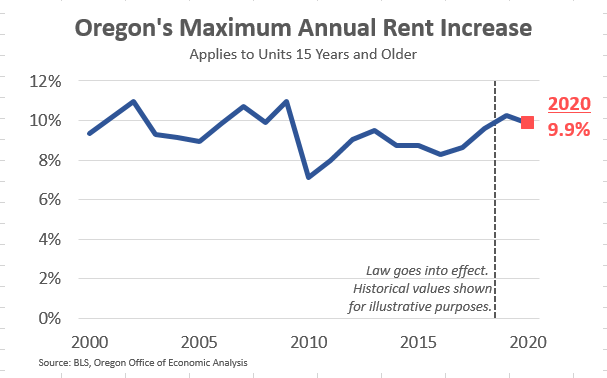
The Oregon allowable rent increase percentage for the 2020 calendar year is 9.9 percent, down slightly from 10.4 percent in 2019, announced by the Oregon Office of Economic Analysis (OEA).

Oregon’s new rent control law, SB 608, passed in February 2019, ushering in the first-in-the-nation statewide rent control.  SB 608 created two major changes to the Oregon Residential Landlord Tenant Act by limiting the scope of termination notices without stated cause and implementing rent control.

Each year, the OEA is responsible for calculating and publishing, by September 30, the maximum annual rent increase percentage allowed by statute SB 608 for the upcoming year.

The OEA calculates this amount as 7 percent plus the Consumer Price Index (CPI) for All Urban Consumers, West Region (All Items), based on the most recent published data from the Bureau of Labor Statistics for the period September thru August.

The CPI went down slightly from 3.4% to 2.9 percent.  This results in the annual allowable statewide rent increase cap of  9.9 percent for 2020, and will go into effect on January 1st, 2020.

Attorney and Rental Housing Alliance Oregon Board Member Charles Kovas cautions, “Landlords with outstanding 90-day notices should be aware that those notices may need to be hand-delivered in order to comply with the January 1st rate change.”

The cap on rental increases applies to all renewals and to all rent-increase notices delivered on or after February 28, 2019.  Under this law, if landlords terminate tenancy of a prior tenant with a notice of termination without cause during the first year of occupancy, the landlord may not increase rent for that unit by more than 7 percent plus CPI when the subsequent tenant moves in.

The only exemptions to this Oregon allowable rent increase limit are:

  1. Properties with a certificate of occupancy less than 15 years old, or
  2. Properties providing reduced rent to the tenant as part of any federal, state or local program or subsidy.

For more information, contact Attorney Charles Kovas at CharlesKovasLaw@gmail.com or call 503-496-5543.

Resources:

Governor Kate Brown Signs Landmark Oregon Rent Control Bill

Senate Bill 608 Explained

Kay Properties Real Estate Offering Goes Full Cycle on Behalf of Investors

Kay Properties and 1031 and 1033 exchanges and eminent domain options details

Kay Properties and Investments has announced that one of their joint venture private placement real estate offerings has gone full cycle. The offering consisted of an opportunity to participate in an Absolute Triple Net Leased (NNN) hospital in the Kansas City Metro Area.

The offering generated a 22.27% Return on Investment (ROI)* in approximately 1 year and was made available to accredited investors under Regulation D Rule 506(c) at 25k minimum investments.

Dwight Kay, CEO and Founder of Kay Properties commented, “We are extremely pleased with the opportunity to provide these returns for our investors in such a short time period and look forward to continuing to provide future real estate investments for those in 1031 exchanges as well as direct cash investors.”

* Past performance does not guarantee or indicate the likelihood of future results. Diversification does not guarantee profits or protect against losses. All real estate investments provide no guarantees for cash flow, distributions or appreciation as well as could result in a full loss of invested principal. Please read the entire Private Placement Memorandum (PPM) prior to making an investment.

*The Return on Investment (ROI) represents the ratio of total sales proceeds and distributions through the life of the asset over the total initial equity invested, net of fees. The ROI represents a return to an individual investor. No representation is made that any investment will or is likely to achieve profits or losses similar to those achieved in the past or that losses will not be incurred.

About Kay Properties and Investments, LLC:

Kay Properties and Investments, LLC is a national Delaware Statutory Trust (DST) investment firm with offices in Los Angeles, San Diego, San Francisco, Seattle, New York City and Washington DC. Kay Properties team members collectively have over 114 years of real estate experience, are licensed in all 50 states, and have participated in over $9 Billion of DST real estate. Our clients have the ability to participate in private, exclusively available, DST properties as well as those presented to the wider DST marketplace; with the exception of those that fail our due-diligence process. To learn more about Kay Properties please visit: www.kpi1031.com

This material does not constitute an offer to sell nor a solicitation of an offer to buy any security. Such offers can be made only by the confidential Private Placement Memorandum (the “Memorandum”). Please read the entire Memorandum paying special attention to the risk section prior investing. This material contains information that has been obtained from sources believed to be reliable. However, Kay Properties and Investments, LLC, WealthForge Securities, LLC and their representatives do not guarantee the accuracy and validity of the information herein. Investors should perform their own investigations before considering any investment. IRC Section 1031, IRC Section 1033 and IRC Section 721 are complex tax codes therefore you should consult your tax or legal professional for details regarding your situation. This material is not intended as tax or legal advice.

There are material risks associated with investing in real estate, Delaware Statutory Trust (DST) properties and real estate securities including illiquidity, tenant vacancies, general market conditions and competition, lack of operating history, interest rate risks, the risk of new supply coming to market and softening rental rates, general risks of owning/operating commercial and multifamily properties, short term leases associated with multi-family properties, financing risks, potential adverse tax consequences, general economic risks, development risks and long hold periods. There is a risk of loss of the entire investment principal. Past performance is not a guarantee of future results. Potential cash flow, potential returns and potential appreciation are not guaranteed. For an investor to qualify for any type of investment, there are both financial requirements and suitability requirements that must match specific objectives, goals and risk tolerances. Securities offered through WealthForge Securities, LLC. Member FINRA/SIPC. Kay Properties and Investments, LLC and WealthForge Securities, LLC are separate entities.


Rental Housing Deposit Alternatives Drive More Leases Survey Says

Rental Housing Deposit Alternatives Drive More Leases Survey Says

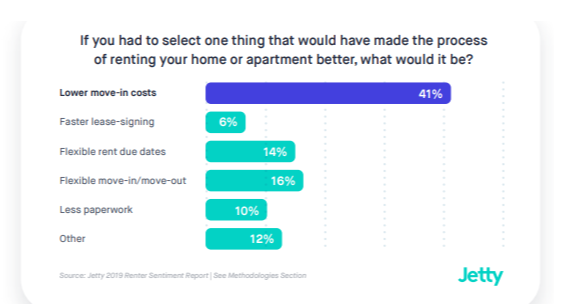
High up-front costs are preventing renters from moving into the homes they want nationwide, and many of these renters believe that lower fees are the solution for a better leasing experience, according to survey of renters.

The nationwide survey of 667 renters found that affording the up-front costs of signing a new lease is the biggest worry in the context of renting, according to a release from financial services and rent guarantee company Jetty.

“Today’s renters are stressed. They worry about making monthly rent payments, they struggle to afford up-front move-in costs—and they’re ready for change,” the company said in the release.

Key findings of rental housing deposit alternatives survey

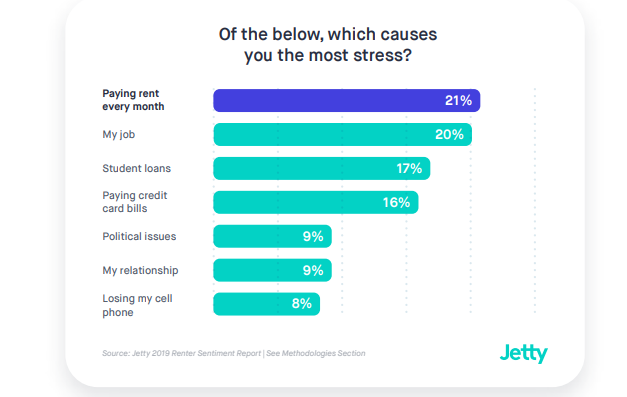
  • Paying rent causes more stress than jobs, student loans, credit card bills, and political issues.
  • Most renters worry that they won’t be able to pay rent.
  • High up-front costs are preventing renters from moving into the homes and apartments they want.
  • Almost half of renters wouldn’t be able to afford a cash security deposit right now—but security-deposit alternatives could be a game-changer for them.


Most renters worry they won’t be able to pay the rent at some point

Rental Housing Deposit Alternatives Drive More Leases Survey Says

There are many costs involved with renting, but monthly payments weigh the heaviest on renters.

When asked about their most burdensome renting expenses, almost half of renters (44 percent) cited monthly rent payments, followed by security deposits (26 percent), utility bills (16 percent), movers (8 percent), and broker fees (5 percent).

In fact, almost two-thirds of renters surveyed worry that they won’t be able to make their rent payments at some point during their lease cycle. Of those, 18 percent said that they worry about making rent every month or most months, and 46 percent said they worry about it at least two months out of the year.

Rental Housing Deposit Alternatives Drive More Leases Survey Says

Rental housing deposit alternatives

According to a report in MarketWatch, as many metros are seeing a flood of new rental apartments ease the supply crunch, rents remain high — up 3.6% compared to a year ago, according to fresh CPI data – and the barriers to entry, for many people, formidable. Now a new wave of start-ups is trying to apply fintech principles to helping ease some of the angst of getting into a rental agreement, even if it can’t do much about the rent itself.

Some consumer advocates are wary about innovations like the ones TheGuarantors – and competitors like Jetty and Insurent – offer, according to reports. Also there are others such as Suredeposit and Leaselock.

Typically renters pay a non-refundable fee and percentage to the companies.

Rental Housing Deposit Alternatives Drive More Leases Survey Says

Renters feel up-front move-in expenses are too high

High up-front costs are preventing renters from moving into the homes and apartments they want, according to the release.

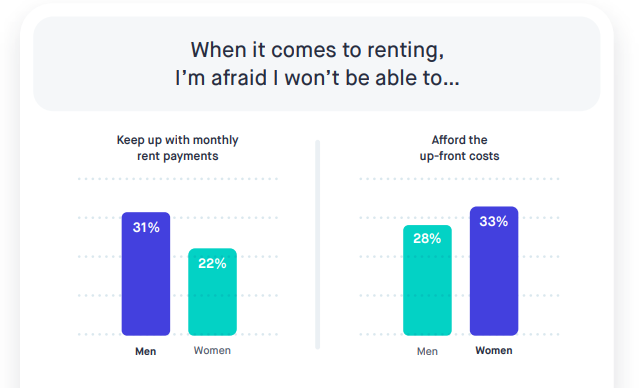
Despite the stress renters feel about monthly payments, being able to make rent isn’t what they’re most fearful of in the renting process.

According to the survey, when asked what they’re most afraid of in the context of renting, 30 percent of renters ranked affording up-front costs, while 26 percent said keeping up with rent payments.

Almost 60 percent of renters have been prevented from moving into the rental homes or apartments they wanted because the up-front expenses were too high, the survey says.

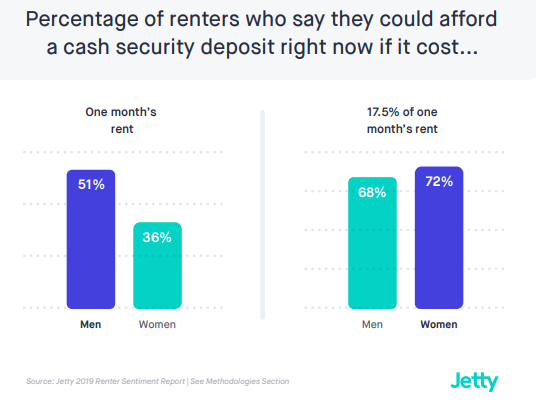
Almost half of renters wouldn’t be able to afford a cash security deposit of one month’s rent right now. Survey respondents said security-deposit alternatives could be a game-changer for them.

While less than half of renters would be able to afford a cash security deposit of one month’s rent right now, 70 percent of those renters could afford a security deposit alternative.

Methodology

This data was collected through a survey by Jetty designed to discover how renters feel about renting and what challenges they face in the process. The company used a third-party survey tool to reach a sample of U.S. renters, balanced for age, gender, and geographic region, and gathered a total of 667 responses.

Resources:

When the rent isn’t too high — but the security deposit is

With rent surging, these startups offer to pay the security deposit

A Passion For Helping Tenants With Poor Credit Get Apartments And Homes


The Most Expensive Zip Codes For Renters In 2019

The Most Expensive Zip Codes For Renters In 2019

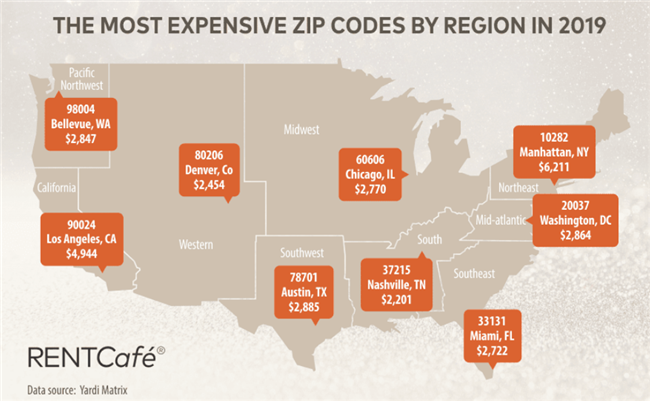
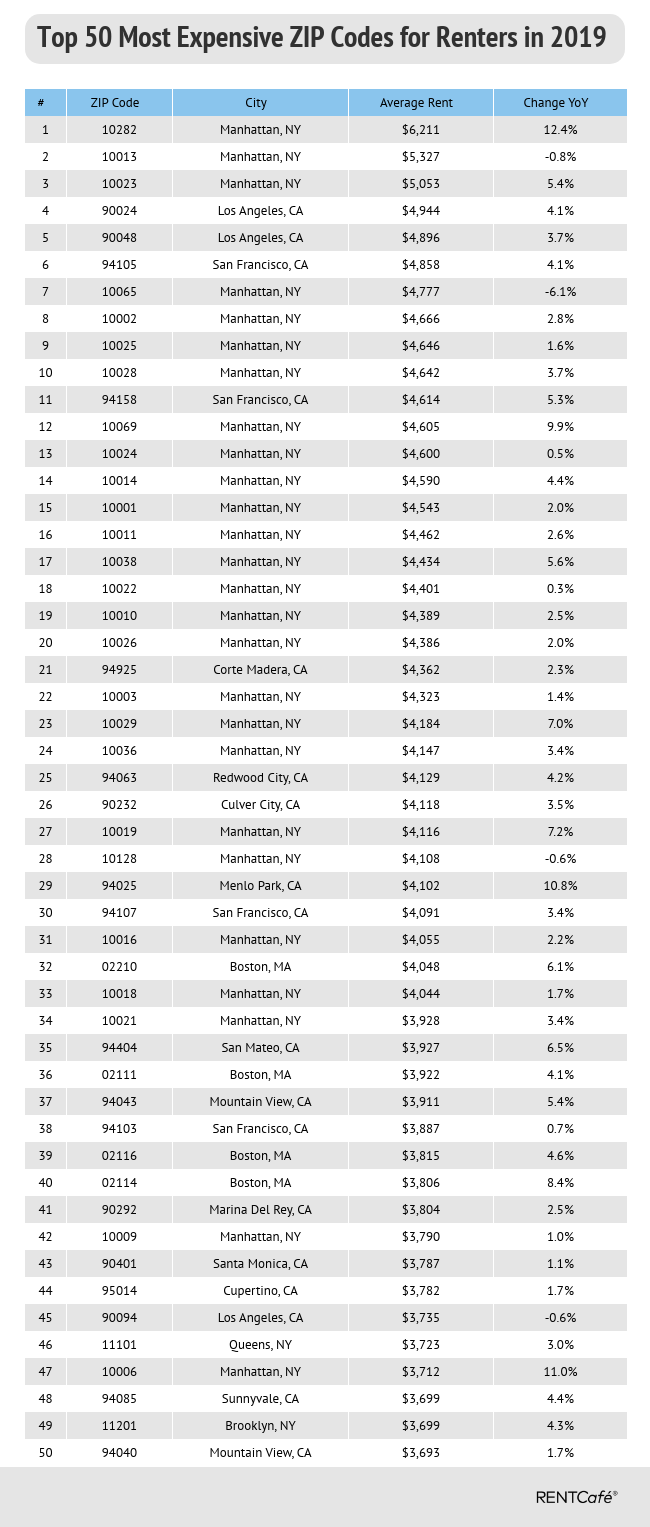
The most expensive zip codes for renters in 2019 are dominated by New York City, the San Francisco Bay area, Southern California and Boston, according to a new report from RentCafe.

“As the peak rental season has come to an end, we wanted to see which neighborhoods charged the priciest rents this summer and which high-end areas saw the most significant rent changes,” RentCafe said in the release.

The most-coveted locations for high-paying jobs and endless opportunities, New York City and California grab the most spots in the top 50 as priciest places to live in the U.S.

Out of the 50 most expensive ZIP Codes for renters, 28 are in New York City, with 26 in Manhattan and one each in Queens and Brooklyn. The ranking is completed by 18 California ZIP codes and 4 ZIP codes from Boston.

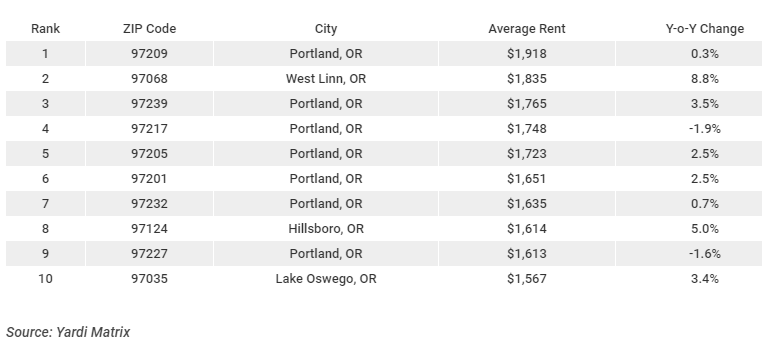
Oregon’s most expensive

Oregon's most expensive zip codes for renters

Los Angeles’ 90024 is the most expensive ZIP code for renters in sunny California

With 18 ZIP Codes across Los AngelesSan Francisco, Corte Madera, Redwood City, Culver City, Menlo Park, San Mateo, Mountain View, Marina Del Rey, Santa Monica, Cupertino and Sunnyvale, California apartments aren’t too far behind those in New York.

In fact, among the top 10 most expensive ZIP Codes 3 alone are in California, split between two in Los Angeles and one in San Francisco.

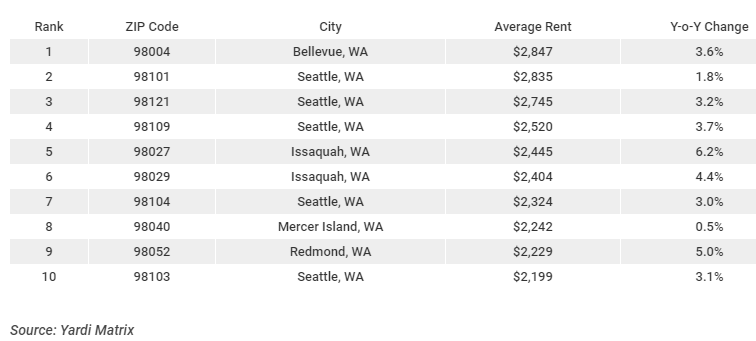
Washington’s most expensive

Washington's most expensive zip codes for renters

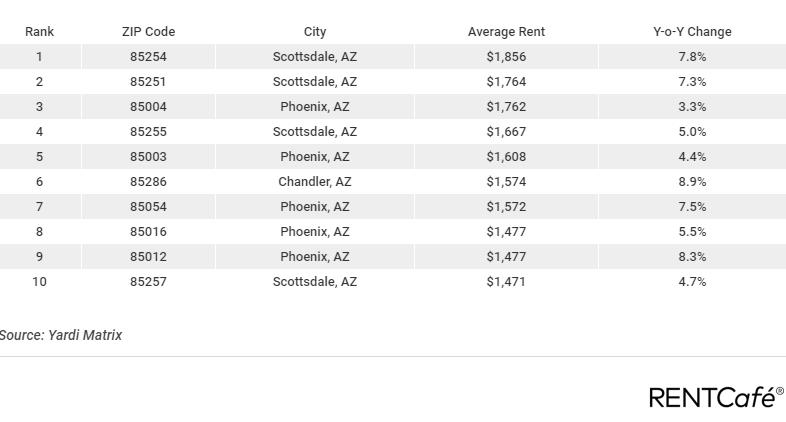
Arizona’s most expensive

Arizona's most expensive zip codes for renters

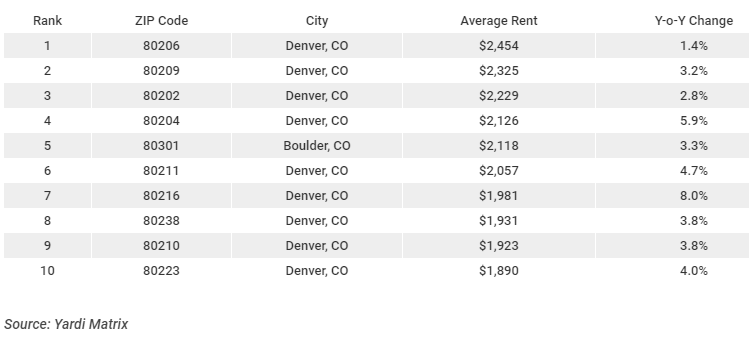
Colorado’s most expensive

Colorado's most expensive zip codes for renters

Where are the least expensive?

The ZIP Code with the smallest average rent is in Wichita, 67213, with $423. It is followed by Memphis ZIP Code 38106 with an average rent of $471.

On the list, in 16th place is Saint Louis ZIP Code 63137 with an average rent of $548. Another large city ZIP Code, in 38th place, is 48234 in Detroit, where rent averaged out at $585. There are also 10 Ohio ZIP Codes spread across Toledo, Girard, Youngstown, Canfield, Warren and Dayton, which all have apartment rents in the $500s. Kansas has 9 ZIP Codes covering the Wichita and Hutchinson areas, with average rent ranging between $423 and $581. Tennessee has 8 ZIP Codes in the top, in Memphis, Louisville and Maryville, with apartments under $600.

The Most Expensive Zip Codes For Renters In 2019

Seattle City Council Member Wants City Rent Control

Seattle City Council Member Wants City Rent Control

Seattle City Council Member Kshama Sawant has held a special city council committee meeting to formally present her draft plan and ordinance for rent control in Seattle.

Sawant formally unveiled her proposed ordinance, which states, “Seattle faces an affordable housing and homelessness crisis as rising rents have forced thousands of Seattle renters out of their homes, neighborhoods and the city.

“Between 2010 and 2018, average rents in Seattle rose 69 percent while inflation for urban wage earners in Seattle rose only 20.3 percent,” the ordinance states.

The proposed ordinance says the “maximum annual rent increase shall be a percentage equal to the rate of inflation,” for urban wage earners, which was 3.4% last year in the greater Seattle area, according to the Bureau of Labor Statistics, and according to published reports.

Sawant’s draft legislation follows her six-year-old call for rent control, a 2015 City Council resolution supporting the repeal of a State-wide rent control ban, plus an April letter from the Seattle’s Renters’ Commission urging the council and Mayor Jenny Durkan to pass a rent control ordinance in Seattle, according to reports.

Washington state law prohibits rent control

Washington state law currently prohibits rent control.

Sawant said her legislation, if passed, wouldn’t take effect until that ban is repealed. The full city council likely won’t take up the matter until December, after budget negotiations have ended.

The Rental Housing Association of Washington has suggested setting up a community fund to offer rental assistance for people in need.

The association says that rent controls discourage new housing construction during periods of shortage by distorting the market signals needed to maintain equilibrium in the market place.

Sawant told the Capitol Hill Seattle blog that she was prepared for a hard fight over rent control. “It’s going to be hard, it’s not going to be easy,” she said. She expects “some vicious opposition. We have to prepare ourselves for that.”

Seattle City Council Member Wants City Rent Control
City Council Member Kshama Sawant says the fight over rent control “is going to be hard.”

Sawant pointed to supporters of rent control, especially small landlords, who she says are supporters “because they don’t gouge their renters,” according to the Capitol Hill Seattle Blog.

Resources:

20% inflation vs. a 69% rise in Seattle rents: Sawant’s rent control legislation unveiled

Sawant’s rent control proposal takes aim at Seattle’s pricey housing market

Mayor Says New “Renting in Seattle” Program to Provide Resources for Landlords and Renters

Portland Apartment Jobs Almost 60 Percent Of All Real Estate Jobs

Portland Apartment Jobs Almost 60 Percent Of All Real Estate Jobs

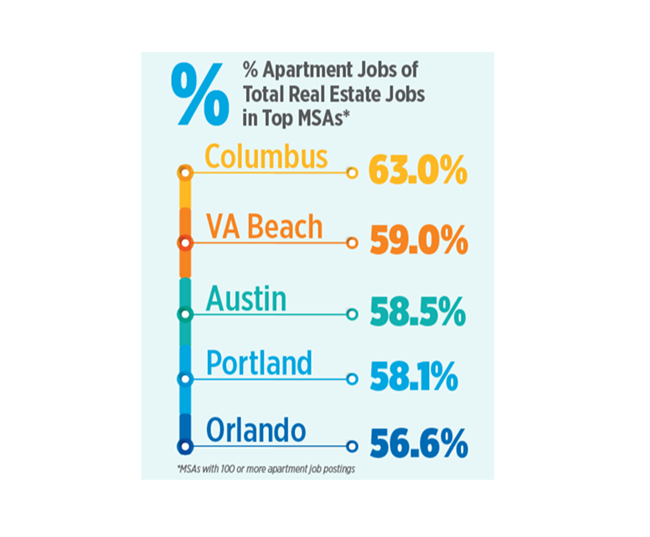
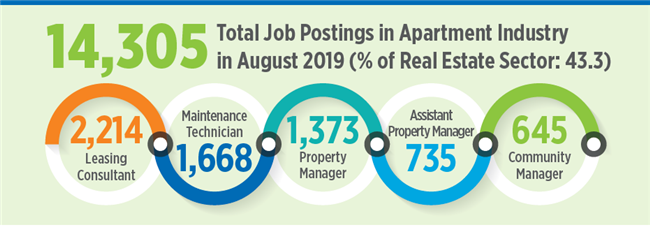
Apartment jobs in the multifamily industry are almost 60 percent of all the real estate jobs in Portland, according to the latest jobs report from the National Apartment Association.

Portland is among the top cities in the U.S. for apartment jobs, along with Columbus, Virginia Beach and Austin.

More than 14,000 positions were available in the apartment industry as apartment communities reached their peak for this year’s leasing season according to the August edition of NAAEI’s Apartment Jobs Snapshot.

Portland Apartment Jobs Almost 60 Percent Of All Real Estate Jobs

Along with Portland, the highest concentration of job postings were in Columbus, Virginia Beach, Austin, and Orlando in Central Florida.

Central Florida has seen robust population and job growth which in turn has increased apartment demand.

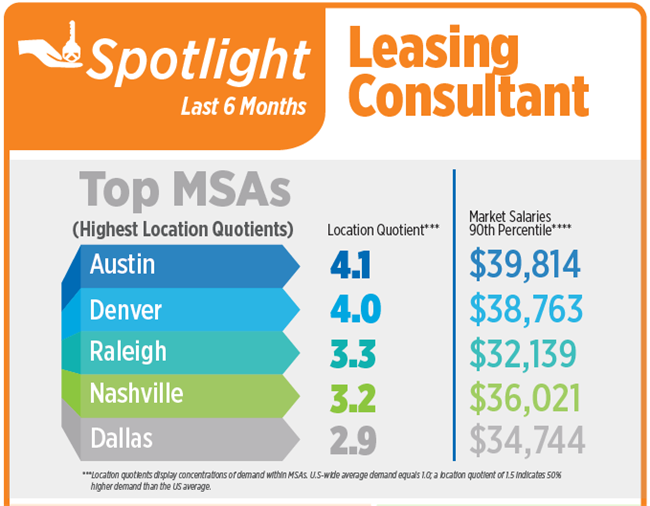
This month’s spotlight highlights leasing consultants

Portland Apartment Jobs Almost 60 Percent Of All Real Estate Jobs

For example, the demand for these positions was more than four times the U.S average in Austin.

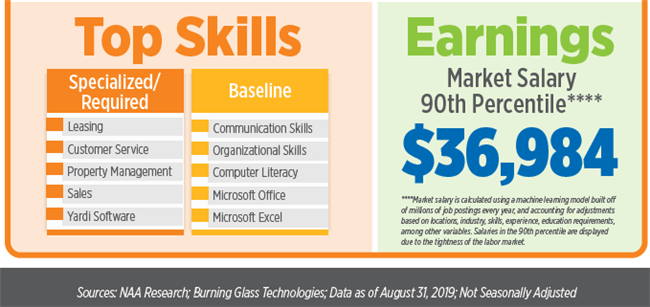
The top specialized skills employers are looking for included leasing, customer service, property management, sales, and Yardi Software.

Portland Apartment Jobs Almost 60 Percent Of All Real Estate Jobs

 National apartment association jobs report background

The NAA jobs report focuses on jobs that are being advertised in the apartment industry as being available, according to Paula Munger, Director, Industry Research and Analysis, for the National Apartment Association’s Education Institute.

“Our education institute is a credentialing body for the apartment industry. They hear often that one of the biggest problems keeping our industry leaders up at night is the difficulty in finding talent, attracting talent and retaining talent,” Munger said.  “Labor-market issues are happening in a lot of industries, certainly with the tight labor market we have.”

NAA partnered with Burning Glass Technologies. “They have a labor-job posting database that is proprietary,” she said, and they can “layer on data from the Bureau of Labor Statistics (BLS). We looked at that and thought we could do something that is really going to help the industry and help benchmark job titles and trends as we go forward,” Munger said.

5 Maintenance Tips For Long-Lasting Carpet In Your Rentals

Long-lasting carpet in your rentals, and in fact flooring in rental properties in general, is always a challenge. Especially getting your rental carpet flooring to last longer.

The maintenance checkup this week provided by Keepe focuses on ways to make your carpet last longer and be sure you are protecting your investment and income as well as keeping your tenants happy.

Rental carpet flooring can be one of the most high-maintenance parts of a property. Signs of wear and tear as well as stains and dirt are most visible on carpet.

Poor carpet care is easy to spot and tough on the eyes, which can make an otherwise appealing space loose its value. Improving poor carpet conditions generally means needing a complete replacement, which can be a lengthy and costly project.

5 tips to long-lasting carpet in your rentals

The tips below outline more affordable and effective ways to protect carpet floorings and preserve their longevity.

No. 1 – Consider stricter pet policies

Carpet is not a pet-friendly surface.

It absorbs odor, and can easily hold onto hair and stains.

Indoor ‘accidents’ can take an unpleasant turn, and their odor can linger long after cleanup is attempted. The best way to ensure carpet flooring can be adequately repaired and cared for on the long run is to set a higher security deposit for pet-friendly properties, which can then be utilized to repair carpet damage as needed.

Always make sure to thoroughly communicate with your tenant what kind of responsible pet care is expected for animals to continue living in the property.

No. 2 – Schedule a deep-cleaning service once a year if you want long-lasting carpet in your rentals

5 Maintenance Tips For Long-Lasting Rental Carpet Flooring

Most carpet manufacturers recommend having a yearly professional deep-cleaning as a way to prolong the life of carpets.

It is best to steer clear of providers who utilize harsh chemicals, which can be harsh on carpet fibers and might lead to discoloration.

No. 3 – Include hard-surface areas

Constructing a hard-surface area to act as a “barrier” against the dirt and debris brought in from outside can be extremely helpful when it comes to protecting carpet from direct exposure.

A small tile or vinyl landing can be easily added in front of main entryways, and tenants should be encouraged to utilize floor mats to wipe their shoes on.

No. 4 – Provide tenants with approved detergents for spot-cleaning rental carpet flooring

It is fundamental to inform tenants about the risks of letting stains dry on carpet fibers, which usually results in permanent staining and visible marks.

Utilizing an effective and carpet-friendly detergent and blot cleaning right away is the most effective approach to avoid permanent stains.

Consult a trusted professional carpet cleaner about ideal detergents and make the recommended product available to tenants.

No. 5 – Invest in area-appropriate flooring

5 Maintenance Tips For Long-Lasting Rental Carpet Flooring

Carpet performs best and lasts longest in low-traffic areas, away from outside debris, food, moisture and pet exposure.

It is ideal to remove carpet from kitchens and dining areas, opting for vinyl, tile and laminate options instead.

This will avoid the high risk of food stains and spills while improving the look of the property.

Other rental property maintenance help from Keepe.

4 Outdoor Flooring Options For Your Rentals

20 Easy, Affordable Maintenance Projects To Update Your Rentals

7 Types Of Kitchen Countertops For Your Apartments

13 Ways To Pet Proof Your Rental Property

About Keepe:

Keepe is an on-demand maintenance solution for property managers and independent landlords. The company makes hundreds of independent contractors and handymen available for maintenance projects at rental properties. Keepe is available in the Greater Seattle area, Portland, Phoenix, San Francisco Bay and San Diego areas.


Portland Regulators Get Tough New Registration Deal with Airbnb

Portland regulators, through the city’s revenue department,t have reached a memorandum of understanding with Airbnb

Portland regulators, through the city’s revenue department,t have reached a memorandum of understanding with Airbnb requiring the short-term rental company to provide data to the city and to remove listings that violate Portland’s regulations.

Airbnb will have to provide the city the names and addresses of hosts to the city.

Thomas Lannom, the director of Portland’s Revenue Bureau, called the data-sharing agreement  “the toughest in the nation” in an email to the mayor and city council, according to reports.

“We appreciate Airbnb’s willingness to engage with the City of Portland on the pass-through registration data-sharing agreement. We look forward to turning the page on our past disagreements,” Lannom said in a release.

Effective November 1, 2019, Airbnb will launch an online registration system requiring new hosts to share their data with the City of Portland and asking existing hosts to allow their data to be shared with the city. Hosts that do not consent to having their data shared will be removed from the Airbnb website by January 1, 2020.

Portland Airbnb regulations mean Airbnb to pay cost of registration deal

Airbnb has agreed to pay the city’s revenue division $20,000 for the implementation of the new system and $5,000 per year thereafter for its maintenance and support. The Portland-Airbnb pass-through registration agreement is the most comprehensive such agreement in the country according to officials.

“We are pleased to have worked with Portland lawmakers to update the registration process, making it easier for hosts to register and providing tools that allow the City to enforce its laws. This solution protects home sharing and helps the city enforce short-term rental registration while safeguarding the privacy and safety of our hosts and guests. Over the coming weeks, we will continue working closely with the city and our community to help bring our hosts into compliance,” said Laura Spanijan, Airbnb Senior Public Policy Director, in a release.

Mayor Ted Wheeler had pushed for the changes last year after city auditors found many short-term rentals operating illegally without permits and some using fictitious hosts.  “Airbnb and other short-term rental companies have been operating like ‘the Wild Wild West’ in Portland, but now ‘there’s a new sheriff in town.’ ”

Resources:

Portland Launches New Airbnb Data-sharing Agreement

Portland Reaches Rental Data Sharing Agreement with Airbnb

Portland Mayor To Take On Short-Term Fake Rental Owners And Airbnb

5 Fall Maintenance Checkup Items For Your Rental Property

How To Handle Rental Maintenance During COVID-19

Here are 5 fall maintenance checkup items for your rental property from Keepe maintenance.

Property managers and landlords are probably aware their properties can be a mess to deal with this time of year after a lot of summer activity and summer storms.

So here is a list of preventative maintenance to-do’s and 5 fall maintenance checkup items for your rental property for the upcoming season.

1. Have a Debris and Leaf Clearing Schedule

 It is important to be consistent by creating a fall cleaning schedule for your properties. Make sure that leaves are not clogging your drains and causing slippery surfaces. It is your responsibility to maintain the safety of your tenants.

2. Check Damaged Tree Branches and Bushes

It is important to inspect the condition of large trees surrounding your property to determine the possibility of breaking. Trim trees and bushes back until they are at a safe distance from your properties to avoid any injuries and/or damage to your properties.

3. Roof and Gutter Cleaning

Doing a routine semi-annual roof and gutter cleaning for your properties could potentially save you thousands of dollars in repairs as it would prevent water damage to your rental property foundation. A repair that can cost $10,000 or more. Make sure that the roof and downspouts are completely clear to prevent clogging when winter approaches.

5 Fall Maintenance Checkup Items For Your Rental Property
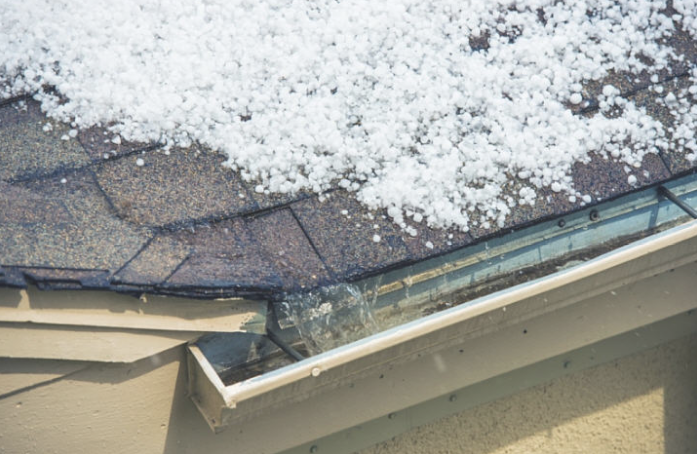
A summer hail storm like this could leave you with roof or gutter damage that needs to be part of your fall maintenance checkup

4. Service Furnaces

 Fall is an ideal time for your annual furnace checkups. With cold weather coming, it is crucial to ensure that your property’s furnace is working at full capacity. Making sure that your furnaces are functioning well has many added benefits as well, including energy savings and a prolonged life on the furnace itself. Much easier to do now before a tenant calls with a complaint later in the year.

5. Check All Doors and Windows

Drafts coming from your windows and doors could be another potential major source of energy loss in your properties. It is important to thoroughly inspect each window and door to make sure that air is not seeping through the cracks as these could increase you or your tenants’ heating expenses.

Weather-stripping and caulking are great preventive methods for these window and door drafts.

About Keepe:

Keepe is an on-demand maintenance solution for property managers and independent landlords. The company makes hundreds of independent contractors and handymen available for maintenance projects at rental properties. Keepe is available in the Greater Seattle area, Portland, Phoenix, San Francisco Bay and San Diego areas.

Other rental property maintenance help from Keepe.

4 Outdoor Flooring Options For Your Rentals

20 Easy, Affordable Maintenance Projects To Update Your Rentals

5 Maintenance Tips For Long-Lasting Rental Carpet Flooring

Is The Water Heater At Your Rental Property Ready For The Big One?

7 Types Of Kitchen Countertops For Your Apartments

Rents Rise Again To $1,472 Average As Signs Stay Favorable

Rents Rise Again To $1,472 Average As Signs Stay Favorable

Multifamily rents rose in August, keeping alive a long streak of 3 percent-plus year-over-year growth, according to the latest report from Yardi Matrix.

Another month, another good performance by the multifamily market in August, as the average U.S. rent increased by $2 to $1,472.

  • The multifamily market’s healthy growth was displayed in August, when the average U.S. multifamily rent increased by $2 to $1,472. Although year-over-year growth fell 10 basis points from July to 3.3 percent, rent growth has remained exceptionally consistent, and has been at least 2.7 percent since the beginning of 2018.
  • Rent growth is healthy to above-trend in virtually every major market. Las Vegas (7.6 percent), Phoenix (7.0 percent) and Sacramento (5.0 percent) have been among the top metros for rent growth for some time, while other markets have been taking turns at the next level.
  • Consistency extends in a number of directions. For example, the growth for the luxury Lifestyle segment has increased to roughly the same level as that of the Renter-by-Necessity segment.

The market’s accomplishments are not a mystery —the combination of strong demographic trends, social changes that create demand for apartments, demand for new housing and the country’s long period of economic growth have propelled the segment, Yardi Matrix says in the report.

Rents Rise Again To $1,472 Average As Signs Stay Favorable

The economy is one potential question

With the exception of the economy’s performance, most of those trends are long term in nature.

  • Market volatility and the inversion of the yield curve are producing concerns about the stability of the economic cycle, despite fairly healthy fundamental factors such as employment numbers.
  • Much of the concern is generated by issues that could be characterized as political risk, such as the trade war with China and global growth in Europe and Asia.
  • The multifamily market is also seeing an increase in potential moves toward rent control. All of these need to be monitored.

Rent control risks

The U.S. commercial real estate market has its own political risks, including new rent control laws in place in New York and Oregon with California coming soon, and the growing chorus to enact rent control in other parts of the country.

New York’s rent control has had an immediate negative impact on property values and will likely lead to less supply and deterioration of existing rent-stabilized stock.

Home rule in states such as California has allowed NIMBYism (not in my back yard) to stifle badly needed housing development, and attempts at more regional approaches are failing.

Given the underlying economic performance and favorable demographic trends, it will take more than some bad policy to disrupt the multifamily market, but it’s also prudent to be watchful of events and to plan accordingly, Yardi Matrix said in the report.

Recent report:

National Average Multifamily Rents Up Again in July, Hitting $1,469