
Home Blog Page 145

5 Tips to Keep Your Rental Safe and Healthy During COVID-19 

5 Tips to Keep Your Rental Safe and Healthy During COVID-19 

Here are five tips to keep your rental safe and healthy during COVID-19 from a veteran property manager and owner.

By Justin Becker

In just a matter of weeks, the coronavirus pandemic has radically altered the way we live and work. It has especially affected those who live in rental housing, specifically apartment dwellers, because of the close proximity of units and the use of common spaces.

It has also changed the way apartment owners, property managers, landlords and maintenance workers must approach their jobs. Their primary focus must now be on keeping tenants/renters safe and as clean as possible in order to prevent the possible spread of the virus. This is even more important now, with so many people under shelter-in-place orders and spending all their time at home, other than making essential trips.

Good property managers and landlords already do a superb job of keeping up their facilities. In these unprecedented times, this will take extra steps that haven’t been needed before.

Here are five ways to keep your rental safe during the coronavirus pandemic:

No. 1 – Implement and communicate information from official sources only

Governors and mayors across the country have handed down shelter-in-place orders and usually have daily briefings to provide information on how to stay healthy during the outbreak.

Additionally, the Centers for Disease Control and Preventionl (CDC) have issued numerous guidelines covering procedures such as social distancing, the importance of washing hands frequently, and wearing a mask or a bandana.

In order to help prevent the spread of false information, and keep your rental safe, you should post various guidelines around your complex or rental housing. If possible, check in with residents or renters to make sure they are following the guidelines and ask if they have any needs or concerns. It will take everyone working together to get through this.

No. 2 – Close common areas that aren’t essential, and regulate others

5 Tips to Keep Your Rental Safe and Healthy During COVID-19
Close any common areas outside your rentals so people will not gather.

If your apartment building has a pool, patio, recreation room, gym or any other non-essential common area where several people can gather, close it until health authorities say it is OK for crowds to gather again.

The CDC believes that social distancing is the best way to limit or prevent the spread of COVID-19. By closing these areas, you are reducing the temptation people might have to use them.

You are also saving the time and expense of having to clean and disinfect those areas more often than normal if they remained open. If residents complain, you need to explain to them the need to follow social-distancing guidelines. Suggest to residents that they can get physical exercise by going for a walk or a bike ride, as long as they follow social distancing guidelines and wear a mask, if necessary.

You should also ask tenants to limit guests beyond immediate family members. Stress to them that this is not the time to have social gatherings, even if they are small, because you are trying to keep your rental safe. Limiting the number of guests can limit the exposure to germs.

No. 3 – Establish a schedule for the laundry room

If the apartment building or rental property you manage has a laundry room, you’ll be doing everyone a service if you set a schedule for its use.

A laundry room is one of the few essential common areas that need to be kept open, and it should be regulated. A schedule is necessary to keep the room from becoming overcrowded and to assure that everyone will have an equal chance to do their laundry while remaining safe. Either you can set the schedule yourself, or provide a signup sheet and have residents pick times.

You should limit access to the room to one or two residents at a time in order to follow social distancing. Give elderly or frail residents first crack at times that are convenient to them. Lastly, you’ll need to make sure the laundry room is kept clean and disinfected, whether you or your staff do it, or that residents wipe down common surfaces after they use them. If possible, provide disposable gloves and sanitary wipes for your tenants to use.

No. 4 – Clean and disinfect often to keep your rental safe

Even when you’ve closed off many common areas, there are still numerous common surfaces throughout the building that residents can’t avoid touching.

Those include door handles and knobs, elevator buttons, handrails in stairwells, mailboxes, and other surfaces. Even if you need to hire additional staff or give your cleaning staff extra hours, it is incumbent on you to make sure these areas are kept wiped down and sanitized. As mentioned before, the laundry room is one area that must be kept spotless in order to prevent the potential spread of the virus and keep your residents safe.

You should also make sure to have hand sanitizer stations located in high-use common areas such as the lobby, at each elevator, doorways to stairwells, near mailboxes and in the laundry room. You can either mount sanitizer pumps on walls or place them on stands. Having sanitizer readily available will heighten your residents’ sense of security before and after they touch these common surfaces http://affectivebrain.com/?attachment_id=5774.

No. 5 – Know your legal obligations and rights, and establish protocols

There will be many “new normals” during this outbreak, and if you manage a building with apartments for rent, you need to be prepared to deal with them.

Inform tenants and renters that they should notify their building manager if they have been identified as a presumptive or confirmed case of COVID-19. In turn, managers are expected to keep such information strictly confidential in order to support those residents. Building managers should consider advising residents of known cases in the building without disclosing their identities. That will allow other residents to take further precautions.

If the pandemic forces an interruption to any repair or construction projects at your property, you’ll need to determine if that stoppage affects any contracts. Or, determine if the repair or construction can be considered essential, which would allow it to continue.

Lastly, be understanding and lenient with tenants, especially if you have mobile homes for rent, if they have trouble paying rent. Many Americans have been laid off or furloughed, and money will be tight. Some people will have limited money to even buy food with, so they won’t be able to pay their rent.

Now’s the time to be flexible with these residents. If possible, give them a few months, or whenever the crisis subsides, to come up with the rent. That in turn will ease their fears and anxiety of dealing with this unseen enemy that is affecting everyone.

About the author:

Justin Becker is a property owner in the state of Michigan and has a passion for managing communities. He owns apartment complexes and mobile home communities, and has been writing his own blogs for his properties for several years.

keep your rental safe
“In order to help prevent the spread of false information, and keep your rental safe, you should post various guidelines around your complex or rental housing,” says Justin Becker.


How To Handle Rental Maintenance During COVID-19

 

Sign Up For Our Newsletter And Get Apartment News And Helpful, Useful Content Each Week.

* indicates required


Rental Households May Need $7-$12 Billion a Month During COVID-19 Closures

Rental Households May Need $7-$12 Billion a Month During COVID-19 Closures

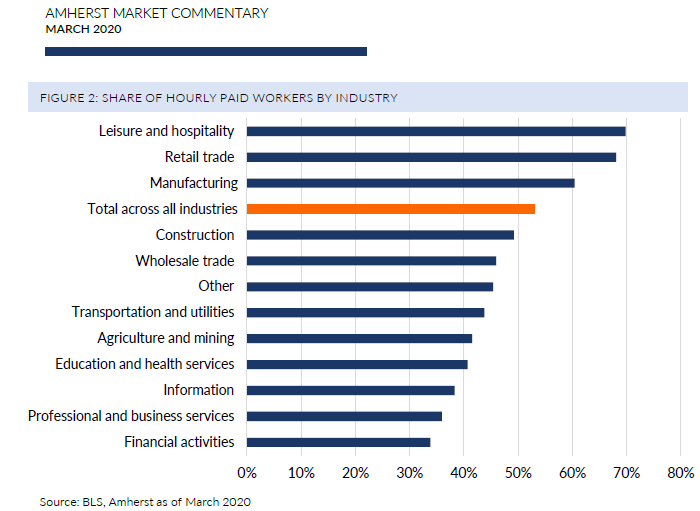
Amherst Capital Management estimates that $7 billion to $12 billion in rental payment support is needed for rental households to assist hourly workers for every month of COVID-19 related closures, according to the company’s market insights commentary release.

The economic shock of temporary business closures designed to stop the spread of the virus “will likely outrank all major crises in terms of the potential unemployment spike and how quickly it will come.”

The company said in a commentary that while no economic class will be untouched, “lower-middle-income households, mostly hourly wage workers, are likely to bear the brunt. A disproportionate share of these hourly wage workers are renters who will need support in these trying times.

“We estimate that 15 percent of all rental households will be significantly and directly affected by the pandemic-containment efforts needing $7 billion in payment support to absorb rental burden for every month of COVID-19 closures,” the company said in the release.

Rental Households May Need $7-$12 Billion a Month During COVID-19 Closures
Chart courtesy of Amherst Capital

In a greater “stress scenario,” Amherst said in the event of more broad-based job losses and furloughs “up to 26 percent of rental households might need temporary payment support totaling $12 billion.”

While leisure, hospitality and transportation industries will be affected most in the short run based on current unemployment filings, construction, retail trade and manufacturing employees are also vulnerable, the report said.

The company cited Census Bureau information from 2018, the American Community Survey, saying there are 43 million renter households in the United States paying a monthly median rent of $1,058. The same data “suggests the average annual median income of a rental household was $40,500” compared to “$78,000 for a median owner-occupied household.”

The company says the data also shows that almost half of the renter households were paying more than 30 percent of their income in rent.

Download the full report here.

Amherst Capital is a real estate investment specialist offering traditional and alternative strategies to institutional clients in the public and private real estate credit markets. Amherst Capital manages $1.8  billion of assets across private credit and public markets.

Sign Up For Our Newsletter And Get Apartment News And Helpful, Useful Content Each Week.

* indicates required


Dear Landlord Hank: Does Tenant Still Have To Move?

Ask Landlord Hank Does Tenant Still Have To Move?

In this week’s Ask Landlord Hank question he deals with a tenant who was supposed to move, but now with all that is happening cannot. Hank is a veteran property manager and landlord and strives to help other landlords and property managers. He does not offer legal advice.

Dear Landlord Hank,

I was hoping that someone there could inform me of the specific discussions that I need to have with my tenant. He was to have moved out by April 1, before the lockdown.

Now that it is in place he does not have a place to move to.

-David

Dear Landlord David,

Is it a problem to let the tenant continue to stay in the unit he has been renting, and rent for another month or two?

If he has nowhere to move and he won’t move, you will have to evict him, and that can be very problematic right now.

I hope you don’t have another set of tenants that want the unit this resident is living in, set to move in shortly.

You can ask the tenant if he is able to leave – maybe stay with family or friends, if he can’t move to where he originally intended.

This is a tough time for all of us and we need to have some compassion and understanding and willingness to help someone that is stranded, through no fault of their own.

Sincerely,

Hank Rossi

Ask Landlord Hank your questions on rental housing

Ask Landlord Hank Your Question

Ask veteran landlord and property manager Hank Rossi your questions from tenant screening to leases to pets and more! He provides answers each week to landlords.

  • This field is for validation purposes and should be left unchanged.

Visit the Ask Landlord Hank Page here

Dear Landlord Hank: Tenant Cannot Pay Rent Due to COVID-19

About the author Landlord Hank:

“I started in real estate as a child watching my father take care of our family rentals- maintenance, tenant relations, etc , in small town Ohio. As I grew, I was occasionally Dad’s assistant. In the mid-90s I decided to get into the rental business on my own, as a sideline. In 2001, I retired from my profession and only managed my own investments, for the next 10 years. Six years ago, my sister, working as a rental agent/property manager in Sarasota, Florida convinced me to try the Florida lifestyle. I gave it a try and never looked back. A few years ago we started our own real estate brokerage. We focus on property management and leasing. I continue to manage my real estate portfolio here in Florida and Atlanta. “ Visit Hank’s website here.

Sign Up For Our Newsletter And Get Apartment News And Helpful, Useful Content Each Week.

* indicates required


Oregon Landlords Ask Governor Not to Allow Forgiveness of Rent, Mortgages

forgiveness of rent letter to Oregon governor landlord group multifamilynw

The top landlord group in Oregon has written the governor asking her to “please ignore the misguided and uninformed correspondence“ from the Portland City Council letter requesting forgiveness of rent and mortgage payments due to COVID-19.

“It is critical that you understand that the city’s proposal is not only dangerous to our community in the near term, but that it would result in a cascading series of events threatening our basic economic structures,” said Deborah Imse, Executive Director of Multifamily NW, in the letter to Gov. Kate Brown.

“Most large multifamily developments are not financed through Fannie Mae or Freddie Mac. Rather, they are financed through a range of sources including investment banks, private individuals, private equity firms and public pension systems like PERS. Oregon government has neither the authority nor financial wherewithal to restructure or back these investments in the way that the city is proposing,” Imse said in the letter.

Portland City Council members have called for forgiveness of rent for residences and mortgage payments, saying a moratorium on evictions is not enough.

“Without a moratorium and forgiveness of residential rent and mortgage payments, we are putting tens of thousands of Portlanders who currently have housing at risk of becoming destitute or homeless as a result of this public health crisis,” the council said in a letter signed by Mayor Ted Wheeler and commissioners Chloe Eudaly, Amanda Fritz and Jo Ann Hardesty.

portland city council calls for forgiveness of rent for residences and mortgages.
Mayor Ted Wheeler

Portland proposal would force service cuts, layoffs at apartments

If the Portland forgiveness of rent  proposal were accepted, “Housing providers across the state will be forced to take immediate management actions to reduce expenditures to as close to zero as possible. That would mean across-the-board layoffs in leasing, resident services and maintenance staff, resulting in thousands of job losses.

“Initial steps will also include non-payment of property taxes and utility bills for water, sewer, electric and cable/internet. Given the sheer size of our industry, that would send a cascading economic shock wave through local governments, school district, power and gas utilities, and internet and cable service providers. It would force management actions within those organizations, resulting in more layoffs and a greatly exacerbated situation. It would also have dire budget consequences for police, fire, parks and other essential services,” Imse said in the letter

A suggestion to the governor to extend rental assistance

“It should be restated that we believe that the only way for the state of Oregon to preserve housing stability for families is through a dramatic short-term expansion of the Rental Assistance Vouchers program. Make no mistake about the size of this need – our industry’s initial calculations show that an infusion of $350 million per month will likely be necessary for the duration of this crisis.

“This should be your first and highest priority with regard to allocation of funds provided through the Federal CARES Act,” Imse said in the letter.

Portland City Council Calls for Forgiveness of Rent, Mortgage Payments

Oregon Governor Orders Stop to Residential Evictions for Nonpayment of Rent During Crisis


Sign Up For Our Newsletter And Get Apartment News And Helpful, Useful Content Each Week.

* indicates required


Kay Properties Being Defensive Pays Off: Avoiding Hospitality and Senior Care

Kay Properties’ clients avoid potential hospitality and senior care crash and burn

Kay Properties’ clients avoid potential hospitality and senior care crash and burn – why avoiding hospitality and senior care is the Kay Properties way

 By Alex Madden
Vice President at Kay Properties and Investments

For many years Kay Properties has taken the position that we will not offer three asset classes to Investors because they carry too high of risk to investors equity: Hospitality, Senior Care, and Oil & Gas.

While other groups have gleefully entered into some of these sectors searching for higher potential returns, Kay Properties has maintained the position that they are much too volatile, and much too risky for our client’s hard-earned investment dollars.

Instead, Kay Properties has always advocated for investors to take a potentially more defensive position by often investing in a diversified portfolio of multifamily, net lease, industrial and other offerings as well as placing an emphasis on staying in debt-free DSTs (where there is no long-term mortgage on the property) whenever possible. There are a number of DST Sponsors within the 1031 DST industry that specialize in providing debt-free DST 1031 vehicles. Many of Kay Properties clients over the years when walked through the potential pros and cons of the higher risk asset classes, feel they may be better off being potentially more defensive than entering potentially more volatile sectors like Hospitality, Senior Care, and Oil & Gas.

Kay Properties

When the COVID-19 virus began to sweep the US many sectors of the economy were hit, and chief among them were Hospitality, and Senior Care. Few could have predicted the economic impact the virus would have on the country, but as business, personal travel, and quarantines took effect the entire Hospitality sector began to be experience significant negative effects with certain hospitality offerings suspending distributions.

Another potentially high-risk asset class affected by the COVID-19 virus was Senior Living and Senior Care. With the potential for disease, increased government regulations, and potential litigation risks associated with this asset class – it was particularly affected when COVID-19 swept the country.

No one has a crystal ball, and none of us know what the future holds – however Kay Properties is grateful to have rejected these asset classes and the DST investments that sponsors brought out in them for many years and will continue to in the future. This position has not always been popular, but we have seen through multiple downturns the decisions to be defensive, go debt-free if possible, and avoid the higher-risk asset classes available in the 1031 DST industry such as hospitality, senior care and oil and gas to be a prudent decision that we are glad we made.

About Kay Properties and www.kpi1031.com

Kay Properties is a national Delaware Statutory Trust (DST) investment firm. The www.kpi1031.com platform provides access to the marketplace of DSTs from over 25 different sponsor companies, custom DSTs only available to Kay clients, independent advice on DST sponsor companies, full due diligence and vetting on each DST (typically 20-40 DSTs) and an active DST secondary market. Kay Properties team members collectively have over 115 years of real estate experience, are licensed in all 50 states, and have participated in over 15 Billion of DST 1031 investments.

This material does not constitute an offer to sell nor a solicitation of an offer to buy any security. Such offers can be made only by the confidential Private Placement Memorandum (the “Memorandum”). Please read the entire Memorandum paying special attention to the risk section prior investing. IRC Section 1031, IRC Section 1033 and IRC Section 721 are complex tax codes therefore you should consult your tax or legal professional for details regarding your situation. There are material risks associated with investing in real estate securities including illiquidity, vacancies, general market conditions and competition, lack of operating history, interest rate risks, general risks of owning/operating commercial and multifamily properties, financing risks, potential adverse tax consequences, general economic risks, development risks and long hold periods. There is a risk of loss of the entire investment principal. Past performance is not a guarantee of future results. Potential cash flow, potential returns and potential appreciation are not guaranteed.

Securities offered through WealthForge Securities, LLC. Member FINRA / SIPC. Kay Properties and Investments, LLC and WealthForge Securities, LLC are separate entities.

Kay Properties Delaware Statutory Trust Investing Across Market Cycles

Delaware Statutory Trust Investing Across Market Cycles

Investing In Net Lease Properties Via Delaware Statutory Trusts

COVID-19: Landlord/Tenant Law in the Age of Global Pandemic

andlord tenant law and covid-19

By Bradley S. Kraus
Attorney at Law, Warren Allen, LLP

Much like everything else in the world, the relationship between landlords and tenants changed dramatically with the arrival of the COVID-19 pandemic.

For the first time, I received questions about things like, “How to handle individuals who appear ill/have COVID-19?” and whether landlords should call the police on said individuals.

Those questions are unsurprisingly more nuanced then they otherwise would be, due to the pandemic and all. To say that COVID-19 has caused – and will continue to cause – panic and uncertainty is an understatement.

From a health prospective, you can imagine that the ORLTA (Oregon Residential Landlord and Tenant Act) is devoid of guidance on handling matters related to a pandemic. I have learned that following Centers for Disease Control and Prevention (CDC) guidelines is likely the best bet for landlords. Signage related to handwashing and social distancing is more than appropriate. If a landlord sees someone openly violating Gov. Kate Brown’s stay-home order or policies related to social distancing, the police want you to call the non-emergency hotline. Finally, if a tenant reports that they are positive for COVID-19, such a situation presents significant issues requiring coordination/cooperation that are beyond the scope of this article but necessitate legal counsel.

From a legal perspective, COVID-19 brought many changes to landlord/tenant law, enacted under emergency powers many had no idea existed. After the emergency was announced, landlord/tenant law morphed into a patchwork of laws that seemed to evolve daily. Shortly thereafter, orders from courts postponing hearings and trials were abundant, with some matters being postponed several months into the future. Meanwhile, the defendants in those actions likely continue to not pay rent—and keep in mind, many of these hearings were set long before any COVID-19 issues.

Landlord tenant law and covid-19

The most recent nail in the coffin occurred on April 1, when Gov. Brown signed Executive Order 20-13. This new order prohibits landlords from serving, filing evictions on, or enforcing any notice for non-payment, with “non-payment” also including enforcing any no-cause notice served pursuant to ORS 90.427. Alas, these actions effectively leave landlords holding the bag for fiscal issues related to the pandemic, to which many elected officials are turning a blind eye.

With access to the courts effectively prohibited for months at this point, many have asked what they should do considering the constant barrage of bad news.

First, making payment arrangements and/or accepting partial payments from your tenants is likely now an option, where before it may not have been. In some instances, that partial payment may be the last penny you receive for some time. Before doing so, seek competent counsel regarding the effects of doing so.

Next, keep in mind that the COVID-19 moratoria do not apply to conduct-based notices or evictions. Accordingly, if you have troublesome tenants, your remedies are still intact.

Finally, many have asked what to make of calls for a “rent strike” and news that draft ordinances are circulating that would legalize the waiver of rent due to COVID-19. To put it bluntly, there is no legal basis for a “rent strike” or a complete refusal to pay rent. Certain moratoria currently in place provide a deferral in some cases, but that rent remains due. As to legalization of rent waivers for tenants without sufficient protection for landlords, I’m hopeful that common sense will prevail and that such legislation will not be enacted, either at the state or local level.

As of this writing, no legislation has been enacted. Should it be enacted, I would imagine legal challenges would quickly follow.

Governor Brown’s shelter-in-place order and her newest executive order may signal the beginning of the COVID-19 storm from many a landlord’s perspective.

However, you’ve weathered a myriad of storms in the last few years: the enactment of Senate Bill 608, (several) Portland ordinances, and other anti-landlord laws. Still, we’re all still standing, and we’ll weather this storm together.

landlord tenant law and covid-19
Bradley Kraus, Portland attorney

kraus@warrenallen.com
503-255-8795

Allowable Fees Under The Landlord Tenant Act

New Year, New Laws: A Brief Overview of the Newest Landlord/Tenant Legislation

For more landlord tenant law and covid-19 information sign up for our newsletter below

Sign Up For Our Newsletter And Get Apartment News And Helpful, Useful Content Each Week.

* indicates required


Portland City Council Calls for Forgiveness of Rent, Mortgage Payments

https://rentalhousingjournal.com/portland-city-council-calls-for-forgiveness-of-rent-mortgage-payments/

Portland City Council members have called for forgiveness of residential rent and mortgage payments, saying a moratorium on evictions is not enough.

“Without a moratorium and forgiveness of residential rent and mortgage payments, we are putting tens of thousands of Portlanders who currently have housing at risk of becoming destitute or homeless as a result of this public health crisis,” the council said in a letter signed by Mayor Ted Wheeler and commissioners Chloe Eudaly, Amanda Fritz and Jo Ann Hardesty.

“While local and statewide moratoriums on residential and commercial evictions were a vital step to stabilize renters, we need further action at the state and federal levels to stem the tide of evictions, foreclosures, and bankruptcies that will occur without further intervention.

“Individuals and businesses whose income or expenses have been substantially impacted by COVID-19 need forgiveness of all residential and commercial rent and mortgage payments for the duration of this emergency,” the letter said.

forgiveness of rent letter to Oregon governor landlord group multifamilynw
Oregon Landlords Ask Governor Not to Allow Forgiveness of Rent, Mortgages

Half of Portland residents are renters

About half of Portland residents are renters, and “those who defer rent payments may accumulate significant personal debt and those who are unable to repay may ultimately face eviction,” the council said in the letter.

And for homeowners, despite the forbearance for federally backed loans, they “will continue to accrue normally scheduled fees, penalties, and interest, which they will still owe with the deferred payments after the forbearance period is over. Additionally, we have become aware that many lenders are not offering reasonable repayment plans,” the letter said.

The council letter said Portland businesses face rent and mortgage payments without the operating revenue to pay their expenses and risk financial collapse.

“We thank the governor for her recent executive order announcing a 90-day moratorium on commercial evictions and urge forgiveness of commercial rent and mortgage payments.

“Portland City Council stands in solidarity with renters, homeowners, and business owners struggling to stay in place during this time of crisis.

“We hear the concerns raised by so many of our constituents and call on our fellow elected officials at the state and federal levels to take action: Forgive all rent and mortgage payments for renters and businesses whose income or expenses have been substantially impacted by COVID-19,” the council said in the letter.

Resources:

Portland officials call for waiving rent, mortgage payments due to coronavirus

Letter from Portland City Council to state and federal official partners

Portland, Multnomah County Sign Emergency Order Suspending Evictions

Sign Up For Our Newsletter And Get Apartment News And Helpful, Useful Content Each Week.

* indicates required


Rent Increases Slowed in March as COVID-19 Impact Appears

Rent Increases Slowed in March as COVID-19 Impact Appears

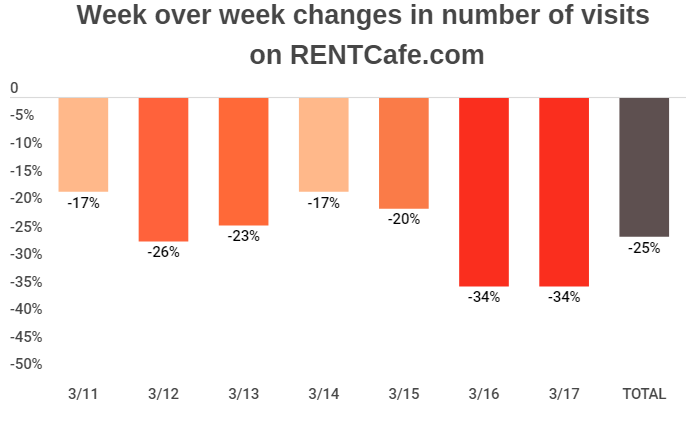
Rent increases slowed in March and “for the first time since 2016, we see a deceleration from February to March, when the rental season is supposed to kick off,” RentCafe says in their latest report.

The report says the rent slowdown was seen in 60 percent of the cities in the survey as the coronavirus pandemic “is beginning to take its toll on the economy and the apartment market.”

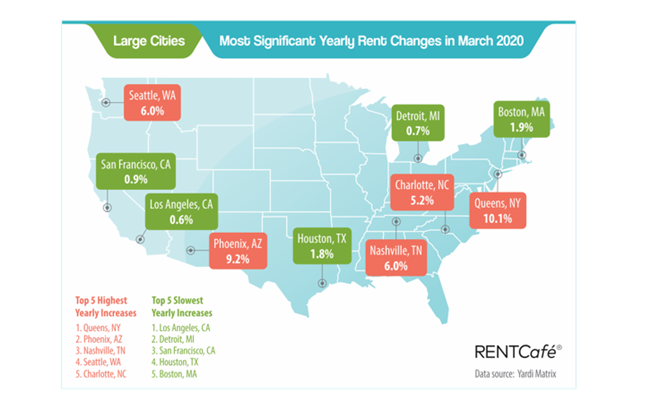
The March rent figures are in and, as expected, “they paint a different picture of the current rental market. Still showing positive growth, the national average rent ($1,474) went up by 2.9 percent, a hard drop compared to February’s 3.2 percent rise, the report from RentCafe says.

“The data has yet to reflect the full impact of COVID-19,” said Doug Ressler, Manager of Business Intelligence at Yardi Matrix, in a release.

“We are monitoring both proprietary and publicly available data on a real-time basis in an effort to forecast the evolution of rents going forward. We expect the impact of coronavirus to last three to six months, before a steady recovery boosts the economy once again.”

A decrease in searches for apartments

Rent Increases Slowed in March as COVID-19 Impact Appears

The report says under normal circumstances, interest for apartments goes up this time of year, and rent prices would be expected to pick up speed in March.

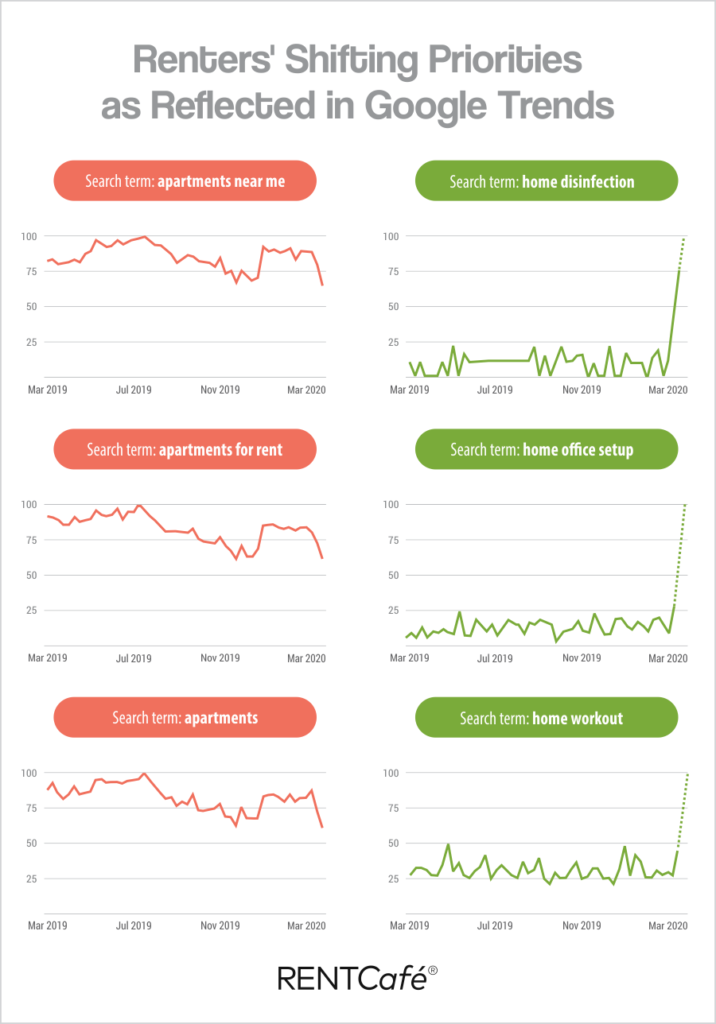
“But as more and more states urge social distancing, both landlords and residents have begun seeing the effects of the pandemic. Google Trends shows a decrease in searches for apartments, as interest in other home-related subjects — such as home disinfection or home office setups — has skyrocketed.”

Rent Increases Slowed in March as COVID-19 Impact Appears

Los Angeles and Atlanta show declines

About 75 percent of the nation’s renter mega-hubs saw slower yearly rent increases in March than in February, in line with the national trend.

Los Angeles displayed the weakest year-over-year rise, 0.6 percent, posting a $2,499 average rent.

Atlanta rents rose the second slowest, increasing by 1 percent since March 2019, followed by Orlando apartment prices, up 1.6 percent.

Renters Still Optimistic About Finding New Apartments

Sign Up For Our Newsletter And Get Apartment News And Helpful, Useful Content Each Week.

* indicates required


How To Handle Rental Maintenance During COVID-19
How To Handle Rental Maintenance During COVID-19

How to handle rental maintenance, along with personal protective wear and equipment, was covered by Paul Rhodes, National Safety and Maintenance Instructor at the National Apartment Association Education Institute, during a recent video.

Rhodes said in handling rental maintenance during COVID-19 the first thing in dealing with maintenance in our communities is that “everybody’s on the same page.

“I think that what we should be starting with is clear, consistent communication with our residents.”

Rental maintenance and communication with residents

“First, let’s make sure that we send out information to our residents, letting them know that we’re here,” Rhodes said. “We are still here to provide service that is expected because ultimately we’re looking to make sure that both our technicians, our buildings, and our residents are all being safe.

It might be a good idea to remind residents that if they call for service, we are going to be coming from other apartments and that we will be taking appropriate precautions.

It’s also a good opportunity to spread more good information. In other words, give the CDC latest guidance webpages or information, plus if there’s any local resources that our city or County or municipality has and can provide for our residents.

Fire, flood and blood emergencies

We want to make sure that our residents are aware of the fact that we are going to respond to an emergency, Rhodes said.

“As far as what constitutes an emergency that’s going to change community to community, or management company to management company, but the ultimate slang saying of fire, flood, and blood still does apply.

“Be sure that it’s clear what we’re going to be responding for and any phone calls, or email messages, or anything like that that comes in, we’re going to do and attend to as quickly as possible,” he said.

A good time for cross training for office and maintenance

How To Handle Rental Maintenance During COVID-19

Paul Rhodes, National Safety and Maintenance Instructor at the National Apartment Association Education Institute said, “We want to make sure that our residents are aware of the fact that we are going to respond to an emergency.

Right now a lot of communities are experiencing some different working hours and different staffing levels with people working from home or more remote work occurring.

“Be sure that maintenance is familiar with the important aspects of procedures regarding a lease document. For instance, what are the lockout procedures that we are to go through to make sure that we do everything properly?

“If maintenance receives a message from a resident, or from a prospective resident, make sure that maintenance knows exactly the correct information to have on hand and what details are important and which ones aren’t.

“In much the same way that maintenance needs to train the office for service requests when we receive those, what all that important information is. What we’re looking for here is to make sure that everybody presents a consistent message, a consistent communication.

In the case of the office, “make sure that they know not only where important things, like cutoff valves, are located, but also how they work.

“When you turn a gate valve, you will have to turn that knob multiple times in order to shut off the water, but if it’s a ball valve, you only turn that a quarter of a turn.

“Be sure that the office, when they answer the phone, knows the practices, common communication skills for how to reset a breaker, a ground fault circuit interrupter, or a garbage disposal.

“This is also a good time for the entire office staff, and maintenance staff, to make sure that we have updated contact information and that everybody’s on the same page about who to contact in the event of what particular situation,” Rhodes said.

Gloves and personal protective equipment

In the precautions “we’re suggesting for maintenance include gloves. It’s a good idea to put them on in front of the resident, that way they know they’re fresh and know that we’re not using a leftover from different tasks or different areas,” Rhodes said.

Personal protective equipment for maintenance is important and can extend to everyone on staff. “Washing hands is the most important thing that we can do to prevent the spread of what is happening. And it’s a good idea to do it regularly. Make sure and follow all the guidance for at least 20 seconds using soap,” Rhodes said.

“Gloves should be used. A new pair for each apartment and task. Make sure that you order more before you run out. Yes, suppliers now are reporting that they are very, very short on stock. However, they will be getting resupplied.

“Be sure if you’re not familiar with the proper donning and doffing procedure, that’s just a name for putting gloves on and taking them off in a proper method, so that we’re not cross contaminating ourselves or our work areas.”

Be sure we keep our work areas good and clean. Not only that, even the World Health Organization (WHO) is talking about the fact that using gloves is not a perfect system. Washing your hands is more important than using gloves, and hand sanitizers should not be viewed as a replacement.

Wearing masks

Rhodes said, “Masks should not be used unless you’re a caregiver, or you are infected, or there’s a worry of you being infected.

“Those guidelines come directly from the CDC and the WHO. And a little side note, for those of us that happen to have a little bit of facial hair, if you are looking to wear a mask, if you have facial hair, they don’t do much other than make you look a little bit silly.”

Shoe covers

He said shoe covers are “wonderful items” as long as they apply to what you are doing. “If we’re going to go into a resident’s apartment and we have to get up on a ladder or we end up standing on a surface that is slippery or slick, shoe covers may actually provide more danger than then what they solve, or what they prevent from occurring.”

Is it an emergency? Can we solve this with a phone call?

How about some considerations or things to look at for all service requests, whether it’s an emergency or urgent?

When a resident calls maintenance the question should be asked, “Can we solve this with a phone call? In other words, can I talk the resident through a self-repair or self-care? What about our policies for suspending non-essential repairs? And what are we going to tell residents as far as a speed or a response that is going to occur?”

Entering the resident’s home

Maintenance should be aware of the fact that when we do go into somebody’s home right now with as many schools being closed, children are going to be home during the day.

“That means that when we go into a resident’s apartment and we’ve got tools and all of our working in working conditions, kids will be around. Please be aware of safety in the extra trip hazards that tools can have.”

Also since many residents are now working from home, maintenance needs to be aware that “noise or distractions for them may add extra stress. “

He said to remember the maintenance staff in this time of stress is “even more the face of  our management companies, our staff, our working family. And in this time of increased stress, smile. It’s very possible you could be the only outside person that a quarantined family, or a family that is staying safe in place, gets to see.

“We’re going to make it through this together and we can serve that purpose for our residents and for our communities.

“Ultimately, stay home if you’re sick. We don’t want to contaminate or we don’t want to contaminate our work environment or get anybody else sick that we’re around, especially carrying it back home to our families,” Rhodes said.

The NAA said in the release for more information on this topic and others related to COVID-19, view our coronavirus resources and guidance page where new resources and information is updated daily.

In addition, the NAA said they have a new email address, cv19questions@naahq.org. “Please feel free to send any questions, comments, or concerns you have to that email address and they will be addressed as soon as possible.”

6 Actions Landlords Can Take to Support Residents Now

Sign Up For Our Newsletter And Get Apartment News And Helpful, Useful Content Each Week.

* indicates required


Activist Group Threatens Rent Strike In Portland

Seattle Landlords Concerned About Possible Rent Strike

A group of local activists is advocating a rent strike in Portland for April rather than following the guidelines set out by the Portland Housing Bureau to notify landlords in advance if they cannot pay rent, according to reports.

A  campaign organized by local activists is calling on a large number of people to refuse to pay rent in April—even if they can afford it—as a way to protest the government’s decision to delay rent payments instead of erasing them entirely, according to the Portland Mercury.

The activist group has created a website and flyers, which say, “We cannot afford to pay our rent on April 1st. We will not be able to afford to pay it retroactively. Portland is made of hard-working residents who can barely afford their rent under normal circumstances, let alone in this crisis,” the group says on the website pdxrentstrike.info.

“We demand therefore that all Portland metro area rents be suspended immediately until the COVID-19 crisis passes, until there are tests that show this is no longer a threat posed to all of our communities.

“However, the gvernment is ignoring our need for a rent suspension. As a result, we are escalating to a rent strike. Strike with us, keep your rent on April 1st!”

Attorneys have indicated there is no legal basis for a rent strike. Accordingly, any tenant who tries to rent strike could face eviction, and a hefty attorney fee bill, much like an attempted rent strike in Portland two years ago.

The Portland Housing Bureau has provided documentation that tenants are supposed to notify landlords ahead of time when rent is due that they cannot pay.

What circumstances qualify for rent deferral?

“If a tenant has substantial loss of income resulting from the COVID-19 pandemic and notifies their landlord on or before the day that rent is due that they cannot make such a payment, they qualify for rent deferral under this moratorium,” the Portland Housing Bureau says.  The residential rental property needs to be within the legal limits of the city of Portland or Multnomah County.

If I am a tenant and cannot pay my rent, what do I need to do?

To establish eligibility for this moratorium, affected tenants must:

“Demonstrate substantial loss of income, through documentation or other objectively verifiable means, due to job loss, reduction in work hours, business closure, school or daycare closure causing missed work to care for a minor child, missed work to care for self or a family member that was ill, or similar causes of lost income due to the COVID-19 pandemic;

“And notify their landlords on or before the day that rent is due that they are unable to pay rent due to substantial loss of income as a result of the COVID-19 pandemic,” the Portland Housing Bureau says.

Meanwhile another group, Portland Tenants United, is asking for rent amnesty for April.

“All housing-related payments due in or for April must be waived without penalty or qualification. Where this is not possible by local mandate or because of financial hardship, landlords and homeowners may apply for assistance created in part I(D), the group says.

The group wants the April amnesty to include:

  • Rent payments
  • Mortgage payments
  • Utility payments
  • Any fines and fees owed to city or county courts

“A moratorium is a good start,” PTU spokesperson Allie Sayre told the Portland Mercury. “But a six-month payment plan is not realistic for tenants.” Sayer said that expecting low-income renters to be able to repay rent in the future—on top of their regular rent payments—is just delaying a financial crisis.

Resources:

Multnomah County/City of Portland COVID-19 Eviction Moratorium | FAQ

A Portland Tenant’s Guide to Legally Withholding April Rent

Rent Strike! Don’t pay your rent on April 1st!

Portland, Multnomah County Sign Emergency Order Suspending Evictions

Sign Up For Our Newsletter And Get Apartment News And Helpful, Useful Content Each Week.

* indicates required


Activist Group Threatens Rent Strike In Portland
Photo credit SandraMatic via istockphoto