Home Blog Page 107

Landlords Helped Renters During Pandemic, Survey Shows

Landlords Helped Renters During Pandemic, Survey Shows

Property owners and landlords helped renters with eviction-mitigation efforts and offered solutions for residents facing financial hardships during the COVID-19 pandemic, according to a new survey from the National Multifamily Housing Council (NMHC).

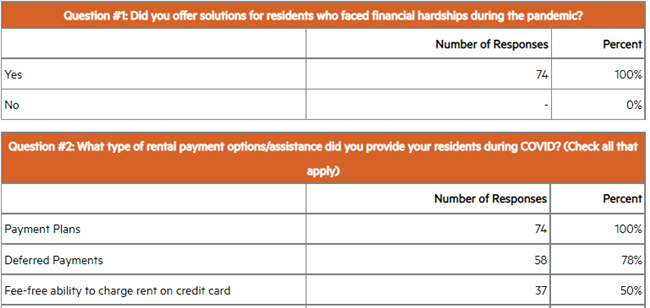
The NMHC Pulse Survey on Eviction Mitigation Practices ran from July 19 to July 26, with 74 leading multifamily firms responding.  Landlords helped renters and the most widely offered assistance options included:

  • Payment plans – 100 percent
  • Waived late fees – 96 percent
  • Deferred payments – 78 percent
  • Extended, shortened or other changes to lease terms – 58 percent
  • Cash for keys – 54 percent
  • Fee-free ability to charge rent on credit card – 50 percent

The survey also asked what additional steps firms took to support residents during the pandemic:

  • Increased cleaning and sanitation – 95 percent
  • Connecting residents with food banks, charities, and other local support resources – 86 percent
  • Informing residents of healthcare protocols and best practices – 86 percent
  • Hosting virtual social or exercise events – 57 percent
  • Creating on-site services at communities to support residents – 50 percent
  • Made it easier to work from home – 49 percent

Landlords Helped Renters During Pandemic, Survey Shows

“At the onset of the pandemic we issued a call to our industry to halt evictions, create payment plans and work with residents as they faced this unprecedented hardship. The new data demonstrate how both the multifamily industry and residents alike made monumental sacrifices to meet their obligations during this crisis,” said NMHC President Doug Bibby in a release.

“As we transition away from these emergency pandemic orders, we ask apartment firms to continue their efforts to work with residents during this wind-down period,” Bibby said.

The full survey results are available here.

Sign Up For Our Newsletter And Get Rental Property And Apartment News And Helpful, Useful Content Each Week.

* indicates required


Average National Monthly Rent Tops $1,500 For 1st Time

Will You Be Ready When the Eviction Moratorium Ends?

Strong Multifamily Performance Will Continue In 2nd Half Of 2021

Strong Multifamily Performance Will Continue In 2nd Half Of 2021 and multifamily rent growth

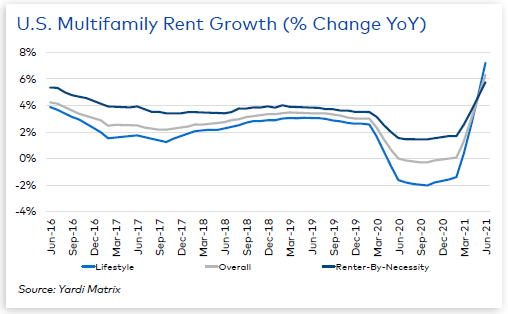
The first half of this year saw outstanding rent growth in multifamily rental properties and while that is probably not going to be sustained, strong multifamily performance will continue in the second half of 2021, according to Yardi Matrix.

In their summer report for 2021 entitled “Multifamily Emerges Strong from the Pandemic,” the company  says that while rent growth seen in the first half of 2021 cannot continue indefinitely, “conditions for above-average growth in these metros (southwest and southeast) are likely to persist for months. With rents increasing by almost double digits in many markets on a year-over-year basis, the cost-of-living gap between what have been considered “lower-cost cities and gateway markets is starting to narrow.”

The rapidly growing tech hubs of Phoenix, Las Vegas, Atlanta and Tampa show that, “People migrating into these cities can afford the large price increases. But longtime residents are deeply affected by the accelerated rent growth,” Yardi Matrix says in the report.

Strong Multifamily Performance Will Continue In 2nd Half Of 2021
Chart courtesy of Yardi Matrix.

Why conditions for continued growth are strong

  • Pent-up demand and the recovering economy have produced robust rent growth this spring.
  • The U.S. economy is growing at its fastest rate in decades, as progress with the COVID-19 vaccine has allowed people to resume normal activities.
  • Potential headwinds include rising inflation and whether employees can find enough workers.
  • Many secondary markets continued to post dazzling increases, and gateway markets such as New York and San Francisco are rapidly rebounding from the pandemic.
  • New apartment supply, which dipped only moderately during the pandemic, is expected to bounce back to about 334,000 units in 2021.
  • Capital markets remain one of the strongest aspects of the multifamily business.

While the economy is coming back, employment and labor participation are still lagging, especially in the service sectors that were hit hard by the pandemic, the report says.

New apartment construction is particularly affected by supply-chain issues and challenged with dramatically rising steel, lumber and copper prices; copper and lumber prices have more than doubled from this time last year. “Not only is demand for building materials coming back in full force but pandemic restrictions are making it more difficult to obtain them,” the report says.

Strong Multifamily Performance Will Continue In 2nd Half Of 2021 with multifamily rent growth
New apartment construction is impacted by rising lumber prices and supply chain issues.

“Volatility is likely to continue for a few years as the world fights to contain the virus, until global vaccine implementation allows economies to fully recover and return to pre-pandemic stability. However, that does not mean there won’t be strong economic growth in certain sectors and geographies in the short term,” Yardi Matrix says in the report.

Get the full Yardi Matrix report here.

About Yardi Matrix:

Yardi Matrix researches and reports on multifamily, office and self-storage properties across the United States, serving the needs of a variety of industry professionals. Yardi Matrix Multifamily provides accurate data on 18+ million units, covering more than 90 percent of the U.S. population. Contact the company at (480) 663-1149

Strong Multifamily Performance Will Continue In 2nd Half Of 2021 as multifamily rent growth continues

Sign Up For Our Newsletter And Get Rental Property And Apartment News And Helpful, Useful Content Each Week.

* indicates required


Average National Monthly Rent Tops $1,500 For 1st Time

Will You Be Ready When the Eviction Moratorium Ends?

Everything Landlords Should Know About Emotional Support Animals

The Case Study of a 1031 DST Specialist

The Case Study of a 1031 DST Specialist

By Steve Haskell
Vice President at Kay Properties and Investments

There are various strategies when using DSTs (Delaware Statutory Trusts) in a 1031 exchange. Some investments are as easy as a simple exchange from one property into a single DST. Other times DST’s are used to invest leftover equity from an exchange so the investor is not taxed on leftover funds, called “boot”. Investors will routinely use DSTs as a backup ID in case their target replacement property doesn’t work out. And occasionally, Kay Properties will assist an exchanger to utilize all said strategies in one sophisticated effort to mitigate risk and defer as much tax as possible. Read on for the experience of a highly skilled 1031 DST specialist.

A real estate investor sold an investment property for approximately $2M.  Roughly 25% of his property was leveraged. Therefore, $1.5M was sitting in his qualified intermediary account. He then contacted Kay Properties to pursue a partial 1031 DST exchange. The exchanger wanted to purchase a property on his own, but something smaller and easier to manage than the property he recently sold. He wanted to put part of his exchange into a completely passive DST option that would require no management on his part. The DST part was relatively easy. However, he was having a hard time finding a replacement property to own outright, and the 45-day clock was ticking. Kay Properties created a multifaceted strategy that supported the investor from a variety of angles.

First, the exchanger used the debt built into the DST to replace his mortgage. The Kay Properties representative created a DST portfolio for the investor with a loan-to-value of approximately 50% to match the exact debt required to satisfy the 1031 exchange regulation. The debt was non-recourse, meaning the investor did not need to apply or sign for the loan, nor did it show up on his personal balance sheet. This freed him up to purchase a smaller property to own outright without taking out a mortgage, which increased his probability of closing.

Next, the exchanger used a DST as a backup ID in case the target property did not work out. The due diligence period on the replacement property extended past the 45-day period. If inspections exposed an issue that compromised the deal, the exchanger would be vulnerable to over hundreds of thousands of dollars in taxes. However, since the Kay Properties representative advised the client to use a DST as a backup ID, the exchangers risk of a failed exchange was significantly mitigated.

Finally, Kay Properties assisted the investor to ensure there was no leftover equity by using the DST to invest the leftover boot. After the exchanger and the seller agreed on a price, he realized there was approximately $50,300 of exchange funds left over. Kay Properties found a DST to invest that exact amount to finish up the exchange.

When one has the knowledge and the assistance of a skilled DST 1031 specialist, an investor can mitigate risk and protect themselves from a failed exchange in a variety of ways. Through the assistance and guidance of Kay Properties, the exchanger in this case split funds into both DSTs and his own property, replaced his debt with a non-recourse loan, protected his exchange with a backup ID, and took care of the leftover boot. These high level DST skills often are not available to investors who choose to work with unaware financial planners with little-to-no understanding of real estate, 1031 exchange strategies and DST investments. Fortunately, the client was working with Kay Properties. If you are interested in learning more on how to use a DST to mitigate risk and defer taxes in your 1031 exchange, contact Kay Properties by registering at www.kpi1031.com.

About Kay Properties and www.kpi1031.com

 Kay Properties is a national Delaware Statutory Trust (DST) investment

firm. The www.kpi1031.com platform provides access to the marketplace of DSTs from over 25 different sponsor companies, custom DSTs only available to Kay clients, independent advice on DST sponsor companies, full due diligence and vetting on each DST (typically 20-40 DSTs) and a DST secondary market.  Kay Properties team members collectively have over 115 years of real estate experience, are licensed in all 50 states, and have participated in over $21 Billion of DST 1031 investments.


This material does not constitute an offer to sell nor a solicitation of an offer to buy any security. Such offers can be made only by the confidential Private Placement Memorandum (the “Memorandum”). Please read the entire Memorandum paying special attention to the risk section prior investing.  IRC Section 1031, IRC Section 1033 and IRC Section 721 are complex tax codes therefore you should consult your tax or legal professional for details regarding your situation.  There are material risks associated with investing in real estate securities including illiquidity, vacancies, general market conditions and competition, lack of operating history, interest rate risks, general risks of owning/operating commercial and multifamily properties, financing risks, potential adverse tax consequences, general economic risks, development risks and long hold periods. There is a risk of loss of the entire investment principal. Past performance is not a guarantee of future results. Potential cash flow, potential returns and potential appreciation are not guaranteed.

Securities offered through Growth Capital Services, member FINRASIPC, Office of Supervisory Jurisdiction located at 582 Market Street, Suite 300, San Francisco, CA 94104.

6 Reasons To Sell The Income Property You Love And How To Avoid Taxes When You Do

NAA Sues to Recover Money Landlords Lost During Eviction Moratorium

NAA Sues to Recover Money Landlords Lost During Eviction Moratorium

The National Apartment Association has filed suit in U.S. Court of Federal Claims to recover damages on behalf of landlords and rental housing providers who have suffered severe economic losses under the U.S. Centers for Disease Control and Prevention’s (CDC) federal eviction moratorium, according to a release.

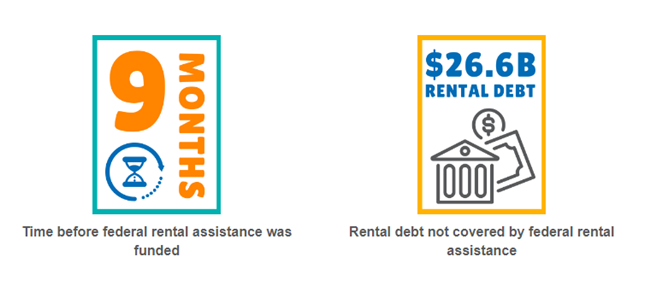
Though the federal government has allocated roughly $47 billion in federal rent relief in combined December 2020 and March 2021 legislation, “it took more than nine months for Congress to do it. This prolonged inaction, paired with a sluggish rollout and the CDC eviction moratorium, has allowed rent debt to continue to balloon – devastating the industry in the short-term and fueling the housing affordability crisis, to the detriment of the broader economy, in the long-term.”

Saying the eviction moratorium has “saddled renters with crippling debt,” Bob Pinnegar, NAA President and CEO, said in the release that the eviction ban “has jeopardized not only the availability, but also the future cost of rental housing. NAA is standing up for an industry – and its residents – that are left holding the bag on $26.6 billion in rental debt after operating under extreme conditions for 16 months.

“The government has intruded into private property and constitutional freedoms, and we are proudly fighting to make owners whole and ensure residents’ debt is wiped from their record,” Pinnegar said.

Apartment owners and operators “have continued good-faith operations throughout the COVID-19 pandemic and are now left to shoulder $26.6 billion* in debt not covered by federal rental assistance.”

The suit, NAA et al. v. The United States of America, argues that the CDC order has curbed several rights under the U.S. Constitution, including: the right to access the courts, the freedom to contract with others absent government interference, the right to demand compensation when property is taken by government action, and the limits of federal government power.

“With little hope of receiving additional federal assistance, NAA is seeking to limit the loss borne by rental housing providers and, ultimately, clear the debt records of their residents. Doing so will help secure the long-term health of the rental housing industry and ensures households across the income spectrum have continued access to rental housing,” the release says.

NAA is represented by two firms, Dorsey & Whitney and the law office of John McDermott.

This lawsuit is open to all rental housing providers who operated under the federal moratorium and who have been damaged by the CDC eviction moratorium. For more information about the lawsuit, please visit here.


*$57.3 billion in rent debt at the end of 2020 (Urban Institute) + $8 billion in Q1 2021 (Mortgage Bankers Association) + estimated $8 billion in Q2 2021 (MBA, Q2 numbers expected soon) – just under $47 billion in allocated rental assistance = $26.6 billion in unfunded rent debt (and climbing).

Sign Up For Our Newsletter And Get Rental Property And Apartment News And Helpful, Useful Content Each Week.

* indicates required


Average National Monthly Rent Tops $1,500 For 1st Time

Three Reasons Investors Prefer Real Estate

Three Reasons Real Estate Investors Prefer Real Estate Ashcroft Capital

By Evan Polaski
Ashcroft Capital

Two common forms of investment strategies that smart investors use to grow their wealth with passive income include creating a diversified portfolio of stocks and investing in real estate. While investing in the stock market is beneficial for numerous reasons, investing in private market properties like multifamily provides several advantages.

Here are three important reasons why some investors prefer multifamily private placement investments over stock market investments.

#1. Lower Volatility

Stocks can have a volatility that’s not found with most private placement offerings. Real estate provides a long-term cash flow provides passive income and the promise of appreciation (1).

The stock market is particularly vulnerable to several different forms of risk, which include economic, inflationary, and market risks. This volatility can occur because of company-specific or geopolitical events. The real estate market across the U.S. has been strong for more than a decade. Since 2010, the national housing market added $11.3 trillion in value – a more than 50% increase (4).

#2. Your Gains Can Be Deferred

If you sell a property that you’ve invested in and put the proceeds towards purchasing a similar property, your capital gains taxes can be deferred to a later date, which is called a 1031 tax-deferred exchange (3). During this process, a qualified intermediary will hold the proceeds from the sale until the money can be transferred to the other property’s seller. Engaging in a 1031 allows you to avoid the 15-20% long term capital gains tax rate (5).

#3. Can Be Used As Hedge Against Inflation

Over time, the value of a dollar increases as a result of inflation. While the value of currency will invariably increase over time, the rate of inflation isn’t always consistent. As inflation rises, the cost of everything goes up, including real estate (2). When property values increase, the property owner can charge more for rent, which ensures a higher revenue stream. By keeping pace with inflation, you gain an advantage that is difficult to obtain with stock market investments.

It’s never too early to start generating passive income. Placing some of your money into multifamily private placements could help you balance your portfolio and reduce the potential for losses. To assist you on this journey, download this free 20-page guide to Understanding Real Estate Private Placements.

  1. Reasons to Invest in Real Estate vs. Stocks
  2.  “How Buying a House Can Hedge Against Inflation.”
  3. Internal Revenue Service. “IRS 1031 Exchange.”
  4. Recovery Added $11.3 Trillion to U.S. Housing Value in the 2010s.
  5. 1031 Exchange Rules: What You Need to Know.”

DISCLAIMER: Ashcroft Capital LLC is not an investment adviser or a broker-dealer and is not registered with the U.S. Securities and Exchange Commission. The information presented in this email should not be used as the sole basis of any investment decisions, nor is it intended to be used as advice with respect to the advisability of investing in, purchasing or selling securities, nor should it be construed as advice designed to meet the investment needs of any particular person or entity or any specific investment situation. Nothing in this advertisement constitutes legal, accounting or tax advice or individually tailored investment advice. The reader assumes responsibility for conducting its own due diligence and assumes full responsibility of any investment decisions.

About the author:

Evan Polaski
Investor Relations Manager
evan@ashcroftcapital.com

Bill Kay New Managing Director of Ashcroft Capital Markets

Multifamily Jobs In Apartment Sector Strong in Second Quarter 2021

Multifamily Jobs In Apartment Sector Strong in Second Quarter 2021

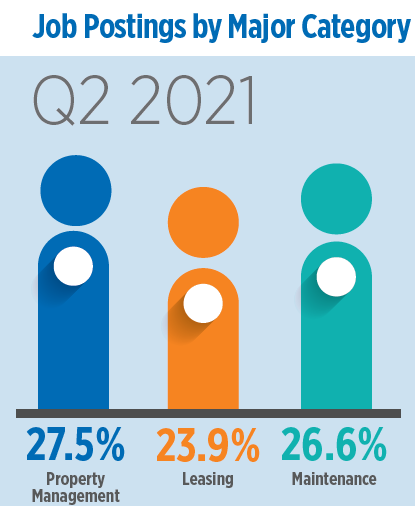
The number of real estate multifamily jobs in the apartment sector continues to grow, as more than 37 percent of  vacant real estate openings in the United States were in the multifamily sector during the second quarter of 2021, exceeding the five-year average of 33.2 percent, according to the latest report from the National Apartment Association (NAA).

“As the apartment market continued its recovery during the second quarter with surging rental rates and occupancy high, the demand for multifamily professionals stood strong,” the NAA’s Educational Institute said in the quarterly jobs report.

Renter demand for apartments climbed considerably because of the recovering economy,” the report said. “According to RealPage, annual units absorbed reached 496,542 during the quarter. Solid apartment demand fueled rent growth, in turn allowing multifamily companies to hire additional professionals. As of June, effective asking rent increased 6.3 percent year-over-year, recording the largest annual rent growth since early 2001.”

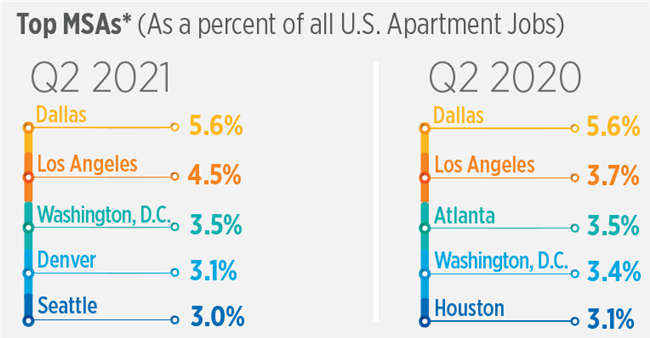
Property management, leasing, and maintenance job openings declined year-over-year, yet administrative positions increased by 1.1 percent. Dallas, Los Angeles, Washington, D.C., Denver, and Seattle ranked highest for apartment job demand.

Multifamily Jobs In Apartment Sector Strong in Second Quarter 2021

Student housing slow in preleasing

For the student-housing sector, job openings were most prevalent in Austin, Columbus, Gainesville and Tallahassee.

Leasing consultants were the most sought-after position by employers, despite a decline in preleasing activity. According to Yardi Matrix, as of April, “preleasing for the fall 2021 semester is trailing prior years. Preleasing stood at 58.6 percent, 4.2 percent below the same time last year and 5.8 percent lower than 2019. As more students become fully vaccinated, preleasing rates are expected to improve,” the report said.


Sign Up For Our Newsletter And Get Rental Property And Apartment News And Helpful, Useful Content Each Week.

* indicates required


Average National Monthly Rent Tops $1,500 For 1st Time

Will You Be Ready When the Eviction Moratorium Ends?

Everything Landlords Should Know About Emotional Support Animals

Crazy Landlord Times; Are We Near the End?

As landlords we know these are crazy times and we may not be near the end, so here are 5 critical resources landlords should use in these crazy landlord times from veteran real estate investor and property manager David Pickron.

As landlords we know these are crazy times and we may not be near the end, so here are 5 critical resources landlords should use in these crazy landlord times from veteran real estate investor and property manager David Pickron.

By David Pickron

Like many of you, I was blessed to experience the ‘80s as a teenager.  The hair, the movies, and most of all the music, were iconic.  One of my favorite bands was Journey, and I knew all their lyrics (and air-guitar solos) by heart.  Just hearing Steve Perry hit the notes that only he could reach brings the memories flooding back.   Unfortunately, he left the band in 1987 and through changes and challenges, things were never really the same for the band.

Similarly, our own industry was riding high in 2019, when we all looked like rock-star investors with a solid, proven rental base.  Then COVID-19 hit (a real low note) and things just haven’t been the same.

Hoping to return to form, here is what we have seen over the last month:

  • The CDC extended the eviction moratorium to July 31, 2021 and alluded to the fact that there was no intention to renew it.
  • A few days later the Supreme Court refused to take a case involving the moratorium, stating it would be expiring within 30 days and therefore there was no need to rule.
  • The Consumer Financial Protection Bureau let credit-reporting agencies know that they better report evictions and delinquencies correctly or they will get sued. This was seen as a “shot across the bow” letting us know they will be watching closely; a scare tactic often used by Fair Housing and other government agencies.
  • Several states passed legislation saying companies like ours cannot report evictions through 2022.
  • Recently a congressional House panel went after four large corporate-housing providers, asking them to produce documentation on how they were able to evict 5,000 residents while there was an active eviction moratorium.

While we may be seeing the light at the end of the tunnel for the eviction moratorium, we are far from “business as usual.”   Our industry, and landlords specifically, will continue to be a target as this so called ”housing crisis” is figured out.  Notice I intentionally did not say until COVID is figured out.  It’s no longer about COVID-19, it’s about a bigger problem that is not going away anytime soon.

Within this ever-changing landscape, every landlord can and must protect themselves by utilizing these five critical resources:

  1. Turn to and trust professional attorneys for any issues between you and your tenants. As investors we like to save money and handle situations by ourselves.  While that is fine most of the time, in today’s environment an attorney could save you money, time and aggravation.  Their knowledge of federal, state, and local laws is something we can’t possibly keep up with.  City councils and state legislatures are passing laws to protect the tenant at breakneck speeds.  For example, in Chicago, you cannot ask about criminal history until you have made a conditional offer of approval.  Asking about criminal history on the initial application is a violation of a Cook County law and could cost you thousands of dollars.  Your local landlord attorney will help you navigate these types of changes and save you money.
  2. Take a fair-housing class. The industry has seen more protected classes added this year around the country than any other year in the past. Know what you can and can’t say in your online ads, over the phone, and in person.  Make sure you understand the importance of a detailed written criteria and how to properly use an adverse-action letter.  (We can provide you a sample if you email info@rentperfect.com).  Some states now protect “source of income,” so landlords now are required to take Section 8 housing and inherit the government as a business partner whether they like it or not.
  1. Join a local REIA to learn about changes in law. Most Real Estate Investment Associations (REIA) have attorneys and professionals that educate the association to ensure its members are up to date in their practices.  If you do not have a local REIA in your area, search for investing or property-management podcasts.  There are many professionals around the country who publish something weekly to help keep landlords up to date.  Our Rent Perfect podcast drops every Tuesday and covers topics from top attorneys, tricks of the trade, solutions to current problems, and general management topics.  You can find us wherever you get your podcasts.
  1. Review your onboarding processes. Are you getting the information you need to identify the tenant who will stay there for the next five years or longer?
  • With so few evictions last year, consider requiring your potential tenants to provide 12 months’ worth of bank statements to prove rent was paid to the current landlord ,and look for deposits that match the check stubs and income amounts on the application.
  • Always talk to the previous landlord (or two if possible). Sadly, some current landlords will lie to get a bad tenant out, so talking to another prior landlord is beneficial.
  • Review your move-in procedure and ensure that it allows you to document the condition of the property at time of possession so you can prove whether damage was already existing or was caused by your tenant.
  • Determine if it is time to accept rent online and have it deposited directly into your bank account. No more waiting for a check in the mail or partial payments.
  • Explore new industry technology to see if you can eliminate any of those time-consuming tasks.
  1. Take care of your current tenants who have paid you over the last year; they are worth keeping. The tenant pool after the eviction moratorium ends will be teeming with risks you would rather avoid.  A big game of musical chairs, or better yet, musical homes, is about to start.  Retaining good tenants might mean upgrading your rental with new countertops or discounting the rent for a year.  In the end, this strategy will pay for itself. Congratulations on having that great tenant, not everyone had that luxury.

Every investor is asking this question right now:  Will we ever get back to normal?  In those immortal lyrics from Journey, “Don’t Stop Believin’.” Believe that it might be a while.  Believe that we might need to create and accept a “new” normal.  Believe that even with new COVID variants you will survive.  Believe that you are still working in the greatest business in the world and controlling your destiny.  Believe and focus on what you have and what you know.  Believe that there will be more surprises through 2021 and moving forward.  Most of all, believe that together we can weather any storm.

About the author

David Pickron is president of Rent Perfect, a private investigator, and a fellow landlord who manages several short- and long-term rentals.  Subscribe to his weekly Rent Perfect Podcast (available on YouTube, Spotify, and Apple Podcasts) to stay up to date on the latest industry news and for expert tips on how to manage your properties.

As landlords we want to know who is on our rental properties and what they are doing there, but we are not always on our property but often neighbors are nearby. So what is the solution?
David Pickron

3 Tips to Keep You Out of Landlord Rehab

Sign Up For Our Newsletter And Get Rental Property And Apartment News And Helpful, Useful Content Each Week.

* indicates required

Why I Like My Rental Properties’ Nosy Neighbors

New Online Tool to Help Renters, Landlords Access Federal Assistance

New Online Tool to Help Renters, Landlords Access Federal Assistance

The Consumer Financial Protection Bureau has released a new online tool to help renters and landlords find state and local programs distributing federal rental assistance funds, according to a release.

The Rental Assistance Finder, available at www.consumerfinance.gov/renthelp, connects renters and landlords with the state and local programs that are distributing billions of dollars in federal assistance nationwide to help renters stay housed during the pandemic.

According to a CFPB analysis of Census Household Pulse Survey data from June 23–July 5, 16 percent of adults living in households who rent said they are currently behind on their payments. Of adults living in households behind on rent, 49 percent, or approximately 3.6 million, say that eviction in the next two months is somewhat or very likely.

“Millions of people are behind on their rent and at risk of eviction as a result of the pandemic,” said CFPB Acting Director Dave Uejio in the release. “The Rental Assistance Finder will make it easier for renters and landlords to locate the financial assistance available in their area. People across the country are already receiving billions of dollars in assistance, and with this new tool we hope even more renters and landlords will take advantage of this emergency relief. This money is a win-win for both landlords and renters and a better outcome for all than costly, needless evictions.”

As part of an unprecedented economic recovery effort, the federal government has allocated more than $46 billion to assist households unable to pay rent, utilities, and other housing costs. All 50 states and hundreds of local, tribal, and other programs are distributing funds. The CFPB’s Rental Assistance Finder tool will make it easier for renters and landlords to connect with rental-assistance programs in their area, and take the first steps toward accessing available funds, according to the release.

The CFPB has taken other actions to support renters during COVID-19, including promising with the FTC to monitor illegal evictions, monitoring illegal debt-collection practices related to evictions during the pandemic, and monitoring Fair Credit Reporting Act obligations about reporting consumer rental and eviction information during the pandemic, including how rental assistance payments are reported.

Access the Rental Assistance Finder.

Sign Up For Our Newsletter And Get Rental Property And Apartment News And Helpful, Useful Content Each Week.

* indicates required


Average National Monthly Rent Tops $1,500 For 1st Time

Will You Be Ready When the Eviction Moratorium Ends?

Everything Landlords Should Know About Emotional Support Animals

How Should I Best Assess Late Fees For My Rentals?

How Should I Best Assess Late Fees For My Rentals?

How best to assess late fees for rentals is the question this week for Ask Landlord Hank. Remember Hank is not an attorney and he is not offering legal advice. If you have a question for him please fill out the form below.

Dear Landlord Hank:

When I am assessing a late fee, can I charge a one-time late fee of $250, or can I only charge 5 percent of the rent as a one-time late fee?

I understand if I charge a daily late fee, it cannot exceed 5 percent a day. Thank you

– Yvonne

Hello Landlady Yvonne,

I don’t know what state you are in, as many states address this subject and you must comply, but the late fee amount, when it is applied, and daily late-fee policies should all be very clear in your lease.

You must abide by those guidelines. If those issues weren’t addressed in your lease, you have no right to collect a late fee or daily late fee. Here in Florida, I charge a standard late fee of $100, no matter the rent of the property. I always reach out to a tenant, if they normally pay in a timely way, to tell them that the late fee will be applied if rent is not received by deadline, in the lease.

We try to have all our tenants pay by electronic funds transfer so the mail is not an excuse for tardiness.

Sincerely,

Hank Rossi

How Should I Best Assess Late Fees For My Rentals?
Landlord Hank says, “I charge a standard late fee of $100, no matter the rent of the property.”

Ask Landlord Hank Your Question

Ask veteran landlord and property manager Hank Rossi your questions from tenant screening to leases to pets and more! He provides answers each week to landlords.

  • This field is for validation purposes and should be left unchanged.

Do I Have to Paint and Replace Flooring for a Long-Term Tenant?

Sign Up For Our Newsletter And Get Rental Housing And Apartment News And Helpful, Useful Content Each Week.

* indicates required

Everything Landlords Should Know About Emotional Support Animals


Who’s Responsible For Smoke Detector Batteries In Rentals?

Multifamily Rent Growth Reaching Unprecedented Levels

Multifamily Rent Growth Reaching Unprecedented Levels

People moving around due to the pandemic and job changes or losses, government stimulus, and a hot housing market have all contributed to unprecedented levels of multifamily rent growth, Yardi Matrix says in its latest report.

“A slew of factors has pushed asking-rent growth across the country to levels not seen in decades,” Yardi Matrix says in the multifamily report.

“Rent growth will not be able to continue at these levels indefinitely, but conditions for above-average growth are likely to persist for months,” the report says.

Highlights of the multifamily rent-growth report

  • Multifamily asking rents increased by 6.3 percent on a year-over-year basis in June. “This is the largest year-over-year national increase in the history of our data set,” the report says.
  • Rents grew an amazing $23 in June to $1,482—another record-breaking increase. Lifestyle rents are growing at a faster pace than Renter-by-Necessity rents, “something we have not seen since 2011 and another sign of a hot market.”
  • Single-family (Built-to-Rent) rents grew even faster, at an 11 percent year-over-year pace.
  • “To be clear, the increases represent growth in what landlords are asking for (in) unleased apartments. Increases are smaller for tenants that are rolling over existing leases.”

The 3 big factors pushing rent growth to unprecedented levels

No. 1: Migration

Job loss during the pandemic plus the ability to work from home meant lots of people moving around. Rents are growing rapidly in both the Southwest and Southeast. Phoenix is up 17 percent, Tampa and the Inland Empire in California are up 15.1 percent. Not far behind are Las Vegas at 14.6 percent and Atlanta at 13.3 percent. “These metros were lower cost compared to larger gateway metros, but with double-digit rent increases the affordability of these metros has begun to decline,” Yardi Matrix said in the report.

No. 2: Government stimulus

Government stimulus checks, enhanced unemployment benefits and more than $45 billion of direct renter payments have all helped to prop up the multifamily industry. “All of this stimulus led to consistent levels of collections across the country,” the report says.

No. 3: Hot housing market

The S&P Case-Shiller Index shows home prices are up 14 percent year-over-year through June. “Many potential home buyers have been forced out of the market, and in turn, decided to rent an apartment for another year. Another pressure on the cost of housing is the lack of new supply. The U.S. is on track to build 1.5 million units in 2021, according to the Census Bureau, but that will not be enough to satisfy the demand for housing,” Yardi Matrix said in the report.

About Yardi Matrix:

Yardi Matrix researches and reports on multifamily, office and self-storage properties across the United States, serving the needs of a variety of industry professionals. Yardi Matrix Multifamily provides accurate data on 18+ million units, covering more than 90 percent of the U.S. population. Contact the company at (480) 663-1149

Multifamily Rent Growth Reaching Unprecedented Levels

Sign Up For Our Newsletter And Get Rental Property And Apartment News And Helpful, Useful Content Each Week.

* indicates required


Average National Monthly Rent Tops $1,500 For 1st Time

Will You Be Ready When the Eviction Moratorium Ends?

Everything Landlords Should Know About Emotional Support Animals

No Guns In My Apartments: Can A Landlord Say That And Put It In A Lease?

Can I Say “No Pot In My Apartments” When It’s Legal In My State?