
Home Blog Page 106

A Secret Weapon To Winning Renters Through Digital Marketing?

A Secret Weapon To Winning Renters Through Digital Marketing?

Winning renters through digital marketing is the goal with some new tools that can help management’s pandemic frantic periods and show some new marketing channels such as geotargeting.

By Paul Bergeron

Apartment marketers always appreciate a “secret weapon” when it comes to winning renters over through digital marketing. It’s critical today, as more prospects with busy lives rely on those channels while looking in exceedingly competitive markets.

Improving the way to use a portfolio’s most popular channels and discovering surprisingly effective new marketing strategies can bring the traffic that is needed to maintain occupancy goals – “a marketer just needs to figure out how,” says Shane Gillman, vice president of marketing for Gates Hudson.

Founded in 1980 and currently operating with over 700 employees, Gates Hudson has a diverse, local portfolio that includes more than 17,000 multifamily apartment homes, 2.6 million square feet of office and retail space, and more than 34,000 condominium and community association units in Virginia, Maryland, Washington, D.C and West Virginia.

Given the nature of third-party management, Gillman at times has taken over properties with marketing services firms in place. He’s not always stayed with them, opting instead to rely on a proven partner he’s used for 10 years.

Gillman says his secret weapons is Dyverse, a lesser-known company that lately has guided him through the pandemic’s frantic periods and steered him through new marketing channels such as geotargeting through the Waze traffic app, Google My Business listings, and forays in experimenting with emerging platforms such as TikTok.

Don’t Settle for Branded Clicks

Equally important, Gillman also has learned to avoid some common strategies that simply did not bear out, such as branded clicks.

“The previous digital partner for one property was simply buying ‘branded clicks,’” Gillman says. “That’s fine, but it doesn’t work very well unless prospects are searching by your specific community’s name, which they do only if they already know about you.

“We have found that we mostly should be spending money on clicks from people who haven’t found their new apartment community yet. With a paid-search campaign that uses most of its budget on branded keyword terms, you are missing out on those undecided searchers who are actively looking for an apartment in your community’s area. At the end of the day, with branded clicks, we were not driving enough qualified traffic to our website and as a result, we were wasting valuable time, money and resources.”

Once the property moved away from relying so heavily on branded clicks, it saw applications increase by 2.5 times – and more impressively, this was achieved during the end of the traditional leasing season.

In addition to paid search, Gillman also was using strategic rem-arketing, geotargeting display and social media advertising solutions. Gillman was also pleased with his geotargeting campaigns aimed at winning renters.

“We even experimented using the [GPS-based] Waze app and ran campaigns for this converted office building, once occupied by the Internal Revenue Service,” he says. “This was and is the first office conversion in the area and we knew that a solid digital strategy was needed to fill the building.”

Winning Renters By Trying TikTok, Instagram and Google My Business

Gillman says his preferred marketing partner, Dyverse, also played a pivotal role when Gates Hudson was adjusting during the pandemic.

“When the pandemic first hit in March 2020, our teams were scrambling to pivot to address so many changes in how we operated, such as health and safety and signage issues,” he says. “We didn’t have the bandwidth to fully study the marketing trends that were beginning to take shape. They did, pointing out that we needed to temporarily shift more of our advertising budget to display and video campaigns, while search interest for apartments recovered.”

Additionally, Gates Hudson used a broader geographic radius for display and video campaigns in an effort to reach winning renters who were fleeing urban markets. Gillman says the company then filled some of its suburban communities in record time.

Gillman recently hired Dyverse to handle his Google My Business account(s) and is discussing ways to implement newer advertising networks such as TikTok and Snapchat across his portfolio.

“That’s been exciting,” Gillman says. “These social media apps will grow as viable channels because its users can shop for brands within the platform. Our goal is to find a way for users to easily view community availability by unit level. It’s a great channel for the customer base we’re looking to attract (Gen Z and Millennials), who make up about 40 percent of our renter base.”

Budget Optimization Bonus

Gillman’s other secret is strategic budget optimization. He’s using planning and optimization tools that help his account managers automate the process of providing media mix and budget suggestions based on data such as occupancy levels.

“This results in potentially huge savings on monthly advertising costs during times when the community does not need as much lead volume,” Gillman says. “It can also help to recommend an increase in spend(ing) when more lease velocity is needed soon. At any time, we can produce a budget vs. actual report to make sure the advertising budget is used as efficiently as possible.”

These reports also come in handy when speaking to investors, he says.

“The reporting platform provides all of the data marketers need, and organizes it, so it’s easier to digest,” Gillman says. “It can produce reports based on a community, region or portfolio. Reports can be generated or scheduled on a daily, weekly, monthly and quarterly basis. This information makes it much easier for us to create presentations for our owners because you can give them just the information they are interested in; not all owners want to see all of the information.”

About the author

Paul Bergeron has been reporting on the apartment industry since 2002 and served 20 years as editor-in-chief for the National Apartment Association’s UNITS magazine. He currently is editor of his LinkedIn media platform, Thought Leadership Today, and can be reached at pbergeron333@gmail.com.

What Is A More Affordable Apartment Smart-Home Technology?

Sign Up For Our Newsletter And Get Rental Property And Apartment News And Helpful, Useful Content Each Week.

* indicates required


Will You Be Ready When the Eviction Moratorium Ends?

Everything Landlords Should Know About Emotional Support Animals

No Guns In My Apartments: Can A Landlord Say That And Put It In A Lease?

Can I Say “No Pot In My Apartments” When It’s Legal In My State?

Rental Maintenance Jobs In High Demand In Portland, Seattle

maintenance jobs and apartment jobs skills needed

Rental housing maintenance jobs are in high demand in Portland and Seattle, according to the latest jobs report from the National Apartment Association.

So far this year’s record-breaking apartment rent growth and occupancy has driven the demand for apartment jobs in the rental housing industry, especially in the multifamily area.

According to the report, nearly 38 percent of positions available in the real estate industry were in the apartment jobs sector.

Rental Maintenance Jobs In High Demand In Portland, Seattle

Portland, Nashville, Denver, Raleigh and Virginia Beach led the nation with the highest concentration of job postings.

Rental maintenance jobs in high demand

The July report from the National Apartment Association’s Education Institute (NAAEI) focused on the maintenance area.

The jobs spotlight highlights maintenance technician job openings.

Demand for maintenance technicians was approximately twice the U.S average in Columbus, Portland, Seattle, Nashville and Virginia Beach

The top specialized skills employers are seeking include plumbing, repair, HVAC, carpentry skills, and painting.

Rental Maintenance Apartment Jobs In High Demand In Portland, Seattle

National apartment association jobs report background

“Our education institute is a credentialing body for the apartment industry. They hear often that one of the biggest problems keeping our industry leaders up at night is the difficulty in finding talent, attracting talent and retaining talent,” NAAEI’s Paula Munger said.

Assistant Property Manager Jobs In Demand

So NAA partnered with Burning Glass Technologies. “They have a labor-job posting database that is proprietary,” she said, and they can “layer on data from the Bureau of Labor Statistics (BLS). We looked at that and thought we could do something that is really going to help the industry and help benchmark job titles and trends as we go forward.”

The NAA says on their website, “The apartment industry offers a wealth of meaningful career opportunities that use a variety of skills and capabilities. Regardless of whether you are graduating from high school or college, leaving the military, or switching careers, the industry has a job that’s just right for you.”

Sign Up For Our Newsletter And Get Apartment News And Helpful, Useful Content Each Week.

* indicates required


Will You Be Ready When the Eviction Moratorium Ends?

Everything Landlords Should Know About Emotional Support Animals

4 Steps to Make Your Rental Home Carpet Last Longer

4 Steps to Make Carpet Last Longer in Rental Homes

Flooring experts believe carpets should be changed every seven years, but not many carpets make it to that timeline, especially in a rental home, so here are some suggestions from Keepe on how to make carpet last longer in your rentals.

From all manner of trampling, dust, children and pet accidents, carpet is arguably the most heavily used item in the home and requires frequent replacing.

If you hope to keep your rental-home carpeting for more than a few years, here are some steps that will make rental home carpet last longer and help keep your expensive carpeting looking new.

Common Causes of Rental Home Carpet Deterioration

  While carpet is not built to last forever, you can extend its lifespan by a couple of years by understanding the common causes of carpet destruction.

  • Lack of consistent cleaning: In most cases, carpet depreciation is usually a result of a lack of consistent vacuuming, or allowing liquid stains to soak in. Poor cleaning habits can turn your rental-home carpet to ruins.
  • Pet-related issues: Pets can be a disaster for rental-home carpets if not properly monitored. They can easily urinate, defecate, spread mud, or chew the carpet. It is important that you have a strict pet policy in place. *
  • Lack of house rules: The lack of dedicated house rules can lead to rental-home carpet deterioration. Tenants who don’t leave their shoes at the door or clean regularly can cause premature destruction of your rental-property carpet.

4 Steps to Make Rental Home Carpet Last Longer

4 Ways to Extend Your Carpet’s Life

 No. 1: Regular Vacuuming

 Vacuuming is important because there is a lot of dry soil and stains that your carpet can hold even though it  isn’t obvious. When this happens, the dirt breaks up the carpet fiber, destroying your carpet in no time.

Vacuuming once or twice a week will help you extend your carpet lifespan Today, many property managers provide renters with a low-budget vacuum cleaner to help with this.

No. 2: Do A Yearly Deep Carpet Cleaning

 Since stored dirt can destroy your carpet (or distort its color), getting your rental-property carpets deep-cleaned regularly is important. Annual or bi-annual cleanings will keep the carpet in good shape.

No. 3: Set a strict pet policy

The importance of having a pet policy cannot be stressed nearly enough. While you may allow pets, you need to have a firm stance on what kind of pets they are, whether they’re allowed indoors, and who is responsible for accidents or cleanings.

No. 4: Do Spot Cleaning

 The earlier you get to the spill the better!

Even if your rental-home carpet comes with a stain blocker, that doesn’t mean it will block the spill. It only helps you prevent the stain from getting set in and makes it easier to clean. Always blot to clean, never rub or scrub, and don’t over wet the carpet.

In conclusion

By adhering to the above tips, you’re sure to prolong the lifespan of your rental-home carpets, save money on regular carpet replacement, and give your carpet an appealing look.

About Keepe:

Keepe is an on-demand maintenance solution for property managers and independent landlords. The company makes a network of hundreds of independent contractors and handymen available for maintenance projects at rental properties.

Keepe is available in the Greater Seattle area, Greater Phoenix area, San Francisco Bay area, Portland, San Diego and is coming soon to an area near you. Learn more about Keepe at https://www.keepe.com.

Kitchen Range Hood Options for Your Rentals

Sign Up For Our Newsletter And Get Apartment News And Helpful, Useful Content Each Week.

* indicates required

Rent Recovery No Longer Limited to Southwest, Southeast

Rent recovery following the pandemic is no longer limited to certain geographic areas; other markets are now making a rent comeback, according to the July Multifamily Market Report from Yardi Matrix.

The report says the increasing demand for apartments has produced a strong rent recovery across the country. Yardi Matrix said lower cost metros that fared well during the pandemic continue to outperform, but gateway metros are also roaring back.

July a strong month for rent recovery

“The multifamily industry had another record-setting month with rents increasing by 8.3 percent year-over-year. The recovery is no longer limited to the Southeast and Southwest metros that fared well during the pandemic; gateway markets are also making a major comeback,” the report said.

“Rents for single-family rentals in build-to-rent communities continue to grow at an even faster pace than multifamily, with national rents up 12.8 percent year-over-year.”

Highlights of the report

Of the 140 metros that Yardi Matrix covers, 50 had double-digit year-over-year rent growth in July. Almost all, 129 out of 140, had positive year-over-year growth.

  • Multifamily asking rents increased by 8.3 percent year-over-year in July, another record.
  • Since the beginning of the year, rents have jumped 8.0 percent. Overall, average national rents grew $26 in July to $1,510.
  • Gateway metros are recovering quickly, with substantial month-over-month rent gains.
  • San Jose (3.6 percent) leads, followed by Boston (3.2 percent, New York (3.0 percent), Miami (2.7 percent), San Francisco (1.8 percent), Chicago, Washington, D.C. (both 1.5 percent), and Los Angeles (1.2 percent).

Summary

“Multifamily, and real estate in general, has always served as a hedge against inflation,” Yardi Matrix says. “Asking rents for multifamily are rising at their fastest rate in decades, while the single-family rental market is experiencing the same rapid price appreciation.

“The surge in rents does not seem likely to fade any time soon as there is a significant undersupply of multifamily housing in most metros, creating robust demand.”

What the Federal Reserve will do with monetary policy as it considers potential inflation remains to be seen.


11 Questions to Ask When Hiring a Property Manager or Company

Sign Up For Our Newsletter And Get Apartment News And Helpful, Useful Content Each Week.

* indicates required


Portland Rents Rise for Sixth Straight Months

Portland Rents Rise for Sixth Straight Months

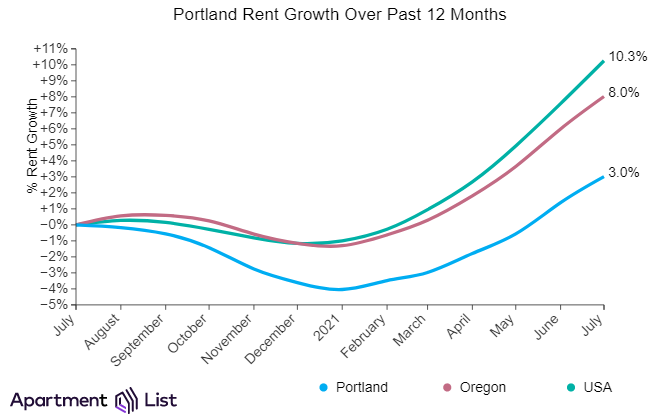
Rents continue to increase in Portland and were up by 1.6 percent in July, the sixth straight month that the city has seen rent increases, according to the latest report from Apartment List.

The Portland rents rise shows rents are up 3 percent year-over-year. Median rents in Portland are $1,199 for a one-bedroom apartment and $1,398 for a two-bedroom.

Across the Portland metro, of the largest 10 cities that Apartment List has data for, all have seen prices rise. Oregon as a whole logged rent growth of 8.0 percent over the past year.

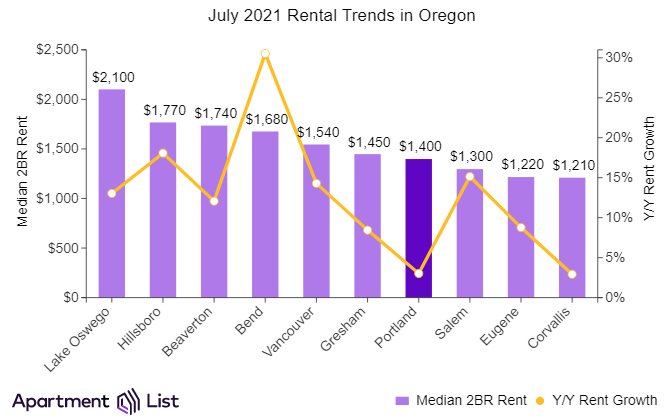
As Portland rents rise, here’s a look at how rents compare across some of the largest cities in the metro:

  • Lake Oswego is the most expensive of all Portland metro’s major cities, with a median two-bedroom rent of $2,101.
  • Bend experienced the fastest growth, up 30.5 percent.
  • Hillsboro, Salem, and Vancouver have all experienced year-over-year growth above the state average (18.1 percent, 15.1 percent, and 14.3 percent, respectively).

Portland Rents Rise for Sixth Straight Months

Rent Growth Continues Upward Across the Country

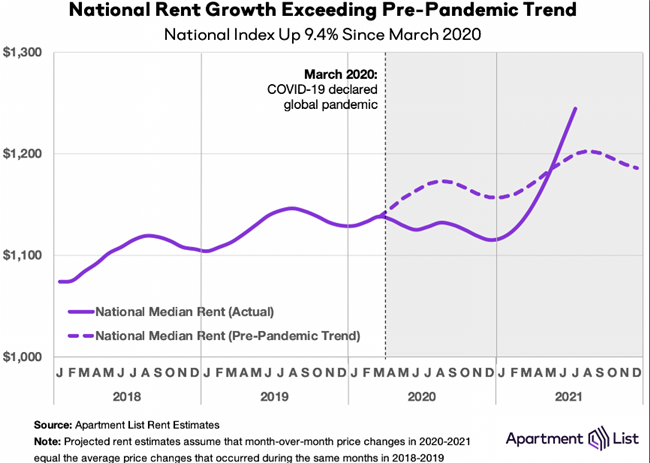
The national rent index increased by 2.5 percent from June to July, continuing a months-long trend of rapidly accelerating rent growth, according to the  August Apartment List National Rent Report.

So far in 2021, the national median rent has increased by a staggering 11.4 percent.

“To put that in context, in the pre-pandemic years from 2017-2019, rent growth from January to July averaged just 3.3 percent. This month’s spike continues to push rents well above where they would be if growth had remained on its pre-pandemic trend,” the report says.

While rent growth continues to see some regional variations, “overall rent growth in 2021 so far is outpacing pre-pandemic averages in 98 of the nation’s 100 largest cities.”

The Apartment List report says the rent spikes have now put actual rents well ahead of the trend they were on prior to the pandemic.

“The national median rent currently stands at $1,244, which is $44 greater than where we project it would be if rent growth over the past year and a half had been in line with the growth rates we saw in 2018 and 2019,” the report says.

Rent Growth Continues Upward Across the Country

Coastal cities rents also on the rebound

San Francisco consistently made headlines throughout the pandemic for the 26.6 percent drop in rents from March 2020 through January 2021, but since January, San Francisco rents have increased by over 17 percent.

Even sharper rebounds have been observed in Boston (+23 percent since January), Seattle (+22 percent), and New York (+21 percent).

“These COVID-era price fluctuations – down quickly at the start of the pandemic, up quickly since the start of 2021 –- are significantly more volatile than the seasonal price fluctuations we normally see in these markets.”

Conclusion

The report said while the pandemic created some softness in the rental market last year, 2021 “has brought the fastest rent growth we have on record in our data.

“Nationally, and in nearly all individual cities across the country, rent growth in 2021 has exceeded average growth rates from pre-pandemic years. Rents remain below pre-pandemic levels in just a handful of cities. And even in markets like San Francisco and New York where ‘pandemic pricing’ is still in effect, prices are quickly rebounding.

“At the same time, booming markets like Boise continue to see prices climb. More broadly, rental inventory across the nation remains tight, and as economic recovery continues to gain momentum, we may be seeing the release of pent-up demand from renters who had been delaying moves due to the pandemic. Whereas last year’s peak moving season was halted by the pandemic, this year’s seasonal spike is more than making up for lost time.”

11 Questions to Ask When Hiring a Property Manager or Company

Sign Up For Our Newsletter And Get Apartment News And Helpful, Useful Content Each Week.

* indicates required


California Rental Housing Association Sues State Over Eviction Moratorium

California Rental Housing Association Sues State Over Eviction Moratorium

The California Rental Housing Association has sued the state of California in federal court arguing the third extension of the state’s eviction moratorium is unconstitutional and violates rental-property owners’ rights, according to a release.

“We tried working with our legislators and the governor to reach an agreement that would recognize the financial burdens faced by both rental-housing providers and renters,” said Christine Kevane LaMarca, president of the association, in a release. “They chose to ignore the financial burdens of small and medium rental-property providers.

“The courts are our last resort. Rental-housing providers across the state are suffering severe economic distress and losses directly caused by the state of California’s ongoing overreaching eviction moratorium,” she said.

The lawsuit was filed in the Eastern District of California (Sacramento) and joined by two individual rental-housing owners. It challenges the constitutionality of AB832, the state’s third extension of the statewide moratorium on evictions for nonpayment of rent.

The suit alleges that the moratorium unconstitutionally violates rental housing owners’ basic property rights, and substantially—and retroactively—impairs existing rental agreements and leases, which give owners the contract right to repossess their units for nonpayment of rent.

The lawsuit, filed under the federal civil rights act, seeks a declaration that AB 832 is unconstitutional and an injunction prohibiting its enforcement.

Rental-housing providers suffering

“The state continues to extend the eviction moratorium with no distinction between residents who cannot afford to pay due to the pandemic and residents who can afford to pay their rent but are using the moratorium to violate their rental agreements,” LaMarca said.

“Rental-housing providers continue to provide housing, and in some cases, for no compensation, which leaves us with no recourse. Small and medium rental-housing providers rely on rental income to pay their mortgages and maintenance expenses, while supporting their own families. We wake up every day thinking about how to house people – that is what we want to do – and government action is interfering with our ability to effectively do so.

“This lawsuit is intended to restore our rights and allow us to enforce rental contracts that have been unnecessarily expropriated for the past 16-plus months,” she said.

About the California Rental Housing Association

The California Rental Housing Association represents 19,000+ members who provide nearly 537,000 rental units. CalRHA’s members are primarily small- and medium-sized rental-housing providers throughout the state of California. Our purpose is to advocate in the best interest of the rental-housing industry and collectively address industry needs.

CDC Extends Eviction Moratorium To October In Most Counties


Sign Up For Our Newsletter And Get Rental Property And Apartment News And Helpful, Useful Content Each Week.

* indicates required


Average National Monthly Rent Tops $1,500 For 1st Time

Will You Be Ready When the Eviction Moratorium Ends?

Everything Landlords Should Know About Emotional Support Animals

7 Lease Renewal Incentives Landlords Should Consider

7 Lease Renewal Incentives Landlords Should Consider to keep tenants long term

When you get reliable tenants, you naturally want them to stick around as long as possible so here are 7 lease renewal incentives landlords can use with the unpredictable housing market right now.

By Justin Becker

As a landlord, having good tenants gives you great peace of mind. Having decent people on your property gives the assurance that they won’t be causing any intentional damage. Plus, getting rent on time means that you have a steady income stream.

It’s not even about the money you earn, it’s also about the money you don’t lose. A vacant apartment or house is costing you in terms of maintenance, upkeep, taxes, and trying to find new tenants. At the same time, you’re not getting any income from your real estate investment.

So, when you get reliable tenants, you naturally want them to stick around as long as possible. The lease renewal can be a tricky business, especially with the housing market being so unpredictable right now, so here are some lease renewal incentives to consider.

Ultimately, you want to re-sign those quality renters; for that, the following lease incentives could be the best ways to start!

Lease Renewal Incentives

1. Cash Incentives

For many tenants, the temptation of a cash bonus might seal their decision to renew their lease. This might be especially true of couples or single individuals who are still living in a 1 bedroom unit and probably want to save what they can.

For most tenants, you can decide whether a discount on their rent might be possible.

After that, you can consider actual cash, security-deposit rebates, etc. At times, it might be enough to just offer some tenants direct incentives such as gift cards from Target or Amazon. The incentive equality and likelihood of success will vary according to the tenants’ age groups, family size, socioeconomic status, and several other factors.

Another example of an attractive cash incentive is to have desirable renewal terms. For instance, a landlord might offer a two-year lease renewal at little to no increase in the rental rates.

This way, the tenant is happy at having at least one major cost unaffected by inflation rates. At the same time, the landlord gets to have their quality tenants firmly in place for two years instead of one (or however long the deal is for).

2. Gift Incentives that Aren’t Monetary

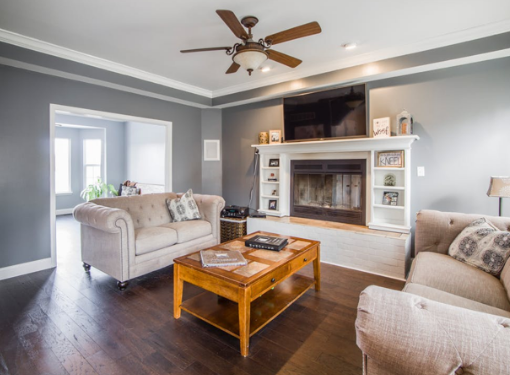
When we use the word “gift” here, we mean something that’s non-monetary. For instance, you can offer tenants certain upgrades, such as a ceiling fan or a newer model of an appliance. Appliances that they don’t already have, such as an air fryer or toaster oven, might also get a lot of appreciation. Since the kitchen is among the most essential rooms in rentals, start thinking from there.

7 Lease Renewal Incentives Landlords Should Consider to keep tenants
You can offer tenants certain upgrades, such as a ceiling fan or a newer model of an appliance.

Other items you can consider are televisions, tablets, a new bed, etc. Perhaps it would help to take a tour of the place or just keep your eyes and mind open when you’re talking to your tenants. They might need a certain item and let it slip mid-conversation.

Another convenient non-monetary incentive could be the option of covered parking near the rental property. If you already provide parking in exchange for a fee, consider waiving it for the next year or at least give a discount. You can also offer free parking to residents who have been renting from you for a certain number of years.

Covered parking will be especially attractive for those who live in a very cold region. With snow and other weather elements, people are always looking for places to park their car safely. Having a nice spot near your tenant’s home will certainly make them think twice about moving out (if ever!).

3. Unit Upgrades or Enhancements

7 Lease Renewal Incentives Landlords Should Consider to keep good tenants
Getting a washer/dryer could also be a great incentive here. The main aim here is to make changes that positively affect the whole rental.

When you’re offering homes for rent, be ready to upgrade the place a bit as time goes by. Remember, if those quality tenants end up leaving, you might have to spend a lot on upgrades to attract new parties. You can probably save money and hassle by working on a unit upgrade now without paying for a whole rehaul.

If most of the rental place is carpeted, you might want to offer free carpet cleaning to start with. A better incentive is to get new carpeting, a coat of fresh paint on every wall, or new flooring, according to the tenants’ wishes. However, keep in mind that such major upgrades should only be offered to tenants who have been with you for at least five years.

Getting a washer/dryer could also be a great incentive here. The main aim here is to make changes that positively affect the whole rental. Don’t think of it as spending money to make other people happy; everything you do in this regard will ultimately increase your property value.

5. Going Off-Site for Activities and Entertainment

Not every lease-renewal incentive needs to be about the property. Many renters might like something else that makes their lives better in their current space. A membership to a nearby gym, for instance, is both a nice gift and an added incentive to stay in the area. If this doesn’t seem viable (some people might be offended if you hint that they need to hit the gym!), consider a subscription to a book-box service or a grocery-delivery service.

6. Getting Services to Lower Expenses

You can also consider giving certain services as lease renewal incentives. These may include media services, which means an internet connection and free cable.

Landlords who own huge apartment buildings often qualify for rewards or referral discounts from cable and internet companies. Consult your provider and find out if these discounts can trickle down to benefit certain residents as well. The same goes for any upgrade you might get for free or at a lower price than usual.

If your tenants are in an older age group, they might not want upgraded internet or cable services. What they might appreciate more are laundry and housecleaning services. Even those who live in luxury 3 bedroom apartments for rent will appreciate such services at a reasonable rate.

7. Put Together a Menu of What You Can Afford

7 Lease Renewal Incentives Landlords Should Consider to keep good tenants
A new upgraded kitchen faucet or even a new range or range hood can go a long way to making tenants happy.

If your tenants are worth keeping around, then why not go the extra mile? If you can afford several minor upgrades, or a major one, put all the choices together and present them to the family or individuals. The menu items might include cleaning services, touch-ups, wallpapering, installing a swing, and so on.

This way, you can offer choices that are in your budget and also give tenants the freedom to choose. They just might appreciate this freedom even more than the incentive itself.

Lease Renewal Incentives – The Takeaway

So, how do you decide which could be the right lease renewal incentives to keep your valued tenants around? By offering varied incentives; we are all individuals, after all. Remember, the implementation also counts for a lot; you don’t want to foist a major renovation on their living space until they’ve agreed to it.

Before you make any decisions, be sure to stay respectful, within boundaries, and aware of what your tenants need. Look at your budget as well; weigh the pros and cons, and then go for what seems best. In the meantime, stay courteous and give good customer service to your quality tenants. Let them know how much you appreciate them throughout the year instead of just at lease renewal time!

About the author:

Justin Becker is a property owner in the state of Michigan and has a passion for managing communities. He owns apartment complexes and mobile home communities, and has been writing his own blogs for his properties for several years.

What Are the 3 Most Important Things to Tenants Post-Pandemic?

11 Questions to Ask When Hiring a Property Manager or Company

Sign Up For Our Newsletter And Get Apartment News And Helpful, Useful Content Each Week.

* indicates required

How To Figure If Vacancy Rates in Your Rental Property Are Good Or Bad

CDC Extends Eviction Moratorium To October In Most Counties

CDC Extends Eviction Moratorium To October In Most Counties

CDC Director Dr. Rochelle Walensky has signed an order to extend the CDC eviction moratorium saying the evictions of tenants for failure to make rent or housing payments could be detrimental to public health-control measures to slow the spread of the virus that causes COVID-19.

“This order will expire on October 3, 2021 and applies in United States counties experiencing substantial and high levels of community transmission levels of SARS-CoV-2,” Walensky said in a release.

“The eviction moratorium allows additional time for rent relief to reach renters and to further increase vaccination rates. In the context of a pandemic, eviction moratoria—like quarantine, isolation, and social distancing—can be an effective public health measure utilized to prevent the spread of communicable disease. Eviction moratoria facilitate self-isolation and self-quarantine by people who become ill or who are at risk of transmitting COVID-19 by keeping people out of congregate settings and in their own homes,” the release said.

The National Multifamily Housing Council (NMHC) issued a release saying that it “strongly opposes the CDC’s latest announcement to reimpose a federal eviction moratorium. This action is a complete reversal of the administration’s stated course announced just last week, including the perceived constitutional barriers to a CDC moratorium.

“This move does nothing to speed the delivery of real solutions for America’s renters and ignores the unsustainable and unfair economic burden placed on millions of housing providers— jeopardizing their financial stability and threatening the loss of affordable housing stock nationwide,” the NMHC said in the release.

The National Real Estate Investors Association issued the following statement regarding the Biden Administration’s recent reimposition of the CDC’s eviction moratorium:

“Recently, the U.S. Supreme Court said in a 5-4 decision that the CDC does not have the authority to put in place an eviction moratorium under Section 264.  However, the Biden Administration chose to do it anyway.  We are calling on the Supreme Court to immediately strike down this blatant act of unconstitutionality,” the organization said in a release.

Charles Tassell, COO of National REIA, said “The executive branch is acting as if it were the legislative branch, meanwhile the judicial branch is asleep at the wheel.  Justice Kavanaugh deferred from striking down the eviction moratorium only because the administration stated it would expire in July.  Turns out, this was nothing but a hollow promise and a ruse.  How many more small business owners will go belly-up before this never-ending moratorium actually expires?”

In addition, Tassell stated that “this convoluted order will only muddy the waters with daily and weekly changes, inducing confusion and leaving many harmed along the way – not least of which are the 50 percent of property owners who own one to four units that will now be at risk of massive fines and jail time should their legal due process fall on the wrong date.”

Rent relief money still slow in coming

“At the onset of the pandemic, NMHC urged Congress to create a federal rental assistance program.  Congress finally heard our calls and late last year enacted the Emergency Rental Assistance Program (ERAP). Seven months after states received the first tranche (portion) of $25 billion of the nearly $46 billion appropriated, only $3 billion has been distributed as of June 30, according to Treasury data.

“It is unacceptable that some localities continue to delay distribution of benefits, and it is unacceptable to continue to ask housing providers to carry the financial burden of this pandemic.

“For nearly 18 months, apartment firms have stepped up to help their residents facing financial struggles through payment plans, deferred payments or other solutions. They continue to do so now, redirecting staff, and hiring new staff, to reach out to residents and to help them apply for assistance,” the NMHC said in the release.


Sign Up For Our Newsletter And Get Rental Property And Apartment News And Helpful, Useful Content Each Week.

* indicates required


Average National Monthly Rent Tops $1,500 For 1st Time

Will You Be Ready When the Eviction Moratorium Ends?

Everything Landlords Should Know About Emotional Support Animals

Which Rental Property Flooring Is Best For You And Your Tenants?

Which Rental Property Flooring Is Best For You And Tenants?

Which type of rental property flooring is best for you and your tenants to both help with maintenance costs and still be attractive to get new tenants?

The maintenance checkup this week provided by Keepe focuses on flooring to be sure you are your protecting your investment and income as well as keeping your tenants happy..

Flooring is the first thing that rental applicants see during a showing of a rental property so which rental property flooring is right?

Rental property flooring choice is the equivalent of curbside appeal for homeowners.

Renters are motivated by different attributes than homeowners, so luxury or cost are not the only attributes to consider when making a choice of flooring. It is also important to consider which segment of the rental market the property at hand is targeting.

For example, it may not make sense to install low-cost vinyl flooring if the location and finish of the property is more attuned to the high-end renter. That said, when it comes to rental property flooring options, there are a few technical attributes that are important to consider.

Rental property flooring basics

There are four basic types when you are selecting flooring:

    • Hardwood
    • Laminate
    • Carpet
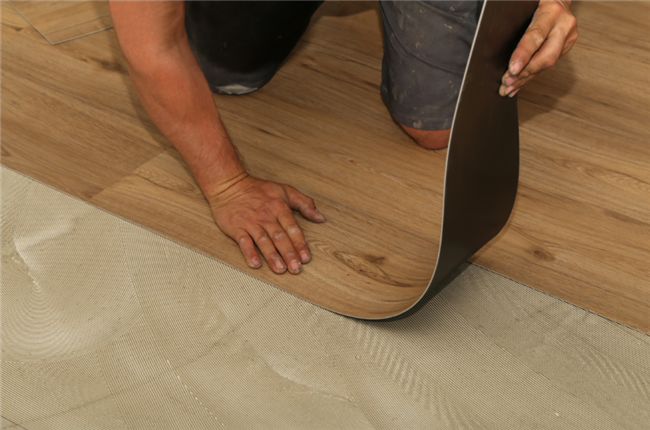
    • Vinyl

Also, you can take into consideration various criteria when comparing the available flooring options:

    • Variety
    • Ease of installation
    • Maintenance
    • Softness
    • Durability
    • Resale or releasing value
    • Eco-friendliness
    • Affordability.

Here are some pros and cons for different rental property flooring options

Which Rental Property Flooring Is Right For Your Tenants?
Hardwood is not as easy to install as the other options, so a professional is needed to do the job and it is an expensive installation because it includes laying the floor, sanding, staining and finishing.

Rental Property Hardwood Flooring Pros

    • Variety: You can find hardwood flooring in a variety of colors, patterns (strip flooring, plank flooring, parquet flooring), width and thickness.
    • Maintenance: Hardwood is easy to maintain and it can be re-sanded and refinished several times to remove stains and scratches. With a new refinish you can change the color of your hardwood using a different stain.
    • Durability: Hardwood floors are durable, so it cannot be damaged easily. You can also place heavy furniture on it without any damage. Contribution to the resale value of your rental: Hardwood floors increase the sale value of your rental a lot, so if you think that you will sell the rental in a few years, it’s worth installing hardwood floors.

Hardwood flooring cons

    • Ease of installation: Hardwood is not as easy to install as the other options, so a professional is needed to do the job and it is an expensive installation because it includes laying the floor, sanding, staining and finishing.
    • Softness: Hardwood floors are not soft so it might not be the first option if you have kids and/or older people in the house.
    • Eco-friendliness: Cutting forests is not an eco-friendly activity, so if you are green and love nature hardwood floors are not a choice.
    • Affordability: Hardwood is an expensive choice for rental property flooring and the right fit for more upscale rentals.

Laminate flooring pros

    • Variety: Since laminate flooring mimics hardwood, you can also find it in a variety of colors, patterns types, width and thickness for your rental property flooring.
    • Ease of installation: Laminate floors (especially the snap-on ones) are easy to install so this can be an excellent DIY project.
    • Maintenance: Laminate floors are easy to clean and require low maintenance.
    • Affordability: Laminate flooring is an inexpensive choice. Prices may vary with quality but all in all it is a more affordable choice

Laminate flooring cons

    • Softness: Laminate floor is not a soft surface.
    • Eco-friendliness: Laminate is not an eco-friendly option being manufactured with toxins and resins. So, you can have off-gassing with laminate flooring not recommended for people with allergies and respiratory problems.
    • Durability: Laminate floors can scratch easily, and damaged by heavy furniture. The only way to repair it is by changing the affected area.
    • Contribution to the resale value: Laminate flooring can be neutral and somewhat detrimental to value when reselling it.
Which Rental Property Flooring Is Best For You And your Tenants?
Professional installation is required for carpet installation, but the cost of installation is cheaper than hardwood floors.

Rental Property Carpet Flooring Pros

    • Variety: you can find a large variety of carpeting for your rental property flooring, in terms of colors, materials, etc.
    • Softness: carpeted floors are soft and suitable for children and the elderly. Some people prefer them at least for the bedroom areas due to this quality.
    • Eco-friendliness: depending on the materials used they can be eco-friendly.
    • Affordability: the price of carpeting can vary a lot but you can find nice options that are not very expensive.

Carpet flooring cons

    • Ease of installation: Professional installation is required for carpet installation, but the cost of installation is cheaper than hardwood floors.
    • Maintenance: Carpets get very dirty and it is not easy to clean and maintain, especially if your renter has pets. On move-out, professional carpet cleaning is a must.
    • Durability: Carpeted floors are durable because they are soft.
    • Contribution to the resale value of your rental property or releasing of your rental property: Carpeted rental property flooring can be neutral to your house value.

Rental Property Vinyl Flooring Pros

    • Variety: you can find a large variety of vinyl for your house, in terms of colors, materials, etc.
    • Maintenance: Vinyl is easy to clean and maintain.
    • Softness: Vinyl floors are softer than other types of hard flooring.
    • Durability: Vinyl floors are durable because they are soft.
    • Affordability: Vinyl is by far the cheapest option.

Vinyl flooring cons

    • Ease of installation: It is better to ask a professional to install it.
    • Eco-friendliness: As a plastic surface it does not qualify as eco-friendly.
    • Contribution to the resale value of your house: Vinyl floors can decrease the resale value of the house

These are the numerous rental property flooring options available and their pros and cons. Besides these attributes, the ultimate choice also depends on the type of renter that the property is targeting, the duration to an expected sale of the property, the expected frequency of renter turnover, etc. This post is meant to aid you in making the exercise of choosing rental property flooring somewhat easier.

4 Steps to Make Rental Home Carpet Last Longer

About Keepe:

Keepe is an on-demand maintenance solution for property managers and independent landlords. The company makes a network of hundreds of independent contractors and handymen available for maintenance projects at rental properties.

Keepe is available in the Greater Seattle area, Greater Phoenix area, San Francisco Bay area, Portland, San Diego and is coming soon to an area near you. Learn more about Keepe at https://www.keepe.com.

5 Maintenance Tips For Long-Lasting Carpet In Your Rentals

Kitchen Range Hood Options for Your Rentals

Sign Up For Our Newsletter And Get Apartment News And Helpful, Useful Content Each Week.

* indicates required

Layers of Laws: Don’t Forget about Local Rules in the Landlord/Tenant Relationship

Layers of Laws: Don’t Forget about Local Rules in the Landlord/Tenant Relationship

The laws with layers of local rules and state rules in the landlord tenant relationship can be confusing as attorney Brad Kraus explains here.

Bradley S. Kraus
Attorney at Law, Warren Allen LLP

When COVID-19 began to take hold in the spring of 2020, many rights that landlords had were put on hold by way of executive orders. The legislature took its time to craft laws which would shape the landlord/tenant relationship. Before that occurred, many local jurisdictions acted swiftly, enacting their own COVID-related local rules and prohibitions. Having multiple layers of rules and laws posed significant challenges. As we come out of COVID-19-related moratoriums, these challenges continue to exist.

Analyzing how to comply with both local rules and state rules can be challenging. Many lay people understand somewhat the concept of federal supremacy—i.e., how federal law can have supremacy over state laws that conflict with same. Thinking that a similar rule would hold true from a state/local law relationship makes sense, but it is unfortunately much more complicated. While this article won’t dive into the legal issues there, there are a couple common landlord/tenant that can differ from a local perspective and should receive your attention.

First, some localities have differing requirements regarding their leases. Portland is the obvious example, as their FAIR Ordinance imposes a variety of rules and obligations that are not found in state law. Others, like Gresham, have obligations snuck into their city codes regarding forms that should be included with the rental agreement executed by the tenant. The above examples are a reminder that the laws can and do change, so updating your landlord/tenant documents from time to time is important.

Next, it’s important to remember that prerequisites for utilizing your rights may differ from jurisdiction to jurisdiction. For example, while Oregon law requires landlords to pay relocation assistance to tenants for utilizing a Qualifying Landlord Exemption only if the landlords own more than four rental properties, local rules in Portland differ. The Portland jurisdiction has no safe-harbor number for small landlords. Portland does provide the ability to avoid paying Portland-specific relocation if the landlord obtains the required Relocation Assistance Exemption form prior to entering into a fixed-term tenancy with their tenant. Further, the landlord must provide that document to the tenant prior to entering into a fixed-term rental agreement with that tenant. The failure to take these steps can result in a required relocation payment to your tenant, which could have potentially been avoided.

Timelines can also differ depending on local jurisdictions. For example, under state law, landlords with tenants in their first year of occupancy are allowed to serve 30-day no-cause notices. Some local laws, as in Portland and Milwaukie, have extended these to 90 days. While the state legislature extended the first year of occupancy under Senate Bill 282 through August 31, 2021, landlords exploring their no-cause/non-renewal rights should seek counsel to ensure compliance.

The foregoing examples are a few of many. However, they illuminate the importance of both staying up to date on the laws that govern your landlord/tenant relationship and seeking counsel from someone knowledgeable in this area. With the flurry of legal changes recently, missteps can prove expensive.

About the Author:

Don’t Forget about Local Rules in the Landlord/Tenant Relationship
Bradley Kraus, Portland attorney

Brad Kraus is a partner at Warren Allen LLP. His primary practice area is landlord/tenant law, but he also assists clients with various litigation matters, probate matters, real estate disputes, and family-law matters. A native of New Ulm, Minnesota, he continues to root for Minnesota sports teams in his free time. You can reach him via email kraus@warrenallen.com or 503-255-8795.

Fair Housing Matters – Landlord Liability for Tenant-on-Tenant Discrimination

Sign Up For Our Newsletter And Get Apartment News And Helpful, Useful Content Each Week.

* indicates required

 Senate Bill 278: Additional Tenant Protections (But Appropriate Burdens)