Home Blog Page 96

Are Your Fair Housing Policies and Procedures Up to Date?

Are Your Fair Housing Policies and Procedures Up to Date?

By The Fair Housing Institute

It’s a new year and the perfect time to review your company’s fair housing policies and procedures. Laws and best practices are constantly changing, so you need to be sure that you are up to date and fair-housing compliant. In this article, we will review why all property management companies need fair housing policies and procedures, helpful resources that are available, and why ongoing training is so important.

Policies and Procedures – Not Just for Large Companies

Whether you have five or 5,000 properties, you need to have a written fair housing policy as well as a reference list of your procedures. Given that we do see high employee turnover in our industry, these become even more of a crucial resource and training tool. Each new employee needs to be familiar and have full access if they are going to be effective in their position. Having these policies and procedures ensure that everyone is consistent in their behavior.

Along with this, a regular review to ensure that everything is up to date will provide a strong basis for a defense in the event a fair housing violation is claimed.

Resources To Create or Update Your Fair Housing Policies/Procedures

Believe it or not, your policies and procedures do not need to be lengthy or complicated. In fact, just the opposite. They need to be clear, concise, and easy to understand. A good place to start is with your company’s fair housing attorney. They can help build policies and procedures specific to your company’s needs. If you do not have access to a fair housing lawyer you can tap into your local housing association,  as it usually will have templates available to members. Also, the internet can be used as a resource for research and development.

In addition, you want to be sure that your policies and procedures include specific things like reasonable accommodation requests, verification, pet policies, and so on. Basically, anything the Fair Housing Act requires needs to be included.

Whichever avenue you decide to use, having your fair housing policies and procedures ready and available in the event a fair housing complaint is filed is prudent, as this is almost always the first thing asked for during an investigation, and you need to be prepared.

Communicate Policies and Procedures to Your Employees

You should have a policy notebook where all the policies of all types are located. And in that notebook, a specific place for your fair housing policies and procedures, along with a list of designations of authority on who can make which decisions. This can serve as a written point of reference for your employees to use when needed.

Also, training, especially when something has changed or been updated, needs to happen consistently. Having regular training and practice sessions can help your staff build the skills required to handle any fair housing situation that may arise.

Last year we saw some significant changes to laws that will directly affect how we do business. Your policies, procedures, and training need to follow suit so that your company is always fair-housing compliant.

About the author:

In 2005, The Fair Housing Institute was founded as a company with one goal: to provide educational and entertaining fair-housing compliance training at an affordable price at the click of a button.

Keeping Your Communications Compliant with Fair Housing

Sign Up For Our Weekly Newsletter And Get Rental Housing and Apartment News And Helpful, Useful Content Each Week.

* indicates required

Emotional Support Animals and the Fair Housing Act

Portland Rents Continue To Decline For Second Month

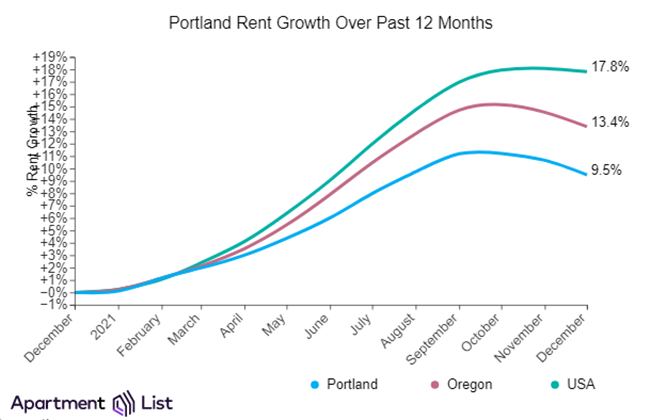
Portland rents have declined 1.1 percent over the past month, according to the latest report from Apartment List.

Portland rents have declined 1.1 percent over the past month, according to the latest report from Apartment List.

This is the second straight month that the city has seen rent decreases after the last increase in October of last year.

Still Portland rents are up by 9.5 percent in comparison to the same time last year.

Rents also declining across the Portland metro

In Beaverton, rents also declined 1.1 percent over the past month and like Portland they were down for second month in a row.

Median rents in Beaverton are $1,494 for a one-bedroom apartment and $1,814 for a two-bedroom while median rents in Portland are  $1,205 for a one-bedroom apartment and $1,405 for a two-bedroom.

In Lake Oswego, rents have been declining for the past four months.

Median rents in Lake Oswego are $1,748 for a one-bedroom apartment and $2,068 for a two-bedroom.

Some potential seasonality in rent cool down

Across the nation, rent prices fell 0.2 percent last month, representing the country’s first measurable price decline since 2020 rent growth records, according to the January report from Apartment List.

Last year was a period of tremendous rent growth, with prices rising nearly 18 percent in less than a year, so while prices remain high they may have turned a corner.

Apartment List economists Chris Salviati, Igor Popov, Rob Warnock, and Lilla Szini write that, “Sixty-one of the nation’s 100 largest cities saw rents fall this month, indicating a widespread rental market cooldown.

While this is the time of year to see typical rent growth slowing, the report says the current slowdown is coming after 2021’s unprecedented price increases.

Sign Up For Our Weekly Newsletter And Get Rental Property And Apartment News And Helpful, Useful Content Each Week.

* indicates required

“In a Time of Crisis Life isn’t about waiting for the storm to pass, it’s about learning how to dance in the rain”

Rothchild Capital Finance “In a Time of Crisis Life isn’t about waiting for the storm to pass, it’s about learning how to dance in the rain”

Gary Williams and Gary Shelton
Rothchild Capital Solutions of Illinois LLC
Rothchild Capital Markets of Charlotte

While no U.S. industry was left untouched by the pandemic, the commercial real estate industry, particularly the CRE special use property and multi-family markets, have experienced some of the most dramatic losses. As a result, many CRE owners and investors have found themselves facing depleted cash reserves, empty business books and cash flow projections that can no longer be supported.

Rothchild Capital Solutions of Illinois, a commercial real estate investment firm and private niche lender with two loan niche products we developed from the structure of “Senior Secured Debt” and Mezzanine” RCS real estate Preferred Equity “a private label product” that can used as HARD preferred equity (more like debt) and or Soft Preferred Equity (more like equity) from special use project development, financial pivot and stabilization.

“Early in my career I learned a very valuable lesson, that all investments and the risk that arise from them share the same key elements,” Williams said. “The people who face the greatest risks don’t understand the importance of measuring debt vs. equity, use unsupported financial theories, avoid thoughtful risk mitigation with market speculation to create asset valuations.”

Understand the importance of the finance leverage ratios measurement test

 The federal reserves have set the table for several finance options to be considered during this crisis including loan modification and government guarantee — or SBA — loans. Williams said that for building owners and investors, the unanswered question is will they qualify for these loans and, if not, what other options are available.

Williams said that when assessing loans, the capital stack is the most important thing investors need to understand and consider.

“Many new investors have trouble assessing risk and making investment decisions, particularly when it comes to their capital stack,” Shelton & Williams said “Mezzanine, equity and preferred equity will have to take on a new approach with longer terms at play and much lower leverage.”

He recommended packaging mezz, equity and/or preferred equity into five, seven, or eight-year terms under a JVP structure to mitigate some of unforeseen economic bumps in the road.

 Avoid using unsupported financial theories

 Monetary and financial stability are of central importance to the functioning of any market economy be it commercial real estate or others. They provide the base for rational decision making. In the absence of this creates damaging uncertainties that can and often leads to failed projects and bank/lender losses.

Credit risk, or default risk, is the risk that someone will not be able to meet a financial obligation. Lenders face default risk that a borrower will not be able to make a monthly loan payment on time. Similarly, leased property includes a risk that tenants will not be able to make timely lease payments as expected. In these cases, sponsor/borrower financial accountability is key. Sponsor/borrower skin-in-the game, default reserves and lower leverage ratio will help migrate some of these risks.

Always include thoughtful financial risk mitigation strategies

 In the real estate securities market, you need to stay informed with reliable news and intelligence always at-hand, and have clarity on analysis, global trends, and financial, operational, and asset-level detail. RCS has Created a customized model for faster, more in-depth analysis and update them automatically with the latest information from Global Market Intelligence. Develop peer analysis models, create company tear sheets, analyze financial performance.

 Don’t make asset valuations based on market speculation with an unsupported opinion

 Williams said that his X years of experience at Rothchild Capital Solutions of Illinois has taught him that transactions that are highly leveraged without a supporting balance sheet are often problematic.

Speculative investors tend to make decisions more often based on technical analysis of market price action rather than on fundamental analysis. The difference between the two, a quick overview:


Rothchild Capital finance “In a Time of Crisis Life isn’t about waiting for the storm to pass, it’s about learning how to dance in the rain”

Investing vs. Speculating:

Investors and traders take on calculated risk as they attempt to profit from transactions they make in the markets. The level of risk undertaken in the transactions is the main difference between investing and speculating.

The primary difference between investing and speculating is the amount of risk undertaken. High-risk speculation is typically akin to gambling, whereas lower risk investing uses a basis of fundamentals and analysis.

Speculating is the act of putting money into financial endeavors with a high probability of failure. Speculating seeks abnormally high returns from bets that can go one way or the other. While speculating is likened to gambling.

  • The main difference between speculating and investing is the amount of risk involved.
  • Investors try to generate a satisfactory return on their capital by taking on an average or below-average amount of risk.
  • Speculators are seeking to make abnormally high returns from bets that can go one way or the other.
  • Speculative traders often utilize futures, options, and short selling trading strategies.

“When it comes to the pandemic, many questions remain unanswered: Will the market return to normal soon? Will equity investment bottom out? Will banks and or new construction financing continue?” Williams said. “The truth is, there’s no quick fix, but if investors avoid common mistakes and focus on making smart moves, we may be one step closer to a better tomorrow.”

About the authors:

Gary Williams, Rothchild Capital Solutions of Illinois LLC, [email protected]

Gary Shelton, Rothchild Capital Markets of Charlotte, [email protected]


Financing The Niche with RE Preferred Equity


Multifamily Had A Record Year In 2021; What’s in Store for 2022?

Multifamily Had A Record Year In 2021; What’s in Store for Rent Growth for 2022? Yardi Matrix

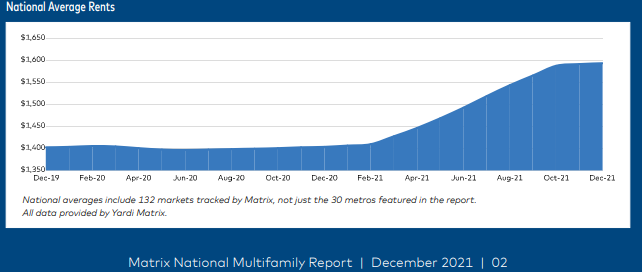
Multifamily rent growth had a record year in 2021, with many factors contributing to the unprecedented growth that led to the average asking rent growing by $190 during the year, according to Yardi Matrix.

Expectations for 2022 continue strong for multifamily but not at the level of 2021, as rents cooled near the end of the year.

“The multifamily market closed the book on 2021 with strong performance, a good end to a year that featured robust demand and record annual rent growth. Although a repeat of 2021 is not likely, many of the trends that led to the stellar performance remain intact,” Yardi Matrix writes in the report.

Highlights of the multifamily report:

  • “U.S. multifamily rents rose modestly in December, increasing by $2 to a record $1,594, closing the book on an extraordinary year in which asking rents rose by 13.5 percent year-over-year. Rent growth in 2021 was more than double any previous year recorded by Matrix.
  • “Although we expect rent growth to decelerate in 2022, it should be a strong year nonetheless by historical standards, closer to the 5 percent annual increases recorded in the middle of the past decade. Demand for apartments remains robust, and the national occupancy rate has been at or near record highs for the last six months.
  • “Single-family rentals also remain in high demand, with the national occupancy rate up 0.4 percent year-over-year through December. Single-family rental asking rents rose 13.8 percent in 2021,” the report says.

Multifamily Had A Record Year In 2021; What’s in Store for Rent Growth 2022? Yardi Matrix

The report says the economy should remain strong based on higher wages, the continued opening up of the economy, easing of supply-chain issues and the wealth built up by some consumers during the pandemic.

At the same time, inflation and a new wave of COVID-19 may keep the growth to a moderate level.

“Consumers’ financial health should continue to feed growth of new households, while the rapid increase in home prices will funnel much of that demand to multifamily and single-family rentals,” the report says.

“The pandemic continues to affect commerce and travel, and the future of migration remains unknown, but clearly the shift to the South and West will endure.”

Get the full report here.

 About Yardi Matrix:

Multifamily Had A Record Year In 2021; What’s in Store for 2022?

Yardi Matrix researches and reports on multifamily, office and self-storage properties across the United States, serving the needs of a variety of industry professionals. Yardi Matrix Multifamily provides accurate data on 18+ million units, covering more than 90 percent of the U.S. population. Contact the company at (480) 663-1149


Sign Up For Our Weekly Newsletter And Get Rental Property And Apartment News And Helpful, Useful Content Each Week.

* indicates required

What Can Housing Providers Facing a Challenging 2022 Do?

What Can Housing Providers Facing a Challenging 2022 Do?

The industry is being reshaped by political forces with little thought given to supply and affordability of housing so what can Oregon housing providers and others do in 2022?

Michael Havlik, CPM®
Deputy Executive Director
Multifamily NW

As housing providers ring in the New Year, it is apparent that that the fallout of the COVID-19 public health emergency will have long-lasting and widespread impact on our industry.

While unemployment is at record lows, many of you are struggling to hire and retain employees. Further, many are straining to operate in a legal environment that has been altered multiple times in a single year.

Housing-related responses to the COVID-19 pandemic were arbitrary, often misrepresented, and made communications between housing providers and residents nearly impossible during a pandemic when it was never more critical. Our concern for the operating environment facing housing providers cannot be understated.

With these immediate priorities dominating our thoughts, it can be difficult to see the broader landscape of challenges to housing providers. The industry is being reshaped by political forces with little thought given to supply and affordability of housing, The toxic attitudes expressed toward housing providers at our state- and local-level governing bodies are clearly designed to drive housing providers away from participating in the civic process, and away from the profession of providing housing.

Now, after what has felt like a nonstop series of special sessions, emergency board meetings and regular legislative sessions, the six-week 2022 Oregon legislative session is quickly approaching. We do not know if lawmakers will hold fast to a commitment to refrain from making major changes to ORS Chapter 90, or if we will see an avalanche of bills targeting the rental industry as we have during each legislative session of recent memory.

What do we recommend that Housing Providers do?

  • Contact your representative: Your representative needs to know what you are experiencing, and you need to know what they are thinking. Make this the year you contact them more than once with personal stories about the impact of existing laws and the consequences of proposed legislation. Your elected leaders can only hear you if you are communicating. Click here to find your legislators: https://www.oregonlegislature.gov/findyourlegislator/leg-districts.html.
  • Stay informed: Keeping updated on elections and proposed legislation, through your industry association, will be key in 2022. Be sure to pay attention to local races, ballot measures and local rulemaking as well. Those regulations often have a negative impact on the industry. Frequently, ideas implemented at the local level are viewed as proven to work and get adopted at the state level.
  • Vote: How have your interests been represented over the past three years? The people we vote into office matter. Are they experienced, well-rounded, collaborative and fair? Do they have the temperament to study issues deeply and vote consistent with their constituency, or will they simply fall in line with an influential party leader? Register to vote at Oregonvotes.org. April 26th is the registration deadline for the May 17th election.

This is the year to get involved. The Oregon legislative session begins next month. We all need Oregon housing providers to get prepared.

As we’ve been reminded repeatedly, “You’re either at the table, or you’re on the menu.”

About the author:

As the deputy executive director for Multifamily NW, Michael brings 29 years of industry experience in market rate and affordable housing.   A native Oregonian, Michael obtained his undergrad degree from the University of Portland, and an MBA from the University of Notre Dame. He is a licensed principal broker in Oregon, and a Certified Property Manager®.  He served as past president of Multifamily NW in 2003 and was nominated for the ACE Award’s Regional Property Manager of the Year in 2015.

Failed State Software For Emergency Rental Assistance Hurting Families

Sign Up For Our Weekly Newsletter And Get Apartment News And Helpful, Useful Content Each Week.

* indicates required

Your Short-Term Rentals Can Generate 6x Gains

Your Short-Term Rentals Can Generate 6x Gains

As you look at your rental property portfolio heading into 2022 says veteran real estate property owner and manager David Pickron, consider short-term rentals because short-term rentals can generate up to six times the amount of revenue as a long-term hold.

By David Pickron

Rarely in life can the quick version of anything ever compete with the more time-intensive “real deal.”  Think of any instant food and you will quickly realize that I’m telling the truth.  The same had held true for real estate investments for at least the last century… but times, they are a changin’.  As you look at your portfolio it may be time to consider transitioning some of your long-term holdings into short-term rentals, and here is why: Short-term rentals can generate up to six times the amount of revenue as a long-term hold.  My average long-term hold properties cash flow at around $200 per month; my short-term rentals cash flow just over $1,200 per month.  Does that get your attention?

As you consider transitioning from long-term to short-term rentals, you should examine the following factors to help ensure that the changeover is successful: location, needs, and saturation.

Location important factor for short-term rentals

The old mantra of “location, location, location” in relation to real estate has endured because it is true.  For short-term rentals, it may even be more important.  A friend of mine recently converted his 5,000-square-foot custom home in a regular residential neighborhood in Phoenix into a short-term rental.

In his mind, he was already cashing the checks after he listed the home on the popular short-term rental sites.  But there was a big problem: there was no draw for potential renters to come to the property, as it wasn’t near any major attractions.  That property quickly turned back into his full-time residence, having never once been used as a rental.  Having an attraction or destination near your property makes it ripe for transition to short-term.  Whether it is near other resort properties, mountain towns, beachside escapes, or national parks, having a natural draw for people to come to the area instantly makes it an eligible property.  Obviously, warm places in the winter and cooler places in the summer create demand when people are looking for an escape.  If you have an extensive portfolio or are just looking to purchase your first investment property, make location a key component of your research process.

Consider the needs of any short-term rentals clients

Depending on the location of your property, the needs of your potential renters need to be paramount in your conversion decision.

I have several properties that are located near a cancer-treatment center.  When I originally purchased those properties, I did not know there would be a severe need for this type of property because the treatment center hadn’t even been built.  My curiosity got the best of me when this facility was built, and I called to inquire if they ever had patients with short-term housing needs.  It was after this conversation that I decided to convert these units into what they are today.  Most of those renters in these properties are in town for several weeks or months at a time receiving treatment for life-threatening illnesses, and insurance companies are reimbursing their housing expenses.  In this case, my short-term rentals cost thousands less than costly overnight hospital stays.  These tenants have very specific needs, whether it be accessible facilities or high cleanliness standards.  I have prepared those properties with those specific needs in mind and can market them as such.

In other areas, I have properties that are more vacation-oriented, with access to golf courses, hiking trails and other recreational opportunities.  Those homes are equipped to help my renters have the best experience while on the property, with helpful hints on where to play, where to relax and where to eat.  There is an obvious expense to preparing properties to meet the needs of potential short-term renters, but those expenses are recouped quickly with satisfied renters who rebook and share their experiences with others.

Make your rental property stand out if in a booming area

While it may seem too easy to look at a booming area where everyone is converting to short-term rentals and think it would be great to ride the same wave, you would be right.  Markets with a lot of short-term rentals are strong for this very reason and should give you the confidence to at least try your hand.  Competition should ignite your creativity, so if you do decide to convert your property in a saturated area it is critical to find a way to make your property stand out.

Maybe it’s time to complete those upgrades you’ve been putting off.  Or you may need to commit some extra marketing dollars to make sure your property has that “it” factor that makes it more desirable.  If being in a saturated market scares you, maybe you look to create a more rural opportunity experience.  I have a friend that has taken a five-acre rural property and created an “Old West” type of experience for their guests, and there is a massive waiting list of people who want to spend their time and money there.  There is no perfect formula for determining how many is too many short-term rentals in an area, but with effort and your expert insight you can successfully make the jump.

A few other items to consider:

  • Always check with your homeowners association (HOA)  before you even start down the road to see what the rules are in regard to a short-term rental property.  I’ve heard too many horror stories about owners spending time and money to prepare a property only to have it shut down by their HOA.
  • There is no reason to fear the managing/cleaning/scheduling of the property.  This is the No. 1 thing I hear from investors, but it really is a non-factor.  In short-term, your renter pays the cleaning fee.  You just need to find a cleaning crew you can depend on.  Take their bid, add $50.00 to it to pay for toilet paper, paper towels, and other disposable goods.  A well-paid cleaner is more than happy to go the extra mile for you when needed.

While I am not advocating you run out and convert your entire portfolio today, I do recommend you run through your portfolio to determine which, if any, of your properties are ideal for creating a 6x return over what you are getting now with short-term rentals.

It may take a little trial and error to get it right, but with considerable returns on the line, now may be your time to shine in the short-term rental market.  If there were such a thing as “instant” housing, short-term rentals would likely fall into that category, and – unlike everything else – can turn out to be better than the original.

About the author

David Pickron is president of Rent Perfect, a private investigator, and a fellow landlord who manages several short- and long-term rentals.  Subscribe to his weekly Rent Perfect Podcast (available on YouTube, Spotify, and Apple Podcasts) to stay up to date on the latest industry news and for expert tips on how to manage your properties.

Short-term rentals are something to consider for your short-term rental property portfolio
David Pickron

3 Tips to Keep You Out of Landlord Rehab

Sign Up For Our Newsletter And Get Weekly Rental Property And Apartment News And Helpful, Useful Content Each Week.

* indicates required


Are You 10 Out Of 10 In Collecting Rent?

Lasting Damage: Reporting Tenants To Credit Bureaus is a Powerful, Effective Option

When tenants become problem payors you have a couple of options including reporting tenants to credit bureaus

When tenants become problem payors you have a couple of options including reporting tenants to credit bureaus.

By Datalinx

An unfortunate reality of property management is the inevitability of dealing with slow-pay and no-pay tenants. Even though a tenant may pass your initial creditworthiness processes at application time, it’s impossible to predict if circumstances or intentions will change and the tenant will become a problem payor. When that happens, you have a couple of options.

Sure, letters, increasingly serious notices, personal visits, and stern phone calls are always the first steps to collecting, but what happens when those don’t work? Many property managers turn to collection agencies, but more and more are opting to report delinquent payment histories to the big credit agencies using credit reporting services like Datalinx.

Some property management organizations assume that credit reporting isn’t an option for them; either they think their reports will be too small to be accepted, don’t think they qualify as a creditor, or simply don’t know where to start. Companies like Datalinx acknowledged these issues, and since 2001 has been refining the process to make reporting to the big credit bureaus easy and affordable, which in turn makes this a very powerful and effective solution.

Do They Care About Credit?                   

For some consumers, credit scores are simply not an issue. Either they have no need to apply for credit, or they have simply decimated their credit score to what they think is a point of no return. Fortunately, those types of tenants probably wouldn’t have made it through your application process to begin with.

However, most people do care about their credit, and understand the impact a negative item will have on their future. Today, credit card companies, banks, and free credit monitoring apps provide credit scores to customers on a regular basis, indicating that more and more consumers are concerned about protecting their record.

Sometimes, simply notifying the customer that you now report missed or late payments to the four major credit bureaus will motivate them to pay on time. It certainly never hurts to remind them of your ability to report this information. Often tenants are under the false impression that rent payments are not reportable for credit bureau purposes. However, services like Datalinx now offer property owners and managers the ability to report all payment histories, whether positive or negative. Informing your tenants that this is your practice and intention can make a big difference in the timeliness of payments, dues, and more.

Long-term effects

One of the questions consumers are most curious about when it comes to credit reporting is how long information—especially negative information—will remain on their report. No one wants one missed payment or short-term collection account to negatively impact personal credit decisions for decades. Unfortunately, some tenants don’t give you any other option than to turn to alternative measures for recovering debt.

Generally speaking, negative information remains on a consumer credit report for about seven years according to Equifax, one of the major credit bureaus. Negative items can include late or missed payments, accounts that have been sent to collections agencies, situations when payments have not been paid as agreed, liens, or even bankruptcies. Seven years can be a very long time, especially when an individual applies for auto loans, new rental agreements, mortgages, or even certain jobs.

Each of these negative items not only will be listed as a red flag on a full credit report but will also drastically decrease an individual’s credit score. While some employers or organizations will listen to a consumer’s explanations or consider subsequent repayments of these debts, most simply cannot bend the rules to accept a score or report outside their established credit parameters.

As a property manager, adding this knowledge to your arsenal helps you not only educate past-due customers as to the long-term effects of their payment behaviors, but also helps you prepare new tenants with the consequences of late payments to your organization. In this case, knowledge is definitely power.

Why not consider a collection agency?

A professional collections firm is certainly an option to consider, but when considering cost and long-term impact, there are significant differences between collections and credit reporting. With a collections agency, the property owner or manager pays the agency a set fee or percentage of the amount collected from the tenant. The account is subsequently charged-off the books of the property owner or manager as a loss.

What does this mean for the consumer? First, the collection agency will report the account to the credit bureaus, and the debt will appear as a collection on the tenant’s credit report, instantly impacting their credit score. And, of course, this will be a negative item on the credit report for seven years from the date of the first missed payment. If the tenant makes payments to the collection agency and pays the balance in full (usually including a fee from the collection agency), the agency will report this information as well. Paying a collections account may have a lesser impact on a credit score, but the item will still be reflected on the report.

There is another important, but often overlooked, aspect of this process. When an account is reported to the bureaus as a collection, it can never be anything but that—a collection. Datalinx recommends another alternative: consider foregoing the collection agency and reporting the past due account to the bureaus as delinquent, especially in cases where you believe the relationship with the tenant is repairable.

Why? A delinquent, or late, payment has a less negative impact on a tenant’s credit report than a collection, especially when the delinquent account is subsequently paid in full. Offering this option to a tenant also gives you as the property owner or manager leverage to urge the tenant to pay to avoid a much more detrimental impact on their credit. You lose that leverage when you turn over an account to a collections agency.

Credit is King…or Perhaps the Ace

With a credit reporting service like Datalinx in your rental or leasing toolbox, you hold the proverbial ace in the hole when it comes to persuading your tenants to pay on time. For those who care about their credit score, reports of consistent, on-time payments is an unexpected bonus to help them increase credit scores and build a solid, long-term history. This may be the impetus needed to nudge those on-the-fence individuals to pay closer to their due date instead of waiting until the last possible minute. And for the others, your Datalinx account allows you to report negative items while maintaining leverage to collect past due funds—without paying fees to a collection agency.

With Datalinx, you hold all the cards.

Please visit our website at www.datalinxllc.com, or contact us at [email protected] or (425) 780-4530 if you have any questions or need our assistance.

Senate Bill 891: More Changes to Ring in the New Year

The new year means new changes for Oregon landlords including Senate Bill 891 which is changing timelines related to a landlord’s ability to act.

With the new year here, it is ringing in new changes for Oregon landlords including Senate Bill 891 which is changing of timelines related to a landlord’s ability to act.

By Bradley S. Kraus
Partner, Warren Allen LLP
[email protected]
Happy New Year to everyone! As we turn the page on another (and hopefully final) year of COVID-related changes, another was made last month. Oregon’s December special session ushered in another set of changes to the landlord-tenant world, this time modifying prior tenant protections with the passage of Senate Bill 891. While many of the rules remain the same, the timelines have been tweaked, meaning more potential delays for landlords.

The largest change made within SB 891 is the changing of timelines related to a landlord’s ability to act. Previously, Senate Bill 278 required a landlord to incur a 60-day stay period (90 days in certain localities) if/when a tenant provided documentation evidencing that the tenant had applied for rental assistance. Once this 60/90-day stay period was up, the landlord no longer had to wait, and could either (a) serve a non-payment notice, or (b) continue forward with an eviction action, depending on the posture of the particular non-payment situation. Those rules have now changed.

Senate Bill 891 now places a stay on the landlord’s ability to act until the tenant’s rental-assistance application is no longer pending. More specifically, if “on or before June 30, 2022,” a tenant has provided documentation to the landlord that they have applied for rental assistance, then a landlord is prohibited from:

a.) Serving a termination notice for non-payment, or

b.) Filing or continuing an eviction action based upon non-payment.

These changes once again (and unfortunately) pass the problems related to rent assistance on to landlords. Once a tenant’s application is no longer pending, the landlord thereafter has options depending on the result—either dismiss the case or, if the application was denied, proceed accordingly. But landlords continue to have obligations related to mortgage payments, taxes, etc., and while larger landlords may be able to absorb further delays, small landlords and business owners cannot.

Another important change made within SB 891 is to the disclosures required in your non-payment notices. Landlords should ensure that their forms are up to date, as old forms containing the old SB 278 disclosures are no longer valid, if served post-SB 891 enactment. Any notices served prior to SB 891, but expiring thereafter, remain valid with the old disclosures, however. The law applies to prospective notices served, not retroactively.

On a positive note, courts are becoming very flexible in dealing with SB 891 issues. At the first appearance in an FED action, many landlords are faced with allegations that they were provided documentation by tenants. Landlords may not know what they received, as they likely expect something more formal from rent-assistance agencies. Many of these documents that  qualify as “documentation” look very bare-bones (and, at times, simply thrown together in a Word document). Due to the same, courts have been very willing to allow the parties more time to explore the facts and do the right thing. I anticipate this continuing as we navigate these new laws.

Non-payment cases in Oregon continue to rise in complexity. The shifting legislative and legal landscape will no doubt contain more changes in the future. For the time being, landlords are encouraged to reach out to competent counsel if they receive any documents from their tenant. While it may look like nothing, the document you have could actually be rental-assistance documentation, which could affect your rights moving forward.

About the author: 

Bradley S. Kraus is an attorney at Warren Allen LLP. His primary practice area is landlord/tenant law, but he also assists clients with various litigation matters, probate matters, real estate disputes, and family law matters. You can reach him at [email protected] or at 503-255-8795.

With the new year here, it is ringing in new changes for Oregon landlords including Senate Bill 891 which is changing of timelines related to a landlord’s ability to ac
Bradley Kraus, Portland attorney

Senate Bill 282 – Oregon’s Newest COVID-19 Landlord/Tenant Changes

Sign Up For Our Weekly Newsletter And Get Apartment News And Helpful, Useful Content Each Week.

* indicates required

What Realtors Should Know About Going Pet-Friendly

What Realtors Should Know About Going Pet-Friendly in rental property and apartments

Going pet-friendly in your rental property has many advantages so here are 5 tips to make your rental property appeal to pet owners.

By Mark Daniels

 The past few years have brought on a surge of pet adoptions, which have had a big impact on the housing industry. More and more renters are looking for a place to call home that offers something special for their pets. If you’re a realtor wanting to go pet-friendly, here are five top tips to appeal to renters looking for pet-friendly apartments.

1. Create amenities for people and pets

It’s not enough that luxury apartments have incredible amenities for residents. They need to have perks for pets, too! Amenities like bark parks and pet spas draw in potential renters, and really showcase how pet-friendly your residences are. Even better, creating a special space for pets is easy and won’t take a sizable chunk of your budget.

Going pet-friendly in your rental property has many advantages so here are 5 tips to make your rental property appeal to pet owners.
Pet grooming areas and pet wash areas among top amenities. Photo credit Group4 Studio via istockphotoc.om

2. Tell future residents your luxury apartments are near an emergency veterinarian

Accidents happen. When your residents need to get to the veterinarian, they don’t have time to travel across the city. Let your future residents know that your luxury apartments are close to an emergency vet when they come for their tour.

It’s also a great idea to emphasize that your luxury apartments are close to trails, dog parks, and other pet-friendly areas nearby. That way, your residents know they can take their pet outside for fresh air and fun walks.

3. Sponsor a pet-adoption event and get your name out there

A great way to help animals in need and get your luxury apartments noticed is by sponsoring a pet adoption. Schedule a gorgeous spring day for your local shelter to come out to your property for a pet adoption event. Many shelters will work with you and waive adoption fees in hopes of finding forever homes for more pets.

You can take your pet adoption even further by letting future renters and residents pay less for pet deposits or giving them a few months without having to pay pet rent.

4. Use your staging skills to show off the space

If you’re leasing downtown apartments that are centered in a bustling city, you might not instinctually  appeal to pet owners. This is where your expert staging skills can make small apartments look bigger and more pet-friendly. Here are quick tips on how to stage a luxury apartment for pet owners:

  • Include a dog bed: Show how off how big the bedroom is by putting a strategically placed dog bed in a corner or at the foot of a sleek and modern bed frame. Try to include a bed in the living room, too. This shows there is enough room for everyone to relax.
  • Place small pet bowls in the kitchen: Kitchens are one of the smallest rooms in an apartment, but you need to make sure future renters know there is space for their furry family members and their best friends. Add in small, stylish pet bowls in the kitchen, but make sure they aren’t in the way.
  • Stage modern and functional storage: If you’re staging a smaller apartment, show future residents how much space they can have when they have the right kind of storage. You can store pet toys in storage ottomans, treats in modern-looking jars, and keepsakes on gorgeous bookshelves.
  • Have treats on hand: If you can, offer tours of your downtown apartments where prospective renters can bring their pets with them. Let their pets see the space, and always have treats nearby to make their visit extra special.
  • Always have a pet station nearby: Other kinds of accidents happen, too. Make sure you have plenty of pet stations on your rental property that include bags and trash cans for pet waste. This is the most important feature you need on your property to keep it clean and viable for residents.

5. Embrace the impact of going pet-friendly

It’s not a secret that pets can be a little rough on things like floors, furniture, and other areas of a residence. When you decide to go pet-friendly, you need to remember there may be a little more maintenance than usual, which means you might need to charge a little more in rent. That’s OK! Most pet owners understand the cost of owning a pet and will pay extra for luxury apartments that maintain the property.

Overall, making your luxury apartments a pet-friendly place to live is a significant investment for your rental property and for your residents. When you open your doors to pet owners, you’re making your residences available to more people. This means your apartments are easier to rent out, and people will want to live in them for years to come.

About the author:

Mark Daniels is a writer who authors pieces designed to be of value to Realtors, property managers, and tenants. He has over 15 years of experience writing articles to help educate individuals in the housing industry.

Sign Up For Our Weekly Newsletter And Get Rental Property And Apartment News And Helpful, Useful Content Each Week.

* indicates required

What a Pet-Friendly Apartment Community Truly Looks Like

Technology Adoption Doesn’t Have To Leave Disengaged Employees

5 Strategies to Enhance Your Leasing Process

Here are 5 strategies and best practices to enhance your leasing process from an expert in multifamily community.

Here are 5 strategies and best practices to enhance your leasing process from an expert in multifamily community.

By Ciera Moraga
Mark-Taylor Residential

Exceptional multifamily living always begins with the leasing process. Guests become pleased residents when 5-star service starts from the very first inquiry about your community.

Leasing teams have the unique opportunity to be the “face” of your community. When leasing-team members initially reflect company values and establish high standards of service, it sets the guest up to have an excellent residency.

Here are five best practices of our leasing teams:

Early bird gets the worm

Searching for a new home often requires time-consuming and stress-inducing work. That is why we strive to make the process as seamless as possible for prospective residents. When a prospective resident shows interest in a Mark-Taylor community digitally or over the phone, our leasing teams get back to them swiftly, prepared with detailed information about the community and neighborhood.

The significance of leasing teams’ response time cannot be underestimated; at times, it can be the differentiating factor in a resident’s living choice. We support the response process through innovative technology that captures, sorts, and pushes leads to our team members. In addition, our training and development team coaches leasing-team members on best practices for efficiently responding to prospective residents.

A warm welcome sets the tone

Creating a place that truly feels like home starts the moment that a guest walks through the front door. Our leasing teams greet our residents and guests as if they have arrived at home, even before they choose to live at the community.

A warm smile and standing approach, combined with a welcoming statement such as, “Good morning and welcome to the community. How may I assist you today?” sets the tone for the community presentation and beyond.

Give your guest undivided attention

Providing guests with full, undivided attention is a simple yet profoundly important to-do for leasing teams. In order to feel welcomed into your community, guests must feel listened and attended to during their visit. Use attentive nonverbal behavior – make eye contact, remember names, and welcome questions, comments, and concerns.

Fit your community to their needs

Multifamily leasing must focus on the guest, not just the community. It our goal to deliver what residents and prospective residents want and need in a home. To help accomplish this goal, leasing-team members must ask the right questions to personalize their presentation toward the guest’s personal preferences.

If a guest works remotely from home, we make sure to show them our common working spaces. If a guest enjoys exercise, we show them our fitness center and tell them about our on-site exercise classes. This customer-centric mindset is key.

Seal the deal with follow-up

Following up is another checkpoint in the leasing process that cannot be skipped. Guests return to their busy lives after they visit your community; a prompt and friendly follow-up message is convenient for the guest and keeps the community top-of-mind. If the guest chooses not to live at the community, it is an opportune time to ask for feedback that will make you better than yesterday.

About the author

Ciera Moraga is the associate managing director of multifamily investments at Mark-Taylor Residential. She provides strategic direction for a large portfolio of Mark-Taylor luxury communities across Arizona. She utilizes her expertise to lead her communities to achieve optimal operational success, while staying true to Mark-Taylor’s exceptional standards of service.

Sign Up For Our Weekly Newsletter And Get Rental Property And Apartment News And Helpful, Useful Content Each Week.

* indicates required


6 Community Maintenance Tips For Exceptional Tenant Experience