
Home Blog Page 65

Burdened by ESA Fraud? Time to Reconsider Your Pet Policies?

Can emotional support animal (ESA) fraud in the rental housing industry be reduced by modernizing pet policies?

Can emotional support animal (ESA) fraud in the rental housing industry be reduced by modernizing pet policies?

By Judy Bellack

Talk to apartment owners and operators about the issues plaguing their communities, and fraudulent emotional support animal (ESA) accommodation requests are bound to come up.

Industry-wide statistics do not appear to exist, but onsite team after onsite team can testify to the significant uptick in recent years of ESA accommodation requests, legitimate and otherwise. Vetting and verifying these requests can be a challenging and time-consuming process for operators.

Make no mistake: many, many ESA accommodation requests are legitimate, and ESAs provide critical aid to residents with anxiety, depression, learning disabilities, attention deficit disorder, chronic stress, post-traumatic stress disorder or neurodivergence-based disabilities like autism.

Housing operators must accommodate legitimate ESA requests regardless of pet restrictions, and they cannot charge pet rent or other pet-related fees for ESAs. Not accommodating legitimate requests will subject rental housing owners and operators to fair housing violations and the fines and/or lawsuits that accompany those violations.

Still, there’s no denying that a portion of accommodation requests are made in bad faith, and an entire cottage industry has arisen to provide the supporting materials to help these emotional support animal fraud requests succeed.

As owners and operators consider ways to reduce ESA fraud, they should consider the impact that adjusting pet policies and fees could have.

An incentive to submit emotional support animal fraud requests?

The typical apartment community in the U.S. accepts pets – but not without significant restrictions. In fact, according to the Pet-Inclusive Housing Report, only 8 percent of rental units have no pet restrictions.

Apartment communities usually have a weight limit on pets (typically between 25 to 40 pounds) and often ban any number of larger dog breeds entirely, even though researchers have concluded that a dog’s breed is not a good predictor of its behavior. A limit of one pet per unit also is common.

And then there are the pet-related fees, which can quickly become a real financial burden for many renter households. Theoretically refundable deposits in the range of $200-$500 per pet are common, as are one-time non-refundable fees of $250 per pet. Many communities also charge monthly pet rent that’s in the ballpark of $30-$50 per month per pet.

We are a pet-obsessed culture. More than 70 percent of U.S. households have a pet, and the vast majority of these households view their pet as an indispensable member of their family.

Can emotional support animal (ESA) fraud in the rental housing industry be reduced by modernizing pet policies?
Housing operators must accommodate legitimate ESA requests regardless of pet restrictions, and they cannot charge pet rent or other pet-related fees for ESAs.

Considering this, it’s perhaps not surprising that many renters, rather than surrendering or rehoming their large or breed-restricted pet, will try to gain access under the guise of emotional support in order to keep their families together. It’s also not shocking that some renters may go this route to avoid what can be truly onerous pet-related fees.

Clearly it’s not OK to lie, and it’s not OK to make things more difficult for those who legitimately need an emotional assistance animal by creating an atmosphere of distrust.

At the same time, rental housing owners and operators should think about how outdated pet policies and fees may be creating incentives for residents to submit fraudulent requests. They should ask themselves if ESA fraud is yet another indicator that the industry’s pet policies are no longer relevant for today’s renter.

By decreasing or even eliminating pet restrictions and fees, apartment communities can not only reduce ESA fraud – they can experience real business benefits like an expanded pool of potential renters and increased retention rates. Onsite teams will manage fewer potentially uncomfortable and tedious situations during the leasing process as well.

The time has come for the rental housing industry to modernize its pet policies – and rampant ESA fraud is one powerful indication of the needed change.

About the author:

Judy Bellack is the multifamily industry principal for the non-profit Michelson Found Animals Foundation, helping to advance the Pet-Inclusive Housing Initiative. She is a 30-year veteran of the multifamily industry, holding various executive leadership positions with some of the foremost supplier companies. Judy has served both as Chair of NAA’s National Suppliers’ Council and NMHC’s Supplier-Partner Alliance and was the recipient of NAA’s Outstanding Supplier in 2010. She currently operates a consulting practice advising start-up technologies in the multifamily space.


Sign Up For Our Weekly Newsletter And Get Rental Property And Apartment News And Helpful, Useful Content Each Week.

* indicates required

Apartments.com Partners With 360 Virtual Tours Company

Apartments.com is now offering Kuula’s real estate 360 virtual tour editor to multifamily clients with gold or higher ad package listings.

Apartments.com is now offering Kuula’s real estate 360 virtual tour editor to multifamily clients with gold or higher ad package listings.

Kuula,  a 360 virtual tour software company, has entered into a partnership with the online rental marketplace, Apartments.com, a CoStar Group (NASDAQ: CSGP) brand. Through the partnership, Apartment.com clients with gold or higher ad packages can create and include 360 tours powered by Kuula in their listings.

“Virtual tours have become increasingly popular in recent years because they offer a great way to experience a property online, says Kuula Founder and CEO, Bartek Drozdz. “At Kuula, we believe that virtual tours provide a unique and immersive experience for potential renters, and we are thrilled to see Apartments.com add our technology to enhance the rental search process.”

Adding Kuula’s 360 virtual tours to a listing requires a submission to the Apartments.com support team. Rental property owners with a gold account or higher can create a virtual tour on Kuula followed by copying the link of the desired tour and sending a request to the Apartement.com support team to add the virtual tour to a property listing. There is currently no option to manually upload virtual tours on Apartments.com.

To upload a tour, clients and photographers will need to send a request to the Apartments.com support team to upload at [email protected]. In the request, it’s recommended to include the detail listed below:

  • Property Name, Address
  • Property Management Company
  • Model Name (if tour should be uploaded to the model)
  • Unit Name (if tour should be uploaded to the unit)
  • 360 Tour Link
  • Caption
  • Comments, if necessary

For additional information, please visit the Kuula blog: Add Kuula Virtual Tours to multi-family listings on Apartments.com.


3 Critical Electrical, Fire Safety, & HVAC Maintenance Checks

Developing an maintenance checklist for your rental property around the critical areas of electrical, fire safety and HVAC

Developing an maintenance checklist for your rental property around the critical areas of electrical, fire safety and HVAC

By Eli Secor

This is the third in our three part series on developing a maintenance checklist for your rental property. This time we discuss three critical areas: Electrical, Fire Safety, and HVAC maintenance.

No. 1 – Electrical Maintenance Checklist

Here are the most important electrical considerations for landlords:

  • Outlets – Use a tester to check outlet wiring, polarity, and grounding. Hire an electrician to ground any un-grounded outlet.
  • Electrical panels – Seek a licensed electrician’s help to decide when to replace an electrical panel and, especially, any fuse box.
  • Old wiring – Upgrade your building if it has older wiring. Replace 2-prong outlets with modern 3-prong outlets so your tenants don’t have to use extension cords or adapters. Any “knob and tube” wiring should be replaced as soon as possible.

No. 2 – Fire Safety and Prevention Maintenance Checklist

Following are some of the ways you can improve the fire safety of your rental property:

  • Smoke and CO2 detectors – Replace batteries and test the function of detection devices at every turnover and every inspection. Where possible, install wired-in detectors.
  • Fire extinguishers – Contact your local fire department for information about where fire extinguishers are required and make sure they are re-certified regularly.
  • Escape ladders – Provide escape ladders for each unit above the first floor, and add them to your move-in/move-out inspection list.

No. 3 – HVAC Maintenance Checklist

Developing an HVAC maintenance checklist will help you stay on top of these routine tasks:

  • Furnace filters – Change furnace filters regularly to ensure air flows freely at all times, ensuring efficient operation and longevity for the equipment.
  • Duct cleaning – Clean HVAC ducting every 3-5 years to improve indoor air quality, which can cause some tenants issues with dust allergies.

Dryer, Hood, & Fan Venting Maintenance Checklist

Clogged dryer vents, greasy kitchen hoods, and dust-filled bath fans reduce efficiency and are a fire hazard. Here’s how you can fix them:

  • ·Dryer vent – Clean lint screens after each load and the vent pipe at least twice a year.
  • Hood and fan – Regularly clean bath, kitchen, and dryer venting. We recommend running bath fan covers and hood filters through the dishwasher at each turnover.

Key Takeaway

Electrical, fire safety, and HVAC are among the most critical systems to maintain on any property.

Any faults in these systems can not only harm your renters but also become expensive to repair or replace if not tackled on time. With a proper rental maintenance checklist, landlords can stay on top of vital upkeep, saving money and headache over the long term.

About the author:

Eli Secor started LandlordGurus.com with long-time friend and fellow landlord Chris Lee. After many a discussion about how to manage various tricky rental property issues, they decided to share their experiences and expertise with other independent landlords.  Along the way they are finding new answers and new tools, which they also share.

Sign Up For Our Newsletter And Get Apartment News And Helpful, Useful Content Each Week.

* indicates required

Rental Property Maintenance Checklist, Part One: Plumbing

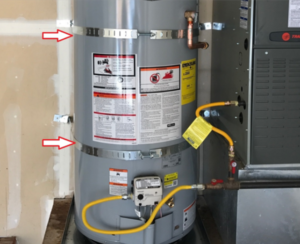
rental property maintenance plumbing and water heater secured with straps in earthquake prone areas of the country

3 Common Plumbing Emergencies In Rental Properties And What To Do

Rental Property Maintenance: 6 Items to Troubleshoot in Your Crawl Spaces

How to Waterproof Your Basement</

Part 2 – Rental Property Maintenance: Security, Pest Control, & Exteriors

America’s Hottest Rental Markets Move North

America’s hottest rental markets are no longer in the Sunbelt states, but now in the Northeast, according to a new RentCafe calculation.

America’s hottest rental markets are no longer in the Sunbelt states, but now in the Northeast, according to a new RentCafe calculation.

“Sunbelt states have long been highly coveted renting spots, particularly during the pandemic. However, the start of 2023 saw a pivot to markets located in the Northeast,” the report says.

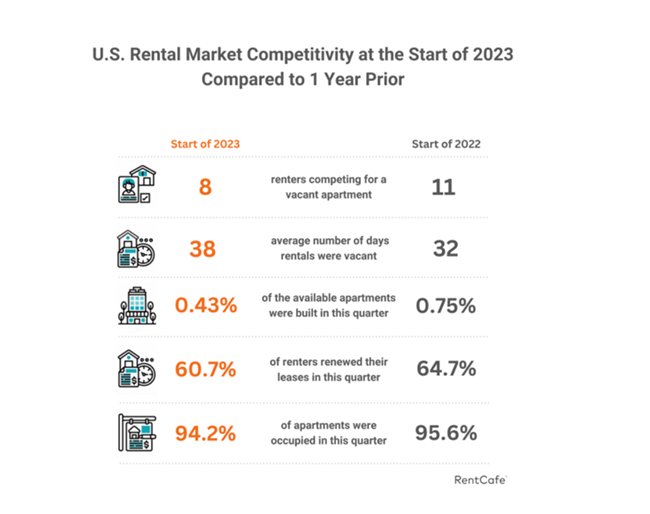
  • The national competitivity score is 60 out of 126 at the start of the year, with vacant apartments occupied within 38 days, on average.
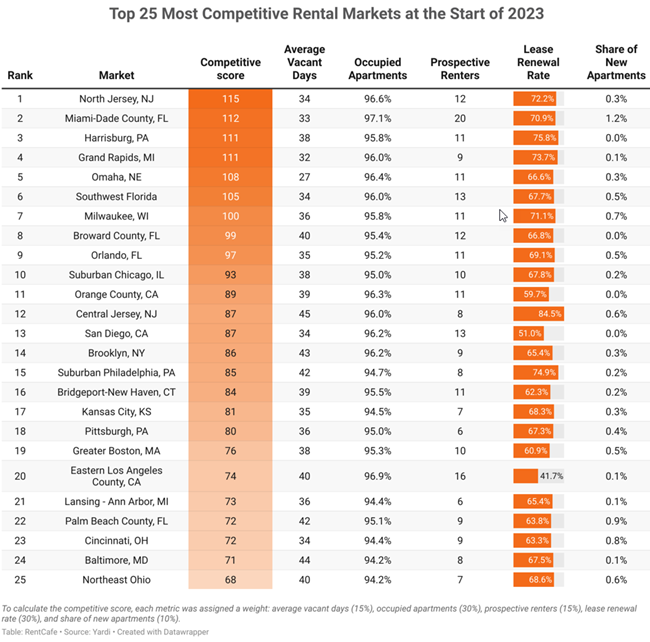
  • North Jersey is the most competitive rental market in the U.S., outpacing the Sunbelt.
  • Eight of the nation’s 20 most competitive markets for renting are in the Northeast.
  • Apartments for rent in Brooklyn and Boston are so sought-after that these two markets entered our top 20 most competitive markets for the first time after several years of sluggish demand.
  • What’s more, finding apartments is becoming increasingly difficult in small, low-profile markets across the U.S.
  • Lafayette, IN, is America’s hottest small-sized rental market. The high demand for housing from students, faculty staff and residents pushed the occupancy rate to 96.8% amid a 73.8% lease renewal rate at the start of the year.
  • The housing shortage is also felt in quiet cities like Portland, ME, and White Plains, NY, while the budget-friendly Worcester-Springfield, MA, area near undersupplied Boston is rapidly gaining popularity.
  • A wave of transplants coming from gateway cities is putting pressure on the rental market in Wyoming.

RentCafe has ranked the most competitive rental markets in the U.S by analyzing the 134 largest markets in the U.S. where data was available.

Here are the metrics they used to determine how competitive a rental market is.

  • The number of days apartments were vacant
  • The percentage of apartments that were occupied by renters
  • The number of prospective renters competing for an apartment
  • The percentage of renters who renewed their leases
  • The share of new apartments completed

RentCafe said in the report. “As the new year began, vacant U.S. apartments were occupied within 38 days, on average, with 8 prospective renters competing for each available apartment amid an occupancy rate of 94.2 percent.”

America’s hottest rental markets are no longer in the Sunbelt states, but now in the Northeast, according to a new RentCafe calculation.

“At the same time, 60.7 percent of apartment dwellers renewed their leases. Plus, with the number of newly opened apartments accounting for an extremely modest 0.43 percent of the nation’s housing supply, finding a new place to call home can become challenging this time of the year.

“By comparison, one year ago, vacant apartments were filled almost one week faster and there were three more people applying for the same rental. This was especially significant because more renters (64.7 percent) chose to renew their leases and newly built apartments represented only 0.75 percent of the total apartments in the U.S. These factors then led to 95.6 percent of apartments being occupied at this time last year,” the report said.

Sign Up For Our Weekly Newsletter And Get Rental Property And Apartment News And Helpful, Useful Content Each Week.

* indicates required

New Year, New Laws, Part Three: How House Bill 2001 Affects You

House Bill 2001 is likely to bring changes for landlords in Oregon who will need to adjust course in their business practices yet again.

House Bill 2001 is likely to bring a number of changes for landlords in Oregon who will need to adjust course in their business practices yet again.

By Bradley S. Kraus
Attorney at Law
Partner, Warren Allen, LLP

As we roll into March of 2023, the Oregon legislative session is back in full swing.

As things stand, the legislature is poised to enact a large swath of changes to the Oregon Residential Landlord and Tenant Act and the eviction statutes which can be found in ORS Chapter 105. These changes are currently taking form in House Bill 2001 which, as of this writing, is not in final form and not currently signed into law. However, given the political breakdown of the legislature, much of the changes currently on paper will pass, meaning landlords will need to adjust course in their business practices yet again.

House Bill 2001 will likely bring a variety of requirements landlords are already used to, having dealt with them during the post-COVID moratorium.

House Bill 2001 brings back—and makes permanent—the requirement of a 10-Day Notice, meaning 72-Hour Notices will be a relic of the past. Keeping with the theme of Notices, HB 2001 will also bring back “disclosure” requirement for both Notices and Summons. While the exact language of that “disclosure” is not 100 percent finalized, it will be soon and available on the Judicial Department website.

Due to the above, it is imperative that landlords update their forms after the law becomes effective. The costs for failing to do so will mean defective notices, lost time, and because of that, more lost rent. House Bill 2001 requires a court to dismiss a landlord’s case if the Notice fails to comply with the above requirements, so landlords should locate updated forms as quick as they can once these matters are set in stone.

House Bill 2001 also brings further extensions and unnecessary lag time to the eviction process. Currently, courts can set first appearances “seven days after the judicial day next following payment of the filing fee” for the case, with trials set no later than 15 days from the first appearance. With the changes to the law, the first appearance for non-payment will be no earlier than 15 days with the trial scheduled no earlier than 15 days after that date. This means a non-payment trial, should one be on the horizon, will not occur until at least 30 days after filing. This unfortunately means more lost rents landlords will need to chase tenants for in a separate action, as landlords are unable to procure money judgments in eviction actions.

Another change which appears to be on the horizon—and which landlords will remember from COVID times—is the requirement to “reasonably participate with rental assistance programs.”

In the event a landlord fails to do so, the court would be required under HB 2001 to dismiss the landlord’s non-payment case. House Bill 2001 unfortunately also brings back the ability of tenants to tender the payment due and owing in the notice at any time prior to trial, which will require a dismissal of the action. While tenants can engage in that ability under the current law, doing so currently requires a good-faith counterclaim and a payment of those monies into court. Now, it appears that a 10-Day Notice really is not really even a 10-Day Notice at all, and landlords will be forced to continue tenancies for those who perpetually pay late, as no exemption exists as to this language in the bill’s current form.

While this article cannot touch on the entire minutia of House Bill 2001, one thing is clear; changes are coming, and those changes will require adjustments to your forms and expectations.

Non-payment of rent cases will change significantly. Landlords are encouraged to seek guidance when filing eviction actions, as these changes are designed to be landmines that can—and will—torpedo many landlord’s rightful claim for possession based solely on these new technicalities.

About the author:

House Bill 2001 is likely to bring changes for landlords in Oregon who will need to adjust course in their business practices yet again.
Brad Kraus

Bradley S. Kraus is an attorney at Warren Allen LLP. His primary practice area is landlord/tenant law, but he also assists clients with various litigation matters, probate matters, real estate disputes, and family law matters. You can reach him at [email protected] or at 503-255-8795.

Portland Update: Changes to FAIR Ordinance Bring (Some) Necessary Changes

Dealing with Habitability issues and Substitute Housing


5 Cities Where You Do Not Want To Be A Landlord

5 cities where you do not want to be a landlord as many cities and all states have their own landlord-tenant acts and rules by for landlords.

All states have their own landlord-tenant acts, which creates the rules by which landlords and tenants must follow. Some favor property owners, while others tilt heavily in favor of tenants so here are 5 cities where you do not want to be a landlord SparkRental says.

Also, not all cities are equal in terms of landlord challenges. Some cities impose high property taxes and strict landlord-tenant laws or have low rental demand, slow economic growth and job creation challenges.

Spark Rental has put together their list of the cities, in their opinion, where you do not want to be a landlord. Here are the top 5 cities where they say you do not want to be a landlord. You can read their full article with their top 10 cities here.

No. 1 – Portland

“Portland is ranked as the worst city in the U.S. for landlords, according to Spark. because of its exceptionally tenant-friendly policies and stronger restrictions.  Portland bans “no-cause evictions,” an intentional misnomer that refers to landlords opting not to renew a tenant’s lease agreement. That also applies to “substantial” changes in lease terms, and rent increases of 10 percent or more in a 12-month period. If the landlord does any of these, they must pay the tenant relocation assistance,SparkRental writes.

No. 2 – New York City

“New York City also makes life extremely difficult for landlords. It enforces the largest and most complicated system of rent control and rent stabilization in the country. And removing a rental unit from rent control to charge market rates is both difficult and far from certain.

In the event of evictions, the City gives all tenants free access to legal aid services to help them fight landlords in court. Compounding matters, landlords who fail to dot every I and cross every T in the eviction process now face criminal prosecution and a fine of at least $1,000.”

No. 3 – Washington, DC

“Landlords must obtain not only a housing business license but also a certificate of occupancy. And register the property with the Rental Accommodation Division (RAD) which is part of the Department of Housing and Community Development (DHCD), among other red tape.

“Landlords must deliver a pamphlet published by the Rent Administrator that explains, in detail, the laws and regulations governing the implementation of rent increases and petitions permitted to be filed by housing providers and by tenants. Plus a copy of the Tenants Bill of Rights published by the Office of the Tenant Advocate. Then at the end of every calendar year, the owner must post where the tenants’ security deposits are held and the interest rate for the preceding six months,” SparkRental says.

No. 4 – Baltimore

“Landlords must register all rental units with both the City of Baltimore and the State of Maryland — and pay both of them fees for each unit. And get a use and occupancy permit. And have each rental unit tested and inspected for lead-based paint in between every single tenancy. With the lease agreement, landlords must provide a copy of the lead inspection certificate.

“Baltimore also banned “no fault evictions” like some of the other cities on this list. Landlords can’t non-renew a tenant without “just cause,” such as moving into the property themselves, making major renovations, or removing the property from the rental market permanently.”

No. 5- Detroit

“Detroit requires all rental properties with one or two units to be inspected by a third-party company licensed by the City of Detroit. And pass lead paint inspections between each tenancy, and be registered with the City, and obtain a Certificate of Compliance.

“Detroit has a 25-page instruction manual for landlords. Also the city has an ordinance regulating how landlords can check and use criminal history for potential tenants.”

Read full article from Spark on their opinion of the top 10 cities where you do not want to be a landlord here.

Sign Up For Our Weekly Newsletter And Get Rental Property And Apartment News And Helpful, Useful Content Each Week.

* indicates required

HUD Restores “Discriminatory Effects” Rule In Fair Housing

How the Fair Housing Act has been applied in courts and administrative proceedings is at the roof of a

How the Fair Housing Act has been applied in the courts and in administrative proceedings is at the roof of a “discriminatory effects” rule change the U.S. Department of Housing and Urban Development (HUD) is taking in rescinding a 2020 rule.

HUD said in a statement, it is rescinding a 2020 Fair Housing Act rule and reinstating HUD’s Discriminatory Effects Standard, which dates back to 2013.

HUD submitted to the Federal Register for publication a Final Rule entitled Restoring HUD’s Discriminatory Effects Standard because the “2013 rule is more consistent with how the Fair Housing Act has been applied in the courts and in front of the agency for more than 50 years, and that it more effectively implements the Act’s broad remedial purpose of eliminating unnecessary discriminatory practices from the housing market,” HUD said in the statement.

This Final Rule will go into effect 30 days after it is published in the Federal Register. Due to a preliminary injunction staying the implementation of the 2020 Rule in Massachusetts Fair Housing Center v. HUD, the 2020 Rule never went into effect, and the 2013 Rule – which has been in place for nearly a decade – has been and is currently still in effect. Accordingly, regulated entities that were complying with the 2013 Rule have no need to change any practices they have in place to comply with this rule.

What Is The Discriminatory Effects Doctrine?

The discriminatory effects doctrine (which includes disparate impact and perpetuation of segregation) is a tool for addressing policies that unnecessarily cause systemic inequality in housing, regardless of whether they were adopted with discriminatory intent.

It has long been used to challenge policies that unnecessarily exclude people from housing opportunities, including zoning requirements, lending and property insurance policies, and criminal records policies.

“Accordingly, having a workable discriminatory effects standard is vital for the Biden-Harris Administration to accomplish its goal of creating a housing market that is free from both intentional discrimination and policies and practices that have unjustified discriminatory effects,” HUD said in the release.

HUD’s 2013 discriminatory effects rule codified long-standing caselaw for adjudication of Fair Housing Act cases under the discriminatory effects doctrine, for cases filed administratively with HUD and for federal court actions brought by private plaintiffs.

Under the 2013 rule, the discriminatory effects framework was straightforward: a policy that had a discriminatory effect on a protected class was unlawful if it was not necessary to achieve a substantial, legitimate, nondiscriminatory interest or if a less discriminatory alternative could also serve that interest.

“The 2020 rule complicated that analysis by adding new pleading requirements, new proof requirements, and new defenses, all of which made it more difficult to establish that a policy violates the Fair Housing Act and harder for entities regulated by the Fair Housing Act to assess whether their policies were lawful. HUD now returns to the 2013 rule’s straightforward analysis.

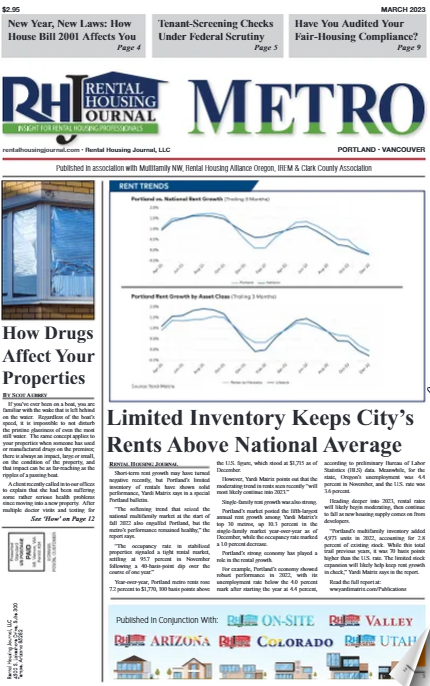
Rental Housing Journal Portland Metro March 2023

Portland Metro Rental Housing Journal March 2023 helpful, useful content for rental property owners, property managers, landlords and maintenance personnel

The Rental Housing Journal Portland Metro print publication for March of 2023 is now available in our new flipping book format here. Please check it out.

Read how Portland’s limited inventory of rentals have shown solid performance, Yardi Matrix says in a special Portland bulletin.

“The softening trend that seized the national multifamily market at the start of fall 2022 also engulfed Portland, but the metro’s performance remained healthy,” the report says.

“The occupancy rate in stabilized properties signaled a tight rental market, settling at 95.7 percent in November following a 40-basis-point dip over the course of one year.”

Year-over-year, Portland metro rents rose 7.2 percent to $1,770, 100 basis points above the U.S. figure, which stood at $1,715 as of December.

However, Yardi Matrix points out that the moderating trend in rents seen recently “will most likely continue into 2023.”

Sign Up For Our Weekly Newsletter And Get Rental Property And Apartment News And Helpful, Useful Content Each Week.

* indicates required

Tenant Moved RV Into Rental Backyard And Someone Living In It

What should you do if a tenant moves an RV into the backyard of your rental and then someone starts living in

What should you do if a tenant moves an RV into the backyard of your rental and then someone starts living in it is the question this week for Ask Landlord Hank. Remember Hank is not an attorney and is not offering legal advice. If you have a question for him please fill out his form below.

Dear Hank:

My tenants moved an RV into the back yard and have someone living in it with electric and water running from the home.
A plastic container sewerage is going into and grey water spilling on the ground.
They refuse to move it off the property.
They also have a trailer they are storing household trash in

-Yvonne

Dear Landlady Yvonne,

It’s past time to evict.

Most leases have a clause entitled “Use of Premises” that states that the tenant shall maintain the premises in a clean and sanitary condition, etc. Also, the lease will be written between the landlord, you, and the tenant. So, specific people are renting your property. There is normally another clause entitled Occupants stating: only the following individuals shall occupy the premises unless written consent of the landlord is obtained.

A reasonable number of guests may occupy the premises without written consent if the stay is limited to 72 hours. Subletting for any length of time is strictly prohibited.

I would post a three-day day notice on the tenants door which is a legal notice saying that the tenants have three days to cure (fix) the lease violations which consist of subletting the premises, and creating an unhealthy condition on your property.

If the tenants haven’t taken care of the issues by the end of the third day, on the foruth day begin the eviction process.

From what you’ve written to me, it seems like the tenants think they are in charge of your property. It is your place and you don’t need to put up with nuisance, disrespectful tenants.

Take care of this tomorrow. It is not going to get any better by itself. Good luck.

Sincerely,

Hank Rossi

www.rentsrq.com

Each week I answer questions from landlords and property managers across the country in my “Dear Landlord Hank” blog in the digital magazine Rental Housing Journal.    https://rentalhousingjournal.com/asklandlordhank/

What should you do if a tenant moves an RV into the backyard of your rental and then someone starts living in
Landlord Hank says, “Most leases have a clause entitled “Use of Premises” that states that the tenant shall maintain the premises in a clean and sanitary condition, etc.”

Ask Landlord Hank Your Question

Ask veteran landlord and property manager Hank Rossi your questions from tenant screening to leases to pets and more! He provides answers each week to landlords.

  • This field is for validation purposes and should be left unchanged.

Do I Have to Paint and Replace Flooring for a Long-Term Tenant?

A Tenant Poured Grease Down Drain Who Is Responsible?

Sign Up For Our Newsletter And Get Rental Housing And Apartment News And Helpful, Useful Content Each Week.

* indicates required

Website Accessibility – A Fair Housing Requirement?

What website accessibility is and why every property management company should be reviewing its websites today.

What website accessibility is and why every property management company should be reviewing its websites today.

By The Fair Housing Institute

Accessibility is a familiar term to housing providers. Management is keenly aware of accessibility requirements around its properties to ensure fair housing compliance. But what about website accessibility? This article will review what website accessibility is and why every property management company should be reviewing its websites today.

What is Website Accessibility and Why Is It Important?

Website accessibility refers to the ability of a website to be accessed and consumed by anyone, including those with physical disabilities. For instance, individuals with visual impairments rely on screen readers to access content, which requires a website to have the necessary technology.

Recently, website accessibility has become a hot topic due to an increase in complaints against companies that do not offer accessible websites. While there is a lack of consensus on whether accessible websites are a legal requirement under the Americans with Disabilities Act (ADA), some companies have been found liable under ADA laws for not having websites equipped with technology that makes content accessible to people with disabilities.

Although the 11th Circuit, which is the Court of Appeals for the southeast region, recently ruled that the ADA does not require website accessibility, an advocacy group in Florida is attempting to make the case that an inaccessible website for housing providers violates the Fair Housing Act. As we can see, website accessibility is an evolving situation. Thus, it is essential for property management companies to prioritize website accessibility in their business practices.

Website Accessibility – A Fair Housing Best Practice

While having an accessible website is not yet a legal requirement, companies should consider it a best business practice to ensure inclusivity and compliance with fair housing laws. Having an inaccessible website can potentially lead to lost business opportunities or even legal consequences.

For example, an individual looking to book an appointment to view a unit may not be able to fill out an online form due to inaccessible fields, leading to frustration and potential loss of interest or, even worse, a claim that your site is not accessible and, therefore, discriminatory.

Accessible Fixes for Websites

It used to be that accessible websites were costly and had to be specifically built and maintained, making them out of reach for most small or moderate-sized companies.

However, today technology has come a long way. Companies can easily ensure website accessibility with the help of easily added-on programs or plugins that do the heavy lifting. They are relatively inexpensive and are quite literally plug-and-play.

Additionally, there is a marketing advantage to having an accessible website. Google prefers and ranks websites that are easy to use, have readable text and elements, and have images that use good descriptive text. All of which is included in an accessible-enabled website.

In conclusion, property management companies should prioritize website accessibility as a best business and fair housing practice. We here at The Fair Housing Institute have already upgraded our site, and it was quite easy. While it is not yet a legal requirement, it can improve inclusivity and avoid potential negative consequences. With accessible website technology now easily accessible, there is no excuse for companies not to ensure their websites are accessible to all.

About the author:
In 2005, The Fair Housing Institute was founded as a company with one goal: to provide educational and entertaining fair-housing compliance training at an affordable price at the click of a button. Registration is now open for their exclusive online event register at FHI Partnership Live Event