Home Blog Page 56

5 Essential Marketing Strategies to Boost Occupancy Rates

Here are 5 essential marketing strategies rental property owners can implement to boost their occupancy rates.

Here are 5 essential marketing strategies for rental property owners on how to boost occupancy rates.

By Alexis Krisay

Owning and managing rental properties can be a lucrative venture, but to maximize your profits, you need to keep those occupancy rates high.

An empty rental property means lost income and increased expenses. To ensure a steady stream of tenants, effective marketing strategies are essential. In this blog post, we’ll explore five essential marketing strategies that rental property owners can implement to boost their occupancy rates.

1. Create an Appealing Online Presence

In today’s digital age, the first place potential tenants look for rental properties is online. Therefore, it’s crucial to establish a strong online presence. Start by creating a professional and user-friendly website for your rental properties. Include high-quality photos, detailed descriptions, and virtual tours if possible. Make sure your website is mobile-responsive, as many people use their smartphones to search for properties.

Additionally, list your properties on popular real estate and rental websites. Utilize social media platforms to showcase your properties and engage with potential tenants. Regularly post updates, share tenant testimonials, and respond promptly to inquiries. An appealing online presence not only helps you attract tenants but also builds trust and credibility.

2. Highlight Unique Selling Points

What sets your rental properties apart from the competition? Whether it’s a prime location, modern amenities, or exceptional views, identifying and highlighting your unique selling points can make a significant difference. Use compelling language and visuals to showcase what makes your properties special.

For example, if your rental property is in a vibrant neighborhood with access to public transportation and trendy restaurants, emphasize these benefits in your marketing materials. If you offer amenities like a fitness center, swimming pool, or pet-friendly features, make sure to mention them prominently.

3. Implement Targeted Advertising

Blanket advertising might attract some interest, but targeted advertising is more effective at reaching your ideal tenants. Identify your target audience based on factors such as demographics, interests, and lifestyle. Once you have a clear picture of your ideal tenant, tailor your marketing efforts to reach them specifically.

Utilize online advertising platforms like Google Ads and Facebook Ads to create highly targeted campaigns. For instance, if you’re targeting young professionals, you might focus on platforms like LinkedIn or Instagram. By narrowing your audience, you increase the likelihood of attracting individuals who are genuinely interested in your rental properties.

4. Offer Incentives and Flexible Leasing Options

To entice potential tenants, consider offering incentives or flexible leasing options. This could include discounted rent for the first month, waived security deposits, or even including utilities in the rent. These incentives can make your properties more appealing compared to others in the market.

Additionally, offering flexible leasing options such as month-to-month leases or shorter lease terms can attract tenants who may not want to commit to a longer rental agreement. Providing choices and accommodating different needs can give you an edge in a competitive market.

5. Engage with Current and Past Tenants

Your current and past tenants can be valuable advocates for your rental properties. Engage with them and encourage them to leave positive reviews on platforms like Google, Yelp, and social media. Positive testimonials from satisfied tenants can significantly influence the decisions of potential renters.

Consider implementing a referral program where tenants can receive rewards for referring friends and family who ultimately become tenants. This not only helps with tenant retention but also brings in new leads through word-of-mouth marketing.

In conclusion, you can boost occupancy rates for your rental properties with a well-rounded marketing strategy that leverages both online and offline tactics. By creating a strong online presence, highlighting unique selling points, targeting your advertising efforts, offering incentives, and engaging with tenants, you can effectively attract and retain tenants, ensuring a steady income flow from your rental properties.

About the Author:

With an extensive background in online and offline strategic marketing operations, Alexis Krisay is the Co-founder and President of Marketing at Serendipit Consulting. Alexis graduated from the University of Arizona with a degree in communications and marketing and is currently an active member of Entrepreneur’s Organization (EO). In 2013, Alexis was named on the list of 30 Under 30 and Student Housing Rising Star the following year, both by Student Housing Business.

Sign Up For Our Weekly Newsletter And Get Rental Property And Apartment News And Helpful, Useful Content Each Week.

* indicates required

Keeping Your Communications Compliant with Fair Housing

5 Ways to Communicate Better with Challenging Tenants

What to Look for in Property Management Software

5 Things Your Company Can Do To Retain Top Talent in Multifamily

Oregon Landlord To Pay $17,000 Over Assistance Animals

HUD says an Oregon landlord will pay $17,000 for refusing reasonable accommodation request to waive a no-pet policy for an assistance animal

An Oregon landlord will pay $17,000 after refusing a reasonable-accommodation request to waive a no-pet policy and allow a tenant’s assistance animals – a dog and cat-  into their rental property, according to a release.

The U.S. Department of Housing and Urban Development (HUD) said in a release that Kye Patton and Bob Cave, the owner and manager of a duplex apartment in Salem, Oregon, will pay $17,000 to resolve allegations that they violated the Fair Housing Act by denying a reasonable accommodation request for a woman to live with her assistance animals.

The woman had requested the accommodation because her assistance animals help alleviate symptoms of her disabilities that substantially limit her major life activities, including sleeping, concentration, social interaction with others, working, reasoning, and caring for herself.

The owner of the rental property wrote to the tenant, “We will NOT be changing our rental policy. If you feel that you need this accommodation, then please look for another place to live. We will NOT accept any animals of any kind no questions asked. I will give you a good rental reference if needed.”

Cave also verbally denied the tenant’s request, telling her that he would not change the rental policy, would not accept any animals of any kind, and that she should seek new housing if she insisted on an accommodation, according to the release.
The tenant later vacated the property and moved to a different residence that would allow her to live with her assistance animals.

In addition to the $17,000, Patton and Cave must develop a reasonable accommodation policy that is in compliance with the Fair Housing Act and applies to every property they own or manage. They must also maintain records of any reasonable-accommodation requests they receive.

“The Fair Housing Act requires housing providers to make reasonable exceptions to their ordinary policies when necessary for individuals with disabilities to live with their assistance animals,” said Damon Smith, HUD’s General Counsel, in the release. “A housing provider’s refusal to do so is a serious violation of the law.”

Sign Up For Our Weekly Newsletter And Get Rental Property And Apartment News And Helpful, Useful Content Each Week.

* indicates required

New Apartment Construction To Remain High Until 2025

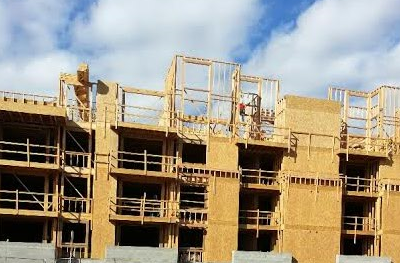
The new apartment construction building boom- the biggest since the 1970s – while slowing somewhat is expected to continue until 2025

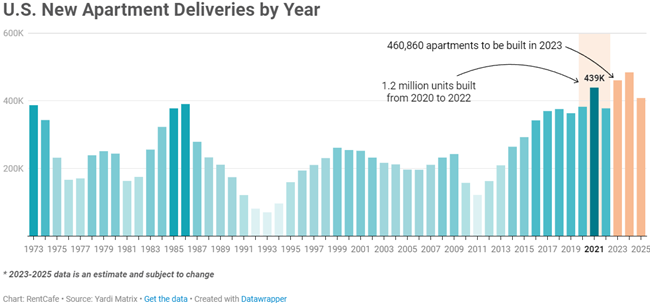
The new apartment construction building boom- the biggest since the 1970s – while slowing somewhat is expected to continue until 2025, according to a new report from Rent Café.

“Our annual apartment construction report based on Yardi Matrix data shows that the number of deliveries is expected to remain high until 2025 when the echoes of the current economic headwinds will begin affecting construction as well,” the report says.

New apartment construction summary

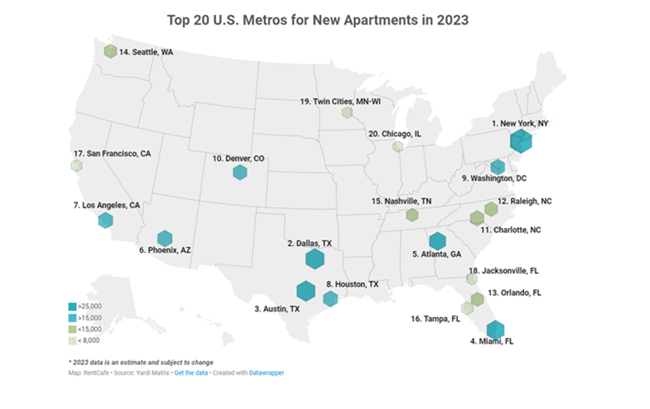
  • 460,860 new apartments are expected to open this year as New York metro emerges as the top builder with 33,000 rentals.
  • 1.2 million new apartments were opened throughout the U.S. during the pandemic boom, with Dallas metro opening the most apartments during those three years (76,660 units).
  • At the city level, Texas’ Austin and Houston topped the chart for most apartments built in 2020 through 2022.
  • 60% of the new units built from 2020 to 2022 are accessible to only 41% of America’s renter population.
  • Another 1 million new rentals are set to be completed through 2025, despite economic headwinds.

Why did this happen?

Households grew at a rapid rate after the pandemic as job growth boomed and young adults moved out of their parents’ homes.

At the same time, “work-from-home prompted renters to form their own households to gain more living space for offices, children and pets,” said Doug Ressler, senior manager of business intelligence at Yardi Matrix.

The new apartment construction building boom- the biggest since the 1970s – while slowing somewhat is expected to continue until 2025

New apartment supply will drop in coming years

The supply growth is likely to go slower after the current round of projects is completed. 

“Tightening of bank lending standards — combined with rising costs of construction materials, labor and land — has made new projects harder to pencil,” Ressler said.

“Construction debt starts at 8% interest, and most banks only lend 60% or less of the total cost of a project.

The new apartment construction building boom- the biggest since the 1970s – while slowing somewhat is expected to continue until 2025
Doug Ressler, senior manager of business intelligence at Yardi Matrix.

“Junior construction debt is even more expensive, with interest rates in the mid-teens. This financing structure can make it challenging for companies to initiate new construction projects unless they already have a substantial amount of capital on hand,” Ressler said.

The number of new apartments is expected to drop by 15% year-over-year — from 484,000 in 2024 to 408,000 in 2025  with new completions bottoming out in 2026 at approximately 400,000 units. Then, according to Yardi Matrix estimates, the pace of construction is projected to gradually recover in 2027 and 2028. Read the full report here.

As Demand Slows, Supply is Key to Multifamily Rent

As Demand Slows, Supply is Key to Multifamily Rent

Rent growth is being driven by new units, and those multifamily rents are tied to supply as demand slows, says Yardi Matrix in  July report.

Rent growth is being driven by new units, and those multifamily rents are tied to supply as demand slows, says Yardi Matrix in its  July report.

Also, demand is being driven by a strong job market as the economy continued to add jobs in the first half of 2023.

“While we still expect the economy to cool in coming quarters, the fact that second-quarter job and GDP numbers were strong while inflation recedes has confounded the economic consensus. As long as that continues, consumer balance sheets will stay strong and apartment demand is likely to be firm,” the report says.

A few highlights:

  • The multifamily market exhibited strength in July, as the economy continues to outperform expectations. The average U.S. asking rent rose $2 to $1,729, while year-over-year growth fell to 1.6 percent, down 30 basis points from June.
  • After dominating the rent-growth rankings for several years, Sun Belt metros have come back to the pack. The Sun Belt market with the highest year-over-year growth rate is Richmond, which ranks ninth among Yardi Matrix’s top 30 metros (a list that was recently updated).
  • Single-family rents were unchanged in July at $2,108, although they remained at an all-time high thanks to robust occupancy rates. Year-over-year, national SFR rent growth fell 20 basis points to 1.2percent.

Lifestyle rents vs renter-by-necessity

The makeup of rent growth attests to the significant growth in supply, as new deliveries are almost all lifestyle-segment units and add to the competition in that class.

Asking rent growth in July was concentrated in the renter-by-necessity segment, which increased by 0.2 percent while lifestyle rents were flat. Rents increased in 19 of the top 30 Matrix metros for renter-by-necessity, but only in 13 for lifestyle.

Renewal rent growth remains high

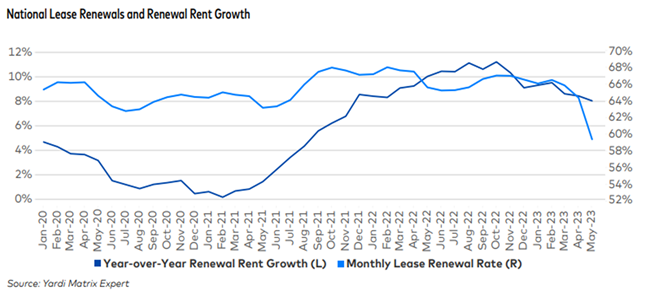
“Renewal rent growth remains stubbornly high, a sign of the large gap that grew between existing residents and asking rents over the past two years,” Yardi Matrix writes in the report.

National lease-renewal rates were 59.4 percent in May, down from 64.4 percent in April.

Rent growth is being driven by new units, and those multifamily rents are tied to supply as demand slows, says Yardi Matrix in  July report.

Regulatory focus on multifamily

“The unprecedented rapid growth in rents over the last few years has put a bullseye on the multifamily industry with policymakers across the country, with mixed results,” the report says.

Some examples:

  • The rapid growth in multifamily rents has increased policymakers’ scrutiny of the industry.
  • Some legislative efforts—including rent controls and fee regulations—add to the costs of owning apartments.
  • A more productive response is embodied in the Biden administration’s plan to incentivize and fund affordable supply.

Read the full Yardi Matrix report here.

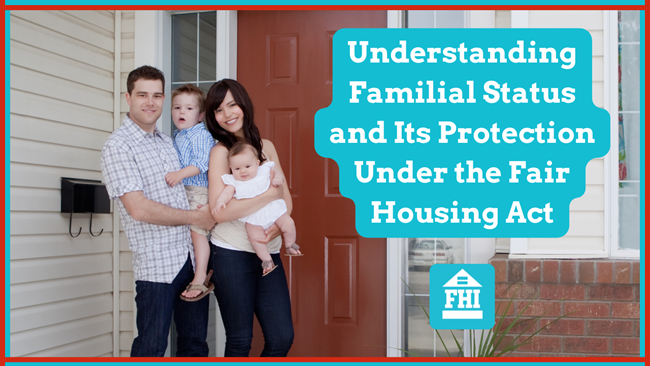
Understanding Familial Status and Its Protection Under the Fair Housing Act

Common

A look at the most common “accidental” violations of familial status by rental property owners and property managers and compliance with fair housing laws.

By The Fair Housing Institute

Familial status is a critical protected category under the Fair Housing Act, established to ensure equal housing opportunities for families with children and pregnant women.

This article delves into the history behind its inclusion, the exceptions where it may not apply, and the most common “accidental” violations property owners and staff should be aware of to maintain compliance with fair housing laws.

The Inclusion of Familial Status as a Protected Category

In 1988, during a period of high-interest rates, many young families were unable to afford homeownership, leading them to turn to the rental market.

Unfortunately, landlords at that time frequently refused to rent to families with children, going so far as to run ads explicitly stating “no children” or rejecting applications from families with kids.

Recognizing this discriminatory practice, the Fair Housing Act was amended to include familial status as a protected category. Familial status protection extended to families with individuals under the age of 18, including biological, foster, or adopted children, as well as pregnant women.

Exceptions to Familial Status Protection

The Housing for Older Persons Act (HOPA) introduced a specific exception to familial status protection to accommodate retirement housing.

However, this exception does not apply to deeply subsidized housing or properties under the purview of the U.S. Department of Housing and Urban Development (HUD). To qualify for the HOPA exemption, a property must meet one of the following criteria:

  • All residents must be 62 years or older.
  • At least 80% of the property’s units have a head of household or at least one individual aged 55 or older. The remaining 20% can have younger occupants but no children.

Additionally, the property must advertise itself as a retirement community, with community rules and policies clearly stated in the lease agreement. HUD properties designated as “elderly properties” cannot refuse occupancy to children if the household otherwise qualifies, as they are federally funded and subject to fair housing laws.

Common “Accidental” Familial Status Violations

Familial status violations represent 25% of all fair housing complaints, partly due to the complex interpretation of the law. Property owners and staff must be aware of potential discriminatory practices to avoid unintentional violations.

Three common accidental violations include:

Safety Issues: Implementing rules that discriminate against children, such as restricting pool access based on age, can lead to violations. Instead, property rules should focus on safety and competency, such as requiring swimmers to know how to swim.

Occupancy Limits: Adhering to the two-person per bedroom occupancy standard is a common practice, but other factors, such as room types and sizes, should be considered. Compliance with building and fire codes is also crucial.

Steering: While property managers may believe they are acting in the best interest of prospects, statements that imply that there aren’t a lot of children living here or perhaps another building closer to a park would be better can be viewed as discriminatory. It is best to let prospects ask questions and carefully document responses during tours.

Understanding familial status and its protection under the Fair Housing Act is crucial for property owners and staff. Regular and up-to-date training is essential to navigate the complexities of familial status regulations and maintain ongoing compliance with fair housing laws.

About the author:

In 2005, The Fair Housing Institute was founded as a company with one goal: to provide educational and entertaining fair-housing compliance training at an affordable price at the click of a button.


Sign Up For Our Weekly Newsletter And Get Apartment News And Helpful, Useful Content Each Week.

* indicates required

Fair Housing And Phone Calls – Ensuring Compliance

Fair Housing Matters: Landlord Liability for Tenant-on-Tenant Discrimination

Are You Prepared for Fair Housing Testing?

Property management professionals must remain vigilant about the potential fair housing implications associated with phone calls and fair housing compliance

Can You Charge a Pet Deposit For An Emotional Support Dog?

Whether you can charge a pet deposit for an emotional support dog is the question this week for Ask Landlord Hank.

Whether you can charge a pet deposit for an emotional support dog is the question this week for Ask Landlord Hank. Remember Hank is not an attorney and is not offering legal advice. If you have a question for him please fill out his form below.

Dear Landlord Hank,

Can you charge a pet deposit or rent fee for an emotional support dog?

-Taylee

Hi, Landlady Taylee,

A landlord is not supposed to look at an emotional support animal or service animal as a pet but rather as a needed medical device such as glasses, a walker, or a Seeing Eye dog.

I know a walker or your pair of glasses won’t have a urinary accident on the carpet, but you can’t charge a tenant a deposit nor extra rent for an emotional support dog, with REAL documentation, from a licensed medical provider.

Sincerely,

Hank Rossi

www.rentsrq.com

Each week I answer questions from landlords and property managers across the country in my “Dear Landlord Hank” blog in the digital magazine Rental Housing Journal.    https://rentalhousingjournal.com/asklandlordhank/


Whether you can charge a pet deposit for an emotional support dog is the question this week for Ask Landlord Hank.
Landlord Hank says to look at an emotional support dog as a needed medical device.

Ask Landlord Hank Your Question

Ask veteran landlord and property manager Hank Rossi your questions from tenant screening to leases to pets and more! He provides answers each week to landlords.

Should I Renew Tenant’s One-Year Lease Or Go Month-To-Month?

Can I Limit the Number of People in My Rental?

Do I Have to Paint and Replace Flooring for a Long-Term Tenant?

A Tenant Poured Grease Down Drain Who Is Responsible?


Sign Up For Our Newsletter And Get Rental Housing And Apartment News And Helpful, Useful Content Each Week.

SB 1069 Brings Oregon Residential Landlord/Tenant Act Into the 21st Century

Senate Bill 1069 brings the Oregon Residential Landlord and Tenant Act more into the 21st Century making changes to written notice and more

Senate Bill 1069 brings the Oregon Residential Landlord and Tenant Act a bit more into the 21st Century as it makes changes to written notice, service of final accounting and more.

By Bradley S. Kraus
Attorney at Law

The 2023 legislative session came and went and, much like others before it, particular pieces of legislation received the most fanfare.

This year’s legislative session gave us House Bill 2001, the inequitable effects of which this article series has previously covered. However, in a shocking turn of events, the legislature also passed a separate bill—Senate Bill 1069—which brings the Oregon Residential Landlord and Tenant Act a bit more into the 21st Century upon its effective date next year.

It makes changes to written notice, service of final accounting, and the available methods of returning monies for deposit returns and waiver avoidance.

Senate Bill 1069 makes significant changes to the ORLTA’s written-notice statute, ORS 90.155.

Currently, there are only three viable methods of written notice under the ORLTA: personal service, first-class mail, and post-and-mail. Senate Bill 1069 allows the landlord and tenant to agree, after the tenancy begins and the tenant has occupied the premises, to a new method of “email-and-mail” service. Along with the timeline, the addendum must (a) specify the landlord email address from which the landlord agrees to send and receive email, (b) specifies the email address from which the tenant agrees to send and receive email, (c) allow either party to terminate service via email, or to change their email address with no less than 3 days written notice, and (d) contain a specific disclosure discussed in SB 1069. If done correctly, this will allow for service timelines similar to post-and-mail notice timelines.

Return of Monies

Another change to the law, which is long overdue, affects ORS 90.412 with respect to the return of monies. Currently, if a landlord must return monies tendered by the tenant to avoid waiver, the landlord must return that personally to the tenant or via first-class mail. That return can be done with the check the tenant or other third party tendered, or the landlord can write a check. This can present accounting challenges and logistical nightmares that are unnecessary today.

Senate Bill 1069 now allows for a return of money electronically to a bank account or other financial institution designated by the tenant via a written addendum. Like the changes in ORS 90.155, the tenant must agree to receive money electronically after the tenancy begins and the tenant has occupied the premises by way of separate addendum. This change will be a welcome addition, as the current laws are unnecessarily archaic.

Security Deposit Refunds

Finally, SB 1069 makes similar “electronic transmittal” changes to security-deposit obligations. Senate Bill 1069 changes ORS 90.300 to allow for the transmission of required final-accounting documents under ORS 90.300 through email, once the addendum described above is completed.

Similarly, landlords will be allowed to return security-deposit refunds to a designated bank account or other financial institution, assuming a written addendum is in place as described above. This will remove the requirements of a physical check and final accounting being mailed to the tenant post-tenancy and will allow landlords to complete those “post-tenancy obligations” in a more modern way.

Landlords should keep in mind that these changes in the Oregon Residential Landlord Tenant Act do not take affect until January 1, 2024, so they should not implement or use these methods now. However, landlords should prepare for these changes by procuring the appropriate addendums to put in place once the calendar turns.

About the author:

Brad Kraus Portland Attorney Think Like A Tenant: Qualifying Repair and Renovation Landlord Exemption Under SB 608

Bradley S. Kraus is an attorney at Warren Allen LLP. His primary practice area is landlord/tenant law, but he also assists clients with various litigation matters, probate matters, real estate disputes, and family law matters. You can reach him at kraus@warrenallen.com or at 503-255-8795.


Portland Update: Changes to FAIR Ordinance Bring (Some) Necessary Changes

Dealing with Habitability issues and Substitute Housing


Overcoming Today’s Economic Obstacles in the Multifamily Sector

Here are some ways to successfully and effectively overcome today's economic obstacles in the multifamily sector and navigate cycles
Surging supply of new apartment construction and economic turbulence continuing to create downward pressure on market fundamentals.

Here are some ways to successfully and effectively overcome today’s economic obstacles in the multifamily sector.

By John Carlson
President of Mark-Taylor

The state of the U.S. economy is experiencing notable changes, and the multifamily industry is no exception. Following a period of rapid expansion, the market is exhibiting signs of deceleration with oversupply affecting the Phoenix Metro multifamily sector for the first time since 2011.

Amid increasing supply-side pressure, developers, operators and property-management companies must understand how to work through long-term cycles occurring within the multifamily industry. Such shifting economic conditions separate investment managers who provide five-star services and products from those who rely on a strong market to boost their organization’s performance.

As an asset manager, here is how to successfully and effectively navigate through these cycles as well as the shifting economic landscape.

Understand the current landscape

In multifamily, it is important to remember that we are never bigger than the market. During the past two years, apartment fundamentals were overheated and unsustainable. This is reflected in the data with surging supply and economic turbulence continuing to create downward pressure on market fundamentals. Headwinds include:

  • Supply-side pressure near-term;
  • Decelerated transaction activity as cost of capital continues to rise;
  • Increasing cost of debt, which is further complicating ownership attempting to refinance or place permanent debt post-stabilization;
  • Global macroeconomics, geopolitical uncertainty and U.S. economic conditions in play; a recession is likely looming whether it be a “soft” or “hard” landing.

Adapt to ever-evolving market trends

As a market, the peak is behind us. Adapting to ever-evolving market trends in multifamily requires a willingness to embrace change and a commitment to staying ahead of the curve to meet the desires of your resident base. Doing so entails staying abreast of new trends, technologies and shifts in the market, while being able to pivot and adjust business/operational strategies accordingly.

To satisfy the consumer preferences of both clients and customers, it is vital to create an environment that meets their needs.

Build strong relationships

Transparency is the key to building trust and establishing positive relationships with investors. Although consistent conversation is necessary in all partnerships, it is vital to strategically prepare for 2024 headwinds.

Building strong relationships is critical in the multifamily industry, especially when working through long-term cycles. These relationships can help you weather difficult market conditions, and they can also provide you with valuable insights into market trends and conditions.

Use data-driven strategies

Understanding your market’s trends and economic data across submarkets is a critical component to navigating projects, specifically those in the lease-up phase. Diligently tracking key ancillary macroeconomic indicators on a monthly and quarterly basis will aid in the forecasting of market influences. This approach empowers you to make proactive, informed strategies and decisions that set your assets up for high performance in their area.

Prioritize integrity and ethics

When faced with economic challenges, it can be easy to lose sight of your mission and vision, and in turn, become hyper-focused on short-term gains or survival. By staying true to your core values, you can remain grounded in your long-term goals and more effectively navigate difficult economic conditions.

Staying in tune with where you are headed and where you want to go as an organization is the key to seamlessly balancing the needs of your business and the needs of your residents and team members. People want to work for and with companies that share their values and beliefs, prioritizing integrity and ethics in their business practices. This is how Mark-Taylor has created exceptional communities that invite, inspire and feel like home for nearly four decades.

About the author:

Here are some ways to successfully and effectively overcome today's economic obstacles in the multifamily sector and navigate cycles
John Carlson

John Carlson, president of Mark-Taylor Companies, has dedicated the last 21 years of his career to the organization. Through his strategic direction and expertise in macroeconomics, John has scaled Mark-Taylor to its largest size in the company’s history while increasing employee engagement. He credits the exceptional people and the authentic and ambitious culture at Mark-Taylor as the keys to the company’s continued success.

Sign Up For Our Weekly Newsletter And Get Rental Property And Apartment News And Helpful, Useful Content Each Week.

* indicates required


How to Attract and Retain Team Members Within the Multifamily Industry

3 Best Practices for Communicating with Residents

4 Ways to Balance the Needs of Pets and Residents in Multifamily Communities

7 Important Rental Property Preventative Maintenance Steps

Here are the 7 most important preventative rental property maintenance steps to protect your rental property investment and keep tenants happy.
Keeping the gutters cleaned and well-maintained can further prevent serious water damage .

Here are the 7 most important preventative rental property maintenance steps to protect your rental property investment and keep tenants happy.

By Bri Hilton

A survey shows 64 percent of respondents said their landlord was slow to make repairs, while more than one-third of respondents said that repairs were done badly, according to a survey of more than 1,000 tenants by the legal document company Legal Templates.

While getting the call for needed repairs can be a challenge, keeping up with preventative maintenance tasks is a fantastic way to keep the property up to par while keeping tenants happy. From checking in on the roof to pest control and beyond, here are just seven simple rental property maintenance steps that are beneficial in the long run.

No. 1 – Regularly cleaning out the gutters

Keeping the gutters cleaned and well-maintained can further prevent serious water damage to your rental and its foundation, thus making it a simple task worth setting time aside for.

According to The Spruce, regularly cleaning gutters maintains water flow from the roof to the ground (and as such, away from the house). While getting the ladder out and carefully removing any debris from the gutters is one way to get the job done, The Spruce highlights other ways to do so. Vacuuming the leaves from the gutters is just one option (which will require a 2-½-inch gutter cleaning accessory kit ‘specifically designed for wet/dry vacuums’), which will allow you to clean the gutters while standing on the ground.

However, it’s noted that this method isn’t the best option for wet leaves, in which case another route would involve blowing the leaves from the gutter with a pressure washer (though this will involve a lot of clean up).

No. 2 – Inspecting the roof

When looking to further prevent leaks and ensure that the rental is able to withstand the elements, regularly checking in on the roof will allow you to be in-the-know and up to date on its condition.

According to Build Magazine, it’s important to inspect the roof once every three months, “looking for signs of wear and tear such as broken or missing shingles, cracks in the flashing, or loose nails.” Looking for moss or algae growth is another thing to look out for, as they can cause damage to your roof over time.

Build Magazine later goes on to stress the importance of having your roof inspected by a professional each year, which will help greatly in identifying problems “before they become major issues.”

Here are the 7 most important preventative rental property maintenance steps to protect your rental property investment and keep tenants happy.
Have your roof and roof caps inspected by a professional.

No. 3 – Preventing leaks

Leaks in the home can bring a variety of issues to the table, from water damage to mold.

In addition to the cost involved, there’s no question that preventative rental property maintenance steps are key in preventing leaks and subsequent issues. In addition to keeping up with roof maintenance to prevent leaks, keeping drains clear and pipes up to date are further ways to prevent leaks.

Recognizing telltale signs of leaks when doing an inspection is another way to prevent further damage — according to one Forbes Home post, these signs include damp, dark spots on the floor, wall, ceiling and pipes, while leaks can come from several sources, such as toilets, sinks, washing machines, dishwasher, and the like.

In the case of water damage, addressing the matter as quickly as possible is imperative.

This is largely due to the fact that the longer materials are wet, the more extensive the damage can be — wood can warp, carpet can delaminate, etc. The presence of mold can also become a health and safety issue as well. While shutting off the water and fixing the issue that caused the water damage are the first steps, the water damage restoration process involves several steps to address the situation properly.

From removing any standing water using specialized pumps to removing damaged materials, involving a professional water damage restoration service is ideal in going about the matter properly and with the right tools.

No. 4 – Keeping pests at bay

About 2.9 million reported sightings of both roaches and rodents in their homes, according to the 2019 American Housing Survey (AHS).

While a variety of factors can create a pest problem (such as a dirty kitchen), keeping up with regular pest control and maintenance can be a great way to ensure that pests are kept at bay. According to RentPrep.com, preventative pest control should be done at least seasonally by landlords.

Hiring pest control professionals is a great way to go about the matter stress-free, with pest prevention treatments often involving “spraying around the exterior of the house, looking for signs of infestation, and treating the baseboards inside,” highlights RentPrep.

7 most important rental property maintenance steps to protect your rental property investment and keep tenants happy.
Pest control should be done seasonally.

No. 5 – Appliance maintenance

Maintaining a home’s appliances will not only keep them running smoothly, but will ensure they last longer, too.

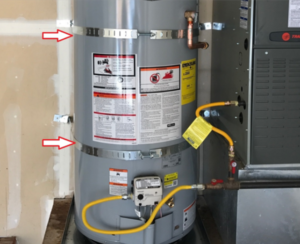
In addition to checking in on the air conditioning and heating system, one Apartment Therapy post highlights the value of draining the hot water heater. “Minerals in your water will build up over time at the bottom of your tank, which also causes the tank to work harder, which often causes the hot water heater to fail, causing water damage,” explains John Bodrozic, co-founder of HomeZada, a digital home management site.

Bodrozic goes on to advise draining your tank from the bottom at least once a year (to get the sediment out) before refilling it.

No. 6 – Smart landscaping techniques

Regarding situations where landscaping responsibilities fall on the landlord, there are a variety of preventative maintenance tasks that can keep the lawn healthy and presentable.

In addition to taking advantage of low-maintenance plants, regularly pruning trees is a great way to care for the landscape as well as the property as a whole. “Pruning will help ensure the tree stays healthy by increasing airflow and light penetration.

By pruning the tree, you will also remove dead, damaged, and dying branches,” The Spruce points out, going on to note that this can work to remove hazards to people and structures around the plant. For example, a tree’s branches can scratch the siding of a home, not to mention create issues when it comes to potentially blocking gutters or preventing proper drainage.

No. 7 – Rental Property Maintenance Steps – Safety first 

A comprehensive checklist is a great way to keep track of maintenance tasks, especially when it comes to important safety maintenance such as testing the smoke alarms, carbon monoxide detectors, fire extinguishers, etc.

If you have multiple rental properties to keep up with, streamlining maintenance can be a great way to keep things up to date and lasting longer.

For example, one Zillow post highlights the value that automation can have. “Consider investing in fixtures with long battery lives or automatic features, like exterior motion lights, programmable thermostats, a bathroom fan connected to the light switch to prevent mold, or small solar lights to brighten a pathway.”

Making repairs to a property can be a stressful endeavor, though taking on preventative maintenance is a great way to keep future repairs to a minimum while improving the tenants’ stay.

From keeping up with appliances and pests to checking up on the roof, there are a variety of tasks that are well worth the effort and time in these rental property maintenance steps.

About the author:

Bri Hilton  worked in property management for almost a decade before taking a step back to start a family. She has since rediscovered her teenage talent for writing and enjoys contributing to a range of print and online publications.

Sign Up For Our Weekly Newsletter And Get Rental Property And Apartment News And Helpful, Useful Content Each Week.

* indicates required

Rental Property Maintenance Checklist, Part One: Plumbing

rental property maintenance plumbing and water heater secured with straps in earthquake prone areas of the country

3 Common Plumbing Emergencies In Rental Properties And What To Do

Rental Property Maintenance: 6 Items to Troubleshoot in Your Crawl Spaces

How to Waterproof Your Basement</

Part 2 – Rental Property Maintenance: Security, Pest Control, & Exteriors


Finding Vendors Shouldn’t Feel Like A Game

Here are a couple of methods you can use to ensure your projects are noticed and not neglected, by vendors who know and serve our industry

Here are a couple of methods you can use to ensure your projects are noticed and not neglected, by vendors who know and serve our industry as finding vendors should not feel like a game.

By Scot Aubrey

Recently as my granddaughters are getting older, we’ve started playing a favorite childhood game of hide and seek.  Either I am really good at hiding or their 4- and 2-year-old minds aren’t the best at seeking, but I find myself having to give them clues to my hiding spots.

It usually starts with a small whistle or something and then as they get closer, I’ll even whisper their names so I can be found. Then I have to react with great enthusiasm once I’ve been discovered, only to reset the game and do it all over again.

As a housing provider, I feel like this same type of game takes place whenever I have a service need at a property, only this time it is the vendor for a particular service who seems to be hiding and I’m trying desperately to find them. Unfortunately for me, they aren’t always wanting to be found and aren’t really giving me any clues to their whereabouts.

One of the challenges that we as small to midsize housing providers face on a regular basis is finding vendors that will work on our projects. In a world where private equity seems to be gobbling up small businesses with regularity, we are often forced to use large vendors who treat us more like a number and less like a customer they are trying to acquire.

In an economy and workforce where these things are so challenging, here are a couple of methods you can use to ensure your projects are noticed and not neglected, by finding vendors who know and serve our industry.

JOIN A LOCAL ASSOCIATION

For most of us, there are associations in and around our local areas that are dedicated to promoting and supporting people just like you.

These associations share market updates and best practices to help everyone from the newest landlord to the seasoned veteran. One other great thing about associations is that they almost always have a supportive group of local vendors that belong to their association, vendors who can repair just about anything that can go wrong on your property.

By being part of an association, they are already showing their commitment to our industry and using them when things break at your property can be a reward for their loyalty to housing providers. These smaller vendors provide the same quality of work for a better price since they are not trying to satisfy the shareholders involved with private equity.

ASK YOUR FELLOW HOUSING PROVIDERS

One of the best parts of being an investor and housing provider is the great community that exists among us.

If you are new to the business or new to an area, find a local person who is in the same situation and start asking questions.  Who do you use for (fill in the blank)?  Why do you use them?  How much on average do they charge for this type of service?  How are they when interacting with tenants?  You’ll quickly find the vendors that you want to seek and also those you may want to hide from.

USE A VENDOR MANAGEMENT SERVICE   

We’ve all seen or heard the ads for vendor management services; they seem to be on most channels of communication multiple times a day.  When looking for vendors this way, be cautious.

Always read the reviews and when necessary, call the vendor and ask about specific reviews that you may have seen. Ask questions about both professional and criminal background qualifications that they use when hiring employees to represent them.  Incorporating the first two principals, ask if they are part of any local associations or if they provide service to other housing providers in the area.

In short, exercise your due diligence in procuring the right vendors for you and your jobs, not just ones that pay the price for national or local advertising.  As a company, we have developed a service called VendorVIP that is focused on identifying the right contractors and then connecting them with housing providers.

No more closing your eyes and counting to ten; when it comes to managing your property, leave the games to others and get serious about finding the best vendors available.  By using the resources available to you in your local community, you can more easily find the vendors that will most benefit your investment and your bottom line.

About the author:

Scot Aubrey is Vice-President of Rent Perfect, a private investigator, and fellow landlord who manages short-term rentals.  Subscribe to the weekly Rent Perfect Podcast (available on YouTube, Spotify, and Apple Podcasts) to stay up to date on the latest industry news and for expert tips on how to manage your properties.  To learn about VendorVIP, visit web.vendorvip.com/vvweb/

Sign Up For Our Newsletter And Get Rental Property And Apartment News And Helpful, Useful Content Each Week.

* indicates required

Why I Like My Rental Properties’ Nosy Neighbors

Three Steps to Becoming a Successful, Lazy Landlord