Home Blog Page 54

Multifamily Rents Drop Amid Supply Surge

Multifamily rents turned negative in September, with the average U.S. rent declining $6 from August amid the multifamily supply surge

Multifamily rents turned negative in September, with the average U.S. rent declining $6 from August and $3 during the third quarter amid a supply surge, Yardi Matrix says in its September report.

“Still, the market remains robust overall, owing to strong job growth and household formation, despite challenges that include rising energy costs and higher interest rates,” the report says.

  • Weighed down by the slowing economy and a heavy delivery pipeline in some markets, U.S. multifamily rents dipped in September. The average U.S. asking rent fell $6 to $1,722 during the month, while year-over-year growth fell to 0.8%, down 60 basis points from August.
  • Market performance remains divided, as the Top 30 rankings are dominated by metros in the Northeast and Midwest. Most of the 14 metros with negative year-over-year growth are located in the Sun Belt or West.
  • Single-family rents fell for the second straight month, down $4 nationally to $2,104. Year-over-year growth dropped 10 basis points to 0.4%. Occupancy was unchanged at 95.9%, a sign that demand continues to be robust.

Supply Surge

“Much of the negative rent growth stems from the robust delivery pipeline that is putting pressure on rents in some metros.

“Demand and absorption remain positive in almost every metro—and occupancy rates have steadied—due to ongoing strong job growth and household formation. So while rent growth will slow for a while, the market remains healthy,” the report says.

Does The Monthly Drop Signal More Bad News for Multifamily?

Yardi Matrix said the industry “faces headwinds,” including a slowing economy and other factors such as:

  • Consumers are losing some strength as the post-pandemic boom as household savings dwindles.
  • Millions of households will have less to spend as they resume paying student loans.
  • Energy prices are rising.
  • Large-scale workers’ strikes could have an impact if they continue at length.
  • Higher interest rates are working their way through the economy.
  • Companies with greater debt-service costs have less to spend on productive uses.

The Sting of High Interest Rates

The report says multifamily property values have dropped at least 20% based on capitalization rates alone.

“Mortgage rates are over 6% for the government-sponsored agencies and even higher for other types of lenders. Even though delinquency rates remain subdued, many borrowers are being forced to either pay down the loan balance or renegotiate an extension with lenders,” Yardi Matrix says.

Renewal Rent Growth Continues to Fall
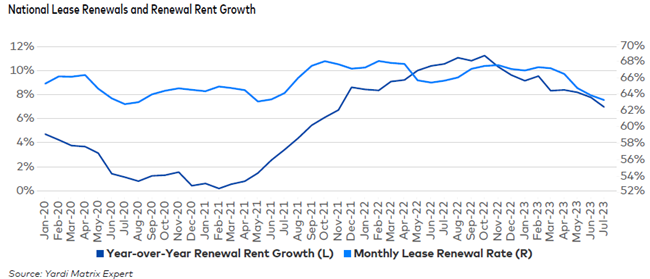
Multifamily rents turned negative in September, with the average U.S. rent declining $6 from August amid the multifamily supply surge
Chart courtesy of Yardi Matrix

Renewal rent growth again decelerated in August, to 6.4% year-over-year, down 60 basis points from July. Renewal rents, the change for residents that are rolling over existing leases, have gradually declined since peaking at 11.1% in August 2022.

The national lease renewal rate averaged 60.4% in August.

Summary

“The multifamily market heads into the fourth quarter with some headwinds. Not only is it the season when rent growth typically flattens but expectations are that the economy and job market will weaken after a period of strong gains. Every market, though, should be viewed through its own supply/demand drivers,” Yardi Matrix says in the report.

Read the full report here.

About Yardi Matrix

Yardi Matrix researches and reports on multifamily, office and self-storage properties across the United States, serving the needs of a variety of industry professionals. Yardi Matrix Multifamily provides accurate data on 18+ million units, covering more than 90 percent of the U.S. population. Contact the company at (480) 663-1149.

California Caps Security Deposits At One Month’s Rent

A new California law scheduled to take effect next year caps security deposits at one month’s rent, according to reports.

A new California law scheduled to take effect next year caps security deposits at one month’s rent, according to reports.

Gov. Gavin Newsom has signed Assembly Bill 12 into law, which states that security deposits can’t be any larger than one month’s rent. The law is slated to take effect on July 1, 2024.

California became the 12th state to pass a bill that limits security deposit requirements.

Landlords could charge up to three months’ rent as a security deposit, plus the first month’s rent, due to an older California law.

In Los Angeles, where the average median rent is $2,895, a security deposit can cost nearly $9,000. In San Francisco, where the median rent is $3,495, deposits can cost more than $10,000.

Assembly Bill 12 was introduced by San Francisco Democratic Assemblymember Matt Haney and aimed to cap the cost of security deposits as part of a broader effort to make housing units more affordable statewide. “When renters can’t afford deposits, they often have to borrow from predatory lenders, go into debt, or just stay put,” Haney said in a statement.

“Landlords lose out on good tenants and tenants stay in apartments that are too crowded or have unsafe living conditions. Creating a rental deposit cap is a simple change that will have an enormous impact on housing affordability for families in California,” he said in the statement.

The California Apartment Association has opposed the bill and issued a statement following the bill signing.

Debra Carlton, executive vice president of state public affairs at CAA, wrote an opposition letter to Haney saying that the bill would limit “a property owner’s ability to financially cover property damage or unpaid rent is an unfair imposition for rental housing provider.”

Sign Up For Our Weekly Newsletter And Get Rental Property And Apartment News And Helpful, Useful Content Each Week.

* indicates required

Cincinnati Landlords Must Give Renters Security-Deposit Options

Security Deposits: Common and Costly Mistakes

Rental Housing Deposit Alternatives Drive More Leases Survey Says

TransUnion To Pay $15 Million Over Tenant Screening Inaccuracies

TransUnion To Pay $15 Million Over Tenant Screening Inaccuracies

TransUnion has agreed to pay $15 million in a settlement over tenant screening inaccuracies because “TransUnion and subsidiary violated the FCRA (Fair Credit Reporting Act) by failing to remove inaccurate or incomplete eviction records from consumer reports, harming ability of people to obtain housing,” the Federal Trade Commission (FTC) said in a release.

The FTC and the Consumer Financial Protection Bureau (CFPB) obtained the settlement that will require credit reporting agency TransUnion LLC and a subsidiary to pay a total of $15 million to settle charges they failed to ensure the accuracy of tenant screening reports.

In a complaint filed in federal court, the FTC and CFPB say that Colorado-based TransUnion Rental Screening Solutions, Inc. (TURSS) and its parent company, Trans Union LLC, based in Chicago and commonly known as TransUnion, violated the Fair Credit Reporting Act (FCRA) by failing to ensure the accuracy of the information included in their tenant background screening reports.

Tenant screening inaccuracies

“Consumers struggling to find housing shouldn’t be shut out by tenant-screening reports that are ridden with errors and based on data from secret sources,” said Samuel Levine, director of the FTC’s Bureau of Consumer Protection. “Protecting consumers looking for housing is critical to a fair economy, and we are proud to partner with the CFPB in obtaining this record-breaking order.”

“Americans across the country were put at risk of wrongful housing denials because TransUnion failed to follow the law,” said CFPB Director Rohit Chopra. “We are ordering TransUnion to cease its yearslong illegal activity, clean up its broken business practices, redress its victims, and pay penalties.”

TURSS provides background-screening reports about consumers to thousands of clients, including rental property owners, property management companies, employers, and other background-screening companies, for tenant and employee selection.

These reports may include information about consumers’ criminal and eviction records, including the amount sought by a landlord in court, any judgment amount the court may award, and the amounts owed by consumers. Trans Union LLC manages and oversees TURSS’s compliance with the FCRA.

Inaccurate and outdated information in tenant-screening reports can significantly hamper consumers’ ability to find housing, costing them time and money by prolonging their search for housing, requiring them to pay additional application fees and spend time correcting errors in their background reports.

TURSS obtains eviction records from third-party provider LexisNexis Risk and Information Analytics Group, Inc. but has failed to take steps to ensure the accuracy of the data it was provided, according to the complaint. The FTC and CFPB say TURSS failed to follow reasonable procedures to: prevent the inclusion of multiple entries for the same eviction case; accurately report the disposition of eviction cases it included in its reports; accurately label the monetary amounts associated with those cases; and prevent the inclusion of sealed eviction records in its background reports.

Until April 2021, TURSS often reported developments in the same eviction proceeding as separate events, making it appear as if a consumer had more than one eviction, according to the complaint. The company took steps to change that practice only after learning of the FTC’s investigation. The company also failed to follow reasonable procedures to accurately report the outcome of evictions, such as reporting an eviction was filed without reporting that it was also dismissed months or years before, or reporting that a landlord was awarded a judgment in an eviction proceeding when the case was actually dismissed.

The company also included inaccurate labels in its reports that mischaracterized the nature of certain information in consumers’ eviction records, according to the complaint. The company labeled money that a landlord claimed a consumer owed as “Judgment Amount,” giving the false impression that this was the amount awarded by a court. The complaint also charges that TURSS failed to put in place reasonable procedures to prevent eviction records that had been sealed, or restricted from public view, by a court from appearing in its reports.

The FTC and CFPB also say that TURSS violated the FCRA by failing in many instances to provide consumers with the names of third-party vendors from whom it received criminal and eviction records included in its tenant screening reports, which made it harder for consumers to correct errors in their background reports.

Under the proposed order, which must be approved by a federal court before it can go into effect, TURSS and Trans Union LLC will be required to pay $11 million, which will be used to compensate consumers, and a $4 million civil penalty, which will go to the CFPB’s civil penalty fund. This is the largest amount ever recovered in an FTC tenant screening matter. In addition, the companies must also take steps to address the allegations of the complaint and help enable consumers to dispute inaccurate information in the future, including:

  • Put in place procedures to ensure the accuracy of information they provide about consumers in background screening reports, particularly information related to evictions;
  • Design procedures to prevent the inclusion of the types of problematic records detailed in the complaint including sealed records, unresolved eviction cases, multiple filings for a single eviction case, and any monetary amounts other than final judgments;
  • Disclose the sources of information in a consumer’s file, including identifying third-party vendors;
  • Implement practices and procedures that will help the companies identify future problems with criminal and eviction records and take corrective steps to fix them;
  • Provide consumers upon request and at no charge all the information in their file at the time of the request, including any information that TURSS might provide to a landlord or property manager; and
  • Make available on TURSS’s website a sample “adverse action notice letter” that landlords can use when they turn down applicants for housing, which will prompt the landlord to share the applicant’s tenant screening report and tell them why they are denying their application.

2 Background Check Providers to Pay $5.8 Million Over Inaccurate Reports

Sign Up For Our Weekly Newsletter And Get Rental Property And Apartment News And Helpful, Useful Content Each Week.

* indicates required

Local Exceptions Complicate Oregon’s Post-SB 611 Rent Regulations

Rent control, rent increases and rent regulations are an ever-escalating complexity of Oregon laws so here is help in understanding them.

Rent control, rent increases and rent regulations are an ever-escalating complexity of laws in Oregon so here is some help in understanding them.

By Bradley S. Kraus
Warren Allen, LLP

With each law that passes, I receive questions from clients confused about what that law means for them or their business practices. This is no doubt due to ever-escalating complexities of the laws—which are no longer written for the general public to understand—but also because those who craft the laws fail to understand the direct and indirect effects of the laws they pass.

As a reminder, SB 611 passed earlier this year, marking a change to allowable rent increases in Oregon. Rent increases under the Oregon Residential Landlord and Tenant Act are governed by ORS 90.323. That statute discusses the requirements for a valid rent-increase notice, both as it relates to timing and form. Senate Bill 611 modified ORS 90.323, now placing a hard cap on rent increases.

Oregon’s rent cap is now 7% + CPI, but no greater than 10%. That’s not terribly difficult to understand. However, when you add in the fact that local jurisdictions are now joining the fray, creating their own rent-increase rules, penalties, and requirements, it creates a regulatory morass that is nearly impossible to understand.

That difficulty is exacerbated by the fact that local news organizations report the increase but fail to consider those local requirements. For example, one news organization recently reported in the summer, post-SB 611, that Oregon landlords could raises rent 10%. That is true…. unless you’re in Portland. Raising rent by 10% in Portland, regardless of the state cap, could trigger issues under the Portland City Code. Portland has capped rent increases at 9.9%, even despite the state rent cap, and Portland’s 9.9% cap exists unless the state cap is lower. In essence, Portland landlords must always comply with the lower amount.

Recently, the city of Eugene did the same, enacting several “renter protections,” one of which relates to a potential relocation-assistance payment if the landlord raises rent at the state law maximum. Accordingly, two sets of rules emerge, as rent increases in Portland and Eugene implicitly have a different rent-cap amount and other additional requirements.

Many landlords also struggle with the exemption to the state law cap under ORS 90.323, which exists if the first certificate of occupancy for the dwelling unit was issued less than 15 years from the date of the notice of the rent increase. If you believe this exemption applies to you, it is imperative that you seek legal counsel before invoking it. It does not mean that the tenant has lived there for less than 15 years, and there are additional requirements that must exist in the notice if the exemption is invoked.

It would be easy to simply have a uniform set of landlord/tenant laws to work off. However, the legislature has apparently ceded this important task to localities in various aspects, a troubling trend for this area of law. It adds layers of confusion and ridiculous penalties that only serve to drive housing providers out of the business.

About the author:
Rent control, rent increases and rent regulations are an ever-escalating complexity of laws so here is some help in understanding them.

Bradley S. Kraus is an attorney and partner at Warren Allen LLP. His primary practice area is landlord/tenant law, but he also assists clients with various litigation matters, probate matters, real estate disputes, and family law matters. You can reach him at [email protected] or at 503-255-8795.


Portland Update: Changes to FAIR Ordinance Bring (Some) Necessary Changes

Dealing with Habitability issues and Substitute Housing


Entrata Launches Fully Integrated Resident Financial Services

Entrata has launched a new product called Homebody that provides residents easy access to all-in-one resident finance services

Entrata has launched a new product called Homebody that provides residents easy access to all-in-one renters insurance, deposit alternatives and rent credit reporting, providing extensive financial benefits.

The fully integrated resident financial services offering called Homebody will initially consist of three core products including rent reporting, deposit alternatives and renters insurance. These products have high resident demand and product market fit and help address common barriers to entry for many residents, including the affordability of the current housing and rental markets.

They are now accessible and conveniently integrated directly into Entrata.

“Homebody is one of those rare products where everyone clearly wins — from the property managers to the residents,” said Adam Edmunds, Entrata’s CEO. “Through the offering, property managers will be able to streamline their services while elevating the resident experience, allowing them to add insurance, access deposit alternatives and get their on-time rent payments reported to the major credit bureaus to build their credit score. Together, these products deliver true value to residents to better control their financial identity, particularly in a time where affordability and financial health are top of mind for consumers.”

Homebody is focused on providing renters access to services that help them round out their financial health as a renter, from students looking for their first apartment or long-term residents who already have a more established financial identity. Property managers will maintain a single login for their residents and their teams for a seamless experience. Finally, site teams will now be able to quickly point residents to a single source, in turn streamlining the experience and application process for both renters and property managers.

Entrata recently found in its Resident Report that residents crave convenience and want the entire renting process to be simpler — decreasing both the number of steps and the time and effort to get approved. Also, over 75% of respondents said they’d be interested in purchasing additional products such as renter’s insurance, deposit alternatives, or even rent reporting during the application process — so long as it’s seamless. Homebody solves these core issues, along with one of the biggest traditional downsides of renting — the inability to build credit from rent payments. Entrata’s recent acquisition of Rent Dynamics allows residents to report on-time payments to the top three credit bureaus.

On the resident side, residents will have access to the dedicated financial Homebody mobile app where Entrata will continually enhance service offerings that are strictly relative to resident’s financial well-being. Additionally, access to these products and services will be natively integrated into workflows and ResidentPortal to drive the most seamless experience regarding any and every rental need.

To learn more about Homebody and what it can do for your organization and residents, please visit www.homebody.com.

About Entrata

Entrata is a leading operating system for multifamily communities worldwide. Setting the bar for innovation in property management software since 2003, Entrata offers solutions for every step of the leasing lifecycle and empowers owners, property managers, and renters to create stronger communities. Entrata currently serves over three million residents across more than 26 thousand multifamily communities around the globe. Learn more at www.entrata.com.

Entrata Acquisition Can Help Property Managers And Build Tenant Credit

4 Signs Your Rental Property Gutters May Need A Fall Cleaning

Rental Property Gutters: The Hot Maintenance Job of the Month

This week’s maintenance tip is a reminder that fall leaf season means now is a good time to check your rental property gutters to prevent overflowing gutters, so here 4 signs your gutters may need cleaning from Keepe maintenance folks.

4 Signs That Your Gutters Need Cleaning

1. Rainwater Is overflowing

 One of the major reasons to have gutters is to drain water from the roof and channel it away from the foundation. This also helps prevent your roof from holding excessive moisture that could lead to the rotting of its wooden parts.

However, when your gutter is filled with debris or wooden particles, it becomes difficult for it to control the water and even channel it away from your property.

2. Presence of algae and debris

 Algae, debris, dirt and leaves are most likely to find their way to your rental property gutters one way or the other. If you notice the presence of birds and critters, you may want to check if there is debris in your gutter. It can make a nice next for the birds which could lead to even more maintenance issues.

Failure to clean your gutter of algae and debris may lead to mold growth, which can damage the exterior area of your rental.

3. Stagnant water around the foundation

 Your foundation is the anchor that holds your rental to the ground and prevents moisture or even flood water from getting in.  But a clogged gutter can cause severe damage to your foundation if not cleaned properly and early.

If you notice a pool of standing water around your foundation, it could be caused by gutters not working property.

4. Stains on your siding

 If you notice any form of stains or streaks on your siding, it may be time to get your gutters checked and cleaned. This is because when your gutter is clogged with debris and leaves, water is not able to flow properly, causing it to seep into the siding.

While you may be able to handle minor gutter cleaning, you should consider hiring a professional company to handle bigger jobs. This will help you get the job done on time and correctly the first time.

About Keepe:

Keepe is an on-demand maintenance solution for property managers and independent landlords. The company makes a network of hundreds of independent contractors and handymen available for maintenance projects at rental properties. Keepe is available in the Greater Seattle area, Greater Phoenix area, San Francisco Bay area, Portland, San Diego and is coming soon to an area near you. Learn more about Keepe at https://www.keepe.com.

Sign Up For Our Newsletter And Get Rental Property And Apartment News And Helpful, Useful Content Each Week.

* indicates required

Is Landlord Responsible for Tenant’s Mail After Move Out?

Is the landlord responsible for tenant mail after move out and what to do with tenant's mail left at my rental

What to do with tenant’s mail after move out is the question this week for Ask Landlord Hank. Remember Hank is not an attorney and is not offering legal advice. If you have a question for him please fill out his form below.

Dear Landlord Hank:

Is it the responsibility of the landlord to forward mail to a previous tenant?

This tenant already said, before she left/ended her lease, that she would take care of the mailbox, yet her mail continues to be delivered in this address.

Please advise as to landlord’s responsibility re: mail. Thank you.

–Priscilla

Dear Landlady Priscilla,

As landlord, you do have responsibility for a tenant’s mail, and cannot just throw it away.

I would contact my former tenant and ask that they submit a change-of-address form to the post office.

Then I would contact the post office to let them know that the tenant is no longer at this address and ask that mail be forwarded.

Sincerely,

Hank Rossi

Each week I answer questions from landlords and property managers across the country in my “Dear Landlord Hank” blog in the digital magazine Rental Housing Journal.    https://rentalhousingjournal.com/asklandlordhank/


Is the landlord responsible for tenant mail after move out and what to do with tenant's mail left at my rental
Landlord Hank says, “As landlord, you do have responsibility for a tenant’s mail, and cannot just throw it away.”

Ask Landlord Hank Your Question

Ask veteran landlord and property manager Hank Rossi your questions from tenant screening to leases to pets and more! He provides answers each week to landlords.

Should I Renew Tenant’s One-Year Lease Or Go Month-To-Month?

Can I Limit the Number of People in My Rental?

Do I Have to Paint and Replace Flooring for a Long-Term Tenant?

A Tenant Poured Grease Down Drain Who Is Responsible?


Sign Up For Our Newsletter And Get Rental Housing And Apartment News And Helpful, Useful Content Each Week.

Second Consecutive Month With Negative Rent Growth

The U.S. saw a second consecutive month of negative rent growth in September, according to the October report from Apartment List.

The U.S. saw a second consecutive month of negative rent growth in September, according to the October report from Apartment List.

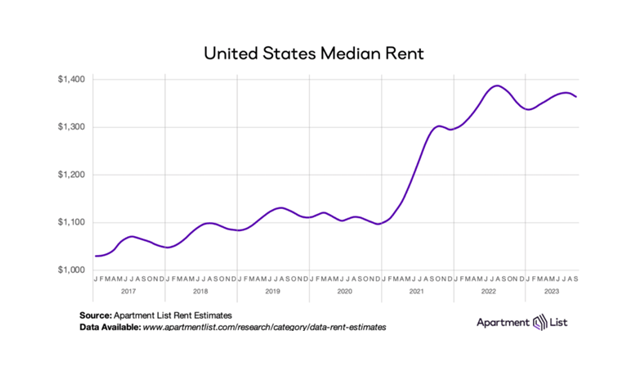
The nationwide median rent fell 0.5 percent to $1,364 and “we are now squarely in the rental market’s slow season,” the report says.

“Annual rent growth remains at -1.2 percent, meaning that on average, apartments across the country are 1.2 percent cheaper today than they were one year ago. This is a major deceleration from recent years, when annual rent growth neared 18 percent nationally and soared to over 40 percent in a handful of popular cities, the Apartment List Research Team writes.

Rent Cool Down Is Widespread

Negative rent growth continued as rents fell month-over-month in September in 85 of the nation’s 100 largest cities, and thanks to sluggish rent growth over the past 12 months, prices are down year-over-year in 71 of these 100 cities.

As the Consumer Price Index housing component now gradually “begins to reflect the cooldown that we’ve long been reporting, it will help to further curb topline inflation in the months ahead.”

Apartment vacancies are back above pre-pandemic levels

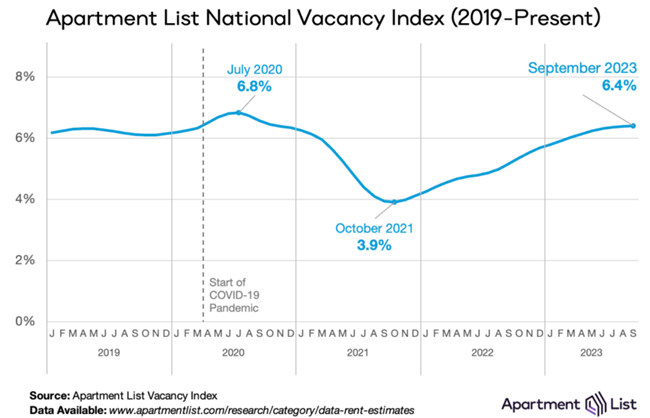
Apartment vacancies have increased for 23 consecutive months, and in September the index hit 6.4 percent, reaching pre-pandemic levels and approaching the pandemic peak set in 2020. There is  still a good chance that the vacancy rate will continue trending upward in the months ahead.

The U.S. saw a second consecutive month of negative rent growth in September, according to the October report from Apartment List.

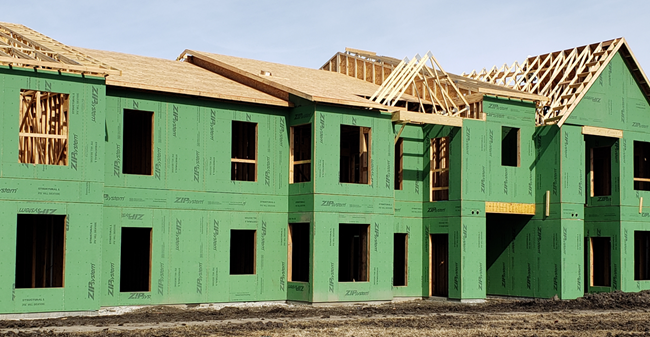
“New apartment construction is recovering from pandemic-related disruptions, and there are now more multifamily units under construction than at any point since 1970. As this new inventory continues to hit the market over the remainder of this year and into next, we are now entering a phase in which property owners are beginning to compete for renters to fill their units, a marked change from the prevailing conditions of the past two years, in which renters had been competing for a limited supply of available inventory,” the Apartment List research team write.

Conclusion

September’s 0.5 percent rent decline puts us squarely in the rental market’s slow season, and keeps year-over-year rent growth at a low -1.2 percent. As apartment demand wanes throughout the remainder of the year, and apartment supply improves through a strong construction pipeline, expect rent growth to cool further for the remainder of the year.

Read the full October report from Apartment List here

National Rent Growth Turned Negative Year-Over-Year

National rent growth turned negative for the first time since early in the pandemic as apartments today rent for less than one year ago

Sign Up For Our Weekly Newsletter And Get Rental Property And Apartment News And Helpful, Useful Content Each Week.

* indicates required

Accessing Solar for Multifamily Affordable Housing

Technologies like solar and heat pumps help net operating income; reduce operations and maintenance costs for multifamily affordable housing

Ryan Kristoff

The Inflation Reduction Act and Bipartisan Infrastructure Law have created a once-in-a-generation opportunity for multifamily affordable housing (MFAH) to leverage tax credits, rebates, and other incentives for holistic upgrade projects.

Technologies like solar and heat pumps can improve net operating income; reduce operations and maintenance costs; and create healthier, safer, more comfortable, and more affordable homes for the low-income tenants.

The Solar and Storage Investment Tax Credit (ITC) was increased to 30%, and MFAH can tap certain bonus credits. ITCs can be transferred to third parties and nonprofits can claim them as cash (“direct pay”). They can also be stacked with other financial resources which, though varied across states, can include:

  • Low-Income Housing Tax Credits,
  • Energy Efficient Commercial Buildings Deduction (179D),
  • Utility rebates
  • IRA Grant Funding such as EPA Solar for All,
  • Weatherization Assistance Program (WAP) funds, and
  • Solar Renewable Energy Credits

Holistic, successful upgrade projects rely on (1) developers’ ability to create sophisticated capital stacks, and (2) supportive policy, regulatory, and administrative infrastructure. For example, MFAH can only access WAP dollars if their state has multifamily-focused weatherization services. Statewide community solar programs can enable MFAH owners to subscribe entire properties to shared solar projects, thus keeping the benefits with the property regardless of tenant turnover (seen in New Mexico). Onsite solar is most cost-effective when projects can benefit from virtual net metering, which “virtually” allocates the solar from one large install to each apartment on the property.

Unfortunately, supportive frameworks for solar-in-MFAH are underdeveloped or nonexistent in most states. However, the MFAH market constitutes an economic heavyweight, meaning the industry has the power to advocate and push for a change.

About the author:

Ryan Kristoff is the Grants Director at ICAST, a national nonprofit that designs holistic retrofit solutions for MFAH. He works with local government, utility, state, and federal partners to design and launch MFAH-focused clean energy programs.

Accessing Utah’s Home Energy Rebate Programs

Settlements, Waivers, and Releases: Make Your Money Work

Landlords may not realize that, without a proper settlement document over tenant disputes and payments, they may cause headaches for themselves down the road.

Landlords may not realize that, without a proper settlement document over tenant disputes and payments, they may cause headaches for themselves down the road.

By Bradley S. Kraus
Attorney at Law
Partner, Warren Allen, LLP

The landlord/tenant arrangement is no different than any other contractual relationship.

Disputes often arise with accusations that one party is not living up to their obligations under the contract or applicable laws. Whether, for example, the tenant alleges their toilet wasn’t fixed quick enough or that the landlord unlawfully entered the premises without notice, money often changes hands as a result. The goal of this is obvious: pay money, make the problem go away. Many landlords mistakenly pay their tenants when a dispute arises, doing so through simply cutting a check and, at best, a “thank you” from their tenant. These landlords do not realize that, without a proper settlement document, they may have only caused more headaches for themselves down the road.

Payment of monies to a tenant without an agreement in place as to “why” and “for what” rests on several faulty assumptions: First, that the tenant agrees that they have been fully compensated for that claim or issue; second, that the tenant has no other claims or issues they feel need compensation; and third, that they won’t bring those claims later seeking further compensation.

In essence, the landlord assumes that their payment fully contracts their problems away entirely. If/when their tenant files suit alleging those claims, the landlord is usually shocked to learn that their money was handed out almost for nothing, as litigation costs usually dwarf that initial payment. What should happen, along with that exchange of that money, is the execution of a settlement agreement releasing any claims that may exist.

The necessity of a document evidencing the agreement is found in principles of contract law. Settlement agreements are contracts, subject to the basic rules of contract law. If you have reviewed a written settlement agreement, they usually contain waivers and releases dealing with any/all claims that exist as of the date of that agreement. As you can imagine, broad waivers and releases (which would protect the landlord) are usually not something non-lawyers discuss during conversations related to compensation. Even if those discussions arguably took place, in my experience, they would likely be denied/rejected by the tenant and disregarded by the court due to the lack of a document evidencing the same. Thus, verbal agreements are rarely enforceable and therefore not recommended.

A basic component of contract law is that the parties’ intent controls. For any release to be valid, there must be both knowledge of the existence of a claim and an intention to relinquish it, in the absence of a specific promise to release liability for unanticipated claims. Without a document evidencing such an intention, there is no evidence that the payment covers/releases every claim available. The court likely won’t save the landlord from the new claims filed by the tenant, barring unusual circumstances, leaving the landlord footing the bill for a fight they likely thought they had resolved.

While it’s easy to throw money at a problem, it’s important to make that money work.

If you have a dispute with a tenant in need of resolution, settlement documents related to these discussions are common. If a tenant refuses to sign any documents addressing the compensation provided, you may want to reconsider that payment until they are ready to properly document the understanding of the parties. At a minimum, you should document your efforts to settle the matter in writing, so that if the issue escalates, it can be helpful in the future.

Without these things in mind, you may be throwing your money down the drain.

About the author:

Landlords may not realize that, without a proper settlement document over tenant disputes, they may cause headaches for themselves down the road.
Brad Kraus

Bradley S. Kraus is an attorney at Warren Allen LLP. His primary practice area is landlord/tenant law, but he also assists clients with various litigation matters, probate matters, real estate disputes, and family law matters. You can reach him at [email protected] or at 503-255-8795.

Portland Update: Changes to FAIR Ordinance Bring (Some) Necessary Changes

Dealing with Habitability issues and Substitute Housing