Home Blog Page 4

The Growth of Rent-Now, Pay-Later Plans

A number of companies are offering rent-now, pay-later plans that pay the landlord in full each month, then charge the tenant smaller amounts

A growing number of companies are now offering rent-now, pay-later plans that pay the landlord in full each month, then charge the tenant smaller amounts two or three times over the course of the month.

Companies such as Flex, Livble and, more recently, Affirm, say breaking rent into multiple payments can help renters manage cash flow. But consumer advocates warn the products typically function like short-term loans, layering fees onto already-strained budgets and, in some cases, carrying triple-digit effective interest rates — raising questions about whether they ease financial pressure or deepen it.

Launched in 2019, Flex is one of the largest companies focused on splitting rent payments. The company says its 1.5 million customers now send about $2 billion a month in rent through its system, and several of the country’s largest landlords accept Flex as a payment option.

Flex says most of its customers are lower-income renters with weaker credit profiles. The company reports a median credit score of 604 among its users and says about one in three customers works more than one job to make ends meet.

Kellen Johnson, 44, told the Associated Press he started using Flex to split up his rent payments about two years ago. Instead of paying the whole $1,850 of his rent on the first of the month, Johnson would pay $1,350 on that date, and $500 on the 15th. For the service, Flex collected a $14.99 monthly subscription fee, as well as 1% of the total rent, which for Johnson was $18.50, bringing his monthly charges for the app to more than $33.

“Renters should be skeptical of any financing providers that have partnered with a landlord and be skeptical of anything that sells itself as no fees or no interest,” said Mike Pierce, executive director of Protect Borrowers. Pierce previously worked at the Consumer Financial Protection Bureau.

5 Steps To Going Smoke-Free In Your Multiunit Housing

Enforcing a smoke-free policy may seem like a daunting task so here are 5 steps to going smoke-free in your multiunit housing.

By The Department of Health and Human Services
Tobacco Prevention and Control

Enforcing a smoke-free policy may seem like a daunting task, but with clear communication and implementation, you will find that offering safer, healthier housing is beneficial to your investments and residents.

Use the steps below to get started, and visit TobaccoFreeUtah.org for more information.

Step 1: Learn Why Smoke-free Is the Best Choice

Smoke-free policies have been enforced in public housing authorities for over four years. The U.S. Department of House and Urban Development gave all public housing authorities the notice to comply to a smoke-free policy by July 30, 2018.

While this rule covers public housing units, it is also strongly encouraged that excluded properties enact a smoke-free policy and, in Utah, that these properties include the use of electronic cigarettes and other electronic smoking devices in their smoke-free policy.

 Secondhand smoke from just a few smokers can permeate the air for all residents. Properties that allow smoking put nonsmoking residents at risk to secondhand smoke exposure, which is commonly linked to heart disease, lung cancer and stroke. Smoking also has costly effects on property maintenance and fire safety. The safest, most cost-effective solution for all is a comprehensive no-smoking policy.

Step 2: Connect with Local Partners

Implementing change is easier with support. Contact your local Tobacco-Free Community Partnership program to learn how it can support you and your residents during the process.

You can also contact your local health department to ask for help learning local laws about smoke-free policies, how it protects your residents, and even receive resources on how to help residents who are looking to quit smoking.

Step 3: Inform Your Residents

Make sure to: communicate the policy change; why it is being implemented; and when it will be taking effect. Give residents several months’ notice and share the news in resident newsletters, bulletin boards, emails, and even hold an informational meeting. This can help reduce opposition and increase support from your residents.

A smoke-free policy doesn’t mean residents have to quit smoking; although, many may want to try. Provide resources on how they can quit, including free and confidential tools from waytoquit.org.

Make a Plan

First things first. Set a date! Setting a smoke-free policy start date allows both residents and staff to prepare. Train your staff on how you’d like the policy to be enforced, including how violations and complaints will be handled.

Most smoke-free policies are implemented through a lease addendum, which residents will sign during recertification or renewal.

Step 4: Implement Your Smoke-Free Policy

Have your current residents sign the new lease addendum and make sure your staff, visiting property members, contractors, and any service providers know the new rules.

Make sure to clearly mark that your buildings are smoke-free and mark the designated outdoor smoking areas if they pertain to your policy. Be clear about the rules and check to make sure residents are following the new policy.

Step 5: Share the News

Work with local media to share that your property has gone smoke-free. Update your website to ensure it highlights that you have a smoke-free policy.

And finally, celebrate your hard work and what going smoke-free means for your residents! Consider hosting a small event with treats and information on the benefits your housing offers. After all, providing safe housing that prioritizes residents’ health through measures like smoke-free policies is something everyone can enjoy.

Sign Up For Our Weekly Newsletter And Get Rental Property And Apartment News And Helpful, Useful Content Each Week.

* indicates required

FTC Plans To Set Rules And Regulation On Rental Housing Fees

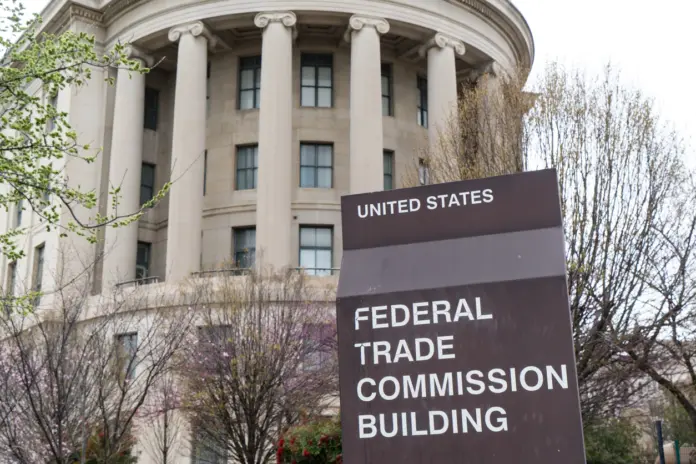
The Federal Trade Commission (FTC) says it is asking for authority to set rules and regulate fees in the rental housing market.

The Federal Trade Commission (FTC) says it is asking for authority to set rules and regulate fees in the rental housing market.

The FTC is planning a “significant regulatory action” and must undergo review before the FTC can issue it, according to the Office of Information and Regulatory Affairs within the Office of Management and Budget.

FTC Chairman Andrew N. Ferguson said, “For too long, Americans have been unjustly squeezed of their hard-earned pay by hidden fees and other unfair or deceptive business practices in housing rental markets. The American consumer deserves honesty and transparency in housing rental agreements.

“To that end, we will be soliciting public comment on the need for a new rule to prevent the imposition of deceptive or unfair fees on renters seeking long-term housing options. Congress has empowered the FTC to promulgate rules that aid in enforcing our nation’s laws against unfair or deceptive trade practices and a new rule may enhance our capacity to bring enforcement actions against violators of those laws.”

On December 2, 2025, the Federal Trade Commission and the Colorado Attorney General announced a $24 million settlement with Greystar Real Estate Partners, resolving allegations that the company misrepresented rental pricing by advertising base rents without disclosing mandatory monthly fees.

The Greystar settlement serves as a reminder that comprehensive price transparency is quickly becoming an agency priority across many industries. While the current Rule on Unfair or Deceptive Fees is limited in scope, the FTC is clearly prepared to pursue undisclosed mandatory fees wherever it finds them—and the housing sector may well be next in line for formal rulemaking.

At the time of the Greystar settlement, Ferguson emphasized the importance of clear pricing in essential markets, noting that misleading housing fees “deserve the commission’s full attention.” He also indicated that he has “directed commission staff to begin the process of proposing a rule to address unfair or deceptive fees in rental housing.”

6 Steps To Comply With Seattle’s First-In-Time Law

6 steps to comply with Seattle's first-in-time law requiring landlords give screening criteria notice and offer to first qualified applicant

First-in-time requires that Seattle landlords provide notice of their screening criteria and offer tenancy to the first qualified applicant who completes an application.

Step 1

Gather information. You must provide notice in writing to applicants before you collect applications or materials.

Step 2

Create a notice that includes:

  • Minimum criteria to qualify.
  • All required documents or information.
  • How to request additional time for language access or reasonable accommodation for a disability.
  • Whether the property has set aside units to serve vulnerable populations.
  • Information about Seattle’s Fair Chance Housing Law

Step 3

Post the ad notice. Record the date and time each application is received. An application is complete when all the information asked for in the notice is provided. For people with disabilities ore language access needs, the date and time for a completed application is the date of the request for additional time.

Step 4

Screen applications. Applications must be reviewed one at a time in chronological order. Reviewing more than one application at once is a violation of the law.

  • If you need additional information, you must give at least 72 hours for the application to provide the information.
  • Follow Seattle’s Fair Chance Housing Law requirements

Step 5

Offer tenancy to the first applicant that meets the screening criteria.

Step 6

Applicant accepts offer within 48 hours. If the applicant does not accept within that time, you can screen the next application in chronological order.


3 Steps For Dealing With Tenants And Frozen Pipes

3 Steps For Dealing With Tenants And Frozen Pipes

Here are 3 steps to help deal with tenants and frozen pipes and hopefully avoid the problem in your rentals and the maintenance calls that can result this winter from Keepe.

No. 1 – The preventative methods for tenants and frozen pipes

There are several things that property managers should do to prevent pipes from freezing in their rentals.

Give your tenants specific notice to keep kitchen and bathroom cabinet doors open at all times during freezing weather, and be sure any garage doors are closed. Keeping these doors open allows warm air from the house to enter under cabinets and sinks.

Allow the cold water to drip from the faucets, and be sure your tenants keep the thermostat set to the right temperature.

You may want to consider adding some insulation in key areas as a long-term solution if your keep getting repeat problems with frozen pipes.

No. 2 – Thawing after it happens

If the prevention fails and you end up with tenants and frozen pipes, here are a few tips to identify and thaw frozen pipes in your properties:

  • When a faucet is turned on and only a few drops of water come out, it is highly likely that the pipes are already frozen.
  • Do not rush into warming the pipes because if the water thaws, there might be risks of the water flooding your property.
  • The right approach to take in this situation is to turn off the water source at the meter, and heat the sections of the pipes where the freezing has started in order to thaw them.

No. 3 – Time to call the professionals

If you suspect that there is a bigger problem than the frozen pipes that can be fixed with a little heating, it is definitely advised for property managers to call in professional plumbers. They will have the right tools to assess the frozen pipes and determine whether they should be thawed or repaired.

If your tenants failed to take the preventative steps outlined above, you may want to add something into your leases (if it is not already there) about responsibility for frozen pipes and who pays the bill if preventative steps are not taken.

About Keepe:

Keepe is an on-demand maintenance solution for property managers and independent landlords. The company makes a network of hundreds of independent contractors and handymen available for maintenance projects at rental properties. Keepe at https://www.keepe.com

Sign Up For Our Weekly Newsletter And Get Rental Property And Apartment News And Helpful, Useful Content Each Week.

* indicates required

Landlord Hank: Are Frozen Pipes In Rentals A Big Deal?

Frozen pipes in rentals - are they a big deal is the question several landlords were asking this week for Ask Landlord Hank. 

Frozen pipes in rentals – are they a big deal is the question several landlords were asking this week for Ask Landlord Hank. Remember Hank is not an attorney and he is not offering legal advice. If you have a question for him please fill out the form below.

Dear Landlord Hank:

Are frozen pipes in a rental a big deal?

By Hank Rossi

Doesn’t sound like too big a deal, does it?

Well, it can be a disaster to your rentals and is something you as a landlord want to be on top of all the time.

When the exterior temps get down to around 20 degrees or lower, the water inside your water pipes can freeze. As the water freezes it expands and can rupture the pipe, causing a massive leak when the water thaws and begins flowing again.

This is easier to prevent than to deal with the consequences of neglecting this condition. The process starts with the landlord’s vigilance to weather conditions.

If you live in cold-weather climate zones, talk to your tenants upon move-in about the importance of preventing frozen water pipes and the disaster that preventing this condition can avoid. Once you hear that a drop in temperature is going to occur, then let your tenants know ASAP. If you have an apartment building, put notes on individual doors – as well as access to the building doors – that freeze warnings are going to be in effect and to keep heat on in your units at night, to trickle water from all faucets and to keep doors of cabinets open to water pipes in the kitchen and bathrooms.

If you don’t have multifamily property, then I would call, text and email each tenant the warning notice.  You will also want to make sure your lease talks about “Risk of Loss” with something like “All tenants’ personal property shall be a risk of the tenant and landlord shall not be liable for any damage to said personal property of the tenant arising from fire, bursting water pipes, storm, flood (etc.)” and then mention the need for renters’ insurance coverage, which is relatively inexpensive.

Also, it should make clear that tenants will be liable for any damage occurring due to tenant neglect and carelessness by not heeding warnings or not acting to avoid potentially damaging circumstances.

Don’t assume your tenants got the warnings, as some could be sick, out of town, etc. Maintain good communication to head off this normally preventable disaster.

Sincerely,

Hank Rossi

Each week I answer questions from landlords and property managers across the country in my “Dear Landlord Hank” blog in the digital magazine Rental Housing Journal.   

Landlord Hank: Are Frozen Pipes In Rentals A Big Deal?
Landlord Hank says, “make clear that tenants will be liable for any damage occurring due to tenant neglect and carelessness by not heeding warnings or not acting to avoid potentially damaging circumstances.”

Ask Landlord Hank Your Question

Ask veteran landlord and property manager Hank Rossi your questions from tenant screening to leases to pets and more! He provides answers each week to landlords.

  • This field is for validation purposes and should be left unchanged.

Do I Have to Paint and Replace Flooring for a Long-Term Tenant?

Sign Up For Our Newsletter And Get Rental Housing And Apartment News And Helpful, Useful Content Each Week.

* indicates required

Who’s Responsible For Smoke Detector Batteries In Rentals?

Tenant Refuses To Return Keys After Leaving My Rental

A Tenant Poured Grease Down Drain Who Is Responsible?

A tenant poured grease down the kitchen sink so who is responsible for the plumbing repair is the question this week for Ask Landlord Hank.

National Rents Continue Decline In January

The national median rent dipped by 0.2 percent in January, starting the new year with the sixth straight monthly rent decline

The national median rent dipped by 0.2 percent in January, starting the new year with the sixth straight monthly rent decline, according to the February report from Apartment List.

“That said, this was the most modest dip since last August, signaling that the market is beginning to creep out of the off-season and will likely return to positive rent growth in the months ahead,” Apartment List economists write in the report.

The national median rent dipped by 0.2 percent in January, starting the new year with the sixth straight monthly rent decline

Highlights of the February report:

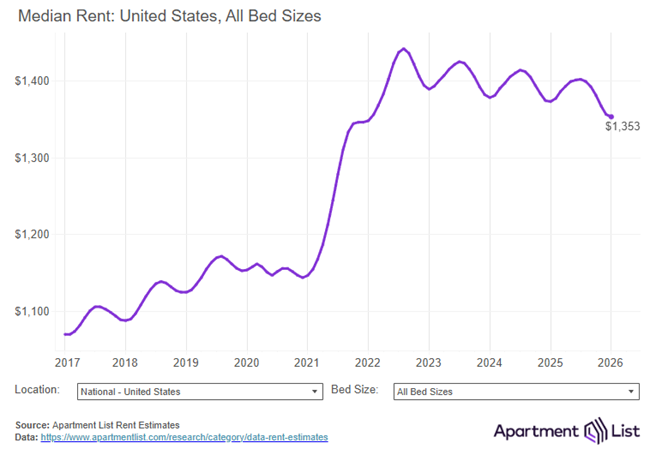
  • The national median rent now is $1,353. This is the fourth consecutive winter with a pronounced off-season dip.
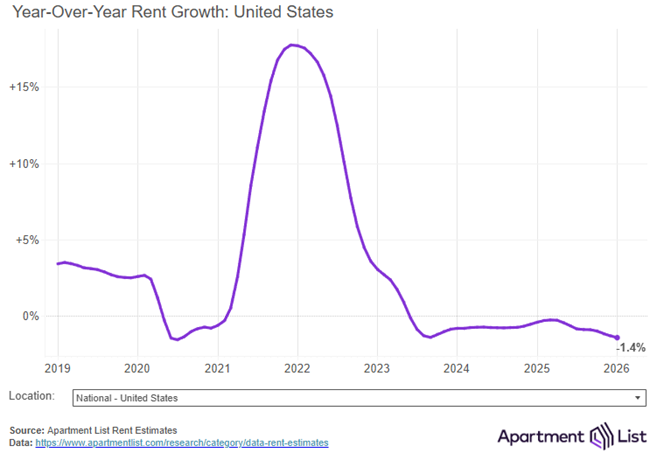
  • Rent prices nationally are down 1.4% compared to one year ago. Year-over-year rent growth has been slightly negative for more than two full years, and the national median rent has now fallen from its 2022 peak by a total of 6.2%.
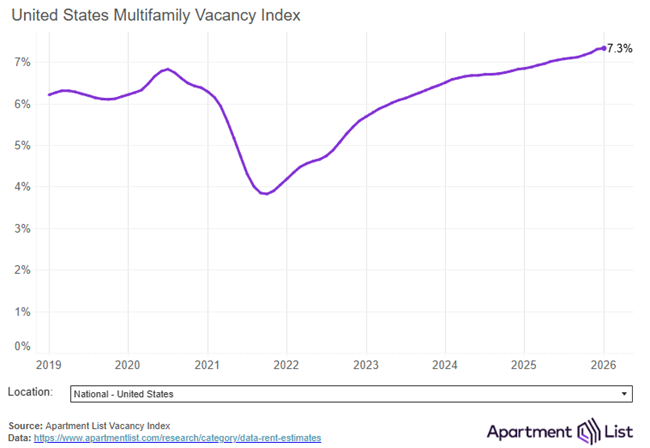
  • The national multifamily vacancy rate now sits at 7.3%, “a record high for our index going back to 2017. We’re past the peak of a multifamily construction surge, but a healthy supply of new units is still hitting the market and colliding with sluggish demand, causing vacancies to continue trending up.”
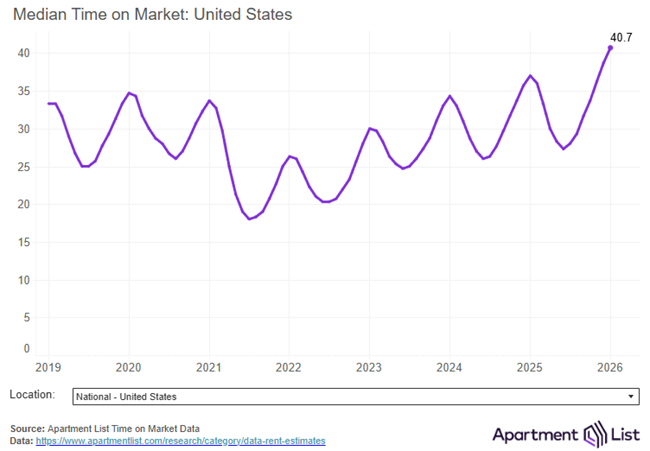
  • Units are taking an average of 41 days to get leased after being listed, which is four days longer than one year ago and represents another record high back to 2019.
  • The Austin, TX metro continues to have the softest conditions among the nation’s large rental markets, with the median rent there down by 6.3% over the past year. At the other end of the spectrum, the Virginia Beach, VA metro show the fastest year-over-year rent growth at +5%.

The national median rent dipped by 0.2 percent in January, starting the new year with the sixth straight monthly rent decline

January’s rent decline (-0.2 percent) was a bit steeper than last year’s (-0.1 percent), and so it shows a drop in year-over-year rent growth to -1.4 percent.

Early last year, it appeared that annual rent growth was on track to flip positive for the first time since mid-2023; however, that rebound stalled out and reversed course during a slow summer moving season that has now dragged into the winter. This month’s -1.4 percent reading is the lowest year-over-year rent growth recorded since August 2023.

Multifamily vacancy rate hits 7.3%, highest level since 2017

As a result of new inventory, more vacant units are sitting on the market, meaning that property owners face more competition for renters and have less pricing leverage.

“Our national vacancy index – which measures the average vacancy rate of stabilized properties in our marketplace – sits at 7.3 to start 2026. This represents the highest level since at least 2017, which is when we started tracking occupancy,” the economists write.

The national median rent dipped by 0.2 percent in January, starting the new year with the sixth straight monthly rent decline

List-to-Lease time also reaches a new peak: 41 days

This increase in list-to-lease time is in line with negative rent growth, soft occupancy, and a general off-season cooling of the rental market. Time on market is up four days compared to last January, and more than twice as long as it was in summer 2021, when the average unit was turning over in just 18 days.

The national median rent dipped by 0.2 percent in January, starting the new year with the sixth straight monthly rent decline

Conclusion

“As we start the new year, multifamily conditions remain soft. Year-over-year rent growth remains negative, while vacancies and time-on-market continue to inch up.

“The wave of construction that has been driving these conditions is waning, but whether or not market conditions shift will now depend on rental demand, whose outlook has grown shakier due to weakness in the labor market and general economic uncertainty.

“If demand worsens, it will take longer for the market to metabolize the recent growth in the rent stock, even if the construction industry slows in tandem,” Apartment List economists write in the report.

Read the full report here.

Apartment Leaders Pull Back From Rent-Controlled Markets

A new survey finds rent control's negative impact on housing supply as apartment leaders pull back from rent-controlled markets,

A new survey finds rent control has negative impact on housing supply reported around the country as apartment leaders pull back from rent-controlled markets, according to the National Multifamily Housing Association (NMHC).

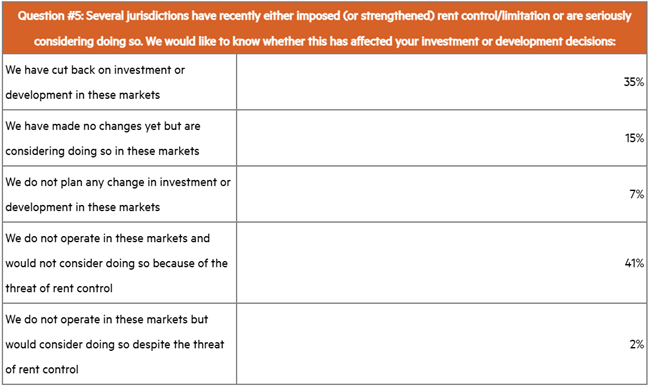
For years the NMHC has provided a quarterly snapshot of the apartment market, including trends in sales, equity financing and debt financing. For the first time in the first survey of 2026, NMHC included a special question examining the impact of rent control regulation.

NMHC compared this year’s results to those of the January 2022 survey. The comparison shows that over the last four years:

  • The share of respondents who said they have cut back on investment or development in rent-controlled markets increased from 26% to 35%.
  • The share who said they do not operate in these markets and would not consider doing so because of the threat of rent control also increased from 32% to 41%.
  • The share who said they have made no changes so far but are considering cutting back in these markets remained at 15%.

“This means that the total share of respondents who have altered their investment or development decisions – or are considering doing so – has increased from 73% of respondents in January 2022 to 91%, nearly all the respondents to our January 2026 survey,” writes Jim Lapides, SVP and Head of External Affairs, in the report.

Only 7% of respondents this round said they do not plan any change in investment or development in markets affected by rent regulation (down from 23% last round), and only 2% said they do not operate in these markets but would consider doing so despite the threat of rent control (down from 4% four years ago).

A new survey finds rent control's negative impact on housing supply as apartment leaders pull back from rent-controlled markets,

These findings come as broader apartment market conditions continue to ease nationwide.

Affordability, particularly housing affordability, has moved to the forefront of public debate. While rent control is once again being promoted as a remedy for rising housing costs, policymakers and economists have increasingly and consistently warned that rent control is a failed solution.

In recent weeks, a broad range of economists, housing experts, and elected leaders from across the political spectrum have renewed those concerns, arguing that rent control ultimately worsens affordability by constraining supply.

Read the full report here.

Sign Up For Our Weekly Newsletter And Get Rental Property And Apartment News And Helpful, Useful Content Each Week.

* indicates required

Washington State Legislation To Boost Housing Construction

Washington State legislation to boost housing construction and affordability and limits on large investor entities and single-family homes.

Washington State legislation to boost housing construction and affordability along with prohibiting large investor entities from acquiring additional single-family homes.

By Aaron Kirk Douglas

Washington’s 2026 legislative session is in full swing with a strong focus on housing as lawmakers introduced a slate of bills to boost housing construction and affordability.

Notably, one proposal (SB 6026) would override local zoning to allow residential development in areas currently limited to commercial use – a big shift to open up more land for apartments or condos.

Other bills would pour new funding into affordable housing (including a $225 million Housing Trust Fund boost championed by Gov. Ferguson) and streamline development rules (for example, easing requirements for mixed-use projects and encouraging innovative building methods).

Private sector push for building housing

This pro-housing agenda has support from the private sector: top Amazon and Microsoft executives penned a Seattle Times op-ed urging lawmakers to cut red tape and “build our way out” of the housing crisis, backing ideas like SB 6026 and quicker permitting processes[.

In other news, Washington’s new law capping rent increases at 5% for manufactured home park tenants is facing pushback. A state landlords’ group filed a lawsuit this week calling the cap unconstitutional and claiming it deprives park owners of fair revenue with no emergency exceptions. The Attorney General is confident the law will be upheld, but the case will be an important test for rent control measures in the state.

Here are the details:

  • SB 5496 – Would prohibit large investor entities (those owning >25 single-family homes) from acquiring additional houses, with exceptions for nonprofits or if adding units (to curb bulk home purchases by institutional buyers).
  • SB 5647 – Expands the Real Estate Excise Tax exemption for self-help affordable housing programs (e.g. Habitat for Humanity-style projects) to all affordable homeownership facilitators.
  • SB 6026(Governor-requested) Bars cities/counties >30,000 people from excluding residential development in areas zoned for commercial or mixed-use; also forbids requiring ground-floor commercial space in mixed-use zones as a condition of housing development.
  • SB 6027 – Requires at least 60% of local housing & related services sales tax revenues be dedicated to constructing or acquiring affordable housing, behavioral health facilities, or related operations.
  • SB 6028 – Creates a state revolving loan fund (via Dept. of Commerce) to finance mixed-income affordable housing developments, with a portion of each project’s units permanently reserved for low-income households.
  • SB 6069 – Mandates that cities allow supportive, transitional, and emergency housing (and shelters) in any zoning district inside urban growth areas (except industrial zones), preventing local zoning from blocking these housing types.

About the author:

Washington State legislation to boost housing construction and affordability and limits on large investor entities and single-family homes.
Aaron Kirk Douglas

Aaron Kirk Douglas is a multifaceted storyteller and market analyst. His career spans journalism, creative nonfiction, filmmaking, and real estate research. He serves as Director of Market Intelligence at HFO Investment Real Estate/GREA, the Pacific Northwest’s leading multifamily brokerage.

Sign Up For Our Weekly Newsletter And Get Rental Property And Apartment News And Helpful, Useful Content Each Week.

* indicates required

Weak Finish Erodes 2025 Gains For Multifamily Rents

Why Resident Feedback Is Key For Leasing, Living And Renewals

Coworking Has Replaced the Business Center-Data Explains Why

Coworking has replaced the traditional apartment business center as 75% say access to coworking spaces influences them on lease renewal

Coworking has replaced the traditional apartment business center as 75% say access to coworking spaces directly influences their decision to renew their lease.

By Becky McLaughlin

For years, the business center was treated as a baseline amenity in multifamily communities. It represented productivity, access and modern living. Today, many of those spaces sit unused, built around assumptions about work that no longer hold true.

Zillow’s 2024 analysis of 5.6 million U.S. rental listings highlights just how much expectations have changed. Apartments that continue to promote business centers receive 24% fewer saves and 27% fewer shares per day. Properties that highlight coworking spaces, on the other hand, see a markedly different response, with 16% more saves and 23% more shares.

That contrast reflects more than a naming preference. It points to a structural change in how residents integrate work into their daily lives and how shared spaces either align with that reality or fall behind it.

In a market where vacancy is elevated and rent growth is tightening, amenity decisions carry more weight than they did just a few years ago. Owners and operators are increasingly evaluating not just whether a space exists, but whether it actively contributes to renewals, occupancy, and long-term perceived value.

Why the business center lost relevance

Well before remote and hybrid work became mainstream, residents were already carrying their offices with them. Laptops, smartphones and tablets became everyday essentials, untethering work from a single room or piece of equipment.

As work became portable, fixed locations lost relevance. With 75% of employed adults now working remotely at least some of the time, and hybrid job postings up 60% over the past two years, demand for traditional workrooms has rapidly declined.

Work now happens wherever it makes sense. At a kitchen table. In a bedroom. Outdoors. For property owners, that reality changes the equation. A static business center no longer influences satisfaction or retention, because it was never designed to support this kind of flexibility. As a result, residents rarely factor it into leasing decisions.

Security concerns further limit usage. Shared printers and copiers, a core feature of business centers, have developed a reputation for storing and selling data. And when personally identifiable information has to flow through shared desktop computers, it’s not just an IT headache, it’s a liability, especially as data-privacy legislation continues to become more stringent.

Residents concerned about security will obviously avoid these spaces entirely, and in a competitive market where every square inch matters, that hesitation can be detrimental to a property’s appeal. As of October 2025, U.S. multifamily vacancy sits at 7.2%, the highest level in Apartment List’s index since 2017.

Rent growth is only projected to reach 2.6% by year’s end. In this environment, underperforming spaces do more than sit unused. They weaken perceived value and put pressure on revenue.

How residents approach work today

Residents no longer work in one place for eight hours straight. They move through a property depending on the task. Video calls happen in private soundproof pods. Deep focus shifts to quiet lounges. Short check-ins happen near a coffee bar.

The expectations are not excessive, but they are precise. Comfortable seating near natural light. Soundproof areas for important calls. Power outlets within easy reach. When those fundamentals are in place, people stay longer and return more often.

WithMe, Inc.’s recent resident survey found that 28% of residents use shared spaces for work either exclusively or alongside their apartment, while another 22% divide their time evenly between the two. More importantly, 75% say access to coworking spaces directly influences their decision to renew their lease.

Supporting a mobile workforce

If residents move throughout the property while working, the infrastructure must support that movement.

Wi-Fi coverage can’t stop at the leasing office. It needs to extend across coworking areas, common spaces and outdoor zones. When connectivity is inconsistent, residents will simply go elsewhere.

Daily use amenities matter more than ever. Technology-powered office essentials, like self-serve printing and on-demand premium coffee, can create consistent engagement without increasing operational strain. These features become part of daily routines because they solve real, recurring needs.

Variety in the space matters as well. Small collaboration spaces for two to four people consistently see stronger usage than oversized conference rooms. Individual focus areas need privacy, soundproofing and seating that supports full workdays. Conference rooms still serve a purpose, but they are no longer the focal point. Adaptability now carries more weight than scale.

When evaluating whether a coworking space is actually performing, owners should be asking a few simple questions. Does it support multiple work modes throughout the day? Is it easy for residents to move in and out without disruption? And does it rely on amenities people genuinely use, not just ones that photograph well?

In tight markets, properties that perform best are the ones designed around how residents work today, not how workspaces were imagined in 2010.

Moving beyond the business center

Business centers made sense when shared equipment was unavoidable and high-speed internet was not guaranteed. That era has passed.

Today’s residents value flexibility, mobility and spaces they actually use. Removing a business center is not about eliminating work support. It is about aligning amenities with modern lifestyles.

Every square foot must justify its presence. When it no longer does, it is time to rethink how that space is used. The most resilient properties treat shared space as an evolving asset, not a fixed line item.

About the author:

Becky McLaughlin is the senior vice president of revenue at WithMe, Inc. She has more than 20 years of experience and has led marketing teams in healthcare, technology, and insurance. Becky earned her Bachelor of Science from Syracuse University’s Newhouse School of Communications.

Sign Up For Our Weekly Newsletter And Get Rental Property And Apartment News And Helpful, Useful Content Each Week.

* indicates required