
The rental market’s traditional seasonality is flattening and its timing is changing, according to a new report from Apartment List.
In the past, most people moved in the springs and summers, while the fall and winter months typically saw the opposite. Rents tended to follow the seasonal upticks and downturns depending on the activity in the market among those looking for new homes.
Highlights of the report:
- The rental market has long been governed by a clear seasonal pattern: the greatest share of units turn over during the summer months, with peak rent growth occurring in tandem.
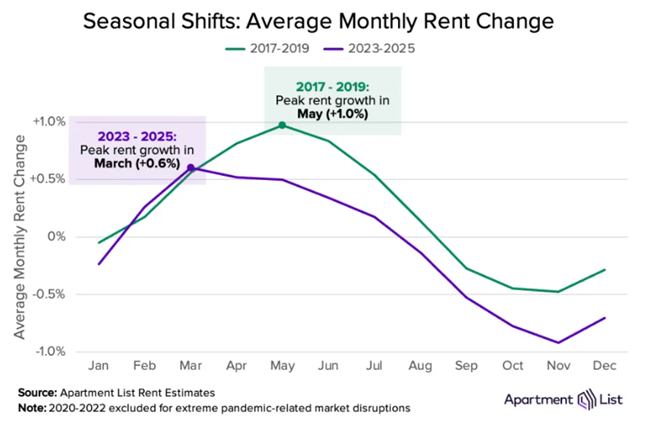
- In recent years, we’ve begun to see a flattening of these sharp seasonal swings – peak rent growth is occurring earlier in the year and leases are less concentrated in the summer.
- These shifts are due to a combination of factors including (1) the persistent impact of a one-time shock to the timing of moves due to the pandemic in 2020; (2) an intentional shift by multifamily operators to spread out lease renewal dates; and (3) a supply rich environment offering renters more optionality and flexibility in their moves.
School weather and holiday influence
This seasonality results from three practical factors: school, weather, and holidays. The summer is more favorable for all three:
- If you are a student or have young children, you don’t need to juggle school schedules
- Weather is generally more temperate
- Moving expenses aren’t being eaten up by holiday spending
Renters who have the flexibility and means to relocate during the winter have generally found lower prices and more wiggle room for negotiating lease terms.
However, since 2022, rental activity is more evenly distributed throughout the calendar year, annual rent declines exceed annual rent increases, and peak rent growth has moved up earlier in the year.
Renters are starting and finishing their searches earlier
Equipped with remote work, better technology, and a favorable supply-demand balance, renters are becoming more patient and more willing to seek out an off-season move for a better deal. Apartment List researchers say, “We see this directly in the actions renters take on our platform, specifically interests and leases.”
An interest occurs when a user adds a property to their shortlist of potential new homes on the website. A lease refers to the move-in date for renters who do in fact sign that lease. The chart below shows average monthly rent change during two three-year periods: 2017-2019 (green) and 2023-2025 (purple) and the distribution of interests and leases throughout the calendar year, again split between the three years before and after the pandemic.
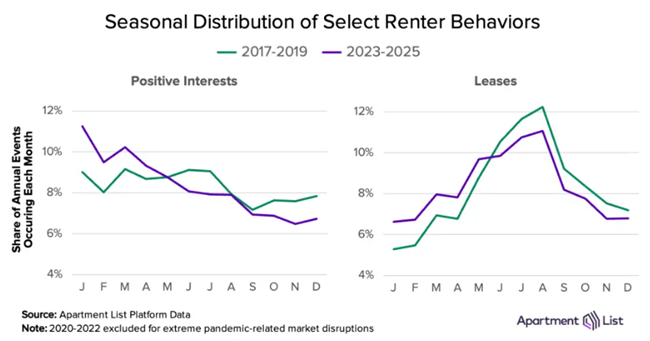
“Rather than being evenly distributed, we see interests concentrated in the first half of the year, and leases are concentrated during the summer. This is consistent with our baseline understanding of seasonality: the typical renter begins their search early in the calendar year (by expressing interests) and finishes it in mid-late summer (by signing a new lease).
“But starting in 2023, interests have become more front-loaded, with more than 30 percent taking place in the first quarter of the year. Meanwhile, the share of interests occurring in the second half of the year is well below where it used to be pre-pandemic. Leases, while still concentrated in the summer, have also shifted earlier. Compared to pre-2020, more move-ins today are happening between January and May.”
Local market dynamics can also affect this seasonality trend.
Are the shifts in rental seasonality here to stay?
Seasonality is changing due to a combination of factors, some temporary and some lasting.
Today’s supply-rich rental market, for example, will inevitably pass as the construction industry slows down. This will shift some negotiating power back from renters to landlords, and limit the steep winter price drops we’re currently seeing in builder-friendly markets such as Austin and Denver.
“But other factors have more permanence, like remote work, which gives renters more flexibility in choosing when and where to move. And perhaps more importantly, it appears some multifamily operators value a more evenly-distributed timing of lease renewals, and are actively pursuing it. It will be crucial to see in the coming years if these renter and operator behaviors continue to flatten seasonal swings, even as the market heats up,” writes Rob Warnock, senior research associate at Apartment List, where he examines trends in the housing and rental markets.