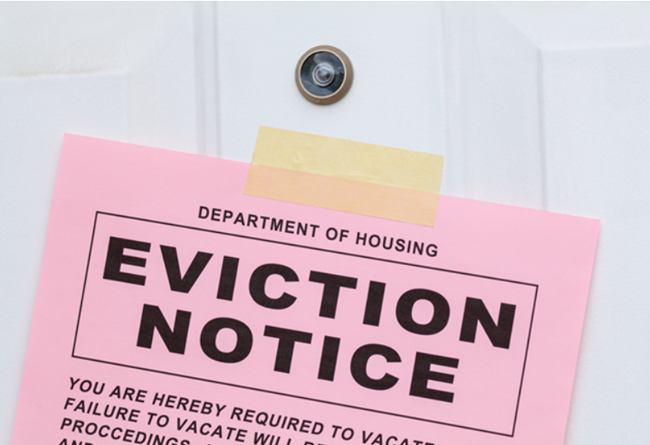
The Oregon landlord for a man charged with murder of an apartment resident who lived across the hall from him has won an eviction order in Washington County Circuit Court, according to Oregonlive.com.
Attorneys for the Baseline 158 apartment complex in Beaverton filed an eviction lawsuit Oct. 15 against Bryce Schubert, 27, and a 24-year-old woman, demanding they vacate their apartment within 24-hours, citing an “extremely outrageous act.”
Schubert is charged with killing newlywed nurse Melissa Jubane. Jubane lived in Unit 513; Schubert in Unit 520. The apartments are diagonally across the hall from each other, according to a floorplan.
The Oregonian reported that the lawsuit was filed for the Oregon landlord by the New York-based investment management fund Sentinel Real Estate – which controls the large apartment building – but doesn’t give any details, though it lists personal injury or substantial property damage as potential justification.
Schubert failed to appear in Washington County Circuit Court in the civil case and a judge sided with his landlord by default.
A receptionist who answered the phone for Sentinel Real Estate’s eviction attorney, Bradley Kraus, said he declined to comment.
Jubane had returned from her wedding ceremony in Oahu when she was allegedly kidnapped and then killed by Schubert on Sept. 4.
Coworkers, family and friends instantly became concerned when the beloved nurse didn’t clock in for work at Providence St. Vincent Medical Center that morning, spurring a massive volunteer search until Beaverton police recovered her body three days later.
Authorities haven’t released a motive in the case. Schubert, also a nurse, briefly worked for Providence, but was never assigned to the same hospital as Jubane, according to a spokesperson.
Schubert has pleaded not guilty to charges of second-degree murder, the newspaper reported. Schubert has remained in Washington County jail and no bail hearing has been set.
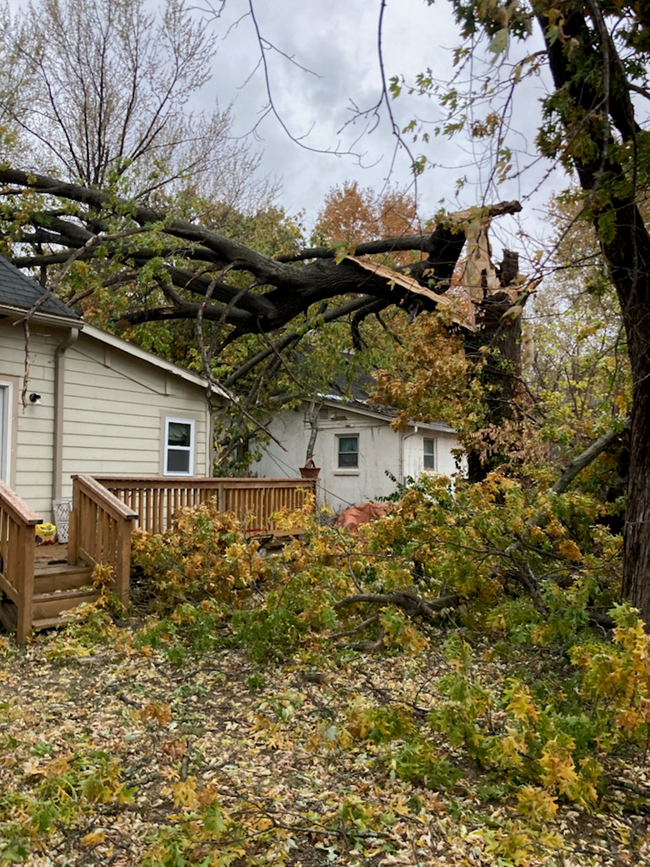
Generally, landlords are responsible for tree maintenance on their rental property unless the lease specifically states otherwise, tree experts say.
Trees are attractive to renters and potential tenants who want to live near beautiful trees so make sure the trees on your rental property reflect the quality of your rentals. Trees attract birds and purify the air to make living in your rental home more enjoyable.
It can be easy for a landlord to overlook tree maintenance until a tree emergency suddenly happens and then it is a sudden emergency tenants want taken care of.
So, it is important for landlords to evaluate and monitor the health and vitality of trees on their rental property and this is best left to an expert certified arborist such as those at Grove Tree Care in Oregon. Arborists should have credentials from respected institutions like the International Society of Arboriculture (ISA), as they are well-versed in the science and art of arboriculture. Staying current with the latest advances in tree health and safety is also important.
Other tree services to consider from an arborist are:
Tree Pruning and Trimming: Enhancing the beauty and safety of trees through skilled pruning.
Tree Removal: Conducting safe and efficient removals when trees pose a risk or are no longer viable.
Stump Grinding and Removal:Clearing away remnants for a clean and usable landscape.
Tree Cabling and Bracing: Providing structural support to preserve and protect your trees.
Emergency Tree Services: Responding swiftly to urgent situations with a 24/7 emergency service in Wilsonville, OR.
Also, as a landlord it is a good idea to monitor tree health on properties that adjoin your rental as trees from a neighboring property could fall and impact your rental and tenants.
Remember if you have trees on your rental property, it is important to control the growth. Also, you do not want tenants taking it upon themselves to cut down tree branches. So, tree maintenance should be part of your preventative maintenance.
Too, if you have questions on whether landlords are responsible forissues around trees, it is best to check with your attorney.
About Grove Tree Care
Grove Tree Care, a locally owned, family run tree care company dedicated to our customers and our employees. We have a heart for the Pacific Northwest and donate reforestation for every completed job. Our team, including our certified arborist, has over 60 years of experience with tree care and is ready to help you with your project.
Interactive maps and their application within maintenance platforms are proving to be a key advancement in maintenance operations.
By Andrew Ruhland
In an era of increasing centralized property management, modern operations at today’s communities often involve teams aiming to work collaboratively from several locations.
This can make operations more difficult, ultimately affecting the living experience for residents. Operators are realizing that by leveraging technology and focusing on improving operational efficiencies, specifically maintenance operations, they can better support teams and significantly enhance the resident experience.
Maximizing Maintenance Capabilities
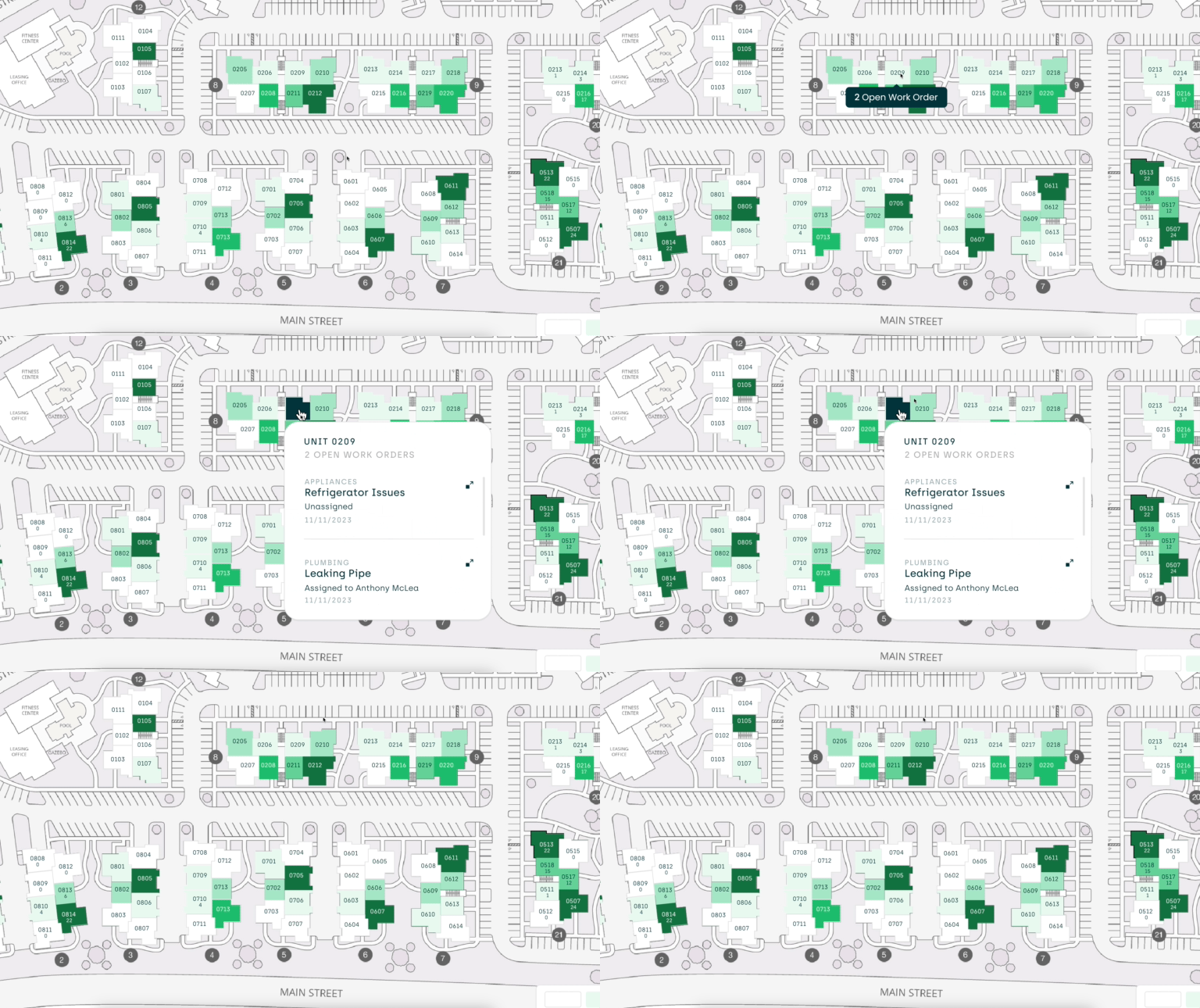
Interactive maps and their application within maintenance platforms are proving to be a key advancement in maintenance operations. Providing technicians with the technology to visualize entire properties all the way down to each individual unit allows them to pinpoint specific problems and allocate resources more efficiently.
For instance, if a property has a pest control issue, technicians are able to identify and isolate it to ascertain adjacent units or common areas being affected, rather than unnecessarily treating it as a property-wide problem. Interactive maps enable teams to submit work orders directed at target areas, saving time and resources.
“Interactive maps greatly enhance operational efficiencies, particularly for maintenance supervisors who are responsible for organizing and managing the daily tasks of technicians,” said Jacqueline Dill, asset manager for Asset Living. “Having the ability to streamline coordination efforts allows teams to better allocate resources and ensure that technicians are fully utilized and effective throughout the day.”
Contributing to increased organization, visual data empowers faster, more precise decisions at the operational level. Whether it’s preventive maintenance or addressing immediate problems in real time, the advanced visibility provided by these tools has become indispensable for teams.
“These interactive maps generate heat maps that are crucial to the success of maintenance teams by helping them make swift connections and draw insights,” Dill said. “They are analyzing vast amounts of data, and these tools enable technicians to quickly spot trends and decide what the best course of action is, such as whether to repair or replace something.”
For new hires, maintenance software can streamline training procedures to help new associates better understand their tasks with highlighted work orders – an advantage impossible with traditional maintenance tools and processes. When data visualization is implemented, supervisors no longer need to micromanage or give detailed directions to technicians, and they can simply refer to the map and head straight to where they’re needed.
Enabled by the partnership with Engrain, Appwork clients can now easily visualize open work orders in an interactive property heat map.
Enhancing Communications and Streamlining Operations
Interactive maps also improve communication between maintenance technicians and vendors.
If a vendor is lost or if there is a language barrier, maintenance teams can access the map on their phone and guide them directly to the location they are needed. Map features further simplify communications by allowing teams to access information about ongoing tasks, such as apartment homes in need of painting, cleaning or carpet replacement.
This enhances productivity and scheduling, making management tasks easier. Universally understood, interactive maps also make reporting pertinent information to stakeholders easier and more efficient.
Moreover, using interactive maps and communication features are as simple as texting. Work orders are submitted similar to a text message thread, enabling clear and speedy communication. Features like badging can also be incentives for highly motivated teams.
“While interactive maps absolutely improve overall maintenance operations, they are especially valuable when reporting on major, time-sensitive issues or renovations,” said David Alvarado, regional maintenance supervisor for Atlantic Pacific Companies. “Providing a comprehensive view of a property, interactive maps enable us to monitor for emergency problems and communicate any necessary adjustments as needed. It is so simple to use.”
Improving Accountability and Professionalism
From an accountability standpoint, interactive maps also add an extra layer of protection.
With features such as timestamps and photographic receipts of the work that has been done, maintenance teams can easily verify whether a task was completed should a resident claim otherwise. This helps safeguard technicians and onsite associates, ensuring a higher level of customer service and increased trust from residents.
“For regional supervisors like myself who oversee multiple properties, having an ongoing, readily available record of work orders and instant access to real-time updates has been a complete game changer,” Alvarado said. “I can’t be physically present at every property and having the ability to still see accurate reports for each community helps me guarantee that each location is well-maintained and residents are satisfied with the service they are receiving.”
Elevating the Resident Experience
Ultimately, integrating interactive maps into maintenance operations raises the level of professionalism and quality of work maintenance teams are able to deliver, subsequently boosting the resident experience.
Work orders that once took hours to plan and delegate to technicians are now being managed and executed seamlessly. The visual data that interactive maps offer helps maintenance teams perform their day-to-day tasks more efficiently while raising living standards.
“Our mission has always been to provide the tools necessary to empower teams to do their jobs more efficiently and effectively,” Dill said. “The innovative features these maps entail allow technicians to deliver exceptional service and improve operations to a degree that greatly impacts how satisfied residents are. And an improved experience definitely translates to a healthier bottom line.”
About the author:
Andrew Ruhland is an account executive and content writer for LinnellTaylor Marketing, which focuses exclusively on the rental housing industry, its trends and technology innovations.
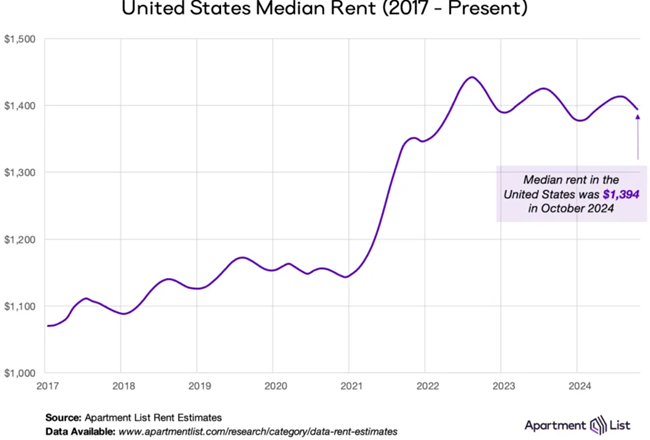
The national median rent dipped 0.7% in October as rental housing enters the slow season and the vacancy rate rises, according to the November report in Apartment List.
The median monthly rent nationally fell by $10, putting it at $1,394, and “we’re likely to see that number continue to dip modestly through the remainder of the year,” Apartment List economists write in the report.
October saw 89 of the nation’s 100 largest cities rents fall, in line with the broader national trend. Many of the steepest year-over-year declines remain concentrated in Sun Belt metros that are rapidly expanding their multifamily inventory, such as Austin (-7.1 percent year-over-year), Raleigh (-4.6 percent), and Jacksonville (-4.1 percent).
Rental patterns have been changing the last few years. Since 2022 seasonal declines in rent prices that take place during the fall and winter have been steeper than usual and seasonal increases of the spring and summer have been milder, the report says.
Year-over-year rent growth nationally is -0.7 percent and has now been in negative territory for nearly a year and a half. Despite this, the national median rent is still more than $200 per month higher than it was just a few years ago.
Increasing vacancy rate
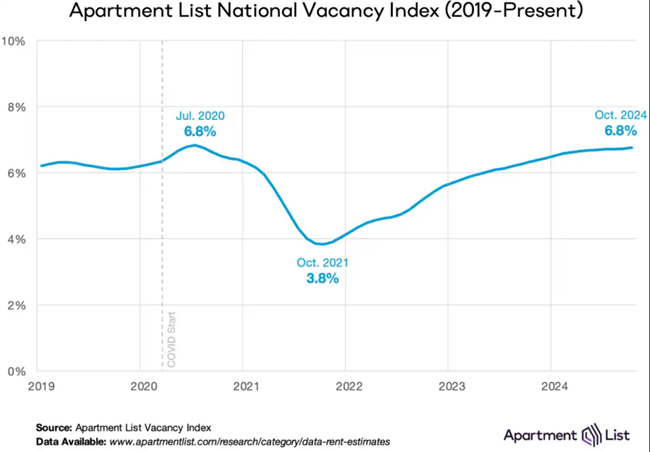
On the supply side of the rental market, “our national vacancy index ticked up to 6.8 percent, the highest reading since the onset of the pandemic,” the economists write.
This rise in the vacancy rate is coming on the heels of the strongest quarter for new apartment completions in five decades.
Conclusion
“Rent increases are currently being moderated by a robust construction pipeline that has already delivered a decades-high number of new apartment units in 2024, with considerable runway still to go in the boom.
“And while rental demand has bounced back a bit this year, recent signs of labor market softness could dampen demand going forward. With this in mind, we expect that new supply will continue to outstrip demand into 2025,” Apartment List economists write.
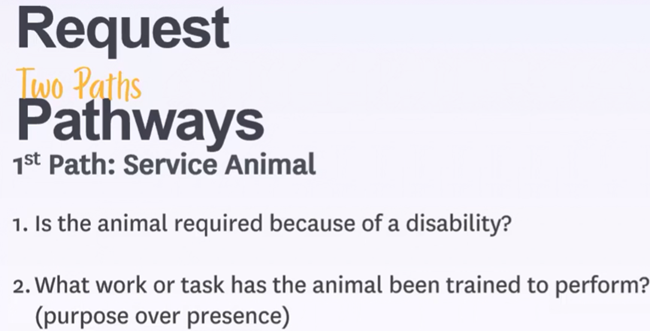
Rules for service animals and assistance animals and reasonable accommodation are complex and detailed, so Victoria Cowart of PetScreening.com recently did an excellent webinar on assistance animal guidelines.
She said the title was chosen because “you are betting your assets, personal and professional, on your understanding of all things Fair Housing.” She also provided a workbook to go along with the webinar which can be downloaded below.
What she called the “furry” Fair Housing elements.
What Are Your Pet Rules?
She took on the issue of rental properties and their “pet rules” to understand U.S. Department of Housing and Urban Development (HUD) rules as well as other federal rules and provided assistance animal guidelines.
Cowart said to set aside breed restrictions, weight limits, the number of pets because these animals do not count as a pet. Remember also no pet deposits, no monthly pet fees, etc.
“HUD is not going to tell us what ‘reasonable’ means, but I can tell you what an accommodation is. An accommodation is a change, exception or adjustment to a rule, policy or practice,” Cowart said.
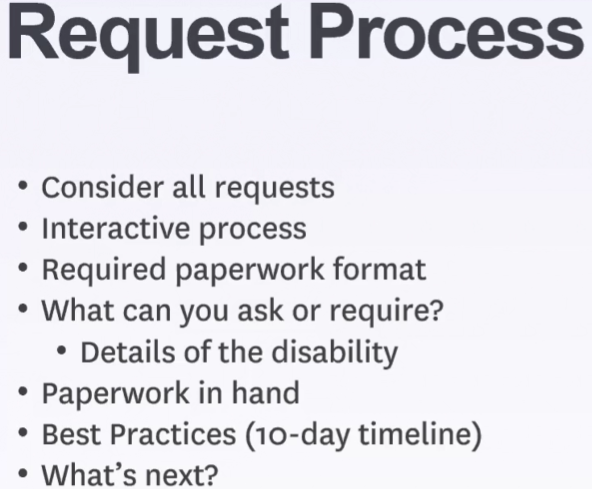
“Simply put if someone is speaking to you about an assistance animal … they are talking about any version of an assistance animal. With your listening ears on you are hearing a request for reasonable accommodation.” They do not have to use specific words.
Remember that animal is like a walker or a wheelchair for a disabled person and you would not tell them they could not have that in the rental unit. It is part of their treatment plan.
The webinar discusses when documentation is needed or not. How to tell the difference between service and support animals plus other topics such as:
Doggie drivers’ licenses sold on the internet are not worth what people are paying for them.
“My insurance company” made me do it or use of the insurance company to deny a request is not a defense as far as HUD is concerned.
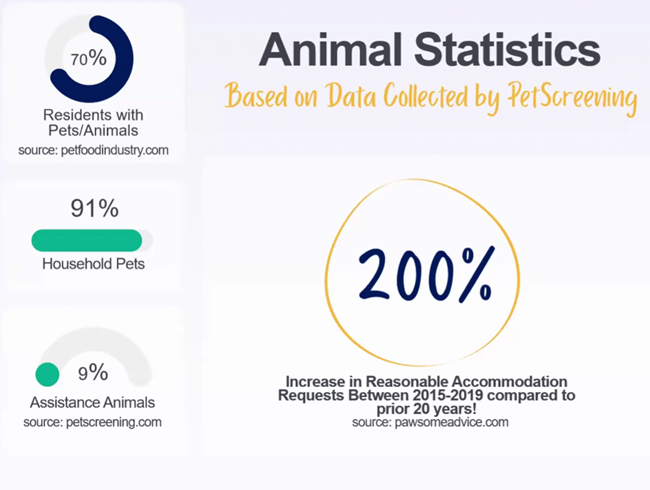
There has been a 200% increase in reasonable accommodation requests between 2015 and 2019 compared to the previous 20 years.
70% of residents have pets or animals.
About Victoria Cowart
Victoria Cowart, CPM, NAAEI Faculty is a multifamily industry member with extensive experience providing management and oversight for multifamily housing communities (conventional & subsidized), mobile home communities, and HOAs. She is a property management instructor and a proud graduate of the NAA Lyceum Program. Victoria obtained her degree in the Management of human resources and then her industry CPM designation. She was honored to be commissioned an SC “Palmetto Patriot,” to receive the Charleston Regional Business Journal’s Executive “Influential Women In Business,” and the NAA AIMS Grassroots Member Advocate of the year.
What to do when a tenant cuts off the electricity and moved early is the question this week for Ask Landlord Hank. Remember Hank is not an attorney and he is not offering legal advice. If you have a question for him please fill out the form below.
Dear Landlord Hank,
What to do if tenant has moved out of house and cut off electric prior to lease ending?
Yes, we do have it in their lease that they’re not supposed to… but what should we do?
-Tiffany
Hi Landlady Tiffany,
Most leases have a section or clause concerning Default.
If may say something like: If the tenant abandons or surrenders possession of the premises during the lease term, the landlord may retake possession and make a good faith effort to re-rent it.
Most leases also have a section concerning Utilities, stating that the tenant is responsible for maintaining essential utilities in their name and if the tenant discontinues service this is a default of the lease agreement and the tenant is responsible for all utility charges that are otherwise tenant responsibility under the lease.
That all being said I would reach out to the tenant via phone, text and email and get confirmation they have left the property. Deal with their security deposit legally and with certified notice to the tenant. Once you confirm the tenant is gone and not coming back, I would change the locks and prepare the property for the next tenant.
Sincerely,
Hank Rossi
Editor’s note: Check your local laws on this issue as many cities and states have different rules.
Landlord Hank says, “Once you confirm the tenant is gone and not coming back, I would change the locks and prepare the property for the next tenant.”
Ask Landlord Hank Your Question
Ask veteran landlord and property manager Hank Rossi your questions from tenant screening to leases to pets and more! He provides answers each week to landlords.
Each week I answer questions from landlords and property managers across the country in my “Dear Landlord Hank” blog in the digital magazine Rental Housing Journal. https://rentalhousingjournal.com/asklandlordhank/
Multifamily rents continued to fall in September, but “interest-rate cuts and robust GDP and job growth have given the multifamily market a shot in the arm,” writes Yardi Matrix in the September Multifamily Report.
Nevertheless, the report points out that the heavy delivery pipeline will constrict rent growth in the near term.
Rents falling but not all the news is bad
The report says good news about interest rates and economic growth has “buoyed the spirits” of the multifamily and commercial real estate industry.
Here are the highlights from the report.
Amid continued healthy demand, multifamily advertised rents fell slightly in September due to seasonality and supply growth in the Sun Belt. The average U.S. advertised rent fell by $3 in September to $1,750, while year-over-year growth was unchanged at 0.9%.
Supply growth remains the bright line determining advertised rent growth. Among the Matrix top 30 metros, advertised rent growth was positive in eight of the 10 metros with the least supply growth and negative in eight of the top 10 with the most supply growth.
Single-family rental rates softened slightly in September. Advertised rents fell $3 nationally to $2,167, while the year-over-year growth rate dropped 30 basis points to 0.6%. The national occupancy rate remains high at 95.3%, but is down 30 basis points year-over-year.
The strong economy has been the major driver for apartment demand, and that demand has absorbed the supply of new apartment units.
“More than 300,000 apartment units were absorbed nationally through the first three quarters of 2024, and more than 1.7 million units since the pandemic lockdowns,” in the first quarter of 2020, the report says.
“Absorption has been particularly strong in the Sun Belt and Mountain West, driven by in-migration and job growth. Rents have flattened or turned negative in some metros in those regions because of the wave of supply growth.
“With the typically slower winter months approaching and the supply wave set to continue through 2025, advertised rent growth in those regions will likely stay weak in coming months,” Yardi Matrix says in the report.
Yardi Matrix researches and reports on multifamily, office and self-storage properties across the United States, serving the needs of a variety of industry professionals. Yardi Matrix Multifamily provides accurate data on 18+ million units, covering more than 90 percent of the U.S. population. Contact the company at (480) 663-1149.
A Seattle landlord has sued the City of Seattle alleging a number of laws passed in the name of tenant protections in the last few years have financially strapped his affordable housing units, according to the Seattle Times.
The city council has been active the past few years in passing tenant protections such as caps on move-in fees, first qualified applicant rules, eviction rules, lease renewals and tenant screening rules.
Goodman Real Estate, through a subsidiary that owns a 254-unit apartment building near Fourth Avenue South and South Jackson Street, filed the lawsuit, calling for unspecified financial damages and a change to city regulations.
“Our goal is to create the highest level of quality affordable and sustainable housing in downtown Seattle for our residents,” CEO George Petrie said in a statement, “but the city has placed so many restrictions on our ability to do that, it is placing our residents at risk.”
The Seattle Times said the city plans to defend the tenant protections but declined to comment further while the case is ongoing, said City Attorney’s Office spokesperson Tim Robinson.
Goodman’s case comes after a rightward shift at Seattle City Hall and as affordable housing developers sound the alarm about rising operating costs and, in some cases, trouble collecting rent from tenants. Some landlords have set their sights on convincing the city council to loosen or repeal landlord-tenant regulations in response to those challenges.
The lawsuit alleges the tenant protection laws have forced the building to accept tenants who caused safety issues, added new maintenance and security costs, increased tenant and staff turnover, limited evictions and discouraged rent increases that might help cover the increased costs.
The suit claims this is a “taking” of the landlord’s property.
The Seattle Times reports that takings arguments can be difficult to prove in court. Constitutional rules generally “do not require compensation for every decline in the value of a piece of private property,” but a regulation that “deprives an owner of all economically beneficial uses” of their property could amount to a taking, the state Attorney General’s Office wrote in a recent memo to local governments unrelated to this case.
Most people change their batteries whenever they hear that beep, but you should replace batteries before that happens.
Smoke detector safety is important for landlords so be sure you know how to maintain smoke detectors and who is responsible for smoke detector maintenance.
By Steve Lockwood
Regarding fire safety, properly operating smoke detectors is one of the most essential tools for alerting property owners and firefighters of dangerous home and apartment fires before they happen.
They are a simple tool that saves lives.
According to the National Fire Protection Association, “Roughly three out of five fire deaths happen in homes with either no smoke alarms or no working smoke alarms.”
This means that the risk of death from a residential or apartment fire is cut in half in homes with operable smoke alarms. In states such as Arizona, where I work, rental property owners must provide smoke detectors to their tenants. However, fire safety requires more than just installing smoke detectors on your property: You must also maintain them. Doing so will keep your property and, more importantly, your tenants better protected against fires.
Here are a few tips from an Arizona fire protection expert on maintaining smoke detectors.
1. Conduct professional inspections annually
The biggest thing a rental property can do to ensure their smoke detectors work is to have them inspected annually by a fire safety professional.
This is especially true of multifamily property owners who must ensure their smoke detectors are connected to the more extensive fire alarm system. A professional is going to do more than just check the batteries.
They will smoke test them, visually inspect them for signs of damage and tampering, and inspect the control panel to ensure your smoke detectors communicate with other devices. A fire safety expert will also document their findings and issue the corrective action you must take.
No one knows the state of your smoke detectors better than fire safety inspectors, and doing an annual inspection protects your property and your tenants while only taking a few hours to conduct. Annual inspections are a baseline for fire safety. Have a fire safety expert inspect your smoke detectors once a year; they will help catch any issues you have.
2. Clean and replace them
A fire safety inspection is great, but you should look at it more as a test you want to pass instead of a checklist of chores the fire inspector gives you.
You can do most of the smoke detector maintenance yourself. You must clean your smoke detector at least once every six months and once every three months if your tenants have pets. Dirt, dust, pet hair, and other home grime accumulate in the smoke detector over time and a dirty smoke detector can either not go off when there is a fire or give you false alarms. The dirtier they get, the less they work correctly.
I recommend removing the head of the smoke detector and using compressed air to blow the dirt and grime off the smoke detector. You can also vacuum the dust out if you don’t have a compressed air canister. Do not clean your smoke detectors with water because it will damage the unit. You should also replace your smoke detectors every ten years, even if they work correctly. After ten years, alarm sensors are on borrowed time, so new smoke detectors are needed.
Replace your smoke detectors ten years from the manufacturing date. You can find the date on the back of your alarm.
3. Replace batteries
Everyone knows the annoying beeping sound that comes on when your smoke detector battery is low. Most people change their batteries whenever they hear that beep, but you should replace batteries before that happens.
Replace batteries to ensure they do their part to protect against fires.
Replace smoke detector batteries with 9-volt lithium batteries once every six months. This is because you want to replace worn and torn old batteries with fresh ones. It is just an extra safety measure you can put on your calendar twice a year. You can also set a clause in your agreement that the tenant must replace batteries to ensure they do their part to protect against fires.
4. Test smoke alarms yourself
You shouldn’t wait a year for a fire safety inspector to test your smoke detectors.
You can do it yourself. Do a smoke test on your smoke detectors every three months or anytime you do a property inspection. You can see if they work using a can of test smoke alarm tester. You can find them at any home improvement store. Spray a puff of test smoke; if the detector works, it should go off. It is a simple test that only takes a few minutes and gives you peace of mind that your smoke detectors will go off if a fire starts.
Smoke detector maintenance is an easy task and one of the most significant factors in saving lives. Fires happen, and smoke detectors ensure that your tenants are alerted to a fire before it puts them at greater risk. Replace the batteries every six months, replace smoke detectors every ten years, use test smoke, and, most importantly, hire a fire safety professional to inspect them annually. Follow these steps, and you will rest easy knowing your smoke detectors are doing their job.
About the author:
Steve Lockwood is the Owner of Mountain State Fire Protection LLC, an Arizona fire equipment inspections, sales, service, and repair company in Phoenix, Arizona. Mountain State Fire specializes in selling primer fire equipment and fire protection services to residential customers across Phoenix.
As the demand for housing continues to rise, property managers face the dual responsibility of maintaining occupancy standards and adhering to fair-housing regulations.
Occupancy limits are a fundamental tool used to ensure the safety, comfort, and well-being of residents while safeguarding property integrity. However, enforcing these limits while remaining compliant with fair housing laws can present challenges, particularly when requests for reasonable accommodation are involved.
This article explores the critical role of occupancy limits, the legal framework governing their enforcement, and the considerations property managers must account for when handling requests for exceptions.
The Importance of Occupancy Limits
Occupancy limits are established to maintain safety standards and prevent overcrowding in rental units.
These limits are typically based on state and local housing codes, which take into account factors such as the square footage of a unit, the availability of exits, and the capacity of such essential systems as plumbing and ventilation. But what does enforcing these types of limits ensure for properties?
Enforcing occupancy limits is essential for ensuring safety compliance, as overcrowded units can pose significant risks, including increased fire hazards, restricted emergency access, and excessive strain on the property’s infrastructure.
Additionally, occupancy limits help maintain the quality of life for all residents by minimizing noise, preventing property damage, and reducing wear and tear on shared amenities. Lastly, adhering to legal guidelines for occupancy limits not only helps preserve the well-being of the community but also shields property owners and managers from potential legal disputes and costly penalties.
While occupancy limits are essential for these reasons, property managers must enforce them in a manner that also aligns with federal fair housing laws.
Enforcing Occupancy Limits: Key Considerations
When enforcing occupancy limits, property managers must approach the task with professionalism and an understanding of both their legal obligations and the rights of residents under fair housing regulations.
The following considerations will help guide enforcement in a fair and compliant manner:
Can Occupancy Limits Be Enforced? Yes, property managers are within their rights to enforce occupancy limits, as long as these limits are clearly defined in the lease agreement and compliant with state and local regulations. However, it is important to recognize that exceptions may arise in the context of fair housing laws. For example, residents may request reasonable accommodations that necessitate a deviation from the set occupancy limits.
How Should Suspected Violations Be Addressed? When a property manager suspects that a unit is housing more occupants than allowed, the first step is to confirm the facts. This involves engaging with the residents to discuss the terms of the lease and the occupancy policy. Should a violation be confirmed, it is necessary to proceed with addressing the issue as a lease violation. However, property managers must remain open to the possibility that a request for reasonable accommodation may alter the course of action.
What Practices Should Be Avoided? To avoid potential fair housing violations, property managers should refrain from inquiring about the composition of the household in terms of familial status (i.e., whether there are children in the home). The focus should remain on the number of individuals residing in the unit, as family status is a protected category under fair housing law. Unless your occupancy policy explicitly excludes infants from the count, conversations should strictly center on the number of occupants in relation to the lease agreement.
Can Residents Request a Reasonable Accommodation? Yes, federal fair housing law allows residents to request reasonable accommodations to occupancy limits, even if those limits are established by local ordinances. For example, if a resident requires live-in care due to a disability, the property manager may need to allow an additional occupant in the unit beyond the standard limit. When local regulations and federal civil rights laws conflict, federal law takes precedence.
Balancing Enforcement and Fair-Housing Obligations
Enforcing occupancy limits is a necessary aspect of property management, but it must be done with an awareness of legal obligations under federal fair-housing laws. By ensuring that occupancy limits are fairly applied and that reasonable accommodation requests are carefully considered, property managers can navigate this complex issue with confidence.
Reviewing occupancy policies regularly, staying updated on changes to housing laws, and providing ongoing training for staff are essential steps in maintaining compliance and fostering an inclusive and safe residential community.
In conclusion, property managers must find the right balance between enforcing occupancy limits for the benefit of all residents and accommodating individual needs under fair-housing law. By maintaining open communication and staying informed of legal developments, property managers can ensure their policies are both effective and equitable.
About the author:
In 2005, The Fair Housing Institute was founded as a company with one goal: to provide educational and entertaining fair-housing compliance training at an affordable price at the click of a button.