The National Multifamily Housing Coalition (NMHC) and the National Apartment Association (NAA) have launched a new website called Growing Homes Together (www.growinghomestogether.org) to provide an online resource for housing-affordability solutions at the state and local levels, according to a release.
“Families are struggling to afford housing costs and communities are looking for solutions to end the affordability crisis that do not involve outdated policy solutions or overregulation,” said Doug Bibby, NMHC President, in the release.
“Our goal with Growing Homes Together is to highlight the policy solutions that will make a meaningful impact on people’s lives, provide roadmaps to reducing barriers to address housing shortages, and demonstrate the progress that is possible when local, state and federal governments come together with advocates, residents and industry leaders in the interest of all American families.”
The housing coalition said a growing number of Americans – at all income levels – are struggling to find housing they can afford, creating a strain on those families.
Growing Homes Together online hub outlines three key steps to alleviate this burden:
Address the tremendous shortage of homes and remove barriers to adding more supply.
Develop and implement creative, public-private partnership opportunities to bring price points down and create more affordable housing.
Use targeted subsidies to help families that are in the most need right now.
The site includes state- and community-specific facts and data, historical perspectives on housing policy, details on legislation under consideration across the country, and resources for those who may want to get involved.
In addition, the site will feature critical background information about the housing crisis, the latest news and perspectives about housing affordability, and the facts and figures that policymakers, advocates, renters and developers need in order to develop and deliver meaningful solutions that provide relief for families struggling to afford their rent.
Growing Homes Together also provides context around failed or outdated laws. Specifically, the site highlights the harms associated with rent control, a form of government-enforced price control first enacted in the post-WWII economy to help returning soldiers. Rent-control policies no longer help lower-income populations, as they originally were intended to do. They actually exacerbate housing shortages, and disproportionally benefit higher-income households.
Growing Homes Together advocates for a wider range of housing options, giving Americans greater choice, and proactive policy solutions that do what they are intended to do: make housing more affordable.
Growing Homes Together launches with detailed information about how rent control affects 14 states across the country, including the housing solutions under consideration in those states. The initial states profiled on the site include: California, Colorado, Florida, Illinois, Maine, Massachusetts, Minnesota, Nevada, New Jersey, New York, Oregon, Rhode Island, Washington and Wisconsin, with more states coming soon.
The site also features ways for concerned citizens to get involved by joining an email list and following Growing Homes Together on Twitter and Facebook.
Based in Washington, D.C., the National Multifamily Housing Council (NMHC) is the leadership of the trillion-dollar apartment industry. The council brings together prominent apartment owners, managers and developers, who help create thriving communities by providing apartment homes for 39 million Americans. NMHC provides a forum for insight, advocacy and action that enables both members and the communities they help build to succeed. For more information, contact NMHC at 202/974-2300, e-mail the Council at info@nmhc.org, or visit NMHC’s web site at www.nmhc.org
The average U.S. multifamily rent has risen $14 over the last three months, “which is a decent performance but far short of the levels of recent years,” according to the May report from Yardi Matrix.
“Year-to-date through May, rents were up 1.2%—again, good but not up to the recent past. In fact, over the last six years, only in 2017 (1.7%) did rent growth fail to reach 2.0% year-to-date through May,” the report says.
Multifamily rents grow slowly
U.S. multifamily rents increased by $5 in May to $1,442. Because rents increased less than they did in the same month in 2018, year-over-year growth fell 50 basis points from April to 2.5%.
Although rent gains are in line with the long-term average, 2019 is shaping up to be weaker than the last few, much more robust, years. Year-over-year rent growth has dropped 80 basis points over two months and 110 basis points over three months.
After sharing the spotlight with Las Vegas last month as the top metros, Phoenix pulled ahead in May atop our list of major metros with a 6.8% growth rate. Las Vegas is second at 6.6%, followed by Sacramento (4.1%) and Atlanta (3.9%).
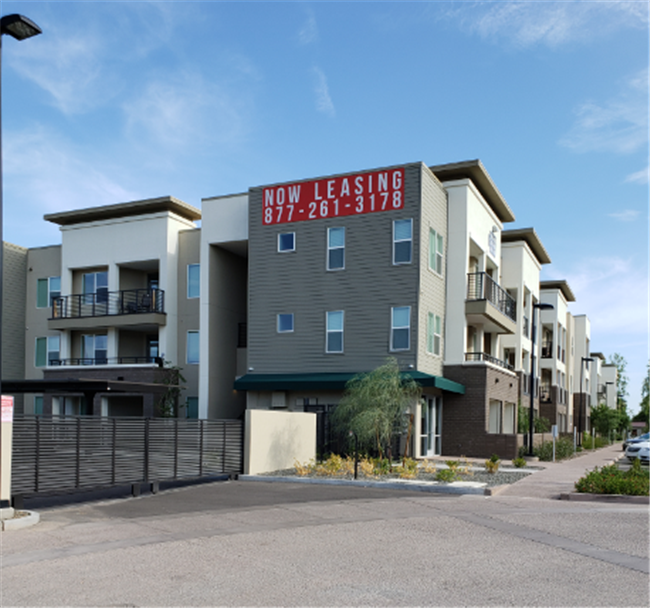
Phoenix apartment complex where Yardi Matrix says “Phoenix pulled ahead in May atop our list of major metros with a 6.8% growth rate.”
2019 could be shaping up to be a weak year for multifamily rents
“This is notable because the bulk of rent growth tends to occur in the first half of the year. If the past is any guide, 2019 would be hard-pressed to continue the bullish outcomes of the last six years if things don’t improve quickly,” the report says.
Year-over-year rent growth tops in Phoenix and Las Vegas
Demand in the desert continues to show up in the year-over-year numbers, according to the report.
Rents increased 2.5% year-over-year in May, down 50 basis points from April and 80 basis points from March. The year-to-date increase of 1.2% is the slowest rate of growth since 2011.
The Renter by Necessity category (3.0%) continues to grow at a faster rate than the Lifestyle category (1.7%). Only eight metros top the 2.5% overall national average in Lifestyle rents, but 22 metros top 2.5% growth in RBN rents.
Phoenix (6.8%) overtook Las Vegas (6.6%) in May to lead the rankings. The metros are No. 1 and No. 2 in both Lifestyle and RBN rent growth, and both have increased occupancy rates of stabilized properties by 20 basis points over the past year (Las Vegas to 95.0% and Phoenix to 95.5%) despite adding a significant amount of new supply. Meanwhile, Houston (0.4%) and Seattle (0.8%) have the weakest growth.
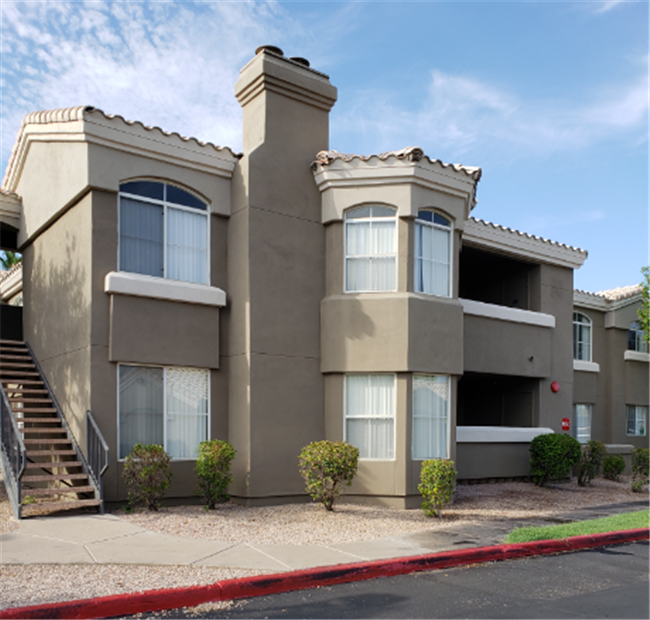
Phoenix apartment complex where Yardi Matrix says “Phoenix (6.8%) overtook Las Vegas (6.6%) in May to lead the rankings.”
“The National Association of Business Economists released a survey that found a growing number of prognosticators increasing the odds that a recession will start in 2020,” the report says.
“Even though a recession in the near term remains a minority opinion, however, the downside risks are growing. The biggest reason cited is trade uncertainty, with 88% of economists surveyed downgrading growth forecasts because of President Trump’s policies on trade, which include tariffs on imports from China and Mexico. The other top reasons cited for the weaker growth outlook are stock market volatility and slowing global growth,” Yardi Matrix says in the report.
Discrimination based on nonconformity with gender stereotypes is covered by the Fair Housing Act, so this week the Grace Hill training tip takes a look at the LGBT community and Fair Housing.
In recent years, the LGBT community has earned additional rights under the law in many different contexts.
From same-sex marriage recognition to restroom access corresponding to a person’s gender identity, the law is constantly evolving.
The Federal Fair Housing Act (FHA) does not specifically include sexual orientation and gender identity as protected classes.
However, discrimination against a lesbian, gay, bisexual, or transgender person may be covered by the FHA if it is based on nonconformity with gender stereotypes.
The LGBT community and the Fair Housing Act example
If a housing provider refuses to rent to an LGBT person because she believes the person acts in a manner that does not conform to her notion of how a person of a particular sex should act, the person may pursue the matter under the Fair Housing Act as discrimination based on sex.
If a property manager refuses to rent to a prospective resident who is transgender because of the prospective resident’s non-conformity with gender stereotypes, this could be discrimination on the basis of sex under the FHA.
Despite the relative lack of protection under the FHA, both the judicial system and the United States Department of Housing and Urban Development (HUD) have in recent years expanded anti-discrimination protections for the LGBT community.
The law is clearly trending towards recognizing sexual orientation and gender identity as protected classes under fair housing laws. In fact, it is already the law in many states and localities.
Every interaction with residents and prospective residents is an opportunity to comply with fair housing laws
Remember, every interaction you have with prospective and current residents is an opportunity to comply with fair housing laws and prevent discriminatory housing practices.
By treating everyone fairly, equally, and consistently, you help reduce the risk of violating fair housing laws and create a welcoming atmosphere and sense of community for your customers.
And, fair housing laws protect people from discrimination throughout all stages of your interactions, not just after they become residents of your community. From the first contact, whether by phone call, email, text, or in-person, you are responsible for complying with fair housing laws and treating all people in a non-discriminatory manner.
Even if LGBT persons are not technically considered a protected class under the laws applicable to the area your company or property is located in, there are valid reasons for maintaining a company policy prohibiting LGBT discrimination, and for ensuring employees understand that all people must be treated in a non-discriminatory manner.
Ellen Clark is the Director of Assessment at Grace Hill. Her work has spanned the entire learner lifecycle, from elementary school through professional education. She spent over 10 years working with K12 Inc.’s network of online charter schools – measuring learning, developing learning improvement plans using evidence-based strategies, and conducting learning studies. Later, at Kaplan Inc., she worked in the vocational education and job training divisions, improving online, blended and face-to-face training programs, and working directly with business leadership and trainers to improve learner outcomes and job performance. Ellen lives and works in Maryland, where she was born and raised.
About Grace Hill
For nearly two decades, Grace Hill has been developing best-in-class online training courseware and administration solely for the Property Management Industry, designed to help people, teams and companies improve performance and reduce risk.
Here are 6 ways to bug-proof your rental property and keep your tenants happy which is this week’s maintenance tip from Keepe.
Bugs are always an unwanted guest for your tenants and can create unsanitary living conditions.
Because there are so many different types of bugs, bug proofing your rental property can sometimes feel like a losing battle.
Here are 6 ways to bug-proof your rental property and hopefully these simple two-cost steps will help.
1. Seal doors
Examine the around your doors. It’s common to find small cracks large enough for bugs to get in. To keep insects from crawling underneath the door, you can install a steel or aluminum threshold under the door. For even better protection, combine the threshold with a nylon door sweep.
The sweep helps cover the gap between the threshold and the door bottom for even better protection against bugs.
2. Add screens
Especially during summer days, many tenants like to rely on natural ventilation from windows. Unfortunately, this is also the worst time for mosquitos, fleas and other insects to come into your home.
By installing screens on all windows and doors, your tenants can keep the ventilation of fresh air while also protecting against pests.
Screens are important to keep bugs out when tenants want fresh air.
3. Repair cracks
Because bugs are small, they are able to enter from cracks that may be nearly invisible to the rental property owner and tenants. Start by examining the exterior for any damaged, loose, missing, or rotting sections. You could be surprised by the number of openings you find.
To keep the bugs out of these cracks, use mortar or cement to patch foundations, replace damaged bricks and remove rotting wood. If there are any areas susceptible to termites, you may add cement backer board to reinforce the area and prevent termite damage. Caulk is also amazing at repairing small cracks around the exterior of your rental. Use caulk around window frames and roofs to really seal openings.
4. Store trash properly – get your tenants involved in this
As many know, bugs are attracted to trash and debris. Trash can be a gourmet meal to cockroaches and fruit flies. You need to be sure your tenants are involved in keeping the rental clean and being aware of how trash can attract bugs.
Ask your tenants to keep all food trash in the kitchen, instead of throughout the house. This will minimize the areas bugs will most likely go. Additionally, the trash should have a lid and be emptied once a day.
5. Dry up damp areas
Bugs don’t only seek food, like trash, but also water. There are many types of insects that prefer living in damp spaces. To prevent this, fix and replace any leaky faucets, drains or pipes. Inspect your air conditioner, washing machine and dryer to make sure they are all working properly.
You may also need to check the attic to make sure there are no leaks. If there are areas that feel damp, try using a dehumidifier.
6. Kill the bugs you see
Even if after bug-proofing your rental you may see bugs around so kill them immediately.
If your tenants have killed bugs, ask them to provide a photo of what they found so you can act. Of course there are many insect control products on the market, but to give yourself and your tenants peace of mind you may want to call an exterminator to take care of this problem. Your tenants will appreciate your concern and your action.
Other recent rental property maintenance Keepe posts you may have missed:
Keepe is an on-demand maintenance solution for property managers and independent landlords. The company makes a network of hundreds of independent contractors and handymen available for maintenance projects at rental properties. Keepe is available in the Greater Seattle area, Greater Phoenix area, San Francisco Bay area, Portland, San Diego and is coming soon to an area near you. Learn more about Keepe at https://www.keepe.com
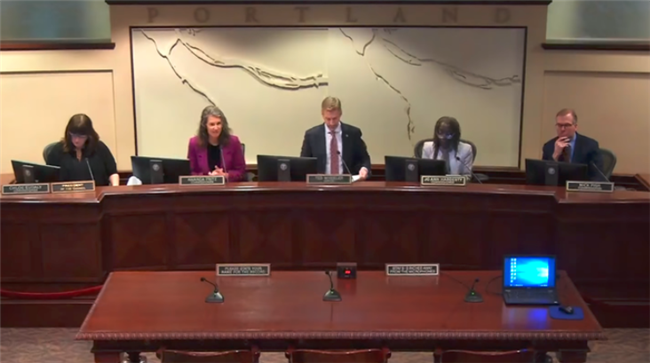
Landlords again pushed back against a proposed Portland City Ordinance on tenant-screening criteria in a public hearing in late May asking for more changes and sharing concerns.
The council has set a vote on the ordinance for June 12. Commissioner Chloe Eudaly, sponsor of the measure, added an amendment to move implementation of the ordinance from October 2019 to March of 2020. The measure includes controversial rent-to-income ratios as well as criminal-background check requirements.
Some of the highlights of the landlord testimony included mom-and-pop landlords, larger corporate landlords and landlord organizations.
‘I did not know I was evil’
One landlord, Diane Ponti, told the council in the public hearing that she is a schoolteacher and that over 45 years she and her husband, also a schoolteacher, had bought nine rental properties.
“Tenants and landlords are both people. Like teaching school and grading papers, you can look at a bell curve and just like students you will find thoughtful and responsible landlords and tenants on one end of a bell curve. At the other end of the curve you frankly find tenants and landlords who give the industry a bad name.
“The proposed regulations do not take into account that most landlords and tenants fall somewhere on that bell curve as opposed to landlords at one end and tenants at the other. All landlords are evil and all tenants are good,” is what she is hearing.
“I did not know I was evil until I started reading the newspaper about how horrible landlords were. I came to this meeting with trepidation because I feel like the face of evil. I am a landlord. It is challenging to read that about myself. I care about the tenants I have rented to over the last 45 years. I care about the houses I bought and that the house is in good shape. And that my tenants and neighbors will get along.
“I have had tenants who have stayed in my homes for decades. I have had years where there have been no rent raises at all. Rents have stayed flat,” Ponti said.
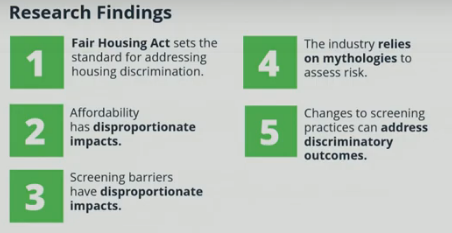
One of the slides presented at the hearing on the Portland tenant screening ordinance by Jamey Duhamel, Director of Policy, for Commissioner Eudaly.
Unintended consequences for the proposed Portland tenant screening ordinance
“The proposed regulations remind me of the bank standards that were lowered in the early 2000s when people who could not really afford to buy faced foreclosure,” Ponti told the council. “These regulations with lower income requirements are going to put tenants one paycheck away from eviction when a financial crisis arises and they cannot pay their rent.
“Mom-and-pop landlords like me will sell. I read the regulations five or six times and they are confusing, they are daunting, they are scary and they are expensive. And, I think you will reduce affordable housing when landlords like me sell,” she said.
Ward Green, an attorney in Portland, said he agrees “we share a moral obligation to provide affordable housing” but doubts this package of ordinances is the way to do it. “I know I won’t be popular when I say I would like to see the political will to raise taxes, especially on wealthy Portlanders, and business. The city is doing well. Many of us are doing well.”
He suggested “we allow more density,” more ADUs, faster, cheaper building permits for people who want to construct rental properties, to create a fast track. “We need to create more housing,” he said, using the example of rearranging the deck chairs on the Titanic.
Referring to the first-come, first-served provision of the Portland tenant screening ordinance, he said letting someone come ahead of someone else in the rental process “is not going to create more housing.
“I think this ordinance is wrong. I think it is demonizing landlords. And I think it is not going to increase the number of available rentals. I think it is going to encourage some private landlords to get out of the business,” he said.
Concern about having to take tenants who may not be able to afford the rent
Landlords objected in particular to having to wait 72 hours to advertise a unit before it can be rented, as well as new caps on the income-to-rent ratio landlords can require.
Jim Rostel, sales director for Anchor Property Group, said allowing someone to pay 50 percent of their income for a rental is just setting them up for failure. His company has 2,200 units in Portland.
The ordinance sets out two and a half times the rent for cheaper units that meet a federal standard of being affordable to someone making 80% of the area median income, or two times the rent for more expensive units.
“We had discussions this morning. Do we move to another market? Do we move to Boise and build in Boise?” said Rostel of Anchor, a Portland area company that builds and manages apartments across the city.
Council should not water down consumer protections
Deborah Imse, executive director for Multifamily NW said, “While we share the city council’s goal of improving access to housing for vulnerable populations, we do not believe eliminating or watering down basic consumer financial protections is the way to accomplish that objective.
“What this proposal is doing is watering down industry safeguards that protect consumers from entering into housing contracts that they cannot afford. Contrary to the political messaging around this bill, a requirement that tenants earn three times (the) monthly rent is not designed to protect landlords. It is to prevent consumers from entering into housing contracts they cannot afford.
“When someone moves into housing that they do not have the income to support, they are far more likely to fail to make rent payments and ultimately to be evicted. We see this frequently even for tenants who earn more than three times the monthly rent. By eliminating that protection you are ensuring that the more vulnerable Portlanders will enter into housing contracts they cannot afford. That more Portlanders will be evicted. And those same exact Portlanders will then have a much harder time securing housing as a result of a ‘forlcause’ eviction. The chain of events will logically lead to more housing instability and ultimately homelessness. Please do not go down this path.
“Similarly, discretion in renting to individuals with egregious criminal backgrounds, in particular sexual offenders and violent domestic abuse crimes, is not to protect landlords. Most of our members do not reside in the communities that they operate. The discretion is to protect other tenants, including young families, seniors, and survivors of domestic abuse whose safety we also believe is incredibly important. I do believe it is important to acknowledge the deep racial disparities that exist in our criminal justice system and to also affirm that all criminal backgrounds are not equal. This is a very sensitive, difficult question that we all must work together to resolve. But this proposal addresses it in a way that is extremely unclear and essentially forces the housing provider to act as judge and jury on each individual case. It will result in improper screening in and out, and ironically could ultimately lead to more discrimination.”
She urged the council to slow things down and take a more measured approach.
And “despite the political rhetoric of the past several years, we remain deeply open to partnering with the city and stakeholders on policies that will expand housing access while protecting the right and safety of Portlanders,” Imse said.
Final public hearing on Portland tenant screening ordinance
Eudaly said no further public testimony would be taken in order not to delay any further the June 12 vote.
At the beginning of the council meeting, Eudaly mentioned a “disappointing hearing” at the U.S. Department of Housing and Urban Development, saying potential rent increases and other statements by officials, such as removing “free from discrimination” from the HUD mission statement, were troubling.
Eudaly began by saying, “The federal government is not going to save us. The state government is not going to save us. The market is not going to save us. We need to take ongoing action to assert our local power on multiple fronts to solve our housing crisis.
She said robo-calls that went out in Portland during May were disappointing and spread misinformation. “I am requesting we stick to the facts and debate this on its merits.”
Economist Thomas Sowell once quipped, “The first lesson of economics is scarcity” and “the first lesson of politics is to disregard the first lesson of economics.”
With California’s recent flirtation with statewide rent control, it seems Golden State lawmakers are treating Sowell’s warning as a game plan.
The results will be predictable: less affordable housing for all.
With the exception of lawmakers and a small crew of activists, almost everyone knows that rent control has never worked. All economists know it. And it seems most Californians know it, given that the state’s voters thoroughly trounced an initiative last November that would have repealed a 1995 law that limits local jurisdictions’ ability to impose rent control.
Yet the rent control myth persists. Oregon lawmakers have manifested their faith with a new statewide rent control regime, and California lawmakers are now toying with the idea.
California’s rent control bill, AB 1482, would impose a 5 percent cap ( later amended to 7 percent) on rent increases beyond the percentage of regional inflation. That’s stricter than Oregon’s recent law, which imposed a 7 percent cap, although last month California lawmakers offered a twig-sized olive branch by exempting newer rentals.
Unfortunately, however they may tinker with the specifics, the bill won’t overcome its most fundamental flaw: ignoring the aforementioned first lesson of economics.
When politicians shove down prices a shortage results
A lower price means more people want the good while fewer people produce it. So, rent control means more demand for housing and less housing supply.
Landlords will either bow out of the market, always max out on the rent increases available to them, or ratchet up the rent immediately when a new lease begins.
Meanwhile, inflated prices will spill out into the uncontrolled market, worsening the crunch.
California rent control will mean slower development of new multifamily housing
California rent control will cause apartment investment trusts to underperform, and investment dollars that may have gone toward new construction, in anticipation of solid returns, will go elsewhere. As various states have flirted with rent control in recent months, investors already have begun to flinch. This is an ominous sign, since multifamily housing is an essential tool in easing a housing crisis.
California’s bill not only will cause a housing shortage, it also will degrade the quality of the existing housing stock.
Rent control leaves landlords with little incentive to upgrade and improve their property. Plus, landlords operate at a narrow margin. Rent controls choke that margin even more, leading landlords to forego maintenance and improvements. The legacy of rent control is a crumbling housing stock, both figuratively and literally.
The bill’s recent amendment to exempt newer housing would do little to alleviate the problem. That amendment is likely designed to maintain incentives to build affordable housing. But the rent control measure will make new housing even pricier, whether or not it’s in the grip of rent control. After all, when you squeeze prices, they’ll inflate in the uncontrolled market.
Who does rent control help?
And who does rent control help, anyway? It helps people who can fight their way into a price-controlled unit and stay put. In most cases, those people are not the poorest among us, who are often left to struggle in the uncontrolled market while the beneficiaries of the rent control regime slide along in comfortable, affordable housing that’s not subject to market prices.
There are some sad ironies behind California’s wrongheaded rent control push. Some months ago, California Gov. Gavin Newsom took an encouraging step toward the right affordable housing solution: encourage new construction.
Newsom urged local communities to remove barriers to more housing construction, threatening to strip local jurisdictions of transportation funding if they didn’t comply with a state housing quota. However, late last month Newsom indicated that he’d sign a rent control bill if it reached his desk. He can’t have it both ways — his signature on a rent control bill will offset any good his construction initiative might do.
The other irony is California’s steady refusal to listen to the advice of its own experts. In 2015, the Legislative Analyst’s Office released a study about why California has become so unlivable. Their diagnosis was simple: over regulation of real estate. Their prescription was obvious enough: build more housing. But they were speaking the language of the first lesson of economics — and we know what the first lesson of politics says about that.
About the author:
Ethan Blevins is an attorney with Pacific Legal Foundation, which litigates nationwide to achieve court victories enforcing the Constitution’s guarantee of individual liberty. Follow him on Twitter @ethanwb.
How to solve pet pee needs in the middle of the night when you live in a high-rise apartment can be a real challenge. A San Diego start-up company has come up with a unique product that helps both property managers and tenants.
By John Triplett
Rental Housing Journal
As an individual living in a high rise condo or apartment, one can imagine how difficult it can be when your pet needs to go out to pee in the middle of the night.
Tenants don’t have the option of opening the back door to a large grass backyard. It requires getting dressed, leaving the unit, going in the elevator, and eventually outside.
In a city like San Diego and other metro areas embracing and building denser multifamily housing, moving from suburban environments to urban neighborhoods creates issues and difficulties for dogs and their owners when they need a grassy spot.
Some dogs handle the adjustment to high rise living without incident. For others, it can be a challenge.
Solving the pet pee needs in apartments
A start-up company in San Diego has come up with a unique approach to pet pee issues that offers property managers and tenants the “backyard alternative for high rise living pooches.” Urban Dog Solutions is subscription service that provides San Diego high rise dog owners with a fresh grass pee patch delivered to the door. In addition, a member of their team returns in person to clean and replace the grass on a weekly basis.
Founders Tricia Crespin and Oscar Urteaga started Urban Dog Solutions originally as 92101 Dog Solutions but changed the name of the business as it grew.
‘I changed the name to Urban Dog Solutions from 92101 Dog Solutions because our growth came very quickly. I never imagined to have grown so quickly. 92101 Dog Solutions was a need I saw when I moved to San Diego, but then I realized the need was much bigger than just Downtown San Diego,” Crespin said.
Here is the story on how it got started
Example of the pet pee pad.
“I met Tricia, my business partner and co-founder, shortly after she moved to San Diego from Arizona and brought her elderly dog with her. The dog had a heart murmur and had to take medicine that caused the dog to frequently urinate.
“Living in high-rise condo in East Village, she was having to get up multiple times in the middle of the night, take him to the elevator, then downstairs outside where there were a lot of homeless people and it was not necessarily safe to take out the dog,” he said.
“So I recommended to her some different products. Most were dog pee trays you can buy at pet stores and online. We tried every product and service we could find, and nothing met our expectations, and the dog did not utilize it at all.
“One day we decided to buy a piece of sod and put it on one plastic tray. Given the texture and scent of real grass, the dog ended up going potty immediately. We realized that we needed real grass to curb the dog’s bathroom needs,” he said.
“Unfortunately after a couple days of use, it started attracting some flies. Tricia’s brother worked on a farm in Washington State and we collaborated with him to formulate a deodorizer – we call it the, ‘secret sauce’ to reduce smells and flies. We can’t say what is in it, but we place the deodorizer under the grass to absorb all the liquids, prevent flies and it doesn’t smell.
“After much trial and error to develop our own real grass pee patch, our friends and neighbors started to inquire how to get one of their own and at that moment we realized we had a business idea,” he said.
How do property managers and leasing agents feel about this?
“The property managers and leasing agents we have interacted with support our service because they see it as a way to help keep their existing units clean and prevent damage caused by dog residents,” Urteaga said.
“Unlike our competitors that just provide a product, our business is unique because we actually service and replace the grass patch. The grass patch has a five-layer system, so no liquids make it through to the floor or carpet.
“You would be very surprised, but some of our customers – the first time we walk into their unit and all they had put down newspapers and pee pads. It was pretty gross. So we believe 92101 Dog Solutions helps property managers and leasing agents keep their units much cleaner with residents that have dogs,” he said.
“Our business is nothing new. We are not re-inventing the wheel,” Urteaga said.
“What we did was we saw a need and a demand. We looked at some existing services and products that are out there and we figured out a way to make it better,” he said.
He said right now they only service San Diego and will soon be announcing plans to expand their service offerings to include a full service dog concierge list of amenities, such as dog walking, dog sitting and vet appointment pick up/drop offs.
“Before we decided to pursue it as a legitimate business, we looked at the market and numbers. We found that in the 92101 downtown zip code, there are approximately 35,000 residents, and about one-third of them have pets, mostly dogs. One of the biggest downsides of living in downtown San Diego is that there is not a lot of grass space and open parks. There are very few open parks or dog parks to allow these animals to do their business. So that is the demand we had identified.
“This service does not replace dog walking – all dogs need exercise but rather offers an easy and convenient option for the bathroom needs of high rise living pooches,” he said.
How does the service work?
Urban Dog Solutions uses high quality Fescue grass that is dense and lush which dogs really enjoy. Customers can choose deliveries to occur on Saturday mornings, typically between 10:00 a.m. and 12:00 p.m., or on Monday evenings between 5:30 and 7:00 p.m.
“Most of our customers are busy working professionals, so we arrive at our customers units and change/replace the pee patch in less than 5 minutes,” he said. They have a growing customer base.
Some of the top questions about the service
Question: Do tenants have to get property manager approval for this product? Have any apartments refused your service?
Answer: No. We have not ever needed property manager approval, and we have not received any critical feedback either. We have met with several leasing agents and property managers, and all welcomed our services. And now property managers/owners are calling us for our services.
Question: How much does the service cost?
Answer: For dogs 25 pounds or less, our standard size is $130 per month, which includes the pick up and delivery of the fresh grass pee patch for four weeks. For dogs between 25 pounds and 50 pounds there is an XL version that costs $180 per month. For dogs bigger than 50 pounds we can now customize their patches; for pricing please contact us.
Question: Should I pick up the poop from the grass pad?
Answer: We provide our customers with poop bags to clean up after their dogs.
Question: I have two dogs, do I need two pads? How many dogs can one pad handle?
Answer: Depending on the breed of the dog, some may become territorial of their grass patches. But most of our customers that have two or three small dogs typically share the grass pee patch. We always offer advice and solutions for any requests our customers bring us.
Question: Do I keep it inside or can it go on my outside balcony?
Answer: Yes, you can keep it indoors or leave it on your balcony. Our unique five-layer system absorbs all liquids, and does not attract flies or create smells. Obviously, the grass eventually dies off after a full week of use, but we replace it the following week
Question: Do you plan to expand from San Diego?
Answer: Yes! July 2019 we launched Nationwide Shipping!
We still offer our in person service here in San Diego all the way up the coast to Los Angeles and launched our in service in Arizona.
The California Assembly has passed a rent-cap bill that would limit annual rent increases to seven percent plus the annual increase in the cost of living, according to reports and it now heads to the Senate.
There were several last-minute amendments to the rent-cap bill including those that would:
Exempt property owners with no more than 10 single-family homes
Exempted properties that are less than 10 years old
Set the law to expire in 2023
“It’s a very moderate measure that will guard against some of the more egregious practices that we’re seeing,” Assemblywoman Buffy Wicks, D-Oakland, told the San Jose Mercury News before the vote.
The bill’s author, Democratic Assemblyman David Chiu, argued the measure would protect tenants from big rent increases while still allowing property owners to get a fair return on investment.
“We’re saying we’re in a housing emergency. And we’re saying while we’re in this emergency, we’re going to impose a reasonable cap to prevent rent-gouging,” Chiu, of San Francisco, told ABC 7 and reporters after the bill passed.
Rent-Cap Simply Rent Control With Another Name
Some lawmakers spoke against the bill, saying they felt it was not the answer to the housing crisis.
And that such steps would discourage investment in rental housing.
“This is rent control,” Assemblywoman Melissa Melendez, R-Lake Elsinore, told the newspaper. “I don’t care how you say it. I don’t care how you spin it.
“This is a disincentive for people to build and what we need is to build,” she said.
The bill now heads to the Senate
If the bill, AB-1482, clears the Senate, California could join Oregon as the second state in the nation this year to limit annual rent hikes, covering millions of properties not covered by local rent control rules.
The bill passed the Assembly 43-28.
California residents voted down a ballot measure last year that would have allowed cities to expand rent control.
When you are reviewing your screening policies to avoid any discriminatory effects, especially criminal history, be sure to avoid your gut feelings. The Grace Hill training tip of the week focuses on tenant screening and the right way to do it especially when checking criminal history.
Remember to review your screening policies to avoid any appearance of discrimination.
How to use criminal history
One of the things in the National Fair Housing Alliance publications is the highlighting of the U.S. Department of Housing and Urban Development’s (HUD) guidance on how to use criminal history if you are a housing provider.
“In 2015, HUD’s Office of Public and Indian Housing issued a notice that prohibits Public Housing Authorities and owners of federally-assisted housing from applying blanket exclusions of applicants with an arrest record in their housing decision.
“In 2016, HUD’s Office of General Counsel issued guidance on how the Fair Housing Act applies to the use of criminal history by housing providers and, specifically, how the discriminatory effects and disparate treatment methods of proof apply to fair housing cases in situations when a housing provider justifies an adverse housing decision based on someone’s criminal record.
In issuing this important policy guidance, HUD has helped provide housing stability for people with criminal records, a critical step toward the successful reintegration of people with criminal records into society.”
Here are a few practical tips to ensure your screening policies are in line with HUD guidance
7 Ways To Stay Out Of Trouble When Checking Criminal History
Keep these tips in mind at all times.
Everyone involved in the leasing process should be trained in screening policies. Everyone should consistently follow these policies, rather than make decisions based on assumptions or gut feelings.
Do not deny an application based solely on an arrest record. An arrest is not the same as a conviction.
Do not automatically exclude applicants just because they have a criminal history.
Consider criminal history only after the applicant’s other qualifications are verified. If you do need to consider criminal history, conduct an individualized assessment that looks at several factors.
The nature and severity of the crime.
The time since the arrest or conviction.
The applicant’s recent rental history.
The applicant’s rehabilitation efforts.
When consistently applied, policies that follow these guidelines are less likely to have a discriminatory effect. Take time to review your applicant screening policies and procedures, particularly those relating to background checks, with your supervisor and legal counsel today.
Ellen Clark is the Director of Assessment at Grace Hill. Her work has spanned the entire learner lifecycle, from elementary school through professional education. She spent over 10 years working with K12 Inc.’s network of online charter schools – measuring learning, developing learning improvement plans using evidence-based strategies, and conducting learning studies. Later, at Kaplan Inc., she worked in the vocational education and job training divisions, improving online, blended and face-to-face training programs, and working directly with business leadership and trainers to improve learner outcomes and job performance. Ellen lives and works in Maryland, where she was born and raised.
About Grace Hill
For nearly two decades, Grace Hill has been developing best-in-class online training courseware and administration solely for the Property Management Industry, designed to help people, teams and companies improve performance and reduce risk.
The city is using legislation and threats of huge penalties, fines and fees to put the housing crisis on the backs of those who provide housing.
The proposed regulations for tenant screening and security deposits are 40-plus pages of verbiage and mandate huge fines only to rental providers. This will greatly increase risks for landlords.
It’s not fair.
Worse, the new proposals hit small investors hardest. That’s all wrong too. It is the mom-and-pop Portland landlords who are consistently most flexible with tenants. The big out-of-state providers are already here, and evictions are part of best practices for them in protecting their investors and bottom lines.
There are no risks here for the city. It makes the rules and dictates fines. It doesn’t offer to share the risk and gives us little or no respect Senate Bill 608, which imposed statewide rent control and prohibited landlords from ending most leases flew through all public hearings, and its legislative backers accepted no changes. While the proposed screening and security deposit regulations have had some small changes, it seems the policy as a whole is going down this same intractable path, which will only make the market worse for renters.
Portland City Commissioner Chloe Eudaly especially seems to enjoy pitting renters against the “evil” landlords that maintain the homes and safe places renters live in. We are apparently the biggest easy target. As landlords, we do not have enough political power or numbers. The us against them attitude needs to stop. A workable and sustainable solution needs to be a shared solution.
Writers of these regulations should include all sides. Tenants, housing providers (large and small), financial institutions, and non-profits. The changes must result in sustainable housing for our great city.
And what about property rights?
The city now says we must accept applicants who may not be able to afford the rent or are felons in our properties.
Felons are not a protected class, like race, gender, religion, families with kids, sexual preferences, service dogs, disabilities etc. etc. And tenants who are financially vulnerable are a great risk for any landlord.
As property owners, responsible for the debts and expenses related to those properties, we should have protected rights to assess the financial risk we are willing to take. We pay taxes, mortgages, repairs, legal and all other costs. It takes several years to break even on most properties. For most of us, the big financial rewards come only at the end of our careers and are part of our retirement.
There are more equitable, broader-based solutions that the city should consider.
I was asked what broad-based ideas I suggest so here is my list
Check out how Mercy Housing does affordable housing. Provide job resources, job training, life skills classes, budgeting help etc., so tenants are successful and have long term tenancies.
Provide more housing. Incentivize developers, especially “impact investors”, (community-oriented investors who take smaller returns and no public subsidies, but still provide affordable units in their projects). City should give commitments priority in development, decreased development costs and hurdles, or tax credits.
Spreading this housing solution throughout the city is a much better result than just building large tenements is “poor” neighborhoods, destined to be future ghettos, and shunned by all. Europe has this kind of model; it works well and makes for a healthier and more diverse city.
City should create more home ownership. Help residents become or stay home owners. Grants for down payments, repairs, and to develop ADUs (alternate dwelling units).
City should legislate that employers follow same rules as landlords; hire felons.
The State could expunge felony records when there has been no new offenses after 3 or 7 years.
Legislate ways to reign in price increases at grocery stores, pharmacies, health insurances, and schools doing business in our city or state.
Encourage/incentivize subsidized tenants to respect the properties they live in. Encourage them to work more, or volunteer, or when successful, perhaps do peer counseling. . This would leave more money to help others.
Build more housing. Stop Rent Control, it’s only driving out investors.
About the Portland landlord author:
Sue Scott is a Portland landlord and owns 25 rental housing units in Portland. She lives in Happy Valley. She wrote this letter to Oregonlive.com.