
Home Blog Page 146

Kay Properties Being Defensive Pays Off: Avoiding Hospitality and Senior Care

Kay Properties’ clients avoid potential hospitality and senior care crash and burn

Kay Properties’ clients avoid potential hospitality and senior care crash and burn – why avoiding hospitality and senior care is the Kay Properties way

 By Alex Madden
Vice President at Kay Properties and Investments

For many years Kay Properties has taken the position that we will not offer three asset classes to Investors because they carry too high of risk to investors equity: Hospitality, Senior Care, and Oil & Gas.

While other groups have gleefully entered into some of these sectors searching for higher potential returns, Kay Properties has maintained the position that they are much too volatile, and much too risky for our client’s hard-earned investment dollars.

Instead, Kay Properties has always advocated for investors to take a potentially more defensive position by often investing in a diversified portfolio of multifamily, net lease, industrial and other offerings as well as placing an emphasis on staying in debt-free DSTs (where there is no long-term mortgage on the property) whenever possible. There are a number of DST Sponsors within the 1031 DST industry that specialize in providing debt-free DST 1031 vehicles. Many of Kay Properties clients over the years when walked through the potential pros and cons of the higher risk asset classes, feel they may be better off being potentially more defensive than entering potentially more volatile sectors like Hospitality, Senior Care, and Oil & Gas.

Kay Properties

When the COVID-19 virus began to sweep the US many sectors of the economy were hit, and chief among them were Hospitality, and Senior Care. Few could have predicted the economic impact the virus would have on the country, but as business, personal travel, and quarantines took effect the entire Hospitality sector began to be experience significant negative effects with certain hospitality offerings suspending distributions.

Another potentially high-risk asset class affected by the COVID-19 virus was Senior Living and Senior Care. With the potential for disease, increased government regulations, and potential litigation risks associated with this asset class – it was particularly affected when COVID-19 swept the country.

No one has a crystal ball, and none of us know what the future holds – however Kay Properties is grateful to have rejected these asset classes and the DST investments that sponsors brought out in them for many years and will continue to in the future. This position has not always been popular, but we have seen through multiple downturns the decisions to be defensive, go debt-free if possible, and avoid the higher-risk asset classes available in the 1031 DST industry such as hospitality, senior care and oil and gas to be a prudent decision that we are glad we made.

About Kay Properties and www.kpi1031.com

Kay Properties is a national Delaware Statutory Trust (DST) investment firm. The www.kpi1031.com platform provides access to the marketplace of DSTs from over 25 different sponsor companies, custom DSTs only available to Kay clients, independent advice on DST sponsor companies, full due diligence and vetting on each DST (typically 20-40 DSTs) and an active DST secondary market. Kay Properties team members collectively have over 115 years of real estate experience, are licensed in all 50 states, and have participated in over 15 Billion of DST 1031 investments.

This material does not constitute an offer to sell nor a solicitation of an offer to buy any security. Such offers can be made only by the confidential Private Placement Memorandum (the “Memorandum”). Please read the entire Memorandum paying special attention to the risk section prior investing. IRC Section 1031, IRC Section 1033 and IRC Section 721 are complex tax codes therefore you should consult your tax or legal professional for details regarding your situation. There are material risks associated with investing in real estate securities including illiquidity, vacancies, general market conditions and competition, lack of operating history, interest rate risks, general risks of owning/operating commercial and multifamily properties, financing risks, potential adverse tax consequences, general economic risks, development risks and long hold periods. There is a risk of loss of the entire investment principal. Past performance is not a guarantee of future results. Potential cash flow, potential returns and potential appreciation are not guaranteed.

Securities offered through WealthForge Securities, LLC. Member FINRA / SIPC. Kay Properties and Investments, LLC and WealthForge Securities, LLC are separate entities.

Kay Properties Delaware Statutory Trust Investing Across Market Cycles

Delaware Statutory Trust Investing Across Market Cycles

Investing In Net Lease Properties Via Delaware Statutory Trusts

COVID-19: Landlord/Tenant Law in the Age of Global Pandemic

andlord tenant law and covid-19

By Bradley S. Kraus
Attorney at Law, Warren Allen, LLP

Much like everything else in the world, the relationship between landlords and tenants changed dramatically with the arrival of the COVID-19 pandemic.

For the first time, I received questions about things like, “How to handle individuals who appear ill/have COVID-19?” and whether landlords should call the police on said individuals.

Those questions are unsurprisingly more nuanced then they otherwise would be, due to the pandemic and all. To say that COVID-19 has caused – and will continue to cause – panic and uncertainty is an understatement.

From a health prospective, you can imagine that the ORLTA (Oregon Residential Landlord and Tenant Act) is devoid of guidance on handling matters related to a pandemic. I have learned that following Centers for Disease Control and Prevention (CDC) guidelines is likely the best bet for landlords. Signage related to handwashing and social distancing is more than appropriate. If a landlord sees someone openly violating Gov. Kate Brown’s stay-home order or policies related to social distancing, the police want you to call the non-emergency hotline. Finally, if a tenant reports that they are positive for COVID-19, such a situation presents significant issues requiring coordination/cooperation that are beyond the scope of this article but necessitate legal counsel.

From a legal perspective, COVID-19 brought many changes to landlord/tenant law, enacted under emergency powers many had no idea existed. After the emergency was announced, landlord/tenant law morphed into a patchwork of laws that seemed to evolve daily. Shortly thereafter, orders from courts postponing hearings and trials were abundant, with some matters being postponed several months into the future. Meanwhile, the defendants in those actions likely continue to not pay rent—and keep in mind, many of these hearings were set long before any COVID-19 issues.

Landlord tenant law and covid-19

The most recent nail in the coffin occurred on April 1, when Gov. Brown signed Executive Order 20-13. This new order prohibits landlords from serving, filing evictions on, or enforcing any notice for non-payment, with “non-payment” also including enforcing any no-cause notice served pursuant to ORS 90.427. Alas, these actions effectively leave landlords holding the bag for fiscal issues related to the pandemic, to which many elected officials are turning a blind eye.

With access to the courts effectively prohibited for months at this point, many have asked what they should do considering the constant barrage of bad news.

First, making payment arrangements and/or accepting partial payments from your tenants is likely now an option, where before it may not have been. In some instances, that partial payment may be the last penny you receive for some time. Before doing so, seek competent counsel regarding the effects of doing so.

Next, keep in mind that the COVID-19 moratoria do not apply to conduct-based notices or evictions. Accordingly, if you have troublesome tenants, your remedies are still intact.

Finally, many have asked what to make of calls for a “rent strike” and news that draft ordinances are circulating that would legalize the waiver of rent due to COVID-19. To put it bluntly, there is no legal basis for a “rent strike” or a complete refusal to pay rent. Certain moratoria currently in place provide a deferral in some cases, but that rent remains due. As to legalization of rent waivers for tenants without sufficient protection for landlords, I’m hopeful that common sense will prevail and that such legislation will not be enacted, either at the state or local level.

As of this writing, no legislation has been enacted. Should it be enacted, I would imagine legal challenges would quickly follow.

Governor Brown’s shelter-in-place order and her newest executive order may signal the beginning of the COVID-19 storm from many a landlord’s perspective.

However, you’ve weathered a myriad of storms in the last few years: the enactment of Senate Bill 608, (several) Portland ordinances, and other anti-landlord laws. Still, we’re all still standing, and we’ll weather this storm together.

landlord tenant law and covid-19
Bradley Kraus, Portland attorney

[email protected]
503-255-8795

Allowable Fees Under The Landlord Tenant Act

New Year, New Laws: A Brief Overview of the Newest Landlord/Tenant Legislation

For more landlord tenant law and covid-19 information sign up for our newsletter below

Sign Up For Our Newsletter And Get Apartment News And Helpful, Useful Content Each Week.

* indicates required


Portland City Council Calls for Forgiveness of Rent, Mortgage Payments

https://rentalhousingjournal.com/portland-city-council-calls-for-forgiveness-of-rent-mortgage-payments/

Portland City Council members have called for forgiveness of residential rent and mortgage payments, saying a moratorium on evictions is not enough.

“Without a moratorium and forgiveness of residential rent and mortgage payments, we are putting tens of thousands of Portlanders who currently have housing at risk of becoming destitute or homeless as a result of this public health crisis,” the council said in a letter signed by Mayor Ted Wheeler and commissioners Chloe Eudaly, Amanda Fritz and Jo Ann Hardesty.

“While local and statewide moratoriums on residential and commercial evictions were a vital step to stabilize renters, we need further action at the state and federal levels to stem the tide of evictions, foreclosures, and bankruptcies that will occur without further intervention.

“Individuals and businesses whose income or expenses have been substantially impacted by COVID-19 need forgiveness of all residential and commercial rent and mortgage payments for the duration of this emergency,” the letter said.

forgiveness of rent letter to Oregon governor landlord group multifamilynw
Oregon Landlords Ask Governor Not to Allow Forgiveness of Rent, Mortgages

Half of Portland residents are renters

About half of Portland residents are renters, and “those who defer rent payments may accumulate significant personal debt and those who are unable to repay may ultimately face eviction,” the council said in the letter.

And for homeowners, despite the forbearance for federally backed loans, they “will continue to accrue normally scheduled fees, penalties, and interest, which they will still owe with the deferred payments after the forbearance period is over. Additionally, we have become aware that many lenders are not offering reasonable repayment plans,” the letter said.

The council letter said Portland businesses face rent and mortgage payments without the operating revenue to pay their expenses and risk financial collapse.

“We thank the governor for her recent executive order announcing a 90-day moratorium on commercial evictions and urge forgiveness of commercial rent and mortgage payments.

“Portland City Council stands in solidarity with renters, homeowners, and business owners struggling to stay in place during this time of crisis.

“We hear the concerns raised by so many of our constituents and call on our fellow elected officials at the state and federal levels to take action: Forgive all rent and mortgage payments for renters and businesses whose income or expenses have been substantially impacted by COVID-19,” the council said in the letter.

Resources:

Portland officials call for waiving rent, mortgage payments due to coronavirus

Letter from Portland City Council to state and federal official partners

Portland, Multnomah County Sign Emergency Order Suspending Evictions

Sign Up For Our Newsletter And Get Apartment News And Helpful, Useful Content Each Week.

* indicates required


Rent Increases Slowed in March as COVID-19 Impact Appears

Rent Increases Slowed in March as COVID-19 Impact Appears

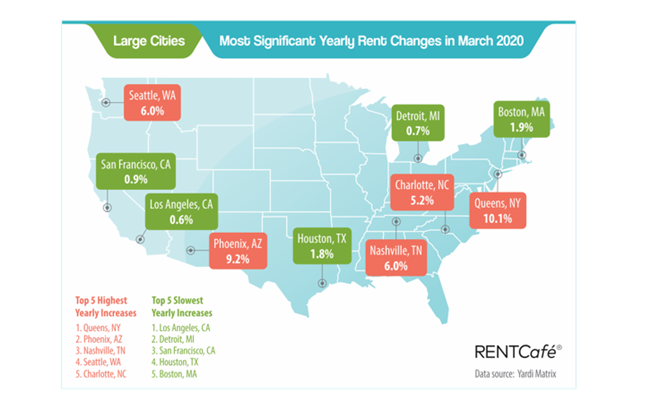
Rent increases slowed in March and “for the first time since 2016, we see a deceleration from February to March, when the rental season is supposed to kick off,” RentCafe says in their latest report.

The report says the rent slowdown was seen in 60 percent of the cities in the survey as the coronavirus pandemic “is beginning to take its toll on the economy and the apartment market.”

The March rent figures are in and, as expected, “they paint a different picture of the current rental market. Still showing positive growth, the national average rent ($1,474) went up by 2.9 percent, a hard drop compared to February’s 3.2 percent rise, the report from RentCafe says.

“The data has yet to reflect the full impact of COVID-19,” said Doug Ressler, Manager of Business Intelligence at Yardi Matrix, in a release.

“We are monitoring both proprietary and publicly available data on a real-time basis in an effort to forecast the evolution of rents going forward. We expect the impact of coronavirus to last three to six months, before a steady recovery boosts the economy once again.”

A decrease in searches for apartments

Rent Increases Slowed in March as COVID-19 Impact Appears

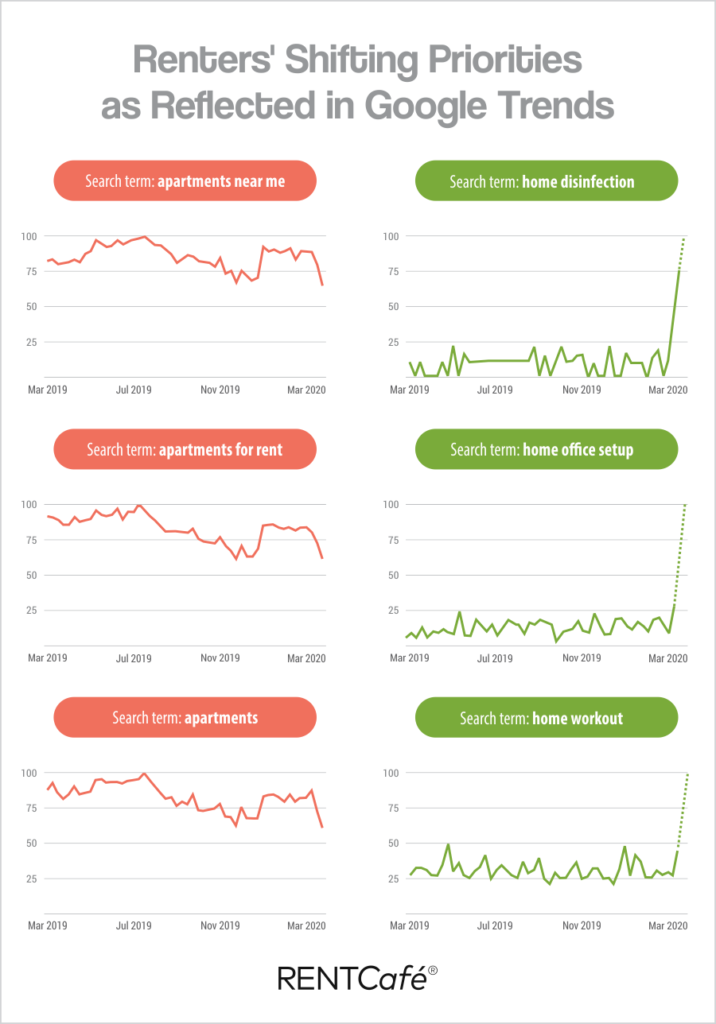
The report says under normal circumstances, interest for apartments goes up this time of year, and rent prices would be expected to pick up speed in March.

“But as more and more states urge social distancing, both landlords and residents have begun seeing the effects of the pandemic. Google Trends shows a decrease in searches for apartments, as interest in other home-related subjects — such as home disinfection or home office setups — has skyrocketed.”

Rent Increases Slowed in March as COVID-19 Impact Appears

Los Angeles and Atlanta show declines

About 75 percent of the nation’s renter mega-hubs saw slower yearly rent increases in March than in February, in line with the national trend.

Los Angeles displayed the weakest year-over-year rise, 0.6 percent, posting a $2,499 average rent.

Atlanta rents rose the second slowest, increasing by 1 percent since March 2019, followed by Orlando apartment prices, up 1.6 percent.

Renters Still Optimistic About Finding New Apartments

Sign Up For Our Newsletter And Get Apartment News And Helpful, Useful Content Each Week.

* indicates required


How To Handle Rental Maintenance During COVID-19

How To Handle Rental Maintenance During COVID-19

How to handle rental maintenance, along with personal protective wear and equipment, was covered by Paul Rhodes, National Safety and Maintenance Instructor at the National Apartment Association Education Institute, during a recent video.

Rhodes said in handling rental maintenance during COVID-19 the first thing in dealing with maintenance in our communities is that “everybody’s on the same page.

“I think that what we should be starting with is clear, consistent communication with our residents.”

Rental maintenance and communication with residents

“First, let’s make sure that we send out information to our residents, letting them know that we’re here,” Rhodes said. “We are still here to provide service that is expected because ultimately we’re looking to make sure that both our technicians, our buildings, and our residents are all being safe.

It might be a good idea to remind residents that if they call for service, we are going to be coming from other apartments and that we will be taking appropriate precautions.

It’s also a good opportunity to spread more good information. In other words, give the CDC latest guidance webpages or information, plus if there’s any local resources that our city or County or municipality has and can provide for our residents.

Fire, flood and blood emergencies

We want to make sure that our residents are aware of the fact that we are going to respond to an emergency, Rhodes said.

“As far as what constitutes an emergency that’s going to change community to community, or management company to management company, but the ultimate slang saying of fire, flood, and blood still does apply.

“Be sure that it’s clear what we’re going to be responding for and any phone calls, or email messages, or anything like that that comes in, we’re going to do and attend to as quickly as possible,” he said.

A good time for cross training for office and maintenance

How To Handle Rental Maintenance During COVID-19
Paul Rhodes, National Safety and Maintenance Instructor at the National Apartment Association Education Institute said, “We want to make sure that our residents are aware of the fact that we are going to respond to an emergency.

Right now a lot of communities are experiencing some different working hours and different staffing levels with people working from home or more remote work occurring.

“Be sure that maintenance is familiar with the important aspects of procedures regarding a lease document. For instance, what are the lockout procedures that we are to go through to make sure that we do everything properly?

“If maintenance receives a message from a resident, or from a prospective resident, make sure that maintenance knows exactly the correct information to have on hand and what details are important and which ones aren’t.

“In much the same way that maintenance needs to train the office for service requests when we receive those, what all that important information is. What we’re looking for here is to make sure that everybody presents a consistent message, a consistent communication.

In the case of the office, “make sure that they know not only where important things, like cutoff valves, are located, but also how they work.

“When you turn a gate valve, you will have to turn that knob multiple times in order to shut off the water, but if it’s a ball valve, you only turn that a quarter of a turn.

“Be sure that the office, when they answer the phone, knows the practices, common communication skills for how to reset a breaker, a ground fault circuit interrupter, or a garbage disposal.

“This is also a good time for the entire office staff, and maintenance staff, to make sure that we have updated contact information and that everybody’s on the same page about who to contact in the event of what particular situation,” Rhodes said.

Gloves and personal protective equipment

In the precautions “we’re suggesting for maintenance include gloves. It’s a good idea to put them on in front of the resident, that way they know they’re fresh and know that we’re not using a leftover from different tasks or different areas,” Rhodes said.

Personal protective equipment for maintenance is important and can extend to everyone on staff. “Washing hands is the most important thing that we can do to prevent the spread of what is happening. And it’s a good idea to do it regularly. Make sure and follow all the guidance for at least 20 seconds using soap,” Rhodes said.

“Gloves should be used. A new pair for each apartment and task. Make sure that you order more before you run out. Yes, suppliers now are reporting that they are very, very short on stock. However, they will be getting resupplied.

“Be sure if you’re not familiar with the proper donning and doffing procedure, that’s just a name for putting gloves on and taking them off in a proper method, so that we’re not cross contaminating ourselves or our work areas.”

Be sure we keep our work areas good and clean. Not only that, even the World Health Organization (WHO) is talking about the fact that using gloves is not a perfect system. Washing your hands is more important than using gloves, and hand sanitizers should not be viewed as a replacement.

Wearing masks

Rhodes said, “Masks should not be used unless you’re a caregiver, or you are infected, or there’s a worry of you being infected.

“Those guidelines come directly from the CDC and the WHO. And a little side note, for those of us that happen to have a little bit of facial hair, if you are looking to wear a mask, if you have facial hair, they don’t do much other than make you look a little bit silly.”

Shoe covers

He said shoe covers are “wonderful items” as long as they apply to what you are doing. “If we’re going to go into a resident’s apartment and we have to get up on a ladder or we end up standing on a surface that is slippery or slick, shoe covers may actually provide more danger than then what they solve, or what they prevent from occurring.”

Is it an emergency? Can we solve this with a phone call?

How about some considerations or things to look at for all service requests, whether it’s an emergency or urgent?

When a resident calls maintenance the question should be asked, “Can we solve this with a phone call? In other words, can I talk the resident through a self-repair or self-care? What about our policies for suspending non-essential repairs? And what are we going to tell residents as far as a speed or a response that is going to occur?”

Entering the resident’s home

Maintenance should be aware of the fact that when we do go into somebody’s home right now with as many schools being closed, children are going to be home during the day.

“That means that when we go into a resident’s apartment and we’ve got tools and all of our working in working conditions, kids will be around. Please be aware of safety in the extra trip hazards that tools can have.”

Also since many residents are now working from home, maintenance needs to be aware that “noise or distractions for them may add extra stress. “

He said to remember the maintenance staff in this time of stress is “even more the face of  our management companies, our staff, our working family. And in this time of increased stress, smile. It’s very possible you could be the only outside person that a quarantined family, or a family that is staying safe in place, gets to see.

“We’re going to make it through this together and we can serve that purpose for our residents and for our communities.

“Ultimately, stay home if you’re sick. We don’t want to contaminate or we don’t want to contaminate our work environment or get anybody else sick that we’re around, especially carrying it back home to our families,” Rhodes said.

The NAA said in the release for more information on this topic and others related to COVID-19, view our coronavirus resources and guidance page where new resources and information is updated daily.

In addition, the NAA said they have a new email address, [email protected]. “Please feel free to send any questions, comments, or concerns you have to that email address and they will be addressed as soon as possible.”

6 Actions Landlords Can Take to Support Residents Now

Sign Up For Our Newsletter And Get Apartment News And Helpful, Useful Content Each Week.

* indicates required


Activist Group Threatens Rent Strike In Portland

Seattle Landlords Concerned About Possible Rent Strike

A group of local activists is advocating a rent strike in Portland for April rather than following the guidelines set out by the Portland Housing Bureau to notify landlords in advance if they cannot pay rent, according to reports.

A  campaign organized by local activists is calling on a large number of people to refuse to pay rent in April—even if they can afford it—as a way to protest the government’s decision to delay rent payments instead of erasing them entirely, according to the Portland Mercury.

The activist group has created a website and flyers, which say, “We cannot afford to pay our rent on April 1st. We will not be able to afford to pay it retroactively. Portland is made of hard-working residents who can barely afford their rent under normal circumstances, let alone in this crisis,” the group says on the website pdxrentstrike.info.

“We demand therefore that all Portland metro area rents be suspended immediately until the COVID-19 crisis passes, until there are tests that show this is no longer a threat posed to all of our communities.

“However, the gvernment is ignoring our need for a rent suspension. As a result, we are escalating to a rent strike. Strike with us, keep your rent on April 1st!”

Attorneys have indicated there is no legal basis for a rent strike. Accordingly, any tenant who tries to rent strike could face eviction, and a hefty attorney fee bill, much like an attempted rent strike in Portland two years ago.

The Portland Housing Bureau has provided documentation that tenants are supposed to notify landlords ahead of time when rent is due that they cannot pay.

What circumstances qualify for rent deferral?

“If a tenant has substantial loss of income resulting from the COVID-19 pandemic and notifies their landlord on or before the day that rent is due that they cannot make such a payment, they qualify for rent deferral under this moratorium,” the Portland Housing Bureau says.  The residential rental property needs to be within the legal limits of the city of Portland or Multnomah County.

If I am a tenant and cannot pay my rent, what do I need to do?

To establish eligibility for this moratorium, affected tenants must:

“Demonstrate substantial loss of income, through documentation or other objectively verifiable means, due to job loss, reduction in work hours, business closure, school or daycare closure causing missed work to care for a minor child, missed work to care for self or a family member that was ill, or similar causes of lost income due to the COVID-19 pandemic;

“And notify their landlords on or before the day that rent is due that they are unable to pay rent due to substantial loss of income as a result of the COVID-19 pandemic,” the Portland Housing Bureau says.

Meanwhile another group, Portland Tenants United, is asking for rent amnesty for April.

“All housing-related payments due in or for April must be waived without penalty or qualification. Where this is not possible by local mandate or because of financial hardship, landlords and homeowners may apply for assistance created in part I(D), the group says.

The group wants the April amnesty to include:

  • Rent payments
  • Mortgage payments
  • Utility payments
  • Any fines and fees owed to city or county courts

“A moratorium is a good start,” PTU spokesperson Allie Sayre told the Portland Mercury. “But a six-month payment plan is not realistic for tenants.” Sayer said that expecting low-income renters to be able to repay rent in the future—on top of their regular rent payments—is just delaying a financial crisis.

Resources:

Multnomah County/City of Portland COVID-19 Eviction Moratorium | FAQ

A Portland Tenant’s Guide to Legally Withholding April Rent

Rent Strike! Don’t pay your rent on April 1st!

Portland, Multnomah County Sign Emergency Order Suspending Evictions

Sign Up For Our Newsletter And Get Apartment News And Helpful, Useful Content Each Week.

* indicates required


Activist Group Threatens Rent Strike In Portland
Photo credit SandraMatic via istockphoto

Delaware Statutory Trust Investing Across Market Cycles

Kay Properties and 1031 and 1033 exchanges and eminent domain options details

By Sebastian Moya
Associate at Kay Properties & Investments and the Kay Properties Team

One of the common topics that frequently pops up in investment conversations these days is discussion about what stage of the “cycle” the market is in. Why does cycle matter, and what does the current cycle mean for DST investment opportunities?

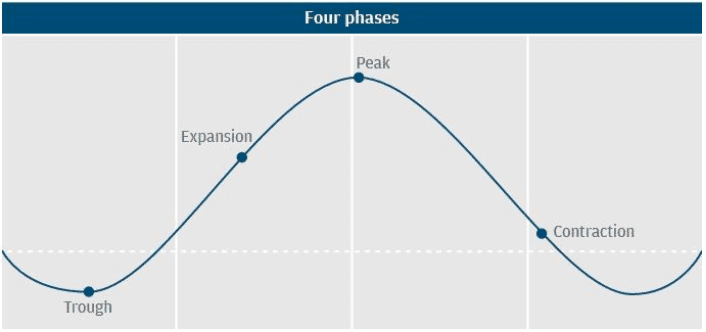
Simply put, market cycles refer to the periodic ebbs and flows that occur in the economy and across individual sectors, such as tech, energy and commercial real estate. Markets rise and fall across four phases: expansion, peak, contraction and trough.

Four stages to the cycle:

Recovery/Expansion: The market is following a healthy, positive growth trajectory.

Peak: The top of the market where assets are fully priced.

Contraction: Growth slows but isn’t negative.

Trough/Recession: Growth stalls or becomes negatives and can fall into a recession, which is usually defined as two consecutive quarters of negative growth.

Delaware Statutory Trust Investing Across Market Cycles

Record-breaking expansion cycle

Timing investments right can help to maximize returns. Yet getting market timing exactly right is never easy unless you happen to have a crystal ball handy. There are plenty of savvy investors making educated guesses about where the market is at in its current cycle. Most are willing to wager that it is late in the expansion phase. The reality is that the current cycle has moved into uncharted territory. The U.S. is officially in its longest expansion, breaking the record of 120 months of economic growth previously occurring from March 1991 to March 2001, according to the National Bureau of Economic Research.

The length of the current economic expansion has many people worried that an inevitable end must be in sight. Yet this current period of slow and steady growth has proved to be sustainable, and there doesn’t appear to be anything imminent that could derail that pattern. The “peak” that some were worried was nearing in both the economy and commercial real estate markets could very well turn out to be more of a plateau. Even if there is a contraction or trough ahead it could be a slight downturn rather than a sharp drop off a cliff. There are numerous variables that contribute to the shape of market cycles that range from Fed monetary policy to market bubbles that pop, such as the housing and dot com booms that caused the last two recessions. Hindsight is always 20/20, but it is challenging to predict exactly what events may surface and when they will hit.

Real estate cycles vary

The added challenge in real estate is that it is not a one-size-fits-all market. Different property types and cities are at different stages of their market cycles. For example, the Manhattan office market, may be viewed by some as being close to the peak with slowing or flat growth ahead, whereas the Nashville or Orlando apartment markets could still be considered to be in the mid-stage of expansion with more upside potential.

Defense vs offense? Cyclical investing strategies

What does the current market cycle mean for DST investors? People can and do invest across all phases of the cycle. However, strategies can change depending on the phase. During expansion, investors may choose to be more aggressive as they see more upside for growth. Investors in early stage expansion cycles are more prone to play offense so to speak and are willing to take on more risk. The closer a market gets to peak and a potential down shift to a contraction or trough phase, the more likely investors are to be cautious of risk and gravitate towards defensive strategies.

In some cases, mature market cycles are fueling an increase in property sales and 1031 tax deferred exchanges. Property owners who believe values may be at or near peak see it as a good time to take chips off the table and sell real estate that has experienced good appreciation. DSTs are an accepted alternative for use in a 1031 tax-deferred exchange. Individuals also have an opportunity to reinvest proceeds into a variety of different property types and geographic markets. For example, Kay Properties has DST opportunities with a minimum investment amount of $100,000 for investors with offerings that span multifamily, student housing, self-storage, net lease (NNN), industrial and medical office properties.

About Kay Properties and www.kpi1031.com

Kay Properties is a national Delaware Statutory Trust (DST) investment firm. The www.kpi1031.com platform provides access to the marketplace of DSTs from over 25 different sponsor companies, custom DSTs only available to Kay clients, independent advice on DST sponsor companies, full due diligence and vetting on each DST (typically 20-40 DSTs) and a DST secondary market.  Kay Properties team members collectively have over 115 years of real estate experience, are licensed in all 50 states, and have participated in over 15 Billion of DST 1031 investments.

Investing In Net Lease Properties Via Delaware Statutory Trusts

Five Things To Remember When Deciding To Do A 1031 Exchange

3 Areas Where Congressional Legislation Falls Short, Could Be Detrimental to Rental Housing Market

Federal Dedicated Rental Assistance Coming, Finally

Legislation passed by Congress to stave off economic collapse may create problems for rental-housing property owners, according to a release from the National Multifamily Housing Council (NMHC) and the National Apartment Association (NAA).

“While there are a number of important provisions included that will be helpful to the industry and its renters, there are others that will create substantial challenges for rental-property owners and imperil housing stability Americans need and deserve during this crisis,” the two associations said in the statement.

“To its credit, Congress took important steps to provide relief to affected American renters and property owners. Boosting funding to U.S. Department of Housing and Urban Development (HUD) programs, expanding unemployment benefits and providing substantial tax relief are welcome resources. Yet, more must be done. NMHC and NAA have identified three areas where the legislation, while well-intended, falls short and will be detrimental to the stability of the rental housing market.”

Three areas where legislation falls short for rental housing

NMHC and NAA have identified three areas where the legislation, while well-intended, falls short and will be detrimental to the stability of the rental housing market.

No. 1 – Eviction moratorium not tied to COVID-19

“First, while we understand the intent of the national eviction moratorium included in the legislation, lawmakers inadvertently neglected to specifically tie the moratorium to those affected by the COVID-19 crisis.

“Instead, what should be a limited protective step is expanded to those who have not been financially impacted by the pandemic. This is already creating an expectation that unaffected renters do not have to meet their lease obligations.

“The unintended consequences of the eviction moratorium will wreak havoc on the stability of the rental-housing market and places it out of step with similar state and local actions. Congress must swiftly address this discrepancy,” the associations said in the statement.

3 Areas Where Congressional Legislation Falls Short, Could Be Detrimental to Rental Housing Market
“The unintended consequences of the eviction moratorium will wreak havoc on the stability of the rental housing market,” the associations say.

No. 2 – More emergency rental assistance needed

“Second, the current package provides substantial financial support to residents though HUD and unemployment insurance; however, more direct emergency-rental assistance is necessary—particularly for those who do not presently receive federal housing assistance but now find themselves needing it.”

No. 3 – Mortgage forbearance needs to extend to all rental housing

“Congress provided mortgage forbearance for multifamily property owners negatively impacted by the COVID-19 outbreak. The legislation, however, only provides this relief to owners with federally backed mortgages, such as those through the Federal Housing Administration (FHA), Fannie Mae and Freddie Mac. This protection needs to be expanded to all types of mortgages. Owners and operators are tasked with ensuring the viability of apartment communities. They, too, are experiencing financial hardships sometimes tenfold as renters in the communities across the country struggle.

“Further, the provision limits forbearance to a 90-day time period, which is out of alignment with the 120-day eviction moratorium. Unless it is fixed, this disconnect could result in a mass wave of financial delinquencies and defaults from rental-housing providers of all types and sizes, jeopardizing the stability of entire communities,” the associations said in the release.

More resources on COVID-19 from NMHC and NAA can be found here and here.

How To Handle Rental Maintenance During COVID-19

Sign Up For Our Newsletter And Get Apartment News And Helpful, Useful Content Each Week.

* indicates required


How to Report COVID-19 Debt Information to the Credit Bureaus

How to Report COVID-19 Debt Information to the Credit Bureaus

Sponsored

If they haven’t already, your residents will soon be contacting you about COVID-19 debt information related financial hardships. How you help them through these tough times is up to you (we offered some options in this recent article). No matter what arrangements you make, though, you’ll want to report them accurately to the major credit bureaus.

Requirement or recommendation?

On March 9, 2020, the Board of Governors of the Federal Reserve System and all five federal banking agencies issued a joint press release encouraging financial institutions to “work constructively with borrowers and other customers in affected communities.”

The Office of the Comptroller of Currency (OCC) echoed this recommendation. A March 13 OCC update encouraged banks to “prudently” work with “adversely affected customers.” The agency suggested waiving fees, offering repayment accommodations, and extending payment due dates regarding COVID-19 debt information.

While this guidance is directed toward banks and credit unions, it’s advice that any lender should consider. In fact, the Consumer Data Industry Association (CDIA), which represents consumer reporting agencies, backed the Fed’s suggestions. The organization also shared specific reporting guidance for member companies who want to help consumers avoid credit problems amid the COVID-19 pandemic.

“This guidance is available in the current situation to help consumers work with their banks and other creditors if they are impacted—directly or indirectly—by the virus,” said Francis Creighton, CDIA President and CEO.

At this point, working with your customers or tenants who have been impacted financially by COVID-19 isn’t a requirement. The Fed, OCC, and CDIA are all using words like “guidance” and “recommend” to reiterate this fact. It’s possible, though, that government aid packages may soon include mandatory rules for working with your customers on COVID-19 debt information amid this unprecedented outbreak.

COVID-19 is a natural disaster

There is no policy within the Credit Reporting Resource Guide that specifically addresses COVID-19, coronavirus, or pandemic. However, the Guide — better known as the “Metro 2 manual” — has long included policies on “natural or declared disasters.” Most people use this policy after widespread weather-related emergencies like devastating hurricanes, wildfires, or mudslides.

However, according to the CDIA, the current COVID-19 pandemic falls under this category for credit reporting purposes. Indeed, the economic circumstances facing consumers today, including potential job loss, are through no fault of their own. This is the same criteria that describes the impact of natural disasters on consumers.

“The nationwide credit reporting companies have long had systems in place to minimize the impact of disasters and other singular situations on consumers’ credit standing,” said Creighton. To remind data furnishers of this long-standing policy, the CDIA issued an Important Metro 2 Announcement on March 9.

The CDIA advised data furnishers who report information for consumers affected by natural disasters to refer to FAQ 58 of the Metro 2 Manual for specific reporting guidance.

FAQ 58 highlights

While we encourage you to consult the FAQ 58 documentation for full reporting instructions, here is a summary of the guidance.

  • There are two options for reporting natural disaster status on open accounts and closed accounts with balances owing.
    • Report the account as deferred or in forbearance (more details below), along with Special Comment AW (affected by natural or declared disaster), OR
    • Report the actual account status that applies to the account, along with Special Comment AW
  • If an account is already being reported as derogatory, continue reporting these statuses and add Special Comment AW.

When a data furnisher adds Special Comment AW to an account, the notification indicating that the consumer has been impacted by a natural disaster will appear alongside the specific trade line. Traditionally, credit reporting agencies (CRAs) will not count trade lines with the AW code when calculating credit scores. For all intents and purposes, these trade lines are invisible while the code remains in place. It’s up to you as a data furnisher to remove this code from the account when the consumer’s financial situation has stabilized.

 Guidelines for deferment or forbearance

As referred to in FAQ 58, deferment or forbearance of an account are popular options for creditors seeking to help consumers during times of natural disaster. Each allows the borrower to temporarily postpone making regular loan payments. However, they differ in the way interest on the account is handled. Typically, an account in deferment does not accrue interest while payments aren’t being collected.

A forbearance arrangement, though, will increase the amount the borrower owes, because interest will not stop accruing during the grace period. While the account is in forbearance status, you may encourage your customer to make reduced payments or interest-only payments if possible.

To report a loan as deferred, follow the step-by-step process outlined in FAQ 44 of the Metro 2 Manual.

To report an account in a forbearance, follow the step-by-step process outlined in FAQ 45 of the Metro 2 Manual. Loans in forbearance will need the Special Comment Code CP (account in forbearance) in addition to code AW (natural disaster).

Remember that when a customer’s account comes out of deferred or forbearance status and begins repayment, it’s up to you as the data furnisher to adjust the reporting fields accordingly.

Be consistent and considerate

In January 2019, the National Consumer Law Center appealed to the heads of the CDIA and the three major credit bureaus to change the way natural disaster codes were recorded on credit reports. The group referenced a 2018 study by the Consumer Federal Protection Bureau (CFPB), which found reporting inconsistencies that negatively impacted consumers.

The Natural Disaster Credit Reporting report focused on consumers in the disaster zone of Hurricane Harvey, which hit the Houston, Texas area in August 2017. The CFPB found that less than 40% of those impacted by Harvey had disaster code AW on their reports. Only 16% of mortgage servicers and 5.7% of credit card issuers added this AW designation.

“[T]his disparity is illogical and unfair,” the NCLC concluded. “[I]f a consumer was impacted by a natural disaster with respect to their mortgage loan, they would be impacted as to their credit card account and other tradelines as well. Without comprehensive coverage, consumers face ongoing harm from unflagged financial hardships beyond their control.”

The NCLC recommended that data furnishers leave the AW code on reports for at least six months. The group also asked that any tradeline with an AW code should not include delinquencies during the time period. In other words, if an account is not in deferred or forbearance status, but has the AW code, data furnishers would use the “current” designation or “D” code for “no information” in the Account Status field.

Again, at this time, these are all recommendations and guidance for data furnishers regarding COVID-19 debt information. However, as we’ve shared before, your consideration and kindness today during these unusual and unpredictable days of COVID-19 may go a long way toward future customer loyalty.

Please feel free to contact us at [email protected] or (425) 780-4530 if you have any questions or need our assistance during this difficult time. https://datalinxllc.com/

Visit the site here.

10 Ways to Keep Residents Engaged During COVID-19

How to Report COVID-19 Debt Information to the Credit Bureaus
If they haven’t already, your residents will soon be contacting you about COVID-19 debt information related financial hardships. Photo credit tumsasedgars via istockphoto.com

10 Ways to Keep Residents Engaged During COVID-19

10 Ways to Keep Residents Engaged During COVID-19

Here are 10 ways to keep residents engaged during the COVID-19 crisis, put together by the National Apartment Association (NAA).

Social distancing is a challenge in apartment communities which are at their core a people-driven business. That makes it more difficult to abruptly cut off face-to-face communication.

“Now more than ever, apartment owners and operators have a real opportunity to make a difference in how we respond to these challenges by moving resident events and communication online to further engage residents in a different manner,” the NAA said in its release.

“Allowing residents to see continued effort is key to satisfaction. Apartment professionals can provide value while also helping people to feel connected and combat loneliness and depression in the weeks and months to come.

10 ways to keep residents engaged

  1. Host an online book club. Let residents vote on a book to read online or listen to on a platform like Audible. Then create a Facebook group to discuss the book virtually once a month. You can host separate clubs for different age groups or book choices.
  2. Use the power of technology with daily or weekly check-ins. Use social platforms, such as Instagram or Facebook Live, for example. People love to feel important and a part of their community so keep residents engaged and check in on how everyone is doing and keep them updated on current events and neighborhood information.
  3. Consider gifting subscriptions to Disney+ or Netflix. This will assist with the boredom your residents may enter while being confined to their apartment homes. Take it a step further with recommendations about great movies and shows to watch, and even start a discussion online for neighbors to comment on their favorites and keep residents engaged.
  4. Encourage healthy competition at an online game center; nothing beats a competitive game of neighborhood Scrabble! There are thousands of games your residents could play together online. You can play chess, find all sorts of virtual reality games, or find card and other puzzle games. Get creative and make your own crossword puzzle using words from your community.
  5. Recommend online fitness apps if your fitness center is closed. Encourage your residents to continue putting their health at the forefront of their confinement with apps, such as Peloton and Beachbody, to name a couple. Consider paying for the first month of their subscriptions in substitution for that month’s resident event.
  6. Create a photo scavenger hunt online. List missions in different categories to allow residents to post pictures of objects they find inside their apartment homes. Residents can also solve riddles and complete fun photo challenges to share with neighbors.
  7. Design your own community potluck cookbook. This is an awesome twist on a classic resident event. Have residents submit recipes for their favorite dinner. Then, compile the recipes into a community cookbook and share all recipes on Dropbox or Google Drive.
  8. Send out daily trivia to residents. Random trivia can productively kill time by teaching residents new facts. You can make this into a competition among neighbors by publishing a weekly leader scoreboard. Take this a step further by giving out prizes, such as e-gift cards for winners.
  9. Make a music playlist on a platform, such as Spotify, to share with residents. Energetic music will help motivate residents to exercise, clean, and even dance around their home. You can even ask residents to make suggestions for music to add to the list to increase community participation.

Share online learning websites designed for children from preschool to middle school that encourage positive distant learning while schools are closed. Age of Learning and Scholastic Magazine are just two examples of online programs providing free home access. Even when schools are closed, you can keep the learning going with these special cross-curricular journeys – and parents will appreciate the help while they navigate the balance of work and childcare.

Apartment Jobs Almost 40 Percent Of Real Estate Jobs, NAA Says

Sign Up For Our Newsletter And Get Apartment News And Helpful, Useful Content Each Week.

* indicates required