Home Blog Page 140

How The Strain From The Pandemic Has Impacted Our Property Management Business

How The Strain From The Pandemic Has Impacted Our Property Management Business

By Ron Garcia
Garcia Group Property Management

I want to give you an update on the status of Covid-19 housing policies. However, I want to be candid and tell you that I wish I had more to say than I do, or at least something better to say than I do. But here goes…

Currently we are into the third month of the 90-day Non-Eviction Order as mandated by Oregon Governor Kate Brown.

The statistics have been that about 15-to-17 percent of tenants have not paid rent in either April or in May, statewide, and our company has seen the same. It is predicted that the number of non-payments will increase in June, as many tenants who have paid at first, have used up their resources.

At our company, we have tenants from all income brackets who cannot pay rent, from housing voucher contributions of $400 per month up to leases more than $2,500 per month. Business owners that rent housing and are unable to work are just as affected (sometimes even more affected) than tenants who work at minimum wage jobs.

Tenant debt is mounting

As the tenants’ debt mounts and the economy continues to tank, it does not take a lot of imagination to see that many people will not be in a position to repay the delinquencies even in the six-month period that they were granted by the state.

Additionally, it should be understood by everyone here that the governor and State Legislature are aware of this dynamic and they are no doubt crafting some plan that they will announce at some point.

My guess is that they will toss a small bone to owners, while new restrictions may be imposed on them that provide even more protection for vulnerable tenants.

So what are we doing about all of this?

The truth is that we don’t have many tools at our disposal here.

We have reached out to all of our non-paying residents and asked them to fill out and sign our Covid-19 Deferral Plan – which simply spells out the terms they would agree to repay the back-rent owed.

About 50 percent of the tenants have signed this and 50 percent have not.

Our working plan (after the 90-day ban is lifted) is to contact those tenants who did not sign the agreement and did not pay part or all of the rent, and let them know we need to make those arrangements or they would face the prospect of an eviction for non-payment. Then if they didn’t sign it we would send the FED (Forced Entry Detainer).

Where this could get complicated

But here’s where it is going to get complicated, because I suspect that either:

  1. The state will forbid evicting anyone for non-payment of rent during the quarantine period, (so that messaging will be moot) and/or
  2. Even for those that legitimately could be evicted – the courts will be 90 days backlogged as they have been closed for the last two months to all but extreme cases, essentially not hearing any rental related issues. So the entire process will be prolonged and the losses from continued non-payment of rent would mount.

It will be at this point in time that rental property owners will be at ground zero of the pandemic (much as restaurants and retail stores were at the beginning).

It will be at this time that we begin the bartering and negotiating and risk management with all of our tenants and clients. It will be at this time that we will need to create new policies and procedures to address unforeseen issues. (Remember, we are still dealing with state and local rent restrictions and housing regulations limiting everything we do more and making the process ever more complicated.)
DISCLAIMER: I may be wrong and it may all work out okay. I feel a little like an oceanfront homeowner boarding up for an approaching hurricane, while my neighbors are having a barbeque.

Difficult for staff at our property management company

The strain on our property management company from the pandemic has taken a toll.

We hired new staff in February for staff that left in January, but they were gone by March for their inability to work and our inability to properly train them.

However – we hired a key manager, who has brought incredible resources to bear.

This month, we have just formed a new portfolio team as we are actually anticipating a growth surge due to the complexities of managing residential properties at this time.

I am personally going to manage this group of properties as well to make sure we get it right. We will continue to outsource most of our maintenance to companies that are geared and prepped to operate in an on-going health crisis. My political days are on hold for now and if you want to see that messaging go to my website at gogarcia.org.

We are a relationship business

Our business is built on relationships with owners, with tenants and vendors.

Our product is problem solving and communication. Whenever a crisis occurs, those that are able to, go to work. Often those people are called on to work harder. It is time for us in the residential property industry to go to work and help all of those who are affected (tenants and landlords) with the best advice and perspectives and resources we can locate and offer.

In closing, it is still too early to know who will or will not pay rent this month. Please know we are carefully watching it and getting ready to do what is needed.

About the author:
Ron Garcia, principal broker and owner of The Garcia Group Residential Property Management in Portland. He is past president of the Rental Housing Alliance, Oregon and a (former) candidate for Oregon’s House of Representatives. He can be reached at ron@garciagrp.com

Reflections on Being a Portland Landlord During the Pandemic

Sign Up For Our Newsletter And Get Apartment News And Helpful, Useful Content Each Week.

* indicates required

How The Strain From The Pandemic Has Impacted Our Property Management Business
Photo credit Funkey Factory via istockimages.com


3 Ways A Property Manager Can Stand Out from the Competition

3 Ways A Property Manager Can Stand Out from the Competition

Property management is one of the most demanding careers in the real-estate industry so how does a property manager stand out from the competition? That is this week’s tip from Keepe the maintenance company.

Meeting the high expectations of tenants, landlords, colleagues, and contractors is no small task.

A rental property manager may need to handle the tasks of finding and screening new tenants, maintenance issues, handling renters’ complaints, and leases. This means that for a property manager to be successful, they need to possess excellent management skills.

With the property-management industry being a lucrative career in recent years, there is a massive influx of individuals seeking to take up property management as a career. According to a report by Statista, there are approximately 80,000 property managers in the United States.

Considering that level of competition, it’s important that property managers learn strategies to stand out from the crowd.

No. 1 – Be Available and Responsive

 Successful property management entails being available and responsive.

You have to be available to respond to your tenants, landlord, and even contractor messages or requests. Today, tenants want a property manager to whom they can easily communicate their fears and desires about their apartments. Responding to your tenant’s request or complaint in a timely manner will help you build trust with your tenants and clients. On the other hand, being unavailable will only earn you negative reviews or ratings, and will hurt your chances of scoring new clients.

No. 2 – Have an Excellent Understanding of your Rental Properties

 To be ahead of your competition, you need to have a complete understanding of the properties and neighborhood(s) you manage.

Start by learning all their unique features and selling points. Learn more about the neighborhood, entertainment areas, relaxation spots, education facilities, social amenities, and business areas. Such information will make it easier for potential renters to decide whether this is a place they would want to live. The more knowledge you have about your rental properties and neighborhood, the higher your chances of attracting and retaining tenants.

No. 3 – Set Realistic Prices for Your Rental and Service

 When it comes to finding a rental, price is one of the most important considerations for most renters.

If the rent is set too high, potential tenants are likely to overlook it and go to the competition. Therefore, do your due diligence before setting the price. A property manager could consult an experienced real estate agent to find out what others in the neighborhood are charging for similar properties. Finding the right price will help lower your vacancy rate and boost your occupancy rate.

In addition to setting the best rental rate to make both tenants and clients happy and to keep your property management business running, you need to think about how much you should charge your clients. In addition, try to offer unique services that allow you to charge more and help to attract property management clients as well.

The bottom line for a property manager

If you want to stand out from the crowd as a property manager, you’re going to have to do things a little differently. Just be sure to keep an eye on the growing competition!

About Keepe:

Keepe is an on-demand maintenance solution for property managers and independent landlords. The company makes a network of hundreds of independent contractors and handymen available for maintenance projects at rental properties. Keepe is available in the Greater Seattle area, Greater Phoenix area, San Francisco Bay area, Portland, San Diego and is coming soon to an area near you. Learn more about Keepe at https://www.keepe.com.

3 Unexpected Costs Landlords Have When Tenants Move Out

Sign Up For Our Newsletter And Get Apartment News And Helpful, Useful Content Each Week.

* indicates required


How the Pandemic Will Affect the Future of Apartments And What People Rent

How the Pandemic Will Affect the Future of Apartments And What People Rent

Space in home and community design is more important than ever with the pandemic and with so many people working from home,  John Burns Consulting took a look at the future of apartments and tried to determine what it will take, going forward, to get people to rent.

“People need space for health reasons, and people need space and privacy to work from home. Working from home will be a significant shift that stays with us for years,” wrote Ken Perlman and Lesley Deutch in the John Burns Consulting newsletter.  “To succeed during lease-up, the more than 400,000 apartment units currently in some stage of construction also need to capitalize on tenants’ need for space.”

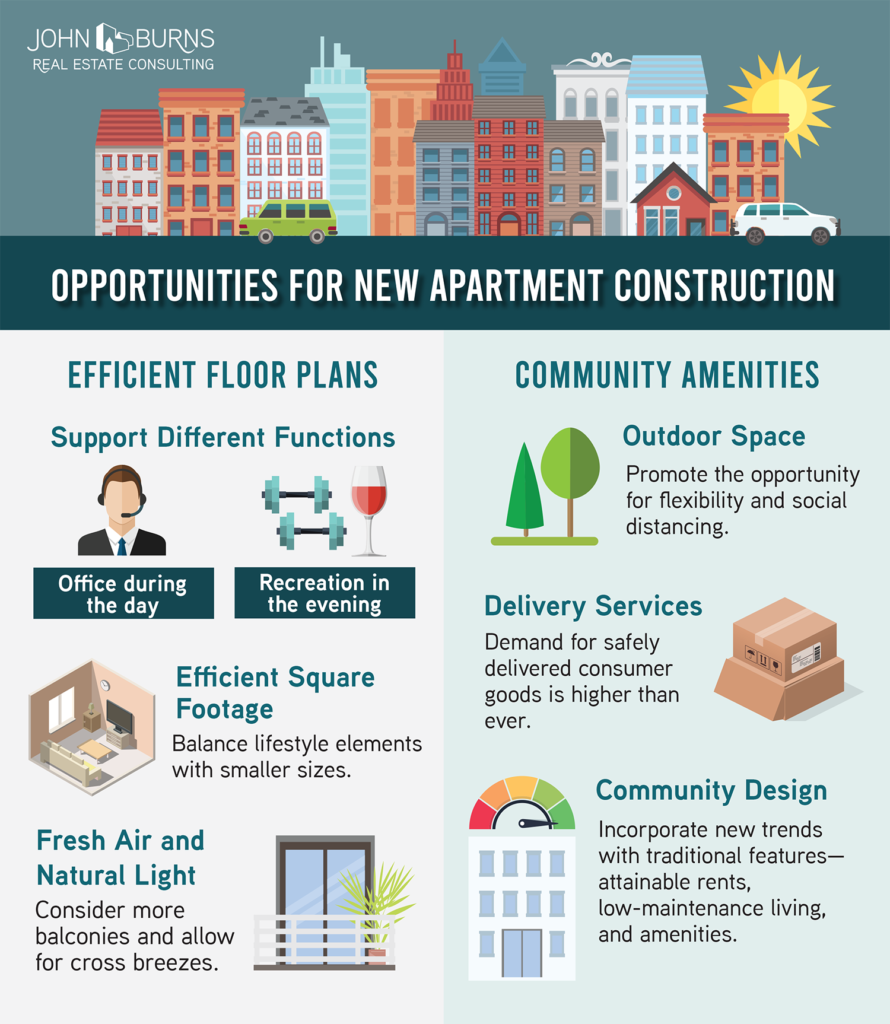
They point out some opportunities for new apartment construction that were already trending before the pandemic.

Floor plans that provide both natural light and privacy

Apartments that can provide roommates or couples several places to work – and provide privacy plus separation – will get people to rent and may be the future of apartments.

“Rooms that can flex to support different functions, such as office during the day and fitness in the evening, will be part of the new apartment landscape,” Perlman and Deutch wrote.

“While planning for roommates is important, we also anticipate some renters will be less amenable to sharing their homes. For them, apartment floor plans will need to balance the lifestyle elements they want with smaller sizes that can keep rents attainable. That will mean apartments that are large enough to support both living and working with very efficient square footage and design elements that promote physical and emotional separation.”

What future of apartments looks like

The smaller the apartment, the more important light, balconies and fresh-air spaces become.

How the Pandemic Will Affect the Future of Apartments And What People Rent

“We advise more ‘under roof’ spaces without walls that provide shade and fresh air. Apartment communities will need more places for outdoor yoga and parks for free play or alfresco dining. Today’s consumers love their pets more than ever, and community amenities that include dog parks or pet-washing stations will resonate more than ever before.

“Apartment communities that can adjust to shifting consumer demands will have a competitive advantage in what we believe could be a very competitive leasing environment,” Perlman and Deutch write.

Article courtesy of John Burns Real Estate Consulting. Contact Ken PerlmanLesley Deutch, or other team members for more insight into changing rental preferences and trends in new construction.

Lack of New Construction Underlying Cause of Oregon Housing Affordability Crisis

Sign Up For Our Newsletter And Get Apartment News And Helpful, Useful Content Each Week.

* indicates required


Do You Know Credit Reporting Rules and What The CARES Act Says?

Credit Reporting and the CARES Act

As our country experiences one of the worst economic downturns in its history, consumers and companies alike are facing unprecedented financial hardships. If you extend credit, chances are you’ve heard from your customers and clients asking what you can do to help them through these difficult times.

Creditors are answering these requests in a variety of ways. Some are extending due dates, waiving late fees, reducing or forgiving payments, or delaying foreclosure, repossession, or ceasing service. In addition, a new March 2020 law offers consumers and businesses various forms of financial relief — even when it comes to their credit reports.

Impact of the CARES Act on credit

The Coronavirus Aid, Relief, and Economic Security (CARES) Act was introduced in March 2020 to help Americans impacted by the COVID-19 pandemic. You may have heard about the generous small business loans, enhanced unemployment benefits, and stimulus payments the Act offers. What you may not have heard about, though, are the Act’s rules about credit reporting during the covered pandemic period.

According to the April 3, 2020 Consumer Credit Reporting, Credit Bureaus, Credit Scoring, and Related Policy Issues report from the Congressional Research Service,

Section 4021 of [the CARES Act] requires furnishers during the COVID-19 pandemic covered period to report to the credit bureaus that consumers are current on their credit obligations if they enter into an agreement to defer, forbear, modify, make partial payments or get any other assistance on their loan payments from a financial institution and fulfil those requirements, provided they were current before this period.

 In other words, the document explains, under the CARES Act, lenders now have to report obligations to the credit bureaus as “paid on time” if the debtor has asked for and has been granted any allowance regarding their payment. So, for example, if your customer asks you to place their account in forbearance and you agree to do so, the CARES Act requires you to report this debt as “paid on time.” (To learn more about forbearance, read our March 2020 blog post “How to Report COVID-19 Debt Information to the Credit Bureaus”.)

The CARES Act, the CFPB, and the credit bureaus

On March 30, 2020, the big three credit reporting agencies — Equifax, Experian, and TransUnion — issued a joint statement endorsing the CARES Act.

“Together, we believe this solution ensures consumers get the help they need while preserving the integrity of the consumer reporting system, which is critical to our economic recovery,” the statement reads.

The Consumer Financial Credit Bureaus (CFPB) also supports the Act’s allowances for credit reporting.

“The Act requires lenders to report to credit bureaus that consumers are current on their loans if consumers have sought relief from their lenders due to the pandemic,” reads the CFPB release. “The Bureau’s statement informs lenders they must comply with the CARES Act. The Bureau’s statement also encourages lenders to continue to voluntarily provide payment relief to consumers and to report accurate information to credit bureaus relating to this relief. The continuation of reporting such accurate payment information produces substantial benefits for consumers, users of consumer reports, and the economy as a whole.”

The CFPB also encourages lenders to make a “good faith” effort to continue investigating disputes as quickly as possible. For those who do, the CFPB says it doesn’t “intend to cite in an examination or bring an enforcement action against firms who exceed the deadlines to investigate.”

The bottom line on credit reporting and the Cares Act

All of this guidance on credit reporting and the Cares Act boils down to one fact. No matter what you’re offering in these unprecedented circumstances, don’t stop reporting credit data to the bureaus. In response to the CARES Act, the Consumer Data Industry Association (CDIA) has issued specific Metro 2® reporting guidelines for data furnishers. We’re sharing these instructions here, but you can also find them here on the CDIA’s website.

Furnisher – CARES Act Reporting

 Report the following Base Segment fields as specified if the account was current prior to the Accommodation period:

    • Highest Credit or Original Loan Amount = the total amount borrowed
    • Credit Limit = assigned Credit Limit for the account
    • Scheduled Monthly Payment Amount = zero
    • Account Status Code = 11 (Current account)
    • Payment History Profile (report All prior history)
      • Report value 0 for the months during the Accommodation period
      • As an option, increment the Payment History Profile with value D during the Accommodation period
    • Current Balance = outstanding balance amount
    • Amount Past Due = zero
    • For all other Metro 2® fields, the standard guidelines described within the Field Definitions module of the CRRG should be followed.
  • Report the following Base Segment fields as specified if the account was delinquent prior to the Accommodation period:
    • Highest Credit or Original Loan Amount = the total amount borrowed
    • Credit Limit = assigned Credit Limit for the account
    • Scheduled Monthly Payment Amount = zero
    • Account Status Code = Delinquency Status 71 – 84 as reported prior to the Accommodation period (example 30-day delinquency prior to the period remains a 30-day delinquency throughout the Accommodation period)
    • Payment History Profile (report ALL prior history)
      • Report appropriate code that specifies the previous month’s Account Status for each month the account is in the Accommodation period
      • As an option, increment the Payment History Profile with value D during the Accommodation period
    • Current Balance = outstanding balance amount
    • Amount Past Due = APD as reported prior to the accommodation period
    • For all other Metro 2® fields, the standard guidelines described within the Field Definitions module of the CRRG should be followed
  • Report the following Base Segment fields as specified if the account is brought current during the Accommodation period:
    • Highest Credit or Original Loan Amount = the total amount borrowed
    • Credit Limit = assigned Credit Limit for the account
    • Scheduled Monthly Payment Amount = zero
    • Account Status Code = 11 (Current account) or 13 (Paid account)
    • Payment History Profile (report All prior history)
      • Report appropriate code that specifies the previous month’s Account Status for each month the account is in the Accommodation period
      • As an option, increment the Payment History Profile with value D during the Accommodation period
    • Current Balance = outstanding balance amount OR zero if Paid
    • Amount Past Due = zero
    • For all other Metro 2® fields, the standard guidelines described within the Field Definitions module of the CRRG should be followed

If furnishers elect to utilize the Metro 2® FAQ 44 (Deferred), FAQ 45 (Forbearance) or FAQ 58 (Natural Disaster), they should do so in accordance with the CARES Act amendment to the FCRA as outlined above.

Please visit our website at www.datalinxllc.com, or contact us at support@datalinxllc.com or (425) 780-4530 if you have any questions or need our assistance.

How to Report COVID-19 Debt Information to the Credit Bureaus


Pandemic Leads to Rent Decline in Portland

Pandemic Leads to Rent Decline in Portland

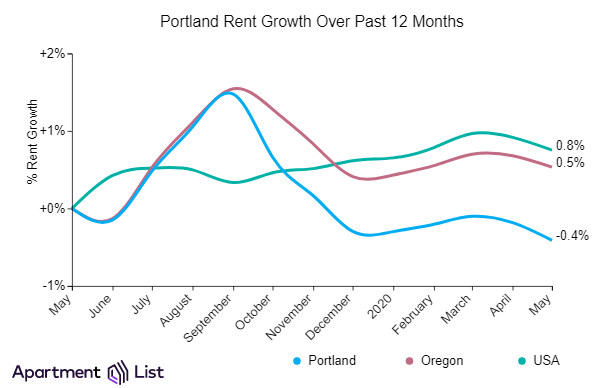
Portland has seen a rent decline of 0.3 percent in the past month as rents in many places have started to dip during the pandemic, according to the latest report from Apartment List.

Other cities nationwide are also feeling the rent decline, such as Seattle by 0.1 percent and Phoenix by 0.2 percent.

“It’s important to note that the magnitudes of these rent decreases are all quite modest, but on the other hand, this may just be the beginning of a prolonged trend,” said Chris Salviati, Housing Economist at Apartment List.

“I would note that the areas where we’re seeing the most significant rent dips are in local economies that are heavily dependent on tourism, such as Las Vegas, Orlando, and Miami. Compared to those cities, Portland, Seattle, and Phoenix all have notably higher shares of workers employed in knowledge occupations that can be done from home, so they’re a bit more protected from the harshest economic impacts,” he said.

Rent trends vary across the Portland Metro

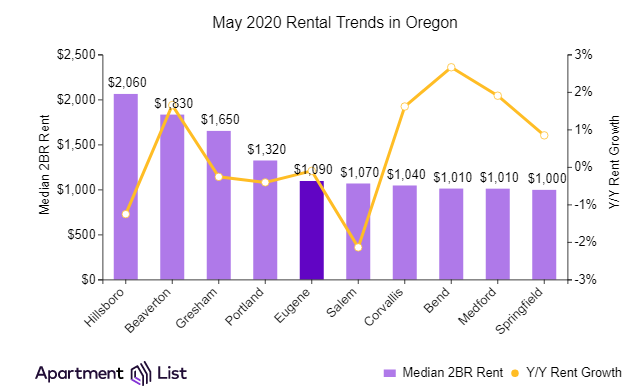
While rent prices have decreased in Portland, the rest of the metro is seeing varying rent trends.

Of the largest 10 cities that Apartment List has data for in the Portland metro, half have seen increases, while the other half have been decreasing.

Pandemic Leads to Rent Decline in Portland

Impact on rent will depend on economic recovery

Salviati said as far as longer-term impact, the pandemic’s effect on rent prices will depend heavily on how quickly the economy is able to recover.

“Even in the best-case scenario, it’s highly possible that we could see a protracted uptick in downgrade moves as many households facing financial hardship begin looking for more affordable housing,” Salviati said.

“We may also see a significant slowdown in new-household formation, as more Americans move in with family or friends to save on housing costs. These trends could lead to tighter competition for rental units at the middle and lower ends of the market, while luxury vacancies get harder to fill.

Pandemic Leads to Rent Decline in Portland

“As I mentioned above, Phoenix, Seattle, and Portland are not among the areas that I would consider to have the most at-risk local economies, but there’s still a lot of uncertainty in how this will all play out,” Salviati said.

Portland Rents Remain Steady Over The Past Month While Suburbs Climb

Sign Up For Our Newsletter And Get Apartment News And Helpful, Useful Content Each Week.

* indicates required


Handling Maintenance Issues During a Pandemic: A Legal Perspective

Handling Maintenance Issues During a Pandemic A Legal Perspective

Are there legal issues for a landlord around handling maintenance issues during a pandemic? Attorney Brad Kraus takes on that issue this month.

Bradley S. Kraus
Attorney at Law, Warren Allen, LLP

By now, many of us are growing tired of the burdens that COVID-19 has placed upon us. From job losses to restrictions on travel and other leisure activities, the coronavirus continues to shape our lives. Worse yet, it does not appear to be going anywhere soon.

Many of our elected officials have suspended several tenant obligations by way of moratoriums and proclamations.

They have not extended that same courtesy to landlords.

One landlord obligation (among many) challenged by an extremely transmittable virus is the handling of maintenance issues during a pandemic. While landlords never had to worry about things like “self-quarantining” or “social-distancing” before this year, these things are here to stay.

  • So how do you handle a lack of manpower if your staff is self-quarantining?
  • What about tenants who cannot seem to maintain proper distance when a maintenance issue is addressed?

Maintenance issues during a pandemic still require a response

First, it is important to remember that it is illegal to ask tenants to waive their rights under the Landlord/Tenant Act. ORS 90.320 requires a landlord to maintain the dwelling unit in a habitable condition at all times … even during a pandemic.

Accordingly, a tenant who makes a maintenance request has the right to have it promptly addressed. This includes those times when you may not have maintenance staff due to illness, vacation, or otherwise. Throughout those times, your obligations as a landlord persist, so it may behoove you to have a back-up list of outside vendors you can call in a pinch.

Some tenant issues are obviously more pressing than others.

With small issues, your tenant may desire to have minor maintenance issues—e.g., something which does not substantially diminish the habitability of the premises—taken care of down the road, perhaps when the virus’s transmission slows and life returns closer to our previous “normal.” Should this be true, be sure to (a) have your tenant indicate such a desire in writing, and (b) continue to follow up with the tenant intermittently to ensure the issue stays on the radar. By properly documenting the tenants’ desire to wait and following up, you can protect yourself from any claims down the road that you violated your obligations.

When an issue must be addressed quickly, health and safety protocols advised by experts should be observed. It is important that your staff maintain proper distancing and sanitization while addressing any maintenance requests. This includes wearing a mask throughout their work, and sanitizing after the work is done. This will ensure the safety of both your tenants and your staff in these unsettling times.

What if tenants won’t wear a mask and social distance?

Some tenants may not feel the same regarding things like distancing.

If your tenant refuses to acknowledge the safety and space your staff needs and deserves, remind them of the importance of things like distancing and wearing a mask around others. Let them know that if they fail to observe the same, your staff will come back another time.

If they fail to heed these warnings, your staff’s safety should take priority, and they may be required to leave for their own safety. Be sure to document these issues and the reason your staff left, both in an office log and in writing with your tenants, and advise them that your staff will return when their safety will be respected. These communications could be critical down the road, should your tenant blame you for their own failure to respect the safety of others.

These are unprecedented times in which we live.

As landlords, issues involving staffing (due to sickness/quarantine), spacing, and safety have now entered the landlord/tenant equation. Both landlords and tenants should respect the gravity of these issues, even though their interaction with the landlord/tenant act continues to evolve.

Handling Maintenance Issues During a Pandemic: A Legal Perspective
Bradley Kraus, Portland attorney

kraus@warrenallen.com
503-255-8795

Brad Kraus is an attorney at Warren Allen LLP. His primary practice area is Landlord/Tenant law, but he also assists clients with various litigation matters, probate matters, real estate disputes, and family law matters. A native of New Ulm, Minnesota, he continues to root for Minnesota sports teams in his free time. He is an avid sports fan, enjoys exercise, spending time friends and his fiancée, Vicky. You can reach Mr. Kraus via email at kraus@warrenallen.com, or by phone at 503-255-8795.

Unintended Issues Presented by COVID-19 Moratoria

Handling Maintenance Issues During a Pandemic A Legal Perspective
Photo credit FamVeld via istockphoto.com

Sign Up For Our Newsletter And Get Apartment News And Helpful, Useful Content Each Week.

* indicates required


Reflections on Being a Portland Landlord During the Pandemic

Reflections on Being a Portland Landlord During the Pandemic
By Cliff Hockley
Bluestone & Hockley Property Management

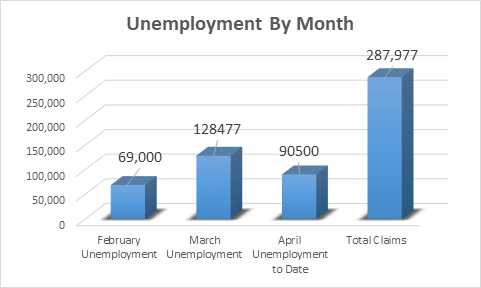
As I am sure you have heard, the national unemployment numbers are dismal; the Bureau of Labor Statistics showed that the unemployment rate rose by 10.3 percentage points between March and mid-April to 14.7 percent; and since then, millions of Americans have continued to file each week, with the current total at more than 40 million as of late May.

This may even be lower than the real number, due to the challenges many newly unemployed have had filing and the processing backlog faced by local unemployment offices.

Below is a chart of the number of claims, by month, in Oregon, through April 18.

Reflections on Being a Portland Landlord During the Pandemic
The unemployment rates below are estimates based on initial claims filed and closely track national numbers.

February 3.2%
March 9.42%
April – 18 13.73%


March and April rent collections

Bluestone and Hockley is a large residential and commercial property-management company, and it may be of interest to others how a Portland landlord is faring right now.

Our March rent collections were normal, even as the pandemic rolled into Oregon. We transitioned our operations from the Barbur Boulevard office to working out of home offices in the third week of March.

Thankfully, we’ve spent the last two years investing in the infrastructure to be able to operate from the cloud. Rents are being collected, bills are being paid, and maintenance operations have continued. Many of our clients receive communications weekly, or as the situation on the ground with their property changes.

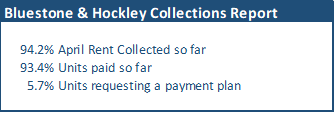
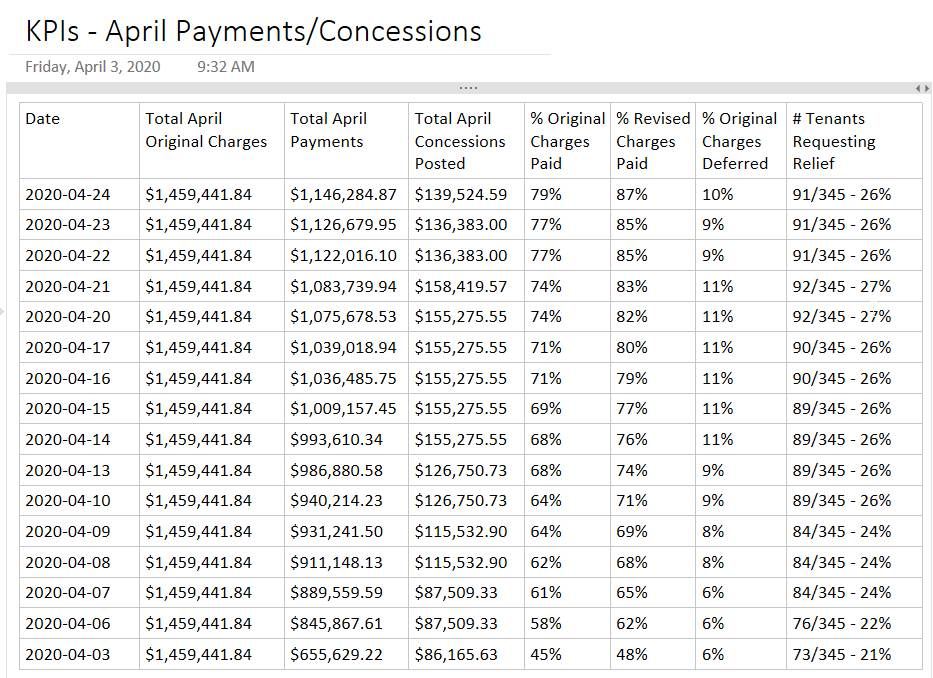
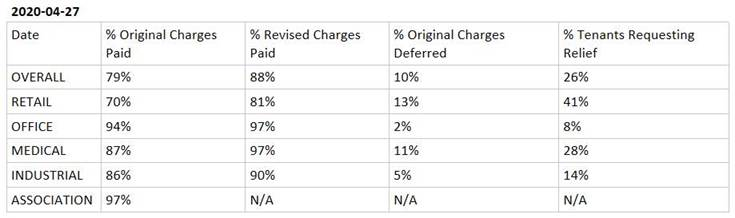
April collections have been lower, with about 85+ percent of client revenues received, across all property types, as compared to an average of 95 percent in a normal month.

May and June residential rental collections will be affected by the number of unemployed tenants and the eviction moratoriums put in place by the cities of Hillsboro, Beaverton, and Portland; Multnomah County; and the State of Oregon.

Residential Collections:

Reflections on Being a Portland Landlord During the Pandemic

Residential Eviction Moratoriums

Multnomah County allows tenants up to six months after the county’s emergency declaration is lifted to repay missed rent. (This grace period required tenants to demonstrate a COVID-related impact BEFORE missed rent was due.)

In April, Bluestone and Hockley negotiated payment plans with tenants, based on the then-current language. These rules and regulations have become more restrictive. Based on the current language of the Multnomah County ordinances, payment-plan agreements are still a valid strategy to use, by keeping a current record of understanding, and legally nudging tenants to pay the most they are able (a partial payment for example).

The reason that payment agreements currently have limited practical utility in Multnomah County is twofold:

  1. The language of the moratorium creates a repayment obligation that doesn’t begin until the emergency status is lifted, and we don’t know when that will be (i.e., we don’t yet have a “start date” for the 6-month repayment period)
  2. Even more significantly for a landlord, the language does not require any interim rent payments and merely states that tenants have 6 months to repay the covered debt once the emergency is lifted. Accordingly, once the emergency is lifted, the tenant can pay $0 of the owed amount until day 180 and we can’t terminate them for it until day 181.

Currently, the rest of the state is covered by either local regulations (i.e. Beaverton, Hillsboro, etc.) or by the Governor’s Executive Order 20-13.

Summary: Oregon Governor’s Executive Order 20-13:

  1. Residential Tenancies

During this moratorium, a landlord of residential properties in Oregon shall not, for reason of nonpayment as defined in paragraph l(b) of this Executive Order, terminate any tenant’s rental agreement; take any action, judicial or otherwise, relating to residential evictions pursuant to or arising under ORS 105.105 through 105.168, including, without limitation, filing, serving, delivering or acting on any notice, order or writ of termination or the equivalent; or otherwise interfere in any way with such tenant’s right to possession of the tenant’s dwelling unit.

Nothing in paragraph 1 of this Executive Order relieves a residential tenant’s obligation to pay rent, utility charges, or any other service charges or fees, except for late charges or other penalties arising from nonpayment which are specifically waived by and during this moratorium. Additionally, paragraph 1 of this Executive Order does not apply to the termination of residential rental agreements for causes other than nonpayment.

During this moratorium, any residential or non-residential tenant who is or will be unable to pay the full rent when due under a rental agreement or lease, shall notify the landlord as soon as reasonably possible; and shall make partial rent payments to the extent the tenant is financially able to do so.

Commercial Eviction Moratorium

Another thing that’s clear is that businesses not open as a direct result of COVID -19 cannot be forced to pay rent and cannot be evicted. The governor’s order explains that commercial tenants need to pay rent as they are able. This implies that use of the PPP (Payroll Protection Program) or other funds to pay rent is expected. Those companies that cannot pay have until six months after the end of the officially declared emergency to pay for those months that were missed.

As you review our commercial-rent collection charts below, you will see that our property managers worked very closely with our clients and tenants to collect 87 percent of April’s commercial rent.

Non-Residential Tenancies (i.e. Commercial Tenancies).

a. During this moratorium, a landlord of non-residential properties in Oregon shall not, for reason of nonpayment as defined in paragraph 2(b) of this Executive Order, terminate any tenant’s lease; take any action, judicial or otherwise, relating to non-residential evictions pursuant to or arising under ORS 105.105 through 105.168, including, without limitation, filing, serving, delivering or acting on any notice, order or writ of termination or the equivalent; or otherwise interfere with such tenant’s right to possession of the leased premises.

c. Paragraph 2 of this Executive Order shall apply if a tenant provides the landlord, within 30 calendar days of unpaid rent being due, with documentation or other evidence that nonpayment is caused by, in whole or in part, directly or indirectly, the COVID-19 pandemic. Acceptable documentation or other evidence includes, without limitation, proof of loss of income due to any governmental restrictions imposed to mitigate the spread of COVID-19.

d. Nothing in paragraph 2 of this Executive Order relieves a non­residential tenant’s obligation to pay rent, utility charges, or any other service charges or fees, except for late charges or other penalties arising from nonpayment which are specifically waived by and during this moratorium. During this moratorium, a non-residential tenant who is or will be unable to pay the full rent when due under a rental agreement or lease, shall notify the landlord as soon as reasonably possible; and shall make partial rent payments to the extent the tenant is financially able to do so.

Forbearance

 Most of our property owners have had enough reserves to get through the month of April.  Those in trouble have started negotiating with their banks to buy some breathing room.

  • Some financial institutions are agreeing to put off payments for a couple of months, others are putting off principal payments and asking for interest-only. There are no consistent lender policies at this point. Freddie Mac will offer forbearance up to 90 days (three consecutive monthly payments). If a borrower accepts this arrangement, Freddie Mac will also waive any associated late charges and default interest.

This is different than foreclosure, where a financial institution will take a property back from a property owner, through strict foreclosure or deed in lieu of foreclosure.

 Association Collections

As of the 13th of April, approximately 86 percent of our association homeowners had paid their assessments, compared to approximately 93 percent in a normal month. We expect that the month of May will result in a lower collection percentage as some owners were laid off.


Percent of accounts paid: 85.94%


Percent of accounts delinquent: 14.06 (of that 5.3% are in collections)


April Late Fee Waivers: 4


Summary Being a Portland Landlord During the Pandemic
Yes, COVID-19 does exist. We have tenants that are infected with COVID who live and work in buildings we manage. We also have tenants who are taking care of sick family members, and many tenants who have been laid off or who lost their jobs permanently as a direct result of this pandemic. Businesses have either closed or severely reduced the scope of their operations to comply with the governor’s executive orders. The impact of this disease and the efforts to flatten the curve will be felt for many months.

There is a glimmer of hope on the horizon with the May 1 openings of hospitals and dental offices for minor procedures. (Of course, this is dependent on the ability to obtain personal protective equipment (PPE).  The governor’s order requires a two-week supply before work can begin.)  If this is successful, we should see the opening of the state as soon as the governor thinks it is safe.

 We are on the edge of a new frontier and need to adjust our expectations. Investors are resourceful and will find a way to cope with all these changes. The only way property owners will obtain all their rent payments will be full employment. We will all have to work as a community to open the state in a safe manner and get everyone back to work, with the appropriate social distancing and PPE. There is still danger in the promised land.

About the author:

 Cliff Hockley is President, Bluestone and Hockley Real Estate Services and Executive Director, SVN | Bluestone and Hockley

 Rent Growth Shows Significant 1-Month Decline


Sign Up For Our Newsletter And Get Apartment News And Helpful, Useful Content Each Week.

* indicates required


Reflections on Being a Portland Landlord During the Pandemic
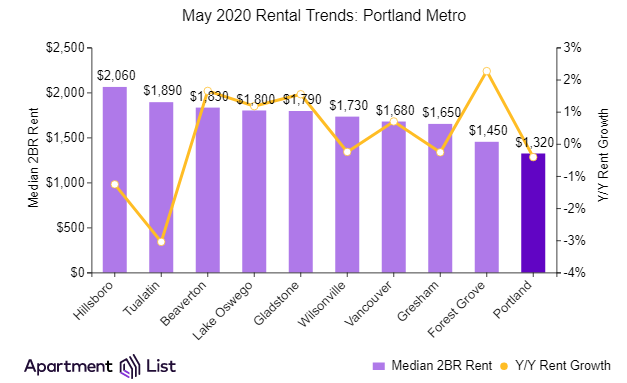
Photo credit fizkes via istockphoto.com

I Have A Tenant Couple Who Fight On A Regular Basis – What Do I Do?

Ask Landlord Hank this week is the question, “What do you do with a tenant couple who fight on a regular basis in your rental and calls the police ?”  Each week veteran landlord and property manager Hank Rossi answers questions from other landlords and property managers around the country about their rentals.

Dear Landlord Hank,

Hello Hank, I have a tenant couple that fight on a regular basis and call the police.

I do not want the police in my park.  I feel it makes for a bad reputation. Can I evict them? And how?

Thanks in advance. Debbie

Hi Landlady Debbie,

I’m not an attorney so I can’t give legal advice. I would look at your lease.

In my lease, in the section “USE OF PREMISES: Tenant shall maintain the premises in a clean and sanitary condition and not disturb surrounding residents or the peaceful and quiet enjoyment of the premises or surrounding premises.”

Tenant couple who fight

I would warn these tenants in writing that this kind of behavior will not be tolerated and is in violation of the lease.

Then I would talk to an attorney for advice.

This kind of conduct in your establishment will definitely lead to a bad reputation and it may attract exactly the kind of tenants you don’t want.

Good luck, Debbie.

Ask Landlord Hank Your Question

Ask veteran landlord and property manager Hank Rossi your questions from tenant screening to leases to pets and more! He provides answers each week to landlords.

  • This field is for validation purposes and should be left unchanged.

Ask Landlord Hank about a tenant couple who fight

About the author Landlord Hank:

“I started in real estate as a child watching my father take care of our family rentals- maintenance, tenant relations, etc , in small town Ohio. As I grew, I was occasionally Dad’s assistant. In the mid-90s I decided to get into the rental business on my own, as a sideline. In 2001, I retired from my profession and only managed my own investments, for the next 10 years. Six years ago, my sister, working as a rental agent/property manager in Sarasota, Florida convinced me to try the Florida lifestyle. I gave it a try and never looked back. A few years ago we started our own real estate brokerage. We focus on property management and leasing. I continue to manage my real estate portfolio here in Florida and Atlanta. “ Visit Hank’s website here.


Dear Landlord Hank: I have a tenant couple who fight. What do I do?


Photo credit wavebreakmedia via istockphoto.com

5 Questions Landlord Hank Asks Tenants When They Call

Coronavirus Causes Biggest Annual Rent-Growth Slowdown in at Least 5 Years

Coronavirus Causes Biggest Annual Rent-Growth Slowdown in at Least 5 Years

The pace of year-over-year growth saw the biggest one-month rent-growth slowdown since at least 2014, up just 2.9 percent in April after 3.4 percent growth in March. Rents fell in 16 major markets, according to a release from Zillow.

Rent prices had been chugging along at a remarkably stable pace since 2018, with the growth rate rarely rising or falling much from one month to the next. That changed in April, the first reading since the coronavirus pandemic struck the United States.

The rental market has been hit especially hard because people who are in jobs that faced the most layoffs and furloughs tend to be renters, Zillow said in the release. They also tend to spend more of their monthly income on rent, which means they have less ability to save in case of emergencies.

Skylar Olsen, senior principal economist at Zillow, said in the release that, “Housing was in a generally strong position before the pandemic, with low inventory and high prices shutting many would-be buyers out and creating unusually high demand for rentals.

“Rents soared, making it difficult for many to build emergency savings to tap into at a time like now,” he said.

Rent-growth slowdown

“We’re seeing rents slow now as some people are no doubt pursuing more-affordable options, such as moving back in with parents, moving to a less-expensive area, or doubling up in instances where it can be done safely,” Olsen said.

The for sale market continues upward

The for-sale market continues to show momentum, though. Newly pending sales are up 13 percent week over week and nearly 50 percent month over month as of the seven days ending May 10. And they are higher than last year in four large metros — Cleveland (up 10 percent year over year), Cincinnati (up 3.8 percent), Houston (up 2 percent), and Dallas-Fort Worth (up 0.9 percent).

Home values continued their upward trajectory in April, with the typical U.S. home value growing 4.3 percent year over year to $250,492. The pace of yearly home value growth has now accelerated every month this year after slowing for 20 consecutive months beginning in spring 2018.

Rent Growth Shows Significant 1-Month Decline

Sign Up For Our Newsletter And Get Apartment News And Helpful, Useful Content Each Week.

* indicates required


3 Unexpected Costs Landlords Have When Tenants Move Out

unexpected costs landlords have when tenants move out

The unexpected costs landlords have when tenants move out can often be far more than the security deposit so this week’s maintenance tip from Keepe looks at potential costs landlords face.

It is common knowledge that tenants cannot live in a single rental property all their lives. They may move out because they got a new job or bought their own home, or they may have been evicted due to one issue or the other.

The big question is, what are the hidden costs you may face as a landlord or property manager when your tenants move out?

Some landlords have false hope that the rental deposit will be enough to cover upgrade costs and cleaning needs. But rarely do tenant deposits provide enough money to pay for everything needed to get a property ready for a new tenant.

Below is a list of unexpected costs landlords have or may face when your tenants move out.

No. 1 – Vacancy Loss

Vacancy loss is the amount of rental income or cash flow that a property is losing as a unit sits unoccupied.

Without money coming in, but with money going out to upgrade and repair the property, it won’t be long before landlords are struggling to make their own mortgage payments. Working with a property-management company is one of the best ways to reduce the risk of tenant turnover and to help find new tenants on time.

When your tenants show signs that they are going to leave and not renew their lease, you could respond by offering free utilities for two months, reducing rent slightly, or freezing it at current rental rates. You might also offer to enhance some aspect of the apartment/condo to increase their comfort. People don’t like to leave their comfort zone.

No. 2 – Property Damage

One of the biggest worries you might have as a landlord is that tenants may do significant damage to your rental property before they move out.

When a tenant packs up and moves out, and there is no way to get a hold of him or her, you run the risk of walking into a damaged unit. Some tenants will leave before the rent is paid or at night, and they leave behind a lot of damage. Having an effective tenant-screening process is the best way to find tenants who will care for the property.

No. 3 – Stolen Appliances and Other Property

Theft by tenants moving out of rental properties is very common.

In fact, “a poll of 2,000 adults by landlord insurer Direct Line for Business found tenants have removed items such as fridges, freezers, light fittings, televisions, and even sinks. Tenants estimate that the overall value of items they had taken from a property stands at more than $500.” It can feel devastating when a tenant steals your property upon moving out of the rental.

However, to avoid issues such as this, you must obtain a FULL tenant reference check before you go ahead with a tenancy.

This will provide you with detailed information on their financial security and place of work, which will assist in giving you peace of mind that you have selected a suitable tenant.

About Keepe:

Keepe is an on-demand maintenance solution for property managers and independent landlords. The company makes a network of hundreds of independent contractors and handymen available for maintenance projects at rental properties. Keepe is available in the Greater Seattle area, Greater Phoenix area, San Francisco Bay area, Portland, San Diego and is coming soon to an area near you. Learn more about Keepe at https://www.keepe.com.

4 Types of Problem Tenants and How to Deal with Them

unexpected costs landlords have when tenants move out
Photo credit Saklakova via istockphoto.com

Sign Up For Our Newsletter And Get Apartment News And Helpful, Useful Content Each Week.

* indicates required