
Home Blog Page 64

Replacing Social Perks with Tech Tools Attracts Modern Renters

Lease renewals are evolving and as social perks are less important so what attracts modern renters to an apartment community?

Lease renewals are evolving and things like social perks are less important so what attracts modern renters to an apartment community so they stay longer?

By Andrew Ruhland

Community events and amenities that encourage social interaction used to drive renewal rates and increase resident satisfaction. The idea was if residents form relationships with one another they would be more likely to renew their lease. That isn’t the case anymore – social media and digital communication flipped the script on everything.

Becoming friends with the person next door isn’t as important as it once was, and it certainly doesn’t influence renters to sign a new lease or renewal as it once did. So what attracts modern renters to a community and makes them want to stay long term? It all boils down to a lifestyle enhancing experience and technology.

Technology without a doubt helps deliver a higher caliber resident experience, leading to a better community reputation and higher occupancy and renewal rates. From smart home technologies that create convenient living experiences to the tech that improves community aesthetics, more and more residents are making renewal decisions based on the tech-centric community features that add value to their lives.

WiFi: The lifeblood of the tech experience

Smart home tech like keyless locks and smart thermostats have become increasingly popular with both residents and operators and a key that attracts modern renters.

These features make renters’ lives more convenient and also provide the edge of energy efficient living. While smart home tech has become an in-demand amenity, it’s only as good as the connectivity throughout the community.

Tech amenities like smart home require a connection, whether it’s a mobile connection, Z Wave or WiFi. The reality of apartment living is the mobile reception isn’t always great and Z Waves have some location-based limitations. Community-wide WiFi can alleviate the connection burdens, attract modern renters, and make tech amenities like smart home run smoothly, allowing residents and operators to reap the full benefits.

The renters of today have also expressed the need for WiFi as a community amenity. Technology is the foundation of modern lifestyles, and without reliable connectivity, renters won’t be afforded the convenience and flexibility they crave. Unreliable connectivity is a barrier to remote work, streaming services and other tech-supported amenities within the community. WiFi isn’t just a nice-to-have anymore – it’s a necessity.

“Technology has not only become a foundation for modern leasing, but also for community amenities and day-to-day operations,” said Andrew Kusminsky, CEO of GiGstreem, a ubiquitous WiFi provider. “The lifestyle of today revolves around technology, for work or play, and WiFi has become a major part of the apartment living experience. If renters struggle with connectivity, they’re probably going to look elsewhere to find a better experience and somewhere that better supports their lifestyle.”

Next-gen resident communication

Great communication is now an expectation of residents and many operators are leveraging technology to deliver the hyper-fast, hyper-personalized messaging that renters crave. Communication is also a key in modern resident retention, and the communication between residents and onsite teams has made one of the largest impacts on renewals post-pandemic.

Communication is also a long game; it starts once a prospect reaches out to a community for more information during their apartment search. The communication that prospect receives during their leasing journey sets the stage for their community expectations and living experience and will impact their renewal decision.

“Communities that utilize technology to communicate in an ongoing fashion typically see a higher retention rate, but there are some variables, such as submarket,” said Tony Sousa, vice president of operations of RPM Living.  “Consistent and ongoing communication with residents also creates more brand loyalty. We have seen renewal boosts, but also a migration of residents to sister properties. Even if the renewal rate isn’t exactly what a resident wants at a select property, they’re still willing to consider another RPM property with the expectation that the communication style is the same. And our goal is that it is.”

Leasing teams that leverage automation, AI and trigger-based CRM functions are now communicating with residents throughout their entire lifecycle, from pre-move-in to renewal time. In the past, leasing teams have communicated with residents up until they’ve moved in, and residents wouldn’t hear from them until renewal time. That isn’t the case anymore – residents and leasing teams are always connected and it’s enhanced the overall relationship. That relationship greatly impacts renewals.

Tech-supported curb appeal

Residents may choose not to renew at a community for endless reasons, but a sneaky culprit is poor curb appeal.

Residents want to live in clean spaces, and if their community is messy or unkempt, they will likely move somewhere cleaner, and they’ll also let everyone online know. Prospects will then see reviews online – the digital curb appeal – and pass on a community that repeatedly gets called out for being a mess.

“A main reason for occupancy and renewal challenges is poor or even mediocre community reputation,” said Valerie Lacy, senior regional manager at Cushman & Wakefield. “If your residents are happy or not, they will reflect that by word of mouth, or in most cases, online reviews. If a resident is not satisfied, they will let others know, and you have to identify why they’re unhappy and fix it.  One challenge we identified in online reviews was that we needed to improve the curb appeal of our communities.”

A large part of the curb appeal effort lies in reducing the amount of trash or unscooped pet waste in a community. Some solutions are purely reactive – hiring a vendor to pick up trash and pet waste once a week – and don’t actually solve the problem in the long run. Proactive solutions – holding residents accountable and immediately checking them when they litter or leave pet waste behind – eliminate the problem before it gets out of hand and yield long-term results.

“We use a biotechnology service called PooPrints and it is really making a difference in the amount of unscooped pet waste at communities,” Lacy said. “Unscooped pet waste is one of the top reasons residents complain in online reviews, so we decided to implement a tech-based DNA registration program to proactively combat this challenge and create better experience for residents. Resident satisfaction has since skyrocketed and that also reflects in our online reviews and renewals.”

Benefits for furry friends

More communities are becoming pet-friendly to cast a wider net to attract modern renters and accommodate pet-owners. Pets are an extension of the resident, and operators are looking to improve living experiences for both residents and pets. Operators are leveraging pet DNA registration to provide additional perks for pet-owners.

“When a resident  moves in, the onsite team collects a DNA sample from their pet via gentle cheek swab and sends it to our lab, which we register in a DNA database,” said J Retinger, CEO of PooPrints, a pet DNA testing provider. “In the case the pet may become lost or stolen, our DNA registration can help locate that animal. It’s really a unique benefit and pet-owning residents really appreciate having that peace of mind should anything happen.”

Lease renewals are evolving and as social perks are less important what attracts modern renters to an apartment community?
Unlike previous methods of diminishing unscooped pet waste in a community, biotechnology services are not a short-term solution – they offer long-term benefits for people, pets and the environment and pet waste management.

Communities that implement technologies to improve the resident experience gain a competitive edge. Individuals are innately loyal to the people and places that treat them well, and operators are tapping into the unique services and technologies available to help them provide the best experience possible for residents and improve lease renewals.

When technology is leveraged to enhance the resident lifestyle and create conveniences and flexibility for them, they are more likely to stay at a community long-term because they recognize the value and comfort it affords them.

About the author:
Andrew Ruhland is an account executive and content writer for LinnellTaylor Marketing, which focuses exclusively on the rental housing industry, its trends and technology innovations.

Sign Up For Our Weekly Newsletter And Get Rental Property And Apartment News And Helpful, Useful Content Each Week.

* indicates required

Revamping Multifamily Pet Waste Management Efforts
Everything Landlords Should Know About Emotional Support Animals

How Pet Poop DNA Testing Fixes Your Apartment Poop Problem

Second Month Of Small Rent Increases Seen In March

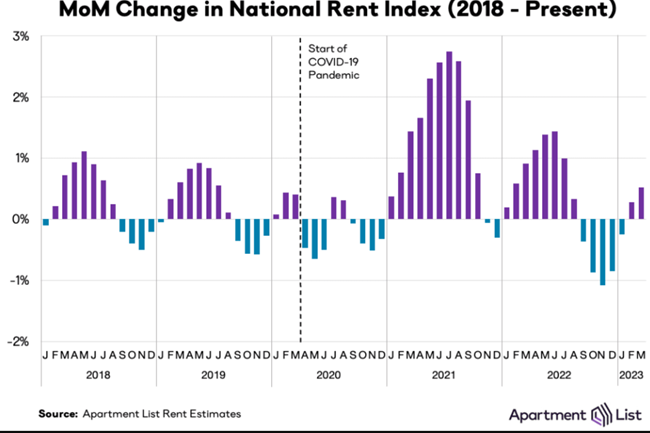
The national rent index increased by 0.5 percent over the course of March, the second straight monthly increase and a slight acceleration over last month’s pace, Apartment List said in their April report.

The report says  78 of 100 largest cities saw rent increase in March while  28 cities have seen prices fall year-over-year.

“This month’s increase is of a similar magnitude to the typical March price change that we saw in pre-pandemic years. After 2022 closed out with record-setting price declines, it appears that rental demand is rebounding in line with the usual seasonal trend,” the Apartment List research team writes in the report.

The national rent index increased by 0.5 percent over the course of March, small rent increases, and a slight acceleration over last month

However, year-over-year rent growth is continuing to decelerate despite some recent small gains and is expected to continue to decline in coming months.

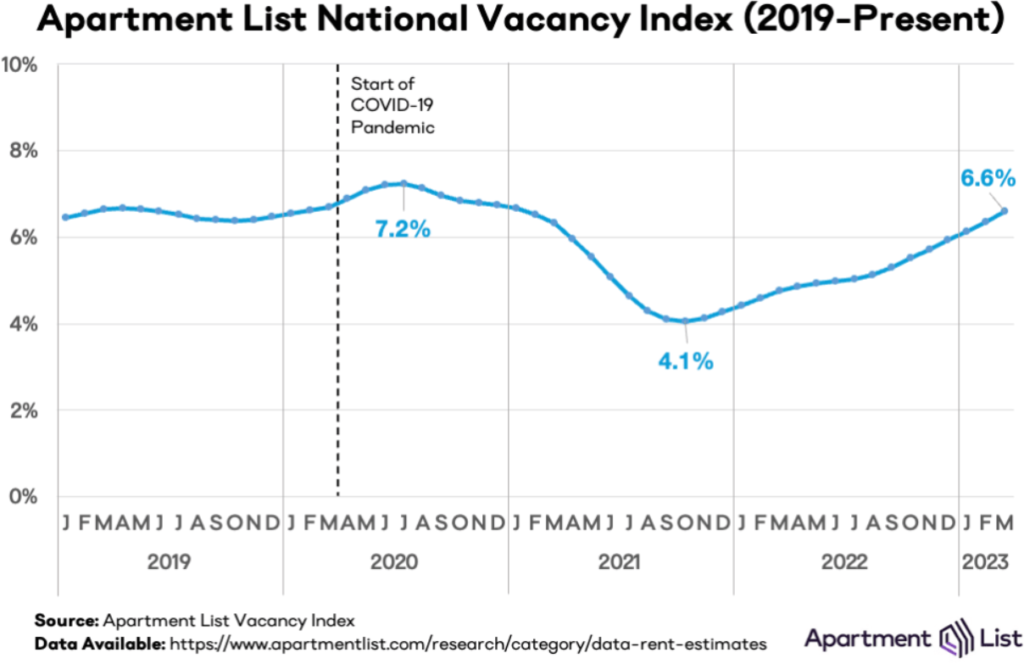
Meanwhile, on the supply side, “Our vacancy index currently stands at 6.6 percent, which now puts it back in-line with the average pre-pandemic rate.

“With a record number of multifamily apartment units currently under construction, we expect that supply constraints will continue to soften and 2023 could be the first time since the early stages of the pandemic that we see property owners competing for renters, rather than the other way around,” the research team writes.

Rents nationally increase by 0.5 percent month-over-month; prices up 2.6 percent year-over-year

With the 0.5 percent national rent index increase in March, it “marks the second straight month of positive rent growth following a five-month period of prices falling. This month’s increase represents a slight acceleration from the 0.3 percent increase we saw in February.

“The timing of this recent turn is consistent with the usual seasonal trend in the rental market. It’s typical to see prices dip in the fall and early winter as moving activity slows, but things normally begin to pick back up around this time of year, and rent growth then tends to accelerate until the early summer peak,” the report says.

Vacancy index back at pre-pandemic baseline

The report says the vacancy rate now sits at 6.6 percent, exactly matching the average rate from 2018 to 2019. Also, it is like the vacancy rate will surpass that pre-pandemic threshold in the months ahead. New apartment construction is recovering from pandemic-related disruptions, and there are now more multifamily units under construction than at any point since 1970.

The national rent index increased by 0.5 percent over the course of March, small rent increases, and a slight acceleration over last month

“As this new inventory hits the market over the course of the year, we could begin to see property owners competing for renters to fill their units, a marked change from the prevailing conditions of the past two years, in which renters have been competing for a limited supply of available inventory,” the report says.


Read the full report from Apartment List here.

Sign Up For Our Weekly Newsletter And Get Rental Property And Apartment News And Helpful, Useful Content Each Week.

* indicates required

Oregon Landlords Oppose Senate Bill 611

Oregon Senate Bill 611 that would restrict landlords’ ability to raise rents has plenty of opposition from landlords.

Oregon Senate Bill 611 that would restrict landlords’ ability to raise rents has plenty of opposition from landlords.

Senate Bill 611 would adjust the current rent cap from 7 percent plus consumer price (CPI) index to 5 percent plus CPI. Because CPI changes with inflation the bill would cap the max increase at 10 percent regardless of CPI.

“It sends a signal to investors that Oregon is not open for business,” Molly McGrew, a lobbyist for the landlord association Multifamily Northwest told kcby.com. “Washington State did not pass their rent control law that they had up, and instead went full speed on addressing the supply issues. And I think that is something that Oregonians need us to do as well.”

Oregon’s rent cap laws exempt buildings with a first certificate of occupancy issued within the last 15 years. The original bill would have changed that number to three, but that protection was gutted in the amendment.

Also eliminated from Senate Bill 611 was a requirement that called on landlords to provide three months’ worth of rent when serving a tenant with a no cause eviction. The current standard is one month’s worth of rent to help with relocation

Landlords say the increase in cost of labor, homeowners’ insurance, maintenance and utilities are what’s driving the spike.

“Everything that someone who owns their own home has to take care of, a housing provider has to take care of, for their renter,” said Deborah Imse, executive director of Multifamily NW, an association of landlords.

She feels that more regulations will cause landlords to sell their property and relocate and will drive developers to build elsewhere.

“In our view you don’t do things that will cause investors to go to Idaho or across the river to Clark County and build there,” she said.

She suggests that giving renters more rental assistance while building more homes is the solution to the problem.

New Year, New Laws, Part Three: How House Bill 2001 Affects You

Portland Update: Changes to FAIR Ordinance Bring (Some) Necessary Changes

Dealing with Habitability issues and Substitute Housing


Can I Limit the Number of People in My Rental?

Should I be able to limit the number of people in my rental if it is on a septic system is the question this week for Landlord Hank

Should I be able to limit the number of people in my rental if it is on a septic system is the question this week for Ask Landlord Hank. Remember Hank is not an attorney and is not offering legal advice. If you have a question for him please fill out his form below.

Dear Landlord Hank,

I like to limit the number of people living in my rental homes to a total of five, including children.

Reason is we have septic system. and that is what our septic company we use recommends.

We have three-bedroom homes. Is this a problem?

– Millie

Dear Landlady Millie,

You can limit the number of people occupying your property rental as long as you comply with all relevant housing laws.

Check your state and local health and safety codes. They may support your limit on the number of occupants, but you can’t set unreasonably low figures to reduce wear and tear or noise.

Federal occupancy standards require landlords to allow two people per bedroom unless you have a legitimate reason for a lower number. In my mind, you do.

State and local occupancy standards may allow even more people in your rental than federal law does. If your occupancy policy limits the number of tenants for reasons other than health, safety or real legitimate business requirements, you risk being charged with discrimination against families.

Ask your septic company for something in writing covering their recommendations and why.

Sincerely,

Hank Rossi

Each week I answer questions from landlords and property managers across the country in my “Dear Landlord Hank” blog in the digital magazine Rental Housing Journal.    https://rentalhousingjournal.com/asklandlordhank/

Should I be able to limit the number of people in my rental if it is on a septic system is the question this week for Landlord Hank
Ask your septic company for something in writing covering their recommendations and why.

Ask Landlord Hank Your Question

Ask veteran landlord and property manager Hank Rossi your questions from tenant screening to leases to pets and more! He provides answers each week to landlords.

Do I Have to Paint and Replace Flooring for a Long-Term Tenant?

A Tenant Poured Grease Down Drain Who Is Responsible?


Sign Up For Our Newsletter And Get Rental Housing And Apartment News And Helpful, Useful Content Each Week.

Improve MDU Profitability AND Resident Satisfaction

With managed Wi-Fi, the property owner of a 100- subscriber property could expect an extra $24,000 to $60,000 in net operating income

Multi-Dwelling Unit (MDU) resident satisfaction and profitability are not mutually exclusive. In fact, with managed Wi-Fi, the property owner of a 100- subscriber property could expect an extra $24,000 to $60,000 in net operating income (NOI) annually.

Property owners who take control of the Wi-Fi find themselves able to deliver secure and consistently reliable online experiences across the entire property. Offering exceptional online experiences to their tenants translates into higher occupancy, lower churn, and increased tenant satisfaction.

Tenants can easily use their devices in their units, the laundry rooms, social areas, outdoor pools, and patios. Furthermore, the same infrastructure and secure networks are being leveraged for smart-property technologies to optimize operations – controllable sprinkler systems, security surveillance, access systems, door locks, climate controls and others.

Questions to Ask Before Signing a Contract

Prioritize the User Experience

Before going to contract, determine whether each tenant will have a private and secure Wi-Fi in their home, as well as anywhere on the site. Also, do your homework and find whether there been any measurable improvement in resident trouble reports with Wi-Fi. Lastly, how easy is it to add a new device or a guest user?

Understand Wi-Fi Technology

When it comes to deploying technology solutions, it’s wise to master the details ahead of time. Figure out how many Wi-Fi access points you’ll need to provide coverage. Make sure to check whether the solution will support the requisite number of security cameras, sensors, and controls. Finally, calculate how much it’s going to cost to employ enough IT people to maintain quality service.

 Quantify the Business Impact

This is a long-term investment that ought to pay off over time. Consult with other property owners who have deployed this exact architecture in similar properties. Reach out to residents for feedback. Ultimately, they’re the ones who use the service and what they have to say is worth its weight in gold.

Select the Right Service Provider

Here is where you need to perform due diligence to find a fitting partner to deploy the solution. As you vet the candidates, ask whether they have specific experience in providing managed Wi-Fi in new and existing buildings. Does the provider offer design, installation and management services?

Why MDU Wi-Fi is Different

While Wi-Fi is available almost everywhere, designing connectivity for an MDU is significantly different from providing Wi-Fi in a single-family residence or a traditional enterprise business. Just putting one Wi-Fi access point in each unit or stringing them down the hallway creates problems that will leave the residents and property owners unsatisfied.

Managed Wi-Fi offers a private Wi-Fi bubble for residents. Unlike a traditional residential or conventional enterprise model, residents have private, secure, and personal Wi-Fi with elf-service sign up that is available on day 1 when they move in. They also have coverage across the entire property using a pre shared key (PSK).

The property owner has a connectivity solution that eliminates Wi-Fi interference. They also have an infrastructure that enables connectivity for smart building initiatives including security cameras, locks, and light controls. In addition, the property management has access to remote diagnostics and can have a comprehensive view of system performance.

Consider Architecture Options

Cambium Networks’ solution paper, “Take Control of Your MDU Network” paper outlines alternative architectures and includes views property owners and integrators including GiGstreem, RG Nets, Ntiva, and Safety NetAccess. Download the paper here.

About Cambium Networks
Cambium Networks delivers wireless communications that work for businesses, communities, and cities worldwide. Millions of our radios are deployed to connect people, places and things with a unified wireless fabric that spans multiple standards and frequencies of fixed wireless and Wi-Fi, all managed centrally via the cloud. Our multi-gigabit wireless fabric offers a compelling value proposition over traditional fiber and alternative wireless solutions. We work with our Cambium certified ConnectedPartners to deliver purpose-built networks for service provider, enterprise, industrial, and government connectivity solutions in urban, suburban, and rural environments, with wireless that just works.

Monetizing The New Tech Reality, Even If it Wasn’t By Choice

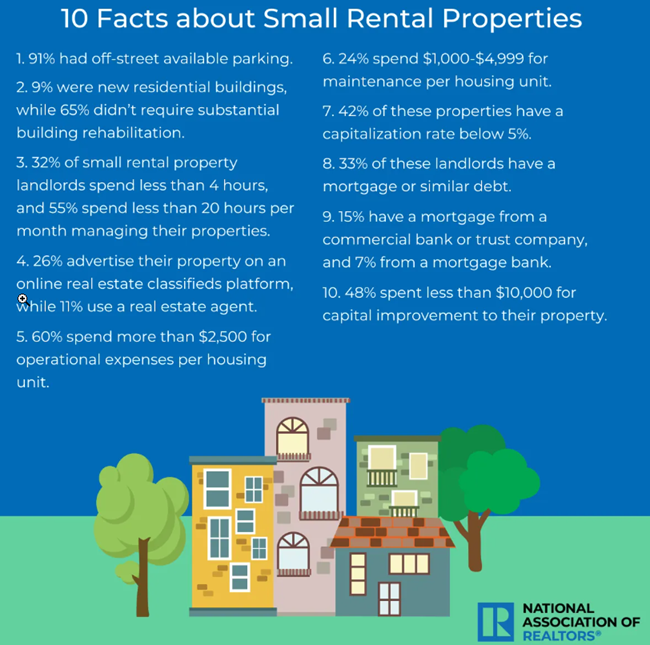
10 Things To Know About Small Rental Properties

Small rental properties make up 46 percent of the rental property and of these small rentals, 70 percent are owed by mom and pop landlords

Small rental properties make up about 46 percent of rentals and of these rentals, 70 percent are owed by mom and pop landlords who typically manage the properties by themselves, according to the U.S. Census and an article by the National Association of Realtors.

Mom and Pop landlords’ rentals are defined as one- to-four units.

“Among 49.5 million rental housing units in the U.S., nearly 46 percent of them are properties of 1-4 units. Over 70 percent of the 1-4 units are owned by individuals, and about 70 percent are managed by the same owners, defined as mom-and-pop landlords,” the article says.

The U.S. Census Bureau conducts the Rental Housing Finance Survey every three years. The main purpose of this survey is to learn about the financial health of rentals. Specifically, it provides insight into the financial, managerial, and physical characteristics of rental properties nationwide by covering topics such as property configuration, ownership and management, rental income and expenses, financing, and capital improvements and expenses, the article says.

“Being a mom-and-pop landlord can be challenging, especially when someone is starting out and doing everything from evaluating and purchasing rental properties, finding and screening tenants, collecting rents, keeping the books, dealing with taxes, observing local laws, and performing routine maintenance and repairs,” Nadia Evangelou, Senior Economist & Director of Real Estate Research for the National Association of REALTORS® writes in the article here.

Here are 10 things to know about properties of 1-4 units compiled from the U.S. Census and the National Association of Realtors.

mom and pop landlords own many of the 1-4 unit properties
Chart courtesy of the National Association of Realtors

Sign Up For Our Newsletter And Get Rental Property And Apartment News And Helpful, Useful Content Each Week.

* indicates required

Why I Like My Rental Properties’ Nosy Neighbors

Three Steps to Becoming a Successful, Lazy Landlord

Court Says Landlords Can Ask Tenants About Criminal History

A federal appeals court ruled landlords can ask potential or current tenants about their criminal history, reversing a lower court decision.

A federal appeals court has ruled that landlords can ask potential or current tenants about their criminal history, reversing a lower court decision in part and upholding part.

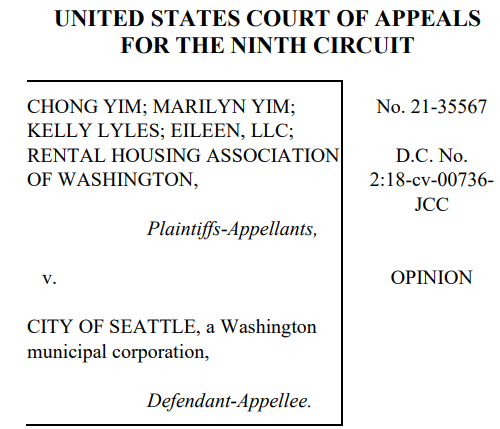
The U.S. Court of Appeals for the Ninth Circuit said the City of Seattle’s Fair Chance Housing Ordinance violates the First Amendment right of free speech.

The appeals court disagreed with the district court that the Ordinance was narrowly drawn to achieve the City’s stated goals.

The appeals court said, “a complete ban on any discussion of criminal history between the landlords and prospective tenants—was not in proportion to the interest served by the Ordinance in reducing racial injustice and reducing barriers to housing. The panel therefore concluded that the inquiry provision failed intermediate scrutiny.”

Seattle landlords had filed the suit against the City of Seattle, alleging violations of their federal and state rights of free speech and substantive due process.

“The Ninth Circuit’s decision recognizes that the First Amendment protects the right to ask questions and receive information relevant to our livelihoods,” Ethan Blevins, an attorney at Pacific Legal Foundation which filed the suit for the landlords said in a relase. “The government does not get to decide what information people can or cannot possess.”

The case is Yim v. City of Seattle.  Pacific Legal Foundation represented the landlords who filed the suit for free.

History of the lawsuit and small landlords behind it

“In 2017, Seattle passed the “Fair Chance Housing Ordinance,” forbidding landlords from asking about or considering prospective tenants’ criminal backgrounds,” the Pacific Legal Foundation wrote in a release.

“This meant that landlords could not base a rental decision on factors like personal safety or the well-being of other tenants. For Kelly Lyles and several other small-scale housing providers, this gave them little to no choice over their future tenants.

“Ms. Lyles is an artist by trade, but she earns most of her income by renting out a small single-family home that she owns in Seattle. As a single woman and survivor of sexual assault, she has the right to know if her rental applicants have engaged in crimes that might endanger her. But Seattle tried to take that right away. As a result, Ms. Lyles and several other housing providers filed a federal lawsuit. After the district court ruled in Seattle’s favor, they appealed to the Ninth Circuit,” the foundation wrote.

A federal appeals court ruled landlords can ask potential or current tenants about their criminal history, reversing a lower court decision.

Read the court’s summary opinion here.

Sign Up For Our Weekly Newsletter And Get Rental Property And Apartment News And Helpful, Useful Content Each Week.

* indicates required

Burdened by ESA Fraud? Time to Reconsider Your Pet Policies?

Can emotional support animal (ESA) fraud in the rental housing industry be reduced by modernizing pet policies?

Can emotional support animal (ESA) fraud in the rental housing industry be reduced by modernizing pet policies?

By Judy Bellack

Talk to apartment owners and operators about the issues plaguing their communities, and fraudulent emotional support animal (ESA) accommodation requests are bound to come up.

Industry-wide statistics do not appear to exist, but onsite team after onsite team can testify to the significant uptick in recent years of ESA accommodation requests, legitimate and otherwise. Vetting and verifying these requests can be a challenging and time-consuming process for operators.

Make no mistake: many, many ESA accommodation requests are legitimate, and ESAs provide critical aid to residents with anxiety, depression, learning disabilities, attention deficit disorder, chronic stress, post-traumatic stress disorder or neurodivergence-based disabilities like autism.

Housing operators must accommodate legitimate ESA requests regardless of pet restrictions, and they cannot charge pet rent or other pet-related fees for ESAs. Not accommodating legitimate requests will subject rental housing owners and operators to fair housing violations and the fines and/or lawsuits that accompany those violations.

Still, there’s no denying that a portion of accommodation requests are made in bad faith, and an entire cottage industry has arisen to provide the supporting materials to help these emotional support animal fraud requests succeed.

As owners and operators consider ways to reduce ESA fraud, they should consider the impact that adjusting pet policies and fees could have.

An incentive to submit emotional support animal fraud requests?

The typical apartment community in the U.S. accepts pets – but not without significant restrictions. In fact, according to the Pet-Inclusive Housing Report, only 8 percent of rental units have no pet restrictions.

Apartment communities usually have a weight limit on pets (typically between 25 to 40 pounds) and often ban any number of larger dog breeds entirely, even though researchers have concluded that a dog’s breed is not a good predictor of its behavior. A limit of one pet per unit also is common.

And then there are the pet-related fees, which can quickly become a real financial burden for many renter households. Theoretically refundable deposits in the range of $200-$500 per pet are common, as are one-time non-refundable fees of $250 per pet. Many communities also charge monthly pet rent that’s in the ballpark of $30-$50 per month per pet.

We are a pet-obsessed culture. More than 70 percent of U.S. households have a pet, and the vast majority of these households view their pet as an indispensable member of their family.

Can emotional support animal (ESA) fraud in the rental housing industry be reduced by modernizing pet policies?
Housing operators must accommodate legitimate ESA requests regardless of pet restrictions, and they cannot charge pet rent or other pet-related fees for ESAs.

Considering this, it’s perhaps not surprising that many renters, rather than surrendering or rehoming their large or breed-restricted pet, will try to gain access under the guise of emotional support in order to keep their families together. It’s also not shocking that some renters may go this route to avoid what can be truly onerous pet-related fees.

Clearly it’s not OK to lie, and it’s not OK to make things more difficult for those who legitimately need an emotional assistance animal by creating an atmosphere of distrust.

At the same time, rental housing owners and operators should think about how outdated pet policies and fees may be creating incentives for residents to submit fraudulent requests. They should ask themselves if ESA fraud is yet another indicator that the industry’s pet policies are no longer relevant for today’s renter.

By decreasing or even eliminating pet restrictions and fees, apartment communities can not only reduce ESA fraud – they can experience real business benefits like an expanded pool of potential renters and increased retention rates. Onsite teams will manage fewer potentially uncomfortable and tedious situations during the leasing process as well.

The time has come for the rental housing industry to modernize its pet policies – and rampant ESA fraud is one powerful indication of the needed change.

About the author:

Judy Bellack is the multifamily industry principal for the non-profit Michelson Found Animals Foundation, helping to advance the Pet-Inclusive Housing Initiative. She is a 30-year veteran of the multifamily industry, holding various executive leadership positions with some of the foremost supplier companies. Judy has served both as Chair of NAA’s National Suppliers’ Council and NMHC’s Supplier-Partner Alliance and was the recipient of NAA’s Outstanding Supplier in 2010. She currently operates a consulting practice advising start-up technologies in the multifamily space.

Sign Up For Our Weekly Newsletter And Get Rental Property And Apartment News And Helpful, Useful Content Each Week.

* indicates required

Apartments.com Partners With 360 Virtual Tours Company

Apartments.com is now offering Kuula’s real estate 360 virtual tour editor to multifamily clients with gold or higher ad package listings.

Apartments.com is now offering Kuula’s real estate 360 virtual tour editor to multifamily clients with gold or higher ad package listings.

Kuula,  a 360 virtual tour software company, has entered into a partnership with the online rental marketplace, Apartments.com, a CoStar Group (NASDAQ: CSGP) brand. Through the partnership, Apartment.com clients with gold or higher ad packages can create and include 360 tours powered by Kuula in their listings.

“Virtual tours have become increasingly popular in recent years because they offer a great way to experience a property online, says Kuula Founder and CEO, Bartek Drozdz. “At Kuula, we believe that virtual tours provide a unique and immersive experience for potential renters, and we are thrilled to see Apartments.com add our technology to enhance the rental search process.”

Adding Kuula’s 360 virtual tours to a listing requires a submission to the Apartments.com support team. Rental property owners with a gold account or higher can create a virtual tour on Kuula followed by copying the link of the desired tour and sending a request to the Apartement.com support team to add the virtual tour to a property listing. There is currently no option to manually upload virtual tours on Apartments.com.

To upload a tour, clients and photographers will need to send a request to the Apartments.com support team to upload at Support@Apartments.com. In the request, it’s recommended to include the detail listed below:

  • Property Name, Address
  • Property Management Company
  • Model Name (if tour should be uploaded to the model)
  • Unit Name (if tour should be uploaded to the unit)
  • 360 Tour Link
  • Caption
  • Comments, if necessary

For additional information, please visit the Kuula blog: Add Kuula Virtual Tours to multi-family listings on Apartments.com.


3 Critical Electrical, Fire Safety, & HVAC Maintenance Checks

Developing an maintenance checklist for your rental property around the critical areas of electrical, fire safety and HVAC

Developing an maintenance checklist for your rental property around the critical areas of electrical, fire safety and HVAC

By Eli Secor

This is the third in our three part series on developing a maintenance checklist for your rental property. This time we discuss three critical areas: Electrical, Fire Safety, and HVAC maintenance.

No. 1 – Electrical Maintenance Checklist

Here are the most important electrical considerations for landlords:

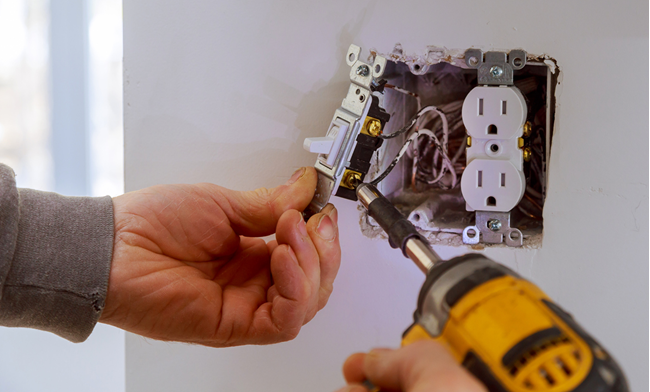
  • Outlets – Use a tester to check outlet wiring, polarity, and grounding. Hire an electrician to ground any un-grounded outlet.
  • Electrical panels – Seek a licensed electrician’s help to decide when to replace an electrical panel and, especially, any fuse box.
  • Old wiring – Upgrade your building if it has older wiring. Replace 2-prong outlets with modern 3-prong outlets so your tenants don’t have to use extension cords or adapters. Any “knob and tube” wiring should be replaced as soon as possible.

No. 2 – Fire Safety and Prevention Maintenance Checklist

Following are some of the ways you can improve the fire safety of your rental property:

  • Smoke and CO2 detectors – Replace batteries and test the function of detection devices at every turnover and every inspection. Where possible, install wired-in detectors.
  • Fire extinguishers – Contact your local fire department for information about where fire extinguishers are required and make sure they are re-certified regularly.
  • Escape ladders – Provide escape ladders for each unit above the first floor, and add them to your move-in/move-out inspection list.

No. 3 – HVAC Maintenance Checklist

Developing an HVAC maintenance checklist will help you stay on top of these routine tasks:

  • Furnace filters – Change furnace filters regularly to ensure air flows freely at all times, ensuring efficient operation and longevity for the equipment.
  • Duct cleaning – Clean HVAC ducting every 3-5 years to improve indoor air quality, which can cause some tenants issues with dust allergies.

Dryer, Hood, & Fan Venting Maintenance Checklist

Clogged dryer vents, greasy kitchen hoods, and dust-filled bath fans reduce efficiency and are a fire hazard. Here’s how you can fix them:

  • ·Dryer vent – Clean lint screens after each load and the vent pipe at least twice a year.
  • Hood and fan – Regularly clean bath, kitchen, and dryer venting. We recommend running bath fan covers and hood filters through the dishwasher at each turnover.

Key Takeaway

Electrical, fire safety, and HVAC are among the most critical systems to maintain on any property.

Any faults in these systems can not only harm your renters but also become expensive to repair or replace if not tackled on time. With a proper rental maintenance checklist, landlords can stay on top of vital upkeep, saving money and headache over the long term.

About the author:

Eli Secor started LandlordGurus.com with long-time friend and fellow landlord Chris Lee. After many a discussion about how to manage various tricky rental property issues, they decided to share their experiences and expertise with other independent landlords.  Along the way they are finding new answers and new tools, which they also share.

Sign Up For Our Newsletter And Get Apartment News And Helpful, Useful Content Each Week.

* indicates required

Rental Property Maintenance Checklist, Part One: Plumbing

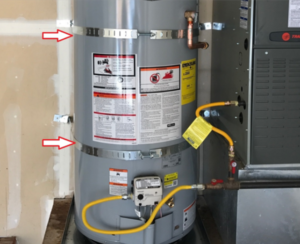
rental property maintenance plumbing and water heater secured with straps in earthquake prone areas of the country

3 Common Plumbing Emergencies In Rental Properties And What To Do

Rental Property Maintenance: 6 Items to Troubleshoot in Your Crawl Spaces

How to Waterproof Your Basement</

Part 2 – Rental Property Maintenance: Security, Pest Control, & Exteriors