Home Blog Page 61

5 Ways To Mitigate Risks to Multifamily Revenue

There are risks to multifamily revenue in the current economy so here is a look at those issues and 5 ways mitigate those risks.

There are risks to multifamily revenue in the current economy so here is a look at those issues and 5 ways mitigate those risks.

By Mark Peters

It’s critical for owners and operators to prepare and protect themselves ahead of a potential economic downturn. This process begins with identifying the top five risks to multifamily revenue and determining the best approaches to mitigating these risks:

Risk 1: NSF Returns, payment errors and chargebacks

Transaction errors and fraud pose a notable risk during rent collection cycles, particularly during recessions. According to the NAA, property managers lose around $17,000 annually per property to collections.

Payment technology tools offer one remedy to identify and prevent fraud. These tools ensure sufficient funds are available to cover payments, by instantly verifying bank account information. Additionally, chargeback defense teams offer further protection by helping to recover lost revenue.

Risk 2: Delinquent rent

Late or missing rent payments reduce cash flow and interrupt productivity by diverting resources to collections and evictions.

Fraud detection providers can offer respite by verifying renters’ identification in real time, eliminating the risk of fraud and delinquencies before a lease is signed. Operators can also reduce delinquencies by offering residents payment flexibility, which is a major upside as high rents continue to burden many people. This solution allows operators to get paid in full and on time, while allowing residents to pay in installments that work within their budget.

Risk 3: Paper-based payment processing

Manually processing paper rent payments is inefficient and error-prone. Yet, 42 percent of rent payments are still made with a check and 16 percent with money orders. This is due to the portion of renters that remain unbanked, are unwilling to change their check writing habits or want to avoid digital processing fees.

As an alternative, forward-thinking operators are offering digital payment portals, modern lockbox solutions and digital cash payment solutions. Not only are these systems more secure than checks or money orders, they can also improve cash flow and negate fraud by reducing the time money is tied up in accounts receivable, thanks to immediate deposits.

Risk 4: Paying utility invoices without auditing them

Utilities are a major expense for apartment communities. While operators don’t have a hand in bringing utility costs down, there is an opportunity to save significant sums of money by catching errors in utility invoices.

At least 17 percent of utility invoices contain errors, which can amount to hundreds of thousands of dollars on operator’s books. Establishing a consistent and standardized process for monthly utility invoice audits can help operators avoid this.

Outsourcing this task to a provider can also prove beneficial for smaller teams that may lack adequate resources to take on another task. Enlisting the help of a third party frees up time for property teams to focus on more important, mission-critical tasks.

Risk 5: Suboptimal utility cost recoupment 

While there are a variety of present day factors driving energy costs at any given time, one aspect of navigating the utility market as a property manager remains true –  including utilities in rent or charging a flat fee leaves cash flow vulnerable to rate fluctuations.

Billing residents for their actual usage mitigates the risks associated with utilities-included or flat-fee approaches and also creates a new revenue stream through recuperated costs. This added revenue increases NOI and, after factoring in cap rates, can also lead to a spike in property value.

While there isn’t a magic path that would allow operators to completely avoid the impacts of a less-than-ideal economy on business, years of property management data and analysis have brought incredibly helpful solutions to the marketplace.

By leveraging solutions specifically designed to address risks to multifamily revenue, operators can position themselves in the best possible way for weathering an economic challenge.

About the author:

Mark Peters is president of Zego a property management automation company.

Sign Up For Our Weekly Newsletter And Get Rental Property And Apartment News And Helpful, Useful Content Each Week.

* indicates required


Quartz: The Future of Countertops in Rental Housing

The future of countertops in rental housing is the modern, fresh look of white and gray quartz countertops, sought-after by tenants.

The future of countertops in rental housing is the modern and fresh look of white and gray quartz countertops, a sought-after feature for tenants.

By Precision Countertops

In the world of rental housing, maintaining an attractive and functional living space is vital for property owners, managers, and maintenance professionals.

One area that often requires attention is the countertops. Many older apartments suffer from damaged or stained laminate countertops that can diminish the overall appeal of the property.

Changing Industry

There was a time that laminate countertops reigned supreme in the rental housing community. More and more, however, quartz has become the popular choice due to its durability, longevity, and aesthetic versatility. This modern and fresh look of white and gray quartz countertops has become a sought-after feature for tenants.

Looks That Last

The benefits of quartz countertops extend beyond their visual appeal. Unlike laminate, quartz is known for its exceptional durability and is highly resistant to damage and staining, often outlasting laminate by more than double the lifespan. This longevity translates to long-term savings for property owners, as they minimize future replacement costs. Moreover, quartz countertops are easy to maintain, reducing the workload for maintenance managers and improving overall efficiency.

Upgrade Quality, Not Cost

In terms of cost, quartz countertop replacements are surprisingly affordable, with an average cost ranging between $2,000 and $2,500 per unit. With the price of laminate on the rise, it makes sense to increase the appeal of properties by switching to quartz. This investment pays off in the form of higher rents and increased tenant demand, maximizing the return on investment for property owners.

Let’s Recap

Making the switch from laminate to quartz is a simple, surefire way for property owners, managers, and maintenance professionals to enhance the value and appeal of their properties.

By replacing outdated and damaged laminate countertops with durable, attractive, and cost-effective quartz countertops, apartments can attract higher-quality tenants, drive increased rental rates, and benefit from long-term savings. Elevate your property’s appeal and enjoy the rewards of quartz countertops!

About the Author:

Precision Countertops is the leader in rental housing countertop replacement. With a track record of over 10,000 successful apartment countertop upgrades in the Portland metro area, Precision Countertops specializes in transforming apartments with durable and visually appealing quartz countertop.

Amenities That Will Turn the Heads of Prospective Residents

6 Tips for Keeping Maintenance and Onsite Teams Safe in the Summer Heat

Hot summer months can put a strain on rental property maintenance personnel onsite so here are some tips to keep your team safe.

Summer heat can put a strain on rental property maintenance personnel onsite so here are some tips to keep your team safe.

By Casey Hale

Something that isn’t talked about nearly enough in our industry is taking care of our team members working outside in the heat.

Temperatures on a roof or inside an attic can range from 20-30 degrees higher than the outdoor temperature. From extreme heat to urgent needs such as air conditioning repair, our maintenance and onsite teams are faced with extreme working conditions during our busiest time of year.

Here are a few tips to keep people safe and healthy throughout the hot summer months.

 Provide and Promote Proper Hydration & Sun Protection

Avoid caffeinated beverages and drink more water, juice, and sports drinks prior to and throughout the workday. Sweating removes needed salt and minerals from the body which need to be replenished. Have electrolyte beverages on hand for your team. When working outside, wear a hat and sunscreen and utilize cooling towels and shirts with cooling sleeves to keep cool.

 Offer Flex Summer Hours & Show You Care

Show your team you care by saying thank you, offering refreshing treats and providing flexible hours. Scheduling outdoor maintenance as early as possible is key to avoiding heat and sun exposure throughout the midday. Offering flexible summer hours will allow people to start and end their day earlier and avoid working during the hottest time of the day.

 Ensure Team Members Have a Place to Cooldown & Encourage Breaks

For every hour spent in the heat, another hour should be taken to cool down. Be sure team members have an air-conditioned indoor space or shaded environment with air movement for cooling down. The time spent in the heat should be balanced with the amount of time in a cool down space.

 Stay in Contact and Know Your Team’s Whereabouts

Know the location of your team members and vendors working onsite at all times and be sure to check in on them frequently.

 Know the Warning Signs for Heat Exhaustion and Heat Stroke

Faint or dizziness, excessive sweating, cool, pale, clammy skin, nausea or vomiting, rapid, weak pulse, and muscle cramps are all signs of heat exhaustion. Throbbing headache, no sweating, body temperature above 103 degrees, red, hot, dry skin, nausea or vomiting, rapid, strong pulse, and loss of consciousness are all signs of heat stroke.

 What To Do if Someone is Suffering from Heat Exhaustion or Heat Stroke

If someone is experiencing any symptoms of heat exhaustion, get them to a cooler, air-conditioned place immediately. Provide water and cold compresses to cool down. If someone is experiencing any symptoms of heat stroke, call 911 and take immediate action to cool the person until help arrives. In either case, stay with the person and do not leave them alone.

Hot summer months can put a strain on rental property maintenance personnel onsite so here are some tips to keep your team safe.

About the author:

Casey Hale is the Maintenance Director for P.B Bell and is responsible for the training and mentoring of the maintenance staff.

Sign Up For Our Weekly Newsletter And Get Rental Property And Apartment News And Helpful, Useful Content Each Week.

* indicates required

Keeping Your Communications Compliant with Fair Housing

5 Ways to Communicate Better with Challenging Tenants

What to Look for in Property Management Software

5 Things Your Company Can Do To Retain Top Talent in Multifamily

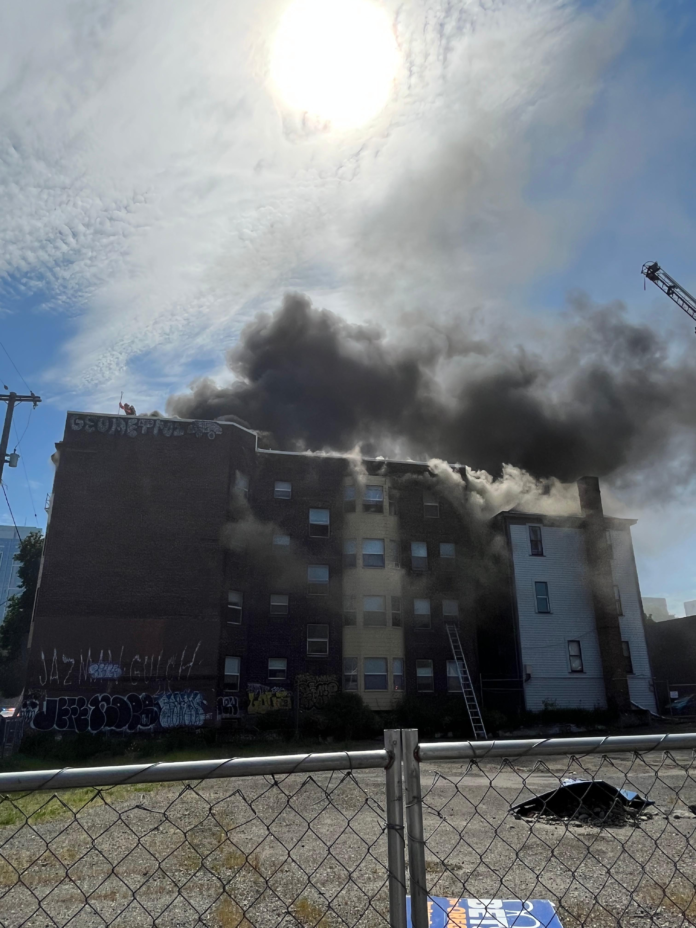
Evicted Tenant Charged With Arson In Portland Apartment Fire

Police have charged an evicted tenant with felony arson and reckless endangerment in a fire that destroyed a Portland apartment building.
Photo courtesy of Portland Fire & Rescue

Police have charged an evicted tenant with felony arson, criminal mischief and misdemeanor reckless endangerment in a fire that destroyed a Portland apartment building, according to reports.

The 116-year-old apartment building was destroyed and residents of all 42 units of the May Apartments, were displaced. No one was seriously injured in the fire but an unknown number of pets were lost in the arson fire according to a spokesman for Portland Fire & Rescue.

Officials said the apartment building will likely be torn down.

Police arrested 30-year-old Garrett Repp, a former tenant who was evicted in May, on 31 charges,including arson, related to the fire.

Repp’s ex-girlfriend told The Oregonian/OregonLive he had lived in the May Apartments since November. The landlord, SkyNat Property Management, initiated an eviction order against Repp in February saying he owed $3,180 in rent and late fees, court records show.

The Oregonian reported that on April 17, the Multnomah County Circuit Court Landlord Tenant Department ordered Repp to move out by midnight on April 23. An amended order was filed May 1, ordering him to move out by midnight May 7. A third order was issued May 3, ordering him to move out by midnight May 8. On May 10 a judge ordered sheriff’s deputies to remove him from his third-floor apartment. The fire broke out May 16.

The four-alarm fire at the May Apartments at 1410 S.W. Taylor Street in the Goose Hollow neighborhood sent heavy, black smoke throughout downtown Portland and surrounding areas, leading to the closure of streets and highways.

Portland Police spokesperson Sgt. Kevin Allen said Repp, 30, was arrested the day of the blaze because building management had reported him on May 9 for “breaking through the wall of his apartment” and tunneling into the vacant unit next door. Repp was charged with one count of first-degree criminal mischief and released later on May 16. The case has since been closed.

Repp was well-known to residents at The May Apartments, according to interviews with three tenants and a former property manager, who said he had pulled the fire alarm for no reason more than a dozen times since he moved in last December and had repeatedly clashed with other residents.

According to its website, SkyNat is a family business with more than 500 residential units in Portland, Gresham, Vancouver and Tigard.

Sign Up For Our Weekly Newsletter And Get Rental Property And Apartment News And Helpful, Useful Content Each Week.

* indicates required

Leasing Season Is Here, and Pet-Friendly Rentals Can Help You Attract New Residents

Residents say pet-friendly rentals are hard to find so here are some ideas on how to help during leasing season to attract pet lovers

Residents say pet-friendly rentals are hard to find so here are some ideas on how to help during leasing season to attract pet lovers to your community.

By David Stunja

It may be hard to believe, but summer is almost here. And in the apartment industry, that means it’s leasing season.

Forward-thinking operators are always thinking about how they can maximize the appeal of their communities to new residents. Innovative marketing campaigns, self-guided and virtual tours, and cutting-edge onsite amenities are just a few of the ways that today’s apartment owners and managers are trying to lure new renters.

But operators shouldn’t overlook the impact that their pet policies and amenities can have on their efforts to attract new residents. After all, we are a nation of pet lovers: 70 percent of U.S. households own a pet, according to the American Pet Products Association.

The 2021 Pet-Inclusive Housing Report, from Michelson Found Animals and the Human Animal Bond Research Institute, hints at some of the business opportunities and benefits of rolling out the welcome mat to pet owners. According to the report, 72 percent of rental-housing residents say pet-friendly housing is hard to find, pointing to the competitive advantage of offering communities that pet-owning residents find appealing. In addition, 83 percent of owner/operators say pet-friendly vacancies are filled faster, and the report also found that residents in pet-friendly housing stay 21 percent longer than those in non-pet-friendly housing.

So how can operators best position their communities to attract pet lovers? Below are some steps to consider.

  • Relax breed and weight restrictions. A reduction or elimination of these restrictions results in a larger pool of potential residents who will now consider your communities. Scaling back creates the opportunity for other operational and financial benefits, as well.

For example, with more pets onsite, operators can collect more pet rent. Reduced restrictions also make it less likely that a resident will try to hide a pet or sneak a pet into the community under the guise of it being an assistance animal. Operators lose out on pet-related revenue when this happens because HUD and the Fair Housing Act prohibit charging pet rent or other pet fees for legitimate service or support animals.

Operators that are considering reducing or eliminating their pet restrictions shouldn’t worry too much that these changes will be met with stiff opposition from residents. According to the Pet Policies and Amenities in Multifamily report by PetScreening and J. Turner Research, 53% of residents are against breed restrictions and 23% are indifferent. Only 24% are in favor. Similarly, 56% of residents are against weight-related restrictions, while 24% are indifferent. Only 20% support these restrictions.

Operators should also know that these restrictions often have their basis in the myth of the dangerous breed. However, a 2022 study published in the journal Science showed that a dog’s breed is not a good predictor of its behavior.

MAA and RPM Living are among the operators that have dropped breed restrictions to create more welcoming environments for pet-owning residents. The Management Group, Oculus Realty and Milhaus have eliminated both breed and weight restrictions.

Despite the host of potential benefits offered by reducing or eliminating restrictions, this article is not advocating that operators immediately eliminate breed and weight restrictions and just accept all pets with no questions asked. Apartment communities should thoroughly screen pets and pet owners on an individual basis to determine if they pose any risk and make data-driven decisions accordingly.

  • Have the right pet amenities in place. It’s not enough to simply allow more pets than your competitors. Prospective residents will want to know that they and their pets will have a high quality of life after they move in. And that’s where amenities come in. Across the industry, operators are equipping their communities with shady pet parks, pet-washing stations, pet-sitting services and pet concierges.

The good news is that residents’ needs in this area are fairly straightforward and easy to meet. According to the PetScreening-J Turner report, the two pet-related amenities most desired by residents are waste-bag stations and onsite dog parks, both of which can be relatively affordable to install.

Additionally, when you have progressive pet policies and appealing pet amenities, be sure to feature them prominently in your marketing campaigns, community websites, ILSs and social media outlets. Be assertive in spreading the good  word that your communities want to provide pet owners and their pets with a best-in-class living experience. After all, it creates a meaningful and relevantl competitive advantage for your communities.

Apartment residents – just like the rest of the U.S. population – are simply crazy about their pets. And when apartment owners and operators lean into this fact, they’re bound to find that their leasing seasons will be extremely busy with pet-friendly rentals.

David Stunja is chief operating officer at PetScreening.

Sign Up For Our Weekly Newsletter And Get Rental Property And Apartment News And Helpful, Useful Content Each Week.

* indicates required

When It Comes to Residential Wi-Fi, Invest in a Managed Solution with a Measurable Difference

To evaluate quality of managed Wi-Fi solutions in Multi-Dwelling Units (MDU), property owners typically look at numbers that drive up costs

It’s easy to know who is winning when you keep score. To evaluate the quality of managed Wi-Fi solutions in Multi-Dwelling Units (MDU), property owners typically keep score by looking at the hard numbers that drive costs up. These include the following:

  • Number of resident complaints about the Wi-Fi per month
  • Hours of Wi-Fi downtime per month
  • Hours of a technician monitoring the network per month
  • Hours of a technician performing maintenance and repair per month

This is why it’s important to select a technology solution that will drive those hard numbers down and keep them at a minimum. But how do you achieve that? Which factors should you take into consideration?

High-Performance Wi-Fi for Tenants

Are all residents able to use the Wi-Fi for the applications they need? Is there sufficient bandwidth to support multiple streaming services in a unit for streaming conference calls on one device and concurrently streaming entertainment on others?

Seamless Roaming Across the Property

Are tenants able to roam the entire property without logging in multiple times? Does this include all indoor locations such as gathering areas, laundry and other facilities? Does this include outdoor patio areas?

Simple Onboarding of All Devices

Is it easy for tenants to add a new device without assistance? Each unit can have 12 or more devices, and new ones are added every day. Are their guests able to easily log in without a conversation with their host?

Secure Personal Networks

Is each unit’s traffic private and password protected? Can you ensure that other residents are unable to see a tenant’s activity?

Easy Monitoring and Reporting

How is the network performance monitored, and who monitors it? Does it require a skilled technician to look at the data on demand? Or is there a system that senses problems, makes adjustments and notifies an administrative person with no technical training when problems require attention?

 Choose the Best Option for the Long Run

It costs time and money to handle complaints, describe problems and dispatch skilled technicians. When choosing a solution, remember that the initial cost is only the starting point. A few dollars saved on the front-end can be easily wiped out by a solution that simply does not work. It could drive the total cost of ownership through the roof with outages and repair costs – and ultimately a significant total replacement cost.

Cambium Networks works with several leading MSPs that help property owners get access to reliable, fast internet. For more information on the various architectures and the views of property owners and MSPs, read the solution paper, “Take Control of Your MDU Network.” You can download the paper here. Contact us to connect you with qualified MSPs that fit your needs.

To evaluate quality of managed Wi-Fi solutions in Multi-Dwelling Units (MDU), property owners typically look at numbers that drive up costs

About Cambium Networks
Cambium Networks enables service providers, enterprises, industrial organizations, and governments to deliver exceptional digital experiences, and device connectivity, with compelling economics. Our ONE Network platform simplifies management of Cambium Networks’ wired and wireless broadband and network edge technologies. Our customers can focus more resources on managing their business rather than the network. We deliver connectivity that just works.

Cheap isn’t Always Cheerful: When it’s time to Retrofit Your Building with Seamless Wi-Fi, Choose the Right MSP Partner

Improve MDU Profitability AND Resident Satisfaction

Can I Ask Prospective Tenant To Visit Their Current Residence?

Can you ask a prospective tenant to visit their current residence is the question this week for Ask Landlord Hank.

Can you ask a prospective tenant to visit their current residence is the question this week for Ask Landlord Hank. Remember Hank is not an attorney and is not offering legal advice. If you have a question for him please fill out his form below.

Hello Hank:

Can I legally ask to meet a prospective tenant to visit at their current residence ?

I think it would be enlightening to see how they maintain their present residence before they move into mine.

-Kathy

Hello Landlady Kathy,

Most landlords rarely ask this question.

But, if the prospective tenant is Ok with you visiting their current residence this would give you a good idea of how they maintain a property and there are no legal prohibitions that I’m aware of regarding a visit.

Sincerely,

Hank Rossi

www.rentsrq.com

Each week I answer questions from landlords and property managers across the country in my “Dear Landlord Hank” blog in the digital magazine Rental Housing Journal.    https://rentalhousingjournal.com/asklandlordhank/

Can I ask a prospective tenant to visit their current residence?
Landlord Hank says, “if the prospective tenant is Ok with you visiting their current residence this would give you a good idea of how they maintain a property.”

Ask Landlord Hank Your Question

Ask veteran landlord and property manager Hank Rossi your questions from tenant screening to leases to pets and more! He provides answers each week to landlords.

Can I Monitor Tenant Smoking In My No-Smoking Rental?

Can I Limit the Number of People in My Rental?

Do I Have to Paint and Replace Flooring for a Long-Term Tenant?

A Tenant Poured Grease Down Drain Who Is Responsible?


Sign Up For Our Newsletter And Get Rental Housing And Apartment News And Helpful, Useful Content Each Week.

NOI Drivers to Combat Rent Growth Decline Part 2: Revenue Recovery

operators are finding ways to combat rent growth decline focusing on resident renewals and identifying new NOI strategies

As year-over-year rent growth slows, operators are finding ways to combat the rent growth decline focusing on resident renewals and identifying new NOI strategies so here are some examples.

By Kevin Juhasz

A historic period of rent growth ended last year, subsequently followed by several months of decline that have carried into 2023.

According to the latest update from the Apartment List National Rent Report, year-over-year rent growth continues to decelerate and is projected to decline further in the coming months. Those headwinds pose a significant challenge to multifamily owner/operators, and their response to eroding market factors could dictate their portfolio performance for the foreseeable future.

While the typical industry reaction is to cut costs and batten down the hatches, inflation rates continue to limit the efficacy of expense reductions. Cutting staff and services can trim budgets but it also impairs resident retention efforts. Operators are finding that focusing on resident renewals and identifying new NOI strategies within day-to-day operations better positions them to weather the storm.

Here are other ways owner/operators can increase NOI in a potentially stagnant, inflationary period in 2023. In addition to developing new revenue sources, operators are increasingly seeking opportunities to limit revenue loss on the back end of leases.

Maximizing Rent Collection

According to the latest Household Pulse Survey from the Census Department, more than 8 million renters were not current on their rent payments at the beginning of 2023. While delinquency is always a concern in the industry, renters are at an even higher risk of becoming delinquent during an inflationary period or a recession.

Many operators are turning to rent payment innovation to proactively mitigate delinquencies, increase collections and position residents to successfully pay rent on time – no matter what’s happening in the economy. The most effective rent payment platforms allow renters to set up automated, customized payment schedules that align with their income and support them in sustainably paying on time and catching up on arrears. This comprehensive payment methodology caters to residents, but ultimately gears operators with a long-term tactic to maximize rental income and improve their NOI.

According to internal data from Circa, an innovative payment technology company, operators that extend a comprehensive payment platform to their residents experience a 17.5% increase in on-time payments at their communities.

“Many aspects of rental housing are customized for residents, but one area that operators can make a notable improvement to NOI is by extending that customized experience to rent,” said Leslie Hyman, CEO and co-founder of Circa. “When renters can customize their largest monthly payment on an automated schedule, it sets operators up to maximize rental income and recoup any losses. It’s an additional security tactic operators utilize to improve both their NOI and asset value.”

Eviction Optimization

The rental industry files eviction proceedings on about 2.5 percent of units every year. While that number is small when viewed as a percentage, it can be overwhelming when looking at actual units. Even when things go well dealing with delinquent residents, the task can be overwhelming for property teams and managers. It’s when challenges arise that costs for even a single eviction can balloon quickly.

The smallest of errors or a missed deadline can result in a judge pushing an eviction back another 30 days or more. That’s additional rental income that may be lost, additional fees to re-file and additional costs for legal counsel. Add to that the fact that leasing teams chasing delinquencies are directing a lesser amount of effort into growing a community and its NOI. It’s easier than you might believe to introduce a mistake or miss a deadline, and it’s not necessarily the fault of the onsite teams.

“Evictions don’t just vary from state to state; you have different things going on at the county and municipal levels, as well,” explained Larry Bellack, Executive Vice President of Possession Partner. “The Los Angeles City Council recently moved to end eviction moratoriums, but the Los Angeles County Council is considering extending them to June 2023, and not all communities in the city are required to follow the county moratorium. With so many government entities making so many different decisions that apply differently to communities in the same area, it’s a monumental challenge to keep track and an invitation to error and increased costs.”

Some of the costs can be avoided with the implementation of a third-party eviction management system that can automate much of the process to meet deadlines and employ a team of experts trained to track and fully understand the frequent changes to eviction laws and regulations

Security Deposit Replacement

Operators are also realizing the benefits of optimized claims by replacing traditional security deposits and surety bonds with lease insurance. The deposit refund and claims process often prevents property teams from effectively turning the page on former residents, leading to bad debt and unnecessary vacancy.

Lease insurance replaces prohibitive upfront deposits with a modest monthly fee, streamlining the application and move-in process but more importantly expediting claims on the back end.

“Historically, security deposits have always presented a financial barrier to residency. Lease insurance eliminates that upfront expense for prospective renters who otherwise meet qualifications,” said Ed Wolff, president of LeaseLock. “That creates opportunities for renters and a much larger prospect pool for operators. It also erases the friction that often accompanies security deposit conversations at move-out. Without security deposits to manage or dispute, departing residents can move on without looking over their shoulders and management teams are protected from bad debt.”

Lease insurance technology helps operators start the claims process earlier to speed up the rate of return on that revenue by absorbing account balances at move-out. Claim returns are processed in roughly a week, establishing reliable back-end revenue capture and boosting NOI. Property teams simply need to close out the final account statement to initiate claims immediately through the native receivables process.

Whether managing an eviction or debt recovery, these processes are time-consuming and contentious. Lease insurance eases the burden of claims management for on-site teams and allows overstretched associates to focus on leasing and customer service. By removing security deposits from the equation, it also eliminates any brand damage stemming from the negative reviews that frequently accompany deposit refund disputes.

About the author:

Kevin Juhasz is a content manager for LinnellTaylor  Marketing and a writer, editor, and storyteller.

NOI Drivers Combat Rent Growth Decline: New Revenue Streams- Part One

Sign Up For Our Weekly Newsletter And Get Rental Property And Apartment News And Helpful, Useful Content Each Week.

* indicates required

Revamping Multifamily Pet Waste Management Efforts

Everything Landlords Should Know About Emotional Support Animals

How Pet Poop DNA Testing Fixes Your Apartment Poop Problem

Leveraging Federal, State, and Utility Incentives to Fund Solar

The business case to fund solar for multifamily affordable housing is the best it’s ever been with the Inflation Reduction Act

By Ravi Malhotra
Tax Credit Advisor

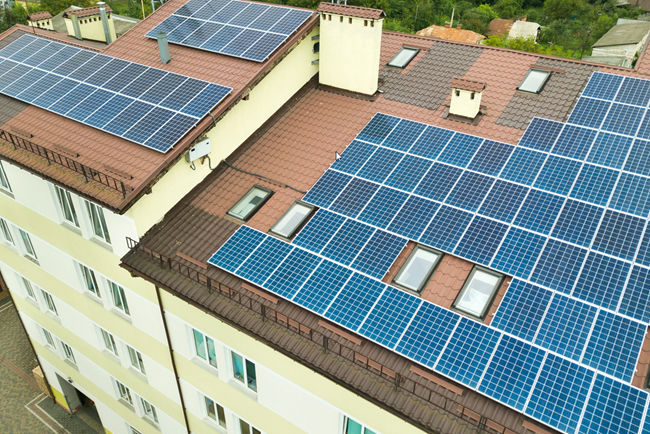
The business case for solar-for-multifamily affordable housing is the best it’s ever been with the Inflation Reduction Act (IRA) and Bipartisan Infrastructure Law (BIL).

Multifamily properties can leverage Solar Photovoltaic (PV) (and energy storage) to cut utility bills and/or bridge financing gaps.

The business case to fund solar for multifamily affordable housing is the best it’s ever been with the Inflation Reduction Act

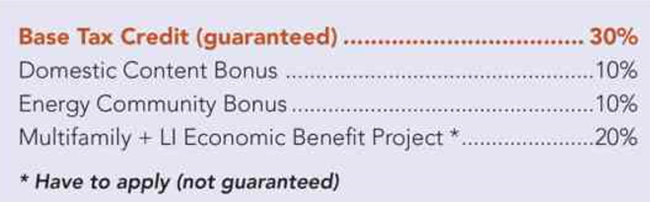
The IRA increases the baseline Solar Investment Tax Credit (ITC) to 30 percent and offers bonus ITC for various conditions.

For example, multifamily properties can receive a 20 percent bonus ITC if they share over 50 percent of utility savings with their tenants. ITCs can be braided with other credits (e.g., Low-Income Housing Tax Credits, 45L, 179D, etc.) and incentives (e.g., utility rebates or Solar Renewable Energy Credits (SRECs)). Further, they can be transferred to third parties and nonprofits can claim them as cash from the U.S. Treasury Department. Though, cashing out is uncommon—it was last done during the American Recovery and Reinvestment Act period—it is a game changer for nonprofits who can cash out the value of ITC (they lose the value of accelerated depreciation but gain full value for ITC). The transferability is also valuable for both nonprofit and for-profit developers since the multifamily property does not have much of a tax liability to monetize the ITC. The ability to ‘sell’ to investors opens solar up for many more properties. The downside is that most ITC investors want volume, not one project, so the aggregation of projects to meet investor volume requirements becomes important.

There is also the possibility of deploying solar using the ~$3.2 billion in funding allocated to the Weatherization Assistance Program (WAP) through the BIL, as, in contrast to standard WAP, these funds allow for solar. Solar is treated like any other efficiency measure and evaluated on the savings-to-investment ratio, and it must meet the average cost-per-unit rules. However, you can only avail yourself of these resources if your state allows multifamily projects.

The business case to fund solar for multifamily affordable housing is the best it’s ever been with the Inflation Reduction Act

So, how does solar save on utility costs and/or help bridge a funding gap?

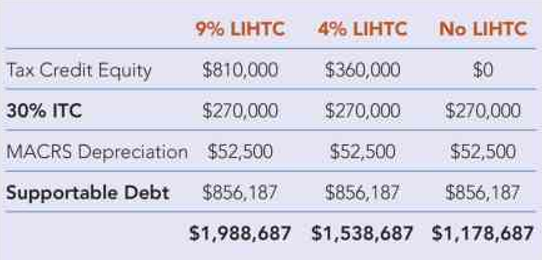
Say you invest $1 million in solar for your multifamily property, it should generate at least $64,000 in utility bill savings, which at a debt-service coverage ratio (DSCR) of 1.15 gives you $55,652 in extra cash for financing, and at a 6.5 percent debt constant, yields $856,187 in additional debt for the project. Additionally, the $1 million solar investment increases the tax basis by $1 million, thus providing ~$810,000 in nine percent LIHTC value (or ~$360,000 in four percent LIHTC value) plus ~$270,000 for the solar 30 percent ITC. Add the modified accelerated cost recovery system (MACRS) depreciation, utility rebates, SREC value and WAP grants, and your solar can be at no cost, plus you get additional debt for your project. Furthermore, you can transfer the tenant’s utility savings into rent through a utility allowance adjustment to support additional debt.

This is all good news, but only if your state allows you to create a shared solar project via community solar law or virtual net metering (VNM). Both allow you to allocate the energy generated from your solar project to your tenants and house meters, without having to create individual solar systems for each meter (besides the higher costs of such a solution, it has other downsides that impact financial viability significantly). And unfortunately, a master-metered property has other issues, such as utility rate structures that impact the viability of solar for those projects. That is to say: the devil is in the details, but again, the business case for solar-for-multifamily affordable housing is the best it’s ever been – especially if you have a LIHTC project or other opportunities to braid the solar ITC with other incentives and are in a solar-friendly state.

The Opportunity to Increase Energy Efficiency in Rentals

Sign Up For Our Newsletter And Get Rental Property And Apartment News And Helpful, Useful Content Each Week.

* indicates required

Multifamily Fundamentals Strong But Mild Recession Predicted

Multifamily fundamentals have been holding up better than expected through the first quarter, but there is still a looming mild recession

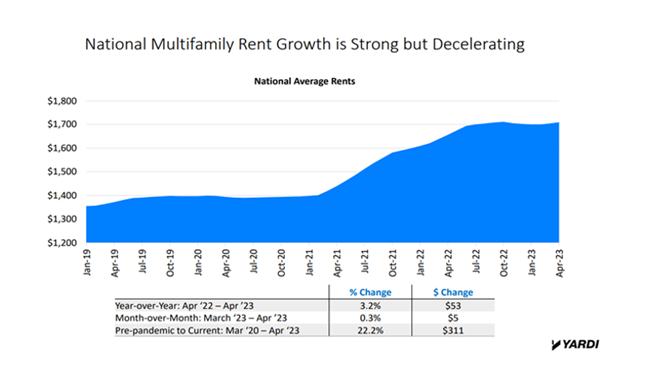
Multifamily fundamentals have been holding up better than expected through the first quarter, but there is still a looming mild recession expected later this year, Yardi Matrix experts explained in a recent Multifamily National Outlook For Spring 2023 webinar.

“Things are quite a bit more nuanced and more variables in play than there have been as we go through this on-going adjustment in this post covid world,” Jeff Adler, Vice President, Yardi Matrix said.

“The current investment environment requires increased creativity to find potential investable opportunities, which Yardi Matrix is designed to do,” said the presenters, Adler and Paul Fiorilla Editorial Director, Yardi Matrix.

Macroeconomic Update

  • U.S. economic growth slowed in the first quarter, with GDP growth falling to 1.1 percent, further deceleration to come.
  • The Fed is still in a tightening cycle, but will slow the pace of rate increases soon, as there is a less than one-year lag to actions
  • Inflationary pressures have started to cool, but remain elevated due to underlying price pressures
  • De-globalization continues
  • The SVB/Signature/Credit Suisse/First Republic banking crisis is a natural consequence of financial tightening.
  • The labor market is tight, but showing signs of weakness at the upper end, w/ no consensus on immigration policy.
  • U.S. economy is slowing, yield curve (10 year- three month) is inverted, mild recession very likely in second half of 2023.

How Does Multifamily Fit into This?

  • Multifamily fundamentals have been strong, but we expect deceleration within a seasonal uptick.
  • Market rotation occurring, with rent-by-necessity less impacted by new supply.
  • Affordability is still a key concern, with little political will to resolve and significantly more regulatory risk.
  • Demographic trends will keep the labor market tight, and entrenchment of hybrid work has tilted consumer budgets toward housing.
  • Construction financing is in short supply, and deliveries could be significantly reduced in 2025.
  • The supply shortage of U.S. housing is likely to last 5-10 years, supporting continued rent growth and capital appreciation.
  • The bid/ask spread for acquisitions remains very wide, with initial pre-distress and distress emerging.
  • Transactions have, and will, slow over the next 18 months until inflation moderates and interest rates come down.

Multifamily Outlook Highlights

Yardi Matrix says multifamily rent growth, occupancy, demand remain strong, but less than 2021 and 2022 as “deceleration” occurs.

Reasons for rent deceleration:

No. 1 – Post-pandemic migration is slowing, but a major reset has occurred

  • Return to “normal” migration to Sunbelt markets, i.e. Southeast, FL, TX, Mountain West
  • Intra-state migration slowing to secondary metros such as Sacramento, Inland Empire
  • Resort Towns will remain beneficiaries of the 20 percent of office employees fully remote
  • Gateway rebound led by young workers, retirees, immigrants
  • “Work from Office” varies by industry and function, but hybrid dominates
  • Growth highest in suburbs of major markets

No. 2 – Household growth is slowing

  • 2020/21 boom in households from job, wage growth, stimulus and pent-up demand
  • Job growth slowing, consumer excess savings ebbing from $2.7 trillion peak, now ~$1T

No. 3Supply growth, especially in high-demand metros in Texas, Southeast

  • 1 million units U/C nationally, but starts are waning as financing dries up
  • 400,000 to 450,000 deliveries in 2023-24, slowdown in following years

See the full report from Yardi Matrix here.

About Yardi Matrix

Yardi Matrix researches and reports on multifamily, office and self-storage properties across the United States, serving the needs of a variety of industry professionals. Yardi Matrix Multifamily provides accurate data on 18+ million units, covering more than 90 percent of the U.S. population. Contact the company at (480) 663-1149.