
Home Blog Page 44

New Programs and Oregon’s Archaic Landlord-Tenant Act

How new programs marketed to tenants by landlords must fit into Oregon's archaic landlord-tenant act as either rent, utilities or fees.

How new programs marketed to tenants by landlords must fit into Oregon’s archaic landlord-tenant act as either rent, utilities or fees.

By Bradley S. Kraus
Warren Allen, LLP

Given the changing dynamics between landlords and tenants, I often hear of new, exciting programs presented to my clients. The moment I hear about these programs, the wheels begin to spin, analyzing what exposure, if any, these programs present for my clients.

The Oregon Residential Landlord and Tenant Act governs landlord-tenant relationships in the state of Oregon. Enacted in the 1970s, this body of law has failed to catch up to the times regarding many issues or interactions between landlords and their tenants. As such, many new and innovative approaches to certain landlord/tenant interactions are challenging to enact without risk, given the archaic nature of this body of law. It is, unfortunately, within that archaic body of laws, that any new programs must be analyzed.

There are only three types of recurring charges recognized by the ORLTA: rent, utilities, and fees. Each has a statutory definition under the ORLTA. Any charges a landlord imposes on a tenant must fit within—and comply with the requirements of—one of those particular statutes. Many companies trying to market products for Oregon landlords have products which either (a) do not fit into one of these three categories, and/or (b) require the landlord to charge tenants illegal fees. That makes them problematic, presenting potential exposure for landlords.

What can be classified as rent?

Whether something can be classified as “rent” is the first—and easiest—portion of the analytical discussion.

If something is not “rent,” it must be either a utility—and be properly billed as such—or comply with the fee statute.

What can be classified as a utility?

A utility or service under ORS 90.315 is defined as “include[ing], but is not limited to electricity, natural or liquid propane gas, oil, water, hot water, heat, air conditioning, cable television, direct satellite or other video subscription services, Internet access or usage, sewer service, public services and garbage collection and disposal. Many services offered by out-of-state companies do not neatly fit into this definition. Even if they do, and the landlord wishes to charge back any costs to the tenant, there are required monthly billing disclosures that present additional hurdles.

What can be classified as a fee?

If any such charge is not “rent” or a “utility,” then it must be a “fee.”

The fee statute, ORS 90.302, strictly defines the fees for which a landlord can charge. This list is exclusive; if the fee is not listed in ORS 90.302 (and it is not rent or a utility), the landlord cannot charge for the same. Common examples I see are things like “notice-service fees” or “month-to-month fees.” Such fees are illegal in Oregon. Similarly, if a company provides a service that requires you to pass along a fee of some kind to your tenant, such a fee is likely illegal, and should give you pause.

As landlords continue their attempts to provide better customer service and amenities to their tenants, there will always be companies marketing new and exciting services. Those companies will try their hardest to sell you on their products. As landlords, do not fall for the “shiny red ball” trick. Carefully analyze any such services with your attorney. The potential exposure for any missteps can be costly.

How new programs marketed to tenants by landlords must fit into Oregon's archaic landlord-tenant act as either rent, utilities or fees.
Brad Kraus

About the author:

Bradley S. Kraus is an attorney and partner at Warren Allen LLP. His primary practice area is landlord/tenant law, but he also assists clients with various litigation matters, probate matters, real estate disputes, and family law matters. You can reach him at [email protected] or at 503-255-8795.


Portland Update: Changes to FAIR Ordinance Bring (Some) Necessary Changes

Dealing with Habitability issues and Substitute Housing



Multifamily Shows Good Early Rent Gains In 2024

The multifamily market produced encouraging rent gains in March, its strongest performance in 20 months, writes Yardi Matrix.

The multifamily market produced encouraging rent gains in March, its strongest performance in 20 months, writes Yardi Matrix in the March Multifamily Report.

“The market appears to be settling into normal seasonal patterns, as demand is holding up despite challenges posed by the economy and heavy supply growth in the Sun Belt,” the report says.

Normal seasonal patterns appear to be returning

The report says there should be some “level of comfort” now for many who had been worried about the multifamily sector’s performance in 2024.

“It appears that normal seasonal patterns are returning after several years of unconventional performance that started with the pandemic lockdowns in the spring of 2020,” Yardi Matrix says in the report. Rents are also rising, even in markets with lots of new apartments coming online, the report says.

Highlights of the report

  • S. multifamily rents in March recorded their largest gain in 20 months, signaling a normal seasonal growth pattern. The average U.S. asking rent rose $8 during the month to $1,721, while year-over-year growth increased by 30 basis points to 0.9%.
  • While 13 of the metros in the Matrix top 30 have had negative rent growth over the past year, the situation is improving. Only four metros recorded negative rent growth over the first quarter and only two were negative in March.
  • Single-family rents also had a good month, increasing by $9 in March to $2,144. However, the year-over-year growth rate fell 20 basis points to 1.2%. Similar to multifamily, high-supply markets including Austin, Orlando, Phoenix and Dallas, have seen rent growth soften.

Conclusion

“While one month of data doesn’t constitute a trend and rent growth likely will remain constrained due to affordability and new supply, the tone early in 2024 is encouraging,” the report says.

Read the full report here.

Insurance Leads Rising Rental Property Expenses

Have You Ever Had To Evict A Dog?

have you ever evicted a dog and do landlords know the facts about emotional support animals and service animals
Pictured, our dog Lolo.  We rescued this sweet Husky Terrier mix.  When my daughter needed her most, she was there.  She also tried to pick a fight with every dog in the neighborhood and thus spent most of her pampered life in the backyard.

Have you ever had to evict a dog brings to mind the acts that landlords need to be aware of when accommodating emotional support and service animals.

By Lance Anderson

Insurance companies and dogs generally don’t go together well.   Dogs bite people.  It’s the easiest $40,000 someone will ever get. That’s correct, the average dog-bite settlement is $40,000.  We lose sleep over tenants’ dogs biting people and the ensuing legal papers that are sure to follow.

When I was a young landlord, after serving all the legal RHA Utah | Rental Association of Utah Home notices, I asked Animal Control to meet me and ensure a conflict-free eviction of three pit bulls. When I arrived, animal control was there, but the pit bulls were gone. Conflict adverted and problem solved.

Have you ever had to evict a dog?

On another occasion, I stopped by a rental home to collect rent and was greeted by a German shepherd. When I asked the tenant about the new dog, they informed me that their daughter’s apartment didn’t allow dogs. I just stood there for a minute … if the apartment building does not allow a German shepherd, what makes you think I would want one on my property?  I went back to my office for the correct RHA form, returned and posted it, and the dog found a new home.

Times have changed and landlords must be aware of and follow the Utah Fair Housing Act & the Federal Fair Housing Act, which encourage and require landlords to accommodate people who have disabilities.  An Emotional Support Animal – ESA – or Service Animal may help with those disabilities.

Here are a few facts for landlords to be aware of when accommodating Emotional Support and Service Animals:

  • There must be a demonstrable relationship between the individual’s disability and the assistance the animal provides.
  • A landlord is entitled to verify the existence of the individual’s disability as well as the need for an assistance animal as an accommodation for that disability.
  • An individual proposing an assistance animal as an accommodation for a disability may be required to provide documentation from a psychiatrist, physician or other qualified healthcare professional.
  • It appears to be quite easy to obtain an ESA letter or documentation by filling out a few forms online.
  • ESAs are not subject to a landlord’s size or breed restrictions.
  • A landlord cannot charge additional rent or deposit for an ESA or Service Animal.
  • The tenant is responsible for any damage caused by the ESA or Service Animal.
  • A landlord can (and should) ask for proof of insurance for your service animal.  Are You Requiring Renters Insurance? | Anderson Insurance Group
  • If the ESA is an aggressive dog breed, make sure the renter’s insurance does not exclude coverage for aggressive breeds or an animal liability sub-limit.

The rights of renters with ESAs are clear, and landlords must and should accommodate them as long as it is reasonable.

Many landlords’ policies do not cover liability from a dog bite or exclude certain breeds. The best way a landlord can protect themselves is to 1) require renters’ insurance.  And, 2) make sure their landlord’s insurance includes Personal Injury coverage. Personal Injury can cover such things as discrimination and wrongful eviction and is an added endorsement every landlord’s policy should include.

For the most comprehensive landlord insurance coverage, call Andres Dominguez or Lance Anderson at Anderson Insurance Group today.

About the author:

Lance Anderson is the owner and CEO of Anderson Insurance Group and has been an insurance agent for more than 25 years. He attended BYU and later graduated from the University of Utah with a Bachelor of Arts degree in Interpersonal Communications. He and his wife and family live in Draper, Utah.

Sign Up For Our Weekly Newsletter And Get Rental Property And Apartment News And Helpful, Useful Content Each Week.

* indicates required

Flexible Financing for Green Projects

The TBL fund can help with flexible financing for green products and clean energy projects for your low-income multifamily housing property

ICAST’s affiliated organization, TBL Fund, recently received an award from the U.S. Dept. of Energy (DOE) for deploying innovative decarbonization financing solutions that go beyond current market practices. If you require a Bridge Loan or other financial assistance to cover the construction expenses of your solar and storage, beneficial electrification, or other clean energy project for your low-income multifamily housing property—TBL Fund can help.

TBL(Triple Bottom Line) Fund is a 501c3 nonprofit Community Development Financial Institution (CDFI) that provides funding and technical assistance for clean energy deployment in multifamily affordable housing (MFAH) and disadvantaged communities (DACs). It leverages its market expertise to develop custom financing solutions, including:

  • Power Purchase Agreements
  • Energy Performance Contracts
  • Bridge Financing
  • Energy-as-a-Service
  • Property Assessed Clean Energy
  • Debt
  • Tax Equity

Nationwide, there is a lack of financiers who understand energy financing (vs. traditional debt), which disproportionately impacts MFAH—a historically underserved market.

However, TBL Fund is a national leader in crafting innovative financing solutions for this segment, evidenced by its recognition as a “Climate Finance Innovator” through DOE’s Better Buildings Challenge. Further, it is enhancing its existing offerings by exploring the many opportunities through the Bipartisan Infrastructure Law and Inflation Reduction Act, signed into law in 2021 and 2022, respectively.

TBL Fund is determining how to braid its products with financial resources such as the expanded solar and storage Investment Tax Credit, the DOE’s new Home Energy Rebate Program funds, the Environmental Protection Agency’s Greenhouse Gas Reduction Fund, and others. It recently started offering bridge financing so that its clients could get their projects off the ground and repay the loans once the various federal incentives were paid to the project.

Learn more about TBL Fund and its work with ICAST here.

About ICAST
ICAST is a 501c3 nonprofit with a history of designing, launching, managing, and scaling programs to benefit underserved communities. Its focus is delivering clean energy upgrades to low- and moderate-income households living in MFAH and DACs.

Green Retrofits for Cost Savings and Resiliency

Attracting Federal Investment to Multifamily Housing

Race Against Time: Seizing an Unprecedented Opportunity for Affordable Housing

Planning for Funding Opportunities Through the Inflation Reduction Act and Bipartisan Infrastructure Law

Accessing Solar for Multifamily Affordable Housing

Accessing Utah’s Home Energy Rebate Programs

Tenant Refuses To Return Keys After Leaving My Rental

What should you as a landlord do if a tenant refuses to return keys after leaving your rental property is the question this week.

What should you do if a tenant refuses to return keys after leaving your rental property is the question this week for Ask Landlord Hank. Remember Hank is not an attorney and is not offering legal advice. If you have a question for him please fill out his form below.

Dear Landlord Hank:

My tenant is leaving before lease is up and he is refused to give me my house keys what do I do?

-Shari

Dear Landlady Shari,

I’d ask the tenant via email or text so you have something in writing when he is leaving.

Then on that day, I’d go to the property after he has left and do an exit walk through where you assess the condition of the property to see if there is any tenant caused damage or issues.

Then since he is refusing to turn in the keys, I’d change the locks. I suggest you contact an attorney that specializes in landlord tenant law in your area first.

Good luck!

Sincerely, Hank Rossi

Each week I answer questions from landlords and property managers across the country in my “Dear Landlord Hank” blog in the digital magazine Rental Housing Journal.  https://rentalhousingjournal.com/asklandlordhank/

What should you as a landlord do if a tenant refuses to return keys after leaving your rental property is the question this week.
On dealing with the key issues Landlord Hank says, “I suggest you contact an attorney that specializes in landlord tenant law in your area first.”

Ask Landlord Hank Your Question

Ask veteran landlord and property manager Hank Rossi your questions from tenant screening to leases to pets and more! He provides answers each week to landlords.

  • This field is for validation purposes and should be left unchanged.

Do I Have to Paint and Replace Flooring for a Long-Term Tenant?

A Tenant Poured Grease Down Drain Who Is Responsible?

Sign Up For Our Newsletter And Get Rental Housing And Apartment News And Helpful, Useful Content Each Week.

* indicates required

For Many, The Modern American Dream Involves Renting

More and more Americans are renters by choice as the modern American Dream involves renting rather than the desire to own a home.

More and more Americans are renters by choice as the modern American Dream involves renting rather than the desire to own a home.

By Virginia Love

While the American Dream might have included various components throughout the decades, one constant was the desire to own a home. For modern dreamers, however, that isn’t necessarily the case.

According to The New American Dream Report recently released by the property software management company Entrata, 41% of renters claim their American Dream has nothing to do with homeownership. In fact, 20% anticipate being lifelong renters, which represents a 33% increase from 2021.

The causes for this paradigm shift are wide-ranging, but it certainly includes the idea that skyrocketing home prices have made homeownership an unattractive option for many—even for those who can afford to take the plunge. In addition to the long-term financial commitment, property upkeep, taxes and insurance are stressors that can be avoided by renting. The report, based on a survey of 2,000 renters conducted in January, found that 23% of respondents enjoy the location flexibility provided by renting and 17% like the financial flexibility of not being tied to a mortgage.

Additionally, renting no longer carries the negative stigma of the past, when it was largely perceived as a necessity-based alternative for those who couldn’t afford a single-family home. The term “renter by choice” is more common in current times, particularly with a wide range of available rental homes with attractive amenities and an increased supply of single-family build-to-rent homes.

When you consider the price and commitment components of homeownership, contrasted with the convenience-based factors of renting, it helps underscore why homeownership is not as much of a standardized American goal as in the past. According to the study, 66% of renters say renting fits their current lifestyle more than homeownership.

Essentially, experiences and flexibility have become greater priorities to the modern American.

Preference a more prominent factor than money

 Some might make the counterpoint that it’s easy for someone to dismiss homeownership as a priority when it isn’t financially feasible.

But the perception that renters are too young or financially unequipped to purchase a home has become something of an outdated generalization. The study shows that 33% of renters say they could afford a home that meets their needs, but ownership doesn’t necessarily fit into their current lifestyle. Additionally, 25% of renters with credit scores 750 and above—those who could easily qualify for a home—never want to stop renting.

For many, renting also serves as a key component to their career paths. According to the study, 65% of renters are happy with the direction of their career and 35% believe being a renter gives them more career opportunities than being a homeowner. Additionally, a robust 63% of renters indicated that they have a similar or better quality of life than their parents at a similar age.

Other financial priorities

 The traditional notion of “I need to save to buy a house” doesn’t apply to many, as a sizable contingent of younger Americans are earmarking their funds for other financial priorities.

More than half of those surveyed (56%) say they’re currently prioritizing paying off debts rather than saving, and 43% prefer to have their savings in investments and retirement strategies rather than real estate, because they are easier to liquidate.

While homeownership does build equity where renting does not, the concept of having all of one’s income dedicated to a house is becoming an old-school thought process. Some renters are looking even further down the line with their funds, as 36% of renters prefer to invest in retirement as opposed to saving for a home.

For the majority of respondents, any discretionary money is dedicated to activities such as dining, travel and entertainment, such as concerts and sporting events. A sizable 74% indicate that they designate any extra funds toward these types of experiences. Nearly half of respondents—46%—say they have the financial means to pursue their hobbies.

Non-monetary benefits of renting

 While renting might often be more cost-effective than homeownership, many Americans also enjoy the social aspects of being part of an apartment community.

Renters also have the ability to use a property’s common areas to host their own visitors, which for many, is preferable to having a backyard.

Forty percent of renters have utilized a property’s communal spaces for social gatherings, and approximately one-third (34%) indicate that their friends or family visit at least once per month.

More than half of respondents (51%) say they enjoy the community aspect of renting, and many have fostered meaningful connections with their neighbors. To that end, 67% of renters have helped neighbors at their properties while 61% have had neighbors assist them.

In summation, homeownership no longer qualifies as a primary measure of success or fulfillment for many of today’s Americans—particularly younger generations. While a certain percentage of people will always be renters by default due to their financial situation, more and more Americans are renters by choice. That’s because flexibility, experiences and other financial priorities are increasingly more compelling than homeownership to many.

About the author:

More and more Americans are renters by choice as the modern American Dream involves renting rather than the desire to own a home.
Virginia Love

Virginia Love joined Entrata in 2019 as an industry principal. She is directly involved with marketing, product, and sales as a liaison from the industry to these departments. With nearly three decades of industry experience, Love has served on numerous multifamily committees and boards for industry organizations including the Atlanta Apartment Association, Georgia Apartment Association, National Apartment Association, National Multifamily Housing Council and Zillow Multifamily Advisory Board. She is a National Apartment Association Lyceum graduate.

Landlord To Pay $185,000 to Settle Sexual Harassment Lawsuit

A landlord sexual harassment agreement has been reached to pay $185,000 to settle a sexual harassment lawsuit the Justice Department says

A Michigan landlord, Mohamad Hussein, has agreed to pay $185,000 in damages and a civil penalty to the government to resolve the Fair Housing Act (FHA) lawsuit concerning Hussein’s sexual harassment of actual and prospective female tenants, according to a release from the U.S. Department of Justice.

Hussein has owned and managed more than 15 rental properties in and around Dearborn Heights, Michigan, since 2013.

The Justice Department said Hussein will pay $185,000 in damages to eight former and prospective female tenants harmed by the harassment and a civil penalty to the United States under the terms of the proposed consent decree, approved  by the U.S. District Court for the Eastern District of Michigan.

“Hussein will be required to take steps to vacate any retaliatory eviction judgments obtained against these tenants. He will be permanently enjoined from personally managing rental properties in the future and will be required to retain an independent property manager to manage any rental properties he owns.

“Finally, the consent decree will require Hussein to implement non-discrimination policies and complaint procedures to prevent sexual harassment at his properties in the future and to take fair-housing training,” according to the release.

The complaint alleges that Hussein made unwelcome sexual comments and advances, and offered actual and prospective female tenants housing-related benefits in exchange for engaging in sex acts with him or sending him sexually explicit images. According to the complaint, many of these instances took place in the spring of 2020, during the first wave of the COVID-19 pandemic, when it was difficult to secure housing in Michigan. The complaint also alleges that Hussein sent sexually explicit images of himself to prospective female tenants.

“No one should be denied the right to housing because they refuse to submit to a landlord’s sexual demands,” said Assistant Attorney General Kristen Clarke of the Justice Department’s Civil Rights Division. “The Justice Department is committed to vigorously enforcing the Fair Housing Act and seeking justice for those sexually harassed by landlords and other housing providers.”

Landlords Ordered To Pay $500,000 In Damages in Sexual Harassment Lawsuit

Sign Up For Our Weekly Newsletter And Get Rental Property And Apartment News And Helpful, Useful Content Each Week.

* indicates required

Upstairs Tenants Complaining About Downstairs Tenants: What Do I Do?

Dealing with tenants complaining about other tenants is a problem many landlords have and that is the question this week

Dealing with tenants complaining about other tenants is a problem many landlords have and that is the question this week for Ask Landlord Hank. Remember Hank is not an attorney and he is not offering legal advice. If you have a question for him please fill out the form below.

Dear Landlord Hank,

I have a question about two tenants.

I have a home I created into an Internal Accessory Dwelling Unit for another tenant to rent the bottom. The downstairs tenants complain about the noise that the upstairs tenants constantly make, and they complain about the car parking, although the contract specifically states the parking arrangement.

The upstairs tenants complain about the downstairs tenants always fighting and shutting doors.

What do I do in this situation? Do I talk to them in person or do it in writing? Thank you, — Agueda

Hi, Agueda,

Multi-family living is all about compromise, and sometimes messy situations.

If the floors and wall are standard wood construction, then soundproofing is usually an issue. I’d arrange a meeting with both tenants at the same time and talk about all the issues they are having and get everyone on the same page.

I’d also send the agreement to each one via email so you have written confirmation of the understanding. Some folks refuse to keep music down, etc. and I’d ask those folks to move if they can’t be considerate of their neighbors. Also, if you don’t have carpeting upstairs, maybe some throw rugs would dampen the noise. Good luck!
Sincerely,

Sincerely,

Hank Rossi

Each week I answer questions from landlords and property managers across the country in my “Dear Landlord Hank” blog in the digital magazine Rental Housing Journal.   

Realtor lease renewal payments is a topic that comes up often with landlords, and is the question this week for Hank Rossi, Landlord Hank
Landlord Hank says about tenants complaining, “Multifamily living is all about compromise, and sometimes messy situations.”

Ask Landlord Hank Your Question

Ask veteran landlord and property manager Hank Rossi your questions from tenant screening to leases to pets and more! He provides answers each week to landlords.

  • This field is for validation purposes and should be left unchanged.

Do I Have to Paint and Replace Flooring for a Long-Term Tenant?

Sign Up For Our Newsletter And Get Rental Housing And Apartment News And Helpful, Useful Content Each Week.

* indicates required

Who’s Responsible For Smoke Detector Batteries In Rentals?

Tenant Refuses To Return Keys After Leaving My Rental

A Tenant Poured Grease Down Drain Who Is Responsible?


A tenant poured grease down the kitchen sink so who is responsible for the plumbing repair is the question this week for Ask Landlord Hank.
Photo credit SeventyFour via istockphoto

Top photo credit Srdjanns74 via istockphoto

How To Avoid The Pitfalls Of Centralizing Multifamily Operations

How to avoid the pitfalls of centralizing multifamily operations involves putting in place strategies to keep some personal touch

How to avoid the pitfalls of centralizing multifamily operations involves putting in place strategies to keep some personal touch in place plus risk mitigation.

By Mike Branam

 Multifamily property managers are increasingly turning to centralization as a way of streamlining operations and improving efficiency.

By adopting property management software (PMS) or cloud-based platforms, multifamily managers can easily and quickly centralize operations. Whole portfolios can be managed from one interface, procedures can be standardized, purchasing power increased and valuable data insights gained to inform business decisions.

Consolidating operations into one unified system offers many benefits to property managers, but the potential disadvantages to centralization need to be considered too, with strategies put in place to mitigate the pitfalls.

Preserving personalization

One of the most detrimental effects of centralization can be the loss of the “personal touch” for residents, as reduced staffing levels within multifamily buildings decreases face-to-face engagement.

This lack of personal interaction can negatively affect resident satisfaction, potentially affecting renewal rates.

To overcome this, property managers should find innovative ways to maintain a sense of community and connection. Virtual check-ins, community apps and personalized services can all help to bridge the gap. Organizing community events and leveraging social media for engagement can also encourage a sense of belonging among residents.

 Risk mitigation

Centralization often results in fewer onsite personnel and, while this is cost-effective, it can lead to significant risk.

The absence of full-time staff might delay the response to emergencies, such as water leaks or security breaches, so a risk-mitigation strategy is essential to overcome this problem.

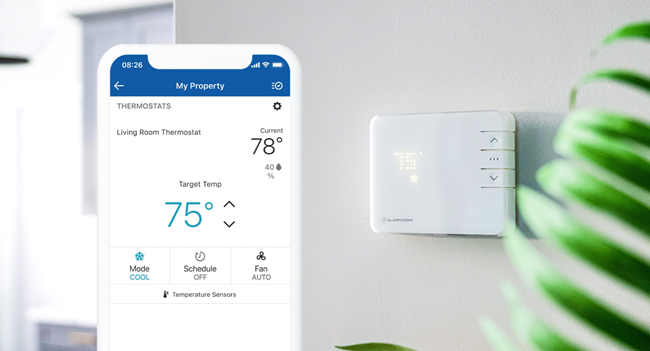
Advanced monitoring systems, such as smart water-management solutions and access-management systems, provide real-time alerts to centralized property management teams, enabling a quick response even in the absence of onsite staff. The adoption of this property technology  in multifamily properties not only tackles immediate risk but safeguards both assets and resident well-being.

Asset protection: enhancing security and awareness

The shift to entirely remote management and the removal of teams within properties can catch the attention of bad actors, posing a heightened risk to multifamily properties.

The perception or reality of reduced onsite presence can make properties more attractive targets for criminal activity. To combat this, multifamily properties should adopt increased security measures, such as video perimeter-surveillance systems, video doorbells and access-control technologies. Educating residents about security practices and encouraging a community-watch approach can also boost these efforts, creating a safer environment for all.

A balanced approach

To successfully implement a centralized property management system, multifamily property managers must balance the operational benefits with the need for risk mitigation, the resident experience, and asset protection.

These goals can be achieved through strategic planning, investment in smart technology, and by maintaining the human element of property management. Using a phased approach when adopting centralization allows for adjustments based on resident feedback, ensuring a smooth transition.

By strategically moving towards centralization, property managers can significantly benefit from improved operational efficiency and nurture vibrant communities in multifamily buildings, while safeguarding assets to create an enjoyable multifamily environment for residents.

 About the author:

How to avoid the pitfalls of centralizing multifamily operations involves putting in place strategies to keep some personal touch
Mike Branam

Mike Branam is the director of multifamily sales at PointCentral, a property-automation platform for apartment owners and operators. PointCentral is a wholly owned subsidiary of Alarm.com, the leading platform for the intelligently connected property. www.pointcentral.com


Sign Up For Our Weekly Newsletter And Get Rental Property And Apartment News And Helpful, Useful Content Each Week.

* indicates required

Salt Lake City Rents Up Slightly In March

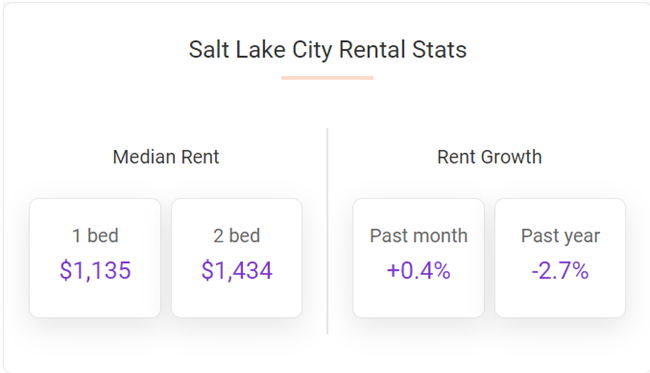
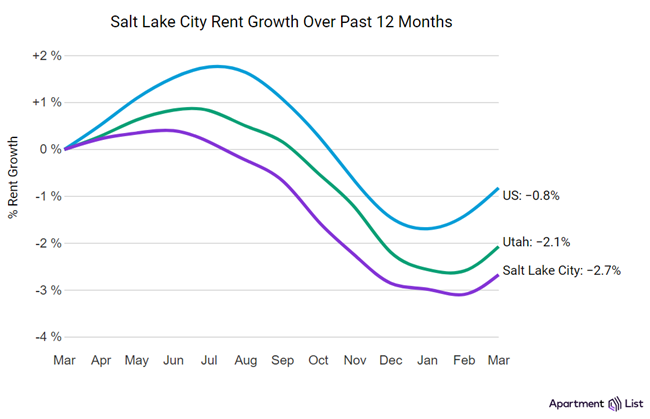
The median rent in Salt Lake City rose by 0.4% over the course of March, as Salt Lake City rent growth in 2024 is pacing similar to last year

The median rent in Salt Lake City rose by 0.4% over the course of March, as Salt Lake City rent growth in 2024 is pacing similar to last year, according to the Apartment List April report.

However overall rents in the city are down 2.7% year-over-year and are 12.1% lower than the metro-wide median.

The median rent in Salt Lake City rose by 0.4% over the course of March, as Salt Lake City rent growth in 2024 is pacing similar to last year

Across the metro, the median rent is $1,492 meaning that the median price in the city proper ($1,312) is 12.1% lower than the price across the metro as a whole. Metro-wide annual rent growth stands at -2.2%, above the rate of rent growth within just the city.

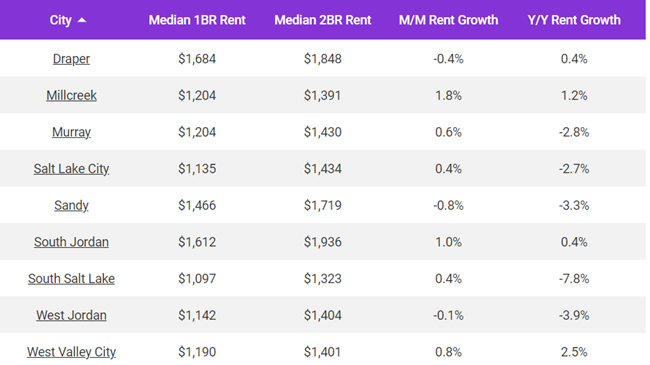
The table below shows the latest rent stats for 9 cities in the Salt Lake City metro area that are included in the Apartment List database.

Among them, Draper is currently the most expensive, with a median rent of $1,904. South Salt Lake is the metro’s most affordable city, with a median rent of $1,256. The metro’s fastest annual rent growth is occurring in West Valley City (2.5%) while the slowest is in South Salt Lake (-7.9%).

The median rent in Salt Lake City rose by 0.4% over the course of March, as Salt Lake City rent growth in 2024 is pacing similar to last year


Read the full report here.