
Home Blog Page 43

Using A Code Word Helps You Get the Right Tenant

Using A Code Word Helps You Get the Right Tenant

A veteran landlord shares one of the best methods for helping you find the perfect tenant for your property using a code word.

By Scot Aubrey

With summer just around the corner, I look forward to slipping on my waders, stepping into a river, and casting my fly rod in search of that trophy fish. But before I do, I always go through a list of things to prepare me for success. I check the local regulations and consult the local guides and experts to see where the fish are and what they are biting. Armed with this knowledge, it is left up to me to identify the specific fish (usually German brown or rainbow trout) I want to cast to and catch.

Landlords across the country are going to be facing a similar situation this summer, as the eviction moratorium looks to be ending soon. You will be casting into an ever-expanding pool of potential tenants and, as a landlord, you want a tenant that wants your house, not just any house. A tenant who just wants any house, in a year when the lease is up, will be ready for any another house. A tenant who wants your house will become a valuable business partner and stay there for years.

One of the best methods for helping you find the perfect tenant for your property sounds mysterious but is quite simple and straightforward: a code word, which might be a specific word or phrase you place in your listings that you request they use when they respond to your listing. With the increased number of online rental platforms available to you, using a code word in your listings will help you in the following ways:

Using A Code Word Helps You Get the Right Tenant

WHAT IS A CODE WORD?

Your code word should be something that you use to emphasize specific features or requirements of your property. They may include things like the property characteristics, availability date, smoking policy, length of lease, or anything else you want to highlight as being important to you. A word of caution: Avoid any words or phrasing that would indicate discrimination or violation of protected classes. A phrase like “Please acknowledge in your showing request that you understand this property does not allow pets” is a perfect example of a code word.

WHERE DO I PLACE A CODE WORD?

David Pickron, president of Rent Perfect, discussed this at length on a recent podcast. He advises that landlords place their code word in one of the last two sentences of the listing to find candidates who are responsible enough to read the entire listing, and not just hit “apply” to every possible property that comes across their view.

When fishing, it is critical to present your fly to the fish you are trying to catch, otherwise you are just fishing water. By having the right fly presented in the right way to attract the attention of the fish, you exponentially increase the odds of attracting the fish you want to catch. The same reasoning applies as you are trying to identify a responsible, attentive tenant for your property. If you have a potential tenant that reads an entire listing and sees your code word that says, “I will not respond to your request to view the property unless you acknowledge that this property is not available until July 1.” When 20 potential tenants request a showing of the property and only two of them respond with the required code word/phrase, I am only going to show the property to those two people. This attention to detail from a tenant signals that they will also read the entire lease and understand the relationship we are creating, which saves me a lot of time in showing the property to the 18 other people who would be happy with any property.

A CODE WORD SAVES YOU TIME: Whether you are a full-time landlord or have a single property, time equals money, and showing the property and reviewing applications can be extremely time-consuming. Using a code word is just one way to pre-screen applicants and free your time up for those individuals who are truly interested specifically in your property. With several of the rental-property platforms in the market today, an applicant can pay a monthly fee and submit their application as many times as they want to as many properties as they want. If you’ve ever found yourself responding to an applicant inquiry only to have the applicant ask, “now, which property is yours,” chances are they have applied all over town and will take any property that comes along. This person doesn’t want your house, they want a house, and they are not the business partner you are looking to have for the next five years.

Imagine how frustrated you would be if you planned a trip to catch cutthroat trout and showed up only to find that in addition to trout, the game warden had also stocked catfish, carp and bluegill. In the next few months, the places we go to find potential tenants will be flooded with all sorts of applicants, and likely many of them will have been recently evicted. By using a code word, along with the other tools we train on, you can make sure that the tenant you put into your property is the business partner worth $120,000 that you are fishing for.

About the author:

Scot Aubrey is vice-president of Rent Perfect, a private investigator, and a fellow landlord who manages short-term rentals.  Subscribe to the weekly Rent Perfect podcast to stay up to date on the latest industry news and to get expert tips on how to manage your properties.

Don’t Let Rental Criteria Be Your Kryptonite

Sign Up For Our Newsletter And Get Apartment News And Helpful, Useful Content Each Week.

* indicates required


Do You Know The 5 Questions Landlord Hank Asks Tenants When They Call?

Renting during the moratorium ask Landlord Hank

Ask Landlord Hank is done each week by veteran landlord and property manager Hank Rossi who takes on questions each week from landlords and property managers. Remember Hank is not an attorney and cannot answer legal questions.

His goal is to help educate fellow landlords and property managers on issues he has seen in his 30 years in the business.

This week the question from a property manager is about what questions you ask when the tenant first calls?

Dear Landlord Hank: What is the first question you ask?

Question: You have received your first inquiry regarding your rental property, via phone or email. What do you ask someone inquiring for information about your property and why, when they first contact you? Hank’s Answer: Even though you may have put an ad on the internet loaded with details and photos, someone may have seen a sign for your property or heard about the unit through a friend or current resident.

No. 1 – So my first question is, “How do you know about our property”?

If the prospective tenant says they saw an ad, then most of their questions will have been answered in the ad.

If they haven’t seen an ad I do a brief description of the unit and development.

No. 2 – My second question then is, “When do you need to begin a lease?”

If someone wants to rent a currently available unit NOW, then you may have a candidate. If prospective tenant’s current lease isn’t up for six months, then your immediately available unit will be long gone. If you have multiple units, perhaps another down the road could work for this prospect.

No. 3 – My third question is, “Do you have any other questions?

Answer any specific questions related to the property so prospective tenant can determine if they would like to move forward to a tour.

No. 4 – This is really a series of questions

These relate to determining if you as a landlord could want this prospect as a tenant.

    • For instance, if your community doesn’t accept pets you could ask, “Do you have pets?” If you do accept pets, you’ll need that information as well, as prospective tenant could have a pack of pit bulls.
    • Next I want to know how many individuals will be in the unit. We don’t want two families sharing a unit, etc.
    • By now, you will have built up some rapport with prospective tenant and you could ask, “Is there anything else you would like to tell me?
    • Maybe you’ll find out that the prospective tenant had an unreasonable landlord. Or maybe they will say, “We just lost our house!” Or, maybe the prospective tenant has a legitimate complaint about their current property. There could be issues around poor maintenance history, poor management, unpleasant living conditions such as noisy neighbors, barking dogs, a messy complex, parking problems, etc.

No. 5 – If I consider this prospect a potential tenant then I ask, “When would you like to tour the property?”

The sooner the better so you can begin the process of vetting the tenant and renew the income stream from this unit.

Ask Landlord Hank Your Question

Ask veteran landlord and property manager Hank Rossi your questions from tenant screening to leases to pets and more! He provides answers each week to landlords.

  • This field is for validation purposes and should be left unchanged.

A few final thoughts:

You as a landlord spent time and money to develop this lead. So treat this prospective tenant with respect, kindness and honesty just like you’d want someone to treat you. This prospective tenant could spend much of their life in your rental as a great tenant, but you never know.

    • If you have a chance to see tenant’s car, take a look. Often one’s car care will reflect the living situation. If they open the car door and trash falls out or the muffler is held up with a coat hanger, you’ll have a feeling about this prospective tenant. Hopefully they drive up in a well-kept auto.
    • Also, notice and evaluate the prospects themselves. Do they reek of smoke and are seeking to rent a “no smoking” unit, etc?
    • Lastly, never take a tenant because either you or they are desperate. If a tenant doesn’t make the grade and have the required funds your guidelines require, then reject them, properly. Either take a good tenant or no tenant.

Visit the Ask Landlord Hank page here for more questions and answers

About Landlord Hank Rossi:

“I started in real estate as a child watching my father take care of the family rental maintenance business, in small town Ohio. As I grew, I was occasionally Dad’s assistant. In the mid-90s I decided to get into the rental business on my own, as a sideline. In 2001, I retired from my profession and only managed my own investments, for the next 10 years. Six years ago, my sister, working as a rental agent/property manager in Sarasota convinced me to try the Florida life style. I gave it a try and never looked back. A few years ago we started our own real estate brokerage focusing on property management and leasing and I continue to manage my real estate portfolio here in Florida and Atlanta.”

Sign Up For Our Newsletter And Get Apartment News And Helpful, Useful Content Each Week.

* indicates required

Upstairs Tenants Complaining About Downstairs Tenants: What Do I Do?

Who’s Responsible For Smoke Detector Batteries In Rentals?

Tenant Refuses To Return Keys After Leaving My Rental

A Tenant Poured Grease Down Drain Who Is Responsible?

The Role of Mapping Technologies in Self-Service Leasing

The role of mapping technologies in self-service leasing is how interactive technologies have optimized many facets of leasing.

The role of mapping technologies in self-service leasing and how interactive technologies have optimized many facets of leasing. 

By Andrew Rhuland

“Show and tell” has taken on a whole new meaning since the rapid acceleration of self-guided tours and self-service leasing.

Whether due to the desire to tour alone or simply being drawn to a more convenient way to tour communities, prospects are engaging self-guided tours more than ever before. At this point prospects expect that apartment communities will offer self-guided tour options, and there is no turning back to the way things once were.

While convenient, self-guided tours have uncovered new challenges for prospects when it comes to navigating the community grounds. Some garden-style communities are sprawling with buildings that all look the same and offer a multitude of amenities throughout the property. High-rises are more compact, but prospects may have to visit multiple floors, different wings or even visit controlled areas to get the full tour experience. To help prospects be more comfortable touring a community, operators have engaged new interactive mapping technologies.

The Role of Mapping Technologies in Self-Service Leasing

Interactive community maps display entire properties with more granular details that prospects want to know, such as real-time pricing, availability, apartment views and exact location.

Prospects can see where an apartment is located within the context of a community, observe its proximity to amenity spaces, and peruse interior apartment features.

Another key layer to interactive maps is wayfinding technology. Similar in concept to Google Maps and Apple pin functions, wayfinding technology within interactive maps shows prospects exactly where they are on a property with an easy-to-follow blue dot. Wayfinding empowers prospects to seamlessly navigate communities during self-guided tours and provides another level of transparency with key route-finding tools to get prospects to the apartments they’re interested in seeing.

“When a prospect comes to tour a community, they want to know the overall community layout, which apartments are available and where the apartments are located within the property,” said Stephanie Shore, director of marketing and brand development at Bozzuto. “They’re keenly interested in pricing and availability. A visual representation of the community with those key pieces of information in real-time is essential for empowering prospects to tour on their own and give them key details up front to help guide decisions.”

Google Analytics data from Bozzuto indicates unit-level map integration can enhance the floor-plan search experience for interested users specifically on desktop, allowing them to dive deeper into unit location. In reviewing a subset of community websites over a three-month period in 2023, desktop users spent significantly more time on Engrain’s SightMap pages compared to overall time spent on static floor plan pages.

The interactive maps are not only easy to add to any community website, but also create a more visual, robust visitor experience. Prospects have real-time info at their fingertips to make better, more informed decisions and be more confident with their choices. On community websites or during a self-guided tour, prospects have the ability to filter by unit type and receive accurate real-time pricing and availability. This experience offers prospects more visibility into where their future home is relative to amenities and common areas.

“Filtering tools are critical for prospects to drill down into what’s most important to them, like their desired floor plan type and any differences in pricing or square footage,” Shore said. “For example, some apartments might be on the top floor and have a better view, so all those details make more sense when you have the context of seeing where the apartment falls within the building. Prospects want to know exact details, so the interactive maps provide much more insight.”

Interactive Insights for Leasing Teams

Interactive maps and wayfinding technology offer benefits to both onsite teams and prospects. Real-time availability enables leasing teams to optimize pricing while improving and streamlining revenue-management practices.

Shore notes that leasing teams can get a much better snapshot of apartment-stack trends – which ones aren’t renting, and why. A visual representation with real-time data provides much more concise, easy-to-understand information that can often be overlooked when combing through data in traditional or static spreadsheets and charts.

The technology gives leasing teams a greater understanding of why certain units are slower to rent and the ability to identify trends within leasing, which in turn provides more power in pricing decisions.

“Having those insights allows us to get ahead of the curve a bit in pricing and make sure we’re marketing those units correctly,” Shore said. “We’re able to make more informed, strategic decisions with interactive mapping technology.”

Technologies to Make Interactive Maps Work

While mapping technologies and visualization are streamlining processes for touring and leasing, a few other technologies are needed to ensure the interactive maps operate smoothly.

Access control is essential for running self-guided tours and self-service leasing effectively. Prospects may be able to navigate a community, but they need the ability to access it on their own. Access control coupled with interactive maps can not only show prospects which entrance they need to go to, but can also provide an access code to get them inside the community for their tour.

Interactive maps and self-service leasing platforms also rely on WiFi to operate for the duration of the self-guided tours. This is important for operators to keep in mind, as ubiquitous community WiFi has become a foundational component of new self-service leasing technology and tools.

By integrating mapping technologies and visualization into current systems, apartment operators are further optimizing leasing, pricing, touring and more. These technologies not only drive better decision-making for operators and leasing teams, but also enhance the overall renter journey with a much more fluid, robust leasing experience.

About the author:

Andrew Ruhland is an account executive and content writer for LinnellTaylor Marketing, which focuses exclusively on the rental housing industry, its trends and technology innovations.

The Changing Economy and Its Impact on Rent Collection

Rent Prices Continue To Climb For Third Month

Rent prices continued to climb for the third month in a row, and while rent increases were modest and sluggish, further increases could stall

Rent prices continued to climb for the third month in a row, and while rent increases were modest and sluggish, further increases could stall, Apartment List says in its May report.

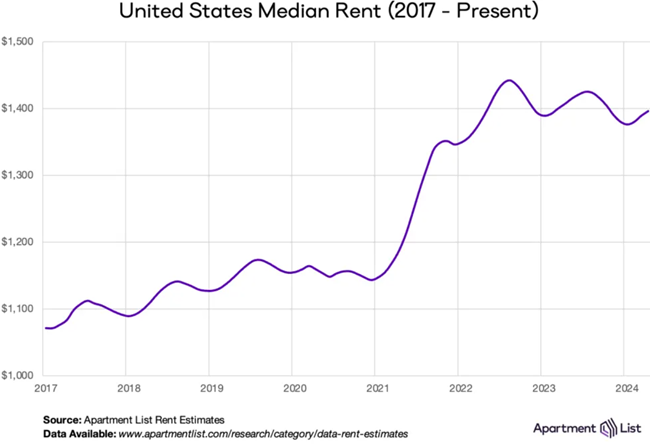
The rental market is transitioning into the busy season, with the national median rent increasing for the third straight month but the pace of that positive rent prices growth slowed in April.

“Rent growth is stalling out at the time of year when the rental market is normally gearing up for its busy season. Year-over-year rent growth is also indicative of a sluggish market, remaining negative at -0.8 percent,” Apartment List says in the report.

https://www.apartmentlist.com/research/national-rent-data

Is rental market headed for slow summer?

“The national median rent increased by 0.5% in April and now stands at $1,396, but the pace of growth slowed slightly compared to last month.

“This is typically the time of year when rent growth is accelerating heading into the busy moving season, so the fact that growth stalled this month could be a sign that the market is headed for another slow summer,” Apartment List economists write in the May report.

Apartments on average remain cheaper today and they were a year ago.

The report says 83 of the nation’s 100 largest cities saw rents go up in April. But on a year-over-year basis, rent growth is positive for only 43 of these cities. Many of the steepest year-over-year declines remain concentrated in Sun Belt cities that are rapidly expanding their multifamily inventory, such as Austin (-7.4 percent year-over-year), Raleigh (-4.4 percent), and Orlando (-3.9 percent).

New apartment supply continues to impact rents

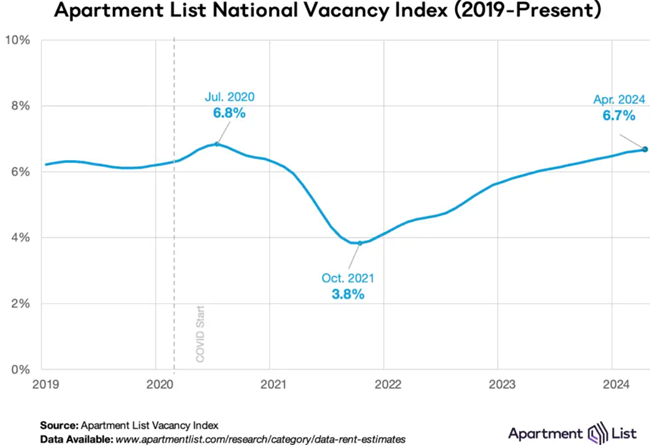
Apartment vacancies continue to rise, and the vacancy index should continue to increase for the rest of the year.

New apartment construction continues at the highest level in 50 years “and an even greater number of new units are expected to come on the market this year. This means that renters should have more available options than they have in some time, especially in the Sun Belt markets where construction activity has been strongest,” the report says.

https://www.apartmentlist.com/research/national-rent-data

Conclusion

The report says rent increases are currently being moderated by a robust construction pipeline expected to deliver a decades-high number of new apartment units in 2024. Improving consumer sentiment about broader macroeconomic conditions may be driving a modest rebound in rental demand, but that bounce back has so far been outweighed by the impact of incoming supply.

Read the full report here

Sign Up For Our Weekly Newsletter And Get Rental Property And Apartment News And Helpful, Useful Content Each Week.

* indicates required

Landlord To Pay $600,000 In Sexual Harassment Consent Order

A Georgia landlord who owns and manages 45 properties has agreed to pay $600,000 in a consent order to settle a sexual harassment charge

A Georgia landlord who owns and manages more than 45 properties has agreed to pay $600,000 in a consent order to settle a sexual harassment charge with the U.S. Department of Justice, according to a release.

According to the release, Iraj Shambayati, a landlord who owns and manages over 45 residential properties in and around Savannah, Georgia, has agreed to pay $600,000 to resolve allegations that he violated the Fair Housing Act (FHA) by sexually harassing and retaliating against his female tenants for over 15 years.

“Sexual harassment by a landlord is never acceptable,” U.S. Attorney Jill E. Steinberg for the Southern District of Georgia, said in the release. “This consent order takes Iraj Shambayati out of the property management business and emphasizes the Justice Department’s commitment to hold accountable landlords who would use their power to exploit tenants.”

The consent order “requires the defendants to vacate any retaliatory eviction judgments obtained against these tenants and to take steps to correct the tenants’ credit histories. The defendants are also prohibited from managing residential rental properties in the future and must retain an independent property manager for the properties.”

The lawsuit, filed in August 2023, alleged that, since at least 2008, Shambayati harassed female tenants by making repeated and unwelcome sexual comments and advances, inappropriately touching their bodies without their permission, entering their homes without their permission or knowledge, requesting sexual acts from them in exchange for rent or other housing-related benefits and taking retaliatory actions against female tenants who rejected his sexual advances or complained about the harassment.

Shambayati’s attorneys, James Durham and Patrick Schwedler, said in a release, “As the settlement makes clear, Mr. Shambayati denies he sexually harassed, discriminated, or retaliated against anyone.  The U.S. Government didn’t just sue Mr. Shambayati; it also sued his son and his best friend with unsubstantiated claims that they had anything to do with this case.  Before agreeing to settle, Mr. Shambayati insisted the U.S. Government dismiss the cases against his son and best friend, which it did.  Mr. Shambayati agreed to settle the case rather than put his family through years of litigation.”

The Justice Department’s Sexual Harassment in Housing Initiative is led by the Civil Rights Division, in coordination with U.S. Attorneys’ Offices across the country. The goal of the department’s initiative is to address, deter and raise awareness about sexual harassment by landlords, property managers, maintenance workers, loan officers or other people who have control over housing. Since launching the initiative in October 2017, the department has filed 40 lawsuits alleging sexual harassment in housing and recovered nearly $12 million for victims of such harassment.

Sign Up For Our Weekly Newsletter And Get Rental Property And Apartment News And Helpful, Useful Content Each Week.

* indicates required

Is Surge in Built-for-Rent Single-Family Homes Good?

Is surge in built-for-rent single-family homes – with corporate ownership that resembles multifamily housing - good for housing long-term?

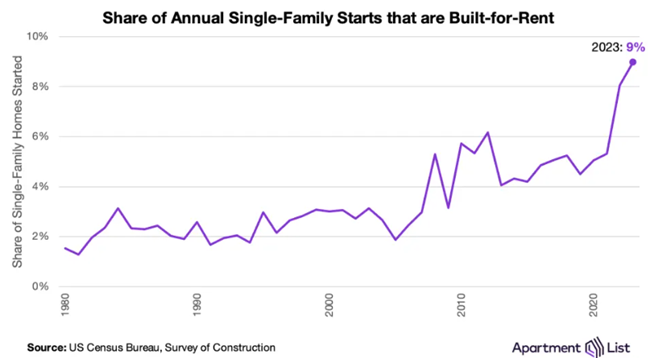
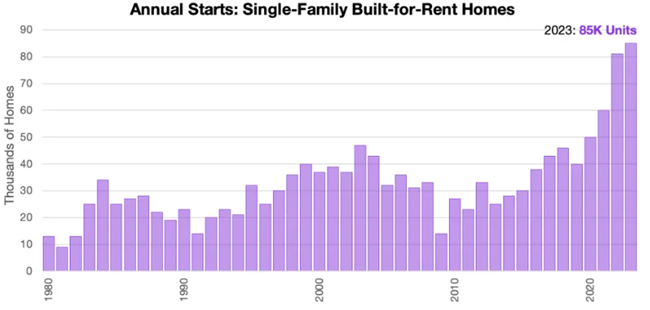
The surge in built-for-rent single-family homes – many with corporate ownership that resembles multifamily housing – have experts split on the long-term housing implications of this trend, according to a report from Apartment List.

“Single-family homes account for roughly two-thirds of the nation’s housing stock, and the majority are occupied by the families that own them. But a sizable share – 16.6 percent – are rented instead, and recent trends in construction data suggest that these single-family rentals will become an increasingly popular housing option in the years to come,” Rob Warnock writes in the Apartment List report.

Warnock writes that single-family rentals are typically operated by a mom-and-pop landlord or a small institutional investor. But the new model that is becoming increasingly common is the “built-for-rent” (BFR) community: a large-scale development of single-family homes that are designed for renter occupancy from the start. BFRs borrow some features of multifamily housing, like professional leasing offices, on-site property management, and community amenities, and are marketed as a middle-ground between renting and homeownership.

Is surge in built-for-rent single-family homes – with corporate ownership that resembles multifamily housing - good for housing long-term?
Chart courtesy of Apartment List.

Proponents of built-for rent argue:

  • Single-family rentals allow greater financial flexibility and access to single-family neighborhoods, and that the surge in built-for-rent communities is a natural response to demographic shifts, particularly a large generation of millennials who are increasingly starting families, working from home, and valuing the extra space that comes with suburban living.

Detractors of built-for-rent argue:

  • Institutional investors tend to buy homes at lower price points, further locking out families from buying starter homes that are already in short supplyand concentrating the equity gains of homeownership in corporate ownership instead of people.

Conclusion

“In any case, large-scale investor involvement in the single-family sector remains nascent and will surely draw the attention of policymakers in coming years as housing affordability remains a top-of-mind issue for many American households,” Warnock writes.


Rent Changes Should Be Modest For Rest Of 2024

Rent changes should be modest for the rest of 2024 due to the imbalanced relationship between supply and demand

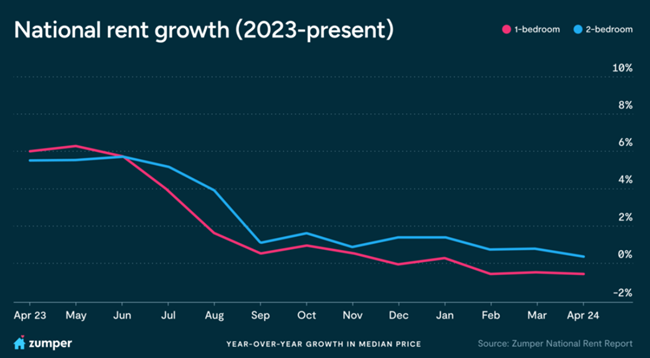
Rent changes should be modest for the rest of 2024 due to the imbalanced relationship between supply and demand, says the rental platform Zumper in its latest National Rent Report.

The report covers 100 cities nationwide, with data aggregated from over 1 million active listings, and includes a National Rent Index for one- and two-bedroom units.

“It seems we are firmly settled into the year of the renter, as people have more options now than in recent memory,” said Zumper CEO Anthemos Georgiades in a release.

“With Class A buildings marketing concessions that include up to three months of free rent, free parking, and waived deposits and application fees, this, in turn, puts pressure on Class B and C buildings to price competitively as well in order to attract tenants.

“As normal seasonality patterns return and the rental market has leveled off from the price spikes seen in the last few years, the national one-bedroom rate is now about $9 cheaper than it was last year. However, even with this cooling, the national one-bedroom rent is still nearly $250 pricier than it was in 2021,” the report says.

Highlights of the rent-changes report

  • While the level of new U.S. apartment supply is expected to peak this summer at a 50-year high, demand is still trailing behind – so changes to the national rent rates should continue to be modest for the rest of the year.
  • This April, the national rent index continued its trend of stable annual rates with one-bedrooms down 0.6% to $1,486, while two-bedrooms increased 0.1% to $1,843.
  • Meanwhile, New York City continues to buck national trends with one-bedroom rent at $4,280, which is up 20% annually and up 50% since pre-pandemic.
  • The high annual rates and prices reflect that NYC is bearing the tightest rental vacancy rate since the 1960s, currently at a mere 1.4% (the national rate is 6.6%).

Conclusion

The report says, “Changes to the national rent rates for the rest of the year, and likely into 2025 as well, should remain fairly modest due to the current imbalanced relationship between supply and demand. Even with peak demand in the summer and fall months, the new apartment inventory across the nation – as it will reach a 50-year high over the summer – will keep the overall national rates fairly restrained.”

A full discussion, as well as more from the Zumper CEO, can be found here:  https://zumper.com/blog/rental-price-data/


3 Ways to Take a New Look at Your Property Portfolio

3 ways to take a look at your rental property portfolio if you feel stuck in your current situation as a housing provider.
Forget what the so-called experts and talking heads say, this is your journey and only you can know what best works for you.

3 ways to take a look at your rental property portfolio if you feel stuck in your current situation as a housing provider.

By Scot Aubrey

Have you ever looked at your life as a housing provider, considered your property portfolio, and questioned why things just aren’t working out in your favor?

If you’ve been doing this for any period of time, the answer is a resounding yes.  If you haven’t, well at least you have that to look forward to.  Here’s the great thing, you can blame it on your brain, specifically on what scientists call cognitive dissonance.

Similar to the person who wants to be fit and healthy but refuses to eat less, eat well, or exercise, landlords who are struggling in the current market have to be willing to make some changes in order to find their success.

Here are a few things to consider if you feel stuck in your current situation as a housing provider:

No. 1 – REASSESS YOUR GOALS

When you buy a property, you better have some goals or reasons behind the purchase, otherwise what’s the point?

  • Are you buying to create an additional revenue stream?
  • Or to create a long-term appreciating asset?
  • Do you just want someone to cover the mortgage or do you want to have positive cashflow every month?
  • Are you hoping to house a long-term tenant who treats your property like their own, or are you happy having a short-term rental with a new occupant every few days or weeks?

Goals change over time and due to other circumstances in your life.

No matter where you are in your ownership journey, I suggest sitting down annually and creating or modifying your goal list so it aligns with your current needs.  I am doing that right now and have decided to unload a short-term rental that was great for a number of years but has been struggling for the last year.  I’ve enjoyed a healthy appreciation for this property and have decided it’s time to sell and hold until I can find a new property that aligns with my goals.

No. 2 – REASSESS THE MARKET

If you’re like me, you’re tired of hearing the word “rates” in every conversation.

For housing providers, rates are important, but not the only thing we should consider when determining the direction we will take with our rental property portfolio and investments.

  • What are other providers getting for rent near your property?
  • Have rents become stagnant, or worse, dropped in the last year?
  • If you are looking to sell your property, how saturated is the marketplace with homes like yours?
  • How long are those homes on the market and how much are they going for when they do sell?
  • Is there growth like retail and restaurants near your property that add to its value?
  • Are new businesses, schools or parks coming to the area that will create a greater need for rental housing?

There are no simple decisions, based on just the questions I’ve suggested here.

Taking a look at the larger market around you can help you make the next step a successful one.

No. 3 – REASSESS YOUR TIMELINES

As we age, it is critical to always consider our personal timelines and the time commitments it takes to be a housing provider.

As a younger investor, maybe the appeal of having short-term occupants and the increased fees they paid was exactly what you were looking for.  You didn’t even mind cleaning and prepping the property for the next guest; after all, it was keeping more money in your pocket.

But now you may lack the energy and motivation to process the “hands-on” management style and are looking for the stability of having a good tenant that pays on time and maintains the property.

Maybe you want to spend more time with your family or traveling, and the prospect of managing tenants doesn’t fit into your timeline.  Or maybe you are ready to exit the market altogether and your time as a housing provider has run its course.

Engage your brain by revisiting these three critical parts of your process and be confident in making the best decision for you and your property.  Forget what the so-called experts and talking heads say, this is your journey and only you can know what best works for you.

About the author:

Scot Aubrey is vice-president of Rent Perfect, a private investigator, fellow landlord and cohost of the Rent Perfect Podcast.  Subscribe to the weekly Rent Perfect podcast to stay up to date on the latest industry news and for expert tips on how to manage your properties.

Sign Up For Our Weekly Newsletter And Get Rental Property And Apartment News And Helpful, Useful Content Each Week.

* indicates required

The Changing Economy and Its Impact on Rent Collection

To improve rent collection, it is crucial to sidestep traditional concessions and get residents on board with technologies to help.

In the current economy with its impact on rent collection, it is crucial to sidestep traditional concessions and get residents on board with technologies that align with multiple business objectives.

By Andrew Ruhland

Rents are stagnant, as indicated by Radix data showing that rents are down 1.5% on a year-over-year basis, nationally. Combine that with the more than 400,000 new units that came online in 2023 and another half million anticipated for 2024, and economic conditions will continue to be challenging.

To combat stagnant rent as well as supply issues, many operators implement traditional concessions, which can be  short-sighted and more costly in the long-term. While measures such as offering free rent may fill apartment homes faster and bolster occupancy, concessions can ultimately be a slippery slope and detrimental to the bottom line and overall property performance.

In today’s economic landscape, it is crucial to sidestep traditional concessions and get residents on board with technologies that align with multiple business objectives.

Concessions versus Rewards

One of the most effective strategies operators can deploy at their communities involves digitizing the collections process and rewarding residents for positive behavior.

In doing so, they are providing the perception of concessions without having to incorporate large discounts. Instead, operators allow residents to earn discounts through acts such as making timely digital payments or posting community reviews, which helps them retain the market value of apartment homes.

By definition, the word concession means to give something up. For operators, offering concessions equates to giving up revenue in order to drive occupancy. On the flip side, by rewarding positive renter behavior, both operators and residents can benefit.

The rewards given are nominal in comparison to costs associated with concessions. Residents are able to earn points that add up to a dollar amount that is significantly less than offering free rent. For instance, 400 points earned in rewards may feel like 400 dollars to a resident even though it isn’t. Those points are of tremendous value when residents redeem them and see a discount on their next month’s rent.

Embracing Technology: A Digital Approach

The implementation of digital payment platforms embedded with a rewards program is also modernizing the rent collection process.

Via a mobile app, residents can pay monthly obligations in a convenient, secure and contactless environment that enhances efficiency and optimizes on-time payments. This type of platform simplifies the process with features such as access to payment history, upcoming payment reminders and the ability to sign up for autopay or schedule one-time payments. For residents who still prefer traditional methods of paying rent, the platform also provides access to a mobile check-pay service.

“Having access to multiple payment options is something that our residents really love, and the rapid adoption rate of digital payments at our communities speaks volumes,” said Chris Gray, president at Moss & Company. “They appreciate the flexibility in how they can pay their rent every month. With more residents using the platform, we’re seeing a more stable income stream and even increased associate efficiency.”

In addition to providing a more seamless experience when paying rent, operators that combine rewards with digital payments can realize even greater returns. Offering points for cash-back rewards for such positive renter behavior as posting online reviews, referring new residents or participating in community events can motivate residents to pay their rent on time each month. Moreover, offering resident rewards costs operators less than offering eight weeks of concessions.

According to internal data from Domuso, offering rewards for on-time payments plus the option for autopay reduces late payments by 5% annually. In terms of cash-flow, that can potentially add up to $800,000 per year.

Long-term Benefits, Sustainable Economic Success

“The rent collection process is one of the most crucial aspects of ensuring successful operations,” said Ron Klein, VP of Product for Domuso.

“In a financial climate where many factors are beyond our control, it’s essential to see the bigger picture and be proactive when possible. By streamlining the process for residents and offering rewards for positive behavior, operators can improve community satisfaction and maintain optimal occupancy rates in any economic landscape.”

Beyond increased occupancy rates and greater resident satisfaction, operators using an intuitive payment platform can drastically diminish financial risks by having 100% chargeback protection, as well as by offering certified payment options, including credit, debit and ACH transfers.

“With certified funds, we reduce our exposure to potential fraud because we know the money is there,” Gray said. “By using a platform that doesn’t charge for ACH payments, we are realizing almost $9,000 in savings every month. The platform has renewed our financial confidence, knowing that not only are rent payments more consistent and on time, but there are safeguards in place to protect both residents and ourselves.”

Although economic challenges are inevitable, they do not have to hinder rent-collection processes or damage the bottom line.

Embracing modern solutions such as digital payment platforms that streamline the process while incentivizing timely payments is one of the most effective strategies in mitigating the negative financial impacts of late payments and delinquencies. By leveraging technology and resident rewards in the rent-collection process as opposed to offering traditional concessions, operators can better navigate economic struggles, maintain occupancy rates, position their communities for long-term success and bolster NOI.

About the author:

Andrew Ruhland is an account executive and content writer for LinnellTaylor Marketing, which focuses exclusively on the rental housing industry, its trends and technology innovations.

istockphoto credit BabaImages

How Do I Prove A Tenant Is Smoking Marijuana In Violation of Lease?

How Do I Prove A Tenant Is Smoking Marijuana In Violation of Lease?

This week the question is about how to prove a tenant is smoking marijuana in violation of lease and what action to take.

Ask Attorney Brad:

Hello, I have a tenant who smokes marijuana, and the lease states no smoking at all.

How can I prove that she is smoking to prove it to the judge in court? Thanks.

-Romy

Hello Romy,

Thank you for your email. Smoking issues can prove challenging when it comes to proof.

If no one sees the tenant smoking, how can you prove it’s occurring?

Well, there’s a couple different methods you may be able to employ.

First, the complaints of smoke smell likely came from neighbors. Try to “box” the smoke in, which will assist you with pointing the finger at this tenant. In essence, if the neighbor above, the neighbor below, and the neighbors on both the left and right sides of the tenant smells smoke, and that smell is strongest towards the alleged smoker, then there’s certainly favorable circumstantial evidence to suggest that particular tenant is smoking.

Second, marijuana smoke can leave a particular odor in an enclosed area. If you inspect the property, and the place stinks of marijuana (but none of the surrounding neighbors’ premises smell like marijuana), again, there’s a favorable inference to be had there.

Finally, if you have an onsite manager, it may be appropriate to have that individual walk through the hallway (assuming it’s a multifamily building) when there’s a smoking complaint. If the manager walks by the tenant’s door, and can smell marijuana from the outside, that’s solid proof.

Ultimately, the best proof is what you can see, and have someone testify to. If you don’t have that type of proof, there’s always risk . . . but that risk must be weighed against the headaches your other tenants are currently experiencing.

-Brad

Ask Attorney Brad: How Do I Prove A Tenant Is Smoking Marijuana In Violation of Lease?
Bradley Kraus, Portland attorney

Bradley S. Kraus is an attorney at Warren Allen LLP. His primary practice area is landlord/tenant law, but he also assists clients with various litigation matters, probate matters, real estate disputes, and family law matters. You can reach him at [email protected] or at 503-255-8795.

The Use Of Marijuana – A Fair Housing Challenge

Sign Up For Our Newsletter And Get Rental Housing and Apartment News And Helpful, Useful Content Each Week.

* indicates required

Ask Attorney Brad: Why Can’t A Landlord Give a 30-Day Notice to Vacate?

Understanding a Landlord’s Rights, Obligations in Domestic Violence Situations

Ask Attorney Brad: Tenants Want to Know Why There’s a Dog in No-Pet Building?