
Home Blog Page 185

New Short-Term Multifamily Rental Player In Portland, Seattle

short-term multifamily rentals
Vacasa Multifamily has launched in top urban markets Including Portland and Seattle.

A Portland based vacation rental management company has launched a new short-term multifamily rental site that claims it is “ready to become your most reliable tenant,” according to a release.

Vacasa, the largest vacation rental management company in North America, announced the launch of Vacasa Multifamily, a new initiative dedicated to building its rental inventory for guests seeking short-term stays in urban city centers.

Vacasa Multifamily will partner with leading real estate developers and property managers to provide short-term rental management services for vacant units, resulting in stable and reliable revenue for the properties.

“The industry has seen an increase in guest demand for urban short-term rentals, and we’ve been approached by developers and property managers seeking our vacation rental management services,” Joshua Viner, senior manager of Vacasa Multifamily, based in Portland,  said in the release.

“We’re excited to bring our decade-long property management experience to the multifamily space and offer diverse inventory for business and leisure travelers, as well as families looking to stay in urban destinations.”

Vacasa Multifamily enters into long-term lease agreements with real estate developers and property managers that are looking to turn their vacant units into short-term rentals that adhere to regulations. From navigating complex local regulations and increasing operational efficiencies, to driving bookings and optimizing nightly rates, according to the release.

Demand for short-term multifamily rental accommodations

“As the demand for alternative accommodations has grown, so has the opportunity for Vacasa,” Eric Breon, CEO and founder of Vacasa, said in the release.

“The multifamily industry is on the rise and to be successful, property managers need to deliver a high-quality and consistent experience for guests, while providing stable revenue for building developers and landlords. What we’ve traditionally brought to the vacation rental industry, we’ll be offering in the multifamily space: provide great guest experiences and increased revenue for our owners.”

Over the last year, Vacasa has launched new programs and services to help homeowners and guests in every aspect of the vacation rental process. In July, the company launched Vacasa Real Estate to connect vacation home buyers and sellers with the most qualified local real estate agents. Earlier this month, Vacasa Community Association Management began providing management services to vacation rental homeowners through their community associations. Vacasa Multifamily is the next step in the fast-growing company’s evolution.

Real estate developers and property managers that enter into agreements with Vacasa Multifamily will be working with a partner to drive stable revenue for the property or assist during lease-up. Additionally, partners will have access to Vacasa’s breadth of resources, including:

  • Dedicated compliance and legal team: The short-term rental industry is evolving daily and it can be difficult to keep up with changing regulations. We work closely with our legal and compliance team to ensure we have the necessary permits and licenses for each unit.
  • Property automation partners: Vacasa currently works with NoiseAwarePointCentral and VirtualKEY and will offer these industry leading property automation solutions in its urban short-term rentals. These technologies enable Vacasa to better screen guests and monitor noise levels without imposing on the guests’ stay, all while creating a safer, more secure experience for other residents in the buildings, according to the release.
  • On-site and local teams: In every market where Vacasa manages vacation rentals, there’s a local team of employees ready to care for our properties and serve our guests, homeowners, and partners. All full-time Vacasa employees are paid a minimum hourly wage of $15 and provided free health and dental benefits.
  • Interior design experts: Vacasa’s in-house interior design team will work with developers to furnish rental units to meet guests’ expectations when booking an urban short-term rental. Our team can also work directly with developers to help design purpose-built rentals with travelers in mind from day one.
  • Booking platform partnerships: Vacasa partners with the industry’s leading booking platforms – such as Booking.com, Airbnb, and HomeAway – to drive year-round bookings for our more than 10,600 properties around the world.

Vacasa Multifamily operates in seven urban markets, Boise, Chicago, Dallas, Houston, Portland, San Antonio, and Seattle, with more to come in 2019. To learn more about partnering with Vacasa Multifamily visit: www.vacasa.com/multifamily.

About Vacasa

Vacasa is the largest vacation rental management company in North America and offers property management and other real estate services directly and through licensed subsidiaries. Leveraging industry-leading technology, Vacasa maximizes revenue for homeowners and its partners, and provides unforgettable experiences for guests. Founded in 2009 and headquartered in Portland, Oregon, Vacasa and its subsidiaries manage a growing portfolio of more than 10,600 vacation homes in the U.S., Europe, South and Central America, and Africa. In nine years, Vacasa has grown to more than 2,500 employees, has been honored as the Oregon Better Business Bureau Large Business of the Year and was ranked ninth on the Inc. 5000 Fastest-Growing Companies list. For more information, visit www.vacasa.com.

 

Portland Apartment Technology Company Cozy Sells For $68 Million

Portland Apartment Technology Company Cozy Sells For $68 Million

CoStar Group has acquired Portland apartment technology company Cozy Services Ltd., and plans to integrate its Innovative renter screening and rent payments solutions into Apartments.com, according to a release.

Cozy is considered an industry leader in the online rental property market, with more than 50,000 landlords using the Cozy platform, according to the release.

Cozy provides a broad spectrum of services to both landlords and tenants, including property listings, rent estimates, rental applications, tenant screening, online rent payments, and expense tracking. There are currently over 120,000 tenants making online payments through the Cozy platform, totaling over $1.4 billion in payments over the past 12 months.

“We believe that if we continue to focus on delivering a fantastic renter experience on Apartments.com, we will continue to be the most heavily trafficked website offering the most valued advertising solutions,” Andrew C. Florance, CoStar Group Founder and Chief Executive Officer, said in the release.

“Cozy’s technology makes the renting and payments process simple, secure, and intuitive. When combined with Apartments.com, the 40 million prospective renters that visit our network each month will be able to effortlessly locate, apply, lease and pay for their new rental home completely online.”

Portland Apartment Technology Company Cozy Sells For $68 Million

CoStar expands capability to multifamily

Currently, CoStar is a leading solution provider in online lease management for commercial real estate through its Real Estate Manager products. Over 200,000 commercial leases for office, retail and industrial clients are managed through the Real Estate Manager platform, which represents approximately $30 billion in lease payments on an annual basis.

Extending this capability to multifamily properties, CoStar expects to fully integrate the Cozy technology into the Apartments.com platform in the first half of 2019.

This integrated online rental solution is expected to create significant value and efficiency in the rental process for independent rental owners. These owners operate over 22 million rental units in properties that contain five units or less – representing a significant “long tail” opportunity for CoStar, according to the release.

Based on what property owners are currently willing to pay to fill their properties with a qualified renter, CoStar believes the total addressable market is well over $8 billion.

In addition, once integrated with Apartments.com, renters will be able to use the platform to save time and money by leveraging a single rental application and credit check across multiple properties. This, in turn, creates a large population of quality renters for landlords to access for future vacancies.

Gino Zahnd, Founder and Chief Executive Officer of Cozy said in the release, “We are excited to be able to bring our landlord and renter services to a larger audience by joining the CoStar team and the Apartments.com network.

The combination of CoStar’s leadership in multifamily marketing with our integrated solutions for renters and landlords makes for a very exciting future for all of us.”


4 Ways To Make Your Apartments Senior Friendly

4 Ways To Make Your Apartments Senior Friendly

The maintenance checkup this week provided by Keepe focuses on how to make your apartments senior friendly.

Do you have a property that attracts multi-generational groups and especially are your apartments senior friendly?

You can win more bookings by making simple changes in your apartment with seniors in mind.

Small upgrades can make seniors, and all your tenants, happier and more comfortable in your building. Here are some tips to make your apartment property senior friendly.

What do seniors want out of your rental?

No. 1 – Safety

  • Replace traditional locks with smart locks to help seniors enter the building without having to struggle with small keys. Some smart locks can unlock when a key fob is simply tapped on the device–no need to push buttons to enter a code.
  • A simple change you can make to increase safety for senior tenants is lowering the water heater temperature to 120⁰ to reduce the chance of burns.
  • Other safety measures such as security cameras and panic buttons are other features that can easily attract older tenants in your apartments.
4 Ways To Make Your Apartments Senior Friendly
Make sure your multistory buildings are accessible.

No. 2 – Lighting

  • Install lights across your property outdoors. In unlikely areas, use motion-activated lights to ensure tenants can safely get inside the building.
  • In the building, consider adding motion-activated lights in areas like an entryway or kitchen to reduce risk of falls or bumps.
  • In general, lighting in the building should be enhanced for all areas. Increased lighting will allow seniors to see obstacles and allow for optimal safety.

No. 3 – Accessibility means elevators

  • Make sure your building and apartments are accessible for seniors with mobility restrictions such as wheelchairs. Ramps outdoors and elevators in multi-story buildings are a must for elderly living.
  • Bathrooms in your property must have the ability to be easily converted to handicapped-friendly options with grab bars and sturdy tub flooring when needed.

No. 4 – Community and amenities

  • Organize special events for tenants to get to know one another and foster a sense of community.
  • Consider keeping the apartment pet friendly. Older adults enjoy companionship, and pets provide emotional comfort for the elderly. Allowing small cats and dogs in your property can make your property much more appealing for those who already have pets.
  • Amenities such as a pool, on-site laundry facilities, fitness center and outdoor areas are great amenities to have when attracting the elderly. Tenants will be happiest if there are fun activities to do and plenty of places to meet up with friends.

Your apartment should be a safe and easy place to live in for all tenants, especially seniors. Take these tips into consideration if you are providing housing to senior tenants.

4 Ways To Make Your Apartments Senior Friendly

Other recent rental property maintenance Keepe posts you may have missed:

4 Outdoor Flooring Options For Your Rentals

20 Easy, Affordable Maintenance Projects To Update Your Rentals

7 Tech Gadgets For A Safer And More Efficient Rental Property

5 Maintenance Tips For Long-Lasting Rental Carpet Flooring

Is The Water Heater At Your Rental Property Ready For The Big One?

7 Types Of Kitchen Countertops For Your Apartments

Which Cooktop Is Best For Your Rental Property?

A Guide To 4 Types Of Flat Roof Systems

6 Ways To Trash Your Apartment Waste Management Issues

About Keepe:

Keepe is an on-demand maintenance solution for property managers and independent landlords. The company makes a network of hundreds of independent contractors and handymen available for maintenance projects at rental properties. Keepe is available in the Greater Seattle area, Greater Phoenix area, San Francisco Bay area, Portland, San Diego and is coming soon to an area near you. Learn more about Keepe at https://www.keepe.com


Amazon To Spark Apartment Boom With New Second Headquarters Locations

Amazon To Spark Apartment Boom With New Second Headquarters Locations

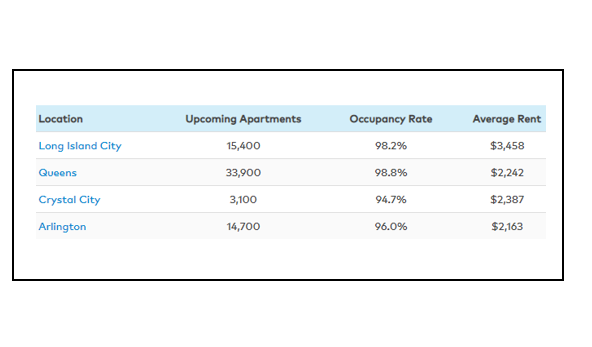
Amazon is expected to spark an apartment boom in the Long Island City and Crystal City areas of New York and Washington where the company has announced it will place its additional headquarters locations.

So RentCafe put together a look at what will be the impact in terms of rents and apartment supply in these two areas that are hubs for millennial workers.

Here are the apartment boom main findings:

  • With a high occupancy rate of 98.2% in Long Island City (LIC), future Amazon employees may have a hard time finding an apartment for rent near work. There’s a silver lining, though: a total of approx. 15,400 units are under construction, planned or in a prospective phase in LIC.
  • Amazon’s announcement is definitely bound to speed up the apartment construction in the area, which is already seeing an increased number of units entering the market. LIC is New York City’s hottest neighborhood, but also in the US, with the most new apartments delivered after the recession, 12,500 units.
  • In Crystal City there were no major developments in the last couple of years. However, besides the 3,100 units under construction, planned or prospective, future Amazon employees would have access to more than 205K units currently in the entire metro.
  • What type of employees is Amazon expected to find in the two neighborhoods? As of 2016, Crystal City boasts a 52% share of Millennials. Long Island City, on the other hand, has a Millennial population of 43%.
  • The percentage of people holding a Bachelor’s degree or higher in Crystal City is a whopping 85%, while in LIC it’s about half that, 45%.
  • Both neighborhoods have witnessed above-average increases in the monthly rent over the past year. The average rent in Crystal City is currently $2,387, up 5% y-o-y. Meanwhile, Long Island City apartments are already seeing steep prices, $3,458 as of October 2018, up 5.1% y-o-y.

The average rents and supply data comes from Yardi Matrix, RentCafe sister company, which monitors the apartment market. You can find the full report here: https://www.rentcafe.com/blog/rental-market/long-island-city-and-crystal-city-expecting-an-apartment-boom/

What Is The Right Way To Offer An Apartment Rent Special?

What Is The Right Way To Offer An Apartment Rent Special?
When offering an apartment rent special be sure to know what units you want to offer specials on. Photo credit Fizkes via istockphoto.com

When you need to move quickly to fill some units, is a rent special the right way to go and what is the right way to do it?

So you may have these questions:

  • How long do you run a rent special?
  • How do you know what rent special to offer that will work?
  • How do you do it exactly?

Sometimes the rent special is the quick fix you need and our friend Jake Meador over at Rentping.com has some ideas to think about.

So what makes a good rent special involves two things:

  1. It will offer the prospect something valuable enough to motivate them to rent.
  2. It will minimize the damage done to your bottom line both by long-term vacancy and by the special itself.

“Because of the different needs of different properties, it is hard to be more specific than that in terms of defining a good rent special. However, there are three questions we generally recommend client communities ask themselves when they are trying to move from a general idea of a good rent special to a specific special they wish to offer,” Meador writes on RentPing.com.

What are you offering as incentive?

You can dangle any number of different carrots as rent specials in order to attract prospects. What specific thing does your community have to offer?

It is good to identify all the options and then work backwards by asking yourself what is the easiest for your community to offer and what would be most valued by your residents. When you identify the offer that checks both of those boxes, you probably have identified the benefit you should offer as part of the special.

There are many possible answers to this question:

  • Temporary rent reduction
  • Waived deposit
  • Waived application fee
  • Waived pet deposit
  • Free month of rent
  • Free offers:
    • cable
    • internet
    • parking
  • Special offer:
    • Gift card to area business
    • Discounted membership at a local gym

Does this incentive apply to specific floorplans or units?

Rent specials can become very expensive if you offer them on all vacant units in your community.

On the other hand, they can become very complex and lose their appeal if you offer them more narrowly.

So figuring out what units to offer the special on is an important question for every community to figure out.

When does the rent special end?

If you have a system for tracking occupancy that accounts for both currently occupied units on notice and vacant units that are leased but not yet occupied, then you will have an accurate picture of your occupancy situation at the community.

With that information in hand, you can make informed, sound decisions about when you need a rent special and when you do not, which also means you will know when you can stop using a given rent special.

Summary

Rent specials can be a powerful tool to help make fast changes at a struggling property. But it’s an emergency option rather than something you should be leaning on regularly.


Read Jake Meador’s full blog post on this issue here.


7 Upgrades To Your Apartments To Keep Tenants Happy

Upgrading Your Apartments To Keep Tenants Happy
Just a few apartment upgrades like a nice kitchen can keep tenants happy and renewing their leases. Photo credit monkeybusinessimages via istockphoto.com

Every landlord knows how hard it is to find good, responsible tenants who will pay the rent on time and take care of their rental home, so your goal should be to keep tenants like this happy.

That’s why it’s crucial for you to put in some effort in order to keep the good tenants living at your property.

And guess what? No matter how impossible that may sound, the truth is that it’s quite an easy task. All you have to do is become a good property manager whose actions will keep tenants who renew their leases.

If you want to keep tenants, respond to their requests

It’s very important that you don’t ignore the complaints from your tenants.

Answer when they call you and listen to the problems they have in their rental home. Sometimes, it may sound like they are stressing over trifles, but if you ignore them, it may become a serious problem. You’ll agree that it would be wise to change that leaking pipe before it causes a flood, right?

Be responsible and communicative, ask your tenants what problems they have in their rental home and find a way you both can contribute to a solution. Regular upgrading will keep big problems at bay and keep tenants.

No. 1 – Let the light in

Is there a place in your rental home that you want to emphasize to your tenants?

That can be easily achieved with a smart choice of the lights. Of course, the most important is the general lighting of the apartment that will enable your tenants to feel comfortable in their rental home. However, there are more types of lighting that can add a bit more to your rental apartment and make everyday tasks much easier for your tenants.

No. 2 – Upgrade kitchen appliances

The kitchen is one of the most important rooms for every person that moves into your property. If you want to keep the tenants happy, then you must invest a bit.

High-quality kitchen appliances will speak volumes of your care for the tenants’ comfort and happiness, but accomplishing this goal doesn’t necessarily have to cost you an arm end a leg. For instance, you can upgrade your rental home with a contemporary Bosch microwave that will make mealtimes simpler with the function that weighs an item to figure out the time it will take to warm it up accordingly.

A hungry tenant who comes home after a busy day at the office will certainly appreciate this.

No. 3 – Reinvigorate the bathroom

Besides the kitchen, the bathroom is another room in the apartment that plays a vital role in whether your tenant will renew the lease or not.

You don’t need to turn the bathroom into a spa by bringing in a Jacuzzi and a little sauna. Small cosmetic changes will breathe a brand new life into the outdated bathroom. Change that leaking faucet, install a new showerhead and put on a new shower curtain. You can even refresh the bathroom with tile stickers.

No. 4 – Fix the floor

Creaky floorboards can be very annoying. If pieces of old parquet fall out from time to time, your tenant can become very annoyed and move out.

And, believe it or not, bad flooring can put your tenants on the mercy of noise from the neighborhood. Based on the amount of money you can spend to fix this problem, you have two options – cork flooring or high-quality carpets. Consider the pros and cons of both options and choose what would be the best solution for you and your tenants.

No. 5 – Consider a safety system

One very important thing for every tenant is that they feel safe in their rental apartment.

It doesn’t matter if the apartment is in a dodgy neighborhood or not because break-ins happen in all parts of the world. That’s why you have to add an alarm service and safety locks. By doing this, you will show your tenants that you care about their safety.

No. 6 – Keep track of periodic tasks

Upgrading your apartment doesn’t mean that you need to bring in shiny new things all the time. As a landlord, you should have a home inspection on a regular basis, e.g. every three months.

Your job is to check whether the insulation is in good shape and if the smoke detectors, heating, ventilation and air conditioning are functioning properly. Your tenants will appreciate your concern and won’t look for a new rental home.

No. 7 – Be cooperative

Even if you do all the things mentioned above, there will be some tenants that will constantly ask for more.

Of course, you don’t have to fulfill every caprice they have. However, if they are expecting a baby, then you have to try to be cooperative and allow them to redecorate one room into a nursery, especially if they are very good and responsible tenants. In case they move out in a few years, you can easily turn the nursery into a regular room with a coat of fresh paint on the walls.

As you can see, simple, cost-effective upgrades can mean a world of difference in your tenant’s eyes. If you have the same tenants for years that are very responsible and take care of your rental, then you can also reward them with a discount on rent, but you shouldn’t offer that benefit to the new tenants until they prove to you that they are worth it, not just in the sense of reviewing the lease. Build their confidence one step at a time and eventually both sides will benefit.

Resources:

http://time.com/money/2897067/the-top-5-ways-to-make-more-money-on-your-rental-properties/

https://www.carpetcaptain.com/flooring-options/carpet-vs-cork-flooring/

https://www.propertyware.com/blog/8-ways-to-retain-your-best-tenants/

https://www.nytimes.com/2018/05/24/smarter-living/8-cheap-landlord-friendly-ways-to-upgrade-your-rental.html

https://www.mysmartmove.com/SmartMove/blog/5-ways-keep-your-best-tenants-from-leaving.page

https://www.baymgmtgroup.com/blog/4-renovations-keep-tenants-happy-complaint-free/

https://www.propertyware.com/blog/8-ways-to-retain-your-best-tenants/

https://www.mysmartmove.com/SmartMove/blog/what-tenants-look-for-rental-property.page

About the author:

If one thing is true about Lillian Connors, her mind is utterly curious. That’s why she can’t resist the urge to embark on a myriad of green living/home improvement projects and spread the word about them. She cherishes the notion that sustainable housing and gardening will not only make us far less dependent on others regarding the dwellings we inhabit, but also contribute to our planet being a better place to live on. You can check her out on Twitter and LinkedIn.

Court Halts Massive “Sanctuary Belize” $100 Million Real Estate Investment Scam

Court Halts Massive “Sanctuary Belize” $100 Million Real Estate Investment Scam

A federal court in Maryland has shut down the largest overseas real estate investment scam ever uncovered by the Federal Trade Commission, according to a release.

According to the FTC, the scam was established by Andris Pukke, a recidivist scammer currently living in California, and he perpetuated it even while serving a prison sentence for obstruction of justice.

The alleged scheme took in more than $100 million, marketing lots in what supposedly would become a luxury development in Central America known by several names, including Sanctuary Belize, Sanctuary Bay, and The Reserve. According to the FTC, the defendants duped consumers into buying Sanctuary Belize lots by falsely promising that the development would include luxury amenities and be completed soon, and that the value of the lots would rapidly appreciate.

In filing the complaint against Pukke and a range of other defendants, the FTC is seeking to permanently stop the scheme and obtain a court order requiring them to turn over hundreds of millions of dollars to compensate deceived U.S. investors.

“The defendants in this case operated a sophisticated international real estate investment scheme that cheated consumers out of millions of dollars of their hard-earned retirement savings,”  FTC Chairman Joe Simons said in the release.

“The FTC is committed to stopping this outrageous behavior and compensating the hundreds of victims.”

The Sanctuary Belize real estate investment scam

Court Halts Massive “Sanctuary Belize” $100 Million Real Estate Investment Scam
The Federal Trade Commission uncovered the largest ever international real estate investment scam called the Sanctuary in Belize.

According to the FTC, the defendants operated a set of interrelated businesses (the Sanctuary Belize Enterprise or SBE) and ran commercials on Fox News and Bloomberg News advertising parcels of land that were part of a luxury development in Belize. They also advertised the property through infomercials. Consumers who expressed interest in buying property would receive a call from California-based telemarketers who identified themselves as “property consultants” or “investment consultants.”

These telemarketers allegedly made six false claims in their pitches to sell lots in the development, including that:

  • SBE uses a “no-debt” business model, which makes buying a lot in Sanctuary Belize less-risky than a real estate investment in which the developer must make payments to creditors like banks;
  • Every dollar SBE collects from lot sales goes back into the development;
  • This continual funding stream means that SBE will finish development quickly — within two to five years;
  • The development will include impressive amenities, such as a hospital staffed with American doctors, an emergency medical center near the downtown “Marina Village,” a championship-caliber golf course, an airstrip, and a new international airport with direct flights to the United States;
  • These amenities will ensure that property values will double or even triple in two to three years; and
  • It will be easy for buyers to resell their lots.

The FTC alleges that SBE representatives in Belize made the same deceptive claims when they met with prospective buyers visiting the property before purchasing lots.

The FTC also contends that relying on the defendants’ deceptive claims, consumers purchased lots that typically cost between $150,000 and $500,000 outright, or made large down payments followed by sizeable monthly payments, in addition to paying monthly homeowners association (HOA) fees. However, because the defendants’ claims are not true, consumers either have lost, or will lose, some or all of their investments.

According to the FTC, a no-debt model actually increases risk for purchasers, and the defendants used consumers’ payments to fund their own high-end lifestyles instead of investing the money in the development. The FTC contends that the development and the amenities will not be completed in the promised timeline, the value of the lots has not appreciated, and there is no resale market for the lots.

Based on these claims, the FTC charges the defendants with violating the FTC Act and the Telemarketing Sales Rule. In addition, the FTC charges Belize’s Atlantic International Bank with assisting and facilitating the Sanctuary Belize scam.

The complaint also names Angela Chittenden, Beach Bunny Holdings, LLC, The Estate of John Pukke (Andris Pukke’s late father), John Vipulis, and Deborah Connelly as relief defendants who received funds from SBE’s deceptive and illegal conduct.

FTC Seeking Information from Affected Consumers

To aid its lawsuit, the FTC is seeking information from consumers who have done business with the defendants or bought property in Sanctuary Belize. Over the course of the alleged scheme, the defendants have used other names in marketing the development, including Global Property Alliance, Buy Belize, Buy International, Eco Futures, Sittee River Wildlife Reserve, Sanctuary Bay, The Reserve, and The Marina at the Reserve.

The Commission has set up a website where consumers are urged to submit any information related to their dealings with the defendants, including documents, videos, photographs, audio recordings, or any other type of file related to the allegations in the complaint.

The FTC will encrypt all information it collects, and will take steps to ensure that it does not disclose consumers’ personal information. The FTC also may follow up with consumers who submit information relevant to its case.


Want To Know If Your Compliance Training Is Working? – Ask Your Employees

The Grace Hill training tip this week focuses on the third in the series on compliance training. Compliance training is important for landlords and property managers to keep up with ever-changing rental housing laws at federal, state and local levels.

By Ellen Clark

Bottom line: You want to know if your training program is working. Employee feedback is one of the best ways to know what is and is not working for them.

This is the fourth post in a series about how to measure the effectiveness of your compliance training program. If you missed the previous posts they are listed at the bottom.

Building a good compliance training evaluation plan is all about accumulating evidence to help you answer the question:

Is the compliance training working?

You could just measure impact on the ultimate performance metric:

    • Have you gone a year without a fair housing claim?
    • Have internal harassment complaints decreased?

 But, if you don’t see an impact, you will want information about what went wrong so you can fix it.

 In a past post, we covered measuring implementation. You don’t want to conclude that training didn’t work when, in fact, the issue was that people didn’t complete the training, or didn’t complete it with fidelity. We also covered measuring learning. If employees can’t demonstrate they grasp what’s been taught, it is very unlikely they will be able to apply the training content on the job.

It is also important to gather information on employees’ reactions to the training.  Did employees find the training valuable and feel they benefited from it? This kind of learner buy-in is particularly important in compliance training. Here are some tips for measuring this aspect of your compliance training.

Go beyond “did you like it” questions. Understanding whether employees liked the training is important, and is something most training administrators already think to ask. Here are a couple questions that are often overlooked, but you may want to consider asking learners.

Do employees understand the legal ramifications of the issues the training covers

How valuable did you find the training?

This gets to the heart of why many employees do not complete training or apply themselves during training. When learners understand the value of training, they are more likely to start, complete, and invest time and mental effort – all the things we want them to do. If you find learners aren’t seeing the value, address this by explicitly talking about the value of the learning opportunity in training.

 How confident are you that you can implement the strategies you learned in training?

Even if learners understand what they are supposed to do after training, there may be some practical barriers to doing those things, such as lack of time, resources or supporting processes.

Follow-up questions about what the barriers to implementation are will help you understand how you can better support people in applying strategies learned in training on the job.

Capture feedback through a variety of ways, and offer options to give both a quick review and more detailed feedback.

Gather feedback in multiple ways. Online surveys are great tools for gathering feedback on training. However, think about complementing surveys with informal chats or one-on-one feedback sessions.  Sometimes discussing the training over a a cup of coffee will get you the best insights. The key thing here is to have a plan. Map out your conversations to get a good sampling of people in a variety of roles and locations, and ask a standard set of questions so you get a critical mass of information in key areas.

Gathering information on multiple aspects of training will help you tease out weak spots and target your improvement efforts.  Understanding the extent to which learners see the value in training and whether there are practical barriers to using the strategies on the job will give you important insights into things you can address to improve the overall effectiveness of your compliance training.

If you missed the previous Part 1, Part 2, and Part 3 here they are:

Part 1 –  Is Your Property Management Compliance Training Working?

Part 2 – Why Completing All Compliance Training Is Critical To Your Protection

Part 3 – Ask Key Questions To Be Sure Your Employees Have Mastered Compliance

Read Ellen’s full blog post here.

About the author:

Ellen Clark is the Director of Assessment at Grace Hill.  Her work has spanned the entire learner lifecycle, from elementary school through professional education. She spent over 10 years working with K12 Inc.’s network of online charter schools – measuring learning, developing learning improvement plans using evidence-based strategies, and conducting learning studies. Later, at Kaplan Inc., she worked in the vocational education and job training divisions, improving online, blended and face-to-face training programs, and working directly with business leadership and trainers to improve learner outcomes and job performance. Ellen lives and works in Maryland, where she was born and raised.


compliance training for rental housing


Photo credit Gustavofrazao via istockphoto.com


Landlords To Pay $6,000 After Promising, Then Refusing Disabled Tenants Move To First-Floor Apartment

Landlords To Pay $6,000 After Promising, Then Refusing Disabled Tenants Move To First-Floor Apartment
A disabled couple was denied permission to move to a first-floor apartment despite promises when they moved in.

Landlords  have agreed to pay $6,000 and forgive back rent to settle a complaint by disabled tenants, a couple, that they were denied the opportunity to move to a first-floor unit despite being told upon moving in that they would be able to transfer to a first-floor unit as soon as one became available.

The U.S. Department of Housing and Urban Development (HUD) and the Silver Creek Apartments in Las Vegas, Nevada, have reached a conciliation agreement, according to a release.

On-Site manager denied disabled tenants request to move

The agreement resolves allegations that the on-site manager denied the couple’s request to move to a first-floor unit. The property is owned by Silver Creek LV, LLC, and managed by Stout Management Company, both located in Las Vegas. Read the agreement.

The Fair Housing Act makes it unlawful to discriminate in the sale, rental, and financing of dwellings, and in other housing-related transactions, based on disability. This includes refusing to make reasonable accommodations in rules, policies, practices, or services or facilities related to housing.

“Housing providers need to understand that many people with mobility impairments rely on accommodations to fully enjoy their home, and that they have an obligation to provide those accommodations,”  Anna María Farías HUD’s Assistant Secretary for Fair Housing and Equal Opportunity, said in the release. “Hopefully this settlement will make more housing providers aware of their responsibilities under the Fair Housing Act.”

Couple made numerous requests to move to first-floor apartment

The couple alleged that they made the same request on numerous occasions over a seven-year period.

Each time their request was denied even though they observed first-floor units being rented to others, according to the release.

Landlord tried to charge move-in fee and additional deposit for move to first-floor

According to the complaints, earlier this year, the apartment landlords approved the couple’s request to move to a first-floor unit.

However they were told they would have to pay a move-in fee of $700 and an additional $400 security deposit. The couple could not afford the extra costs and was forced to move out.

The housing providers deny that they discriminated against the couple.

Under the HUD conciliation agreement, Stout Management and Silver Creek LV, LLC, will pay the couple $6,000, forgive $1,392 in unpaid rent, and amend their Fair Housing policies to include information about reasonable accommodations.

In addition, all leasing and management staff who work with tenants at Silver Creek Apartments will attend Fair Housing training.

Last April, HUD marked the 50th anniversary of the Fair Housing Act, joining local communities, housing advocates, and fair housing organizations across the country in a coordinated campaign to enhance awareness of fair housing rights.

Persons who believe they have experienced discrimination may file a complaint by contacting HUD’s Office of Fair Housing and Equal Opportunity at (800) 669-9777 (voice) or (800) 927-9275 (TTY).

HUD Charges Apartment Owners With Discrimination Over Newborn Baby

HUD Charges Landlord With Discrimination Over Veteran’s Emotional Support Dog

Walking The Dog Leads To HUD Discrimination Charge Against Condo Association

Landlords To Pay $6,000 After Promising, Then Refusing Disabled Tenants Move To First-Floor Apartment
A disabled couple was denied permission to move to a first-floor apartment despite promises when they moved in. Photo credit vadimguzhva via istockphoto.com.

Rent Control Expansion Soundly Defeated By California Voters As Landlords Win

Rent Control Still Not the Solution to Housing Affordability

Rent control expansion in California was soundly defeated by voters who declined to repeal a 23-year-old law that limits cities’ ability to enact rent control, giving an election-day win for landlords.

Voters declined to repeal the Costa-Hawkins Rental Housing Act of 1995 which prohibits cities from applying rent control to housing built after Feb. 1, 1995 and to single-family homes and condominiums.

“The stunning margin of victory shows California voters clearly understood the negative impacts Prop. 10 would have on the availability of affordable and middle-class housing in our state,” said Californians for Responsible Housing, the group opposing the measure, in a statement late Tuesday.

The current law allows landlords of rent-controlled properties to raise the rent when tenants move out. In addition to expanding the types of properties that would fall under rent control, Prop. 10 would have let cities permanently cap the price of an apartment, allowing only modest increases even after tenants move out.

The Los Angeles County Board of Supervisors, the state’s largest county governing body, came out in support of Prop. 10, as have prominent politicians like Los Angeles Mayor Eric Garcetti, who see the issue as one in which they should have more authority, according to governing.com.

“I’ve always believed that those who live closest to a given block or a street know what’s best,” he told the local NBC News station. “Local government should have control over their own city.”

The state’s Democratic Party endorsed the measure, but not Democratic Governor-elect Gavin Newsom.

“Getting rid of these protections overall may have unintended consequences on housing construction and production that could be profoundly problematic,” Newsom said at a California housing conference in March.

He and other opponents of the measure say repealing the law would have taken away the incentive for developers to build, lessen the supply of available housing and drive rents up in properties not under rent control.

According to a recent Stanford University study, rent control in San Francisco has saved tenants in rent-controlled units between $2,300 and $6,600 since 1995 but simultaneously reduced the overall number of rental units on the market, driven overall prices up and worsened the affordability crisis.

The California Association of Realtors has contributed $6.5 million in opposition to the ballot initiative. The AIDS Healthcare Foundation, which says the affordable housing crisis falls heavily on the clients they serve, has pumped more than $22 million in support of it, according to governing.com.

Resources:

Election 2018: California’s rent-control measure defeated

California’s rent control measure defeated

Proposition 10: California’s proposal to strengthen rent control defeated at the polls