
Home Blog Page 182

Limited English Proficiency And The Fair Housing Act

Limited English Proficiency And The Fair Housing Act

How you treat people with limited English proficiency, which could be a potential source of discrimination, is the topic this week of the Grace Hill training tip.

By Ellen Clark

Do you only let tenants submit maintenance tickets in English?

Do you prioritize requests from those who speak English over those who do not because it is easier and quicker?

Do you provide poor translations of leases because it is easy and cheap?

Suddenly, whether you meant to or not, you’ve essentially discriminated based on national origin, which is illegal under the Fair Housing Act.

It is estimated that over 25 million people in the United States have limited English proficiency or LEP.

A person with limited English proficiency may not speak, read, write, or understand English as well as a person who grew up with English as their first language.

About 80% of LEP people in the U.S. in 2013 were born in a foreign country. Being from another country does not automatically mean a person has LEP, of course, but there is a strong connection between LEP and national origin.

Why is this important?

Imagine you have a policy or practice that treats limited English proficiency people differently

  • Maybe you only let residents submit maintenance tickets in English to make things easier on your maintenance staff
  • Perhaps you translate leases and other documents with Google translate because it is free and you can’t afford a good translator
  • Maybe you take resident maintenance requests out of order so someone who speaks the same language can help an LEP customer

Remember the statistic mentioned earlier that about 80% of LEP people in the U.S. in 2013 were born in a foreign country?  This means four out of five people affected by the policy or practice that treats LEP people differently will be people born in other countries. Suddenly,

So how can you avoid policies and practices that have a disparate impact on people who are LEP? Here’s what HUD recommends:

  • Never refuse to work with people who are not fluent in English. Claiming you don’t have the resources won’t hold up as a justification for your actions.
  • Treat everyone the same, regardless of whether they have difficulty speaking English or speak with an accent.
  • Allow enough time for prospects to review leases and other documents, particularly those who may need to translate it to review it properly.
  • Don’t provide poor translations. Your intentions might be good, but a poor translation can be confusing and misleading.
  • Don’t restrict the languages that can be spoken in your community. An “English Only” mandate is unnecessary, unwelcoming, and discriminatory.

For more information about working with LEP customers, see Grace Hill’s Fair Housing and Limited English Proficiency mini-course.

Read Ellen’s full blog post here.

Recent Grace Hill training tips you may have missed:

Are You Confused By Requests For Service, Emotional Support And Assistance Animals?

What Do You Do When Assistance Animals Break The Rules?

7 Ways To Stay Out Of Trouble When Checking Criminal History

5 Ways To Protect Applicants, Residents And Employees From Sexual Harassment

Do You Have A Smoke-Free Policy That Adequately Protects Residents?

How To Handle Suspicious Documentation For Assistance Animals

How A No Pet Policy Can Be Discriminatory

Property Management Cyber attack Risks Overlooked, Underestimated

Do You Know How To Respond To a Sexual Harassment Complaint?

Have You Reviewed Your Criminal Background Checks Policy Lately?

Multifamily Managers And Marijuana: Caught In A Pot Crossfire

Fair Housing Discrimination Against Someone You’ve Never Talked To?

4 Ways To Avoid Screening Pitfalls With Applicants

Red Flags In Evaluating Documentation For Assistance Animals

Did You Know Fair Housing Laws Apply To Vendors Working At Your Property?

About the author:

Ellen Clark is the Director of Assessment at Grace Hill.  Her work has spanned the entire learner lifecycle, from elementary school through professional education. She spent over 10 years working with K12 Inc.’s network of online charter schools – measuring learning, developing learning improvement plans using evidence-based strategies, and conducting learning studies. Later, at Kaplan Inc., she worked in the vocational education and job training divisions, improving online, blended and face-to-face training programs, and working directly with business leadership and trainers to improve learner outcomes and job performance. Ellen lives and works in Maryland, where she was born and raised.

About Grace Hill

For nearly two decades, Grace Hill has been developing best-in-class online training courseware and administration solely for the Property Management Industry, designed to help people, teams and companies improve performance and reduce risk. Contact Grace Hill at 866.472.2344 to hear more.

Further Growth In Demand For Apartments Expected In 2019

Further Growth In Demand For Apartments Expected In 2019

Further growth in demand for apartments in 2019 is expected, especially in Class B multifamily, following a good year in 2018 that pushed up average monthly rents across the U.S., according to a new report from RentCafe.

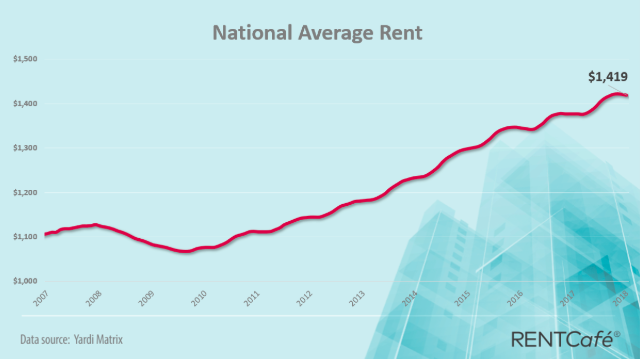
“Favorable economic factors in 2018 and rising interest rates pushed the US average monthly rent to $1,419 by year-end, 3.1% or $42 more than at the end of 2017,” the company said in the report.

Growth in demand for apartments in class B and C to continue

“Healthy job creation, a robust economy, and positive demographic trends are promoting the formation of new households and stimulating demand for rentals,” Doug Ressler, Director of Business Intelligence at Yardi Matrix, said in a release.

“Vacancies are likely to remain low and declining in most markets, particularly among Class B and C multifamily buildings,” Ressler said as the growth in demand for apartments continues.

What happened to rents in 2018

The cost of renting an apartment started seeing annual increases above 2.5% in February, reached the highest month-over-month growth rate in May (0.8%) and peaked in September at $1,422 according to the latest data provided by Yardi Matrix.

Los Angeles, Phoenix and Las Vegas rents are strong

“Aggressive increases in the price of Las Vegas apartments throughout the year have kept Sin City on the podium in terms of rent growth for most of the year, and by year-end, it has outpaced the largest renter hubs with rents almost 8% higher than last year,” the report says.

Phoenix apartments have also seen some of the fastest rent growths during 2018, and much like Las Vegas, the average rent in Phoenix passed the $1,000 mark by year-end thanks to a 7.7% Y-o-Y increase. Apartments for rent in Los Angeles now cost 6.6% more compared to the end of last year, earning it third place among the 20 largest renter hubs in the U.S. This translates into a $153 growth over 12 months, which is second only to Manhattan, where rents have increased by $157 (albeit that accounts for a more modest proportional change of 3.9% due to the $4,200 monthly average).”

Further Growth In Demand For Apartments Expected In 2019

Summary of key takeaways from the report

  • At national level, the cost of renting an apartment started seeing annual increases above 2.5% in February and peaked in September at $1,422.
  • Cheap apartments and studios were the most searched rental terms in 2018, showing that the interest in rentals was driven by a cost-conscious mindset this past year.
  • Soaring rents have kept renter mega-hubs Las Vegas (7.9%), Phoenix (7.7%) and Los Angeles (6.6%) on the podium in terms of rent growth for most of the year, with Florida’s largest markets hot on their heels: Jacksonville (6.3%), Orlando (6.1%) and Tampa (5.4%).
  • Throughout 2018, rents have seen the most fluctuation in small cities, with double-digit percentage increases in Odessa, Midland, and Reno.
  • At the end of the year, Queens, NY is the only large market with stagnating rents, and only two small cities, Baton Rouge and College Station see significant decreases.

See the full RentCafe report here.


Assistant Property Manager Jobs In Demand In Seattle NAA Jobs Report Says

Assistant Property Manager Jobs In Demand NAA Jobs Report Says

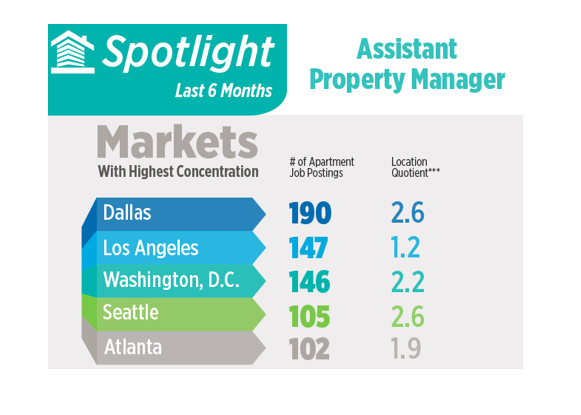
The latest National Apartment Association jobs report spotlights the need for the assistant property manager position.

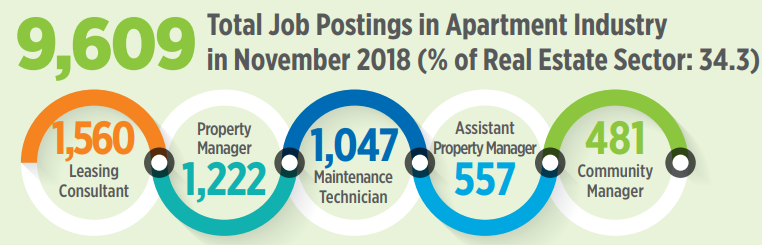
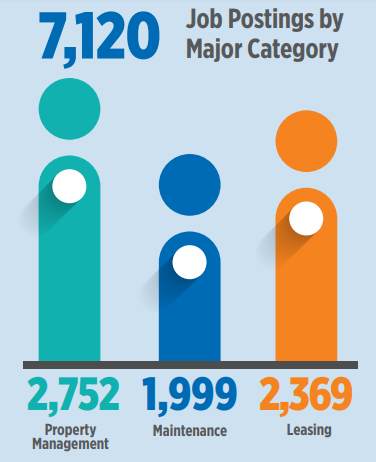
Over 9,600 rental housing jobs were available during November, accounting for 34 percent of the broader real estate sector, just slightly below the monthly average for the year, according to the latest jobs report from the National Apartment Association.

Assistant Property Manager Jobs In Demand

The jobs report focuses on jobs that are being advertised in the apartment industry as being available, according to Paula Munger, Director, Industry Research and Analysis, for the National Apartment Association’s Education Institute.

Assistant Property Manager Jobs In Demand

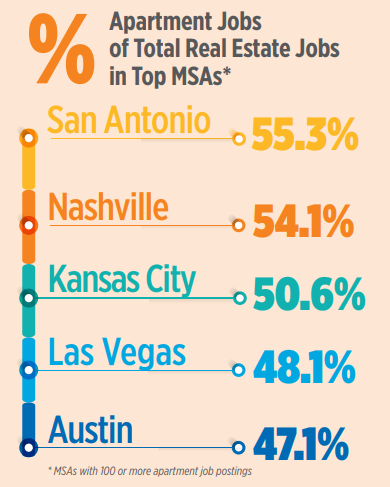
Las Vegas entered the top 5 for apartment job demand for the first time this year, while Nashville marked its fifth month in the rankings.

Assistant Property Manager Jobs In Demand

National Apartment Association jobs report spotlights assistant property manager


November’s issue highlights the Assistant Property Manager.

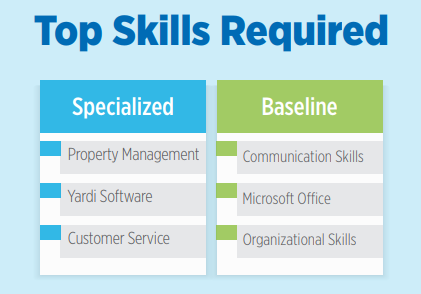
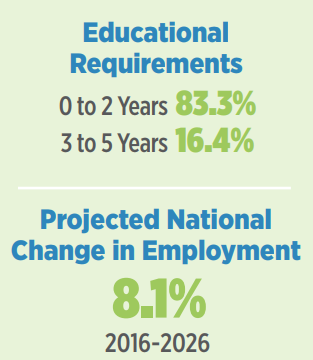
As expected, experience required was at the entry level, but 78 percent of employers were seeking candidates who already had property management skills.

Property management and communication skills are top need

Assistant Property Manager Jobs In Demand

Assistant Property Manager Jobs In Demand

Evolving role of the property manager

The role is becoming more than just a property manager, Munger said earlier this year. “The hiring manager gets to a point where they say, ‘I need more than one whole person to do this job.’ So we are seeing more and more event coordinators in apartment communities,” she said.

“Getting residents together, planning events, maybe dealing with outside vendors more than they have,” she said. And not in terms of vendors like a landscaper “they’ve been doing that forever,” she said. But more like a celebrity chef or “someone who comes into the building to do a quickie demo. That kind of stuff. I think in general they are having to think a little bit more about, I won’t say event planning, but something along those lines,” Munger said.

National apartment association jobs report background

“Our education institute is a credentialing body for the apartment industry. They hear often that one of the biggest problems keeping our industry leaders up at night is the difficulty in finding talent, attracting talent and retaining talent,” Munger said.  “Labor-market issues are happening in a lot of industries, certainly with the tight labor market we have.”

Assistant Property Manager Jobs In Demand

So NAA partnered with Burning Glass Technologies. “They have a labor-job posting database that is proprietary,” she said, and they can “layer on data from the Bureau of Labor Statistics (BLS). We looked at that and thought we could do something that is really going to help the industry and help benchmark job titles and trends as we go forward.”

Resources:

National Apartment Association Education Institute

Burning Glass technologies

National Apartment Association

NAAEI’s mission is to provide broad-based education, training and recruitment programs that attract, nurture and retain high-quality professionals and develop tomorrow’s apartment industry leaders.

Big Apartment Landlord Settles Lawsuit With Airbnb

Property management company to pay tenants $300,000 to settle eviction moratorium violation

A big apartment landlord company has reached a settlement with Airbnb that the company says “provides Aimco with the ability to control short-term rental activity consistent with its contract and property rights,” according to a release.

“Apartment Investment and Management Company (Aimco) and Airbnb jointly announced settlement of all their disputes and the dismissal of all litigation between them,” according to the release. The company manages about 50,000 apartments.

There was no information available on whether there was an financial settlement involved.

AIMCO had charged that Airbnb “is a full-fledged real estate broker of illegal short-term rentals and should be held to the same level of scrutiny and accountability as a ‘brick-and-mortar’ broker engaged in comparable unauthorized activities,” Aimco’s legal representative Mike Williams, said in a release earlier this year.

Also multifamily industry organizations, municipal and county government, neighborhoods, hotels and lodging, and homeowners’ associations had filed briefs in support of Aimco’s lawsuit in California to hold Airbnb legally accountable for brokering and promoting illegal short-term rentals.

Landlord company and Airbnb agree to discuss opportunities in the multifamily housing industry

Big Apartment Landlord Settles Lawsuit With Airbnb
Apartment landlord company Aimco reached a settlement with Airbnb that the company says “provides Aimco with the ability to control short-term rental activity consistent with its contract and property rights.”

“The parties believe the settlement is in both sides’ best interests. As part of the settlement, Aimco and Airbnb have agreed to meet to discuss opportunities in the multifamily housing industry,” the company said in the release.

“Airbnb is committed to building mutually beneficial partnerships with building owners and landlords through initiatives like our Friendly Building program,” Airbnb spokesperson Christopher Nulty said in a statement to TechCrunch. “We believe that by working together, home sharing can bring economic benefits to both landlords and tenants.”

About Aimco

Aimco is a real estate investment trust focused on the ownership and management of quality apartment communities located in selected markets in the United States. The company is one of the country’s largest owners and operators of apartments, with 133 communities in 17 states and the District of Columbia. Aimco common shares are traded on the New York Stock Exchange under the ticker symbol AIV and are included in the S&P 500. For more information about Aimco, please visit our website at www.aimco.com.

Downtown Portland Wins As Second Most Dog-Friendly Neighborhood In U.S.

Downtown Portland Wins As Second Most Dog-Friendly Neighborhood In U.S.

Downtown Portland has won second place runner-up as the most dog-friendly neighborhood in the U.S. by The 2018 Neighborly Awards, according to a release from Trulia.

The Neighborly Awards is a review of nearly 10,000 neighborhoods coast to coast based on more than 20 million written reviews and polls answered by participating locals, according to the release.

Downtown Portland got a 99 percent dog-friendly rating coming second to the 100 percent rating for Orlando’s Baldwin Park neighborhood. Seattle’s Ravenna neighborhood also came in with a 99 percent dog-friendly rating.

Many Americans say dog-friendly neighborhoods are important to renters and homeowners

More than one in four U.S. adults (27%) say having a dog-friendly area is one of the most important attributes when it comes to the neighborhood they live in

Baldwin Park tops the list for being dog-friendly with 100% of participating locals saying that they often see neighbors walking their dogs. This neighborhood is also home to an annual Doggie Derby, a road race for dogs that benefits a local charity.

“People take great pride in where they live. In fact, many buyers and renters say the neighborhood mattered just as much as the house when they were searching for a home,” Tim Correia, Trulia’s senior vice president and general manager, said in the release.

“Every day, people tell us why they love their neighborhood. Using these insights, we created The Neighborlys to celebrate America’s most beloved neighborhoods and to showcase what makes them so special to the people who live there,” he said in the release.

With The Neighborly Awards, Trulia aims to shine a light on the neighborhoods that locals love most with the goal of inspiring buyers and renters in their home search. National and local winners in 18 major housing markets were identified using owned data in the following categories: friendliest neighbors, dog-friendliest, most holiday spirit, best social calendar, most walkable, and kid-friendliest.

Other winners of awards

  • Most Walkable: Belmont Heights, Long Beach, Calif. – A slight majority of Americans (55%) say proximity to amenities such as restaurants, shops, and grocery stores is among the most important attributes when it comes to the neighborhood where they live in*. Belmont Heights wins for being America’s most walkable neighborhood — 99% of participating locals tell us they can walk to restaurants, and say they love living in this neighborhood because they “can walk to the beach, dinner or shopping.”
  •  Friendliest Neighbors: Trestle Glen, Oakland, Calif. – Neighbors can make or break a neighborhood. In fact, more than half of Americans (52%) say having neighbors you can get along with is among the most important attributes when it comes to the neighborhood they live in according to a recent Trulia survey conducted online by The Harris Poll*. Residents of America’s most friendly neighborhood, Trestle Glen, are quite friendly as 97% of participating locals report that they say “hi” to their neighbors when they are out and about according to Trulia’s analysis. Many residents tell us they “love all their neighbors” and that it is “hard to believe just how friendly the neighbors are.”
  • Kid-Friendliest:Power Ranch, Gilbert, Ariz. – An overwhelming proportion of parents with children under 18 say safety (73%) and a quiet neighborhood (59%) are among the most important attributes when it comes to the neighborhood they live in*. In America’s most kid-friendly neighborhood, 97% of Power Ranch’s participating locals reported regularly seeing kids playing outside. Most likely, these youngsters are enjoying the neighborhood’s long list of kid-friendly amenities that include year-round heated pools, stocked fishing ponds, soccer fields, basketball courts, and over 26 miles of connected trails – perfect for family walks and bike rides.

To learn more about The Neighborlys’ national and and local winners in Atlanta, Austin, Boston, Chicago, Dallas, Detroit, Houston, Los Angeles, Miami, New Orleans, New York metro, Philadelphia, Phoenix, San Diego, San Francisco, Seattle, Tampa, and Washington D.C., visit: www.trulia.com/neighborhoods/awards

Trulia Neighborly Awards Methodology
Designed to helps prospective buyers and renters quickly grasp if a neighborhood has the right fit and feel for their lifestyle, Trulia Neighborhood’s What Locals Say feature surfaces insights straight from the people who know the neighborhood best: locals. The feature provides both written neighborhood reviews and feedback on topics we know prospective buyers and renters care about, like if there is easy parking, or if people talk to their neighbors, or decorate their homes for the holidays.


Prepare Your Property And Your Residents For Winter Storms

Prepare Your Property And Your Residents For Winter Storms

Preparing your property and residents for winter storms is the rental property maintenance checkup this week provided by Keepe.

Prepare your rental property by being aware of these weather guidelines, and take proactive measures to ensure you and your tenants stay safe this winter.

Snow or heavy rain can bring different types of conditions so stay up with what can hit in your area.

Stay on top of the weather conditions

Track the weather. Stay up to date on weather patterns in your area and communicate any extreme weather changes to tenants. According to the National Weather Service definitions, there are three various tiers of cold weather alerts:

  1. Winter Storm Watch: A Winter Storm Watch is issued when there is the potential for significant and hazardous winter weather within 48 hours. It does not mean that significant and hazardous winter weather will occur, it only means it is possible.
  2. Winter Weather Advisory: A Winter Weather Advisory will be issued for any amount of freezing rain, or when 2 to 4 inches of snow (alone or in combination with sleet and freezing rain), is expected to cause a significant inconvenience, but not serious enough to warrant a warning.
  3. Winter Storm Warning: A Winter Storm Warning is issued when a significant combination of hazardous winter weather is occurring or imminent.
Prepare Your Property And Your Residents For Winter Storms
Prepare your rental property and your tenants for winter storms.

3 steps to prepare your rental property

Severe snowstorms or heavy rain with flooding can lead to property damage, especially for properties that were not prepared for the extreme weather. Take precautions to ensure your property and tenants stay safe this season.

  1. Storm Hardening: Your winter storm preparedness plan should include a preventative maintenance assessment of your building to improve the designs for corrosion resistance; boards should be put up in place, remove dead or damaged branches/trees, and prune trees that may become hazardous in the near future.
  2. Emergency Plan: Come up with an emergency plan that will minimize the challenges that you may face during the crisis. Let your residents know emergency exit locations and other resources they can rely on during and after a severe snowstorm.
  3. Winter Kit: Add the following supplies to your property emergency kit: rock salt and similar products to melt ice on walkways, sand to improve traction and snow shovels and other snow removal equipment. You may need sandbags to keep flood waters out as well.
Prepare Your Property And Your Residents For Winter Storms
Keep a first aid kit handy in the office to prepare for winter storms and potential slips and falls.

Prepare your residents

Make sure your residents know the evacuation route.

Remain proactive and share helpful tips with your tenants if your area is likely to experience extreme weather conditions.

Here are some of the important items tenants should prepare in their personal safety kit before a storm: blankets, flashlight, battery-powered radio, extra clothing, water and non-perishable high-energy foods, First Aid kit with medications and a fully charged cell phone https://livingwellnessmedicalcenter.com/klonopin-clonazepam/.

Establish a safety plan that will allow you to stay informed, make a plan and remain safe in an emergency.

Other recent rental property maintenance Keepe posts you may have missed:

4 Outdoor Flooring Options For Your Rentals

20 Easy, Affordable Maintenance Projects To Update Your Rentals

7 Tech Gadgets For A Safer And More Efficient Rental Property

5 Maintenance Tips For Long-Lasting Rental Carpet Flooring

Is The Water Heater At Your Rental Property Ready For The Big One?

7 Types Of Kitchen Countertops For Your Apartments

Which Cooktop Is Best For Your Rental Property?

A Guide To 4 Types Of Flat Roof Systems

6 Ways To Trash Your Apartment Waste Management Issues

About Keepe:

Keepe is an on-demand maintenance solution for property managers and independent landlords. The company makes a network of hundreds of independent contractors and handymen available for maintenance projects at rental properties. Keepe is available in the Greater Seattle area, Greater Phoenix area, San Francisco Bay area, Portland, San Diego and is coming soon to an area near you. Learn more about Keepe at https://www.keepe.com

What Is The Reason Behind Having This Rental Inspection Law Implemented?

What Is The Reason Behind Having This Rental Inspection Law Implemented?

What is the reason behind having this rental inspection law implemented is the opinion here from a reader of Rental Housing Journal. Here is what he says.

“My name is James E Broadus Sr. and I own Broadus Realty Inc.

“I am licensed by the State of Oregon and the State of Washington.

I have been a realtor for over 30 years.

“The first thing I think we need to understand is that when someone comes to you with a new idea, a new law, or a new way of doing things, 99 percent of the time they have  their own best interest at heart first and yours is second, third, fourth or fifth down the line.

“Find out what is the economic reason for having this cost saving law implemented.

“In my OPINION this would be the starting point for solving any problem the city might actually have with the old system. IN MY OPINION.”

If you would like to write a letter to the editor or share your opinion with us, please get in touch here.
We will print letters and opinions that are on topic and of interest to the multifamily industry and our readers.

5 Ways A Property Manager Can Appeal To An Average Millennial Renter

5 Ways A Property Manager Can Appeal To An Average Millennial Renter

Appealing to the millennial demographic is definitely not an easy task ,and appealing to the millennial renter is a challenge for many property managers.

Whether you’re trying to bring young blood into your company and boost your employee retention rate, or if you’re attempting to attract young renters to one of your properties, the millennial generation is a peculiar bunch you need to approach in a unique way. Needless to say, the old ways of staging, designing, or promoting a property will no longer work.

Nowadays, the renters are looking for simplicity and functionality across the board. Complemented with unobtrusive aesthetics and by giving them the freedom to influence their living environment, the properties you advertise might just stand a fighting chance in the competitive market. Here’s how to appeal to the average millennial renter.

1.      List the essential information first

First and foremost, the millennial demographic puts emphasis on transparency and honesty above everything else. Consider the fact that some 84% of millennials do not trust traditional advertising models, and the fact that they are apprehensive about trusting businesses in general, and you can understand the urgency to portray a trustworthy image of your listings from the get-go. If the potential renter cannot find the basic information about the property such as square footage or price, they will move on to the next best thing.

The average millennial will spend the majority of their time browsing the web for properties, and they will inspect every option thoroughly before booking a viewing. If you want to get to that stage, you will need to provide them with all of the basic information, including floorplan details, contact information, as well as photos and videos that accurately portray the state of the property.

2.      Maintain a clear and clutter-free setting

Once they schedule a viewing, they will expect to be greeted by a simplistic, functional, and clutter-free interior. The millennial renter doesn’t want to pay for a place that feels messy or cluttered, nor do they want to live in a place they can’t mould into their safe haven. This is a place they need to be able to call home, so it should be designed and decorated accordingly.

This doesn’t, however, mean that it should be stripped of all soul and substance. It simply means that you should keep the space clear of clutter, and that the interior should follow a semi-minimalist design throughout. Complement this with a contemporary look in terms of furnishing and amenities, and you have yourself an interior that will catch the millennial’s eye.

3.      Appeal to the millennial renter mind with technology

5 ways a property manager can appeal to the average millennial renter
Be sure all of the gadgets are connected and that your millennial renter can easily control them with their smartphones.

If you are to attract the tech-savvy millennial to your property and inspire them to make the place their new home, you will need to design it with technology in mind. Every room needs to portray a contemporary image, boasting sleek gadgets throughout, smart technology, and quality entertainment units that will help create a homey vibe that’s familiar to a millennial’s heart.

With that in mind, you want to equip the kitchen with smart appliances, install an AI home assistant, and create an entertainment centre in the living room by properly mounting a TV on a wall and hooking it up with quality surround-sound speakers to create that movie-theatre feel the millennials will love. Be sure all of the gadgets are connected and that your renter can easily control them with their smartphones, and you will have no problem grabbing the attention of the tech-savvy millennial.

4.      Optimise the website for mobile viewers

Without a shred of doubt, your potential renters will check out your online presentation before attempting to get in touch and schedule a viewing. For this reason, not only does your website need to be responsive, aesthetic, and functional, but it should also cater to the unique preferences of the “smartphone generation”.

Nowadays, people are increasingly using their smartphones to experience online content and find the information they need quickly, no matter where they are. They are no longer tied to their desktops or laptops, which is why your online presentation needs to be optimised for mobile use across the board. Take advantage of accelerated mobile pages to make your website more responsive and aesthetically pleasing on handheld devices.

5.      Is the apartment worth the investment?

When it comes to creating a price that will appeal to the millennial demographic, cheaper is not necessarily better. The average millennial will rather pay a higher price now for the chance to make greater financial savings in the long run, so your main priority should be to offer long-term value to your tenants.

Be sure to include valuable features such as rewards and occasional discounts, the ability to pay their rent online, submit paperwork, or make long-term financial savings with passive conservation features such as green technology. Remember that going eco-friendly also means attracting more of the mindful millennial demographic.

As you can see, millennial renters are quite different than their older counterparts, and as a property manager, you will need to adapt to the unique preferences of this generation if you are to successfully market your properties. Use these tips to appeal to millennials, and inspire them to make your property their long-term place of residence.

References:

https://www.buildium.com/blog/how-to-retain-millennial-renters/

https://www.mysmartmove.com/SmartMove/blog/anatomy-millennial-renter-infographic.page

https://homelet.co.uk/landlord-insurance/tips/millennial-renting-what-do-renters-look-for-in-2018

How to Increase Multi-Purpose Functionality In Small Apartments

How to Increase Multi-Purpose Functionality In Small Apartments

People today get by with less space thanks to multi-purpose functionality, options for multifunctional components and a decluttering trend across the nation.

Some people might choose a smaller apartment to reduce the rising cost of rent. Others want to live a simple lifestyle and save their money for experiences such as trips to exotic locations.

Property managers may not be diving into the micro-housing trend, but as large urban centers combat limited geographic space and a growing population of renters, working to optimize smaller apartments can be beneficial for both parties.

The average apartment size is 917 square feet, down seven percent since 2009. If you’re trying to lease one of the smaller apartments in your area, one way to make it seem bigger and more attractive to tenants is to incorporate items with multiple purposes and use the space efficiently.

Consider the Apartment Layout

Property managers working with newer units or remodels should always consider an open layout for small spaces. An open plan for the kitchen and living area creates the illusion of more room. If given the flexibility, working a loft into a high-ceilinged unit allows for even more function in a smaller apartment.

Remodels are expensive, but relatively low-cost design updates can make an impact as well. Painting with clean, light colors and taking advantage of natural light are both classic design tools for opening up smaller spaces. Sunlight makes even a tiny space seem more substantial and less dark.

Install Multi-Functional Furniture

In the United States, there are around 2,600 micro-units being either built or refurbished. About half will come furnished. Furnished units rent more quickly than unfurnished ones, which can offset the expense of including furniture in a property.

Property managers who plan to offer a furnished apartment for rent can look into buying functional furniture that can either serve more than one purpose or be easily stashed away. For example, murphy beds have made a comeback in modern apartment design, allowing tenants to transition from day to night in one small space. This type of option is particularly attractive in a studio apartment.

Push the pros of a furnished space by explaining that the cost of the furniture is built into the overall price. This strategy helps those who are just getting started and may not have the funds to fill a place with furnishings. The units are also move-in ready, decreasing the risk of lengthy vacancies in between tenants.

Try Multi-Function Buildings

Managers of multi-unit apartment buildings can think about the uses of common space and how they can create more than one function for areas. Can the laundry room also host a workout area? Perhaps the lobby can also serve as a gathering place for building-wide events to promote a sense of community?

Larger apartment buildings with communal spaces offer tenants options for working, socializing and taking care of chores outside of their smaller units. Landlords can not only optimize the apartments themselves, but work more functionality into these common spaces.

Covert Unused Space

The key to optimizing a small unit is to avoid wasting any space. If there’s an extra closet in the living area, for example, landlords can opt instead to turn the closet into a workspace for their professional tenants. Adding a desk and shelves doesn’t cost a lot of money, but adds a lot of functionality to the overall design of the unit.

Define Different Areas

Property managers leasing a studio apartment find that it’s sometimes difficult for tenants to see where everything will go. For furnished apartments, including pieces such as area rugs and storage shelves can help break the room into sections for tenants. For unfurnished units, it’s helpful to walk potential tenants through some successful designs or provide pictures of previous renters’ arrangements.

A simple curtain rod separating the sleeping area from the rest of the unit or carefully placed built-in storage are more permanent options for organizing the small space and providing extra functionality.

Maximize Available Storage Space

One complaint many potential renters have is a lack of storage space. Think vertical to add additional storage. Are closets fully taken advantage of, or could shelving be installed near the top? In the kitchen, add shelves from floor to ceiling for an instant pantry or area to store dishes and other necessities.

Additionally, any piece of furniture should either have multiple purposes or provide additional storage for renters. Bed frames with built-in storage underneath and tables with drawers help tenants feel confident that their clutter will be accounted for upon move-in.

Even minimalists need places to put their winter coats and wine glasses throughout the year, after all. A property manager can make an impact on the unit’s first impressions by maximizing storage wherever possible.

Buy Smaller Appliances

Building managers can opt to order smaller than standard size appliances to create the illusion of a bigger kitchen. Especially if catering to single tenants, small apartment units benefit from correctly-sized ovens and refrigerators. Ultimately, it’s wasteful to take up valuable cooking space with a full-width stovetop when most tenants will be preparing food for one or two.

Increase Multi-Purpose Functionality

As apartment units shrink over time, landlords can make an impression by working to optimize the tenant’s available space. Whether a true micro-unit or a standard studio, multi-purpose functionality pays off for both the tenant and the landlord. A few upgrades to storage, design and furnishings can keep vacancies to a minimum and provide flexible housing for those who seek it out.

Resources:

About the author:

Holly Welles writes about real estate market trends from a millennial perspective. She is the editor behind The Estate Update, a residential real estate blog, and keeps up with the industry over on Twitter @HollyAWelles

Landlords Gifts For Tenants Can Create Great ROI For The Holidays

Landlords gifts for tenants can change the stereotype of landlords as money-hungry people who just want their hard-earned cash. Veteran landlord and investor Larry Arth shares his story on landlords gifts for tenants.

By Larry Arth

After I was married 33 years ago, my gift-giving list during the holidays grew exponentially with all the additional mother-in-law, father-in-law, brothers, sisters and even aunt and uncle in-laws. I remember after an exhausting day of shopping and purchasing the final gifts telling my wife, “Whew, glad to have that done.”

Her reply was, “What are you doing for all the tenants?”

What, I have to buy tenants a gift?

Up to this point I had not even given it a thought. But once I thought about it, it did make sense. After all, employers give gifts to their employees to show they are thinking about them and appreciate their work. I, of course, really appreciated my tenants. Even though they periodically drove me crazy, they were an important part of my business.

I must admit, I knew I could probably gain some good mileage from remembering them during the holidays. I mean, small gifts can go a long way to show that you appreciate them. Now I just had to determine what to get them. Sending a gift card made the most sense, but to where?

As a person who likes to test and measure, I gave tenants in one building a $50 gift card to the nearby local grocery store.

And in another building, I gave a $50 gift card to the local Target. I wanted it to be a gift card that would allow them to buy something the whole family might be able to use.

Landlords gifts to tenants can help a landlords' ROI

The outpouring of gratitude was much larger than I could ever have expected.

Tenants were in total shock to receive a gift from the landlord. The stereotype of landlords is they are money-hungry people who just want their hard-earned cash. Funny how a little gift can change that image so quickly. While the Target card appeared to go over better, both created the same gratitude.  This gift card allowed my tenants to make purchases of items the whole family needed. During times when money was extra tight, their appreciation was extra strong.

I wrote gift-giving into my business model

Seeing the great response to my Christmas gift cards, I came to the conclusion that my success in the landlord business was in direct proportion to the number of people who, when thinking of a landlord, thought of me. I had heard this statement at a conference, too.

After all, investing is all about the return on investment, and if the small investment in gift-giving creates such widespread recognition of me as a great landlord, I must keep doing this.

Landlords gifts for tenants in my business model:

Children’s birthdays: A gift certificate to McDonald’s for a free ice cream cone. This $1 investment had the children talking about me for days before and after their birthday. I remember a tenant telling me that her daughter was asking her for a week in advance if she thought Larry Landlord would remember her birthday and send her another ice cream cone certificate.  Needless to say, I won over the children, and when I visited the place and asked them to keep their bikes off the sidewalk or to keep the common hallways clean, they were happy to assist. Also, moms and dads love it when you think of their children.  While the return on this $1 investment may not be measurable, I believe it to be one of my best investments.

Thanksgiving gift: A simple gift card for a turkey at the neighborhood grocer. No better time to send a thank-you card letting tenants know you appreciate them than Thanksgiving itself. The interesting part is, Thanksgiving is not a typical time one expects to receive a gift, so it makes it more of a surprise. The bigger the surprise, the more they remember it.

Christmas / holiday gifts:  As mentioned above, we sent Target cards as gifts for tenants, and eventually we started sending out holiday cards, too, to satisfy the masses.

Annual renewal gift: This one proved very interesting. When it was time to renew the lease, we would send out a lease renewal along with a card that said “free four-hour handyman” for their renewal anniversary. We had certain limitations here, of course. It was usually painting a room or two, or hanging shelves or a cabinet. Once, we even gave a tenant a new kitchen floor. It was always at our discretion, of course. The idea was to give the tenants things they wanted. These were mainly fair requests, as they were items that were needing attention anyway. Giving this as a gift without them having to ask for it was special to them. Spending the money only helps maintain the property and created good will to boot. This gift offset any negative reaction to the rental increase.

The return on investment:

    • Tenant turnover was very low, which as you know saves you, the landlord, money.
    • Tenants felt like they were part of a community as opposed to a meal ticket for their landlord.
    • They were happy tenants who always gave me referrals of other tenants looking for property.

Creating happy tenants was a very inexpensive way to keep tenants and create referrals, making for probably a better overall ROI than the investment itself.

Happy holidays and happy investing.


Larry Arth is also a real estate agent in Florida.