Home Blog Page 161

HUD Charges Colorado Landlords with Discriminating Against Families with Children

HUD Charges Colorado Landlords with Discriminating Against Families with Children

The owners and manager of a condominium complex in Gunnison, Colorado have been charged with discriminating against families with children in violation of the Fair Housing Act according to a release from the U.S. Department of Housing and Urban Development (HUD).

The charge further alleges that the condominium management team refused to rent a unit to a fair housing tester who claimed to have a 4-year-old child. Read HUD’s charge.

The HUD complaint states, “advertisements for the subject property published in the Gunnison County Shopper stated, “1 or 2 people max, both over 40 years of age, no exception.”

The tester informed the apartment manager that the apartment would be for herself and her 4-year-old daughter. The manager “told the tester the subject property was an older community, that they like to keep the community rules, and she did not think she could bend the rules for her.”

The Fair Housing Act makes it unlawful to deny or limit housing because a family has children under the age of 18 or to make statements that are discriminating against families with children.

“It’s difficult enough for families to find suitable housing without having their options further limited because they have children,”  said Anna María Farías, HUD’s Assistant Secretary for Fair Housing and Equal Opportunity, in the release. This action “reinforces HUD’s commitment to taking appropriate action against housing providers that engage in unlawful practices.”

The case came to HUD’s attention when Denver Metro Fair Housing Center, a HUD Fair Housing Initiatives Program agency, filed a complaint alleging that the owners of the condominium complex discriminated against families with children when they posted ads in a local newspaper. HUD’s charge alleges that the ads described the complex as a “private, restricted adult … community” where renters must be 35 years or older.

“The Fair Housing Act has prohibited ‘adult-only’ housing since 1989. HUD will enforce the law against housing providers that unlawfully keep out families with children,” said Paul Compton, HUD’s General Counsel, in the release.

The charge will be heard by a United States Administrative Law Judge unless any party elects for the case to be heard in federal court. If the administrative law judge finds after a hearing that discrimination has occurred, he or she may award damages to the complainant for any losses as a result of the discrimination. The judge may also order other injunctive or equitable relief, as well as payment of attorney fees. In addition, the judge may impose civil penalties to vindicate the public interest.

Resources:

4 Things To Do To Avoid Discrimination Against Families With Children

Why You Should Consider Deferring Your Capital Gains Taxes

Kay Properties and 1031 and 1033 exchanges and eminent domain options details

Sponsored Article

By Jason Salmon
Senior Vice President and Managing Director of Research Kay Properties and Investments, LLC

The basics: If you own investment real estate—that means a rental condo or home, apartment building, a commercial building, raw or vacant land or otherwise—you do not have to pay taxes when you sell the property. Uncle Sam has had section 1031 of the Internal Revenue Code in place since 1921. Also known as a 1031 exchange, this provision allows a seller of property held for investment or business purposes to “replace” their “relinquished” property in a “like-kind” exchange.

Implications of paying taxes: In certain cases, taxes on highly appreciated real estate in high-tax states can pack a pretty mean punch; potentially around 50%. This is comprised of taxes for long-term capital gains (up to 20%), depreciation recapture tax (25%), the net investment income tax (NIIT) that was embedded in the Affordable Care Act (3.8%), and state tax (from 0-13.3% depending on the state you live in).

By the numbers: As an example, if you owned an investment property valued at $1 million that was yielding an annual return of 5%, and when you sold the property and paid the taxes (let’s say 50% for illustrative purposes), you would have been left with only $500,000. You would have to go considerably higher up the risk- spectrum to receive a 10% return in order to receive the same $50,000 of projected income for the year. Many would say, that from a financial standpoint, it is wise to exchange your property, defer your taxes and keep your full $1 million working for you.

Death and taxes: In a 1031 exchange, the real estate basis is being carried forward. It will continue to do so with all subsequent exchanges. When a property owner passes away, their beneficiaries receive a stepped-up basis. This can prove to be quite advantageous when considering estate planning as the capital gains taxes are eliminated.

–Message to the reader– I realize that some of the terms and content in the first part of this article may seem technical. Notwithstanding, if you own investment real estate, this is important. Your CPA and attorney will be familiar with the jargon and with the subject matter. If they are not, find another CPA and/or attorney.

Maximizing value: Many private real estate investors have a buy and hold approach; and this conventional wisdom is a sound strategy. If we look to the institutional real estate investment model (that followed by university endowments, pension funds, foreign governments and real estate investment trusts), the exit is a vital part of how a deal is underwritten. It is tremendously important to seek to sell an asset when opportunity presents itself. Having the ability to monetize your asset and get a potential premium in the marketplace makes sense, especially when a tool as valuable as the 1031 exchange can play a part in taking real estate investing to the next level.

Options: There are several directions to go for real estate investors in a 1031 exchange.

One way is to find an asset with active management responsibilities—that means tenants, toilets and trash. If an investor wants a hands-on property with day-to-day landlord responsibilities, this would be the appropriate way to go.

Another is a passive real estate investment—a net-leased asset, specifically NNN (triple-net) real estate passes through taxes, insurance and property maintenance expenses to the tenant that occupies the property. These types of investments can be attractive, but the investor must be sophisticated and understand the space (i.e., lease negotiations for renewals, how inflation affects value, financing implications, etc.).

There are also truly passive real estate investments that allow those in 1031 exchanges (as well as those wishing to make a direct cash investment) to own a fractional interest in a large institutional asset or portfolio of assets. Utilizing this strategy allows an investor to diversify across multiple asset classes, geographies and asset managers. The structure that is often used for this model is a Delaware Statutory Trust or DST.

Summary: The 1031 exchange is a fantastic tool that many real estate investors have employed for years. It is used for $100,000 transactions; it is used for $100,000,000 transactions—and everything in between. The process can be quite straightforward with the guidance of a professional that has expertise in the space. This topic will be expanded upon in future articles with the hope that you will gain insight on how to make the most of your real estate investments.

Note: The content of this article is not meant to be tax or legal advice. Always consult your CPA and attorney before making any investment decisions.

For more information or feedback, contact Jason Salmon via email at: [email protected] as well as visit the Kay Properties and Investments, LLC website at kpi1031.com
IRC Section 1031, IRC Section 1033 and IRC Section 721 are complex tax codes therefore you should consult your tax or legal professional for details regarding your situation. This material is not intended as tax or legal advice.

This material does not constitute an offer to sell nor a solicitation of an offer to buy any security. Such offers can be made only by the confidential Private Placement Memorandum (the “Memorandum”). Please be aware that this material cannot and does not replace the Memorandum and is qualified in its entirety by the Memorandum. This material contains information that has been obtained from sources believed to be reliable. However, Kay Properties and Investments, LLC, WealthForge Securities, LLC and their representatives do not guarantee the accuracy and validity of the information herein. Investors should perform their own investigations before considering any investment.

There are material risks associated with investing in real estate, Delaware Statutory Trust (DST) properties and real estate securities. These include tenant vacancies, potential loss of investment principal, that past performance is not a guarantee of future results, that potential cash flow, potential returns and potential appreciation are not guaranteed in any way and that real estate is typically an illiquid investment. For an investor to qualify for any type of investment, there are both financial requirements and suitability requirements that must match specific objectives, goals and risk tolerances.

Securities products offered through WealthForge Securities, LLC, member FINRA/SIPC. Kay Properties and Investments, LLC is independent of WealthForge Securities, LLC. All information provided is for educational purposes only. The material contained herein does not constitute an offer to sell and is not an offer to buy real estate, real estate offerings, DST properties or securities. Such offers are made only by a sponsor’s memorandum, which is always controlling and available to accredited investors and accredited entities only. There are material risks associated with the ownership of real estate, real estate offerings and DST properties, including but not limited to, tenant vacancies, loss of entire principal amount invested, and that potential distributions, cash flows, returns, and appreciation are not guaranteed.

All information herein has been prepared from sources believed to be reliable, but is not guaranteed by WealthForge Securities, LLC and Kay Properties and Investments and is not a complete summary or statement of all available data necessary for making an investment decision. Any information provided is for informational purposes only and does not constitute a recommendation.

 

3 Things to Consider in Repairing or Replacing Rental Housing Appliances

3 Things to Consider in Repairing or Replacing Rental Housing Appliances

Replacing rental housing appliances can present serious budget questions so how do you know when to fix and when to replace appliances is the maintenance tip this week from Keepe.

Rental housing appliances can be major expenses for landlords and property managers, and it can be a stressful time on the budget when the time comes to repair or replace appliances.

Because of the high costs, it’s important to know what you’re doing when it comes to repairing or replacing your home appliances.

Before even looking at which parts are broken, think about these 3 questions in replacing rental housing appliances:

No. 1 – How old is the appliance?

Typically, the rule is to replace appliances that are more than halfway through their life span and if the cost of repair is more than half of the original cost. This is called the “50-Percent Rule.”

According to HouseLogic, the average life span  of common major household appliances is:

  • Compactor: 6 years
  • Dishwasher: 9 years
  • Disposal: 12 years
  • Dryer: 13 years
  • Electric range: 13 years
  • Exhaust Fan: 10 years
  • Freezer: 11yars
  • Gas Range: 15 years
  • Microwave: 9 years
  • Range hood: 14 years
  • Refrigerator: 13 years
  • Washer: 10 years

3 Things to Consider in Repairing or Replacing Rental Housing Appliances

No. 2 – Do you need a more energy-efficient appliance?

There should be a black-and-yellow Energy Guide label attached to every appliance. If the old appliance has low energy efficiency, it may be time to consider replacing it to save money in the long run. Tenants will appreciate it if they are the ones paying utility bills.

Some appliances carry an Energy Star label. These label certifies that the appliance is energy efficient and uses about 20 percent less energy than standard models

No. 3 – Do you and your tenants like the style?

3 Things to Consider in Repairing or Replacing Rental Housing Appliances

Style is a completely personal preference and depends on the unit and your tenants’ preferences.

If you want coordination to keep the style of an upper-end rental, it is advised to replace everything at once to keep the design consistent. If you have recently replaced the refrigerator and the dishwasher is looks outdated compared to the fridge, it may be time to replace the dishwasher to keep the look cohesive throughout the kitchen.

7 signs that mean it is time to consider replacing rental housing appliances:

  • A dryer is emitting smoke
  • Rust on the sides of an oven
  • Fridge compressor isn’t running
  • A washer won’t spin or clothes are not getting clean
  • A dishwasher stops its cycle before fully finished
  • The appliance won’t turn on
  • High water/electricity bill

Recent Keepe Maintenance Tips You May Have Missed:

6 Tips for Fixing Those Annoying Tenant Clogged Toilets

More Tips on Fixing Tenants’ Clogged Drains

7 Types Of Kitchen Countertops For Your Apartments

Are Ceiling Fans In Your Rental Property Worth It?

About Keepe:

Keepe is an on-demand maintenance solution for property managers and independent landlords. We make hundreds of independent contractors and handymen available for maintenance projects at rental properties in the Greater Seattle, Greater Phoenix, Greater San Francisco Bay and Greater Portland areas. We’re also expanding. Learn more about Keepe at http://www.keepe.com


Tips to Keep Your Tenants and Properties Safe During Hurricane Season

Tips to Keep Your Tenants and Properties Safe During Hurricane Season

By Erin Osterhaus
Hurricane season is June 1 through November 30, so you know what that means: time to batten down the hatches and prepare yourself – and your tenants – to weather the storm. While the Insurance Information Institute’s 2019 hurricane season outlook is relatively mild in comparison to 2017, it’s still a good idea to remind your tenants of the best ways to stay safe in the event of a storm.

Here’s what you and your tenants need to know to keep calm in the chaos of severe weather, as well as what to do when a hurricane hits and your rental properties.

Before a Hurricane

While no one would likely choose to live through a hurricane, as natural disasters go, they have one advantage: forewarning. Luckily, you and your tenants prepare for these storms before they come through. As such, there are few things to keep in mind in the build-up to a storm to make sure your tenants and rental properties remain as secure as possible.

Know the Difference Between Watch and Warning

The amount of time you and your tenants have to plan/prepare depends on which one is issued. A watch gives you more time and usually means that the storm will arrive within 36 hours. A warning, however, only gives you about 24 hours. Be sure to get moving quickly if the latter comes along.

Brush Up on Your Insurance Knowledge and Encourage Your Tenants To Do the Same

As a landlord, you should double-check to make sure your landlord insurance covers flooding and any potential damage to the structure of the rental dwellings that could be caused by water or high winds. Do you know what you need in order to file a claim? Be sure to keep an inventory of the property for these purposes, as well as know what you’ll need in order to be covered.

And if you don’t include renters insurance as a condition of your lease – or even if you do – now would be a good time to send a friendly reminder to your tenants that your landlord insurance will not cover any damage to their personal belongings. Encourage your renters to review the terms of their renters insurance to make sure it covers any potential damage to their personal belongings due to floods.

Provide Instructions on How to Create an Emergency Kit

Most of the things your tenants need they probably already have on hand, but the trick is to make sure everything is in one place. That way when they need it, they can simply grab and go. In your communication with tenants, include tips for how to create an emergency kit, which should include things like non-perishable food items, water, flashlights and batteries, a battery-powered radio, cash, some clothing items, basic tools, and a first aid kit – just to name a few items.

During a Hurricane

While you can prepare to some extent for a hurricane, what you and your tenants do during the storm is also crucial to ensure their safety. No matter the severity of the storm, communication is key.

Encourage Tenants to Follow Directions and Evacuate if Necessary

If the area housing your rental properties is hit with an evacuation order, don’t ignore it! People often think that these are not as serious as they actually are, but it’s always better to be safe than sorry. Make sure all your tenants are aware of the evacuation, and actively encourage them to leave the property and seek a safer location. After all, no one wants to be stuck in an apartment when a hurricane does hit. But, if your tenants are…

Advise Tenants to Stay in Small, Windowless Areas

Recommend they stay in a bathroom, closet, or hallway on the lowest possible floor as their safest bet. The emergency kit they created previously will come in handy here, especially if the power goes out. If they have a battery-powered radio, they should to listen for updates on the storm, and try to remain as calm as possible.

Keep Tenants Up to Date

Let tenants know they can keep up with the storm on their phones (if they still have service) through the National Weather Service or listen for updates on the local radio station.

After a Hurricane

Once the hurricane has passed, communicate as needed with your residents to make sure they’re safe and to make sure they have all the necessary services (e.g. water and electricity) in the wake of severe weather. If their belongings have been damaged, for instance furniture, there are interim resources available that are often covered by their insurance – such as furniture rental – that they can utilize to ensure they remain comfortable as things get back to normal.

While hurricane season can be a stressful time everyone, with these tips, you and your tenants will be well-prepared to successfully weather the storm.

disaster relief Cort Furniture


Stop Raising Rents In Portland

Rents Rise Again To $1,472 Average As Signs Stay Favorable

Micah Perry of the Cascade Policy Institute weighs in on his opinion on why Portland’s new rental fee ordinance means raising rents in Portland.

By Micah Perry

The Portland City Council passed yet another ordinance that will harm the housing market in the city. Landlords will now be required to register all their rental units with the city and pay a $60 yearly registration fee for each unit.

Any economist, or even a student who has taken Econ 101, can tell you that countries with more regulations are less prosperous than nations that enjoy greater economic freedom. Entrepreneurship, from the opening of a small bakery to the development of an apartment complex, is seriously disincentivized by regulations.

Rules and fees placed on the housing industry cause any would-be entrepreneurs and developers—individuals who could provide a solution to Portland’s housing problem—to think twice and reconsider investment in housing rentals. This new ordinance joins a slew of deterrent regulations on rental housing within Portland.

Raising rents in Portland

Stop Raising Rents In Portland
Micah Perry

Over the past few years, Portland’s City Council has approved policies that restrict or complicate a landlord’s ability to reject a rental applicant for reasons such as criminal background or ability to pay rent, and that require landlords to help pay for a renter’s relocation costs. Those who have already built rental housing may find it more lucrative and safer simply to sell the property they own rather than continue to rent it. Those considering building new rentals may now balk at the opportunity altogether.

Proponents of the new ordinance will argue that the fee is critical because it funds the city’s Rental Services Office, but the necessity of the office itself is questionable. Most of the office’s responsibilities seem to involve explaining the complex landlord-tenant laws passed by the city in recent years, a self-induced problem that could be solved by simply repealing them. In addition, while the office is portrayed as a resource for tenants who are being treated unfairly, the office’s website notes that it often refers those in need of help to previously existing nonprofits and advocacy groups, which would help without the city’s intervention.

There also are at least two clear structural problems with the ordinance. First, mobile homes, which provided an affordable housing solution long before the city stepped in, will be subject to the fee and will almost certainly see rents rise. Second, the fee’s structure makes it an especially steep price to pay for landlords managing large complexes throughout the city, even though city bureaucrats claim that it is a moderate cost.

To use an example from the testimony of one landlord: Seattle, which has a similar program, charges landlords a base rate of $175, plus two dollars for every additional unit they own. So, the owner of a 200-unit apartment in Seattle would pay $575 a year, but an identical building in Portland would be charged $12,000 a year. Landlords most likely will pass along these costs to tenants in the form of higher rent.

This new ordinance will do more harm than good. It will raise rents on most people and, more importantly, further constrict the supply of rental housing in the city.

Author Credit: Micah Perry is a Research Associate at the Portland-based Cascade Policy Institute, Oregon’s free market public policy research organization. He can be reached at [email protected].

Related stories:

Landlords Say Portland City Council Proposed $60 Per Unit Fee Is ‘Nothing But A Tax On Renters’

Portland City Council Approves $60-Per-Rental-Unit Fee Over Landlords’ Objections

Portland’s City Council Wants Rent to Go Up

Stop Raising Rents In Portland
Photo credit Andrii Yalanskyi via istockphoto.com

Apartment Construction Declines In 2019 But More In The Pipeline

Lack of New Construction Underlying Cause of Oregon Housing Affordability Crisis

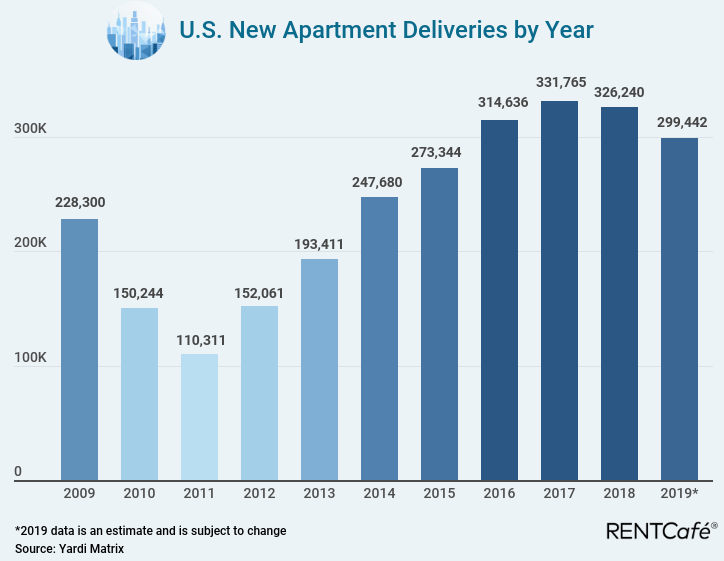
Apartment construction across the United States is projected to continue slowing down in 2019, according to the latest report from RentCafe.

Based on Yardi Matrix market data, there will be an estimated 299,442 new units forecasted to be delivered this year. This marks a significant drop of 8.2 percent compared to 2018, when the total number of deliveries was 326,240, almost matching 2017’s nine-year peak of 331,765 new units.

“Rising construction costs and a tight labor supply certainly contribute to a flattening and decline of expected completions, but 2019 is part of a larger trend of developers gearing up for next cycle,”  said Tara Jeffcoat, senior research analyst at Yardi Matrix, in a release. “Although completions peaked in 2017, there is a significant number of prospective properties in the pipeline.”

Apartment Construction Declines In 2019 But More In The Pipeline

Highlights of the apartment construction report

  • Apartment construction slows down compared to last year, from 326,000 new deliveries in 2018 to a projection of under 300,000 in 2019.
  • Construction has been thriving in the last decade at 2.3M, but it’s no match for the impressive levels seen in the ’70s and ’80s.
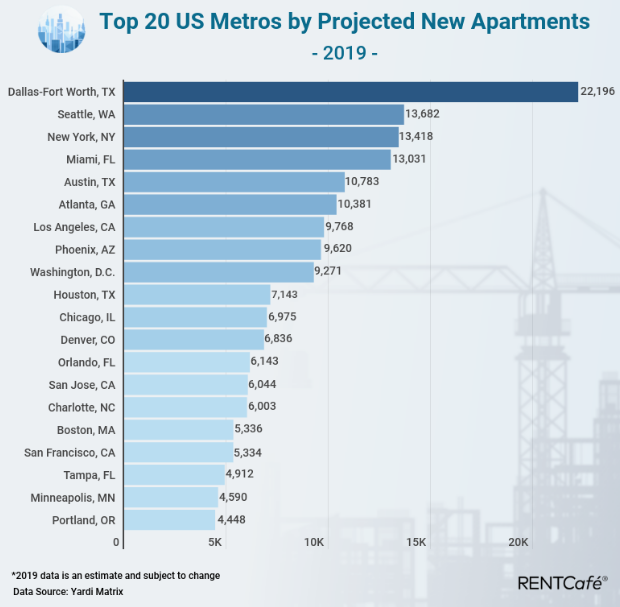
  • New York metro is dethroned by DFW metro and Seattle metro in terms of projected apartments for this year.

Apartment Construction Declines In 2019 But More In The Pipeline

Portland metro lags behind bigger markets

Compared to last year’s projections, the Denver metro is taking it easy, with far fewer units expected to be delivered this year. In 2018, the metro occupied the third place in our Top 20 with an estimated 15,187 new units, while this year it’s expected to build about half of that – 6,836, taking the 12th spot in our list.

California, Florida, and Texas each feature three metros in the Top 20, with Texas being represented by DFW metro, Austin metro, and Houston metro, which are higher up in the top occupying the first, fifth, and 10th place, respectively.

The Portland metro, on the other hand, is last on the list, with a projection of 4,448 new units, which is close to last year’s estimate of 4,804. Possible reasons for this low number could be the metro’s lack of available land, and/or the restrictive regulations in the area.

Seattle is expected to add an impressive number of almost 6,900 new apartments

Apartment Construction Declines In 2019 But More In The Pipeline

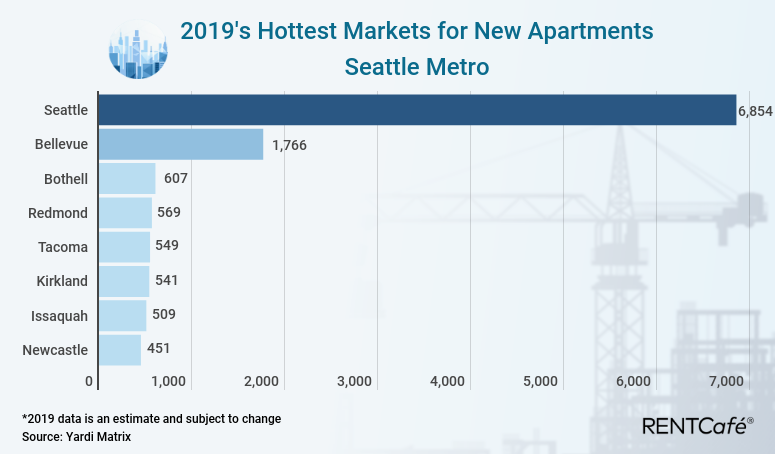
With construction cranes spread across the city, Seattle is booming with new apartments. Our projected number of deliveries for 2019 is 6,854, which could mean a possible slowdown in rent growth.

Given its strong economy, Seattle should encounter no issues filling up the newly built apartments as the area keeps creating new jobs.

Building considerably less than Seattle, Issaquah is the runner-up, with an estimated 509 new apartments for 2019. It’s followed by Newcastle, with an even lower number of 451 projected deliveries.

Rent growth is slowing down after picking up speed last year

Apartment Construction Declines In 2019 But More In The Pipeline

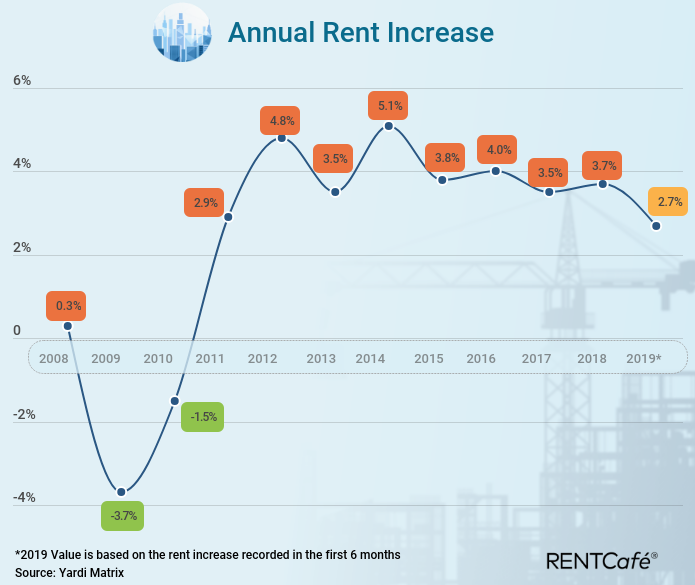
Zigzagging since 2010, the average rent growth has hit the brakes in the last 6 months, witnessing a 2.7 percent increase since 2018 when it went up by 3.7 percent.

The glut of new apartments built in previous years could be one of the reasons for this slowdown, taking the wind out of rent increases.

The influence of new deliveries on rent growth is no new occurrence; whenever supply is abundant, rent growth weakens. A relevant example is the one between 2009-2011, when apartment construction hit its lowest numbers (decreasing from 228,300 to 110,300) while rent growth skyrocketed from -3.7 percent to 2.9 percent.

Arizona Re-Thinking Short-Term Rental Laws After Sedona Uproar

Portland regulators, through the city’s revenue department,t have reached a memorandum of understanding with Airbnb

Arizona Governor Doug Ducey says lawmakers may have to reconsider current short-term rental laws in the upcoming legislative session after multiple complaints from some neighborhoods and smaller communities, including Sedona.

“I’ve heard the most feedback from Sedona and this idea of ‘party houses’,” Ducey told reporters. “So, I do think there are things that we can address in terms of public policy at the legislative level. We’re going to revisit that in this upcoming session.”

Sedona Assistant City Manager Karen Osburn in July presented a graphic showing hundreds of short-term rentals that have sprung up in Sedona, according to the Red Rock News.

“What we are experiencing is really a colossal change in character of the community,” Osburn told a meeting in July. “When you have this kind of saturation and homes are converted to short-term rentals and residents are replaced with visitors, when you leave your home and go for a walk in your neighborhood, you don’t recognize people anymore.”

According to the Red Rock News, Osburn also pointed out the domino effect vacation rentals are having on Sedona. Many long-term renters are having to move out because the owners are converting the homes into short-term rentals.  The result is a lack of long-term rentals in the area, and those few that are available are often too costly for those in the workforce. Because of that, businesses are finding it difficult to find employees willing to commute to town

Arizona, with Ducey backing, passed a law in 2016 barring local communities from prohibiting short-term vacation rentals. New legislation taking effect in August, House Bill 2672, lets municipalities limit special events, like weddings, at vacation rentals.

Arizona short-term rentals crisis

Rep. John Kavanagh, R-Fountain Hills, sponsor of HB 2672, told the Arizona Republic that lawmakers should take up the issue again next year with an eye toward the concentration of short-term rentals in some communities where longtime residents face a difficult time finding affordable housing.

“We have a real crisis in Sedona and Jerome,” he told the newspaper.

Kavanagh said lawmakers also should consider reining in projects to convert entire apartment buildings into vacation rentals to lease on websites like Airbnb. Those developers create de facto hotels while removing long-term housing from the market.

Some other legislators were not happy with HB 2672.

“What originally was sold as a way for empty-nesters and other owner-occupants to make extra money by renting a spare bedroom to a foreign tourist has become a multi-billion dollar industry that heavily caters to large groups and special events where entire homes are rented out and treated like bars and concert halls,” said Rep. Isela Blanc, D-Tempe, in an interview with the Arizona Capitol Times.

Blanc said the bill doesn’t go far enough. She suggested that cities be permitted to limit these rentals to houses where the owner is a resident or the house is a second home.

“However, if you are just a capital investor coming in and changing the neighborhood completely by buying up as many homes as possible so you can continue to profit by calling yourself an Airbnb business, then you should be treated as a hotel,” Blanc told the Arizona Capitol Times.

Some Arizona short-term rental laws are legitimate governor says

“It’s really digging in to where the specifics are and how we fix it without wholesale change in terms of what citizens can do if they want to legitimately rent out their home during the Phoenix Open or some other event during spring training,” Ducey said.

Arizona Re-Thinking Short-Term Rental Laws After Sedona Uproar
Arizona Governor Doug Ducey says Arizona short-term rentals are good for people who want to rent out their home for the Phoenix Open or spring training.

When it comes to investors buying multiple homes to turn into vacation rentals, the governor added: “If someone wants to buy multiple homes, that’s something I want to dig into deeper and find out where the problem lies.”

Resources:

Ducey says Arizona lawmakers will revisit laws on short-term rentals after outcry in Sedona

Sedona residents address short-term rentals with Arizona Rep. Bob Thorpe

Arizona Governor Signs Bill Putting Some Restrictions On Short-Term Rentals

Proposed law would put restrictions on vacation rental homes

Apartment Maintenance Technician Jobs In High Demand

Apartment Maintenance Technician Jobs In High Demand

Apartment maintenance technician jobs are in high demand according to the latest jobs report from the National Apartment Association (NAA).

Across the country, apartment-maintenance technician jobs show up in the tight labor market with pay of $36,904.

Apartment Maintenance Technician Jobs In High Demand

Property managers and landlords are looking for and requiring base skills in the apartment-maintenance technician jobs of:

  • Preventative maintenance
  • Communication skills
  • Troubleshooting
  • Detail-orientation
  • Physical abilities

There are also specialized skills, such as plumbing and carpentry, that are needed on top of these basic skills.

Demand for apartment workers continues to rise

Apartment Maintenance Technician Jobs In High Demand

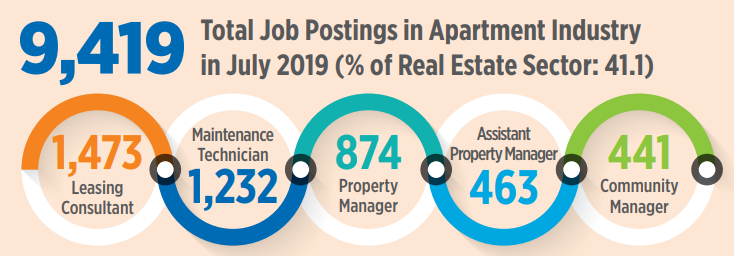
Healthy levels of new construction coupled with the summer leasing season led to increased demand for apartment workers in July, according to the NAA report.

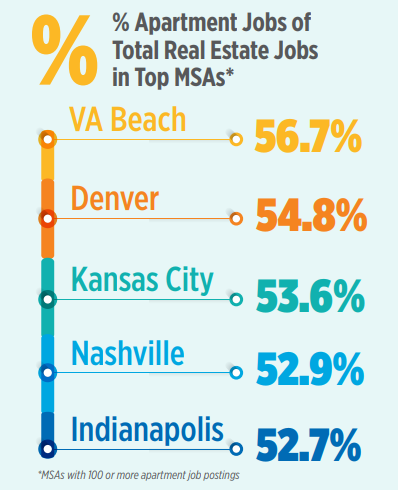
More than two out of five positions available in the real estate industry were in the apartment sector.

Denver is the only metropolitan area that has ranked in the top five for demand every month this year.

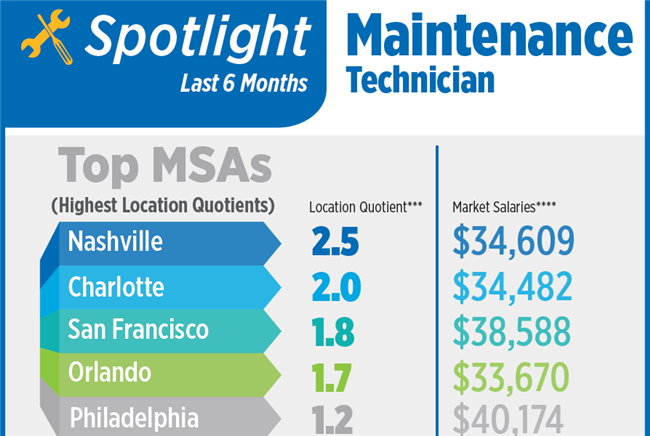
Nashville and Charlotte were showing the greatest concentration of maintenance technician jobs in the July report.

Given the high demand for maintenance techs across the country, market salaries shown reflect the higher end of the pay scale.

Apartment Maintenance Technician Jobs In High Demand

National apartment association jobs report background

 The NAA jobs report focuses on jobs that are being advertised in the apartment industry as being available, according to Paula Munger, Director, Industry Research and Analysis, for the National Apartment Association’s Education Institute.

“Our education institute is a credentialing body for the apartment industry. They hear often that one of the biggest problems keeping our industry leaders up at night is the difficulty in finding talent, attracting talent and retaining talent,” Munger said.  “Labor-market issues are happening in a lot of industries, certainly with the tight labor market we have.”

NAA partnered with Burning Glass Technologies. “They have a labor-job posting database that is proprietary,” she said, and they can “layer on data from the Bureau of Labor Statistics (BLS). We looked at that and thought we could do something that is really going to help the industry and help benchmark job titles and trends as we go forward,” Munger said.

Apartment Maintenance Technician Jobs In High Demand


5 Ways to Communicate Better with Challenging Tenants

5 Ways to Communicate Better with Challenging Tenants

Many landlords wish they could communicate better with challenging tenants who pose a number of problems for management.

 As a landlord, you may occasionally encounter tenants who bring a range of issues with them, like missing rent payments or keeping pets when the terms of their lease don’t allow it. You don’t have to dread dealing with problematic renters, though — especially if you put precautions in place to stop bad behavior before it starts. When communicating with challenging tenants, you should practice patience, professionalism and understanding.

It may be tempting to ignore a situation, but this only exacerbates tension and makes the renter likely to move. And although having them move out may sound pleasant, you lose money in the process. Make effective communication your first line of defense before resorting to drastic strategies. If you need guidance on preventing escalation with difficult tenants, check out the five tips below to communicate better with challenging tenants.

1. Lay down clear ground rules

You know how difficult it can be to deal with unclear guidelines. How can anyone follow rules that aren’t spelled out? Save your tenants the stress and confusion of accidentally breaking the rules by clearly outlining your property standards. There’ll be fewer chances for them to say they broke your policies because they misunderstood them. And if they still don’t follow guidelines, you can point out in the contract where they went wrong.

You’ll need to be consistent with rule enforcement and introduce penalties for each breach of contract. If your tenants realize they can get over on you, they’ll do so. Show there are consequences to inappropriate actions — introduce late fees into your lease contracts. Don’t set an unreasonable amount, but make sure it’s enough to encourage them to pay on time.

2. Use digital avenues

Tenants should have multiple ways to contact you — such as emailing, calling or text messaging. Some properties have Facebook pages or Google accounts where they can answer questions and respond to reviews. If you implement different platforms for communicating with tenants, give your hourly availabilities for each, so they know which to use when.

For example, you don’t want someone calling your phone late at night unless it’s an emergency. Similarly, you want to avoid tenants inundating you with concerns during your breaks.

5 Ways to Communicate Better with Challenging Tenants
Implement different platforms for communicating with tenants, give your hourly availabilities for each, so they know which to use when.

Create a suggestions/complaints form on your website and check it regularly so you can answer any issues. When figuring out new ways to reach your renters, consider the makeup of your audience. For example, 65 percent of millennials and members of generation Z prefer digital communication over face-to-face interaction. Many of your renters may be in this age range — meet them in the middle and communicate in ways that seem natural to them.

3. Be patient with your tenants

Some of your tenants may be the more actively disruptive type, while others create monetary issues like forgetting to send a check or approve an e-payment for rent. Both situations can be frustrating, but you should handle them professionally. Never approach people right off the bat with hostility or tension. People respond better to civility — few will heed the words of someone who insults them or shows an explosive temper.

Explain what they’ve done wrong and when you need them to fix it. After you’ve given multiple warnings with no success, it may be time to hand out an eviction notice. Eviction is a lengthy legal process, so be sure this is the route you want to take before starting. Don’t hold it over your tenants’ heads as a threat, and don’t initiate it for minor issues.

4. Set deadlines

implement different platforms for communicating with tenants, give your hourly availabilities for each, so they know which to use when
Tenants respond to times and deadlines so set definitive deadlines and stick to them.

Set definitive deadlines and don’t waver on them. If the rent needs to be in by a specific date each month, make this clear in the contract. Whether you set a grace period is up to you, but once the rent is late, it’s time to take action. Don’t wait to address the problem, because the tenant may assume you’ve forgotten or haven’t noticed. This inaction will make them more likely to do it again because they know there are no consequences for it.

Also set deadlines for yourself as well. Act quickly on concerns, questions and requests — this shows you care about your renters and want to help solve their problems. People won’t seek the assistance of someone they know doesn’t deliver. You want your tenants to know you aren’t that person. Even if their issue seems minor to you, it’s significant to them.

5. Foster respectful relationships

Whether you like them or not, you and your tenants must have a level of mutual respect for your professional relationship to succeed. They should know what you expect while they occupy your property, and what will happen if they disrespect it.

Likewise, it’s up to landlords to treat their tenants with decency. Unless they’re engaging in illegal activities or disturbing the premises, avoid prying into their personal lives or dropping by their place without notice. This behavior will make them feel like they’re under surveillance and may even risk legal action.

No one likes the feeling of being spied on, and if they think they have no privacy on your property, they may decide to take their money elsewhere.

Communicate better with challenging tenants

Create a property where tenants are glad to rent by setting reasonable policies and allowing open communication. Remember to handle situations as they come and take the appropriate actions when necessary. Communicating with challenging tenants takes patience, but you will do well if you run your property with strict, but kind, policies.

Related story: Landlords Do Not Want Eviction: A New Online Tenant-Landlord Communication Tool To Help

How Multifamily Investors and Others Raise Private Money Legally

How Multifamily Investors and Others Raise Private Money Legally

Raising private money to fund a real estate syndication,  a strategy followed by many who are in the business of buying and selling multifamily properties, can be complex and sometimes intimidating.

A new book by attorney Kim Lisa Taylor, “How to Legally Raise Private Money (The Definitive Guide to Syndication and Raising Money for Real Estate and Small Business)” addresses in a detailed, step-by-step fashion how to raise private money legally.

The book is a primer for syndicators on how to raise money from private investors practically and legally using the same secrets that hedge funds and private equity firms use to raise billions.

The key word, author Kim Lisa Taylor, Esq., emphasizes, is “legally.”

“Many people who are raising money from private investors fail to recognize a) that they are offering or selling securities, and b) that they must follow securities laws to legally do so,” Taylor writes.

How Multifamily Investors and Others Raise Private Money Legally
Kim Lisa Taylor writes, ““Many people who are raising money from private investors fail to recognize a) that they are offering or selling securities, and b) that they must follow securities laws to legally do so.”

Taylor is an experienced securities attorney who has been responsible for more than 300 securities offerings.

She is founder of the corporate securities firm Syndication Attorneys, PLLC, which is focused on helping clients structure their companies and legally raise money from private investors under federal and state securities laws.

As David Lindahl, founder of RE Mentor, says in his foreword to the book: “You assume that every commercial deal you’re doing is a security, and you follow the rules and regulations of the Securities and Exchange Commission. This will keep you safe.”

Staying on the right side of SEC regulations is just one — albeit overridingly important —aspect of the book.

Other lessons for readers on how to raise private money legally include:

  • How to earn money as a syndicator
  • How to split money with investors
  • How to legally market your securities offering to prospective investors
  • How and when to crowdfund an investment opportunity
  • How to deal with foreign investors
  • Who should be on your management team
  • How to position your company to attract investors
  • What marketing tools you need and how and when to use them
  • What questions you should ask as a passive investor considering investing in a syndicate

How Multifamily Investors and Others Raise Private Money Legally

“How to Legally Raise Private Money” is available in both paperback and Kindle editions on Amazon.  You can visit the Syndication Attorneys, PLLC, website  here.

Other articles by Kim Lisa Taylor:

Real Estate Syndication Investing – 10 Things To Know