
Home Blog Page 133

CDC Orders Nationwide Eviction Moratorium, But No Help for  Landlords

CDC Orders Nationwide Eviction Moratorium, But No Help for  Landlords

A new nationwide eviction moratorium has been ordered through the Centers for Disease Control (CDC) to halt residential evictions through the end of December.

However, the new ban on evictions of tenants does not offer any relief for landlords to be able to recoup unpaid rent.

“We are disappointed that the administration has chosen to enact a federal eviction moratorium without the existence of dedicated, long-term funding for rental and unemployment assistance,” said National Multifamily Housing Council President Doug Bibby in a statement.

“An eviction moratorium will ultimately harm the very people it aims to help by making it impossible for housing providers, particularly small owners, to meet their financial obligations and continue to provide shelter to their residents,” Bibby said.

Owners face financial crisis

“Without direct rental assistance, rents cannot be paid, and owners face a financial crisis of their own by not being able to maintain properties and pay their mortgages or property taxes,” said National Apartment Association President & CEO Bob Pinnegar in a release.

“This action risks creating a cascade that will further harm the economy, amplify the housing-affordability crisis and destroy the rental-housing industry. This global housing crisis cannot be blamed on the rental-housing industry, nor can the industry bear the brunt of the pandemic alone. We need balanced, reasonable solutions for all Americans,” Pinnegar said.

Bibby added, “Not only does an eviction moratorium not address renters’ real financial needs, a protracted eviction moratorium does nothing to address the financial pressures and obligations of rental-property owners. Without mortgage-forbearance protections and protections from other property-level financial obligations such as property taxes, insurance payments, and utility service, the stability of the entire rental-housing sector is thrown into question.”

Moratorium decisions should be left to state and local officials

“We believe renter protections are best left to state and local officials, who better know their housing markets and can tailor protections to the varied and unique eviction laws and judicial processes across jurisdictions,” Bibby said.

At the federal level, Bibby said, “We agree with Secretary (Steve) Mnuchin, Speaker (Nancy) Pelosi and Leader (Chuck) Schumer that policymakers need to come back and negotiate a strong rental-assistance program.”

National Rental Home Council Rips National Eviction Ban

“President Trump’s eviction moratorium might work in a fantasy world. But in this one, it only kicks the problem down the road. Once the moratorium expires, renters will owe back rent for several months, and their landlords may no longer be in business, the National Rental Home Council said in a statement.

“Over half of all rental properties in the United States, 23 million, are single-family homes. Ninety-seven percent of these properties are held by “mom-and-pop” landlords, who own between one and three properties. At the end of this year, many of these landlords will have foregone rent for nine and a half months.

“It’s not quite clear how the administration expects these landlords to cover their mortgage payments, property taxes, community fees, and maintenance costs. With no corresponding ban on foreclosures, mortgage holders still can and will foreclose on landlords who can’t meet their financial obligations.

Go deeper in debt or sell

“The order leaves landlords with two grim options — go deeper into debt, or sell.

“This moratorium also capitalizes on the false narrative that landlords are lining up at the courthouse to file eviction notices. The exact opposite is true. Many landlords have created flexible payment plans, allowed tenants to access security deposits, and waived fees.

“The federal government has failed to provide genuine financial assistance to renters and landlords alike. We urge Congress and the Trump administration to change that state of affairs.

“America needs sensible, well-constructed rental assistance programs that provide immediate relief to both renters and landlords. That’s the only way to bring any sense of certainty to the rental housing market.”


 

Governor Extends Oregon Foreclosure Moratorium to End Of The Year

Sign Up For Our Newsletter And Get Apartment News And Helpful, Useful Content Each Week.

* indicates required

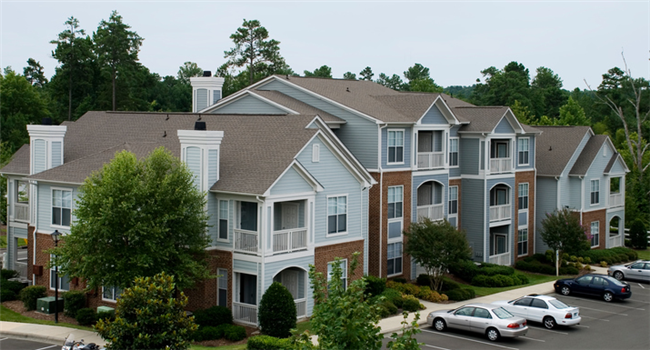
I am Renting My Property: Do I Need Home Insurance?

I am renting my property so do I need homeowners insurance or landlord insurance in order to protect my investment in case bad things happen?

By Bernadine Racoma

Have you decided that you want to become a landlord? Renting out your property can be a very profitable move, especially if you buy the right property in the right area. This is particularly true if you have a house or apartment lying empty. You can make good money depending on how big and where the property is.

But you have to be aware of your responsibilities as a landlord and then some. You have to ensure that you look after your renters and protect them against hazards such as loud music, assistance animals and noisy children. In addition, you also need to make sure that you protect yourself. Unfortunately, bad situations can happen when you are renting out your property to others. Instead of letting this stop you from becoming a landlord, you just need to know how to protect your investment. One way to do this is insurance

Homeowners Insurance or Landlord Insurance?

 If you are new to renting out properties, you may wonder what type of insurance is going to be best for your needs. Should this be homeowners insurance or landlord insurance? Indeed, there is a time and place for both of these options. Let’s take a look at the differences between them.

Homeowners Insurance

Most homeowners insurance policies will require you to live in the home. But this does not mean that you cannot make it work as a landlord. In fact, if you are planning on still living in your property and simply renting out one of the rooms, this could be a good option for you. Just make sure that this is going to be suitable for your insurance policy.

Your homeowners insurance is going to cover everything you want if you are still living in the house. For example, it is going to protect you against damage to your property, whether this is caused by a fire or extreme weather. You can also make sure that your insurance policy covers your belongings inside the home. If anything is damaged, you are going to receive assistance when it comes to repairing or replacing them. Make sure that you compare home insurance quote costs before you decide the one for you. You want to ensure that you are getting the best deal and one that is suitable for your needs.

It is important to realize that homeowners insurance can cover you against liability in your home. For example, if someone is injured on your property. This can be good if you have someone renting with you. But if you are not going to be present in the house, you may want to take a look at landlord insurance and see if this suits your needs.

Landlord Insurance

You may have guessed by the name that landlord insurance is going to be beneficial for you. Indeed, it can be a better option if this is something you want to do long term. For example, this type of insurance is going to help you if damage is caused to the building. Therefore, if there were a fire or adverse weather conditions that caused damage to your property, this type of insurance is going to help you pay for repairs.

One thing to know about landlord insurance is that it does not always offer the same coverage as homeowners insurance. For example, if you leave behind contents that belong to you in your property, it is likely they will not be covered. You can insure your contents but they might not be automatically covered. You will need to examine your policy very carefully before you choose landlord insurance.

Before You Choose Insurance

It is always important to shop around before jumping at an insurance policy so you can make the right decision. Before you choose between homeowners insurance and landlord insurance, make sure that you think about your circumstances. For example, consider whether you are going to be present in the home or you are going to leave your renters in charge of the whole property. The last thing you want is to choose a policy that does not cover you for what you need. Therefore, sit down and make a list of factors before choosing an insurance policy. This is going to ensure that you get everything you need and for a price that is going to suit your budget.

About the author:

I am renting my property so do I need homeowners insurance or landlord insurance in order to protect my investment in case bad things happen?

Bernadine Racoma is the Content Manager of eTranslation Services. Her long experience in an international development institution and extensive travels have provided her a wealth of knowledge and insights into cultural diversity. She writes to inform, engage, and share the idea of the Internet being a useful platform for communicating, knowledge sharing, educating, and entertaining.  You can find Bernadine Racoma at Twitter.

I am renting my property so do I need homeowners insurance or landlord insurance in order to protect my investment in case bad things happen?
https://pixabay.com/photos/architecture-building-driveway-1867187/

Tenant Occupancy Issues During COVID-19: Occupants, Sublessors, and Squatters

Tenant Occupancy Issues During COVID-19: Occupants, Sublessors, and Squatters

Tenant issues around occupants, sublessors and squatters have increased during the pandemic.

Bradley S. Kraus
Attorney at Law, Warren Allen, LLP

One of the most common issues I have encountered in my time as a landlords’ attorney is dealing with unauthorized individuals living in my clients’ properties.

These issues have only increased with COVID-19. If you have been a landlord long enough, you have likely heard individuals utter the words “squatter’s rights” or some other formulation of the phrase.

Such rights do not exist in the Oregon Residential Landlord and Tenant Act. Oddly enough though, without a strong rental agreement, arguing that an individual is living in the premises without your consent can also be the most difficult tenant default to prove.

The above point is clearer when you think about how to prove someone is actually “living” somewhere. After all, it would be awkward—and illegal—to set up cameras in your tenants’ leased premises. It is important to remember that the phrase “unauthorized occupant” appears nowhere in the ORLTA. Therefore, landlords are left with what their rental agreements define as an “unauthorized occupant” in framing the default under the ORLTA.

Unauthorized tenant

If you have a solid rental agreement from any reputable company, it will likely contain a prohibition against individuals occupying the premises without the consent of the landlord. If you think you have an unauthorized occupant, your first step is to analyze the amount of time your rental agreement allows someone to stay or visit the premises before becoming an unauthorized occupant. That is the easy part; proving someone lives somewhere—as opposed to a tenant having a friend visiting—can prove daunting.

Before considering whether to serve a notice upon a tenant for an unauthorized occupant, you should confer with your attorney about your chances of success, should such an issue be challenged. The question I ask my clients is, “How do you know he/she/they live there?” A hunch simply will not do. Seeing someone every couple of days also likely will not suffice—after all, your tenants can have friends visit. However, if you see the unauthorized occupant’s car parked overnight—arriving at night, leaving in the morning—or if this new individual begins receiving packages at the premises, such evidence may be useable.

Tenant subletting

Subletting is a similar issue to unauthorized occupants. There are no express prohibitions in the residential portion of the ORLTA against subletting. Hence, the same rules and potential proof issues apply to subletting issues. Ensuring your rental agreement contains an express prohibition against assignment and subletting is the first step. Proving that you have a sublessor is the largest hurdle in the race. With the advent of sites like AirBnB and Craigslist, if your premises is listed on one of these sites—as they often are—such evidence will be useful as you and your attorney navigate a way forward.

Finally, I have encountered many situations during COVID-19 where tenants simply abandon a dwelling unit, and random people appear to take their place. If this issue arises, you may have rights under the unauthorized possessor statute—ORS 90.403—of the ORLTA. If you satisfy the elements listed therein, a 24-hour notice directed at the unauthorized possessor can get you on track to recover your property as quickly as the law allows.

Many individuals will cry “no-harm-no-foul” when it comes to the aforementioned situations.

However, landlords have the right, and an obligation—not only to the owners of the properties they manage, but also their other tenants—to know who is living within their properties. The outbreak of COVID-19 does not change these rights or obligations, and nothing in House Bill 4213 or any other eviction moratoriums prohibit taking action to address the above issues.

Tenant Occupancy Issues During COVID-19: Occupants, Sublessors, and Squatters
Bradley Kraus, Portland attorney

kraus@warrenallen.com  or 503-255-8795

Landlord Rights and Remedies After HB 4213: A Path Forward

Sign Up For Our Newsletter And Get Apartment News And Helpful, Useful Content Each Week.

* indicates required

4 Ways to Help Manage Renters Moving During COVID-19

4 Ways to Help Manage Renters Moving During COVID-19

Keeping your tenants safe when renters are moving during covid-19 is crucial so here are some thoughts on best ways to do it from Keepe the maintenance company.

So many things feel different now because of coronavirus, with extra precautions such as masks, gloves, and social distancing. Even the ways of searching for a new apartment, signing a rental agreement, and moving during coronavirus have changed.

If you are a property manager dealing with tenants moving in or out of your rental property during the coronavirus pandemic, below are ways to safely manage such type of situation.

No. 1 – Create a moving timeline

While moving is considered an essential service in most states, there is still the need to adhere to social distancing and protect your existing tenants.

As a property manager in charge of a rental property, you should create a moving timeline or designate certain days of the week that renters are allowed to move in. This creates room for you and your team to sanitize the building or apartment before they arrive or before the next moving day.

No. 2 – Introduce the use of lockboxes for renters moving

Lockboxes are fairly common in the AirBnB industry, and property managers and landlords are beginning to adopt the system for managing renters moving in and out during the pandemic.

You should set up lockboxes so that your renters moving do not have to meet anyone in person during covid-19.

Using a lockbox system allows your move-out tenants to drop their keys without you physically receiving them. When they drop their keys in the box, you can have a cleaning company properly sanitize them before your move-in tenants arrive to pick them up.

Not only does this protect you from the virus, it also makes it easy for your tenants to drop or pick up keys without you needing to be there.

No. 3 – Organize virtual tours

Normally, the method was to meet with potential renters face-to-face and hold open houses for them to see the property.  The continual spread of the coronavirus has increased the use of virtual tools in the U.S. real-estate industry.

As a property manager, you should adopt the use of virtual tools like Zoom, Skype, and FaceTime to show your properties to interested renters and contractors. Adopting a virtual tour allows you and your renters to adhere to social-distancing rules and protect everyone involved.

If there is an urgent need for physical viewing, you should reduce the number of people that can visit the showing during covid-19. More importantly, you should also consider the use of electronic signing of the lease agreement and online rental application.

No. 4 – Additional cleaning and sanitizing

Tenants moving in or out involves a lot of physical contact, which could easily increase the spread of the coronavirus.

Introducing additional cleaning and sanitizing processes will protect you, your team, existing tenants, contractors, and potential renters.

Start by making provisions for disposable hand gloves, face masks, hand sanitizers, and handwashing equipment in your rental property. You can employ the use of a professional cleaning company to handle daily cleaning or sanitizing before and after move-in or -out.

renters moving may require property managers to do more cleaning due to covid-19
Tenants moving in or out involves a lot of physical contact, which could easily increase the spread of the coronavirus.

Final thoughts

Property managers and landlords have adapted their standard moving procedures to help tenants move into their new homes in the safest way possible during covid-19. By providing renters with digital ways to view a property and sign a lease agreement, managers and landlords can continue to offer valuable services during a very confusing time.

Successful Landlords Know All Tenant Screening Companies Are Not The Same

About Keepe:

Keepe is an on-demand maintenance solution for property managers and independent landlords. The company makes a network of hundreds of independent contractors and handymen available for maintenance projects at rental properties. Keepe is available in the Greater Seattle area, Greater Phoenix area, San Francisco Bay area, Portland, San Diego and is coming soon to an area near you. Learn more about Keepe at https://www.keepe.com

Sign Up For Our Newsletter And Get Apartment News And Helpful, Useful Content Each Week.

* indicates required


Rental Concessions Offered in 30 Percent of Listings

Rental Concessions Offered in 30 Percent of Listings

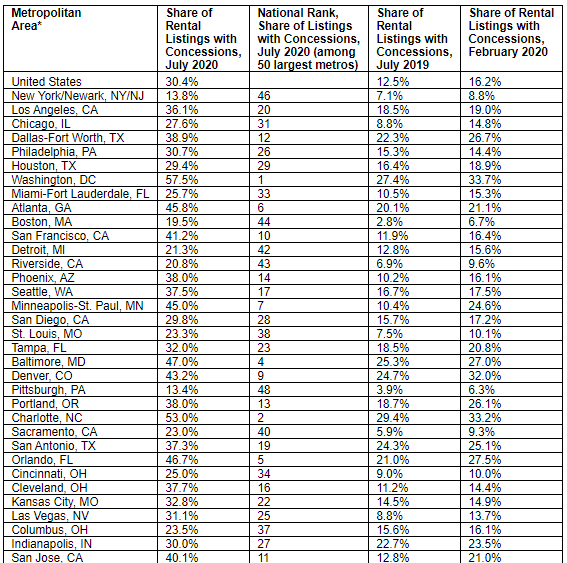
The share of rental listings that advertise some form of rental concessions rose from 16.2 percent in February to 30.4 percent in July, according to a Zillow release about its listings.

More rental concessions are showing up as year-over-year rent growth has slowed from 3.9 percent to 1.2 percent over the same period.

Landlords appear to be choosing to offer concessions rather than reduce rent to entice tenants to their buildings, as demand for rentals has waned since February.

“Before the pandemic, rent growth was accelerating and the nation was seeing concessions dwindle. That trend reversed sharply after the pandemic hit in February,” said Zillow economist Joshua Clark in a release. “In a softer rental market, landlords are trying to push the right button to bring renters into their space.”

Rentals in multifamily buildings have concessions attached more than do other rental types.

  • Free weeks of rent is, by far, the most common offer;
  • Reduced or waived deposit is second;
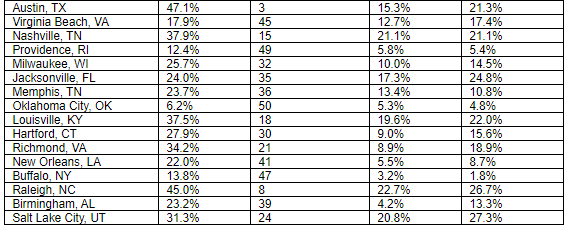
  • Among the top 50 U.S. metro areas, concessions are most common in Washington, D.C., Charlotte and Austin.

The rate of rental concessions can often be a leading indicator of a coming price drop, because landlords will often concessions first, before reducing rent.

When owners feel concessions are no longer moving the needle, they’ll reduce prices. Many landlords prefer to offer a concession rather than cut rent and set a precedent that could linger when the market picks back up.

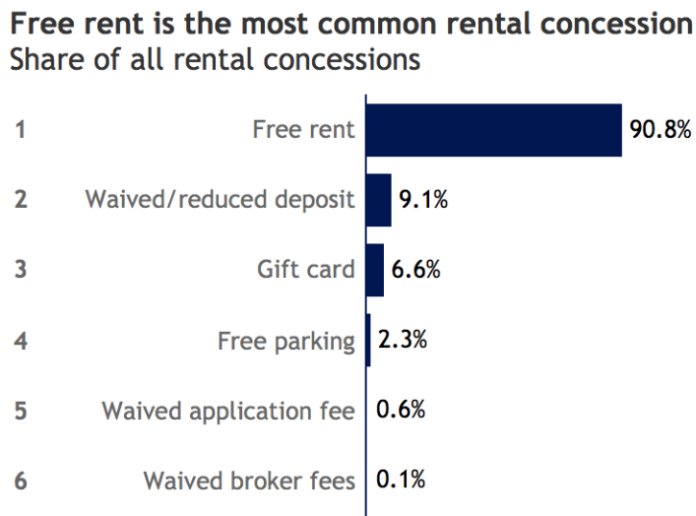
Free rent made up 90.8 percent of all promotions offered across the United States, with the amount of rent relief ranging from two weeks to two months. It ranked as the top concession choice in all but six of the 50 largest markets.

Reduced or waived deposits (9.1 percent) and gift cards (6.6 percent) followed. The median amount of free rent offered is six weeks, which equates to an 11.5 percent annual discount. For the typical U.S. rental, that would mean about $200 in monthly savings.

Concessions most common in urban multifamily buildings

Renters in multifamily and other home types are more likely to receive some sort of concession than those in single-family rentals; 63 percent of multifamily renters report getting at least one, as do 59 percent of renters in other home types.

Only 35 percent of single-family renters reported receiving any concessions.

That means the increase in concessions is likely to be most prevalent in the multifamily buildings common in urban cores, which is consistent with previous Zillow research showing urban rents have been hit harder than suburban rents during the pandemic.

One of the biggest challenges for property managers since the beginning of the pandemic has been capturing prospective tenants’ interest in a space without the option of in-person tours, said Bevan White, vice president of marketing at Pegasus Residential, in the release.

“When our teams switched to a virtual leasing environment in late March, they had to adapt quickly, as they couldn’t physically show an apartment home with an in-person tour, one of the major tools we have to build value,” White said.

“Teams have used teaser photos, pre-recorded walk-throughs of amenities, and even personalized recorded messages to capture the renters’ interest before conducting a full virtual tour with the site team.”

Without in-person tours in their toolbox, Pegasus has looked for new ways to add value for tenants beyond offering concessions. “We have slightly increased concessions in some markets, and we have also focused on increasing the availability of smart homes as a way to add value to a unit instead of simply offering free rent,” White said.

Rental Concessions Offered in 30 Percent of Listings
Rental concessions offered in 30 percent of listings in zillow

Landlord Rights and Remedies After HB 4213: A Path Forward

Sign Up For Our Newsletter And Get Apartment News And Helpful, Useful Content Each Week.

* indicates required

Governor Extends Oregon Foreclosure Moratorium to End Of The Year

Governor Extends Oregon Foreclosure Moratorium to End Of The Year

Governor Kate Brown has extended Oregon’s foreclosure moratorium to December 21, 2020; however, she has not yet extended the evictions moratorium set to expire September 30.

Executive Order 20-37 will extend House Bill 4204’s current moratorium on foreclosures, as allowed by that legislation.

“Every Oregonian deserves a warm, dry, safe, affordable, and accessible place to call home,” Brown said in a release. “That’s especially true during a pandemic, when physical distancing and limiting trips away from home are critical to stopping the spread of COVID-19. Extending the moratorium on foreclosures will ensure that more Oregonians do not lose their homes this year, and that businesses can continue to provide vital goods and services to our communities.”

While the executive order will provide homeowners and business owners certainty through the end of the year, “it is not a long-term solution. The governor’s office will be working with landlords, lenders, and other stakeholders in the coming weeks to craft a solution for the legislature to consider.”

No decision yet on eviction moratorium

The release said Brown is “also continuing to have conversations with community leaders and stakeholders to look at options surrounding a moratorium for evictions for renters, which does not expire until September 30.”

Brown said in the release, “I’d like to thank legislators for taking action with me this summer to help Oregon renters, as well as homeowners, and business owners.  As this crisis continues, I am confident that lawmakers will again take action to help Oregonians struggling to pay rent and mortgage payments.”

The Legislature’s Emergency Board allocated $55 million for rent assistance through December, and $20 million for affordable housing operating support for OHCS partners. In April, the Emergency Board also allocated $12 million in emergency funding for safe-shelter and rental assistance. Congress has also passed about $82 million in housing support and other housing-related services for Oregonians, including funds for rental and utility assistance.

Landlord Rights and Remedies After HB 4213: A Path Forward

Sign Up For Our Newsletter And Get Apartment News And Helpful, Useful Content Each Week.

* indicates required

Security Deposit vs. Move-In Fee: Which is Better?

Security Deposit vs. Move-In Fee: Which is Better?

Whether to use a security deposit or a move-in fee, if it is legal in your area, is the topic this week from Keepe the on-demand repair and maintenance company.

One of the biggest risks with managing a rental property is having to deal with property damage by existing or outgoing renters.

Over the years, security deposits have been the preferred option by property managers when it comes to compensating for property damages caused by tenants.

But in recent years, property managers are beginning to adopt a new strategy, known as the apartment move-in fee. As a renter or property manager seeking to adopt either of the methods, it is important that you know first-hand what they mean and their pros and cons.

Definition of a Security Deposit

A security deposit is a refundable sum of money a renter or tenant pays to the property manager or landlord when moving into a rental property. It is usually one to two months’ rent, depending on city or state regulations. Also, landlords or managers can legally use the security deposit, or deduct from it, to pay for damages to the property caused by the tenant, or if the tenant skips paying rent and moves out.

Pros:

 Instills sense of responsibility in your tenants: Due to the costly nature of security deposits, renters are more likely to maintain their apartments to avoid losing their security deposits when they move out.

 Added protection of your investment: Collecting a security deposit give your investment an additional sense of protection, since you can use a tenants’ security deposit to fix your property.

 Cons:

 State laws on security deposits can be complex: For states like Illinois, accessing security deposits made by your tenants involves paperwork and restrictions that can lead to serious fines if you break any of the rules.

 Potential tenants may be hesitant to pay: If your rental property is in a low-income area, potential renters may hesitate to release a month or two in rent in the name of a security deposit.

 May lead to disagreements over move-out inspections: Tenants may not agree with your findings during a move-out inspection, leading to prolong arguments or even lawsuits.

 What is a Move-in Fee?

A move-in fee is paid by a tenant to a landlord or property manager upon signing their new lease.

The fee serves to cover the costs of accommodating and processing new tenants, such as changing directories and reprogramming security systems. A move-in fee is always non-refundable.

Also remember, if the damage is bad you can always go after the tenant in court, just like you would if damage is over the amount kept as a security deposit.

Pros: More attractive for your tenants: Since move-in fees are usually 30 percent to 50 percent of a month’s rent, it will be easy for your potential tenants to agree to it.

Security deposit or move-in fee  so which is better for your rental property and tenants?
The move-in fee serves to cover the costs of accommodating and processing new tenants, such as changing directories and reprogramming security systems. A move-in fee is always non-refundable.

 No state regulations: In states like Illinois, where state laws require landlords to deposit the money received as security deposit into a separate account, this may delay your access to the money for repairs. With move-in fees, you can easily use the money for repairs or whatever you deem fit, as long as move-in fees are legal in your jurisdiction.

 Non-refundable: Move-in fees are generally non-refundable, whether the tenant trashes the property or not. You do not need to hand it back to a tenant upon their moving out.

 Cons: No incentive: When tenants have no security deposit or worthy sum of money on the line, they are more likely not to be careful with your property or worry about small damages.

 Lower Fee: Since move-in fee are generally 30 percent or more of a month’s rent, it may not be able to cover the cost of serious repair issues. Due to its lower amount, you may need to file a lawsuit for more money, leading to additional delay and stress.

 Which is Best for You?

You should base your decision on your location and the method that has worked best in the past.

If your property is in a jurisdiction like Chicago, where there are strict security-deposit regulations and penalties, then collecting a move-in fee may be your best bet.

But if your property is in a location with straightforward security-deposit laws, you should opt for a security deposit.

Most importantly, you should continue with a security deposit if you have had positive experiences about the process.

4 Steps to Make Rental Home Carpet Last Longer

About Keepe:

Keepe is an on-demand maintenance solution for property managers and independent landlords. The company makes a network of hundreds of independent contractors and handymen available for maintenance projects at rental properties.

Keepe is available in the Greater Seattle area, Greater Phoenix area, San Francisco Bay area, Portland, San Diego and is coming soon to an area near you. Learn more about Keepe at https://www.keepe.com.

5 Maintenance Tips For Long-Lasting Carpet In Your Rentals

Kitchen Range Hood Options for Your Rentals

Sign Up For Our Newsletter And Get Apartment News And Helpful, Useful Content Each Week.

* indicates required

Can I Cash-Out a Portion of my 1031 Exchange Proceeds? The Ins-and-Outs of A Partial 1031 Exchange

Kay Properties and 1031 and 1033 exchanges and eminent domain options details

By Orrin Barrow
Vice President, Kay Properties and Investments, LLC

Many investors that come to Kay Properties are looking for a full tax deferment utilizing a like kind exchange. A full tax deferment under IRC Section 1031 consists of buying a replacement property for equal or greater value than that of your relinquished value of the property. For example, if an investor sells their property for a net sales price of $1,000,000 in order to have full tax deferment under Section 1031, the investor has to buy at least $1,000,000 worth of total real estate as replacement property.

However, many investors are unaware that they are not fully obligated to use 100% of their proceeds in order to still do a 1031 exchange. For example, if an investor sold for $1,000,000.00 they can actually take $200,000.00 out of their exchange to increase their liquidity and only pay capital gains and depreciation recapture taxes on that portion of their exchange, the $200,000.00 that they peeled off.  The $200,000.00 is then deducted from what the investor has to replace, leaving the investor with needing to purchase only $800,000 of replacement property to defer the bulk of their taxes due.

The liquid cash that the investor has available is now taxable but can be used for a variety of different reasons. Many investors have a large part of their net worth captured inside of their real estate holdings. They understand the value of a 1031 exchange but still want the option of having cash set aside for a rainy day. During the Covid-19 pandemic, we saw certain investors decided to complete a partial exchange rather than a full exchange so that they could have some additional liquid funds to possibly weather a more severe economic downturn.

It is prudent for investors to understand 1031 exchange rules to complete a partial exchange. When engaging in a 1031 exchange an investor has 45 days from the date of the recorded closing to identify properties and 180 days from the date of a recorded closing to close on their replacement property. Once an investors 1031 proceeds are transferred to their accommodator/qualified intermediary account they have the 45 day identification timeline to remove the proceeds that they want to liquidate from the accommodator account. If the funds remain in the accommodator account past the 45th day, the investors proceeds will remain with the accommodator until the 180th day. Investors need to be aware of when to remove their funds from their accommodator account in order to complete a partial 1031 exchange and how much their estimated tax obligation will be before considering completing a partial exchange. Remember, if your tax obligation from a partial exchange outweighs the proceeds you are left with, it may be prudent to do a full exchange.  It is always advised for investors to speak with their CPA and attorney for all tax and legal advice prior to deciding to complete any 1031 or partial 1031 exchange.

About Kay Properties and www.kpi1031.com

 Kay Properties is a national Delaware Statutory Trust (DST) investment firm.  The www.kpi1031.com platform provides access to the marketplace of DSTs from over 25 different sponsor companies, custom DSTs only available to Kay clients, independent advice on DST sponsor companies, full due diligence and vetting on each DST (typically 20-40 DSTs) and a DST secondary market.  Kay Properties team members collectively have over 115 years of real estate experience, are licensed in all 50 states, and have participated in over 15 Billion of DST 1031 investments.

This material does not constitute an offer to sell nor a solicitation of an offer to buy any security. Such offers can be made only by the confidential Private Placement Memorandum (the “Memorandum”). Please read the entire Memorandum paying special attention to the risk section prior investing.  IRC Section 1031, IRC Section 1033 and IRC Section 721 are complex tax codes therefore you should consult your tax or legal professional for details regarding your situation.  There are material risks associated with investing in real estate securities including illiquidity, vacancies, general market conditions and competition, lack of operating history, interest rate risks, general risks of owning/operating commercial and multifamily properties, financing risks, potential adverse tax consequences, general economic risks, development risks and long hold periods. There is a risk of loss of the entire investment principal. Past performance is not a guarantee of future results. Potential cash flow, potential returns and potential appreciation are not guaranteed. Securities offered through Growth Capital Services member FINRA, SIPC Office of Supervisory Jurisdiction located at 582 Market Street, Suite 300, San Francisco, CA 94104.

Grateful To Be Debt-Free: A Client 1031 Exchange Success Story

Looking for DST Properties for Sale? See Our 1031 DST Marketplace

Can I Cash-Out a Portion of my 1031 Exchange Proceeds?

Landlords And Tenants Face Difficulty Making Ends Meet With Mortgages And Rent

Landlords mortgages are a challenge in this time of the pandemic as renters have trouble making ends meet

As the pandemic stretches into its sixth month, renters and landlords face difficulty making ends meet with rent and mortgage payments, according to a nationwide survey conducted by Avail,  in August, 2020.

Smaller landlords in particular, many of whom are retired and rely on rental income, are having a hard time.

Due to the increase in partial rent payments, landlords are feeling financial pressure to pay their rental mortgages on time. Thirty-five percent of landlords surveyed by Avail, a technology platform for small landlords, gain 50 percent or more of their income from rental properties.

The survey included responses from 2,225 landlords and 2,919 renters with. Like renters, the majority of landlords currently reside in California (17.1 percent), with Illinois (7.9 percent), New York (6 percent), and Florida (5.9 percent) following.

Landlords face difficulty and going into forbearance

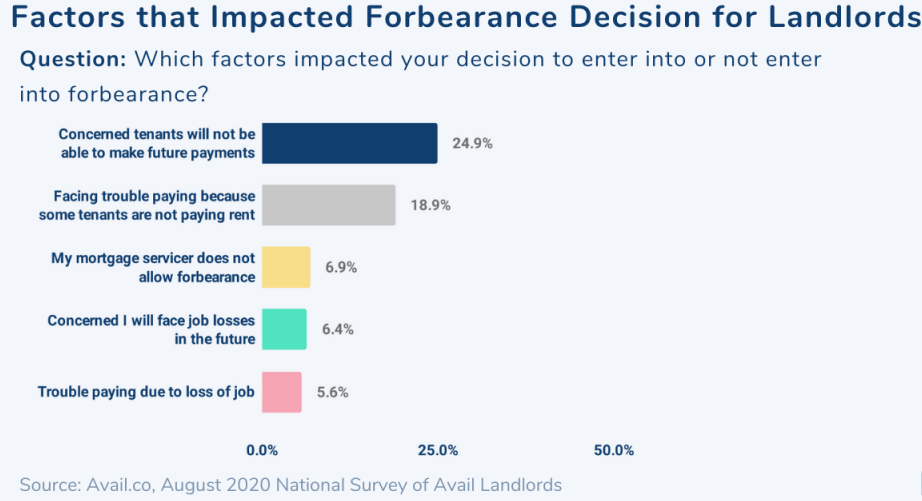
With inconsistent rent payments due to COVID-19, 12 percent of surveyed landlords face difficulty and went into forbearance. Concerns over renters not being able to pay rent in the future (24.9 percent), as well as trouble paying for their mortgages due to some renters not paying their rent (18.9 percent), were the top reasons landlords gave for going into forbearance.

The questions in this survey were developed with the input of researchers in the Urban Institute’s Housing Finance Policy Center.

Landlords face difficulty and forbearance can help so here are the factors

Struggling renters lead to struggling landlords

According to the survey, 64.2 percent of renters who responded stated the main challenge they have faced in paying rent is due to a loss of employment or reduced income during July.

In August, 60 percent agreed while 61.9 percent said another challenge was balancing paying rent and other regular expenses. This is cited despite the majority of renters being employed and working 30 hours or more during the time of their survey response.

In order to make monthly rent and mortgage payments, both renters and landlords are increasingly looking to their savings, ways to borrow from friends and family willing to lend funds, and government aid for help.

Landlords who faced difficulty took these actions to help

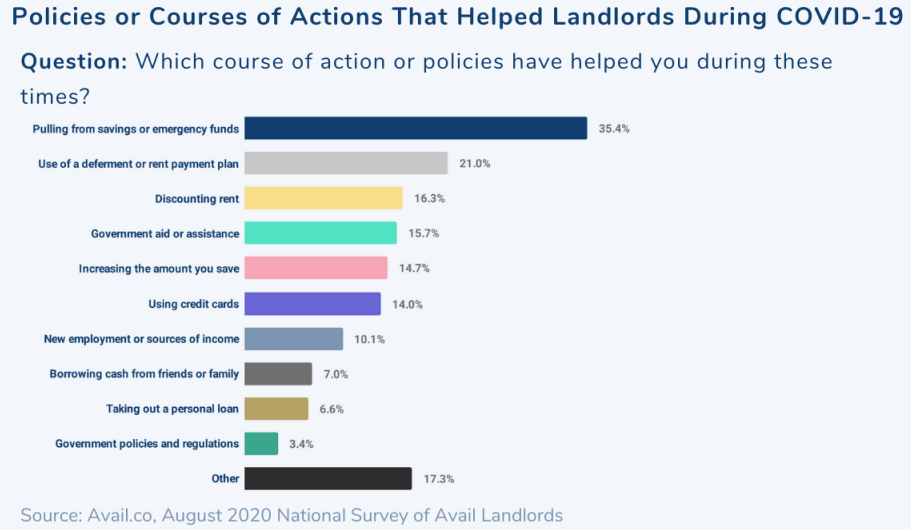
Landlords face difficulty and are looking to their savings accounts or emergency funds for help with covering expenses related to their rental properties during the pandemic. Of those who responded, 35 percent said they were using savings or emergency funds to cover the payments, while 21 percent said instituting a rent payment plan or deferment option for their renters helped.

More than one-third of landlords are retired

From the survey, Avail also found that 36 percent of landlord respondents are retired.

This paired with landlord respondents commonly reporting that they are using savings to continue mortgage payments on their rentals illustrates the financial pressures some landlords are facing during the pandemic.

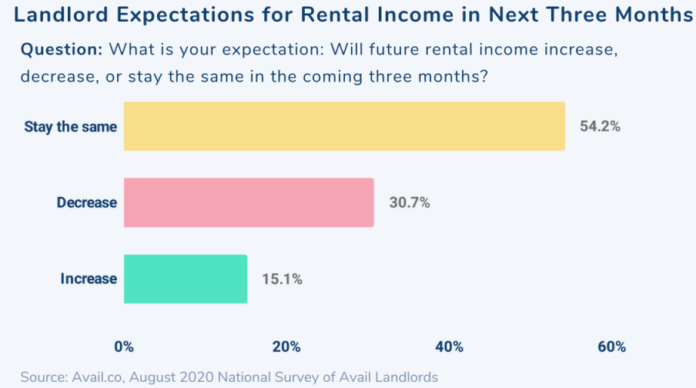
According to surveyed landlords, 54.2 percent think the income made from their rental properties will continue to remain the same in the next three months.

Roughly 30 percent think this form of income will decrease in the coming months, while only 15.1 percent of landlords said they believe it will increase.

“One renter has lost a job in the oil field and is working a lower-paying temporary job. Another renter, a single parent with no child support, has changed jobs in the past two months,” said a landlord in Texas in the survey, giving reasons as to why landlords are looking to decrease their rent.

“Ultimately, a tenant losing a job to the COVID-19 economic downturn is not something that is necessarily under their control,” said one landlord from Minnesota. “[The] Government has put a lot of pressure on the landlord to assume losses and protect the tenant, which makes for a very challenging situation.”

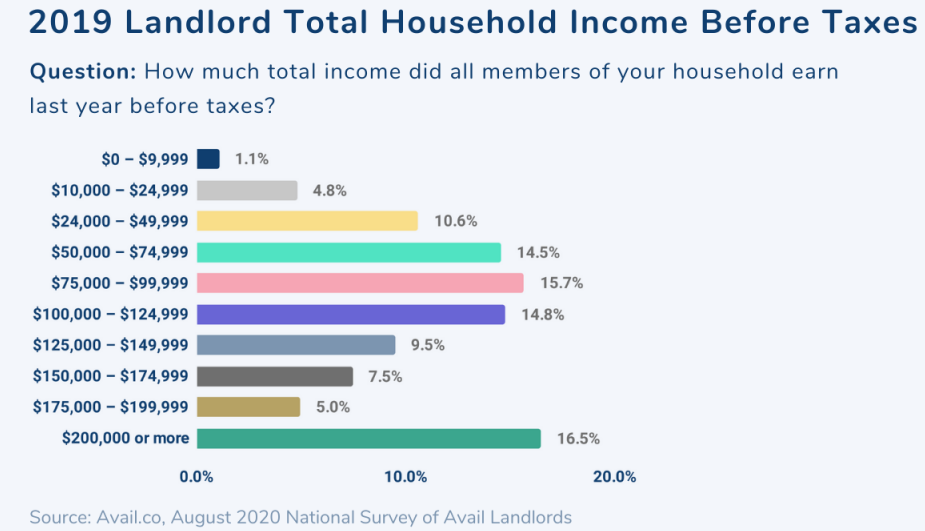
What landlords made in 2019 before taxes

Some landlord frustrations stemmed from the federal, state, and local governments allowing for some eviction protections on renters while not giving the same measures to landlords that hold mortgages from private companies not covered by CARES Act mortgage forbearance measures.

“It is unsustainable to allow the tenant to not pay but require a landlord to pay a mortgage due,” said a landlord from Maryland. “These decisions appear to be made without due consideration to the relevant factors of sustainment which has caused an unequal distribution of the effects of the impact caused  by the response to COVID-19.”

Missed Housing Payments Reach 33 Percent in Early August

Apartment Search Data Not Showing Exit from Cities

Sign Up For Our Newsletter And Get Apartment News And Helpful, Useful Content Each Week.

* indicates required

Renters Considering Moving Options Due To Pandemic

Renters consider moving due to pandemic

Renters are considering moving options as many formerly hot markets have cooled and renters are looking at rearranging their living situations based on the pandemic, according to a renter-migration report from Apartment List.

The report, which analyzed millions of online searches, also notes that not all metros are the same and that there is a variation between regions and cities in terms of how renters feel about moving. This analysis incorporates data from millions of user searches from metropolitan areas.

About 25 percent of renters considering moving have said they are more likely to move in 2020 because of the pandemic, and the rate was even higher for those living in dense cities and those who had experienced a layoff or some other reduction in income.  But renters in one city may behave differently than in another city, the report says.

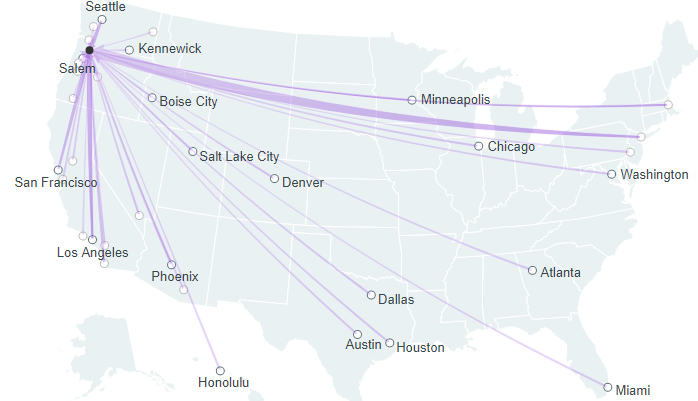
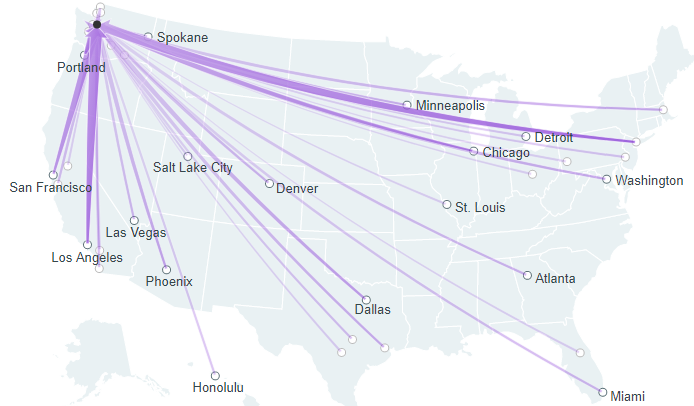
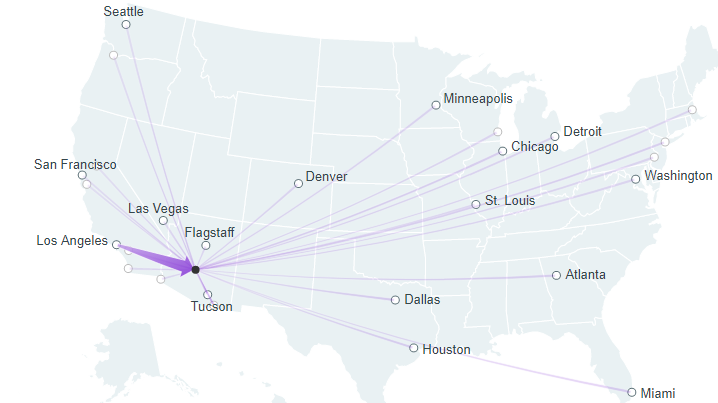
“Portland, Seattle, and Phoenix are three markets that tend to absorb renters,” said Igor Popov, Chief Economist, Apartment List. “They draw in lots of interest from renters looking to move from all over the country, but relatively few renters at any point in time are looking to leave.

“In other words, these three cities are notorious for sucking renters in. The few renters that do move away from Seattle or Portland tend to stay in the Northwest, just as renters leaving Phoenix tend to stay in the Southwest. At a high level, this pattern still holds true in the pandemic period,” Popov said.

Renters consider moving to Portland and where they live now

People who live outside Portland but want to move there
The top 3 places people who want to move to Portland live now. New York – 10.3 percent Los Angeles – 5 percent Salem – 4.5 percent

Inbound migration vs outbound migration

Across the nation’s 50 largest metros, relative inbound migration dropped from 31.1 percent to 28.8 percent year-over-year.

Meanwhile, relative outbound migration stayed essentially flat, barely ticking down from 24.3 percent to 24.2 percent.

What this means for renters

“Together, this tells us that in the wake of the COVID-19 pandemic, big rental markets are not seeing the outside influx of demand that they did last year.

“More and more, renters are choosing to either search locally or search in smaller markets outside the 50 largest that typically dominate search volume,” the report says.

What is happening in the tech hubs like Seattle

Although no other metro has seen a shift of the same magnitude as San Francisco, similar factors seem to be at play in other tech hubs, like Seattle.

Renters consider moving to Seattle and where they are now

renters considering moving options due to the pandemic and ones who want to move to Seattle
The top three places people who want to move to Seattle are coming from: Los Angeles 4.3 percent, New York 3.6 percent, Portland 3.6 percent.

Although no other metro has seen a shift of the same magnitude as San Francisco, similar factors seem to be at play in other tech hubs, like Seattle.

“The share of Seattle apartment hunters that are from out-of-town is down significantly this summer, which is a trend we’re seeing across other tech hubs such as Austin, Denver, and the Bay Area. This change likely reflects the fact that many Seattle employers are working remotely and requiring fewer, if any, of their new hires to relocate,” said Popov.

“Given that tech companies have generally been the fastest to embrace remote work, renters in other parts of the country may now feel that they do not need to move to a tech hub to take advantage of the thriving job markets that they offer. That said, despite the downward trajectory, these metros all still rank fairly high for relative inbound migration.”

Renters consider moving to Phoenix and where they are now

People who live outside Phoenix but want to move there
The top three places people who want to move to Phoenix live now: Los Angeles 33 percent, Tucson 3.8 percent, Chicago 3.1 percent

Conclusion

In recent months, there has been significant speculation about how the COVID-19 pandemic will change where Americans want to live.

“While our previous research has shown that predictions of a widespread urban exodus may be premature, this new data shows that at the broader metro level, we are beginning to see signs of the COVID effect. Most notably, the nation’s pricey tech hubs have begun to lose some of their luster, although they still remain fairly popular destinations.

“Meanwhile, some more affordable markets are gaining in popularity. As remote work and widespread layoffs reshape the labor market, the rental market is beginning to respond.”

What the Downsizing Trend Means for Apartment Living

How to Avoid Crossing the Line with Tenants’ Privacy 

Sign Up For Our Newsletter And Get Apartment News And Helpful, Useful Content Each Week.

* indicates required