Home Blog Page 115

The Case Study of a 1031 DST Specialist

The Case Study of a 1031 DST Specialist

By Steve Haskell
Vice President at Kay Properties and Investments

There are various strategies when using DSTs (Delaware Statutory Trusts) in a 1031 exchange. Some investments are as easy as a simple exchange from one property into a single DST. Other times DST’s are used to invest leftover equity from an exchange so the investor is not taxed on leftover funds, called “boot”. Investors will routinely use DSTs as a backup ID in case their target replacement property doesn’t work out. And occasionally, Kay Properties will assist an exchanger to utilize all said strategies in one sophisticated effort to mitigate risk and defer as much tax as possible. Read on for the experience of a highly skilled 1031 DST specialist.

A real estate investor sold an investment property for approximately $2M.  Roughly 25% of his property was leveraged. Therefore, $1.5M was sitting in his qualified intermediary account. He then contacted Kay Properties to pursue a partial 1031 DST exchange. The exchanger wanted to purchase a property on his own, but something smaller and easier to manage than the property he recently sold. He wanted to put part of his exchange into a completely passive DST option that would require no management on his part. The DST part was relatively easy. However, he was having a hard time finding a replacement property to own outright, and the 45-day clock was ticking. Kay Properties created a multifaceted strategy that supported the investor from a variety of angles.

First, the exchanger used the debt built into the DST to replace his mortgage. The Kay Properties representative created a DST portfolio for the investor with a loan-to-value of approximately 50% to match the exact debt required to satisfy the 1031 exchange regulation. The debt was non-recourse, meaning the investor did not need to apply or sign for the loan, nor did it show up on his personal balance sheet. This freed him up to purchase a smaller property to own outright without taking out a mortgage, which increased his probability of closing.

Next, the exchanger used a DST as a backup ID in case the target property did not work out. The due diligence period on the replacement property extended past the 45-day period. If inspections exposed an issue that compromised the deal, the exchanger would be vulnerable to over hundreds of thousands of dollars in taxes. However, since the Kay Properties representative advised the client to use a DST as a backup ID, the exchangers risk of a failed exchange was significantly mitigated.

Finally, Kay Properties assisted the investor to ensure there was no leftover equity by using the DST to invest the leftover boot. After the exchanger and the seller agreed on a price, he realized there was approximately $50,300 of exchange funds left over. Kay Properties found a DST to invest that exact amount to finish up the exchange.

When one has the knowledge and the assistance of a skilled DST 1031 specialist, an investor can mitigate risk and protect themselves from a failed exchange in a variety of ways. Through the assistance and guidance of Kay Properties, the exchanger in this case split funds into both DSTs and his own property, replaced his debt with a non-recourse loan, protected his exchange with a backup ID, and took care of the leftover boot. These high level DST skills often are not available to investors who choose to work with unaware financial planners with little-to-no understanding of real estate, 1031 exchange strategies and DST investments. Fortunately, the client was working with Kay Properties. If you are interested in learning more on how to use a DST to mitigate risk and defer taxes in your 1031 exchange, contact Kay Properties by registering at www.kpi1031.com.

About Kay Properties and www.kpi1031.com

 Kay Properties is a national Delaware Statutory Trust (DST) investment

firm. The www.kpi1031.com platform provides access to the marketplace of DSTs from over 25 different sponsor companies, custom DSTs only available to Kay clients, independent advice on DST sponsor companies, full due diligence and vetting on each DST (typically 20-40 DSTs) and a DST secondary market.  Kay Properties team members collectively have over 115 years of real estate experience, are licensed in all 50 states, and have participated in over $21 Billion of DST 1031 investments.

This material does not constitute an offer to sell nor a solicitation of an offer to buy any security. Such offers can be made only by the confidential Private Placement Memorandum (the “Memorandum”). Please read the entire Memorandum paying special attention to the risk section prior investing.  IRC Section 1031, IRC Section 1033 and IRC Section 721 are complex tax codes therefore you should consult your tax or legal professional for details regarding your situation.  There are material risks associated with investing in real estate securities including illiquidity, vacancies, general market conditions and competition, lack of operating history, interest rate risks, general risks of owning/operating commercial and multifamily properties, financing risks, potential adverse tax consequences, general economic risks, development risks and long hold periods. There is a risk of loss of the entire investment principal. Past performance is not a guarantee of future results. Potential cash flow, potential returns and potential appreciation are not guaranteed.

Securities offered through Growth Capital Services, member FINRASIPC, Office of Supervisory Jurisdiction located at 582 Market Street, Suite 300, San Francisco, CA 94104.

Do DSTs work for a 1033 Exchange due to eminent domain or involuntary conversion?

Understanding Debt Structures Prior to Investing

HomeVestors Renovates Dilapidated Multifamily Project

A HomeVestors franchise has moved from ugly houses to an ugly apartment complex makeover in partnership with the city of San Bernardino

A HomeVestors franchise has moved from ugly houses to an ugly apartment complex makeover in partnership with the city of San Bernardino, according to a release.

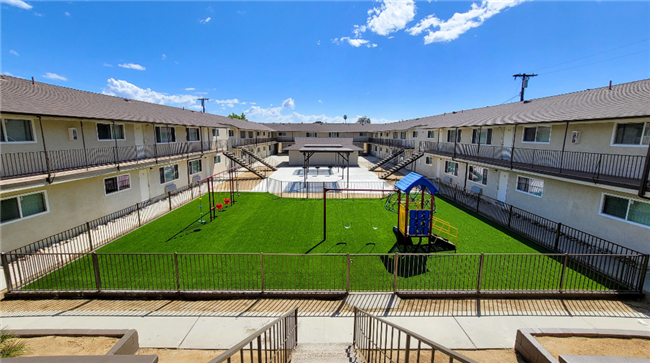
The franchise completed a dramatic $2 million makeover on a 44-unit apartment complex that had been a blight on its local community. The property, which neighbors an elementary school, had been a public health hazard and was shut down by the city of San Bernardino when franchisees Berto Ramos and Manuel Ramirez took it on with their “We Buy Ugly Houses” mentality.

Built in the 1960s, the complex spent years in a state of disrepair as one of the area’s most troublesome residential properties.

The properties were so far beyond code that apartments were left with no running water, windows or electricity, and the city had forced the mostly absentee previous owner to surrender the property. Ramos and Ramirez purchased it and completely renovated it to not only meet code, but to also reach the highest level of quality in local rentals. In addition to a new water and sewer system and heating and cooling upgrades, each unit now has its own heating and air conditioning system, water source, and shutoff valve.

“This property had been a challenge for the city on a daily basis for years before we took control. Given the extensive problems the last owner let go unaddressed, the city was weary about who to entrust it with – they knew its state at the time was wrong, needed someone to fix it, and didn’t want to end up with a similarly delinquent landlord,” said Ramos.

“The truth is, it takes real estate investors like us to help change these community situations. Law enforcement, the city and the courts can’t bear the full burden. Someone like us needs to invest the attention and capital, treat the neighborhood with respect, and give them what they need, which in this case was 44 quality homes for local residents that were previously not available.”

The project was handled by the HomeVestors franchisees as they would with any of their other ugly-house makeovers. Every asset was redone – kitchens, bathrooms, and bedrooms. Public areas were made over, including the addition of new courtyards, play areas, and barbecues. The property, once viewed with trepidation by teachers at the school next door became a clean and safe haven for families. Reopened in March, the renamed Golden California Apartments are already 80 percent full and expected to be at occupancy this month, according to the release.

“People are hurting, rents are skyrocketing, and that makes it even more important that we repair a property like that so people can live there,” said Councilman Damon L. Alexander, whose seventh ward includes the Golden California project. “There’s no reason any San Bernardino resident should not have a good place to live, and there’s no reason why other residential properties in the city can’t be upgraded the same way.”

More than 80 percent of houses HomeVestors purchases are less than 1,400-square feet and were built before 1980, though some are multifamily homes like the San Bernardino project. Franchises generally rehab and sell their homes or hold them as investment properties.

10 Things To Check in a DIY Rental Property Inspection

Sign Up For Our Newsletter And Get Rental Property and Apartment News And Helpful, Useful Content Each Week.

* indicates required

Property Managers, Take Note: Happy Pet Owners Mean Happy Long-Term Residents

Property Managers, Take Note: Happy Pet Owners Mean Happy Long-Term Residents

A guest post to help property managers understand pets and the connection with long-term happy rental residents.

By KC Theisen
Opening Doors

A few weeks ago, a graduate student at the University of Maryland interviewed me about the connection between pets and people. I often get to talk about the logistics of keeping pets and families together, as in the administrative aspects and guidelines for property managers. But since our chat, I’ve been thinking about our bond with animals and wanted to focus on one of the simplest facts about pets: They make us happy. Property managers, take note. When you have happy residents, you have long-term residents.

Look at the health statistics that spring from pet ownership. Pet owners report experiencing less depression and loneliness, and being more active, reducing heart disease. Spending time with a pet lowers blood pressure and heart rate, and having a companion animal to care for is the reason many seniors get out of bed in the morning despite aches and pains.

Pets make us more social. It’s clear from looking out a window that dog people are out and about, frequently stopping to chat with others about their furry family members. Visits to a pet-supply store, the veterinarian, and the park provide opportunities to meet new people. In rentals, the shared spaces become public meeting houses for dog owners, even while social distancing.

Cat owners are more social, too. They also go to pet-supply stores, grocers, and vet clinics, interact with other cat people. Creating a network of in-house cat sitters provides cat owners an amenity that makes them feel included in the building’s pet community. Especially for people with physical limitations or mobility issues, cats are a pathway to getting up and about indoors and to receiving affection. Hearing a purring cat makes it almost impossible for a human to cry.

How is your bottom line affected by physically healthy and socially adjusted residents? Happy people stay put. Happy people like living in a place where they feel welcomed and where they find comfort in being, especially when we are spending so much time at home these days. Happy people also invest in their happiness, and if they like living in your property, will tolerate moderate fees or rent increases to hold on to their happy place.

If you manage a property wracked by COVID-19 fatigue, how can you help alleviate your residents’ isolation and sense of loneliness while keeping the CDC guidelines in place? Welcome pets. Four-legged friends are a key reason people choose a rental, and better pet policies bring potential residents in droves.

Opening Doors has strategies to share so you can control which pets are welcome, and set standards of great care that translate to happier community residents, pet-owning or not. Make your property their happy place.

 About the author:

KC Theisen is the animal-management and pet-policy advisor for Opening Doors. She creates policies and programs for properties that enhance revenue potential while controlling potential conflicts and problems. KC has more than 25 years of experience working with animals and people. She obtained her undergraduate degree in Zoology from the University of Wisconsin. She was the Humane Society of the United States’ director of pet-care issues for many years. KC received her master’s degree in professional writing in 2007 and uses these skills to draft user-friendly policies and explanations for Opening Doors clients, bringing legal jargon into clear, concise rules and practices.

The Benefits of Being Pet-Friendly For Rental Property Owners

Ultimate Guide To Assistance Animals And Emotional Support Animals In Rental Housing

Top 10 Property Management, Landlord and Rental Housing Magazines in 2021

Sign Up For Our Newsletter And Get Apartment News And Helpful, Useful Content Each Week.

* indicates required

Does 90-Day No-Cause Notice Apply If Tenant Is OK With Moving?

Does 90-Day No-Cause Notice Apply If Tenant Is OK With Moving?

Ask attorney Brad is a feature with attorney Bradley S. Kraus and this week the question is about the 90-day no-cause notice and a tenant who is ok with moving.  If you have a question for Brad, please feel out the form below.

Ask Attorney Brad:

My tenant has been in my rental for a couple of years. It’s a mobile home and I’d like to move it to another property that is within a mile. The tenant is aware that the home may move and he is OK with relocating to the same house, once it’s moved. How might the 90-day notice figure into this arrangement? With our verbal agreement and the house simply going to another lot, it’s a unique situation. -Gary

Hello, Gary:

Quite a unique situation indeed!

The good thing about your particular situation is that (a) you don’t seem to want to get rid of your tenant, and (b) he’s okay moving to the new location.

Because of that, it may be as easy as working something out with the tenant in the form of a hotel stay or compensation for couch surfing while the mobile home is being moved. The particulars of this situation may not be fully apparent in your question, so if I’m missing something, let me know.

A 90-day no-cause notice for a qualifying landlord exemption (assuming that’s what you meant) is really only necessary if you want to remove the tenant. That doesn’t seem to be the case here.

So, a simple conversation with your tenant (and a well-crafted document reflecting the parties’ arrangement) will likely go a long way.

As adversarial as the landlord/tenant relationship has become recently, sometimes we forget that’s still an option.

–Brad

Ask Attorney Brad: Does 90-Day No-Cause Notice Apply If Tenant Is OK With Moving?
Bradley Kraus, Portland attorney

Brad Kraus is a partner at Warren Allen LLP. His primary practice area is landlord/tenant law, but he also assists clients with various litigation matters, probate matters, real estate disputes, and family-law matters. A native of New Ulm, Minnesota, he continues to root for Minnesota sports teams in his free time.  You can reach him via email [email protected] or 503-255-8795.

Ask Attorney Brad

Please enter your rental housing management question below for Ask Attorney Brad Kraus. Unfortunately he cannot answer questions from tenants.

  • This field is for validation purposes and should be left unchanged.

Sign Up For Our Newsletter And Get Rental Housing and Apartment News And Helpful, Useful Content Each Week.

* indicates required

Ask Attorney Brad: Why Can’t A Landlord Give a 30-Day Notice to Vacate?

5 Trends Shaping the Future of Rental Housing After the Pandemic

5 Trends Shaping the Future of Rental Housing After the Pandemic

There are five trends witnessed during the pandemic that will be shaping the future of rental housing and apartments for years to come, according to National Apartment Association (NAA) President and CEI Bob Pinnegar.

“The world continues to change as vaccines roll out. During the past year, businesses have adapted, consumers have altered purchasing habits and industries are adjusting to a new normal. The rental housing industry is no different, and apartments will continue evolving in response to the pandemic,” Pinnegar said in a release.

Here is what Pinnegar said about the five trends he sees, in a recent Washington Post column.

No. 1: A new outlook on amenities

“There has been a shift in the amenity world—shareable areas to individual spaces.

“Shared spaces such as fitness centers and pools are still important, but communities have shifted their focus to in-home amenities like larger kitchens, balconies, in-unit washer and dryers and high-speed Wi-Fi.”

No. 2: Virtual tours and decision making

“For obvious reasons, there’s now a larger number of prospective residents virtually searching for new homes.”

While it was previously only part of the process of selecting a new community, virtual touring has been a catalyst to “invest in new technology, high-quality videos and specialized training to give prospects a more complete picture of the community.”

No. 3: Changing relationship between property managers and residents

“Communication between community managers and residents is vital, and could impact resident retention and even new apartment searches.”

Interactions between the two parties has “significantly increased” compared to pre-pandemic relationships.

No. 4: New perspective on location

“Remote work has caused residents to re-think where and how they live.”

One of the biggest rental housing trends is that residents who don’t need to be close to the office can now search for other options—a two-bedroom in the suburbs vs. a one-bedroom in the city—to accommodate the work-from-home lifestyle.

No. 5: A new generation with new values

“The younger generations—millennials and Generation Z—favor renting, which leads to higher demand for apartments, more competition and new development.

“One of the greatest hallmarks of the apartment industry is its propensity for choice, flexibility and adaptability,” Pinnegar says. “This means that the current demand for apartments is only going to increase, creating steeper competition, prompting innovations and spurring new development.”

Future of rental housing is choice

Pinnegar writes in his column that, “One of the greatest hallmarks of the apartment industry is its propensity for choice, flexibility and adaptability. As we witness a seismic shift in our society and economy, the apartment industry is racing to identify and respond to its residents’ changing lifestyles.

“For residents, it’s a critical time to communicate your needs to your property manager or leasing agent. In this way, housing providers and residents can come together to shape and influence the apartment market of the future,” Pinnegar says.

4 Categories of Apartment Rent Forecasts for 2021

Sign Up For Our Newsletter And Get Apartment News And Helpful, Useful Content Each Week.

* indicates required


How the Pandemic Will Affect the Future of Apartments And What People Rent

Tenants Can Hold Debt Collectors Accountable for Illegal Evictions

Tenants Can Hold Debt Collectors Accountable for Illegal Evictions

Tenants can hold debt collectors accountable for illegal evictions if the debt collectors seeking back rent payments fail to advise the tenants of the CDC eviction moratorium under a new rule, according to a release from the Consumer Financial Protection Bureau (CFPB).

The CFPB’s rule requires debt collectors to provide written notice to tenants of their rights under the eviction moratorium and prohibits debt collectors from misrepresenting tenants’ eligibility for protection from eviction under the moratorium.

“The CDC has established the eviction moratorium to protect the public health and reduce the spread of the virus. Debt collectors who evict tenants who may have rights under the moratorium without providing notice of the moratorium or who misrepresent tenants’ rights under the moratorium can be prosecuted by federal agencies and state attorneys general for violations of the Fair Debt Collection Practices Act (FDCPA) and are also subject to private lawsuits by tenants,” the CFPB said in the release.

“With COVID-19 killing hundreds of Americans every day, kicking families out into the street during this pandemic may literally be a death sentence,” said CFPB Acting Director Dave Uejio. “No one should be evicted from their home without understanding their rights, and we will hold accountable those debt collectors who move forward with illegal evictions. We encourage debt collectors to work with tenants and landlords to find solutions that work for everyone.”

Some states and localities have adopted their own eviction moratoriums. Debt collectors may also be required to provide notice of these moratoriums. The CFPB’s rule does not preempt more protective state laws.

Nearly nine million households are behind on their rental payments.

“Tens of thousands of renters are being evicted every week, often without being told of their rights under the CDC moratorium. As the CDC has found, tenants who are evicted may end up homeless or in crowded or shared living settings, increasing their vulnerability to COVID-19 and the risk of the disease spreading throughout communities. Such evictions can have long-term health, financial, and social consequences for families and children,” the CFPB said in the statement.

The rule goes into effect May 3 and does not apply directly to landlords, but does apply to third-party debt collectors, including attorneys hired to represent landlords in eviction actions. It also forbids debt collectors from misrepresenting to renters that they’re not covered by the national moratorium, which was extended last month to remain in place through June.

The CFPB said it believes some tenants may not know about the CDC’s eviction moratorium or how to take advantage of it. And there are reports that tenants who do try to use the moratorium to halt an eviction may be “falsely informed” that they’re not eligible, the agency said.

“Numerous public reports and bureau outreach with consumer advocates, legal aid organizations, and other stakeholders also suggest that parties to the eviction process may be engaged in other conduct in violation of federal, state, or local eviction moratoria,” the CFPB said.

Will You Be Ready When the Eviction Moratorium Ends?

Sign Up For Our Newsletter And Get Apartment News And Helpful, Useful Content Each Week.

* indicates required


Steep Multifamily Occupancy Declines An Urban Phenomenon

Steep Multifamily Occupancy Declines An Urban Phenomenon

Multifamily performance has rebounded quickly from the pandemic slowdown, with the exception of occupancy declines in properties in urban gateway metro submarkets, Yardi Matrix says in a recent report.

“According to a study of 78,000 properties in Yardi Matrix’s database, large occupancy declines in the last year have been concentrated in a handful of cities that may take years to recover,” the report says.

However, the multifamily industry overall “is surviving COVID-19 without too much disruption,” the report says. “Nationally, rent and occupancy levels fell only slightly in 2020 before turning positive again in the first quarter of 2021, while acquisition yields barely budged.” However, problems in the struggling urban submarkets show “problems that must be addressed in the wake of the pandemic.”

Some key points in the report:

  • Roughly one out of every 14 multifamily properties in the United States has seen occupancy declines and rates drop by five percent or more over the last 12 months.
  • However, the loss is concentrated in urban assets in gateway metros, which limits the potential for distress.
  • The study shows a large split in market performance and recovery period. Some markets are back to pre-pandemic performance levels already, while it could take five years or more for rents to recover in the most affected urban submarkets.

“While the data demonstrates the troubles some segments of the market face, the industry can take solace in the finding that the poor performance in demand and occupancy is limited.

“The results show that the amount of distress anticipated by some is likely to remain limited, and whatever does occur will almost certainly be concentrated in high-cost gateway centers that will have a much bigger hill to climb to get back to pre-pandemic revenue levels when normality returns,” Yardi Matrix says in the report.

Summary

“We forecast that it will take at least five years to return to first-quarter 2020 occupancy levels in gateway cities such as New York, San Francisco (and San Jose), Los Angeles and Chicago, and in secondary metros such as Orlando, Miami and the Twin Cities,” the report says.

“The upshot is that the pandemic has created a list of challenges and changes that the industry will wrestle with for some time. Our review of property-level performance indicates that potential distress might not be as widespread as first imagined, and that it might be an urban phenomenon.”

—Paul Fiorilla, Director of Research, and
Justin Dean, Senior Analyst

About Yardi Matrix:

Yardi Matrix researches and reports on multifamily, office and self-storage properties across the United States, serving the needs of a variety of industry professionals. Yardi Matrix Multifamily provides accurate data on 18+ million units, covering more than 90 percent of the U.S. population. Contact the company at (480) 663-1149.

Steep Multifamily Occupancy Declines An Urban Phenomenon

Multifamily Market Growth Starts 2021 With a Strong First Quarter

Sign Up For Our Newsletter And Get Apartment News And Helpful, Useful Content Each Week.

* indicates required


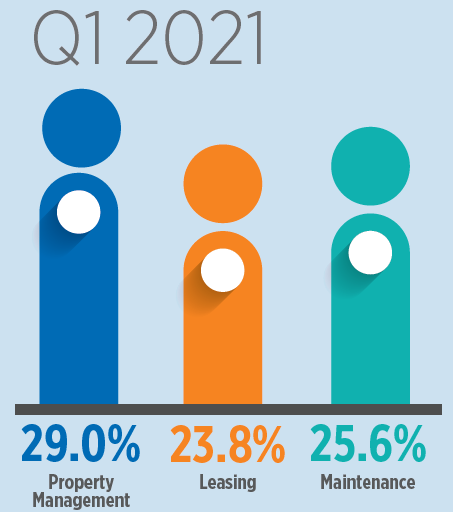
Property Management Jobs Most in Demand in First Quarter

Property Management Jobs Most in Demand in First Quarter in apartment job postings by the National Apartment Association

Property management jobs for professionals were the most sought-after jobs during the first quarter of 2021, according to the latest jobs report from the National Apartment Association.

The National Apartment Association Education Institute (NAAEI) report also said that maintenance openings had the largest growth in demand since 2020, with a year-over-year increase of 2.1 percent.

Property Management Jobs Most in Demand in First Quarter

“Nearly 37 percent of available real estate jobs in the U.S were in the apartment sector during first quarter of 2021, well above the five-year average of 28.6 percent,” the NAAEI said in the report.

“Multifamily talent was in high demand, likely due to increased leasing activity. According to RealPage, annual apartment absorption reached an outstanding 353,453 units during the first quarter of 2021.

“In gateway markets such as New York City, existing renters are signing new leases at historically high levels, although occupancy rates continue to weaken. This indicates that concessions and reduced rental rates are attracting existing renters instead of prospective renters,” the report says.

Dallas, Los Angeles, Washington, D.C., Seattle, and New York City ranked highest in concentration of apartment-job availabilities.

Demand for student-housing property management job professionals was greatest in Austin, Tex., Columbus, Ohio., College Station, Tex., Tucson, Ariz., and Tallahassee, Fla.

According to Entrata, student-housing occupancy rates held steady through February at 89.1 percent, down just one percent since the same time last year.

Leasing consultants were the most sought-after position by employers. In February, the average number of new leads per unit reached 1.78, 48 percent higher than in January 2021 and 91 percent higher than February 2020.

Apartment Job Openings Strong in Seattle, Portland

Sign Up For Our Newsletter And Get Apartment News And Helpful, Useful Content Each Week.

* indicates required


Federal Judge Stops Enforcement of City’s Renter Protection Law

Federal Judge Stops Enforcement of City’s Renter Protection Law

A federal judge in Minnesota has sided with landlords and stopped the City of St. Paul from enforcing a new renter protection law he says is likely unconstitutional while a lawsuit filed by a group of landlords is pending, according to reports.

U.S. District Judge Paul Magnuson granted the injunction, writing that it’s likely the landlords ultimately will win the case. The ordinance likely is unconstitutional, the judge wrote.

The landlords argued that the ordinance violates the 5th Amendment, which prohibits government from taking private property for public use without fair compensation.

“Plaintiffs (landlords) claim that the ordinance operates as a per se taking because it singles out private landlords to ‘address a perceived, though vaguely identified, societal problem’ related to housing needs. The court agrees,” Magnuson wrote.

The landlords’ suit alleges that the new housing protections amount to violations of due process rights, illegal takings and mandated forms of speech, all while making it harder to screen out unreliable tenants or force them to move.

Renter protection law

The ordinance, branded as the S.A.F.E. Housing Tenant Protections, limits the ability of landlords to consider evictions, credit histories and criminal histories when screening applicants for housing.

It also limits how much money they can require of new tenants and forces landlords to give a written explanation when they decide not to renew a lease.

“The ordinance forces plaintiffs (landlords) to bear society’s burden related to housing needs,” the judge said in the ruling.

A spokesman said the city “will abide by the court’s preliminary injunction while the legal claims are addressed by the courts.”

The Minnesota Multi Housing Association, which is not a party to the lawsuit, said in a statement the ruling affirms many of the objections it has raised both in St. Paul and in Minneapolis, which has similar renter protections.

“The shared view of the Minnesota Multi Housing Association and other advocates is that we need more housing. These types of regulations do not solve that problem, but discourage investment in additional housing in our communities. We call on leaders in St. Paul to work with our members, particularly the plaintiffs, to find effective solutions,” it said in a statement.

Resources:

Siding with landlords, judge stops enforcement of new St. Paul renter protections law

Federal Judge Halts Enforcement of St. Paul Tenant Protection Ordinance

St. Paul City Council adopts new tenant-screening guidelines

Portland’s FAIR Ordinance: Lost in the Hoopla of COVID-19

Sign Up For Our Newsletter And Get Apartment News And Helpful, Useful Content Each Week.

* indicates required


7 Proactive Maintenance Tips That Keep Tenants Happy

7 Proactive Maintenance Tips That Keep Tenants Happy

Keeping good tenants is key to long-term profitable rentals, so here are 7 proactive maintenance tips that keep tenants happy and staying in your rental property.

By Justin Becker

As a landlord or building manager, there are several responsibilities that will take you on the path to success. It’s not just about collecting rent from tenants, being firm, and making sure the rules are always followed. If you want your business of being a landlord and property manager to be lucrative and thriving, it’s only logical to hold on to great tenants when you find them.

Good tenants are great to work with; they’ll call you up for any issue, pay the rent on time, and respect the rental property. These might come around only once in a blue moon. So, you should be doing proactive maintenance in order to retain these good residents.

Whether you’re thinking about considering mobile homes for lease or renting out apartments, keeping your property tenants happy should be on the list of priorities. Not sure how to achieve this in the long run? Take care to follow these tips:

How to Keep Tenants Happy

A major chunk of property management includes finding ways to enhance the appeal of your property for good tenants. Hopefully, the following tips will help in keeping your tenants happy. Proactive maintenance means you’ll be more likely to keep good tenants for the long run in this manner.

What’s even better is that not every property maintenance idea for your tenants will cost an arm and leg. As long as you find something that will appeal to tenants about the property, go ahead and invest in it. Do proactive maintenance. There are also non-monetary and inexpensive options.

1. Address All Concerns as Soon as Possible

Every decent landlord wants to keep their tenants happy, especially if the aim is to extend the lease agreement on the property. Staying on top of property maintenance and responsibly performing inspection are just two great tips to retain and keep your tenants for the long run.

While you take care of the tenants, you should place yourself in their shoes; there’s probably nothing more frustrating in everyday life than having to deal with maintenance delays. No tenants want to live on a property with a leaking roof, dripping pipe, or broken toilet. While a landlord is a busy person, proactive maintenance is one of the main forms of property management that makes tenants happy.

In addition to property management, landlords can also go for incentives such as offering tenants carpet cleaning, deep cleaning every year, and other services that won’t cost too much. They’d still be appreciated by the tenants and be an influential factor when they’re thinking about extending the lease.

What’s more, routinely checking up on the property’s maintenance issues and fixing problems when they’re still small has an additional advantage. This way, you’ll avoid having the tenants’ issues develop into something difficult and expensive to fix. Property management costs will then go down in the long run if you take care in keeping your tenants happy.

7 Proactive Maintenance Tips That Keep Tenants Happy
The best way to keep tenants happy is to routinely check for little problems in your proactive maintenance before they become big problems.

2. Never Forget the Human Factor

A landlord might sometimes forget that their tenants are human and liable to make errors. If you really want to keep tenants happy, try to empathize with them more often. Tenants are more likely to stay on when the landlord of the property is cooperative with them.

One way to be cooperative is to make it easy for tenants to have access to you to talk about the property. This doesn’t mean giving them permission to call you at all hours, but to have some form of open communication. This will solve misunderstandings and make for a better relationship with the tenants on the property.

Additionally, keep the needs and comfort of the tenants in mind as well as the property issues. If you’re hiring a team to come for proactive maintenance and repairs on the property, have them over when most of the tenants have gone to school or work. This way, you won’t be ruining their downtime or naps on the property.

3. Stay Updated on What Your Tenants Want

The younger, modern generations require certain things from the places they’re living in. High-speed Wi-Fi is one of them, while beautiful outdoor spaces and open floor plans are also very welcome. If required, you might want to fit these in your property-management budget to keep your tenants happy.

As a landlord in the current times, you need to prepare for the long run. Take care of these requirements so that the lifestyle quality of your tenants is a good one. This will go a long way in keeping your tenants happy.

For instance, you might offer features like study rooms or bike racks if most of your tenants are students. For families, upgrading to stainless steel appliances or providing a laundry room might be great ideas.

Thinking like this might also help with your mobile homes for sale as well as other types of property. In fact, most of these tips are useful for anyone looking to rent to tenants or sell property.

4. Stay Proactive about All the Lease Renewals

Among the top tips for keeping your tenants happy is to let them know well before you offer to renew their lease on the property. Don’t wait until they’ve paid the last month’s rent; consider informing them around three months before the lease expiry date.

Even if your good tenants decide to move out of the property, you’ll have the chance to advertise that space for rent well in time. This way, you won’t have to worry about the lost months of rent.

If the good tenants seem a bit hesitant, ask them if they want a decrease in rent. Communication and honesty are key. So, don’t underestimate these concepts when you’re dealing with property management.

5. Aim for Longer Leases

See if your good tenants will agree to sign a lease for a longer term in exchange for a reduced rent. Renewing every six months can be extended to a year if the tenants are agreeable. Tenants who extend after a year might be convinced to go for two years if they’re satisfied with the property.

These tips might mean that the landlord of the property loses out on some profit. However, such tips will also make sure that reliable, decent tenants stay on.

6. Treat All Tenants the Same

There might be some tenants on the property that you get along with more than others. But don’t show that to everyone so clearly. Every landlord needs to know the federal and local housing laws. So, there’s no room for discrimination between tenants on the basis of race, physical abilities, religion, body size, etc. Sometimes, keeping your tenants happy simply means seeing them as people instead of income sources on a property.

7. Stay Firm about Rules but Know When to be Flexible

There are several rules to follow when it comes to rental property, but there’s still room to be flexible when it’s appropriate. The regulations might not allow pets or waterbeds, for instance, while things like closed toilets might elicit fines.

While most of these rules are for the tenants’ own safety, there are times when you might want to make an exception. For instance, you can waive the fine for tenants who are really having financial difficulty.

Communication is the best way to deal with rental property. If the people next door are complaining about the noise coming from a rental unit at night, talk to the tenants first. Don’t be so quick to blame; you might find that the problem isn’t so big after all, and you could even end up helping someone out.

The Takeaway

The National Center for Housing Management has reported that around 54 percent of apartments will go to new tenants every year. This is not good news for landlords, as it means they have to bear the cleaning and repair expenses after the tenants leave. The rent is also lost which means that paying the advertising fees, mortgage installments, and utilities will become even harder.

By following the tips above, though, you can learn how to keep your tenants happy and satisfied on your property. This will reduce the turnover expenses by a mile. So, take care to do proactive maintenance in order to be maintain your property better.

About the author:

Justin Becker is a property owner in the state of Michigan and has a passion for managing communities. He owns apartment complexes and mobile home communities, and has been writing his own blogs for his properties for several years.

How To Figure If Vacancy Rates in Your Rental Property Are Good Or Bad

7 Lease Renewal Incentives Landlords Should Consider

7 Proactive Maintenance Tips That Keep Tenants Happy

6 Factors Involved in Lease Renewals Post-Pandemic

Sign Up For Our Newsletter And Get Apartment News And Helpful, Useful Content Each Week.

* indicates required