Home Blog Page 102

What is a Delaware Statutory Trust Sponsor Company?

What is a Delaware Statutory Trust Sponsor Company?

By Alex Madden
Vice President, Kay Properties and Investments, LLC

Many 1031 exchange investors have never heard of a DST Sponsor, what they are, or what they do. It is important for investors considering DST properties to understand the role of a DST sponsor and what they do. After reading this article, a 1031 exchange investor should have a better understanding of what a DST sponsor company is and does, and why they play a critical role in the DST 1031 investment picture.

What is a DST Sponsor?

As with other real estate investments, the term “sponsor” is used to identify the person or firm that basically “quarterbacks” the DST investment from start to finish, including structuring the investment to make it available for accredited investors  including those in a 1031 exchange as well as cash investors. Whether it is an entire portfolio of net-leased retail buildings located across multiple geographic areas or a single multifamily building located in a single neighborhood, the role of the DST Sponsor is to find viable real estate deals in which accredited investors will be interested in investing for their DST 1031 exchange process.

The Role of a DST Sponsor?

A DST Sponsor’s role starts early on in a real estate investment. Many times, the DST Sponsor is actively involved with negotiations or plans months before investors or 1031 advisors even hear about a potential investment property. Typically, a DST Sponsor company will evaluate hundreds of properties across a vast swath of geographic territory for purchase, until they eventually make offers on a few of them. Sometimes the DST Sponsor finds these properties via on-market opportunities and other times off-market opportunities. Once a property is identified as a potential investment opportunity, they will then negotiate the purchase agreement and assemble the necessary equity capital and debt financing needed to acquire the property. The DST Sponsor then negotiates the terms of the purchase and sale agreement, and prepares all the investor marketing materials. The DST Sponsor also oversees all pre-acquisition activities, including all due diligence (such as engaging specialists to provide third-party reports and reviewing existing financial information, among other things.).

As mentioned, DST Sponsor companies will often handle most of the financing aspects related to acquiring properties offered for a DST investment. This can include combining  the combining the firm’s own capital with some kind of bridge loan for the acquisition, and then arranging any long-term debt that will be included in the transaction. This long-term debt can be an extremely important element from an investor’s perspective, as many DST investors need to replace debt as part of their DST 1031 exchange, and a property that has existing leverage can be helpful to these clients.

How We Evaluate Our Sponsors

Clearly DST Sponsors play an important role in a DST real estate investment, and therefore it is critical that the sponsor be highly qualified. Kay Properties & Investments works with 25-30 different DST Sponsors who, along with their property offerings, are always carefully vetted. A good DST Sponsor brings specific expertise to the project like intimate knowledge of the market or a deep understanding of the asset class – or both!


Not all sponsors are created equally. Some are much more qualified than others. So we ask the following questions for any prospective DST Sponsor.

  • How much experience do you have with the local market and with that asset class?
  • Have any of your prior real estate investment offerings failed to meet expectations?
  • How good are you at evaluating risk?
  • What systems do you have in place to ensure proper management of the project?

In short, the DST Sponsor is an important element in a DST investment’s success, so it’s important to work with a DST Sponsor that’s highly-qualified. When investing in DST investments, be sure to understand who you’re working with, what they’re responsible for and how they plan to execute on the project’s business plan.

Kay Properties provides a complete platform for real estate investors including providing access to a marketplace of DSTs from more than 25 DST sponsor companies, custom DSTs only available to Kay Properties clients, A DST secondary market – for those wanting to sell their DST interests prior to the property selling, the largest selection of debt free DSTs in the industry and leveraged DSTs for a 1031 debt replacement. For more information, please call Kay Properties today at 1-855-899-4597 or visit www.kpi1031.com to register for one of our exclusive DST 1031 events.

About Kay Properties and www.kpi1031.com

Kay Properties & Investments is a national Delaware Statutory Trust (DST) investment firm. The www.kpi1031.com platform provides access to the marketplace of DSTs from over 25 different sponsor companies, custom DSTs only available to Kay clients, independent advice on DST sponsor companies, full due diligence and vetting on each DST (typically 20-40 DSTs) and a DST secondary market. Kay Properties team members collectively have over 115 years of real estate experience, are licensed in all 50 states, and have participated in over $21 Billion of DST 1031 investments.

There are material risks associated with investing in real estate, Delaware Statutory Trust (DST) properties and real estate securities including illiquidity, tenant vacancies, general market conditions and competition, lack of operating history, interest rate risks, the risk of new supply coming to market and softening rental rates, general risks of owning/operating commercial and multifamily properties, short term leases associated with multifamily properties, financing risks, potential adverse tax consequences, general economic risks, development risks and long hold periods. All offerings discussed are Regulation D, Rule 506c offerings. There is a risk of loss of the entire investment principal. Past performance is not a guarantee of future results. Potential distributions, potential returns and potential appreciation are not guaranteed. For an investor to qualify for any type of investment, there are both financial requirements and suitability requirements that must match specific objectives, goals, and risk tolerances. Securities offered through Growth Capital Services, member FINRA, SIPC Office of Supervisory Jurisdiction located at 2093 Philadelphia Pike Suite 4196 Claymont, DE 19703.

About the author:

Alex Madden joined Kay Properties and Investments as a vice president and DST 1031 expert, helping clients navigate the nuances and rules surrounding this unique investment universe. Prior to joining Kay Properties, Alex was a specialist at KPMG’s Management Consulting Federal Advisory practice where he consulted for the Department of Housing and Urban Development (HUD) and Federal Housing Authority (FHA), specifically in the Multi-Family, and Single-Family space. Alex is a former US Army Ranger with multiple deployments to where he attained a rank of Chief of Staff in an elite Special Operations Task Force. Alex graduated from Salve Regina University, in Newport Rhode Island, with a degree in European History.
Alex Madden

Alex Madden joined Kay Properties and Investments as a vice president and DST 1031 expert, helping clients navigate the nuances and rules surrounding this unique investment universe. Prior to joining Kay Properties, Alex was a specialist at KPMG’s Management Consulting Federal Advisory practice where he consulted for the Department of Housing and Urban Development (HUD) and Federal Housing Authority (FHA), specifically in the Multi-Family, and Single-Family space.

Alex is a former US Army Ranger with multiple deployments to where he attained a rank of Chief of Staff in an elite Special Operations Task Force. Alex graduated from Salve Regina University, in Newport Rhode Island, with a degree in European History.


Why the Delaware Statutory Trust Specialist Can be a Real Estate Broker’s Best Friend

Rents Surge Again in September, but Less Than Previous Months

Multifamily rents surge in September but less than previous months

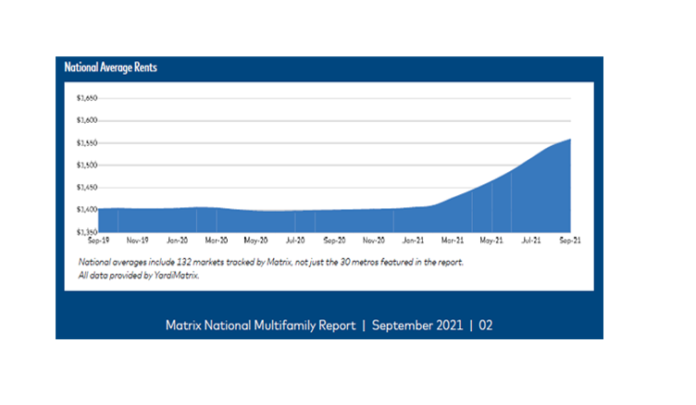
Multifamily asking rents surged again in September as rents rose $16 to an all-time high of $1,558 and are up a record 11.4 percent year-over-year, according to the latest Yardi Matrix  national multifamily report.

The U.S. apartment market continues to set record growth rates and one panelist at a recent National Multifamily Housing Council (NMHC) event said “In 40 years, I’ve never seen rent increases like we’ve seen these last few months. Never.”

However, there was caution in the report about rates continuing to rise at the year-over-year pace.

Lowest rate of increase in six months

“We may be seeing the early stages of moderation,” Yardi Matrix said in the report.

“Rents rose $16, or 1.0 percent in September, certainly robust growth by historical standards but the lowest rate of increase in six months. The rent growth is fueled by robust demand combined with the long-term supply shortage, which has produced extremely high occupancy levels.”

Some highlights of the report:

  • The market shows signs of deceleration.
  • Sun Belt tech hubs are still leading the nation in rent growth, as markets in the Southeast and Southwest benefit from rapid domestic migration and job growth.
  • The migration story has been playing out for a number of years, but accelerated quickly during the pandemic.
  • Single-family (built-to-rent) rents continue to grow at an even faster pace than multifamily, with national rents up 14.3 percent year-over-year. Occupancy keeps rising as well, up 1.2 percent year-over-year.

Rent growth in September did not happen in all markets.

Seasonality is “beginning to show up in certain markets, as Seattle, Boston, the Twin Cities and Chicago posted negative month-over-month growth,” the report says. It points out that September has historically been the month when rent growth begins to soften before winter. “However, the one percentage point increase this year represents a significant slowdown in rent gains.”

Before the pandemic, fundamental long-term multifamily concerns focused on affordability, aging millennials and the lack for affordable housing development.

Those issues remain long-term, the report said.

“Looking at the short term, the year-end 2021 forecasts are incredibly high, but they are supported by strong growth. Although growth will slow in 2022, rent gains will remain strong by historical levels.

“The job market will continue to grow, even if the Federal Reserve begins to taper asset purchases and eventually raises interest rates. Barring rapid and drastic monetary tightening, which is highly unlikely, the actions of the Fed will not significantly slow down the multifamily momentum. The multifamily industry is well-positioned and enjoying historically strong performance today.

“However, as we move into a new real estate cycle, the long-term fundamental concerns of affordability and geographic preference for working and living will remain,” the Yardi Matrix multifamily report said.

Get the full report here.

About Yardi Matrix:

Yardi Matrix researches and reports on multifamily, office and self-storage properties across the United States, serving the needs of a variety of industry professionals. Yardi Matrix Multifamily provides accurate data on 18+ million units, covering more than 90 percent of the U.S. population. Contact the company at (480) 663-1149

Multifamily Rent Growth Surges Again in September, but Less Than Previous Months

Sign Up For Our Newsletter And Get Rental Property And Apartment News And Helpful, Useful Content Each Week.

* indicates required


Average National Monthly Rent Tops $1,500 For 1st Time

Everything Landlords Should Know About Emotional Support Animals

Tenant Stained the Driveway With Oil Leaks, Can We Charge Them?

Tenant Stained the Driveway With Oil Leaks, Can We Charge Them Ask Attorney Brad

Ask attorney Brad is a feature with attorney Bradley S. Kraus and the question is about tenant stained driveway and who pays. If you have a landlord question for Brad, please feel out the form below. He cannot answer questions from tenants.

Hello Brad,

Through a property-management company, our two-year tenant stained the garage and driveway with oil leaks from their car. The home is 2 years old, new construction. A power-wash company can’t get the large stains removed. We charged the tenant for cleaning; can we charge additional for the permanent damage?

– Thank you, Bruce

Hello Bruce,

Thank you for reaching out. Much like the internal area of the premises, your tenants can cause damage to the exterior of the premises as well. The key is whether such a charge is beyond “normal wear and tear,” an amorphous standard which depends on the facts. Assuming your facts meet that standard, then yes, you could technically pursue your tenants for the damages.

The question becomes what amount you could pursue. Again, this would depend on a number of factors that can’t be properly covered in this answer. However, if the stains cannot be removed, or if the amount of money it requires to do so is high enough, it may make sense to pursue your damages civilly.

-Brad

Bradley S. Kraus is an attorney at Warren Allen LLP. His primary practice area is landlord/tenant law, but he also assists clients with various litigation matters, probate matters, real estate disputes, and family law matters. You can reach him at kraus@warrenallen.com or at 503-255-8795.

Ask Attorney Brad: Tenant Stained the Driveway With Oil Leaks, Can We Charge Them?
Bradley Kraus, Portland attorney

Ask Attorney Brad

Please enter your rental housing management question below for Ask Attorney Brad Kraus. Unfortunately he cannot answer questions from tenants.

  • This field is for validation purposes and should be left unchanged.

Sign Up For Our Newsletter And Get Rental Housing and Apartment News And Helpful, Useful Content Each Week.

* indicates required


Ask Attorney Brad: How Do I Prove a Tenant Smoking Inside My Rental?

Can We Charge The Tenant for a Big Stain in New Granite Top?

A Step-by-Step Maintenance Guide to Unclog a Dryer Vent

A Step-by-Step Maintenance Guide to Unclog a Dryer Vent

This rental property maintenance guide offers step-by-step instructions on how to unclog a dryer vent in your rental property.

By Rental Riff

Dryer vents can be hazardous if not maintained properly. Your guide to a clear dryer vent is here!

Offering a washer and dryer, or even just hook-ups, in your rental property is a smart move. Not only can it increase your revenue as a property owner by 15 percent, according to a survey by the National Apartment Association, but it helps make your residents’ daily lives more convenient. Win-win right? Well, not so fast. These appliances require maintenance and the cost of failing to keep them clean and functioning properly could be devastating.

According to the U.S. Fire Administration, “2,900 home clothes-dryer fires are reported each year and cause an estimated five deaths, 100 injuries, and $35 million in property loss. Failure to clean the dryer (34 percent) is the leading cause of home clothes-dryer fires.”

How does this even happen anyway? Well, the hot, moist, linty air produced by clothes dryers escapes through the dryer vents. But over time, lint and dust can catch and build up along the walls of the vent and ducts. Meanwhile, the air is getting trapped and the clothes aren’t drying. Add heat from an overworking appliance and you’ve got yourself a recipe for disaster.

So don’t be a statistic! As a property owner, do yourself a favor and avoid the fire hazards by cleaning out your properties’ dryer vents at least once per year. If you’re not sure when the dryer vent was last cleared, ask your residents to watch out for warning signs that could indicate you’re overdue for a cleaning, like a noticeable burning smell, clothes taking longer than usual to dry, or skyrocketing energy bills due to the dryer’s inefficiency.

Now that we’ve covered the importance of why you need to unclog a dryer vent and clear it, let’s go over how exactly to do it.

Here’s a simple step-by-step guide on how to unclog a dryer vent

  • If you have an electric dryer, unplug the machine, or if it’s a gas dryer, simply turn the supply valve off.
  • Pull the dryer away from the wall about a foot or so.
  • Disconnect the duct from the back of the dryer.
  • Vacuum out the vent with a vacuum cleaner or shop vac.
  • Vacuum out the duct or use a dryer duct-cleaning brush.
  • Now locate the vent on the exterior of the property and remove the cover.
  • Vacuum the exterior vent.
  • Once you’ve concluded that all lint and debris has been removed from the vents, that no damage has occurred and all safety codes have been followed, go ahead and put it all back together.
  • Reattach the vent cover outside.
  • Reattach the duct to the back of the dryer.
  • Plugin (if electric) or twist the valve open (if gas).
  • Push the appliance back toward the wall.
  • It’s a good idea to test that everything is secured properly and functioning appropriately while you’re still on-site, so a best practice would be to test the tumble air-dry function for a few minutes before you jet.

There you have it! Remember, educating your residents on lint build-up prevention is also key. By keeping the area around the dryer clean and regularly cleaning the dryer screen before every use, not only will your residents’ clothes look better and dry faster, but they will also be helping you protect your property.

If you have questions and concerns about your property or desire an alternative to expensive property management fees, reach out to RentalRiff today, or if you are interested in learning more about RentalRiff’s rental property maintenance service, give us a call at 541-600-3200

Oops! We could not locate your form.

.

Rental property maintenance: How to troubleshoot a broken garbage disposal

Sign Up For Our Newsletter And Get Rental Property And Apartment News And Helpful, Useful Content Each Week.

* indicates required


Everything Landlords Should Know About Emotional Support Animals

3 Common Plumbing Emergencies In Rental Properties And What To Do

Multifamily Construction Permits Grow by 15 Percent

Multifamily Construction Permits Grow by 15 Percent

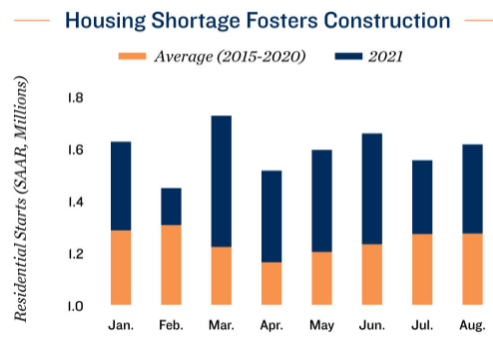
Multifamily construction permits surged 15 percent in August, the highest monthly total since June of 2015, Marcus & Millichap reported.

The multifamily construction permits increase is directly tied to the tight vacancy situation in multifamily housing. Single-family permit filings remained relatively unchanged from previous months.

“Greater construction is warranted by extremely tight vacancy, as apartment availability in June fell below four percent for just the second time in the past 20 years. Preliminary data points to additional downward vacancy pressure in the third quarter, reiterating the housing shortage and putting upward pressure on both rents and home prices,” Marcus & Millichap said in the report.

Multifamily completions in 2022 to set 40-year record

Spearheading the rise in permits was the 53 percent annual advance in multifamily starts. Some of this activity was due to previously stalled developments that “pushed forward as the lumber price index retreated by 36 percent over the past two months,” the report said.

However, lumber costs are still high, and well above pre-pandemic levels.

“Elevated material costs and labor shortages limit the potential supply output next year, but recent permit activity and starts signal a weighty pipeline nonetheless. Early forecasts project 400,000 apartments will finalize, while the single-family addition will be the largest since 2006,” the report says.

As completions set a new record in 2022, builders will be challenged to keep up with demand and there is little concern about oversupply, the report said, as the new supply will continue to lag demand as the aging millennial cohort drives robust household formation.

“The U.S. is expected to add 1.5 million additional households next year, given there are enough residences available to support the demand amid a housing shortage. Apartment vacancy sits at a historical low, and demand for single-family homes has consistently outpaced supply, driving inventory down and pushing up prices. The influx of apartments next year is especially crucial as these will provide living options to those priced out of homeownership,” the report said.

Sign Up For Our Newsletter And Get Rental Property And Apartment News And Helpful, Useful Content Each Week.

* indicates required


Average National Monthly Rent Tops $1,500 For 1st Time

Everything Landlords Should Know About Emotional Support Animals

7 Things To Do The Day You Take Over An Apartment Building

Investing in multifamily real estate can be very rewarding, but what happens after you actually close on the purchase and on the first day you take over an apartment building as a new owner, landlord and property manager?

Veteran real estate investor and syndicator Vinney Chopra has developed a landlord’s checklist for taking over that new apartment building asset you may have bought. He starts his checklist a week or so out from the close, and then follows up for four weeks after.

But what do you need to do the day you take over the building?

By Vinney Chopra

7 things to do the day you take over an apartment building

There are plenty of things you need to set up ahead of time. We will cover those a bit later.

However on the day you take over, here are 7 critical things you need to have in your possession:

    • Current Rent Schedule
    • Security Deposit Report
    • Audit Pre-Paid Reports
    • Confirm delinquencies / copies of backup for files
    • Ledgers run on all units
    • Apartment Status Report
    • Receive copies of pending litigation

Next on the first day you want to be sure you have delivered in person to each resident a letter from you explaining that you are now the new landlord and owner of the building and explaining how the property management will work going forward.

Also you want to contact a locksmith and coordinate rekeying of the office and safe combination and other areas where the previous ownership may have had locks.

In terms of resident communication and potential future tenant acquisition, you want to be sure the following are in place the day you take over:

    • Set up the answering machine or voicemail with your new information so tenants will know what is going on if they decide to call.
    • Change or update hours on the front door or call someone to make the changes for you. You want to be sure anyone who comes by the office knows when you will be there.

Whether you have existing leasing agents and property management already on the property, or you are bringing in your own new employees here are some things to have in place:

    • Complete any new hire paperwork and provide it to whoever is handling your human resources.
    • Schedule any new potential employees or existing employees for screening you would like them to go through.
    • Hang rental occupancy and guidelines in the office
    • Hang a Fair Housing Act poster in the office and discuss compliance training with employees and how that will be done.
    • Rearrange employee hours if needed.
    • Order maintenance uniforms for any maintenance staff.

For the building and residents themselves you will need to do that following:

    • Review all approved applications
    • Check and walk new move-ins
    • Take 24 pictures or more on the day you take over the building or buildings
    • Set up with current residents your plans for rehab and when

A few more things you want to be sure to get done that first day is to be sure you dispose of all the old management forms.

Also setting up the computers is an important step. So be sure you:

    • Enter all the property information in your own system
    • Set up projected occupancy reports and weekly numbers reports
    • Set up computer files for manager, assistant manager, bookkeeper and leasing agents
    • Set up the grid for doing rehab on the units that are currently vacant.

That’s a lot for the first day! But very important.

Next week we will discuss what you need to be doing in weeks two, three and four after you take over a new apartment building.

About the author:

Vinney Chopra is the Founder and CEO of Moneil Investment Group and President of Ideal Investments Group. His latest accomplishments include acquiring 12 multifamily assets in the last 28 months, worth $132 million. His last two syndications were sold out in just a few hours, and one in 36 hours raising $4.7 million and another one $6 million in eight hours. Between the two syndication companies he founded, Vinney’s team is controlling over $200 million worth of assets. He is a mechanical engineer. After entering USA with $7,he graduated from The George Washington University with Master’s in Business Administration in Marketing, he shifted his focus to marketing and motivation. He was a professional fundraising consultant and motivational speaker for more than 35 years with a wonderful private company. Vinney and his wife started their real estate investments in 1983. He currently owns single-family homes and multifamily units in Texas, California, Atlanta, Arizona and India. Many times, people call him “Mr. Enthusiasm” or “Mr. Smiles.” He likes to bring great value to everyone he comes in touch with.

What happens the day you take over a new apartment building

Photo copyright Vinney Chopra

Sign Up For Our Newsletter And Get Rental Housing and Apartment News And Helpful, Useful Content Each Week.

* indicates required

6 Steps Every Investor Should Take Before Buying An Apartment Building

Why the Delaware Statutory Trust Specialist Can be a Real Estate Broker’s Best Friend

Why the Delaware Statutory Trust Specialist Can be a Real Estate Broker’s Best Friend

By Chay Lapin
President Kay Properties & Investments

Key Takeaways:

  • Why should real estate brokers present a DST 1031 Expert to their clients?
  • Why is a DST 1031 perfect for a multifamily investor who is ready to sell their asset?
  • What is “mortgage boot” and why should it be avoided?
  • What do DST 1031 experts bring to the table for both the seller and real estate broker?

Today’s multifamily market is bustling with activity as the number of owners and investors from Maine to California are executing thousands of sell/buy transactions every single day.  According to a recent multifamily market report by CBRE Real Estate Group, this frothy deal velocity can be attributed in part to favorable economic conditions and reduced negative impacts from COVID-19. So far in 2021,  the multifamily market saw $148 billion in transactional activity, a 33 percent total increase over the previous year. Owners of appreciated rental properties may have potential equity “locked up” in their investment real estate. Selling in this bustling market can unlock this trapped equity. Finding replacement properties to 1031 exchange into that provide passive income and potential for diversification is a challenge many sellers face. DST specialists can advise on a potential solution to this challenge. That’s why more and more brokers are turning to Delaware Statutory Trust (DST) 1031 experts to help advise their clients on how to avoid being hit with a large capital gains tax following the sale of their multifamily investment property.

In a nutshell, DST 1031 exchanges allow multifamily sellers to defer the income from the sale of their property by investing in a co-ownership real estate portfolio as outlined in the Internal Revenue Service Revenue Ruling 2004-86. The DST 1031 structure allows a trust to be set up that consists of multiple investors who share passive ownership of a designated building or entire  portfolio. This strategy allows investors to create customized and diversified portfolios, alleviate the daily landlord duties, reduce the financial burden by spreading costs across multiple investors, provide investors the potential for monthly income potential, and offers significant tax advantages. DST properties are typically institutional-grade real estate assets like net lease buildings, self-storage facilities, logistics and transportation centers, and multi-family apartments, offering investors the opportunity to own assets that would normally be financially out of reach for them.

Brokers Need a Delaware Statutory Trust 1031 Specialist to Help Them Advise Their Clients

1031 exchanges are often the “preferred solution” for investors who have sold their investment property. Because no matter who the investor is or what type of investment asset that has been sold, they will always face the same challenge at the end of disposition: a big tax bill. This tax event is called “capital gains” and is calculated by taking the difference between a property’s cost basis and the sale price, typically at a rate of somewhere between 15 percent and 28 percent. Add to that depreciation recapture rate of 25 percent state sales tax, and medicare surcharge and the tax consequences could be devastating. In fact, many potential multifamily investment owners decide not to sell because of the significant tax implications.

A DST 1031 Over a Straight 1031 Exchange?

At this point, the real estate broker will most likely recommend the seller enter a “1031 exchange”. This strategy is named after section 1031 of the Internal Revenue Code and allows a property owner to defer capital gains taxes on a profitable sale by reinvesting the proceeds into another property of “like kind,” and there is no limit to how many times it can be done. In theory, there could be a successive series of exchanges that defer capital gains taxes indefinitely, which allows an investor’s income to grow tax-free over a long period of time.

However, the rules of a 1031 exchange can be complicated and incredibly difficult (and potentially expensive) to accomplish without the advice of a true 1031 expert. For example, all 1031 exchanges must follow these parameters:

  • The new property must be “of the same nature or character” as the old one.
  • The new property must be “identified” within 45 days of the close of the sale, and the purchase transaction must be completed within 180 days of the sale.
  • The amount of money invested into the new property must be the same as the sale proceeds from the old property. If there is a difference, it is known as “boot,” and it becomes taxable.
  • Exchangers must hold title to replacement property in the same way as the relinquished property.
  • Any errors in the transaction or violations of the rules can cause the transaction to become a failed exchange.

Many brokers confess that identifying a replacement property and then successfully completing the exchange is exceedingly difficult to accomplish in the required timeline. That’s why brokers sometimes can only present their clients with properties that are not turnkey deals and that have a lot of moving parts. In addition, very few brokers can find appropriate property options for their investors that fit their client’s specific required debt replacement parameters.

Enter the Delaware Statutory Trust Specialist

This is where a Delaware Statutory Trust specialty firm can be of real value to a real estate broker who is representing a multifamily investor who just sold a property. One of the potential advantages of a DST is that it provides beneficial interest in a property that has non-recourse debt that is already “pre-packaged” for a 1031 exchange. Effectively, what that means is that it is relatively simple to make the 1031 exchange math work – almost down to the penny. Investors also have greater flexibility in putting their investment dollars into multiple DSTs in a variety of real estate combinations and still achieve their desired equity and debt targets.

A hypothetical investor named Alison T. needs to replace $200,000 in equity and $100,000 in debt. Now she could put $100,000 into one DST with no debt (an all-cash debt free DST) and the remaining $100,000 into a DST that has a loan on the property at 50% Offering Loan to Value (LTV). Another option would be to put $50,000 into a DST with no debt and $75,000 each into two additional DSTs that both have 40% LTV.


An Example of How a DST 1031 Exchange Can Replace Both Equity and Debt
1031 Debt & Equity Replacement Amounts Option One Option Two Option Three
Need to Replace $100,000 in Debt Invest $100,000 into one all cash DST Invest $50,000 into an all cash DST $67,000 with a 60% LTV
Need to Replace $200,000 in Equity Invest $100,000 into a DST with a loan at 50% Offering Loan to Value Invest $75,000 into two DSTs that have a 40% LTV each. $133,000 All-Cash/Debt-Free DST Investment


In comparison, an investor conducting an exchange with a single property, such as a rental home, would have to find a property they want to buy at the desired $300,000 price. They would then have to bring their own money to the table for an all-cash purchase or secure a $100,000 mortgage. Effectively, investors are working in a much narrower box with fewer alternatives – all while the clock is winding down on the 180-day timeframe allowed to complete an exchange. Including a DST 1031 property option creates a reliable backup plan for investors like Alison T. in case her original property exchange falls through. That’s why DST specialists are a great resource for real estate brokers because they can help ensure the client has a reliable backup plan ready to go.

Smart brokers who represent investment property owners should always have a relationship with a DST 1031 specialist advisory firm like Kay Properties and Investments. They can present the DST 1031 strategy to their clients as an added benefit that they bring to the table, while also providing an expert resource for creating a back-up 1031 identification tool and creating a safe tactic to avoid a mortgage “boot”.

(*Every investor’s tax situation is different, and this article is not tax or legal advice. Investors should inquire with their CPA/Accountant to verify their 1031 requirements)

“When brokers are getting close to listing a property, it is important that they contact Kay Properties in an ample amount of time before their client’s deadline. This will give them enough time to understand the risk and business plan of each offering. We are always available for conference calls and or in-person meetings with your clients,” said Dwight Kay, founder and CEO of Kay Properties & Investments.

About the author:

Why the Delaware Statutory Trust Specialist Can be a Real Estate Broker’s Best Friend

Chay Lapin is President of Kay Properties & Investments where he helps advise clients nationwide about Delaware Statutory Trust 1031 exchange investments including multifamily, commercial, and fractional NNN properties. Additionally, Chay has sponsored and co-sponsored the syndication of over two million square feet of DST properties in the multifamily, net lease, industrial and office sectors as well as invested in and operated multiple net lease assets and residential properties throughout the United States.

A graduate of the University of California at Los Angeles, Chay was a four-time Academic All-American water polo athlete and recipient of the prestigious UCLA Athletic Department Most Courageous and Character Award. Chay was a top-ranked United States performer and represented the USA in the 2012 London Olympic Games on the U.S. Men’s National Water Polo Team.

About Kay Properties and www.kpi1031.com

Kay Properties is a national Delaware Statutory Trust (DST) investment firm. The www.kpi1031.com platform provides access to the marketplace of DSTs from over 25 different sponsor companies, custom DSTs only available to Kay clients, independent advice on DST sponsor companies, full due diligence and vetting on each DST (typically 20-40 DSTs) and a DST secondary market.  Kay Properties team members collectively have over 115 years of real estate experience, are licensed in all 50 states, and have participated in over $21 Billion of DST 1031 investments.

This material does not constitute an offer to sell nor a solicitation of an offer to buy any security.

Why Real Estate Income Funds Have Distinct Benefits for Investors

Investing In Real Estate Over Stocks?

Three Reasons Investors Prefer Real Estate

Common investment strategies used to grow wealth with passive income include creating a diversified portfolio by investing in real estate. Read how investing in real estate may put you at an advantage

Contributed By Ashcroft Capital

Two common forms of investment strategies that smart investors use to grow their wealth with passive income include creating a diversified portfolio of stocks and investing in real estate. While investing in the stock market is beneficial for numerous reasons, investing in private market properties like multifamily provides several advantages. Here are three important reasons why some investors prefer multifamily private placement investments over stock market investments.

#1. Lower Volatility

Stocks can have a volatility that’s not found with most private placement offerings. Real estate provides a long-term cash flow provides passive income and the promise of appreciation (1).

The stock market is particularly vulnerable to several different forms of risk, which include economic, inflationary, and market risks. This volatility can occur because of company-specific or geopolitical events. The real estate market across the U.S. has been strong for more than a decade. Since 2010, the national housing market added $11.3 trillion in value – a more than 50% increase (4).

Three Reasons Investors Prefer Real Estate#2. Your Gains Can Be Deferred

If you sell a property that you’ve invested in and put the proceeds towards purchasing a similar property, your capital gains taxes can be deferred to a later date, which is called a 1031 tax-deferred exchange (3). During this process, a qualified intermediary will hold the proceeds from the sale until the money can be transferred to the other property’s seller. Engaging in a 1031 allows you to avoid the 15-20% long term capital gains tax rate (5).

#3. Can Be Used As Hedge Against Inflation

Over time, the value of a dollar increases as a result of inflation. While the value of currency will invariably increase over time, the rate of inflation isn’t always consistent. As inflation rises, the cost of everything goes up, including real estate (2). When property values increase, the property owner can charge more for rent, which ensures a higher revenue stream. By keeping pace with inflation, you gain an advantage that is difficult to obtain with stock market investments.

It’s never too early to start generating passive income. Placing some of your money into multifamily private placements could help you balance your portfolio and reduce the potential for losses.

To assist you on this journey, download this free 20-page guide to Understanding Real Estate Private Placements.

  1. Reasons to Invest in Real Estate vs. Stocks
  2. F “How Buying a House Can Hedge Against Inflation.”
  3. Internal Revenue Service. “IRS 1031 Exchange.”
  4. Recovery Added $11.3 Trillion to U.S. Housing Value in the 2010s.
  5. 1031 Exchange Rules: What You Need to Know.”

DISCLAIMER: Ashcroft Capital LLC is not an investment adviser or a broker-dealer and is not registered with the U.S. Securities and Exchange Commission. The information presented in this email should not be used as the sole basis of any investment decisions, nor is it intended to be used as advice with respect to the advisability of investing in, purchasing or selling securities, nor should it be construed as advice designed to meet the investment needs of any particular person or entity or any specific investment situation. Nothing in this advertisement constitutes legal, accounting or tax advice or individually tailored investment advice. The reader assumes responsibility for conducting its own due diligence and assumes full responsibility of any investment decisions.

#2. Your Gains Can Be Deferred If you sell a property that you've invested in and put the proceeds towards purchasing a similar property, your capital gains taxes can be deferred to a later date, which is called a 1031 tax-deferred exchange (3). During this process, a qualified intermediary will hold the proceeds from the sale until the money can be transferred to the other property's seller. Engaging in a 1031 allows you to avoid the 15-20% long term capital gains tax rate (5). #3. Can Be Used As Hedge Against Inflation Over time, the value of a dollar increases as a result of inflation. While the value of currency will invariably increase over time, the rate of inflation isn't always consistent. As inflation rises, the cost of everything goes up, including real estate (2). When property values increase, the property owner can charge more for rent, which ensures a higher revenue stream. By keeping pace with inflation, you gain an advantage that is difficult to obtain with stock market investments. It’s never too early to start generating passive income. Placing some of your money into multifamily private placements could help you balance your portfolio and reduce the potential for losses. To assist you on this journey, download this free 20-page guide to Understanding Real Estate Private Placements. 1. Investopedia. “Reasons to Invest in Real Estate vs. Stocks” 2. Forbes. “How Buying a House Can Hedge Against Inflation.” 3. Internal Revenue Service. “IRS 1031 Exchange.” 4. Zillow. “Recovery Added $11.3 Trillion to U.S. Housing Value in the 2010s.” 5. Investopedia. “1031 Exchange Rules: What You Need to Know.” DISCLAIMER: Ashcroft Capital LLC is not an investment adviser or a broker-dealer and is not registered with the U.S. Securities and Exchange Commission. The information presented in this email should not be used as the sole basis of any investment decisions, nor is it intended to be used as advice with respect to the advisability of investing in, purchasing or selling securities, nor should it be construed as advice designed to meet the investment needs of any particular person or entity or any specific investment situation. Nothing in this advertisement constitutes legal, accounting or tax advice or individually tailored investment advice. The reader assumes responsibility for conducting its own due diligence and assumes full responsibility of any investment decisions.

Three Reasons Investors Prefer Real Estate

Understanding a Landlord’s Rights, Obligations in Domestic Violence Situations

Understanding a Landlord’s Rights, Obligations in Domestic Violence Situations

Ask attorney Brad is a feature with attorney Bradley S. Kraus and the question is about landlords’ rights and obligations in domestic violence situations. If you have a landlord question for Brad, please feel out the form below. He cannot answer questions from tenants.

Bradley S. Kraus,
Attorney at Law Warren Allen, LLP

Contrary to the narrative you often hear from our local elected officials, landlords empathize with tenants who are in bad situations. This is most true when landlords receive knowledge that their tenant has been a victim of domestic violence. Landlords want to help but may not be aware of what rights they have, what rights the tenant has, and/or what it means for the tenancy of the DV perpetrator. In each of these areas, the law provides an answer.

Within the Oregon Residential Landlord and Tenant Act, ORS 90.453 provides a detailed discussion of the rights of a DV victim to terminate their tenancy. If the tenant has been a victim of domestic violence, they must provide the landlord 14 days’ written notice requesting that they be released from the rental agreement. The notice must specify a termination date, and it must be accompanied by “verification” from the tenant regarding the domestic violence. This verification can be a copy of a court protection order, a copy of a conviction related to DV (domestic violence) against the victim, or a form statement as laid out within the statute.

If the victim provides the requisite information, the landlord must release that DV victim and any immediate family member from the rental agreement. These individuals are not liable for rent or damages to the dwelling that occurred after the termination date, nor can they be charged a fee of any kind. However, they remain liable for rent and damages that occurred prior. Assuming the DV perpetrator is a tenant in the same dwelling unit, that person remains liable for all the rent and damages to the unit as well.

A separate issue occurs when DV victim and DV perpetrator live together. Many landlords receive requests for lock changes against one tenant but are concerned about ouster claims. ORS 90.459 provides that a DV victim can request a lock change to effectively oust the perpetrator from their shared dwelling unit. However, before the landlord or tenant change the locks on that individual, the DV victim must provide the landlord with a copy of a protection order from a court that orders the perpetrator to move out of the dwelling unit. That important item can usually be found buried within the protection order. A judge will usually write the address of the premises from which the DV perpetrator must move.

Provided the landlord has received the above, a valid lock change may occur, and the DV perpetrator may be ousted from the dwelling. The landlord is under no duty to provide the DV perpetrator access to the unit or their personal property, or to provide keys to the dwelling. Once the protection order becomes a final order, the DV perpetrator’s tenancy terminates by operation of law. A final order usually results (a) if the order is not contested for a period of time, or (b) when it is contested, and the order is upheld. With the perpetrator’s tenancy terminated due to the order, their name can be removed from the rental agreement by the landlord, and no further paperwork is needed.

There are many areas where landlords and tenants disagree. However, domestic violence is not one of them. Domestic violence of any kind has no place in any relationship. Using the DV statutes in the ORLTA, I have seen landlords and tenants work together to keep victims, and the communities in which they live, safe. It proves that the landlord/tenant relationship does not have to be as contentious as our local elected officials conjure it up to be.

Thanks,
Brad

Bradley S. Kraus is an attorney at Warren Allen LLP. His primary practice area is landlord/tenant law, but he also assists clients with various litigation matters, probate matters, real estate disputes, and family law matters. You can reach him at kraus@warrenallen.com or at 503-255-8795.

Ask Attorney Brad: Understanding a Landlord’s Rights, Obligations in Domestic Violence Situations
Bradley Kraus, Portland attorney

Ask Attorney Brad

Please enter your rental housing management question below for Ask Attorney Brad Kraus. Unfortunately he cannot answer questions from tenants.

  • This field is for validation purposes and should be left unchanged.

Sign Up For Our Newsletter And Get Rental Housing and Apartment News And Helpful, Useful Content Each Week.

* indicates required


Ask Attorney Brad: How Do I Prove a Tenant Smoking Inside My Rental?

Can We Charge The Tenant for a Big Stain in New Granite Top?

6 Lessons For Landlords from the COVID-19 Pandemic

6 Lessons For Landlords from the COVID-19 Pandemic

Here are 6 lessons for landlords from the pandemic that may help better prepare for the future should another potential disaster appear.

By Cherrie Tan
McManis Faulker

COVID-19 created a perfect storm for landlords, many of whom were thrown curveball after curveball, requiring them to adjust on the fly for their renters. The most challenging part for a landlord during the pandemic has not been the inability to collect rent, but the ongoing duty to maintain the property and to control emotions brought on by the pandemic.

Landlords’ obligations were not put on hold during the pandemic, but COVID made it more difficult to fulfill them. Even if tenants are unable to, or refuse to pay rent, landlords are still required to manage tenant disputes, assure tenants’ ordinary safety – and extraordinary safety when and if a tenant contracted the virus – and maintain the property when many building-maintenance services were closed or limited.

Landlords are not relieved of their duties until the landlord-tenant relationship ends, either by agreement with the tenant or by order of the court. For landlords who ignored their duties during the pandemic, their inaction could have serious legal implications, including the ability to recover costs and to profit.

We do not know when another disaster will appear, but landlords can learn important basic lessons from the COVID-19 crisis.

1. The importance of cash reserves

During this pandemic, property owners paying federally backed mortgages were allowed to forbear their required payments. That may not be the case next time. Even without the forbearance, landlords must understand that the mortgage is not their only expense. They are required to maintain the leasehold in a habitable condition, including but not limited to maintaining a clean building free from pests, with properly functioning plumbing, heating and electricity.

2. Importance of proper screening of tenants

Preventing litigation is better than litigating. So, although it seems easier to choose tenants who agree to pay a higher price, can pay immediately, will move in quickly, and claim to hold a steady job, it is vital to conduct a thorough background check to review their credit history. It can help you in understanding the tenant better. Some tenants are financially solvent, but have poor money management skills. A high credit score generally indicates a person who cares about their credit. They may have a habit of paying their debts on time and in full. They may be less likely to believe the misconception surrounding COVID-19 that they are excused from paying rent, with or without a reason to do so.

6 Lessons For Landlords from the COVID-19 Pandemic
“It is vital to conduct a thorough background check to review their credit history. It can help you in understanding the tenant better.”

3. Communicating with tenants

Tenants are human, and they interact with one another. During a high-stress event, including the pandemic, conflict between tenants may be heightened. A landlord has a duty to keep the property safe and habitable. It is important to have a pulse on the situation, be diligent and thorough when faced with an issue, and to be fair with all tenants. The best way to manage and minimize problems is to keep open communication with all tenants. As a bonus, open communications help you maintain the property and resolve minor issues before they become major.

4. Maintaining properties

A landlord has a duty to keep their rental habitable and, in some instances, to repair and replace damaged items. A well-maintained property keeps both the landlord and the tenant safe. During the pandemic, it was difficult for landlords to enter their property, especially when people were told to isolate and remain at home. However, landlords still were required to obtain the necessary materials and find service providers to make repairs. Planning and tending to the property’s needs on an ongoing basis will benefit the landlord and the tenant in the future.

5. The pain of an eviction

“The cost of evictions varies a lot, but it could be for landlords an expensive process as well. Among the costs for landlords as well is the emotional cost of an eviction.”-Matthew Desmond

It is no secret that evictions are expensive. In normal times, evictions take months to complete. The pandemic only lengthened the time for evictions to conclude. Even when an eviction has concluded, and the court has granted possession of the property and holdover rent, a legal judgment may need to be enforced. Landlords can ask the local sheriff to remove former tenants and commence their collection efforts through a garnishment or levy. Landlords, however cannot physically remove the tenant from the premises.

When a landlord asks the sheriff to remove tenants from the property, the sheriff must provide written notice to the tenants, explaining when they will appear on the property to remove the tenant. The notice will state a date after a tenant is instructed to leave the property pursuant to the court judgment. Tenants may confuse the date the sheriff provides and believe it is a government-sanctioned extension for them to stay in the property. When tenants vacate the property, they sometimes commit waste by leaving old furniture and trash on the property. The landlord may be required to store the furniture for 15 days before the tenant legally abandons the property.

Evictions are tiring and stressful. If a tenant files an answer to a lawsuit, they often check a litany of defenses on the court’s form. The landlord must respond to each defense, often requiring an in-depth review of past communications and repair records. Even if landlords receive a judgment from the court, they must analyze their resources and determine whether the extra effort is worth enforcing the judgment. Ultimately, the landlord must have sufficient cash reserves to withstand an eviction.

6. Seek good legal advice

Courts were closed during the pandemic, and when they reopened, many landlords were unable to evict tenants for non-payment of rent. While landlords were able to evict tenants during the pandemic, courts could not hear cases predicated on non-payment of rent. Some landlords sought eviction based on a breach-of-contract claim. Unfortunately, contract claims are not as straightforward and easy to prove as non-payment of rent.

The pandemic was and is a challenging time for landlords and their tenants. Landlords should remember that they provide the necessity of a home to tenants, and have a duty to maintain that property. They invested in real estate because it seemed like a less risky business than other investment opportunities, but no business is without risk. The tips outlined above will hopefully help landlords understand their duties, minimize their risks, and keep their investments profitable. Communicating with and keeping good tenants will help the community and the landlord survive difficult times.

About the author:

Cherrie Tan is an associate with McManis Faulkner in Silicon Valley. With a background in intellectual property and tech law, she represents clients in general civil litigation matters, and these multifaceted experiences give her a powerful combination of skills she can draw upon to represent clients in tech-driven Silicon Valley. Cherrie is also a landlord herself, so she is keenly aware of the issues facing property owners. She may be reached at (408) 279-8700 or ctan@mcmanislaw.com.

McManis Faulkner is a Silicon Valley trial firm, providing a full range of services representing both corporations and individuals through trial and appeal. The firm handles a wide range of litigation, including business, civil rights, class actions, construction, criminal, employment (management), environmental, family, general civil, intellectual property, personal injury, probate, professional negligence and real estate.

Sign Up For Our Newsletter And Get Rental Property And Apartment News And Helpful, Useful Content Each Week.

* indicates required


No Guns In My Apartments: Can A Landlord Say That And Put It In A Lease?

Everything Landlords Should Know About Emotional Support Animals