Home Blog Page 7

Landlord Anxiety Rising About Late Rent Payments

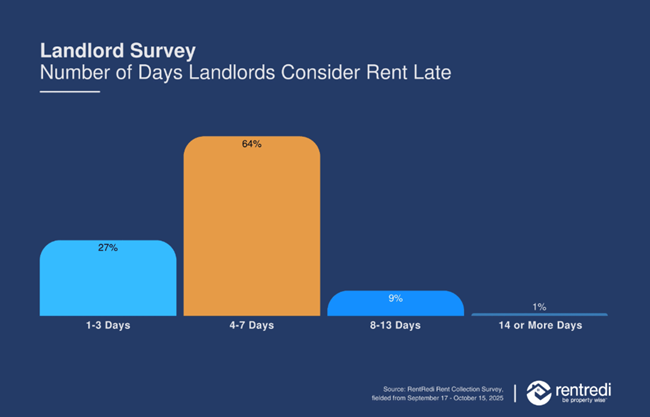
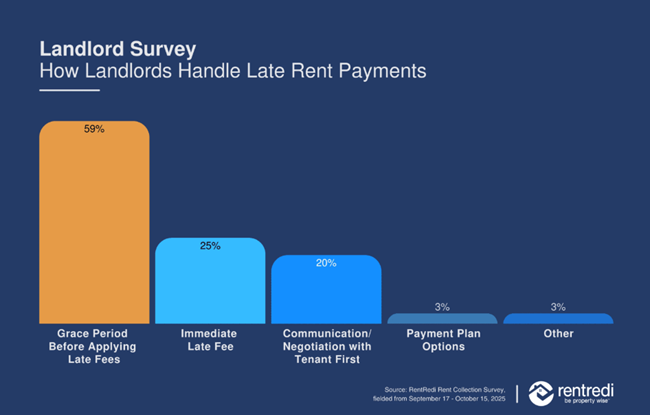
Landlord anxiety is rising about late rent payments and here is a new study that show four tools that can help tenants pay on time. 

Landlord anxiety is rising about late rent payments and here is a new study that shows four tools that can help tenants pay on time. 

A new study offers data-backed insight into what actually helps tenants pay on time and how landlords can apply those findings to strengthen their operations, according to a release from RentRedi.

Landlord anxiety is rising about late rent payments and here is a new study that show four tools that can help tenants pay on time. 

With affordability pressures, economic uncertainty, and heightened concern about rent reliability, this survey shows that the solution isn’t guesswork — it’s structure, according to the release.

“The same tools tenants say help them pay on time are the tools that measurably improve outcomes for landlords. This data offers a rare look at where landlord concerns and renter habits intersect, and how technology is changing that relationship,” according to the study.

Landlord anxiety is rising about late rent payments and here is a new study that show four tools that can help tenants pay on time. 

Key takeaways from the survey include:

  • Landlord anxiety is rising:
    • In joint RentRedi–BiggerPockets surveys, 41% of rental investors say they’re more concerned about tenants not paying rent than last year, even though 45% report no increase in late or unpaid rent.
  • Landlords and tenants agree on what works:
    • Automatic rent reminders ranked as the most helpful tool for on-time payments for both groups.
    • 44% of tenants say reminders help them stay on track, while over half of landlords rely on them to encourage timely rent.
  • Autopay delivers measurable results:
    • 41% of landlords offer autopay to encourage on-time payments.
    • RentRedi platform data shows units with tenants enrolled in autopay achieve a 99% on-time rent rate, compared with 87% for those without.
  • Incentives matter — and credit reporting stands out:
    • Among landlords who incentivize on-time rent, more than 70% use credit reporting.
    • Reporting on-time rent leads to a 13% increase in on-time payments, helping renters build credit while improving consistency for owners.
  • Payment preferences are shifting with technology:
    • RentRedi tenants show far stronger adoption of digital payments, including credit and debit cards, compared with what landlords report across the broader market—highlighting how mobile-first tools can reshape renter behavior.

Landlord anxiety is rising about late rent payments and here is a new study that show four tools that can help tenants pay on time. 

Conclusion

The survey concludes that when landlords build structured systems around rent collection, “everyone benefits. Renters gain predictable tools that support their monthly routines, and owners strengthen the financial backbone of their portfolios.

“Autopay, reminders, credit reporting, and mobile-first payments aren’t just features—they’re the smart path to steadier cash flow and a more confident renting experience for both sides.”

Landlord anxiety is rising about late rent payments and here is a new study that show four tools that can help tenants pay on time. 

Read the full report here.

Sign Up For Our Weekly Newsletter And Get Rental Property And Apartment News And Helpful, Useful Content Each Week.

* indicates required

Technology And Innovation Now a Top Challenge

Real estate professionals say adopting technology and innovation is one of the top three challenges, passing up human resources and staffing

Real estate professionals say adopting technology and innovation has now risen to one of their top three challenges, passing up human resources and staffing, according to a new study.

The new survey of nearly 2,000 real estate industry professionals was done by AppFolio, a property management software platform, in partnership with the National Apartment Association (NAA) between July 16 and August 4, 2025.

Operational strain

“The largest threat to property performance today isn’t demand, it’s operational strain,” NAA CEO Bob Pinnegar said in a release. “At such a crucial time for our industry – where property teams are being asked to operate more strategically than ever – this timely analysis sheds light on constraints like staffing challenges, fragmented systems and reactive workflows.”

“Long-term performance will depend on how well the industry aligns teams, technology and the customer experience, and we are grateful for the opportunity to work with AppFolio to analyze and leverage these insights to address challenges moving forward,” Pinnegar said.

Routine and reactive tasks

The survey found that real estate leaders spend the majority of their time on routine operational work (42%) and reactive tasks (24%) but aspire to spend much more time on strategic, performance-driven work. It would seem that AI could help with that, but respondents weren’t convinced.

“The real barrier to performance and ROI in real estate is not the potential of AI, but the limitations of legacy, task-based property management systems (PMS),” said Cat Allday, vice president of product for Appfolio, in the release.

“Traditional PMS is built on fragmented technology and silos, creating a data disconnect.”

Falling Short of AI’s Full Potential

Real estate professionals say adopting technology and innovation is one of the top three challenges, passing up human resources and staffing

The survey says AI adoption is widespread; however, its full potential to generate strategic value for property managers remains largely untapped. There is a clear opportunity for property managers to embrace AI-native technology that creates a unified experience and drives true performance:

  • The majority of respondents use general-purpose AI tools (53%) like ChatGPT and Gemini, and 43% use AI features embedded in their property management software.
  • With 77% of companies already reporting overall performance improvements – largely driven by generative AI – the industry is seeing the beginning of what is possible. Widespread adoption of AI capable of executing complex workflows is poised to take these gains even further.

Read the full report here.

Sign Up For Our Weekly Newsletter And Get Rental Property And Apartment News And Helpful, Useful Content Each Week.

* indicates required

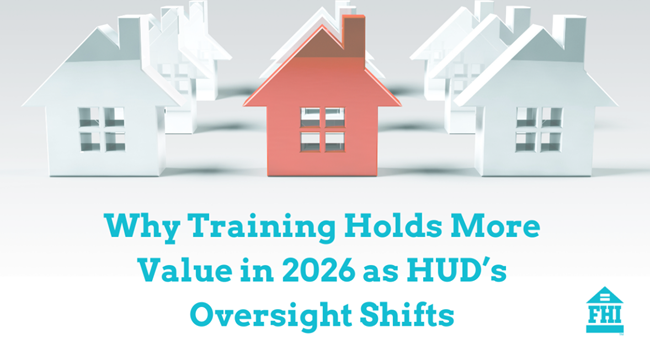
Why Training Holds More Value in 2026 As HUD’s Oversight Shifts

Training will hold more value in 2026 as HUD oversight changes and shifts, budgets are tightened, and a new enforcement landscape takes shape

Training will hold more value in 2026 as HUD oversight changes and shifts and tightened budgets impact the cost of training plus a new enforcement landscape takes shape.

By The Fair Housing Institute

The conversation around cost management and compliance in property operations has always been delicate, but as we step into 2026, the connection between the two has never been more significant.

The familiar saying “penny-wise and pound-foolish” continues to play out across the industry as companies attempt to reduce expenses without fully understanding the long-term financial consequences.

In a year defined by shifting oversight, tightened budgets, and new enforcement dynamics, the cost of inadequate training has only become more apparent.

A New Enforcement Landscape Taking Shape for 2026

After the major operational and staffing changes that affected HUD throughout 2025, many believed the natural outcome would be fewer investigations and a lighter regulatory footprint.

Yet the opposite has unfolded. While HUD faced funding reductions and internal restructuring, its recalibrated priorities created a ripple effect across the entire fair-housing enforcement network.

Partnerships between HUD and the Department of Justice expanded, referrals to state civil rights agencies increased, and fair-housing advocacy organizations continued their testing initiatives without pause.

Private law firms also remained active, initiating large-scale complaints that span city and state lines.

As the industry moves into 2026, enforcement is no longer dependent on HUD alone. Companies that assume a reduced federal workforce translates into reduced risk, misunderstand how today’s enforcement structure operates.

The reality is that oversight has become more distributed, not diminished.

The Financial Realities Behind Compliance in 2026

Every property management professional understands the pressures of managing operational budgets.

Training can be among the first areas scrutinized when leadership seeks to reduce costs, but this approach often leads to far greater expenses down the road. Industry experts have consistently seen companies hesitate to invest in training, only to return months or years later when faced with a fair housing complaint. By then, the costs associated with investigations, legal fees, and settlements are exponentially higher.

Fair housing complaints remain far more common than many realize.

With tens of thousands of complaints filed annually, the likelihood of encountering one is substantial. Even though these cases rarely dominate media headlines, they remain a constant source of liability for unprepared organizations.

As companies head into 2026, the financial risk of non-compliance is only increasing.

Why HUD’s 2025 Changes Make Training Even More Critical

As HUD transitions into 2026 with a refined operational model, the expectation for industry preparedness remains unchanged.

Employees are still required to conduct themselves in a compliant manner, and companies remain responsible for setting the conditions that enable consistent compliance. Training becomes the practical tool that bridges this expectation, ensuring that every employee—not just leadership—understands their role in reducing risk.

Training as the Most Effective Preventative Measure for 2026

In the new year, the companies best positioned for success will be those that treat fair-housing training as an essential part of their compliance and risk management framework.

Training must be continuous, up-to-date, and reflective of current enforcement patterns. Annual training has become a standard across larger firms, but the most effective programs also incorporate diverse topics and real-world scenarios that resonate with day-to-day operations.

Training is far more than a regulatory requirement. It is the strategy that prevents inconsistent practices from turning into violations. It is the foundation that ensures new employees understand expectations early. It is the safeguard that helps seasoned employees stay aware of changes that affect their daily responsibilities. In a year when litigation pressure remains high, training is the only scalable way to reduce liability at every level of the organization.

Setting the Tone for 2026 and Beyond

As the industry enters 2026, it is becoming clear that fair-housing compliance is not simply an operational obligation but a long-term business investment.

Companies that recognize this—those that emphasize learning, documentation, and consistent reinforcement—are far better equipped to navigate evolving expectations and avoid the escalating costs associated with non-compliance.

Training is not optional in this environment. It is a structural necessity that supports the organization’s financial health, protects employees, and safeguards entire portfolios from preventable risk.

The most intelligent decision a property management company can make in 2026 is to position training at the center of its compliance program. It is a choice that strengthens resilience, reduces liability, and supports long-term stability in an industry where preparedness is the only proper cost-saving strategy.

About the author:

In 2005, The Fair Housing Institute was founded as a company with one goal: to provide educational and entertaining fair-housing compliance training at an affordable price at the click of a button.

Sign Up For Our Weekly Newsletter And Get Rental Property And Apartment News And Helpful, Useful Content Each Week.

* indicates required

Legal Scrutiny of Support Animals Is Rising — But the Real Issue Is Pet-Inclusive Housing

Legal scrutiny of support animals is rising but people don't misrepresent animals to gain advantage as rental housing often leaves no choice

Legal scrutiny of support animals is rising but people aren’t misrepresenting an animal to gain an unfair advantage it is because the rental housing system leaves them no other choice.

By Pet-Inclusive Housing Initiative

Across the United States, emotional support animals (ESAs) and service animals are receiving heightened legal attention — from federal guidance changes to new state-level laws.

Headlines often focus on misrepresentation, cracking down on abuse of ESA policies, and tightening rules for disability-related accommodations.

But at the Pet-Inclusive Housing Initiative (PIHI), we see an important truth getting lost in this debate: Most people aren’t misrepresenting an animal to gain an unfair advantage. They’re doing it because the rental-housing system leaves them no other choice.

If more housing providers eliminated breed and size restrictions and stopped charging pet fees, many renters wouldn’t feel backed into a corner. The real solution isn’t deeper policing of ESAs — it’s removing the barriers that make misrepresentation feel like the only path to stable housing with a beloved pet.

Four recent developments illustrate why this conversation is more urgent than ever.

  1. HUD Rescinds Key Guidance on Assistance Animals, Creating Uncertainty for Renters with ESAs

HUD’s Office of Fair Housing and Equal Opportunity (FHEO) recently rescinded two major guidance documents:

  • FHEO 2020-01Assessing a Person’s Request to Have an Animal as a Reasonable Accommodation Under the FHA
  • FHEO Notice 2013-01Service Animals and Assistance Animals for People with Disabilities in Housing and HUD-Funded Programs

These documents — not the Fair Housing Act (FHA) itself — have long served as the practical roadmap for housing providers on how to handle reasonable accommodation requests for ESAs. They helped clarify:

  • That ESAs cannot be subject to breed, weight, or size restrictions
  • That landlords cannot charge additional pet fees, deposits, or “pet rent” for ESAs
  • How to evaluate disability-related need and documentation

By withdrawing this guidance, HUD has removed the interpretive framework that ensured consistent application of ESA protections. While the core protections of the FHA still apply, the guardrails that shaped everyday decision-making are now gone.

This creates enormous uncertainty:

  • Will landlords begin applying breed or size restrictions to ESAs?
  • Will new fees be imposed?
  • Will ESA-accommodation requests become harder to navigate and more inconsistently evaluated?

For renters who rely on ESAs — especially those whose animals fall outside typical apartment pet policies — the stakes are high. Without clear federal guidance, the risk of inconsistent or overly restrictive local practices grows.

  1. A Louisiana Federal Court Allows Landlords to Charge Pet Fees for ESAs — Signaling a Post–Loper Bright Shift

On July 16, 2025, the Eastern District of Louisiana issued a significant ruling in Henderson v. Five Properties LLC. The court held that:

  • Landlords may impose a generally applicable pet fee on ESAs, as long as the fee applies uniformly to all animals.
  • ESA owners must demonstrate that waiving the fee is necessary for their disability-related accommodation.
  • Past HUD guidance barring fees for ESAs is not binding — a position amplified by the 2024 Supreme Court decision in Loper Bright Enterprises v. Raimondo limiting agency deference.
  • Waivers remain available, but only when they clearly meet the FHA’s high standard for reasonable accommodations.

While this ruling currently applies only in Louisiana, its reasoning could spread quickly as other courts grapple with Loper Bright’s ripple effects.

The message is clear: ESA protections remain intact, but the threshold for securing certain accommodations may now be higher.

At PIHI, we’ve long argued that this fee-focused approach misses the bigger picture. Roughly two-thirds of U.S. households include an animal, making pets important family members. Policies that treat pet ownership as a privilege reserved for those who can pay premiums only deepen inequity. As courts reexamine the boundaries of disability accommodations, it becomes even more essential to build rental housing policies that don’t force people with pets into legal grey areas.

  1. Iowa’s and Wisconsin’s Focus on Service Animal Misrepresentation Reflect a Larger National Trend

recent news story from Iowa highlights how cities are adjusting to a new state law increasing penalties for misrepresenting a service animal. These laws are often framed as necessary to protect people who rely on legitimate service animals — and that’s a real concern.

Now add to this: In Wisconsin, the State Assembly and Senate have both passed a bill that would impose a fine of $200 for falsely claiming a service animal and $500 for providing false documentation of an emotional support animal (ESA).

But there’s a deeper issue here that isn’t getting enough attention.

People rarely misrepresent an animal “just because.” More often, misrepresentation is a symptom of a restrictive housing landscape where:

  • Breed, size, and weight restrictions bar families from most rental options
  • Pet fees and deposits price people out of stable housing
  • Some renters face losing not only their home, but also their companion animal

When renters feel trapped between housing instability and surrendering a family member, misrepresentation becomes, for some, the only perceived option. Penalizing the behavior without addressing the underlying causes is like treating a fever while ignoring the infection.

Pet-inclusive housing policies dramatically reduce incentives for misrepresentation. When housing providers welcome pets — without unnecessary fees or discriminatory restrictions — renters no longer need to navigate a confusing system or consider dishonest workarounds to stay housed with their companion animals.

  1. The ESA System Itself Reflects a Bigger Problem: Housing Policy Hasn’t Caught Up with Modern Pet Families

As recent scholarship highlights, the rise in ESA designations — and the backlash against them — stems from a deeper policy lag in how society treats companion animals. The legal framework for ESAs effectively medicalizes a common human–animal bond, forcing renters to obtain a mental health diagnosis simply to keep a pet in housing that otherwise bans or restricts them.

Research shows that housing barriers are a driver of ESA requests, with many renters pursuing documentation as a last resort when faced with breed restrictions, weight limits, or unaffordable pet fees. This creates a two-tiered system: People without a diagnosed disability are pushed to “medicalize” normal emotional-support needs, while people with legitimate service animals experience increased doubt and scrutiny fueled by concerns over “fake” ESAs.

The Bigger Picture: Misrepresentation Isn’t the Problem — Barriers Are

Across all four developments — federal uncertainty, shifting court interpretations, new state-level penalties (in Iowa and now likely in Wisconsin), and the deeper structural critique of the ESA system — one truth stands out: the system is tightening around ESAs and service animals without addressing why misrepresentation and accommodation disputes keep happening in the first place.

People aren’t seeking ESA letters to exploit a loophole. They’re doing it because the current housing landscape often forces them into a medical system that was never designed to regulate family life. Outdated policies — breed and size bans, high pet fees, and limited pet-inclusive housing options — push renters into pathways that pathologize the ordinary human-animal bond and increase scrutiny for those who rely on legitimate service animals.

At PIHI, our stance is simple: If pet-inclusive housing were the norm — with no breed or size restrictions and no punitive fees — the demand to misrepresent an animal would shrink dramatically.

Most renters want to follow the rules. But the rules themselves often make it nearly impossible to keep a pet, even when the animal is well-behaved, beloved, and essential to a family’s stability and well-being.

By reducing or eliminating unnecessary pet restrictions, housing providers can:

  • Reduce fraud and misrepresentation
  • Increase compliance with legitimate service and ESA accommodation processes
  • Lower administrative burdens
  • Improve resident satisfaction and stability
  • Create healthier, more connected communities

Where We Go from Here

As legal scrutiny grows — from HUD’s withdrawn guidance to post-Loper Bright court rulings to state-level misrepresentation laws (including Iowa and Wisconsin) — one thing is clear: we cannot regulate our way out of misrepresentation if we don’t fix the root cause.

A housing ecosystem that welcomes pets is a housing ecosystem that:

  • Supports mental and emotional well-being
  • Reduces pressure on disability-accommodation pathways
  • Ensures fairness and safety for residents who rely on trained service animals
  • Promotes stability for families and the animals they consider part of that family

PIHI remains committed to advancing pet-inclusive housing solutions that eliminate the need for misrepresentation. The more we align housing policy with the lived reality of multispecies families, the fewer renters will feel forced into medical or legal grey areas just to keep their loved ones with them.

About the author:

The Pet-Inclusive Housing Initiative  was founded by Dr. Gary Michelson. He started Found Animals in the aftermath of Hurricane Katrina. Found Animals established the first free microchip registry to help lost pets find their way home. With a commitment to continue keeping people and pets together, he turned to the next scalable solution: increasing the availability of truly pet-inclusive housing.

Sign Up For Our Weekly Newsletter And Get Rental Property And Apartment News And Helpful, Useful Content Each Week.

* indicates required

FTC Warns 13 Property Management Companies

The FTC sent letters warning 13 property management companies they may be violating the law if they do not convey accurate pricing information

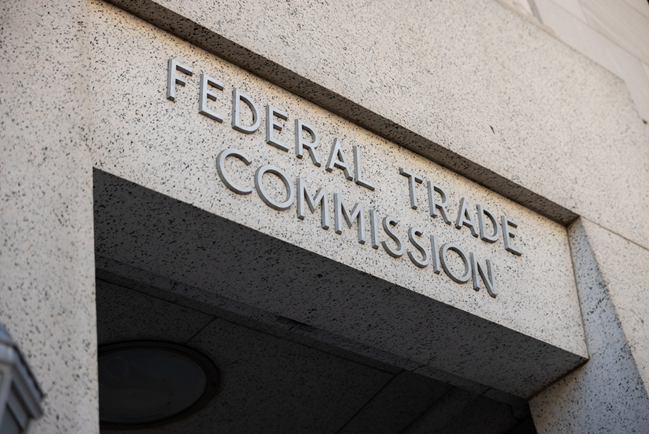
The Federal Trade Commission (FTC) has sent letters warning 13 property management companies they may be violating the law if they inhibit rental property managers and owners from conveying accurate pricing information when marketing rental housing to consumers, according to a release.

“If software providers hinder the flow of accurate pricing information in rental listings, those providers may be depriving consumers of the ability to make informed purchasing decisions, negatively affecting market efficiency,” the letters say, according to the release.

The letters come after the FTC announced that Greystar, the nation’s largest multifamily rental property manager, agreed to pay $23 million to the FTC and $1 million to the state of Colorado for allegedly deceiving consumers about rental prices.

“The FTC is committed to rooting out anticompetitive, unfair, and deceptive acts or practices in the rental housing market,” said Christopher Mufarrige, director of the FTC’s Bureau of Consumer Protection, in the release.

“Companies need to compete on price and consumers need accurate and non-deceptive information to make the best-informed decisions possible.”

Warning Letters To Property Management

The letters note that available information suggests that property-management software providers are limiting the ability of rental-property managers and owners to accurately advertise total monthly rental prices by failing to include all mandatory fees in the price. Doing so may cause consumers harm by preventing potential renters from getting complete pricing information on property owners’ and managers’ websites and internet listing platforms.

The letters warn that companies engaging in such conduct may be subject to legal action and federal district court injunctions, as well as civil penalties of up to $53,088 per violation under the rules and regulations the FTC enforces.

The letters advise the companies to conduct a comprehensive review of their practices, including their website hosting platforms and software or coding that controls the flow of information to internet listing sites.

“We are monitoring the marketplace for potentially deceptive or unfair acts or practices relating to the marketing and advertising of rental housing and will take additional action as warranted,” the letters conclude, according to the release.

Sign Up For Our Weekly Newsletter And Get Rental Property And Apartment News And Helpful, Useful Content Each Week.

* indicates required

Missing Renters? How Immigrant Departures May Be Fueling Surge in Rental Vacancies

Landlords missing renters? Is the vacancy story about more than supply as immigrant departures may be fueling some surge in rental vacancies

Landlords missing renters? Is the vacancy story about more than supply as immigrant departures may be fueling some of the surge in rental vacancies? An opinion piece by August Wilder Johnson.

By August Wilder Johnson

The U.S. rental market is entering a new phase—and it’s not just about new supply. Amid a historic surge in apartment construction and moderating rents, a quieter but critical shift is reshaping housing demand: America’s renter population is shrinking, in part because immigrants are leaving.

In the second half of 2025, the national rental vacancy rate climbed to 7.2%, its highest level since at least 2017, according to Apartment List’s December 2025 National Rent Report. One year earlier, the national vacancy rate hovered closer to 6.6%. The time it takes to lease a vacant unit has also doubled from 18 days in 2021 to 36 days in late 2025. These trends indicate a decisive shift from the white-hot rental market of the early 2020s, when low vacancy and bidding wars were the norm.

Much of the current narrative around rising vacancies focuses on record-breaking supply: More than 600,000 new multifamily units were delivered in 2024, with even more expected through 2025. But the demand side of the equation is increasingly shaped by national immigration policy. And this year, the pipeline of new renters from abroad has not just slowed—it has reversed.

A Vanishing Tenant Base

The Department of Homeland Security reports that more than 2 million immigrants have exited the United States in 2025, including both deportations and voluntary departures 1. This figure includes approximately 548,000 formal removals by federal immigration authorities between January and October 2025, with expectations of surpassing 600,000 by year’s end—a modern record. In addition, roughly 1.6 million undocumented immigrants have “self-deported” since January, leaving the country without formal removal proceedings 2.

These removals coincide with a broader population shift. Pew Research Center data show that the total U.S. foreign-born population declined from 53.3 million in January 2025 to 51.9 million by June, a drop of 1.4 million—the first such decline in over half a century. Most of this outflow came from undocumented immigrants, although legal immigration inflows have also slowed under tighter federal policies.

Given that immigrants disproportionately rent rather than own—especially in their first years in the country—the impact on multifamily demand is direct. With a shrinking pool of immigrant households, landlords in many metro areas are seeing units sit vacant longer than projected.

Demand Deficit Meets Supply Boom

Vacancy rates are climbing at a time when the country is still digesting the largest apartment construction boom in a generation. As of early November, more than 950,000 units were under construction nationally, according to Yardi Matrix. Additionally, the pipeline included more than 4.6 million units in the planning and permitting stages.5

Stephen Miran, a Federal Reserve Board appointee in 2025, argued that the decline in immigration would “free up more housing and lower rental costs” by reducing pressure on the market 4. As a result, housing analysts warn that even modest overbuilding—when paired with a demographic slowdown—can quickly lead to elevated vacancy rates, softened rent growth, and greater pressure on operating margins.

Vacancy’s Double-Edged Sword

For renters, higher vacancies may sound like good news—and in the short term, it is. National median rents were down about 1.1% year-over-year as of December 2025, according to Apartment List. That marks the first annual rent decline in nearly five years, offering relief after years of relentless increases.

But industry experts warn that the longer-term implications of a shrinking renter population are more complicated. Immigrants don’t just fill apartments — they build and maintain them and support local economies. Continuing outflows could lead to labor shortages in construction and property maintenance. In addition, we may see a slower economy and a decline in the feasibility of new projects.

Alex Nowrasteh, vice president for economic and social policy studies at the Cato Institute, said, “If millions of undocumented immigrants were suddenly removed, they’d leave behind a lot of empty houses and apartments,” causing housing demand to fall accordingly 6. Similarly, research from the Urban Institute emphasized that immigrants made up more than 23 percent of the construction workforce in 2023, with about half being undocumented 7.

The Road Ahead

If immigration policies remain tight and voluntary departures continue, the U.S. could face a prolonged period of flat or declining population growth—something that hasn’t happened in modern history without a major recession or pandemic.

For now, multifamily operators are adjusting by:

  • Offering concessions
  • Re-evaluating lease-up timelines, and
  • Closely watching household formation statistics

As 2026 approaches, one thing is clear: The vacancy story is no longer just about supply—it’s also about who’s still here to rent.

Citations

Footnotes

  1. Fox News, “Deportations under Trump surge past 500K in 2025,” October 2025.
  2. Department of Homeland Security internal estimates.
  3. Pew Research Center, “What the data says about immigrants in the U.S.,” August 2025.
  4. Associated Press, “Trump’s Federal Reserve appointee seeks steeper rate cuts,” September 2025.
  5. Multi-Housing News, December 2025.
  6. Yield Pro, “Mass deportations loom for apartments,” February 2025.
  7. Urban Institute, “Mass Deportations Would Worsen Our Housing Crisis,” February 2025.

About the author:

August Wilder Johnson is an expert in commercial real estate investment.

Sign Up For Our Weekly Newsletter And Get Rental Property And Apartment News And Helpful, Useful Content Each Week.

* indicates required

Automation Takes Over at Multifamily OpTech Conference

Automation and where the multifamily apartment industry is heading was a major topic at the OpTech conference along with Ai.
Robotics is involved in 20 of the 25 venture capital deals I’m working on right now,” said panelist KP Reddy, a venture capital leader and proptech investor at Shadow Ventures.

Automation and where the multifamily industry is heading was a major topic at the National Multifamily Housing Council OpTech conference along with Ai.

By Paul Bergeron

The messaging at the National Multifamily Housing Council’s (NMHC)recent OpTech conference was dominated by automation. Whether through artificial intelligence (AI) used in advanced software platforms or other products, it’s where the apartment industry is heading – if not already there.

Appwork was among the leading companies demonstrating such advancement. Its ability to proactively manage maintenance workflow and take companies out of the pen-and-paper – and even a spreadsheet approach – comes from its intuitive mobile app technology.

“Don’t track your maintenance work orders with pen and paper or whiteboards. You don’t have to,” said Dani Black, speaking at one session.

“Giving teams such technology is also boosting retention – a seemingly forever challenge for operators,” said Black, the firm’s chief revenue officer.

For example, the industry’s turnover rate for maintenance techs is 38%, but only 26% for those using AppWork, Black said, because these employees thrive when using software designed with their client maintenance techs’ feedback.

Operators benefit because it costs $10,000 to $15,000 to replace maintenance techs.

Technicians are measured, highlighted, and celebrated through the software based on their performance time and review remarks, Black said. The system assigns technicians who have demonstrated specialization in specific work orders to those service requests.

Mike DiBenedetto, chief information officer at apartment operator Northland, speaking on another panel, said, “Our apartment-industry technology providers need to allow integration with their products on our property management software when it comes to AI.”

NMHC Unveils Industry AI Standards

The AI revolution is driving efficiency by significantly reducing the time required to perform everyday onsite tasks, such as interpreting information, creating highlight summaries from lengthy content, and generating performance and forecast reports. It’s also effective at problem-solving.

Companies must be mindful of AI’s uses, according to Whitney Kidd, senior vice president of technology and innovation at Preiss, a multifamily and student housing operator.

“Monitoring your employees’ AI large language models (LLMs) use during work hours reminds me of a generation ago when we had to do that to police them from spending too much time on Facebook,” Kidd said.

Kidd is a member of NMHC’s AI Working Committee, which unveiled a new industry AI governance document during OpTech.

Local and state legislation intended to address AI has become somewhat of a hindrance for multi-state operators.

“We do need a federal rule [for governance],” DiBenedetto said. “There’s no reason to have 50 different state laws when it comes to how you are applying AI.”

Whitney Kidd, Senior Vice President of Innovation and Technology, The Preiss Company, an industry leader speaking with the microphone, Mike DiBenedetto Chief Information Officer at Northland and far right Scott Pechersky, Chief Technology Officer, RPM Living.

Robots ‘Get with the Program’

Robots are on the horizon, bringing greater efficiency during the apartment construction process and other areas.

“Robotics is involved in 20 of the 25 venture capital deals I’m working on right now,” said panelist KP Reddy, a venture capital leader and proptech investor at Shadow Ventures.

Eight months ago, Preiss and IRIS Technologies introduced D.O.N.N.A., the industry’s first humanoid robot.

“We created ours for $30,000; it might cost up to $50,000 with the add-ons,” Kidd said.

Kidd said the price of robots, including used ones, is coming down. She said they can be found on eBay for between $5,000 and $8,000.

Operators must then program or reprogram them with ChatGPT. What used to take two months to program can be done in 10 minutes, the panel said.

Preiss’ D.O.N.N.A. can revolutionize day-to-day operations at properties, from leasing to maintenance and beyond, according to Kidd.

“This is just the beginning of what’s possible with AI and robotics in student housing,” Kidd said on the launch date.

Community mapping and access are the most formidable challenges faced when deploying robotics, Kidd said.

“If you’re going to deploy robots on your property, you might have to rethink the design,” Reddy said.

For example, is your landscaping designed so that a robotic lawnmower can get around and do the job?

Robots can also be used to flip all the circuit breakers when a property opens, reducing the risk of electrocution for your team members, the panel said.

About the author:

Paul Bergeron is a freelance writer.

Sign Up For Our Weekly Newsletter And Get Rental Property And Apartment News And Helpful, Useful Content Each Week.

* indicates required

Greystar To Pay $24 Million And Stop Deceptive Practices

The Federal Trade Commission is seeking written public comment on proposed rules involving potentially unfair rental housing fees

Greystar, the nation’s largest multi-family rental property manager, has agreed to pay $23 million to the Federal Trade Commission (FTC) and $1 million to the state of Colorado over deceptive practices.

The FTC said Greystar will stop its deceptive advertising practices to resolve charges that the company misled consumers about monthly rent costs by tacking on hidden fees on top of advertised prices, according to a release from the Federal Trade Commission.

The proposed order also requires the company to clearly and conspicuously display total monthly leasing prices and mandatory fees.

“Greystar misled consumers by advertising low rent prices and then adding mandatory fees at the end of the sales process,” said Christopher Mufarrige, director of the FTC’s Bureau of Consumer Protection, in the release.

“At a time when Americans are struggling to find affordable housing, the FTC is focused on monitoring the housing marketplace to ensure that competitors are meaningfully competing on price and that consumers receive transparent pricing.”

In January 2025, the FTC and Colorado alleged Greystar misrepresented the true cost of renting a Greystar property by displaying a deceptively low rental price.

The deceptive prices excluded several fixed, mandatory monthly fees, instead of the total monthly price that people would have to pay, in violation of the FTC Act, the Gramm-Leach-Bliley Act, and the Colorado Consumer Protection Act, according to the release.

In addition to paying $24 million, of which $23 million would be used to refund consumers harmed by Greystar’s actions.

The proposed order would require Greystar to:

  • Refrain from misrepresenting the total monthly leasing price of a rental unit, pricing information related to fees charged at a rental property, and any material aspects of its home rental services;
  • Make particular disclosures when it makes certain representations. Specifically, when Greystar advertises base rent or another partial pricing, it is required to more prominently disclose the total monthly leasing price of that unit; and
  • Before taking any payment, such as a nonrefundable application fee, clearly and conspicuously provide details about all fees, including the amount and purpose of the fee and whether it is mandatory, and disclose the total monthly leasing price.

The FTC and Colorado filed the order in the U.S. District Court for the District of Colorado.

Sign Up For Our Weekly Newsletter And Get Rental Property And Apartment News And Helpful, Useful Content Each Week.

* indicates required

Is Rent Dip Seasonal Or A Jobs And Consumer Confidence Issue?

The November rent dip that marked four straight months of declines may be seasonal or a larger issue around jobs and consumer confidence

The rent dip in November that marked four straight months of rent declines may be a seasonal issue or a larger issue around jobs and consumer confidence, Yardi Matrix says in the most recent Multifamily Report.

Rents are well off the summer peak and 90% of the Yardi Matrix top 30 metros posted negative growth over the last three months.

“The question is whether the performance is seasonal or the result of weakening job growth and consumer confidence,” Yardi Matrix writes in the report.

Highlights of the report

  • With job growth and consumer confidence weakening, multifamily rents and demand are struggling. The average U.S. advertised rent fell $8 to $1,740 in November, while year-over-year growth dropped 30 basis points to 0.2%.
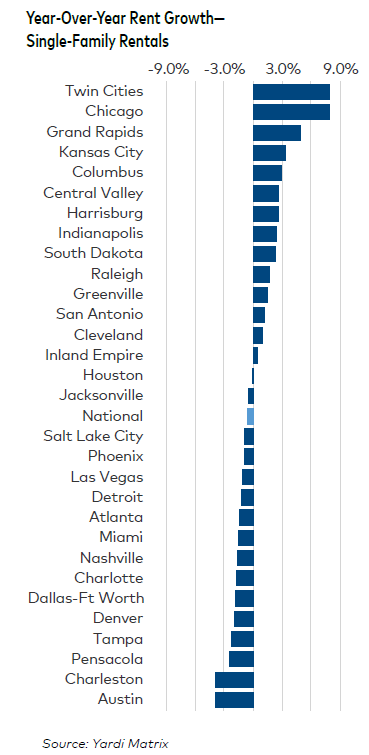
  • Rent growth has been weak for two years in high-supply markets, but the recent malaise is more widespread. Over the last three months, advertised rents have been negative in 90% of the Matrix top 30, with the Twin Cities the only major metro to produce positive growth.
  • Single-family build-to-rent advertised rates likewise are exhibiting weakness, dropping for the fourth straight month. The average BTR advertised rent declined by $10 in November to $2,185, while the year-over-year growth rate fell to -0.5%.

“The recent drop is less than ideal, but more worrisome is how widespread the decline is. There are several possibilities why rents are dropping,” Yardi Matrix writes

Seasonality in the winter months could be one issue

The report points out that rents have dropped in each of the past four Novembers but showed modest recovery in the first quarter of the next year.

“Another possibility is that rent growth will be weak for a while due to the supply-demand imbalance. The large delivery pipeline is being absorbed as demand flags. Immigration policy, weak consumer confidence and slowing job growth have caused absorption to decelerate.

“While year-to-date absorption is strong, the number of apartment units absorbed in October was the lowest in several years,” the report says.

The Top Markets Performance

Advertised rents have been negative for a year or more in metros such as Austin, Denver, Phoenix and Dallas that are dealing with a glut of supply that has lowered occupancy rates despite strong absorption.”

But In November “metros such as Columbus, Indianapolis, New Jersey, San Jose and San Francisco saw advertised rents turn from positive to negative. Not only are these metros among the top-performing markets in rent growth over the last couple of years but most sport occupancy rates at or above the national average, so the poor performance cannot be attributed to weak overall conditions,” the report says.

The November rent dip that marked four straight months of declines may be seasonal or a larger issue around jobs and consumer confidence

Read the full Yardi Matrix report here.

Sign Up For Our Weekly Newsletter And Get Rental Property And Apartment News And Helpful, Useful Content Each Week.

* indicates required

Rent Drop Continues, Vacancies at Record High

The national median rent dropped by 1.0 percent in November, marking the fourth straight monthly decline, as vacancies hit a record high

The national median rent dropped by 1.0 percent in November, marking the fourth straight monthly decline, as vacancies hit a record high, Apartment List writes in the December report.

“November is historically the rental market’s slowest month, and it is likely prices will continue to decline modestly in the coming December and January. This is in line with the typical seasonal pattern of rent growth, as fewer renters are looking to move when temperatures dip and the holiday season approaches,” the Apartment List research team writes in the December report.

Highlights of the report

  • The national median rent now stands at $1,367. “It’s likely that we will close out the year with an additional modest rent decline in December,” the research team writes.
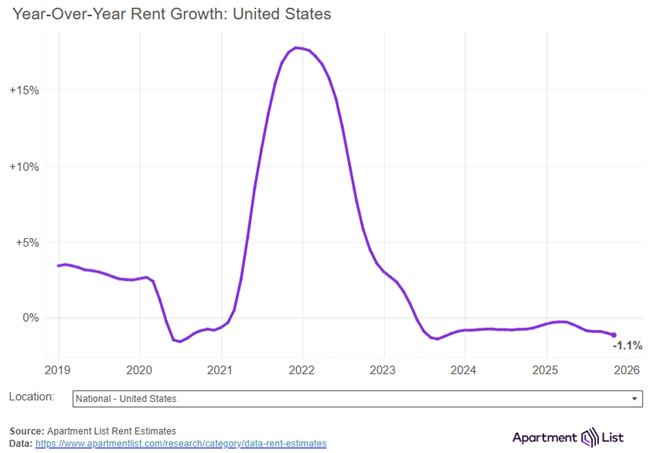
  • Rent prices nationally are down 1.1% compared to one year ago. Year-over-year rent growth has been slightly negative for more than two full years, and the national median rent has now fallen from its 2022 peak by a total of 5.2%.
  • The national multifamily vacancy rate remains at 7.2% this month, “a record high for our index. We’re past the peak of a multifamily construction surge, but a healthy supply of new units is still hitting the market and colliding with sluggish demand, causing vacancies to continue trending up.”
  • Units are taking an average of 36 days to get leased after being listed, two days longer than at this time last year.

Year-Over-Year

“November’s rent decline this year (-1.0 percent) was a bit steeper than last year’s (-0.8 percent), and so we observe a small dip in year-over-year rent growth, down to -1.1 percent nationwide,” the report says.

“Earlier this year, it appeared that annual growth was on track to flip positive for the first time since mid-2023; however, that rebound stalled out and reversed course during a particularly slow summer.”

The national median rent dropped by 1.0 percent in November, marking the fourth straight monthly decline, as vacancies hit a record high

Falling National Median Rent

The national median rent is down $16 per month compared to November 2024.

As prices have trended downward in recent years, the national median rent has now fallen below its August 2022 peak by a total of 5.1 percent, or $75 per month.

The national median rent dropped by 1.0 percent in November, marking the fourth straight monthly decline, as vacancies hit a record high

Multifamily Vacancy Rate Hits 7.2%, a New Peak

The market is still absorbing the swell of new construction units, the report says.

As a result of all this new inventory, more vacant units are sitting on the market, meaning that property owners face more competition for renters and have less pricing leverage.

“Our national vacancy index – which measures the average vacancy rate of stabilized properties in our marketplace – sits at 7.2 in November. This represents an all-time high for this data series, going back to the start of 2017,” the report says.

Vacancy rate hit all-time high

List-to-Lease Ticks Up for Fifth Straight Month

As more vacant units have come onto the market, those units have also been sitting vacant for somewhat longer.

“Our time on market index tells us how long it takes for units to get leased after they are first listed on our platform. This “list-to-lease” time is rising as we approach the new year, and currently sits at 36 days in November, just shy of the peak set last January,” Apartment List writes.

list to lease time on the market

CoStar: Biggest Rent Drop In 15 Years

The fall historically sees the biggest slowdown in multifamily rents, but this year it’s even more pronounced.

The real-estate information group CoStar reported the biggest monthly drops in median rent it had seen in 15 years of tracking. The primary reason is that more young people are struggling to form new households.

“That 18- to 34-year-old group … I think it’s up to 32.5% of those now are living with family, and that’s the highest it’s been in a while,” said Grant Montgomery, CoStar’s national director of multifamily analytics, in an interview with Diana Orlick of CNBC. “I think it reflects high rental costs that have risen over the years, as well as the tougher job market for young folks just coming out of college.”

“That is where a lot of demand traditionally comes from, the core renter demand is from that sort of younger base,” he said.

The weakness is showing up in stocks of the major public apartment REITs. Names like AvalonBay, Equity Residential and Camden Property Trust are all down year to date.

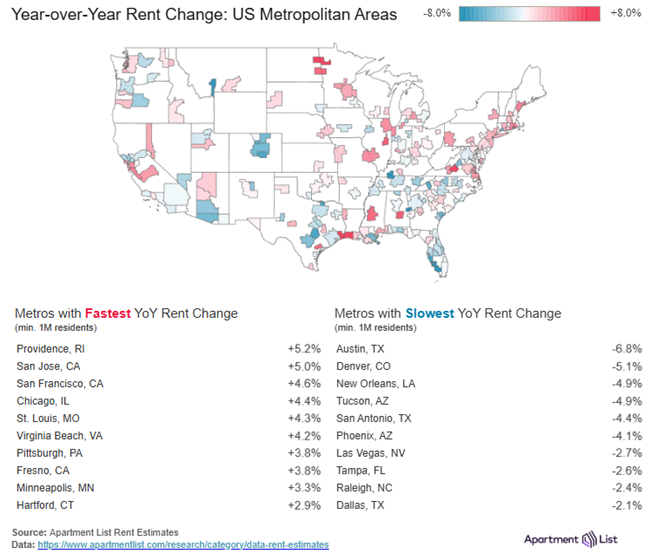
markets with the biggest rent changes and updates

Conclusion

“All of our key indicators are pointing toward ongoing sluggishness in the multifamily rental market – rent prices are down and the vacancy rate is at an all-time high.

“As construction slows further during the tail end of this year and into 2026, rent prices and occupancy should begin to stabilize, and a return to tighter market conditions remains on the horizon.

“That said, the supply boom still has a bit of runway remaining, and the demand outlook has begun to appear weaker amid a shaky labor market. These factors could lengthen the time that it takes for the market to metabolize the recent growth in the rental stock,” Apartment List researchers write.

Sign Up For Our Weekly Newsletter And Get Rental Property And Apartment News And Helpful, Useful Content Each Week.

* indicates required