
Automation and where the multifamily industry is heading was a major topic at the National Multifamily Housing Council OpTech conference along with Ai.
By Paul Bergeron
The messaging at the National Multifamily Housing Council’s (NMHC)recent OpTech conference was dominated by automation. Whether through artificial intelligence (AI) used in advanced software platforms or other products, it’s where the apartment industry is heading – if not already there.
Appwork was among the leading companies demonstrating such advancement. Its ability to proactively manage maintenance workflow and take companies out of the pen-and-paper – and even a spreadsheet approach – comes from its intuitive mobile app technology.
“Don’t track your maintenance work orders with pen and paper or whiteboards. You don’t have to,” said Dani Black, speaking at one session.
“Giving teams such technology is also boosting retention – a seemingly forever challenge for operators,” said Black, the firm’s chief revenue officer.
For example, the industry’s turnover rate for maintenance techs is 38%, but only 26% for those using AppWork, Black said, because these employees thrive when using software designed with their client maintenance techs’ feedback.
Operators benefit because it costs $10,000 to $15,000 to replace maintenance techs.
Technicians are measured, highlighted, and celebrated through the software based on their performance time and review remarks, Black said. The system assigns technicians who have demonstrated specialization in specific work orders to those service requests.
Mike DiBenedetto, chief information officer at apartment operator Northland, speaking on another panel, said, “Our apartment-industry technology providers need to allow integration with their products on our property management software when it comes to AI.”
NMHC Unveils Industry AI Standards
The AI revolution is driving efficiency by significantly reducing the time required to perform everyday onsite tasks, such as interpreting information, creating highlight summaries from lengthy content, and generating performance and forecast reports. It’s also effective at problem-solving.
Companies must be mindful of AI’s uses, according to Whitney Kidd, senior vice president of technology and innovation at Preiss, a multifamily and student housing operator.
“Monitoring your employees’ AI large language models (LLMs) use during work hours reminds me of a generation ago when we had to do that to police them from spending too much time on Facebook,” Kidd said.
Kidd is a member of NMHC’s AI Working Committee, which unveiled a new industry AI governance document during OpTech.
Local and state legislation intended to address AI has become somewhat of a hindrance for multi-state operators.
“We do need a federal rule [for governance],” DiBenedetto said. “There’s no reason to have 50 different state laws when it comes to how you are applying AI.”
Robots ‘Get with the Program’
Robots are on the horizon, bringing greater efficiency during the apartment construction process and other areas.
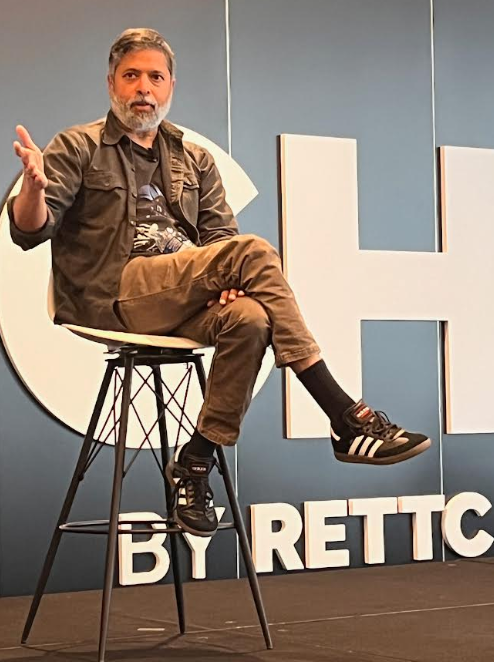
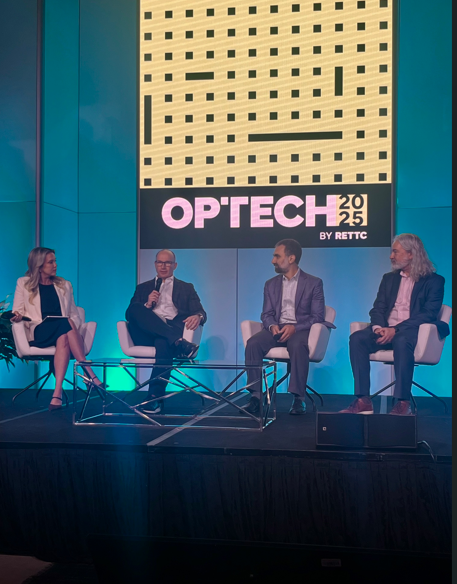
“Robotics is involved in 20 of the 25 venture capital deals I’m working on right now,” said panelist KP Reddy, a venture capital leader and proptech investor at Shadow Ventures.
Eight months ago, Preiss and IRIS Technologies introduced D.O.N.N.A., the industry’s first humanoid robot.
“We created ours for $30,000; it might cost up to $50,000 with the add-ons,” Kidd said.
Kidd said the price of robots, including used ones, is coming down. She said they can be found on eBay for between $5,000 and $8,000.
Operators must then program or reprogram them with ChatGPT. What used to take two months to program can be done in 10 minutes, the panel said.
Preiss’ D.O.N.N.A. can revolutionize day-to-day operations at properties, from leasing to maintenance and beyond, according to Kidd.
“This is just the beginning of what’s possible with AI and robotics in student housing,” Kidd said on the launch date.
Community mapping and access are the most formidable challenges faced when deploying robotics, Kidd said.
“If you’re going to deploy robots on your property, you might have to rethink the design,” Reddy said.
For example, is your landscaping designed so that a robotic lawnmower can get around and do the job?
Robots can also be used to flip all the circuit breakers when a property opens, reducing the risk of electrocution for your team members, the panel said.
About the author:
Paul Bergeron is a freelance writer.