
Home Blog Page 33

FTC Alleges Largest Single-Family Landlord Deceived Renters

The FTC alleges that Invitation Homes, the country’s largest single-family rental landlord, deceived renters about rental costs

The Federal Trade Commission (FTC) is taking action against Invitation Homes, the country’s largest single-family rental landlord, for deceiving renters about rental costs, according to a release.

The FTC complaint is seeking $48 million for an array of unlawful actions against consumers, including deceiving renters about lease costs, charging undisclosed junk fees, failing to inspect homes before residents moved in, and unfairly withholding tenants’ security deposits when they moved out.

The complaint notes that many news organizations have reported on the problems with Invitation homes. Multiple news articles and investigative reports have documented Invitation Homes’ deceptive and unfair practices, including The New York Times (“A $60 Billion Housing Grab by Wall Street,” March 5, 2020), Reuters (“Spiders, sewage and a flurry of fees – the other side of renting a house from Wall Street,” July 27, 2018), The Atlantic (“When Wall Street is Your Landlord,” February 2019), and The Washington Post (“At Invitation Homes, unpermitted work leaves leaky plumbing, faulty repairs, renters say,” July 12, 2022).

“Invitation Homes, the nation’s largest single-family-home landlord, preyed on tenants through a variety of unfair and deceptive tactics, from saddling people with hidden fees and unjustly withholding security deposits to misleading people about eviction policies during the pandemic and even pursuing eviction proceedings after people had moved out,” said FTC Chair Lina M. Khan in the release.

“No American should pay more for rent or be kicked out of their home because of illegal tactics by corporate landlords. The FTC will continue to use all our tools to protect renters from unlawful business practices.”

The proposed settlement would require Invitation Homes to pay $48 million, advertise true rental prices, and stop other unlawful behavior against renters.

The FTC complaint alleges:

  • Invitation Homes advertised monthly rental rates that failed to include mandatory junk fees that could total more than $1,700 yearly.
  • Consumers looking for rental houses paid nonrefundable fees—including application fees up to $55 and reservation fees up to $500—based on the deceptively advertised rates.
  • Consumers learned that the price would be higher than advertised only when they received a copy of their lease, and sometimes not even until after they signed the lease.
  • These undisclosed fees ranged from “services” such as “smart-home” technology and “utility management,” to air-filter delivery and Internet packages.
  • Renters could not opt out of paying these fees. Since 2019, Invitation Homes has collected more than $18 million in application fees alone for deceptively priced houses.

“The complaint also points to multiple times the company actively chose not to disclose the fees prior to consumers paying nonrefundable application and reservation fees, despite the company receiving numerous complaints about the fees after renters learned their actual monthly lease prices were higher than advertised,” according to the release.

Maintenance, security deposits and other issues

The FTC complaint also alleges that:

  • Residents in 33,328 properties submitted at least one work order within the first week after they moved in for issues including plumbing, electrical, and heating and air-conditioning service requests. In some instances, residents reported houses that were unclean and had mold, broken appliances, rodent feces, or exposed wiring.
  • Invitation Homes has systematically withheld renters’ security deposits when they moved out of the company’s houses, including by deceptively and unfairly charging them for normal wear-and-tear, damages that existed before renters moved in, and even renovations.
  • Invitation Homes’ security-deposit refund practices were far outside of national norms, with the complaint noting that, between 2020 and 2022, Invitation Homes returned only 39.2% of consumers’ total security deposit dollars collected, compared to the national average of 63.9%.

The settlement details

Under the terms of the proposed settlement, Invitation Homes would be required to turn over $48 million to the FTC to be used to provide refunds to consumers harmed by the company’s unlawful actions.

The settlement also places a number of requirements on Invitation Homes moving forward. The company would be:

  • prohibited from deceiving consumers about the true rental price of a house, including a requirement to include all mandatory monthly fees in a house’s advertised rental price and disclose whether listed fees are mandatory;
  • prohibited from withholding security-deposit money for damages that are part of normal wear and tear and requiring that any money withheld be used to repair or correct the damage for which it was withheld;
  • prohibited from using withheld security-deposit money to fix issues that were present before the renter moved in or to cover the cost of maintenance, repairs, or capital improvements not related to damage caused by a renter;
  • required to notify consumers about federal, state, or local programs designed to assist people facing eviction;
  • prohibited from filing evictions against certain renters who have already moved out of their house and notified Invitation Homes of their departure.

The settlement, which must be approved by a federal judge before it can go into effect, would also require Invitation Homes to destroy consumer financial data it collected prior to the settlement except under certain conditions, including if that information is needed for current renters.

Read the full complaint here.

Sign Up For Our Weekly Newsletter And Get Rental Property And Apartment News And Helpful, Useful Information Each Week.

* indicates required

Photo credit fiskus via istockimages.com

HUD Charges Housing Providers Over Emotional Support Animal

HUD has charged a housing provider with discrimination over failing to provide accommodation for a tenant with an emotional support animal

The U.S. Department of Housing and Urban Development (HUD) has charged a Florida housing provider with discrimination over failing to provide reasonable accommodation for a tenant with a disability to live with an emotional-support animal, according to a release.

HUD charged Tallahassee, Fla., housing providers Greenbriar Partners, LLC, Jackson Properties and Financial Services, LLC, and Erwin D. Jackson with violating the Fair Housing Act.

According to the complaint, the tenant, who suffers from a mental disability and requires the assistance of an emotional-support animal, moved into the rental without an animal. The tenant then requested a reasonable accommodation in order to get the animal added to her rental unit.

The tenant provided a letter from a licensed mental health counselor who noted in his letter that the tenant had a mental disability and needed to live with an emotional-support animal, “because its presence will mitigate the symptoms of disability.”

The tenant emailed the housing providers stating she was a tenant at the subject property and attached a letter indicating she is qualified for an emotional-support animal. The tenant stated in her email that she had not adopted a dog because she was not approved yet by the housing providers.

Her request for reasonable accommodation was denied by Jackson.

According to the complaint, Jackson stated that allowing the tenant to have an ESA would constitute an undue financial burden and alter the company’s business practices.

Jackson stated that allowing the ESA would force “our company” to lay off employees and would increase the housing provider’s landlord liability insurance rate.

In his email, Jackson added, “Events in the past and medical conditions inhibit my team’s ability to perform their tasks while in the presence of other animals and possesses a direct threat to their safety and their health.”

Jackson ended his email by stating, “Furthermore, your lease can and will be terminated at our discretion as you falsified information in your rental application indicating you had no pets or ESAs. The animal must be removed from the premises by no later than 7 days or a formal eviction notice will be issued.”

The tenant sent the email from Jackson to her legal counsel stating she did not currently have an ESA, but rather, got approved for an ESA and was planning to get one because she had “been on a decline mentally.”

The tenant relocated to an apartment complex that permitted her to have an ESA, though she continued paying rent at the original residence until her lease expired.

HUD’s charge alleges that the housing providers failed to grant the requested reasonable accommodation for an assistance animal. That denial led to economic loss, lost housing opportunity and emotional distress. The charge also alleges that the housing providers violated the Fair Housing Act when they threatened the tenant with an eviction because of her reasonable accommodation request.

“The Fair Housing Act requires housing providers to make reasonable accommodations necessary to afford persons with disabilities an equal opportunity to use and enjoy a dwelling,” said Damon Smith, HUD General Counsel, in the release. “The Department will take action to ensure housing providers comply with their obligations to provide necessary reasonable accommodations.”

Everything Landlords Should Know About Emotional Support Animals

Emotional Support Animals and the Fair Housing Act

Sign Up For Our Weekly Newsletter And Get Rental Property And Apartment News And Helpful, Useful Content Each Week.

* indicates required


Rental Market Tightens Up Even More

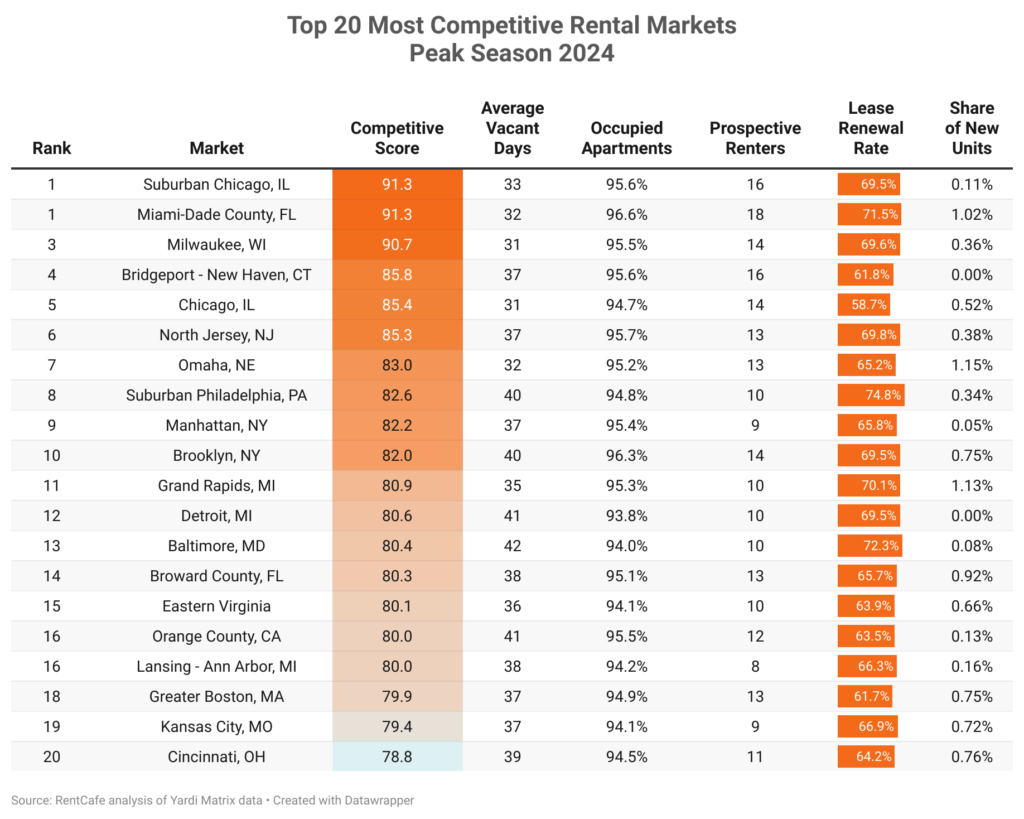
The rental market is tightening up even more as rising lease-renewal rates and 94% occupancy has made the rental market tighter than ever,

Rising lease-renewal rates and 94% occupancy has made the rental market tighter than ever, according to RentCafe.

“Those hoping for a smoother renting journey in 2024 may need to adjust their expectations,” the latest rental competitive report says. The number of potential renters per apartment remains high.

How the rental market has heated up compared to last year:

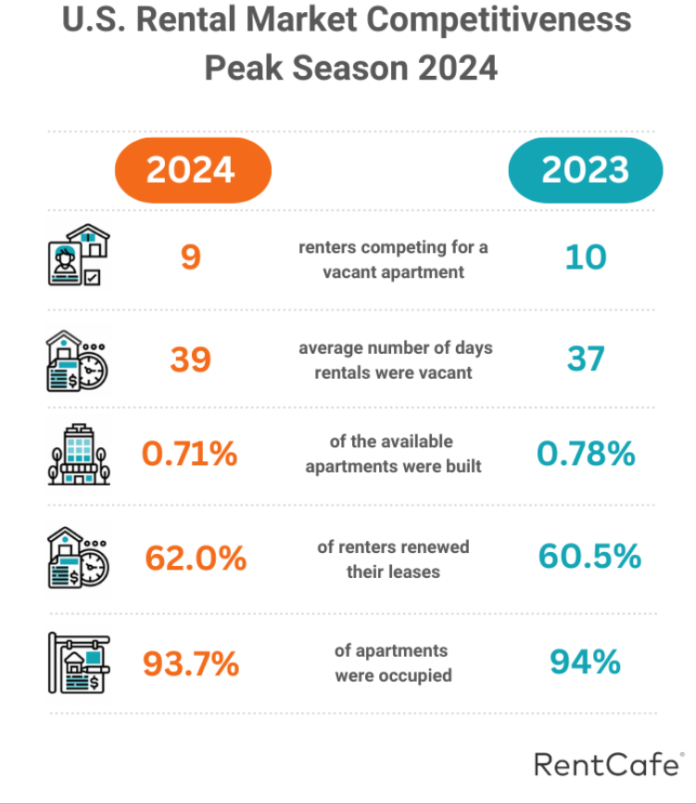
  • More renters are choosing to stay put, with the lease-renewal rate rising to 62.0% (up from 60.5% in peak season 2023).
  • Additionally, fewer available units and strong demand are keeping the occupancy rate at a high 93.7% (a marginal 0.3% decrease from 2023).
  • Limited options mean a high number of applicants for each vacant apartment: The number of prospective renters per apartment has barely shifted, dropping from 10 to 9 since last year.
  • The quick turnaround on vacant units is leaving less time for decision-making, as the average number of vacant days for an apartment is 39 (just 2 days up from 37 last year).
  • The share of new apartments has dropped from 0.86% last year to 0.65% this peak season, slowing the addition of modern rentals and leaving renters with fewer options to choose from.
  • Based on these metrics, “We calculated a Rental Competitiveness Index (RCI) of 75.8 for the peak moving season, up from 69.4 in 2023, indicating a more competitive U.S. rental market,” RentCafe says in the report.

The rental market is tightening up even more as rising lease-renewal rates and 94% occupancy has made the rental market tighter than ever,

Why renters prefer to renew leases

In many cases, renters prefer to renew (as opposed to searching for a new place) during the moving rush because it helps them avoid rent increases that typically come with signing a new lease while potentially getting renewal incentives, the report says.

“This choice often helps renters save money on moving costs, application fees and security deposits. Choosing to renew their leases also allows renters — especially families with children in school — to remain settled for longer. Of course, home prices and mortgage rates are also keeping potential homebuyers in the rental market longer,” RentCafe says.

Read the full report here.

Sign Up For Our Weekly Newsletter And Get Rental Property And Apartment News And Helpful, Useful Content Each Week.

* indicates required

Is Smoking Considered A Disability Under Fair Housing?

Is smoking considered a disability or is nicotine addiction considered a disability under under fair housing act rules

Smoking and housing policies often intersect in ways that raise questions about resident rights and property management responsibilities. One common point of confusion is whether smoking or nicotine addiction qualifies as a disability under the Fair Housing Act (FHA). While marijuana use for medical purposes introduces its own complexities, this article will focus specifically on cigarette smoking and how the FHA applies in these cases.

By The Fair Housing Institute

What is Smoking? Does Nicotine Addiction Qualify as a Disability?

At its core, smoking is the act of inhaling and exhaling the fumes of burning plant material, commonly tobacco.

The question of whether nicotine addiction qualifies as a disability is critical, especially in the context of reasonable accommodation requests under the Fair Housing Act (FHA).

According to the FHA, a disability is defined as a physical or mental impairment that substantially limits one or more major life activities. While addiction is recognized as a serious health condition, nicotine addiction, specifically smoking, does not qualify as a disability under the FHA.

Smoking is considered a personal choice, even if it is difficult to quit, and therefore does not meet the legal criteria for reasonable accommodation in housing settings. The law does not require housing providers to treat smokers differently or make special accommodations for their habit.

Can Properties Dictate Anti-Smoking Policies?

Yes, property owners have the right to establish and enforce anti-smoking policies.

The Fair Housing Act permits housing providers to regulate or ban smoking on their properties, as long as these rules apply to all residents equally and are clearly outlined in rental agreements or property guidelines.

Enforcing these policies, however, can be tricky. Clear communication with residents about smoking restrictions and the consequences of violating them is essential.

Properties are within their rights to penalize or evict residents who breach non-smoking rules, provided they do so in a consistent and fair manner. This is particularly relevant in multifamily housing, where secondhand smoke can impact the health and well-being of others.

Does HUD Require Properties to Have Designated Smoking Spaces?

The U.S. Department of Housing and Urban Development (HUD) does not require housing providers to offer designated smoking areas, but many property managers choose to do so to reduce conflicts between smokers and non-smokers.

The decision to provide such areas often depends on the type of property. In private market properties, it’s at the owner’s discretion, while HUD considers it a best practice, though not a requirement, for federally funded properties.

Even though it’s not mandated, offering designated smoking areas can show sensitivity to all residents’ needs. For example, placing these areas away from doors, windows, and communal spaces helps minimize the impact on non-smokers while still providing smokers a designated place.

Balancing Property Policies and Fair Housing Regulations on Smoking

Smoking itself is not considered a disability under the Fair Housing Act, and property managers are not required to make accommodations for individuals who smoke.

However, anti-smoking policies are legally enforceable, provided they are applied equally to all residents.

While HUD does not mandate designated smoking areas, providing them can help create a more harmonious living environment by respecting the preferences of both smokers and non-smokers.

Balancing these considerations through clear communication, thoughtful policies, and training is key to maintaining a fair and healthy community.

About the author:

In 2005, The Fair Housing Institute was founded as a company with one goal: to provide educational and entertaining fair-housing compliance training at an affordable price at the click of a button.

The Use Of Marijuana – A Fair Housing Challenge

Salt Lake City Rents Fell In August

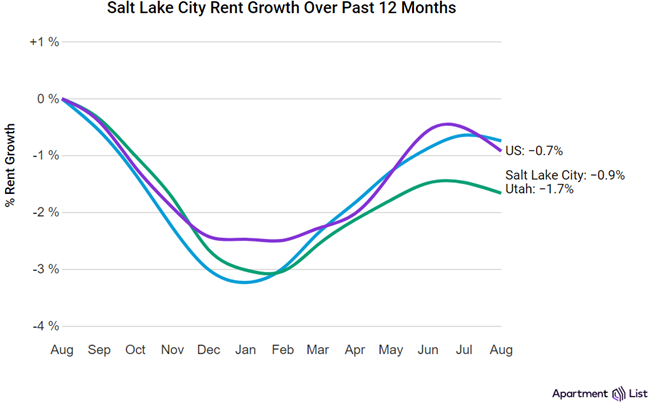
Salt Lake City rents fell by 0.4% over the course of August, and has now decreased by a total of 0.9% over the past 12 months

The median rent in Salt Lake City fell by 0.4% over the course of August, and has now decreased by a total of 0.9% over the past 12 months, according to the September report from Apartment List.

Salt Lake City’s rent growth over the past year has is similar to both the state (-1.7%) and national averages (-0.7%).

Eight months into the year, rents in the city have risen 1.6%. This is a faster rate of growth compared to what the city was experiencing at this point last year: from January to August 2023 rents had increased 0.4%.

Rents in the city are 11.8% lower than the metro-wide median

Across the metro area, the median rent is $1,510 meaning that the median price in Salt Lake City proper ($1,333) is 11.8% lower than the price across the metro as a whole. Metro-wide annual rent growth stands at -1.5%, below the rate of rent growth within just the city.

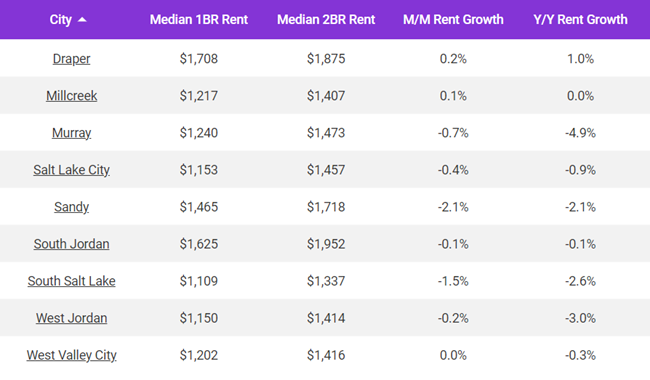
The table below shows the latest rent stats for 9 cities in the metro area that are included in the Apartment List database.

Among them, Draper is currently the most expensive, with a median rent of $1,932. South Salt Lake is the metro’s most affordable city, with a median rent of $1,270. The metro’s fastest annual rent growth is occurring in Draper (1.0%) while the slowest is in Murray (-4.9%).

Suburbs of Salt Lake City

Complete Guide to Apartment Building Insurance- From Our Sponsor

The Insurance Secret Every Property Owner Needs to Know

The Utah Landlord’s Playbook: Strategies for Full Bookings

Aggressive, Abusive Tenants Big Challenge for Property Managers

Dealing with aggressive or abusive tenants and residents is the single biggest challenge facing property managers in 2024 NAA study says

The single biggest challenge facing property managers in 2024 is dealing with aggressive or abusive tenants and residents, according to a new study from the National Apartment Association (NAA).

The “Voice of the Property Manager” NAA Research, sponsored by MRI Software, surveyed nearly 1,000 industry professionals from July 9–22. The analysis in this report represents the voices of more than 850 property managers and regional managers across the United States, a majority of whom are women.

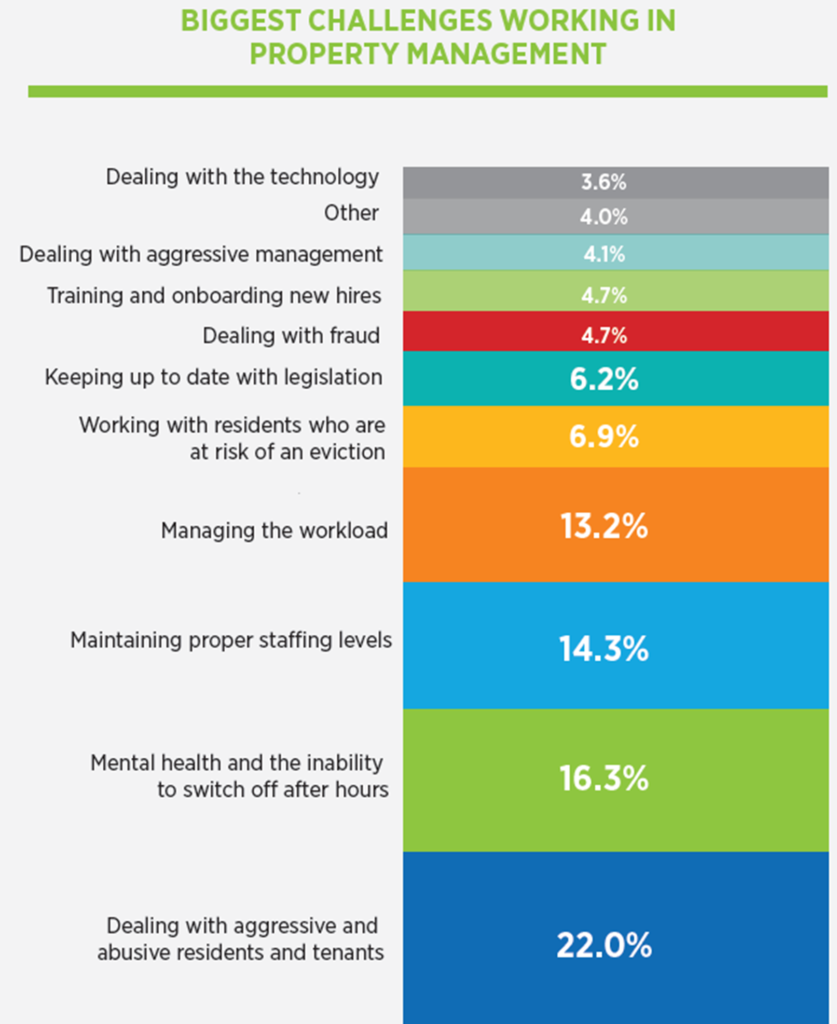
“The most frequently cited challenges in 2024 were dealing with aggressive and abusive residents (22%) and the inability to disconnect after hours (16%). These findings indicate that confrontational interactions and the struggle to separate work from personal time are major stressors for property-management staff, potentially contributing to mental-health concerns,” the report says.

Dealing with aggressive or abusive tenants and residents is the single biggest challenge facing property managers in 2024 NAA study says

Other challenges relate to maintaining staffing levels (14%) and managing workload (13%). There were also concerns about employee retention and reinforcing the ongoing battle to balance workloads within the industry.

“Other issues such as dealing with residents at risk of eviction, inadequate communication and support from upper management, managing staff, keeping up with legislative changes and addressing fraud were cited less frequently, but still affect a notable portion of the workforce,” the report says.

Who responded to the survey?

Of those professionals surveyed, 32% were between the ages of 35-44, while another 29% were in the 45-54-year-old age group. Nearly half of respondents worked for owner/operators and 88% indicated that their companies owned or managed conventional multifamily properties. Just over half of those companies managed fewer than 5,000 units, while nearly one in five operated more than 30,000 units.

“Overall, property managers are happy in their jobs, particularly with their co-workers and with the flexibility offered to them. A slight majority have been in their current positions for more than seven years, while 22% have tenure of two years or fewer,” the report says.

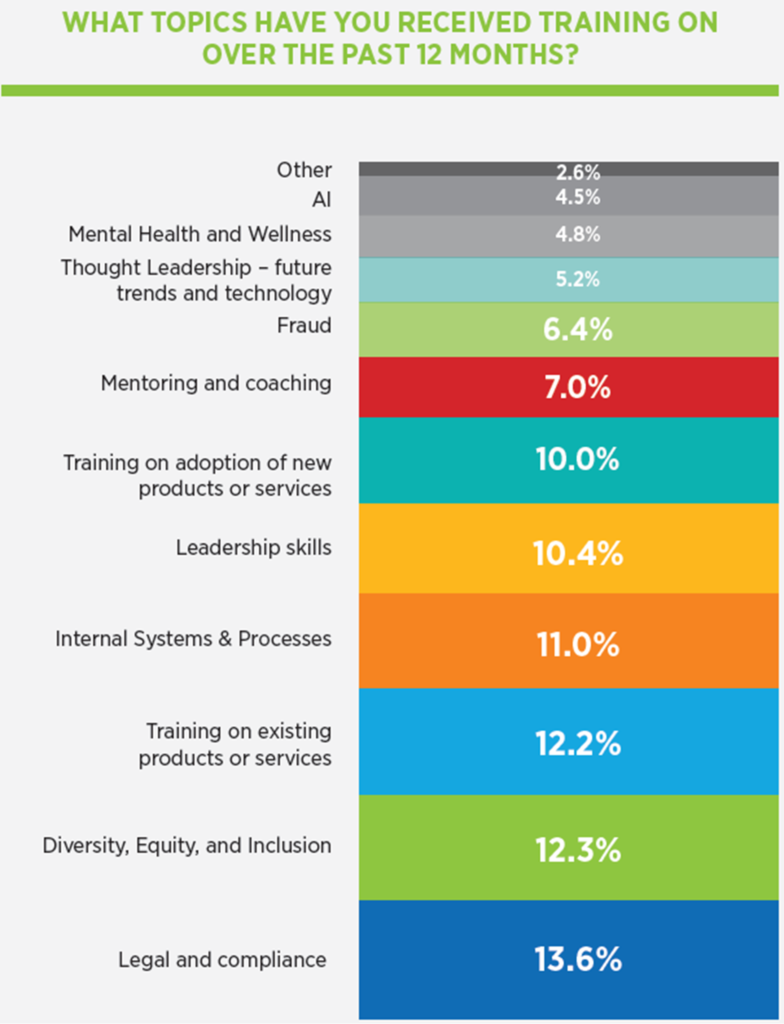
About 60% feel they have the training they need to do their jobs. Nearly three-fourths expect to be in the industry three years from now, which appears to be at odds with some 39% not recommending a career in property management to their friend or colleague. See more detail on this in the full report linked at the bottom of this article.

Dealing with aggressive or abusive tenants and residents is the single biggest challenge facing property managers in 2024 NAA study says

Conclusion: Transparency And Technology

“While owners and operators should be encouraged by this year’s “Voice of the Property Managersurvey results, there is certainly room for improvement in providing a work environment that will not only retain existing employees, but create more promoters of the industry, potentially helping with recruiting efforts as well.

“Managing workloads, maintaining proper staffing levels and providing tools and resources that help property managers do their jobs more effectively will go a long way in improving work-life balance,” the report says.

When it comes to technology, transparency is important as “open communications, and change management will be key as the industry continues to embrace technology, which stands to disrupt operations, roles and responsibilities all while remaining a people-first business.”

Dealing with aggressive or abusive tenants and residents is the single biggest challenge facing property managers in 2024 NAA study says

Read the full report from the NAA and MRI Software here.

Sign Up For Our Weekly Newsletter And Get Rental Property And Apartment News And Helpful, Useful Content Each Week.

* indicates required

Millennials Purchasing More Homes Than Other Groups

Millennials are the nation’s largest generation, and by sheer volume they are purchasing more homes than any other group

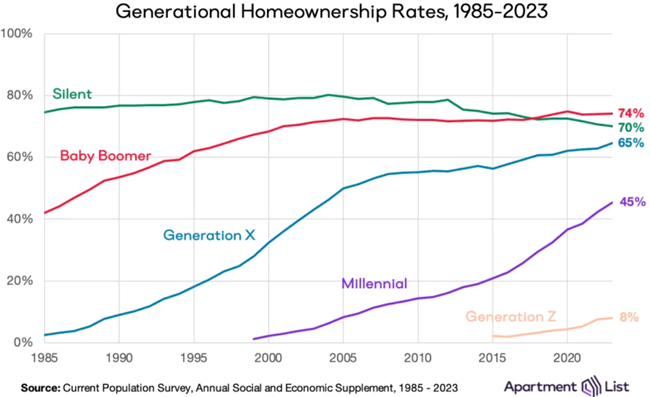
Millennials are the nation’s largest generation, and by sheer volume they are purchasing more homes than any other group, Apartment List research reports.

The Census Bureau even credits them with driving a recent upward trend in homeownership nationwide. But despite some positive trends recently, long-term data show millennials remain well-behind previous generations when it comes to owning homes. (Millennials were born from 1981-1996, making them 28 to 43 today. Those in Generation Z were born from 1997-2012, making them 12 to 27 years old today.)

Much of the reason for the lag in millennial home ownership  is tied to the 2008 housing market collapse, which happened right as they were entering the work force.

Also, when the economy recovered, and many millennials were drawn to jobs in centrally-located cities, some found that renting apartments made more financial sense than buying starter homes that were becoming increasingly scarce and expensive.

Millennials are the nation’s largest generation, and by sheer volume they are purchasing more homes than any other group

Some research points:

  • Millennial homeownership is growing slower than that of previous generations.
  • Millennials are finding the most success in smaller, Midwestern housing markets.
  • Millennials in large metros are less likely to own homes.
  • Gen Z homeownership is keeping pace with millennials, for now.
  • Gen Z and millennials are living with their parents longer.

As millennials grapple with the housing market into their 40s, the next generation is also getting old enough to start buying homes. As of 2023, 8 percent of Gen Z adults own a home, and so far, their homeownership rate is trending in line with millennials through their mid-20s.

What does this mean for the future?

“We’re already seeing the housing market adapt to these homeownership trends. Anticipating that millennials and Gen Z’ers will still want to live in single-family homes even if they can’t afford to buy them, the “built-for-rent” sector is booming.

“Nearly one in 10 new single-family homes in 2023 were built to be rented instead of owned. Similarly, the past year has seen a flood of new multifamily units hit the market, which has helped moderate the cost of renting relative to owning.

“One source of optimism for Generation Z and prospective first-time homebuyers is that the housing market is finally drawing widespread attention from policymakers, at every level of government,” writes Rob Warnock, senior research associate at Apartment List, in the report.

Read the full report from Apartment List here.

Sign Up For Our Weekly Newsletter And Get Rental Property And Apartment News And Helpful, Useful Content Each Week.

* indicates required

Dealing with Maintenance Issues and Substitute Housing

Tenants may make unreasonable demands over maintenance issues asking for compensation or damages so landlords need to know the law.
In my experience, most of these items are small inconveniences that landlords and tenants work out between themselves without the need for attorneys like me.

Tenants may make unreasonable demands over maintenance issues asking for compensation or damages so landlords need to know the law.

By Bradley S. Kraus
Warren Allen, LLP

The landlord/tenant relationship naturally has its ups and downs. Anyone who has ever lived in a house knows how things inevitably break down, need repairs, and/or require fixing.

In my experience, most of these items are small inconveniences that landlords and tenants work out between themselves without the need for attorneys like me. Occasionally, I have seen tenants make unreasonable demands for rent credits, damages, and other monetary claims for the smallest of inconveniences—if they can be called that.

Fortunately, much of these demands can be pushed back upon, if the landlord has knowledge of the law and their legal obligations.

As an initial matter, Oregon landlords are required to provide habitable housing consistent with ORS 90.320, which is commonly known as the “landlord duties” statute. If the premises “substantially lacks” any of the items set forth within that statute, then a tenant may have a claim for diminution of rent. On that point, it is important for both tenants and landlords to understand that diminution does not immediately mean “a month of rent.”

Diminution of rent is often discussed as a percentage of diminution—i.e., how much of the premises is diminished—or how much of the daily rent should be discounted based upon said diminution. An old case practitioner’s reference for this point is Lane v. Kelley. Additionally, diminution of rent is only discussed in terms of the stated monthly rent, and no more. The case to review for this point is L&M Investments v. Morrison.

These two cases inform the basis of legal analysis as to damages that may or may not be owed to a tenant for a particular issue. It goes without saying that any maintenance issue should be remedied as quickly as possible to avoid triggering any demands for compensation or damages. However, that’s not always attainable or avoidable.

For example a maintenance issue. Assume that a tenant’s bathroom—one of two they have in the premises—was out of commission for a week. Because the property has multiple bathrooms, the premises may not “substantially lack” what is required under ORS 90.320 at all. Even if it does, it would certainly be an appropriate argument that the premises was not diminished by 100% of the rental amount. However, even assuming that it was diminished by 100%, the tenant would not be entitled to any diminution of rent beyond one week (as that’s the amount of time it took to remedy the issue).

Additional issues can arise when substitute housing is brought up. ORS 90.365 discusses substitute housing, which is required if the landlord “intentionally or negligently fails to supply any essential service.”

After a notice period and allowing the landlord “a reasonable time and reasonable access under the circumstances to supply the essential service,” the tenant may procure substitute housing if the dwelling unit is unsafe or unfit to occupy. This provision is not triggered under the following circumstances:

(a) The landlord substantially supplies the essential service; or

(b) The landlord is making a reasonable and good-faith effort to supply the essential service and the failure is due to conditions beyond the landlord’s control; or

(6) …. if the condition was caused by the deliberate or negligent act or omission of the tenant or a person on the premises with the tenant’s consent.

If substitute housing is required for some reason, then it behooves the landlord to control the substitute-housing cost by either offering the tenant a vacant unit in the complex/property, if available, or by procuring an extended-stay hotel with kitchen facilities in the area.

If that doesn’t happen, and tenants are left to their own devices, it is not uncommon for tenants to book Airbnbs and seek to recover those costs from landlords. While the statutes contain some pushback for such actions, litigation that often comes after substitute-housing demands will cause costs to skyrocket beyond the costs of that Airbnb.

Habitability issues are no fun.

Things like acts of God that displace tenants—which, in my opinion, are not the fault of landlords, despite what other narratives exist—often arise and sour the landlord/tenant relationship beyond repair. While that likely cannot be stopped, positioning yourself to mitigate costs and expense associated with such things requires knowledge of the laws, rules, and cases that control the analysis.

Tenants may make unreasonable demands over maintenance issues asking for compensation or damages so landlords need to know the law.
Brad Kraus, Warren Allen LLP

About the author:

Bradley S. Kraus is an attorney and partner at Warren Allen LLP. His primary practice area is landlord/tenant law, but he also assists clients with various litigation matters, probate matters, real estate disputes, and family law matters. You can reach him at kraus@warrenallen.com or at 503-255-8795.


Portland Update: Changes to FAIR Ordinance Bring (Some) Necessary Changes

Dealing with Habitability issues and Substitute Housing


photo credit AndreyPopov via istockimages

Multifamily Awaits September Fed Rate Cut

Multifamily is awaiting the news of the September rate cut with “hope that lower rates will break the logjam in the transactions market.

Multifamily is awaiting the news of the September rate cut with “hope that lower rates will break the logjam in the transactions market and spur refinancing activity,” Yardi Matrix says in the August report.

However, the rate cut also presages a slower growing economy. For example, rents in August stopped growing in most places except the Midwest and are likely to trend lower in coming months.

Some highlights of the report

  • The multifamily market’s run of rent gains ended in August, as seasonality and the high number of deliveries in the Sun Belt served to mute growth. The average U.S. advertised rent fell by $1 in August to $1,741, while year-over-year growth was unchanged at 0.8%.
  • Despite the end of the six-month streak of positive rent growth, the news was not all bad. Demand continues to hold up, keeping the national occupancy rate unchanged at 94.7% in the face of rapid supply growth.
  • Single-family rental rents hit a bump in August, with advertised rents falling $7 nationally to$2,164. The year-over-year growth rate dropped 40 basis points to 0.7%. The national occupancy rate fell 10 basis points to 95.3% in July.

Change is brewing

The coming changes are likely to be incremental rather than drastic, the report says.

“Lower rates will be a relief to multifamily, potentially unlocking asset sales and refinancings, while reducing the pressure on properties that are underwater on their mortgages.

“The flip side of rate relief, however, is that it is a result of the economy slowing,” the report says.

The slowing jobs market is also a point of concern.

“The declining quits rate and weakness in office-using job growth are other signs of slowing, which could turn into a drag on consumers and apartment demand,” the report says.

Read the full Yardi Matrix report here.


About Yardi Matrix

Yardi Matrix researches and reports on multifamily, office and self-storage properties across the United States, serving the needs of a variety of industry professionals. Yardi Matrix Multifamily provides accurate data on 18+ million units, covering more than 90 percent of the U.S. population. Contact the company at (480) 663-1149.

Sign Up For Our Weekly Newsletter And Get Rental Property And Apartment News And Helpful, Useful Content Each Week.

* indicates required

Consumer Bureau Targets Rental Debt Collection, Junk Fees

The Consumer Financial Protection Bureau (CFPB) has received more than 1,700 complaints about rental-debt collection

The Consumer Financial Protection Bureau (CFPB) has received more than 1,700 complaints about rental-debt collection, according to a new report, and has been taking action against debt collectors.

The report says that in the United States, rental debt is estimated to be more than $9 billion, with more than 4.5 million households behind on rent payments.

Rental-debt collectors often charge renters collection fees in addition to the unpaid rent itself. As the CFPB has observed with medical debt, many debt collectors furnish rental debt to credit-reporting companies as a means of collecting debt through coercion.

The complaints submitted by consumers and the CFPB’s own research show that the infusion of consumer financial products and services into the rental market raises risks for renters, including improper debt collection due to:

  • Illegal price-fixing: Law enforcement officials in several states as well as individual renters have alleged that rapid increases in rent have been driven by illegal price-fixing. Landlords and management companies may have used “revenue-management software” to collect improper amounts that ultimately end up in debt collection. Debt collectors collecting on bills that are inflated due to illegal price-fixing may be violating the Fair Debt Collection Practices Act.
  • Tacked-on rental fees: Renters, as well as landlords, have complained to the CFPB about rental junk fees, including fees from rental-payment processing services that are added onto and required as a condition for rent payment. It is often not clear whether these fees are allowed under the lease agreement or local law, and, thus, able to be targeted by debt collectors.

Consumer Financial Protection Bureau Actions

The CFPB is taking steps to ensure that debt collectors follow consumer financial protection laws, including the Fair Debt Collection Practices Act and the Fair Credit Reporting Act.

The CFPB also has brought enforcement actions against debt collectors for their efforts to collect on unsubstantiated debt, unlawfully threatening legal action against consumers, and other violations.

Sign Up For Our Weekly Newsletter And Get Rental Property And Apartment News And Helpful, Useful Content Each Week.

* indicates required