Home Blog Page 191

Mortgage Group Provides Bridge Loan For Acquisition of Phoenix Multifamily Property

Phoenix multifamily market blooming in the desert

A leading mortgage group has provided an $11 million first mortgage bridge loan to finance the acquisition and renovation of a Phoenix multifamily property on North 12th street, according to a release.

Regency Park Apartments is a 104-unit garden-style multifamily complex at 6333 N. 12th Street , part of the North Central Phoenix apartment submarket. The property was built in 1971 and consists of six, two-story residential apartment buildings and a single-story clubhouse building.

The property is being acquired through two Tenant-in-Common borrowers and will be owned by Palos Verde Phoenix, LLC and Regency Park Associates, LLC.

The loan will include a $1.56 million future funding commitment for capital improvements towards the renovation and improvement of the property. The loan is structured as a 36-month floating rate loan with two options to extend the loan term for a period of 12 months each.

Hunt Mortgage Group provided the $11 million first mortgage bridge loan to finance the acquisition and renovation of the multifamily property and the transaction was sourced by Doug Marshall, CCIM at Marshall Commercial Funding, Inc.

“The borrowers are seasoned commercial real estate and multifamily investors, and repeat Hunt Mortgage Group clients,” Sergey Klimov, Vice President at Hunt Mortgage Group, said in the release.

Phoenix multifamily complex with high occupancy

“Regency Park had historically experienced high occupancy and is well located.  The planned upgrades will only help boost the appeal of this already well performing property.  We were pleased to play a role in the acquisition of this apartment complex,” he said.

Property amenities include a clubhouse/leasing office, pool, fitness center, common laundry room, covered parking, BBQ areas, and vehicle and pedestrian access gates. The unit mix at Regency Park includes 37, one-bedroom apartments and 67, two-bedroom apartments. The property is 90% occupied.

Interior renovations include the lowering of the kitchen wall to create an open floor plan, granite or quartz countertops, stainless steel appliances, upgraded light and plumbing fixtures, new interior doors, paint, laminate wood flooring and carpet in the bedrooms. Planned exterior improvements will include painting, asphalt repairs, entrance and front railing improvements, signage upgrades, clubhouse renovation, pool upgrades, and landscaping improvements.

With convenient access to both the freeway and transit networks, Regency Park places residents just minutes from the dynamic Midtown, Downtown, and Biltmore Corridors as well as central employment and entertainment hubs in the Phoenix area.

About Hunt Mortgage Group

Hunt Mortgage Group, part of Hunt Companies, Inc., is a leader in financing commercial real estate throughout the United States. The Company finances all types of commercial real estate: multifamily properties (including small balance), affordable housing, office, retail, manufactured housing, healthcare/senior living, industrial, and self-storage facilities. It offers Fannie Mae, Freddie Mac, FHA financing and its own Proprietary loan products. Since inception, the Company has structured more than $27 billion of loans and today maintains a servicing portfolio of more than $14 billion. Headquartered in New York City, Hunt Mortgage Group has 255 professionals in 24 locations throughout the United States. To learn more, visit www.huntmortgagegroup.com.

Phoenix Multifamily Market Blooming In The Desert

Sign Up For Our Newsletter And Get Apartment News And Helpful, Useful Content Each Week.

* indicates required


Sexual Harassment In Housing Target Of New HUD And Justice Department Campaign

The U.S. Department of Housing and Urban Development (HUD) and the U.S. Department of Justice (DOJ) have released a new video to raise awareness of sexual harassment in housing and to reach persons who are victimized by it, according to a release.

To enhance the effectiveness of the campaign, HUD enlisted the assistance of victims to share their experiences and help convey the message that sexual harassment in housing is against the law. Watch the public service announcement (PSA).

The video features three victims of sexual harassment in housing who challenged their mistreatment in lawsuits brought by HUD under the Fair Housing Act. These women share their stories of abuse and the impact the experience they had on their lives.

Landlord trading sex to stop eviction

Stephanie is one victim featured in the video, describing her experience with a landlord who threatened to evict her if she didn’t have sex with him.

“It was something that I didn’t want to do but I had to do it. I didn’t know I had a choice at that time, but now that I do, I want other people to know that they do. I want other women to know that they don’t have to take this. This is just uncalled for. It’s unspeakable,” she said in the release.

“A person’s home is where they should feel the safest, not to live in fear of being subjected to sexual harassment,”  Anna María Farías, HUD’s Assistant Secretary for Fair Housing and Equal Opportunity, said in the release.

“This campaign will let the public know that they have help should they find themselves a victim of this type of behavior. The Justice Department and HUD are committed to working together to address the problem and protect their housing rights,” Farias said in the release.

Landlords and property managers prey on victims in sexual harassment in housing

“Unfortunately, there are still too many landlords and managers who attempt to prey on vulnerable individuals. The launch of the nationwide PSAs is an important step in proliferating the stories of brave women and men across the country in order to raise awareness and help other victims,” John Gore, Acting Assistant Attorney General of the Civil Rights Division, said in the release.

“Our goal at the Justice Department is to make more people aware that no one should have to choose between a home and the right to be free from sexual harassment,” Gore said.

The video and press release is a joint effort between HUD and DOJ to raise awareness and make it easier for victims all over the country to find resources and report harassment. HUD will distribute the video to all Public Housing Agencies across the United States. The video is intended to air in all national media markets and will be distributed by social media to followers of HUD and the Justice Department, and amplified by other government agencies, partners, and organizations.

Last April, HUD and DOJ launched a campaign to combat sexual harassment in housing including three major components: a new HUD-DOJ Task Force to combat sexual harassment in housing; an outreach toolkit to leverage DOJ’s nationwide network of U.S. Attorney’s Offices, and; a public awareness campaign. The Department and HUD are working together to distribute the PSA as part of the Task Force’s coordinated public outreach efforts.

Individuals who believe that they may have been victims of sexual harassment in housing should call the Department at (844) 380-6178, send an email to [email protected], or contact HUD at (800) 669-9777. If you have information or questions about any other housing discrimination, you can contact the Department at (800) 896-7743.

Sexual Harassment In Housing Target Of New HUD And Justice Department Campaign

Photo credit Maroke via istockphoto.com


Phoenix Multifamily Market Blooming In The Desert

Phoenix multifamily market blooming in the desert

The Phoenix multifamily market has turned into a blooming desert for investors and apartment owners as low business costs and great weather has turned into a magnet for companies relocating from nearby California, pushing healthy demographic trends and boosting housing demand in the process, according to a new report from Yard iMatrix.

Rents rose 4 percent year-over-year as of April 2018. The company says they expect Phoenix rents to grow by 5 percent in 2018.

The pace of rent growth was well ahead of the 2.4% national rate, while the rental amount trailed the $1,377 national average.

Phoenix Multifamily market rent trends

Phoenix rents rose 4.0% year-over-year through April to an average of $1,048. While the metro’s pace of rent growth was robust and well ahead of the 2.4% national rate, the rental amount was still below the $1,377 national average. Rent growth has stayed elevated due to healthy demographic trends and above-average employment, according to the Yardi Matrix where reports can be downloaded here.

    • The Renter-by-Necessity segment led growth, up 5.5% year-over-year through April to $850. The Phoenix metro has traditionally been dominated by the single-family market, but recent development activity has skewed multifamily, as the relocation of various financial, professional services and manufacturing firms has resulted in a surge of rental households. Rents in the higher-end Lifestyle segment rose 3.0% to $1,237 over the same interval.
    • Rent growth was positive across the board, led by Central West Phoenix (10.7%) and Northwest Phoenix (7.6%). The most affordable submarket is Central West Phoenix, where, despite the significant increase, the average rent was $685 in April. The highest rents were registered in Sky Harbor ($1,447), South Scottsdale ($1,375) and North Tempe ($1,359). Least affected by the rent surge was South Paradise Valley (up 0.4%). The occupancy rate for stabilized properties was 94.9% as of March. We expect rents to grow 5.0% in 2018.

Phoenix job growth among best in the country

Even though it is slowing, employment growth in Phoenix continues to be among the strongest in the country, up 2.7% year-over-year, well ahead of the 1.6% national average.

    • Phoenix added 60,000 jobs in the 12 months ending in February, while unemployment hovered around the 4.0% mark, roughly on par with the national rate.
    • The education and health services sector led growth, with the addition of 14,700 jobs, followed by the construction sector, which gained 9,900 jobs and registered the highest year-over-year change (8.9%). The two sectors go hand in hand—aside from the robust multifamily development pipeline, Banner Health has 322 active construction projects totaling $1.9 billion, most of them throughout the state of Arizona, including the $418 million Banner-University Medical Center Phoenix, under construction since 2014 and slated for completion in 2020. Manufacturing is also on the rise, having added 6,800 jobs, a trend that is somewhat contrary to most major metros.


    • Demand for office space is boosted primarily by company relocations; at 19.2%, the vacancy rate reached its lowest point since 2008, per JLL. Currently, Phoenix has 2.4 million square feet of space underway, 1.7 million square feet of which is slated for completion within the next 18 months. The first quarter of 2018 had more than 150,000 square feet of net absorption, according to CBRE.

Gilbert and North Tempe lead submarket development

Some 2,350 units were delivered in 2018 through April, 0.8% of total stock, 10 basis points above the national average. The consistent number of completions through April could signal a near-cycle peak, especially since more than 7,600 units are expected to be delivered for the entire year.

    • Roughly 16,600 units were underway in Phoenix as of April, while the overall multifamily pipeline included 26,000 units in the planning and permitting stages. Robust incoming inventory doesn’t raise the problem of oversupply, as deliveries are rapidly absorbed, due to the metro’s strong demand. Occupancy in stabilized properties was 94.9% as of March, roughly in line with the nationwide trend.
    • Construction activity is high across the map, as six submarkets had more than 1,000 units underway in April. Gilbert led the way with 2,590 units, followed by North Tempe (2,345 units), Sky Harbor (1,954) and Union Hills (1,434). The largest multifamily property underway in Phoenix was the 1,069-unit Camden North End, owned by Camden Property Trust. The community delivered a first batch of 441 units in March.


Phoenix Multifamily Market Blooming In The Desert

This report is courtesy of  Yardi Matrix. These and other highlights are summarized in a new Yardi Matrix report, “Phoenix: The Desert Is Calling,” a microeconomic analysis of the metro’s multifamily market. Get other Yardi Matrix downloads here.

For more information contact:

Paul Fiorilla Associate Director of Research [email protected] (800) 866-1124 x5764

Jack Kern Director of Research and Publications [email protected] (800) 866-1124 x2444

About Yardi Matrix

Yardi Matrix, formerly known as Pierce-Eislen, Inc.®, was founded in March, 2000, and acquired in July 2013 by Yardi Systems, Inc., a Santa Barbara, California software company focused on commercial real estate industry applications.

The Yardi Matrix apartment information service is a high-performance system with the sole function of supporting the commercial apartment industry’s dominant participants. The company’s services monitor the 50+ unit apartment universe from the property level to the submarket/market level in a form unique within the commercial apartment information industry.


Sign Up For Our Newsletter And Get Apartment News And Helpful, Useful Content Each Week.

* indicates required

Tempe Apartment Complex Sold For $60.5 Million

A 402-unit Tempe apartment complex has sold for $60.5 million, or $150,498 per unit, according to a release.

Willow Creek, built in 1984, Willow Creek is about one mile from Loop 101/Apache Boulevard light rail station and one-half mile from the intersection of the Price Freeway and Broadway Road, according to the release from Institutional Property Advisors (IPA), a division of Marcus & Millichap.

Tempe apartment complex a prime candidate for renovations

“The property is a prime candidate for interior renovations as the large majority of unit interiors feature original finishes,” Cliff David, Marcus & Millichap senior managing director, said in the release.

“The property’s meticulous campus setting and the asking rents for newly constructed core assets in Tempe, that are reported to be hundreds of dollars more per month than Willow Creek, combine to make a very compelling value proposition.”

David, and Steve Gebing, IPA senior managing director, represented the seller, Acacia Capital, and procured the buyer, JB Partners.

The complex is only two miles from the 1.3-million-square-foot Tempe Marketplace and Mesa Riverview, a 1.3 million-square-foot outdoor shopping center is four miles away.

Arizona State University, Arizona State University Research Park and the Discovery Business Campus are also nearby.

Willow Creek is an impeccably manicured community covering nearly 18 acres with three swimming pools and a recently refreshed clubhouse, according to the release.

David, and Steve Gebing, IPA senior managing director, represented the seller, Acacia Capital, and procured the buyer, JB Partners.

About Marcus & Millichap (NYSE: MMI)

With over 1,800 investment sales and financing professionals located throughout the United States and Canada, Marcus & Millichap is a leading specialist in commercial real estate investment sales, financing, research and advisory services. Founded in 1971, the firm closed nearly 9,000 transactions in 2017 with a value of approximately $42.2 billion. Marcus & Millichap has perfected a powerful system for marketing properties that combines investment specialization, local market expertise, the industry’s most comprehensive research, state-of-the-art technology, and relationships with the largest pool of qualified investors. To learn more, please visit: www.MarcusMillichap.com


Living In Cars Turning Into New Form Of Affordable Housing

Thousands of potential tenants are now living in cars instead of rental housing because rents have just become too expensive and there is no affordable housing for them in some metro locations.

This lack of affordable housing is leading some cities to consider safe parking programs. This new form of affordable housing would allow people who live in their cars a safe spot to park because many cities make the practice of living in a car illegal.

Seattle has 46 percent increase in homeless living in cars, tent camps and RVs

The Seattle Times reports that King County’s annual one-night count of homelessness found more than half of homeless people were sleeping outside versus in shelter, with a stark increase in the number of vehicle campers.

The county said there was an overall 4 percent increase in the annual snapshot count of homeless people, to 12,112.

The count, conducted in January, found a worsening problem of people living in tent camps, cars, RVs and the street compared to last year. More than 70 percent of the county’s unsheltered homeless people were in Seattle, the newspaper said.  One of the findings this year was the jump in the number of people living in cars and recreational vehicles — a 46 percent increase from 2017 — reflecting the city’s lack of a coherent, effective strategy to move people out of cars and into housing.

Living in cars is new form of affordable housing

It’s the new form of affordable housing,” says Sara Rankin, professor at Seattle University School of Law, who specializes in homeless rights advocacy, told governing.com.

“What do we do with people whose basic physiological needs are not being met? When we think about people who are living in their vehicles, are they able to sleep, eat, poop and breathe safely? We have to start asking what needs to be done,” she said.

Safe parking programs

Some cities have launched so-called safe parking programs to help this population. Meanwhile, other cities are exacerbating this population’s problems by criminalizing their current way of life.

Under Los Angeles law, it is illegal to use a car as shelter on most city streets. The ordinance was eased last year but only for 10 percent of the city’s streets.

Rankin told governing.com that Seattle doesn’t directly outlaw vehicle residency. But she found that the city does have 20 vehicle ordinances — the most in Washington state — that make a confusing, patchwork system for residents who live in their cars. Some of those ordinances have recently been tested in court.

Seattle man’s truck ruled a home by judge

Earlier this year, King County Superior Court Judge Catherine Shaffer ruled that the city’s impoundment of a homeless man’s truck where he was living violated the state’s homestead act — a frontier-era law that protects properties from forced sale. The judge said he was using it as a home. The man’s truck was slated to be sold had he not entered into a monthly payment plan with the city.

Resources:

Annual homeless count reveals more people sleeping outside than ever before

‘It’s the New Form of Affordable Housing’: More People Are Living in Their Cars

Court Declares Seattle Homeless Man’s Truck a Home in Case With Broad Implications


Living In Cars Turning Into New Form Of Affordable Housing

Photo credit talipcubukcu via istockphoto.com


Company Rolls Out Smart Apartment Technology Package To 25,000 Units

Smart apartment home technology using thermostat and lighting control, digital home access and voice-enabled control is being rolled out nationwide to 25,000 luxury apartments, according to a release.

Alliance Residential Company, Dwelo, Google and Nest have collaborated on the smart apartment rollout to deliver convenience, connectivity and conservation capabilities, as well as provide management operational efficiencies.

The Alliance SmartHome package features the Nest Learning Thermostat and Google Home Mini with Google Assistant built-in, as well as smart locks, light switches and wall outlets. Control of all devices is centralized through Dwelo, an open platform compatible with a wide range of consumer and commercial iOT devices, with convenient access for residents via the Alliance SmartHome app for smart phones.

“After two years in development, we are pleased to launch Alliance SmartHome,” Jay Hiemenz, President of Alliance, said in the release.

Smart apartment technology not just for single-family homes now

“Home automation in single-family homes has been trending for years now — and our residents desire that same high-tech home system in an apartment. We created Alliance SmartHome to deliver the features our customers want while addressing the unique challenges of multifamily integration to provide a great customer experience and establish a platform for future enhancements in technology,” he said in the release.

Alliance is one of the largest multifamily developers, builders and managers in the U.S. They are leveraging their scale for the development and rollout of the platform.

“With Alliance SmartHome, we have invested in bringing a platform and product package together that offers a truly great experience for our residents,” Brad Cribbins, President of Alliance’s management division, said in the release.

“During the early exploration phases of this initiative, we realized there wasn’t an existing platform and tech package that really delivered on the customer experience we were looking for. So our technology department, led by Senior Vice President of Technology Scott Pechersky, sought out companies who shared our vision for continued advancement in multifamily technology to be part of this collaboration.

Dwelo’s support and ability to scale were important factors in Alliance’s decision to partner with them — the company recognizes that smart device rollouts are not purely about technology but also require a human solution for implementation and ongoing support,” he said.

Smart apartment technology allows tenants to reach support help

To that end, residents will be able to reach a support team of Dwelo employees 24/7 and, thanks to Dwelo’s cloud-based platform, will always be on the latest and greatest version of the company’s technology. Cribbins also said that from a product standpoint, Google and Nest bring extensive ongoing development resources to the table, and that Alliance residents already trust in the quality of their technology and hardware.

“Dwelo is thrilled to be partnering with a group as respected and innovative as Alliance,”  Mike Rovito, Dwelo CEO, said in the release.

“We are honored by the trust that Alliance is placing in us by selecting us for this rollout. Moreover, our customers have always been our greatest source of new ideas, and at Alliance we are partnering with a group of forward-thinking people who share our vision for multifamily technology. We’ve already seen what the clarity of their vision can do: forging a collaboration between us and the folks at Nest and Google to make the world’s best smart devices available seamlessly to those who live at multifamily properties.”

About Alliance

Alliance is one of the largest private U.S. multifamily companies with offices throughout the West, Southwest, South-Central, Southeast, Mid-Atlantic and Northeast. They have invested in more than $10 billion worth of real estate and manage a $15 billion portfolio with local leadership and a comprehensive national support structure.


7 Questions And Answers On Canine Liability Insurance

Debbie Turner got into the canine liability insurance issue after she adopted a schnauzer, named Jazz,  who had personality issues.

She began to learn the different aspects of canine behavior so she could try and figure out why Jazz was so broken.  Jazz led a long and healthy life and ultimately died of old age.

“But somewhere it just hit me that the insurance industry is not underwriting the canine exposure,” she said. She became interested in canine behavior and “found insurance companies just do not know how to underwrite this risk,” she said in an interview about what led her to start Dean Insurance Agency and the website dogbitequote.com.

Jazz the Schnauzer

“I started working on this pet insurance and canine liability issue in the summer of 2010 doing a research paper. When a friend read it and said, ‘That’s not a research paper that is an insurance policy.’

“For me this is a passion. As a child I saw my mother dump our family pet on the side of the road. I looked back and saw him trying to catch us.  I can remember screaming and crying. I  guess there were not a lot of options back them. I did rescue for 10 years. So my passion – I think I am still trying to save that dog that was dropped off by my mother in the wilderness. That is how it all came about,” she told Rental Housing Journal in an interview.

“Now I am saving pets every day all over the country,” Turner said because research shows the main reason pets end up in animal shelters is owners cannot find rental housing for themselves and their pets.

Matthew Wildman, former pet retention manager for The Humane Society of the United States told Rental Housing Journal last year, “There is so much misinformation out there. Our position is allowing pets in rental housing is good for business. Hundreds of properties allow dogs and cats without restrictions on breed.” He said the number one reason animals are sent to shelters is because of rental situations where they cannot keep a pet.

Turner said she gets a lot of questions from multifamily property owners, landlords, apartment property managers and tenants. So she put together a list of seven of the most asked questions about pet insurance and canine liability insurance.

1.  Can a landlord or property manager require that tenants buy canine liability insurance? What about service dogs, emotional support dogs and therapy dogs? 

Answer: Generally but they cannot require it if the dogs are any of the labels that the Fair Housing Act protects, like seeing eye or emotional support.   The key to a  true service dog, is  one who has been trained to do one thing to improve the life of the owner.   If it is a service dog you are allowed to ask what the dog does?  If it is a dog being used as any of the many titles now being used the landlord could agree to pay for the policy ( a reasonable accommodation) the policy would be in the owner’s name but the landlord would still be named as an additional insured.  I also think there may be different rules if there are less than four units.

2.   How much does it cost a year?

Answer: Each dog is rated as an individual so it varies, small dogs could be under $200 annually a Cane Corso just rated out, he weighed 130 pounds, for the $50,000 insurance limit at around $650 including the fees and taxes.

3.  Can a landlord or property manager buy a canine liability policy to cover the whole apartment complex and all dogs in it?

Answer:  Right now the only way is to require each dog owner to purchase a policy and add the Landlord as an additional insured, much the way typical renters insurance works.

4. How many people with dogs in apartment complexes have canine liability insurance?

Answer: More every day, the lawsuits are no longer just about bites. If your dog scratches, trips or knocks someone over you are liable.  Worst one yet was a child who knew the dog lived on a near-by property. The child approached the property knowing the dog would be there. The dog never left its property, but when the child turned to run, he broke his ankle to the tune of $175,000.

5.  Can you insure all breeds and types of dogs?

Answer: Yes, but I do not insure wolf hybrids as they are not considered a “dog.”

6.   Can you insure a dog that has bitten someone in the past?

Answer: I review the applications individually when certain behavior histories come up.  For example, if the dog has killed another animal and the owner reached in to separate the dogs and was bitten, there is a surcharge but I would probably write the policy.

7. What important advice do you have for landlords and property managers?

Answer:  One of the most important things landlords should do is print out exactly what limit, $25,000, $50,000, $100,000, or $300,000 they want and the exact wording of the additional insured’s information.  Otherwise every tenant will buy $25,000 without an additional insured endorsement.  We can change that but it can take several weeks to get the evidence from the insurance company. Also, all of these policies are not created equal I would urge the landlords to review the coverages.  It is great to say you have insurance but quite another to find out when there is a claim that the policy was so narrowly defined that there is no coverage.


Canine liability insurance and Debbie Turner and Jazz

Debbie Turner and Largo

Dogs are still animals and they can bite in certain situations

Turner says she has found out a lot from talking with animal control officers around the country.

“Many people say, ‘oh my dog won’t bite, or my dog will lick you to death.’ There is a total innocence among dog owners that their dog won’t hurt or bite anyone for any reason. I had a trainer tell me his dogs were bullet proof. But they are still animals and given the right set of circumstances will bite. That is scary when people say their dog is bullet proof because means they do not have any concept their dog could bite,” Turner said.

“I have written about 2,500 policies. The majority of the dogs insured are on the dangerous lists. I have very few little dogs.

Turner can offer solutions for several different situations.

“I tell landlords if they cannot get through my underwriting criteria, think twice about allowing that dog to come into the property,” she said.

She said some commercial liability policies are starting to take canine liability insurance out of those policies so owners, landlords and property managers should check.

Insurance companies and dog breeds they insure can vary

“I started doing the statistics on what is the likelihood that any given dog will injure a person. There are 83 million dogs, more than 400 million people, and about 400,000 got to the hospital in a year because of an injury from a dog.

“It was difficult to convince the insurance companies that this would not have large loss ratios because they  are positive that this is all about pit bulls and the list of dangerous dogs has grown from one or two to 10 or 15. But they are not the same for every company.

“One company will declare a Weimaraner is a dangerous dog. No other company will declare it a dangerous dog. So what that tells me is they had a really bad claim with a Weimaraner. Now to fix it they are not going to insure any more Weimaraners. There is no logic in that, but I think that is the way this all ends up,” she said.

Canine liability and service dogs, emotional support dogs and therapy dogs

“There are now a psychiatric care dogs and the things we are finding they can assist with grows by the day.   Service dogs are consideredby FHIA as a medical device. You cannot request a person with a service dog to do anything,” Turner said.

“Landlords asked me how to do this. If they make it mandatory for tenants to buy canine liability insurance, most will be happy to do it because they are delighted to live there with their dog. There might be a small percentage that know they cannot be required to buy canine liability insurance in that case I have suggested – it says you have to make “reasonable accommodate” and I am writing pit bulls for $300 – would that be considered a “reasonable accommodation?” By a court? I am thinking so.

“So I have suggested to landlords here is an option – if a tenant is resisting buying a policy go tell them what you would like to do is buy it on their behalf. It will be in their name and the landlord will be added as an additional insured and they will have the coverage for $300 a year. That is a huge solution to a major problem.

I have talked to people with true service dogs who have said they know they cannot be required to buy the insurance, but they like the idea anyway because they will be protected and the landlord will be protected so “ I am just going to buy it,’ they said. “

Turner thinks most people will buy the policies because of the difficulty of finding a place to rent with a pet.

Education is a still a huge issue.

Ultimate Guide To Assistance Animals In Rental Housing

Resources:

Pets and rental housing

The Humane Society of the United States

Recommended Pet Policies For Apartments and Condominiums

About Debbie Turner:

Debbie developed the Canine Liability Policy offering protection for dog owners in the event their dog(s) injures a person or another animal. Each dog is individually underwritten examining those characteristics that play a part in the propensity for dog biting. Policy limits range from $25,000-$300,000. Debbie also has the ability to include additional insureds if required. In stark contrast to other programs, Canine Liability insurance does not exclude any particular breed of dog; this approach is central to Debbie’s unique understanding of dog behavior that has turned underwriting this risk on its floppy ear. You can contact her at 800-721-3326 ext 101 and reach her at www.dogbitequote.com.

 

Portland Plans Pilot Program To Expunge Criminal Records For Renters

Mayor Ted Wheeler is planning to have the City of Portland launch a pilot program designed to help potential renters expunge criminal records in an effort to give them access to better housing options, according to reports.

In Oregon, violations, misdemeanors and low-level felonies can be expunged, according to the Oregon State Bar, and only after 10 years without another conviction. Prosecutors and victims may object to the expunction, according to Oregonlive.com.

Landlords are not the cause of the problem

Ron Garcia, president of the Rental Housing Alliance Oregon, a group of rental owners, said the proposal feeds into a narrative that landlords are the cause of the region’s housing problems.

And, he said in a statement, it will do little to relieve the broader shortage of affordable homes.

“Those that would otherwise qualify are left looking for still other vacancies,” he said in an email to the Oregonian. “It seems to follow that this policy does nothing to solve the housing crisis, but in fact creates additional demands that pressure the market even further into an upward cycle of rent hikes.”

Move to expunge criminal records for renters an uphill fight

Staff Attorney Sonja Good Stefani with the Metropolitan Public Defender’s Office Community Law Division told Fox12 news it’s an uphill battle for people with a criminal past.

“It’s very difficult to get out of public housing with a criminal record because Portland’s housing market is so tight right now and it’s so easy for landlords to just run a background check and if you’ve got anything on there, anything at all even arrests they’re just no we’re not going to rent to you because we have a million other people that we could rent to,” Good Stefani told the television station.

Good Stefani has been working extensively with Anderson through a similar program to what the City of Portland is piloting this year, giving free legal services to people living in public housing and a chance at expunging their criminal record.

In many cases, people in these programs can’t afford the fines or legal fees they’re facing either, so the partnerships give people the chance to the pay back the money through community service.

The city says it’s in the early stages of developing the program but plans to help roughly 100 households in similar situations to Anderson.

Seattle Bars Landlords From Using Criminal Records To Screen Tenants

7 Ways To Stay Out Of Trouble When Checking Criminal History


Multifamily Market Finishes First Half Of The Year With A Bang

The multifamily market had a healthy first half of the year, setting an all-time high, and easing fears that new apartments coming on line would slow growth, according to new report.

Average rents rose $12 in June to an all-time high of $1,405, according to a survey of 127 markets by Yardi® Matrix.

“The healthy showing might put to rest fears that rent deceleration from the peak 2015/2016 years will turn into a flattening or negative growth,” the report says, which is “a good sign that demand generally is holding up and that robust supply growth is not an impediment to rent growth in most markets.”

Rents grew by 2.1% in the second quarter of 2018, the highest for any quarter since 2015; by 2.6% during the year’s first half; and by 2.9% year-over-year as of June. The first-half figure was last topped in 2016.

“Strong apartment rent growth in the spring is normal and isn’t indicative of the future. But the picture that emerges from the first-half numbers is reassuring. Late-stage metros boosted by a wave of population growth, low housing costs and healthy employment gains continue to see outsize rent gains,” the report says.

Multifamily market trends

Employment, supply and occupancy trends forecast rent growth

    • Strong second-quarter performance demonstrates the basic health of the multifamily market, despite headwinds that have led rents to decelerate in most markets over the last two years.
    • A number of metros with economies led by the technology industry bounced back with strong gains in the first half after rent growth stalled in the second half of 2017.
    • It’s not entirely clear why these metros experienced the same volatility in concert. Possibly it’s because these markets have strong economies that produce demand for apartments that has not abated, despite issues such as high costs and growing competition from new supply.

Seattle, Portland, Denver Bounce Back In Six Months

Last December, the most prominent technology rich metros—including Seattle, Portland, San Jose, Denver, Boston and San Francisco—were congregated at the bottom of the rent growth tables.

Rents declined by at least 0.3%—with Seattle down by 0.8%—on a trailing three-month (T-3) basis in each metro. Rent deceleration at the time was not necessarily unusual. The winter months are seasonally slow and the nation as a whole fell 0.1% on a T-3 basis as of December 2017.

Individually, each of those metros was coming off a period of above-trend rent growth, so a flattening or decline in recent growth was understandable. The only noticeable element was that the metros seemed to act so much in concert.

Flash forward six months, and the story has reversed. The trendy tech metros that were struggling at the end of 2017 have changed course and have led the surging rent growth in the first half of 2018.

    • Seattle went from -0.8% to 1.2%, also a change of 200 basis points.
    • A 140-basis-point swing was seen in Portland (from -0.5% to 0.9%) and Denver (-0.4% to 1.0%).
    • San Jose, at -0.5% in December 2017, was up 1.5% in June 2018, a difference of 200 basis points
    • A 130-basis-point swing occurred in San Francisco (-0.3% to 1.0%).
    • Boston went from -0.3% to 1.2%, a change of 150 basis points.


Multifamily Market Finishes First Half Of The Year With A Bang

The report says, “To reiterate, it’s not unusual to see short-term volatility in rent growth on a metro level. That’s why our Matrix Monthly reports balance short-term and longer-term numbers. However, the similarity in performance is striking.

“The reason the metros are acting so much in concert is not entirely clear. These metros do have similar economic profiles and growth paths over time. The lesson could be that demand has remained robust, and until that changes, weakness in rent growth will likely be temporary.”

About Yardi

Yardi Matrix offers the industry’s most comprehensive market intelligence tool for investment professionals, equity investors, lenders and property managers who underwrite and manage investments in commercial real estate. Yardi Matrix covers multifamily, industrial, office and self storage property types. Email [email protected], call 480-663-1149 or visit yardimatrix.com to learn more.

Yardi® develops and supports industry-leading investment and property management software for all types and sizes of real estate companies. Established in 1984, Yardi is based in Santa Barbara, Calif., and serves clients worldwide. For more information on how Yardi is Energized for Tomorrow, visit yardi.com.


Topless Woman Charged For Apartment Damage With Front End Loader

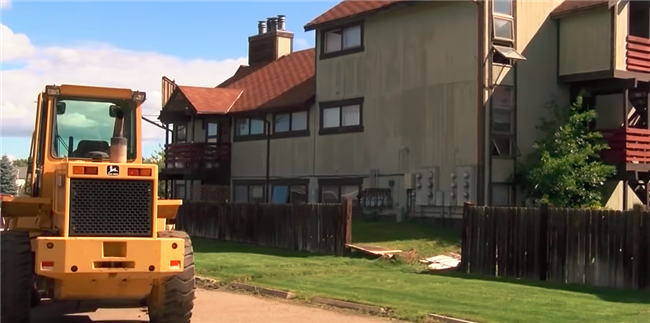
The topless woman who drove a stolen front end loader into a Montana apartment complex has been charged with four felonies and two misdemeanors after doing $1,600 in damage to the apartment complex, according to reports.

Officers detained the woman at the scene and interviewed a witness who stated the front end loader crashed into his upstairs window and the woman, who lived in the upstairs apartment next door, climbed into her own upstairs apartment from the front end loader, grabbed some clothes and was trying to leave before officers arrived, according to the Great Falls Tribune.

According to the Great Falls Police Department’s probable cause affidavit, officers responded just after 8 a.m. to the Fox Hollow Apartments with a report of a female running a tractor into a building.

Police told the newspaper that after the incident that the woman was topless during her joyride, but the affidavit does not state whether or not she was wearing a shirt.

Topless woman used front end loader to get to upstairs apartment

When told she could be charged with criminal endangerment, the woman told officers, “I was very careful and I nudged the bucket up to his (the neighbor’s) apartment,” according to the newspaper.

According to police the woman allegedly did over $1,000 in damage to the loader’s dashboard, in addition to the $1,600 in damage to the apartment building and hundreds in damage to a church lawn she allegedly drove through on her way to the apartment.

There was also damage to the front gate, fence and a pickup truck at the business where the loader was stolen, according to an affidavit from the Cascade County Sheriff’s Office.

The woman has been charged with theft, criminal mischief and criminal endangerment, all felonies, as well as misdemeanor criminal mischief and criminal trespass to property. Witnesses told police the woman and her boyfriend were screaming at each other, according to reports.

Molly Broxholm, an apartment resident, was woken up by the sound, according to channel 3 KRTV.com. She said that it appeared that the woman driving the excavator was topless at the time.

“Woke up to the sound of crunching thinking someone was doing yard work until we hear people yelling, looked out the window and saw this, on and smashing its way in. She then proceeded to climb into her window above us and get clothes,” Broxholm told the television station.

Photo courtesy of KRTV watch their video report on this here on Youtube.