
Home Blog Page 188

Which Apartment Amenities Actually Matter For Potential Tenants?

Which Apartment Amenities Actually Matter For Potential Tenants?

A dishwasher, toilet, shower, heating, locks that function properly ― these are basic apartment amenities that a tenant expects when they rent an apartment, regardless of building class.

By Holly Welles

A tennis court, yoga studios, fitness area, indoor spa — these are luxury amenities that a tenant can do without. More importantly, they’re expensive additions a landlord or property manager won’t have to factor into their budget. The question a landlord should ask is, which amenities do my tenants truly value?

By understanding what a tenant values and what they don’t, landlords have a far easier time marketing their space. With a focus on the most important amenities, they can stress the selling points that elicit the highest positive response in potential renters and foster lasting interest.

For those in property management who want to maximize the efficiency of their space, we’ve compiled a list of the top amenities that make a tenant want to sign on the dotted line. Landlords always have the budget in mind, so here are the top things you may want to fit into your budget.

1. Parking spots are key apartment amenities

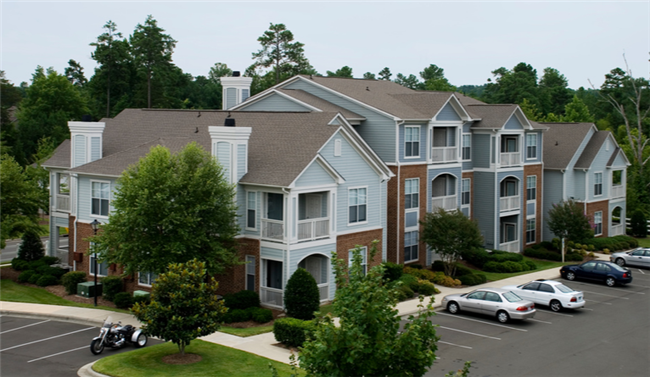
Everyone is familiar with the headache of finding a good parking space within walking distance of their destination. It’s the perennial excuse of the perpetually late. An inability to secure parking should in no way carry over to a residential context, where it’s fair for a paying tenant to expect an open space.

Properties that boast large parking areas are in high demand, especially those with covered garages. Tenants in states where inclement weather is the norm will look for covered parking to protect their vehicles against the elements. The value of a building is largely dependent on the space it affords.

Of course, making room is easier said than done. Urban areas, in particular, present a unique challenge, with a high density of buildings that prevent the development of adequate space. Regardless, parking is the amenity that tenants desire most, according to the Kingsley Apartment Renter Preferences Report.

Landlords who can expand the parking lots of their properties or find single spaces to lease for their tenants can go a long way in reducing headaches for potential tenants and solving a problem that plagues any urban dweller.

2. Location

Location is a make-or-break factor for many tenants searching for an apartment to rent. Proximity to a downtown area is a powerful draw for young people who are moving from their parents’ home into a space of their own. Restaurant options, public parks and local sources of entertainment are major draws.

Additionally, potential tenants are attracted to buildings close to their place of work. Many developers are considering the 10-minute bubble as a method of predicting popular rental locations. A shortened commute is a factor that influences their decision to sign. A prime location is appealing to everyone from young single renters to entire families searching for a way to cut down on their transportation expenses.

On the other hand, neighborhoods with a high rate of crime will make a landlord’s pitch far more difficult. An alarm system isn’t always enough to persuade renters. For landlords managing properties in rougher neighborhoods, provide multiple security measures.

Property managers may also rethink who they’re marketing to when investing in properties in urban centers. While many landlords want to attract middle-income tenants away from luxury complexes, consider providing a simple, updated and safe option for lower-income renters in a given neighborhood. Research indicates that rental unit demand will only increase through 2030, and there is currently a troubling lack of affordable housing for lower-income households.

3. Age and condition

Landlords have a responsibility to take care of their properties. This is especially true of older structures where the occupation of past tenants has compromised apartment quality. When a renter is taking a tour of the building for the first time, every chip, crack and flaw will contribute to their final decision.

It’s reasonable for tenants to consider the structural integrity of a building before they sign a lease. The small problems that are visible are often indicative of larger problems hidden out of sight, and these have the potential to grow into serious issues that take time and labor to repair.

Landlords should take care to maintain the bathrooms and kitchens in their units. Faulty plumbing and rusted pipes can lead to water damage, a significant expense managers can avoid with foresight. All of this said, the age and condition of a building aren’t a serious impediment if it’s cleaned and maintained.

4.. Package lockers are important apartment amenities now with all the deliveries

The popularity of online shopping on sites like Amazon has increased package delivery rates to an overwhelming degree. A property manager is busy enough in their routine without the additional responsibility of accepting and delivering packages to their tenants. However, there’s a solution that’s seeing wider adoption.

Package lockers provide an area to keep deliveries until a tenant is ready to receive them. With the number of people using online retailers increasing every day, a package locker is a safe method of storage — an invaluable service that can add substantial value to a property in the eyes of prospective tenants.

Unfortunately for some landlords with B- and C-class properties, the price tag of these kiosks is too high to justify the investment. This adds to the difficulties they face in competing with A-class, luxury complexes that include extra amenities as part of their facilities.

What to Prioritize

Every landlord has a limit on what they can afford. Though they may want the very best for their tenants, managers must strategize to keep their business moving in the right direction. Through comparing essential and nonessential amenities, they’ll be better equipped to provide value to those they house.

If there’s enough room in the budget for a tennis court, it can’t hurt.

4 Ways Property Managers And Tenants Can Improve Apartment Air Quality

4 Ways Property Managers And Tenants Can Improve Apartment Air Quality

Property managers and tenants can improve apartment air quality by learning about the different types of indoor pollutants and practices which can improve air quality. The maintenance checkup this week provided by Keepe focuses apartment air quality.. Be sure you are protecting your investment and income as well as keeping your tenants happy..

First review the type of pollutants than can impact apartment air quality.

No. 1 – Combustion Pollutants

Gases or particles that come from burning materials including space heaters, gas stoves, dryers and fireplaces that are either improperly vented or not vented at all. Common combustion pollutants include carbon monoxide and nitrogen dioxide, both of which are colorless, odorless gases.

No. 2 –  Volatile Organic Compounds (“VOCs”)

VOC’s are a variety of organic chemicals that are released as gases from certain solids or liquids. They are commonly found in household products such as paints, cleaning supplies, building materials, air fresheners, carpet, sealing caulks, personal care products and cosmetics. Common examples of VOCs that may be present in our daily lives are: benzene, ethylene glycol, formaldehyde, methylene chloride, toluene and xylene.

No. 3 – Asthma and Allergy Triggers

Common household triggers include mold, dust mites, pollen, secondhand smoke, and pet dander. Living spaces can easily have mold growing in the bathroom, dust mites in pillows or stuffed animals, and animal hair on the floor and upholstery.

4 Tips for Tenants

1. When cooking, turn on a hood vent or open a window

4 Ways Property Managers And Tenants Can Improve Apartment Air Quality

Apartments are often tightly packed, allowing fumes to build up quickly. Hood ranges are designed to remove chemicals, odors, smoke, moisture, grease and other pollutants that are released while cooking. Proper ventilation helps to prevent growth of mold and bacteria as well. Make sure your tenants turn on their exhaust hood before cooking and leave it on for at least fifteen minutes after finishing cooking.

2. Use exhaust fans in bathrooms

The bathroom is a common source of indoor air pollution. If there is a lack of ventilation in the bathroom, mold and mildew can easily grow. When using the shower or tub, make sure tenants use a ventilation fan or open the window to let out the humidity caused.

3. Limit use of chemical ingredients

4 Ways Property Managers And Tenants Can Improve Apartment Air Quality

Encourage tenants to use non-toxic cleaners and supplies. In smaller spaces, fumes from heavy chemical based products can quickly reach dangerous levels. Stay away from synthetic air fresheners and opt for all natural products. Toxic cleaning chemicals consist of ingredients that cause cancer, respiratory problems and other harmful health issues.

4. Minimize dust collection

Carpets are a huge dust collector. If possible, avoid carpet within your unit. Other dust collecting areas such as curtains, blinds and other high surfaces are also important to keep an eye on. Encourage tenants to dust and clean these areas regularly to minimize dust collection within units.

4 Tips for Property Managers

1. Regularly test the air quality in your building

Get a professional to analyze a sample of your properties air at least twice a year to identify any potential threats. It is important to test for all possible contaminants to ensure you are checking for all possible hazards. Activities such as painting or home repairs can add chemicals to the air.

2. Change all the filters in your property on a regular basis

Typically, air filters need to be changed every 90 days. As simple as it may be, filters can significantly alter your home’s airflow. HVAC (heating, ventilation and air conditioning) systems work more efficiently if air filters are changed on a regular schedule. Remind tenants to change their air filters or include this procedure in your regular maintenance check in routine.

3. Invest in alternative flooring (hardwood, vinyl, laminate, or tile) versus carpet

4 Ways Property Managers And Tenants Can Improve Apartment Air Quality

Carpet collects a great amount of allergens, particles, dust, pet dander, and debris. Hardwood, vinyl and laminate flooring doesn’t absorb pollutants and dust mites as carpet does. Due to this reason, air quality tends to be better in living spaces that don’t have carpet installed. These alternative materials are also easier to clean and maintain for years to come, whereas carpet tends to have a shorter lifespan.

4. Repair and maintain pollution related issues immediately

If there is a leak in a unit or molding in a bathroom, be sure to get a licensed handyman to fix the issue immediately to prevent further damage.

Summary:

The air we breathe has a significant impact on our health and well-being. In a multi-family property, it’s important to prioritize indoor air quality since there is an increased opportunity for pollutants and chemicals in a shared space.

About Keepe:

Keepe is an on-demand maintenance solution for property managers and independent landlords. The company makes a network of hundreds of independent contractors and handymen available for maintenance projects at rental properties. Keepe is available in the Greater Seattle area, Greater Phoenix area, San Francisco Bay area, Portland, San Diego and is coming soon to an area near you. Learn more about Keepe at https://www.keepe.com

Segmented Property Management Training Fits Better In A Busy Multifamily Professional’s Day

The Grace Hill training tip of the week to help owners, landlords and property managers with online property management training information. Let’s break it down.

 By Ellen Clark

Think for a moment about all the ways you break things down to make them more manageable, or even possible.

So what is segmenting information and how does it work?

    • You don’t tackle a major project in a single day. Instead, you break it down into a project plan with weekly tasks.
    • You don’t save for retirement all in one year. Rather, you set aside money over time.
    •  You don’t eat a bar of fancy chocolate in one bite. Instead, you use the handy pre-cut squares to savor it piece-by-piece.

Segmenting information in order to process it better and recall it more easily is similar.

Think about training content in a similar way

It is beneficial to break content up, let the learner take a piece, digest it, and come back for more when he or she is ready.

This is called segmenting. It sounds fancy, but segmenting just means presenting material in manageable chunks.

 What are the benefits of segmenting property management training content?

    • Smaller pieces let learners process and understand one thing before tackling the next. This makes the learner’s cognitive workload more manageable, which frees up space to put things into long-term memory.
    •  As trainers, long-term memory is just where we want that content to go. Practically speaking, segmenting helps learners fit training into a busy schedule.
    •  A series of 15-minute trainings are generally easier to fit into a busy multifamily professional’s schedule than sitting for a two-hour course.

There are lots of opportunities to segment content.

Breaking information into modules helps it to be more easily understood and recalled later.

Break courses into modules. Think of these as mini-courses.

Consider using a standard structure:

    • An overview with clear learning objectives
    • Content
    • Practice
    • A quiz

A key thing is to make each module feel coherent, with a clear beginning and end.

Break modules into topics or sections. Like chapters in a book, these are simple, logical groupings of the module content. This allows the learner to get the lay of the land (like a table of contents) and progress through the module content in manageable pieces.

In lessons, break complex demonstrations or explanations into shorter parts. Rather than show a two-minute demonstration on closing the sale straight through, break it up into bite-size parts. Show one strategy in each part, then let the learner pause, reflect, review and move to the next part when he or she is ready.

 How big is a manageable chunk?

Right now, there isn’t much research on how large or small a segment should be. Simply use your judgement and experience. The point is to break down complex things into smaller parts to lighten the load on the learner.

It is hard to learn when feeling overwhelmed, or like the training is moving faster than our brains or schedules can handle.

Segmenting, at many levels of training, can help break things down and free up the space to let real learning happen.

Read Ellen’s blog post here.

About the author:

Ellen Clark is the Director of Assessment at Grace Hill.  Her work has spanned the entire learner lifecycle, from elementary school through professional education. She spent over 10 years working with K12 Inc.’s network of online charter schools – measuring learning, developing learning improvement plans using evidence-based strategies, and conducting learning studies. Later, at Kaplan Inc., she worked in the vocational education and job training divisions, improving online, blended and face-to-face training programs, and working directly with business leadership and trainers to improve learner outcomes and job performance. Ellen lives and works in Maryland, where she was born and raised.

Photo credit Scyther5 via istockphoto.com


Seattle Landlords Lose As Judge Says Move-In Fees Are Not Rent

Seattle Landlords Lose As Judge Says Move-In Fees Are Not Rent

Seattle landlords have lost after a judge has upheld the city ordinance that limits deposits and nonrefundable move-in fees to one month’s rent, and allows renters to pay the costs over six months, according to reports.

The City of Seattle limits the amount of money that a landlord can charge a renter to move in to a rental. The ordinance regulates security deposits, move-in fees, last month’s rent, and pet deposits. It also allows renters to make these payments in installments.

King County Superior Court Judge Susan Amini ruled  in favor of the city, saying the city was free to regulate move-in fees because they are different than rent. She cited the dictionary definition of the word “rent” and the language of the state rent control ban, which refers to rent as “periodic payments.”

“Other payments that a landlord may require from a tenant, such as one-time payments to secure move-in rights or as a security deposit, do not fall under the meaning of ‘rent,’” Amini wrote in her 12-page ruling, according to the Seattle Times.

“The City Council sought to aid renters by limiting upfront payments and allowing payment plans to help more people access apartments that might otherwise be out of reach,” City Attorney Pete Holmes said in a statement. “I’m gratified the judge looked at this complicated legal terrain and agreed the City remained well within its bounds when taking these steps to protect Seattle’s tenants.”

Sean Martin, executive director of the Rental Housing Association of Washington, told the newspaper the group hasn’t decided yet whether to appeal and had no comment on the ruling.

The Rental Housing Association of Washington(RHAWA), with more than 5,000 members,  filed suit in King County Superior Court to overturn Seattle’s ordinance regulating tenant move-in fees and requiring landlords to extend payment plans to tenants, according to a release.

Sean Flynn, board president of the RHAWA, said his organization set the standards for ethics and best practices in the industry,  “Yet, this city council has never missed the chance to lambaste, demonize, and hold landlords responsible for problems they did not create,” according to published reports.

Tenant advocates were celebrating the win

“This win comes at a critical moment in Seattle’s history. We are in the midst of a regional housing crisis that is hitting poor tenants and people of color hardest,” Washington CAN Political Director Xochitl Maykovich said in a statement.

“This win affirms what Washington CAN members have been arguing since the beginning of our campaign to pass Move-In Fee legislation: Common-sense regulations can win in city councils, and they can also hold up against the landlord lobby’s lawsuits, no matter how much money landlords invest in these anti-tenant efforts.

“ I hope lawmakers throughout King County can be heartened by this decision, knowing that legislation to ease the financial burden renters face is legally and ethically sound policy,” Maykovich said in the statement.

Resources:

Judge upholds Seattle cap on move-in fees for renters

Court upholds Seattle Move-in fee legislation, marking major win for tenant protections

Landlords Sue Seattle Over Tenant Move-In Fees Ordinance


Landlord Shot In Head Serving Eviction Notice At Apartment In Suburban Seattle

Landlord Shot In Head Serving Eviction Notice At Apartment In Suburban Seattle

A landlord serving an eviction notice on a tenant in her fourplex was shot in the head and critically injured at a Renton, Washington, apartment complex when the home’s occupant began firing at her, according to reports.

The woman, 40, was listed in satisfactory condition in intensive care at Harborview Medical Center in Seattle.

Police arrested Joshua Gasperich, 31, according to police reports on Twitter. The shooting occurred at 2700 N.E. Ninth St.

Renton police arrested Gasperich after he returned to the area near the shooting and drove past officers, Renton police spokesman David Leibman told the Seattle Times. Officers pulled Gasperich over “and he gave up without any incident,” Leibman  told the newspaper. Officers do not know why he returned to the area, Leibman said. He was arrested on investigation of felony assault, Leibman said.

The woman told Renton police when she tried to serve the eviction notice, the suspect greeted her at the door of his apartment with a long gun, according to KIRO. He fired three times, striking her once in the head. She sought refuge at an auto detail shop next door.

A worker at the auto repair shop told KIRO, “We saw the lady come out from the apartments,” Omar Tellez, told KIRO. “Her face was like full of blood and she asked for help.” He called 911.

Resources:

Woman shot while serving eviction notice in Renton; suspect in custody

Woman critically injured in Renton shooting 

Woman serving eviction notice shot in the head


Rents Declined The Most In Portland Year-Over-Year

Rents Declined The Most In Portland Year-Over-Year

Rents declined the most in Portland, Ore., where the $1,834 median is 1.8 percent lower than in August 2017.

For the first time since 2012, rents nationwide remained at the same level as they were a year earlier, with a median rent of $1,440, according to a new report.

The median rent fell on an annual basis in 19 of the 35 largest markets

The typical rent is growing fastest in Riverside, Calif., where it rose 3.7 percent over the past year to $1,899.

The annual rent appreciation has slowed for six straight months, according to the August Zillow® Real Estate Market Reporti. Rent appreciation has remained below 3 percent annual increase for the past 27 months after growing as fast as 6.6 percent in July 2015.

Here are highlights of the report:

  • The median rent is lower than it was a year ago in 19 of the nation’s 35 largest housing markets
  • The median rent nationwide is $1,440, unchanged from a year ago.
  • Annual rent appreciation peaked at 6.6 percent in July 2015.
  • The median U.S. home is worth $216,700, up 6.5 percent over the past year.
  • The number of homes for sale declined 3.6 percent from August 2017.

It’s not only rent appreciation that slowed in August: Home value appreciation is at its slowest pace in two years.

Home appreciation now slowing in many markets

Nationally, home values rose 6.5 percent over the past year to a median value of $216,700, down from a peak post-recession annual appreciation rate of 8.2 percent in March 2018. In August 2017, home values were increasing 7.4 percent annually.

San Jose is seeing the fastest home value appreciation, up 22.7 percent since August 2017. Las Vegas and Atlanta are the only other two large markets where home values grew at a double-digit pace, up 12.0 percent and 10.4 percent, respectively.

“Earlier this year, the housing market was a story of diverging paths, with rents steadily cooling and home values picking up speed. Normally rents and home values are tied together, but strong apartment construction and a surge of young homebuyers contributed to this historical anomaly. As summer turns to fall, the more typical pattern is reemerging, as rents and home values are both slowing in unison,”  Zillow Senior Economist Aaron Terrazas said in the release.

“The feverish housing crunch of the past few years seems to be cracking. Slower rent growth means that renters may feel less urgency to buy. While home values continue to grow at double their historic pace, the speed of appreciation is down sharply from its spring highs.”

In August, there were 3.6 percent fewer homes for sale than the year before. The lack of available homes has been a defining characteristic of the housing market for several years, but this trend is easing. Inventory has fallen on an annual basis for 43 consecutive months, but the speed of its decline has slowed substantially. A year ago, inventory was down 13.1 percent from the previous year.

Among the largest U.S. housing markets, the biggest inventory declines are in Pittsburgh, Atlanta and Columbus, where inventory is falling at a double-digit pace.

The number of available homes on a given day is on the rise in more than half of the nation’s largest markets, but they are returning from very low levels. Inventory is at its lowest point since 2015 in nearly every large market.

Mortgage rates on Zillowii ended August at 4.32 percent. Rates were highest at the beginning of the month, when they were at 4.43 percent. Zillow’s real-time mortgage rates are based on thousands of custom mortgage quotes submitted daily to anonymous borrowers on the Zillow Mortgages site and reflect the most recent changes in the market.

Metropolitan Area  Zillow Home
Value Index,
August 2018
ZHVI
Year-
over-
Year
Change
Zillow
Rent
Index,
August
2018
ZRI Year-
over-Year
Change
Inventory
Year-over-
Year Change
United States $ 216,700 6.5% $ 1,440 0.0% -3.6%
New York / Northern New Jersey $ 426,300 4.4% $ 2,371 -1.3% 3.3%
Los Angeles, CA $ 641,800 5.2% $ 2,751 1.3% 21.6% iii
Chicago, IL $ 219,100 4.2% $ 1,636 -1.4% 2.0%
Dallas, TX $ 229,400 9.7% $ 1,594 -0.3% N/A
Philadelphia, PA $ 227,200 4.2% $ 1,566 -1.4% -9.5%
Houston, TX $ 198,500 5.3% $ 1,548 0.3% -4.3%
Washington, DC $ 397,800 3.2% $ 2,133 -0.6% 0.1%
Miami, FL $ 274,000 7.0% $ 1,856 0.3% 3.4%
Atlanta, GA $ 204,600 10.4% $ 1,394 1.5% -11.8%
Boston, MA $ 451,500 5.2% $ 2,366 -1.3% 9.6%
San Francisco, CA $ 947,700 9.0% $ 3,399 -0.2% 22.2%
Detroit, MI $ 153,900 7.4% $ 1,194 1.3% 4.6%
Riverside, CA $ 356,600 5.5% $ 1,899 3.7% 18.5%
Phoenix, AZ $ 254,400 6.3% $ 1,359 0.9% -8.0%
Seattle, WA $ 486,800 8.2% $ 2,171 -1.1% 32.9%
Minneapolis-St. Paul, MN $ 258,900 5.4% $ 1,638 1.0% 1.2%
San Diego, CA $ 580,500 4.9% $ 2,541 0.3% 41.9%
St. Louis, MO $ 161,200 4.6% $ 1,139 -0.9% -5.3%
Tampa, FL $ 205,000 8.9% $ 1,390 1.7% 0.9%
Baltimore, MD $ 263,300 3.9% $ 1,740 -0.1% -1.2%
Denver, CO $ 396,200 6.2% $ 2,054 0.4% -1.7%
Pittsburgh, PA $ 140,200 6.1% $ 1,084 -1.1% -14.7%
Portland, OR $ 387,900 4.2% $ 1,834 -1.8% 14.8%
Charlotte, NC $ 195,000 8.8% $ 1,293 0.4% 3.1%
Sacramento, CA $ 397,100 4.3% $ 1,842 3.1% 7.8%
San Antonio, TX $ 184,600 4.4% $ 1,331 -0.8% 12.5%
Orlando, FL $ 226,300 7.9% $ 1,449 1.4% -7.7%
Cincinnati, OH $ 161,000 5.4% $ 1,277 -0.1% -4.7%
Cleveland, OH $ 140,400 5.2% $ 1,140 -0.7% -7.4%
Kansas City, MO $ 181,300 7.5% $ 1,264 -1.3% -0.6%
Las Vegas, NV $ 263,300 12.0% $ 1,306 2.3% N/A
Columbus, OH $ 180,700 6.5% $ 1,336 0.8% -11.1%
Indianapolis, IN $ 152,700 8.1% $ 1,195 -0.6% N/A
San Jose, CA $ 1,281,100 22.7% $ 3,499 -0.4% 87.7%
Austin, TX $ 296,300 5.3% $ 1,682 -1.7% 1.2%

Zillow

Zillow is the leading real estate and rental marketplace dedicated to empowering consumers with data, inspiration and knowledge around the place they call home, and connecting them with great real estate professionals. In addition, Zillow operates an industry-leading economics and analytics bureau led by Zillow Group’s Chief Economist Dr. Svenja Gudell. Dr. Gudell and her team of economists and data analysts produce extensive housing data and research covering more than 450 markets at Zillow Real Estate Research. Zillow also sponsors the quarterly Zillow Home Price Expectations Survey, which asks more than 100 leading economists, real estate experts and investment and market strategists to predict the path of the Zillow Home Value Index over the next five years. Launched in 2006, Zillow is owned and operated by Zillow Group, Inc. (NASDAQ:Z and ZG), and headquartered in Seattle.

Try An Overview – Such As One On Fair Housing – In Your Next Training

Grace Hill training tip of the week to help landlords and property managers with online property management training information

By Ellen Clark

How often do you go on a long road trip without pulling up a navigation app on your phone?

These days, probably not often. It is uncomfortable to not know where you are going or where you are in relation to the world around you.

Also think for a moment about what gets you in the car for that road trip. What makes you power through fatigue or bad weather? Usually, it is knowing that something important or fun is at the end of your journey.

These ideas also apply to learners. They are likely to feel more comfortable with a map showing what lies ahead, and orienting them to the big picture. And, when they understand the importance of the destination, or the learning opportunity before them, they are more likely to invest the effort to start and complete training.

 What is an overview in property management training?

This is where the overview comes in. It is a powerful learning tool that can get your learners ready to learn, and motivate them to persist even when training is… less than exciting.

An overview is a short introduction with the components shown below. It doesn’t have to be complicated. The examples show simple ways you might approach each component for a course on Fair Housing Law.

Connects the upcoming content to the big picture. “Fair housing is not just another set of rules, it is essential to the expansion of civil rights in the United States.”

Activates relevant prior knowledge. “Remember the seven protected classes under the FHA?  They are race, color, national origin, religion, sex, familial status and disability status.”

Explains why achieving the learning objectives will benefit the learner. “Discriminating against a person based on their membership in a protected class is unlawful. Learning how to avoid discriminatory practices can keep you and your community out of legal trouble, and will make your community a welcoming place for all customers.”

Clarifies the learning goals. “In this course, you will learn the forms of discrimination that are prohibited by law and strategies to perform your job consistently with the laws.”

Outlines the learner experience. “This course should take about 30 minutes.  At the end, you will take a 10-question quiz. You must view all the content and pass the quiz to pass the course. You can exit the course any time and resume where you left off when you return.”

Overviews are your “hook.”

Be creative and jazz them up!

Consider simple motion graphics or animation. There are free animation tools for novices available – give one a try. Or, use a live video to make a personal connection with learners. Consider telling a story, having an important person in your company co-present, or make it interactive and ask learners to share relevant experiences.

Try an overview in the next training you develop or deliver. You just might find it helps your learners get where they need to go.

Read Ellen’s full blog post here.

About the author:

Ellen Clark is the Director of Assessment at Grace Hill.  Her work has spanned the entire learner lifecycle, from elementary school through professional education. She spent over 10 years working with K12 Inc.’s network of online charter schools – measuring learning, developing learning improvement plans using evidence-based strategies, and conducting learning studies. Later, at Kaplan Inc., she worked in the vocational education and job training divisions, improving online, blended and face-to-face training programs, and working directly with business leadership and trainers to improve learner outcomes and job performance. Ellen lives and works in Maryland, where she was born and raised.


Try An Overview – Such As One On Fair Housing - In Your Next Training


Photo credit BartekSzewczyk via istockphoto.com


3 Low-Cost Incentives To Gain Property Management Training Completion

This week we start a regular multifamily training tip of the week from the folks at Grace Hill to help landlords and property managers with online property management training information to help increase competency and reduce operational risk.

By Ellen Clark

We all know the value of training. For companies, it can reduce risk and increase the bottom line. For employees, it provides valuable job skills and opportunities for career advancement. For customers, good employee training improves their experience and overall satisfaction.

But human nature is a funny thing. Even when we know something is good for us, we don’t always make the time or effort to do it. Did you eat five servings of fruits and vegetables yesterday? Did you get the recommended amount of exercise last week? Understanding the benefits of healthy habits doesn’t make it easier to fit them into our busy lives.

The same goes for training. As with diet and exercise, https://livingwellnessmedicalcenter.com/phentermine-online/ some people are naturally motivated to do what’s good for them. In the training world, these are your superstars – the people you never have to beg to complete training. And then there are the rest of us, who need an external nudge to complete training on time (or maybe at all).

Incentives can be an effective way to get employees to move training to the top of their priority list. When you hear “incentives,” you might see dollar signs. The reality is that most of us don’t have the budget for, or even the authority to spend money on, incentives. However, things with monetary value aren’t the only way to incentivize people. Here are some low-cost incentives that can help increase your property management training participation rates.

No. 1 – Create competition

Set up a simple leaderboard on the intranet, in your LMS, or even through email.

You might be surprised what a little healthy competition can do.

No. 2 – Publicly acknowledge accomplishments

Send a company-wide email, write a newsletter blurb, or say a few words at a team meeting congratulating people who completed training or attained a certain score.

No. 3 – Praise effort in property management training

Don’t forget the people who completed training a day late, or failed their first attempt.

Praising their effort in a handwritten note, a personal email, or swinging by to encourage them face-to-face can be just the motivation they need to keep going.

As you put together a low-cost incentive plan, here are some additional things to keep in mind:

    • What people need to do to get on a leaderboard or be acknowledged should be attainable. Creating too many hoops to jump through may negatively impact motivation.
    • Update leaderboards often, and don’t wait for the annual retreat to acknowledge people. Too much time between meeting the goal and getting the reward could lessen the impact of the incentive.
    • Finally, resist the urge to try a whole bunch of new incentives at once. Rather, try one at a time, use the strategy for a while, then look at data to see if it seems to have impacted training rates.

Being as systematic as possible will help you find which low-cost strategies work so you can spend your time and effort on things that really make a difference in property management training.

Read Ellen’s full blog post here.

About the author:

Ellen Clark is the Director of Assessment at Grace Hill. Her work has spanned the entire learner lifecycle, from elementary school through professional education. She spent over 10 years working with K12 Inc.’s network of online charter schools – measuring learning, developing learning improvement plans using evidence-based strategies, and conducting learning studies. Later, at Kaplan Inc., she worked in

the vocational education and job training divisions, improving online, blended and face-to-face training programs, and working directly with business leadership and trainers to improve learner outcomes and job performance. Ellen lives and works in Maryland, where she was born and raised.


Raccoon Attack Leads To Lawsuit Against Portland Apartment Complex

Raccoon Attack Leads To Lawsuit Against Portland Apartment Complex

A tenant in a Portland apartment complex has filed suit after she was bitten by a raccoon on the property while she was walking her dogs, according to reports.

The tenant, Heidi Schultz, filed suit Aug. 31 against Prime Wimbledon SPE, LLC, doing business as the Wimbledon Square and Gardens Apartments, according to Multnomah County Circuit Court records.

Earlier this year a jury has found the same Portland apartment complex failed to make proper repairs to a walkway and awarded $20 million to a man who fell through the walkway.

“I saw something fuzzy under one of the cars,” Schultz told OregonLive.com. “I thought it was a cat. The next thing I know, this thing is launching itself at me and wrapped around my leg.”

Raccoon attack caused bleeding

The raccoon attacked and bit her leg and the back of her knee and held on until a neighbor came to help and hit the raccoon with a bag, according to reports.

“My whole leg was bleeding,” Schultz told  Willamette week.  “There was blood in my shoes. It was gross. You could see the mouth print on the back of my leg where it had latched on.”

Schultz lawsuit asks for $151,000 for medical bills and the companies’ failure to maintain its property. She argues the apartments’ owners knew the complex had a trash problem that could attract vermin like raccoons.

Kafoury & McDougal, which represents Schultz, cites a dumpster fire weeks earlier as evidence of the complex’s longstanding trash problem.

“This place had insects, rodents, raccoons, running around because they had trash everywhere,” attorney Jason Kafoury told Katu.com. “Tenants complained, employees complained up the chain and Prime wouldn’t do anything to clean it up.”

There was no comment from the apartment complex owners.

The Oregon Veterinary Medical Association told the Oregonian it’s been more than half a century since a raccoon in Oregon has tested positive for rabies. Schultz said emergency room staff didn’t take any chances and administered immune globulin shots around each of the many scratches and bites on her legs.

Resources:

A tenant’s horror story turns into the latest lawsuit against a Southeast Portland apartment complex

Portland woman sues landlord over raccoon attack

Woman attacked by raccoon sues landlords: ‘This thing is … wrapped around my leg

Man Awarded $20 Million After Fall Through Portland Apartment Walkway


My No.1 Mistake In Property Management

My No. 1 mistake in property management was not hearing about successes but hearing about failures.

By Larry Arth

My No. 1 mistake in property management blog by Larry Arth
Larry Arth tells the story of “my no. 1 mistake in property management.”

Hearing about peoples failures is the fast track to learning.

When you hear of and understand where people have made mistakes you can use their lessons to your advantage and avoid duplicating that mistake.

Most true real estate investors invest in the best locations and therefore use a property managers to run their business.

A property manager is to your investment as your engine is to your car.

As these property managers are the bridge between you and the investment it is imperative to choose them wisely.

I speak from personal experience when I say they can make or break your investments.

My No. 1 mistake in property management

Not actually hiring a property manager may be your biggest mistake. It was mine. It was my No. 1 mistake in property management.

Being a true investor requires focus on the business building aspect of investing. This process can easily be distracted by managing the tenants. Hiring a property manager and letting them do what they do best, property management, will allow you to do what you do best -invest in sustainable investments.

Think of a property manager as the engine to your vehicle

A finely tuned car will get you to your destination, trouble free. Your property manager should do the same and get you to your Investment destination trouble free.

Over the years I have been able to hone the craft of hiring great property management. So to help you avoid some of my painful experiences, here are some serious questions you may want to ask about your property management.

Questions should be broad based and focused on finding great tenants, then onto property management and finally tenant management

    • What is your portfolios vacancy rate and how does that compare to the markets average?
    • What is average length of time to fill a vacancy?
    • Is this average time getting longer or shorter?
    • Do you use your website to keep tenants informed and to attract new tenants?
    • How do you market your rentals?
    • What factors would make you reject a tenant?
    • What tenant qualifications are most important to you?
    • What screening method do you use?
    • How do you collect rents?
    • What is your late rent policy?
    • What rules do you set for tenants?
    • What percent of tenants do you have to evict?
    • How do tenants contact you?
    • What is your eviction process and what are the fees involved?
    • What maintenance issues do you handle in house and which do you hire out?
    • Do you simply pass on the bills or do you have price mark ups and if so how much?
    • How many quotes do you get for jobs?
    • What are the rules for contractors being inside the units?
    • Who are your preferred contractors?
    • How long have you been a property manager?
    • Do you have any certifications?
    • Does your locality require any licenses or permits to run landlord tenant housing?
    • Do you personally invest in real estate in this area?
    • What is your fee structure?
    • Are your reports web based?
    • How long of notice do you give before terminating a contract?

There are a number of questions you can ask.

Ultimately you want to learn as much as you can to ascertain their knowledge and experience in the land lording business.

Another thing to do is to look for telltale signs of professionalism and organization.

How messy and cluttered is their desk?

How hard it to reach this person and do they respond to your calls quickly?

Visit Larry’s Website Here

About the Author:

Larry Arth is the founder and CEO of Equity Builders Group, a Florida based Real Estate investment Group. As a 36 year veteran to real estate investing, Larry understands that we are now in a global economy and as times have changed, investment strategies must change as well. Larry is an international recognized consultant and speaker and assists hundreds of investors per year, both foreign and domestic to realize their investment potential. He analyzes locations across the country for economic strength and the locations that yield the largest most sustainable return on investment. Within these locations he seeks out and gathers the best teams to deliver sound, high performing and most importantly sustainable turnkey investment. He works with investors to ride the wave of each area-specific market surge. Larry’s primary focus is offering (Non Listed) safe and sustainable turnkey investments to the passive investor.

Do You Know The 5 Questions Landlord Hank Asks Tenants When They Call?